


Red-billed Chough
Cornish Chough, Cliff Crow · Pyrrhocorax pyrrhocorax
By the Birdfact teamChecked by Nathan Cope
On this page15 sections
How to recognise it
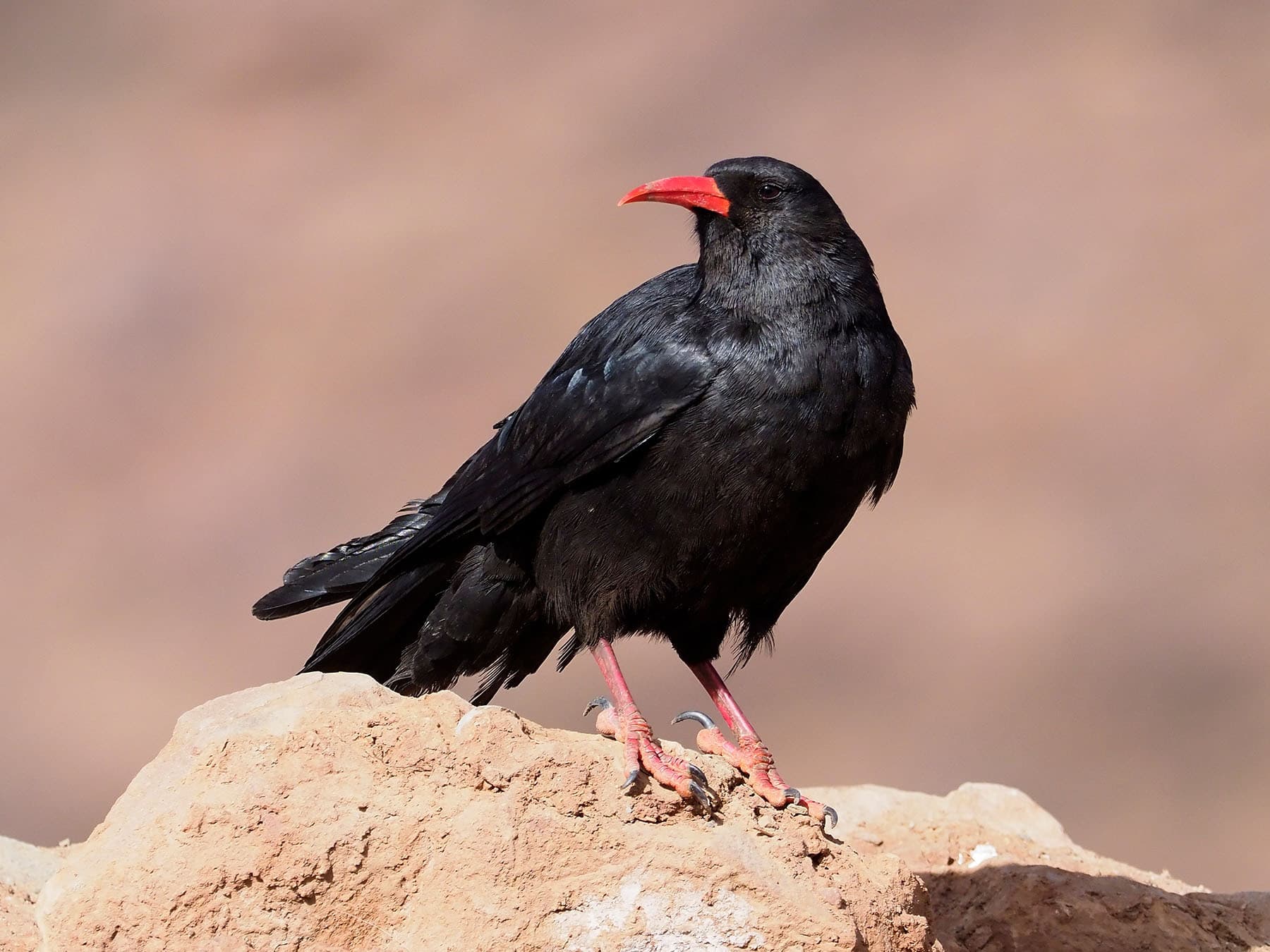
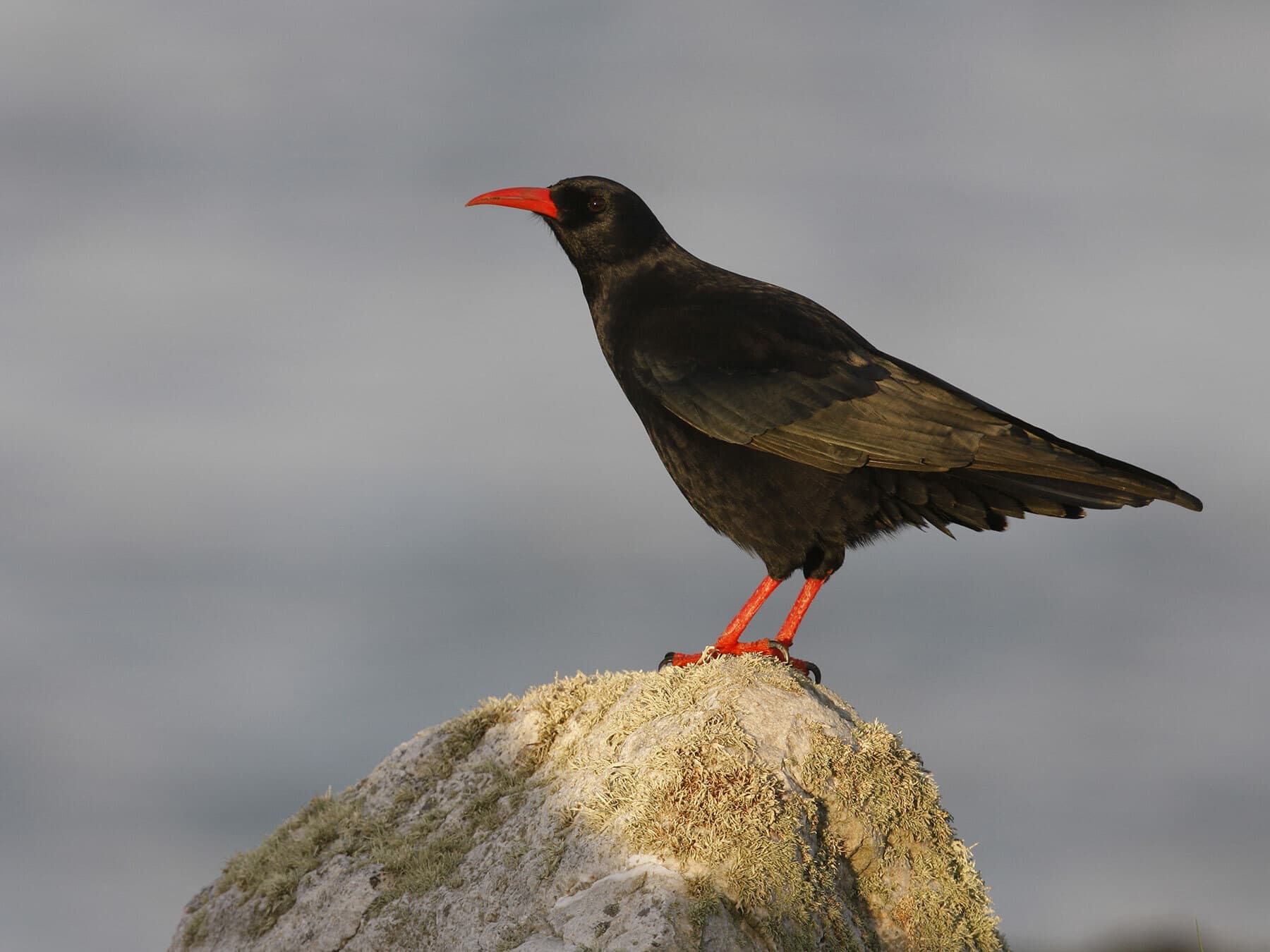
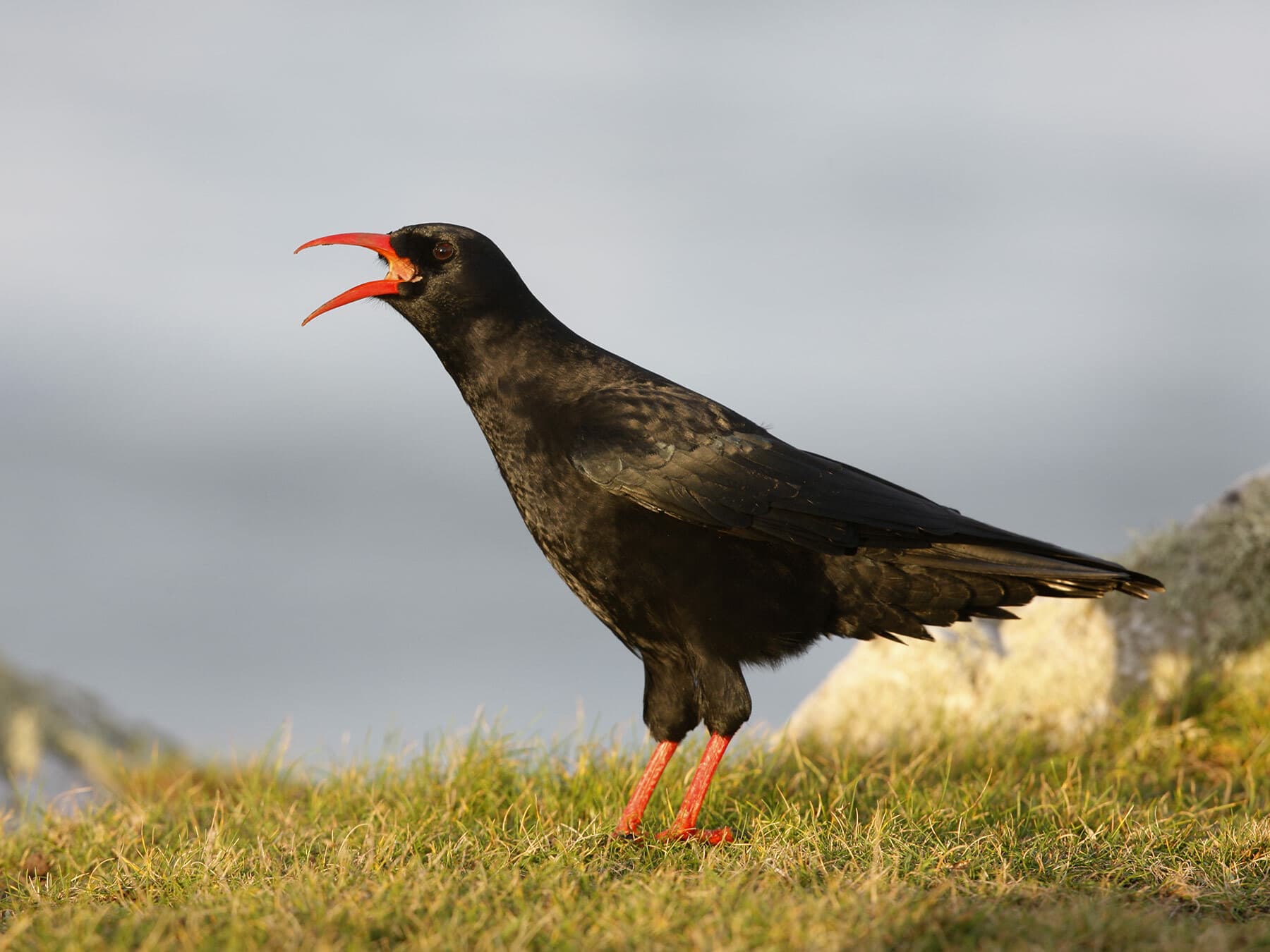
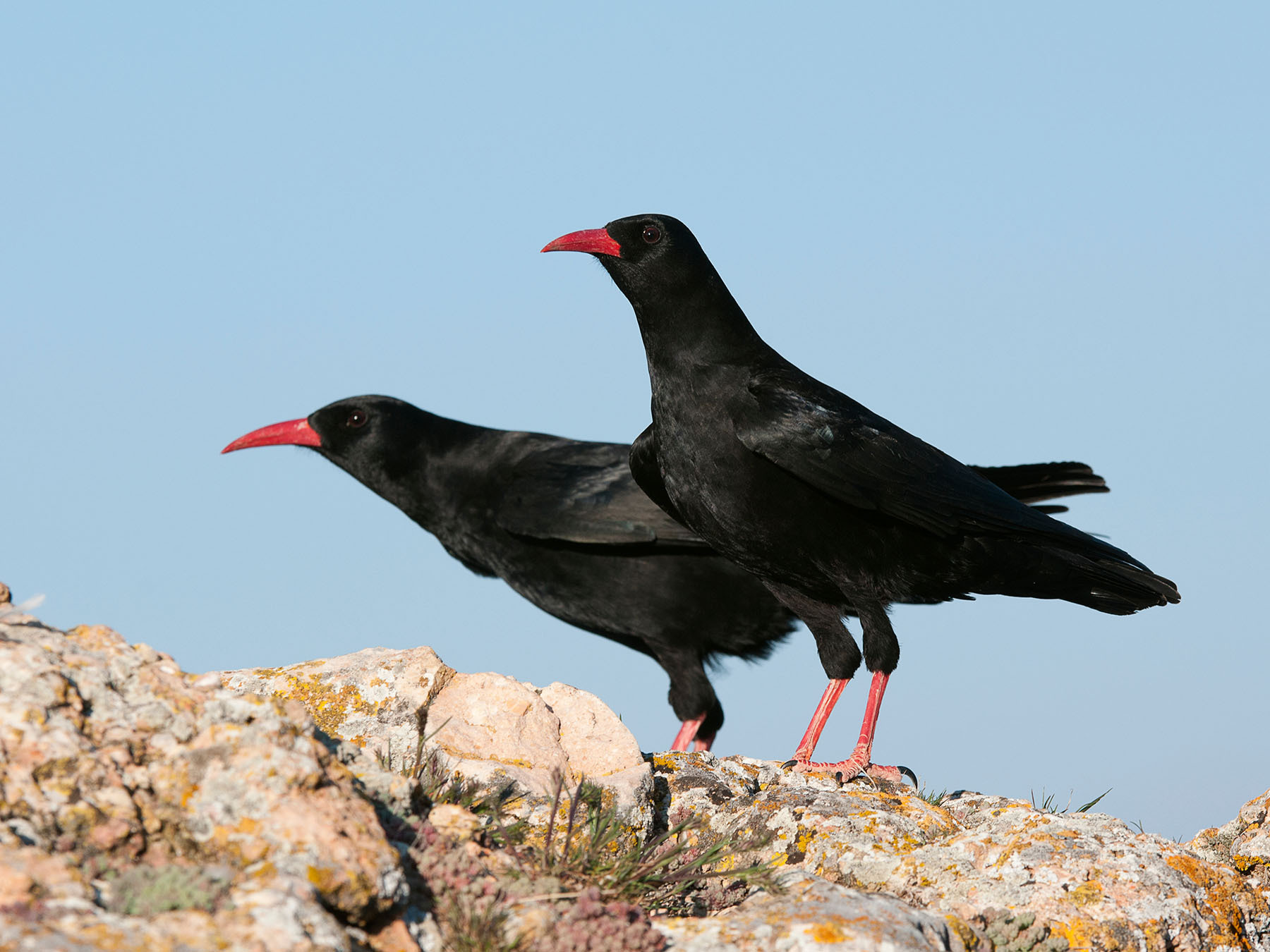
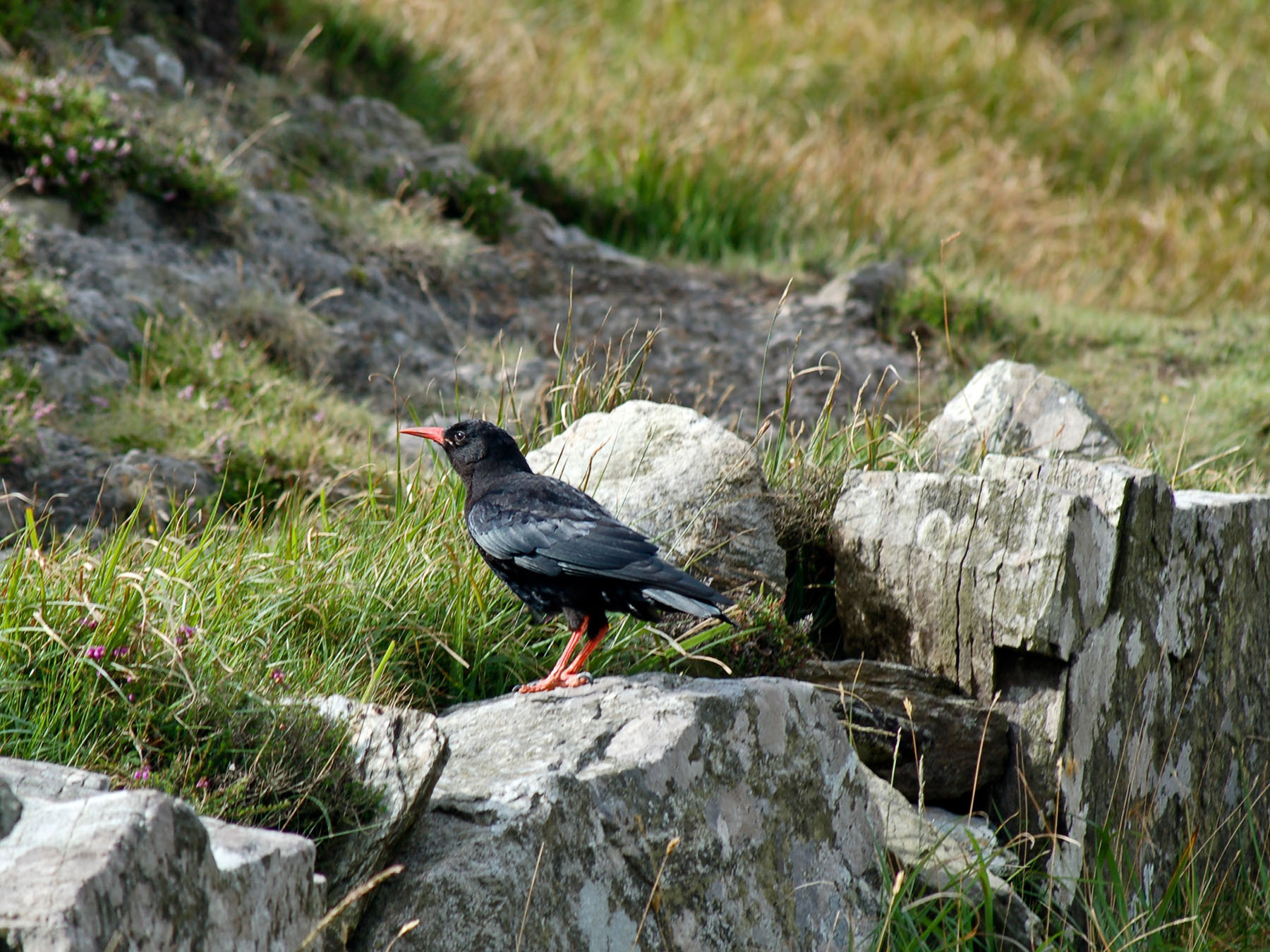
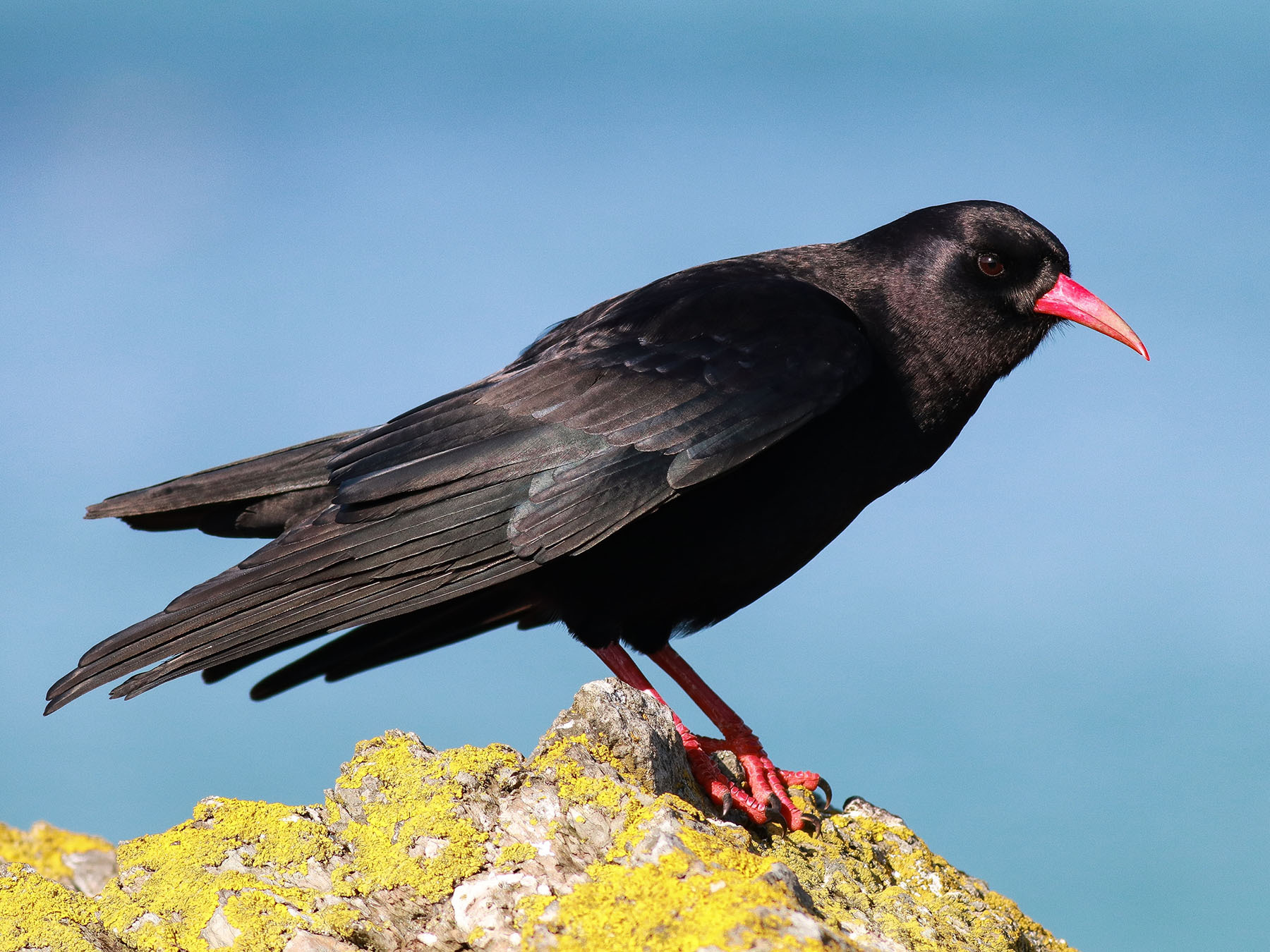
The Red-billed Chough is a striking corvid with glossy black plumage that shimmers with a blue-green sheen in sunlight. Its most distinctive features are its curved, bright red bill and matching red legs, which contrast sharply with its dark feathers.
Both males and females share the same appearance, with no significant differences between the sexes. Juveniles resemble adults but have duller black plumage and orange-red bills and legs that darken to the adult's vibrant red with age.
Its size
Adults- Length
- 39–43 cm
- Wingspan
- 73–90 cm
- Weight
- 280–360 g
Its song and calls
Most members of the crow family sound relatively similar albeit that the Chough’s call most resembles that of a jackdaw but with a clearer and louder, chee-ow call.
- Song and calls0:00 / 0:29
Recorded in Molise, Italy · July 2023
- Call0:00 / 0:12
Recorded in County Kerry, Ireland · July 2025
When and where to see it
OctoberIn season
Most recorded in October
- 1. Pembrokeshire1.8%
- 2. Waterford1.3%
- 3. Anglesey1.0%
- 4. Mayo1.0%
- 5. Kerry1.0%
Each dot is a county, state or province: the bigger and darker, the larger the bird’s share of that place’s bird records that month. Grey dots: no regular records. The ringed point is the centre of the bird’s records this month; the arrow shows how it moved since last month, and the dashed loop its path through the year. “Arrivals” colours places where it becomes regular this month (orange) or is in its last regular month (grey). GBIF eBird Observation Dataset, 2019–2024. Map data: Natural Earth, US Census Bureau; place centres © OpenStreetMap contributors.
In your area
See when the Red-billed Chough is recorded in your county, state or province.
How often the Red-billed Chough turns up in the UK and Ireland through the year, from birdwatchers' records.
United Kingdom
Summer visitor · all year · most records in July
Ireland
Summer visitor · all year · most records in September
Show as a table
| Month | United Kingdom | Ireland |
|---|---|---|
| January | 0.008% (regular) | 0.075% (regular) |
| February | 0.013% (regular) | 0.098% (regular) |
| March | 0.021% (regular) | 0.13% (regular) |
| April | 0.026% (regular) | 0.18% (regular) |
| May | 0.027% (regular) | 0.30% (regular) |
| June | 0.037% (regular) | 0.31% (regular) |
| July | 0.050% (regular) | 0.31% (regular) |
| August | 0.049% (regular) | 0.34% (regular) |
| September | 0.047% (regular) | 0.39% (regular) |
| October | 0.037% (regular) | 0.39% (regular) |
| November | 0.017% (regular) | 0.13% (regular) |
| December | 0.010% (regular) | 0.11% (regular) |
Recorded regularly in
Worldwide: recorded regularly in 32 countries
Countries where it was recorded in at least 3 of the 6 years 2019–2024. Linked countries have their own bird list.
Europe (13)
Asia (16)
- Armenia
- Azerbaijan
- Bhutan
- China
- Georgia
- India
- Iran
- Iraq
- Kazakhstan
- Kyrgyzstan
- Mongolia
- Nepal
- Pakistan
- Tajikistan
- Turkey
- Uzbekistan
Data: EOD – eBird Observation Dataset (Cornell Lab of Ornithology), accessed via GBIF.org, CC BY 4.0. Records from 2019–2024, aggregated and filtered by Birdfact. How these lists are made
Choughs are found throughout southern Europe and beyond. Generally, within the UK choughs can only be found in remote locations in the far west of Wales, western Scotland and Cornwall, where they have only relatively recently been reintroduced and are known locally as Cornish Choughs. Choughs favour sea caves, ruined buildings or holes and fissures in cliff faces in which to nest and thus tend to inhabit mountain areas or high coastal cliffs.
Signs and Spotting tips
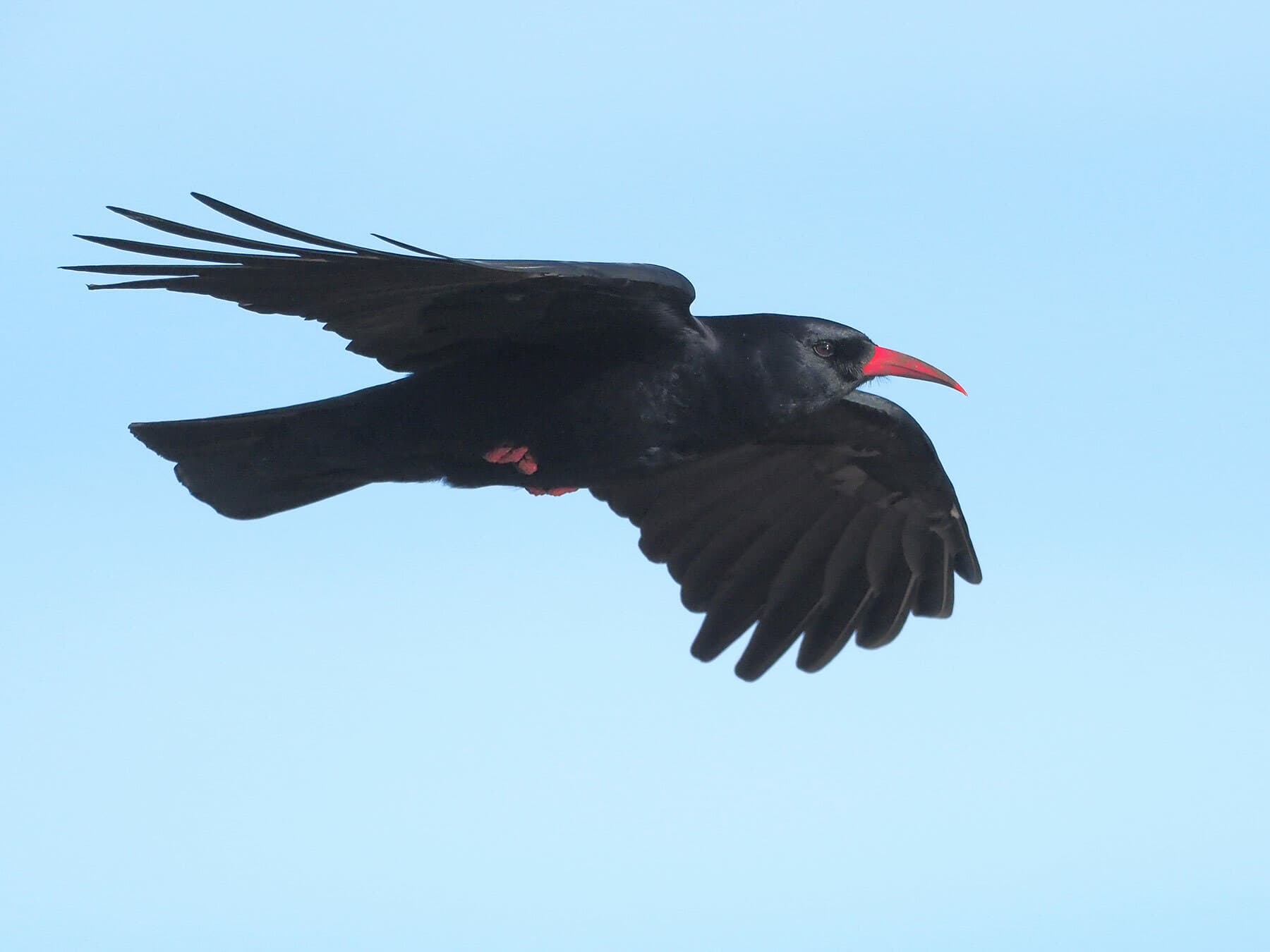
Choughs are often seen either in pairs or small flocks soaring and diving around cliff edges and can appear particularly graceful and agile. The fingers of their primary wing feathers are easy to spot from the ground as they cavort overhead in an endless exhibition of aerobatic manoeuvring.
What it eats
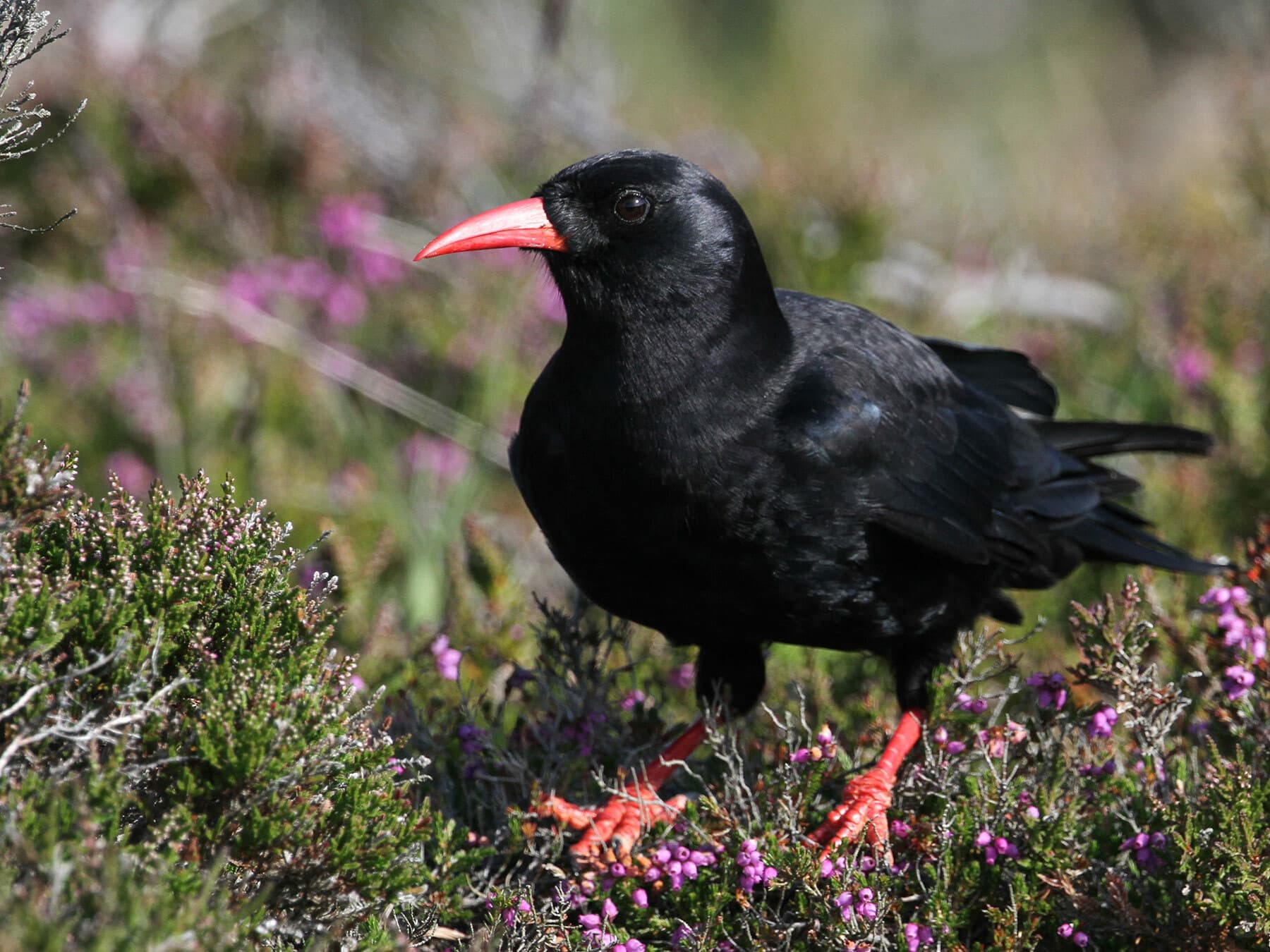
Choughs enjoy feeding from old coastal pastures where they dig up earthworms, beetles, ants and other readily available insects and invertebrates using their purpose designed bill to probe into the soil. They will also consider small molluscs and lichen.
Nesting and breeding
Nests can be bulky and are made of sticks, roots, heather and other plants and are lined with hair and wool. They are normally constructed inside mountain rock cracks and fissures, cliff face caves and old disused buildings. One brood of between 3 – 5 eggs coloured white with brown or grey blotches is produced between May to July.
Behaviour
Red-billed Choughs are highly social birds, often seen in pairs or small flocks. They perform acrobatic aerial displays, rolling and tumbling in the air while calling loudly.
On the ground, they use their curved bills to probe soil and crevices for insects, demonstrating remarkable dexterity in their foraging techniques.
Lifespan and predators
The chough has a lifespan of five to ten years although twenty years plus has been recorded for captive birds.
Conservation
While globally listed as Least Concern, Red-billed Choughs face localised threats from habitat loss and changes in agricultural practices.
Conservation efforts in the UK, particularly in Cornwall and Wales, focus on maintaining suitable grazing regimes to preserve their foraging habitats.
What does a Chough look like?
Adult males and females are similar in overall appearance although the female is slightly smaller than the male. They have an all-over glossy black plumage with a blue-green sheen and most noticeably, striking red legs and a long red tapered slightly curved bill. The eyes are black and they have large square wings and a square tail. Particularly apparent in flight are their ‘fingered’ primary wing feathers. Choughs are slightly larger in stature than jackdaws. Juveniles are duller than adults with a pale orange-red bill and red legs. On the wing, they are masters making long upward swoops and steep rapid descents.
Similar birds
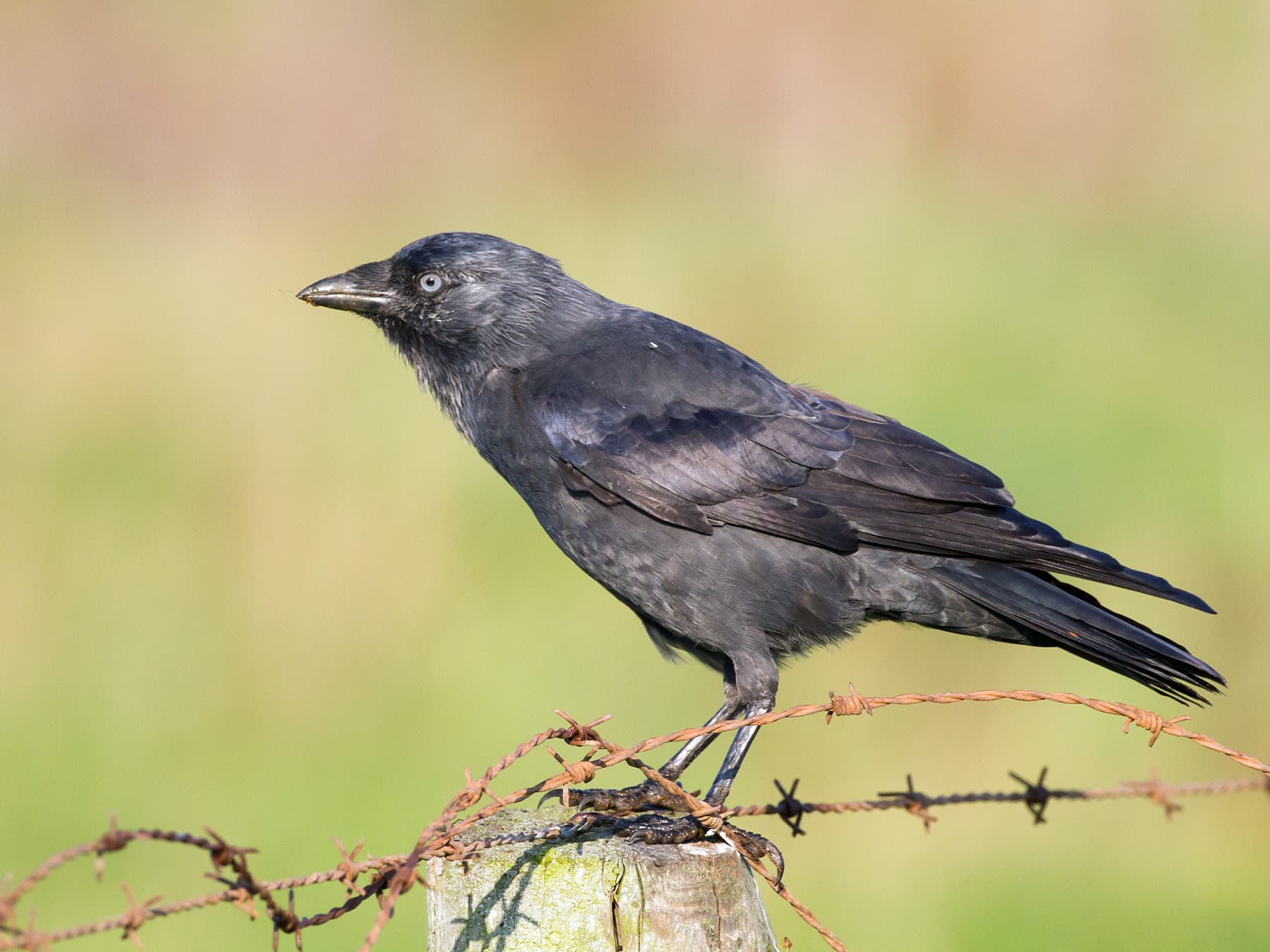
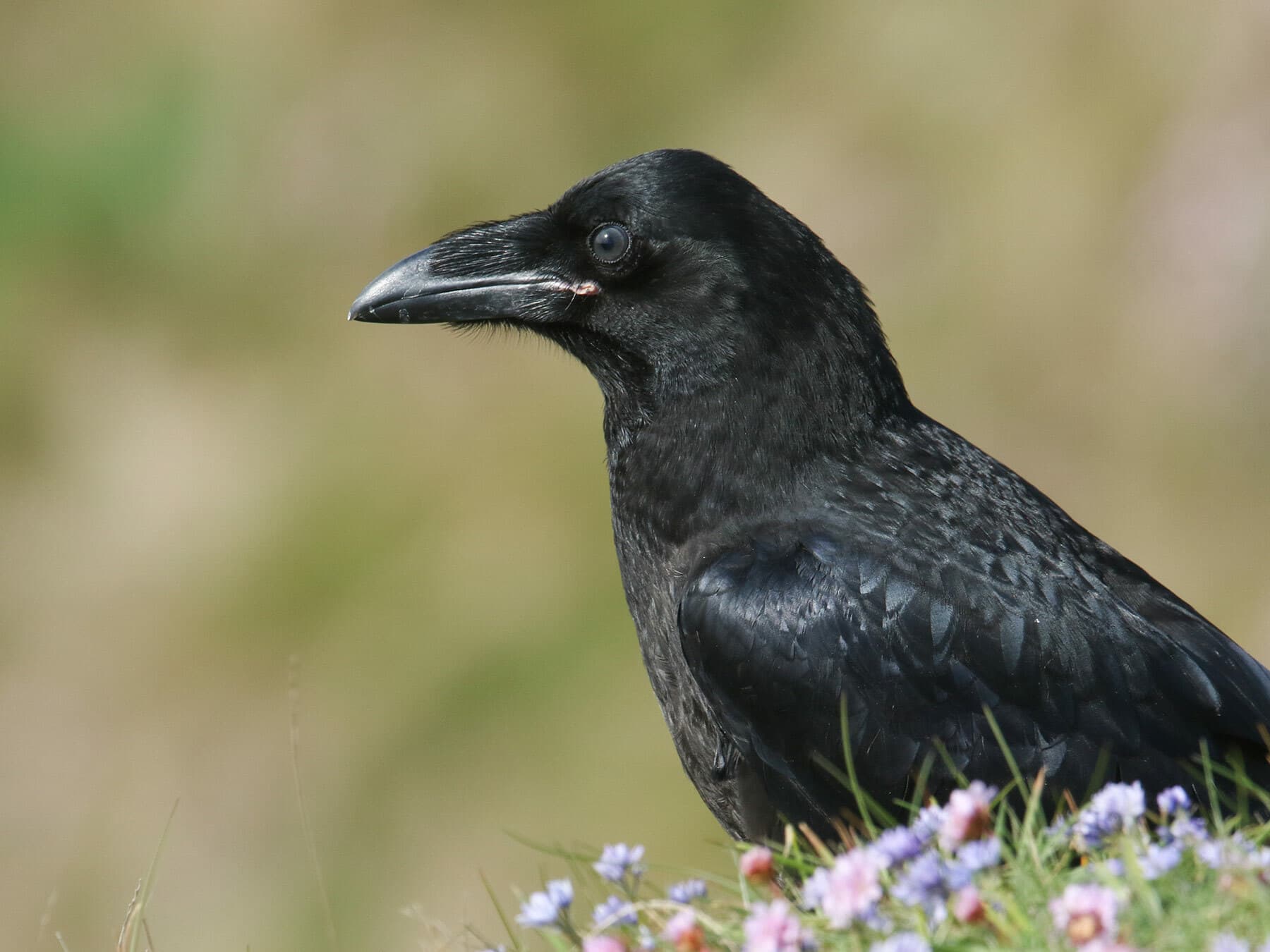
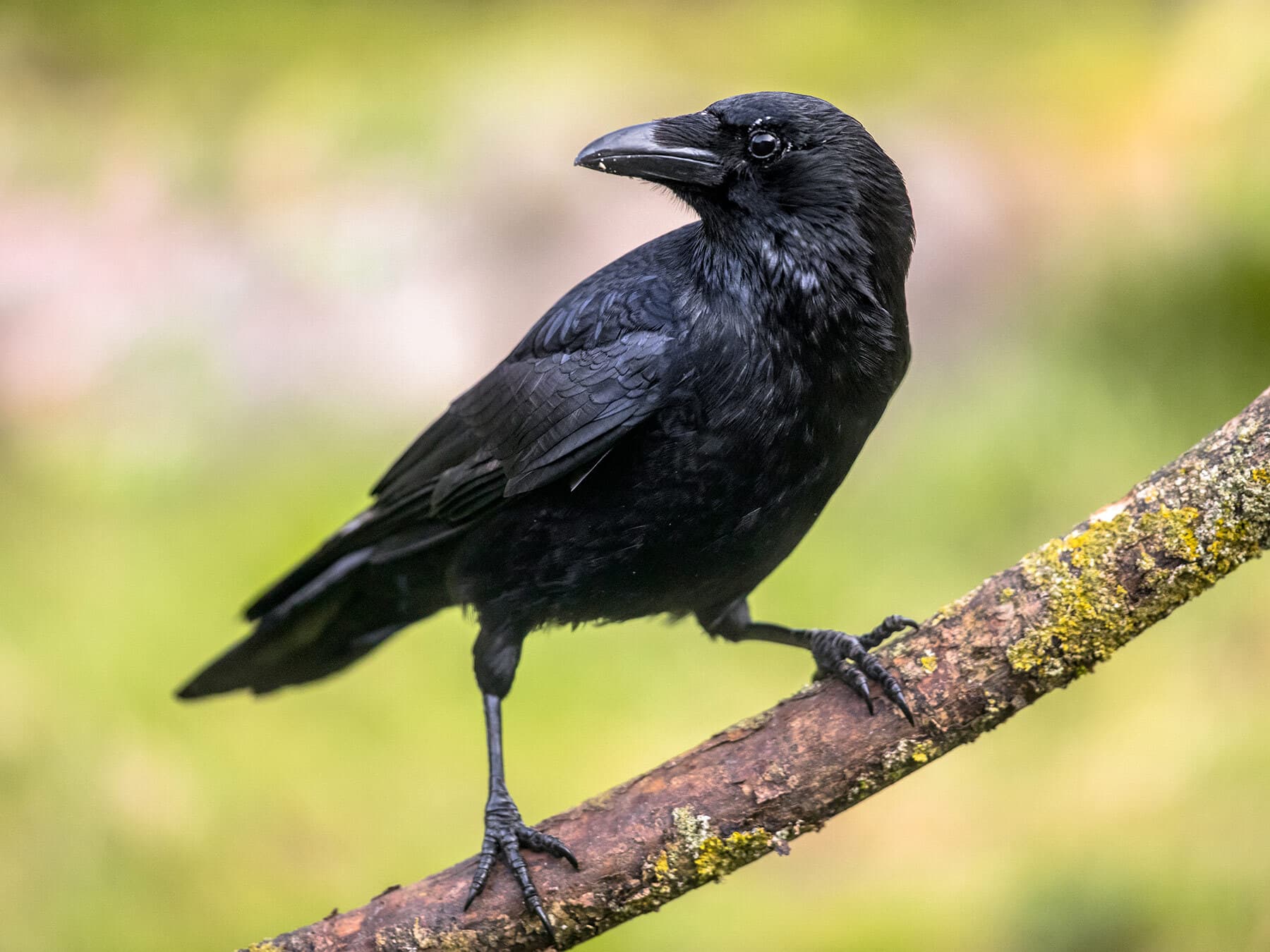
Often mistaken for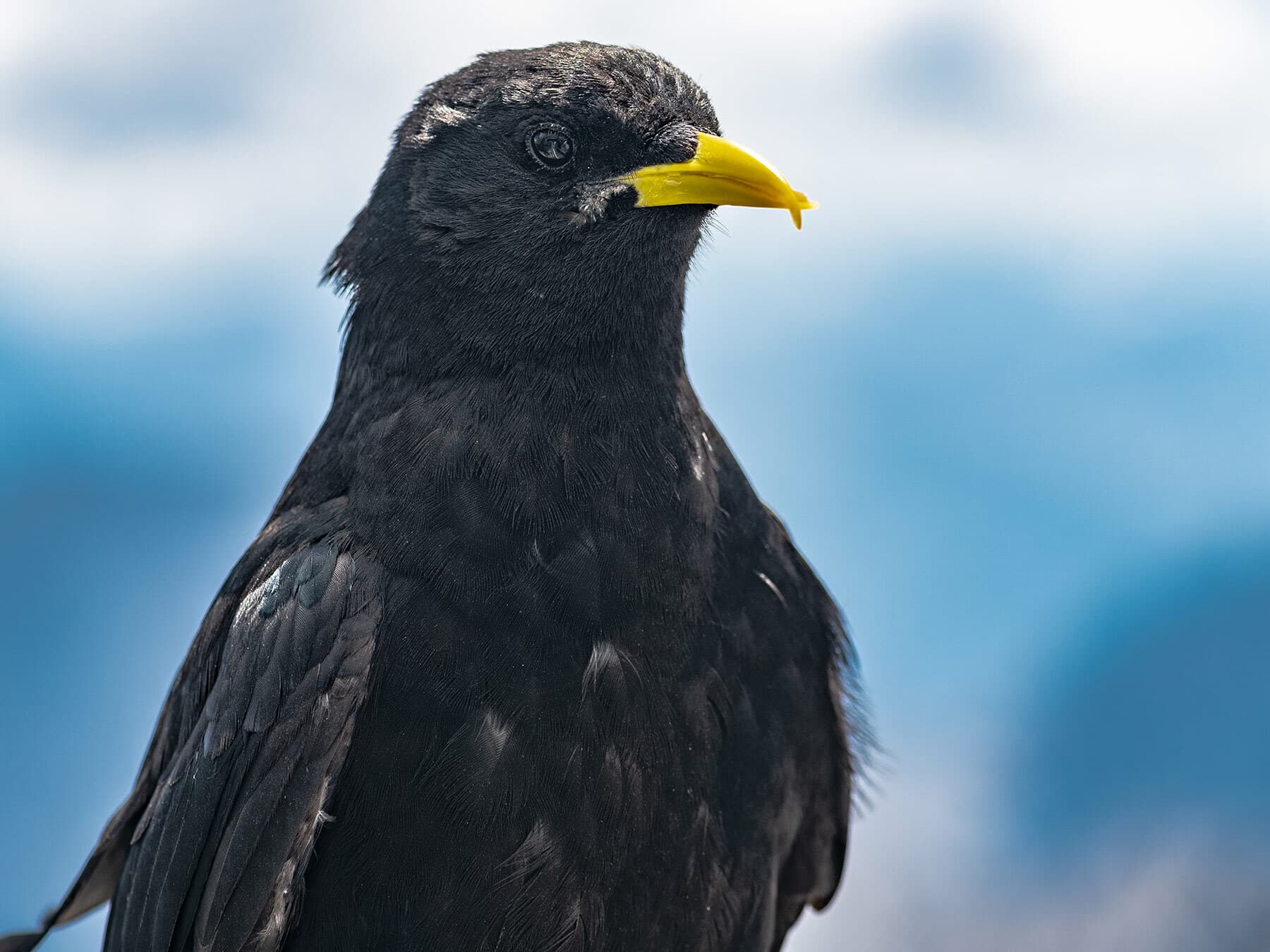
More photos
4 photos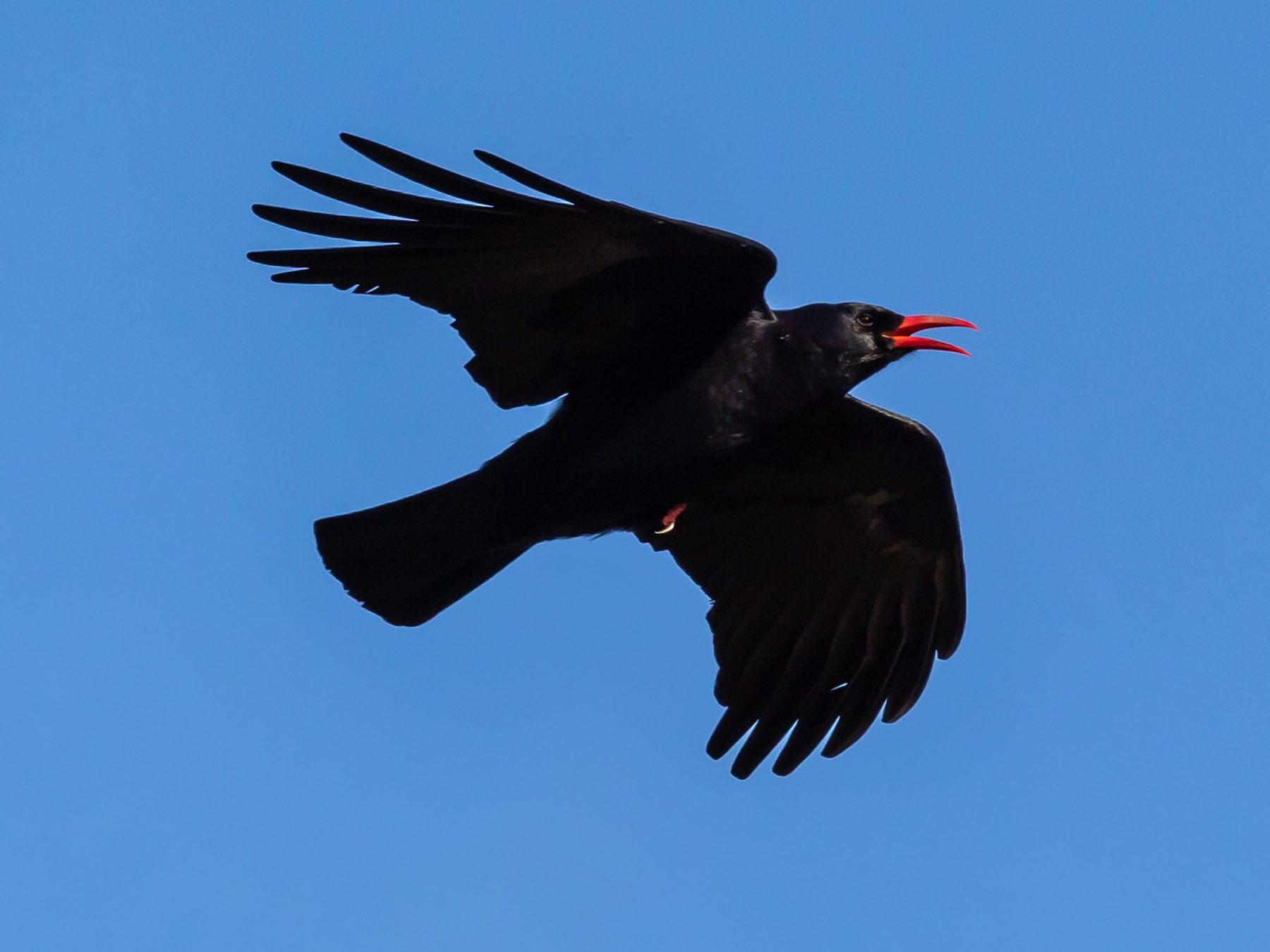
Red-billed Chough guides
1 guidesQuick facts
- Length
- 39–43 cm
- Wingspan
- 73–90 cm
- Weight
- 280–360 g
- Lifespan
- 5–7 years · oldest recorded 23 years
- Family
- Crows & Jays
- Migration
- Resident
- Global status (IUCN)
- Least Concern
- World population
- 809,000 - 1,730,000 mature individuals
- Population trend
- Slight decrease in population, but no concern due to large population
- Also called
- Cornish Chough, Cliff Crow
- Scientific name
- Pyrrhocorax pyrrhocorax
Sources
4- 1BirdLife International. 2016. Pyrrhocorax pyrrhocorax. The IUCN Red List of Threatened Species 2016: e.T22705916A87384853. Source (opens in a new tab)
- 2BirdLife International. 2016. Pyrrhocorax pyrrhocorax. The IUCN Red List of Threatened Species 2016: e.T22705916A87384853. Source (opens in a new tab)
- 3BirdLife International. 2016. Pyrrhocorax pyrrhocorax. The IUCN Red List of Threatened Species 2016: e.T22705916A87384853. Source (opens in a new tab)
- 4BTO longevity records: maximum age from a ringed bird, 23 years, 11 days (set in 2019), BirdFacts: Chough (2019) Source (opens in a new tab)

Checked by
Nathan Cope, founder and editor
Nathan founded Birdfact and leads its writers and contributors in the UK, the US and Canada. He has watched and studied birds for more than ten years, and checks every article and species guide before it’s published.