


Common Raven
Northern Raven · Corvus corax
By the Birdfact teamChecked by Nathan Cope
On this page15 sections
How to recognise it
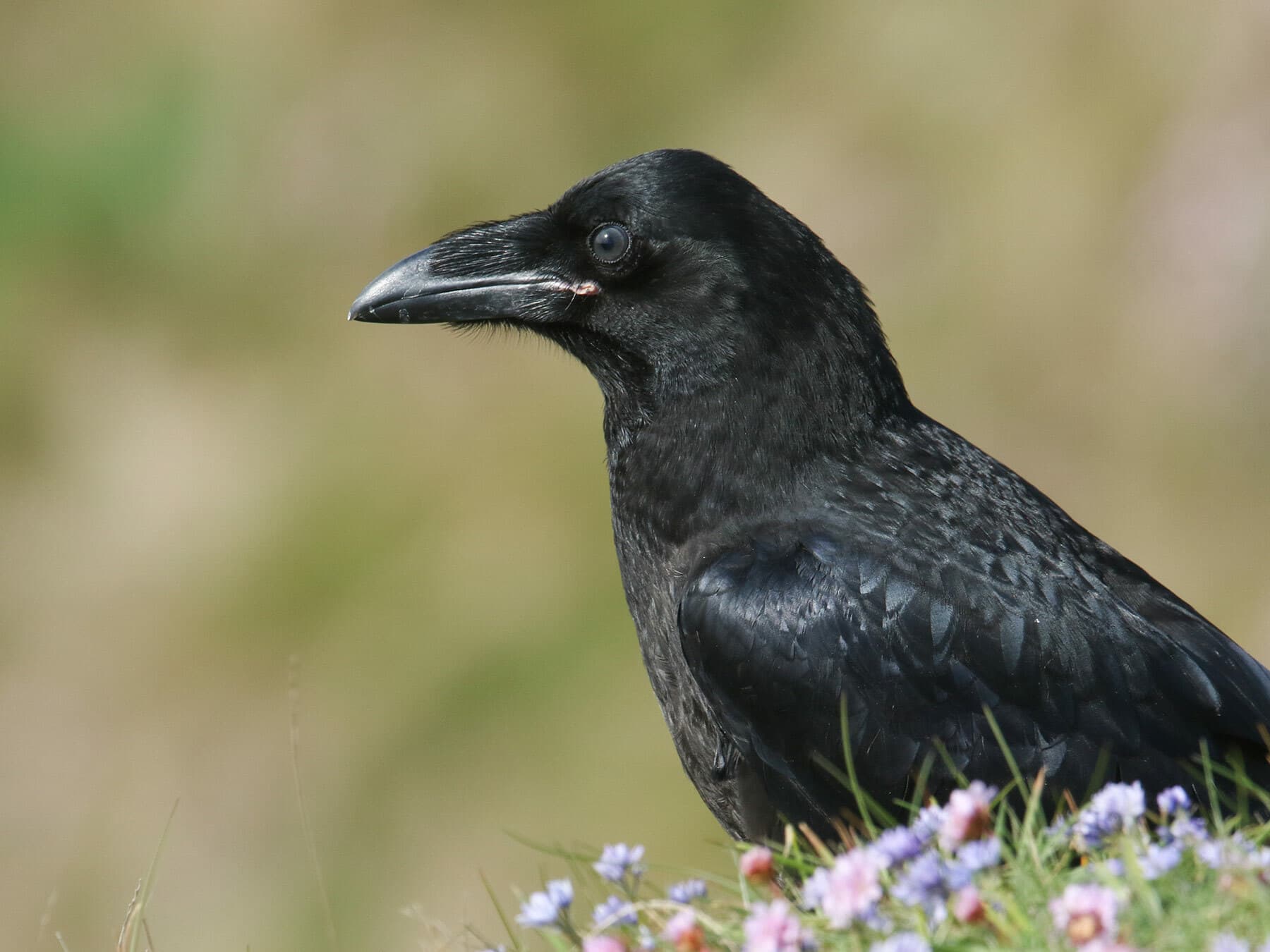
The Common Raven is a large, all-black bird with a thick neck, shaggy throat feathers, and a heavy, curved bill. Its long, wedge-shaped tail and broad, fingered wing tips are distinctive in flight.
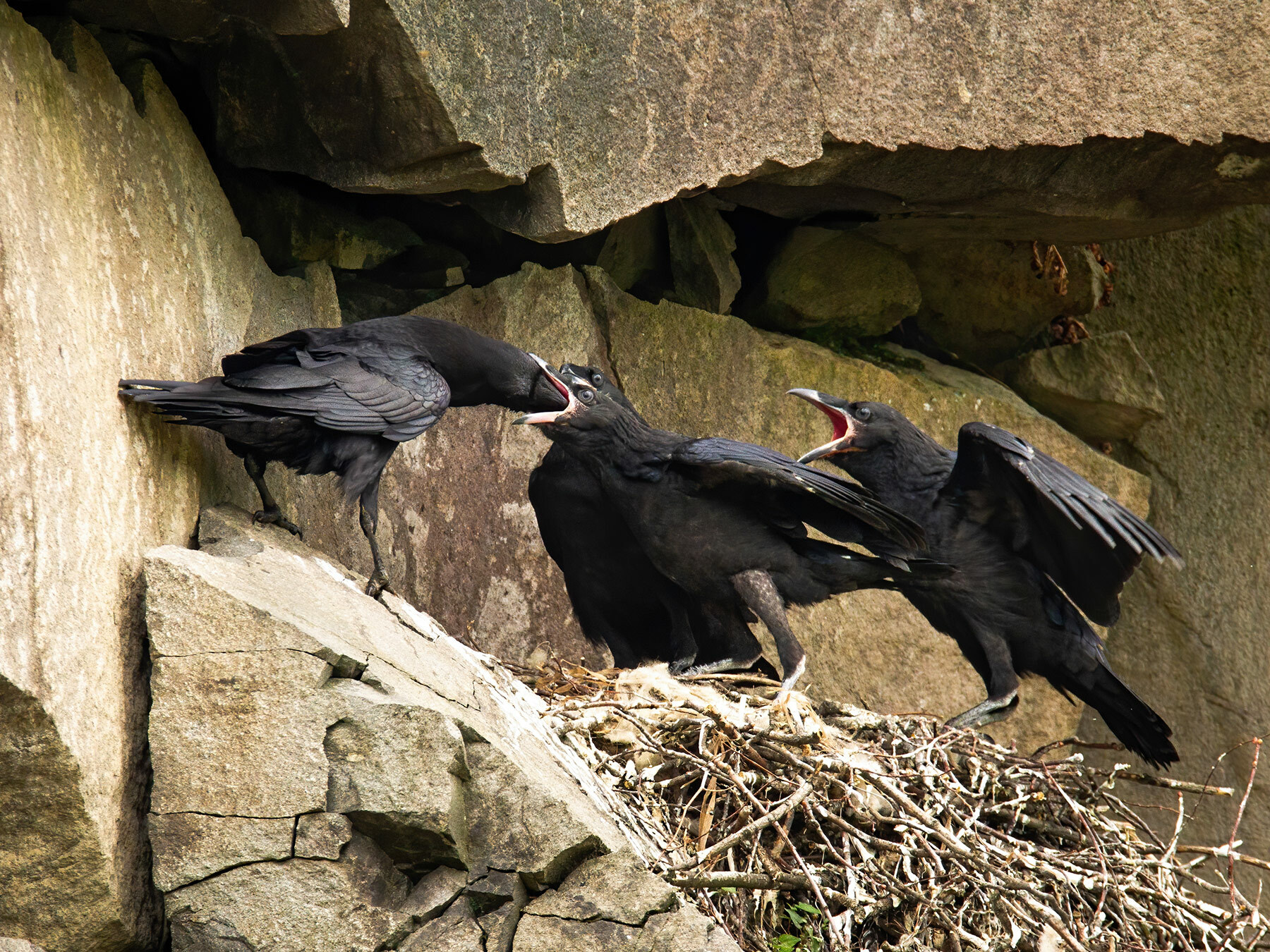
Both sexes look alike, with adults displaying a glossy sheen to their plumage. Juveniles are similar but lack a glossy appearance and have duller plumage with brownish tinges.
Its size
Adults- Length
- 54–67 cm
- Wingspan
- 115–150 cm
- Weight
- 689–1625 g
Its song and calls
A wide range of calls and the ability to successfully mimic sounds renders interpretation of the call type extremely difficult. Often echoing and very loud, a low to medium pitch sharp sounding bark like ‘prruk – prruk’ often repeated is a common call.
- Song0:00 / 0:09
Recorded in Molise, Italy · March 2023
- Flight call0:00 / 0:17
Recorded in Normandie, France · October 2022
When and where to see it
OctoberIn season
Most recorded in October
- 1. Shetland Islands2.1%
- 2. Monmouthshire2.1%
- 3. Powys2.0%
- 4. Eilean Siar2.0%
- 5. Tipperary2.0%
Each dot is a county, state or province: the bigger and darker, the larger the bird’s share of that place’s bird records that month. Grey dots: no regular records. The ringed point is the centre of the bird’s records this month; the arrow shows how it moved since last month, and the dashed loop its path through the year. “Arrivals” colours places where it becomes regular this month (orange) or is in its last regular month (grey). GBIF eBird Observation Dataset, 2019–2024. Map data: Natural Earth, US Census Bureau; place centres © OpenStreetMap contributors.
In your area
See when the Common Raven is recorded in your county, state or province.
How often the Common Raven turns up in the UK, Ireland, the United States and Canada through the year, from birdwatchers' records.
United Kingdom
Resident · all year · most records in September
Ireland
Resident · all year · most records in September
United States
Resident · all year · most records in December
Canada
Resident · all year · most records in February
Show as a table
| Month | United Kingdom | Ireland | United States | Canada |
|---|---|---|---|---|
| January | 0.33% (regular) | 0.67% (regular) | 0.79% (regular) | 2.8% (regular) |
| February | 0.35% (regular) | 0.74% (regular) | 0.76% (regular) | 2.8% (regular) |
| March | 0.35% (regular) | 0.78% (regular) | 0.71% (regular) | 2.2% (regular) |
| April | 0.34% (regular) | 0.79% (regular) | 0.57% (regular) | 1.4% (regular) |
| May | 0.29% (regular) | 0.70% (regular) | 0.49% (regular) | 0.92% (regular) |
| June | 0.27% (regular) | 0.63% (regular) | 0.67% (regular) | 1.1% (regular) |
| July | 0.33% (regular) | 0.74% (regular) | 0.62% (regular) | 1.1% (regular) |
| August | 0.40% (regular) | 0.85% (regular) | 0.67% (regular) | 1.3% (regular) |
| September | 0.45% (regular) | 0.92% (regular) | 0.74% (regular) | 1.5% (regular) |
| October | 0.43% (regular) | 0.91% (regular) | 0.77% (regular) | 1.8% (regular) |
| November | 0.36% (regular) | 0.73% (regular) | 0.78% (regular) | 2.2% (regular) |
| December | 0.33% (regular) | 0.61% (regular) | 0.80% (regular) | 2.7% (regular) |
Recorded regularly in
Worldwide: recorded regularly in 80 countries
Countries where it was recorded in at least 3 of the 6 years 2019–2024. Linked countries have their own bird list.
Europe (47)
- Åland Islands
- Albania
- Andorra
- Austria
- Belarus
- Belgium
- Bosnia & Herzegovina
- Bulgaria
- Croatia
- Czechia
- Denmark
- Estonia
- Faroe Islands
- Finland
- France
- Germany
- Gibraltar
- Greece
- Guernsey
- Hungary
- Iceland
- Ireland
- Isle of Man
- Italy
- Jersey
- Kosovo
- Latvia
- Liechtenstein
- Lithuania
- Luxembourg
- Moldova
- Montenegro
- Netherlands
- North Macedonia
- Norway
- Poland
- Portugal
- Romania
- Russia
- Serbia
- Slovakia
- Slovenia
- Spain
- Sweden
- Switzerland
- Ukraine
- United Kingdom
Asia (22)
- Armenia
- Azerbaijan
- Bhutan
- China
- Cyprus
- Georgia
- India
- Iran
- Iraq
- Israel
- Japan
- Jordan
- Kazakhstan
- Kyrgyzstan
- Lebanon
- Mongolia
- Nepal
- Pakistan
- Palestinian Territories
- Tajikistan
- Turkey
- Uzbekistan
North America (8)
- Canada
- El Salvador
- Greenland
- Guatemala
- Honduras
- Mexico
- St Pierre & Miquelon
- United States
Data: EOD – eBird Observation Dataset (Cornell Lab of Ornithology), accessed via GBIF.org, CC BY 4.0. Records from 2019–2024, aggregated and filtered by Birdfact. How these lists are made
Common ravens are equally at home flying over wild open and barren highlands, scavenging in urban and suburban areas, or soaring across upland moors, woods and farmland. They tend to avoid the east coast of the UK but can be found throughout Northern Ireland, most of Scotland and Wales and in the south west of England, Lake District and across the Pennines.
Signs and Spotting tips
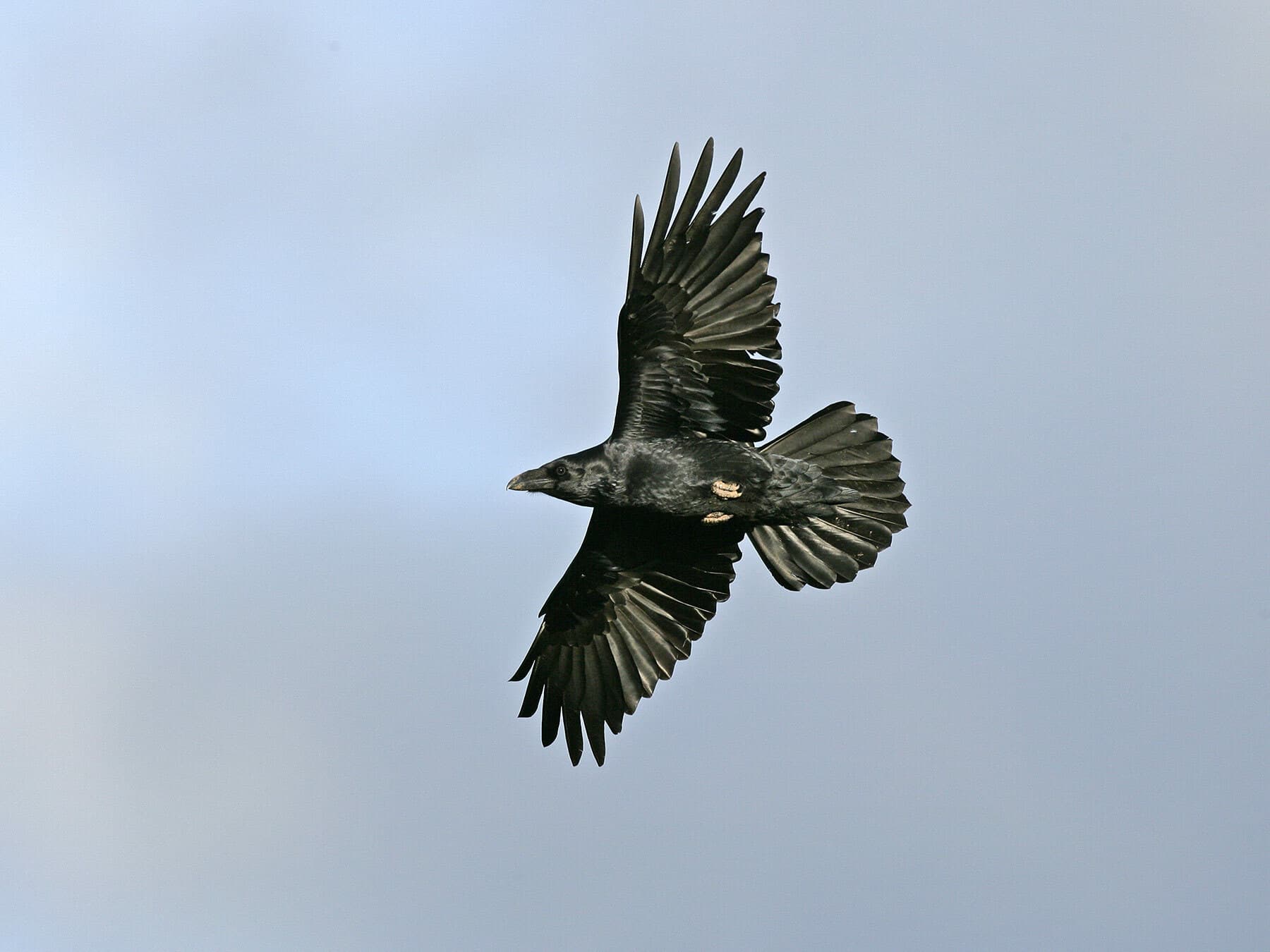
Close up they are easily identifiable with their large glossy black body and thick and chunky arch shaped bill, but in flight they also display characteristics common to the species. When soaring above their long ‘wedged’ tails appear diamond shaped with their long black pointed wings clearly displaying prominent wing fingers in a similar fashion to a common bird of prey.
Telling a raven from a crow? See raven vs crow, with sizes to scale, recordings and where each lives.
What it eats
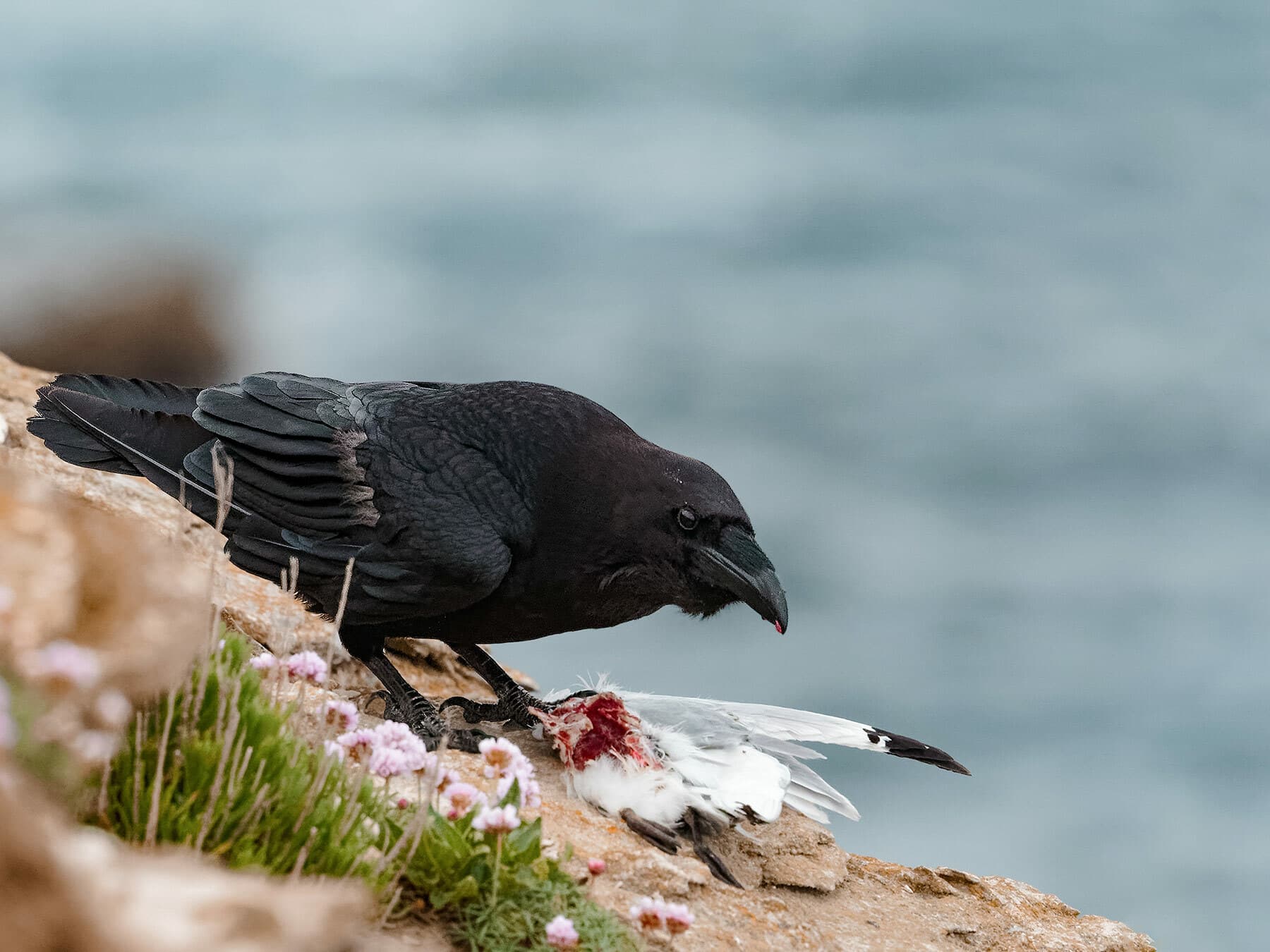
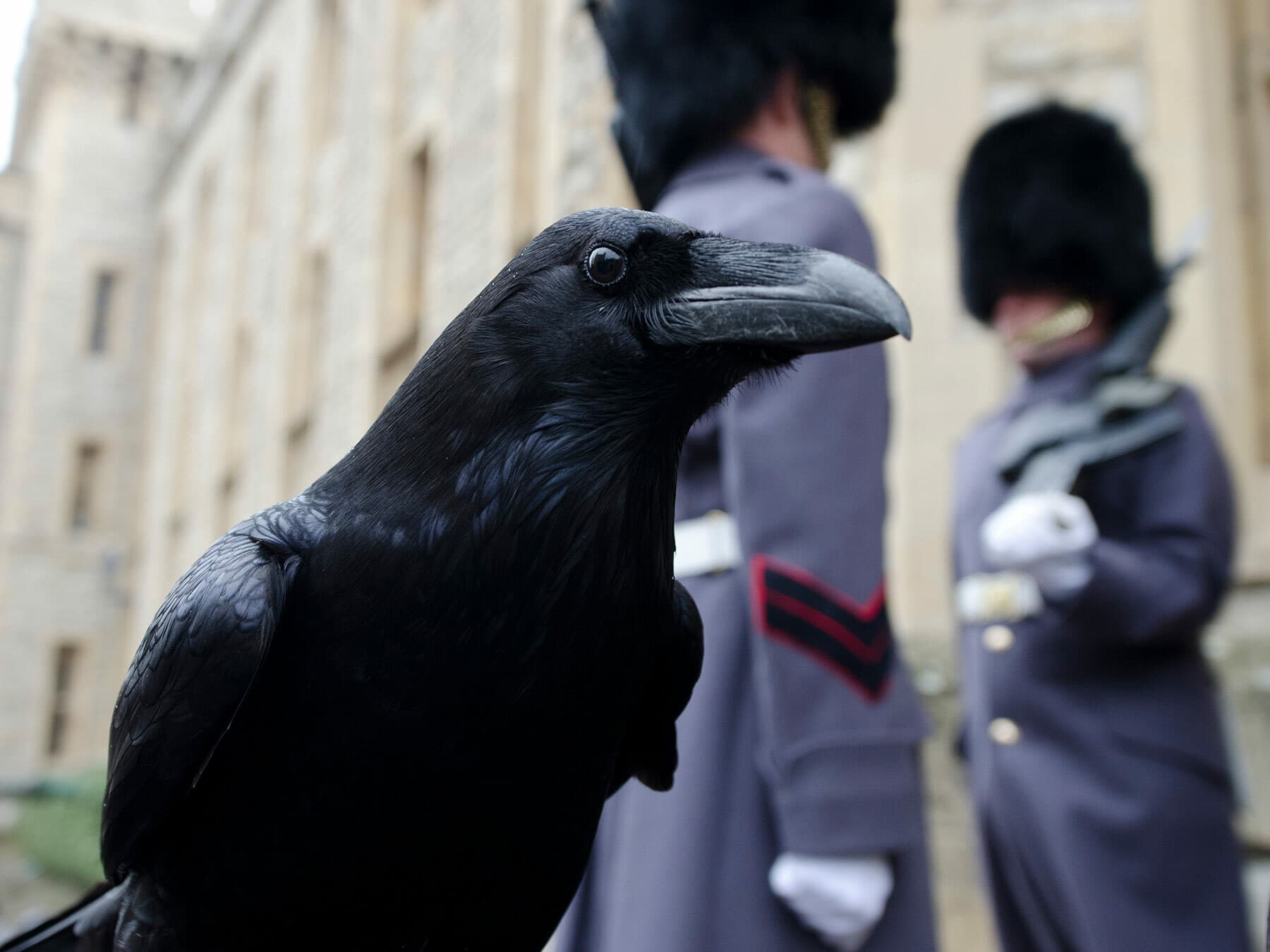
Often referred to as scavengers, picking flesh off carcasses, the common raven is also a skilful hunter but will eat almost anything. Predominantly small mammals, birds, fish, reptiles and even snails and worms but also berries, fruits and seeds. It will also scavenge on rubbish tips and shorelines.
Nesting and breeding
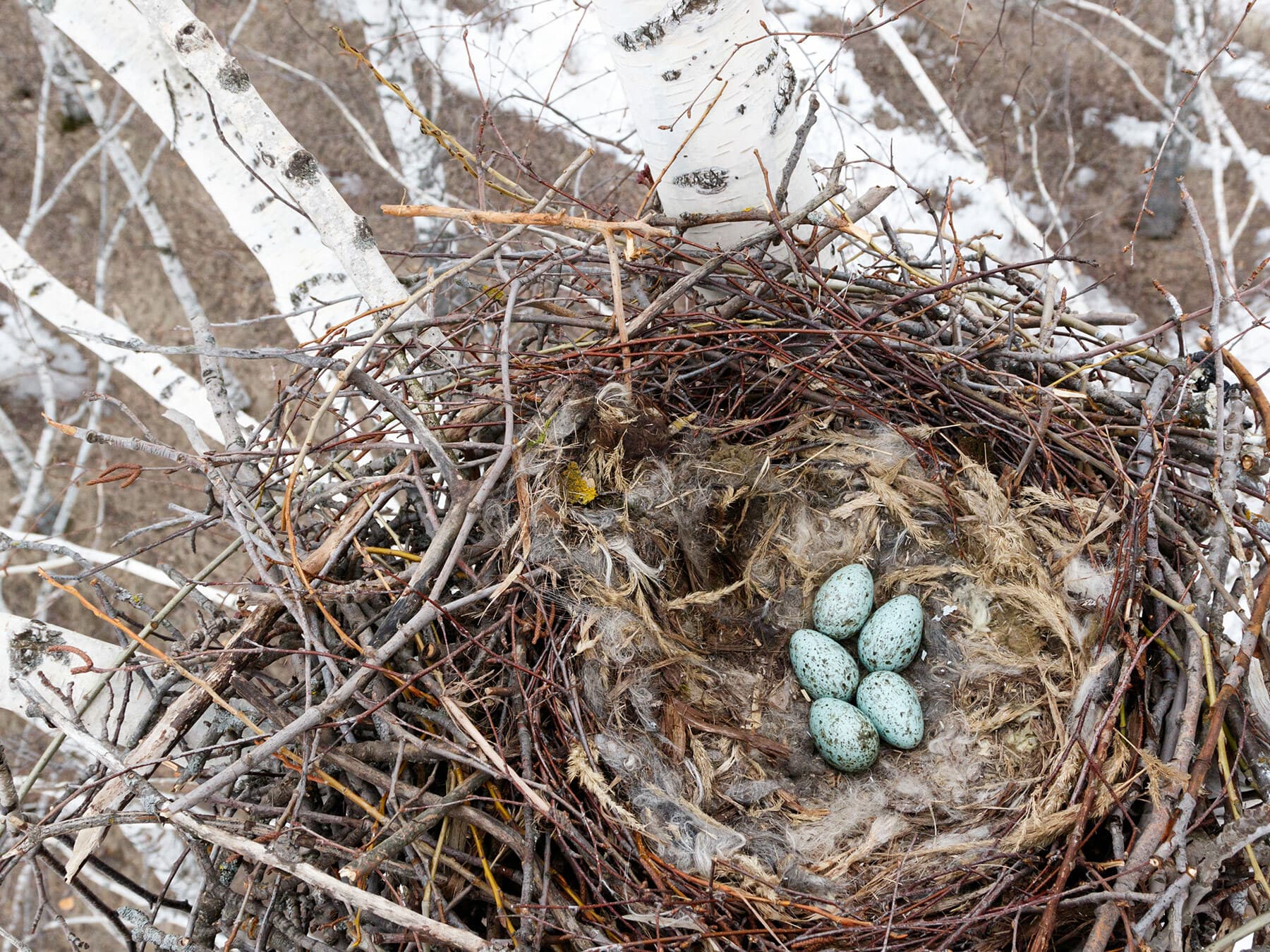
Large nests are constructed mainly high in treetops out of sticks, heather and grasses and commonly used again year after year with a little nest maintenance undertaken at the start of each breeding season. One brood consisting of 4 – 6 eggs is laid annually between February to May. Eggs are a pale bluish green in colour with brown spotting and are incubated by the female for eighteen to twenty one days. The young fledge between thirty five to forty two days and remain with their parents for a further six months.
Behaviour
Common Ravens are highly intelligent and social birds. They often engage in aerial acrobatics, performing rolls and somersaults in flight.
Ravens are known for their problem-solving abilities, using tools and exhibiting complex social behaviors, including cooperative hunting and food sharing.
Lifespan and predators
The oldest known wild raven lived at least 22 years 7 months (banded in Nova Scotia); in Britain and Ireland the record is 17 years 11 months. Many never reach adulthood: in studies, between about a quarter and three-fifths of young ravens died in their first year.
Conservation
What does a Common Raven look like?
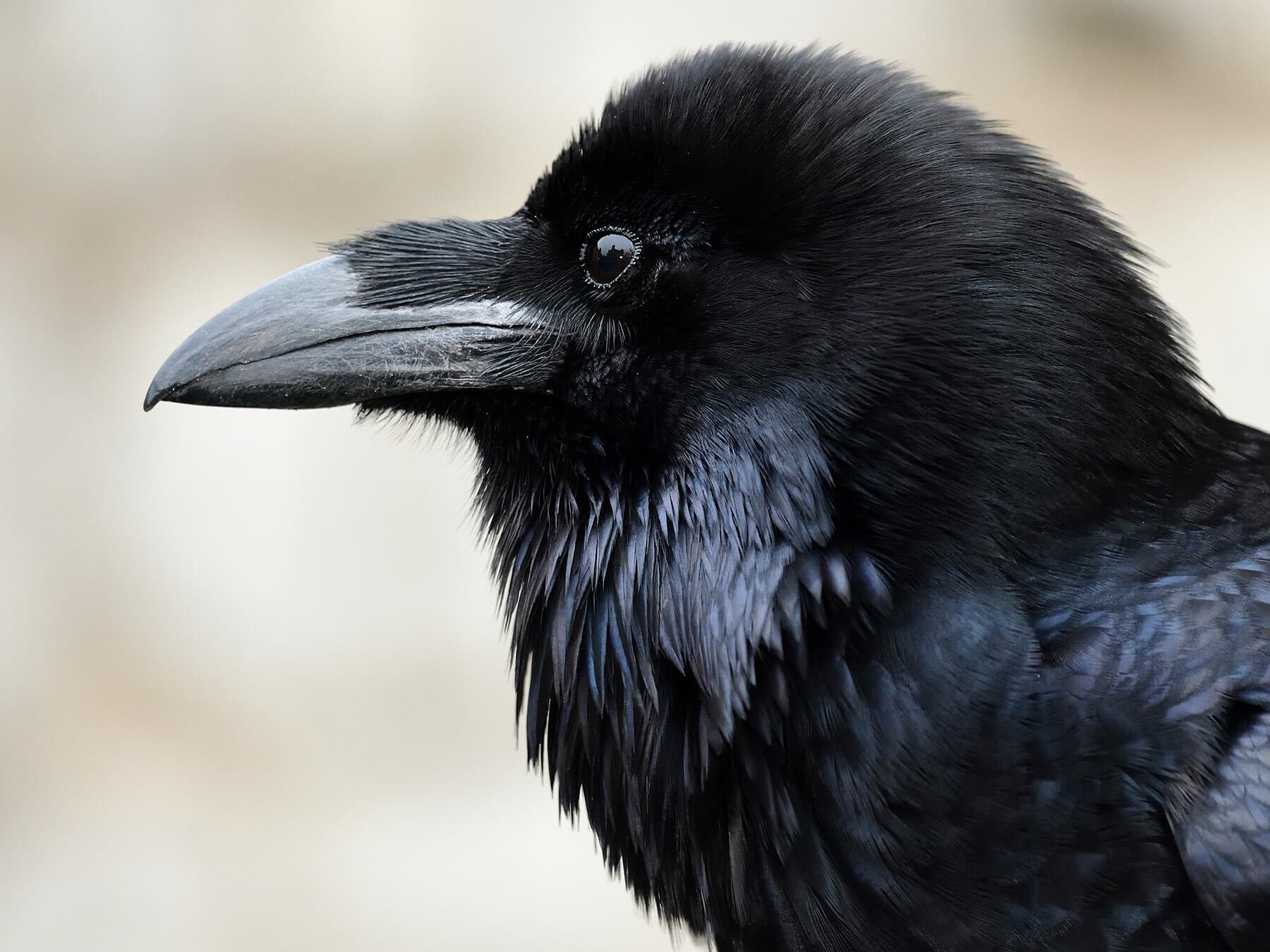
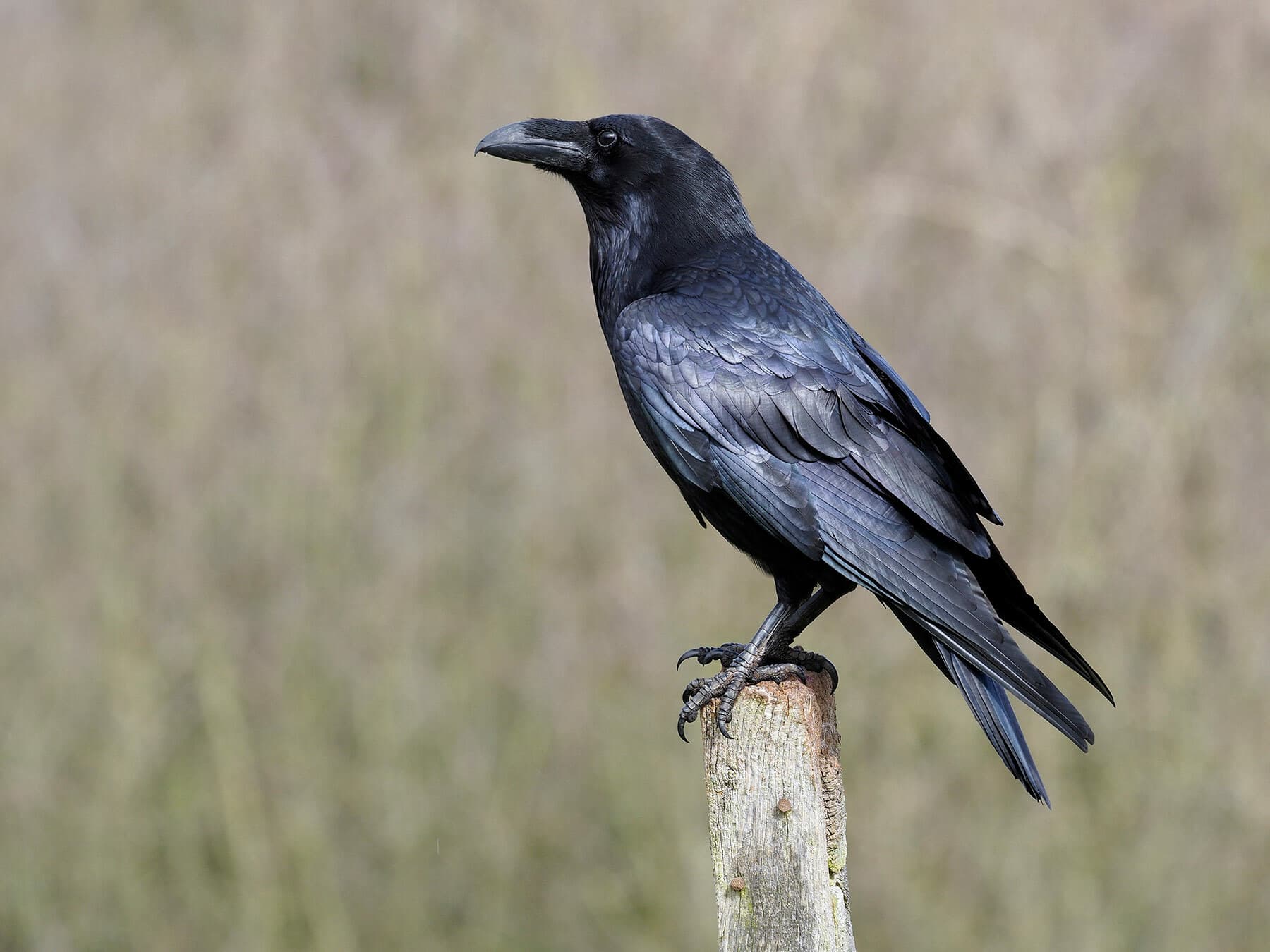
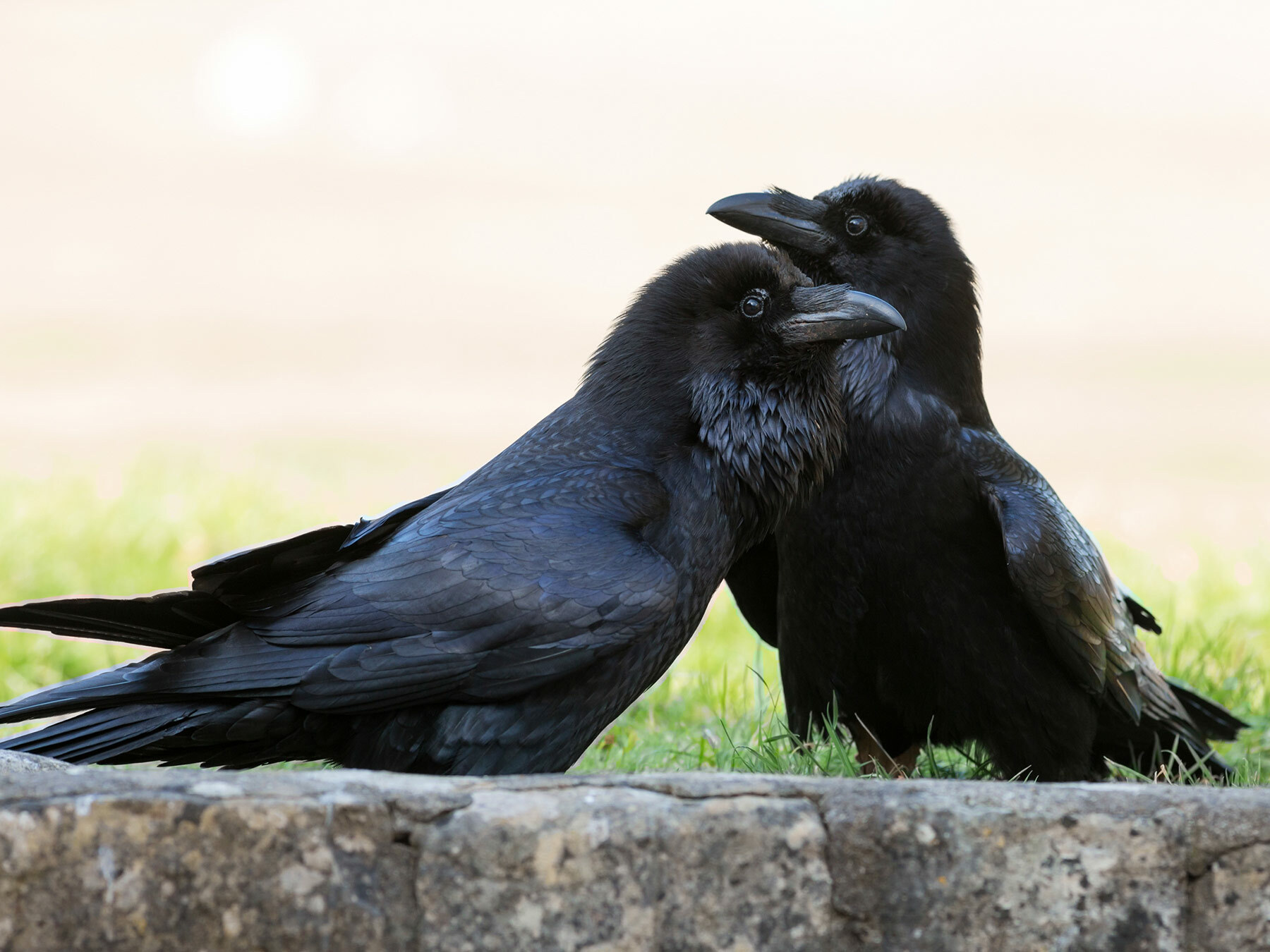
Male and female common ravens are almost identical in appearance and plumage although the female is slightly smaller. The bird is a glossy black all over with a purplish, green or blue hue. They have elongated loose erectile throat feathers which are often raised, particularly by the male, during displays of dominance. The head is large and the bill a powerful, medium length, chunky black colour. Careful examination of the bill may reveal nasal bristles which can cover up to half of the upper ridge of the bill. The eyes are a dark brown colour with the legs and feet being black with grey soles.
Similar birds
Often mistaken for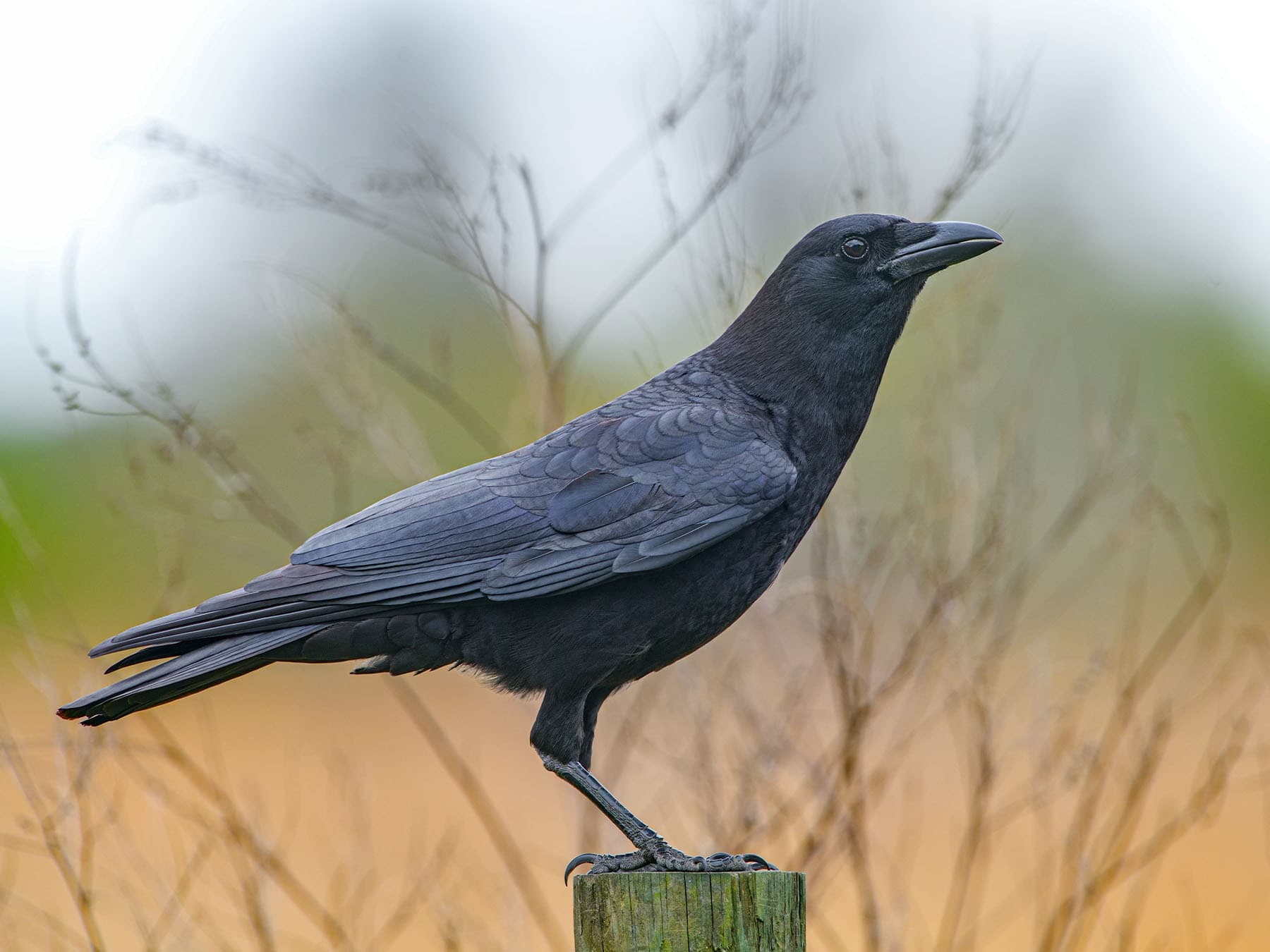
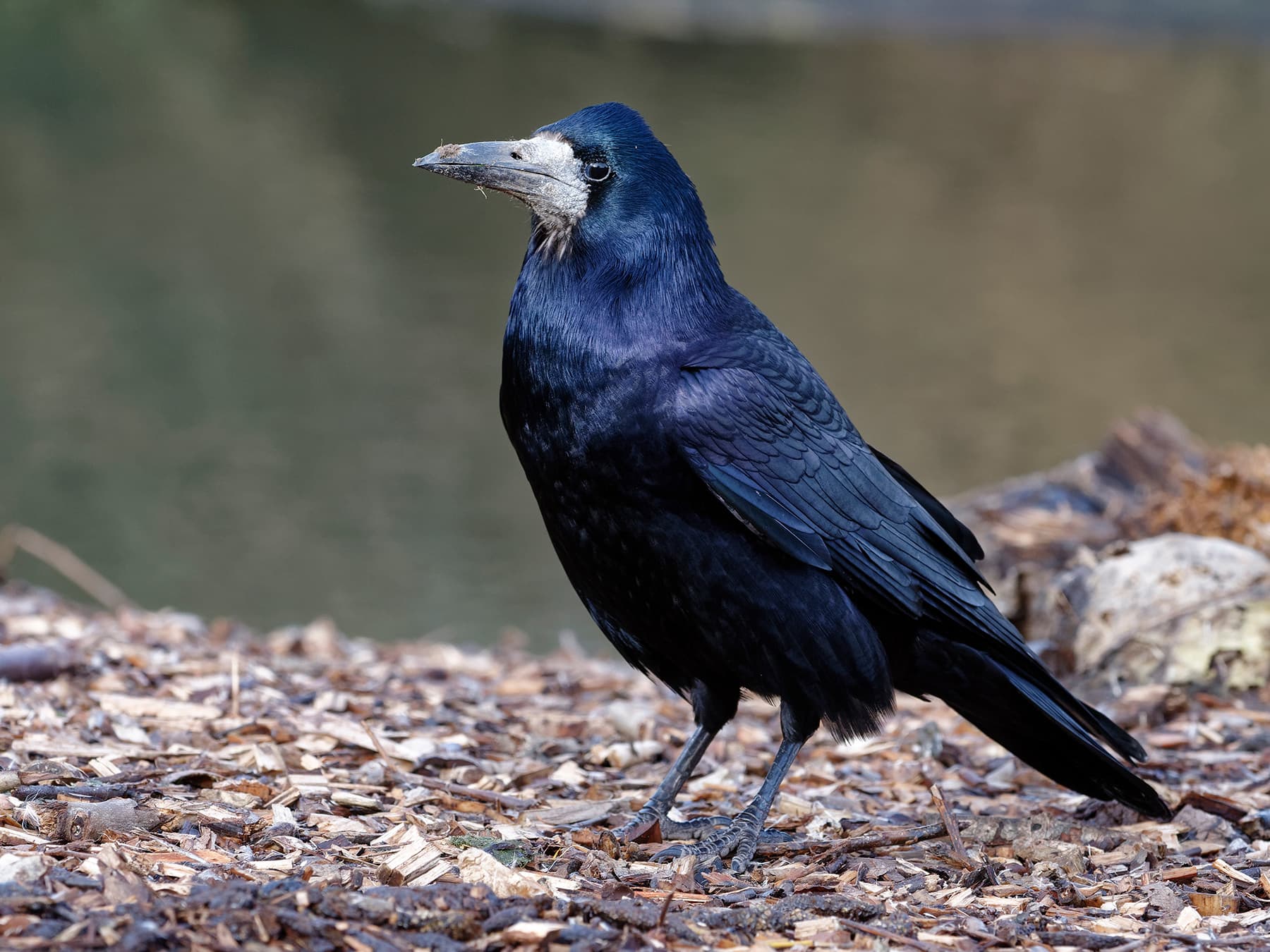
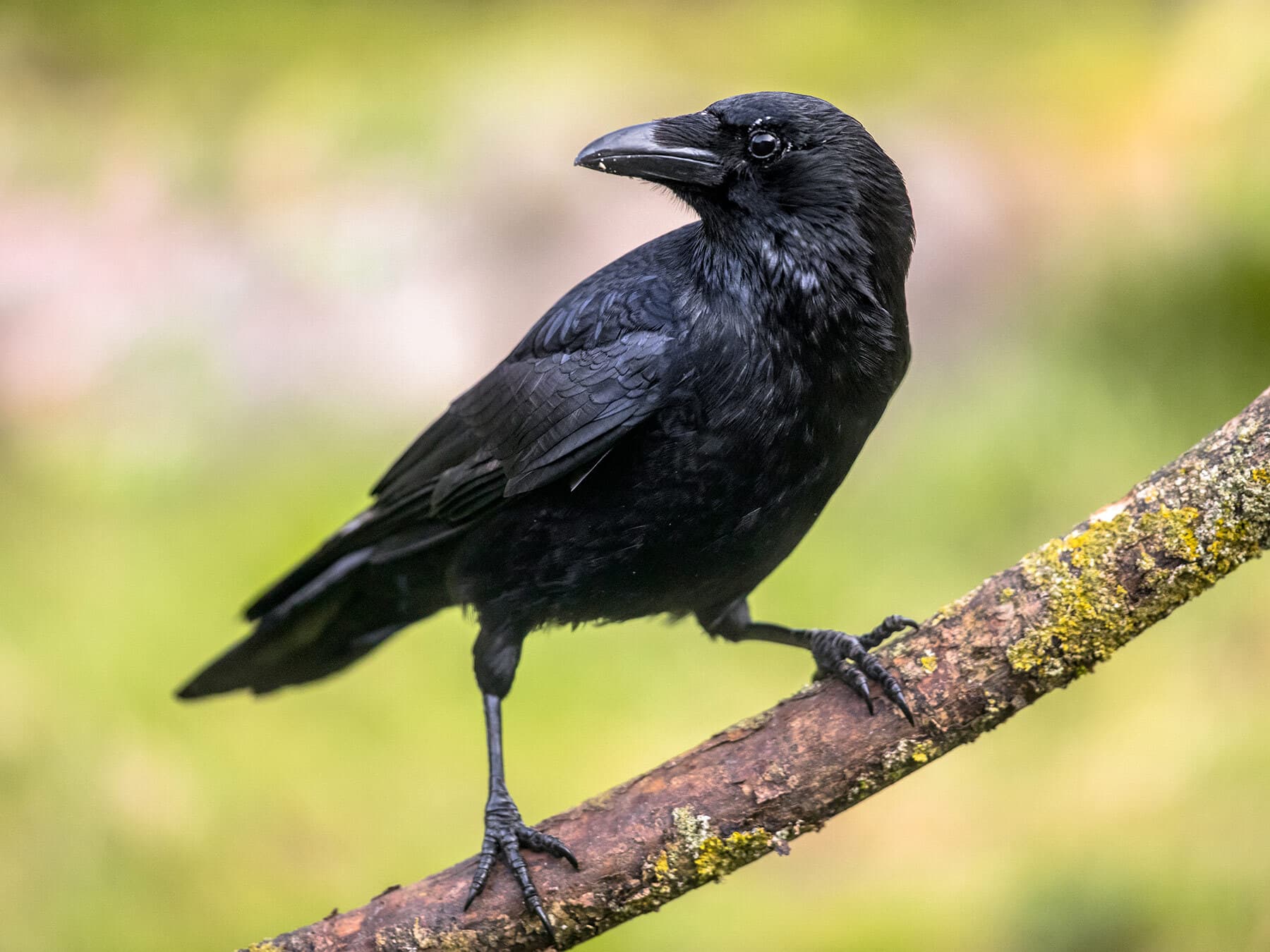
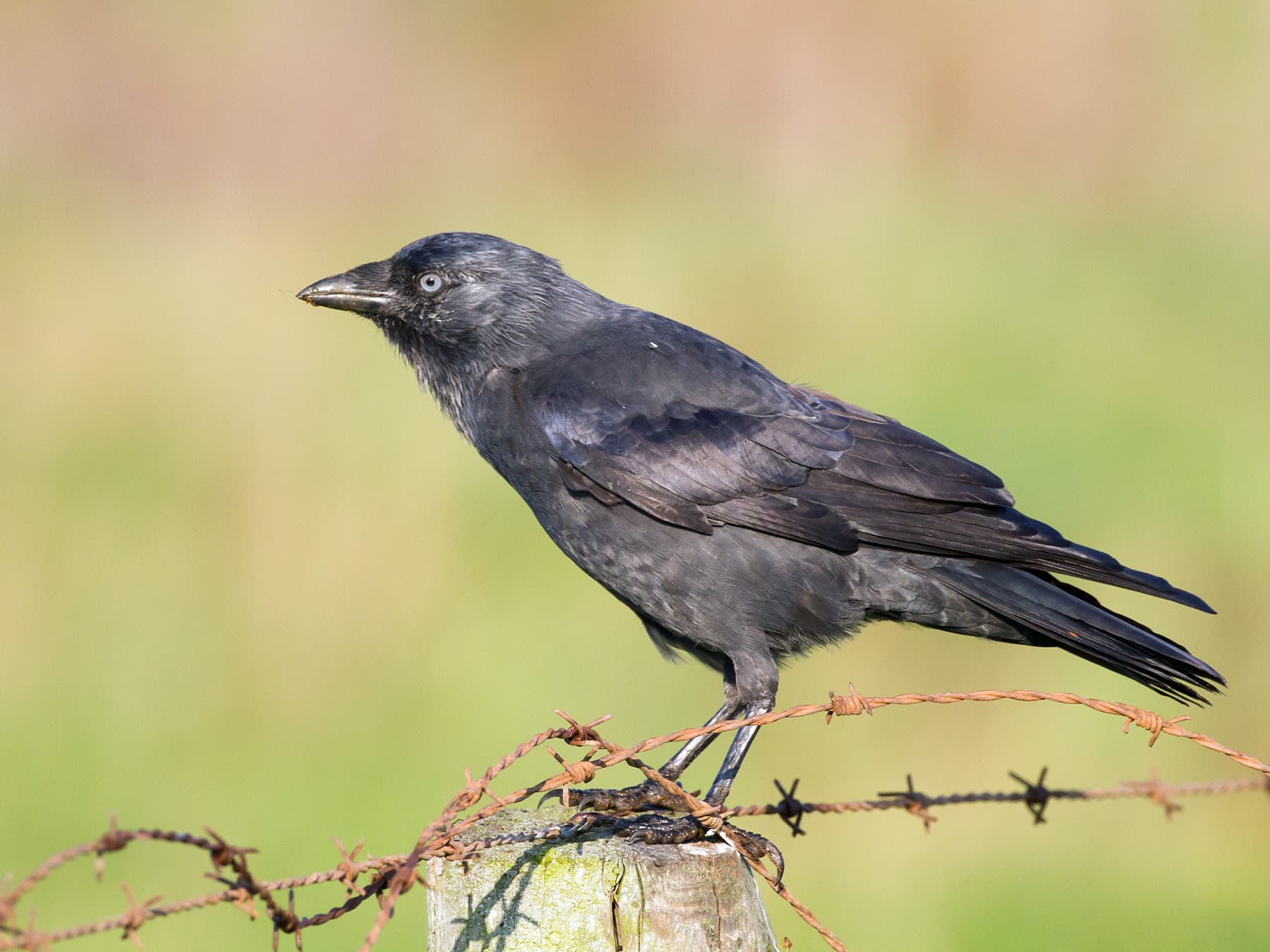
More photos
3 photos
Common Raven guides
6 guidesQuick facts
- Length
- 54–67 cm
- Wingspan
- 115–150 cm
- Weight
- 689–1625 g
- Lifespan
- 10–15 years · oldest recorded 17.9 years
- Family
- Crows & Jays
- Migration
- Resident
- Global status (IUCN)
- Least Concern
- World population
- Over 16,000,000 mature individuals
- Population trend
- Population stable or increasing in most areas
- Also called
- Northern Raven
- Scientific name
- Corvus corax
Sources
10- 1BirdLife International. 2017. Corvus corax (amended version of 2016 assessment). The IUCN Red List of Threatened Species 2017: e.T22706068A113271893. Source (opens in a new tab)
- 2BirdLife International (2024) Species factsheet: Common Raven Corvus corax. Source (opens in a new tab)
- 3Rich et al. (2004)
- 4BTO longevity records: maximum age from a ringed bird, 17 years, 11 months, 15 days (set in 2000), BirdFacts: Raven (2000) Source (opens in a new tab)
- 5RSPB. Raven. RSPB, Birds and wildlife. Accessed 8 October 2026. Source (opens in a new tab)
- 6Boarman, W. I. and Heinrich, B. (2020). Common Raven (Corvus corax), version 1.0. Birds of the World (S. M. Billerman, editor). Cornell Lab of Ornithology. doi:10.2173/bow.comrav.01 (opens in a new tab)
- 7McGowan, K. J.. Frequently asked questions about crows. Cornell Lab of Ornithology. Accessed 8 October 2026. Source (opens in a new tab)
- 8Cornell Lab of Ornithology. Common Raven identification. All About Birds. Accessed 8 October 2026. Source (opens in a new tab)
- 9RSPB. Rook. RSPB Birds A-Z. Accessed 8 October 2026. Source (opens in a new tab)
- 10BTO. Identification: corvids. Bird Table (BTO Garden BirdWatch magazine). Accessed 8 October 2026. Source (opens in a new tab)

Checked by
Nathan Cope, founder and editor
Nathan founded Birdfact and leads its writers and contributors in the UK, the US and Canada. He has watched and studied birds for more than ten years, and checks every article and species guide before it’s published.