Australian Raven
Southern Raven · Corvus coronoides
By the Birdfact teamChecked by Nathan Cope
On this page21 sections
- How to recognise it
- Its size
- Its song and calls
- When and where to see it
- What it eats
- Nesting and breeding
- Behaviour
- Lifespan and predators
- Conservation
- What does an Australian Raven look like?
- How big is an Australian Raven?
- How much does an Australian Raven weigh?
- What is the scientific name of an Australian Raven?
- Are Australian Ravens aggressive?
- Are Australian Ravens endangered?
- Do Australian Ravens mate for life?
- Are Australian Ravens common?
- More photos
- Australian Raven guides
- Quick facts
- Sources
How to recognise it
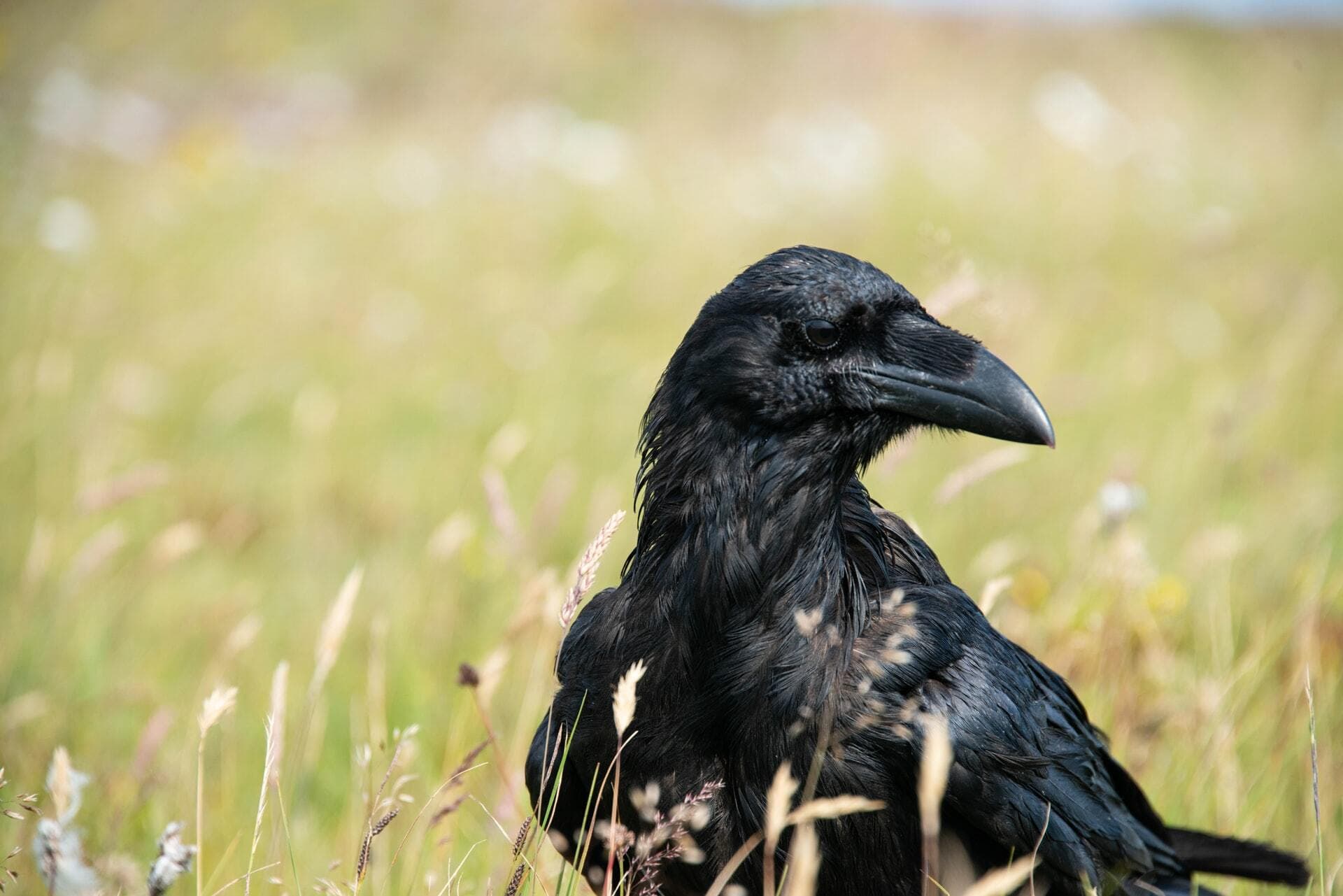
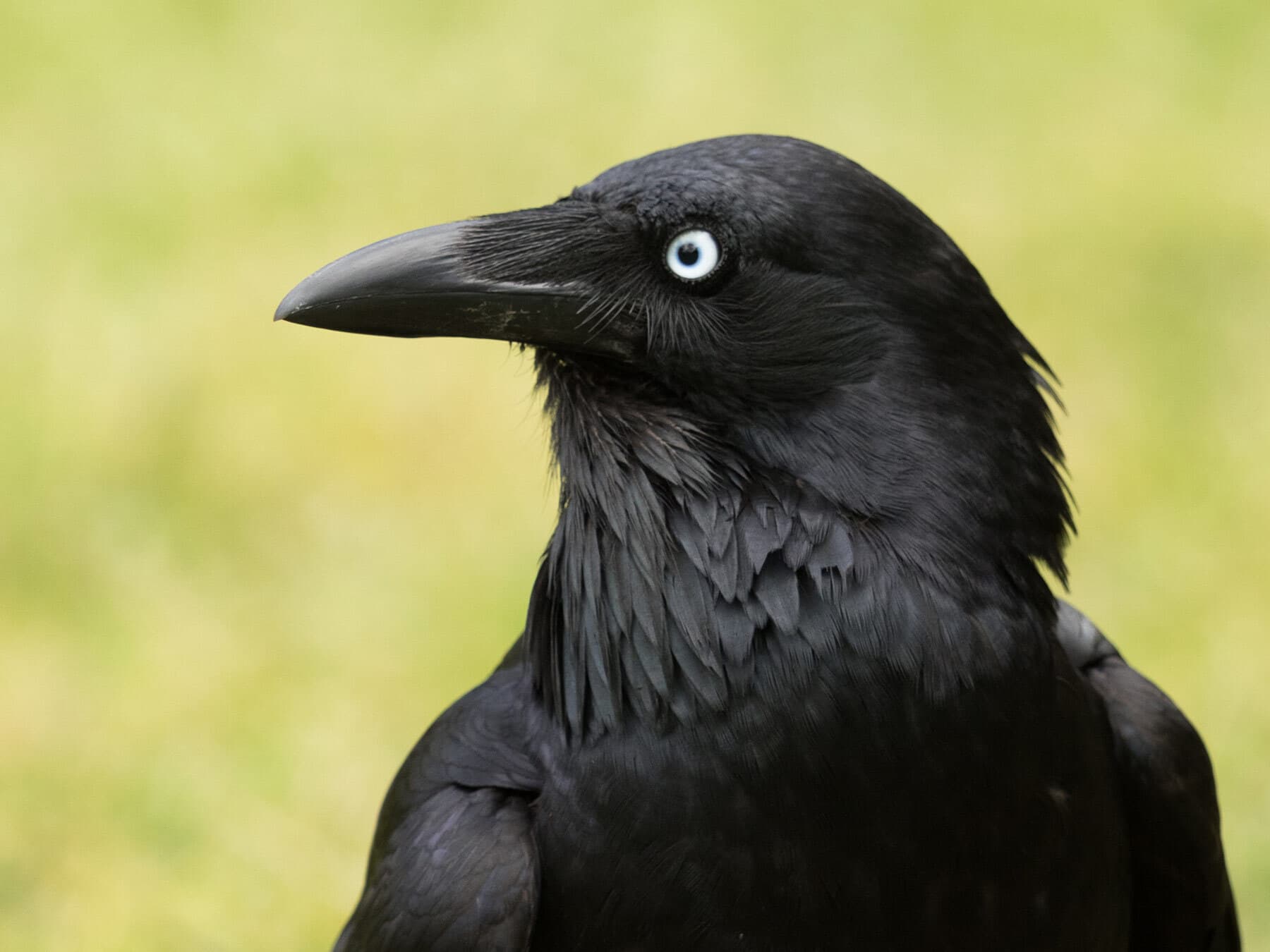
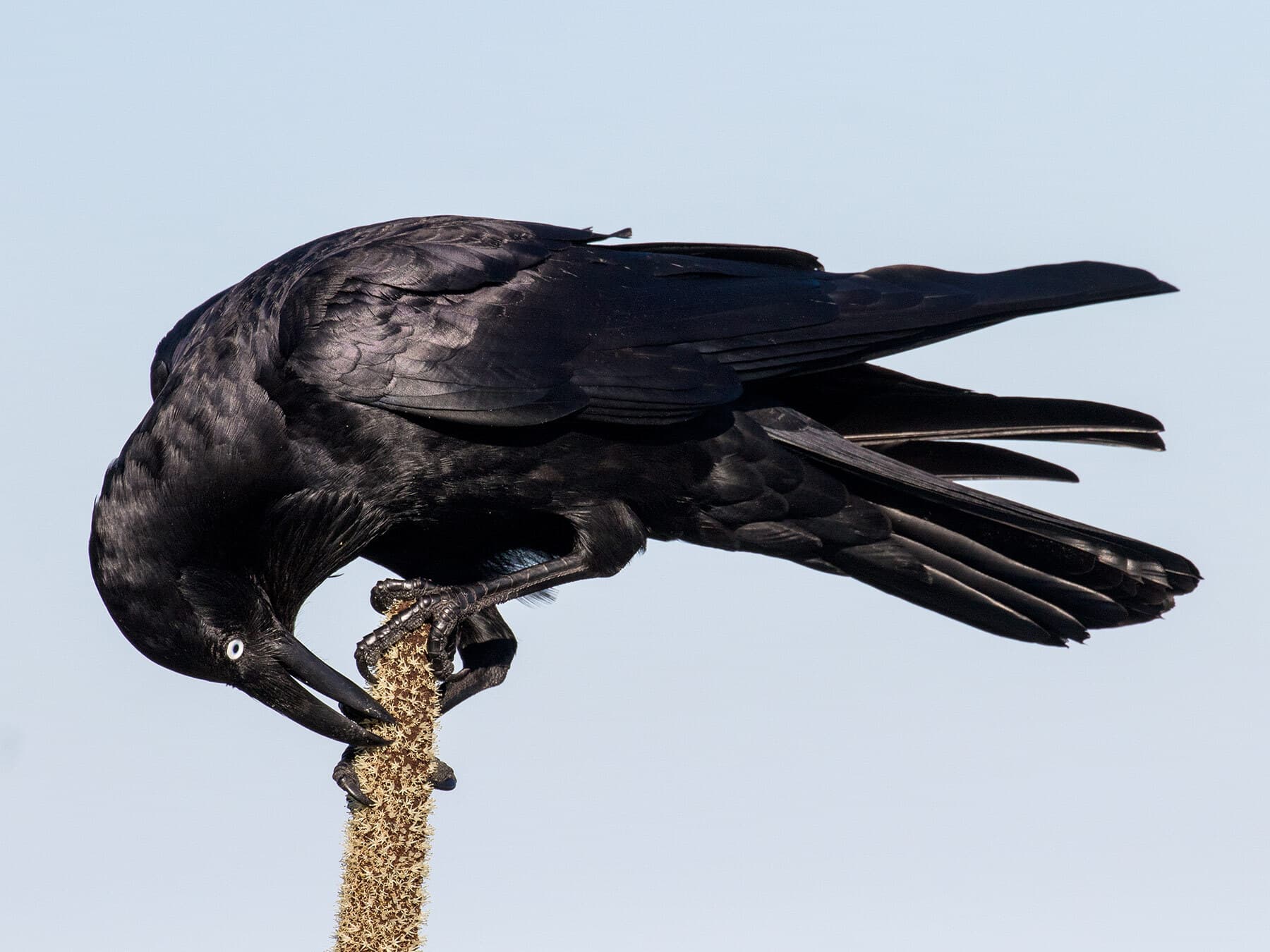
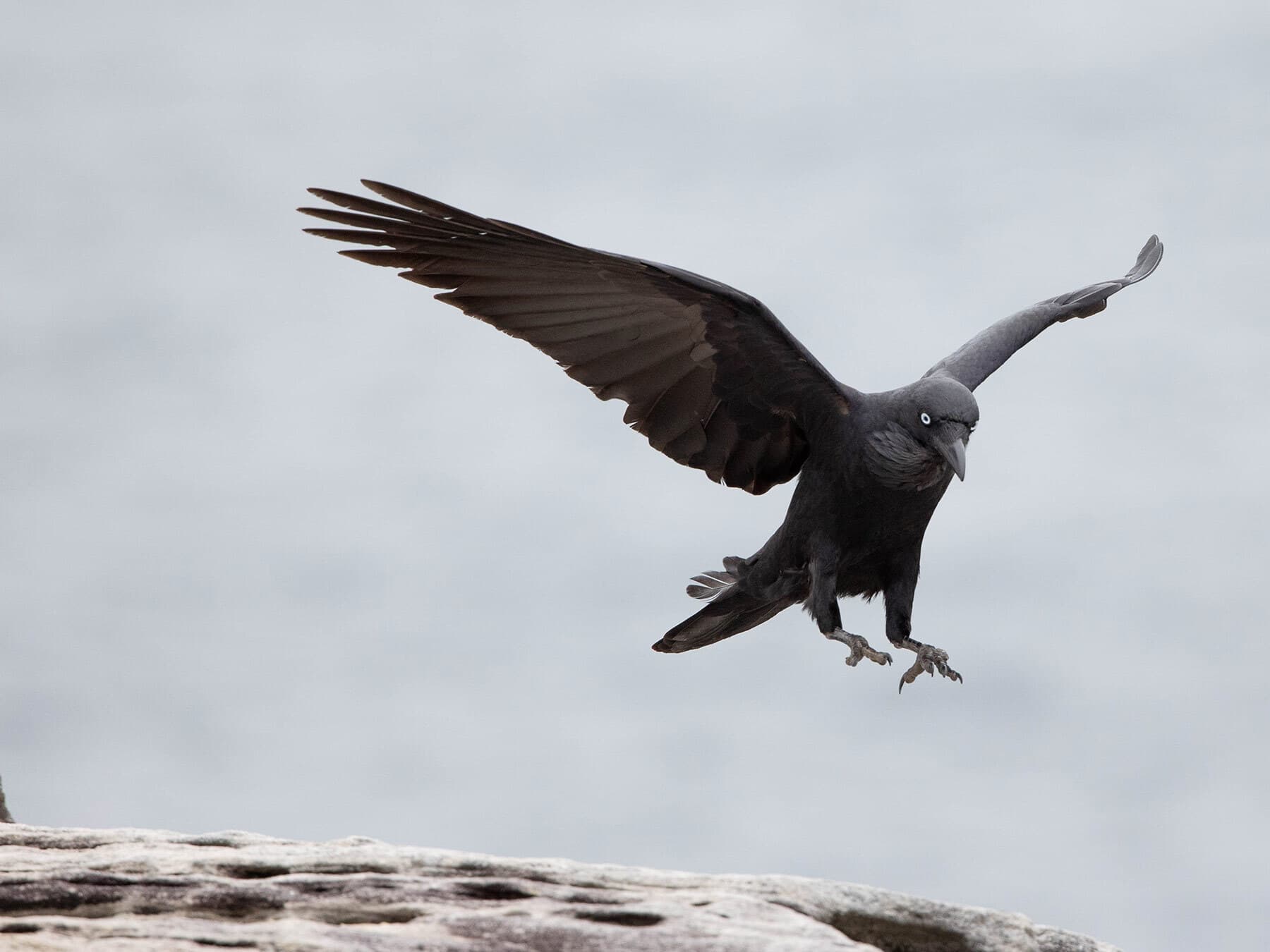
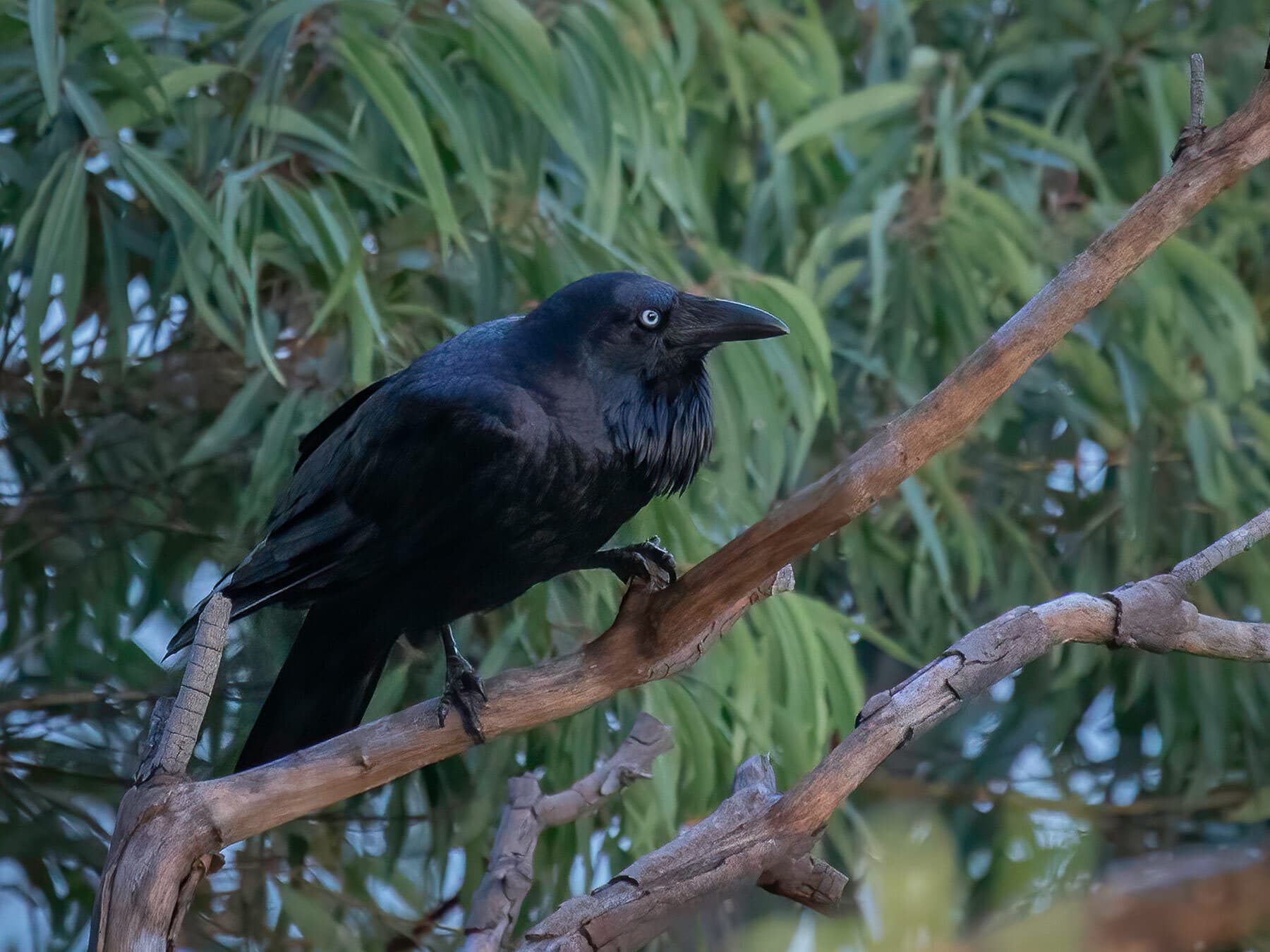
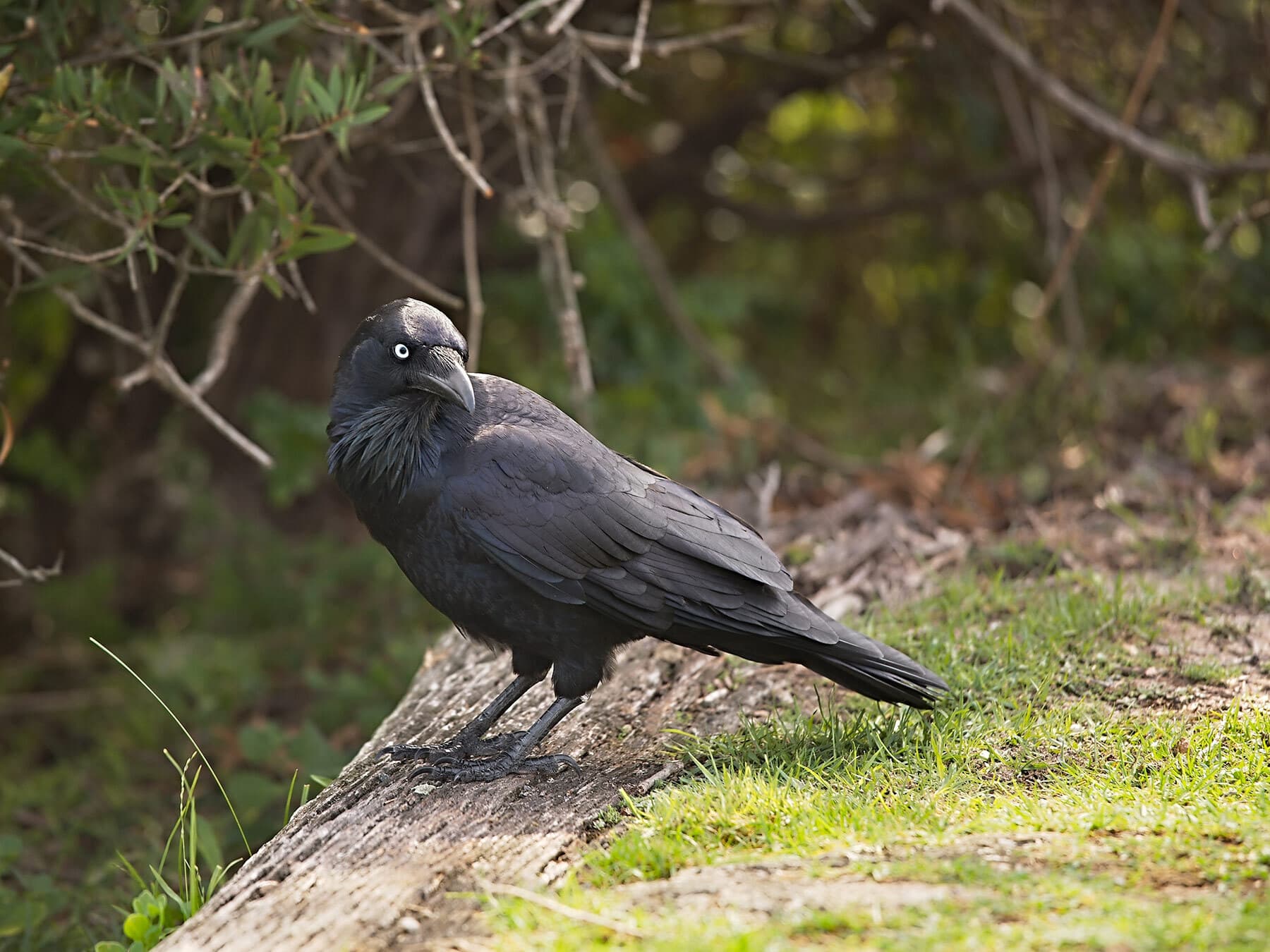
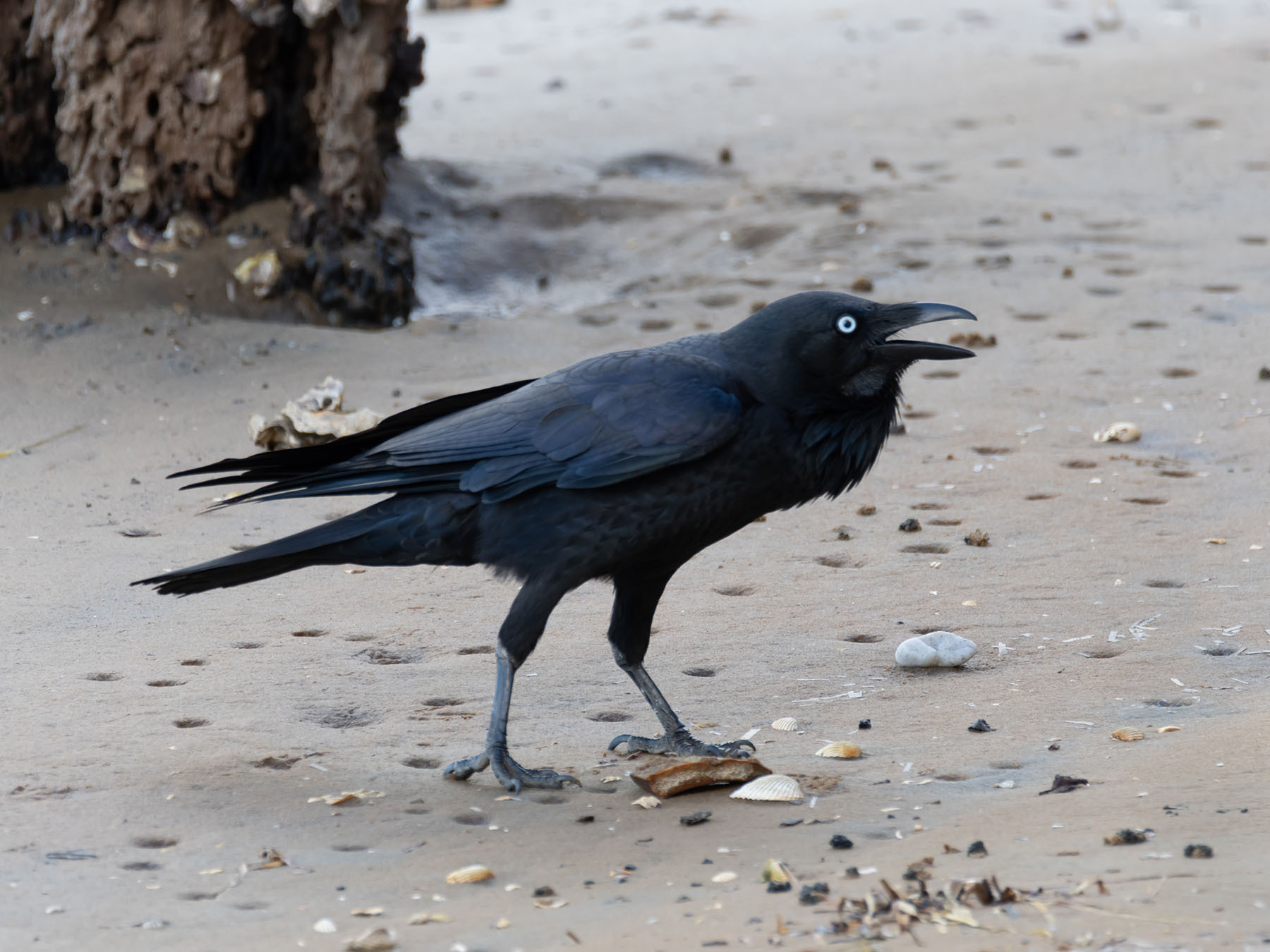
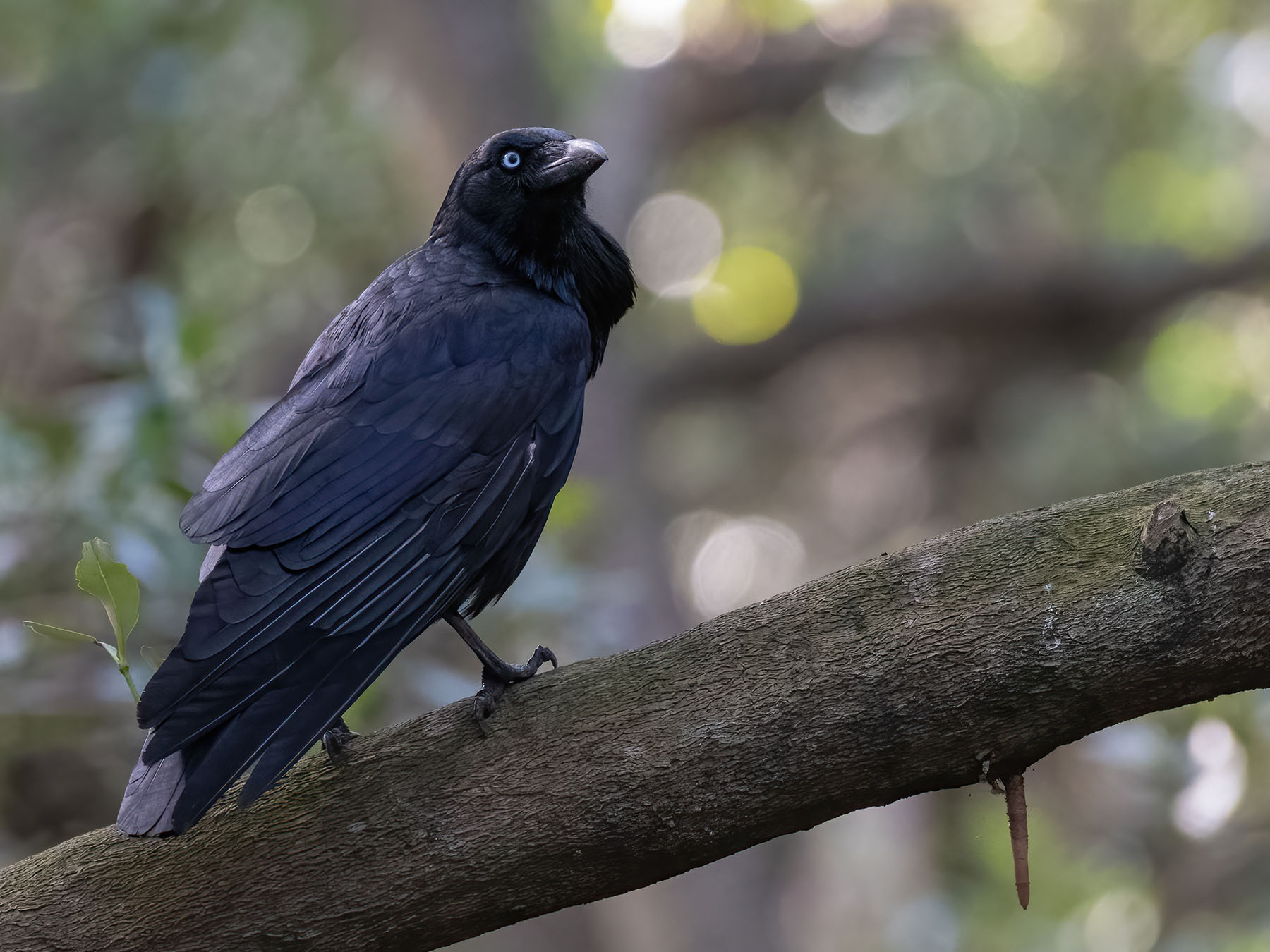
The Australian Raven is a large, glossy black bird with a robust build and a heavy, slightly curved bill. Its most distinctive feature is the hackles on its throat, which are elongated and often fluffed out during vocalisations. Adult birds' eyes are strikingly white, contrasting sharply with their black plumage.
Juveniles can be distinguished by their brown eyes, which gradually change to white as they mature. In bright sunlight, the bird's plumage has a slight purple, blue, or green sheen, adding depth to its otherwise all-black appearance.
Its size
Adults- Length
- 46–53 cm
- Wingspan
- 100–112 cm
- Weight
- 580–680 g
Its song and calls
The typical call of an Australian Raven, used both to communicate with other ravens and to indicate one’s territorial presence is an ah-ah-aaaah sound.
They have various other calls and vocalisations for when they’re preening or roosting. Mated pairs may announce their presence in their territory with a ca sound.
- Recording0:00 / 0:05
When and where to see it
The Australian Raven is not recorded regularly in the UK, Ireland, the United States or Canada.
Worldwide: recorded regularly in 1 country
Countries where it was recorded in at least 3 of the 6 years 2019–2024. Linked countries have their own bird list.
Oceania (1)
Data: EOD – eBird Observation Dataset (Cornell Lab of Ornithology), accessed via GBIF.org, CC BY 4.0. Records from 2019–2024, aggregated and filtered by Birdfact. How these lists are made
Australian ravens prefer to nest in tall, sheltered trees. In urban environments, they may choose to nest in telephone poles, abandoned buildings, or on the roof of tall structures.
The nest itself is untidy but generally quite large with a diameter of around 60cm. Both birds assist in building the nest, the male commonly foraging for materials whilst the female assembles them into the nest.
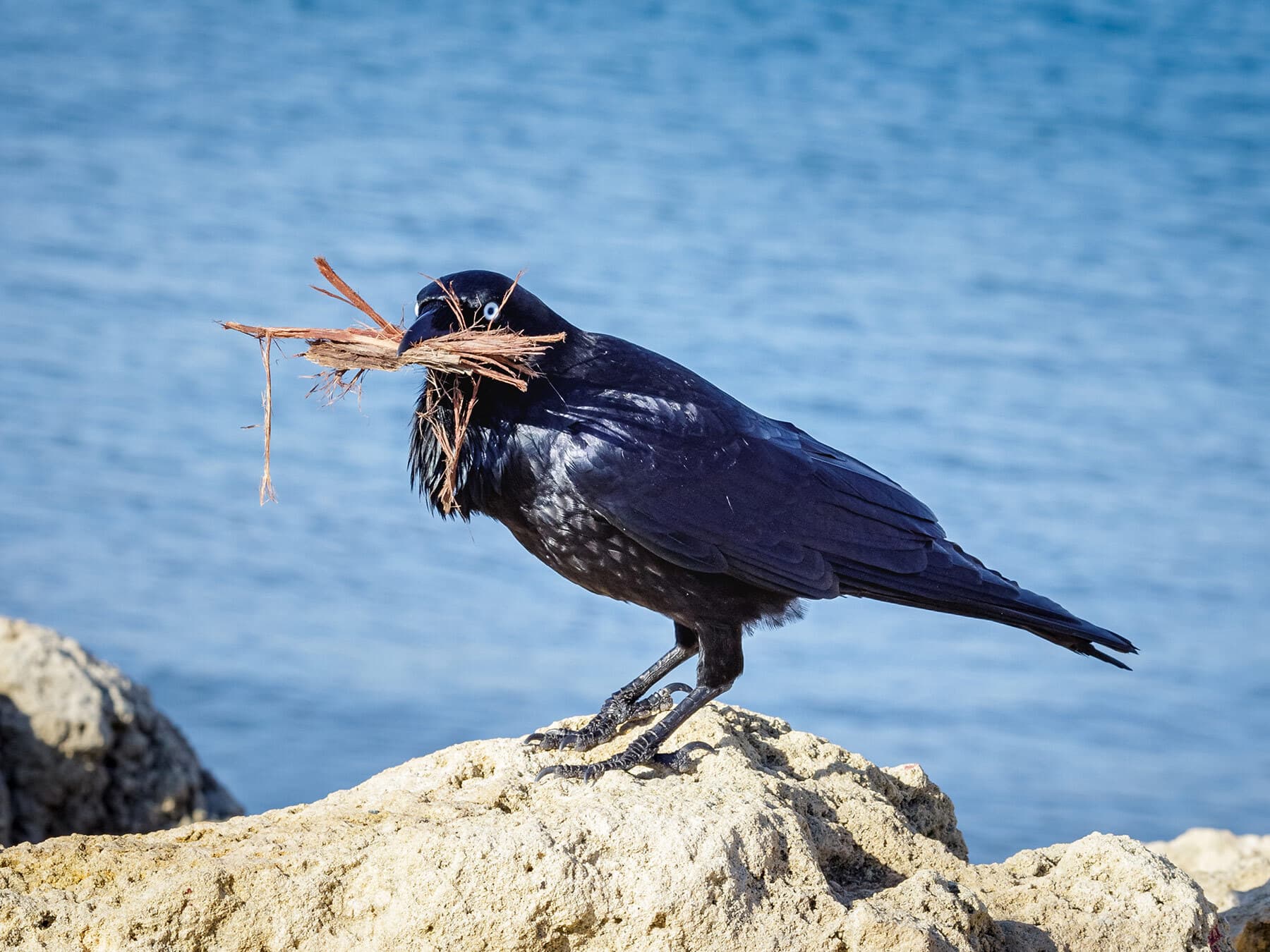
What is the habitat of an Australian Raven?
Australian ravens inhabit a wide range of environments, including alpine habitats of up to some 2000m, arid environments, urban environments and all types of pastoral and rural land.
They prefer woodland habitats dominated by pines or eucalyptus. Aside from land of high elevation exceeding 2000m, Australian ravens tend to avoid dense rainforests.
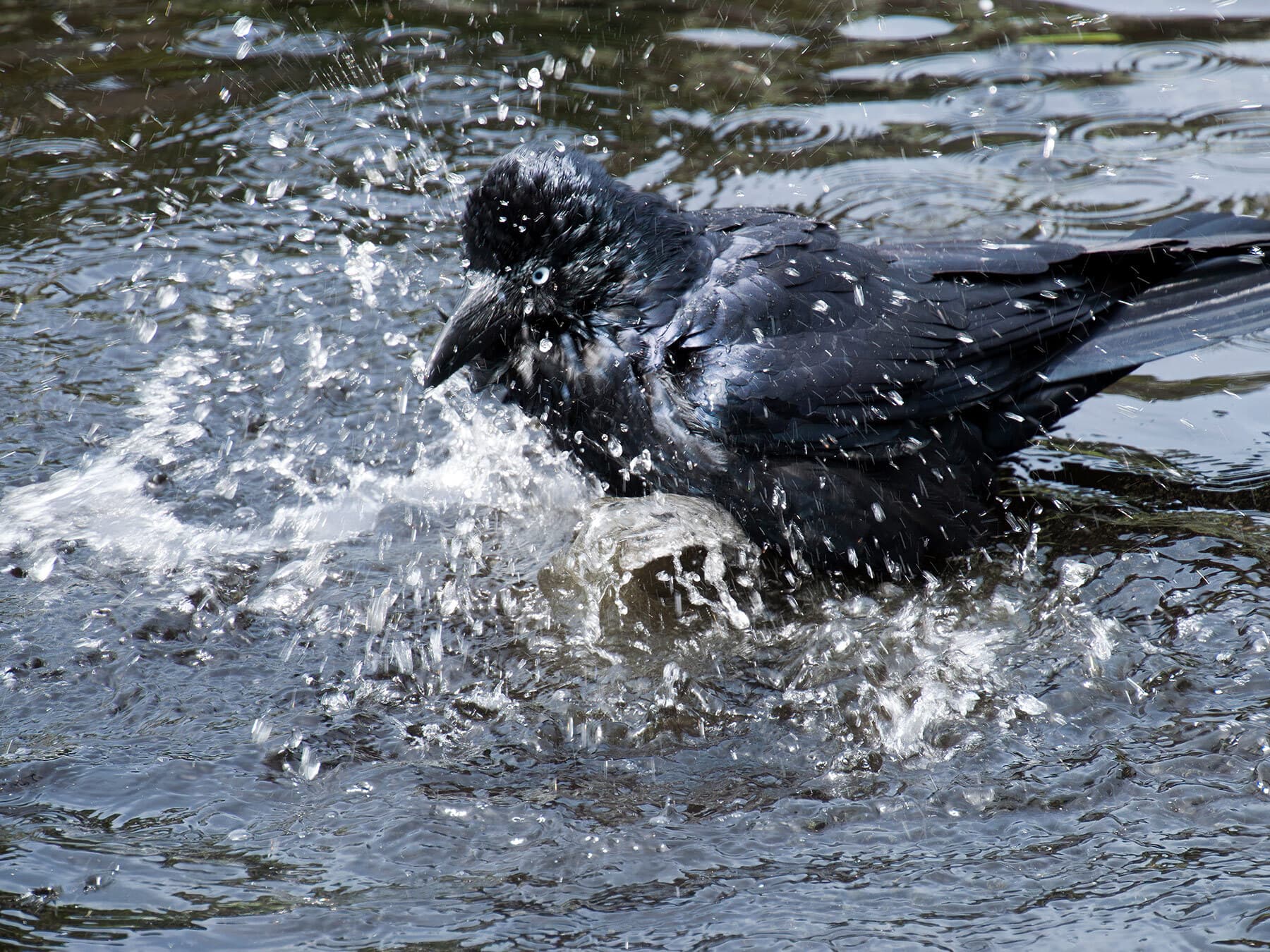
Where can I see Australian Ravens?
Australian ravens are common throughout eastern, southern and central Australia. Whilst you’re still more likely to spot them in woodland or rural environments, they are becoming increasingly common in urban areas such as cities and towns. Canberra, Sydney, Perth, Melbourne and Adelaide all have significant populations of Australian ravens.
Distribution
The Australian raven is most common throughout Eastern Australia and the south coast of the island. They’re also prevalent in the southernmost parts of Western Australia. Sporadic sightings are recorded across most of Australia, however, including in the Australian Alps and offshore islands.
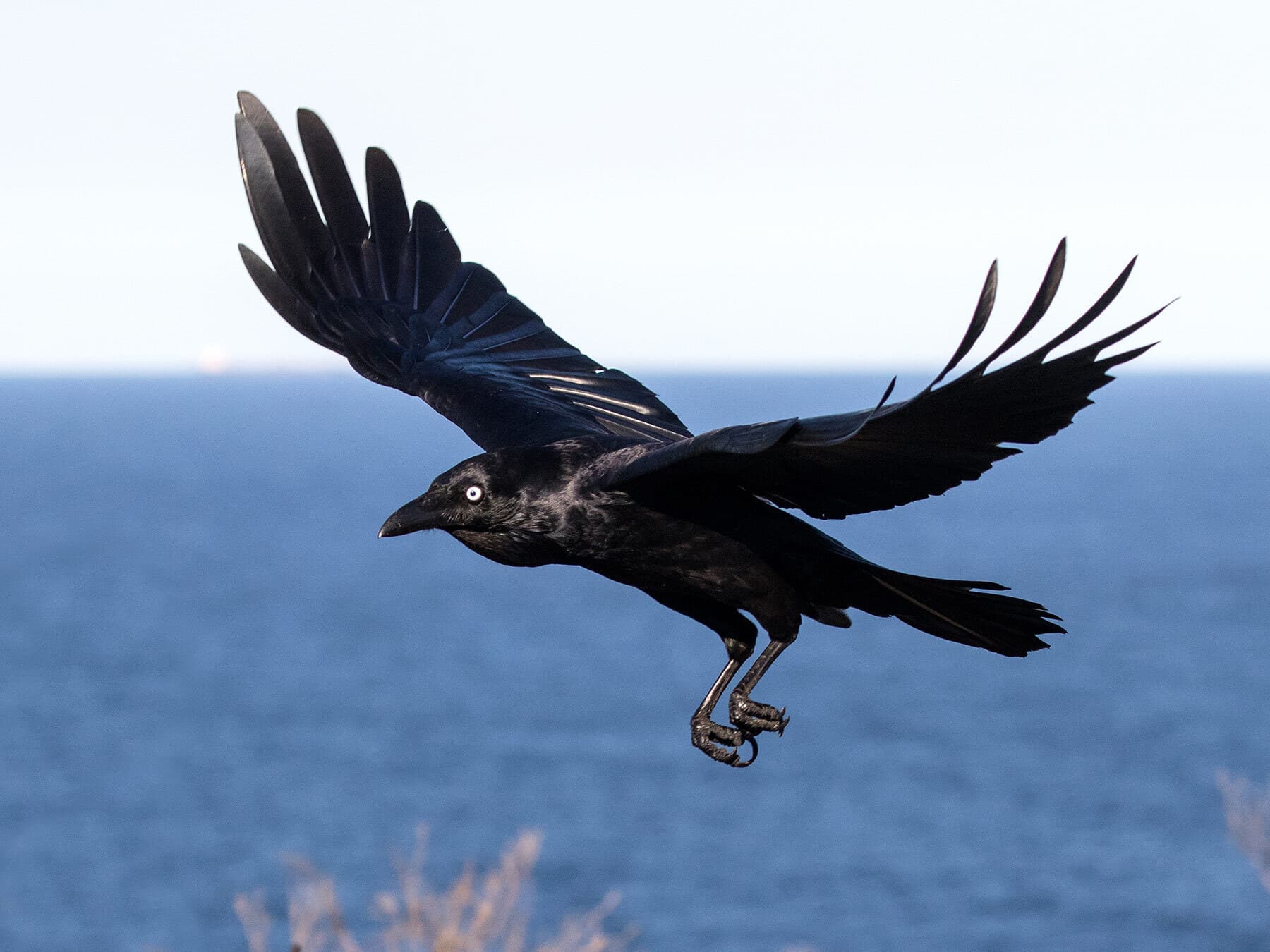
Do Australian Ravens migrate?
Australian ravens do not migrate, usually sticking to their large territories for much of the duration of their life. In fact, most species of ravens, in general, are non-migratory.
Tips for seeing it
- Listen for their distinctive, drawn-out 'aah-aah-aaaah' call, which differs from other Australian corvids
- Look for them in open woodlands, urban parks, and agricultural areas
- Observe their throat hackles, which are prominently displayed during vocalisations
- Watch for their intelligent foraging behaviour, often involving tool use
- In urban areas, they're frequently seen scavenging near picnic spots and rubbish bins
What it eats
Australian Ravens are omnivores but lean strongly on carnivorous feeding. They’re opportunistic feeders and will hunt prey both alive and as carrion.
They feed mainly on invertebrates and insects, as well as small birds and mammals. Australian ravens forage for food from low-lying vegetation or the ground. Feeding on human waste and leftovers is common in urban environments.
Australian ravens have been observed attacking weak or sick lambs and other larger animals. Their powerful, heavy-set beak is ideal for picking and ripping at corpses. Overall, a flexible, unfussy and opportunistic feeder with a penchant for scavenging for meat.
Nesting and breeding
A typical clutch numbers around 3 to 6 eggs. Australian ravens tend to only raise one brood a year. However, a second clutch can be laid if the first is lost or is otherwise unsuccessful early in the breeding season.
What do Australian Raven eggs look like?
Australian raven eggs are quite variable and tough to identify. They tend to measure around 45 by 30mm and are usually pale green or bluish-green. Eggs often have splotches of dark green or olive intermixed with brown and black spots or other markings.
Behaviour
Australian Ravens are highly social birds, often seen in pairs or small family groups. They exhibit complex problem-solving skills, using tools to extract food and demonstrate remarkable memory.
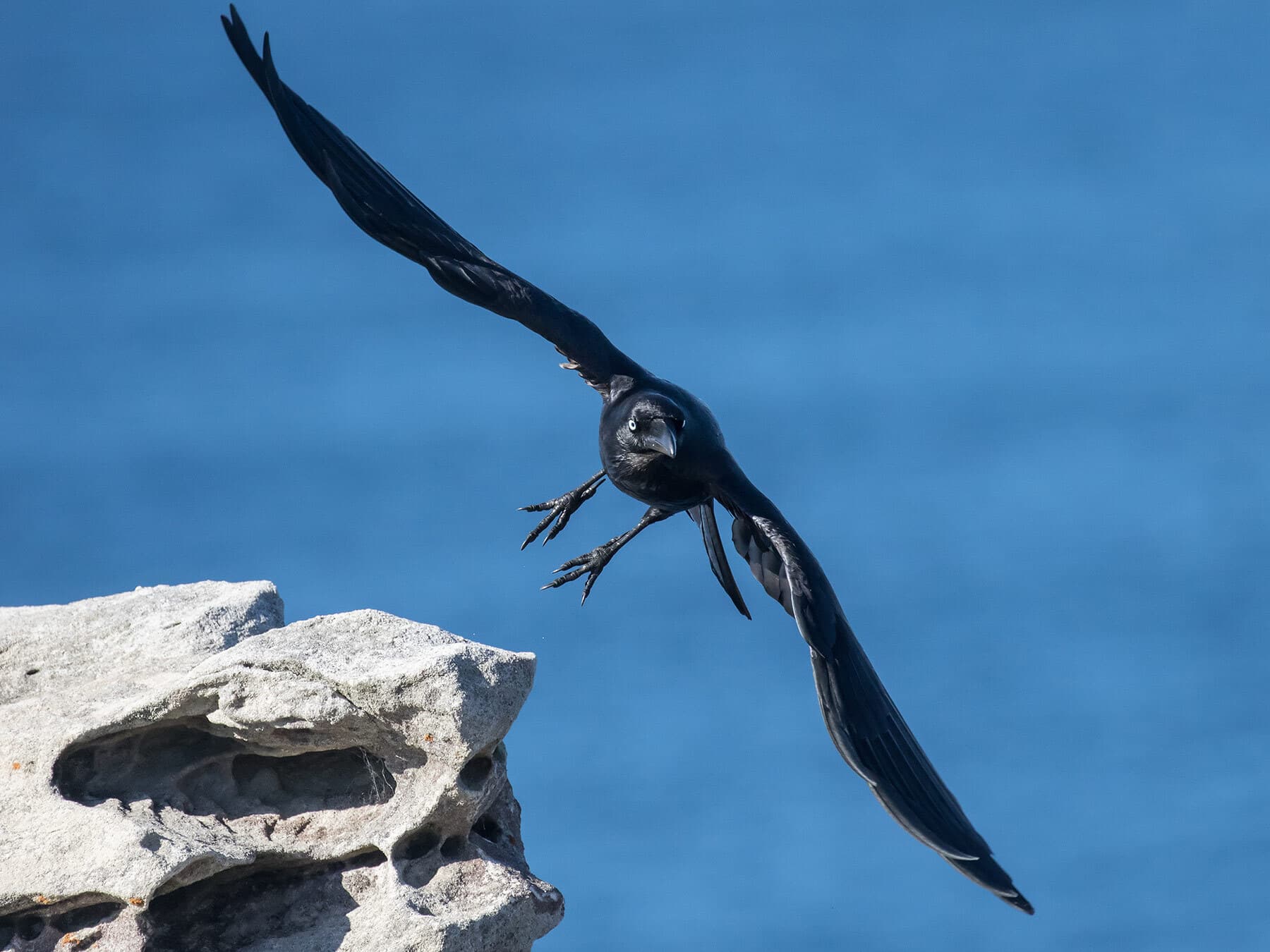
These birds are known for their playful behaviour. They engage in aerial acrobatics and even slide down roofs for apparent enjoyment.
Lifespan and predators
An adult Australian Raven in captivity can live for 22 years. In the wild, a lifespan of around 20 years is more likely. This is about average for Corvids of this size.
Conservation
The Australian Raven is listed as Least Concern by the IUCN due to its large range and increasing population. However, like many urban-adapted species, it faces challenges from habitat modification and human-wildlife conflict.
Conservation efforts focus on maintaining healthy ecosystems and promoting coexistence in urban areas.
What does an Australian Raven look like?
Australian ravens are medium-sized birds that measure around 45 to 54cm (17.5 to 21.5in) in length and have a wingspan of around 100cm (39in). They weigh 650g (1.43 lb). Like most birds in the Corvus genus and indeed the Corvidae family, the Australian raven is primarily or all black, except for a colourful sheen on its uppermost feathers.
A strong bird with a thick, powerful beak and powerful legs, the Australian raven shares most of its features with other ravens.
How big is an Australian Raven?
The Australian Raven measures around 45 to 54cm in length (17.5 to 21.5in) in length and has a wingspan of around 100cm (39in). They weigh around 650g (1.43 lb). This makes them slightly smaller than the Common raven (Corvus corax).
How much does an Australian Raven weigh?
Typically weighing around 650g (1.43 lb) up to around 800g at the most (1.76lb), the Australian raven is around average for birds in its genus Corvus.
What is the scientific name of an Australian Raven?
The scientific name for an Australian raven is Corvus coronoides. There are two subspecies, Corvus coronoides coronoides, which is the most widely distributed of the two, and Corvus coronoides perplexus, which is primarily distributed in Western Australia.
Are Australian Ravens aggressive?
Australian ravens are not necessarily aggressive but are territorial in their breeding pairs. Their territories can be as large as 120 hectares (300 acres), though they will permit other birds to feed in their territory so long as they don’t encroach on their nest.
Where food competition is high, Australian ravens are known to attack other birds, including other ravens like the Little raven. They’re also generally fearless and will attack foxes, birds of prey and other predators in defence.
Are Australian Ravens endangered?
Australian Ravens are classified as a species of Least Concern, and their populations are climbing, especially in urban areas.
Do Australian Ravens mate for life?
Australian ravens are most commonly monogamous, mating for life and occupying territories in their mated pairs. One male may rarely share two females across adjacent territories.
Are Australian Ravens common?
Whilst there is little data on the number of breeding pairs of Australian ravens, they are classified as a species of Least Concern and their populations are currently increasing.
More photos
3 photos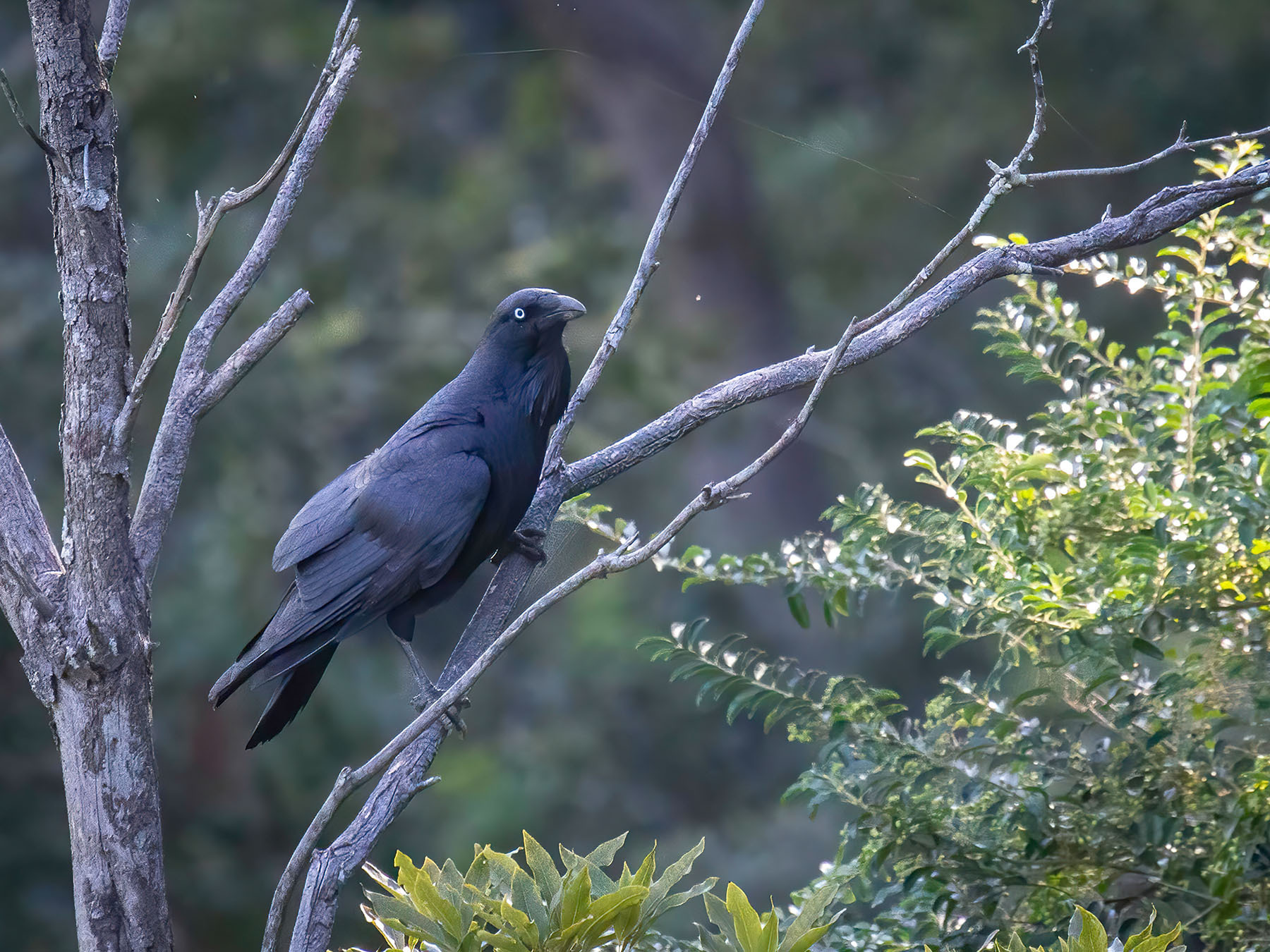
Australian Raven guides
1 guidesQuick facts
- Length
- 46–53 cm
- Wingspan
- 100–112 cm
- Weight
- 580–680 g
- Lifespan
- 15–20 years · oldest recorded 22.5 years
- Family
- Crows & Jays
- Migration
- Resident
- Global status (IUCN)
- Least Concern
- World population
- Not quantified, but common throughout its range
- Population trend
- Increasing
- Also called
- Southern Raven
- Scientific name
- Corvus coronoides
Sources
3- 1BirdLife International. 2016. Corvus coronoides. The IUCN Red List of Threatened Species 2016: e.T22706033A94047450. Source (opens in a new tab)
- 2BirdLife International. 2016. Corvus coronoides. The IUCN Red List of Threatened Species 2016: e.T22706033A94047450. Source (opens in a new tab)
- 3ABBBS - Australian Bird and Bat Banding Scheme Source (opens in a new tab)

Checked by
Nathan Cope, founder and editor
Nathan founded Birdfact and leads its writers and contributors in the UK, the US and Canada. He has watched and studied birds for more than ten years, and checks every article and species guide before it’s published.