


Eurasian Jay
Jay · Garrulus glandarius
By the Birdfact teamChecked by Nathan Cope
On this page14 sections
How to recognise it
The Jay is the most colourful corvid in the United Kingdom and is easily identified when it breaks cover. Continue reading to learn how to identify these distinctive birds.
What do Jays look like?
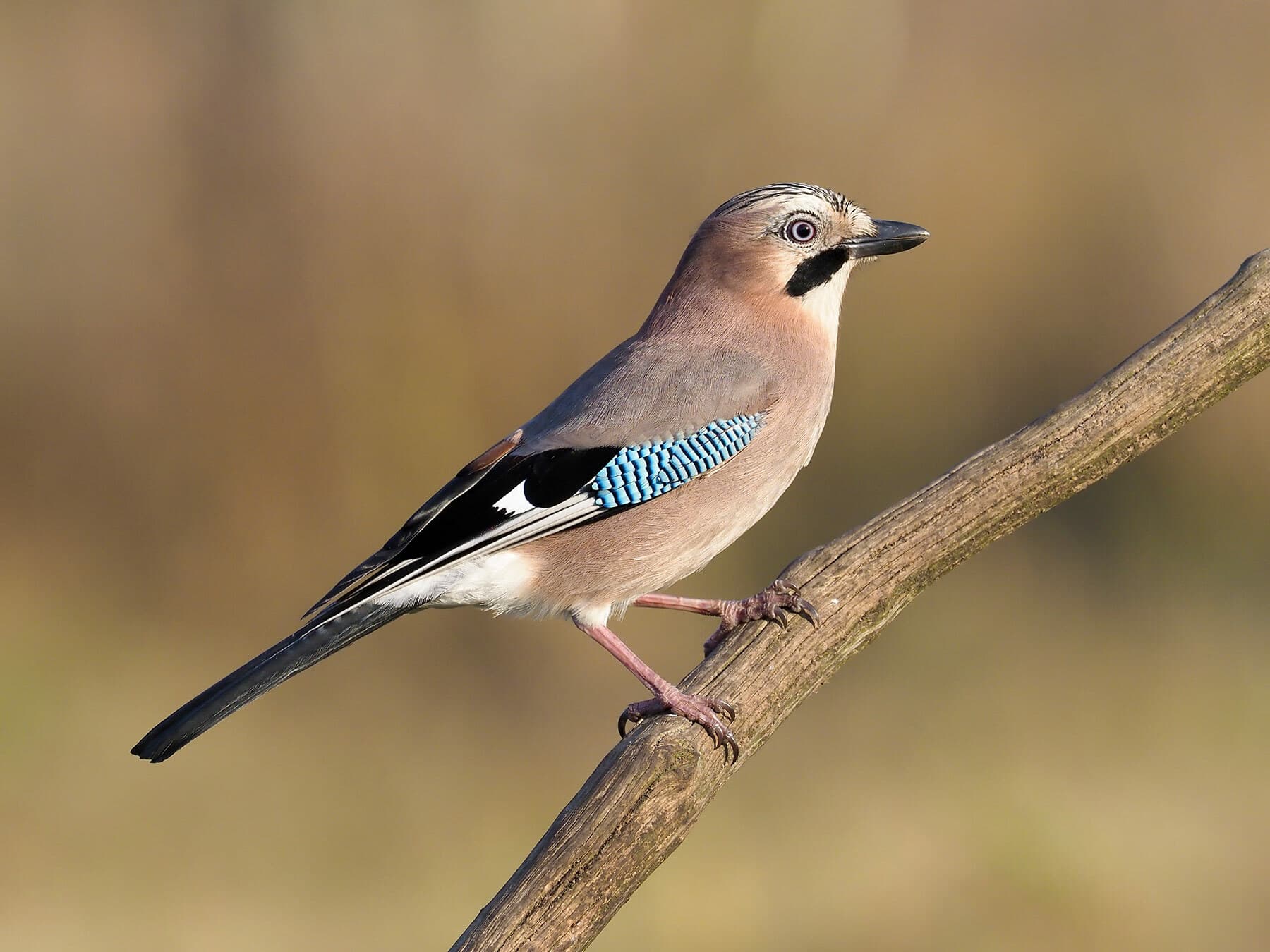
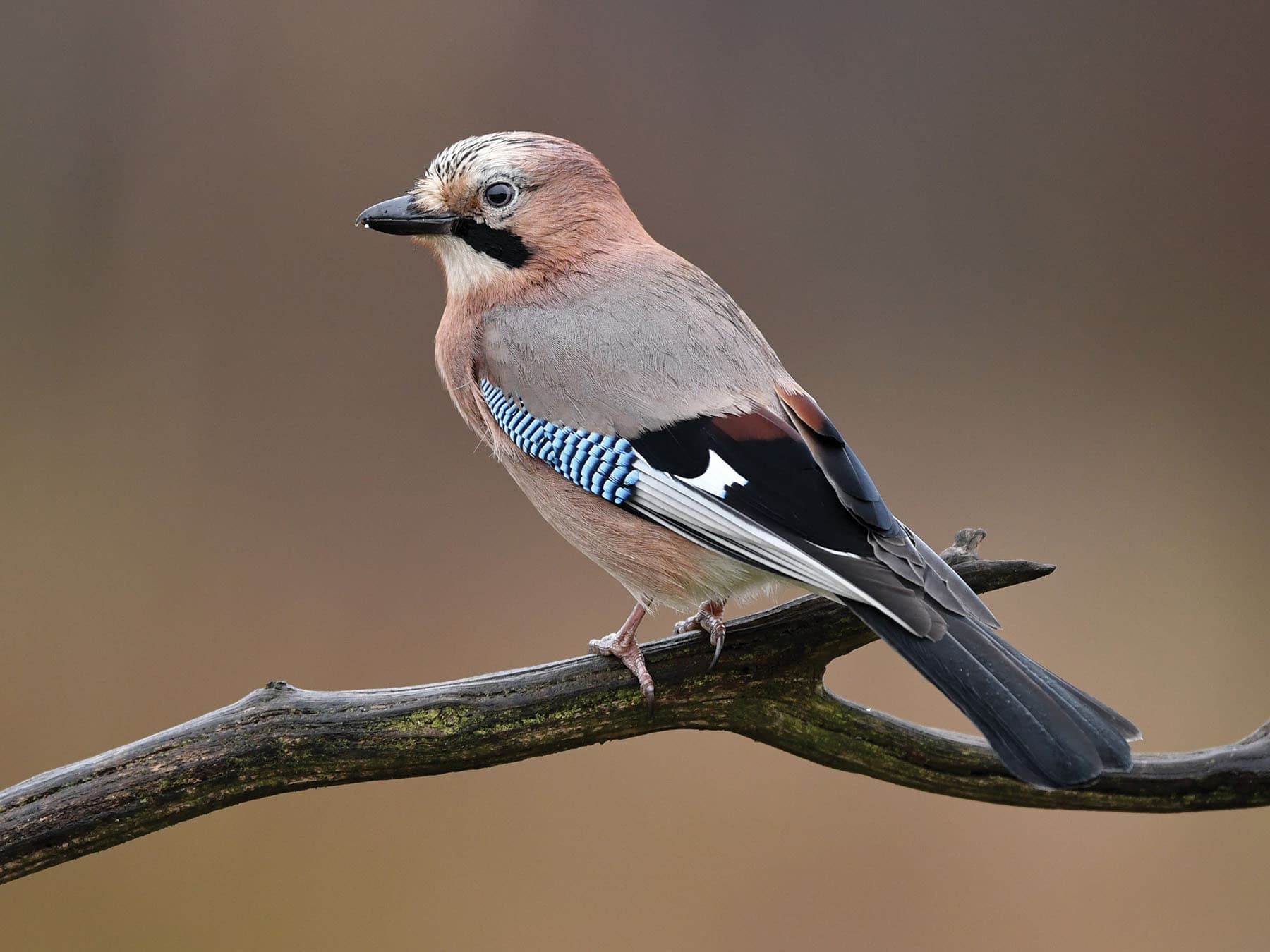
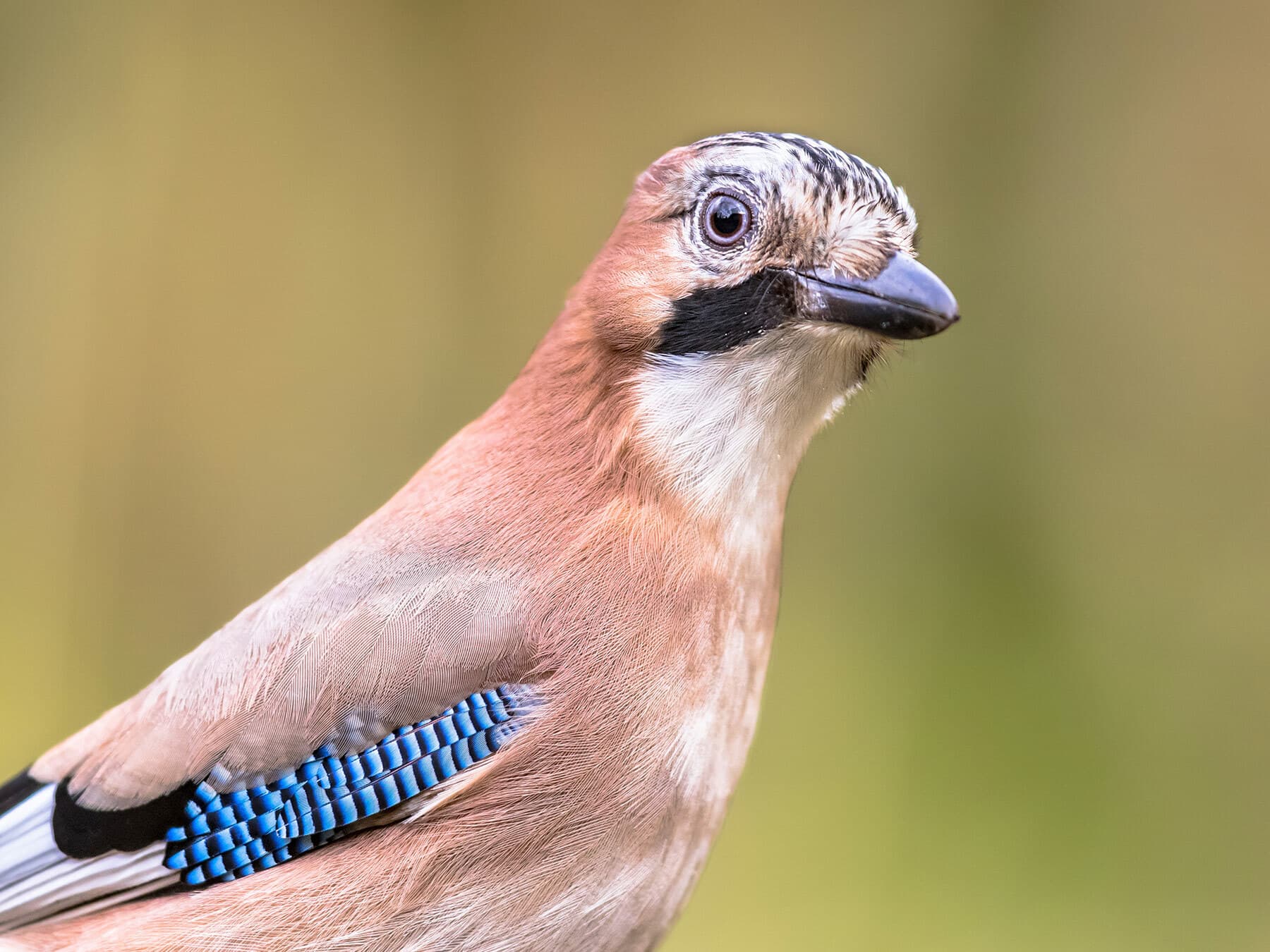
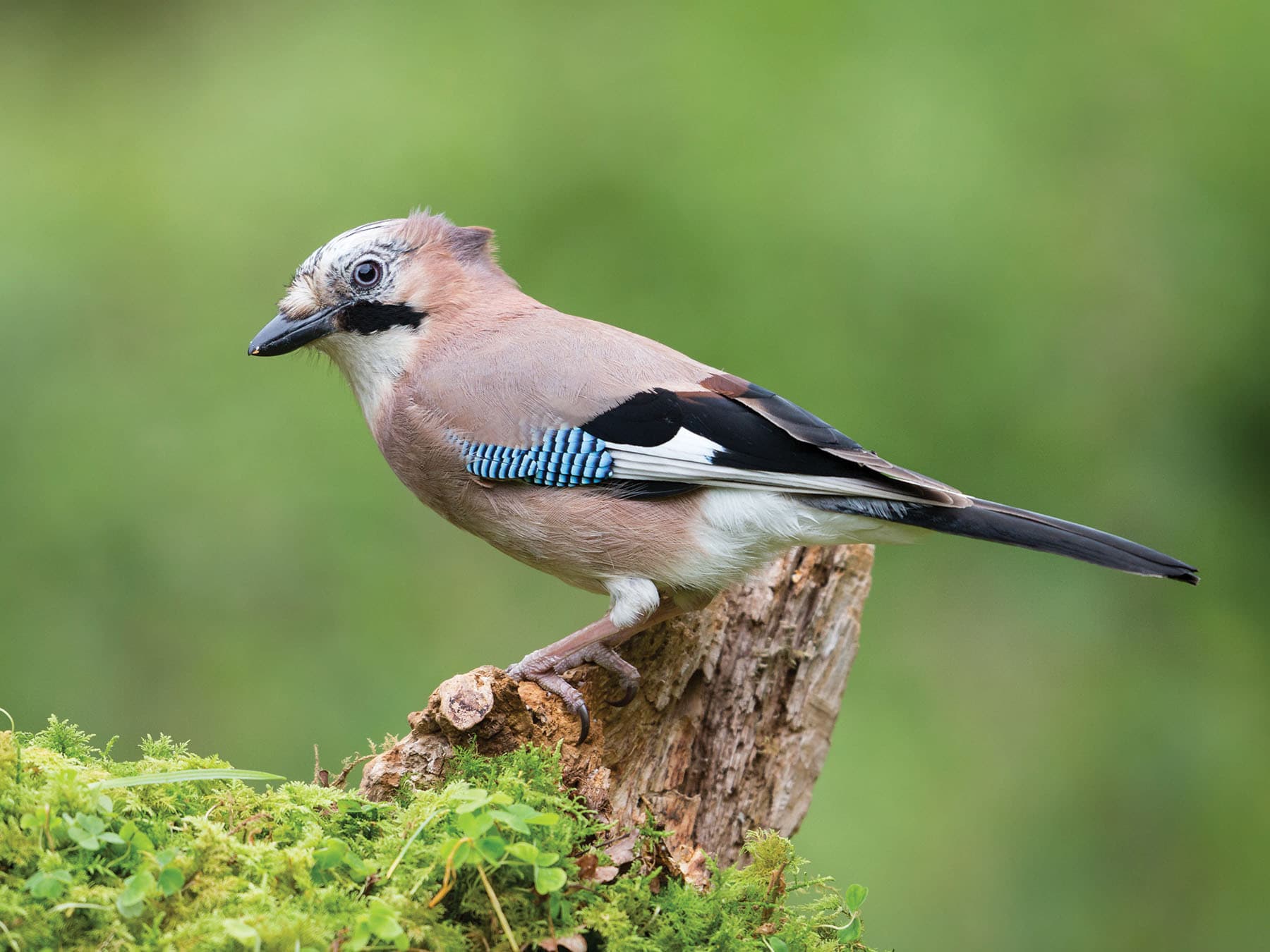
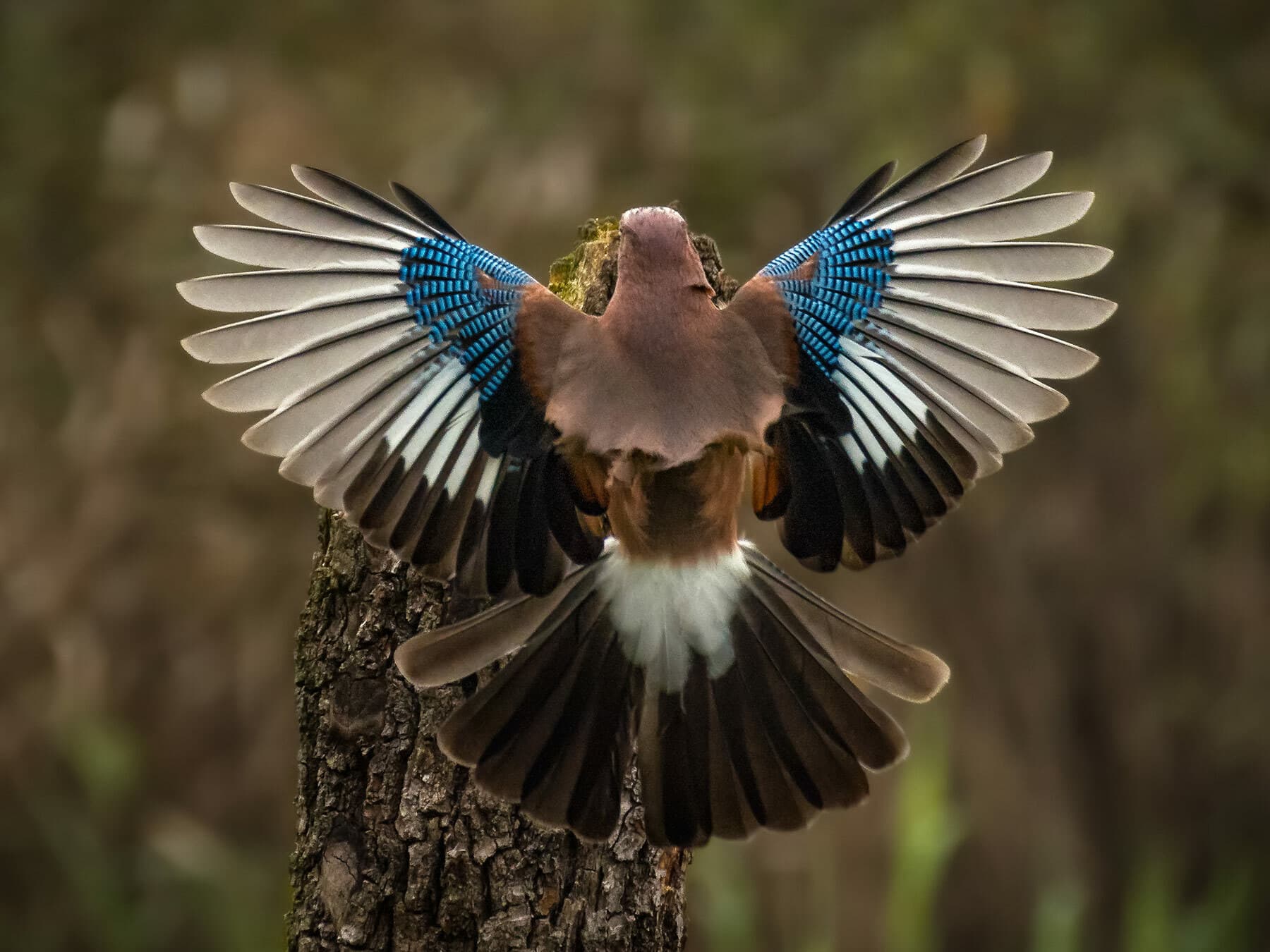
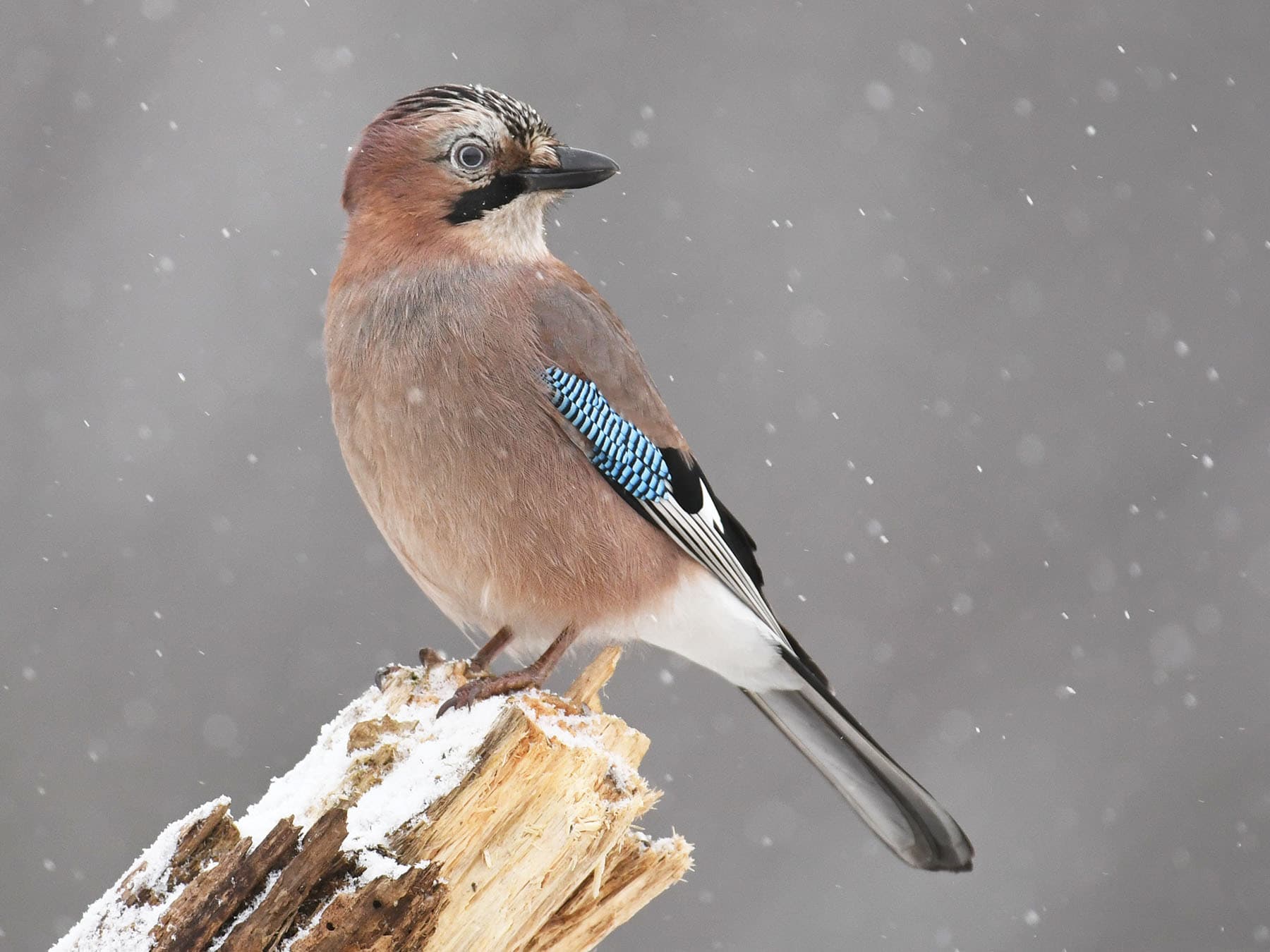
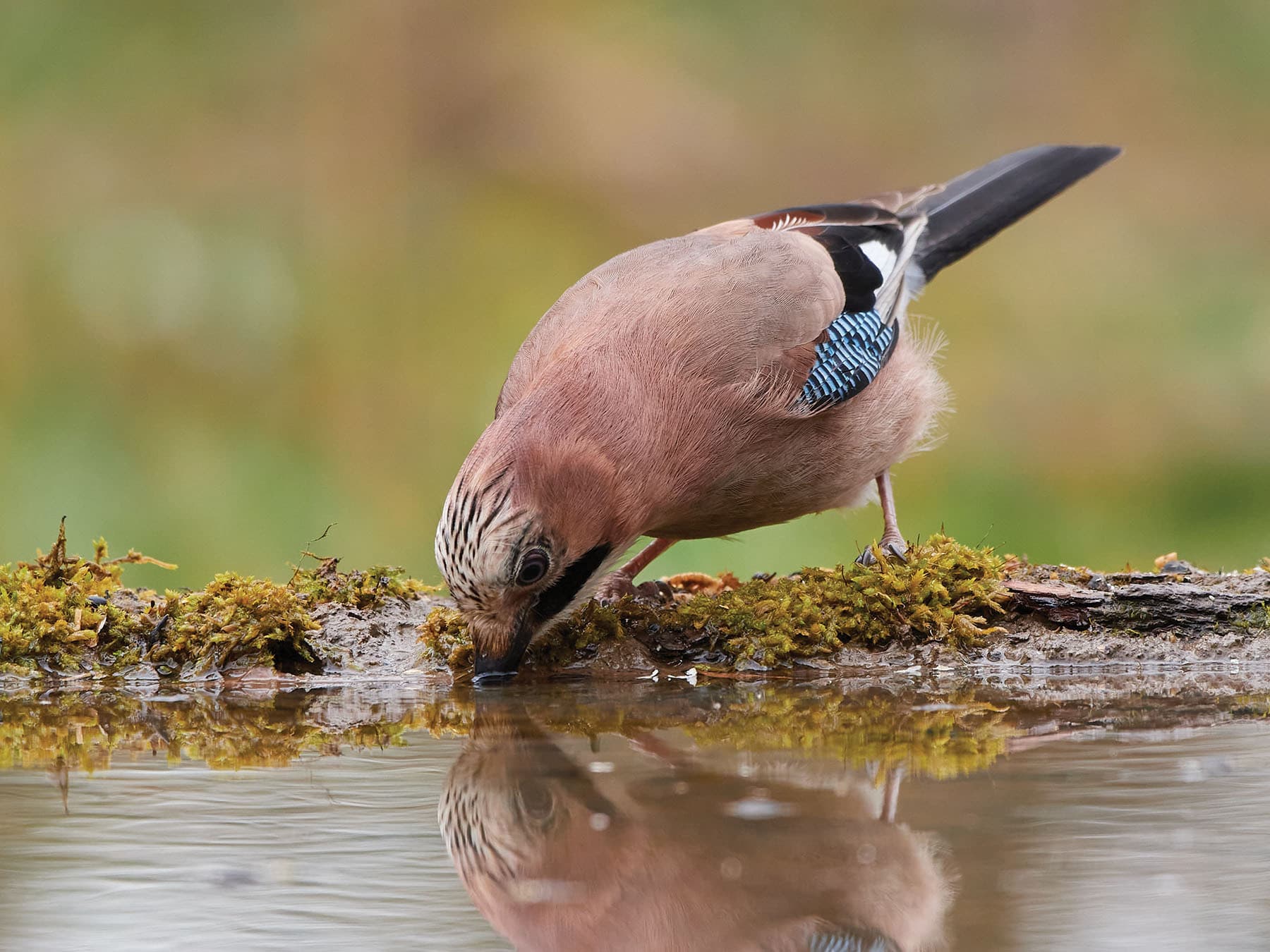
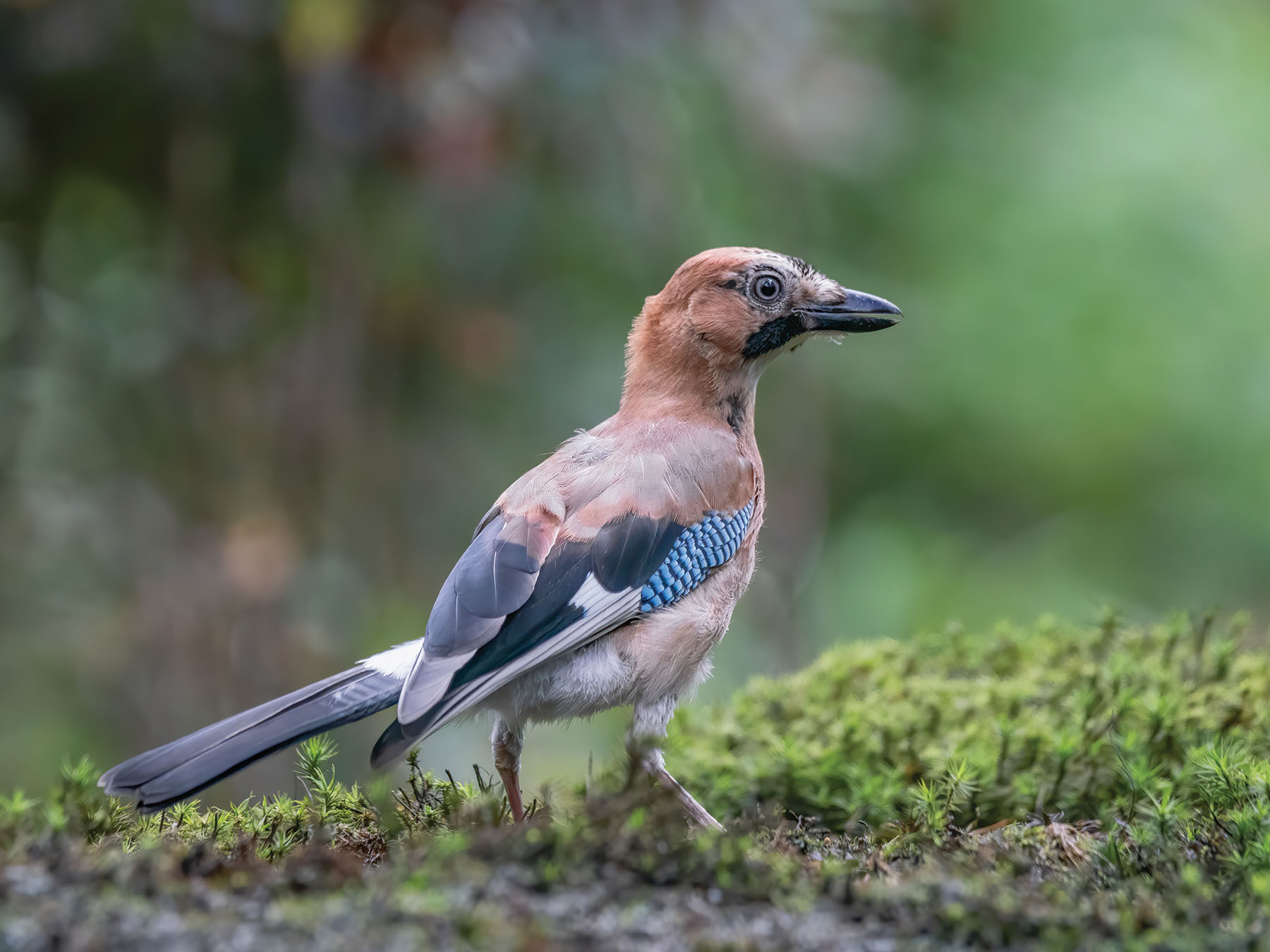
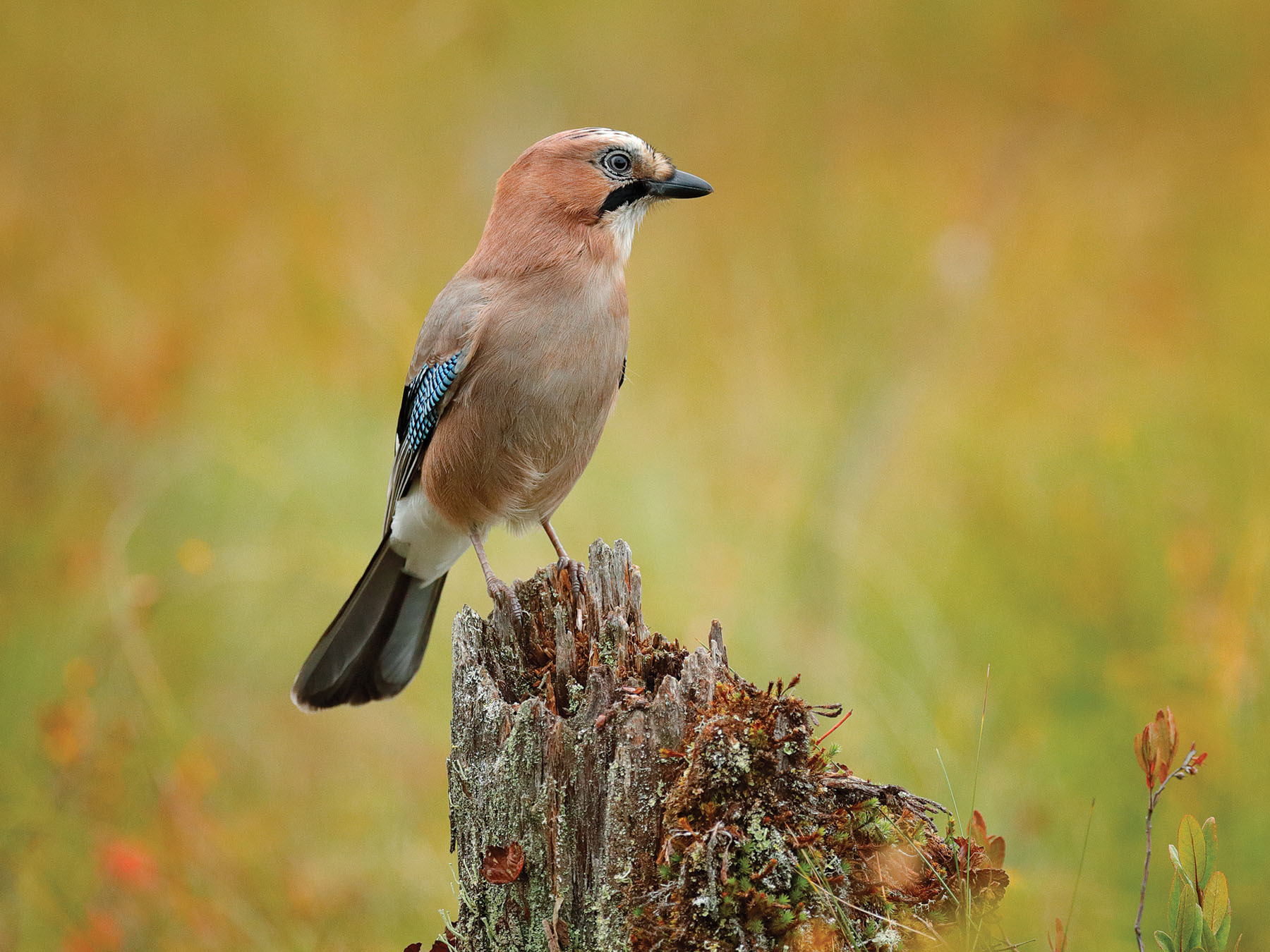
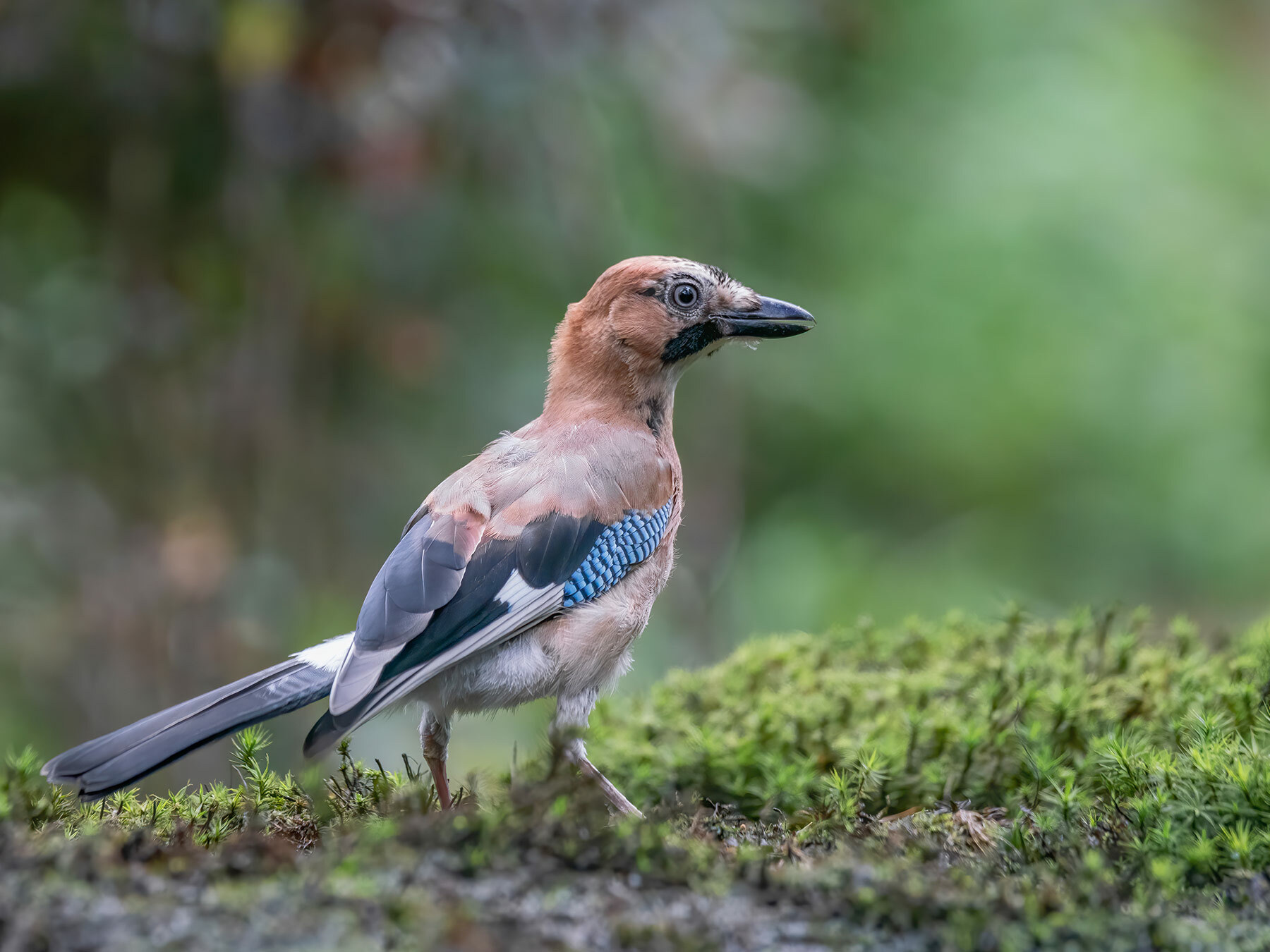
The Jay is unmistakable, with uniform cinnamon pastel plumage covering most of its body and distinctive wing, head, and tail markings. An electric blue patch is visible on each wing, bordering a black area with a distinct white spot toward the wing tip.
Other prominent features include a black tail, a white rump, and whitish underparts. They have whitish faces, with a black and white streaked crown and bold black moustache stripe.
Male and female Jays look alike, and juveniles have darker red-brown plumage and bolder black barring on the blue wing patch.
How big are Jays?
The Jay is a medium-sized bird, bigger than the Blackbird but smaller than the Magpie.
Length
The Jay has a body length of 34 to 35 centimetres. They have well-developed legs and a medium-length tail and bill.
Weight
Jays weigh 140 to 190 grams, making them the smallest corvid in the UK.
Wingspan
These birds have a wingspan of 52 to 58 centimetres.
Its size
Adults- Length
- 32–35 cm
- Wingspan
- 52–58 cm
- Weight
- 140–190 g
Its song and calls
Jays have a surprising vocal range, although their typical call is easy to identify.
What sound does a Jay make?
The typical Jay call is a raucous rasping screech, often produced when the birds are alarmed by predators or humans. These intelligent birds also mimic other birds and even mammals like horses and cats.
They frequently mimic the call of the Buzzard, so take a closer look next time you hear the ‘kee-aaah’ call of the UK’s commonest raptor; it might just be a Jay!
- Song0:00 / 0:32
Recorded in Île-de-France, France · March 2019
- Call0:00 / 0:19
Recorded in Normandy, France · August 2026
When and where to see it
OctoberPeak season
Most recorded in October
- 1. Bristol3.0%
- 2. Neath Port Talbot2.5%
- 3. Berkshire2.3%
- 4. Surrey2.3%
- 5. Rhondda, Cynon, Taff2.2%
Each dot is a county, state or province: the bigger and darker, the larger the bird’s share of that place’s bird records that month. Grey dots: no regular records. The ringed point is the centre of the bird’s records this month; the arrow shows how it moved since last month, and the dashed loop its path through the year. “Arrivals” colours places where it becomes regular this month (orange) or is in its last regular month (grey). GBIF eBird Observation Dataset, 2019–2024. Map data: Natural Earth, US Census Bureau; place centres © OpenStreetMap contributors.
In your area
See when the Eurasian Jay is recorded in your county, state or province.
How often the Eurasian Jay turns up in the UK and Ireland through the year, from birdwatchers' records.
United Kingdom
Resident · all year · most records in October
Ireland
Resident · all year · most records in November
Show as a table
| Month | United Kingdom | Ireland |
|---|---|---|
| January | 0.69% (regular) | 0.24% (regular) |
| February | 0.57% (regular) | 0.12% (regular) |
| March | 0.57% (regular) | 0.20% (regular) |
| April | 0.61% (regular) | 0.21% (regular) |
| May | 0.48% (regular) | 0.22% (regular) |
| June | 0.49% (regular) | 0.26% (regular) |
| July | 0.43% (regular) | 0.18% (regular) |
| August | 0.47% (regular) | 0.13% (regular) |
| September | 0.76% (regular) | 0.15% (regular) |
| October | 1.00% (regular) | 0.25% (regular) |
| November | 0.87% (regular) | 0.33% (regular) |
| December | 0.79% (regular) | 0.31% (regular) |
Recorded regularly in
Worldwide: recorded regularly in 73 countries
Countries where it was recorded in at least 3 of the 6 years 2019–2024. Linked countries have their own bird list.
Europe (43)
- Åland Islands
- Albania
- Andorra
- Austria
- Belarus
- Belgium
- Bosnia & Herzegovina
- Bulgaria
- Croatia
- Czechia
- Denmark
- Estonia
- Finland
- France
- Germany
- Greece
- Hungary
- Ireland
- Italy
- Jersey
- Kosovo
- Latvia
- Liechtenstein
- Lithuania
- Luxembourg
- Moldova
- Montenegro
- Netherlands
- North Macedonia
- Norway
- Poland
- Portugal
- Romania
- Russia
- San Marino
- Serbia
- Slovakia
- Slovenia
- Spain
- Sweden
- Switzerland
- Ukraine
- United Kingdom
Data: EOD – eBird Observation Dataset (Cornell Lab of Ornithology), accessed via GBIF.org, CC BY 4.0. Records from 2019–2024, aggregated and filtered by Birdfact. How these lists are made
Jays have a wide range in the UK, and their population is expanding north and westwards. However, specific requirements limit suitable habitat availability. Continue reading to learn where to look for the Jay.
What is the habitat of a Jay?
Essentially a woodland species, the Jay favours habitats with abundant oak and beech trees. They also inhabit larger gardens, parks, and orchards in the UK.
What is the range of a Jay?
The Eurasian Jay has an extensive distribution in the Northern Hemisphere, from Ireland in the west to Japan in the east. They reach their southern limit in Southeast Asia and North Africa.
Jays are widespread in the United Kingdom. They occur almost everywhere except high-lying areas in Scotland, northern England, and some coastal areas in the east.
Where do Jays live?
Jays live in well-wooded and forested areas. They spend much of their time in trees, searching the foliage for insects and other tasty morsels. They frequently descend to the ground to search for food like acorns and even bury surplus food under the leaf litter.
How rare are Jays?
Jays are common in the United Kingdom, although they are rarely seen away from well-wooded habitats. There were an estimated 170,000 occupied breeding territories in 2016.
Where can you see Jays in the UK?
Jays are widespread and common in the United Kingdom, although their shy habits can make them difficult to spot. Look out for these birds in deciduous forests, especially where oak trees are common. Their loud call is distinctive and may help you track them down.
Signs and spotting tips
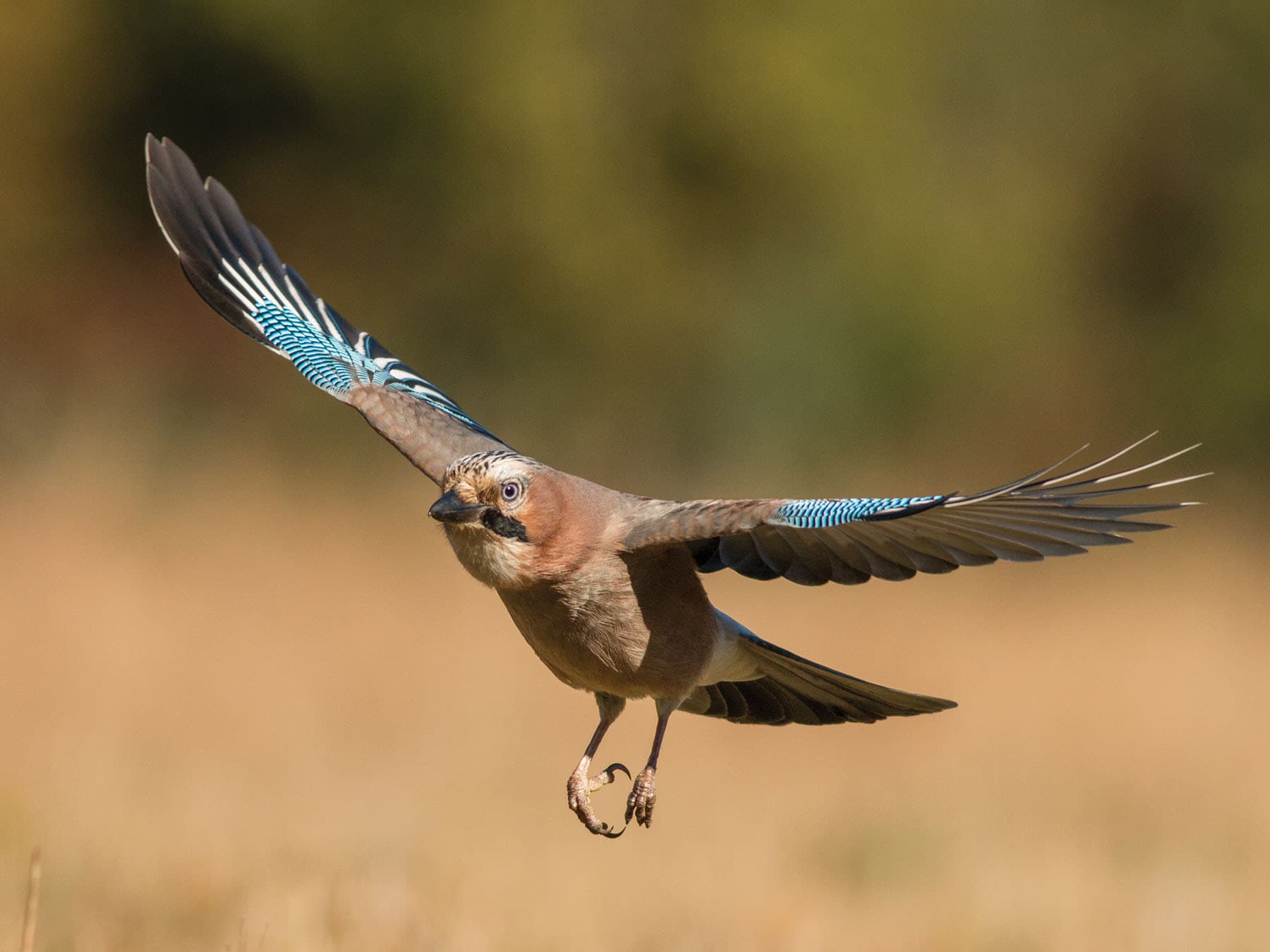
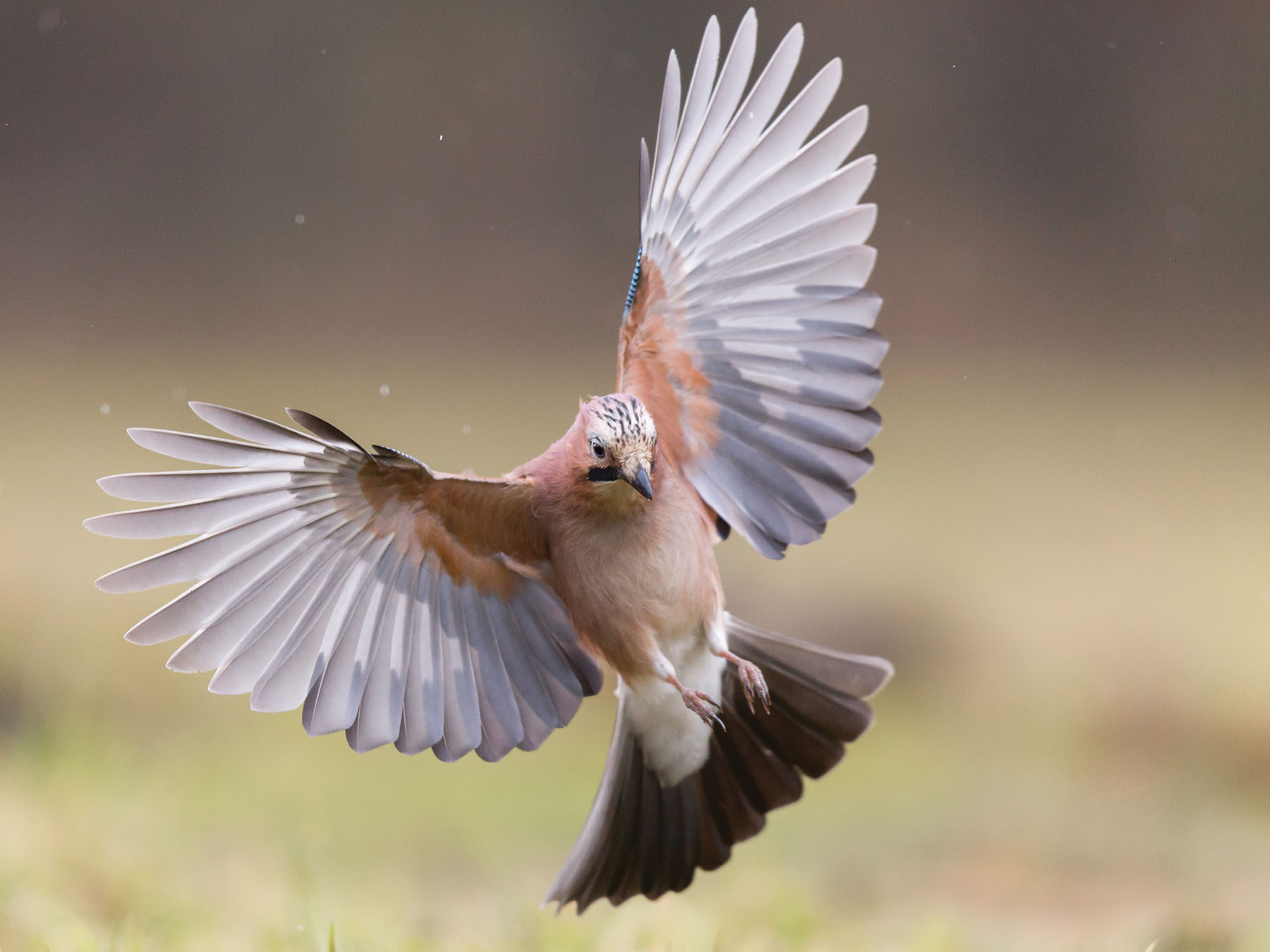
Being shy and wary, jays are most likely seen when flying away from an observer, showing rounded wings and the striking black and white pattern of rump and tail, while emitting a harsh alarm call. Flight is characteristically bouncy. Outside of breeding season jays may form small groups, but the species generally prefer a solitary existence.
Migration
Do Jays migrate?
Jays are generally resident throughout the year and rarely move long distances. However, continental birds from northern Europe may form huge flocks in years when acorns are scarce and migrate to neighbouring regions, including the United Kingdom.
Are Jays native to the UK?
Jays are native to the United Kingdom. They have been recorded for hundreds of years and were even mentioned in the works of William Shakespeare.
What it eats
Jays have a varied diet, and their habit of storing food shows an impressive level of forward-thinking. Continue reading to learn more about the Eurasian Jay’s diet.
What do Jays eat?
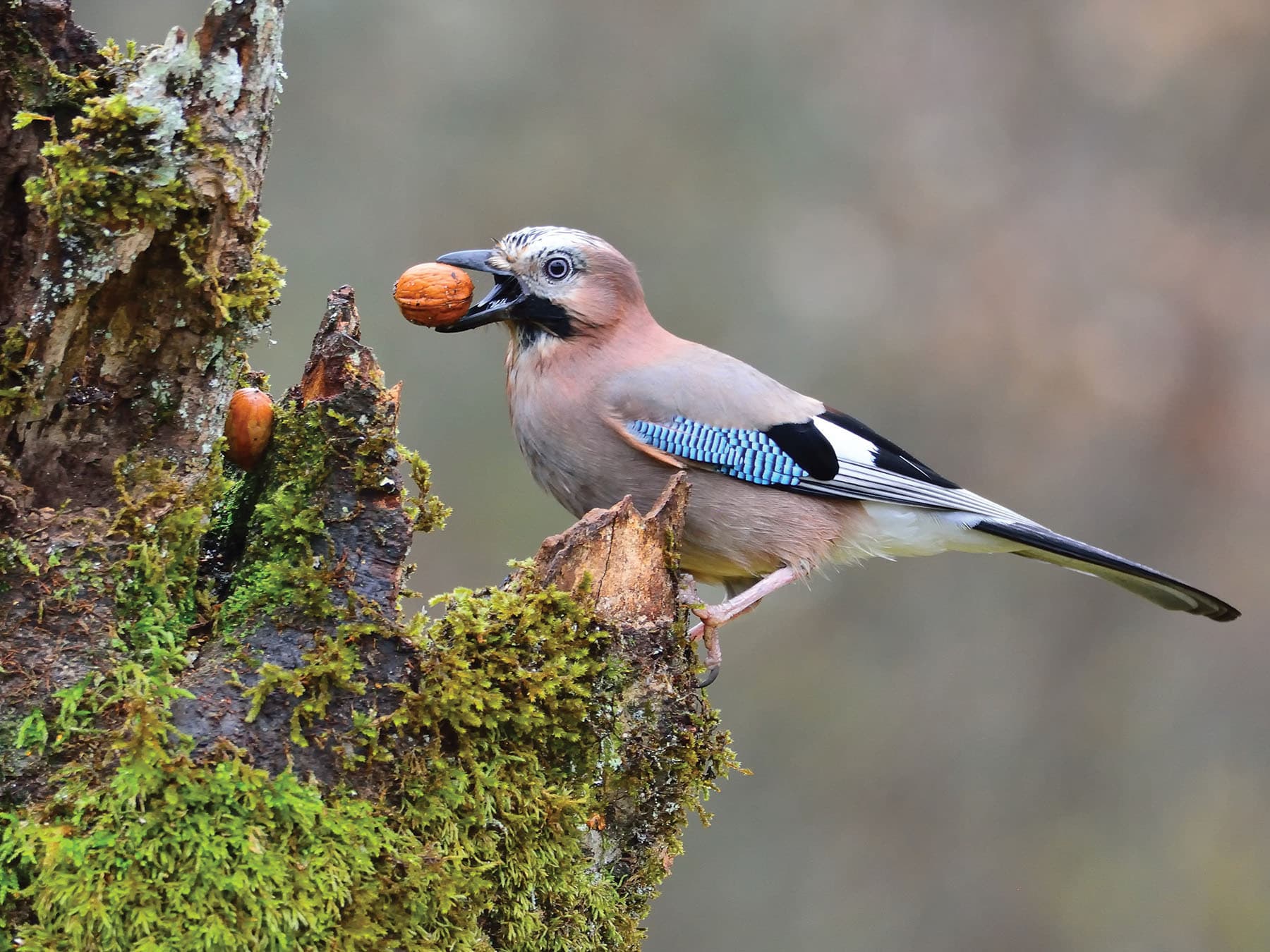
Jays are opportunistic and omnivorous, although certain food sources dominate their diet. Various fruits, nuts, invertebrates, small mammals, bird eggs and nestlings are all on the menu. Acorns are an essential component of their diet, and these are often cached (hidden) to provide a food source in the spring and winter.
Jays are usually shy around humans, but they will eat peanuts, monkey nuts, and suet at the bird table if left undisturbed.
Check out our comprehensive guide on the diet of Eurasian Jays.
What do baby Jays eat?
Baby Jays rely on both parents to bring food back to the nest. Insects are the most important food source, and these are collected nearby. Jay chicks fledge the nest after about three weeks but may be fed for another two months before gaining independence.
Nesting and breeding
Where do Jays nest?
Male Jays select the nest site, usually in a coniferous or broad-leaved tree. The nest is built at the junction of the trunk and a larger branch, usually well hidden by foliage. They also occasionally nest in vines, creepers, cavities, buildings, and larger nest boxes.
When do Jays nest?
Jays begin breeding in their second year. They nest in the spring and produce a single brood each year. Egg laying usually occurs in early to mid-May, and incubation takes 16 or 17 days. The young birds fledge the nest after 19 to 23 days.
What do Jay eggs look like?
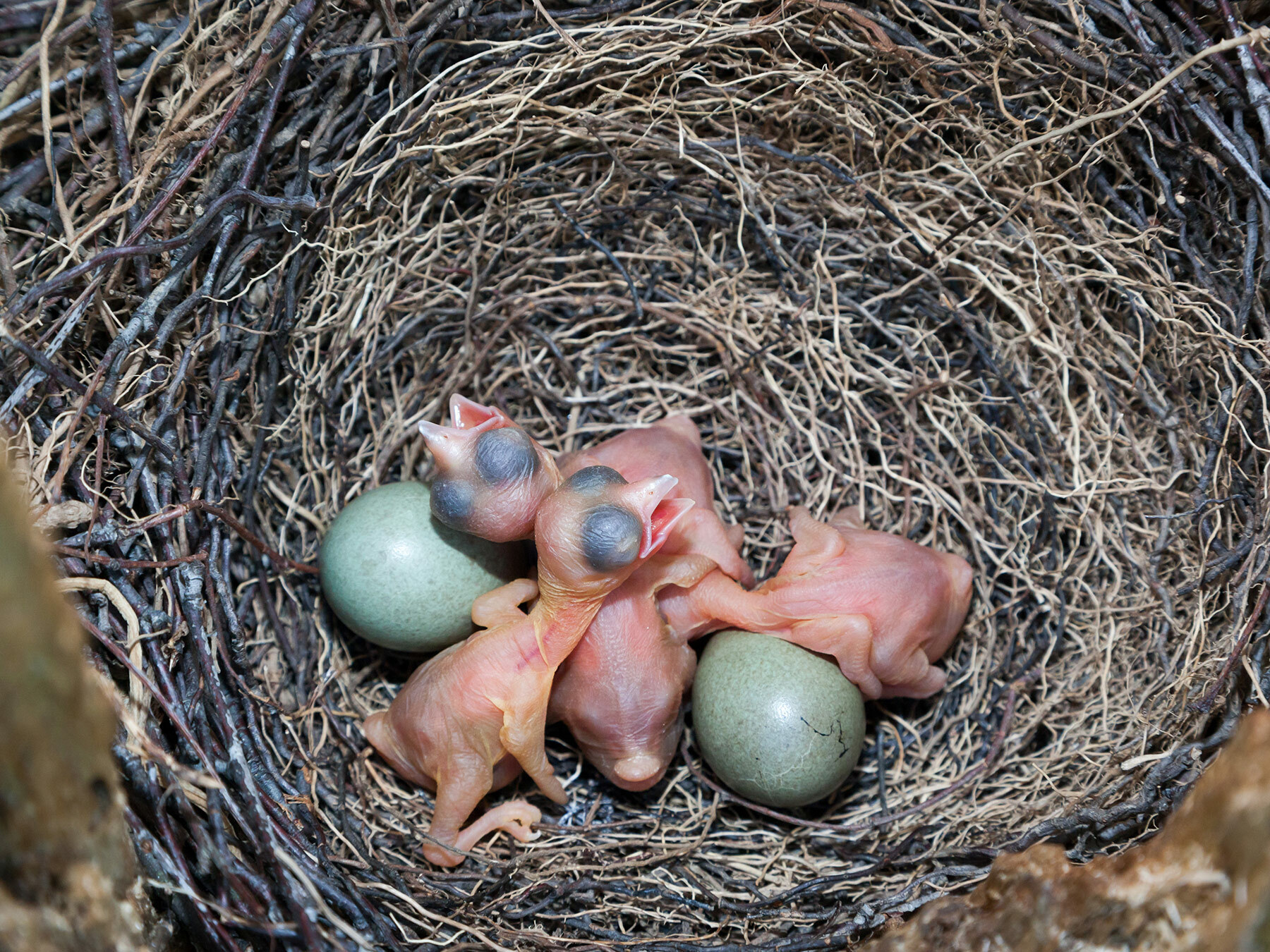
Jays in the UK usually lay four or five olive-green eggs with fine brown speckles. The average egg is approximately 30 millimetres long and 23 millimetres wide.
Do Jays mate for life?
Jays mate for life and maintain a strong pair bond through courtship displays and mutual feeding. Interestingly, the attentive males will carefully observe their partners to determine which food they most desire.
Behaviour
Jays are remarkably intelligent birds. Their ability to mimic other species, store food for leaner times, and provide their partner with their favourite foods exemplify the intelligence typical of the corvid family.
Are Jays aggressive?
Jays are territorial and aggressive towards other individuals in the breeding season. They will chase off their offspring before nesting and may resort to physical conflict when necessary. However, Jays in the UK have not earned the same reputation for aggression as their American relatives.
How do Jays plant trees?
Jays shape the natural environment and create the habitats they require by planting oak trees. A single Jay may bury over 2000 acorns before the winter, and many of these will germinate. By transporting acorns into old fields, Jays can even regenerate woodlands destroyed by human activities like farming.
Lifespan and predators
How long do Jays live?
The average life expectancy of the Jay is about four years, although there are records of birds surviving 16 to 18 years in the wild.
What are the predators of Jays?
Jays are vulnerable to various predators, including Sparrowhawks, Goshawks, and domestic cats.
Are Jays protected?
Eurasian Jays are protected in the United Kingdom by the Wildlife and Countryside Act of 1981.
Are Jays endangered?
Jays are not an endangered species. They are assessed as ‘Least Concern’ on the IUCN Red List and have a green conservation status in the United Kingdom.
Conservation
While the Eurasian Jay is listed as Least Concern by the IUCN, it faces localised threats from habitat loss and fragmentation. In some areas, it benefits from the expansion of suburban gardens, which provide additional food sources. Conservation efforts focus on maintaining diverse woodland habitats.
More photos
6 photos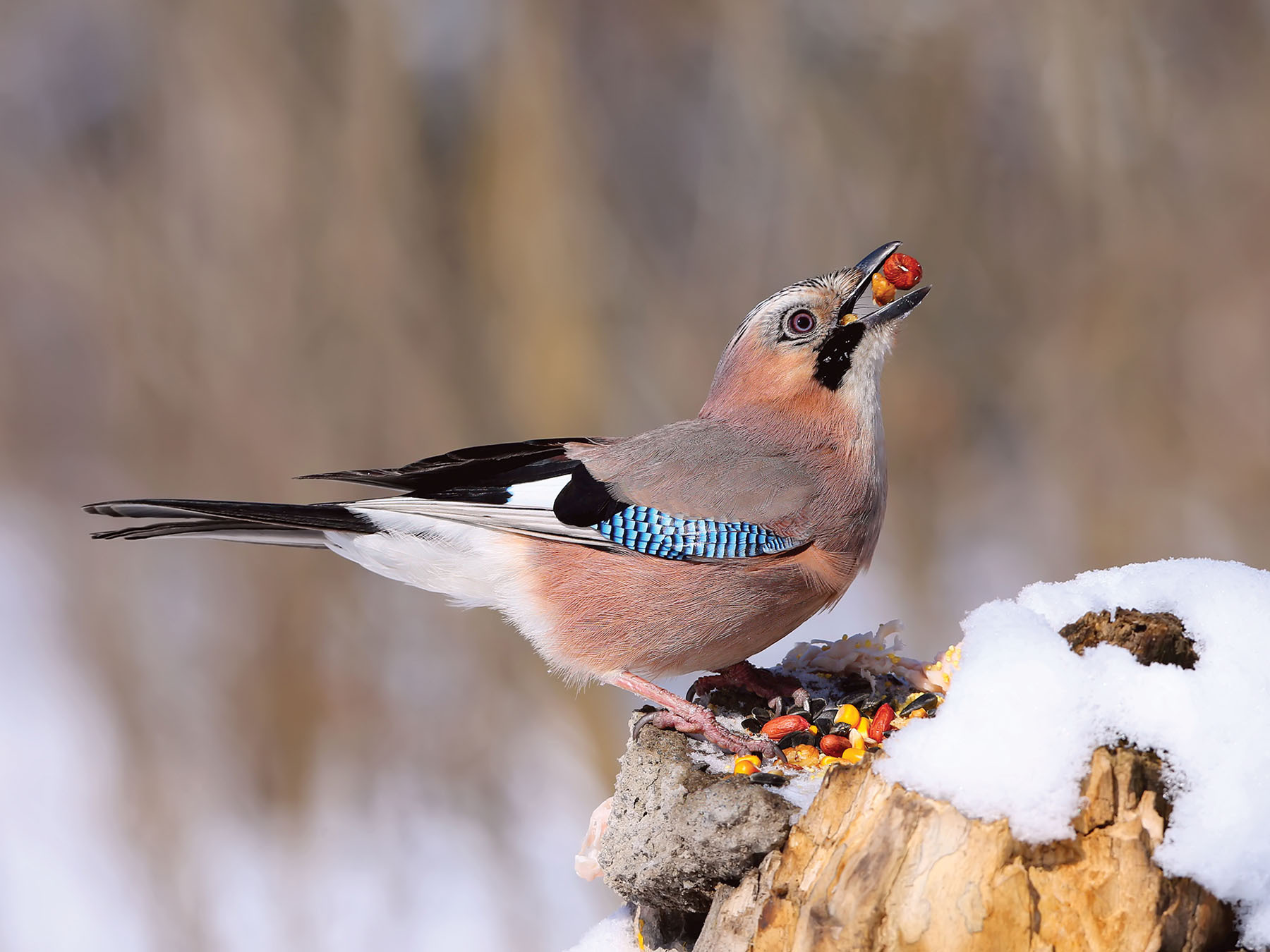
Eurasian Jay guides
4 guidesQuick facts
- Length
- 32–35 cm
- Wingspan
- 52–58 cm
- Weight
- 140–190 g
- Lifespan
- 4–7 years · oldest recorded 16.8 years
- Family
- Crows & Jays
- Migration
- Resident
- Global status (IUCN)
- Least Concern
- World population
- 33,000,000 - 65,100,000 mature individuals
- Population trend
- Stable
- Also called
- Jay
- Scientific name
- Garrulus glandarius
Questions
2Is a Jay a Magpie?
Jays and Magpies are both from the Corvidae family, although they are not the same birds. Magpies are pied, long-tailed birds from the Pica genus, while Jays are smaller, more colourful species from the Garrulus genus.
Are there Jays in London?
Despite their woodland heritage, Jays are reasonably common in London’s parks and gardens. There they are more habituated to our presence and may be bolder and easier to observe than their wilder relatives.
Sources
4- 1BirdLife International. 2017. Garrulus glandarius (amended version of 2016 assessment). The IUCN Red List of Threatened Species 2017: e.T103723684A118779004. Source (opens in a new tab)
- 2EBCC (2015)
- 3BirdLife International. 2017. Garrulus glandarius (amended version of 2016 assessment). The IUCN Red List of Threatened Species 2017: e.T103723684A118779004. Source (opens in a new tab)
- 4BTO longevity records: maximum age from a ringed bird, 16 years, 9 months, 19 days (set in 1983), BirdFacts: Jay (1983) Source (opens in a new tab)

Checked by
Nathan Cope, founder and editor
Nathan founded Birdfact and leads its writers and contributors in the UK, the US and Canada. He has watched and studied birds for more than ten years, and checks every article and species guide before it’s published.