Facts · Updated 8 Oct 2026
How Long Do Crows Live? Lifespan and Records
By the Birdfact teamChecked by Nathan Cope
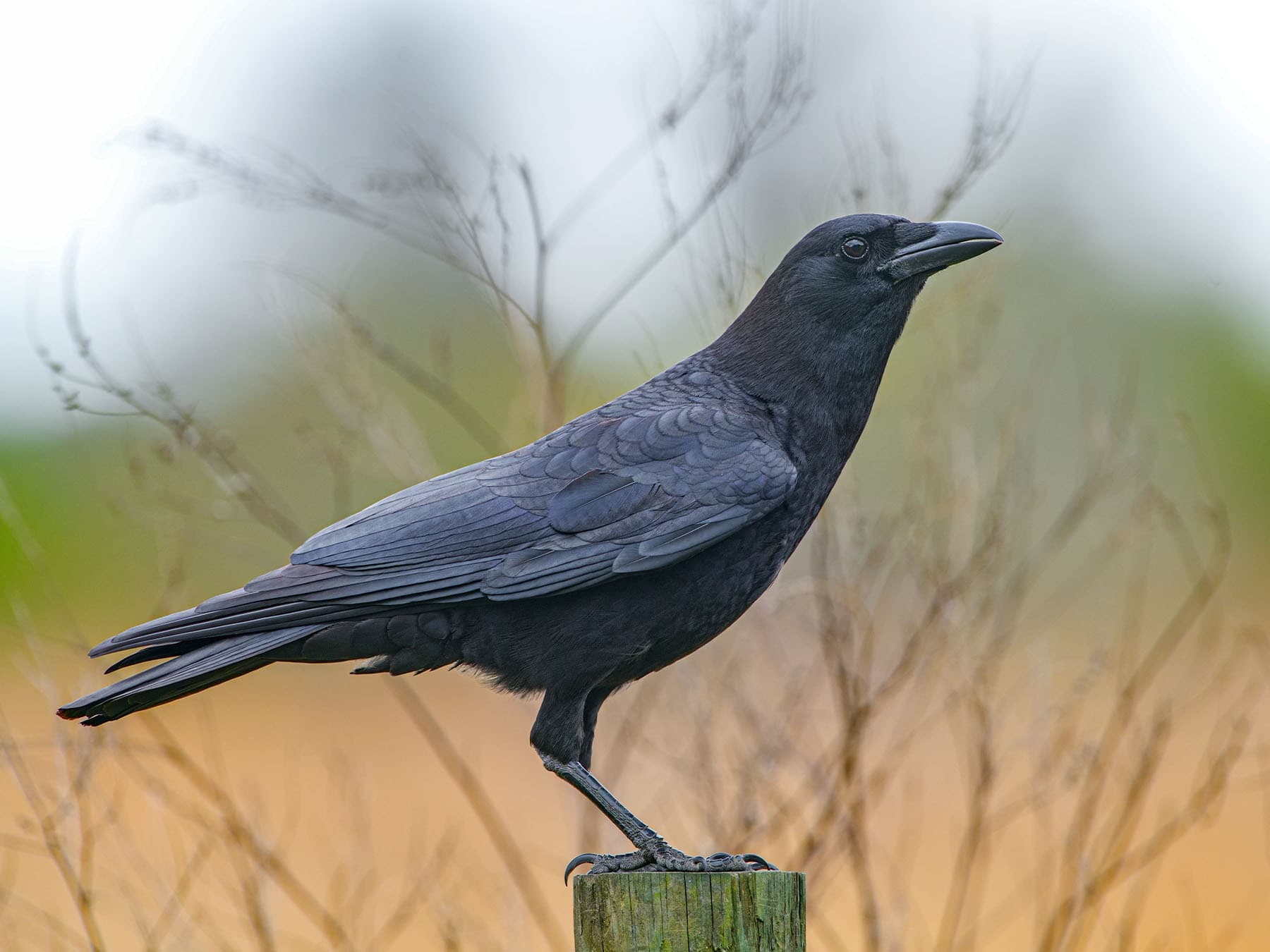
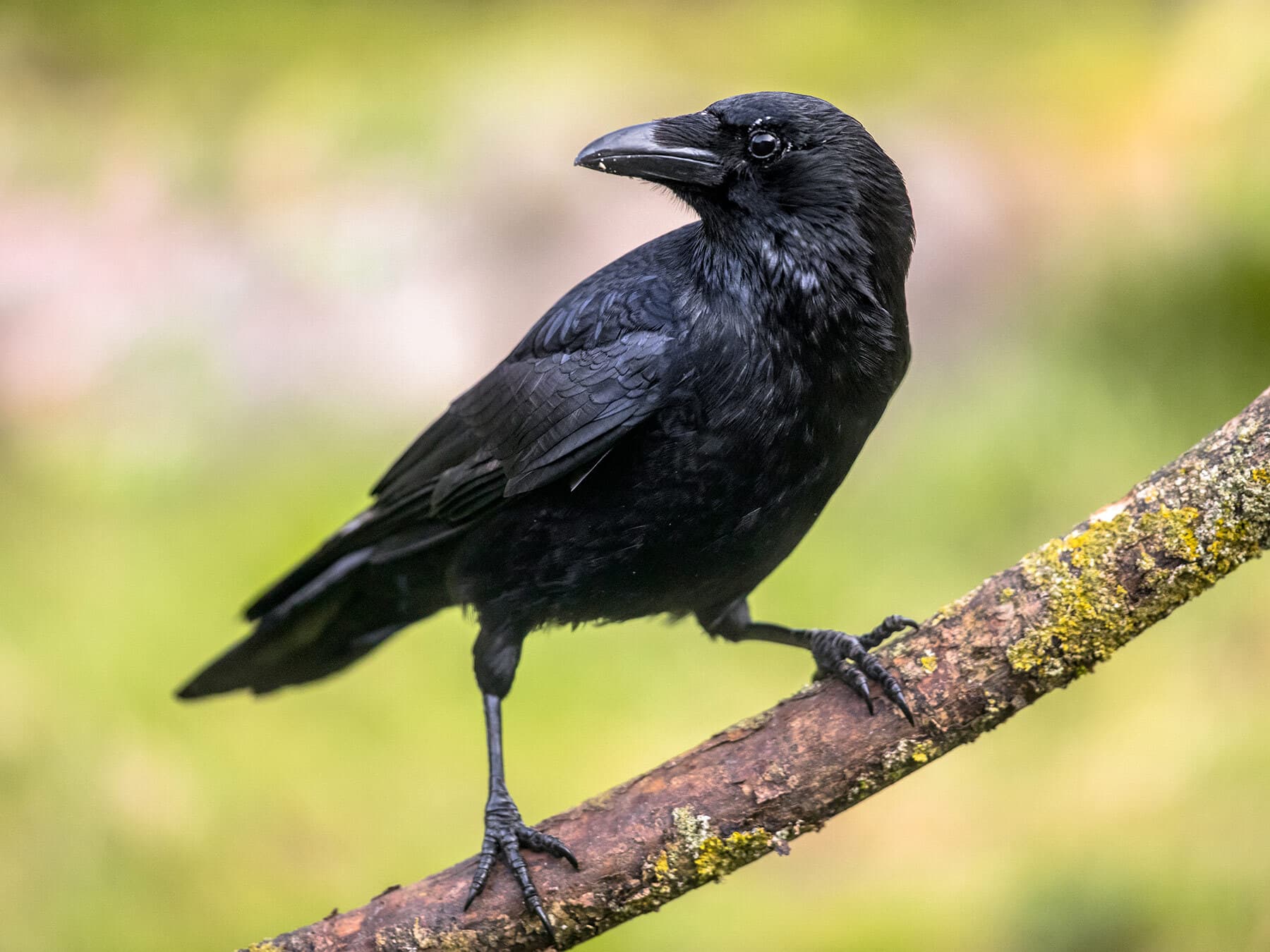
Most crows die young, but one that survives its first year can live for many more. In Britain a Carrion Crow that reaches breeding age typically lives about 4 years; the oldest ringed Carrion Crow lived over 20 years, and the oldest banded American Crow at least 18 years 4 months.
On this page8 sections
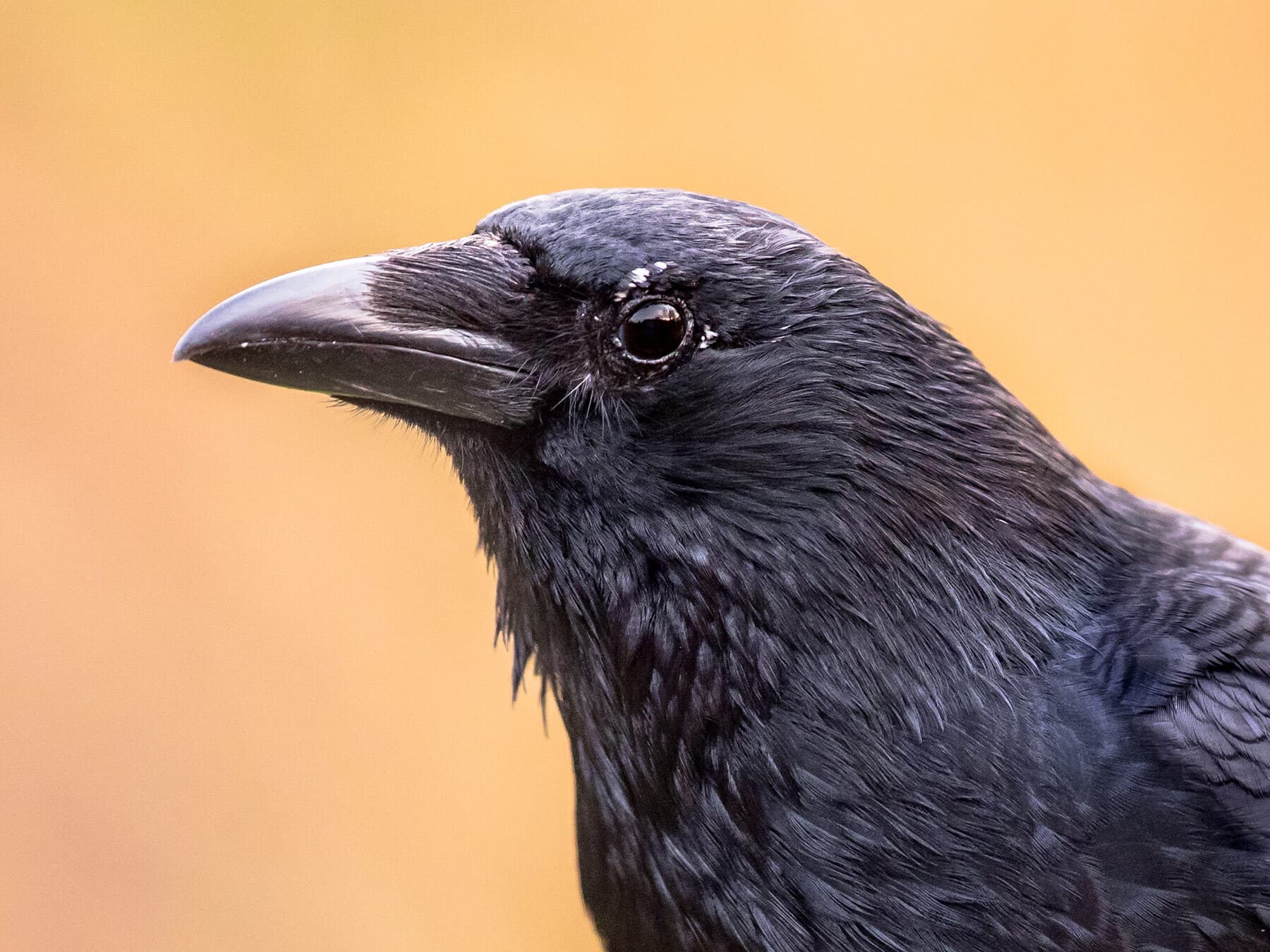
How long crows live, from the two crows most people mean: the American Crow of North America and the Carrion Crow of Britain and Europe. Below: typical lifespans, the oldest crows on record, why so many young crows die, crows in captivity, and where the idea that crows live for centuries comes from.
How long do crows live?
A crow that survives its first year usually lives a few years more, and a lucky one can pass 20. In Britain, a Carrion Crow that reaches breeding age typically lives about 4 years, first breeding at 2; about half of adults survive from one year to the next.1
American Crows in Ithaca, New York, did better: more than 70% of adults survived from one year to the next2, and about 93% of breeders.3 Most crows, though, never reach a year old: they die as eggs or nestlings.
The oldest wild crows on record
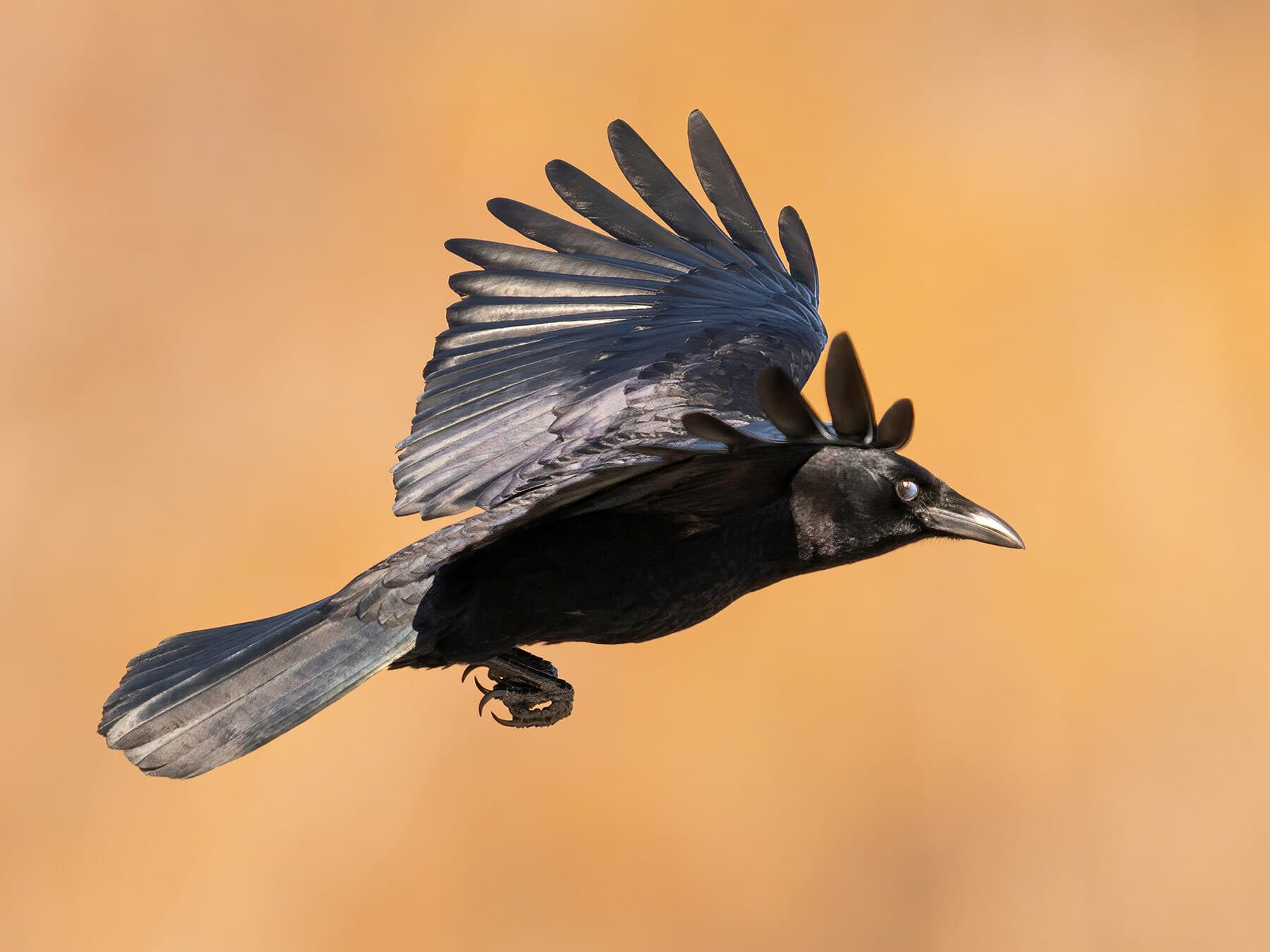
Ages come from birds ringed (banded) by scientists and found again. The oldest Carrion Crow was ringed in its first year at Dirleton, East Lothian, in June 1996 and found dead nearby in May 2017, 20 years 10 months 7 days later.4 It is also the oldest Carrion Crow on the European list.5 The oldest American Crow on the US federal banding list was at least 18 years 4 months old: a female banded in Washington in 2006 and seen alive in 2022.6
| Bird | Oldest known wild bird | Where |
|---|---|---|
| Carrion Crow | 20 years 10 months | East Lothian, Scotland (BTO; also the European record) |
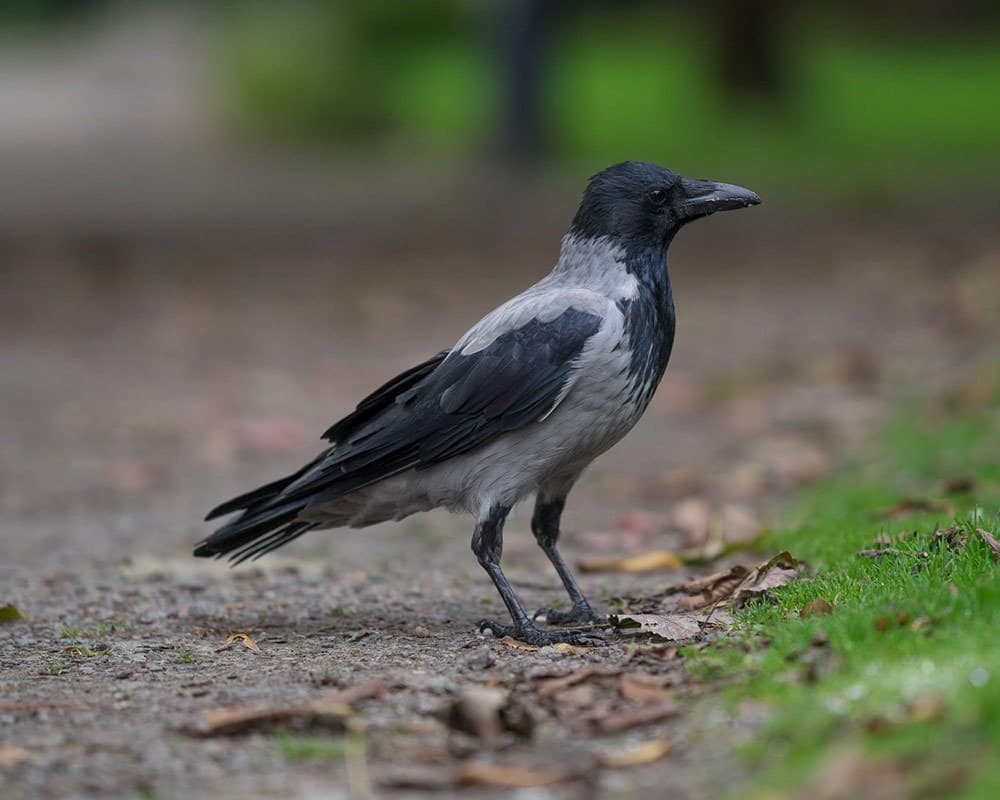
| Hooded Crow | 20 years 1 month | Norway (EURING) |
| American Crow | 18 years 4 months | Washington, US (USGS) |
| Northwestern Crow (now part of the American Crow) | 16 years 8 months | British Columbia (USGS) |
| Fish Crow | 13 years 9 months | Louisiana, US (USGS) |
| Common Raven | 22 years 7 months | Nova Scotia (USGS) |
| Rook | 25 years 5 months | Sweden (EURING) |
| Jackdaw | 24 years 3 months | Germany (EURING) |
In Britain and Ireland alone, the oldest ringed Rook lived 22 years 11 months, the oldest Jackdaw 19 years 5 months and the oldest Raven 17 years 11 months. Older wild crows may well exist: these are only the birds that happened to be ringed and found again. A 29.5-year-old American Crow reported from Ontario in 1988 is often quoted, and Cornell's crow FAQ lists it3, but it is not in the federal banding records, and a 2006 news report drawing on the same researcher called the claim unsubstantiated.7
Why so many young crows die
The first year is the hardest. In a New York study, about 35% of young crows in the countryside and 52% in town survived their first year2; in Seattle an estimated 45% did.8 The Carrion Crow is similar: in Britain about half of first-year birds survive to their second year.
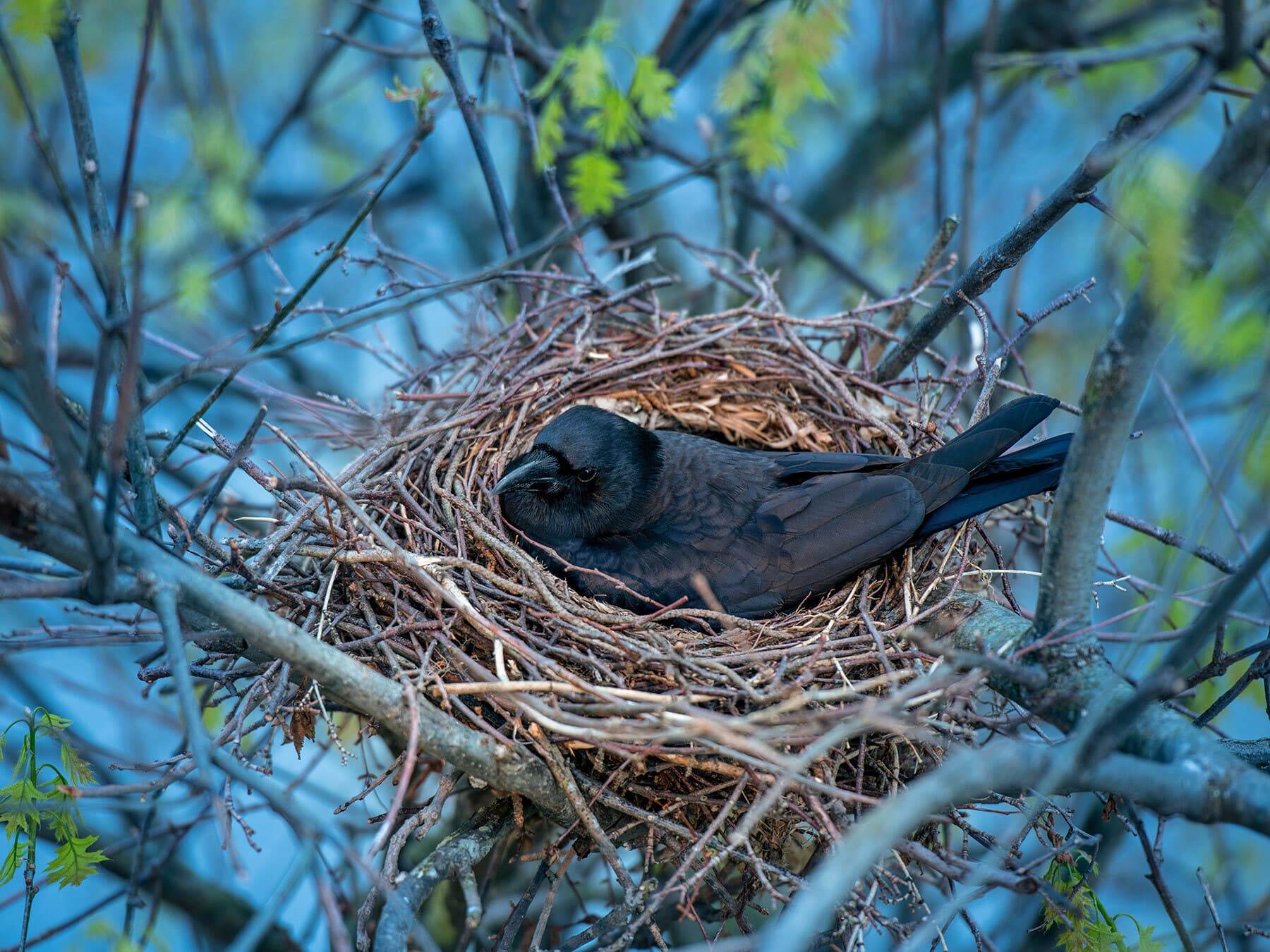
Many die before they fly. Eggs hatch over two or three days, and the last chick to hatch is often the first to starve. Raccoons, owls and hawks take eggs and nestlings, and in one California study 83% of failed American Crow nests were lost to predators.2
What kills adult crows
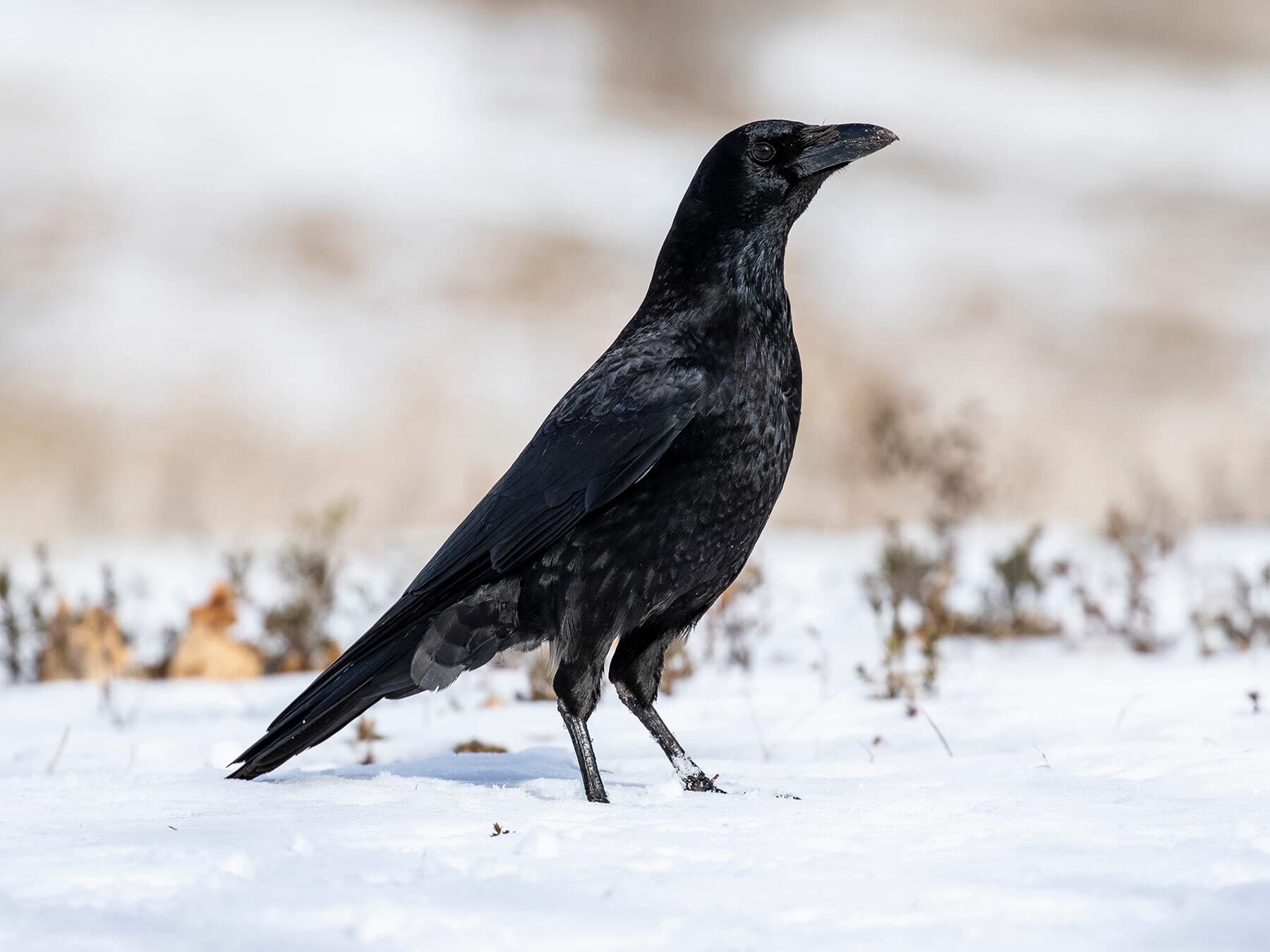
Once grown, crows have few predators: Great Horned and other large owls, hawks, eagles and goshawks take some. Disease can hit hard. West Nile virus, which reached North America in 1999, kills nearly every crow it infects9, and American Crow numbers fell by up to 45% by 2005.10 People kill crows too: in North America, shooting was the single largest known cause of death among banded crows recovered between 1917 and 1999.

Crows in captivity
Perhaps longer, but the records are thin. The AnAge database gives 20 years as the American Crow's longest known lifespan (without saying whether that bird was wild or captive) and 16.8 years for a captive Hooded Crow, less than the wild records above.11 A crow called Tata, taken in as an injured fledgling on Long Island in 1947 and never able to fly, was reported to have died aged 59 in 2006. Its age could not be proved, though a crow biologist thought the story reasonable.7 Ravens can live even longer: AnAge lists a captive Common Raven reportedly 69 years old. Keeping a wild crow is illegal in Britain and the US; see can you have a crow as a pet?
Do crows live for 300 years?
No. The idea that crows live for centuries is very old. The Greek poet Hesiod wrote that the crow lives "nine generations" of men, quoted by Plutarch: "Nine generations long is the life of the crow and his cawing, nine generations of vigorous men."12 How long that is depends on the generation: one of Plutarch's speakers reckons a man's generation at 30 years, which makes the crow 270 years old, close to the "300 years" still repeated today; another takes a generation to be a single year. Even in Roman times the claim was doubted: Pliny the Elder called Hesiod's figures "fabulous".13 Real crows, as the ringing records show, live a few years on average and only exceptionally past 20.
How ringing records work
A ringing record measures the time between a bird being ringed and being found again. If the bird was ringed as an adult, it was older than the record shows. Most ringed crows are never found again, so the records show what is possible, not what is usual. See the Carrion Crow and American Crow guides for each bird.
Sources
- BTO. Carrion Crow (Corvus corone). BTO BirdFacts. Accessed 8 October 2026. Source
- Caffrey, C., Verbeek, N. A., Clark, A. B., McGowan, K. J., Pyle, P. (2026). American Crow (Corvus brachyrhynchos), version 1.6. Birds of the World (A. F. Poole, F. B. Gill and M. G. Smith, editors). Cornell Lab of Ornithology. doi:10.2173/bow.amecro.01.6
- McGowan, K. J. Frequently asked questions about crows. Cornell Lab of Ornithology. Accessed 8 October 2026. Source
- BTO. Longevity records for Britain & Ireland in 2024. BTO Online Ringing and Nest Recording Report. Accessed 8 October 2026. Source
- Fransson, T., Kolehmainen, T., Moss, D., Robinson, R. (2023). EURING list of longevity records for European birds (1 September 2023). EURING. Accessed 8 October 2026. Source
- USGS Bird Banding Laboratory. Longevity records of North American birds. USGS Patuxent Wildlife Research Center. Accessed 8 October 2026. Source
- Associated Press (2006). Housebound crow dies at age 59. Fox News (AP). Accessed 8 October 2026. Source
- Withey, J. C., Marzluff, J. M. (2005). Dispersal by juvenile American Crows influences population dynamics across a gradient of urbanization. The Auk 122(1): 205-221. doi:10.1093/auk/122.1.205
- Cornell Lab of Ornithology. American Crow. All About Birds. Accessed 8 October 2026. Source
- LaDeau, S. L., Kilpatrick, A. M., Marra, P. P. (2007). West Nile virus emergence and large-scale declines of North American bird populations. Nature 447(7145): 710-713. doi:10.1038/nature05829
- de Magalhães, J. P. et al. AnAge: The Animal Ageing and Longevity Database (Build 15). Human Ageing Genomic Resources. Accessed 8 October 2026. Source
- Plutarch, Babbitt, F. C. (trans.) (1936). On the Obsolescence of Oracles (De defectu oraculorum), Moralia vol. V. Loeb Classical Library, Harvard University Press. Accessed 8 October 2026. Source
- Pliny the Elder, Bostock, J., Riley, H. T. (trans.) (1855). The Natural History, book 7, chapter 48 (49). Taylor and Francis, London. Accessed 8 October 2026. Source