Sandpipers & Snipes in United Kingdom
32 species matching this filter.
The United Kingdom hosts 25 species from the Sandpipers & Snipes family, making it one of Europe's most important regions for these wading birds. From the haunting call of the Curlew across upland moors to the elusive Eurasian Woodcock skulking in woodland, these species occupy a remarkable range of habitats including estuaries, mudflats, marshes, and moorland. Notable species such as the Bar-tailed Godwit, Black-tailed Godwit, and Common Snipe can be observed in impressive numbers, particularly during migration and winter months.


Showing 1–23 of 32 species
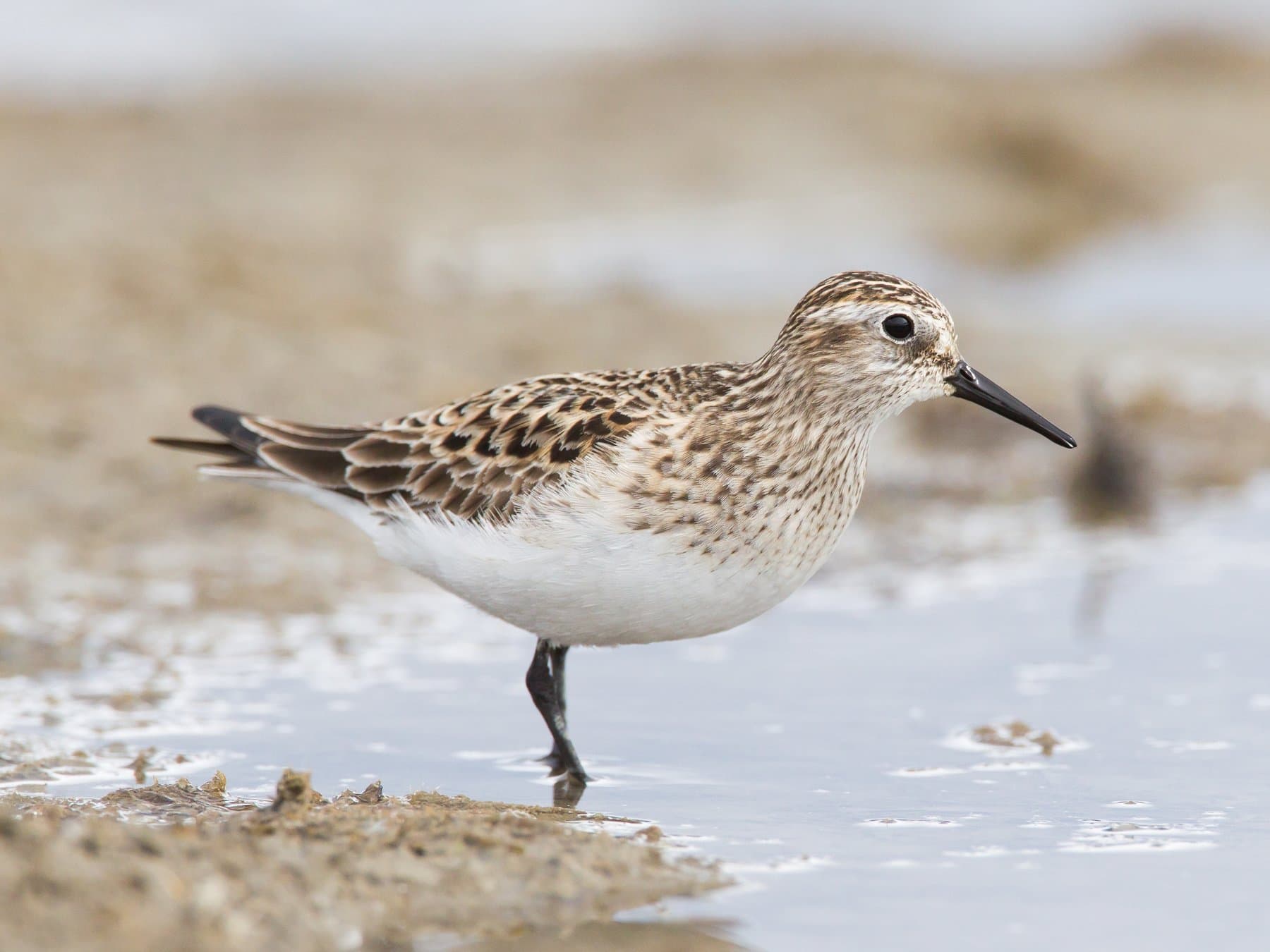
Baird's Sandpiper
Calidris bairdiiLC
A rare Nearctic vagrant appearing at coastal pools and mudflats from August to October. Most records come from western coasts, particularly in Ireland and south-west England.
Aug–Oct
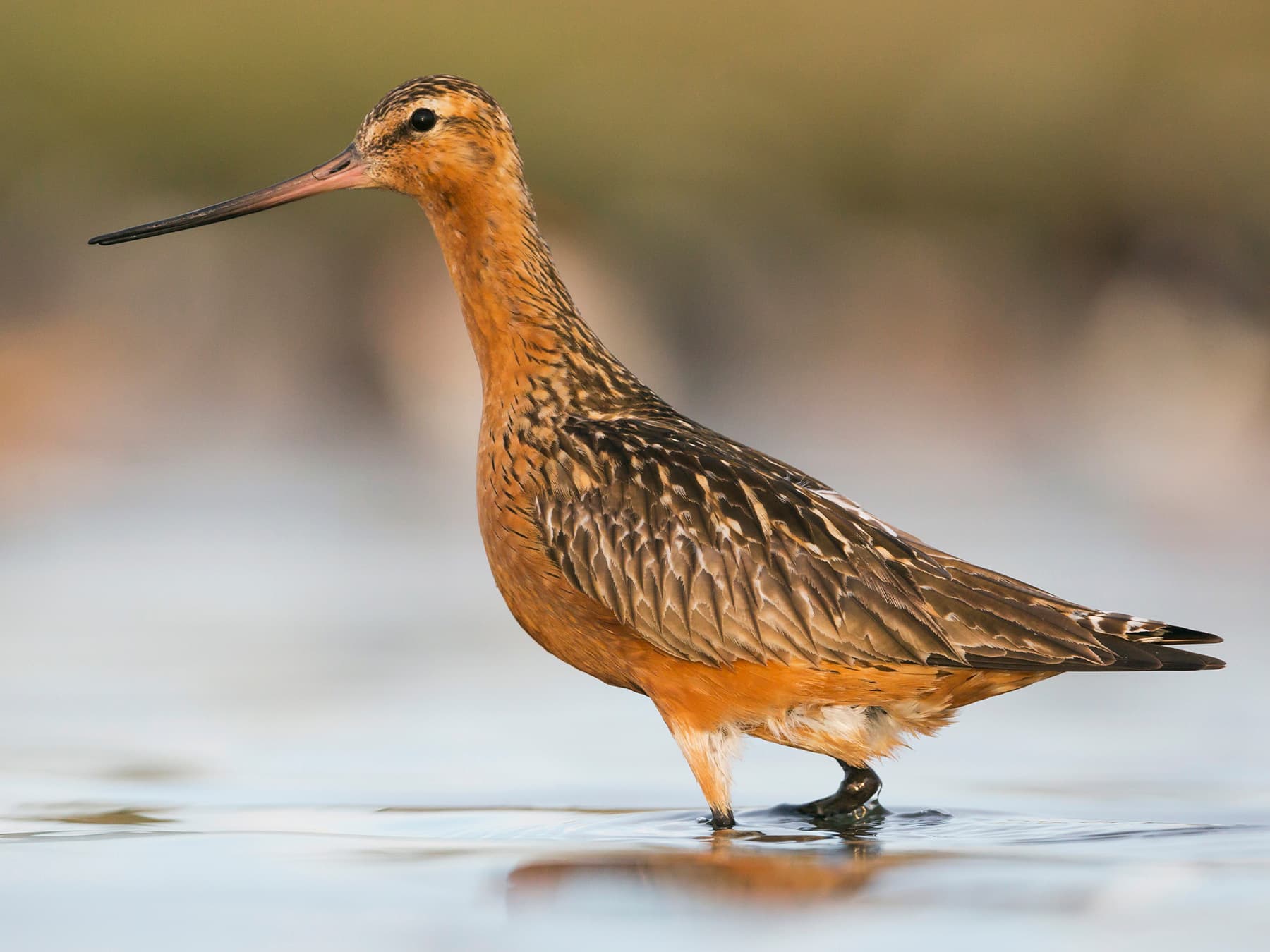
Bar-tailed Godwit
Limosa lapponicaNT
Found year-round on sandy estuaries and mudflats, with numbers peaking in winter. Large flocks gather at key sites like the Wash, probing the mud with their upturned bills.
Year-round
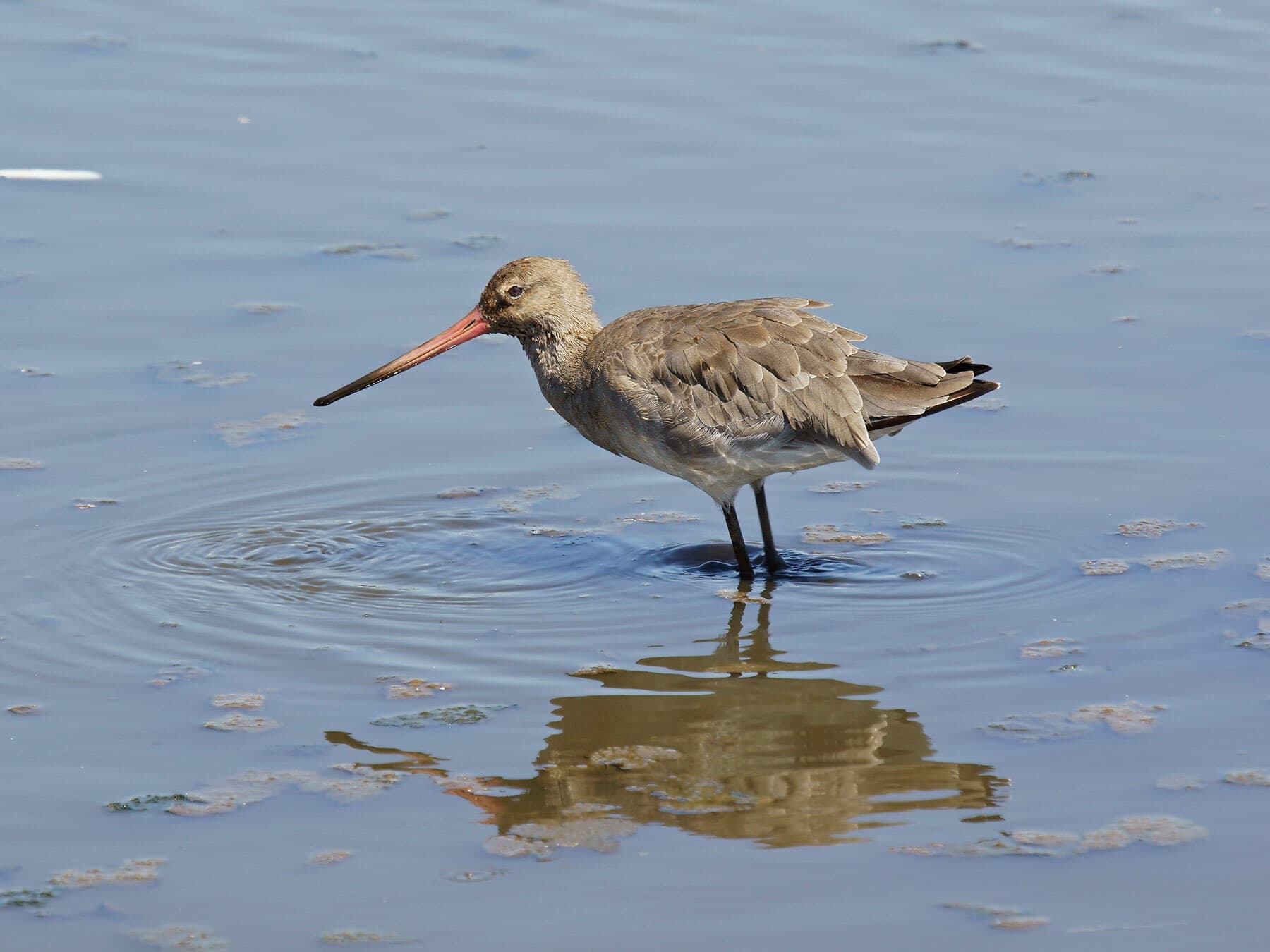
Black-tailed Godwit
Limosa limosaNT
Present year-round on estuaries and wet grasslands. The Icelandic subspecies winters in large numbers, while the breeding population remains very small.
Year-round
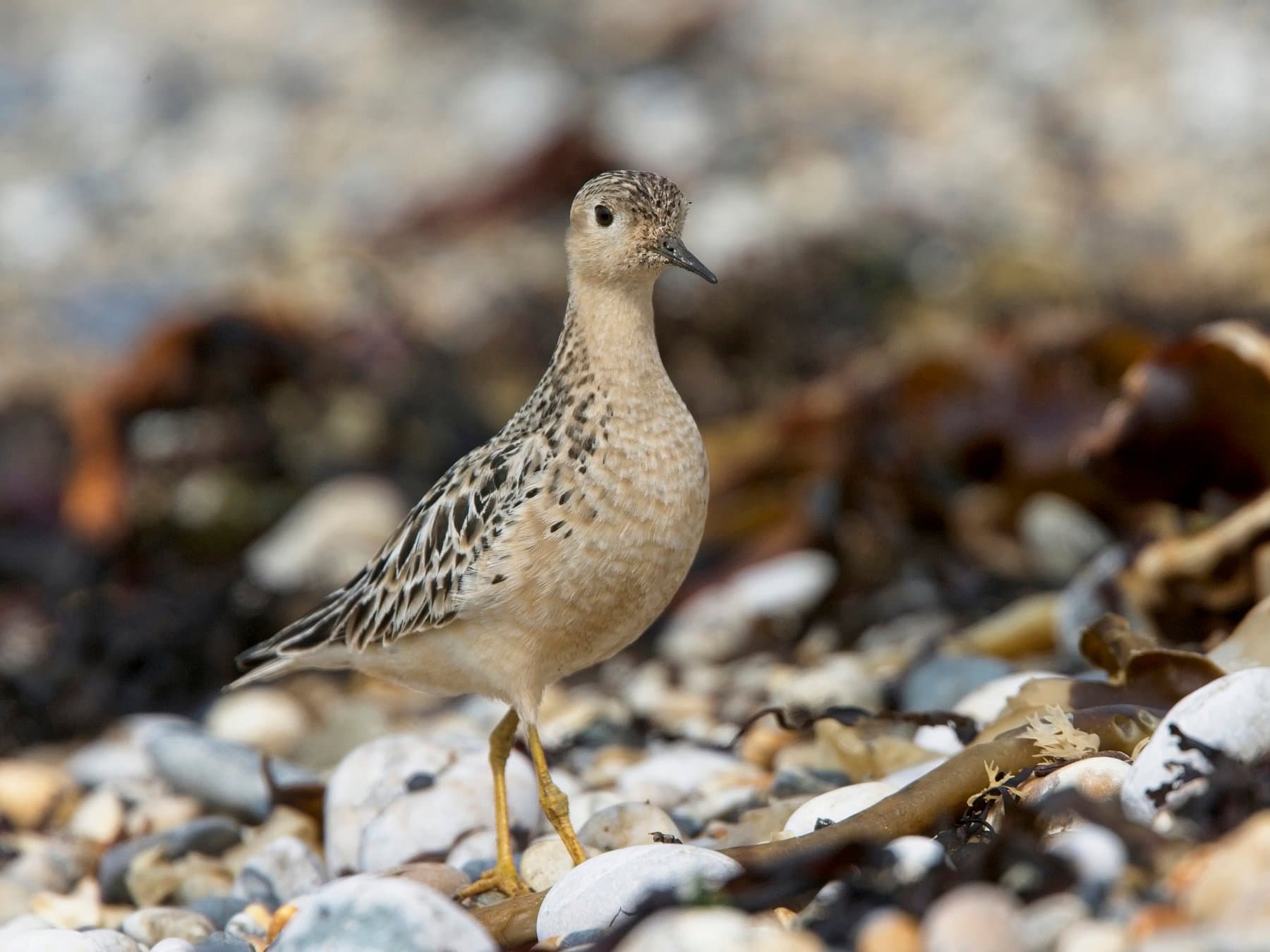
Buff-breasted Sandpiper
Calidris subruficollisVU
A scarce autumn passage migrant from North America, favouring short-grass fields and airfields. Most records come from south-west coasts.
May–Oct
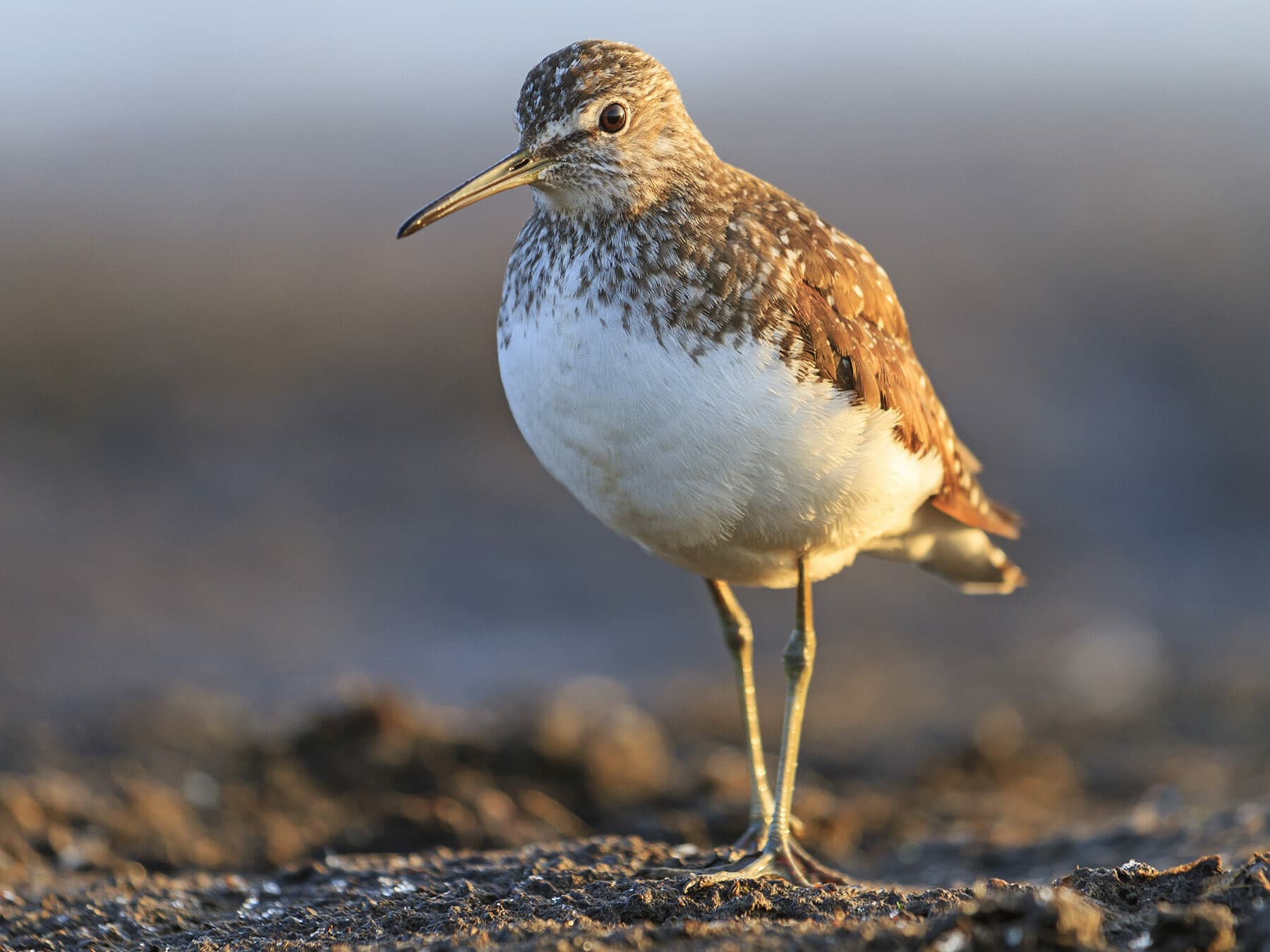
Common Sandpiper
Actitis hypoleucosLC
Found along upland rivers and lake shores, bobbing its tail constantly. Breeds in the north and west, wintering more widely across lowland waters.
Year-round
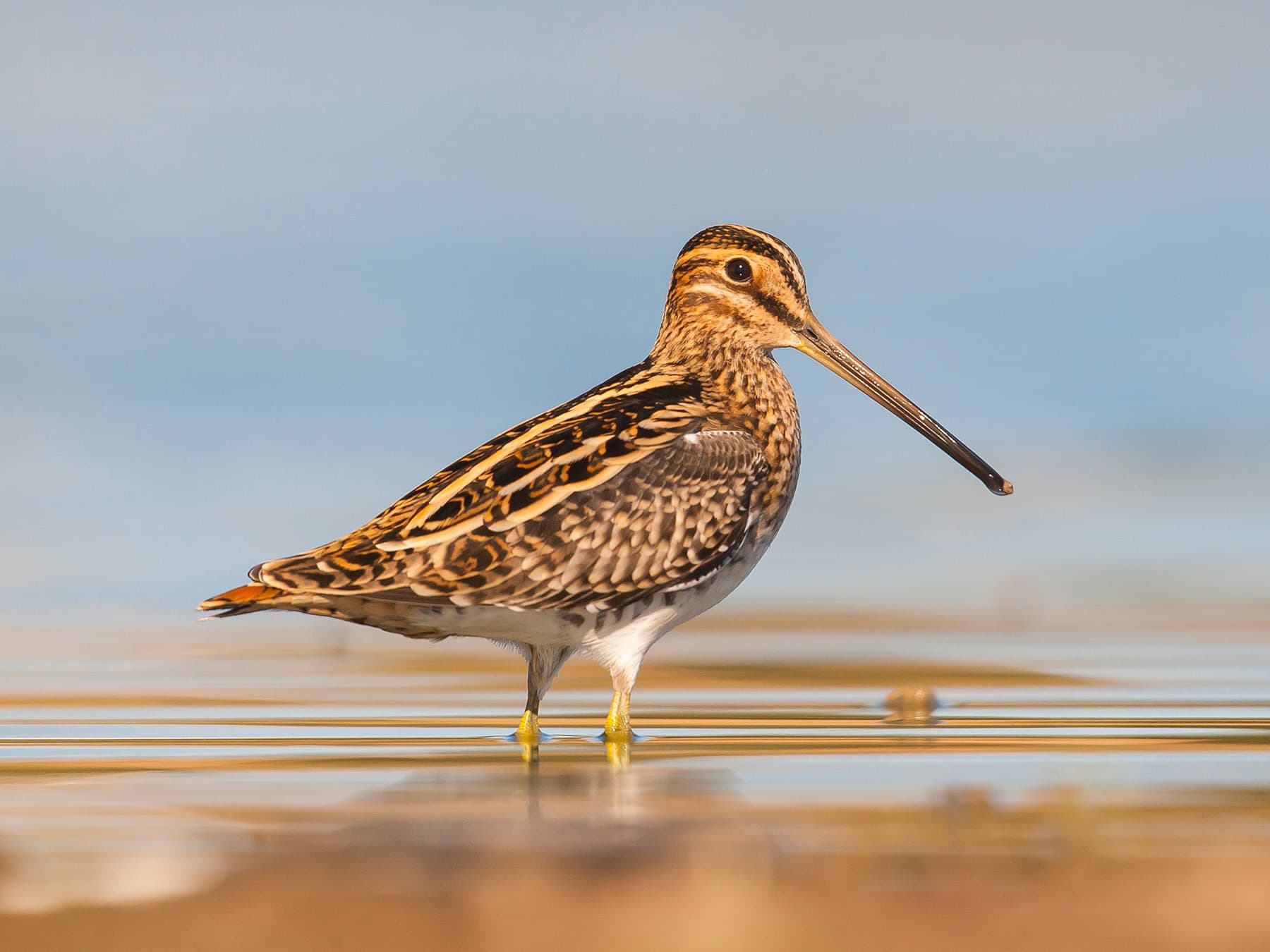
Common Snipe
Gallinago gallinagoLC
A common resident of wet grasslands and marshes, often detected by its distinctive 'drumming' display flight over moorland in spring.
Year-round
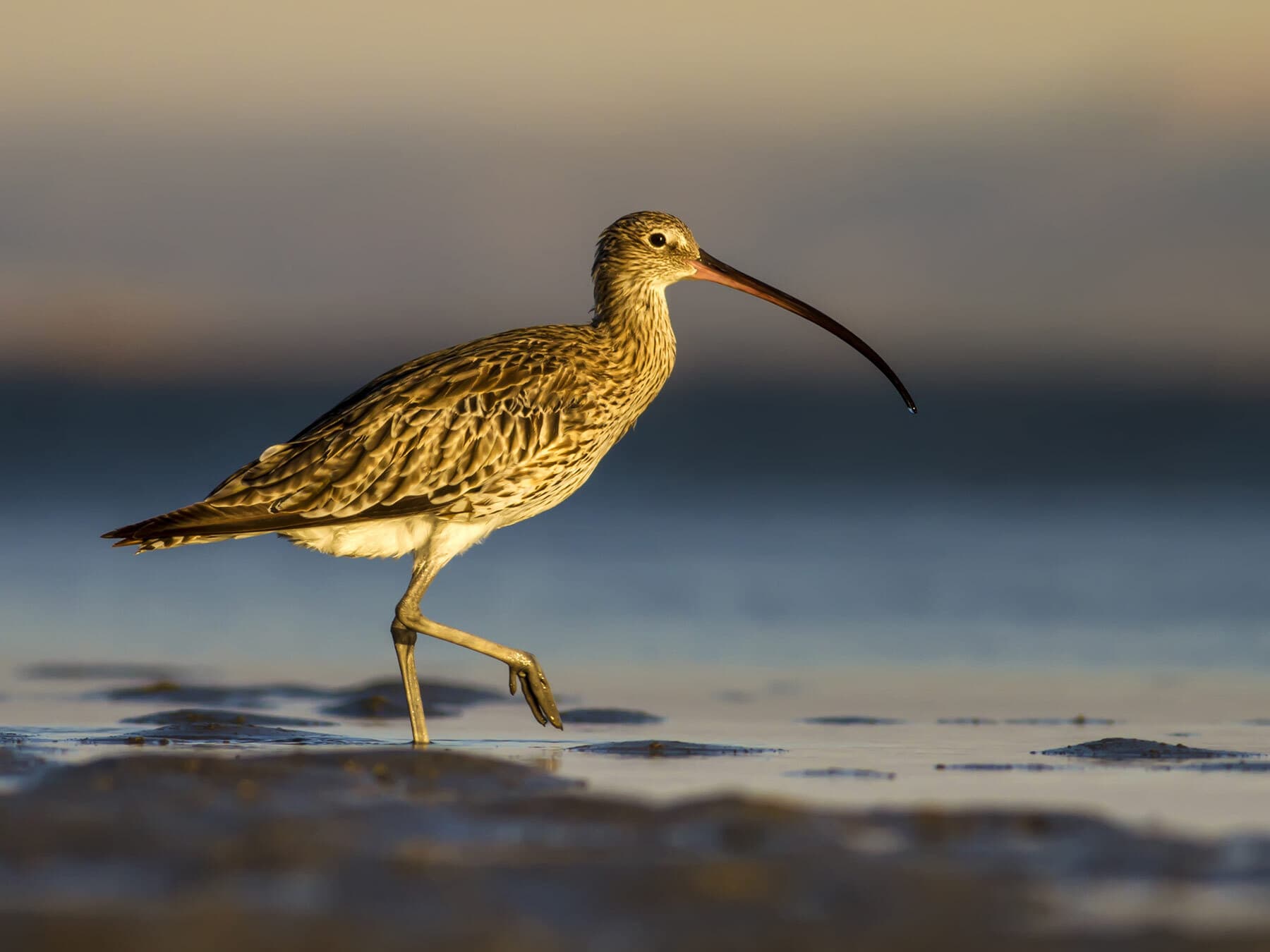
Curlew
Numenius arquataNT
A common but declining resident of upland moors and farmland. Winters on estuaries and coasts, where its evocative call is iconic.
Year-round
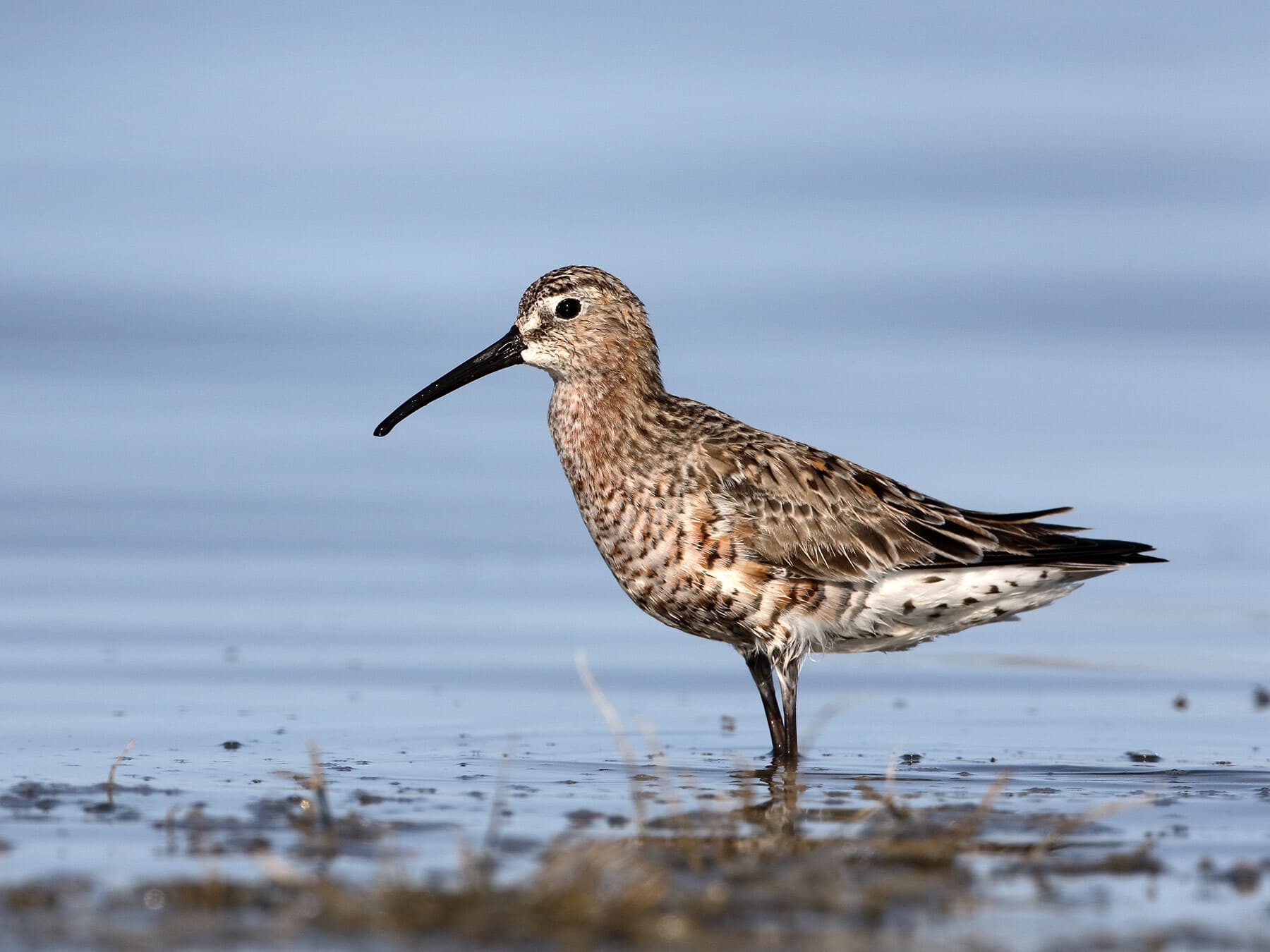
Curlew Sandpiper
Calidris ferrugineaNT
An uncommon passage wader seen mainly on coastal mudflats and estuaries from late summer into autumn. Most records come from eastern and southern England.
Apr–Nov
Spotted something?
Upload a photo to identify it
Identify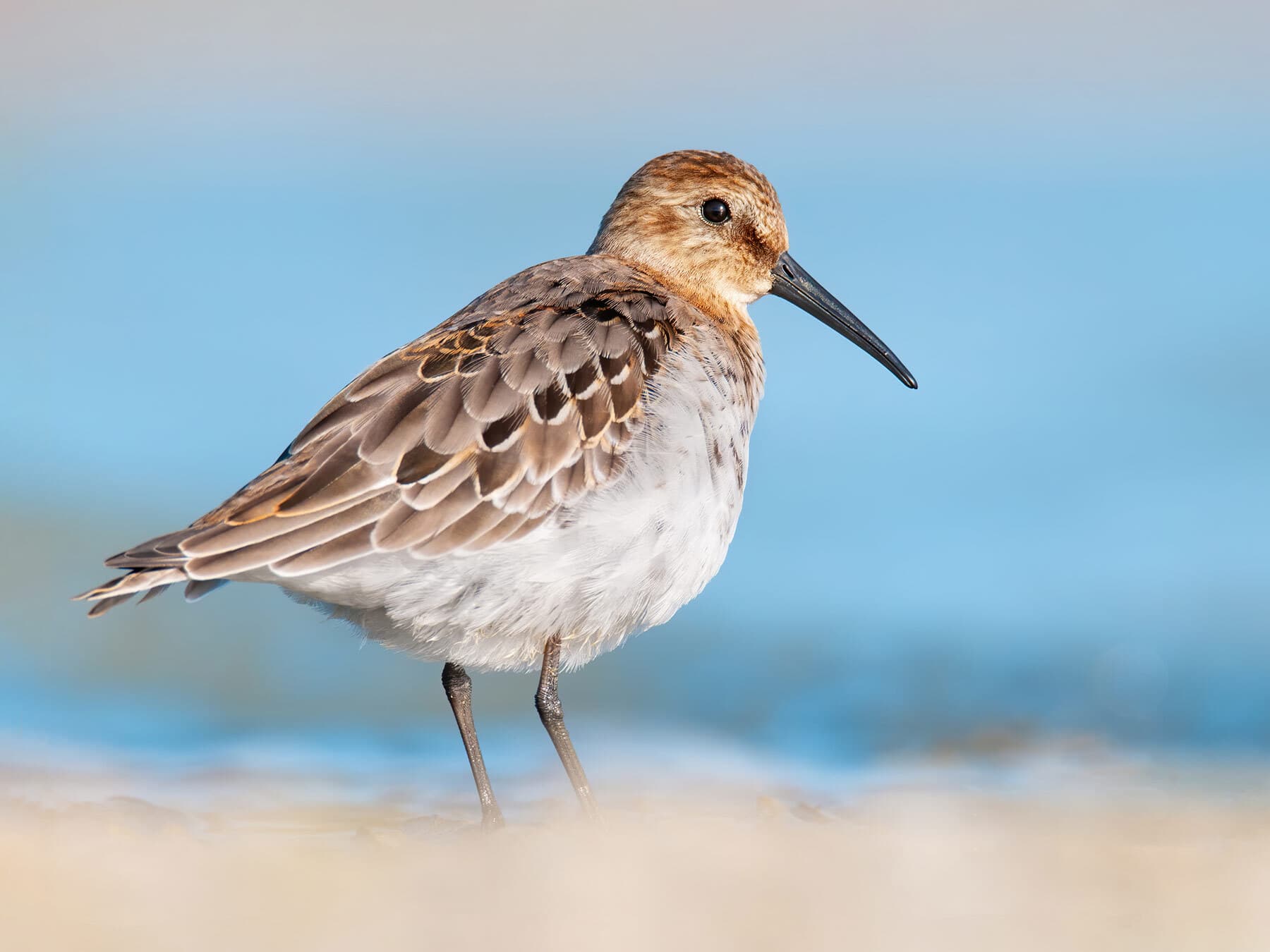
Dunlin
Calidris alpinaLC
A common wader found year-round on estuaries and mudflats. Winter flocks swell with migrants from Scandinavia and Iceland.
Year-round
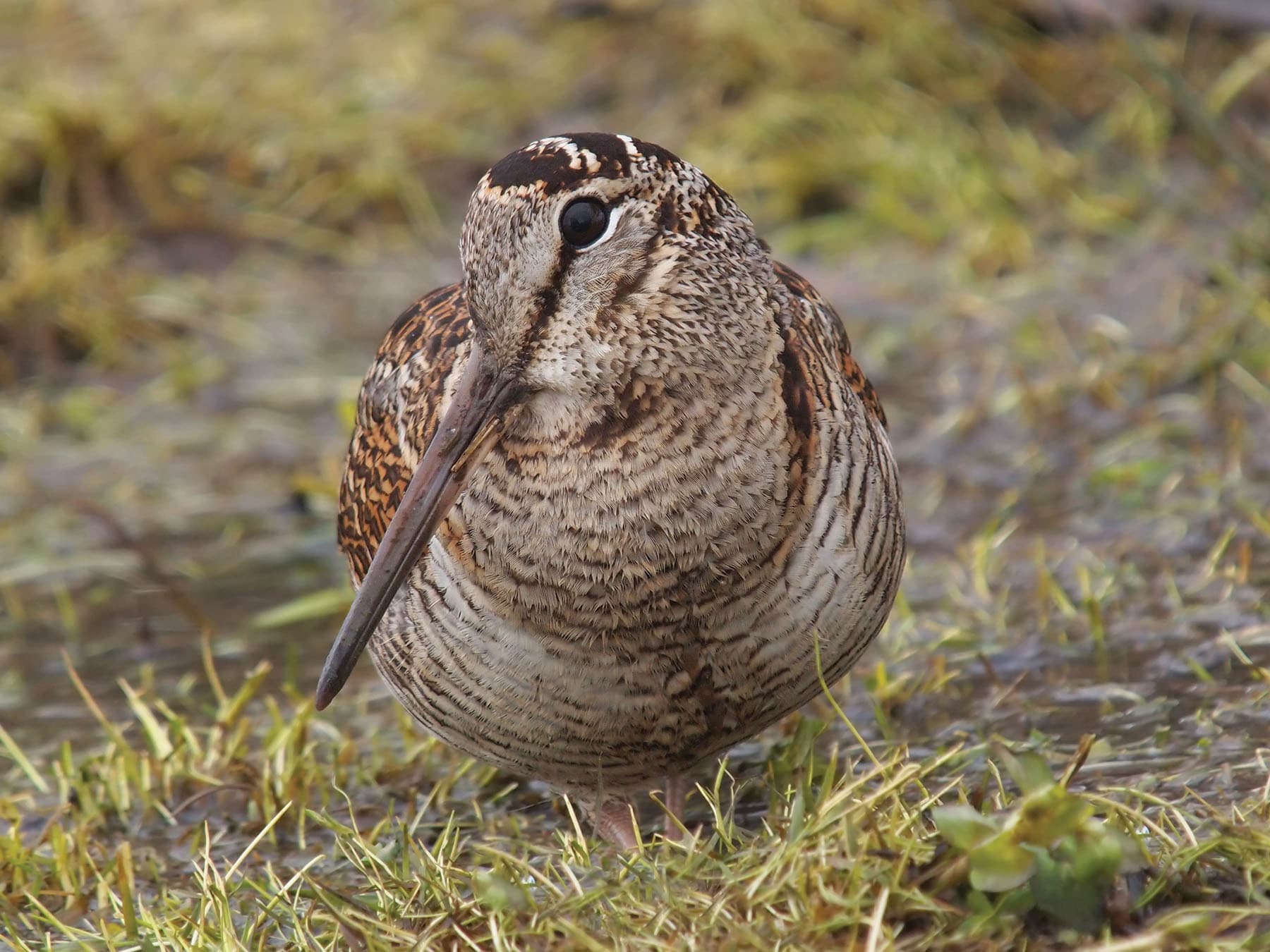
Eurasian Woodcock
Scolopax rusticolaLC
A secretive resident of damp woodland floors, best seen during its 'roding' display flights at dusk in spring. Winter numbers swell with Continental immigrants.
Oct–Jul
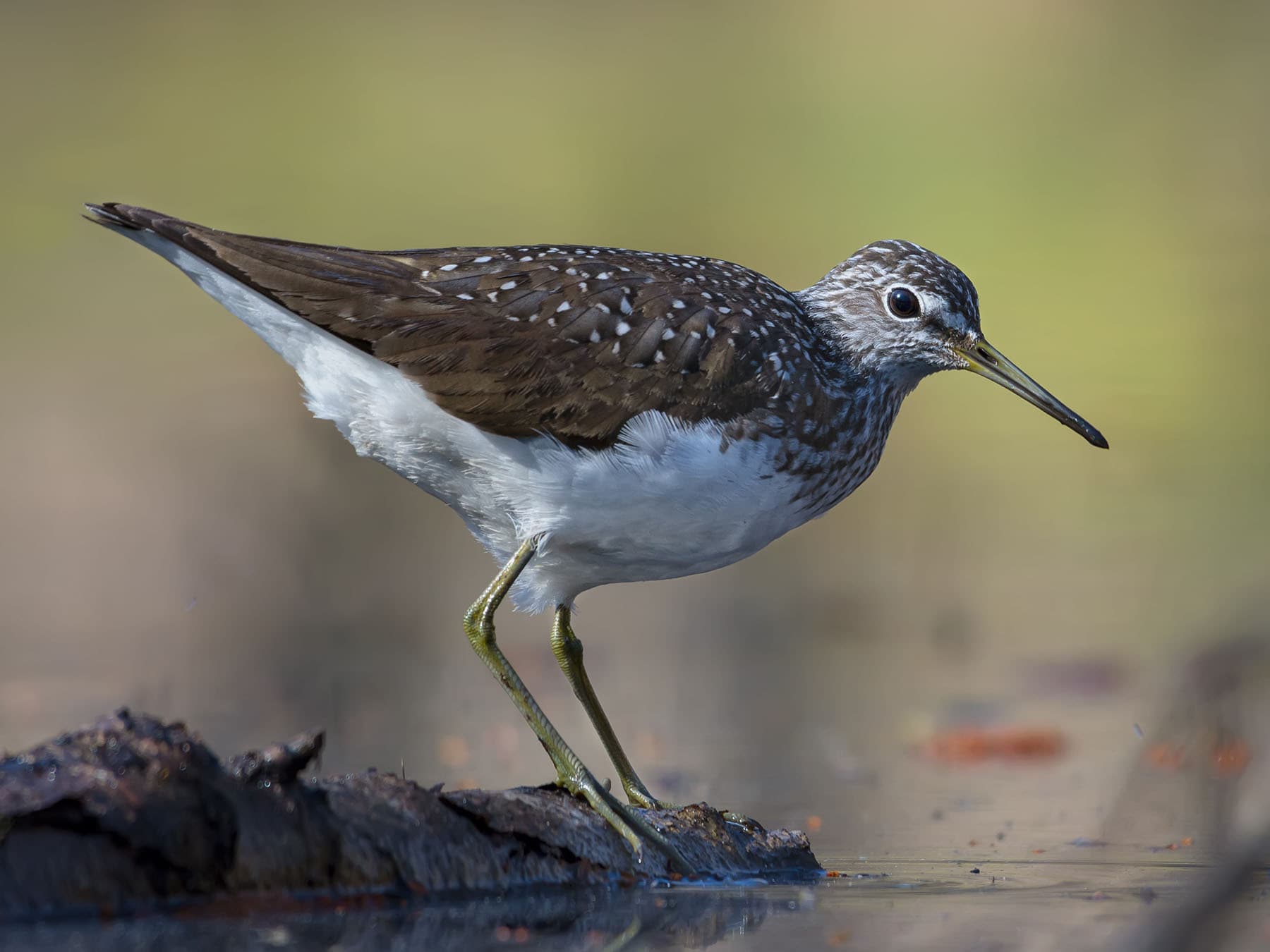
Green Sandpiper
Tringa ochropusLC
Found along streams, ditches and muddy pool edges year-round. A secretive wader that bobs constantly and flushes with a distinctive call.
Jun–Apr
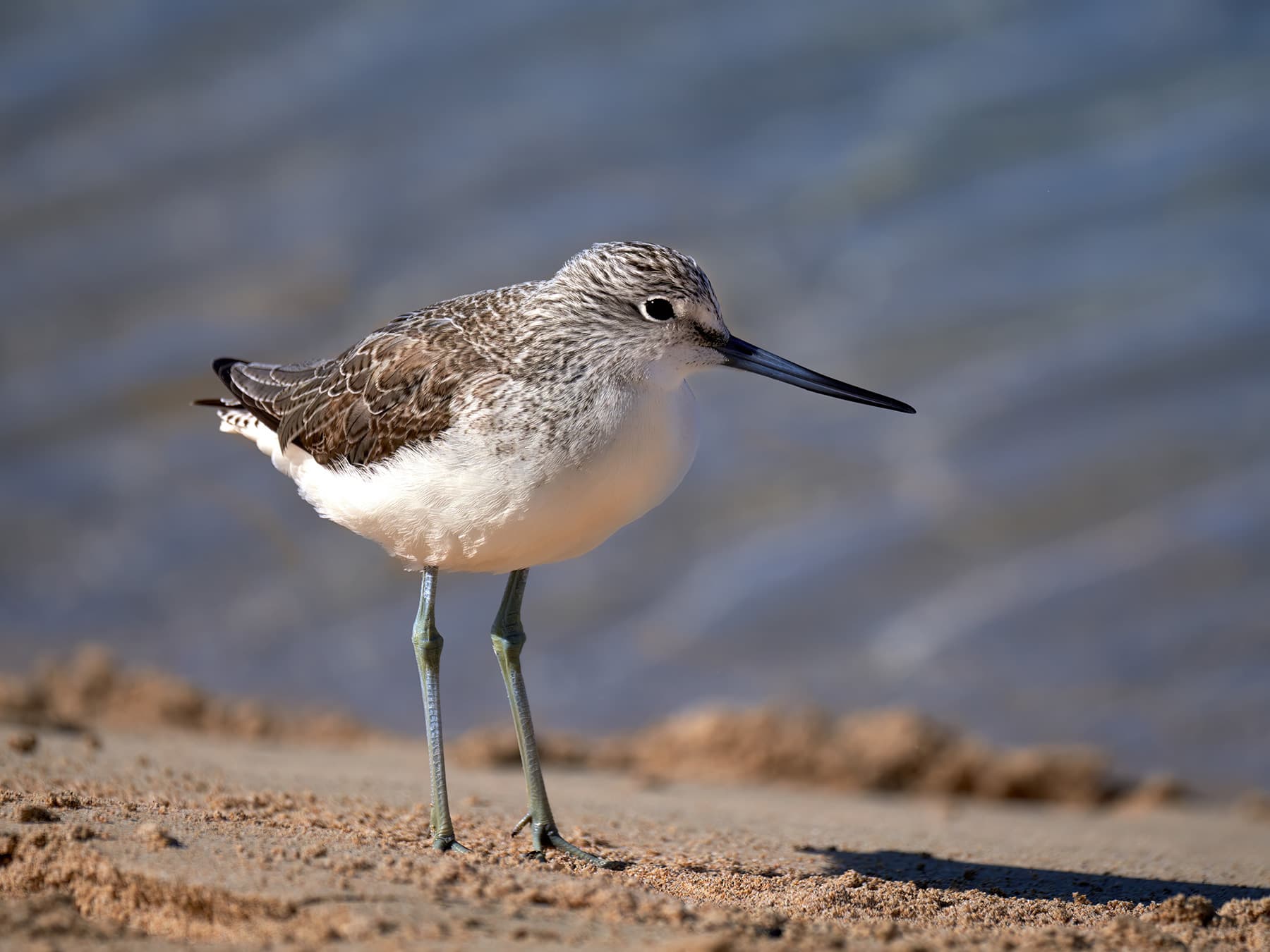
Greenshank
Tringa nebulariaLC
Breeds on Scottish bogs and moorland in summer, then disperses to estuaries and coastal marshes across Britain for the winter months.
Year-round
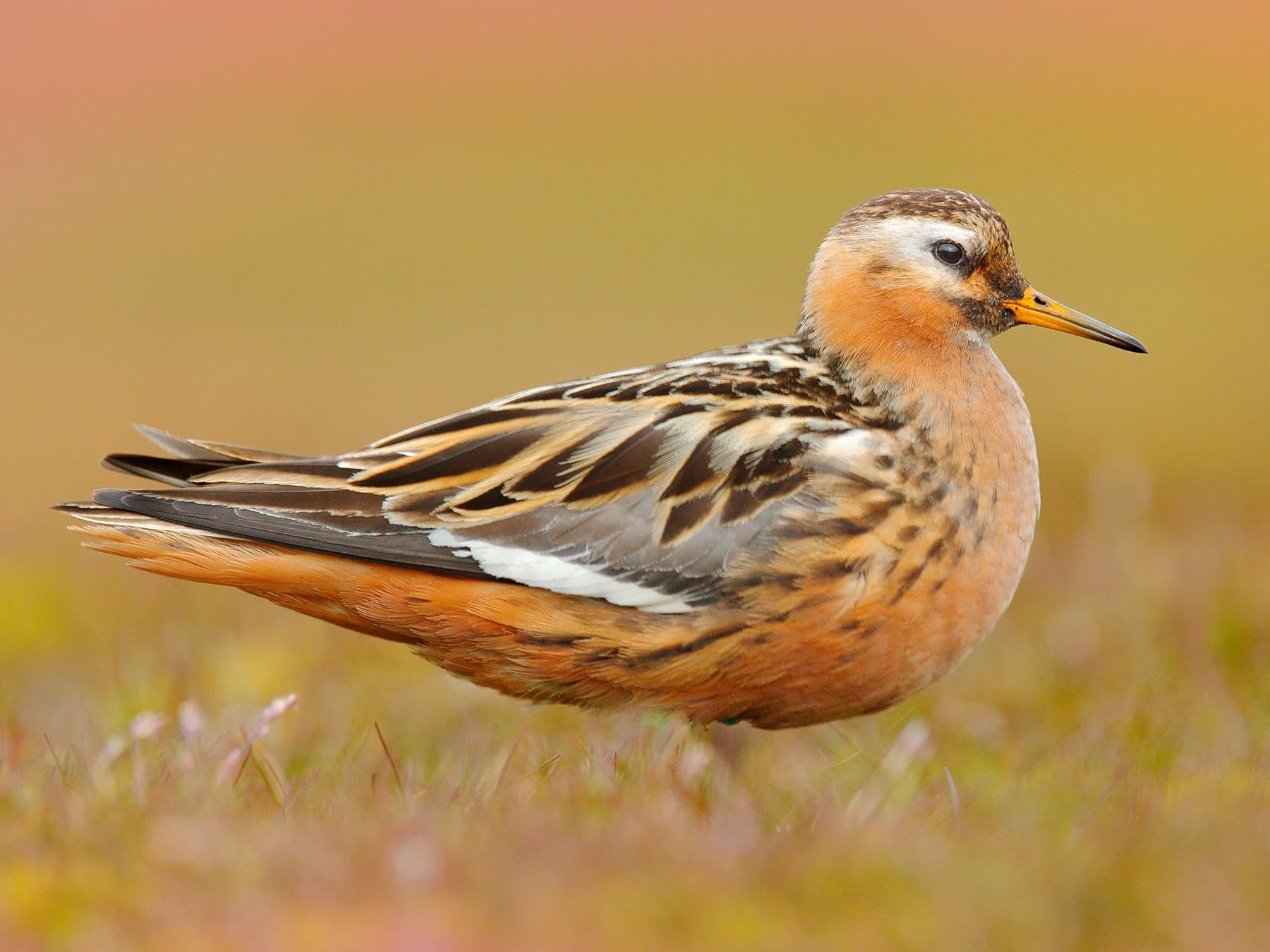
Grey Phalarope
Phalaropus fulicariusLC
A rare autumn and winter passage visitor, most often driven inshore by Atlantic storms. Typically seen at coastal headlands from August to December.
Aug–Dec
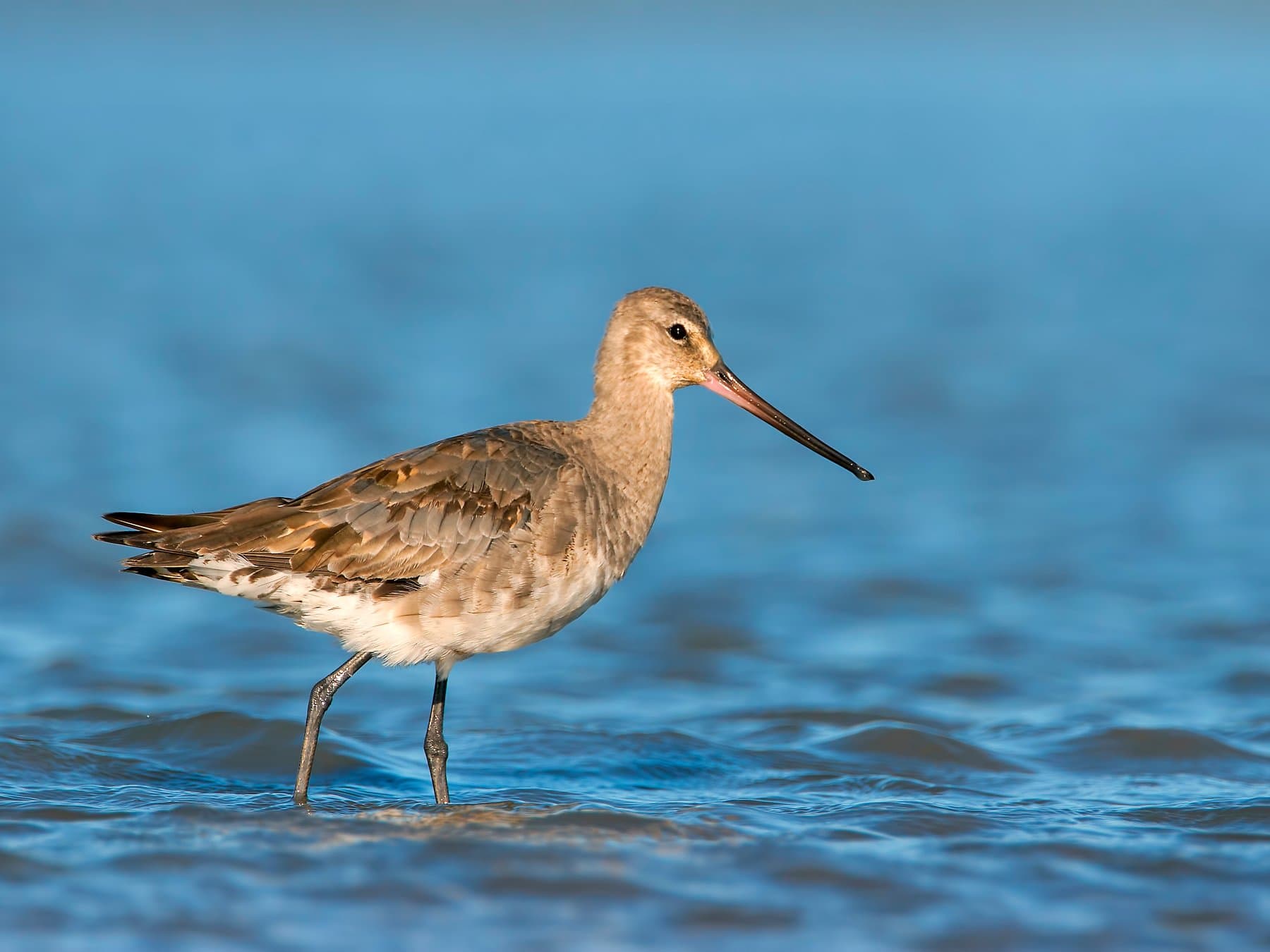
Hudsonian Godwit
Limosa haemasticaVU
An extremely rare Nearctic vagrant, with only a handful of UK records. Passage sightings typically occur at coastal estuaries during spring or late summer.
May–Aug
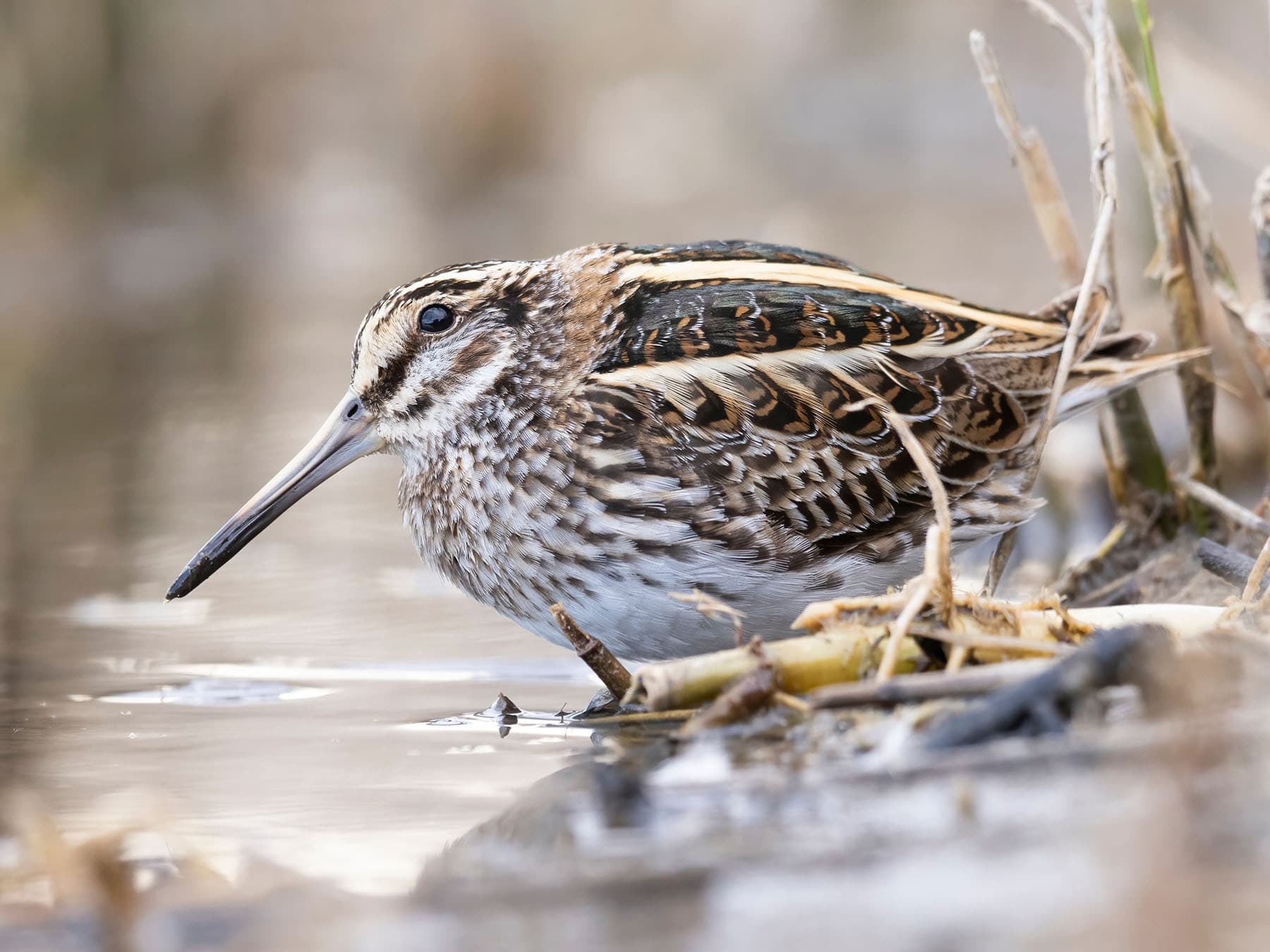
Jack Snipe
Lymnocryptes minimusLC
A secretive winter visitor to boggy marshes and wet meadows, often flushing only at close range. Easily overlooked due to its cryptic plumage and solitary habits.
Sep–Apr
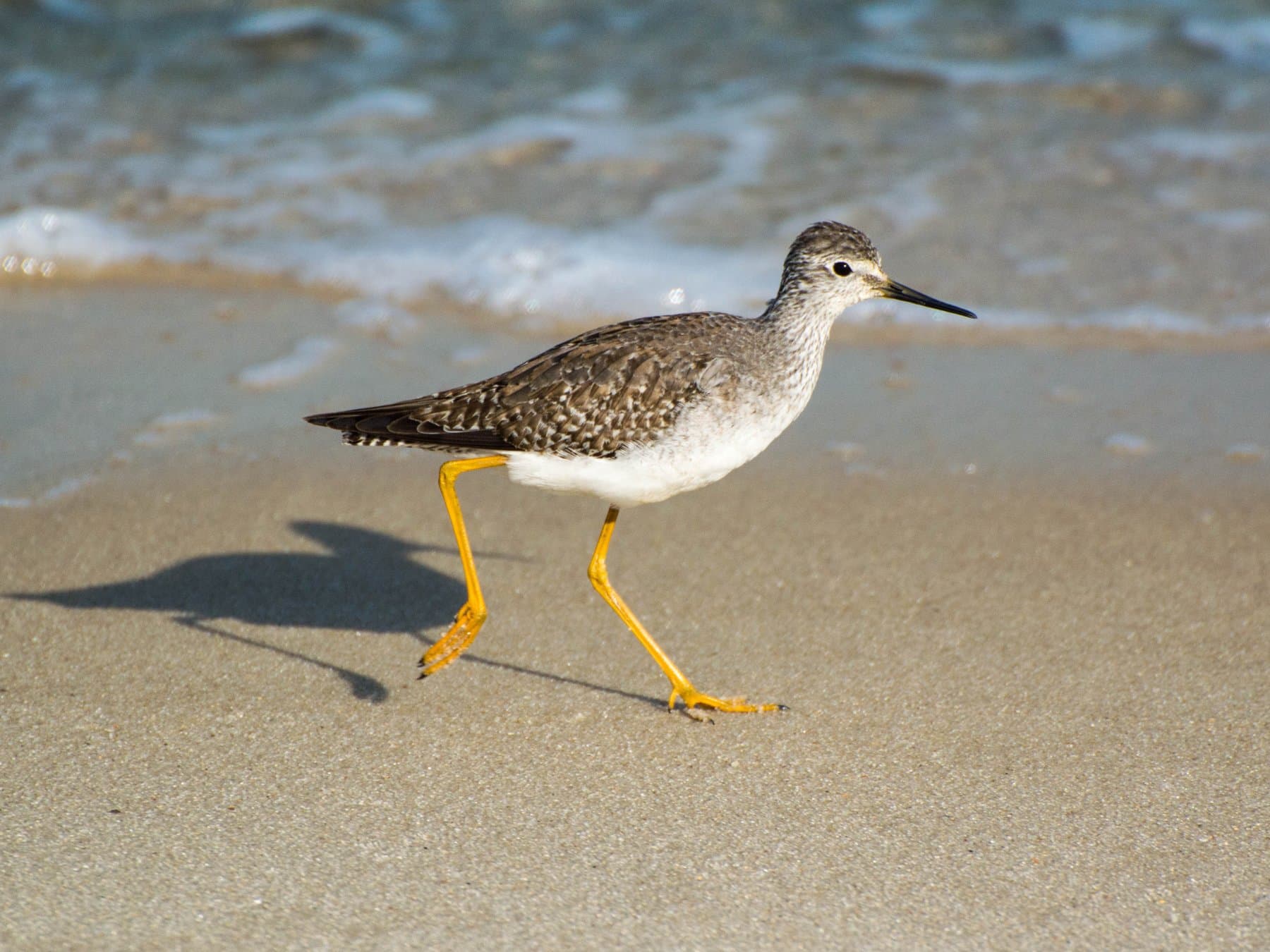
Lesser Yellowlegs
Tringa flavipesVU
A scarce Nearctic wader that turns up as a vagrant, mainly in autumn. Most records come from freshwater marshes and coastal pools in southern England.
Year-round
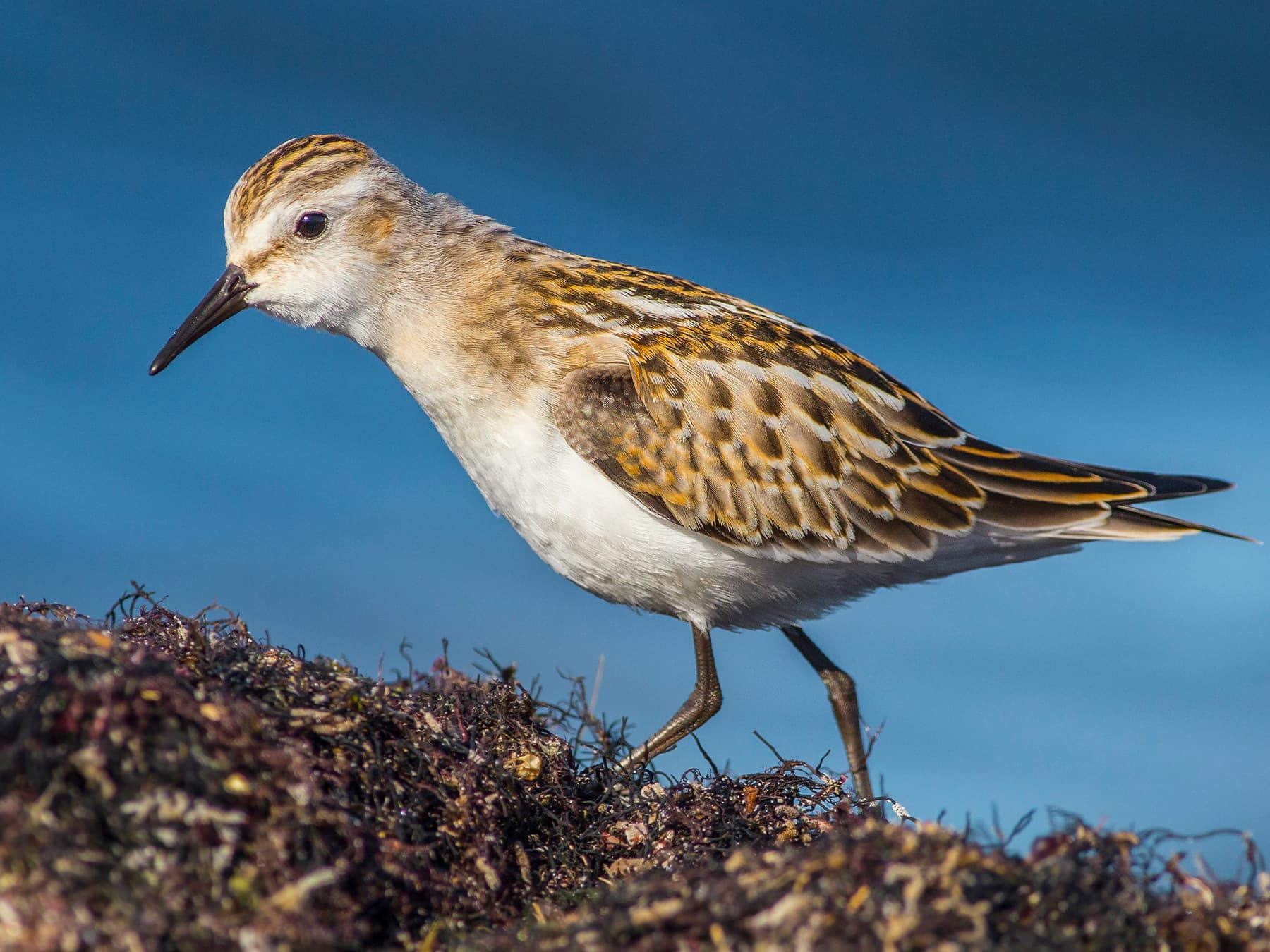
Little Stint
Calidris minutaLC
A small wader found on coastal mudflats and freshwater margins, peaking in autumn passage. Most numerous along eastern and southern estuaries.
Year-round
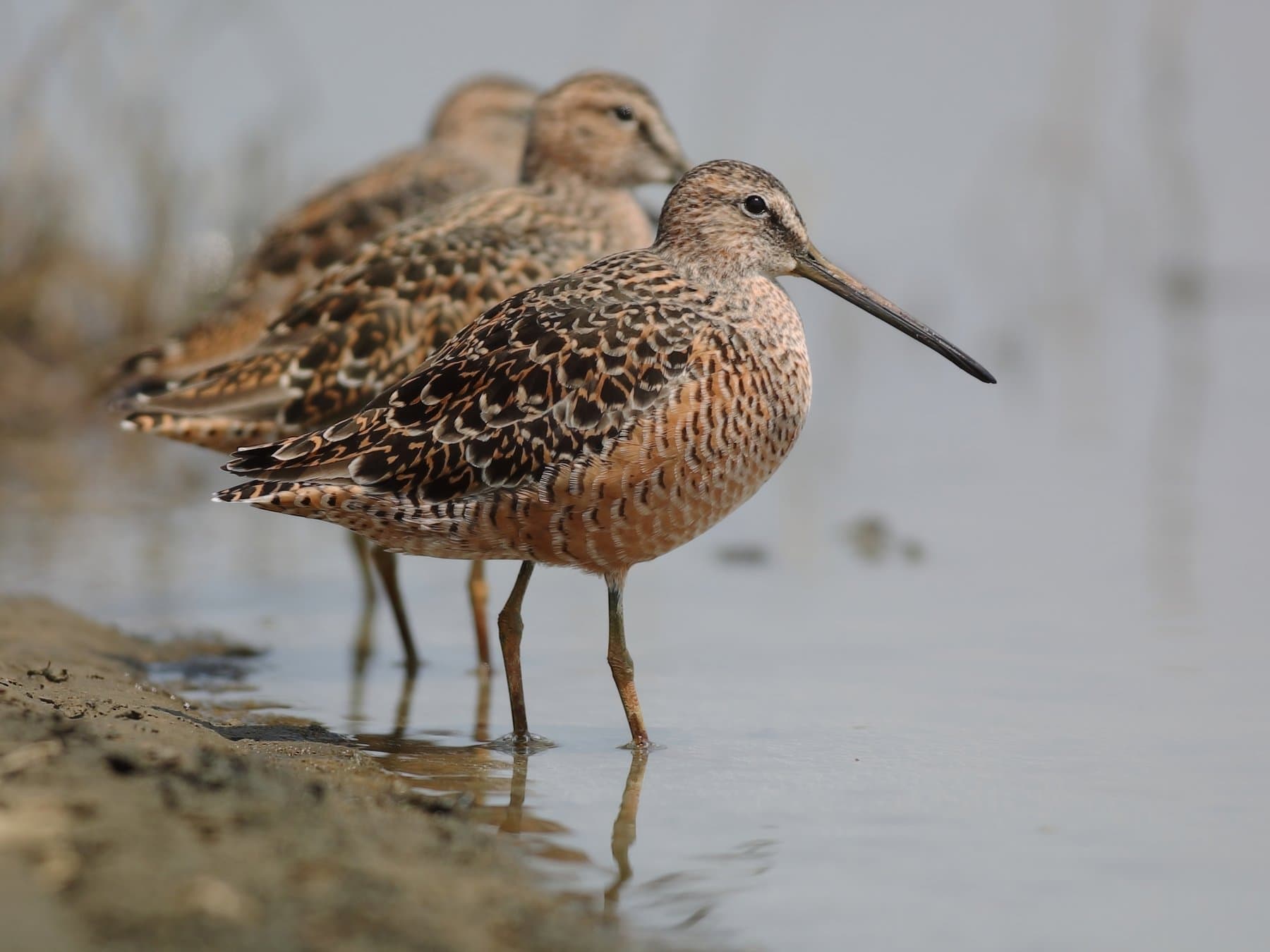
Long-billed Dowitcher
Limnodromus scolopaceusNT
A rare Nearctic vagrant found at coastal pools and marshes, mainly in autumn and winter. Often associates with other waders on muddy margins.
Jul–Apr
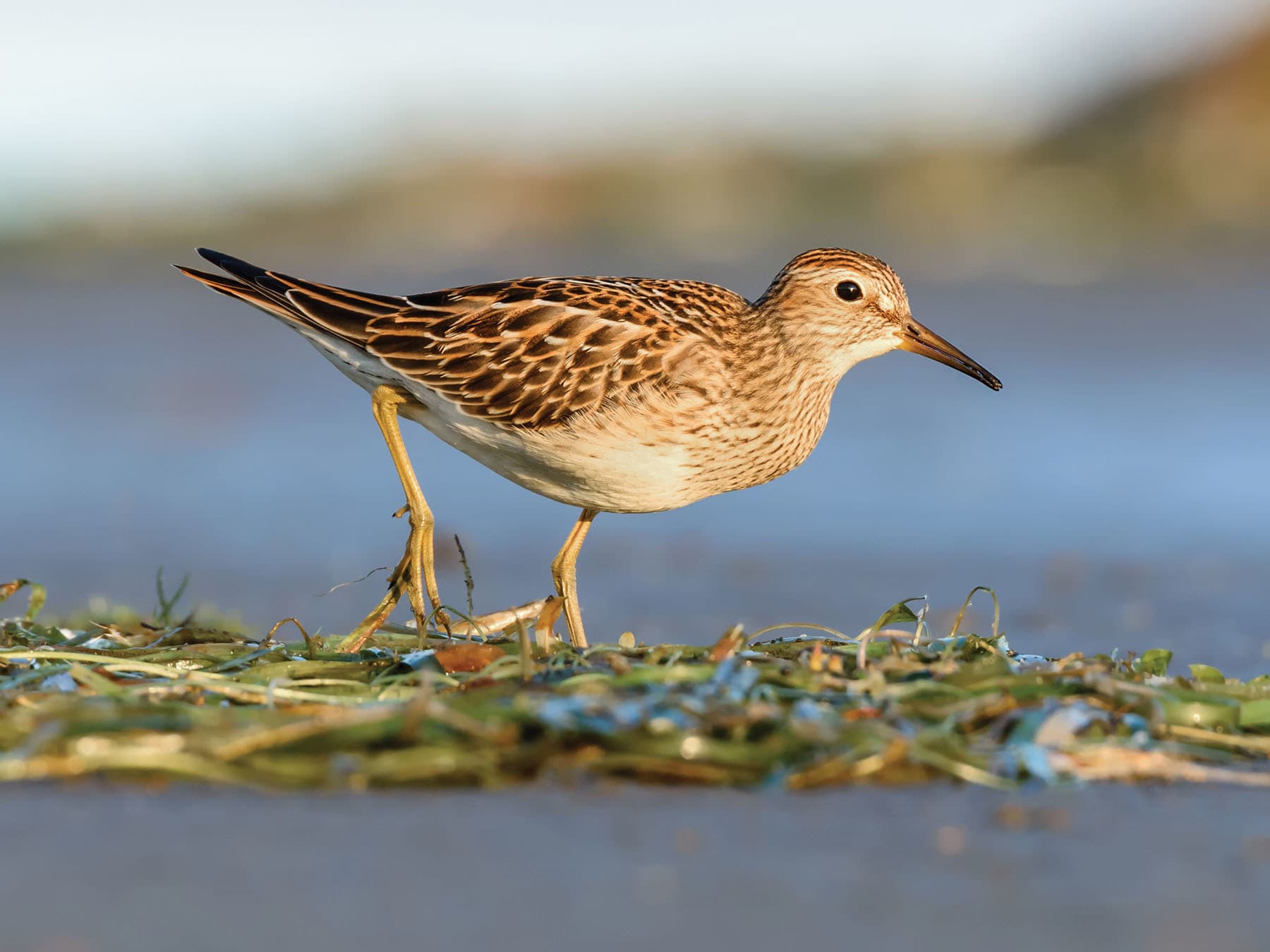
Pectoral Sandpiper
Calidris melanotosLC
A rare but annual Nearctic passage migrant, most frequently found at freshwater pools and coastal scrapes in autumn, particularly in south-west England and Ireland.
May–Oct
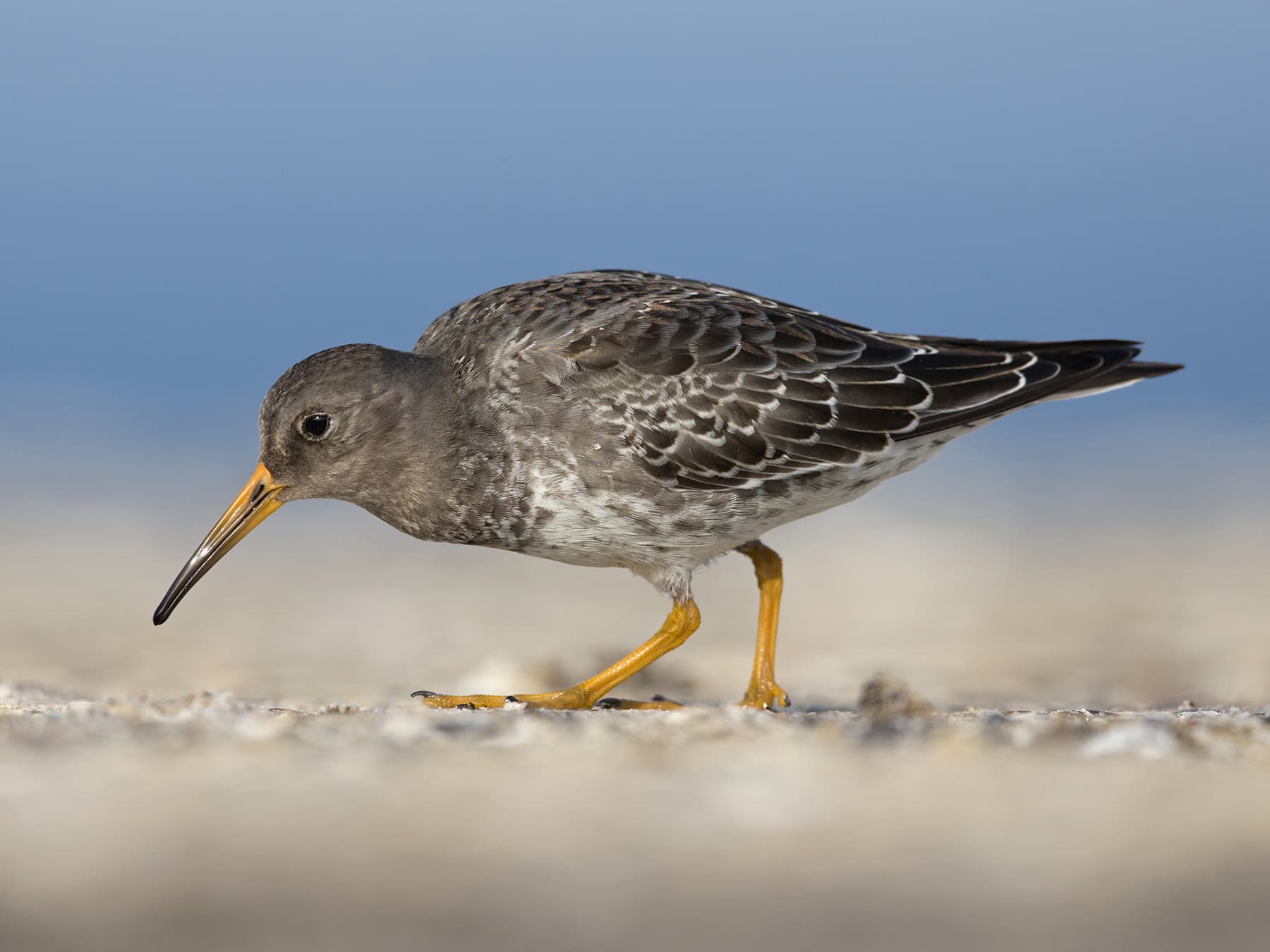
Purple Sandpiper
Calidris maritimaLC
An uncommon wader favouring rocky shorelines and harbour walls, mainly in winter. A tiny number breed in the Scottish Highlands.
Jul–May
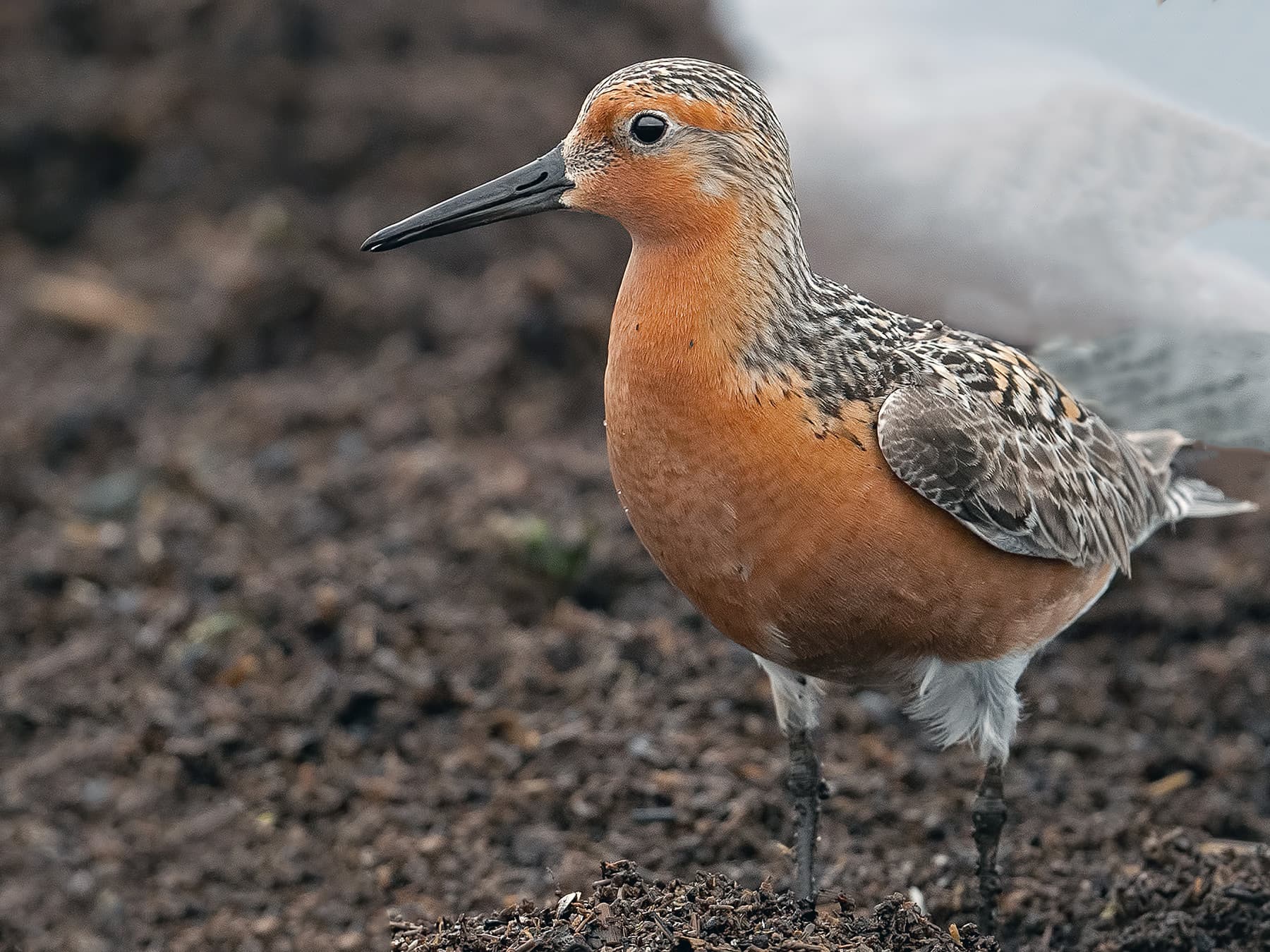
Red Knot
Calidris canutusNT
Gathers in vast winter flocks on estuaries such as the Wash and Morecambe Bay. These Arctic breeders are a spectacular sight swirling over mudflats at high tide.
Year-round
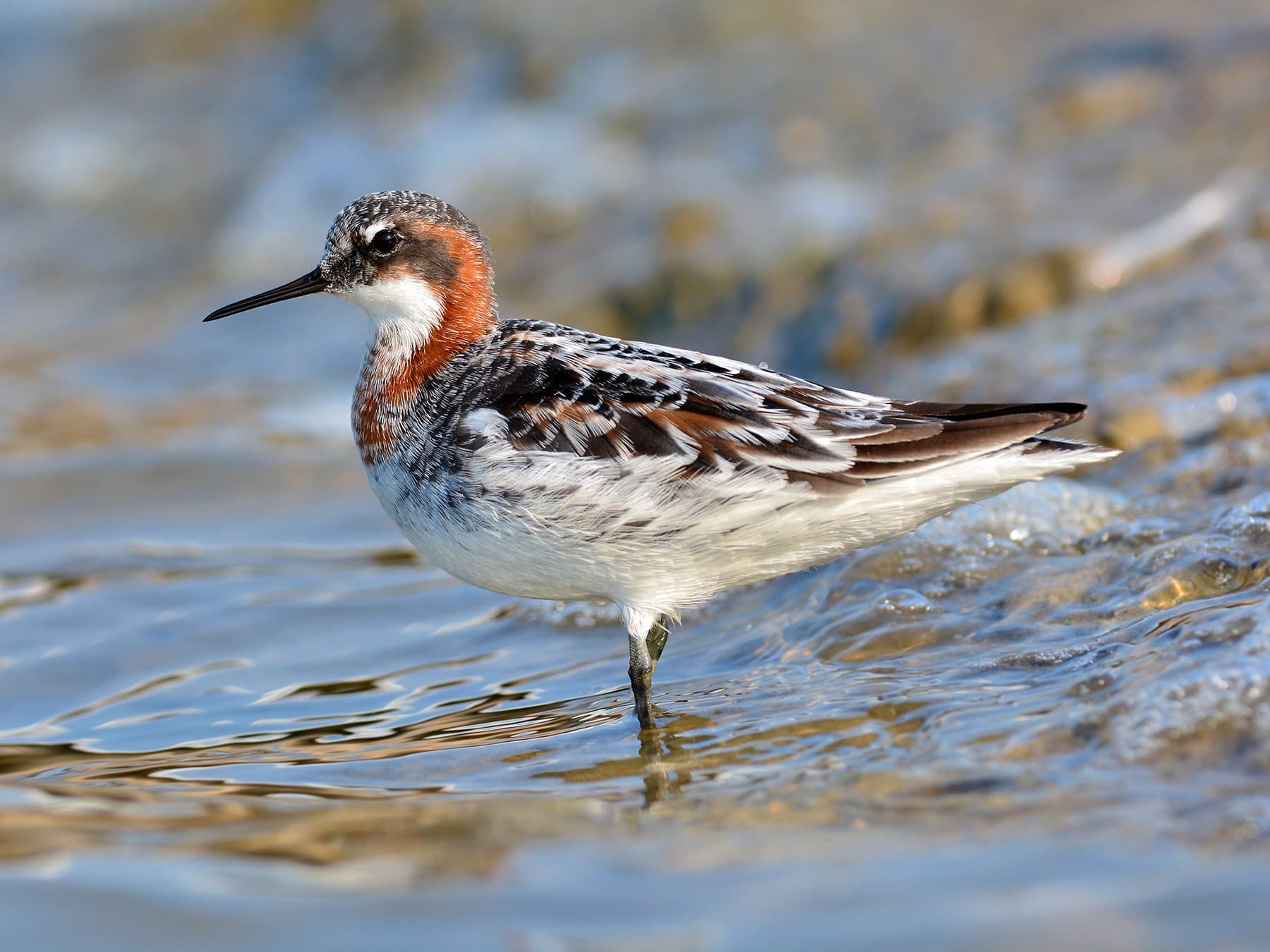
Red-necked Phalarope
Phalaropus lobatusLC
A rare passage migrant with a tiny breeding population in northern Scotland. Most sightings occur at coastal pools and marshes during autumn migration.
May–Oct
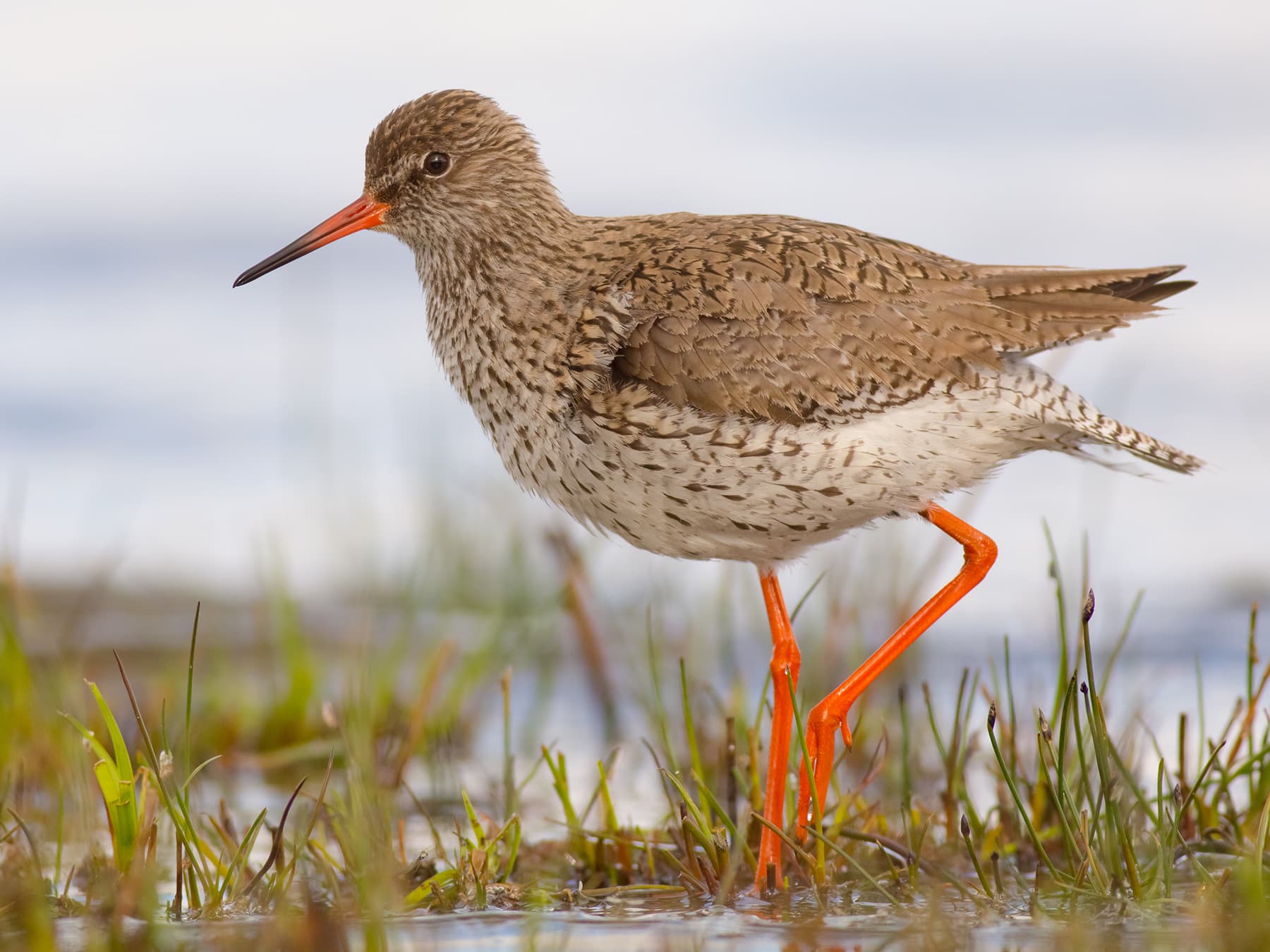
Redshank
Tringa totanusLC
A common year-round wader of estuaries, saltmarshes and wet grasslands. The breeding population is declining, placing it on the amber list.
Year-round