


Curlew Sandpiper
Curlew Stint · Calidris ferruginea
By the Birdfact teamChecked by Nathan Cope
On this page15 sections
How to recognise it
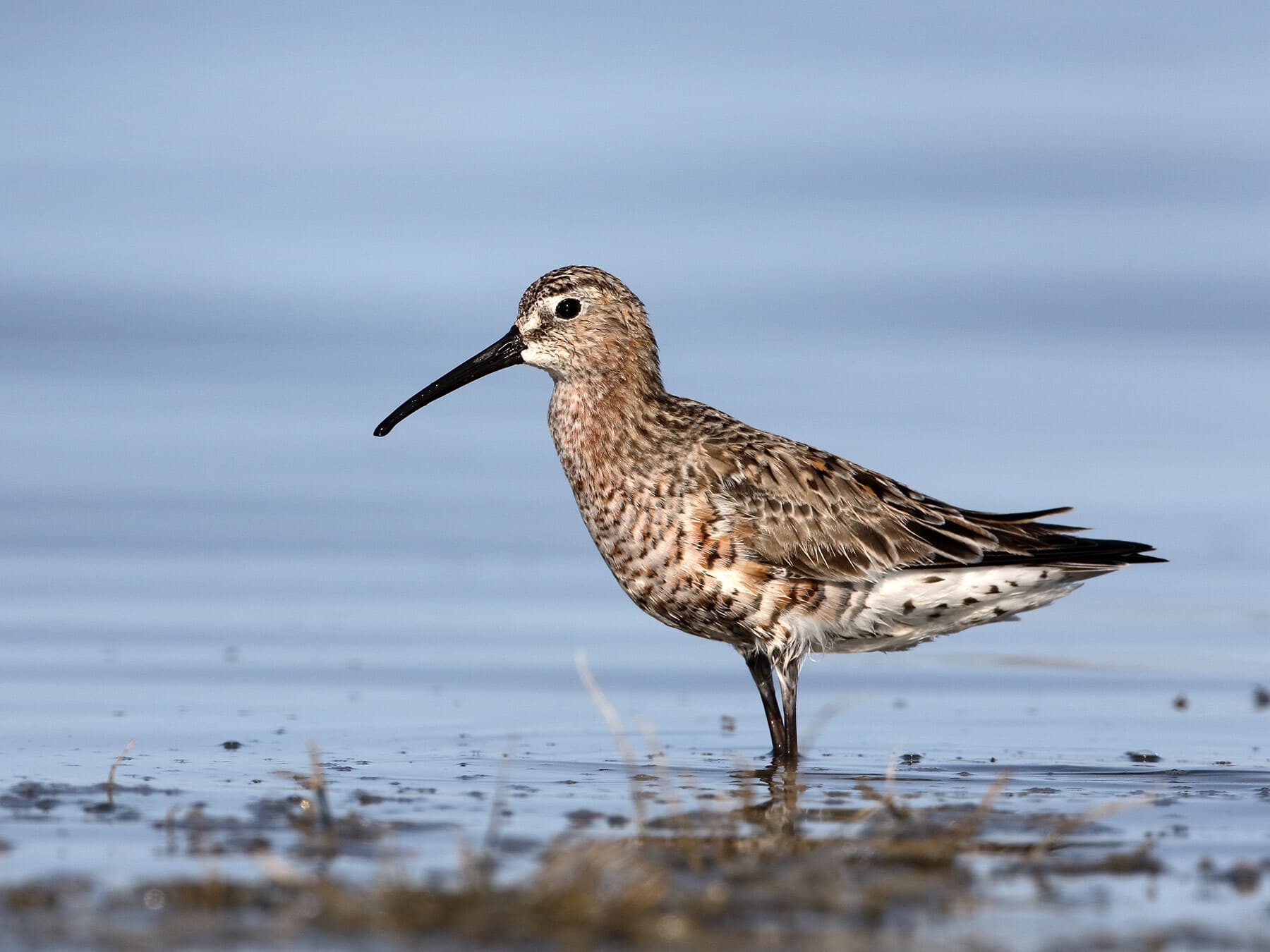
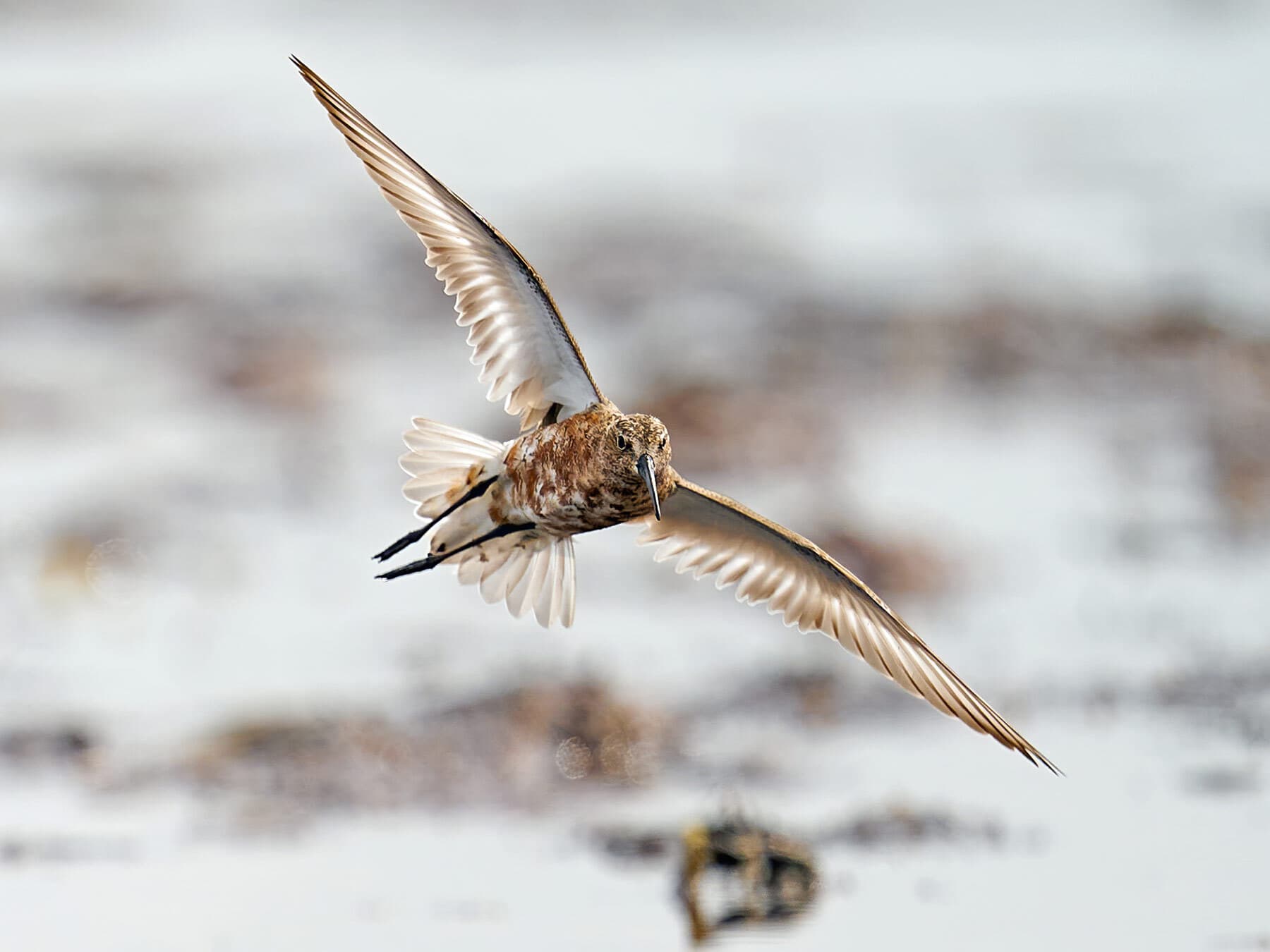
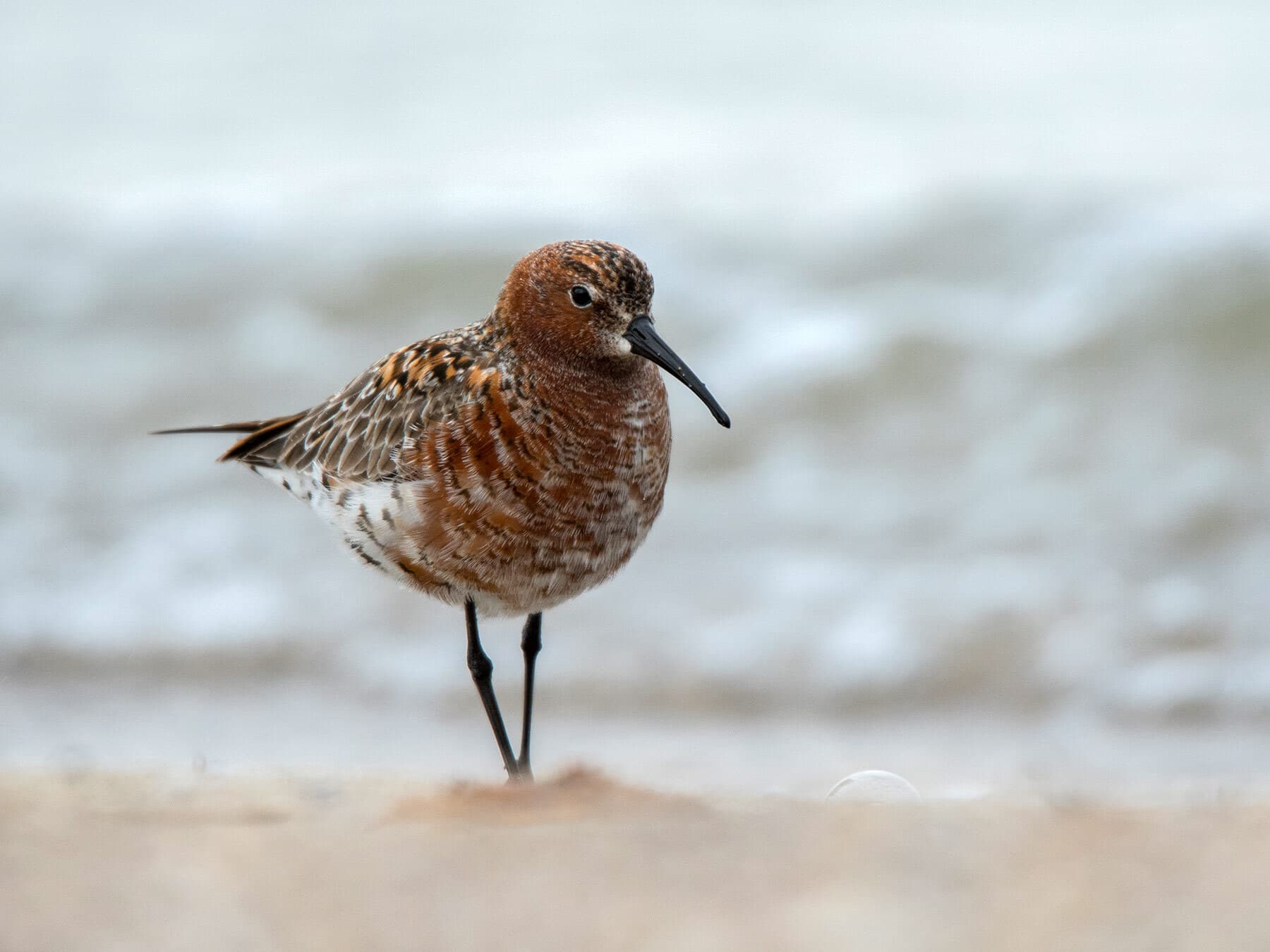
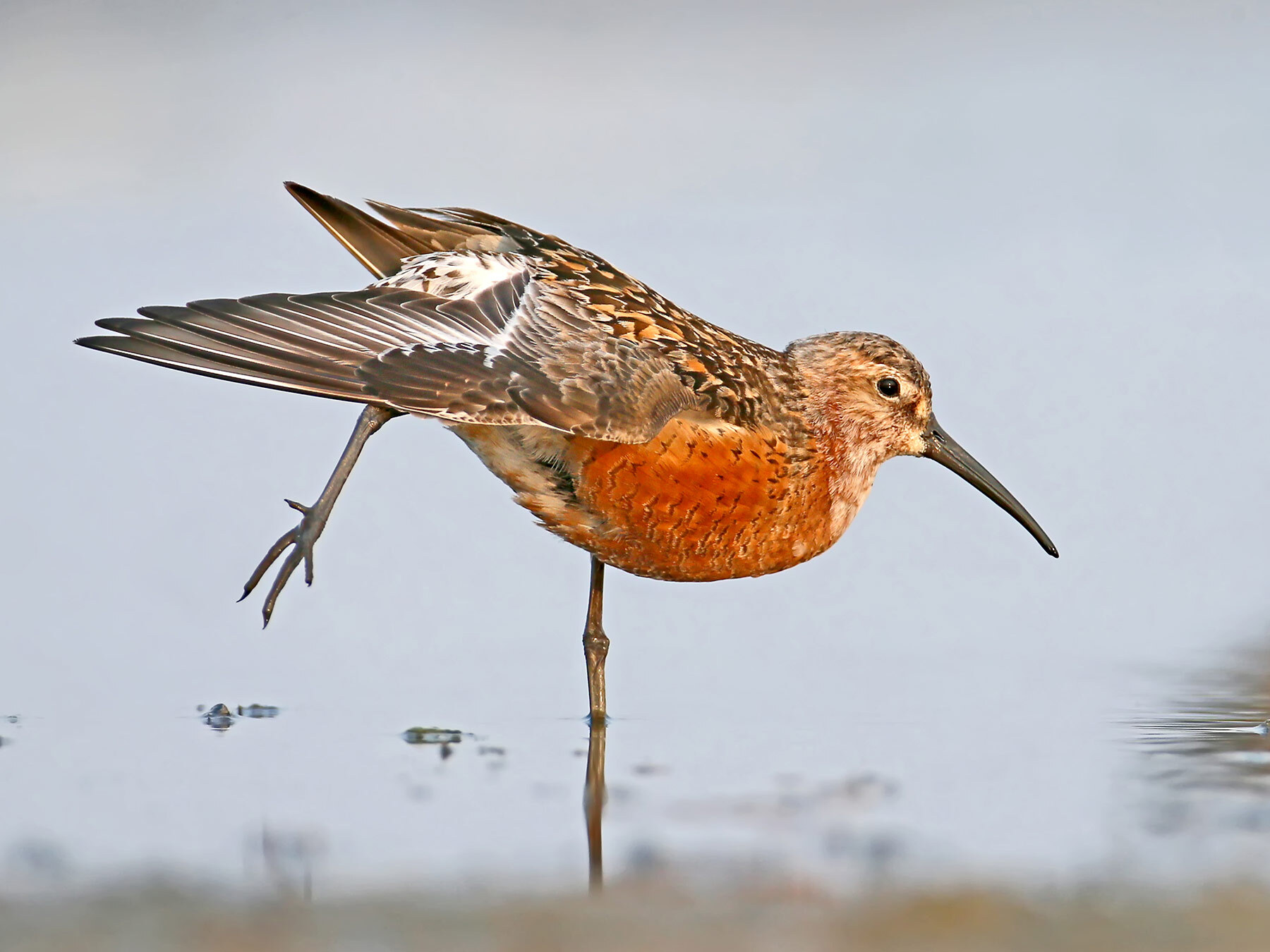
The Curlew Sandpiper is a small wader with a distinctive down-curved bill. In breeding plumage, it displays a rich chestnut-red head, neck, and underparts, with dark-spotted upperparts. Non-breeding adults are predominantly grey above and white below.
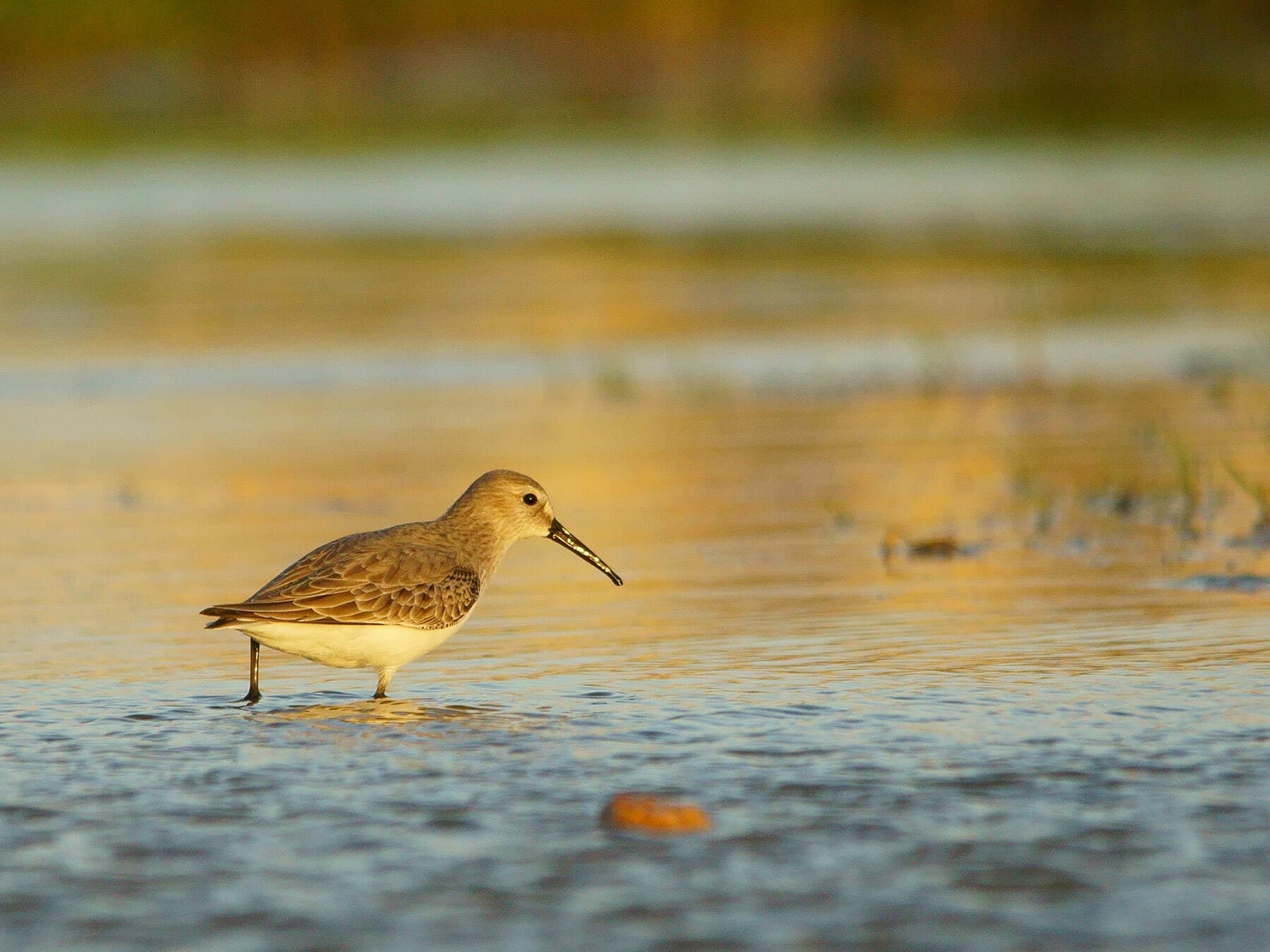
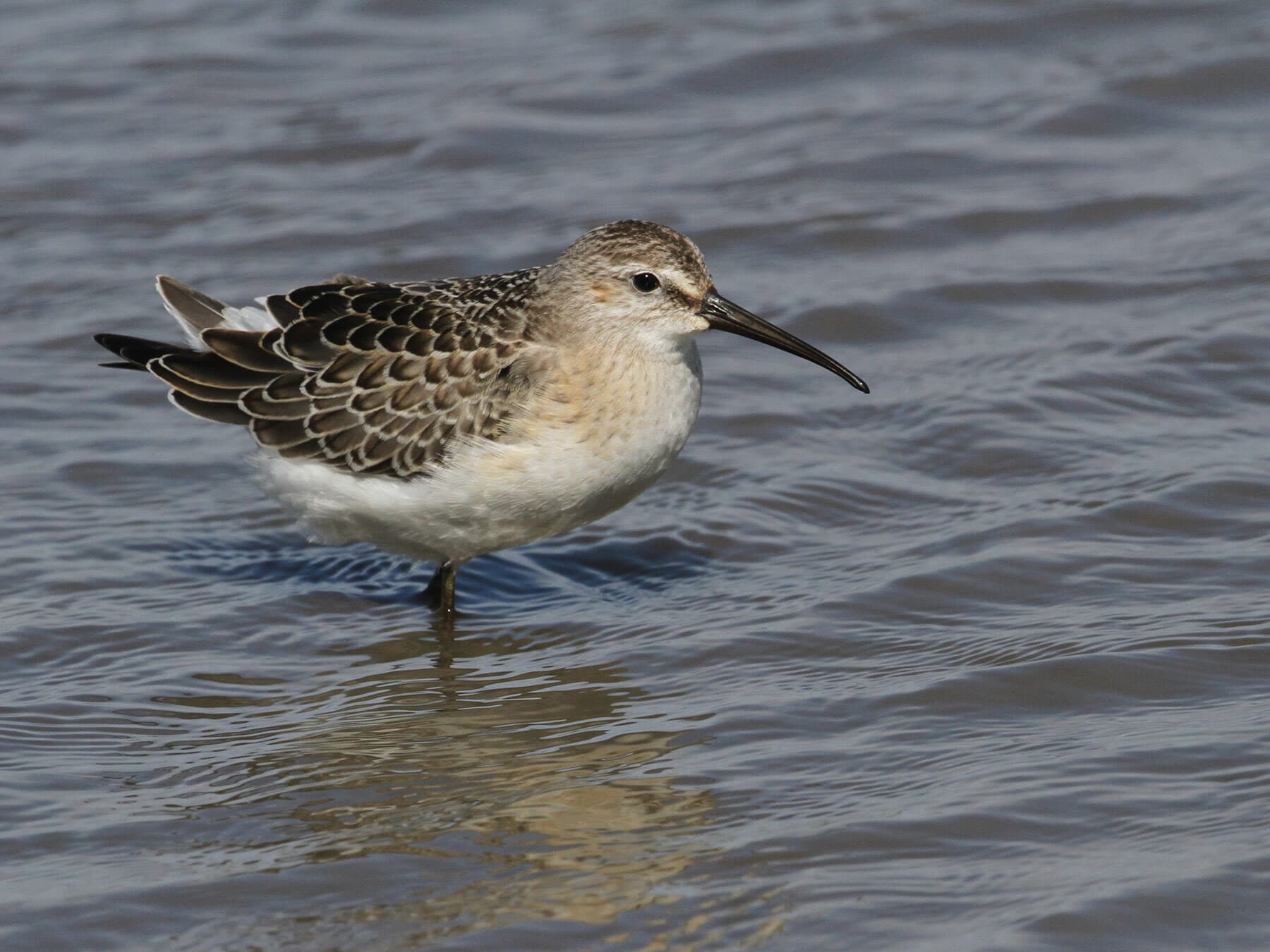
Juveniles have scaly-patterned upperparts with buff edges and a peachy wash on the breast. The species exhibits a slightly larger and longer, more curved bill than other small sandpipers.
Its size
Adults- Length
- 18–23 cm
- Wingspan
- 38–41 cm
- Weight
- 45–90 g
Its song and calls
The bird can be identified by its soft, rolling chirruping call similar to, ‘chirr-up’ or ‘chirr-ip’.
- Call0:00 / 0:04
Recorded in Normandie, France · September 2025
When and where to see it
OctoberLeaving
Most recorded in October
- 1. Lincolnshire0.30%
- 2. Louth0.28%
- 3. Cork0.15%
- 4. Gloucestershire0.15%
- 5. Mayo0.14%
Each dot is a county, state or province: the bigger and darker, the larger the bird’s share of that place’s bird records that month. Grey dots: no regular records. The ringed point is the centre of the bird’s records this month; the arrow shows how it moved since last month, and the dashed loop its path through the year. “Arrivals” colours places where it becomes regular this month (orange) or is in its last regular month (grey). GBIF eBird Observation Dataset, 2019–2024. Map data: Natural Earth, US Census Bureau; place centres © OpenStreetMap contributors.
In your area
See when the Curlew Sandpiper is recorded in your county, state or province.
How often the Curlew Sandpiper turns up in the UK, Ireland, the United States and Canada through the year, from birdwatchers' records.
United Kingdom
Summer visitor · regularly May–Oct · most records in September
Ireland
Passage migrant · regularly Aug–Oct · most records in September
United States
Passage migrant · regularly May–Dec · most records in July
Canada
Passage migrant · regularly Sep · most records in September
Show as a table
| Month | United Kingdom | Ireland | United States | Canada |
|---|---|---|---|---|
| January | <0.001% | 0.003% | <0.001% | – |
| February | <0.001% | – | <0.001% | – |
| March | <0.001% | – | <0.001% | – |
| April | 0.003% | 0.004% | <0.001% | – |
| May | 0.013% (regular) | 0.010% | <0.001% (regular) | <0.001% |
| June | 0.008% (regular) | 0.003% | <0.001% | <0.001% |
| July | 0.030% (regular) | 0.004% | 0.001% (regular) | <0.001% |
| August | 0.086% (regular) | 0.044% (regular) | <0.001% (regular) | <0.001% |
| September | 0.15% (regular) | 0.26% (regular) | <0.001% (regular) | 0.002% (regular) |
| October | 0.033% (regular) | 0.076% (regular) | <0.001% | – |
| November | 0.003% | 0.005% | <0.001% | – |
| December | <0.001% | 0.001% | <0.001% (regular) | – |
Recorded regularly in
Worldwide: recorded regularly in 110 countries
Countries where it was recorded in at least 3 of the 6 years 2019–2024. Linked countries have their own bird list.
Europe (37)
Africa (29)
- Algeria
- Angola
- Botswana
- Cape Verde
- Djibouti
- Egypt
- Ethiopia
- Gabon
- Gambia
- Ghana
- Guinea-Bissau
- Kenya
- Madagascar
- Malawi
- Mauritania
- Mauritius
- Morocco
- Mozambique
- Namibia
- Réunion
- Senegal
- Seychelles
- South Africa
- Tanzania
- Tunisia
- Uganda
- Western Sahara
- Zambia
- Zimbabwe
Asia (38)
- Armenia
- Azerbaijan
- Bahrain
- Bangladesh
- British Indian Ocean Territory
- Cambodia
- China
- Cyprus
- Georgia
- Hong Kong SAR China
- India
- Indonesia
- Iran
- Israel
- Japan
- Kazakhstan
- Kuwait
- Kyrgyzstan
- Lebanon
- Macao SAR China
- Malaysia
- Maldives
- Mongolia
- Myanmar (Burma)
- Oman
- Pakistan
- Philippines
- Qatar
- Saudi Arabia
- Singapore
- South Korea
- Sri Lanka
- Taiwan
- Thailand
- Turkey
- United Arab Emirates
- Uzbekistan
- Vietnam
North America (2)
Oceania (4)
- Australia
- Cocos (Keeling) Islands
- New Zealand
- Palau
Data: EOD – eBird Observation Dataset (Cornell Lab of Ornithology), accessed via GBIF.org, CC BY 4.0. Records from 2019–2024, aggregated and filtered by Birdfact. How these lists are made
The species mainly breeds in the high Arctic, often close to the shores on small islands and across the coastal regions of northern Siberia. It migrates vast distances during the winter to southwest Europe, sub-Saharan Africa, eastern Asia and even as far south as Australasia. Adult males begin their migration earlier than females and juveniles will often remain in the breeding regions during their first years of life. Vagrants are occasionally spotted along the Atlantic coast of North America and in the past small colonies have been known to breed in Alaska.
Signs and Spotting tips
A social bird, the curlew sandpiper can often be seen along the shores of shallow inland lagoons, coastal plains or wet tundra and salt marshes, in small flocks accompanied by Stints and Dunlins, both the latter being slightly smaller in stature. A passage migrant throughout most of Europe their conspicuous chestnut coloured summer plumage is a useful identification mark as is their bold, plain white rump. Their migration routes through Europe take place in Springtime and from late July through to October.
What it eats
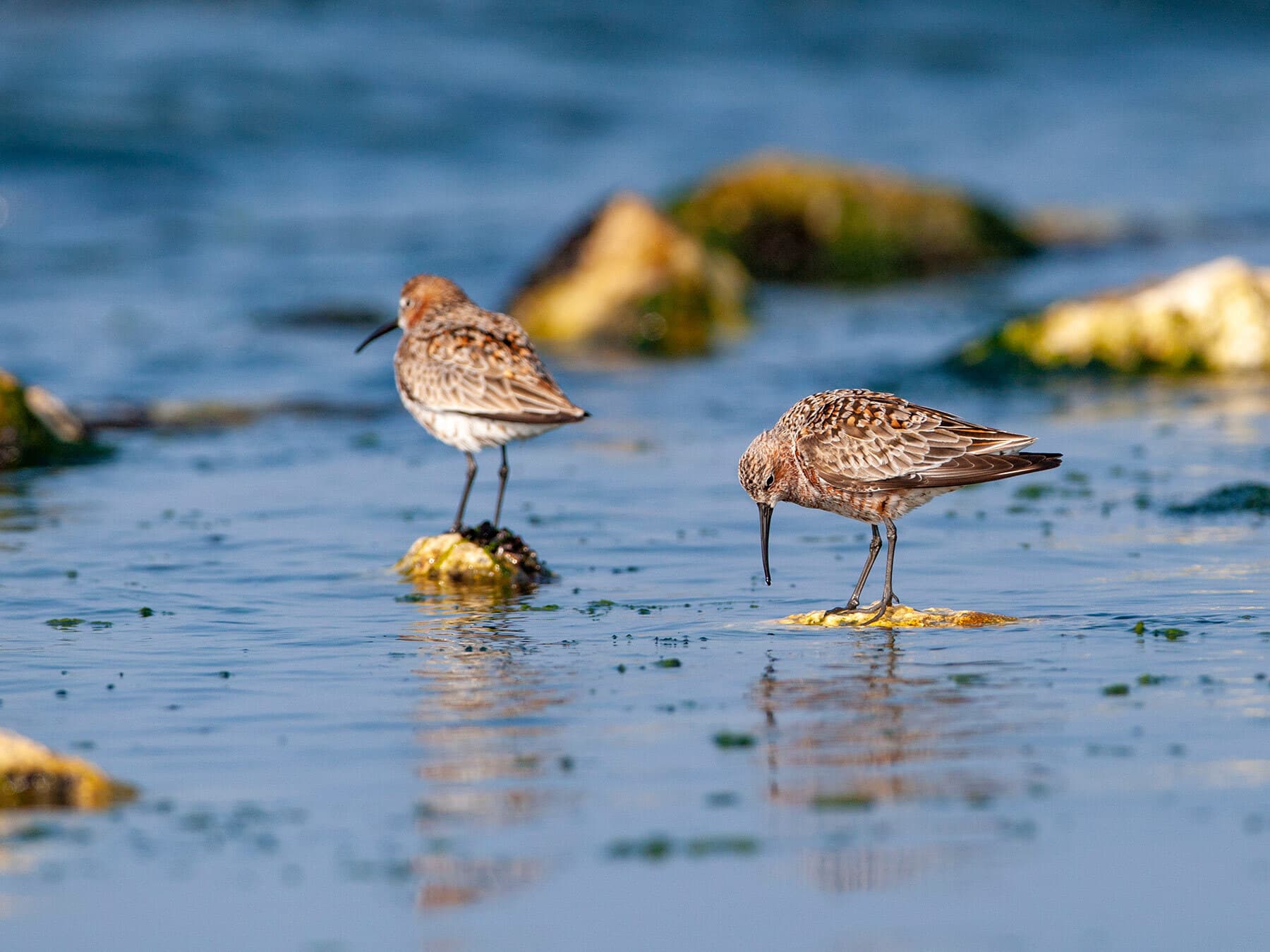
With their long legs and bill the curlew sandpiper is able to wade through water deeper than smaller birds, using its bill to probe through the mud and extract small worms, crustaceans, shrimps and molluscs. In addition, it will also take beetles, insects and larvae.
Nesting and breeding
The nest consists of a simple, shallow scrape, lined with lichen and moss and often constructed on a raised area such as a tussock hump or small mound. One clutch averaging 4 cream coloured eggs, with rufous blotches, is laid annually between May to July and incubated by the female for around twenty one days. Young are able to feed themselves almost immediately after hatching and fledging occurs some two weeks later.
Behaviour
Curlew Sandpipers are often seen probing the mud with their long, curved bills in a sewing machine-like motion. They typically forage in small flocks, moving quickly across mudflats. They may form large, dense flocks during migration, particularly at staging sites.
Lifespan and predators
The expected lifespan of the curlew sandpiper is up to ten years although this can vary considerably and is affected by the lemming population. During years when there is a low lemming population the birds are prone to predation, particularly by Arctic foxes and skuas. This is believed to occur every three or four years across northern Siberia.
Conservation
Due to population declines, the Curlew Sandpiper is listed as Near Threatened. Key threats include habitat loss in breeding and non-breeding areas, particularly the destruction of tidal mudflats. Climate change impacts on Arctic breeding grounds are also a concern.
What does a Curlew Sandpiper look like?
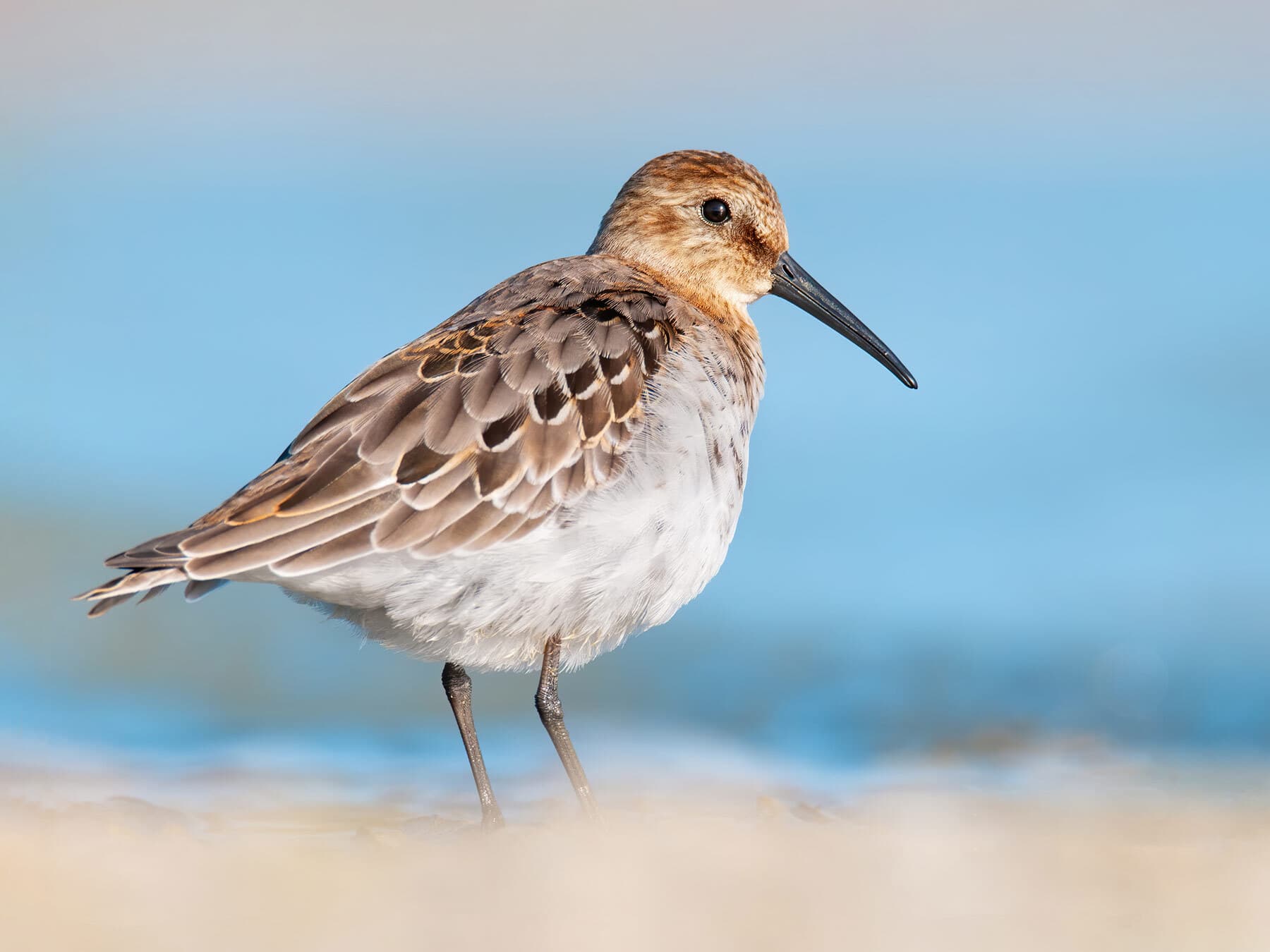
Slightly larger than the Common Sandpiper, the curlew sandpiper is a medium sized member of the family Scolopacidae, with long legs and a long, slim, slightly downward curving bill. Its summer plumage is eye catching with its chestnut to rufous brown coloured head, neck and underparts. The crown has dark streaks and the mantle and shoulders are a dark brown with mid brown and white edges. Wing coverts are grey, tipped white and the rump is a prominent white, distinctive from most other species of sandpiper. The majority of the upperparts, including the wings are a dark to medium grey with a broad white wing bar formed by the white tipped coverts. The tail is also grey. There is a pale eye ring and the legs, feet and bill are black. Non-breeding adult birds have predominantly plain white underparts with a pale buff coloured breast and greyish back showing buff coloured tips to feathers, resulting in a scaly effect across the bird’s upperparts. The head is a peachy grey brown and white with a white eye stripe extending from the cere rearwards towards the nape. Juvenile birds are similar in colour and marking to non breeding adults but with darker upper parts fringed white and a dark brown cap.
Similar birds
Often mistaken for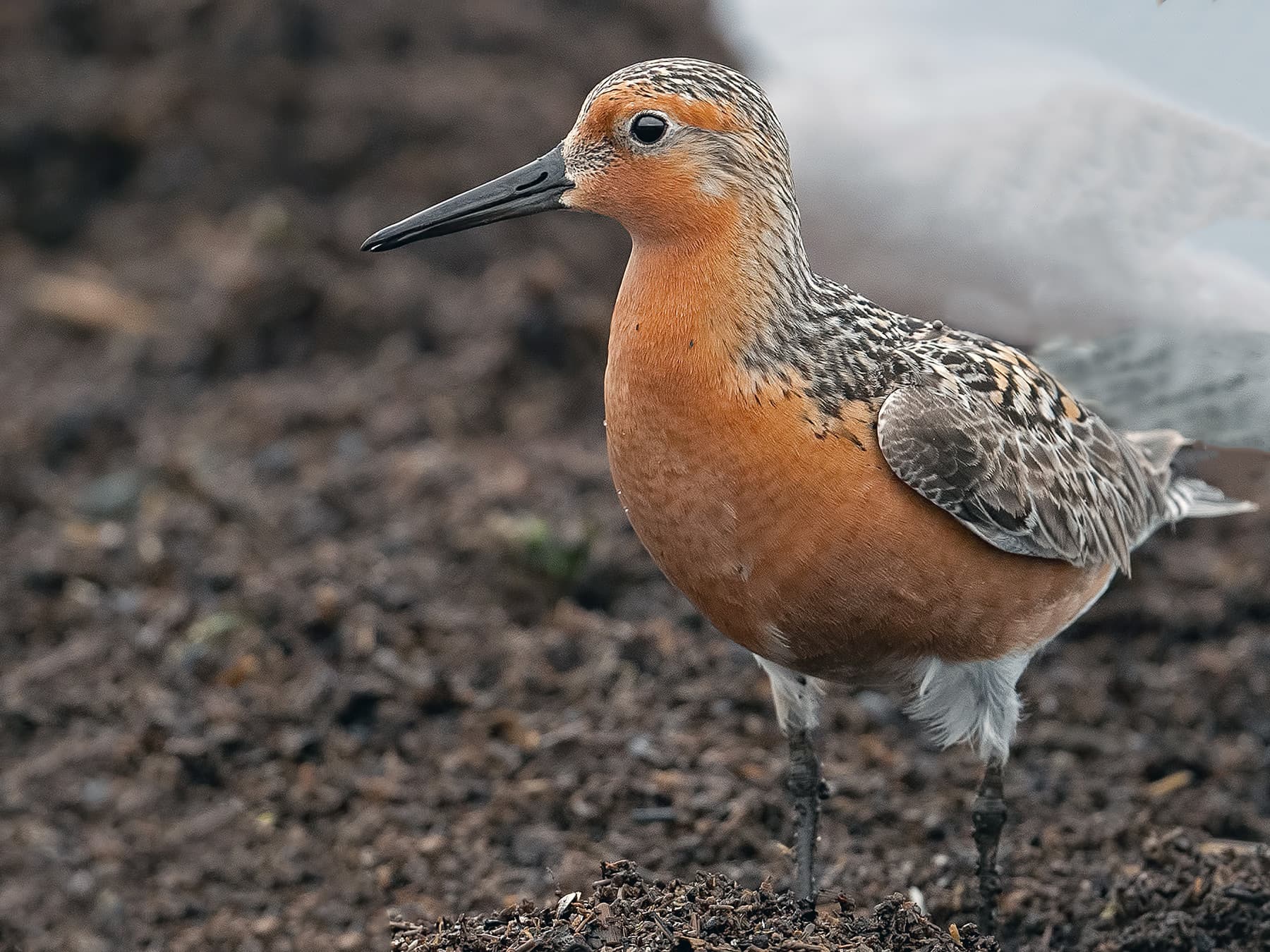
More photos
2 photos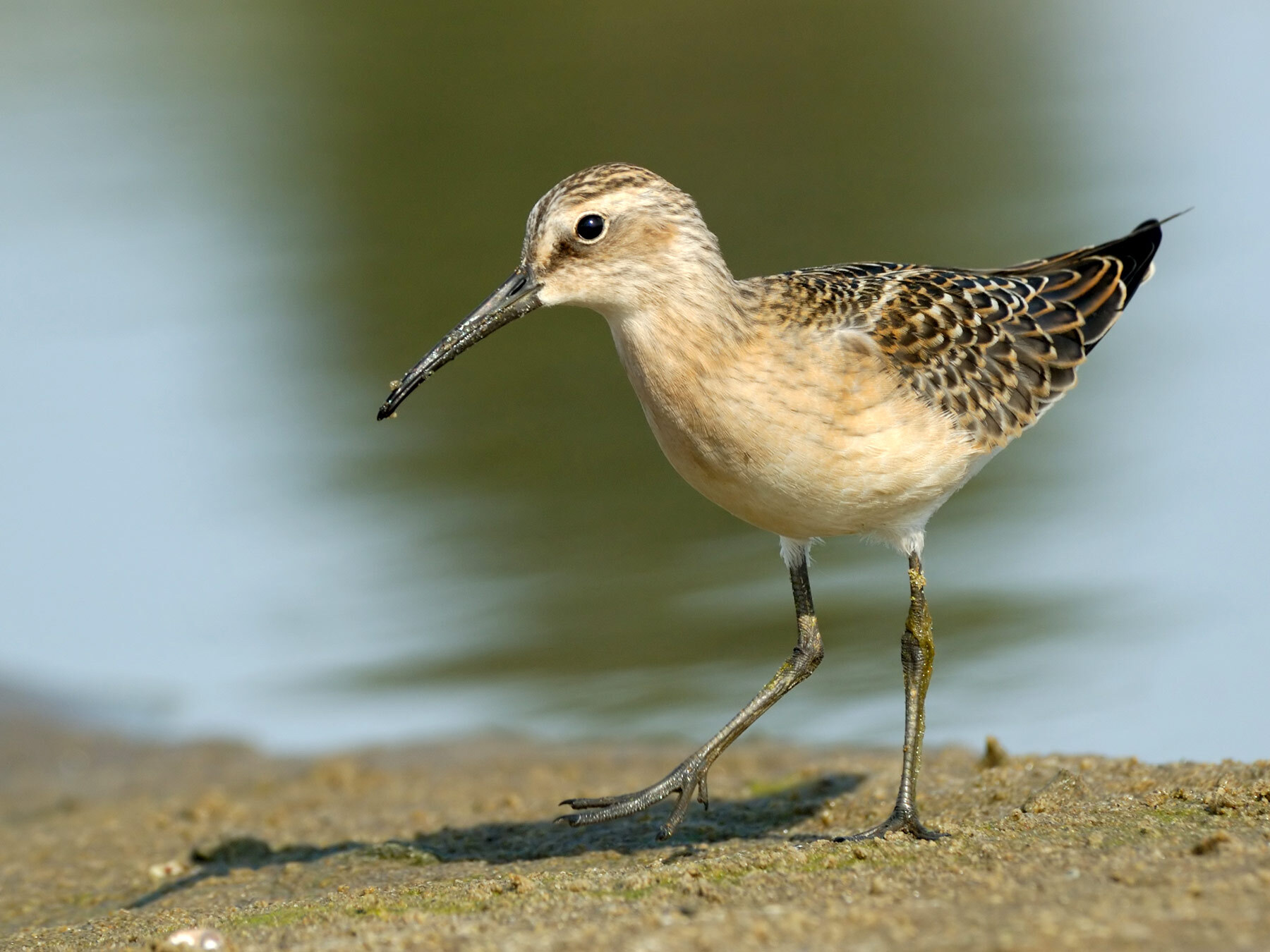
Curlew Sandpiper guides
1 guidesQuick facts
- Length
- 18–23 cm
- Wingspan
- 38–41 cm
- Weight
- 45–90 g
- Lifespan
- 10–15 years
- Family
- Sandpipers & Snipes
- Migration
- Long-distance Migrant
- Global status (IUCN)
- Near Threatened
- World population
- 1,085,000 - 1,285,000 individuals
- Population trend
- Decreasing
- Also called
- Curlew Stint
- Scientific name
- Calidris ferruginea
Sources
3- 1BirdLife International. 2017. Calidris ferruginea (amended version of 2016 assessment). The IUCN Red List of Threatened Species 2017: e.T22693431A110631069. Source (opens in a new tab)
- 2Taylor in litt. (2015)
- 3Wetlands International (2015)

Checked by
Nathan Cope, founder and editor
Nathan founded Birdfact and leads its writers and contributors in the UK, the US and Canada. He has watched and studied birds for more than ten years, and checks every article and species guide before it’s published.