
Red Knot
Knot, Lesser Knot · Calidris canutus
By the Birdfact teamChecked by Nathan Cope
On this page13 sections
How to recognise it
What do Red Knots look like?
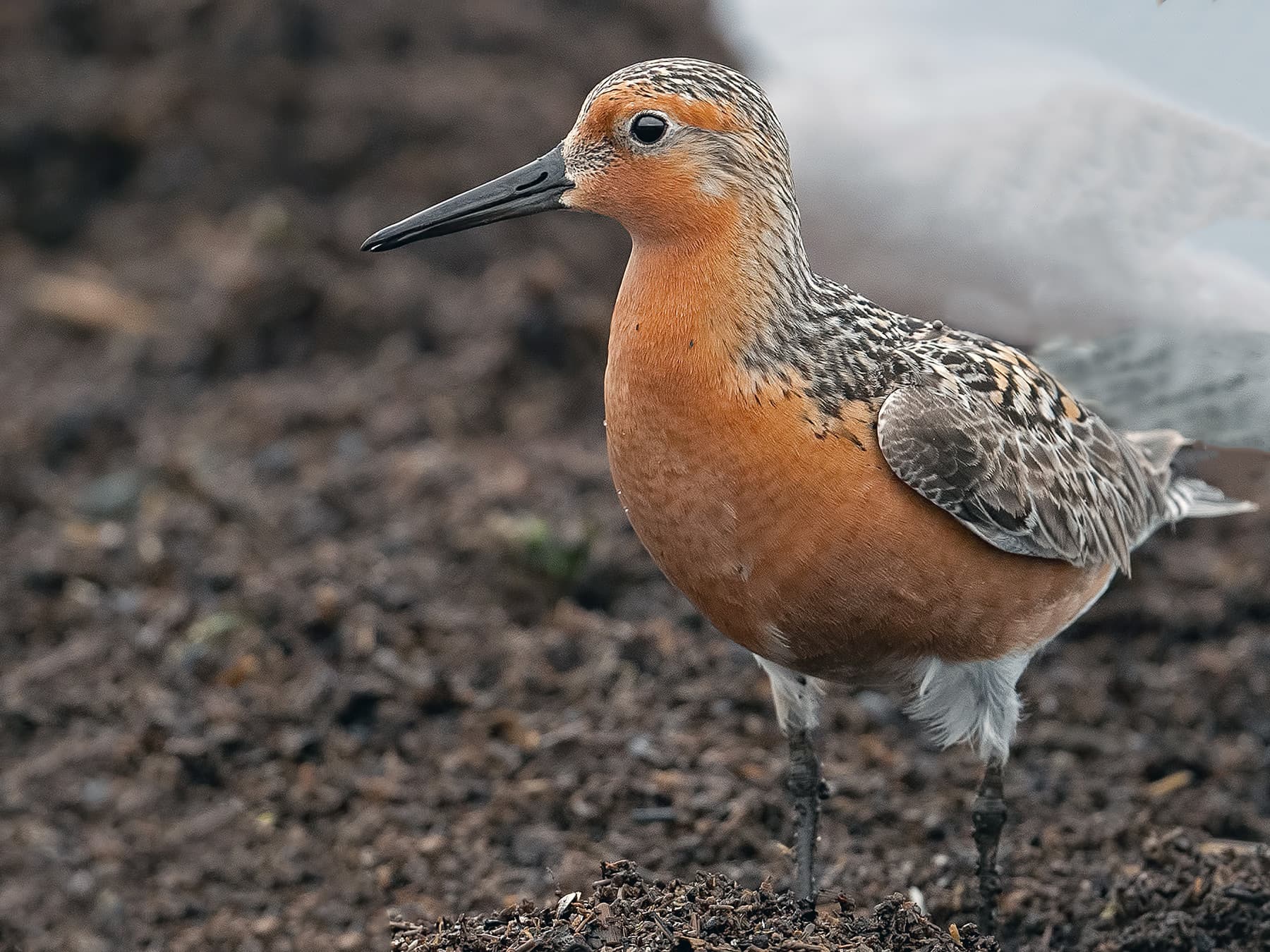
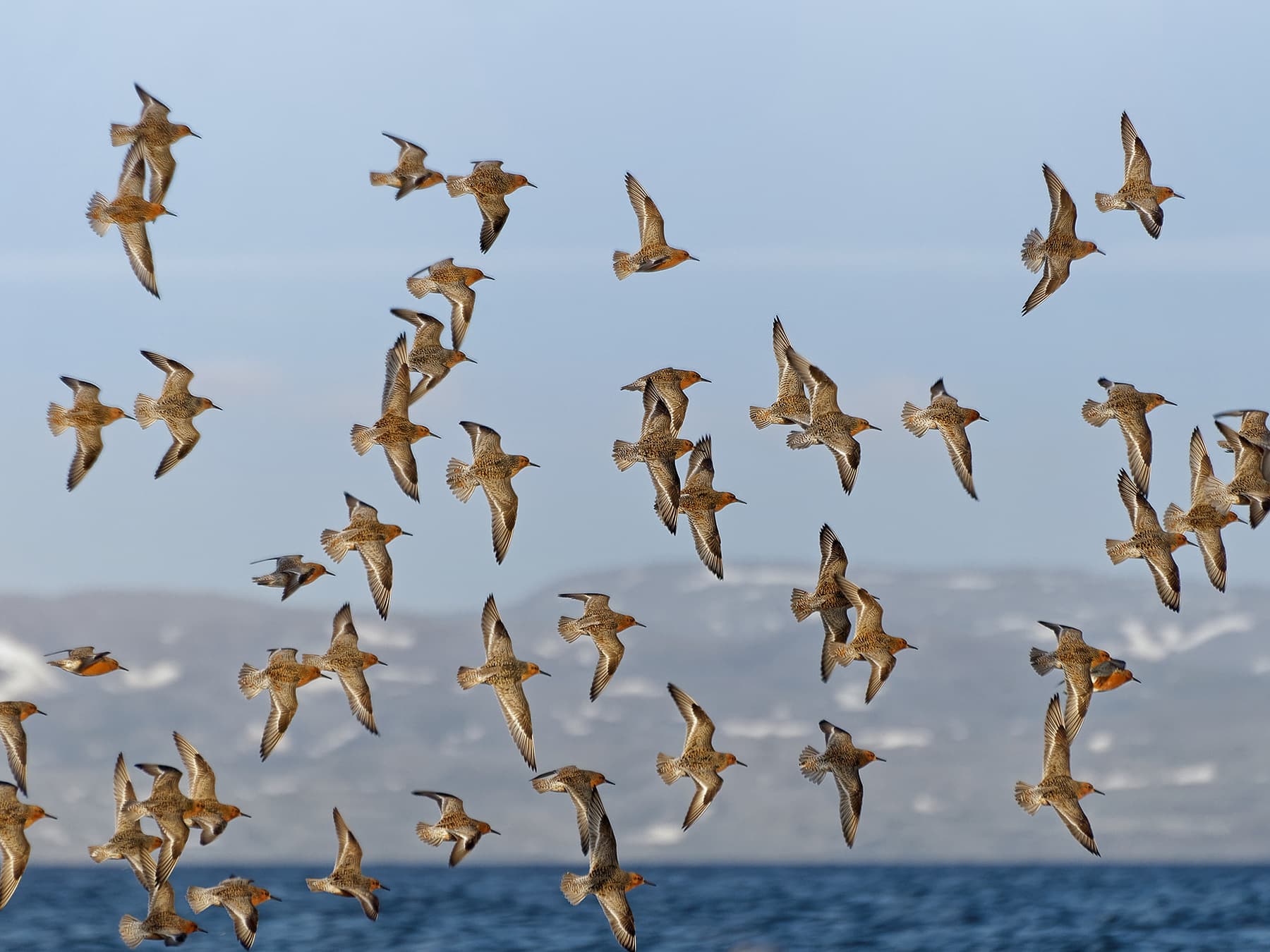
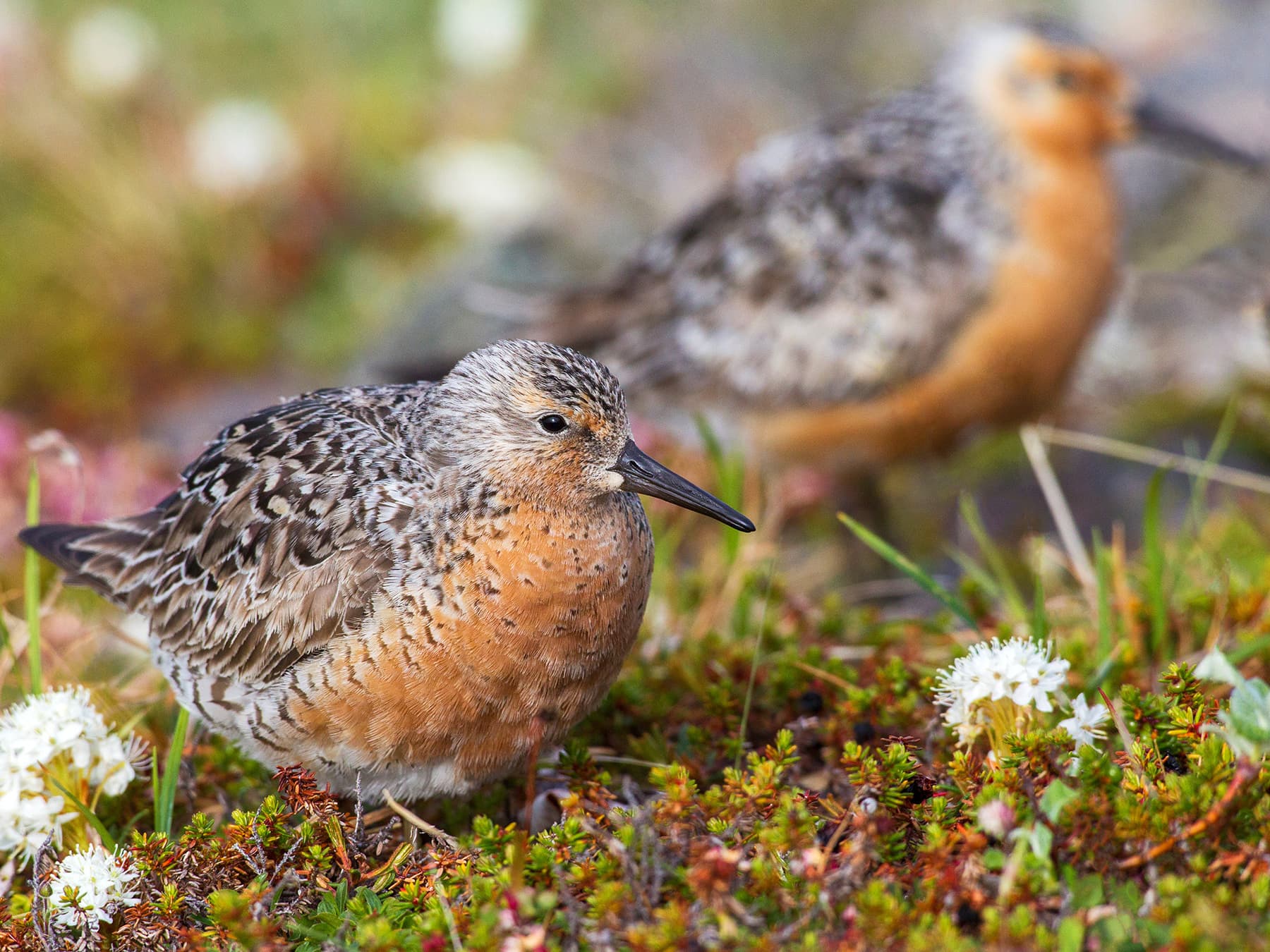
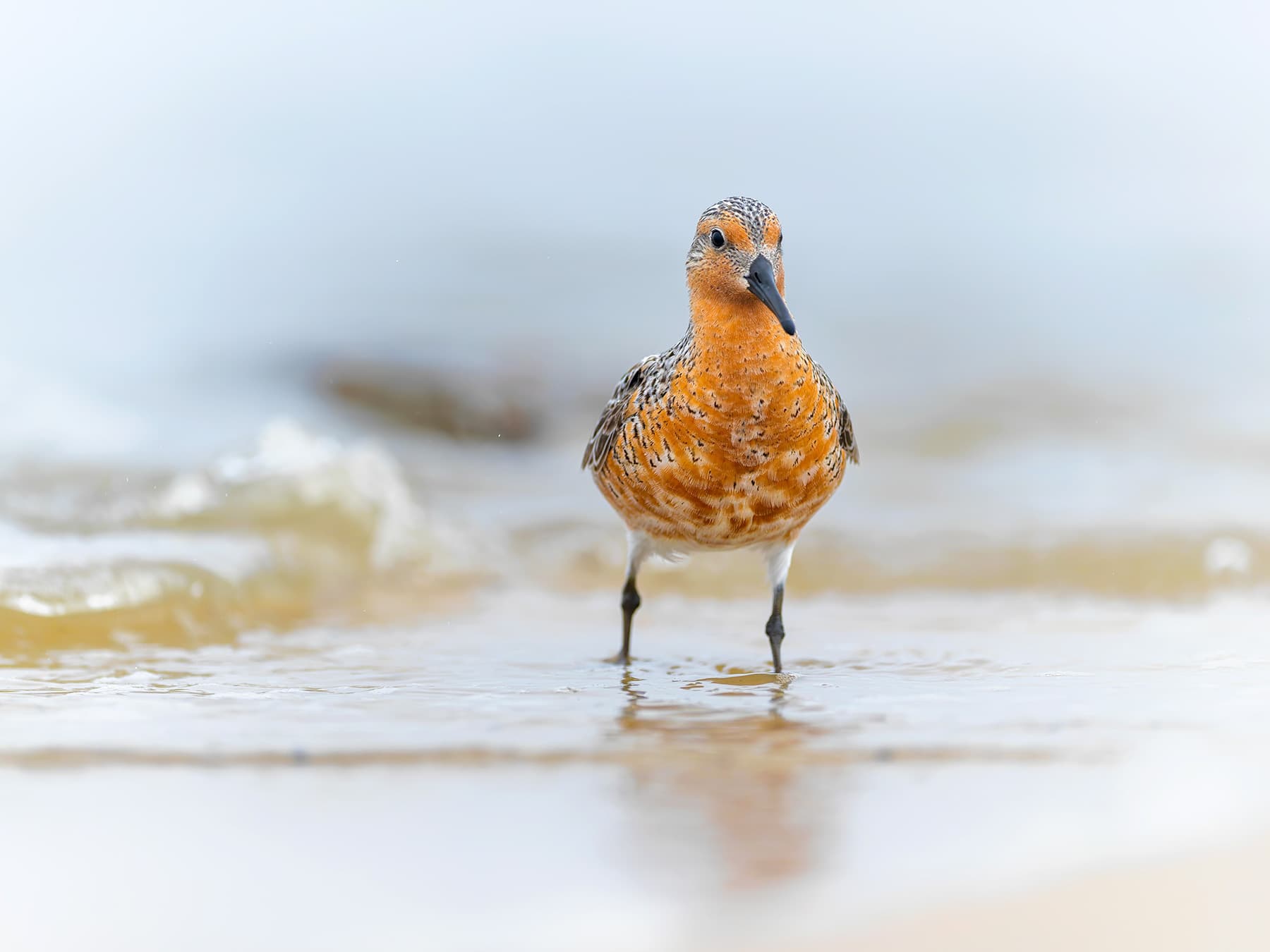
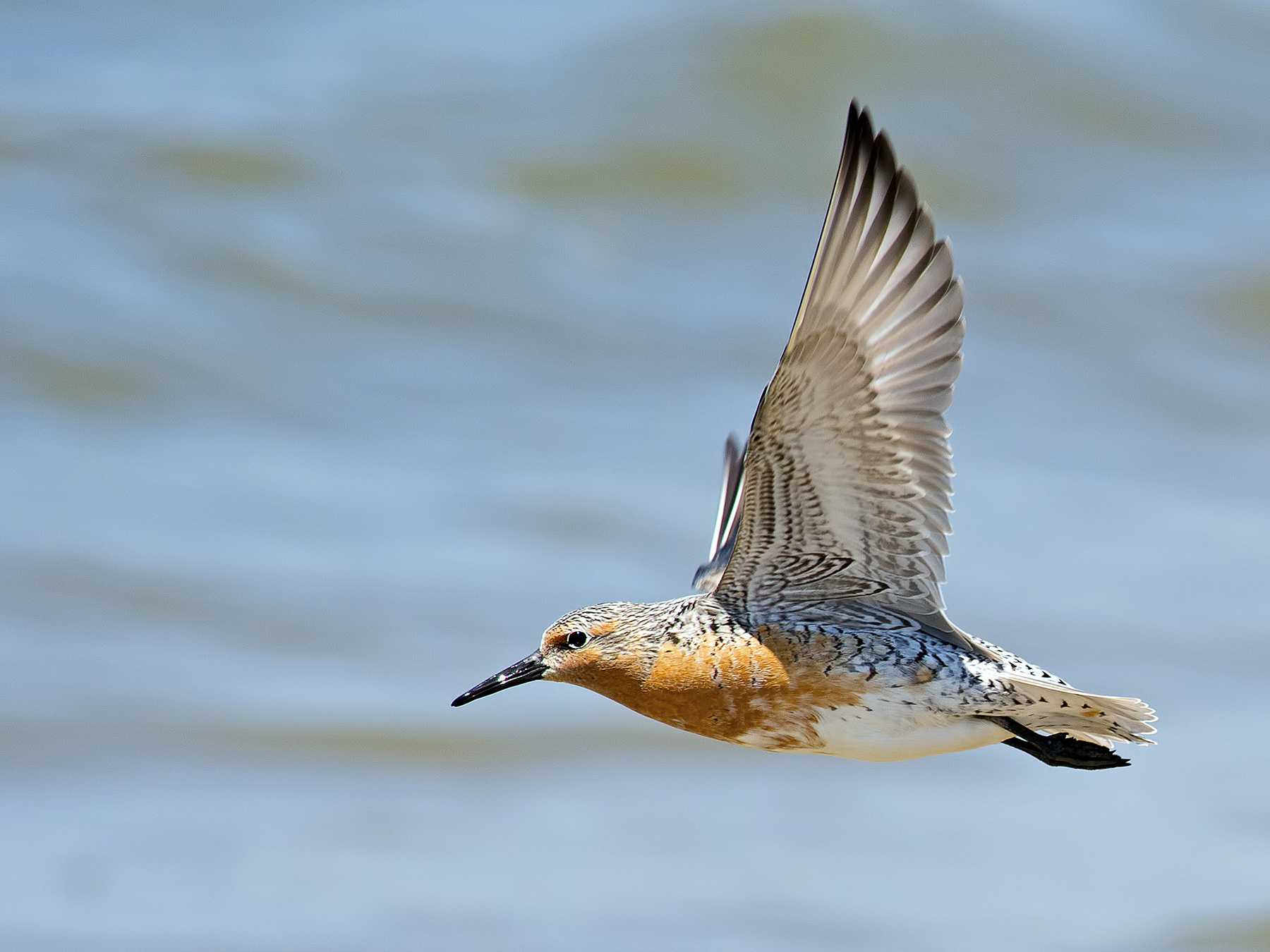
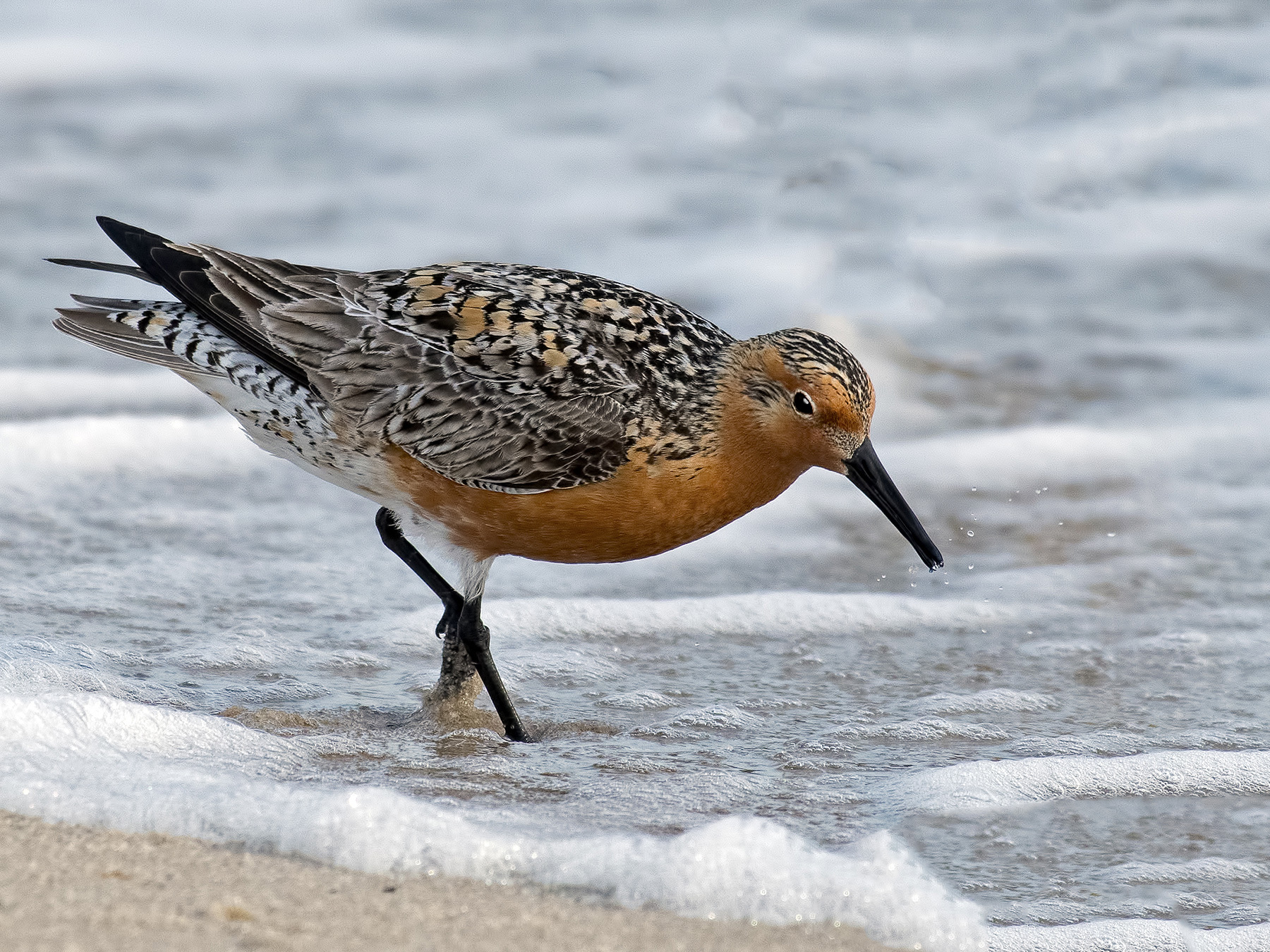
The knot is a dumpy, short-legged, stocky-wading bird. In summer, it has a deep reddish breast face and belly, from salmon pink to brick red. Its crown is brown streaked with lighter markings, with brownish shoulder streaks, and a dark brown and black marbled back, wings and tail, with lighter fringing that gives a scaled appearance. The undertail area is pale white. Legs are brownish yellow, eyes are black and the bill is dark.
Breeding female red knots are similar in appearance to males, but their plumage is less vibrant and the red colouring is less extensive.
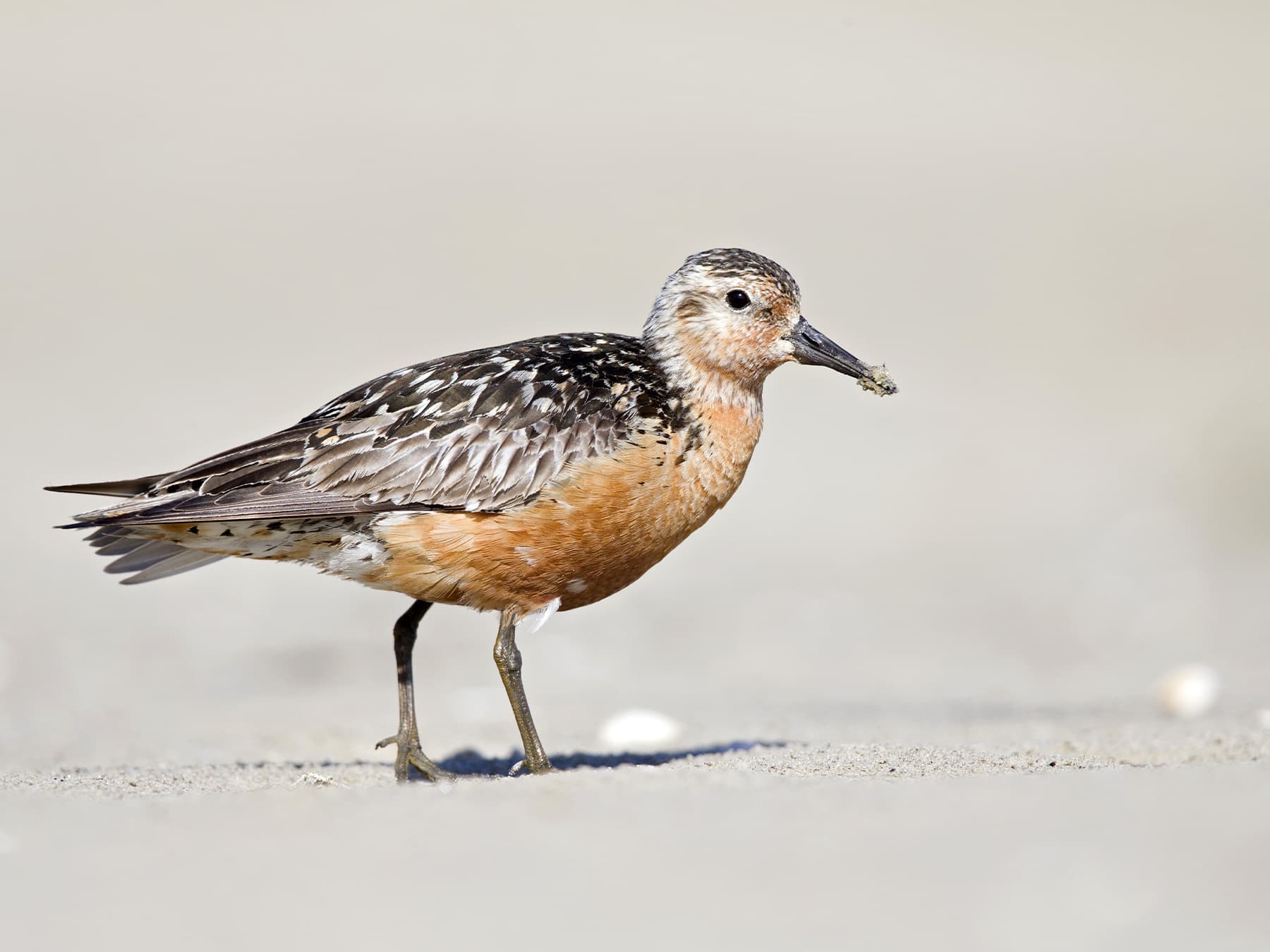
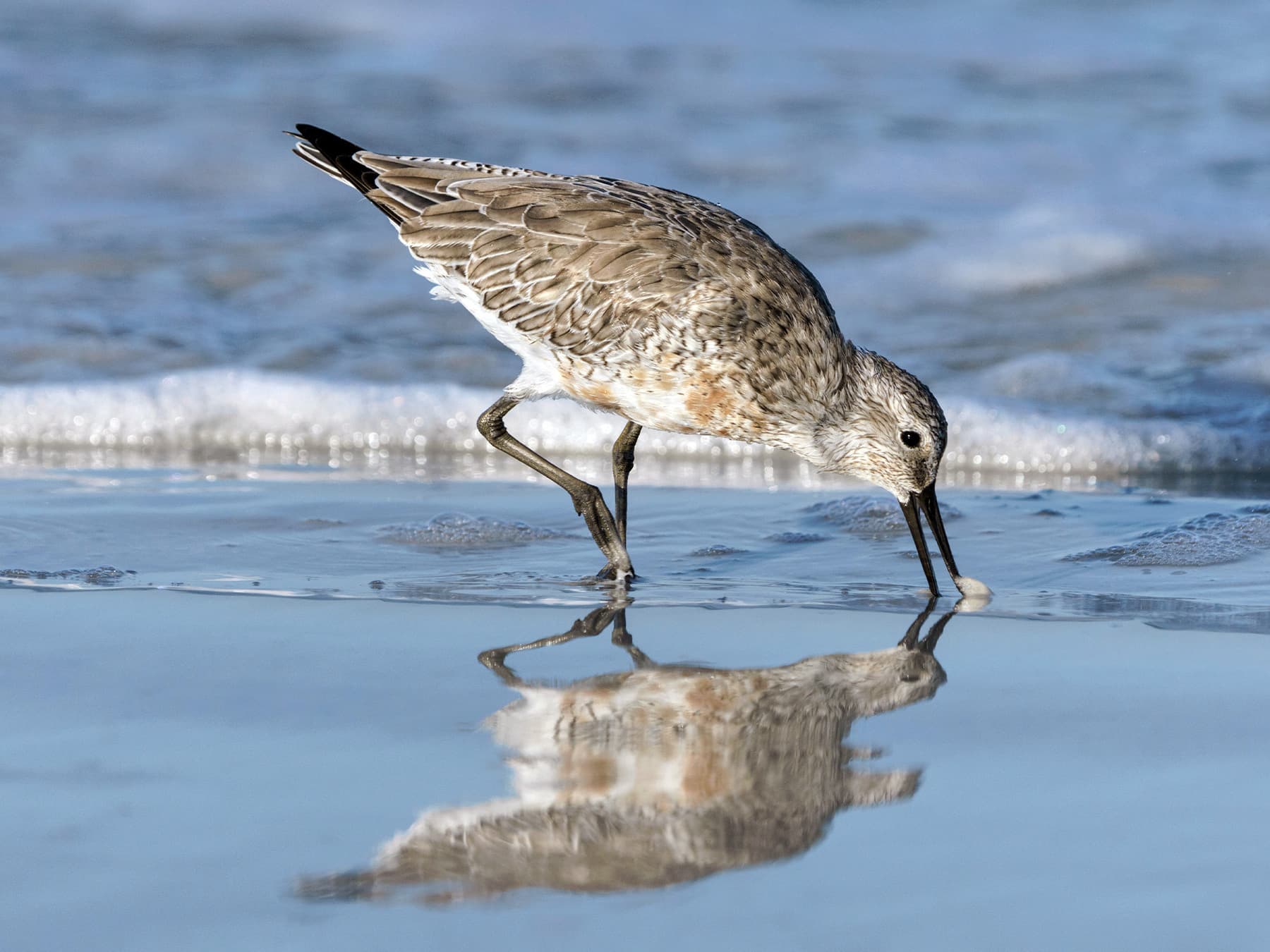
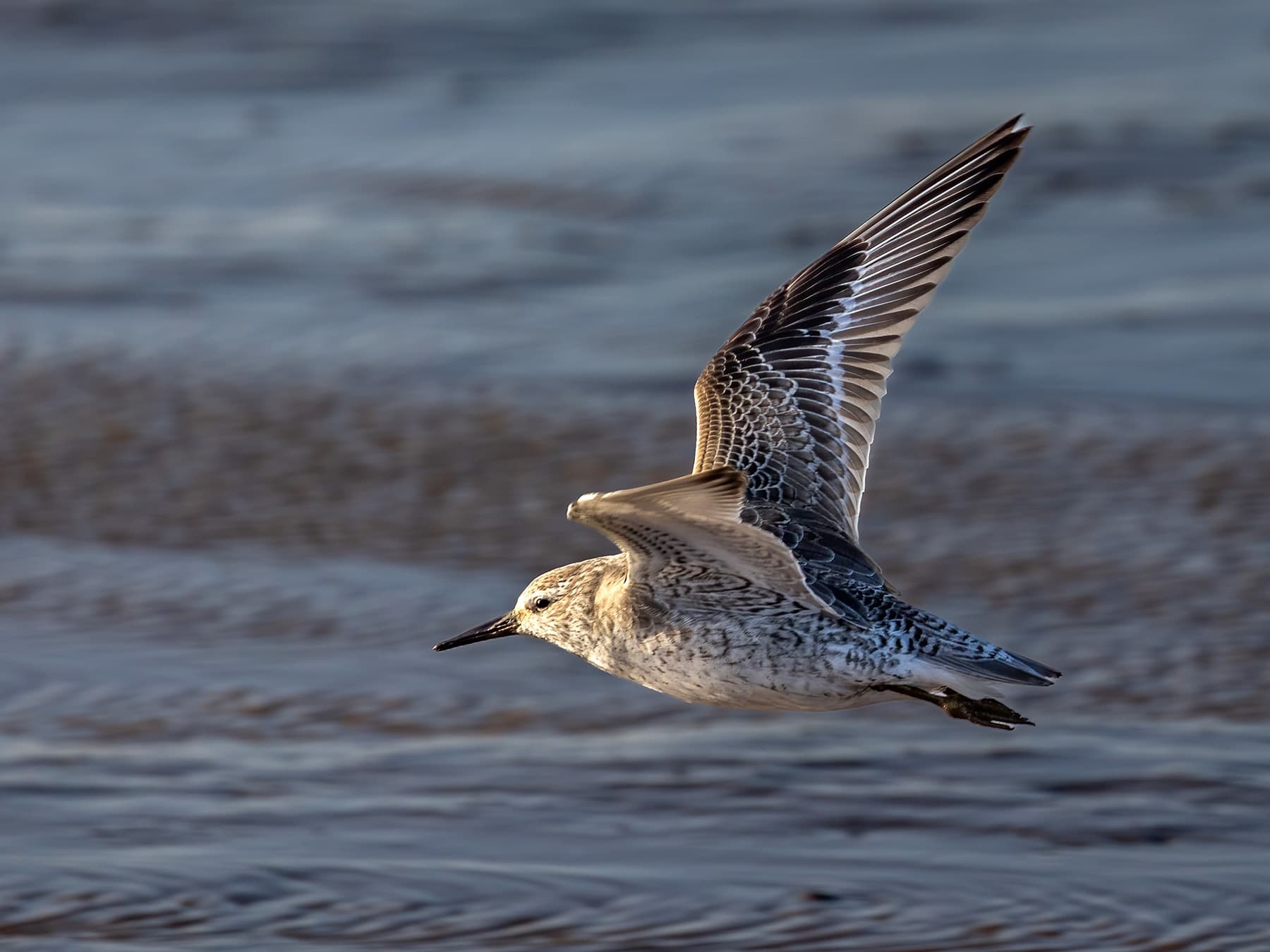
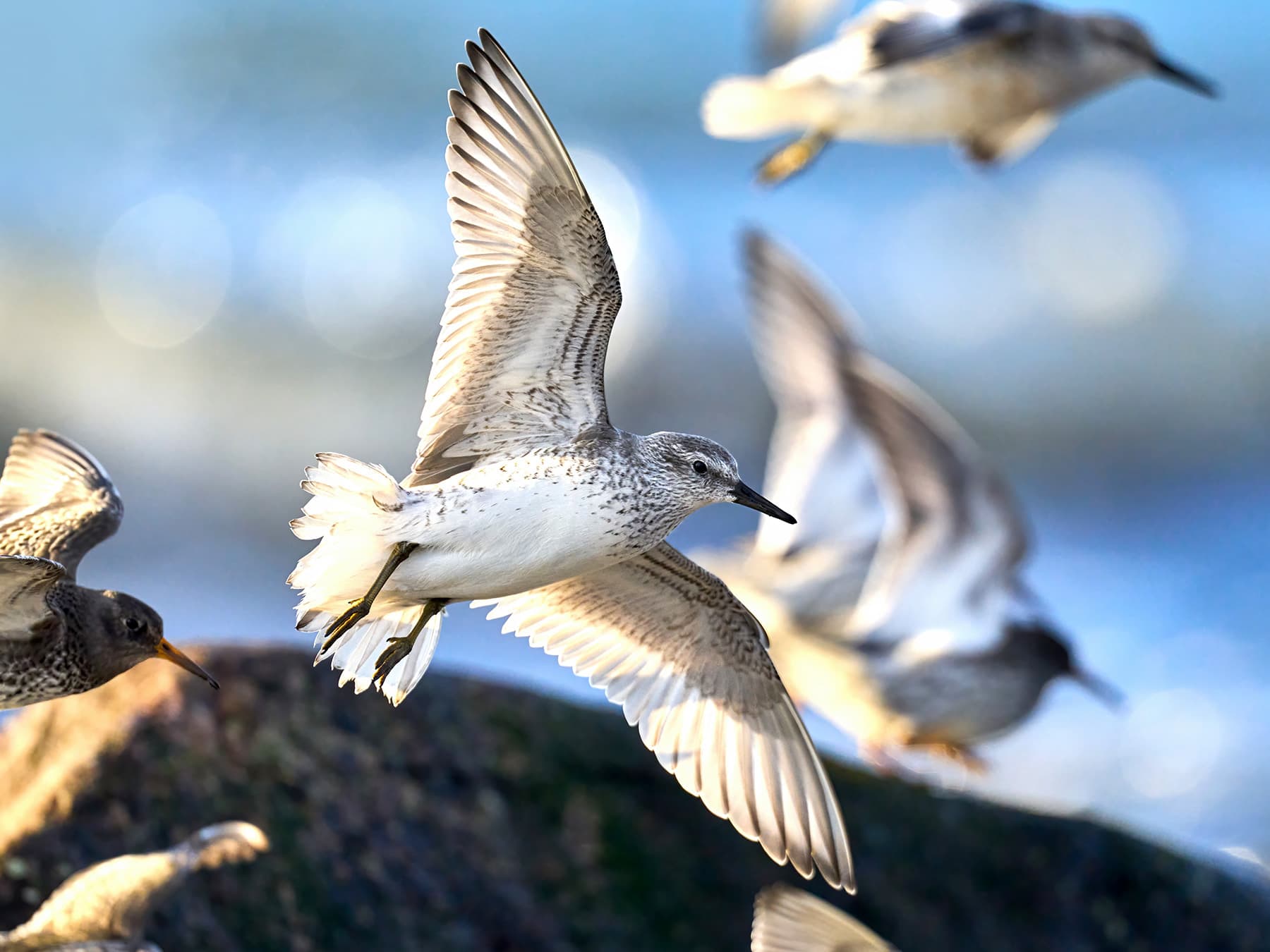
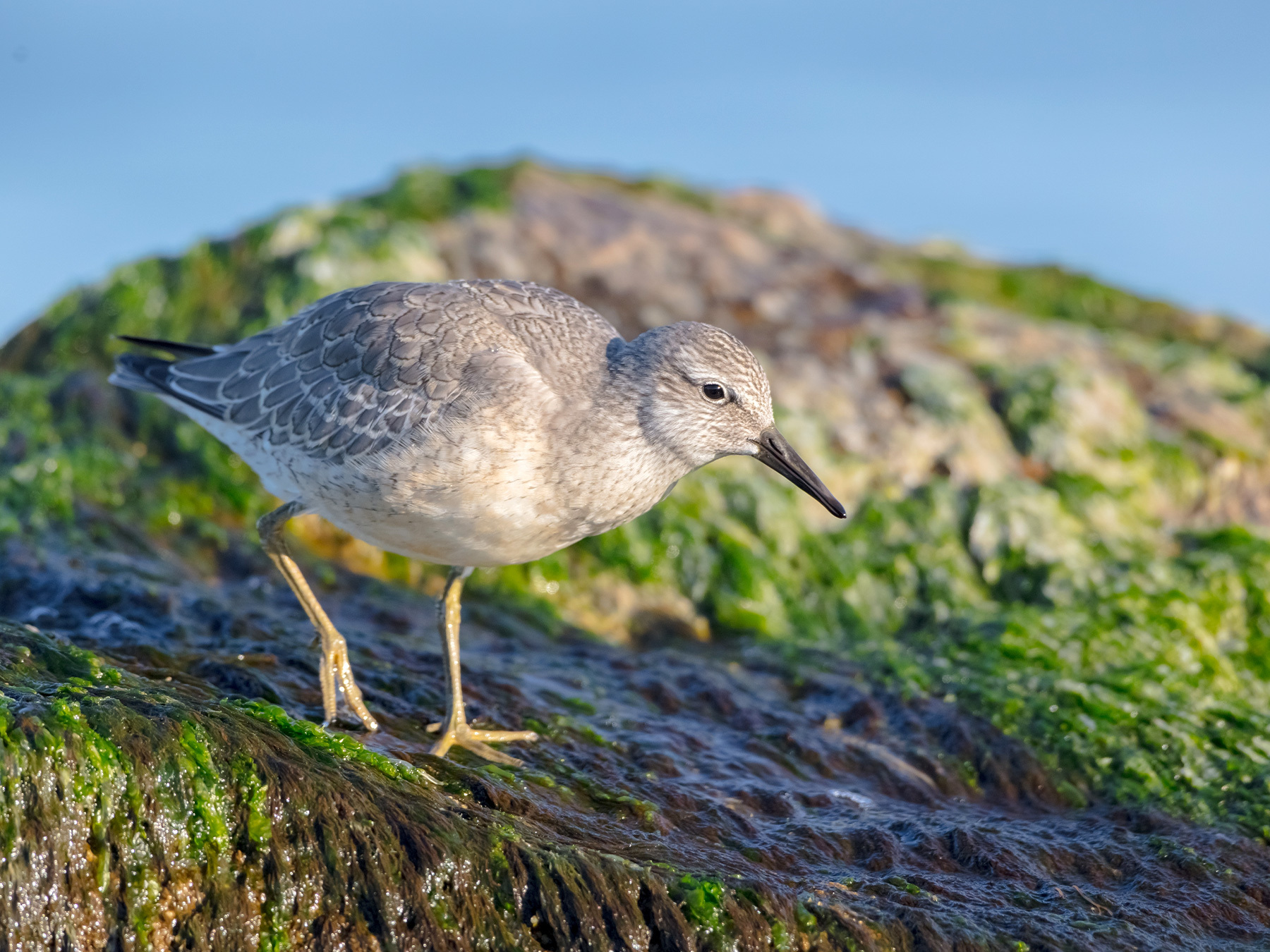
In winter, males and females are like, with grey upperparts, fringed with white, wing coverts tipped with white which creates a white line across the wing that is visible in flight. A pale white rump can also be seen in flight. Their underparts are white, with some faint streaking. Their head is grey with a paler eye stripe.
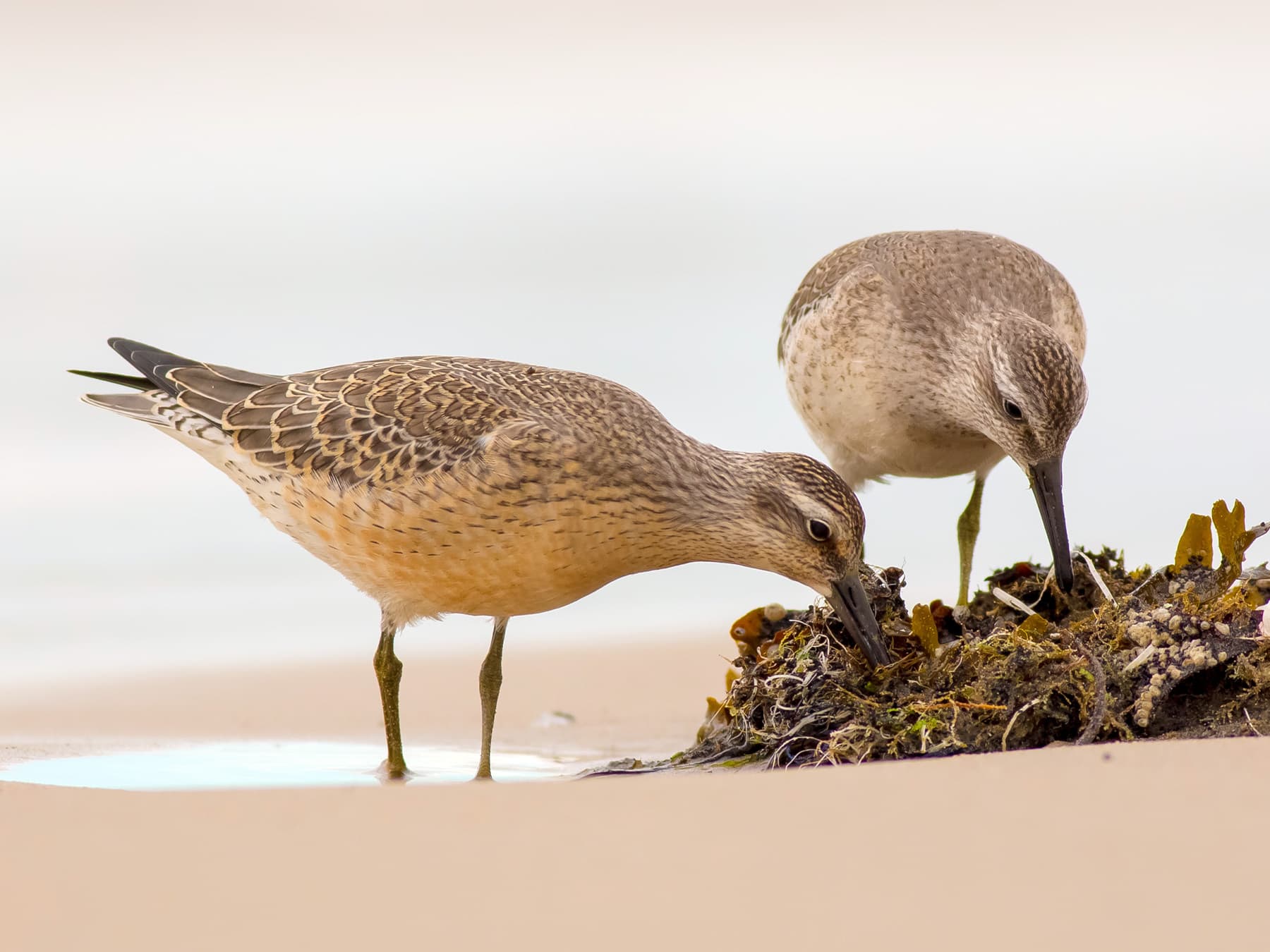
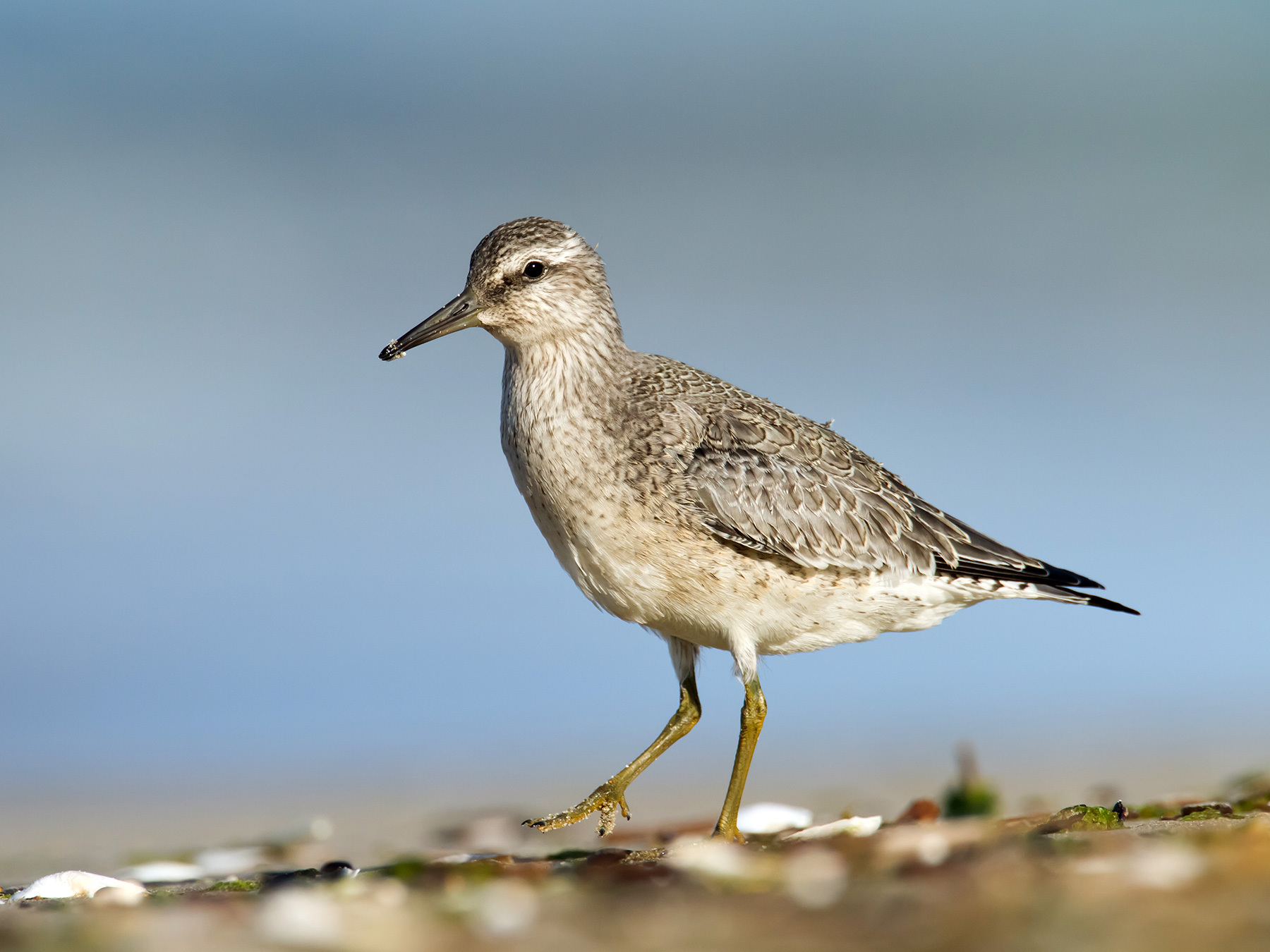
Juvenile red knots are darker than non-breeding adults, with charcoal gray feathers fringed with white on their mantle, back, and wings, creating a scaled effect. Their head, face and throat are a streaky gray and white, with a faint white eye stripe. Their flanks are tinged with buff, and their belly is pale off-white with some darker streaked gray markings.
How big are Red Knots?
Red knots are medium-sized, stocky wading birds, with relatively short legs. There are only slight differences in size between the sexes, with some overlap in the range between the marginally larger male and the smaller female.
- Length: 23 cm to 25 cm (9 in to 10 in)
- Wingspan: 47 cm to 54 cm (18 in to 21 in)
- Weight: 125 g to 215 g (4.4 oz to 7.6 in)
Its size
Adults- Length
- 23–26 cm
- Wingspan
- 45–54 cm
- Weight
- 100–200 g
Its song and calls
What sound does a Red Knot make?
When foraging alone, red knots are usually silent, but low-pitched ‘knutt’ calls can be heard when they are flying or feeding as part of a larger flock. During migration, a two-note ‘knuup-knuup’ cry can be heard. During courtship, males can be heard uttering a light, reedy ‘poor-me’ call.
- Flight call0:00 / 0:13
Recorded in Normandie, France · March 2026
When and where to see it
OctoberLeaving
Most recorded in October
- 1. Falkirk0.81%
- 2. Moray0.75%
- 3. Merseyside0.72%
- 4. East Riding of Yorkshire0.56%
- 5. Louth0.56%
Each dot is a county, state or province: the bigger and darker, the larger the bird’s share of that place’s bird records that month. Grey dots: no regular records. The ringed point is the centre of the bird’s records this month; the arrow shows how it moved since last month, and the dashed loop its path through the year. “Arrivals” colours places where it becomes regular this month (orange) or is in its last regular month (grey). GBIF eBird Observation Dataset, 2019–2024. Map data: Natural Earth, US Census Bureau; place centres © OpenStreetMap contributors.
In your area
See when the Red Knot is recorded in your county, state or province.
How often the Red Knot turns up in the UK, Ireland, the United States and Canada through the year, from birdwatchers' records.
United Kingdom
Resident · all year · most records in September
Ireland
Winter visitor · all year · most records in September
United States
Resident · all year · most records in September
Canada
Summer visitor · regularly May–Dec · most records in August
Show as a table
| Month | United Kingdom | Ireland | United States | Canada |
|---|---|---|---|---|
| January | 0.099% (regular) | 0.26% (regular) | 0.012% (regular) | 0.002% |
| February | 0.078% (regular) | 0.20% (regular) | 0.008% (regular) | 0.002% |
| March | 0.054% (regular) | 0.15% (regular) | 0.005% (regular) | <0.001% |
| April | 0.040% (regular) | 0.097% (regular) | 0.009% (regular) | <0.001% |
| May | 0.045% (regular) | 0.067% (regular) | 0.016% (regular) | 0.008% (regular) |
| June | 0.038% (regular) | 0.045% (regular) | 0.008% (regular) | 0.006% (regular) |
| July | 0.10% (regular) | 0.063% (regular) | 0.007% (regular) | 0.008% (regular) |
| August | 0.19% (regular) | 0.25% (regular) | 0.022% (regular) | 0.051% (regular) |
| September | 0.22% (regular) | 0.41% (regular) | 0.022% (regular) | 0.048% (regular) |
| October | 0.14% (regular) | 0.22% (regular) | 0.014% (regular) | 0.014% (regular) |
| November | 0.11% (regular) | 0.25% (regular) | 0.012% (regular) | 0.003% (regular) |
| December | 0.081% (regular) | 0.25% (regular) | 0.010% (regular) | 0.003% (regular) |
Recorded regularly in
Worldwide: recorded regularly in 99 countries
Countries where it was recorded in at least 3 of the 6 years 2019–2024. Linked countries have their own bird list.
Europe (36)
Africa (9)
Asia (18)
North America (22)
- Bahamas
- Barbados
- Belize
- Canada
- Caribbean Netherlands
- Cayman Islands
- Costa Rica
- Cuba
- Curaçao
- Dominican Republic
- El Salvador
- Guadeloupe
- Guatemala
- Honduras
- Mexico
- Nicaragua
- Panama
- Puerto Rico
- St Pierre & Miquelon
- Trinidad & Tobago
- Turks & Caicos Islands
- United States
South America (11)
Oceania (3)
Data: EOD – eBird Observation Dataset (Cornell Lab of Ornithology), accessed via GBIF.org, CC BY 4.0. Records from 2019–2024, aggregated and filtered by Birdfact. How these lists are made
What is the habitat of a Red Knot?
Red knots nest on Arctic tundras, and spend winters in very different environments, heading mostly to coastal waters in the southern hemisphere.
Sunny arctic tundras with sloping landscapes and only sparse vegetation are preferred sites for nesting. Foraging grounds at streams and ponds are nearby, and usually coastal or only a short distance inland.
In winter, coastal regions are preferred, with large flocks of red knots making stopovers to forage for crustaceans en route. Muddy estuaries, sandy beaches, peat banks, brackish lagoons, and tidal bays are all common destinations offering abundant winter foraging opportunities for red knots until they head north to breed again the following spring.
What is the range of a Red Knot?
Red knots have an extremely large range. Breeding occurs from Alaska across northern Canada to Greenland and across the far northern regions of Russia. Wintering grounds are located on the Pacific and Atlantic coasts of North and South America, in north-western Europe, on the western coast of Africa from Tunisia and Morocco as far south as South Africa, across southern Asia and around Australia.
Where do Red Knots live?
Red knots can be divided into six distinct subspecies, according to geographical location.
- Caldiris canutus canutus breeds in central and northern Siberia and winters in western and southern Africa and south Asia.
- Caldiris canutus piersmai breeds in the New Siberian Islands archipelago, and heads to north-west Australia in winter.
- Caldiris canutus rogersi breeds on the Chukotskiy Peninsula in far eastern Russia, and spends winters in Australasia.
- Caldiris canutus roselaari breeds off the coast of north-eastern Siberia and in north-west Alaska and migrates to western Mexico, the coast of the south-eastern US, southern Panama, and northern Venezuela.
- Caldiris canutus rufa breeds in the low Arctic region of Canada, heading to the coasts of south Florida, Texas, northern Brazil, and southern South America once breeding is complete.
- Western Europe’s winter population consists of Caldiris canutus islandica, which breeds on Canada’s High Arctic islands and in north Greenland.
How rare are Red Knots?
The global population of red knots is estimated at between 891,000 and 979,000 individuals, and although numbers are in an evident decline, they are still a relatively common sight once they begin their post-breeding migrations, particularly en route to wintering grounds when large flocks gather to refuel at beaches and estuaries.
Where can you see Red Knots in the US?
Delaware Bay is a famous stopover site associated with vast flocks of red knots on migration, with up to 80 percent of the Canadian breeding population visiting to refuel on the way to wintering grounds in Florida, Texas, Brazil, and southern South America.
Where can you see Red Knots in Canada?
The Canadian Arctic regions host up to 80,000 breeding individuals each year. Two subspecies are present with the north-eastern islands of Ellesmere Island, Prince of Wales Island, and Somerset Island a key breeding ground for Caldiris canutus islandica, while further south, from Baffin Island to Hudson Bay the Caldiris canutus rufa subspecies is widespread.
Where can you see Red Knots in the UK?
Around 265,000 knots arrive each year to spend winter in the UK. Sightings are regularly reported along the entire coastlines of England, Scotland, and Wales, but the best chances of a sighting are at muddy estuaries, with large concentrations regularly appearing at The Wash, Morecambe Bay, the Thames, Humber, and Dee estuaries, the Solway Firth and Strangford Lough in Northern Ireland.
Migration
Do Red Knots migrate?
Red knots are known for their long-distance migrations between their circumpolar breeding grounds and wintering habitats deep in the southern hemisphere.
Why do Red Knots migrate?
Outside of the spring and summer breeding season, it becomes impossible for red knots to survive in the Arctic landscapes in which they’ve raised their young due to frozen ground and a lack of suitable food resources.
They no longer rely on the insects, larvae, snails, and worms which give their offspring vital energy in the early stages of life, and their diet changes to molluscs and marine invertebrates that are widely available in the marine waters they spend their winters foraging in, particularly the eggs of horseshoe crabs.
How far do Red Knots migrate?
A true long-distance migrant, red knots cover distances of up to 15,000 km (9000 mi) between their breeding grounds and winter habitats.
Where do Red Knots migrate?
Red knots breed in the High Arctic regions of North America, Greenland, and Siberia. Once breeding is complete, they migrate south to coastal waters off South America, Africa, Europe, Australia and New Zealand. Some subpopulations may not cover such epic distances, settling for the winter in Western Europe and coastal regions of the southeastern United States.
Tips for seeing it
- Look for Red Knots on coastal mudflats and sandy beaches during migration seasons.
- Observe their rapid probing behaviour as they feed in shallow water.
- In spring, watch for their distinctive rusty-red breeding plumage.
- Listen for their soft 'knut-knut' call, especially in flight.
What it eats
What do Red Knots eat?
Worms, insects and their larvae, snails, and spiders are the chief foods eaten by red knots on their Arctic breeding grounds. Early arrivals to breeding grounds may eat shoots and plant matter if the landscape is not fully thawed for insect life to be widely available.
On migration and during winter months, their diet changes to include more shellfish and molluscs, including mussels, estuarine and saltwater clams. The eggs of horseshoe crabs are particularly important, with Delaware Bay being a major stopover point on northward migrations each spring.
What do Red Knot chicks eat?
Soon after hatching, red knot chicks are able to forage for their own prey and their early diet mainly comprises insects, particularly adult midges.
Nesting and breeding
Where do Red Knots nest?
Ahead of females arriving on breeding grounds, male red knots prepare up to five shallow scrapes in the ground, stripping out any vegetation and pressing a depression into place using their breast. Dried grasses, leaves, and lichen may then be added as an extra lining that offers insulation against the frozen land.
When do Red Knots nest?
Red knots’ nesting period varies according to geographical location, but the peak laying period is in mid to late June and is usually complete by early July. Incubation is left to the male alone, and the young hatch after 21 to 22 days.
What do Red Knot eggs look like?
Eggs laid by red knots are stone coloured, with darker brown speckling. They measure 43 mm by 30 mm (1.7 in by 1.2 in) and usually four eggs are laid. One clutch a year is typical, as females leave the breeding grounds shortly after they’ve laid their eggs.
Do Red Knots mate for life?
Red knots pair up on breeding grounds on arrival, and the pair bond is not long-lasting, with females departing from the site once they have laid their eggs, leaving males to incubate and raise young alone. Different mates are chosen each season, although males do show strong fidelity to previously used nesting sites.
Behaviour
Are Red Knots aggressive?
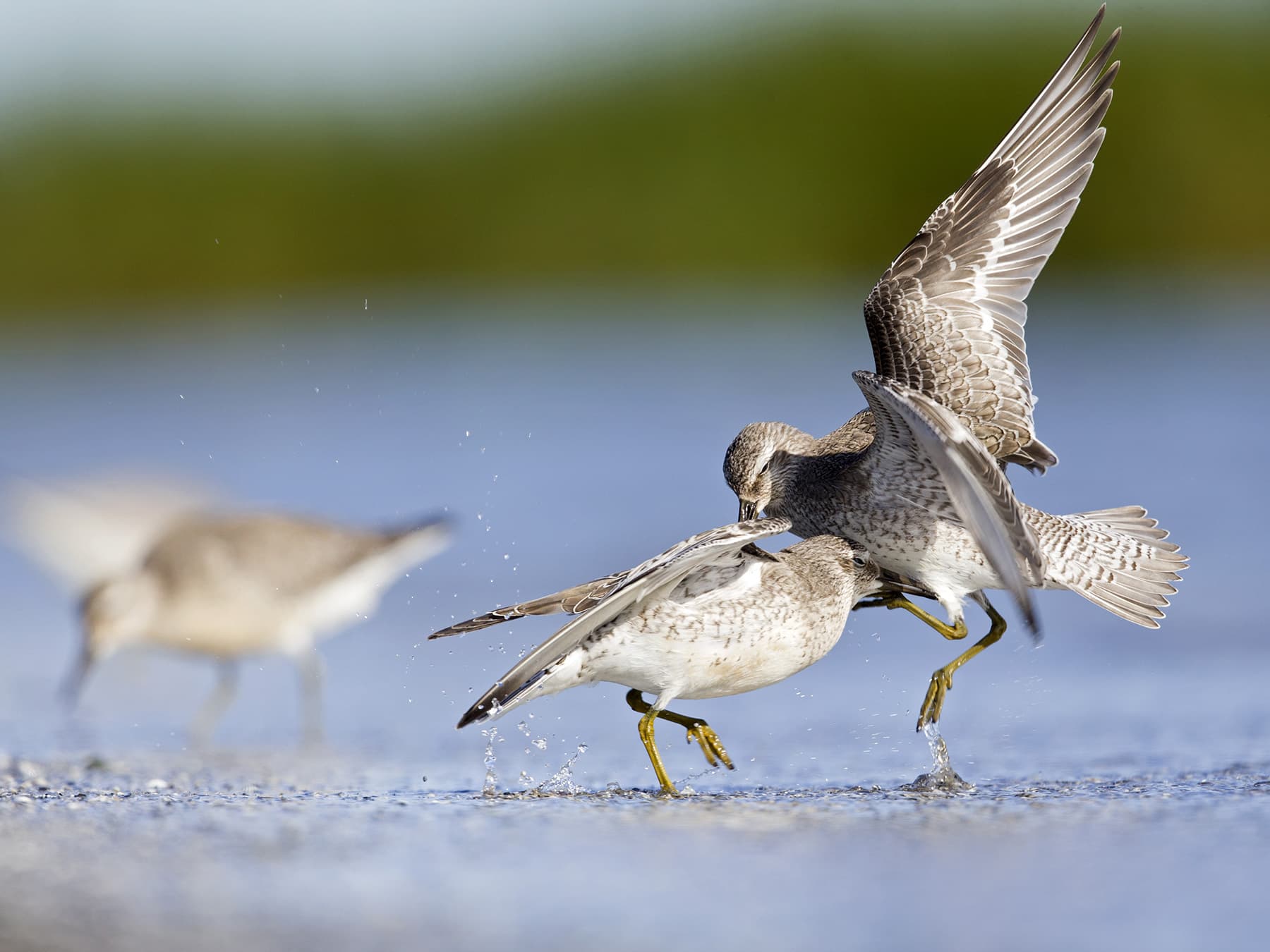
Outside of the breeding season, red knots gather in vast flocks to migrate and forage for crustaceans at sea. They are a social species and no hostility or conflict is shown towards other birds.
When breeding, aggressive physical interactions with other birds remains rare, and any fights are short-lived and relatively mild, with posturing generally as fierce or confrontational as it gets.
Where do Red Knots sleep at night?
Red knots roost alongside each other in large flocks, packed tightly together, and sometimes surrounded by other shorebirds. Roosting sites are on shores, a short distance from feeding grounds. A one-legged roosting stance is most common, helping to stabilize their bodies in windy weather.
Lifespan and predators
How long do Red Knots live?
A life expectancy of around 8 years is typical for red knots, with breeding for the first time at two years. Much older birds have been identified through banding records, including an individual that reached 27 years and 3 months in 2006.
What are the predators of Red Knots?
On breeding grounds, Arctic foxes, skuas, and gyrfalcons will opportunistically raid red knot nests for eggs and target hatchlings. On migration, and at wintering grounds, predators including great black-backed gulls, peregrine falcons, harriers, merlins and short-eared owls may prey on adult birds.
Are Red Knots protected?
Red knots and their habitats are the subjects of various official conservation acts around the world. In 2014, the rufa subspecies of the red knot was listed as a federally threatened species under the United States Endangered Species Act – the second-highest status possible for a subspecies.
Legislation including the Migratory Birds Convention Act, 1994, in Canada, the Migratory Bird Treaty Act of 1918 in the US, and the Wildlife and Countryside Act, 1981 in the UK, offer protection to red knots against being killed, captured, or injured.
Are Red Knots endangered?
Red knots have been classified with Near Threatened status by the IUCN, due to steep declines in population in recent decades, particularly in the East Asian and Australian wintering subpopulations. The U.S. Shorebird Conservation Plan lists the red knot as a “Species of High Concern,” due to declining population trends and threats to wintering grounds. In the UK, knots have Amber status on the British Birds of Conservation Concern list.
Why are Red Knots endangered?
Climate change is a serious threat to the habitats of red knots, and already habitat loss due to land reclamation in the Yellow Sea has already had a negative impact on the population numbers in the wintering populations in East Asia and Australia.
Harvesting of horseshoe crabs in major stopover points during the southward migration of red knots is another factor in the worrying population declines.
Conservation
Red Knots face significant conservation challenges due to habitat loss and climate change. Overharvesting of horseshoe crabs, a key food source during migration, has impacted some populations.
Conservation efforts focus on protecting critical stopover sites and regulating horseshoe crab harvests.
More photos
5 photos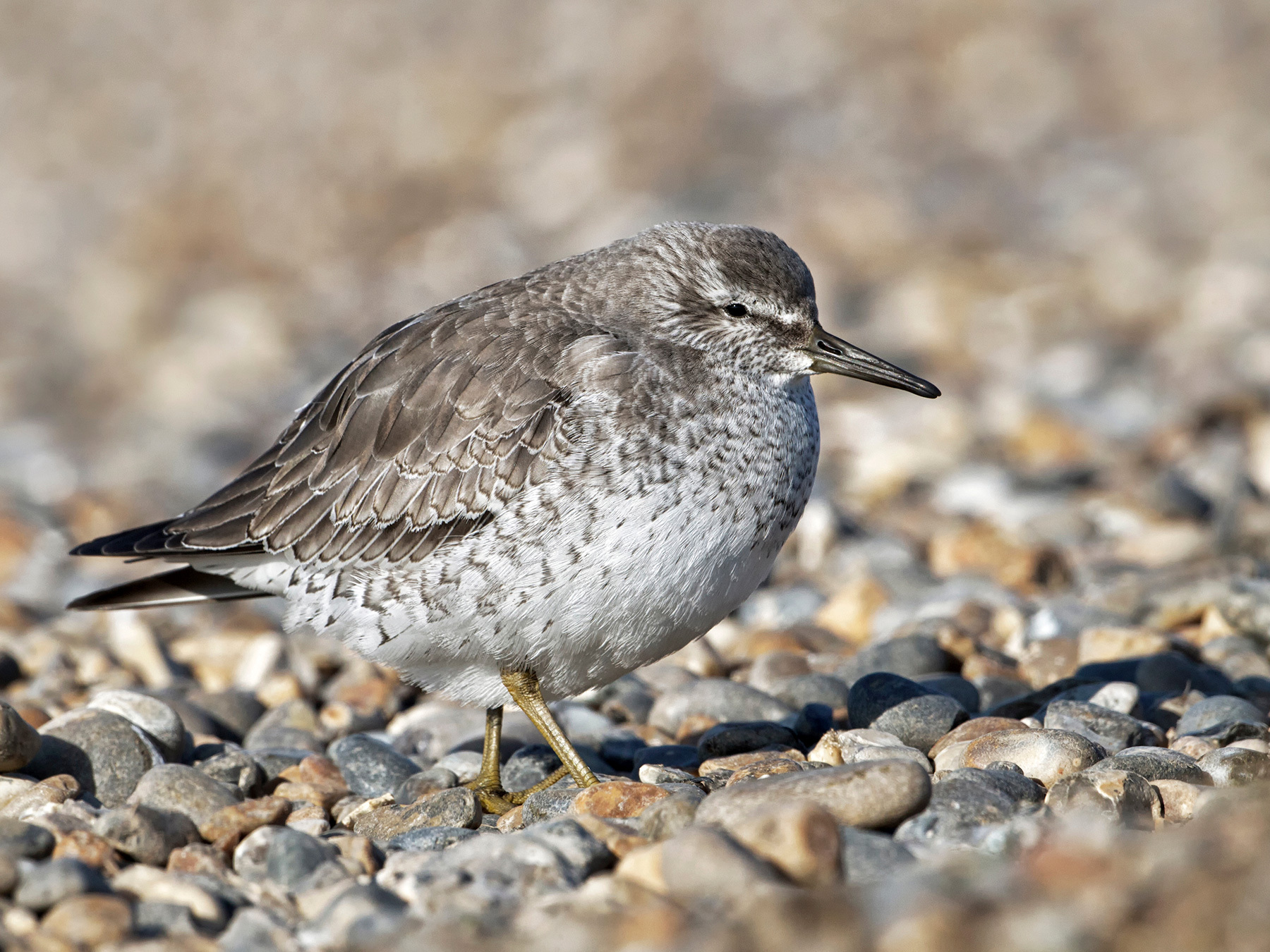
Quick facts
- Length
- 23–26 cm
- Wingspan
- 45–54 cm
- Weight
- 100–200 g
- Lifespan
- 8–10 years · oldest recorded 27 years
- Family
- Sandpipers & Snipes
- Migration
- Long-distance Migrant
- Global status (IUCN)
- Near Threatened
- World population
- 891,000 - 979,000 individuals
- Population trend
- Decreasing
- Also called
- Knot, Lesser Knot
- Scientific name
- Calidris canutus
Questions
3What kind of bird is a red knot?
Red knots are wading birds, in the same family as snipes, sandpipers and phalaropes.
Why are red knots so important?
Red knots are fascinating to researchers who are able to gain valuable insights into their lengthy migration patterns due to banding programs which are used to understand trends in population decline and changes to habitats worldwide.
Due to the vast numbers that descend upon Delaware Bay each year to feed on the eggs of horseshoe crabs, the species is directly linked to bringing in a significant amount of money to the local economy, with ecotourism in this region raising around $36 million annually.
Why are red knots called moon birds?
Moonbird is the nickname given to an individual red knot, tagged as B95, which is the oldest known individual of its species and the subject of books and documentaries. The nickname ‘moon bird’ originates from the fact that during this bird’s lifetime, its long-distance migrations have exceeded the length of the journey from Earth to the Moon.
Sources
4- 1BirdLife International. 2018. Calidris canutus. The IUCN Red List of Threatened Species 2018: e.T22693363A132285482. Source (opens in a new tab)
- 2Wetlands International (2018)
- 3Wetlands International (2015)
- 4Robinson and Clark, The Online Ringing Report: Bird ringing in Britain & Ireland in 2011 (2012) Source (opens in a new tab)

Checked by
Nathan Cope, founder and editor
Nathan founded Birdfact and leads its writers and contributors in the UK, the US and Canada. He has watched and studied birds for more than ten years, and checks every article and species guide before it’s published.