


Bar-tailed Godwit
Kuaka, Pacific Bar-tailed Godwit · Limosa lapponica
By the Birdfact teamChecked by Nathan Cope
On this page14 sections
How to recognise it
What do Bar-tailed Godwits look like?
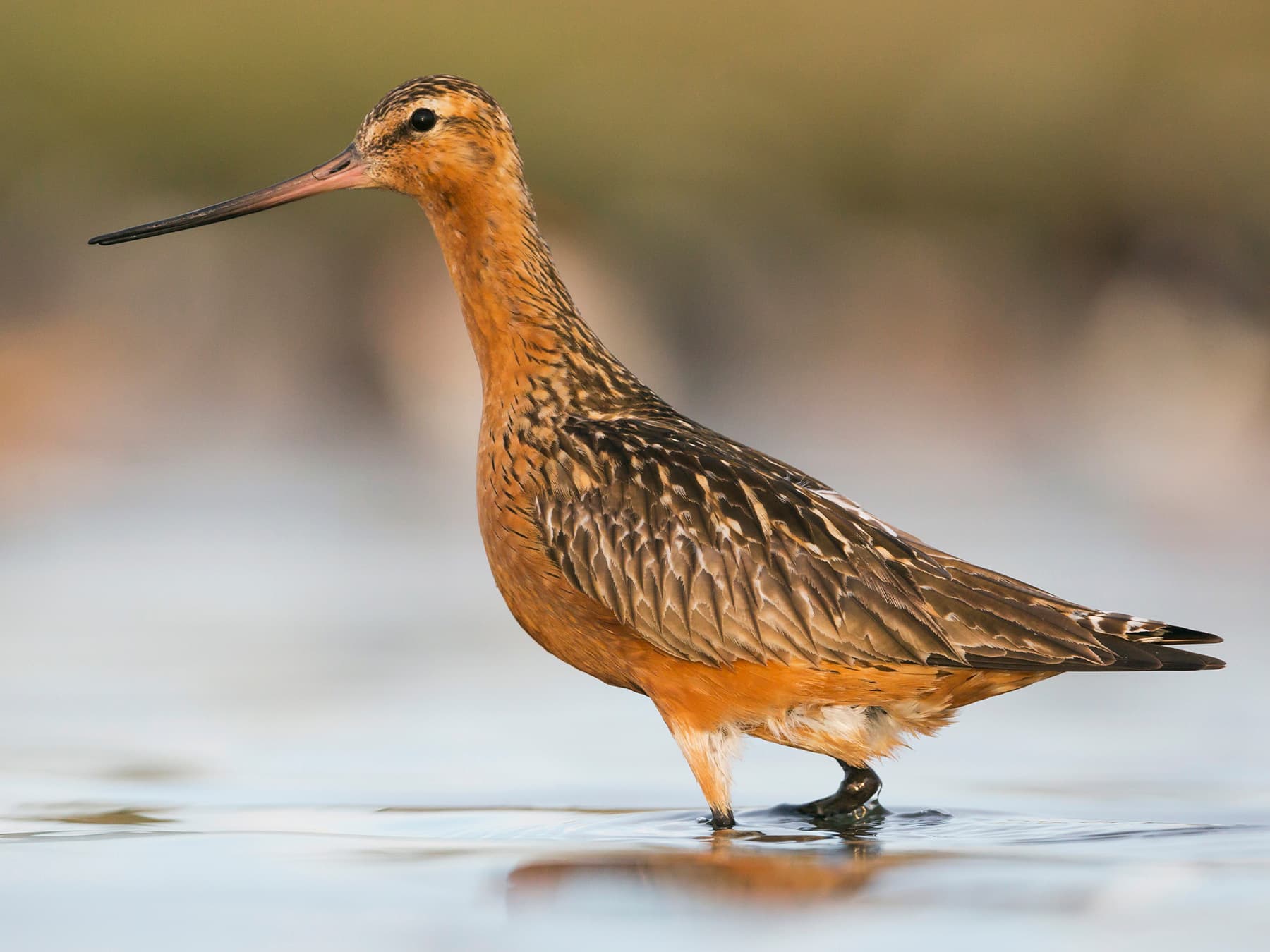
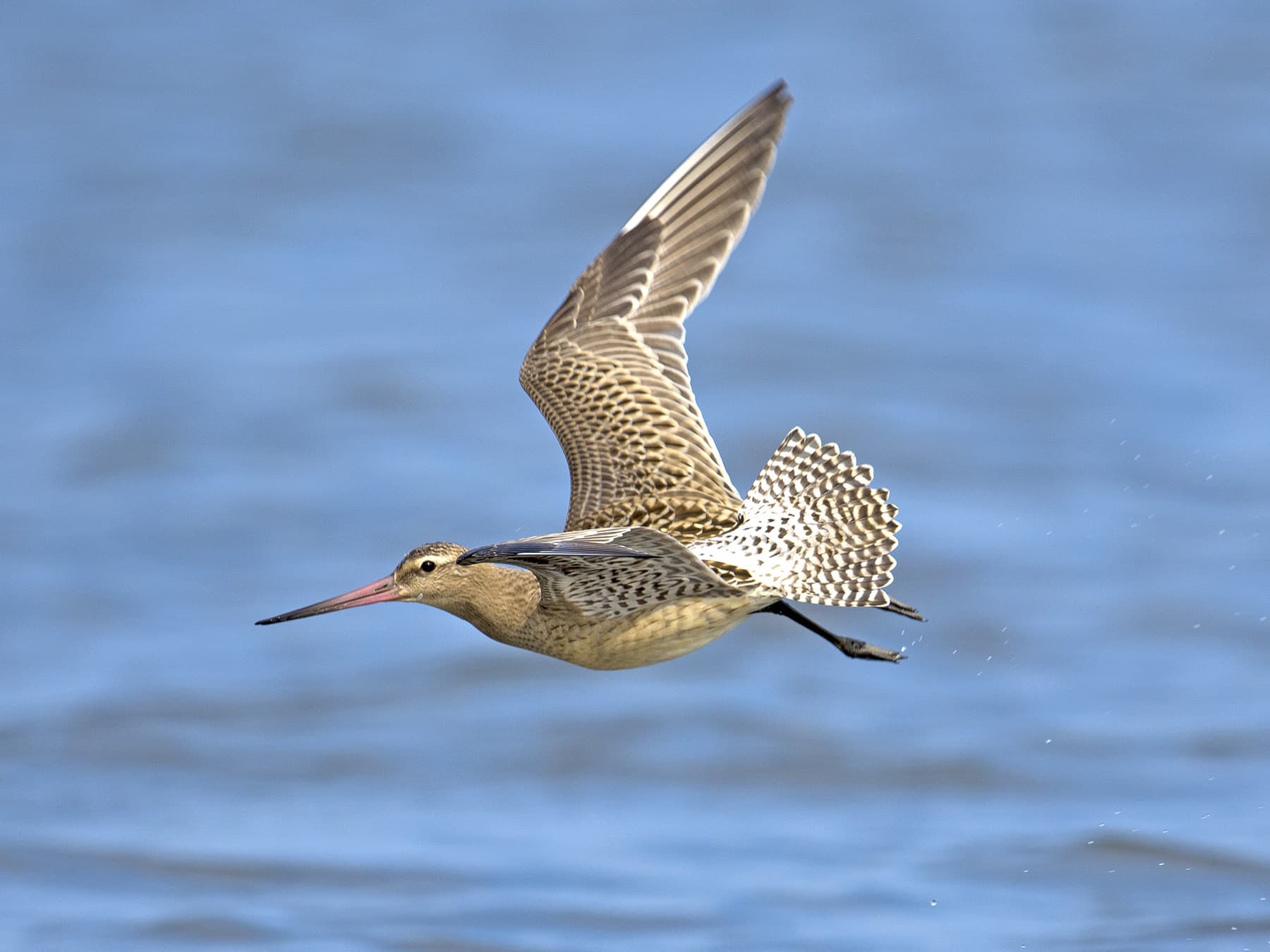
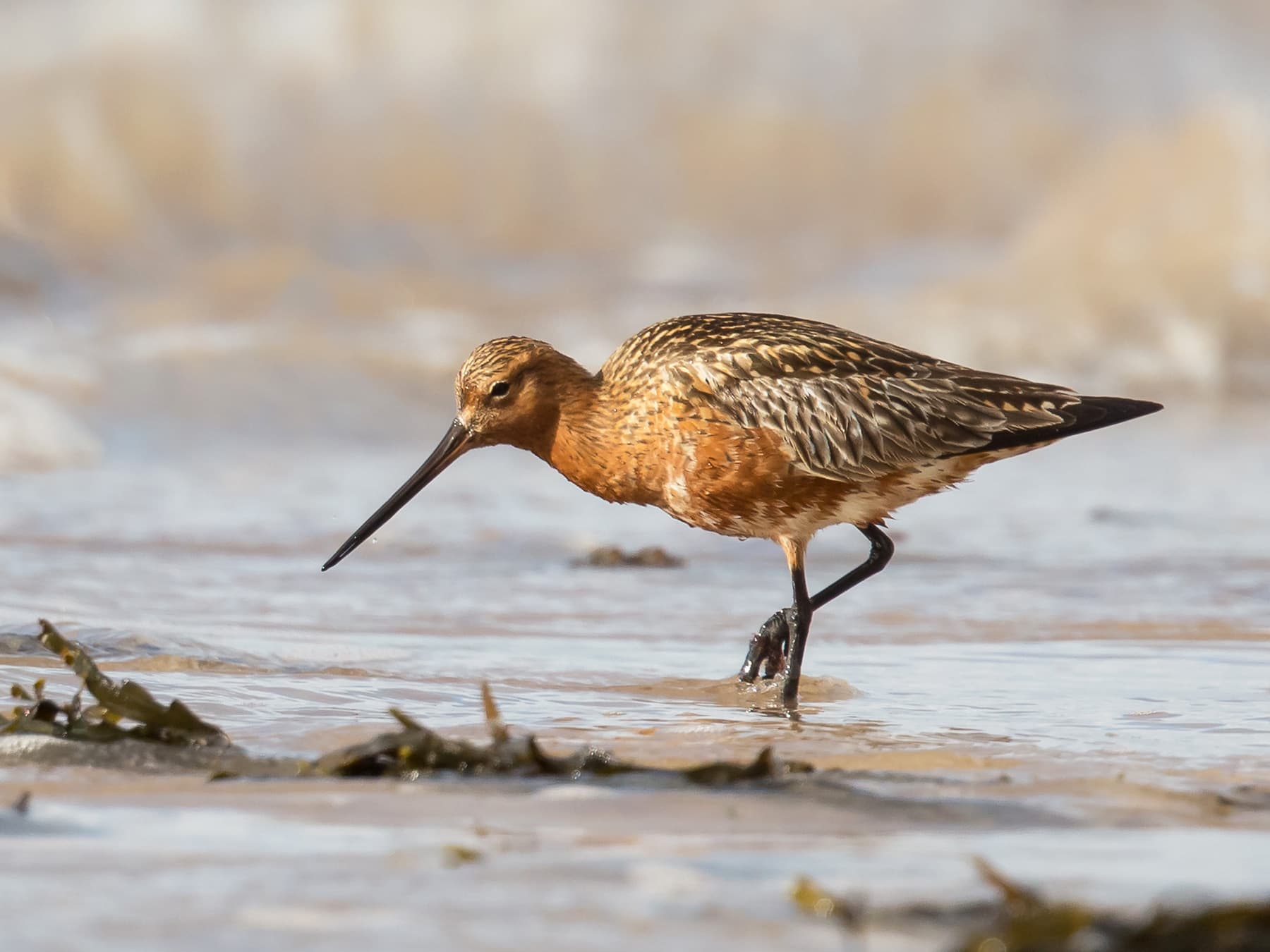
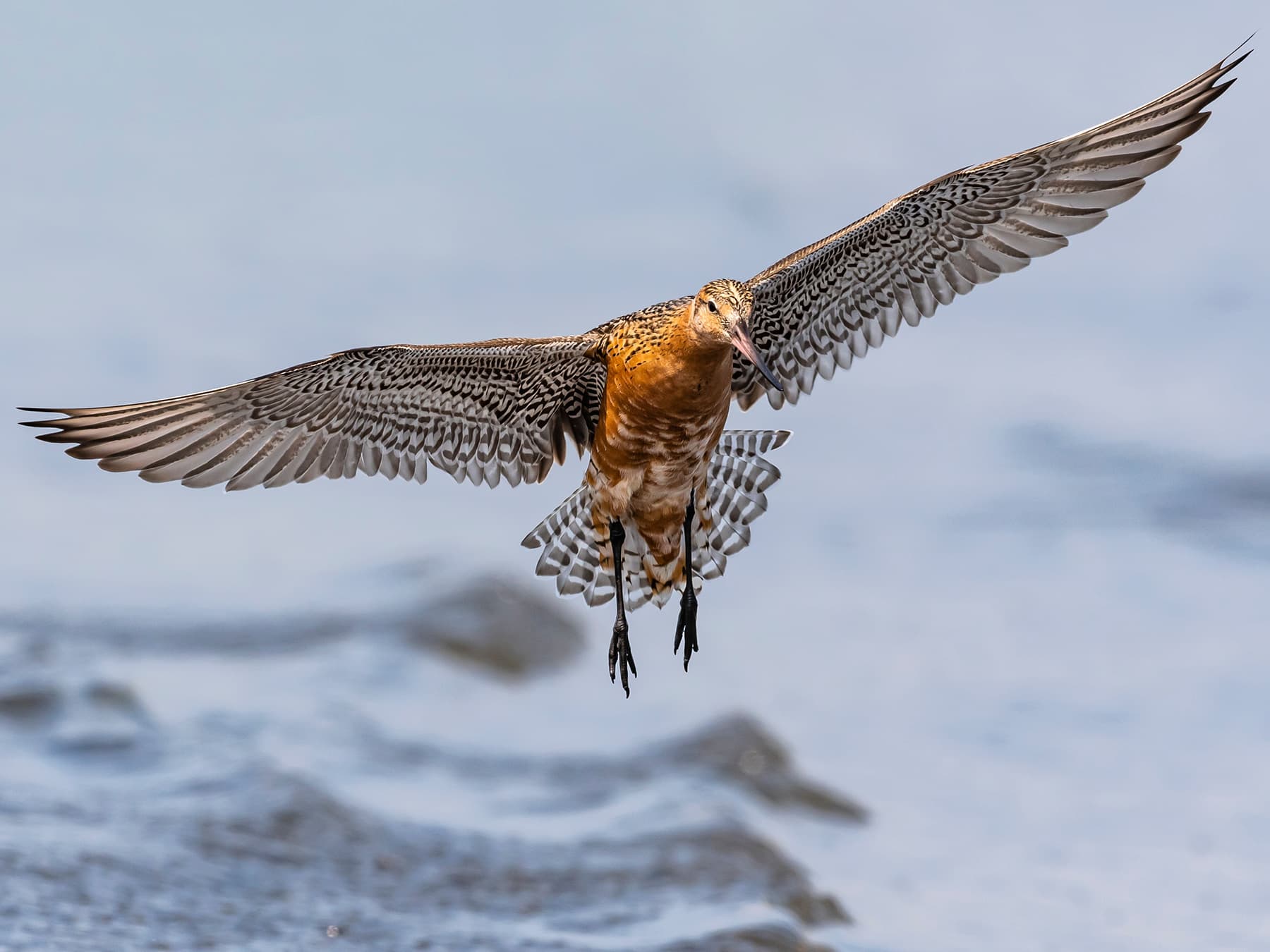
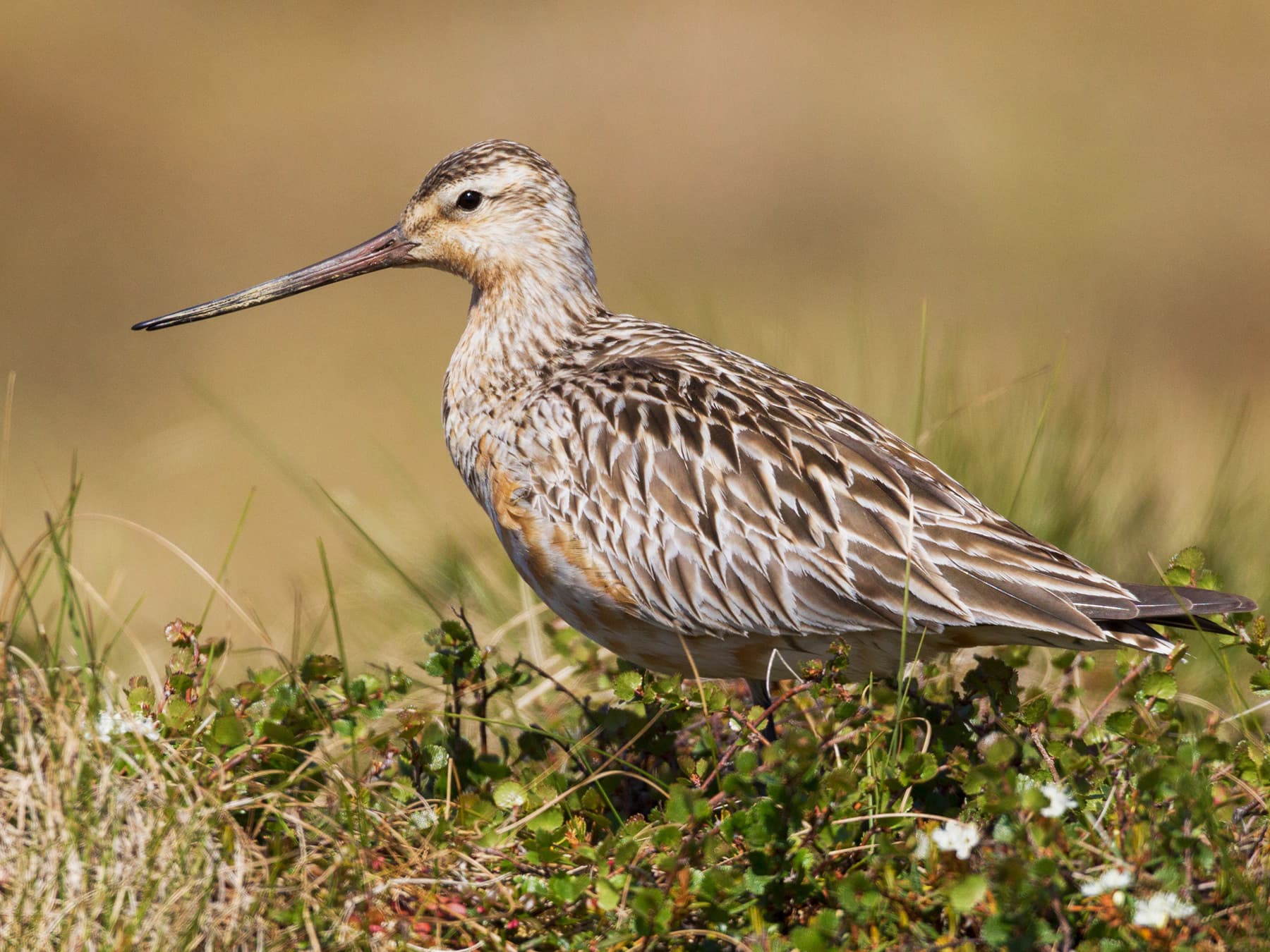
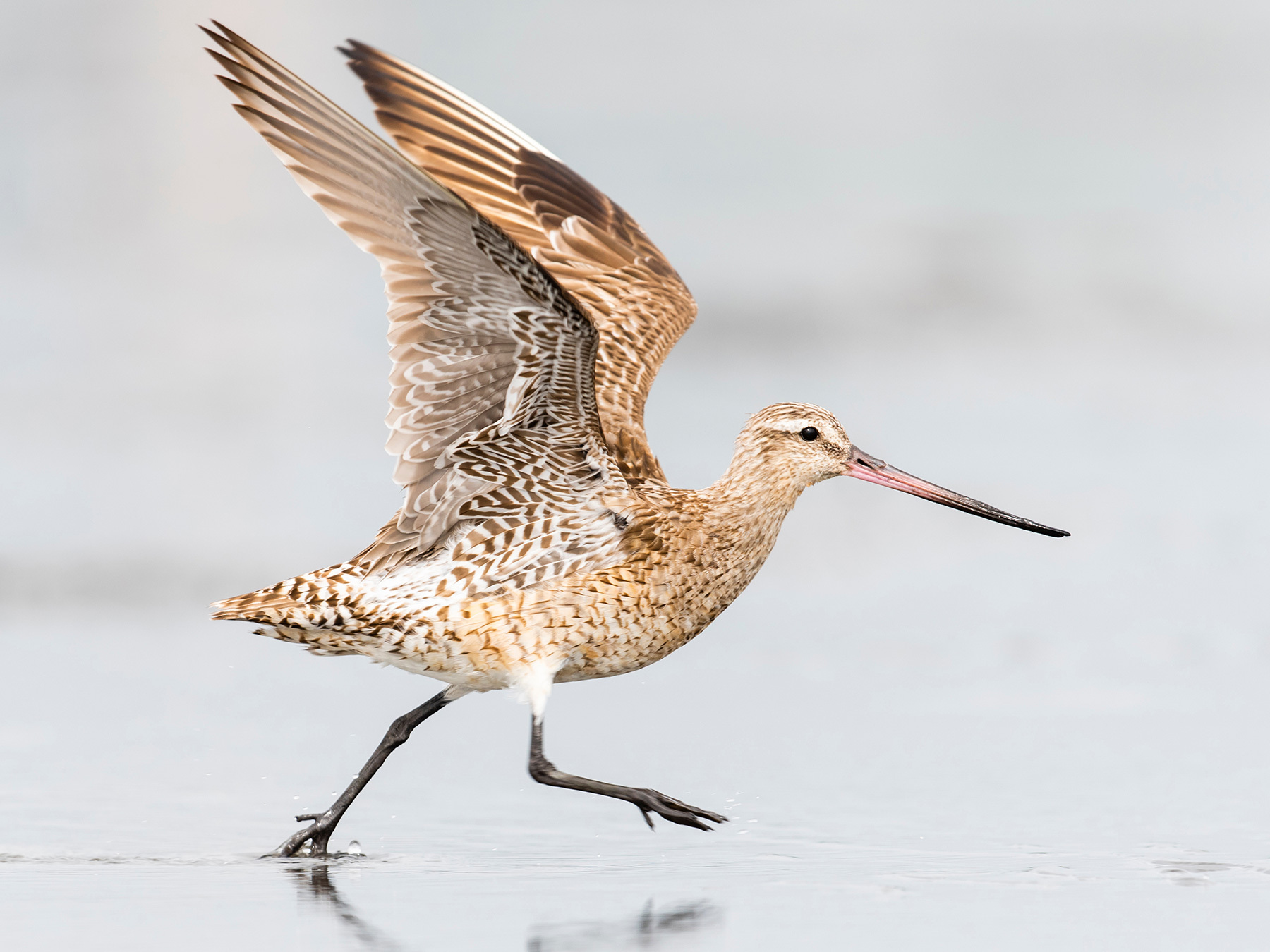
Bar-tailed Godwits are fairly large waders with longish legs and very long, slightly up-curved bills. Finely barred tails and dark wingtips are visible in flight. Underpart colouration varies between seasons, but adults have streaked and spotted backs and crowns with fine markings on the breast.
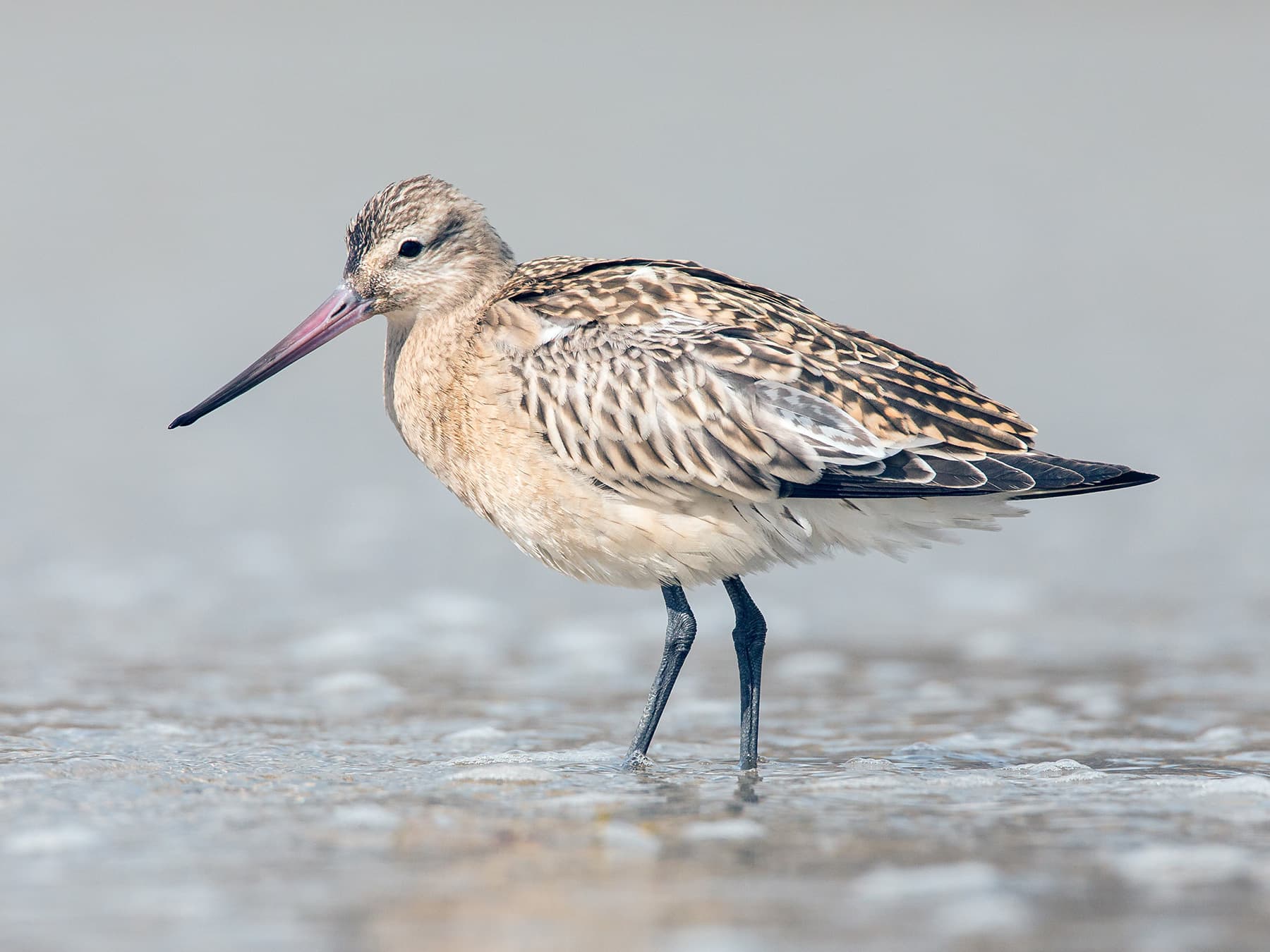
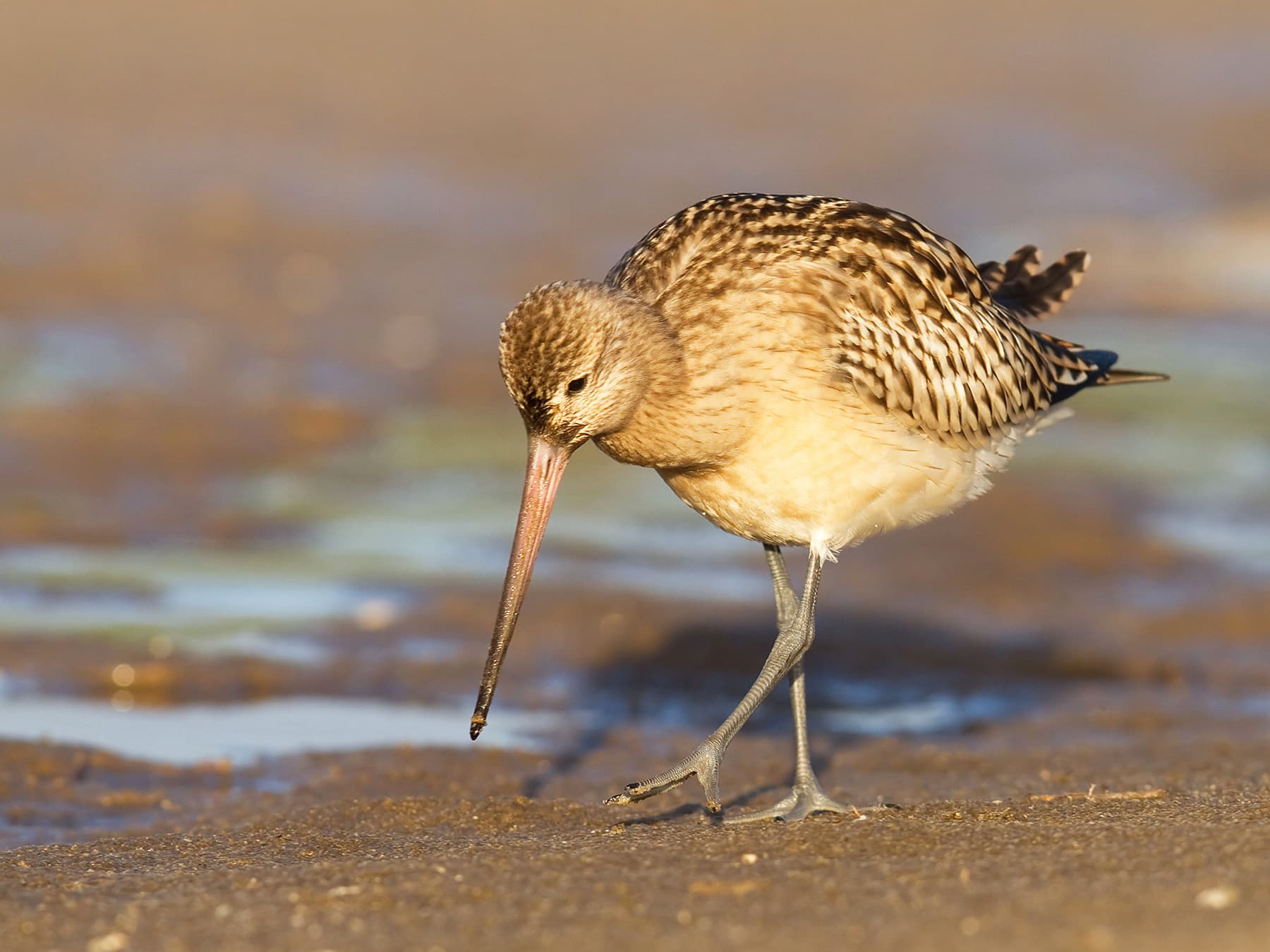
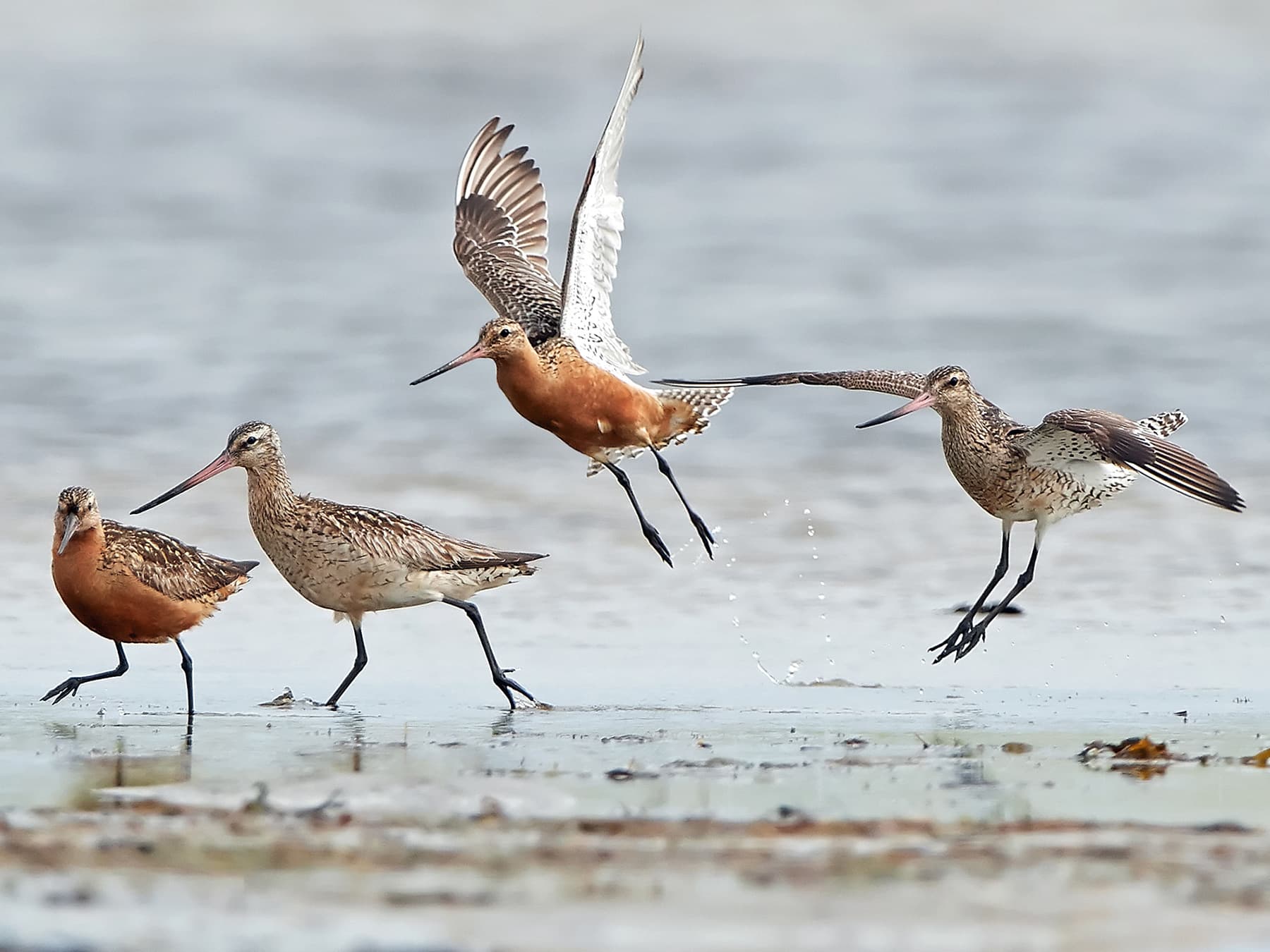
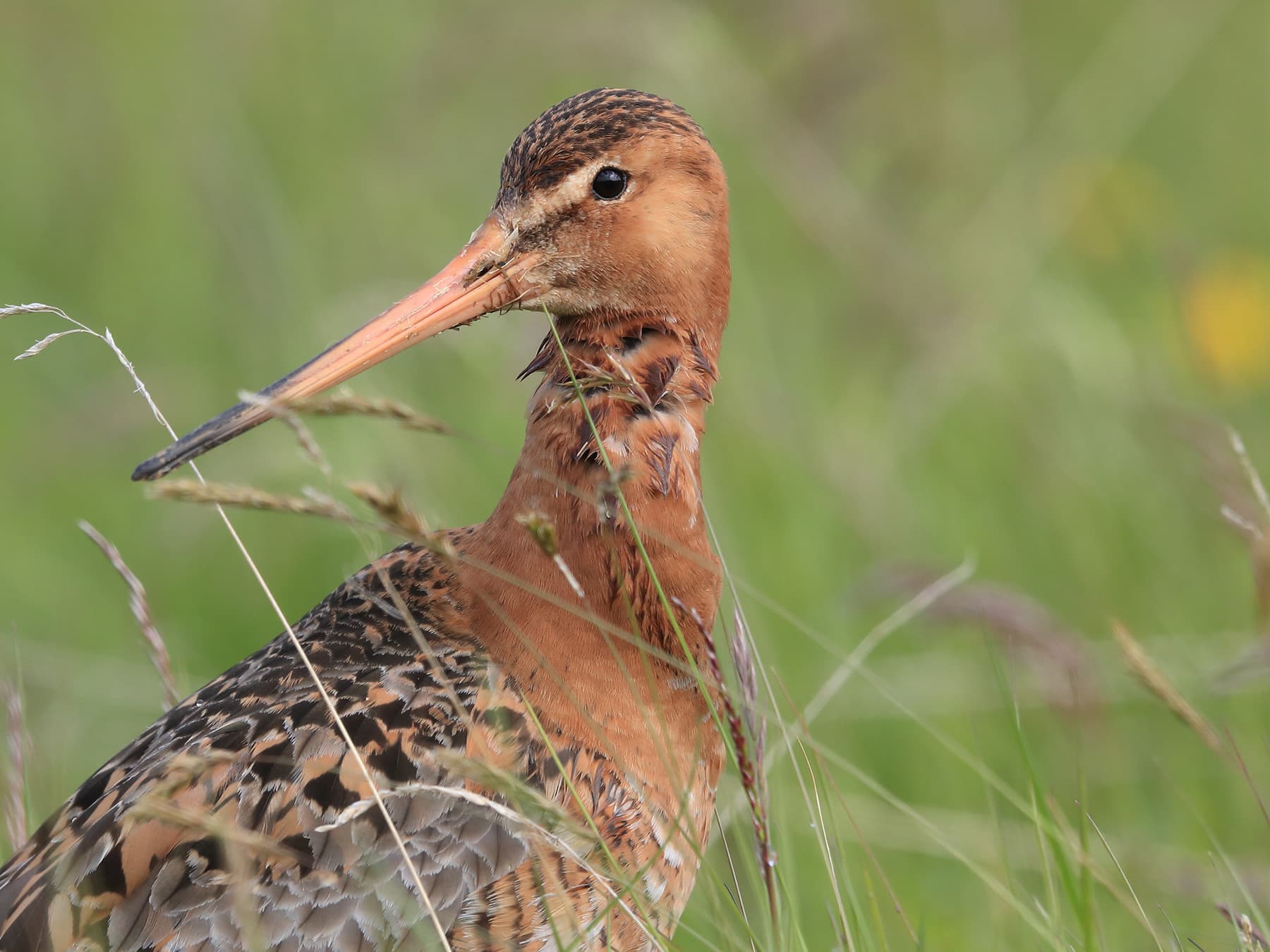
In the non-breeding season, adults have pale, whitish underparts, a pale eyebrow stripe with a darker stripe through each eye, and their bill is pinkish at the base with a dark tip. Males develop coppery orange plumage on the belly, chest, neck, and face during the breeding season. They also develop dark wing patches that are visible in flight.
Females are larger and have longer bills but are otherwise difficult to distinguish from males in the non-breeding season. Females are paler than males in breeding plumage. They may have warm cinnamon underparts but are not brick-red like their male counterparts.
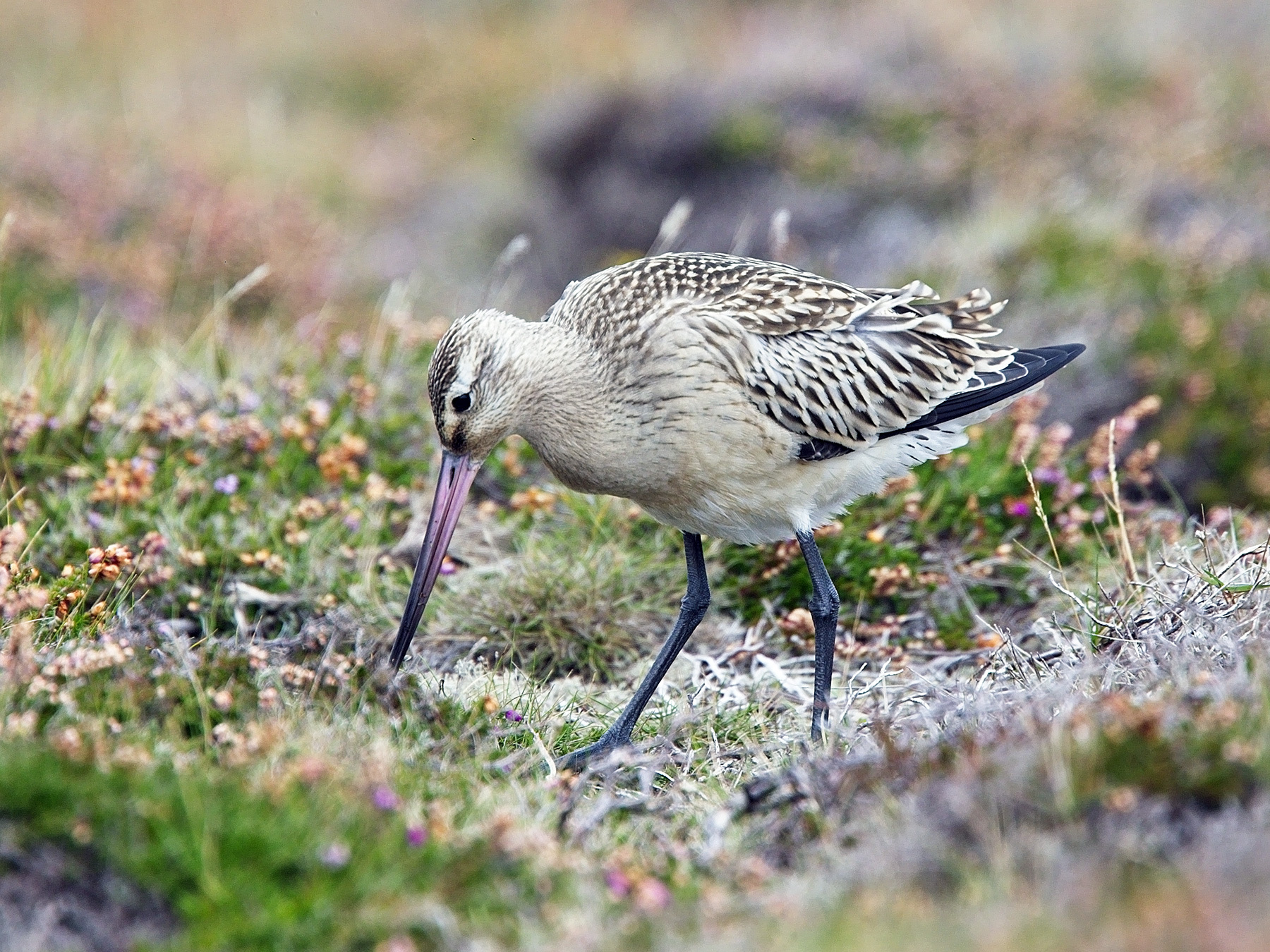
Juveniles Bar-tailed Godwits are similar to non-breeding adults but have a warm, buff colour on the neck and breast. Their upper parts also show more contrast, at least until early winter.
How big are Bar-tailed Godwits?
The Bar-tailed Godwit is a relatively large wader, smaller than a Curlew but bigger than a Ruddy Turnstone. Females are generally larger than males.
Length
Bar-tailed Godwits have a body length of 33 to 42 centimetres or 14½ to 15½ inches. Their bills measure an impressive 8 to 12 centimetres (3 - 5 inches).
Weight
These birds weigh anything from 200 to 720 grams or 7 to 25 ounces. They pack on impressive amounts of fat to fuel their long migrations, even partially absorbing their own digestive organs to make space and limit weight for the journey.
Wingspan
They have a 61 to 81 centimetre or 24 to 32-inch wingspan.
Its size
Adults- Length
- 37–41 cm
- Wingspan
- 70–80 cm
- Weight
- 190–400 g
Its song and calls
What sound does a Bar-tailed Godwit make?
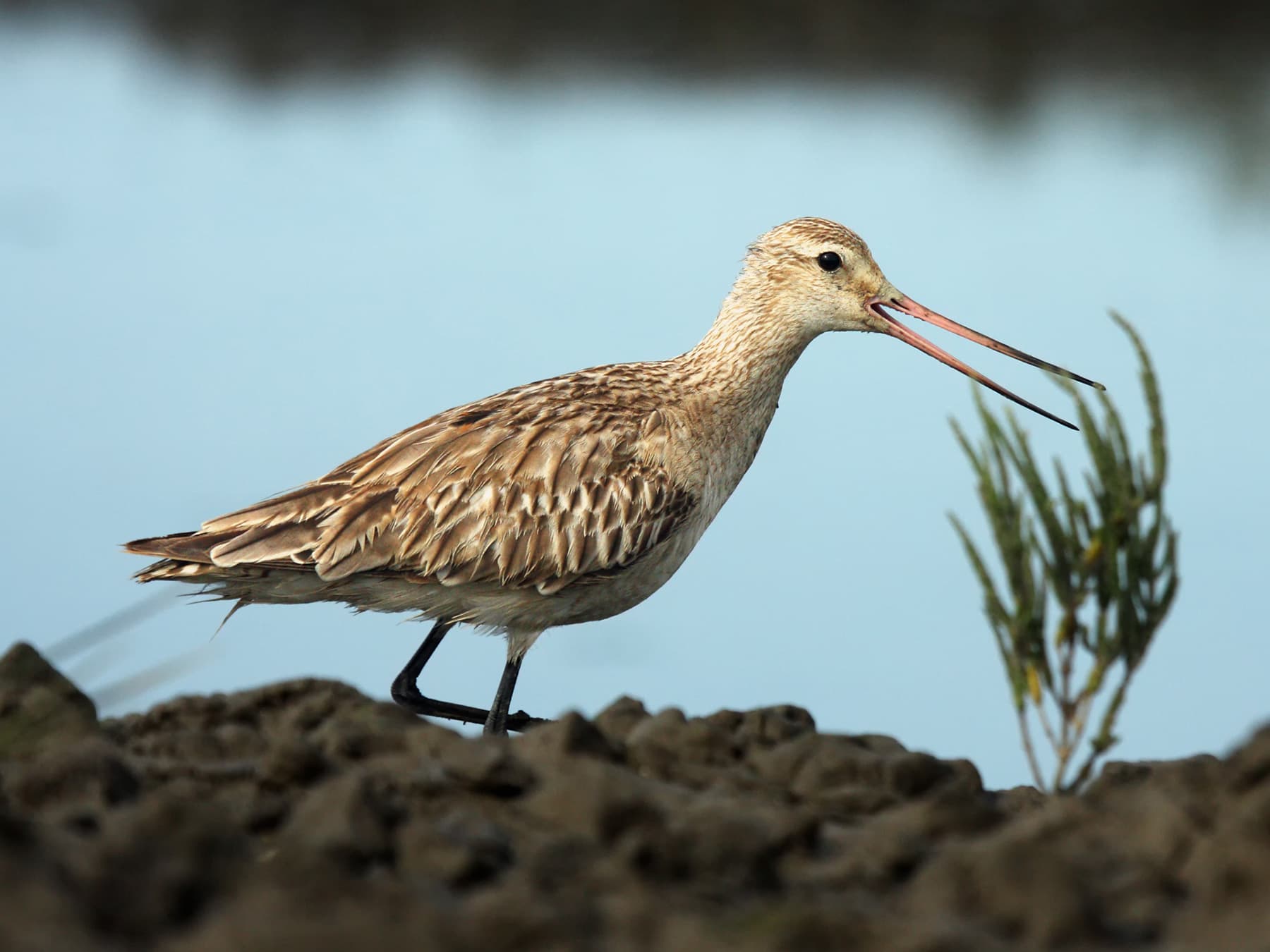
Bar-tailed Godwits produce a variety of calls, particularly in the nesting season. A ‘Kiruk-kiruk’ flight call may be heard on their non-breeding grounds.
- Song and calls0:00 / 0:21
Recorded in Normandy, France · April 2026
- Flight call0:00 / 0:14
Recorded in Normandie, France · May 2022
When and where to see it
OctoberIn season
Most recorded in October
- 1. East Lothian1.3%
- 2. Moray1.2%
- 3. Falkirk1.1%
- 4. Sligo1.0%
- 5. Northumberland0.87%
Each dot is a county, state or province: the bigger and darker, the larger the bird’s share of that place’s bird records that month. Grey dots: no regular records. The ringed point is the centre of the bird’s records this month; the arrow shows how it moved since last month, and the dashed loop its path through the year. “Arrivals” colours places where it becomes regular this month (orange) or is in its last regular month (grey). GBIF eBird Observation Dataset, 2019–2024. Map data: Natural Earth, US Census Bureau; place centres © OpenStreetMap contributors.
In your area
See when the Bar-tailed Godwit is recorded in your county, state or province.
How often the Bar-tailed Godwit turns up in the UK, Ireland, the United States and Canada through the year, from birdwatchers' records.
United Kingdom
Resident · all year · most records in September
Ireland
Winter visitor · all year · most records in September
United States
Summer visitor · regularly May–Jan · most records in June
Canada
Passage migrant · regularly May–Oct · most records in September
Show as a table
| Month | United Kingdom | Ireland | United States | Canada |
|---|---|---|---|---|
| January | 0.12% (regular) | 0.46% (regular) | <0.001% (regular) | – |
| February | 0.098% (regular) | 0.51% (regular) | <0.001% | – |
| March | 0.067% (regular) | 0.35% (regular) | <0.001% | – |
| April | 0.12% (regular) | 0.18% (regular) | <0.001% | – |
| May | 0.081% (regular) | 0.12% (regular) | 0.002% (regular) | <0.001% (regular) |
| June | 0.048% (regular) | 0.057% (regular) | 0.005% (regular) | <0.001% (regular) |
| July | 0.090% (regular) | 0.13% (regular) | 0.001% (regular) | <0.001% |
| August | 0.15% (regular) | 0.37% (regular) | 0.002% (regular) | <0.001% (regular) |
| September | 0.24% (regular) | 0.65% (regular) | 0.002% (regular) | 0.002% (regular) |
| October | 0.21% (regular) | 0.50% (regular) | 0.002% (regular) | 0.001% (regular) |
| November | 0.13% (regular) | 0.46% (regular) | 0.001% (regular) | – |
| December | 0.100% (regular) | 0.51% (regular) | <0.001% (regular) | – |
Recorded regularly in
Worldwide: recorded regularly in 102 countries
Countries where it was recorded in at least 3 of the 6 years 2019–2024. Linked countries have their own bird list.
Europe (36)
Africa (21)
- Cape Verde
- Djibouti
- Egypt
- Gabon
- Gambia
- Ghana
- Guinea-Bissau
- Kenya
- Madagascar
- Mauritania
- Mayotte
- Morocco
- Mozambique
- Namibia
- Senegal
- Seychelles
- South Africa
- Tanzania
- Tunisia
- Western Sahara
- Zambia
Asia (33)
- Azerbaijan
- Bahrain
- Bangladesh
- Cambodia
- China
- Georgia
- Hong Kong SAR China
- India
- Indonesia
- Iran
- Israel
- Japan
- Kazakhstan
- Kuwait
- Macao SAR China
- Malaysia
- Mongolia
- Myanmar (Burma)
- Oman
- Pakistan
- Philippines
- Qatar
- Saudi Arabia
- Singapore
- South Korea
- Sri Lanka
- Taiwan
- Thailand
- Timor-Leste
- Turkey
- United Arab Emirates
- Vietnam
- Yemen
North America (2)
Oceania (10)
- Australia
- Cocos (Keeling) Islands
- Fiji
- Marshall Islands
- New Caledonia
- New Zealand
- Norfolk Island
- Palau
- US Outlying Islands
- Vanuatu
Data: EOD – eBird Observation Dataset (Cornell Lab of Ornithology), accessed via GBIF.org, CC BY 4.0. Records from 2019–2024, aggregated and filtered by Birdfact. How these lists are made
What is the habitat of a Bar-tailed Godwit?
Bar-tailed Godwits inhabit Arctic and sub-arctic tundra while breeding. They overwinter along sandy and muddy areas, particularly in the intertidal zone of beaches, estuaries, mangroves, and inlets.
What is the range of a Bar-tailed Godwit?
Bar-tailed Godwits breed in the tundras of Scandinavia in northern Europe, Northern Asia, and Alaska. They spend the non-breeding season along the coastline of Europe, Africa, Asia, and Australia but do not overwinter in North or South America.
Where do Bar-tailed Godwits live?
Bar-tailed Godwits spend most of their time on the ground. They may stand on rocks or posts, although they rarely perch in trees. These long-distance migrants spend their time foraging and roosting along sandy or muddy coastlines when not nesting in the far north.
How rare are Bar-tailed Godwits?
Bar-tailed Godwits can be common in suitable habitats, with an estimated population of 1.1 to 1.15 million individuals worldwide. About 30,000 to 54,000 individuals visit the UK coastline each year, and nearly 300,000 visit New Zealand and Australia.
Where can you see Bar-tailed Godwits in North America?
The only places to reliably spot Bar-tailed Godwits in North America are near Alaska’s western and northern coasts.
Where can you see Bar-tailed Godwits in Australia?
Bar-tailed Godwits can be seen in suitable habitats around much of the Australian coastline. They are most common in the north and scarce on the southern coast.
Where can you see Bar-tailed Godwits in the UK?
Bar-tailed Godwits can be seen in suitable habitats virtually all around the United Kingdom coastline. They are most numerous on larger estuaries such as the Thames, the Solway Firth, and the Wash.
Migration
Do Bar-tailed Godwits migrate?
Bar-tailed Godwits are highly migratory. Some young birds may remain on their overwintering grounds throughout the year, although all breeding adults migrate north to breed in the Arctic and subarctic tundra. They hold the record for the longest non-stop flight distance of any bird.
Why do Bar-tailed Godwits migrate?
Bar-tailed Godwits avoid unfavourable winter weather by migrating north and south. The Arctic Tundra provides ideal nesting conditions in the summer, but they must migrate because this extreme environment would be impossible to survive in the depths of winter.
Are Bar-tailed Godwits native to North America?
Bar-tailed Godwits are native summer breeders in Alaska. They are present from May to June but migrate south to avoid the harsh northern winter.
Are Bar-tailed Godwits native to Australia?
Bar-tailed Godwits are common non-breeding summer visitors to Australia. They do not breed there, although some young birds remain throughout the year.
Are Bar-tailed Godwits native to the UK?
Bar-tailed Godwits are native to the United Kingdom and can be seen in most months, although they are scarce from May to July. These winter visitors and passage migrants do not breed on the British Isles.
Tips for seeing it
- Look for Bar-tailed Godwits on coastal mudflats and estuaries during migration seasons.
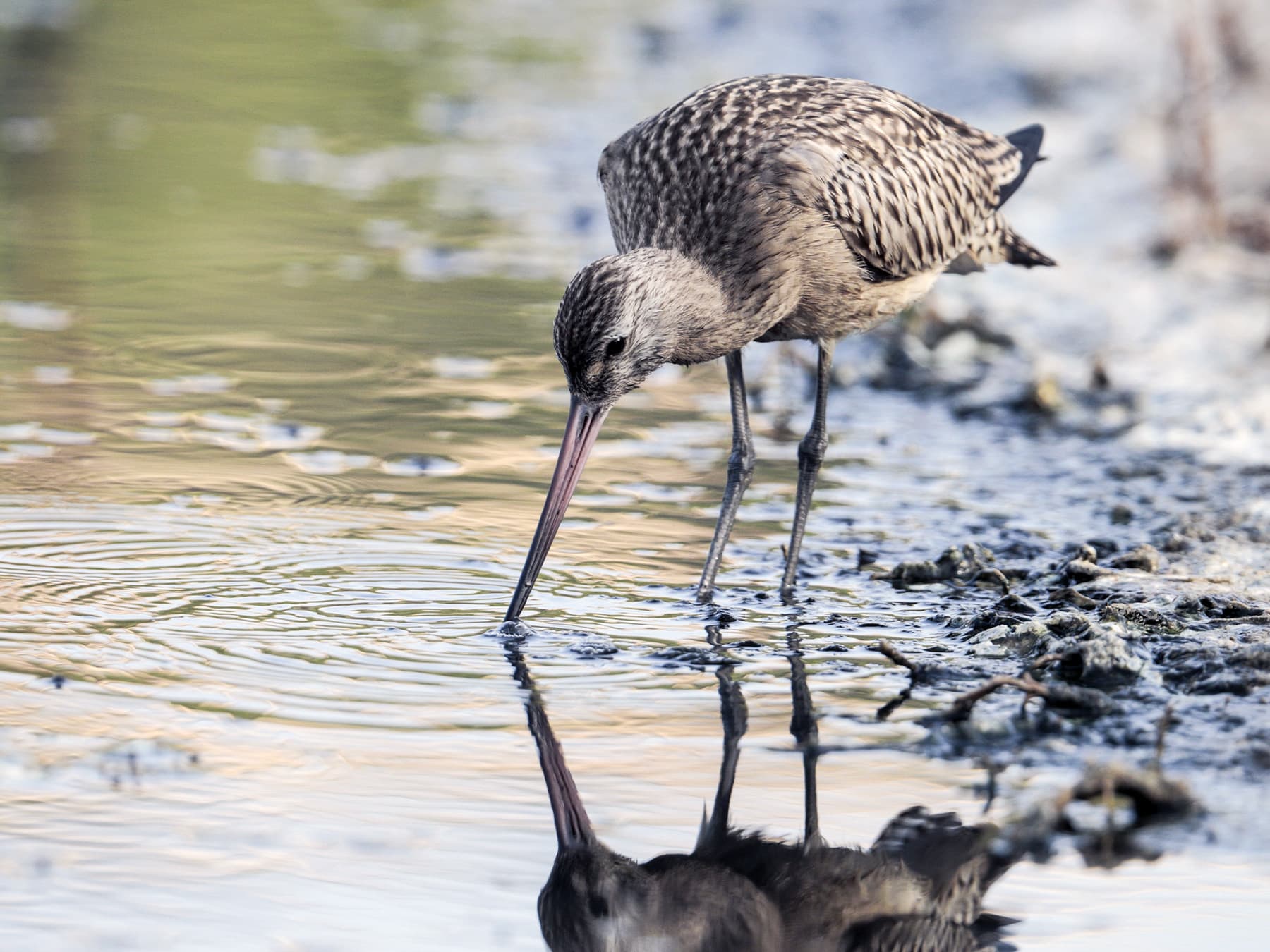
- Observe their distinctive feeding behaviour, probing deeply into the mud with their long bills.
- Listen for their soft, piping calls, especially when in flight.
- In the UK and New Zealand, watch for large flocks during spring and autumn migrations.
What it eats
What do Bar-tailed Godwits eat?
These birds are primarily carnivorous, although they rely on berries at some times of the year. Their diet varies significantly between their breeding grounds and overwintering areas.
In the northern tundras, Bar-tailed Godwits feed on small berries and insects that they capture on the ground or within vegetation. For the rest of the year, these birds forage for small crustaceans and worms that live within soft, sandy and muddy substrates along the shore.
What do Bar-tailed Godwit chicks eat?
Bar-tailed Godwit chicks eat insects. They are well-developed when they hatch and are able to feed themselves within just two days.
Nesting and breeding
Where do Bar-tailed Godwits nest?
Bar-tailed Godwits nest at low to mid-elevations in the Arctic and subarctic tundra of Asia, Scandinavia, and Alaska, usually near the coast but sometimes over 100 kilometres or 60 miles inland. The typical habitat consists of ridges, rolling dwarf shrublands, and dry areas within bogs.
The nest is often well hidden between tussocks and other vegetation. It is a shallow scrape lined with plant materials like leaves, moss, and lichens.
When do Bar-tailed Godwits nest?
Bar-tailed Godwits nest in the late spring and summer. They lay their eggs between the end of May and the second half of July, depending on latitude and location.
What do Bar-tailed Godwit eggs look like?
Bar-tailed Godwit eggs have a greenish, yellowish, or brownish background colour and are usually patterned with numerous darker spots and speckles. A typical clutch consists of four eggs, each measuring approximately 54 millimetres long and 37 millimetres wide.
Do Bar-tailed Godwits mate for life?
Bar-tailed Godwits are monogamous when breeding and form pair bonds that last a single season.
Behaviour
Are Bar-tailed Godwits aggressive?
Bar-tailed Godwits may be aggressive during the breeding season when they frequently dive-bomb other birds, often for no apparent reason. They are more passive on the overwintering grounds, although they may peck at other birds that approach too closely.
Where do Bar-tailed Godwits sleep at night?
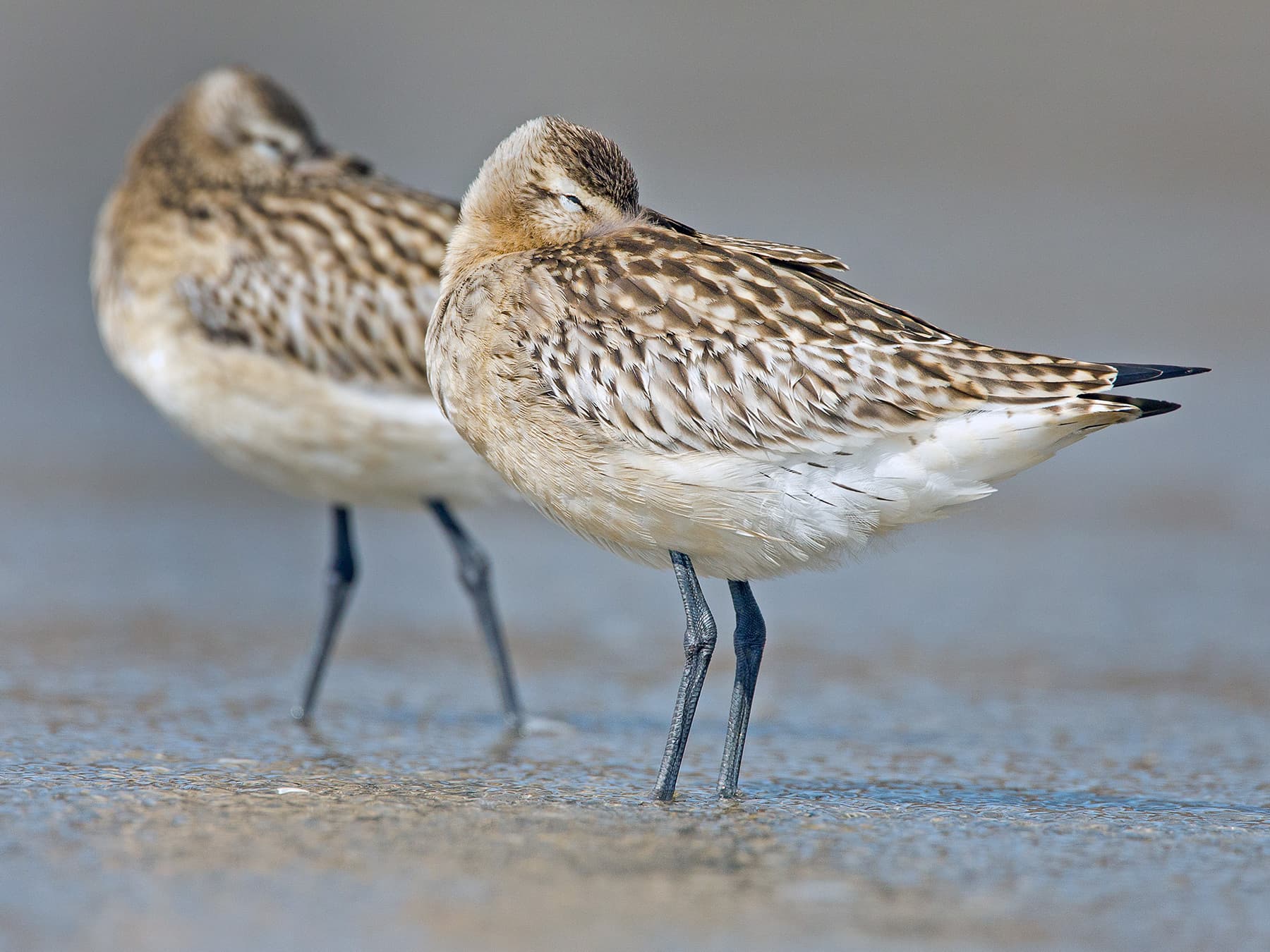
Bar-tailed Godwits sleep on tidal mudflats during the day or night. They roost in large flocks, sometimes numbering in the thousands and stand close together, usually within about three feet of one another.
They often stand in the water while roosting, typically facing the wind. Both sexes roost together, but juveniles often gather in separate areas or on the edge of the flock.
Lifespan and predators
How long do Bar-tailed Godwits live?
Bar-tailed Godwits can live for at least 33 years, although their average life expectancy is just five years or so.
What are the predators of Bar-tailed Godwits?
Bar-tailed Godwit eggs and chicks are vulnerable to arctic foxes, corvids, gulls and jaegers. Adults are rarely predated, although they may be hunted by the following birds of prey:
- Peregrine Falcon
- Gyrfalcon
- Harriers
- Rough-legged Hawk
Are Bar-tailed Godwits protected?
Bar-tailed Godwits in the United Kingdom are protected by the Wildlife and Countryside Act 1981. They are protected by the Migratory Bird Treaty Act in North America and by the Environment Protection and Biodiversity Conservation Act in Australia.
Are Bar-tailed Godwits endangered?
Bar-tailed Godwits are in decline and globally classified as ‘Near Threatened’, which is one category away from being officially threatened.
Conservation
While currently listed as Near Threatened Globally, Bar-tailed Godwits face threats from habitat loss due to coastal development and climate change.
Conservation efforts focus on protecting key stopover sites along their migration routes and preserving breeding grounds in the Arctic. In Europe, Bar-tailed Godwits are listed as Least Concern.
Similar birds
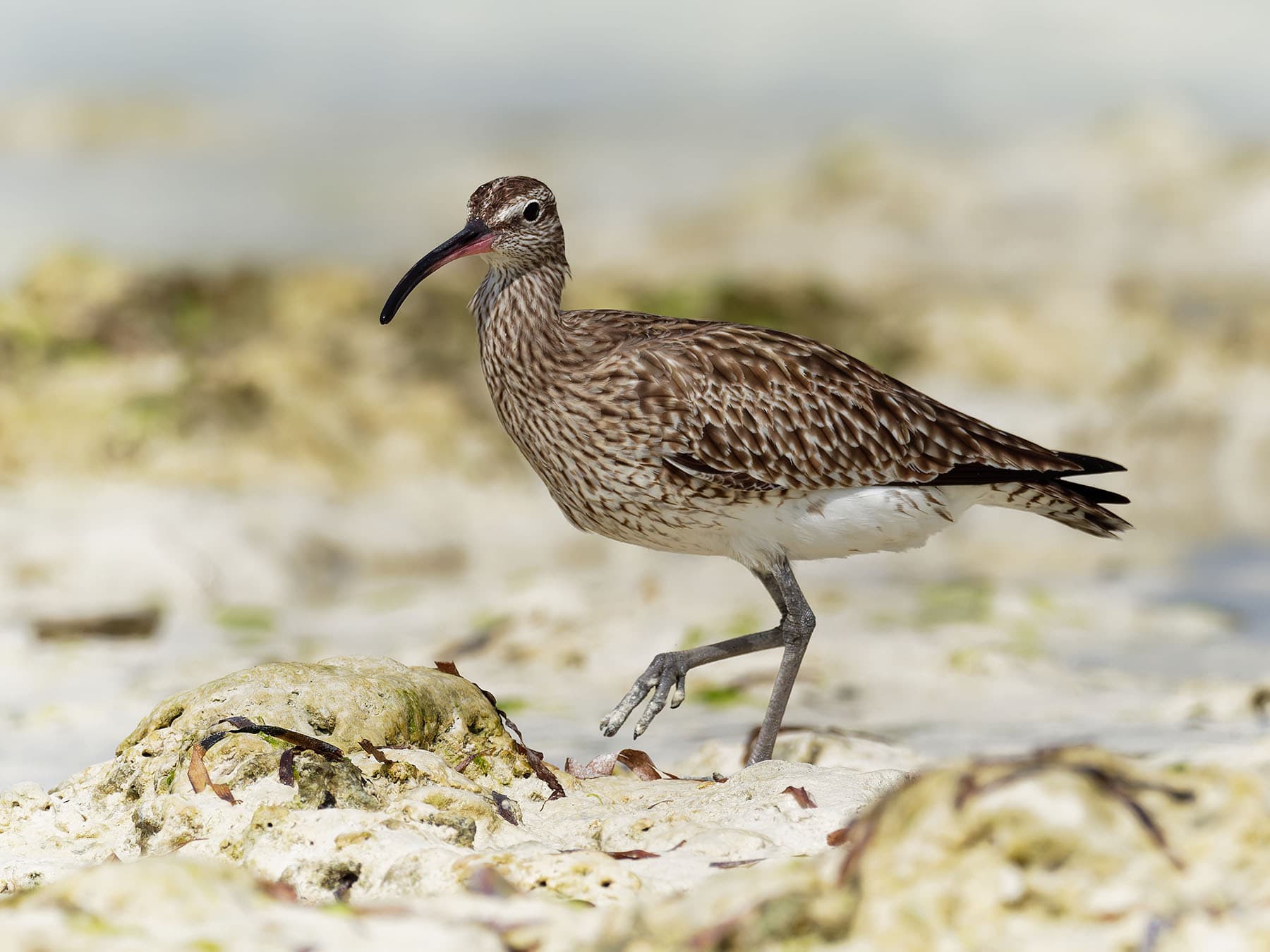
Often mistaken for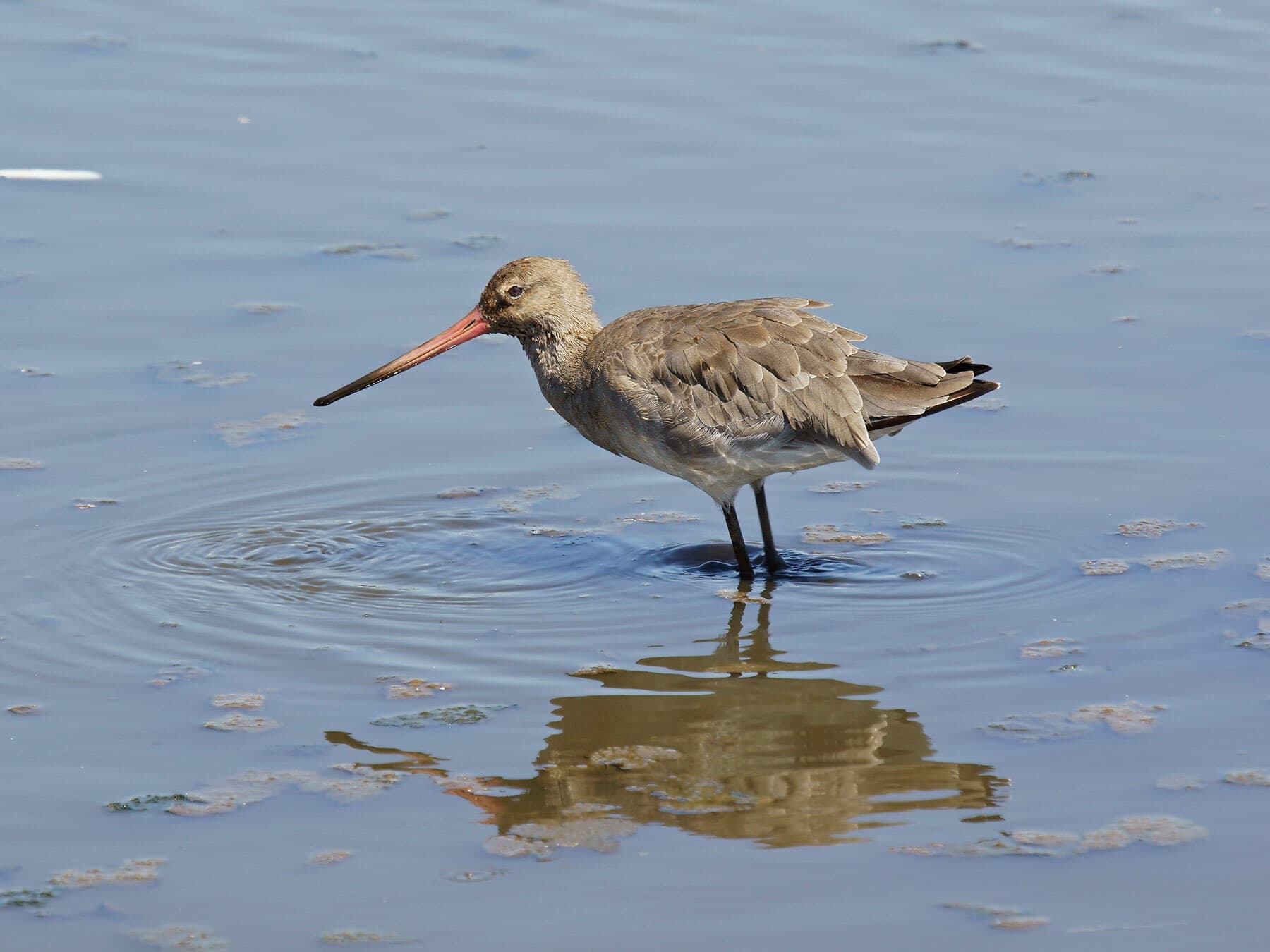
More photos
3 photos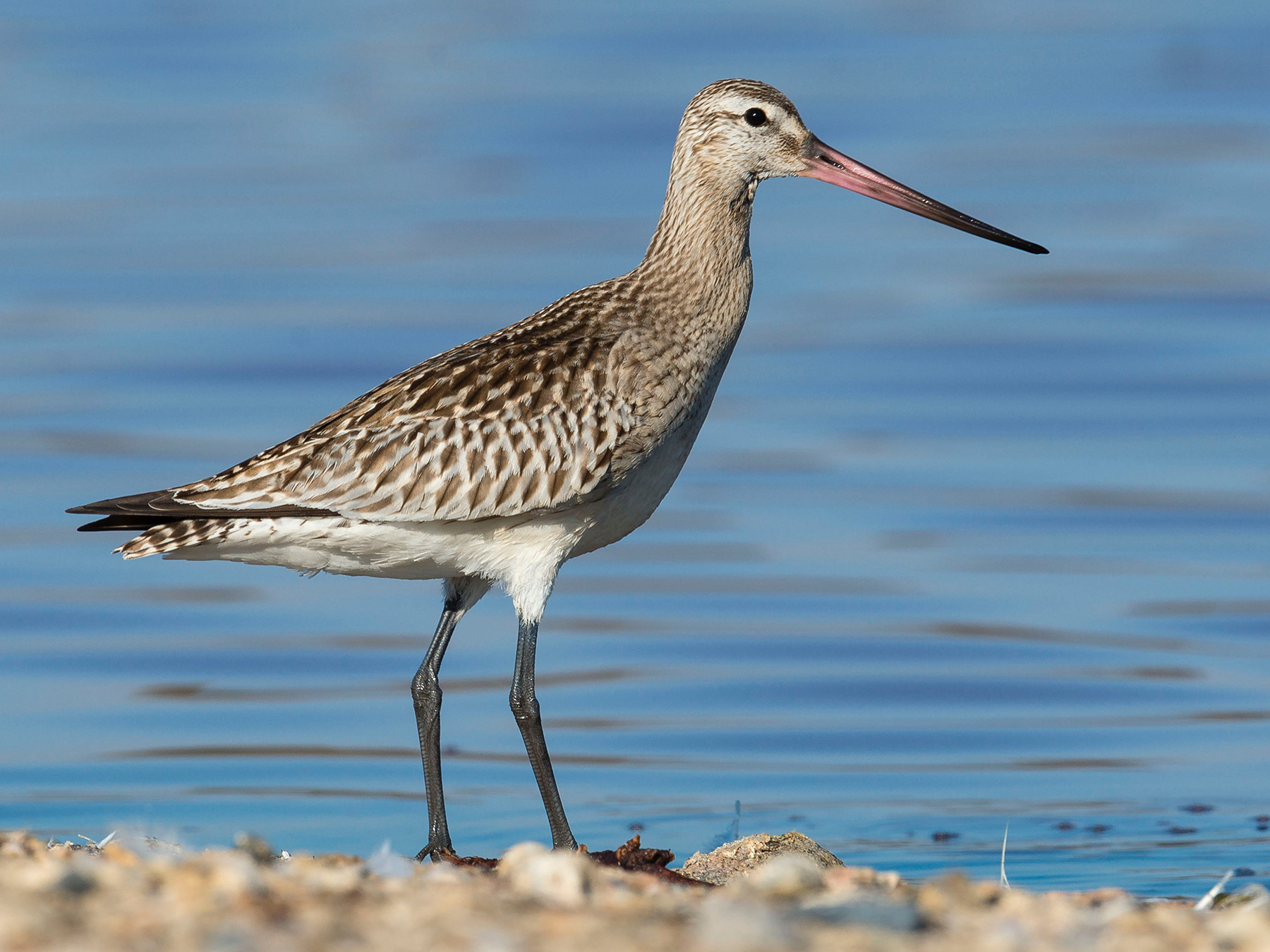
Quick facts
- Length
- 37–41 cm
- Wingspan
- 70–80 cm
- Weight
- 190–400 g
- Lifespan
- 5–15 years · oldest recorded 34 years
- Family
- Sandpipers & Snipes
- Migration
- Long-distance Migrant
- Global status (IUCN)
- Near Threatened
- World population
- 1,099,000 - 1,149,000 mature individuals
- Population trend
- Decreasing
- Also called
- Kuaka, Pacific Bar-tailed Godwit
- Scientific name
- Limosa lapponica
Questions
3How far can a Bar-tailed Godwit fly?
Bar-tailed Godwits can fly an astonishing 11,000 kilometres (7,000 miles) non-stop between the tundra of Western Alaska and the shores of New Zealand, the longest single flight known. Those birds take a longer return route via China to complete a staggering annual migration of approximately 29,000 kilometres or 18,000 miles.
How fast do Bar-tailed Godwits fly?
Bar-tailed Godwits are fast-flying birds that can travel at 70 to 80 kilometres (43 - 50 miles) per hour, although favourable winds allow them to travel much faster, and headwinds make the going much slower. Even at these speeds, their longest migrations may require more than eight days of non-stop flight!
Do Bar-tailed Godwits sleep while flying?
It is unknown whether Bar-tailed Godwits sleep during migration because they are so difficult to monitor. However, other long-flying species like Frigatebirds have the ability to put one-half of their brains to sleep during flight (a process known as unihemispheric sleep) and the Godwits may be able to do the same.
Sources
4- 1BirdLife International. 2017. Limosa lapponica (amended version of 2016 assessment). The IUCN Red List of Threatened Species 2017: e.T22693158A111221714. Source (opens in a new tab)
- 2BirdLife International. 2017. Limosa lapponica (amended version of 2016 assessment). The IUCN Red List of Threatened Species 2017: e.T22693158A111221714. Source (opens in a new tab)
- 3Wetlands International (2017)
- 4Robinson and Clark, The Online Ringing Report: Bird ringing in Britain & Ireland in 2011 (2012) Source (opens in a new tab)

Checked by
Nathan Cope, founder and editor
Nathan founded Birdfact and leads its writers and contributors in the UK, the US and Canada. He has watched and studied birds for more than ten years, and checks every article and species guide before it’s published.