


Black-tailed Godwit
Continental Black-tailed Godwit · Limosa limosa
By the Birdfact teamChecked by Nathan Cope
On this page14 sections
How to recognise it
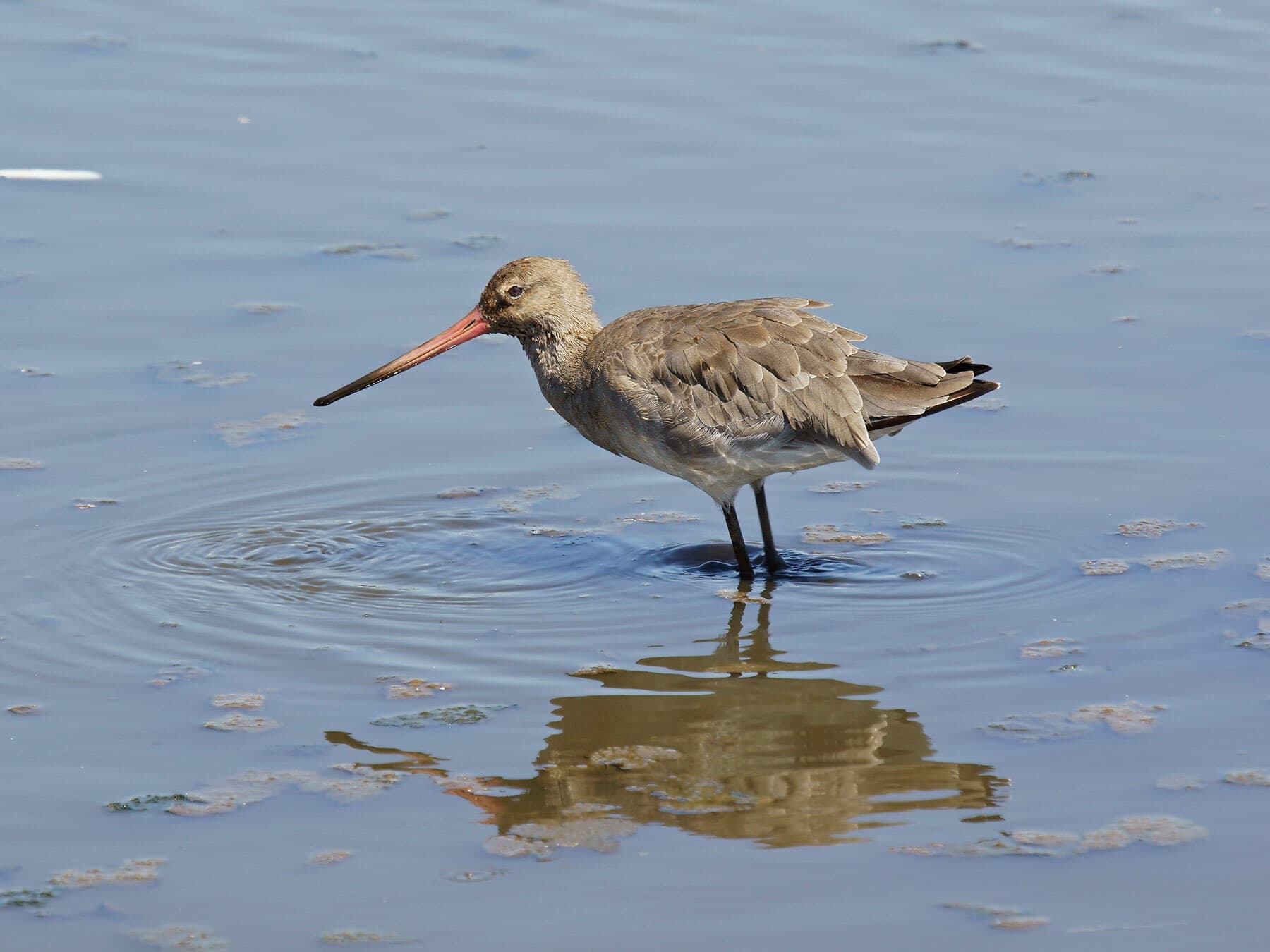
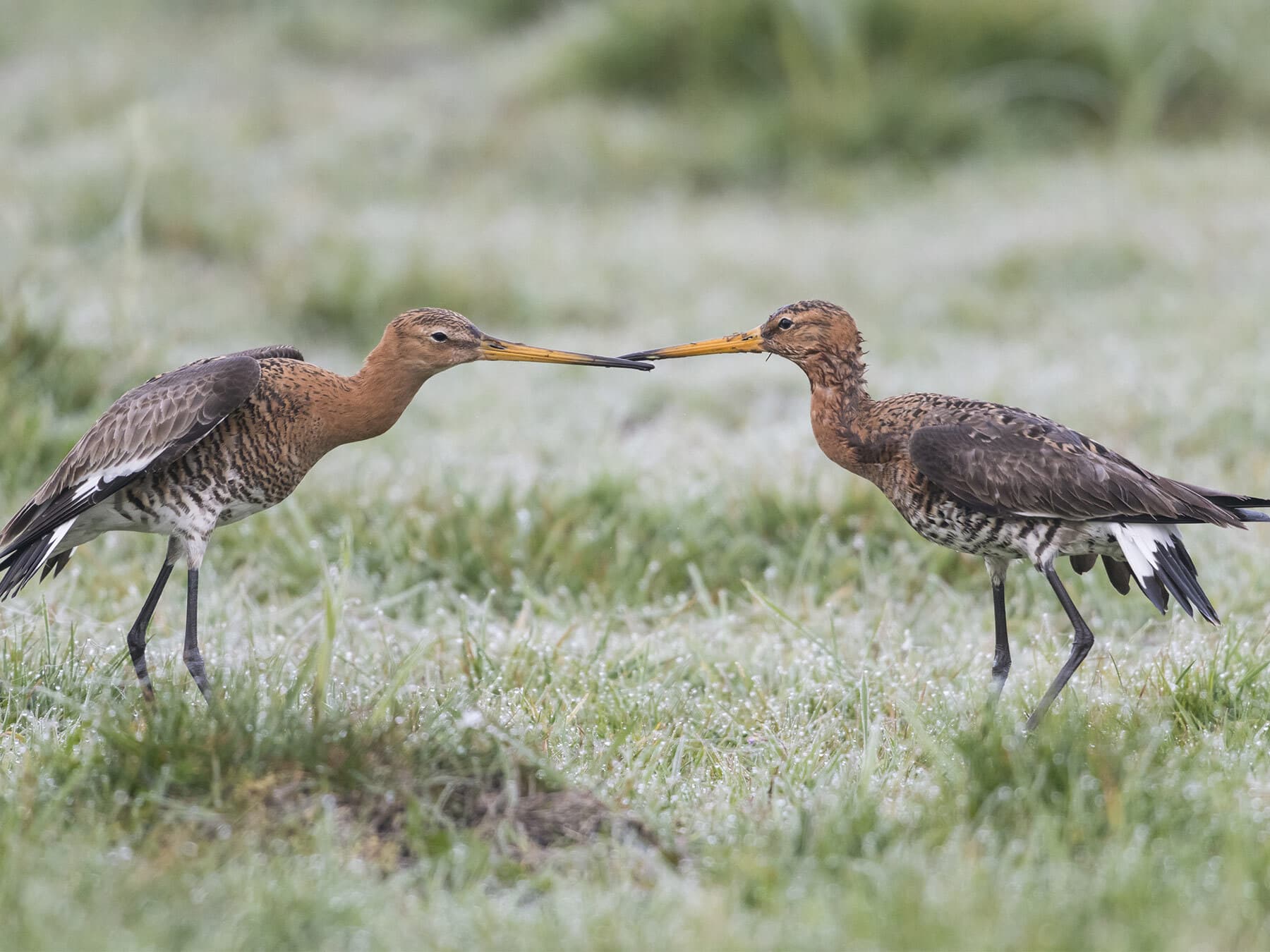
The Black-tailed Godwit is a large wader with long legs and a distinctively long, straight bill. In breeding plumage, it displays rich chestnut-red underparts, contrasting with a brown-streaked head and neck. Its back is mottled brown, and its long black tail has a striking white base.
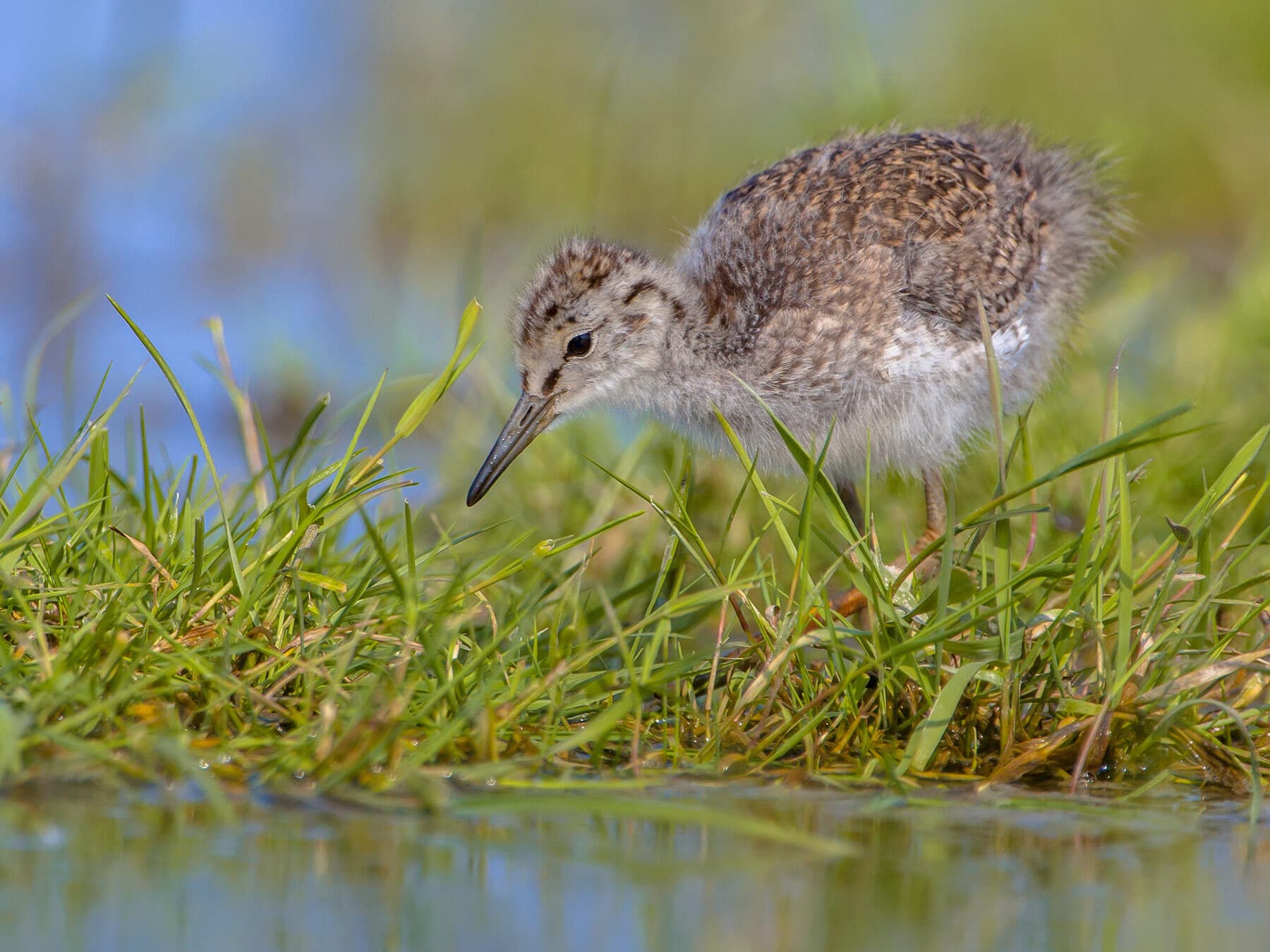
Females are typically larger and duller than males. In winter, both sexes adopt a more subdued grey-brown plumage. Juveniles resemble non-breeding adults but have a buff tinge to their plumage.
Its size
Adults- Length
- 40–44 cm
- Wingspan
- 70–82 cm
- Weight
- 280–500 g
Its song and calls
Although out of the breeding season generally quiet, in flight it has a call similar to ‘viu–viu– viu’, or a noisier repetitive three syllable, ‘du-wid-oo, du-wid-oo, du-wid-oo’.
- Song0:00 / 0:26
Recorded in Kalmar County, Sweden · May 2024
- Call0:00 / 0:09
Recorded in Normandie, France · April 2022
When and where to see it
OctoberLeaving
Most recorded in October
- 1. Louth2.2%
- 2. Belfast1.6%
- 3. Stockton-on-Tees1.5%
- 4. Carmarthenshire1.4%
- 5. Falkirk1.3%
Each dot is a county, state or province: the bigger and darker, the larger the bird’s share of that place’s bird records that month. Grey dots: no regular records. The ringed point is the centre of the bird’s records this month; the arrow shows how it moved since last month, and the dashed loop its path through the year. “Arrivals” colours places where it becomes regular this month (orange) or is in its last regular month (grey). GBIF eBird Observation Dataset, 2019–2024. Map data: Natural Earth, US Census Bureau; place centres © OpenStreetMap contributors.
In your area
See when the Black-tailed Godwit is recorded in your county, state or province.
How often the Black-tailed Godwit turns up in the UK, Ireland and Canada through the year, from birdwatchers' records.
United Kingdom
Resident · all year · most records in August
Ireland
Resident · all year · most records in August
Canada
Passage migrant · regularly Apr–May · most records in April
Show as a table
| Month | United Kingdom | Ireland | Canada |
|---|---|---|---|
| January | 0.24% (regular) | 0.77% (regular) | – |
| February | 0.23% (regular) | 0.72% (regular) | – |
| March | 0.24% (regular) | 0.67% (regular) | <0.001% |
| April | 0.26% (regular) | 0.53% (regular) | 0.001% (regular) |
| May | 0.18% (regular) | 0.31% (regular) | <0.001% (regular) |
| June | 0.18% (regular) | 0.32% (regular) | <0.001% |
| July | 0.45% (regular) | 0.61% (regular) | – |
| August | 0.55% (regular) | 0.93% (regular) | <0.001% |
| September | 0.51% (regular) | 0.93% (regular) | – |
| October | 0.36% (regular) | 0.77% (regular) | – |
| November | 0.28% (regular) | 0.79% (regular) | – |
| December | 0.24% (regular) | 0.80% (regular) | <0.001% |
Recorded regularly in
Worldwide: recorded regularly in 96 countries
Countries where it was recorded in at least 3 of the 6 years 2019–2024. Linked countries have their own bird list.
Europe (38)
Africa (16)
- Cape Verde
- Egypt
- Ethiopia
- Gambia
- Ghana
- Guinea
- Guinea-Bissau
- Kenya
- Mauritania
- Morocco
- Senegal
- Tanzania
- Tunisia
- Uganda
- Western Sahara
- Zambia
Asia (38)
- Armenia
- Azerbaijan
- Bahrain
- Bangladesh
- Cambodia
- China
- Cyprus
- Georgia
- Hong Kong SAR China
- India
- Indonesia
- Iran
- Israel
- Japan
- Jordan
- Kazakhstan
- Kuwait
- Kyrgyzstan
- Malaysia
- Mongolia
- Myanmar (Burma)
- Nepal
- Oman
- Pakistan
- Philippines
- Qatar
- Saudi Arabia
- Singapore
- South Korea
- Sri Lanka
- Taiwan
- Tajikistan
- Thailand
- Timor-Leste
- Turkey
- United Arab Emirates
- Uzbekistan
- Vietnam
North America (1)
Oceania (3)
- Australia
- New Zealand
- Palau
Data: EOD – eBird Observation Dataset (Cornell Lab of Ornithology), accessed via GBIF.org, CC BY 4.0. Records from 2019–2024, aggregated and filtered by Birdfact. How these lists are made
The breeding range of this species of godwit extends from Iceland, the Shetlands and isolated areas within Scandinavia, through northwest continental Europe into west and central Russia, northern Kazakhstan, eastern Siberia and Mongolia to the Kamchatka Peninsula. The birds migrate south for the winter to southern UK, sub-Saharan West Africa and eastwards across Mali, Niger, Chad and Sudan and south to Ethiopia, DRC, Kenya and Zambia. Russian based breeders travel south to Iran, Pakistan, India, Myanmar and the coasts of Indonesia and Australasia.
Signs and Spotting tips
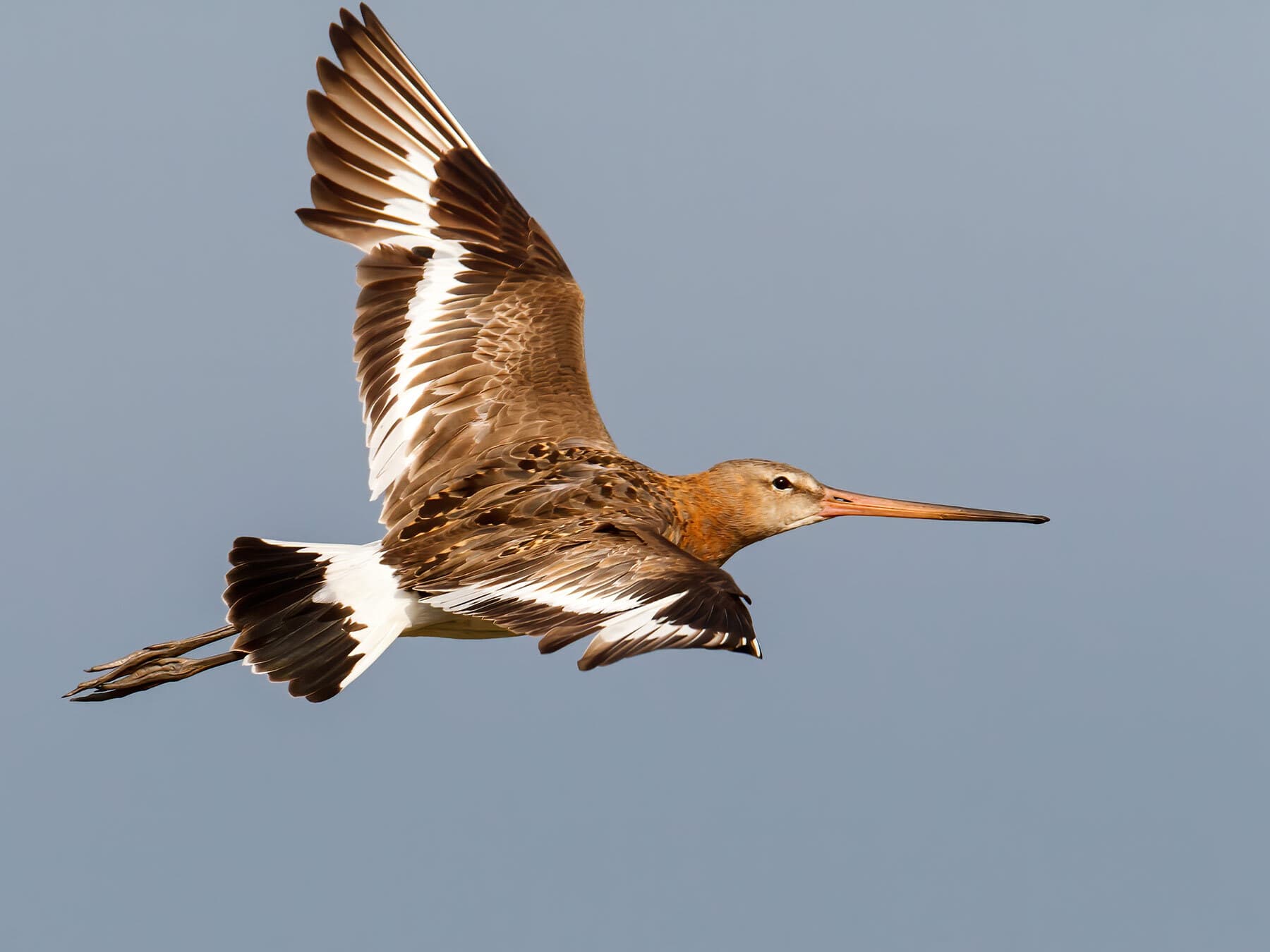
Also often referred to as a shorebird these waders favour habitats such as bogs, marshes, damp meadows, swamps, reservoirs, muddy estuaries and inland freshwater lakes. Whilst easily recognisable as one of the larger godwits they can still be mistaken for the Bar-tailed Godwit which is similar in size and winter plumage. The broad white wingbars, black tail and long trailing legs during flight however, aid positive identification.
What it eats
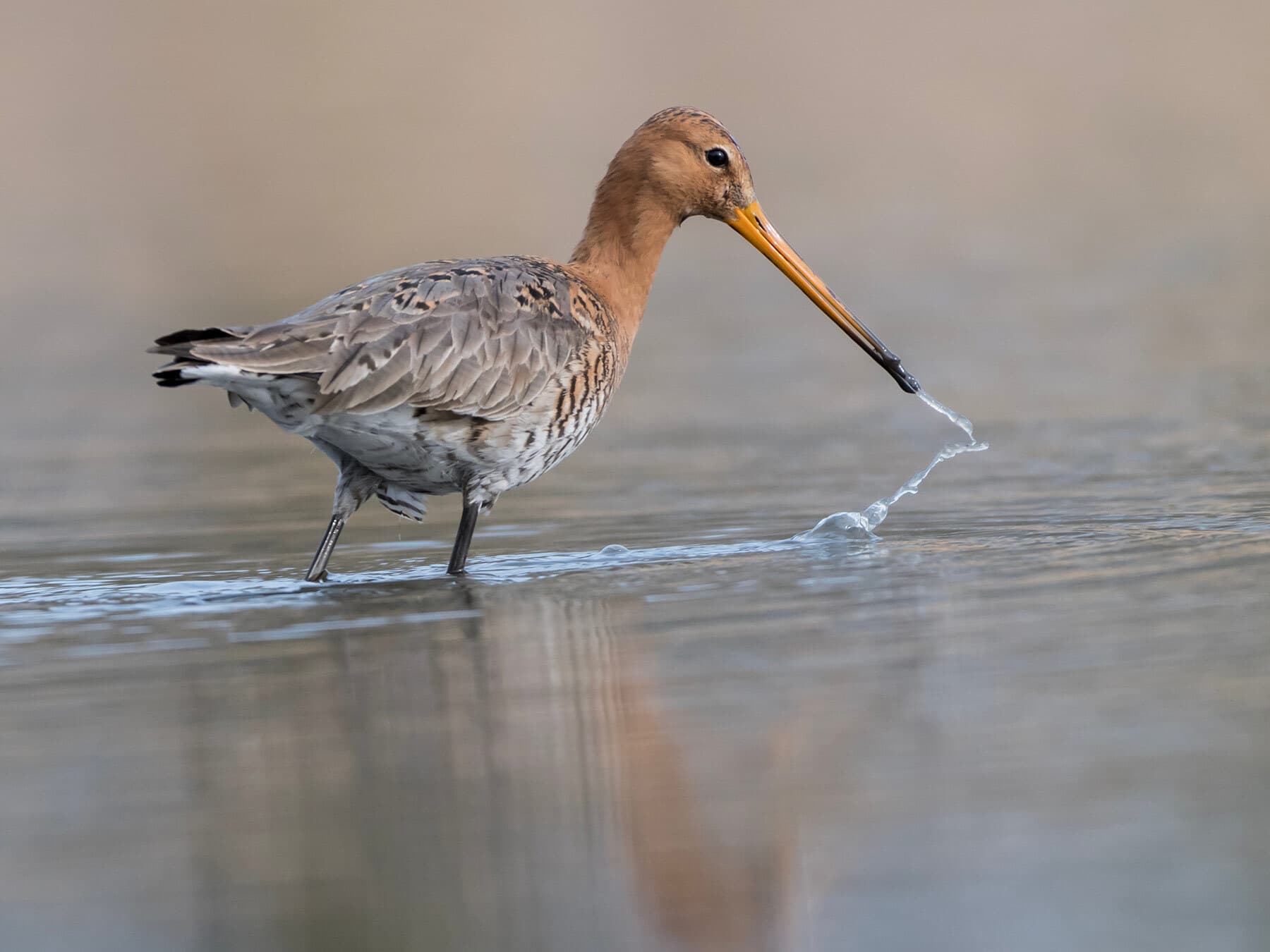
Using their long bills as probes, black-tailed godwits eat a variety of insects and insect larvae, molluscs, spawn and tadpoles, seeds, berries and rice; the latter being a staple when overwintering in sub-Saharan Africa.
Nesting and breeding
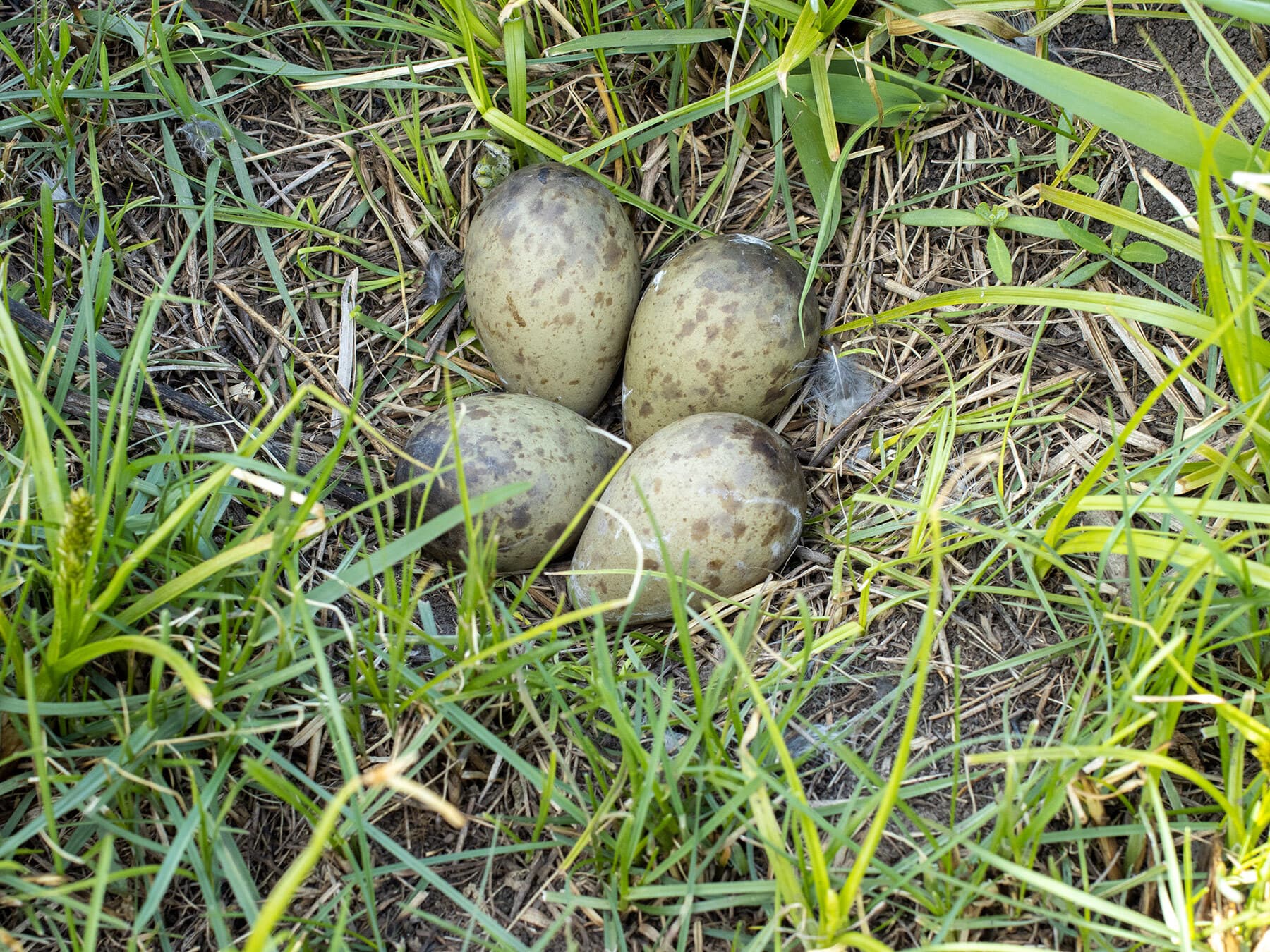
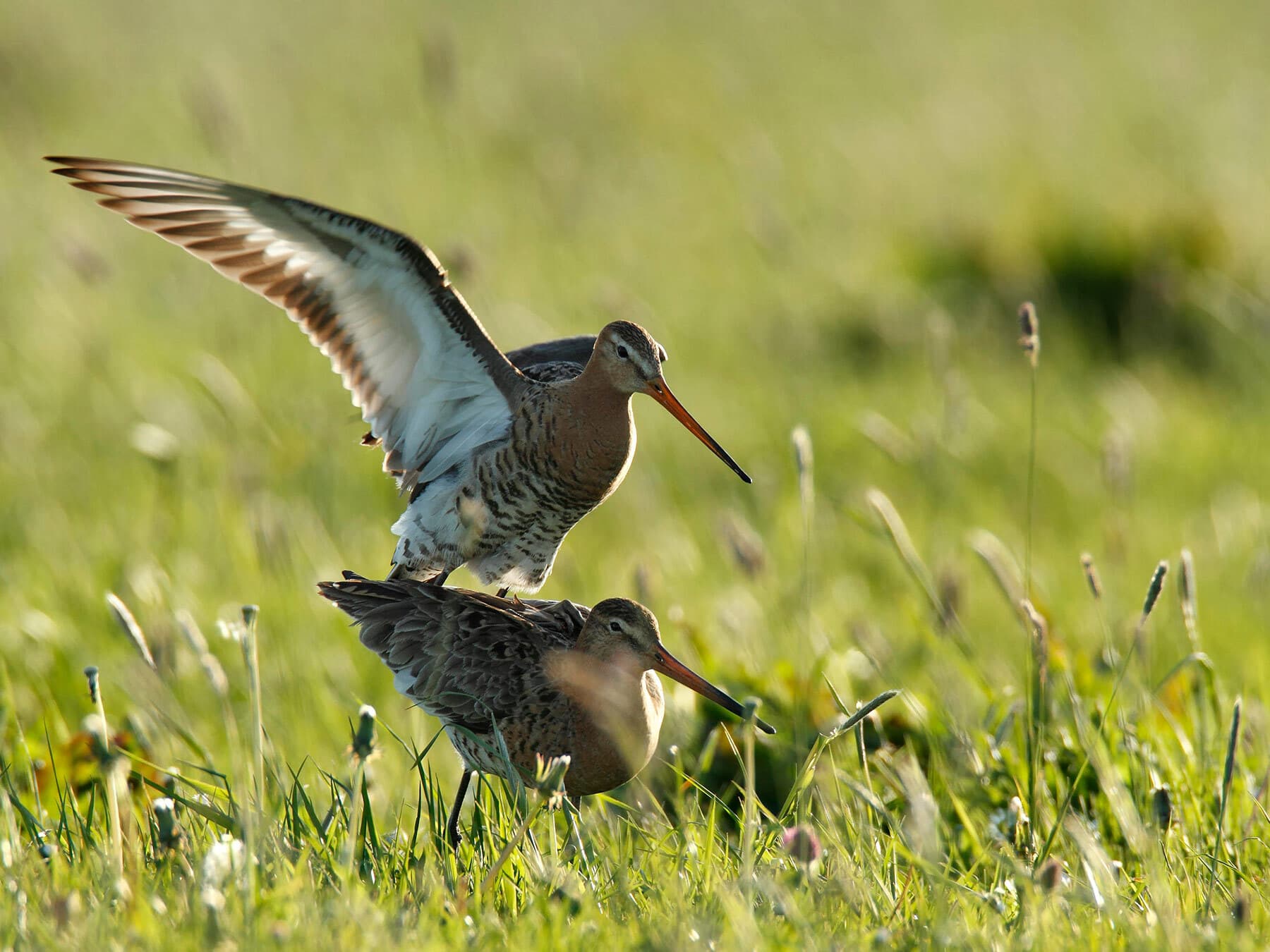
Black-tailed godwits are, in general monogamous. Nests are constructed on the ground from a shallow scrape, normally surrounded by thick vegetation which is often used as camouflage. One brood of 3 – 6 light olive green eggs, is laid annually between May to July and incubated by both parents for an average of three weeks. Fledging occurs from twenty five to thirty days later.
Behaviour
Black-tailed Godwits are highly gregarious, often seen in large flocks during migration and winter. They wade in shallow water, probing deeply with their long bills for invertebrates.
During the breeding season, males perform elaborate aerial displays, calling loudly while flying in circles to attract mates.
Lifespan and predators
Average life expectancy is between ten to fifteen years.
Conservation
The Black-tailed Godwit is classified as Near Threatened due to habitat loss and degradation. Conservation efforts focus on protecting and restoring wetland habitats, particularly in breeding areas.
International cooperation is crucial for safeguarding their migratory routes and wintering grounds.
What does a Black-tailed Godwit look like?
The black-tailed godwit is mainly found in Europe and parts of Russia and is one of Europe’s larger wading birds identified by its long neck, particularly long legs and long, straight, fine tipped bill. The adult female is larger and heavier than the male with a longer bill. Summer plumage of adult birds is a striking rufous to copper red colour on the chest, head and neck with the adult male showing a brighter and wider area of colour. The flanks have black bars and the upper wings are black with a broad white wingbar and black tail. The rump is white as are the upper tail coverts giving the appearance of a wide white stripe across the top of the upper tail. The underwing area is predominantly pale grey to white. In winter plumage the upperparts and breast area are a brownish grey and the wings similar to the breeding colour and patternation. Whilst the bill is tipped black and is an orange pink colour during the summer, in winter it is mainly pink without a dark tip. The legs remain a dark grey to black throughout the year. Juvenile birds are similar to the adult winter plumage although slightly darker across the upper parts with a buff shade to the chest.
Sub-species
There are three recognised subspecies of the black-tailed godwit, the Limosa, the Islandica and the Melanuroides, all of which are monotypic. Apart from slight variations in size, melanuroides being the smallest with limosa being the largest and islandica somewhere in between; the main difference in the sub-species is their geographical locations. These can simply be broken down to Limosa limosa limosa (European) breeding in Europe and west Russia, migrating south to southern Europe, sub-Saharan Africa, the Middle East and India. Limosa limosa islandica (Icelandic) breeding mainly in Iceland, the Shetlands, Faroe Islands and other north Atlantic archipelagos overwintering on the south coast of the United Kingdom and Southwest Europe. Finally, Limosa limosa melanuroides (Asian) which breeds across Siberia and Kamchatka into northern China and Mongolia overwintering on the Indian sub-continent, Myanmar, and the coastal regions of Indochina, Taiwan, Indonesia and Australasia.
Similar birds
Often mistaken for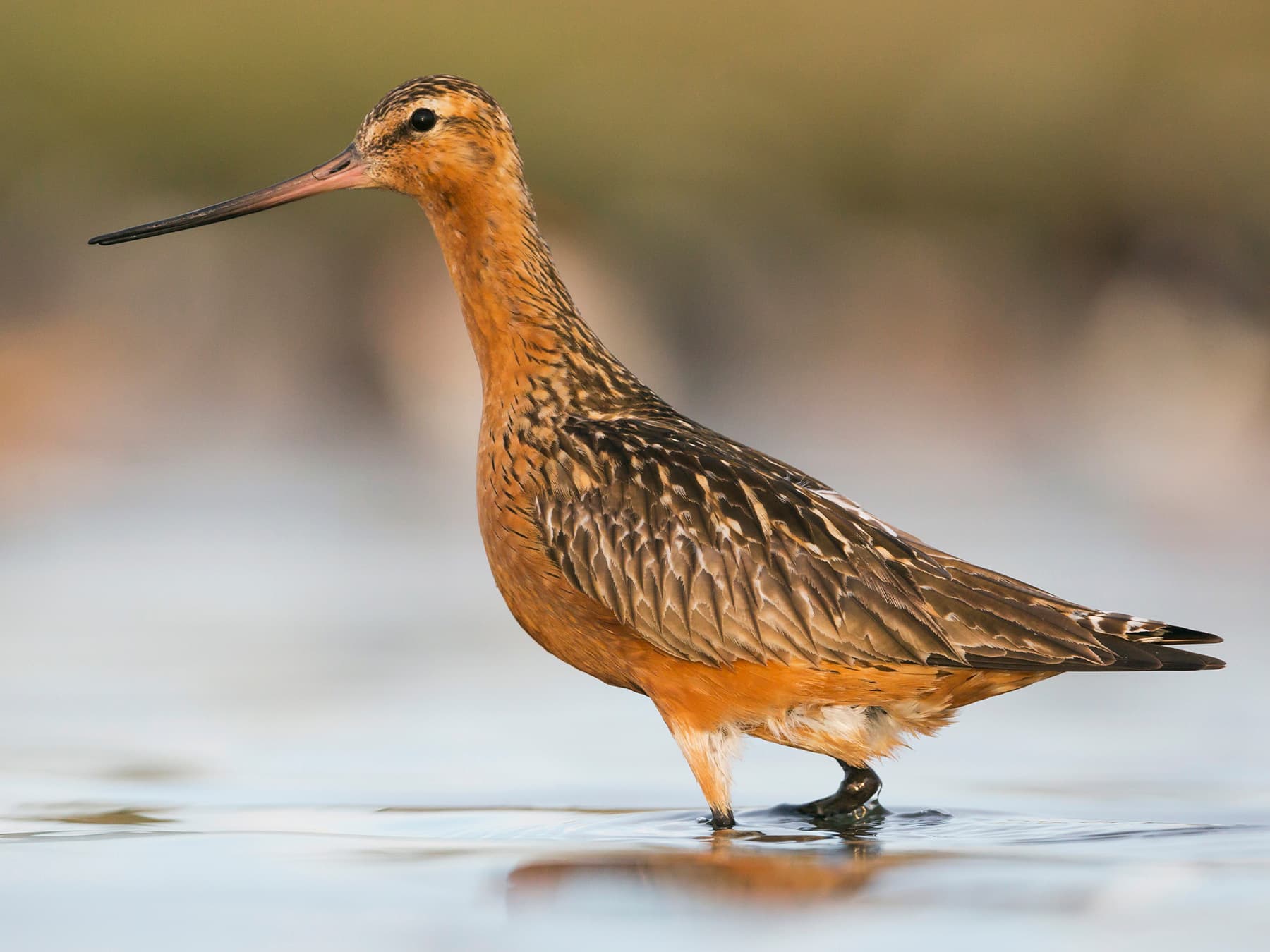
Quick facts
- Length
- 40–44 cm
- Wingspan
- 70–82 cm
- Weight
- 280–500 g
- Lifespan
- 10–15 years · oldest recorded 23.6 years
- Family
- Sandpipers & Snipes
- Migration
- Long-distance Migrant
- Global status (IUCN)
- Near Threatened
- World population
- 614,000 - 809,000 mature individuals
- Population trend
- Decreasing
- Also called
- Continental Black-tailed Godwit
- Scientific name
- Limosa limosa
Sources
4- 1BirdLife International. 2017. Limosa limosa (amended version of 2016 assessment). The IUCN Red List of Threatened Species 2017: e.T22693150A111611637. Source (opens in a new tab)
- 2BirdLife International. 2017. Limosa limosa (amended version of 2016 assessment). The IUCN Red List of Threatened Species 2017: e.T22693150A111611637. Source (opens in a new tab)
- 3Wetlands International (2016)
- 4Fransson et al., EURING list of longevity records for European birds (2010) Source (opens in a new tab)

Checked by
Nathan Cope, founder and editor
Nathan founded Birdfact and leads its writers and contributors in the UK, the US and Canada. He has watched and studied birds for more than ten years, and checks every article and species guide before it’s published.