
Curlew
Eurasian Curlew, Common Curlew, European Curlew · Numenius arquata
By the Birdfact teamChecked by Nathan Cope
On this page12 sections
How to recognise it
What do curlews look like?
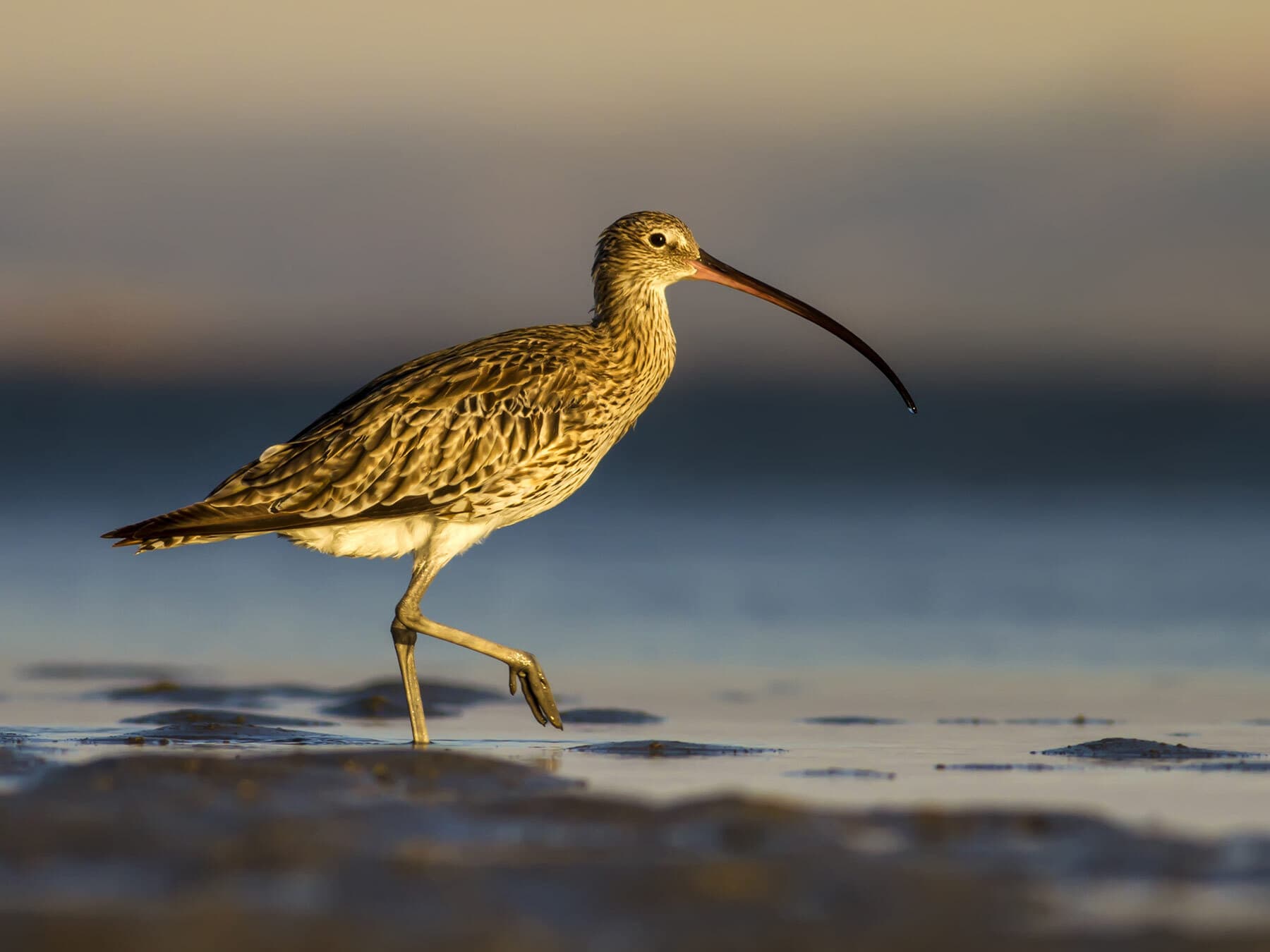
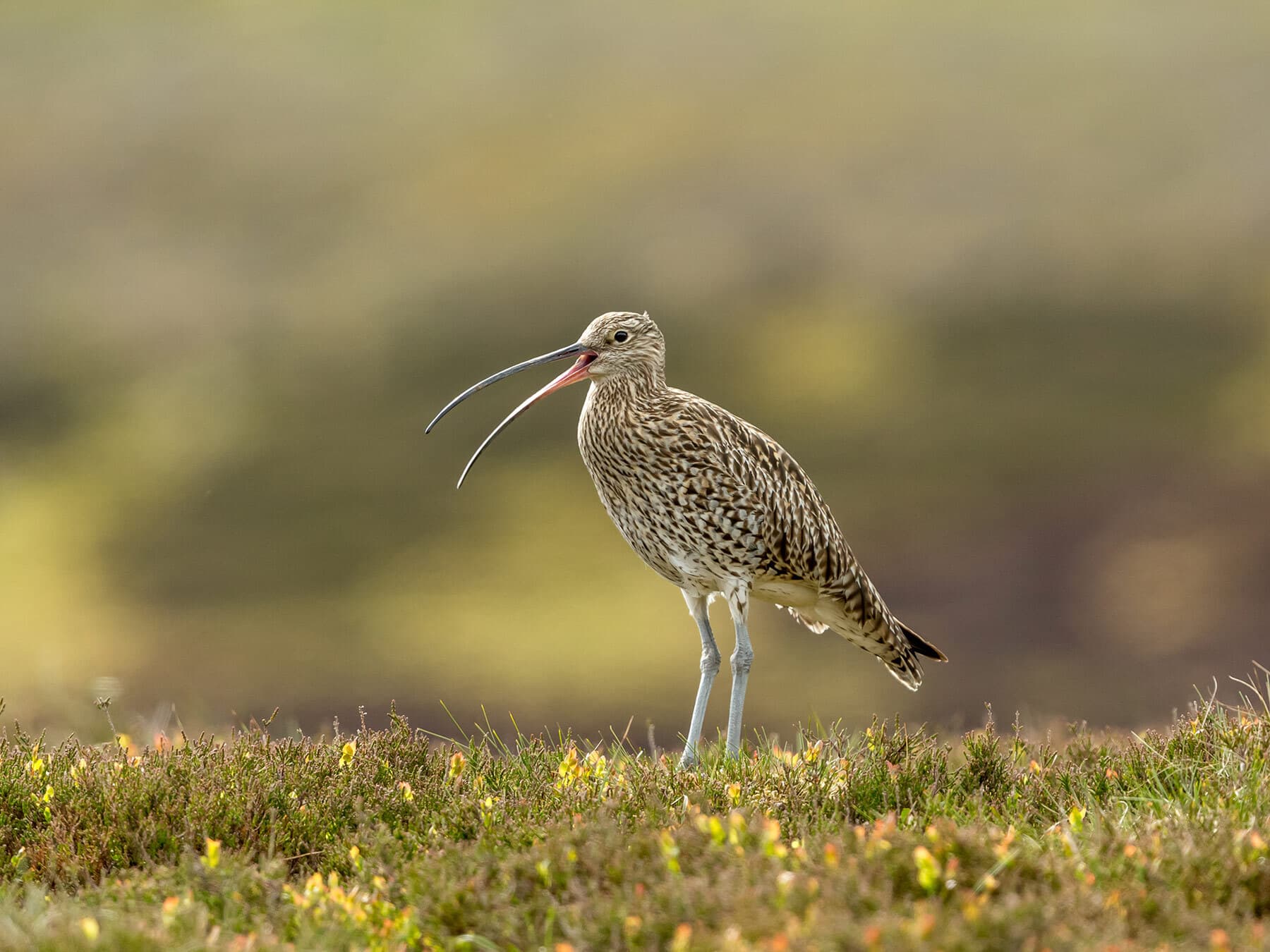
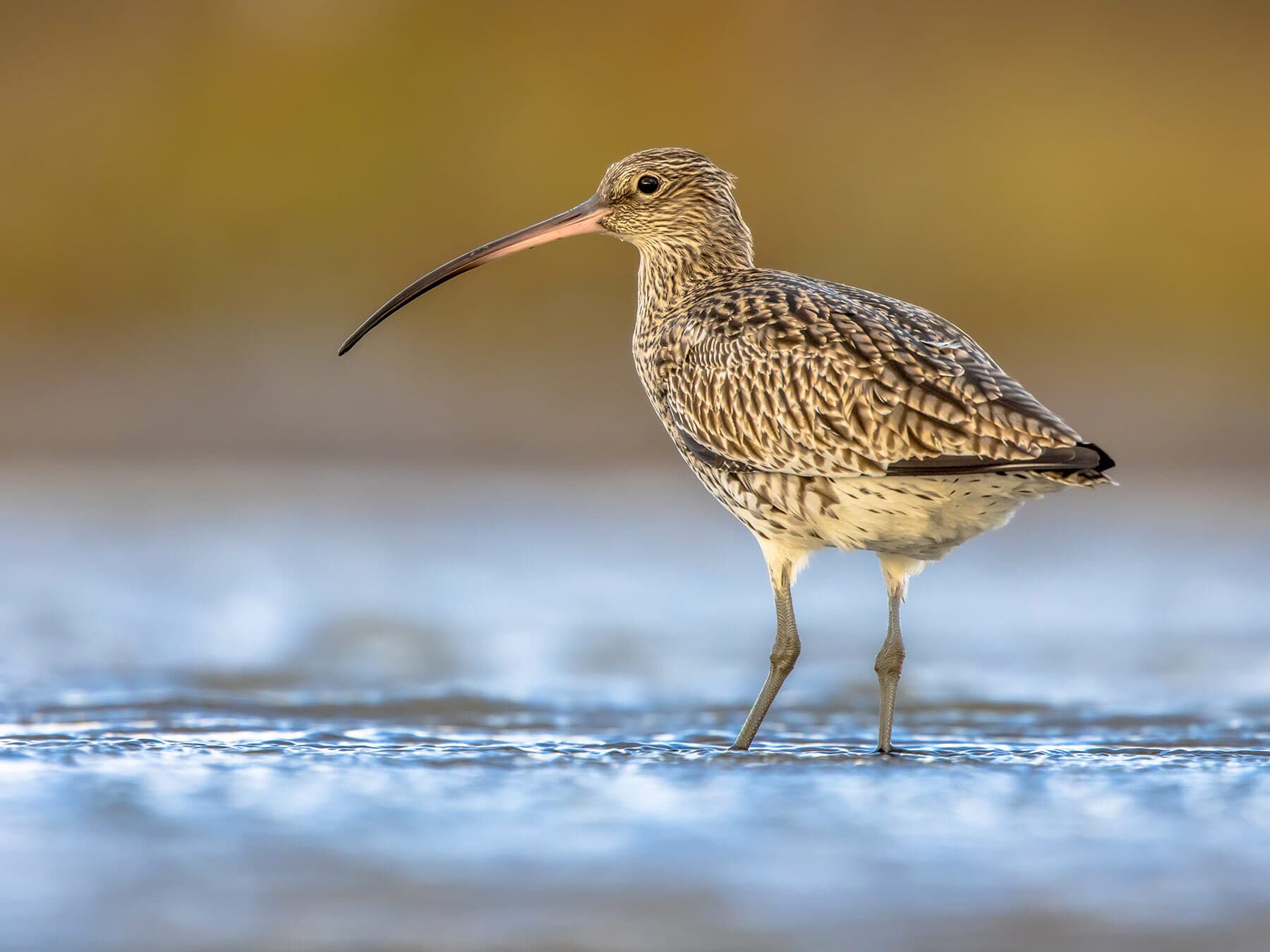
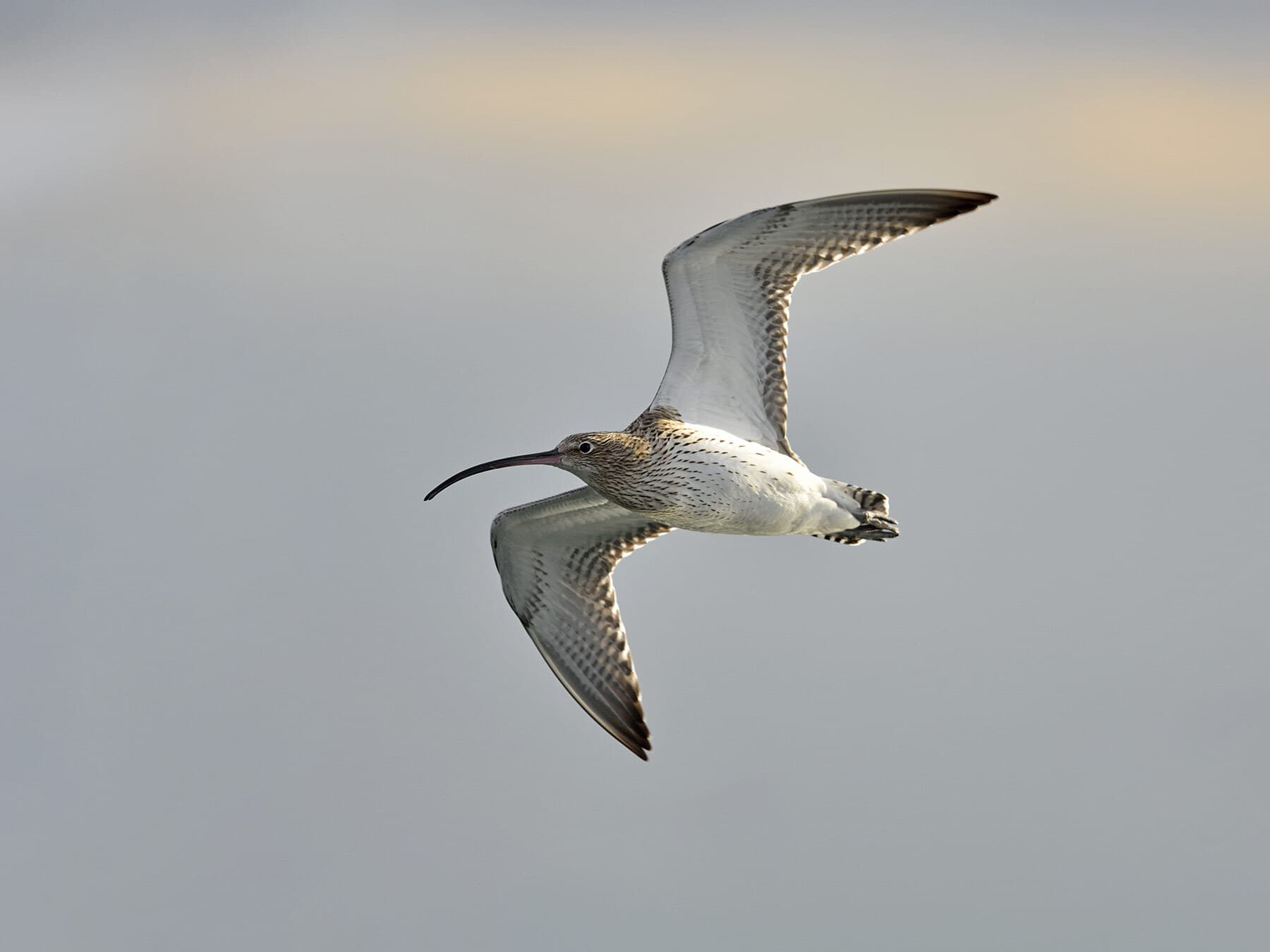
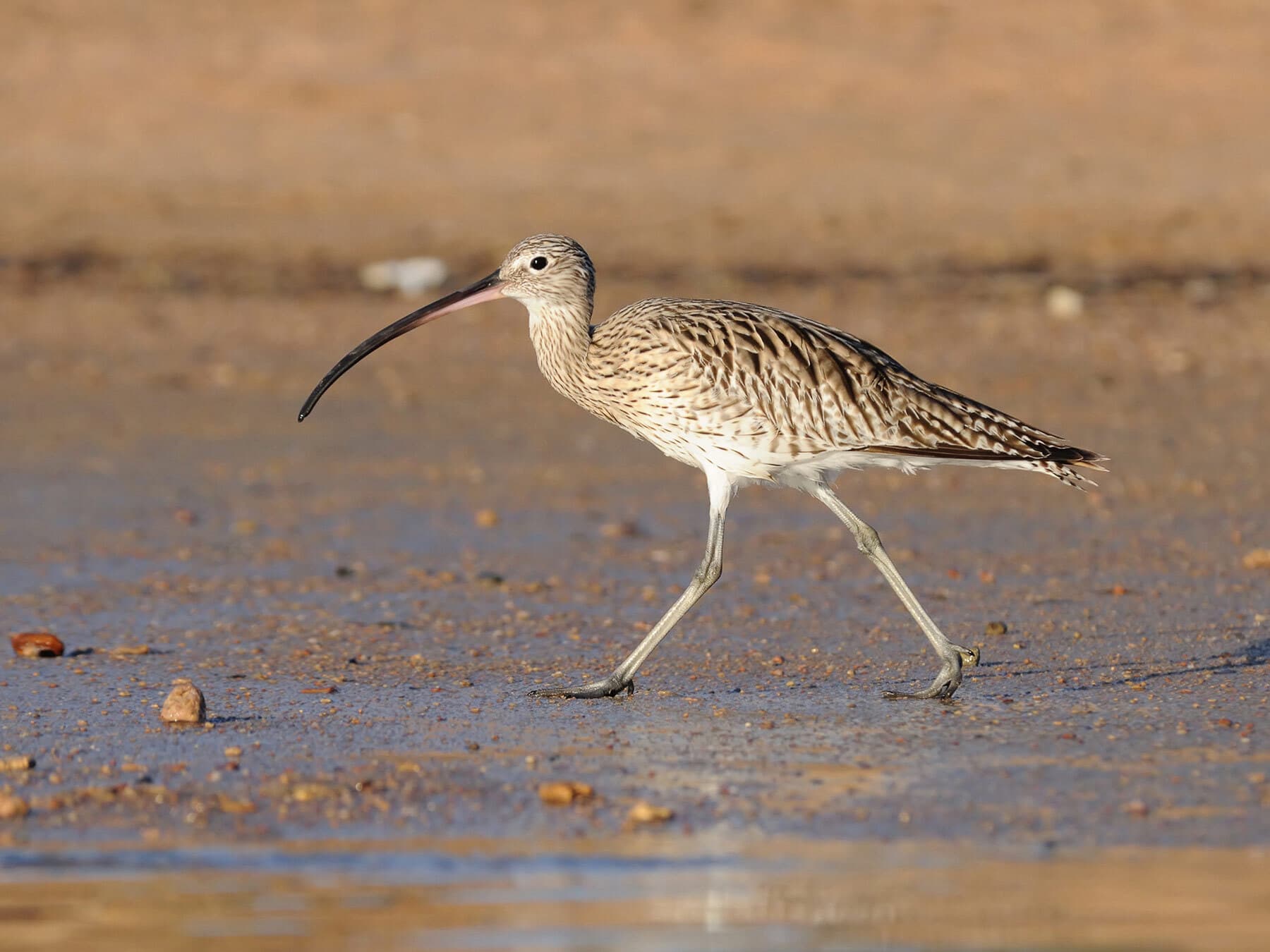
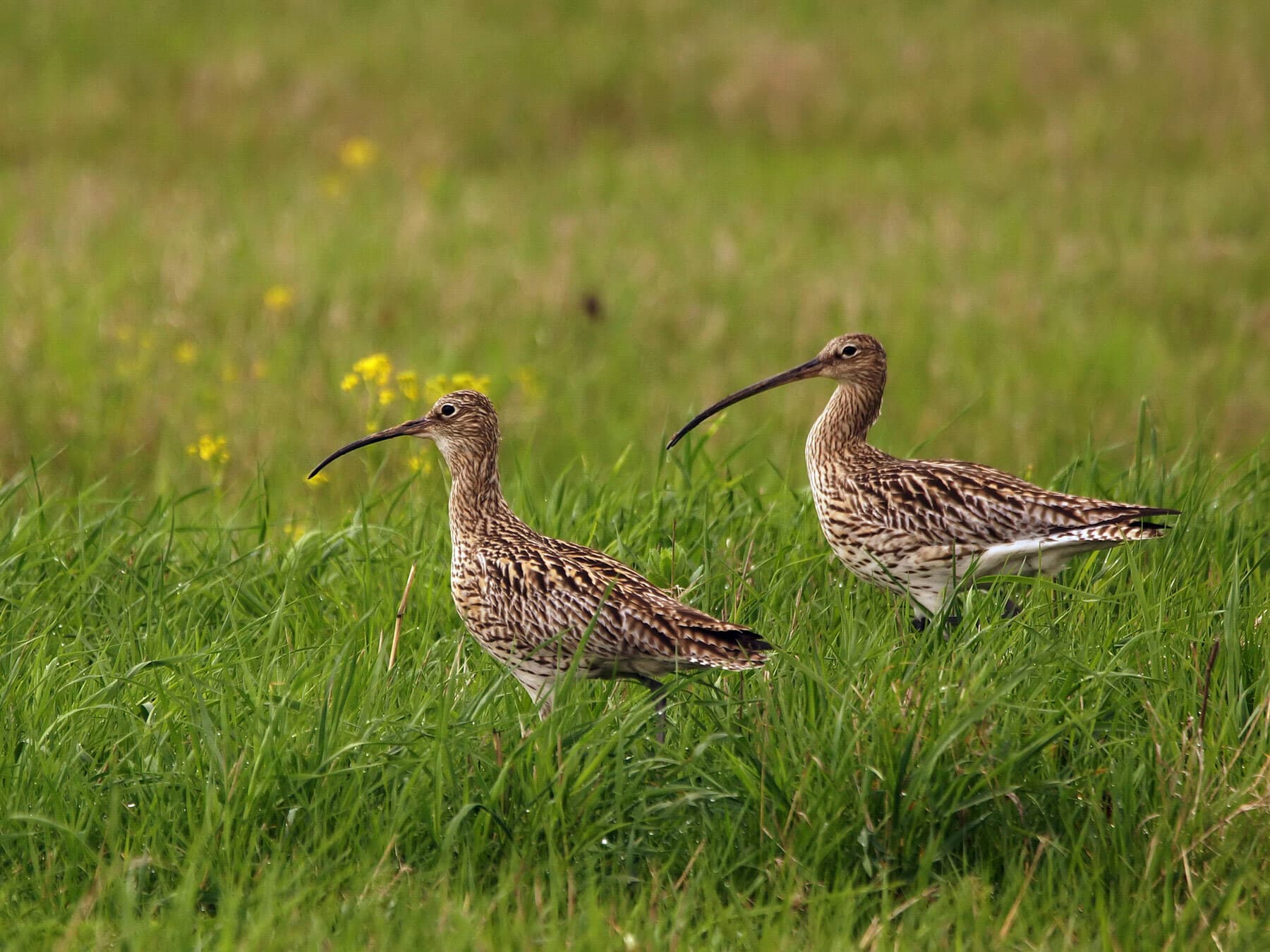
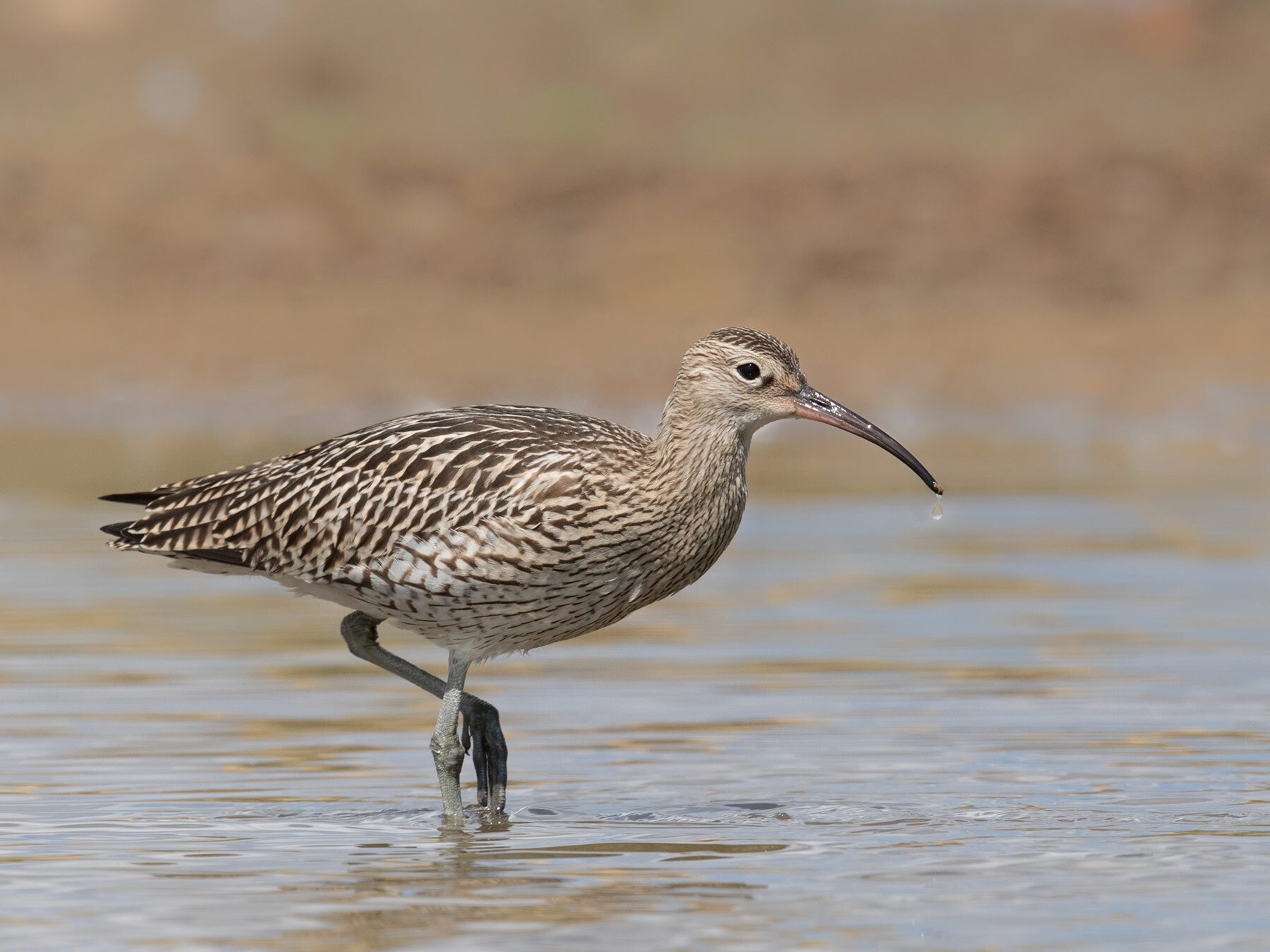
Curlews are tall waders, around the same size as female pheasants, but with slender blueish-grey legs and a long dark grey crescent-shaped bill that curves downwards. Their buff-brown upperparts are streaked with darker markings, while their underwings are pale, and their belly and underparts are off-white, marked with darker mottling.
Females and males are largely indistinguishable. Their plumage is identical and the only marked difference is the length of the bill – a female’s bill is marginally longer than a male’s and in general, a female is slightly larger and heavier. However, from a distance or when studying a lone bird, it is impossible to accurately judge whether a bird is male or female.
Juvenile curlews are similar in appearance to adult birds, but have more buff colouring on their breast. Their flanks are more heavily streaked, and their upperparts have some brownish spotting and darker edges to some feathers.
How big are curlews?
Curlews are giants among European wading birds, with females typically being slightly heavier than males.
Length: 50-60 cm (20-24 in)
Wingspan: 89-106 cm (35-42 in)
Weight
Male:
Range: 410-1,010 g (14.5-35.6 oz)
Average: 770 g (27.2 oz)
Female:
Range: 435-1,360 g (15.3-48 oz)
Average: 1000g (35.3 oz)
Its size
Adults- Length
- 50–60 cm
- Wingspan
- 89–106 cm
- Weight
- 540–1000 g
Its song and calls
What sound does a curlew make?
The curlew takes its name from the distinctive, piercing ‘cour-lee’ sound, used all year round as a contact call or display signal and also as an alarm call. They are also well-known for their low-pitched rising bubbling song, heard during courtship.
- Song0:00 / 0:17
Recorded in Grand Est, France · April 2025
- Flight call0:00 / 0:30
Recorded in Normandie, France · September 2023
When and where to see it
OctoberIn season
Most recorded in October
- 1. Louth3.5%
- 2. Sligo3.4%
- 3. North Ayrshire2.7%
- 4. Kerry2.6%
- 5. Eilean Siar2.5%
Each dot is a county, state or province: the bigger and darker, the larger the bird’s share of that place’s bird records that month. Grey dots: no regular records. The ringed point is the centre of the bird’s records this month; the arrow shows how it moved since last month, and the dashed loop its path through the year. “Arrivals” colours places where it becomes regular this month (orange) or is in its last regular month (grey). GBIF eBird Observation Dataset, 2019–2024. Map data: Natural Earth, US Census Bureau; place centres © OpenStreetMap contributors.
In your area
See when the Curlew is recorded in your county, state or province.
How often the Curlew turns up in the UK and Ireland through the year, from birdwatchers' records.
United Kingdom
Resident · all year · most records in October
Ireland
Resident · all year · most records in September
Show as a table
| Month | United Kingdom | Ireland |
|---|---|---|
| January | 0.69% (regular) | 1.6% (regular) |
| February | 0.71% (regular) | 1.7% (regular) |
| March | 0.68% (regular) | 1.0% (regular) |
| April | 0.52% (regular) | 0.52% (regular) |
| May | 0.39% (regular) | 0.31% (regular) |
| June | 0.49% (regular) | 0.61% (regular) |
| July | 0.66% (regular) | 1.4% (regular) |
| August | 0.75% (regular) | 1.8% (regular) |
| September | 0.83% (regular) | 1.9% (regular) |
| October | 0.87% (regular) | 1.9% (regular) |
| November | 0.72% (regular) | 1.8% (regular) |
| December | 0.66% (regular) | 1.7% (regular) |
Recorded regularly in
Worldwide: recorded regularly in 100 countries
Countries where it was recorded in at least 3 of the 6 years 2019–2024. Linked countries have their own bird list.
Europe (41)
- Åland Islands
- Albania
- Austria
- Belarus
- Belgium
- Bosnia & Herzegovina
- Bulgaria
- Croatia
- Czechia
- Denmark
- Estonia
- Faroe Islands
- Finland
- France
- Germany
- Greece
- Guernsey
- Hungary
- Iceland
- Ireland
- Isle of Man
- Italy
- Jersey
- Latvia
- Lithuania
- Moldova
- Montenegro
- Netherlands
- Norway
- Poland
- Portugal
- Romania
- Russia
- Serbia
- Slovakia
- Slovenia
- Spain
- Sweden
- Switzerland
- Ukraine
- United Kingdom
Africa (23)
- Angola
- Côte d’Ivoire
- Djibouti
- Egypt
- Gambia
- Ghana
- Guinea
- Guinea-Bissau
- Kenya
- Libya
- Madagascar
- Mauritania
- Mauritius
- Morocco
- Mozambique
- Namibia
- Senegal
- Seychelles
- South Africa
- Tanzania
- Tunisia
- Western Sahara
- Zambia
Asia (36)
- Azerbaijan
- Bahrain
- Bangladesh
- Cambodia
- China
- Cyprus
- Georgia
- Hong Kong SAR China
- India
- Indonesia
- Iran
- Israel
- Japan
- Kazakhstan
- Kuwait
- Kyrgyzstan
- Malaysia
- Maldives
- Mongolia
- Myanmar (Burma)
- Nepal
- Oman
- Pakistan
- Philippines
- Qatar
- Saudi Arabia
- Singapore
- South Korea
- Sri Lanka
- Taiwan
- Thailand
- Turkey
- United Arab Emirates
- Uzbekistan
- Vietnam
- Yemen
Data: EOD – eBird Observation Dataset (Cornell Lab of Ornithology), accessed via GBIF.org, CC BY 4.0. Records from 2019–2024, aggregated and filtered by Birdfact. How these lists are made
What is the habitat of a curlew?
Curlews breed on a range of habitats, with rough grasslands, moorlands and bogs providing an ideal landscape for building their nests, foraging for food, and raising young. In winter, they head for intertidal mudflats, saltmarshes and agricultural land, foraging particularly for cereal crops. Once the coldest months are over, they head back to upland areas of pasture, wetlands, and heathland.
What is the range of a curlew?
The British Isles and France form the western limit to the curlew’s range, and they are present across Western Europe, as far north as the Arctic Circle, to the Urals and River Volga in the east.
In winter, many birds migrate south from the northernmost regions of the range to milder climates in the United Kingdom. Some travel as far south as the Mediterranean coasts of Spain and north-western Africa, with other birds migrating as far east as the Persian Gulf and western India.
Where do curlews live?
An estimated 212,000 to 292,000 pairs of curlews live in Europe. Of these, between 76,000 and 88,000 are resident in Finland, 45,000 to 66,000 are in Britain and Ireland and 45,000 to 100,000 pairs in Russia.
How rare are curlews?
Although curlew population numbers remain fairly high and they are resident over a wide range of habitats and geographical regions, these giant waders have become a cause for concern, with declines in their breeding ranges and habitats. They are becoming increasingly rare, and conservation efforts to attempt to preserve their habitats and reverse the decline exist.
Where to see curlews in the UK?
Curlews are resident in the UK all year round, with most concentrated in Scotland (around 60 percent of the breeding population) and the remaining birds mainly across the north of England. Wintering birds arrive on UK shores from July onwards and can be seen in coastal regions further south than their breeding ranges, as well as across the island of Ireland.
Migration
Do curlews migrate?
Eurasian curlews are mostly migratory, but some resident birds remain in the UK all year round. Much of the population of curlews from northern Europe, in particular Scandinavia and the Baltic states migrate southwestwards, towards the Mediterranean coast of south-west Europe and north-west Africa.
Migration begins from June onwards, with non-breeding birds and adult females leaving first. The final migrants leave by early November, and spend until at least February on their wintering grounds.
How did the curlew get its name?
Both parts of the curlew’s scientific name, Numenius arquata, relate to the shape of its elongated curved bill. Numenius comes from two ancient Greek words ‘neos’ meaning ‘new’ and ‘mene’, referring to the shape of the bill being similar to the appearance of a crescent moon. ‘Arquata’ is the Latin word for an archer’s bow.
The English name is said to derive from the display call ‘cour-lee’ made by curlews. Some sources claim that the name’s origins lie in the Old French word ‘corliu’ meaning ‘messenger’, from the verb ‘courir’ meaning ‘to run’.
How many curlews are in the wild?
According to 2015 data, there are an estimated 212,000–292,000 breeding pairs of Eurasian curlews living across Europe. Of these, an estimated 66,000 pairs breed in the UK. This number temporarily swells to 140,000 individual birds during winter as visiting curlews arrive from Scandinavia and other breeding locations across Western Europe. The UK winter population represents around 30 percent of the total European population of curlews.
Tips for seeing it
- Look for Curlews in coastal mudflats, estuaries, and wet grasslands
- Listen for their distinctive 'cur-lee' call, especially during the breeding season
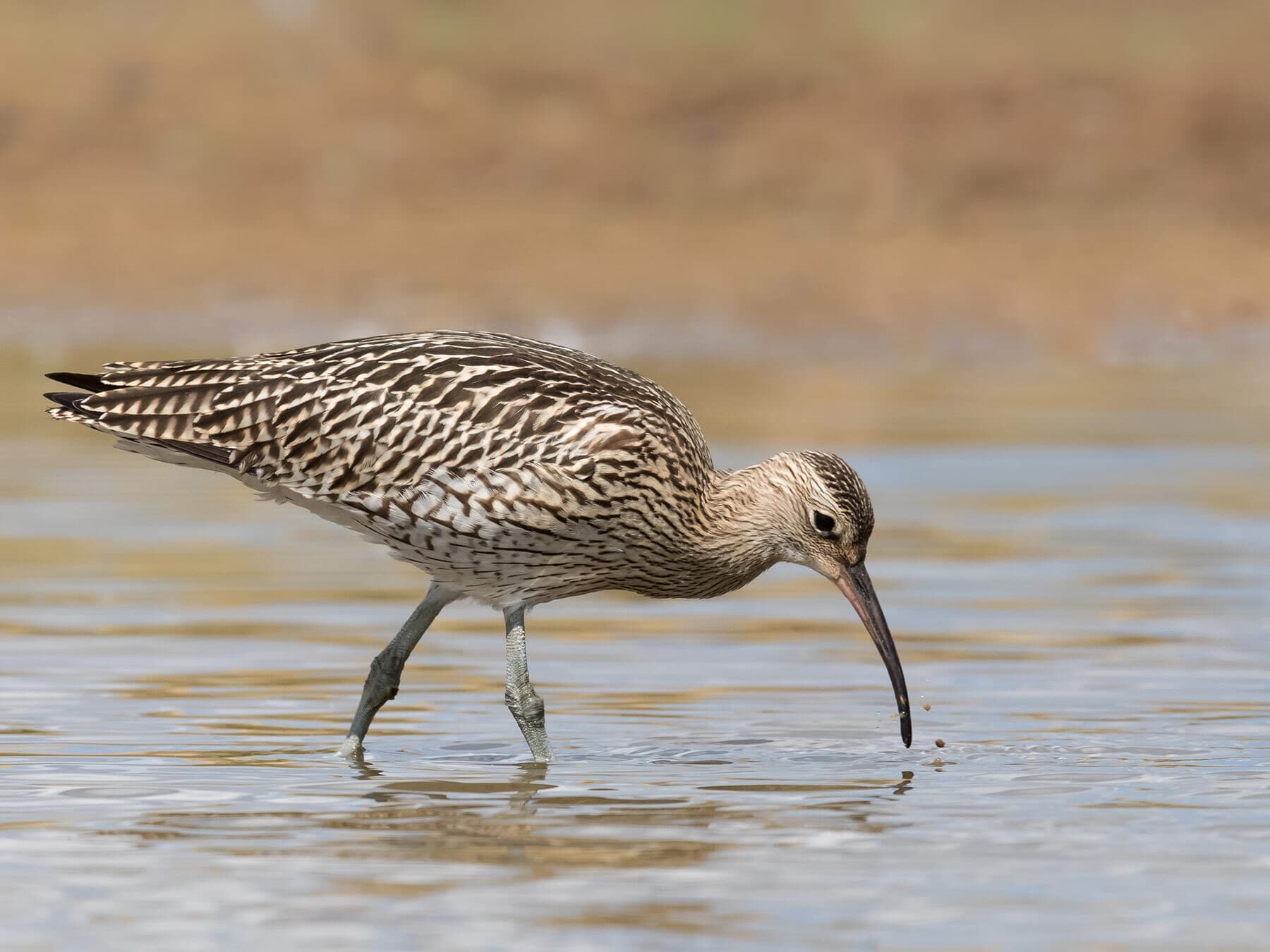
- Observe their unique feeding behaviour, probing deep into mud with their long bills
- In the UK, watch for them in coastal areas and inland wetlands year-round
What it eats
What do curlews eat?
Curlews have a varied, but primarily carnivorous diet, which includes shellfish, worms, shrimps, crabs, berries, seeds, small fish, insects, and even small birds, reptiles and amphibians.
As males and females have different bill lengths, they tend to head for separate foraging grounds. Female curlews feed on coastal mudflats while males forage mainly on cultivated grasslands.
What do baby curlews eat?
Baby curlews are initially fed on earthworms, larvae and caterpillars. Once they have left the nest, curlew chicks join their parents foraging in grassland for spiders and insects.
Nesting and breeding
Where do curlews nest?
Nests are constructed by male curlews, and are a shallow depression dug into the ground, usually in open grassland or sedge cover, away from trees and dense vegetation. The nest scrape, around 15 to 24 cm (5.9 to 9.4 in) wide, and between 3 and 12 cm (1.2 to 4.7 in) deep is then lined with grass and feathers.
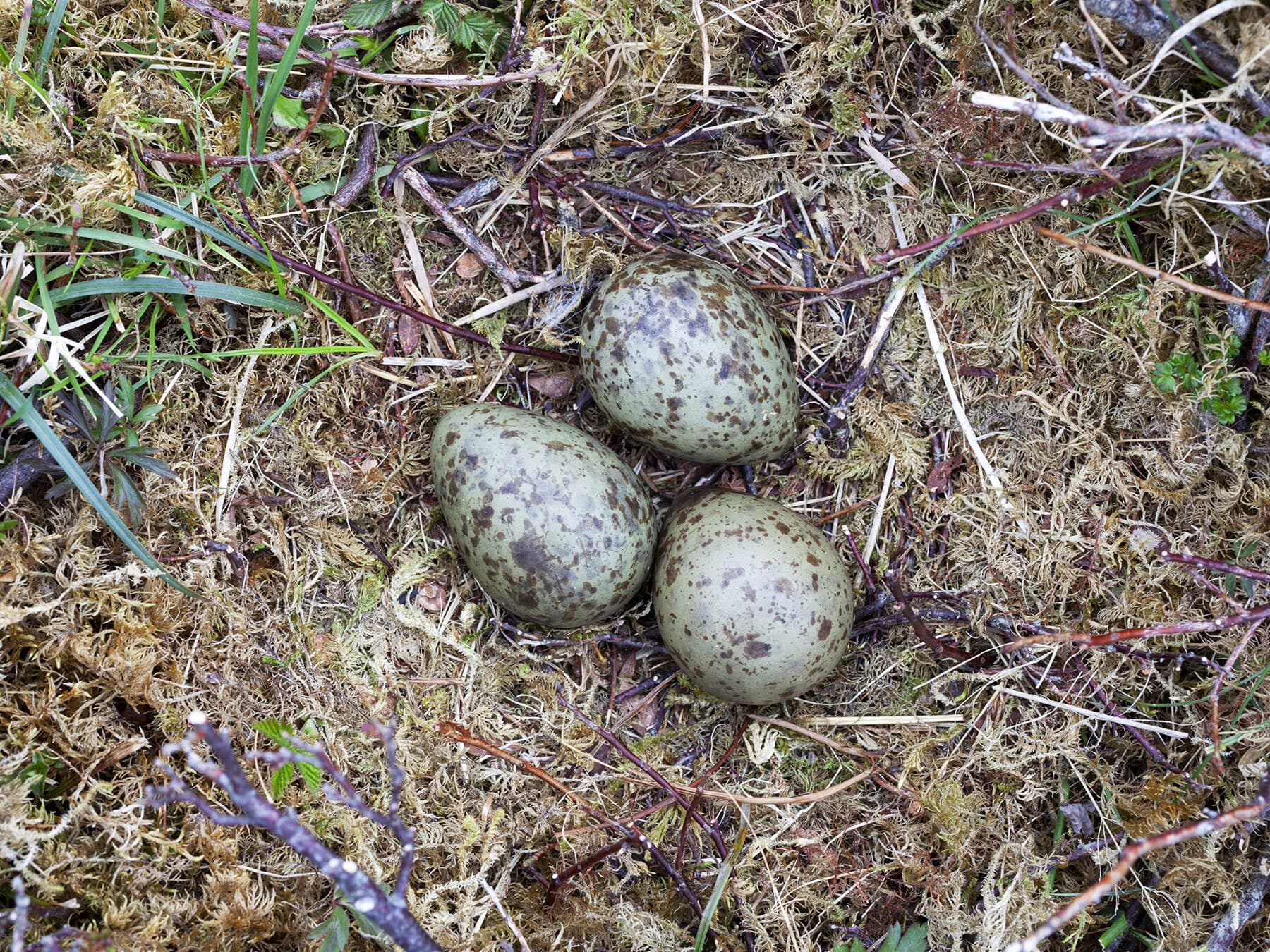
What do curlew eggs look like?
Curlews typically lay between 2 and 5 eggs – with four the most common number. Eggs are a greenish-olive and are mottled with dark brown and grey markings. On average, eggs measure 67·6 by 47·9 mm (2.6 by 1.9 in). Females lay one clutch each season, between April and early July, and eggs hatch after 26 to 30 days. Incubation is either shared between the sexes or undertaken mainly by the female.
Do curlews mate for life?
Many curlews return to the same breeding site year after year, and strong pair bonds are frequently maintained in subsequent breeding seasons.
Behaviour
Are curlews aggressive?
Curlews are sociable and can be noisy, but are not especially aggressive outside of the breeding season. While nesting, they can become highly territorial and secretive about the site of their eggs and young.
Lifespan and predators
How long do curlews live?
Curlews commonly live to 20 years, although up to 30 years is not unheard of. The oldest ringed pair of curlews recorded were 32 years old. However, the odds are stacked against young curlews surviving beyond the fledgling stage.
Curlew populations are in severe decline, thanks in part to the species’ poor rate of fledgling survival. A rate of just 0.2 curlews per brood make it to adulthood, which is the equivalent of each pair producing only one chick that will reach maturity every five years
What are the predators of curlews?
Foxes and carrion crows are among the common predators of curlews. Curlews frequently nest near kestrels, and are thought to benefit from their presence, as this sees off additional predators. However, although they do not prey on curlew eggs or adult birds, kestrels will opportunistically take young wader chicks.
Are curlews protected?
Curlews were added to the Red List on the UK Conservation Status Report in 2015, highlighting an urgent need for conservation efforts to save the species from further population declines. Curlews are also protected under the African-Eurasian Waterbird Agreement (AEWA), a UN treaty that aims to preserve habitats for threatened wetland species across Europe.
Are curlews endangered?
Over recent decades, curlew populations have recorded a sharp decline in numbers, and this has been reflected in their conservation status being upgraded from a species of least concern to near threatened.
Eurasian curlews’ habitat is under threat from increased farming on upland pastures, causing loss of safe and suitable breeding sites. Drainage of land for agriculture and encroaching development and reforestation projects also limit areas that curlews can successfully breed in.
Conservation
The Curlew is classified as Near Threatened due to population declines across its range. Habitat loss, particularly of breeding grounds, and changes in agricultural practices are significant threats. Conservation efforts focus on protecting and restoring wetland and grassland habitats.
More photos
2 photos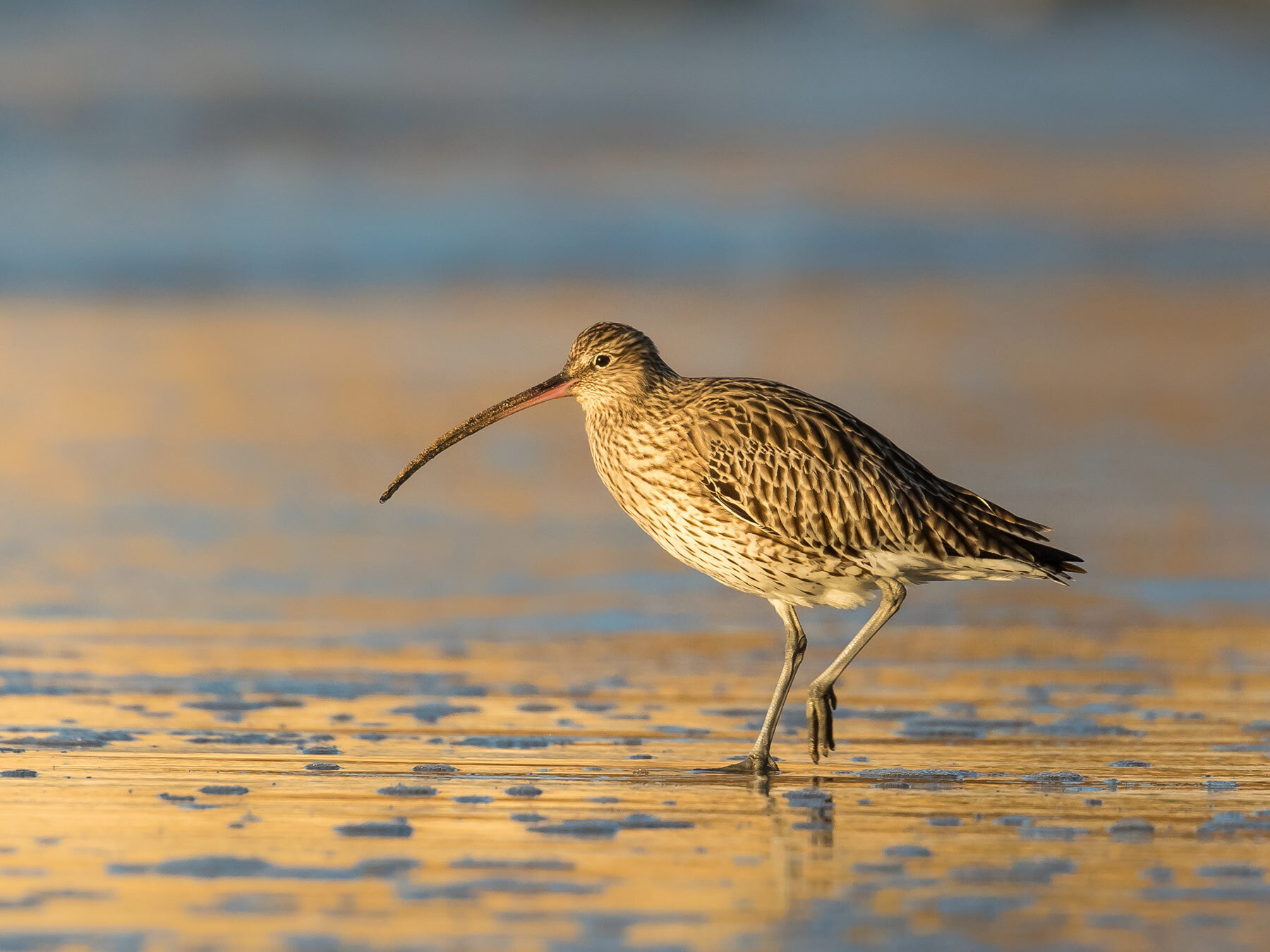
Quick facts
- Length
- 50–60 cm
- Wingspan
- 89–106 cm
- Weight
- 540–1000 g
- Lifespan
- 10–15 years
- Family
- Sandpipers & Snipes
- Migration
- Long-distance Migrant
- Global status (IUCN)
- Near Threatened
- World population
- 835,000 - 1,310,000 individuals
- Population trend
- Decreasing
- Also called
- Eurasian Curlew, Common Curlew, European Curlew
- Scientific name
- Numenius arquata
Sources
3- 1BirdLife International. 2017. Numenius arquata. The IUCN Red List of Threatened Species 2017: e.T22693190A117917038. Source (opens in a new tab)
- 2BirdLife International. 2017. Numenius arquata. The IUCN Red List of Threatened Species 2017: e.T22693190A117917038. Source (opens in a new tab)
- 3Wetlands International (2016)

Checked by
Nathan Cope, founder and editor
Nathan founded Birdfact and leads its writers and contributors in the UK, the US and Canada. He has watched and studied birds for more than ten years, and checks every article and species guide before it’s published.