


Green Sandpiper
Tringa ochropus
By the Birdfact teamChecked by Nathan Cope
On this page14 sections
How to recognise it
What do Green Sandpipers look like?
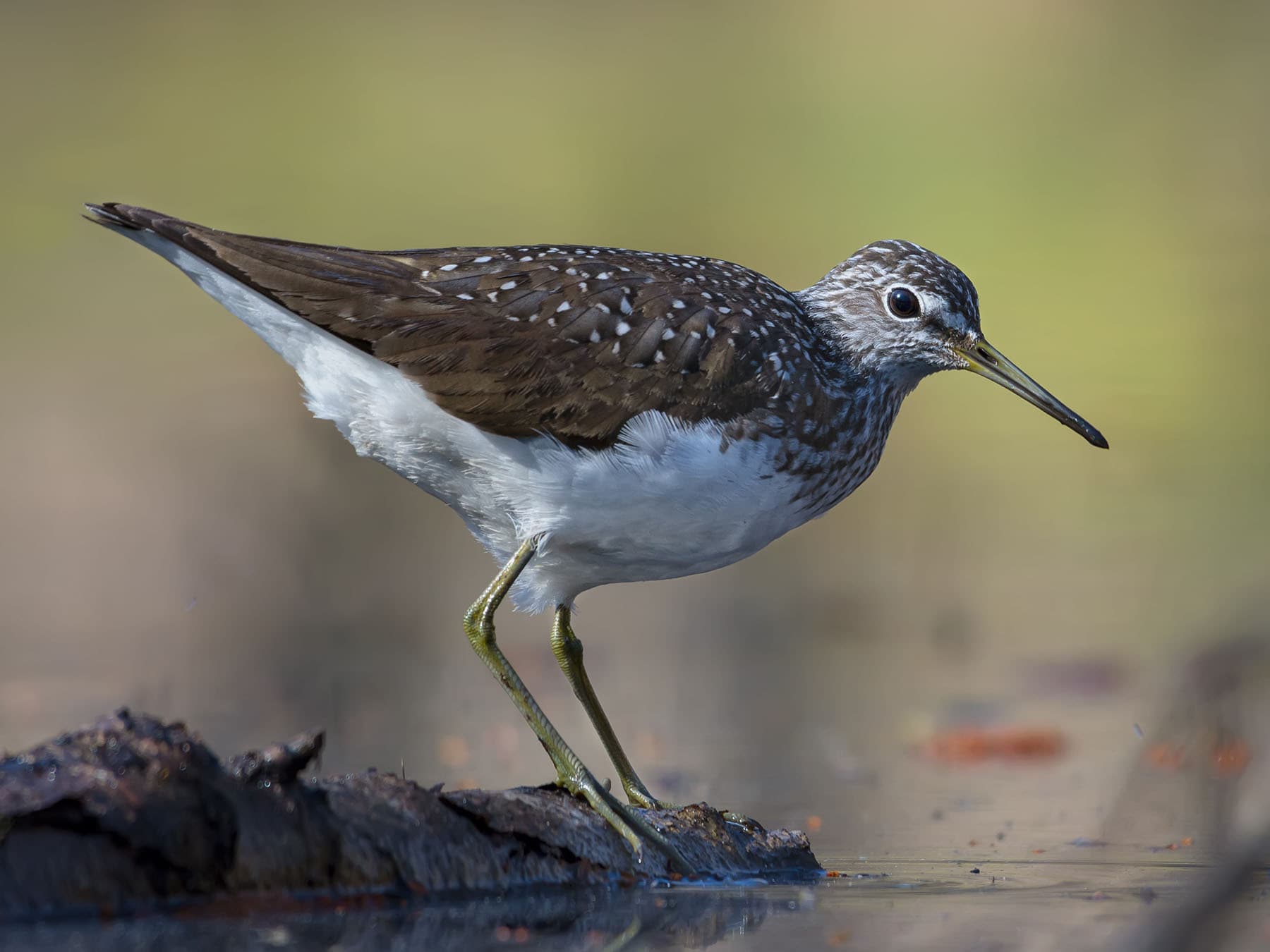
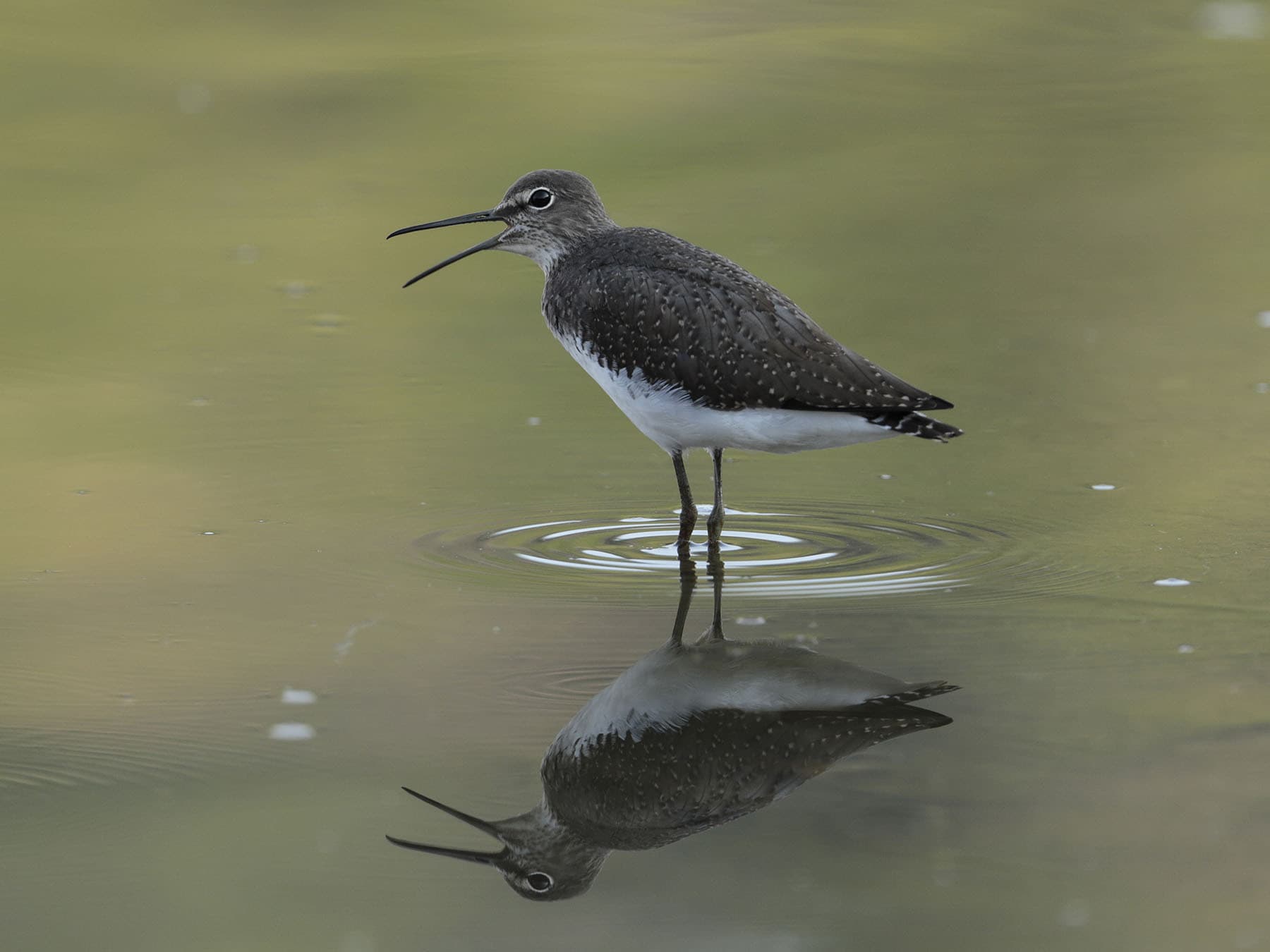
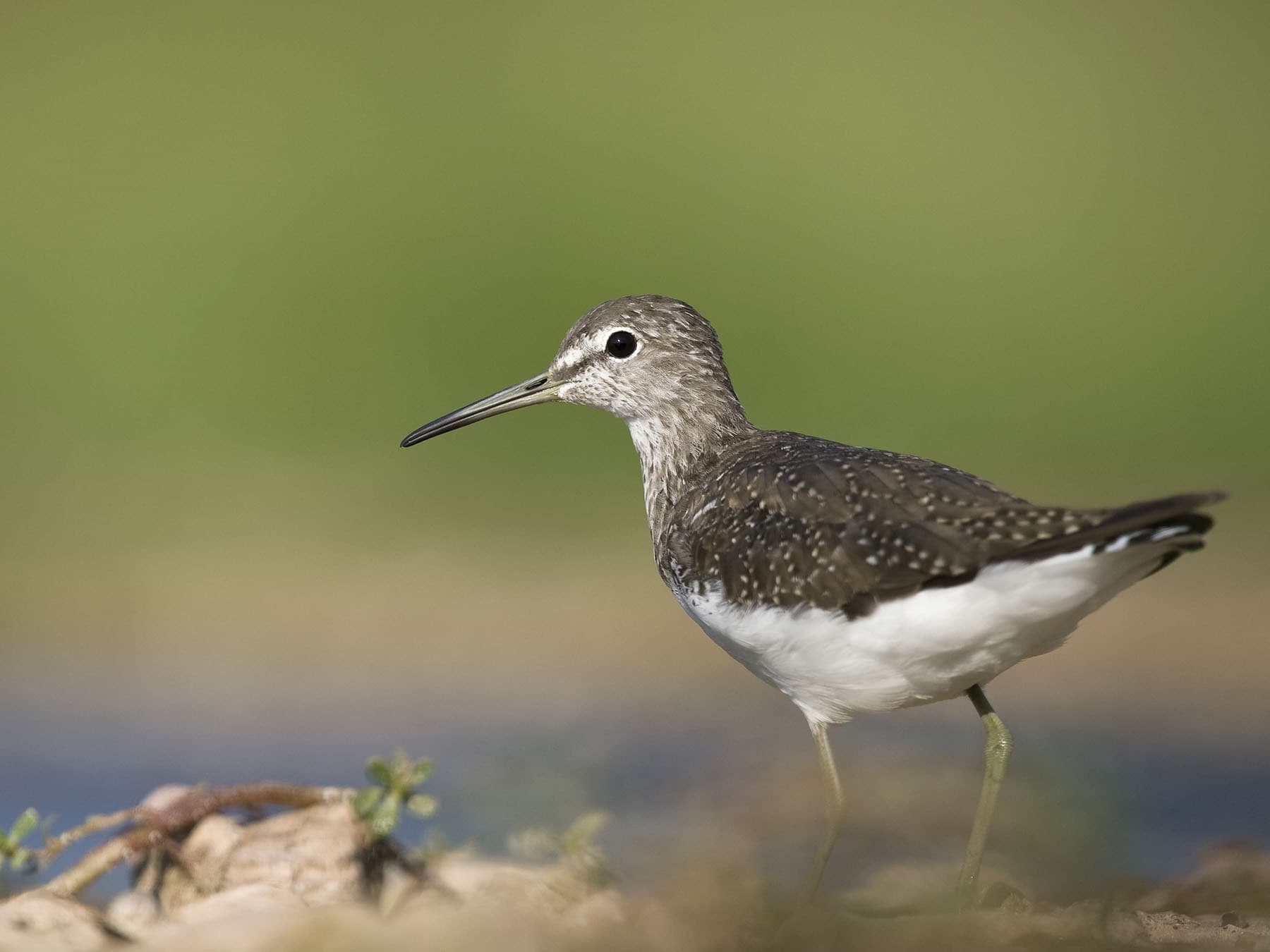
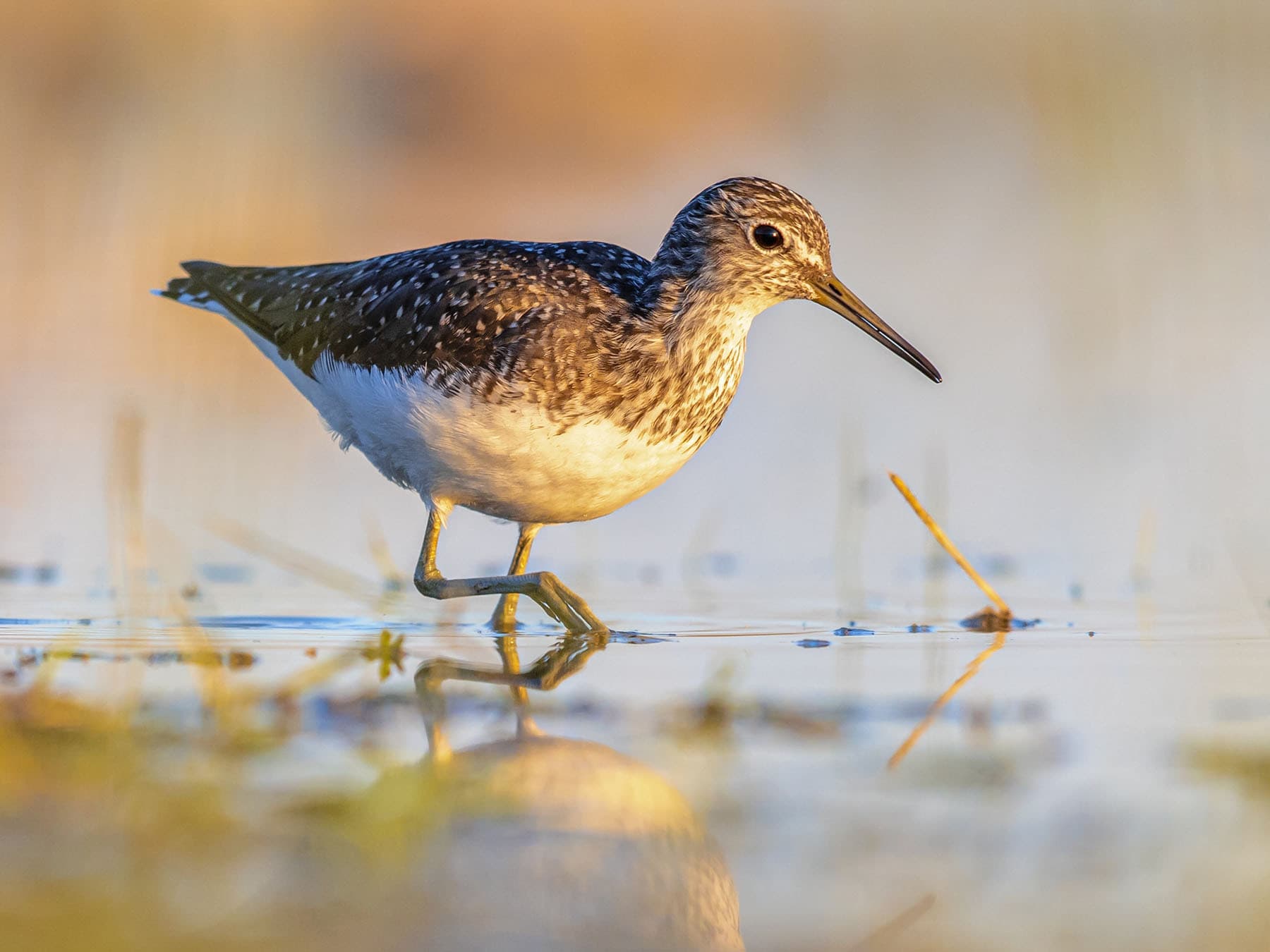
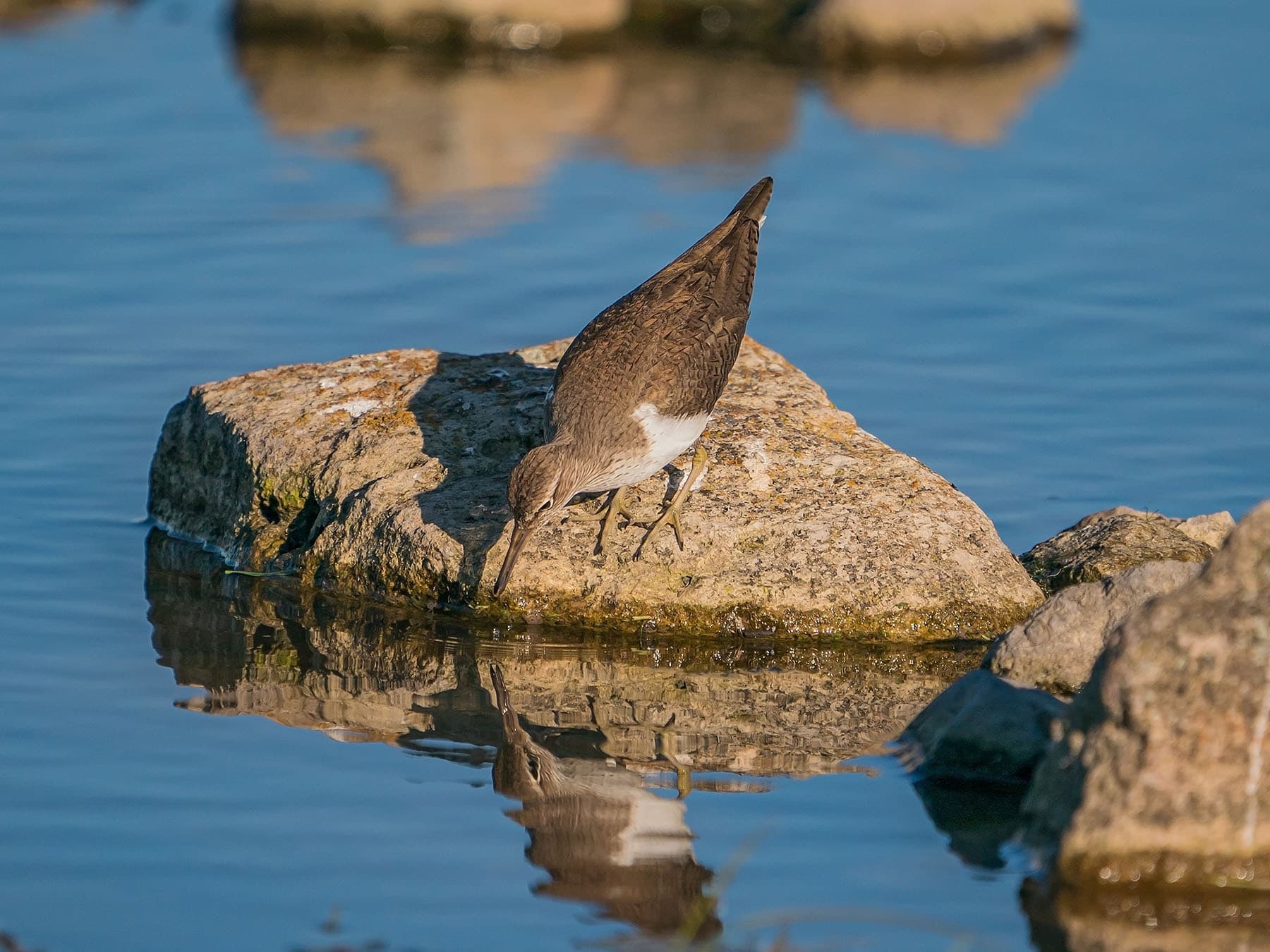
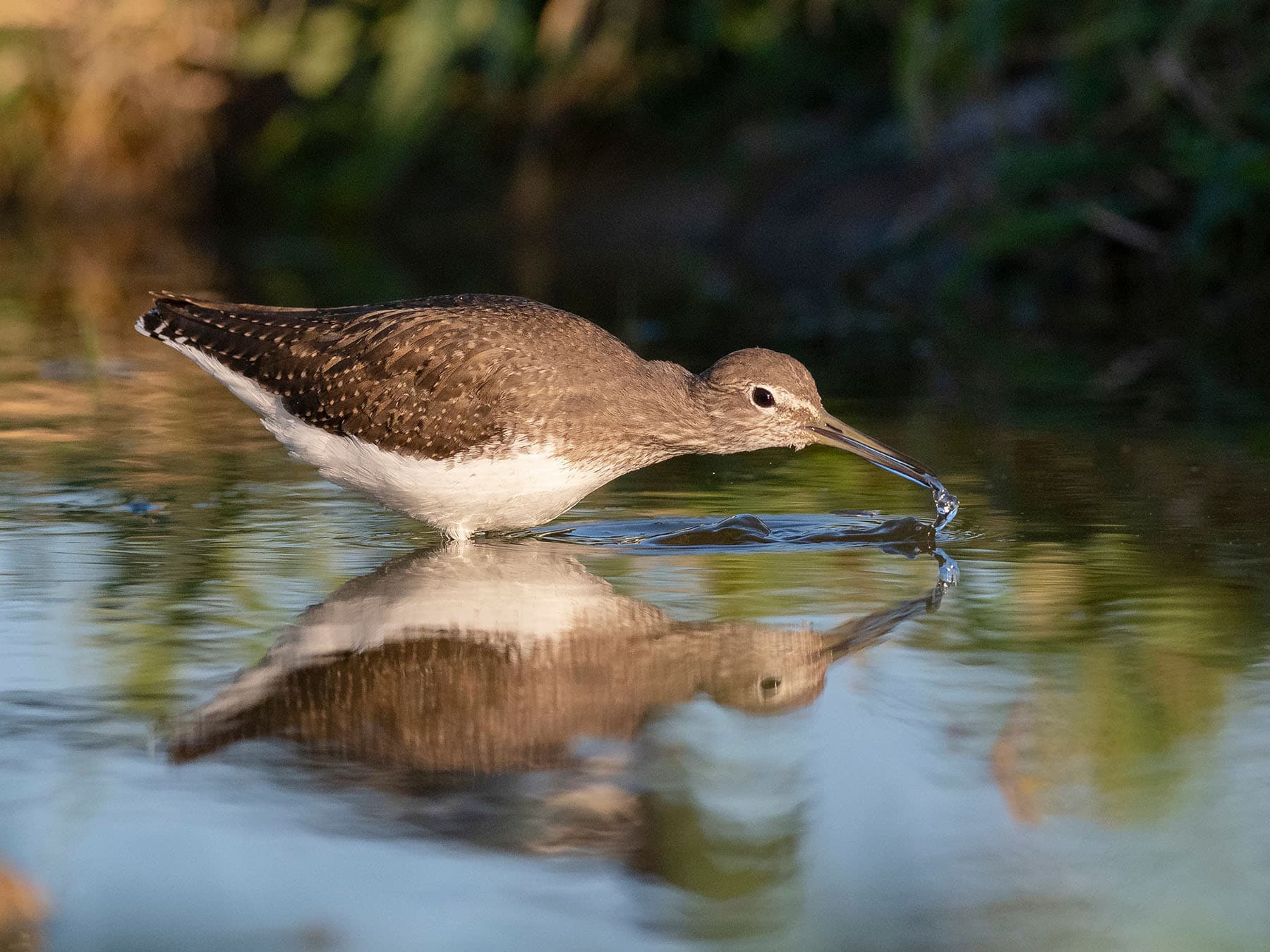
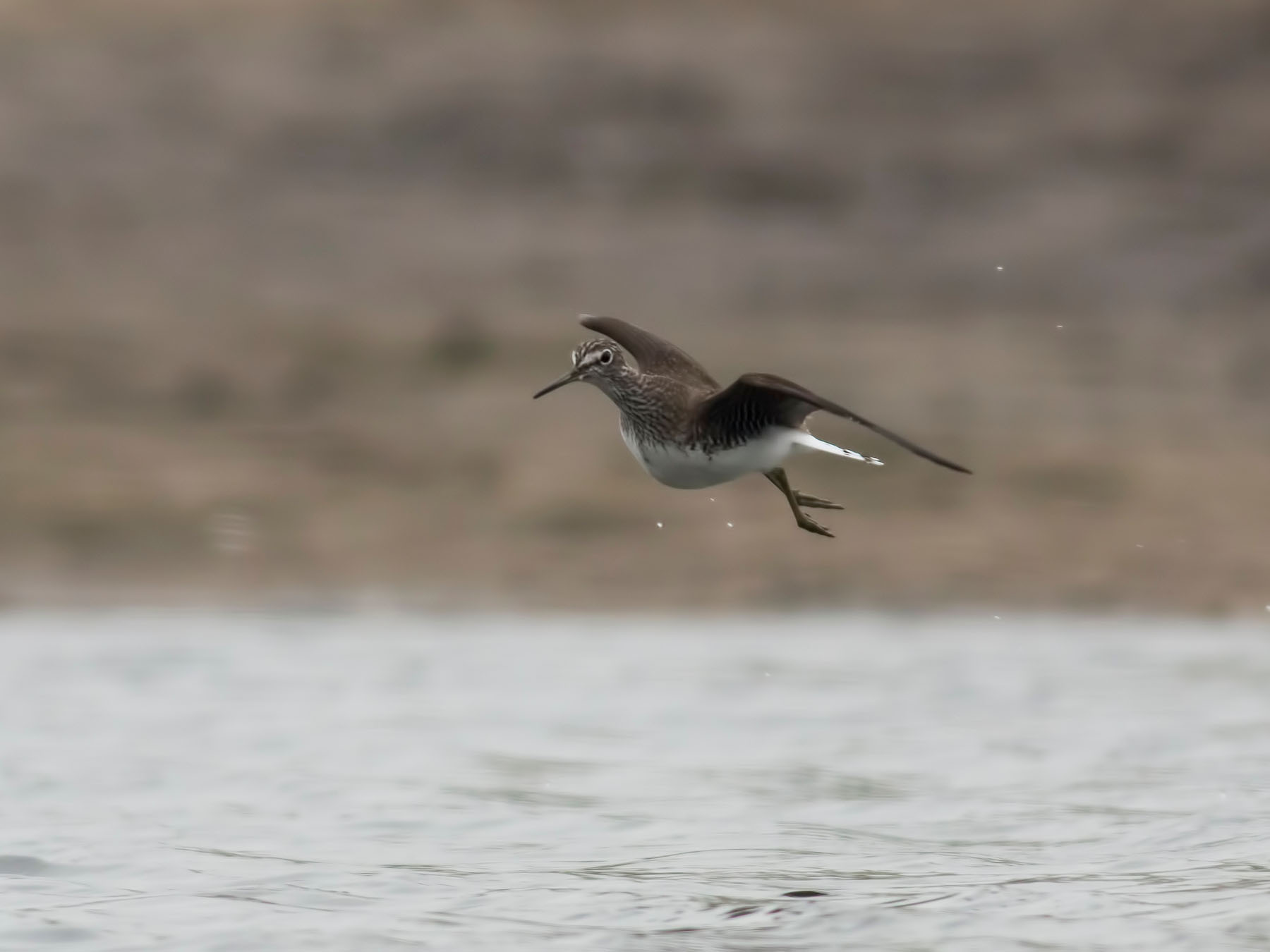
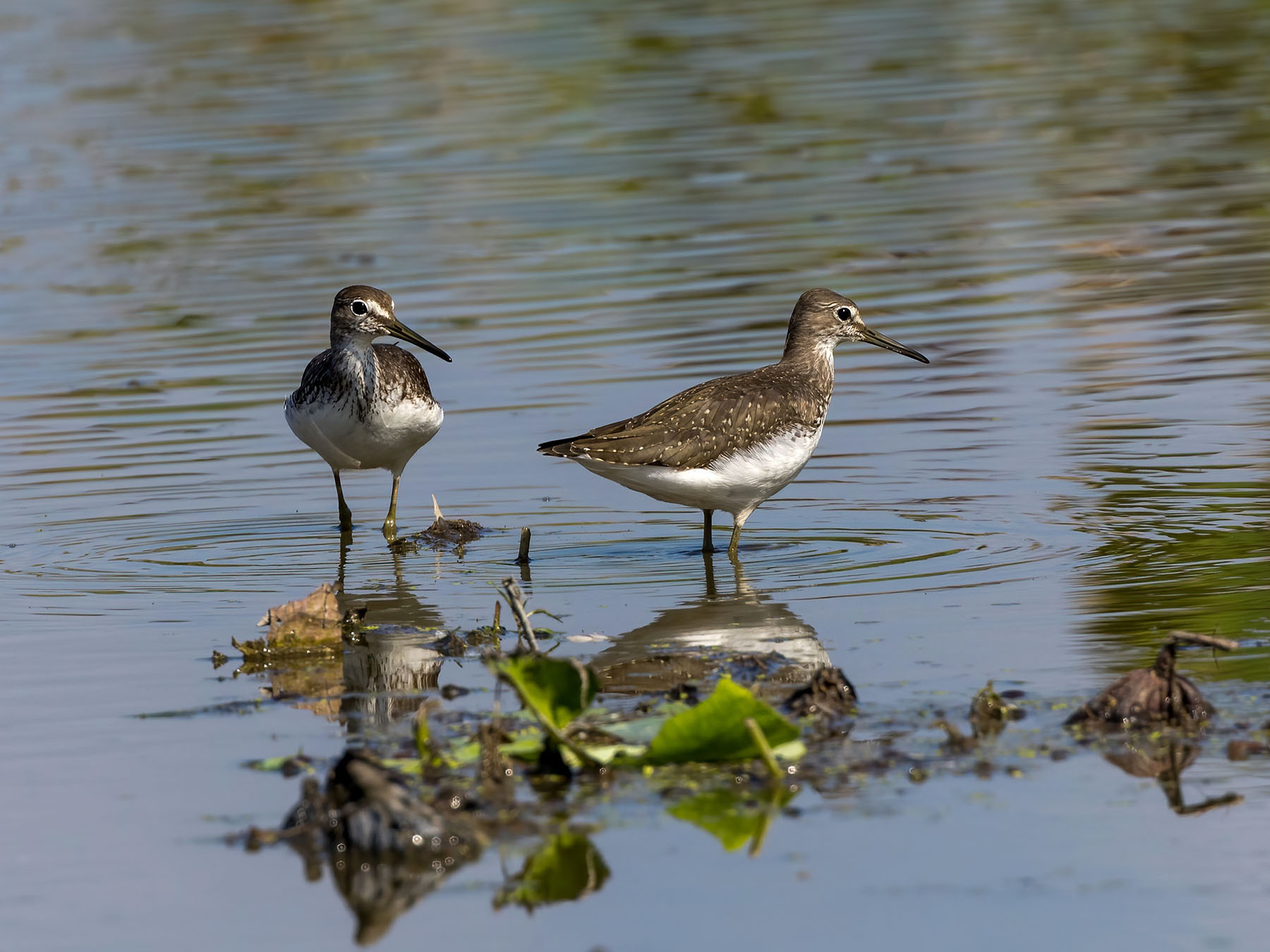
As their name might suggest, a key defining feature of green sandpipers is the olive green-brown plumage on their upper back and wings, spotted with small light buff markings. Males and females are alike in colouring: their rump is white, and their tail – also white – is barred with thick black bands.
Green sandpipers’ have a white belly and a white upper breast, streaked with dark brown, with blotches on the lower breast and flanks. They have a grey-olive head, with a narrow white eye ring, and a white stripe in front of the eye.
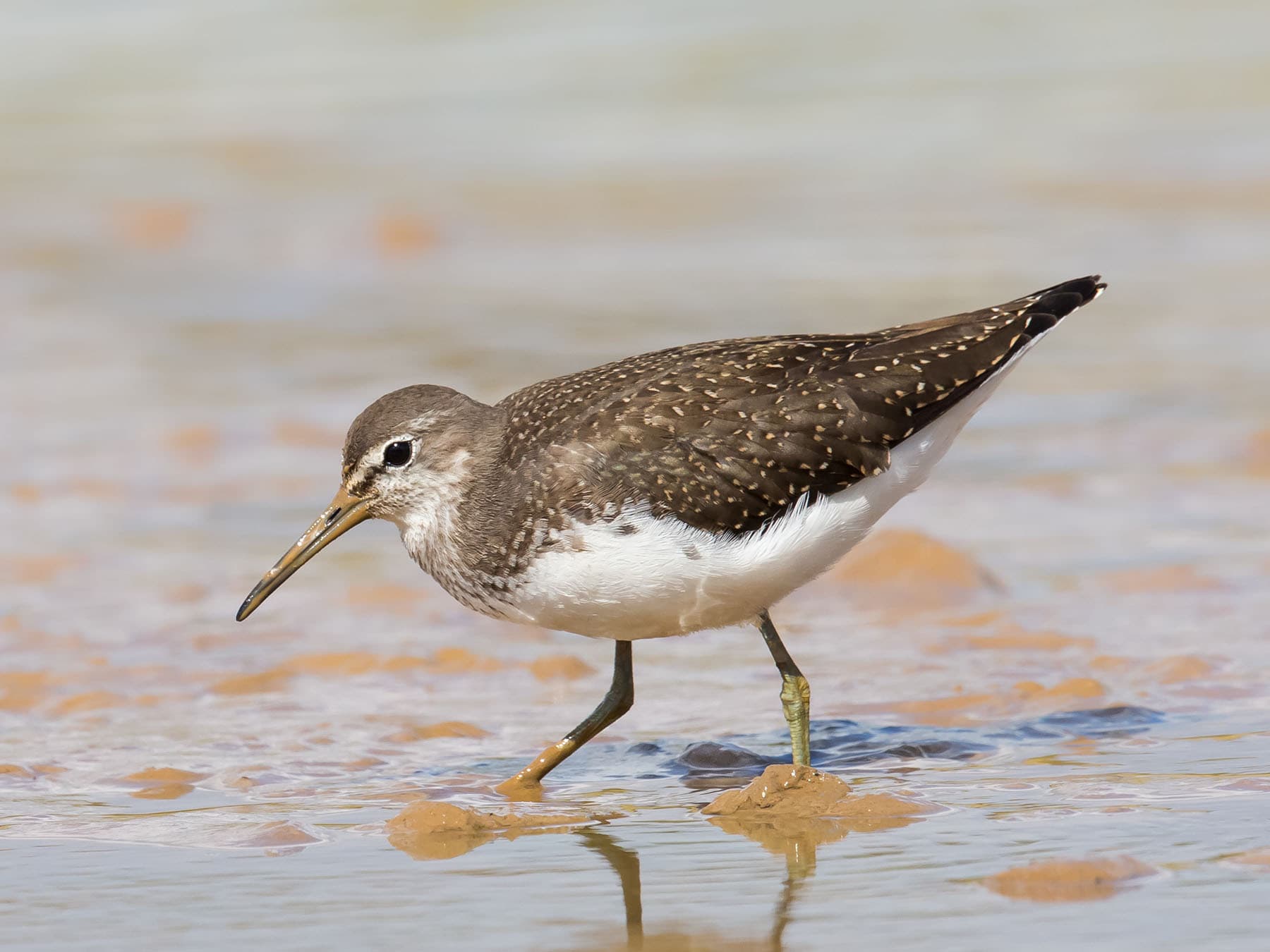
Some light white streaking is visible across the crown, chin and throat. Their bill is straight, thin, and olive green, tipped with black, and their legs and feet are a dark greenish-grey.
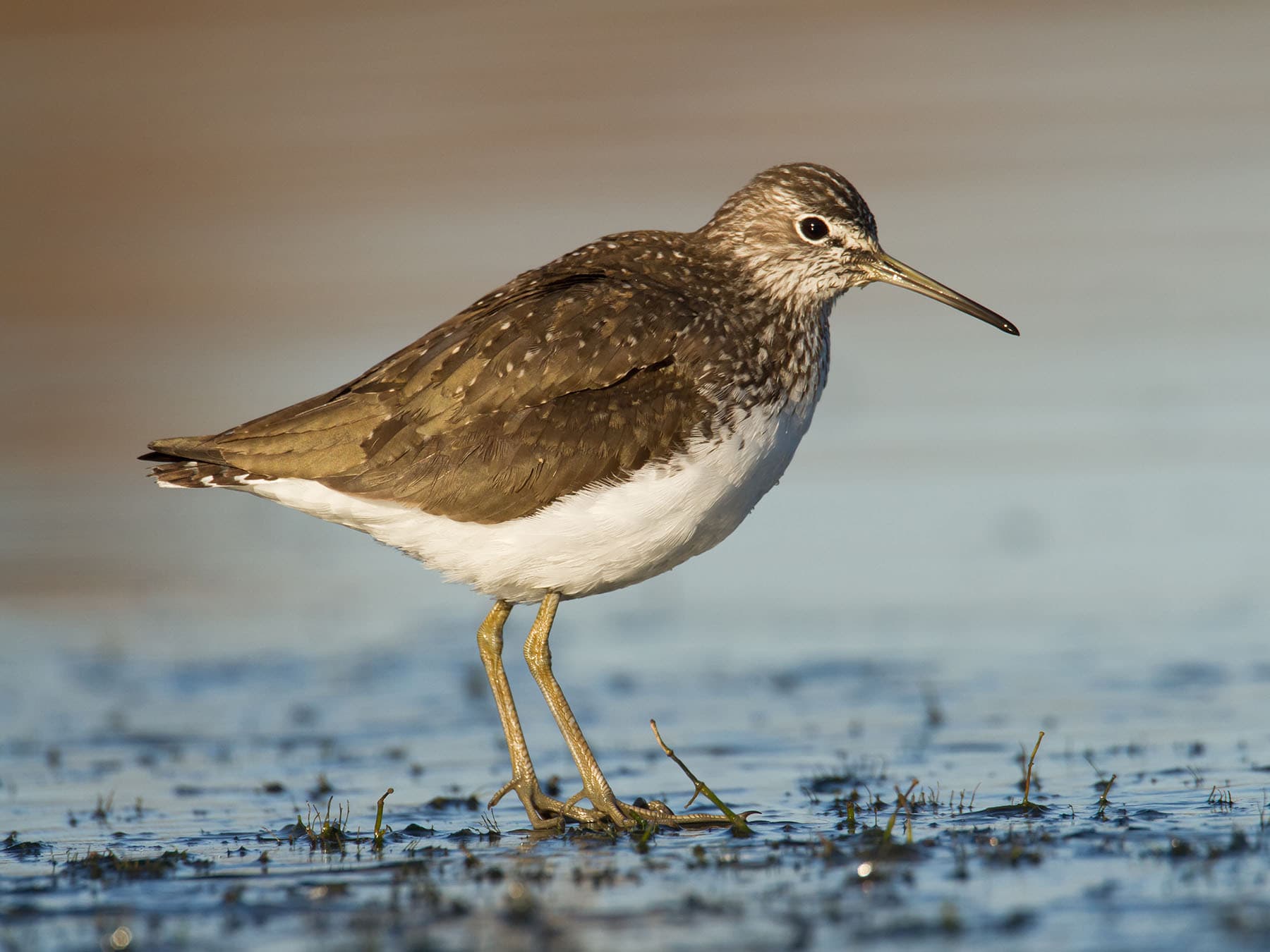
Once breeding has finished, both male female green sandpipers moult into an alternative, paler plumage, with a grey-brown head and darker streaking across the breast.
Juvenile green sandpipers resemble non-breeding adults, but have an unmarked brown-white breast and upperparts, with small buff spots on their upper back and wings.
How big are Green Sandpipers?
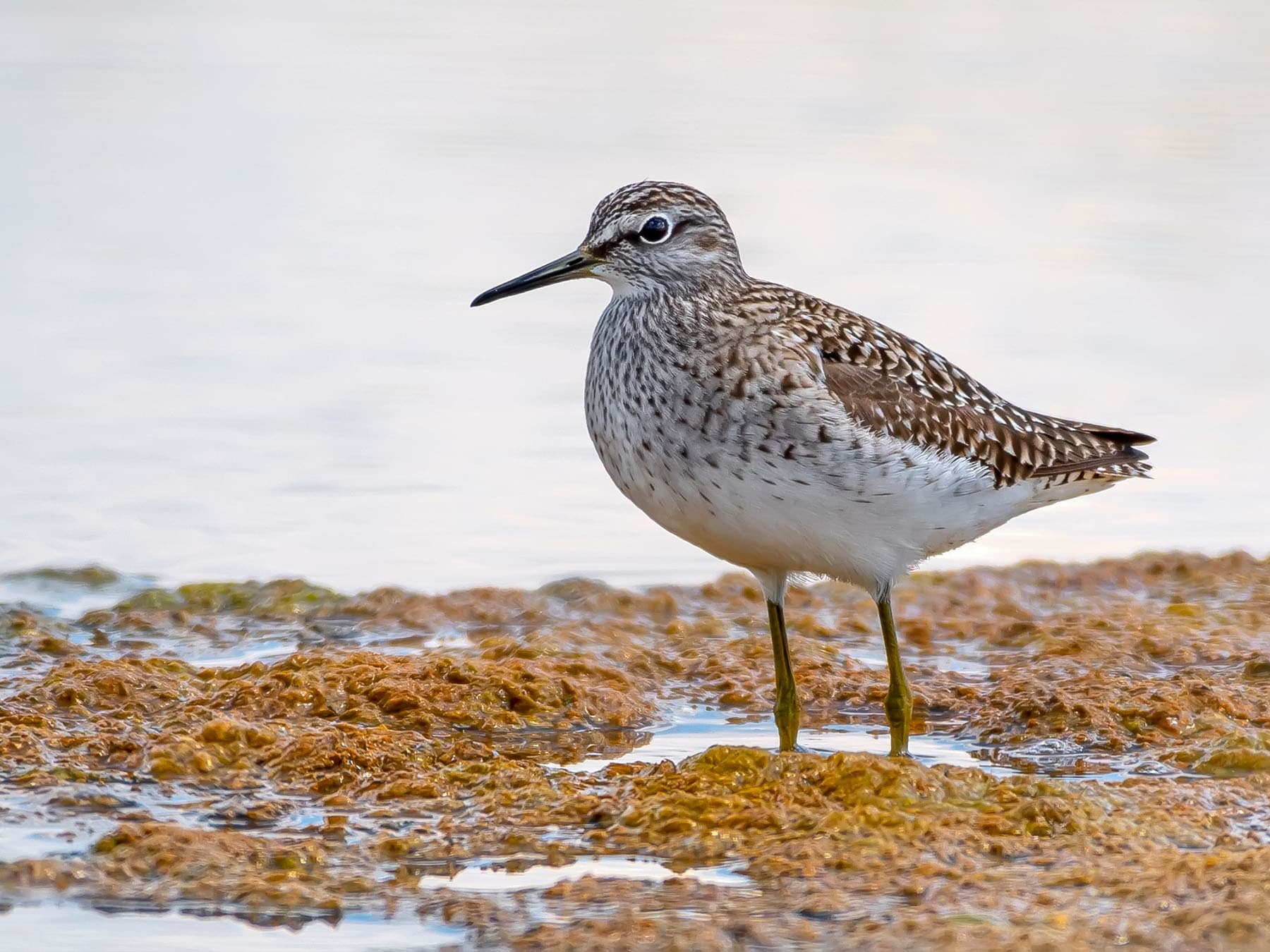
Green sandpipers are considered medium-sized waders, with females slightly larger and heavier than males. Average size ranges for the species are as follows:
- Length: 21 cm to 24 cm (8.3 in to 9.4 in)
- Wingspan: 57 cm to 61 cm (22 in to 24 in)
- Weight: 53 g to 119 g (1.9 oz to 4.2 oz)
Its size
Adults- Length
- 21–24 cm
- Wingspan
- 41–46 cm
- Weight
- 50–110 g
Its song and calls
What sound does a Green Sandpiper make?
Male green sandpapers can be heard making musical calls during flight, which sound like “weet-weet-kooi-kooi-eet-eet” A frequently heard squeaky “weet” call may be heard in flight or when flushed.
- Song0:00 / 2:33
Recorded in Dalarnas län, Sweden · May 2023
- Call0:00 / 0:13
Recorded in Gelderland, Netherlands · September 2018
When and where to see it
OctoberIn season
Most recorded in October
- 1. South Lanarkshire0.72%
- 2. Rutland0.63%
- 3. Carlow0.46%
- 4. South Yorkshire0.41%
- 5. Essex0.36%
Each dot is a county, state or province: the bigger and darker, the larger the bird’s share of that place’s bird records that month. Grey dots: no regular records. The ringed point is the centre of the bird’s records this month; the arrow shows how it moved since last month, and the dashed loop its path through the year. “Arrivals” colours places where it becomes regular this month (orange) or is in its last regular month (grey). GBIF eBird Observation Dataset, 2019–2024. Map data: Natural Earth, US Census Bureau; place centres © OpenStreetMap contributors.
In your area
See when the Green Sandpiper is recorded in your county, state or province.
How often the Green Sandpiper turns up in the UK and Ireland through the year, from birdwatchers' records.
United Kingdom
Winter visitor · regularly Jun–Apr · most records in August
Ireland
Winter visitor · regularly Jul–Apr · most records in September
Show as a table
| Month | United Kingdom | Ireland |
|---|---|---|
| January | 0.058% (regular) | 0.007% (regular) |
| February | 0.055% (regular) | 0.014% (regular) |
| March | 0.074% (regular) | 0.016% (regular) |
| April | 0.082% (regular) | 0.014% (regular) |
| May | 0.006% | 0.001% |
| June | 0.073% (regular) | 0.008% |
| July | 0.29% (regular) | 0.027% (regular) |
| August | 0.48% (regular) | 0.056% (regular) |
| September | 0.28% (regular) | 0.067% (regular) |
| October | 0.11% (regular) | 0.029% (regular) |
| November | 0.092% (regular) | 0.024% (regular) |
| December | 0.068% (regular) | 0.020% (regular) |
Recorded regularly in
Worldwide: recorded regularly in 117 countries
Countries where it was recorded in at least 3 of the 6 years 2019–2024. Linked countries have their own bird list.
Europe (42)
- Åland Islands
- Albania
- Austria
- Belarus
- Belgium
- Bulgaria
- Croatia
- Czechia
- Denmark
- Estonia
- Finland
- France
- Germany
- Greece
- Guernsey
- Hungary
- Ireland
- Isle of Man
- Italy
- Jersey
- Kosovo
- Latvia
- Lithuania
- Luxembourg
- Malta
- Moldova
- Montenegro
- Netherlands
- North Macedonia
- Norway
- Poland
- Portugal
- Romania
- Russia
- Serbia
- Slovakia
- Slovenia
- Spain
- Sweden
- Switzerland
- Ukraine
- United Kingdom
Africa (32)
Asia (43)
- Armenia
- Azerbaijan
- Bahrain
- Bangladesh
- Bhutan
- Cambodia
- China
- Cyprus
- Georgia
- Hong Kong SAR China
- India
- Indonesia
- Iran
- Iraq
- Israel
- Japan
- Jordan
- Kazakhstan
- Kuwait
- Kyrgyzstan
- Laos
- Lebanon
- Malaysia
- Mongolia
- Myanmar (Burma)
- Nepal
- Oman
- Pakistan
- Palestinian Territories
- Philippines
- Qatar
- Saudi Arabia
- Singapore
- South Korea
- Sri Lanka
- Taiwan
- Tajikistan
- Thailand
- Turkey
- United Arab Emirates
- Uzbekistan
- Vietnam
- Yemen
Data: EOD – eBird Observation Dataset (Cornell Lab of Ornithology), accessed via GBIF.org, CC BY 4.0. Records from 2019–2024, aggregated and filtered by Birdfact. How these lists are made
What is the habitat of a Green Sandpiper?
Preferred breeding habitats include sparse tundra landscapes, and damp areas of woodland, swampy forests and pine, spruce and alder woods near to rivers.
In winter, the presence of trees in their habitat is less important and migrant green sandpipers take up residence at marshes, lakes, gravel pits and rivers. They are also commonly seen at sewage works, watercress beds, and flooded rice paddies.
What is the range of a Green Sandpiper?
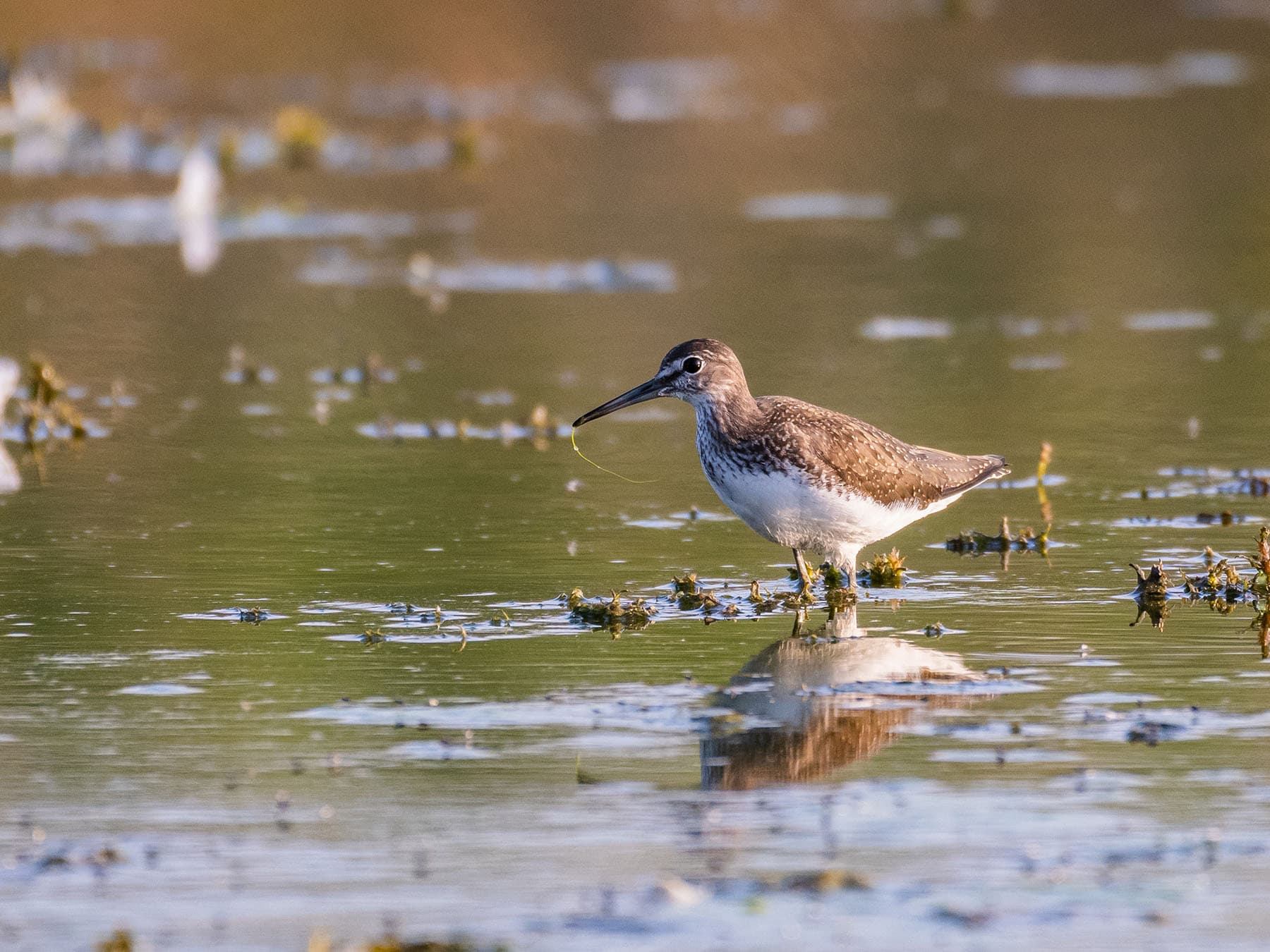
Green sandpipers breed in northern Europe, from northern Norway in the west across Asia to eastern Siberia and north-west China in the east, with a small limited population in central Kyrgyzstan.
Small-scale isolated breeding does occur in northern Scotland, but typically the British Isles only form part of the species’ winter range.
In autumn, green sandpipers head south to spend winter months in southern Europe, the North African coast, sub-Saharan Africa as far south as Botswana and Zimbabwe, and east throughout Turkey, the Middle East and into India and South East Asia.
Where do Green Sandpipers live?
Northern and eastern Europe is home to the largest populations of breeding green sandpipers, with upper estimations of up to 20,000 pairs in Norway, 40,000 pairs in Sweden, 80,000 pairs in Finland, and more than 100,000 pairs in Russia.
How rare are Green Sandpipers?
To spot a green sandpiper in the UK would definitely count as quite a rare sighting, with only very limited breeding recorded in isolated regions of northern Scotland, and between 300 and 900 birds spending winters on British shores.
Where can you see Green Sandpipers in the UK?
It’s most common to see a green sandpiper in the UK between July and March, once they have finished breeding in their usual nesting grounds further into northern Europe.
The most likely spots to score a sighting of a green sandpiper include lowlands of Wales and southern and central England, and southern Ireland.
A handful of migrant green sandpipers are recorded each year at the Lemsford Springs reserve in Hertfordshire, with observation of ringed birds indicating that they return to the same wintering spots each year.
Migration
Do Green Sandpipers migrate?
Most green sandpipers do migrate, requiring two distinct habitats for breeding and for overwintering. Winters are spent around the edges of freshwater lakes, ponds, reservoirs and marshes, as well as sewage works and man-made gravel pits.
In summer, breeding green sandpipers are found at inland wetlands, bordered by flooded woodlands.
Where do Green Sandpipers migrate from?
In early spring, green sandpipers leave their wintering grounds in south Asia Mediterranean, and north and central Africa. The destination of these spring migrations is into breeding grounds in northern Europe, central Asia and as far east as eastern Siberia.
Are Green Sandpipers native to the UK?
Green sandpipers are not native to the UK, although a couple of pairs have been reported as breeding in northern Scotland. Their usual breeding grounds are found further north, in Scandinavia and across northern Russia.
According to the BTO data from 2011 to 2015, up to 290 individuals may spend the winter in the UK, but for most, the final winter destination is deeper south, into north and sub-Saharan Africa and in parts of the Mediterranean.
Tips for seeing it
- Look for Green Sandpipers near freshwater habitats, especially small ponds and streams.
- Listen for their distinctive 'tlu-it-it' call when flushed.
- Observe their quick, darting flight and white rump, visible when they take off.
- In the UK, they're more common during spring and autumn migrations.
What it eats
What do Green Sandpipers eat?
The diet of green sandpipers consists mainly of invertebrates, with aquatic and terrestrial insects, insect larvae, small crustaceans and spiders representing the main foods taken. Fish are also sometimes caught and eaten.
Green sandpipers mainly hunt their prey by sight, picking crustaceans and invertebrates off the water’s surface. They do also occasionally find food by probing the wet ground and shallow waters with their long bill. They are also observed to turn over large underwater stones in search of leeches and worms.
What do baby Green Sandpipers eat?
Young green sandpipers eat worms, spiders, centipedes and millipedes.
Nesting and breeding
Where do Green Sandpipers nest?
Green sandpipers nest in trees, but you won’t spot them making their own nests as they raise their young in abandoned nests built by other species, particularly woodpigeons, crows, fieldfares and thrushes as well as grey squirrels’ dreys.
Occasionally they will lay their eggs in a ground-level tangle of roots or tucked inside low-lying vegetation, where they use a shallow scrape in the ground with no added lining.
What do Green Sandpiper eggs look like?
A typical green sandpiper clutch contains 4 cream to pale olive eggs, although sometimes only 2 or 3 will be laid. Eggs are mottled with reddish-brown to purple markings, and measure 39.1 mm × 28 mm (1.5 in by 1.1 in). Both sexes share the incubation, which lasts for 20 to 23 days.
Do Green Sandpipers mate for life?
As far as we know, green sandpipers are monogamous during the breeding season, raising one brood together each year. Females leave ahead of males for wintering sites, up to two months ahead of males.
Males arrive ahead of females at the start of the breeding season and compete fiercely with rivals when forming pairs.
Behaviour
Are Green Sandpipers aggressive?
Green waders may feed in groups, but are more frequently considered solitary birds, who display intense aggression when territorial clashes occur – which they frequently do, all year round.
Aggressive displays include chasing off encroaching birds, low-key warning calls and full-on contact disputes in which injuries may be sustained.
Where do Green Sandpipers sleep at night?
In winter, communal night-time roosts of green sandpipers gather at gravel pits and on river banks at high tides. During the breeding season, they sleep in trees near their nest site.
Lifespan and predators
How long do Green Sandpipers live?
The oldest green sandpiper identified was a ringed individual aged 9 years and 11 months, but usually a lifespan of around 5 years is expected. Breeding takes place for the first time in either their second or third calendar year.
What are the predators of Green Sandpipers?
Birds of prey and mammals such as foxes are among the main predators of green sandpipers. Mink and weasels may opportunistically prey on young sandpipers.
Are Green Sandpipers protected?
The Wildlife and Countryside Act, 1981 includes legislation that protects green sandpipers against being knowingly killed, injured or hunted. The same act safeguards their eggs and nests against being destroyed or damaged.
Are Green Sandpipers endangered?
Although in the UK, they are classed as an Amber species in the British Birds of Conservation Concern list, green sandpipers are classified as a species of least concern across the whole of their range.
Habitat change has caused contractions of their wintering grounds in the UK, which has led to concern over population decline.
Conservation
While the Green Sandpiper is listed as Least Concern globally, it faces threats from habitat loss and degradation. Conservation efforts focus on protecting wetland habitats and maintaining water quality in their breeding and wintering grounds.
More photos
3 photos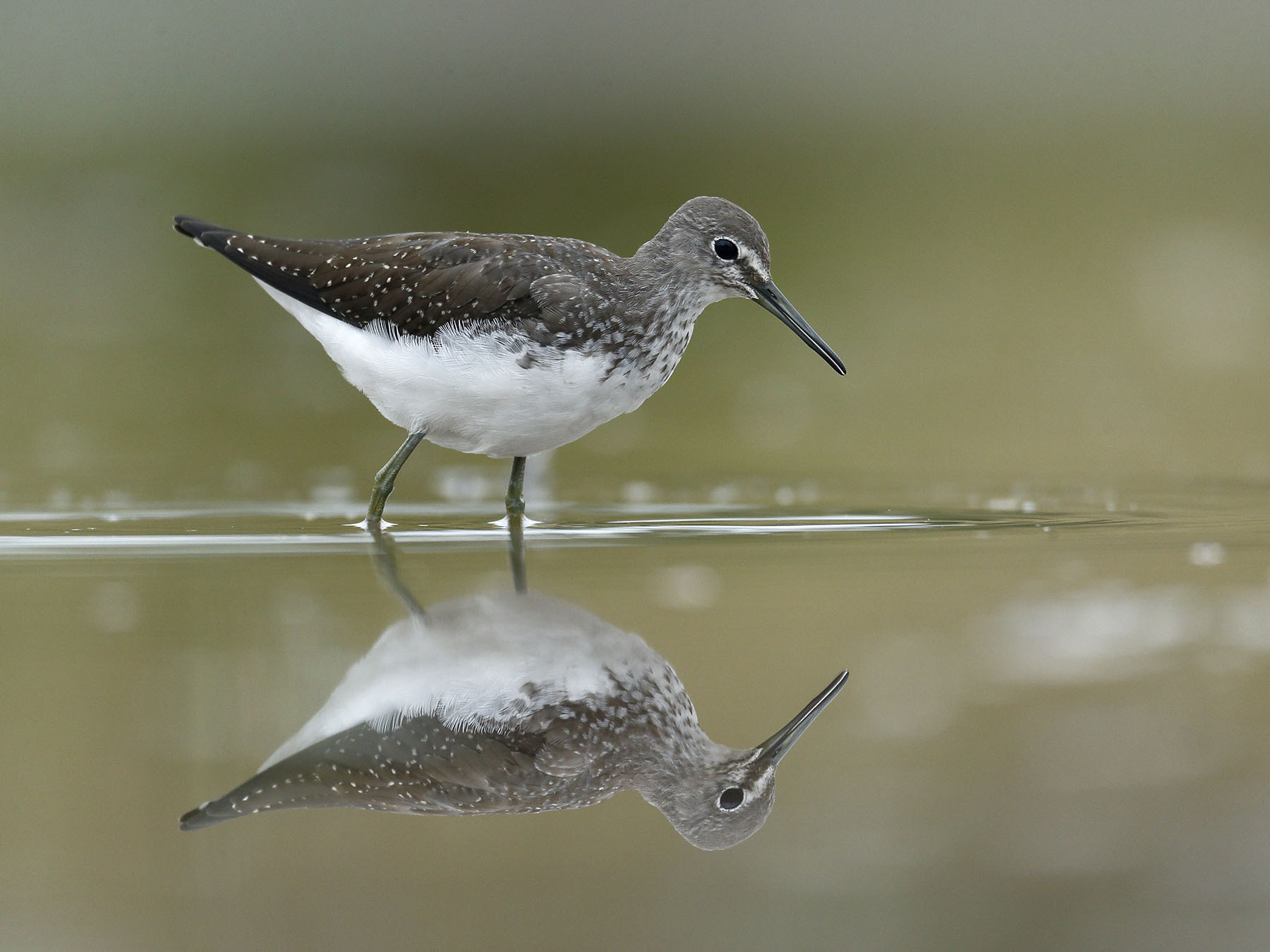
Green Sandpiper guides
1 guidesQuick facts
- Length
- 21–24 cm
- Wingspan
- 41–46 cm
- Weight
- 50–110 g
- Lifespan
- 7–10 years
- Family
- Sandpipers & Snipes
- Migration
- Long-distance Migrant
- Global status (IUCN)
- Least Concern
- World population
- 1,200,000 - 3,600,000 mature individuals
- Population trend
- Increasing
- Scientific name
- Tringa ochropus
Questions
1Do Green Sandpipers breed in the UK?
Only isolated reports of breeding green sandpapers exist in Britain, with just two pairs recorded to be breeding in the north of Scotland between 2013 and 2017. Most green sandpipers spotted in the UK are in passage between breeding in Scandinavia and wintering in Africa and south-eastern Asia.
Sources
3- 1BirdLife International. 2016. Tringa ochropus. The IUCN Red List of Threatened Species 2016: e.T22693243A86680632. Source (opens in a new tab)
- 2EBCC (2015)
- 3Wetlands International (2015)

Checked by
Nathan Cope, founder and editor
Nathan founded Birdfact and leads its writers and contributors in the UK, the US and Canada. He has watched and studied birds for more than ten years, and checks every article and species guide before it’s published.