


Little Stint
Little Sandpiper · Calidris minuta
By the Birdfact teamChecked by Nathan Cope
On this page14 sections
How to recognise it
What do Little Stints look like?
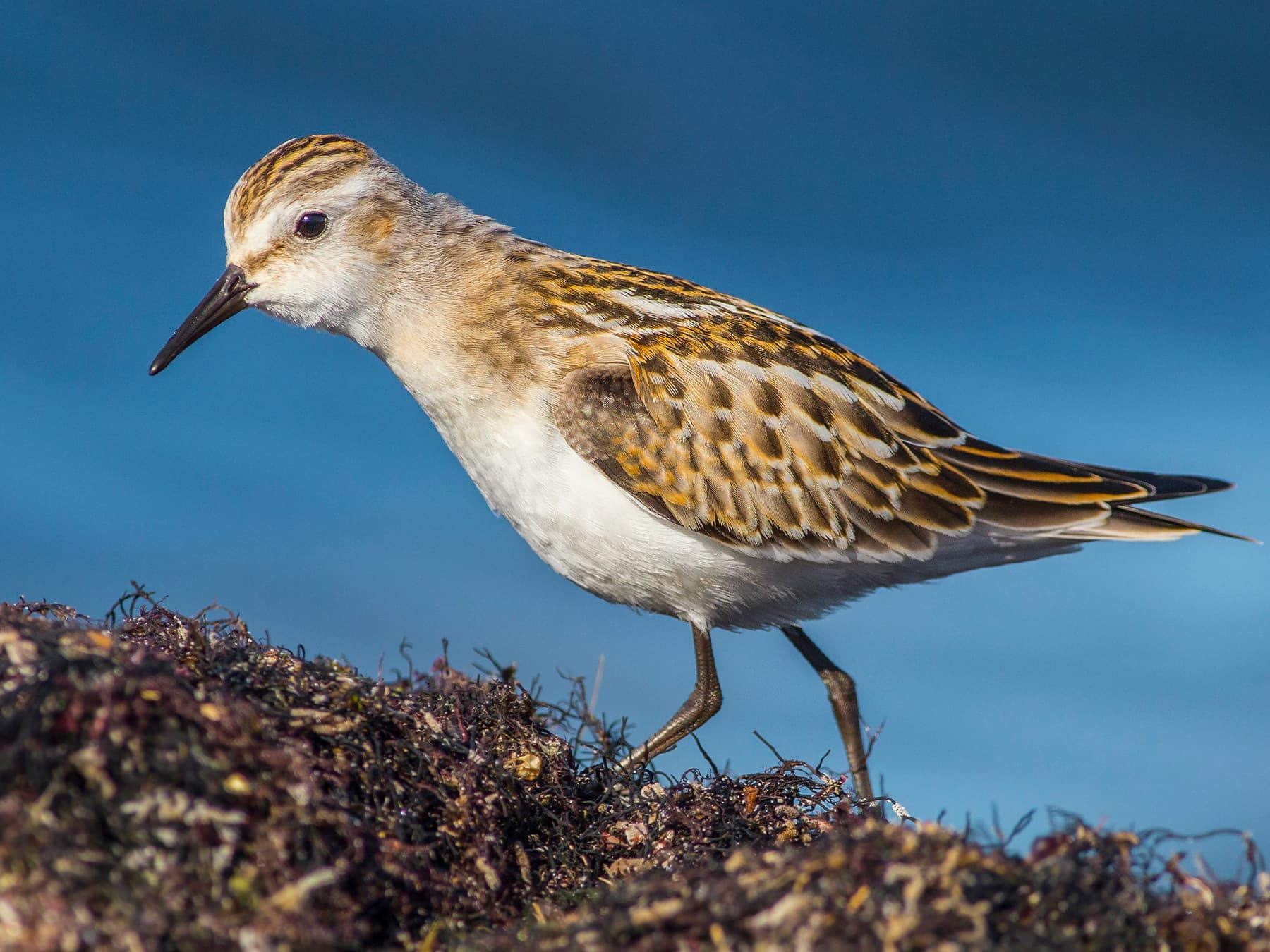
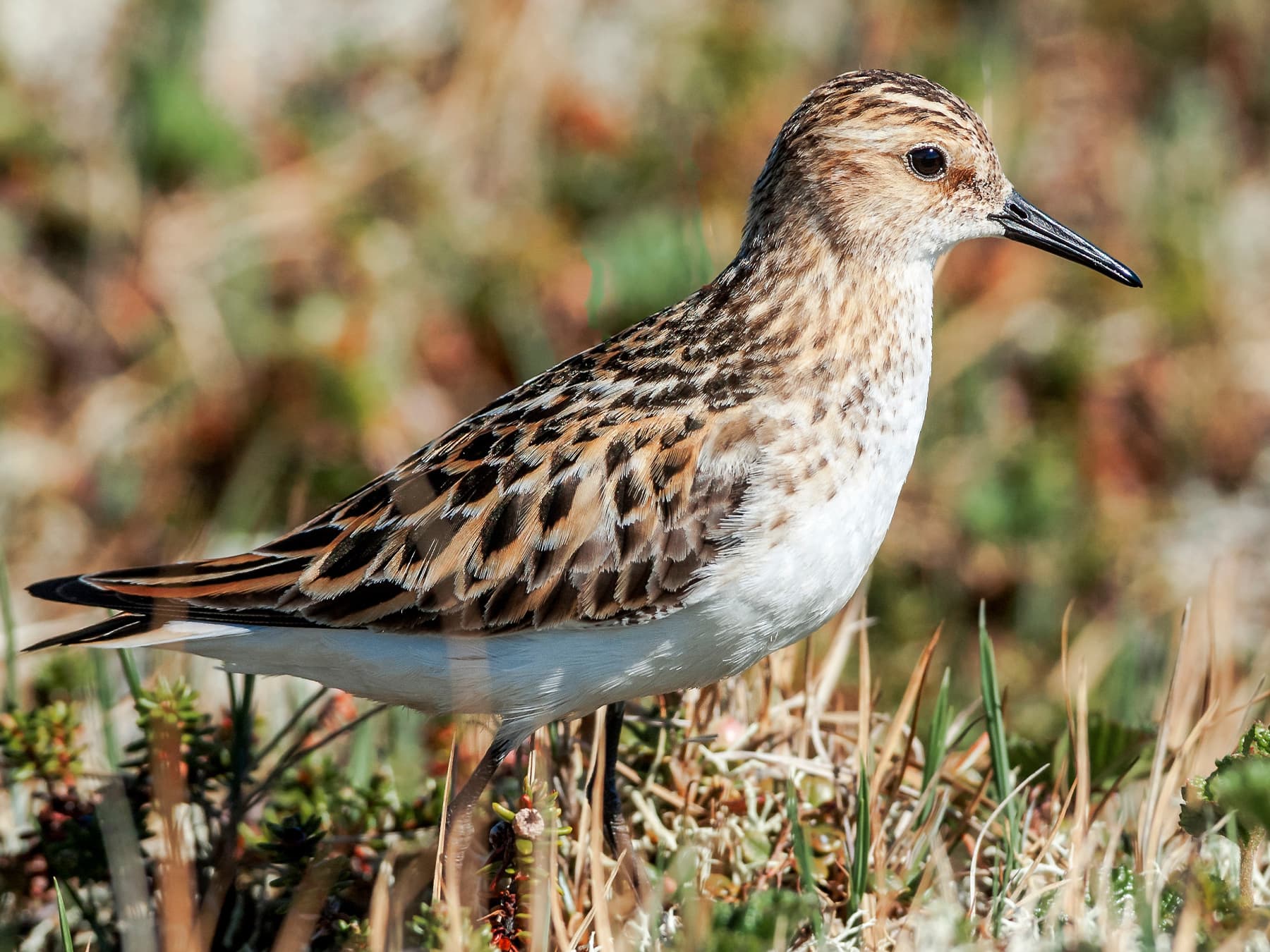
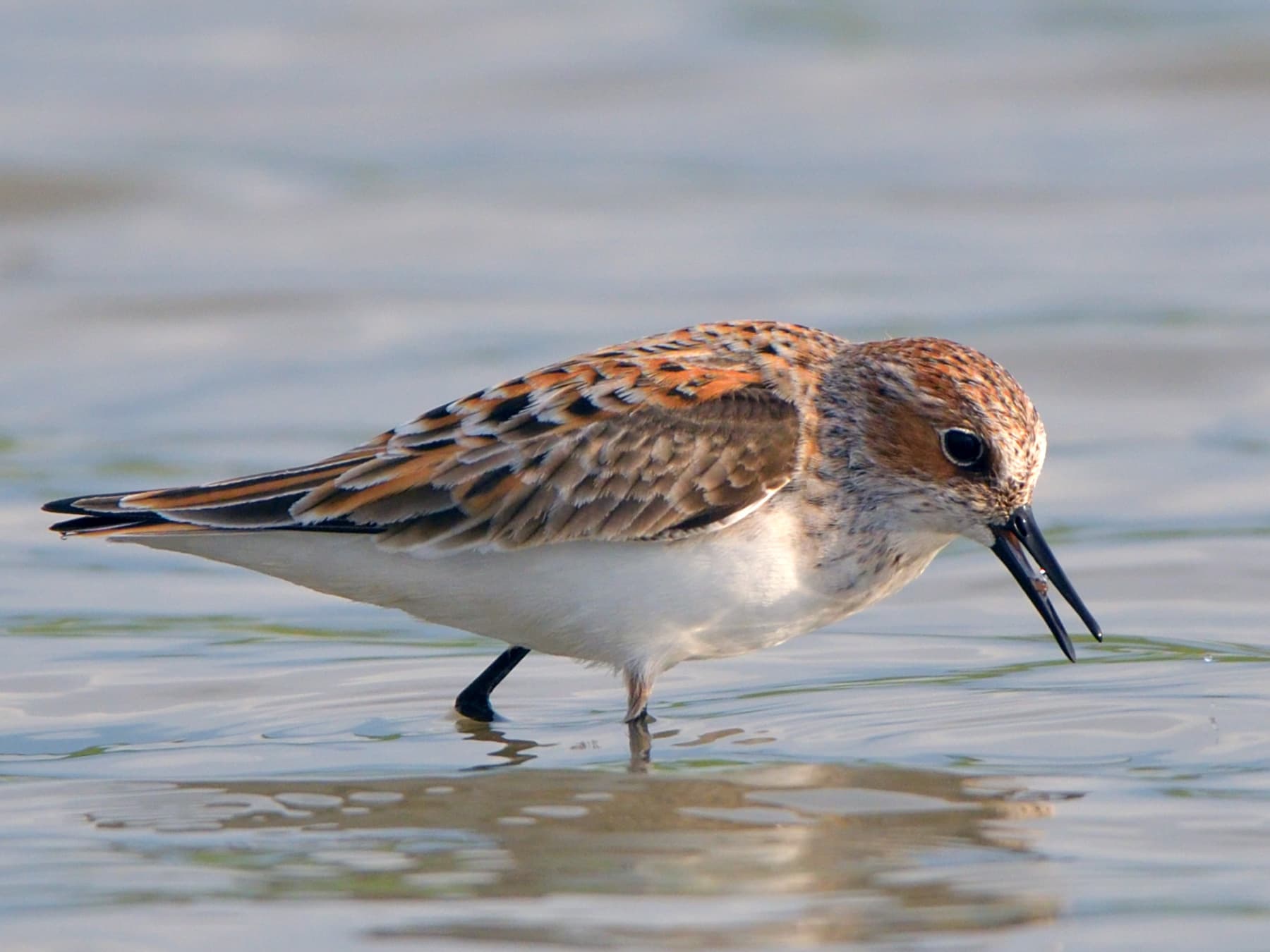
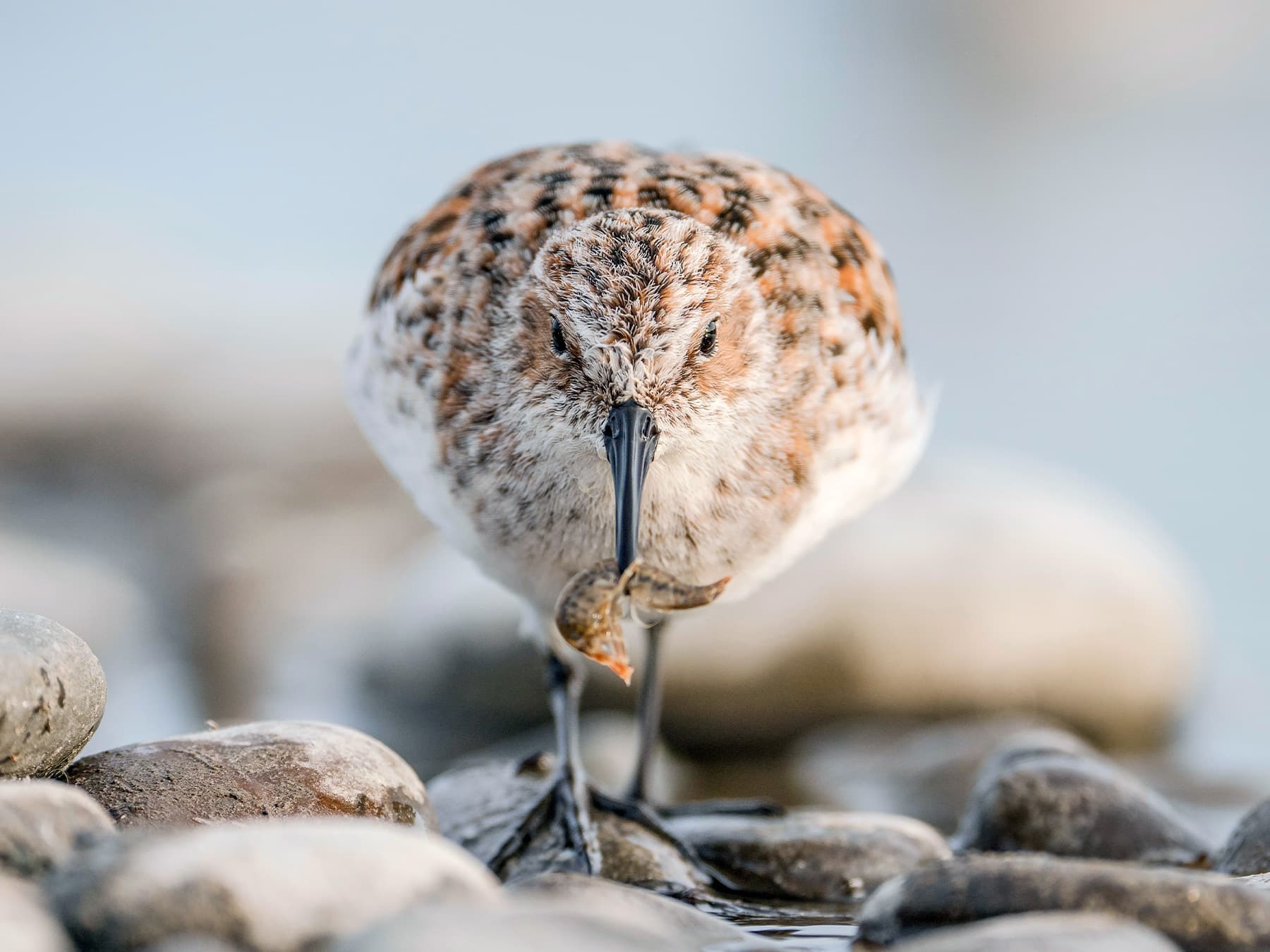
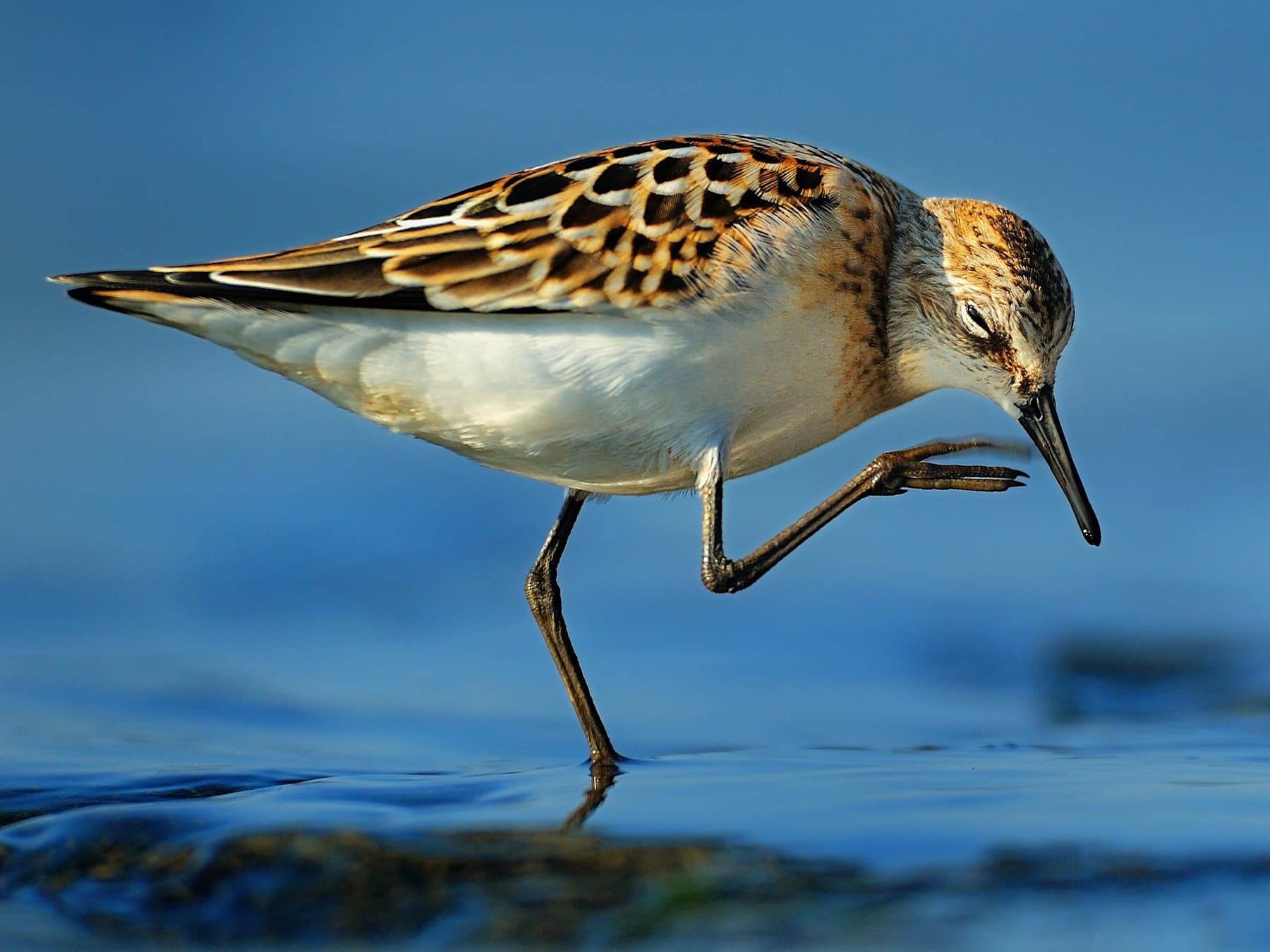
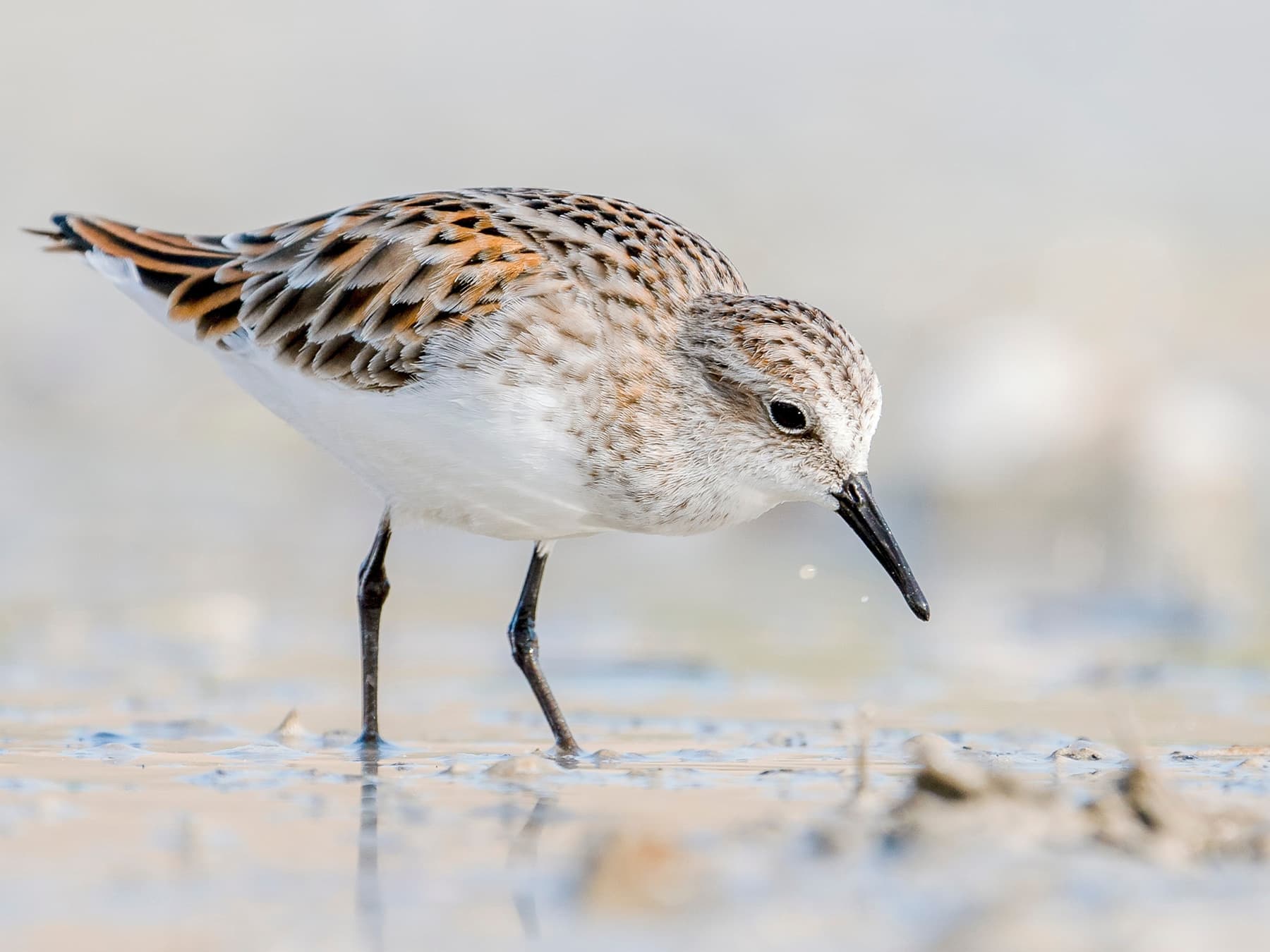
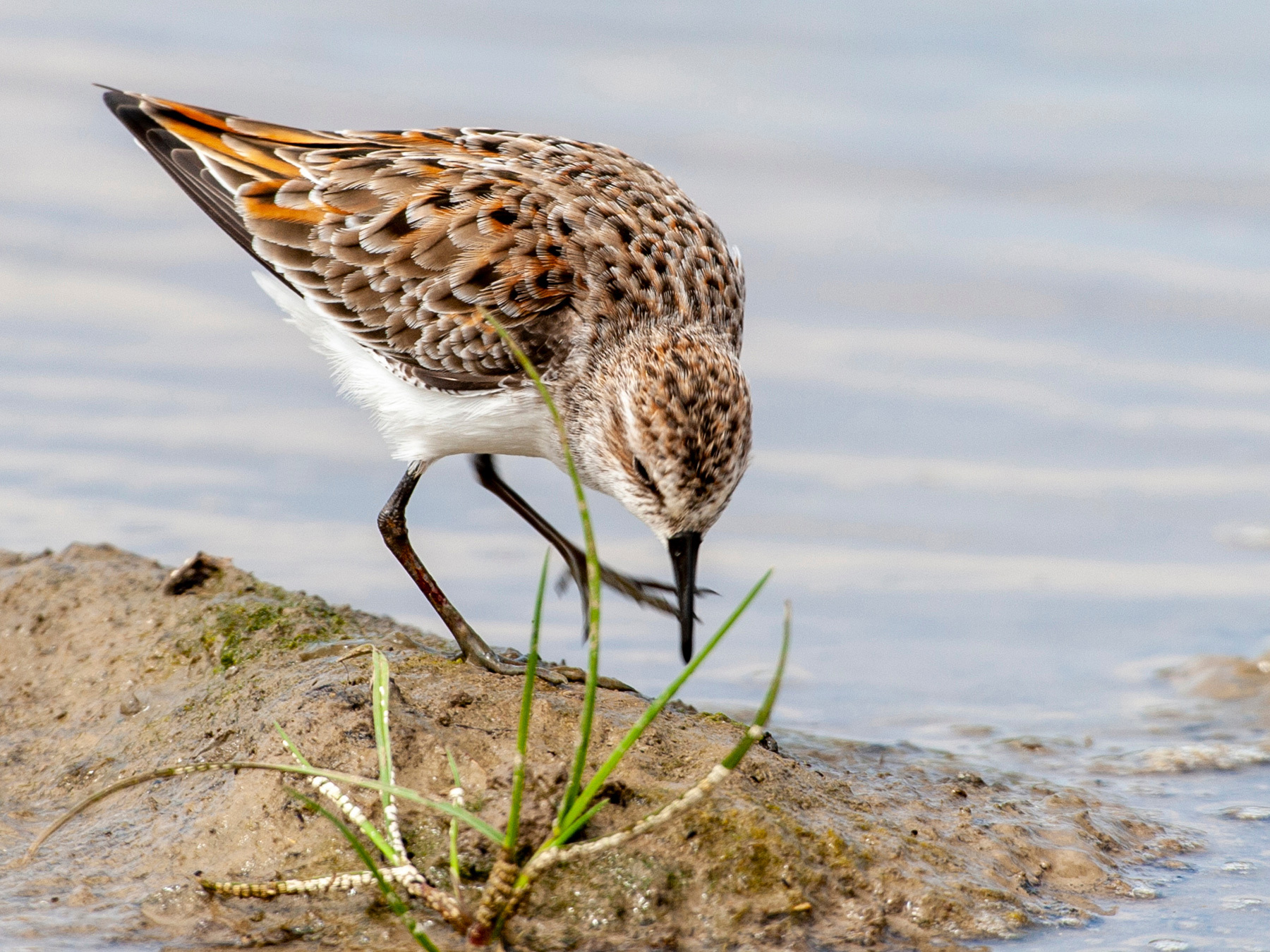
The little stint’s plumage changes through the year, with breeding adults having brownish-grey upperparts that are tipped with rufous edges, and bright white underparts. Breeding adults have orange-buff markings on the breast and yellowish-orange cheeks that are streaked with brown. On the upper back, a distinctive white V can be seen, which helps give a positive identification, even from some distance away.
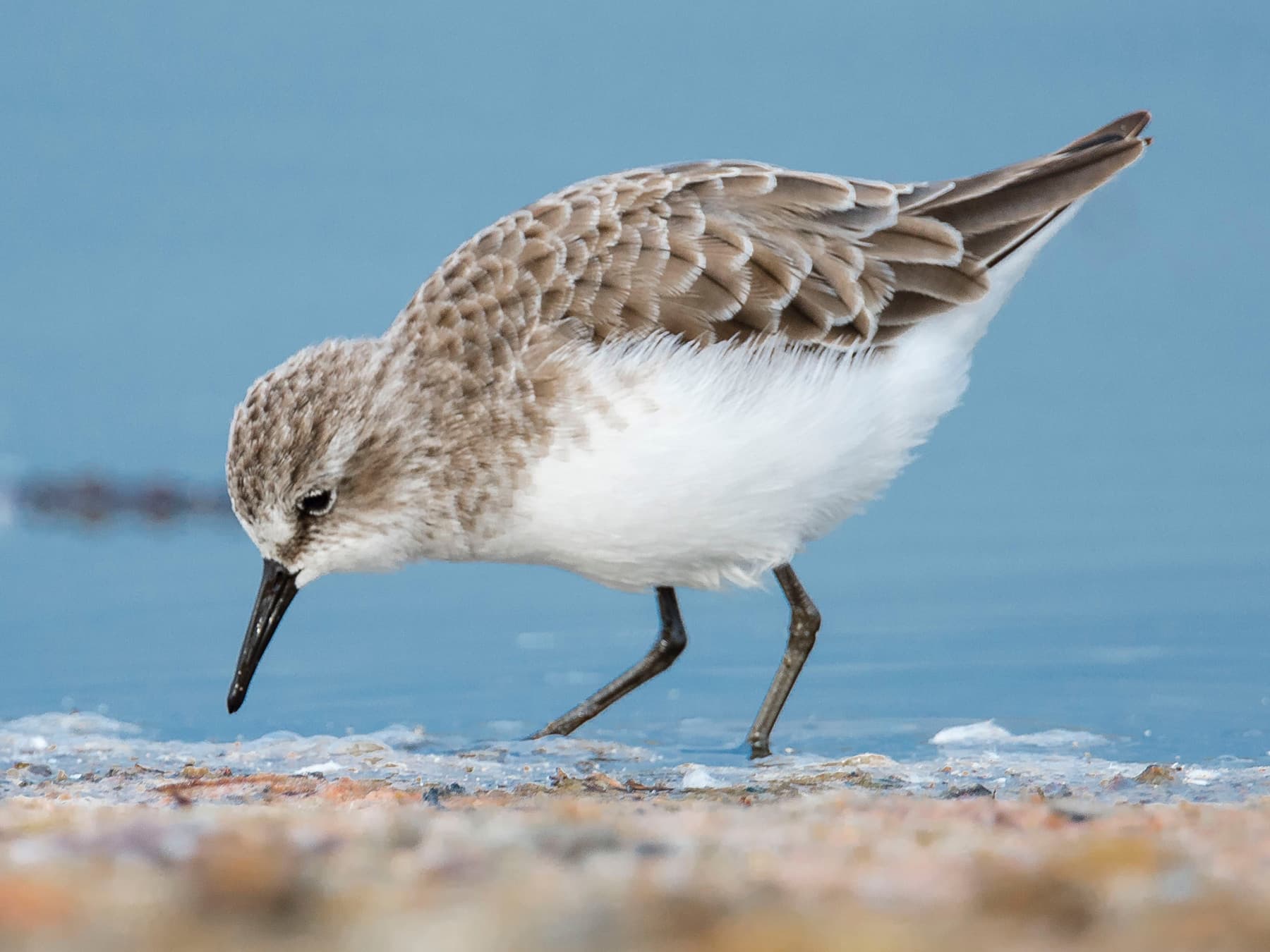
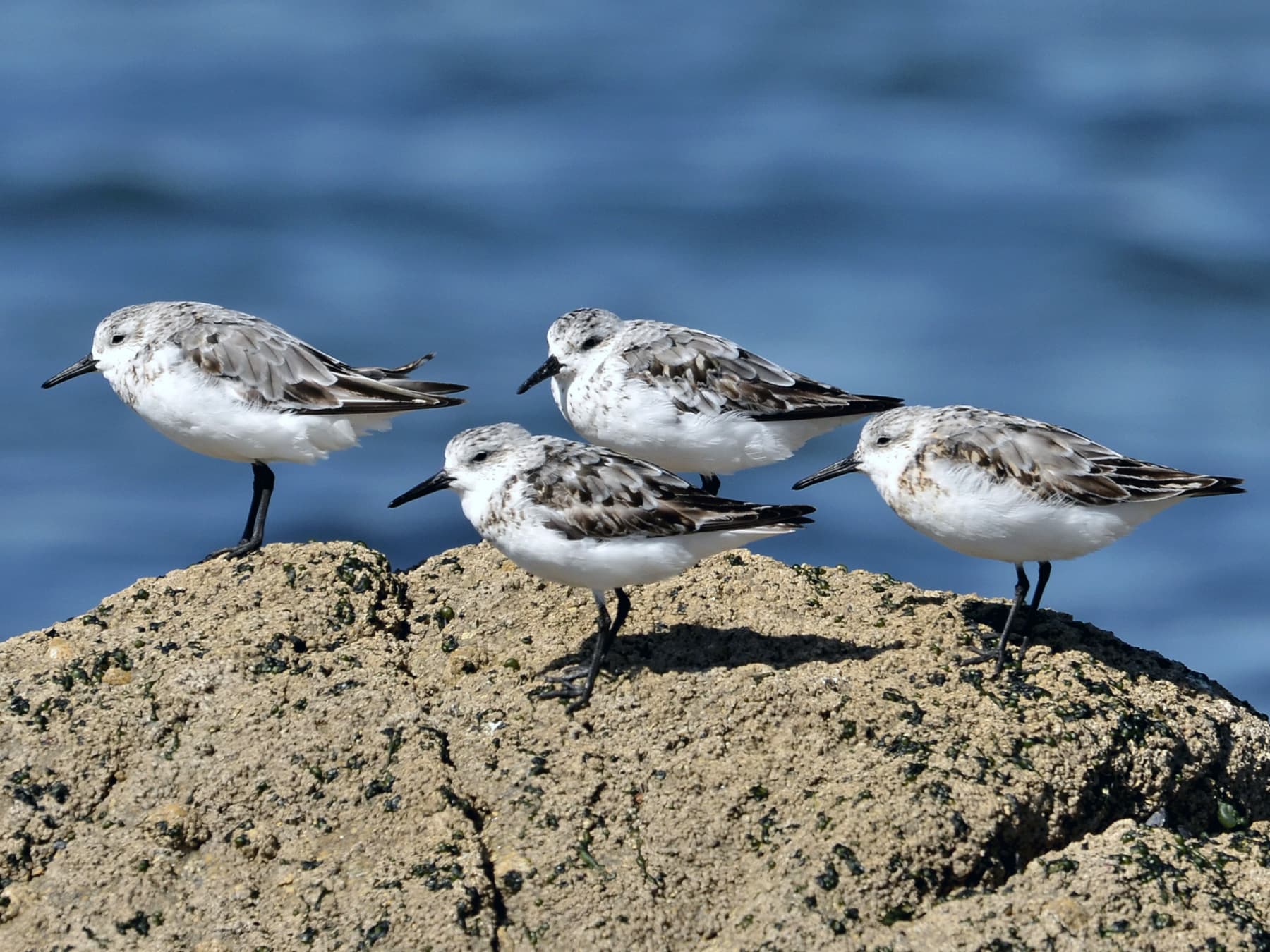
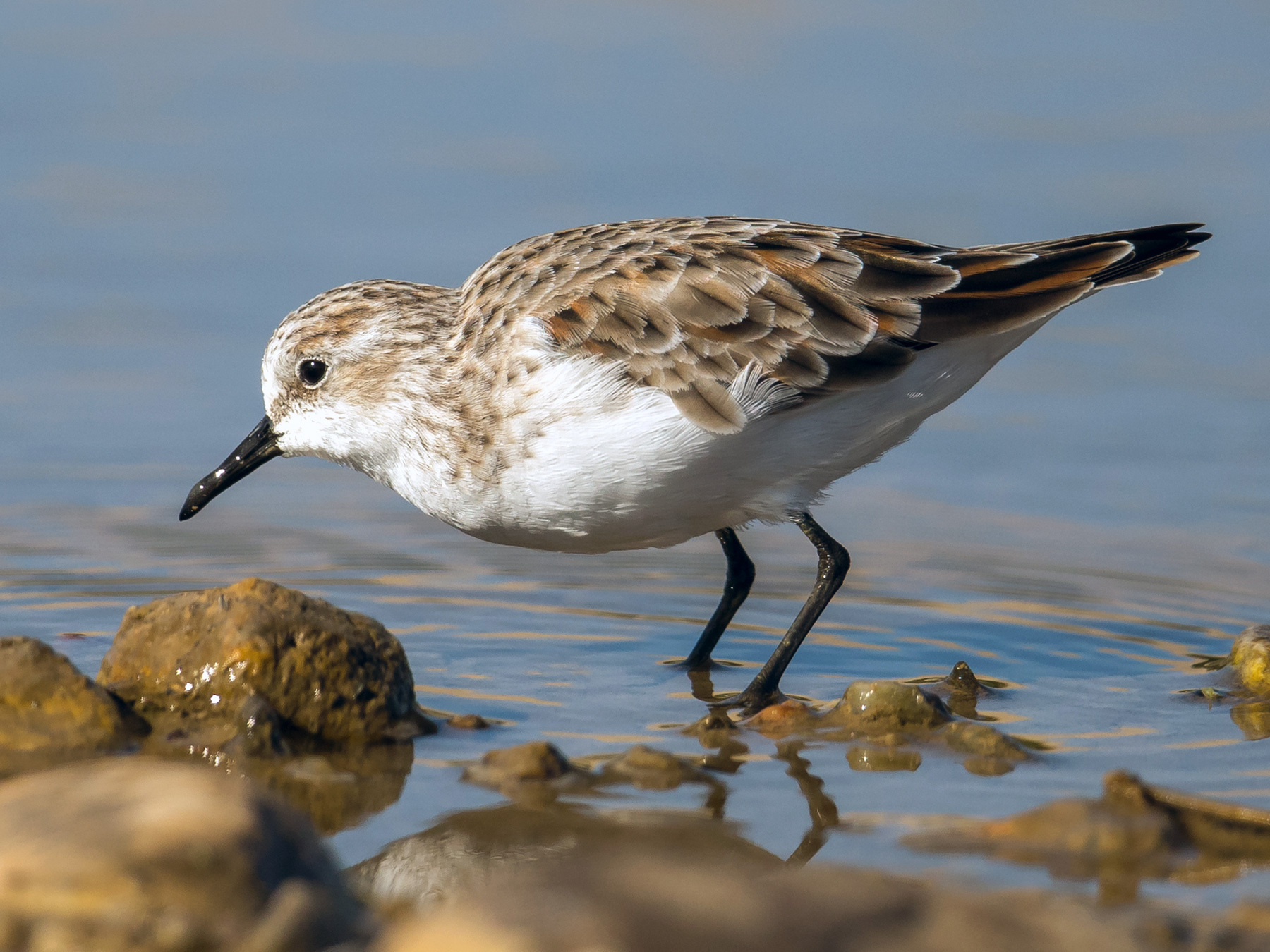
In winter, identification of little stints becomes slightly more difficult, due to similarities with the red-necked stint. Winter plumage is mostly grey, mottled with darker feathers along the back, wings, and crown, and white breast, belly, and underparts with some light speckling on the flanks. Their head and crown are the same mottled brownish-grey, with a paler stripe alongside the eye
Females and males are alike in colouring in both breeding and non-breeding plumage, although females are marginally larger. They both have brown-grey legs, a fine, dark bill, and unwebbed toes.
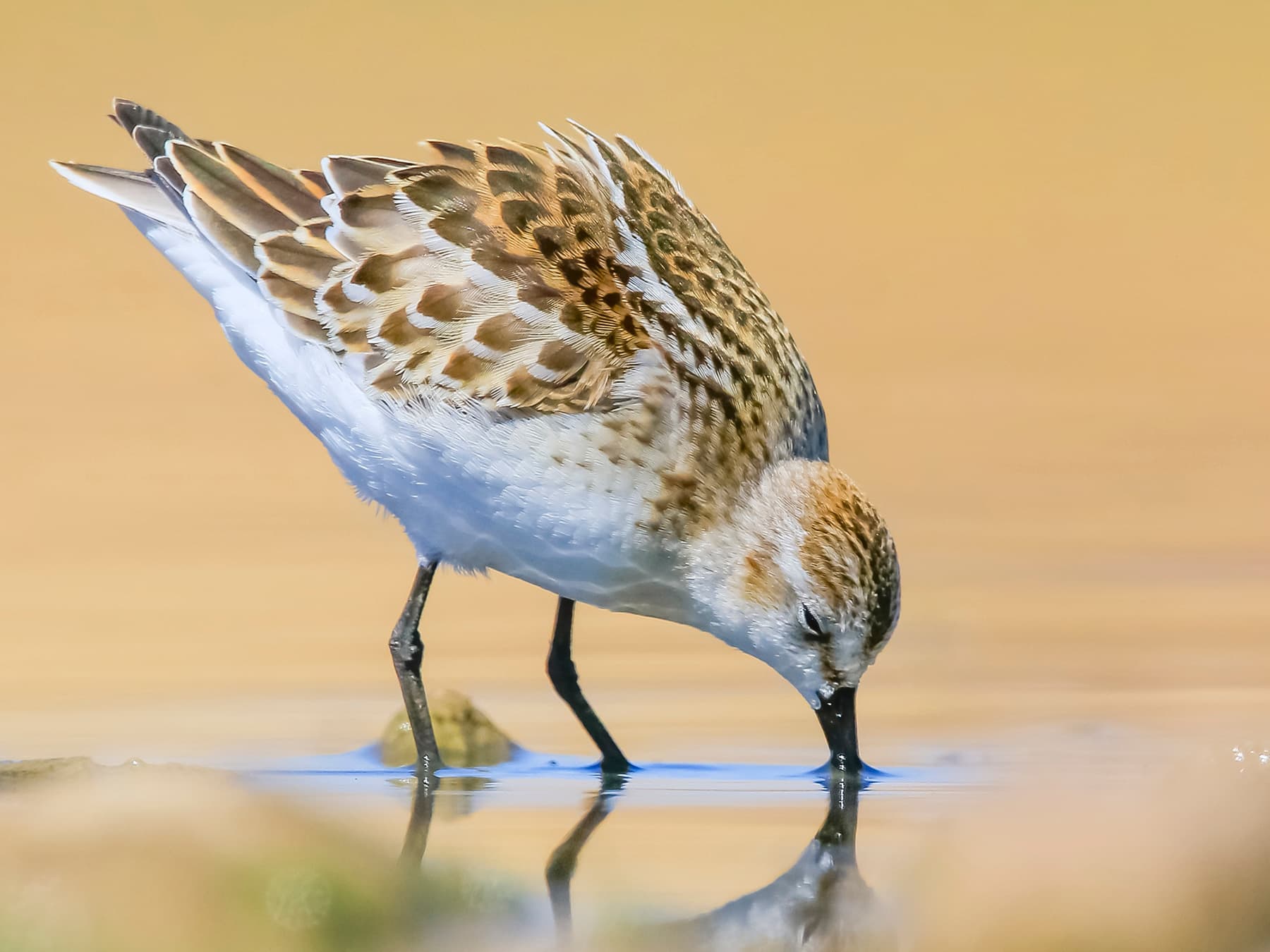
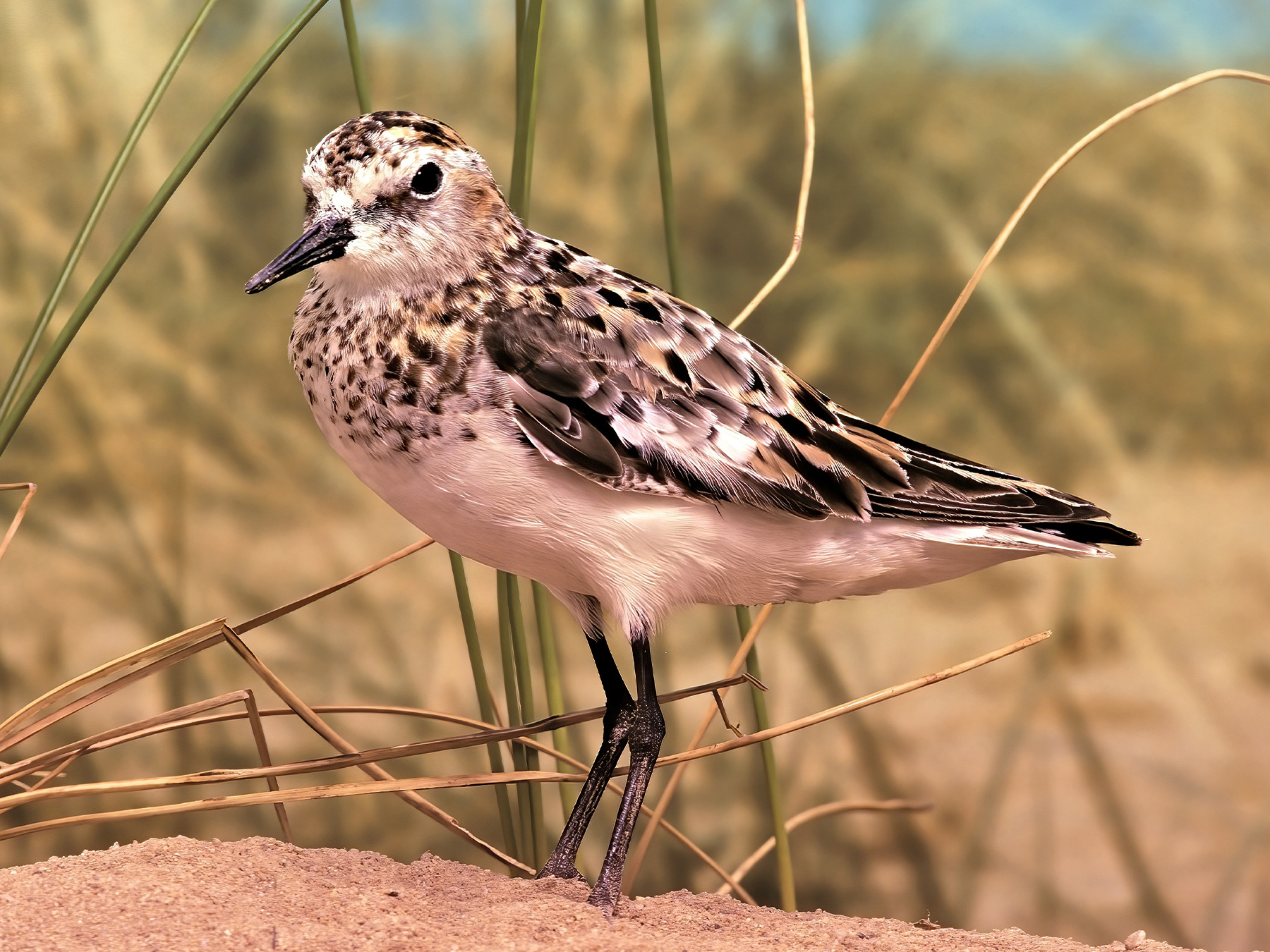
Juvenile little stilts are smaller than adults and have pale grey stripes along their crowns. Their neck and upper back are also grey, while the breast is lighter, with a pinkish wash. Young little stints have a distinct eye stripe that is streaked with darker markings.
How big are Little Stints?
Little stints are the smallest wading bird species to regularly be recorded in the UK. They are around two-thirds the size of dunlins, a fellow wader that they are frequently seen foraging on coastal mudflats alongside.
Female little stints are usually slightly larger than males.
- Length: 12 cm to 14 cm (4.7 in to 5.5 in)
- Wingspan: 34 cm to 37 cm (13.3 in to 14.6 in)
- Weight: 20 g to 40 g (0.7 oz to 1.4 oz)
Its size
Adults- Length
- 13–15 cm
- Wingspan
- 28–31 cm
- Weight
- 20–30 g
Its song and calls
What sound does a Little Stint make?
The most common call associated with a little stint is an extremely high-pitched, short ‘peet’ or ‘tip’. A series of rapid trilled ‘tree-tre-tree’ notes can be heard in flight.
- Call0:00 / 0:04
Recorded in Normandie, France · January 2025
When and where to see it
OctoberLeaving
Most recorded in October
- 1. Lincolnshire0.38%
- 2. Somerset0.14%
- 3. Wicklow0.13%
- 4. Gloucestershire0.13%
- 5. Hampshire0.12%
Each dot is a county, state or province: the bigger and darker, the larger the bird’s share of that place’s bird records that month. Grey dots: no regular records. The ringed point is the centre of the bird’s records this month; the arrow shows how it moved since last month, and the dashed loop its path through the year. “Arrivals” colours places where it becomes regular this month (orange) or is in its last regular month (grey). GBIF eBird Observation Dataset, 2019–2024. Map data: Natural Earth, US Census Bureau; place centres © OpenStreetMap contributors.
In your area
See when the Little Stint is recorded in your county, state or province.
How often the Little Stint turns up in the UK and Ireland through the year, from birdwatchers' records.
United Kingdom
Summer visitor · regularly May–Nov · most records in September
Ireland
Passage migrant · regularly Aug–Oct · most records in September
Show as a table
| Month | United Kingdom | Ireland |
|---|---|---|
| January | 0.003% | 0.002% |
| February | 0.002% | – |
| March | 0.003% | – |
| April | 0.003% | 0.005% |
| May | 0.015% (regular) | 0.002% |
| June | 0.006% (regular) | 0.002% |
| July | 0.019% (regular) | 0.003% |
| August | 0.064% (regular) | 0.016% (regular) |
| September | 0.13% (regular) | 0.13% (regular) |
| October | 0.045% (regular) | 0.033% (regular) |
| November | 0.009% (regular) | 0.003% |
| December | 0.003% | – |
Recorded regularly in
Worldwide: recorded regularly in 112 countries
Countries where it was recorded in at least 3 of the 6 years 2019–2024. Linked countries have their own bird list.
Europe (38)
- Albania
- Austria
- Belarus
- Belgium
- Bosnia & Herzegovina
- Bulgaria
- Croatia
- Czechia
- Denmark
- Estonia
- Finland
- France
- Germany
- Greece
- Hungary
- Ireland
- Isle of Man
- Italy
- Latvia
- Lithuania
- Malta
- Moldova
- Montenegro
- Netherlands
- North Macedonia
- Norway
- Poland
- Portugal
- Romania
- Russia
- Serbia
- Slovakia
- Slovenia
- Spain
- Sweden
- Switzerland
- Ukraine
- United Kingdom
Africa (34)
Asia (39)
- Armenia
- Azerbaijan
- Bahrain
- Bangladesh
- Cambodia
- China
- Cyprus
- Georgia
- Hong Kong SAR China
- India
- Iran
- Iraq
- Israel
- Japan
- Jordan
- Kazakhstan
- Kuwait
- Kyrgyzstan
- Lebanon
- Malaysia
- Mongolia
- Myanmar (Burma)
- Nepal
- Oman
- Pakistan
- Palestinian Territories
- Philippines
- Qatar
- Saudi Arabia
- South Korea
- Sri Lanka
- Taiwan
- Tajikistan
- Thailand
- Turkey
- United Arab Emirates
- Uzbekistan
- Vietnam
- Yemen
Oceania (1)
Data: EOD – eBird Observation Dataset (Cornell Lab of Ornithology), accessed via GBIF.org, CC BY 4.0. Records from 2019–2024, aggregated and filtered by Birdfact. How these lists are made
What is the habitat of a Little Stint?
During the breeding season little stint populations are mainly concentrated on low-altitude tundra in the high Arctic, preferring dry ground with cover of dwarf willows that border swamps and salt marshes, as well as grassy landscapes covered with moss and sedge.
During migration stopovers, little stints are found on the muddy shores of rivers, inland lakes, reservoirs, and sewage farms, as well as on coastal mudflats and beaches.
The preferred winter habitats of little stints include coastal areas such as estuary mudflats, enclosed lagoons, tidal creeks, and saltpans, as well as inland freshwater wetlands, marshes, paddy fields, and sandbanks along rivers.
What is the range of a Little Stint?
Little stints are migratory, breeding from northern Scandinavia through the Russian Arctic islands of Novaya Zemlya and across north-west and north-central Siberia.
The species’ winter range extends from around the European and North African Mediterranean coast southwards through sub-Saharan Africa, although absent from west-central Africa. The range spreads through the Arabian Peninsula and around the Persian Gulf eastwards to South Asia.
Small numbers of little stints spend winters in south-eastern England, and rare vagrants are sometimes recorded in North America.
Where do Little Stints live?
Little information is available for the numbers of breeding little stints in particular locations across Russia, Siberia, and northern Scandinavia, but we do have more data available for their preferred wintering destinations.
Between 250,000 and 500,000 individuals spend winter in Sudan, and more than 100,000 in Egypt.
Southern Africa’s key wintering grounds are at coastal wetlands in Namibia, which have reported a decline in numbers of little stints between 1999 and 2013.
How rare are Little Stints?
In the UK, little stints are considered a rare winter visitor, with only around 8 individuals recorded annually. Passage sightings are more common, with around 770 recorded each year.
On a wider scale, little stints have a secure population of more than 1 million individuals estimated in northeast and east Africa and southwest Asia, and a further 200,000 birds in south-central Asia.
Where can you see Little Stints in North America?
Sightings of little stints are very occasionally reported in the US, with more than two dozen records of the species in North America since 1975.
Sightings of these rare vagrants are mainly concentrated in the northeastern regions of the country, along the Pacific Coast of the United States and in Alaska.
Where can you see Little Stints in the UK?
During passage migration, little stints may be best observed along the eastern and western coasts of England, on coastal wetlands and mudflats, feeding with other wading birds, most usually dunlin.
Autumn passage migration is the best time of year for a sighting, with sightings of juvenile birds on brief stopovers particularly common from August to October.
Migration
Do Little Stints migrate?
Little stints are a fully migratory species, undertaking lengthy journeys of over 12,000 km (7,500 mi) between wintering and breeding grounds.
Arctic tundra breeding grounds become uninhabitable from autumn onwards, prompting little stints to head south to spend winters in Mediterranean Europe, Africa, the Arabian peninsula, and into South Asia.
Are Little Stints native to the UK?
While there is no evidence for breeding pairs of little stints in the UK, a tiny number of birds do spend winter in the UK each year.
Sightings in the UK are far more common of little stints in passage, with nearly 800 records each year of birds spotted on brief stopovers as they make their way towards their wintering grounds as far away as southern Africa.
Tips for seeing it
- Look for them on coastal mudflats or inland wetlands during migration
- In breeding plumage on the upper back, a distinctive white V can be seen, which helps give a positive identification, even from some distance away.
- Observe their rapid feeding action, constantly picking at the mud
- Compare size with other waders - Little Stints are notably smaller
- In the UK, check estuaries and coastal lagoons in autumn for migrating birds
What it eats
What do Little Stints eat?
The typical diet of a little stint consists of invertebrates, although in winter some plant matter may also be eaten. On breeding grounds, flying insects and their larvae and small beetles are the primary foods, especially mosquitoes, and craneflies.
A little stint’s diet becomes more diverse on its wintering grounds, where ants, freshwater mites, flies, beetles, parasitic wasps, leeches, small molluscs, and crustaceans are the most common foods.
What do Little Stint chicks eat?
Shortly after hatching, little stints are able to forage for themselves, picking up food by sight from the muddy wetlands and wet grasslands. Larvae, beetles, and small flying insects are among the most common elements of their early diet.
Nesting and breeding
Where do Little Stints nest?
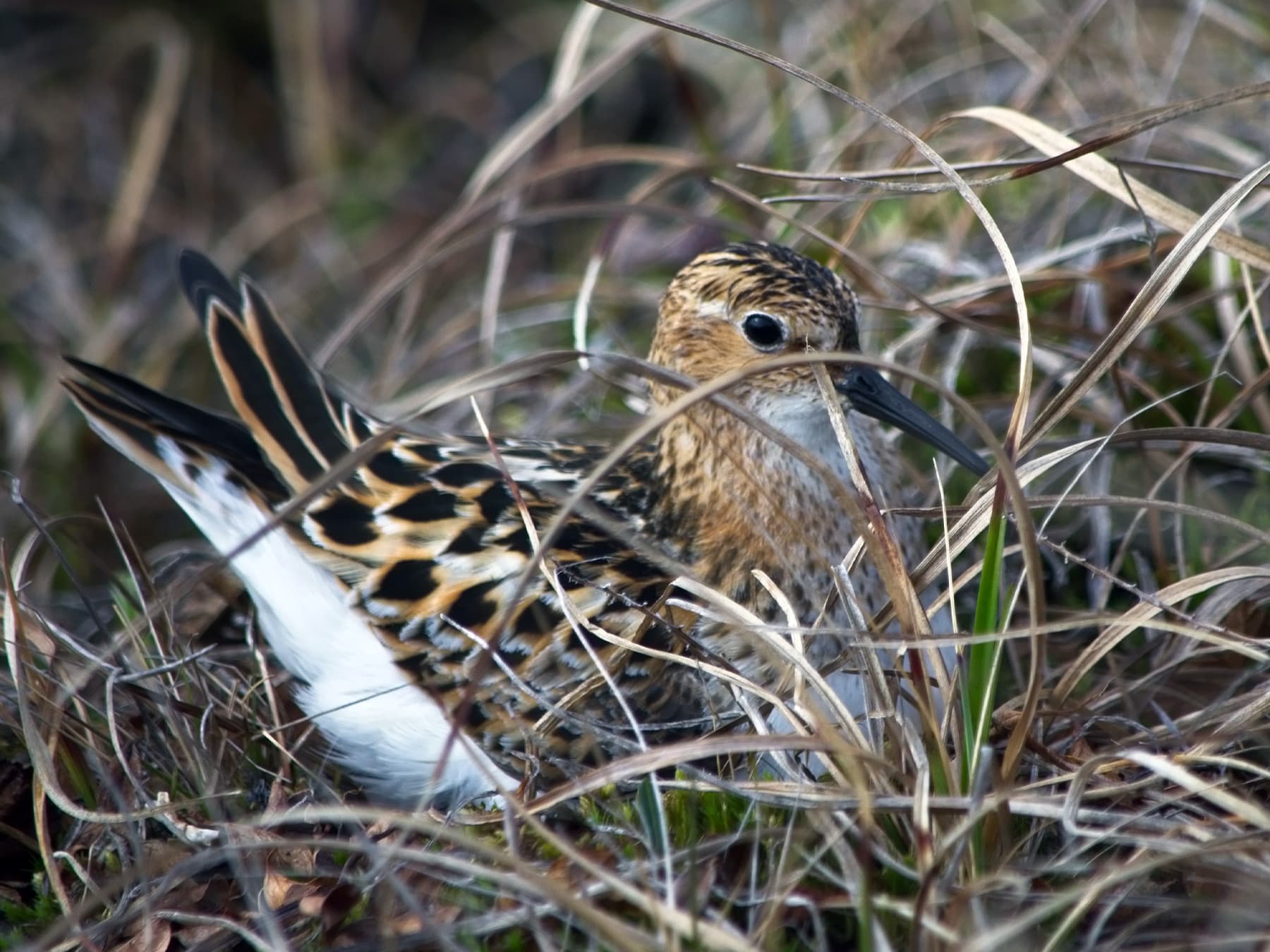
Nests are constructed on open tundra, with a shallow scrape on the ground lined with a small cup of leaves and lined with grass. Occasionally vegetation may be used to cover the nest itself.
When do Little Stints nest?
Little stints return to breeding grounds from mid-May to June, and eggs are usually laid between late June and mid-July.
One brood a year is typical, with incubation (by both parents) lasting for 20 to 21 days. As an occasionally polyandrous species, it is not unheard of for females to raise a second brood with a different mate, and in these cases, the original male mate will take over care duties for the first clutch.
What do Little Stint eggs look like?
Eggs laid by little stints are buff in colour and are heavily marked with dark brown scrawls. They measure 29 mm by 21 mm (1.1 in by 0.8 in), and a typical clutch consists of three or four eggs.
Do Little Stints mate for life?
Little stints courtship and mating are complicated and varied, with reports of both monogamous and polyandrous breeding. No fidelity is shown to previous breeding sites and it is unlikely that pairs will reform in subsequent years.
Behaviour
Are Little Stints aggressive?
Little stints are loosely territorial, but no real aggression is shown on feeding sites and nests are established in fairly close proximity to one another.
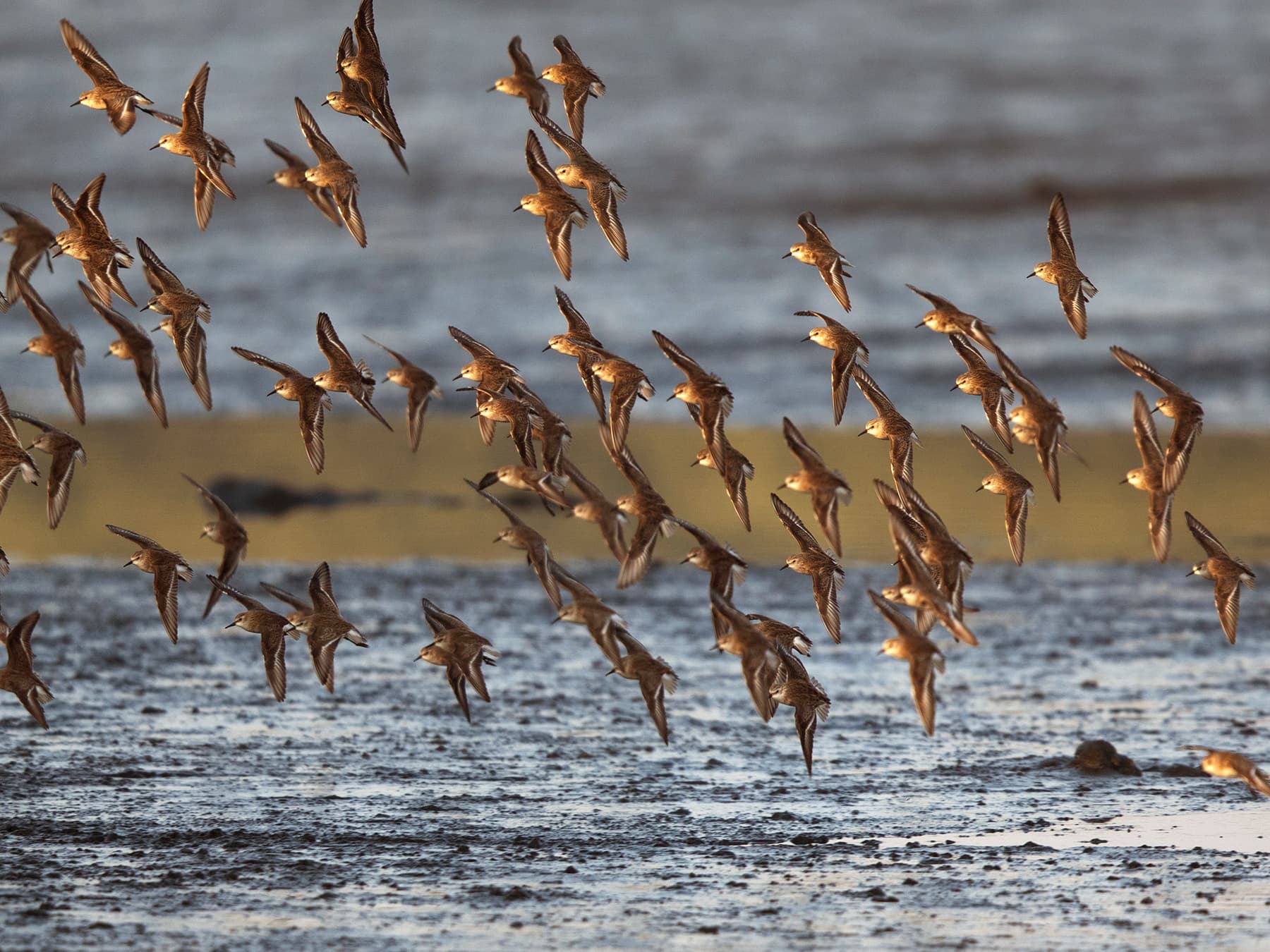
Outside of the breeding season, little stints become more gregarious with large flocks of up to a thousand birds gathering to feed at some coastal wetlands.
Lifespan and predators
How long do Little Stints live?
The average lifespan for little stints is around 3 years, with the oldest recorded birds from ringing data reported to be 8 years 10 months.
The age at first breeding is unknown, although one-year-old birds have been recorded at breeding grounds.
What are the predators of Little Stints?
Barbary falcons are an especially ruthless predator of little stints during migration passage. Skuas and snowy owls prey on little stints and their eggs and young when a particularly bad year for lemmings impacts their usual preferred food sources.
Are Little Stints protected?
In the UK, little stints are protected from being knowingly killed, injured, or taken into captivity by the Wildlife and Countryside Act, of 1981. Rare vagrant birds in the United States are offered similar protection by the Migratory Bird Treaty Act of 1918.
Are Little Stints endangered?
With a global population of between 1.5 and 1.6 million birds, little stints are currently not threatened with decline and are rated as a green species on the British Birds of Conservation Concern list.
Some declines are recorded in winter populations in parts of southern Africa, due to habitat loss to wetland reclamation, but the breeding population is classed as stable.
Conservation
Although the Little Stint is currently listed as Least Concern, it faces threats from habitat loss due to coastal development and climate change. Conservation efforts focus on protecting key stopover sites along migration routes and preserving Arctic breeding grounds.
Similar birds
Often mistaken for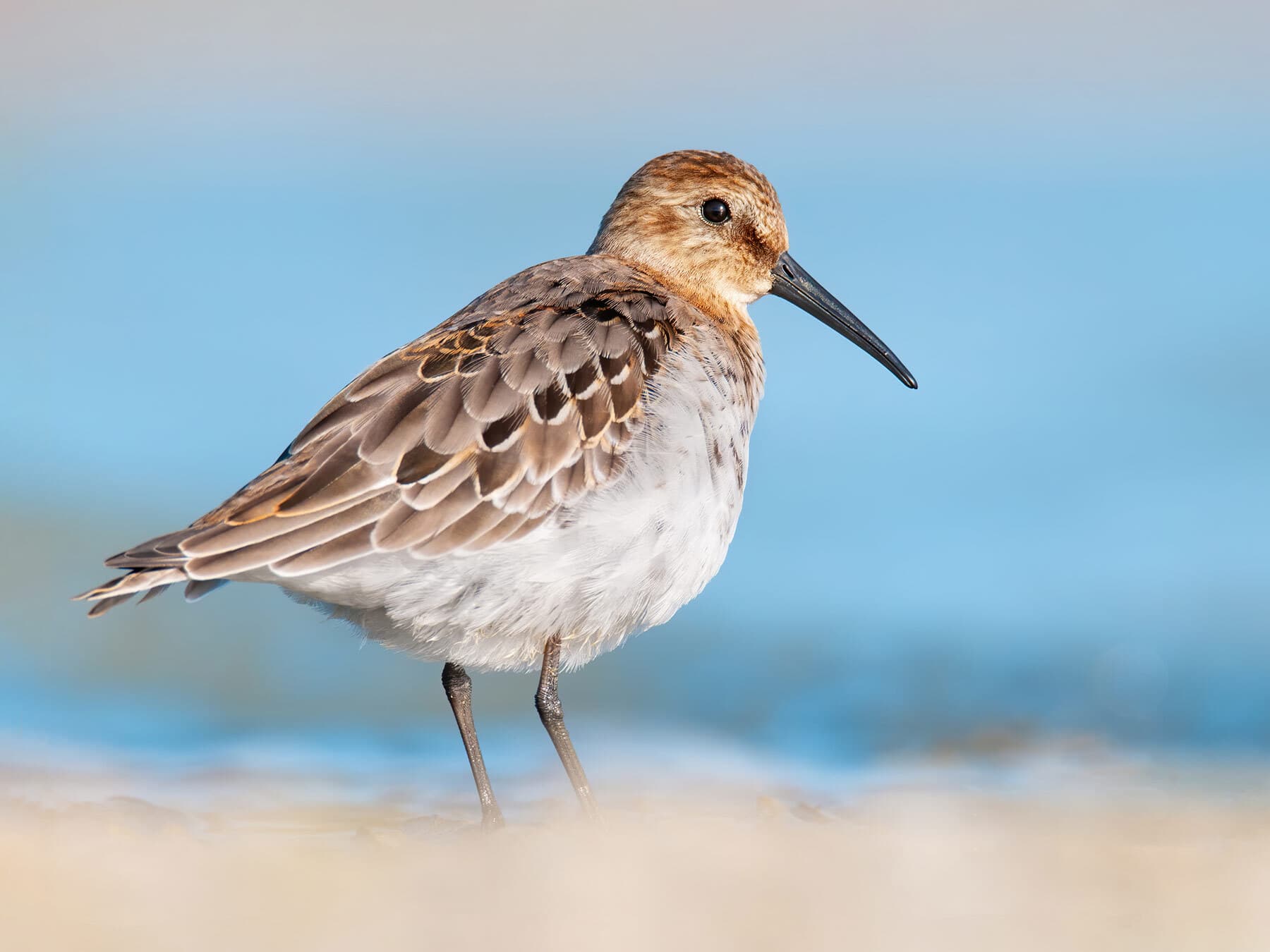
More photos
4 photos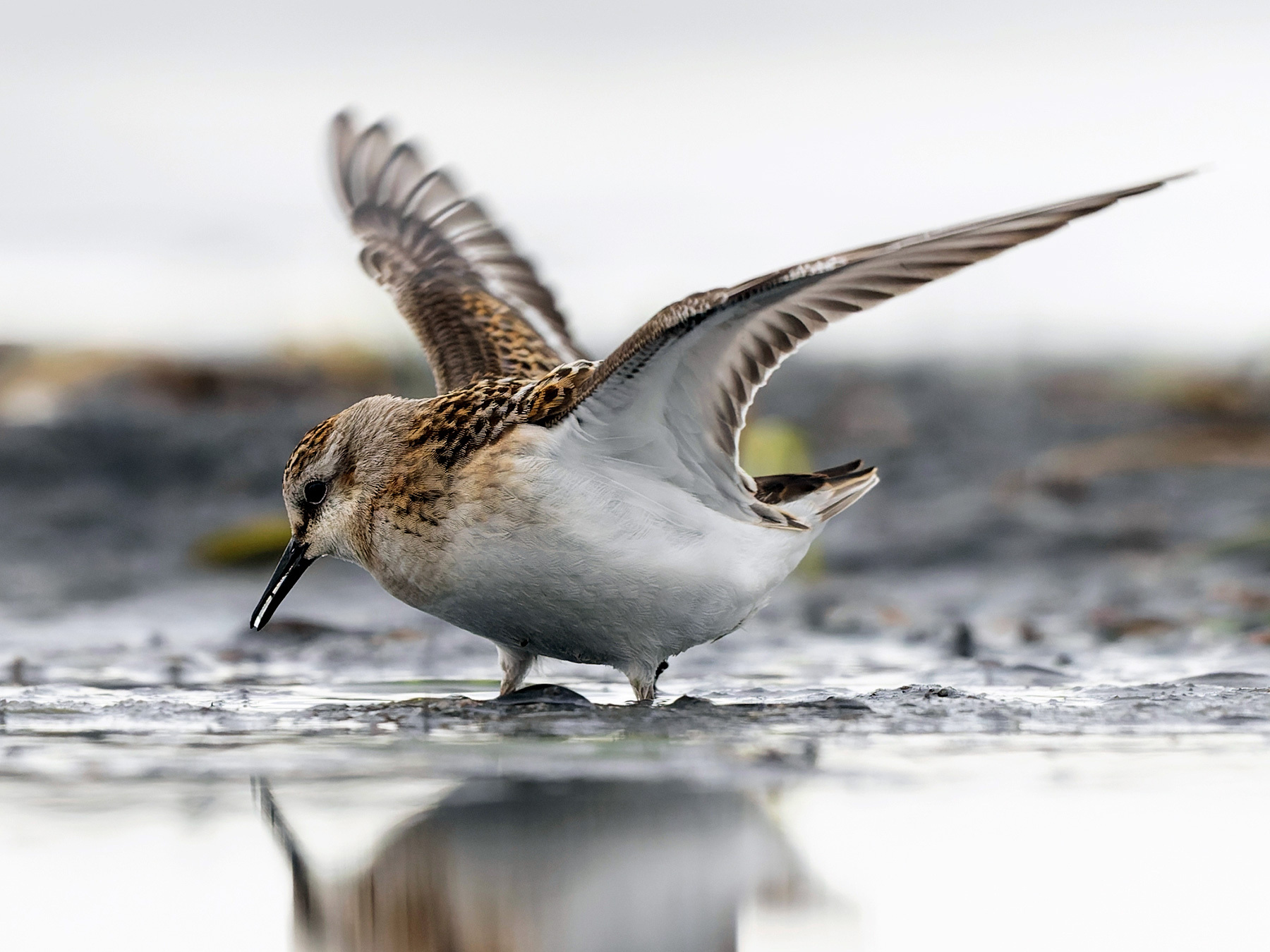
Quick facts
- Length
- 13–15 cm
- Wingspan
- 28–31 cm
- Weight
- 20–30 g
- Lifespan
- 5–10 years · oldest recorded 3.9 years
- Family
- Sandpipers & Snipes
- Migration
- Long-distance Migrant
- Global status (IUCN)
- Least Concern
- World population
- 1,500,000 - 1,600,000 individuals
- Population trend
- Increasing
- Also called
- Little Sandpiper
- Scientific name
- Calidris minuta
Questions
1What are the special features of the Little Stint?
Little stints are the smallest species of wading bird to regularly visit the UK, and their tiny size often helps with identification.
Autumn plumage, which is most commonly spotted in UK passage birds, features two pale stripes that run down the back, giving the appearance of braces.
Sources
4- 1BirdLife International. 2019. Calidris minuta. The IUCN Red List of Threatened Species 2019: e.T22693379A138406063. Source (opens in a new tab)
- 2Wetlands International (2015)
- 3Wetlands International (2015)
- 4BTO longevity records: maximum age from a ringed bird, 3 years, 11 months, 27 days (set in 1956), BirdFacts: Little Stint (1956) Source (opens in a new tab)

Checked by
Nathan Cope, founder and editor
Nathan founded Birdfact and leads its writers and contributors in the UK, the US and Canada. He has watched and studied birds for more than ten years, and checks every article and species guide before it’s published.