


Common Snipe
Fantail Snipe · Gallinago gallinago
By the Birdfact teamChecked by Nathan Cope
On this page14 sections
How to recognise it
What do Snipes look like?
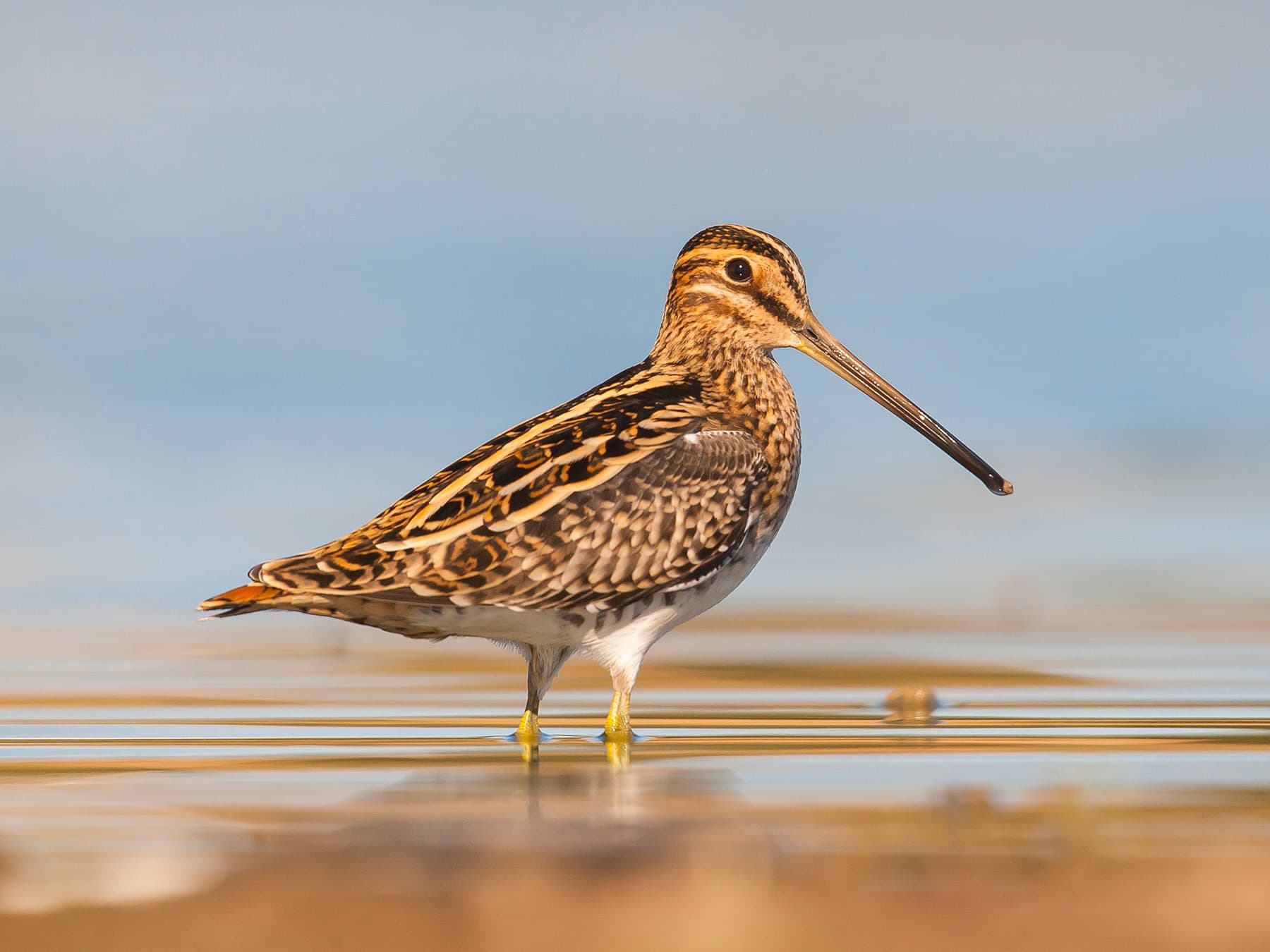
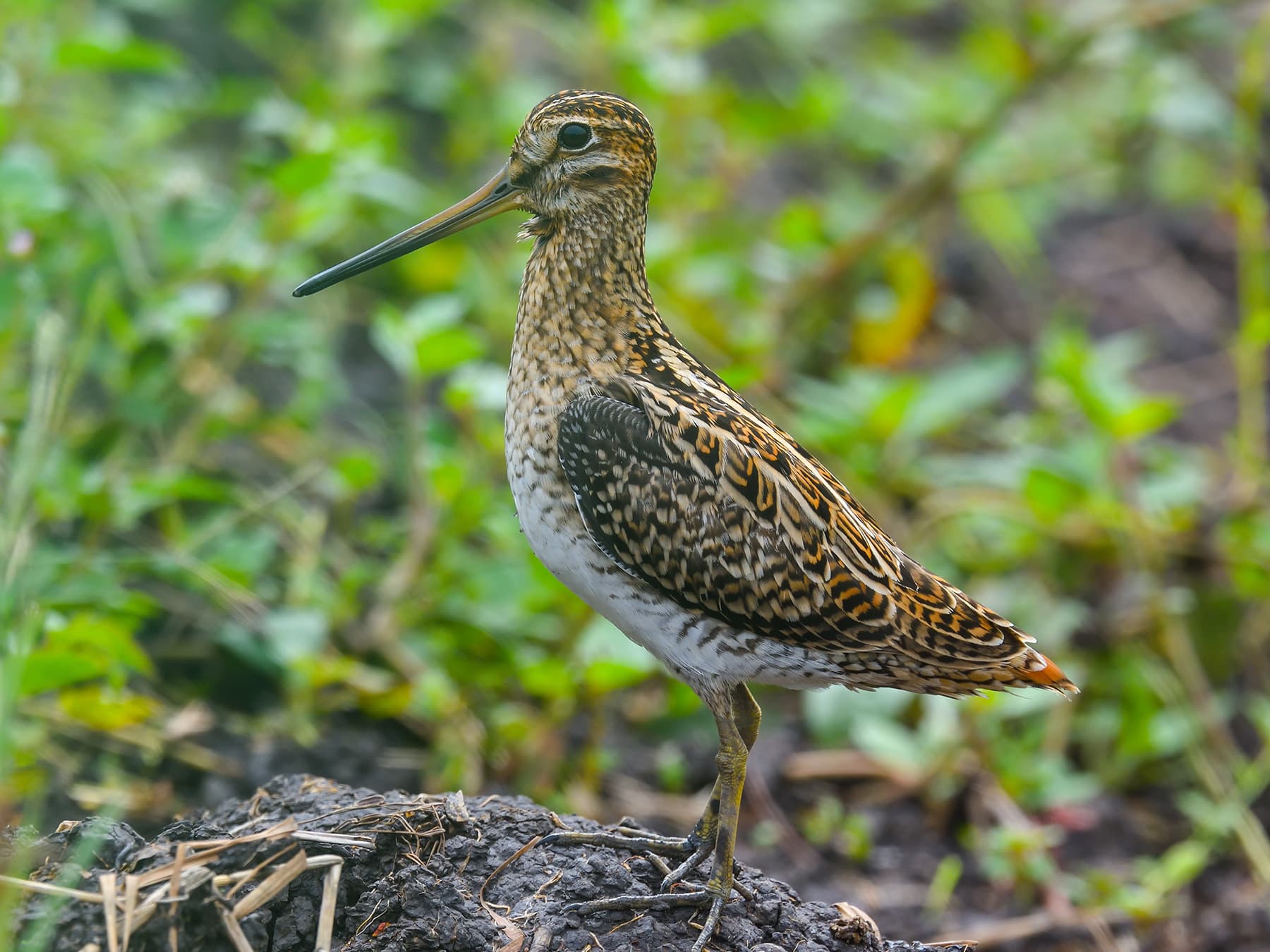
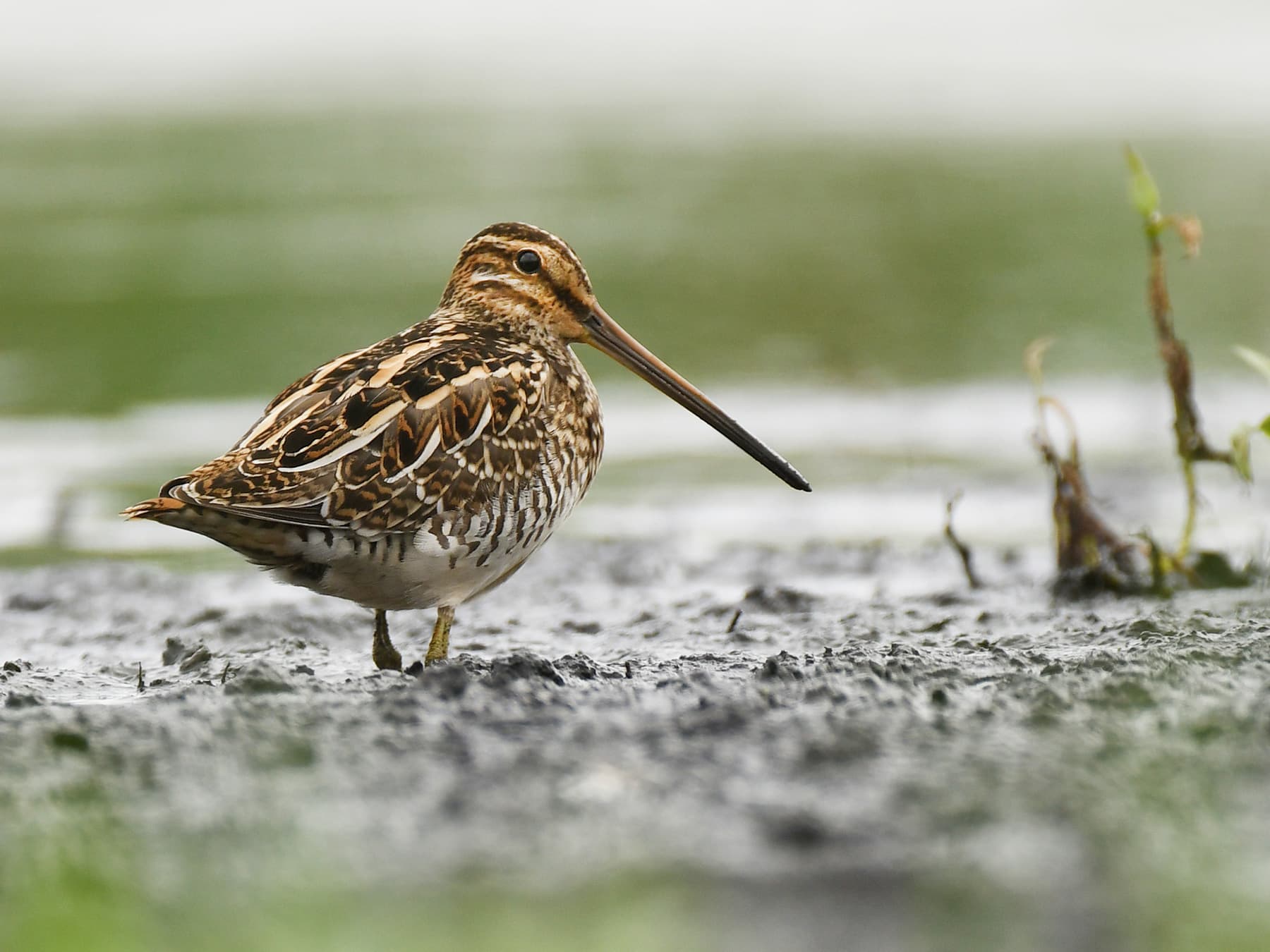
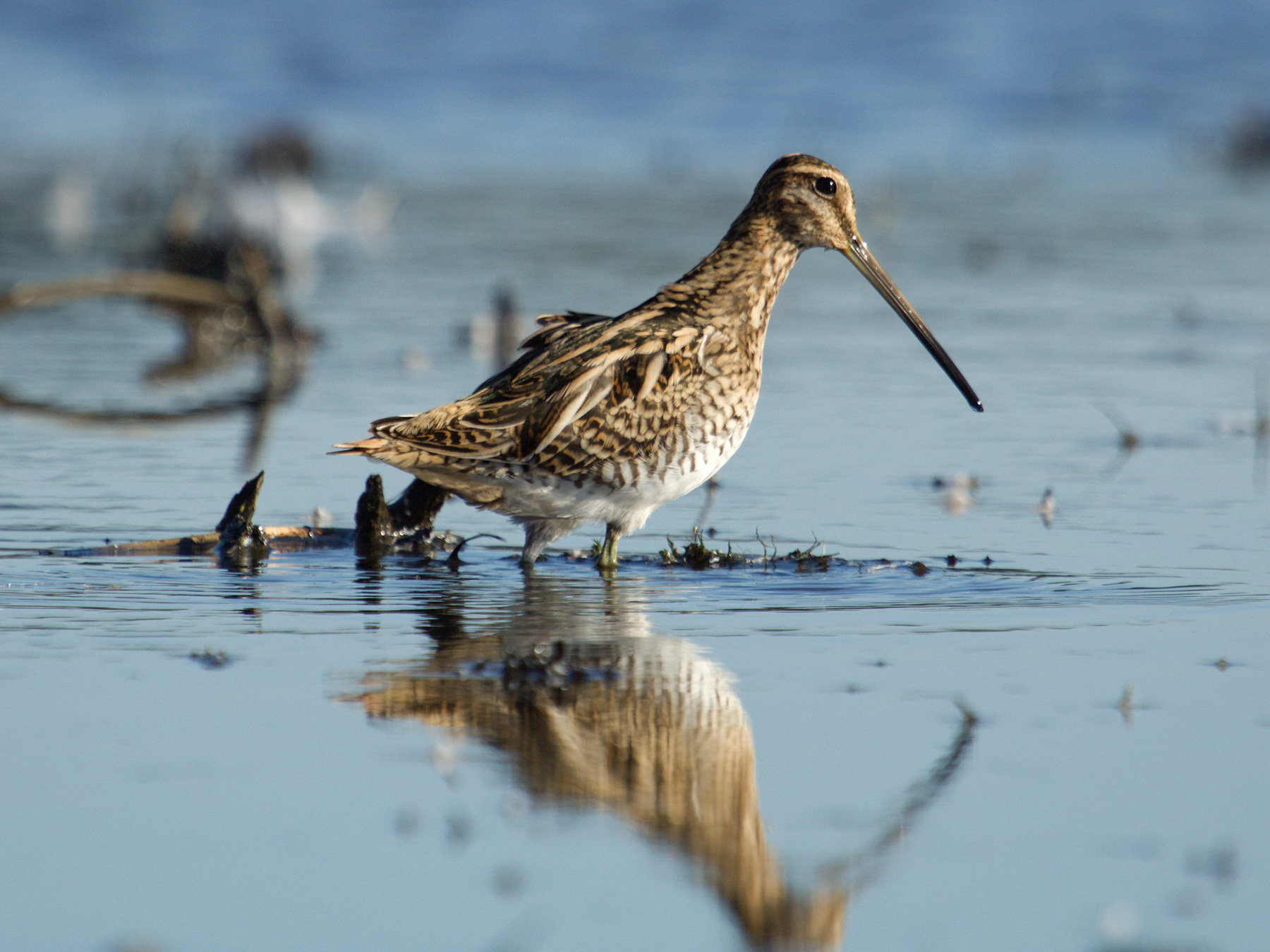
The Common Snipe is an oddly shaped wader with an oversized bill. Despite a drab appearance from a distance, these skulking birds are intricately patterned to break up their outline in their marshy habitat. They are stocky birds with large yellowish legs and unwebbed feet.
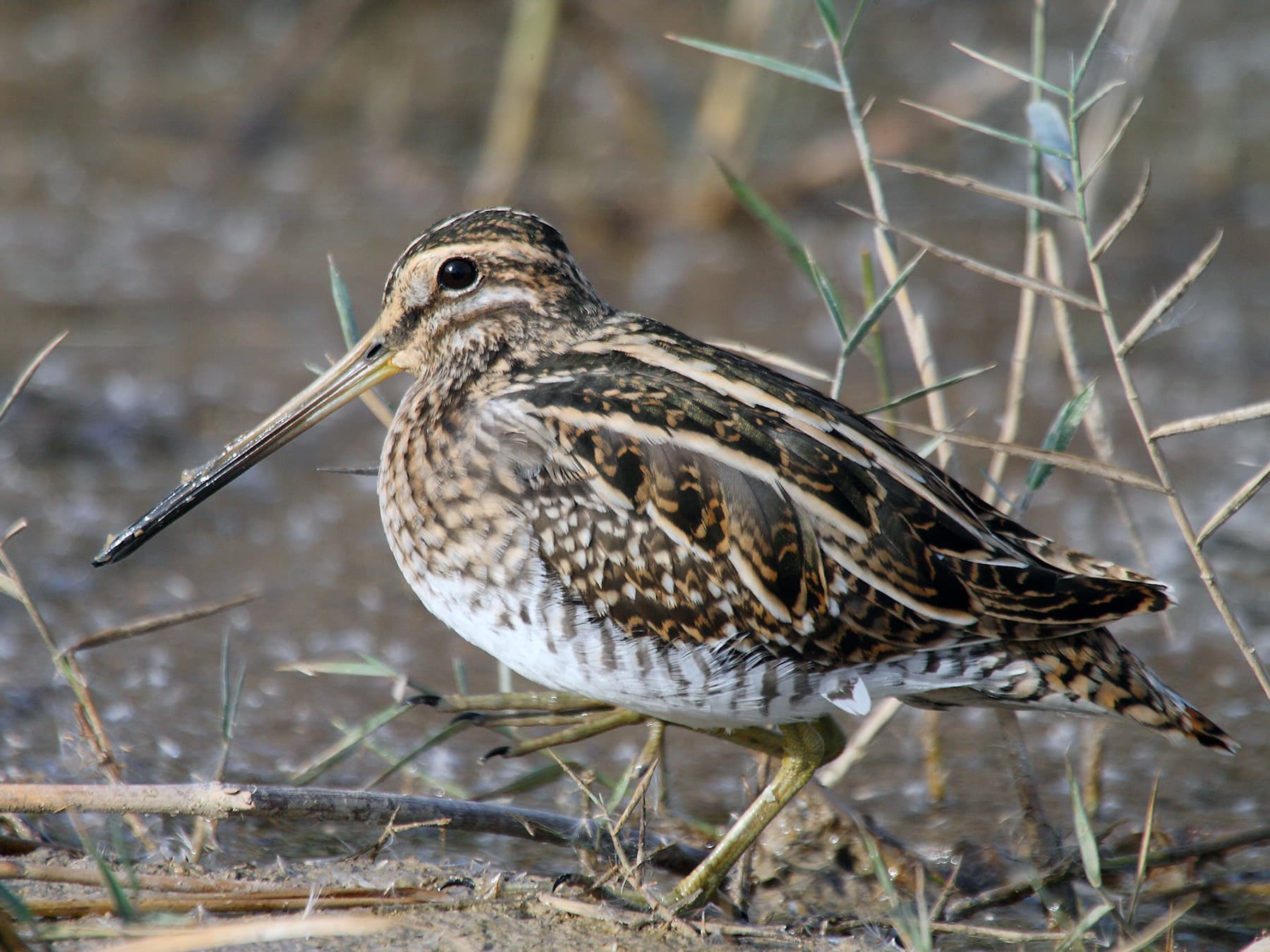
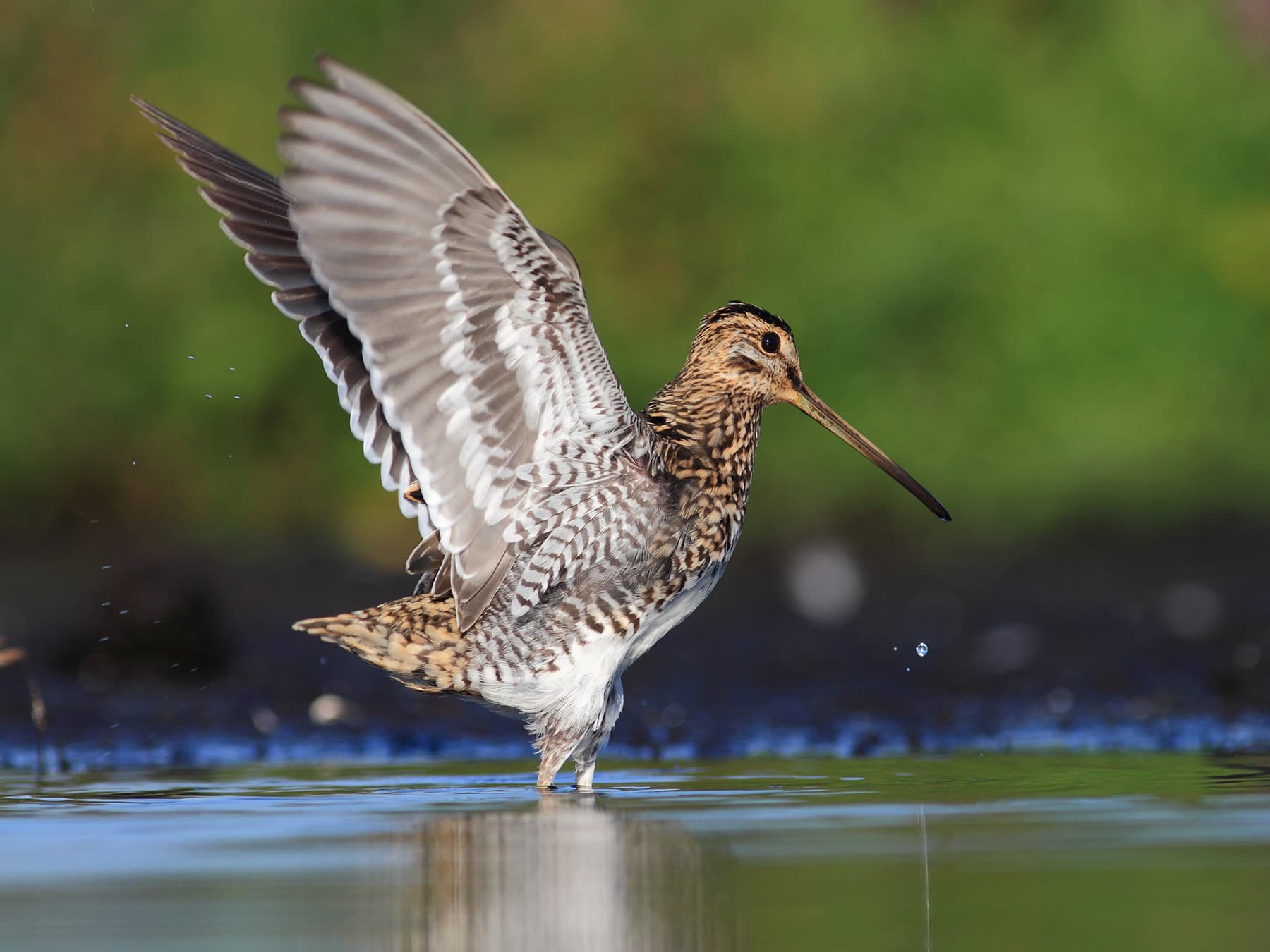
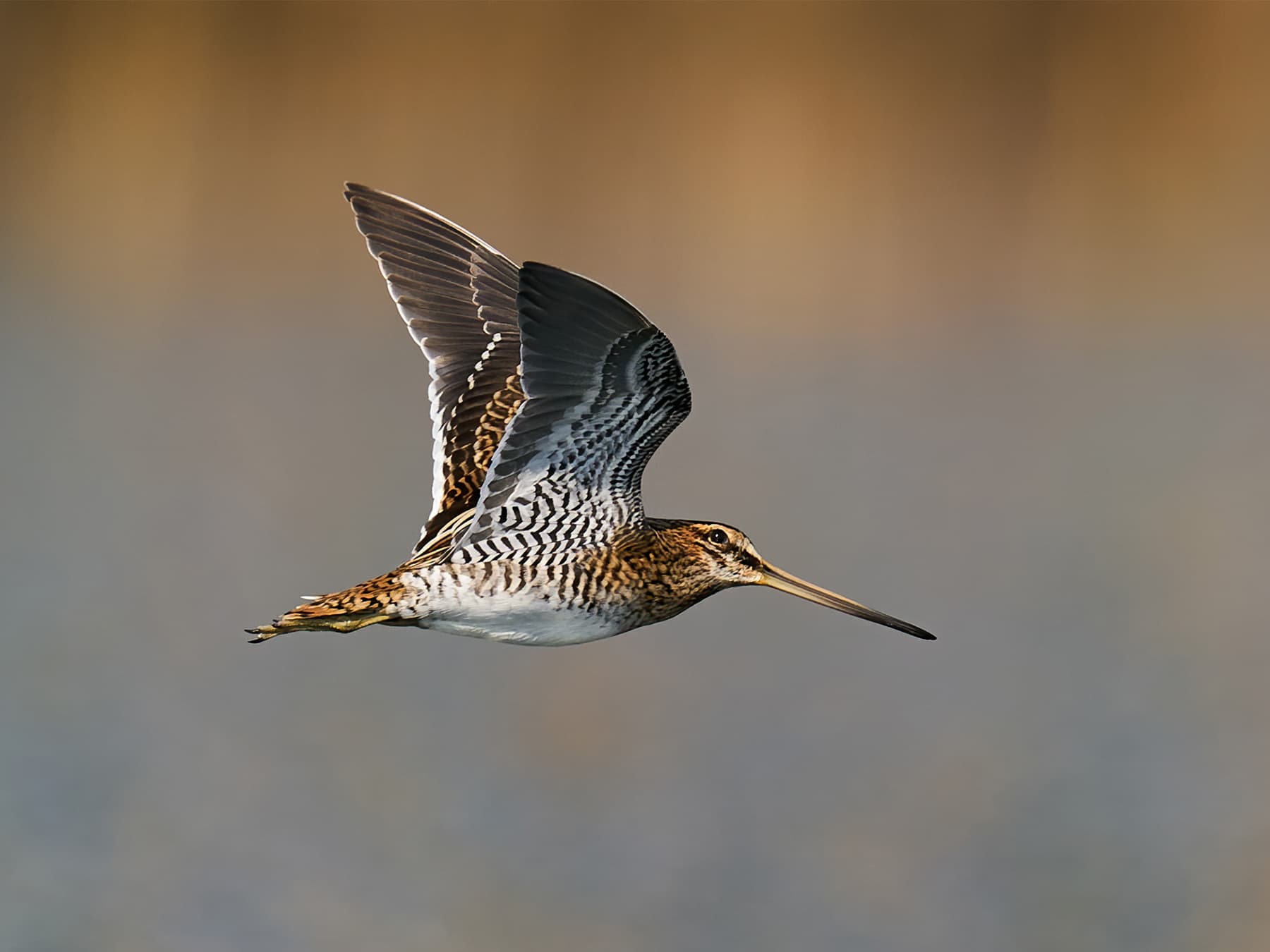
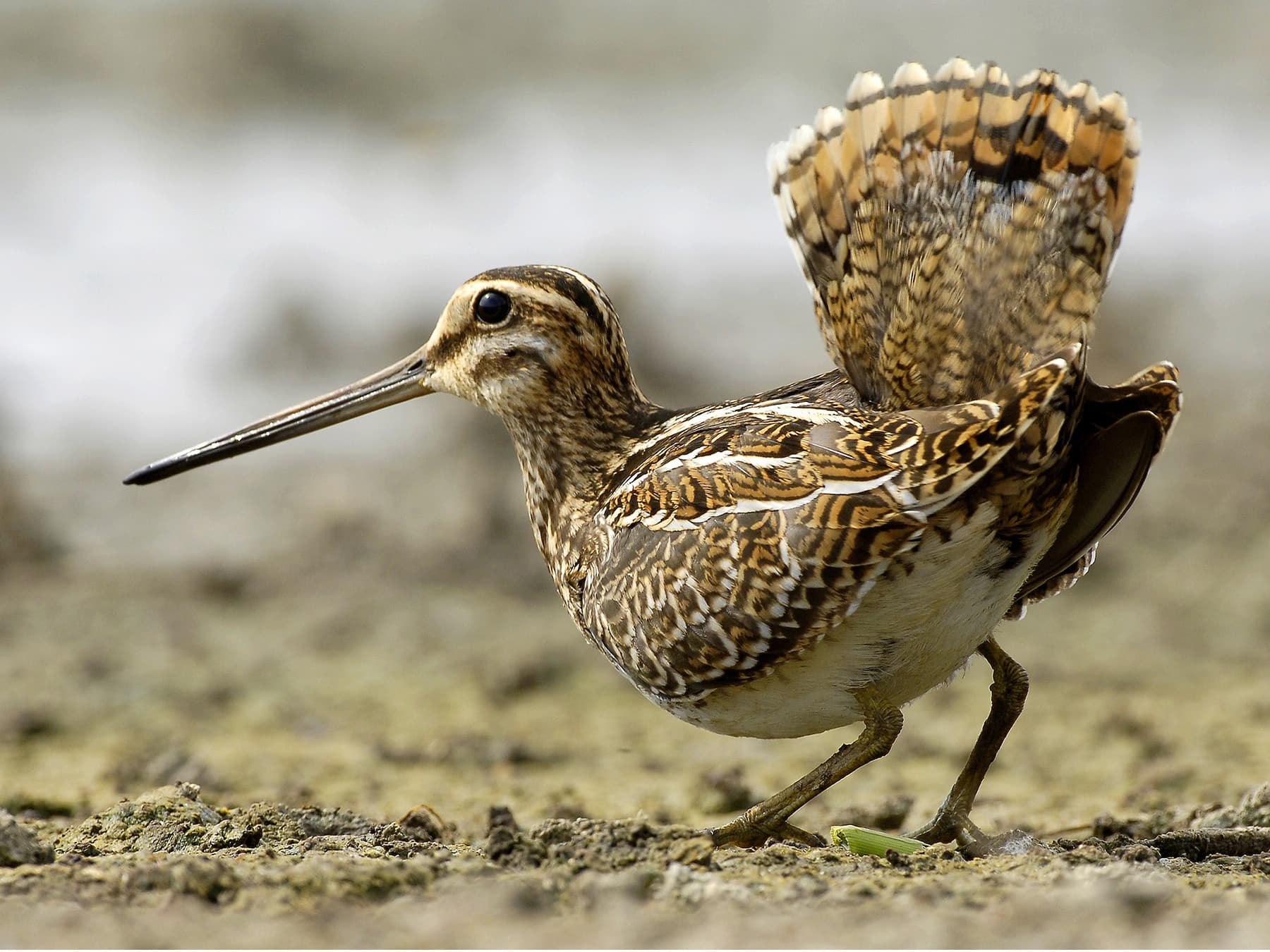
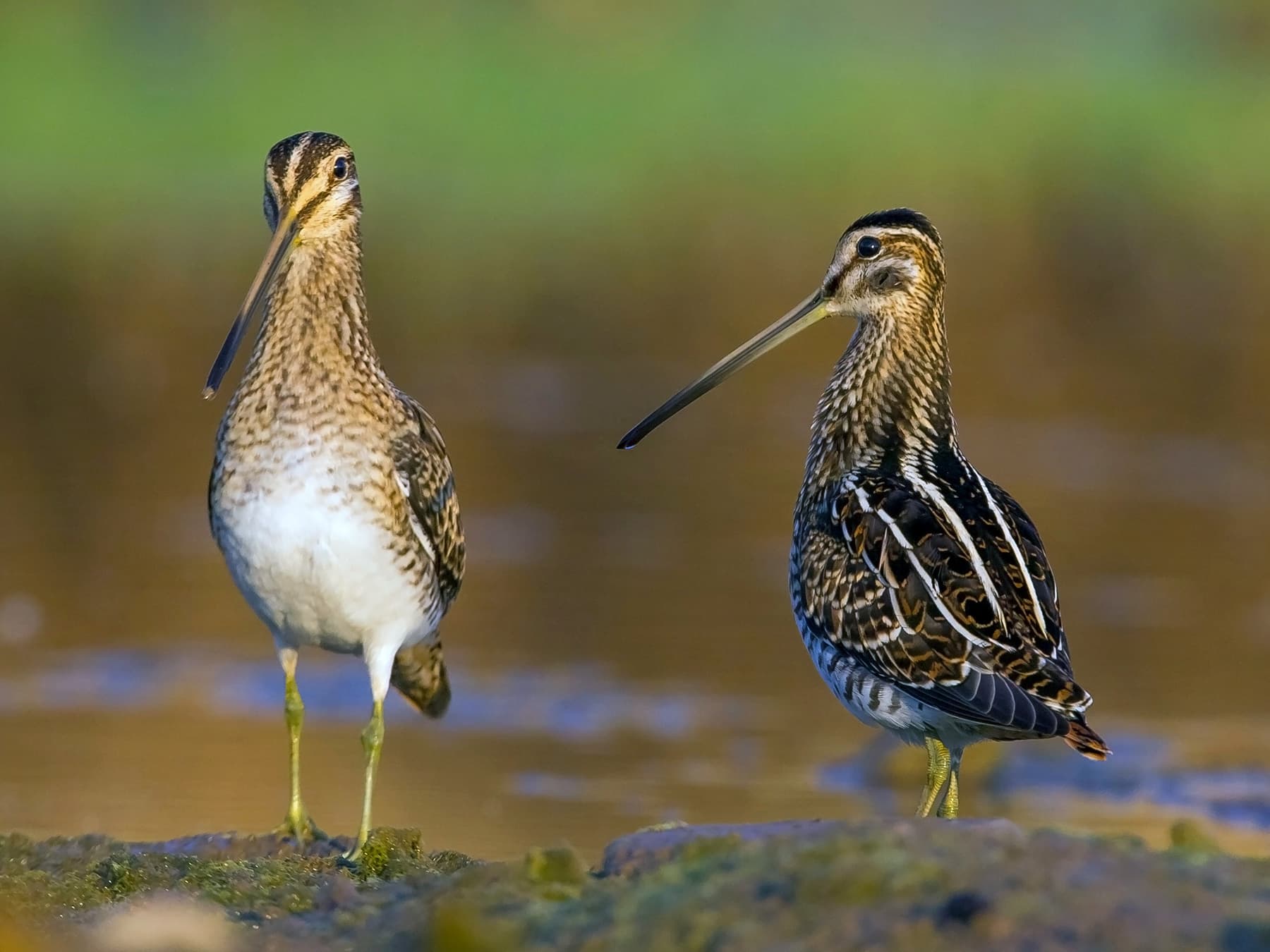
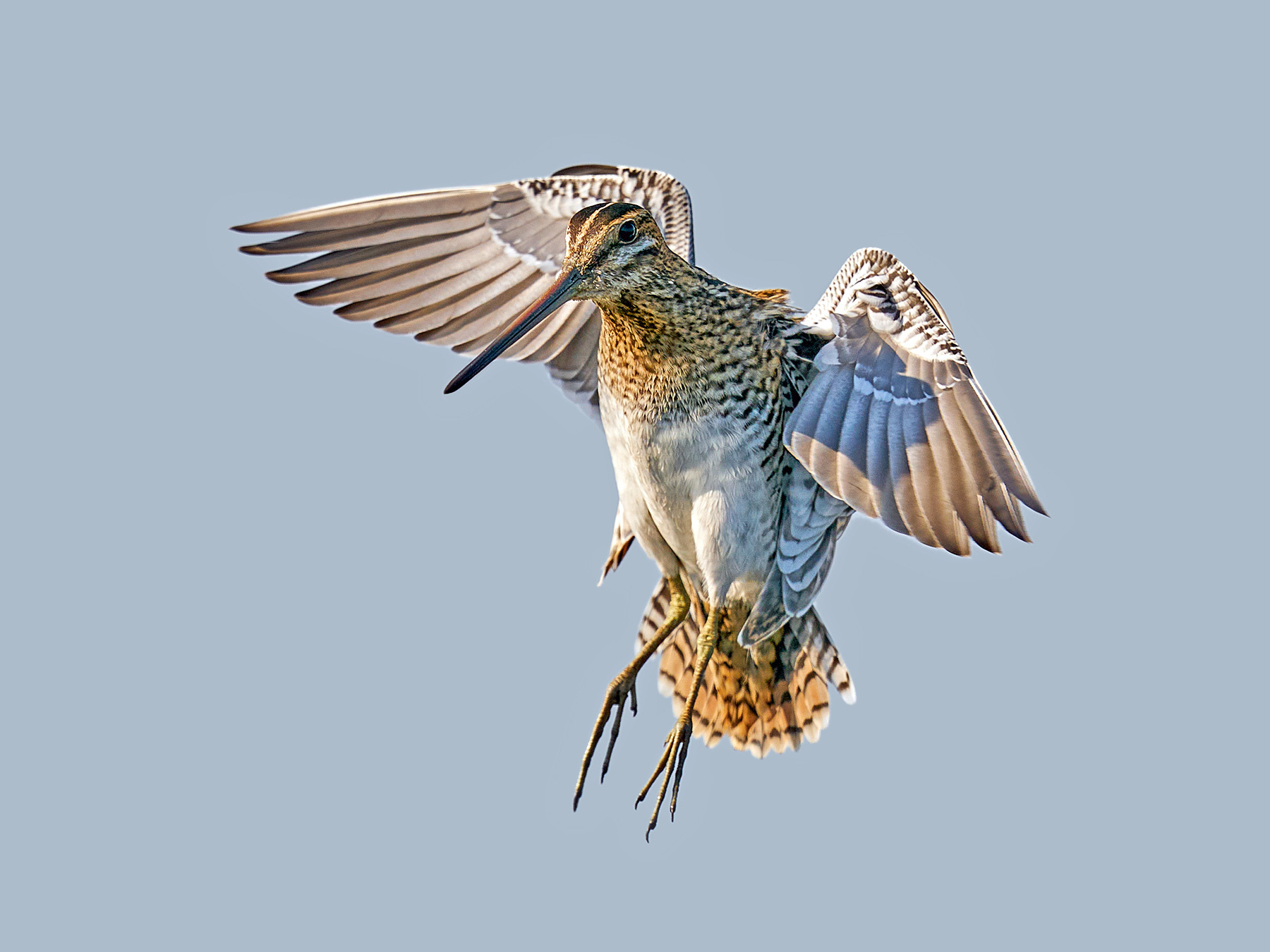
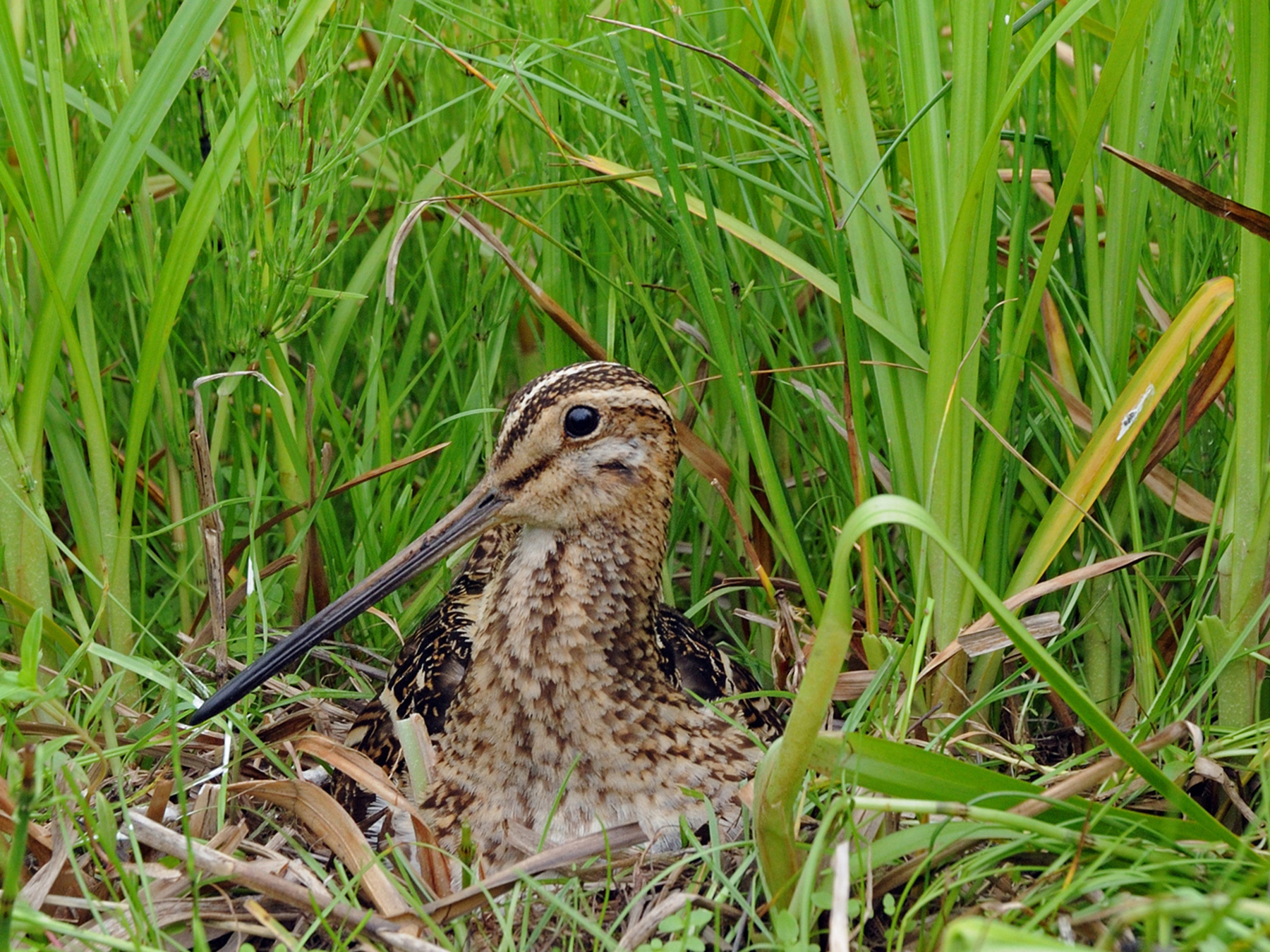
Snipes are beautifully camouflaged above, with distinctive pale stripes on the wings and back. The head and face are striped, with a dark crown and a dark streak through each eye, making their already impressive bill look even longer. Their underparts are almost pure white, although barring on the flanks and chest merge with their darker upper parts.
Male, female, and juvenile Snipes all appear very similar, although males have longer tail feathers and shorter bills.
The Common Snipe is the most frequently encountered snipe species in the UK, although there are similar species that may confuse birdwatchers. The Jack Snipe is a much rarer visitor to the UK. Shyer in nature, this species can be distinguished by its much shorter bill and more prominently striped back.
How big are Snipes?
Length
Snipes have a body length of 23 - 28 centimetres (9 - 11 inches). Their impressive probing bills are about 2.5 inches long.
Weight
Snipes weigh 80 to 120 grams or roughly 3 to 4 ounces.
Wingspan
Common Snipes have a wingspan of 39 to 45 centimetres (15 - 18 inches).
Its size
Adults- Length
- 25–27 cm
- Wingspan
- 44–47 cm
- Weight
- 80–140 g
Its song and calls
Snipes and other similar birds have an interesting way of producing sounds. Continue reading to learn more about Snipe songs and calls.
What sound does a Snipe make?
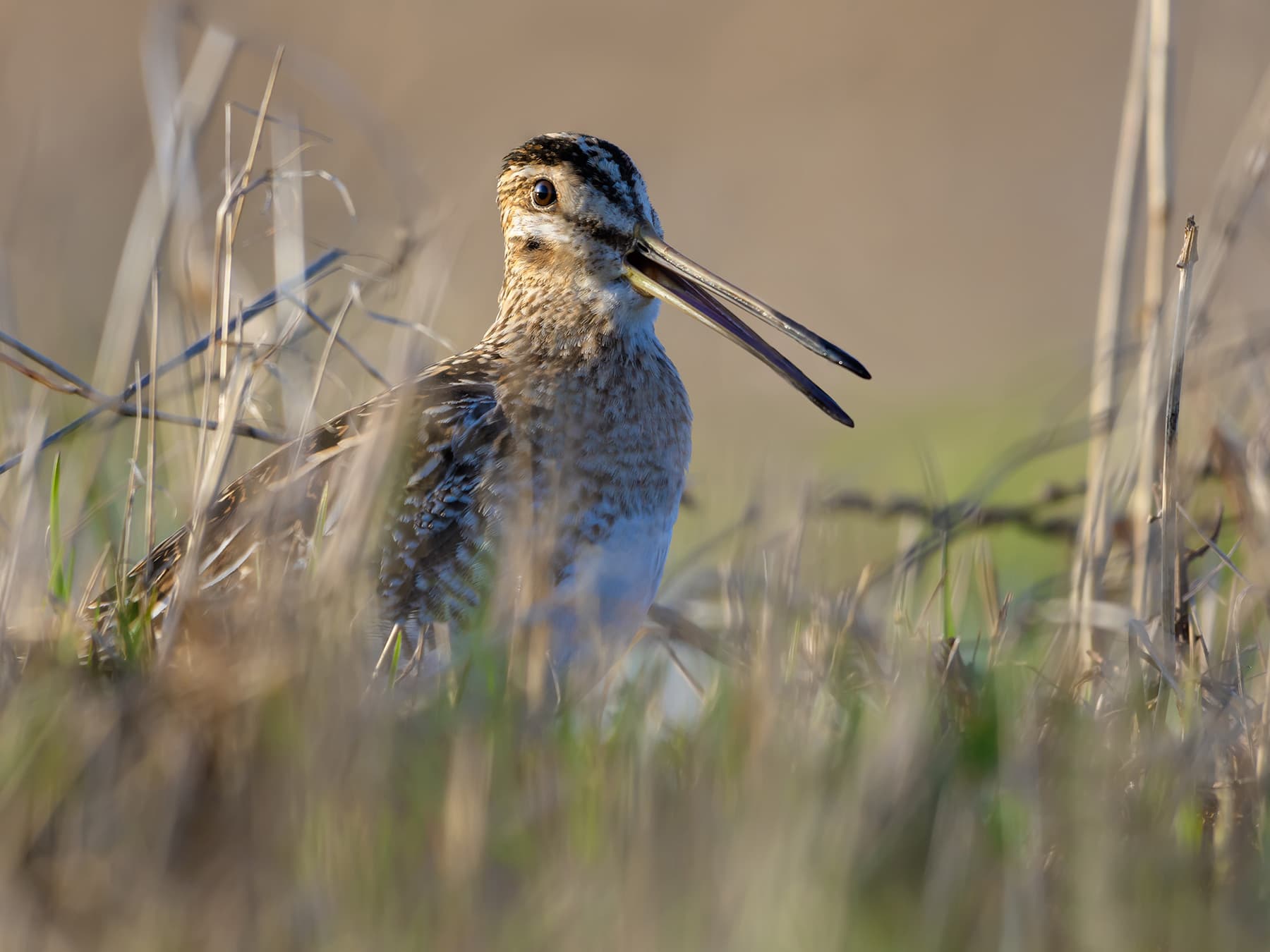
The male Snipe courts the female with a song produced with his feathers rather than his voice. This sound, known as drumming, is similar to a bleating goat. They also make a scratchy ‘scrape’ call when flushed.
- Song and calls0:00 / 0:31
Recorded in Volyn Oblast, Ukraine · June 2025
- Call0:00 / 0:20
Recorded in Gelderland, Netherlands · March 2018
When and where to see it
OctoberPeak season
Most recorded in October
- 1. Shetland Islands1.7%
- 2. Pembrokeshire1.6%
- 3. Orkney Islands1.5%
- 4. Eilean Siar1.3%
- 5. South Lanarkshire1.0%
Each dot is a county, state or province: the bigger and darker, the larger the bird’s share of that place’s bird records that month. Grey dots: no regular records. The ringed point is the centre of the bird’s records this month; the arrow shows how it moved since last month, and the dashed loop its path through the year. “Arrivals” colours places where it becomes regular this month (orange) or is in its last regular month (grey). GBIF eBird Observation Dataset, 2019–2024. Map data: Natural Earth, US Census Bureau; place centres © OpenStreetMap contributors.
In your area
See when the Common Snipe is recorded in your county, state or province.
How often the Common Snipe turns up in the UK and Ireland through the year, from birdwatchers' records.
United Kingdom
Winter visitor · all year · most records in September
Ireland
Resident · all year · most records in October
Show as a table
| Month | United Kingdom | Ireland |
|---|---|---|
| January | 0.43% (regular) | 0.52% (regular) |
| February | 0.37% (regular) | 0.40% (regular) |
| March | 0.35% (regular) | 0.28% (regular) |
| April | 0.26% (regular) | 0.25% (regular) |
| May | 0.11% (regular) | 0.19% (regular) |
| June | 0.11% (regular) | 0.22% (regular) |
| July | 0.14% (regular) | 0.14% (regular) |
| August | 0.39% (regular) | 0.18% (regular) |
| September | 0.59% (regular) | 0.33% (regular) |
| October | 0.55% (regular) | 0.59% (regular) |
| November | 0.48% (regular) | 0.58% (regular) |
| December | 0.43% (regular) | 0.46% (regular) |
Recorded regularly in
Worldwide: recorded regularly in 111 countries
Countries where it was recorded in at least 3 of the 6 years 2019–2024. Linked countries have their own bird list.
Europe (46)
- Åland Islands
- Albania
- Austria
- Belarus
- Belgium
- Bosnia & Herzegovina
- Bulgaria
- Croatia
- Czechia
- Denmark
- Estonia
- Faroe Islands
- Finland
- France
- Germany
- Greece
- Guernsey
- Hungary
- Iceland
- Ireland
- Isle of Man
- Italy
- Jersey
- Kosovo
- Latvia
- Liechtenstein
- Lithuania
- Luxembourg
- Malta
- Moldova
- Montenegro
- Netherlands
- North Macedonia
- Norway
- Poland
- Portugal
- Romania
- Russia
- Serbia
- Slovakia
- Slovenia
- Spain
- Sweden
- Switzerland
- Ukraine
- United Kingdom
Africa (17)
Asia (45)
- Armenia
- Azerbaijan
- Bahrain
- Bangladesh
- Bhutan
- Brunei
- Cambodia
- China
- Cyprus
- Georgia
- Hong Kong SAR China
- India
- Indonesia
- Iran
- Iraq
- Israel
- Japan
- Jordan
- Kazakhstan
- Kuwait
- Kyrgyzstan
- Laos
- Lebanon
- Macao SAR China
- Malaysia
- Mongolia
- Myanmar (Burma)
- Nepal
- Oman
- Pakistan
- Palestinian Territories
- Philippines
- Qatar
- Saudi Arabia
- Singapore
- South Korea
- Sri Lanka
- Taiwan
- Tajikistan
- Thailand
- Turkey
- United Arab Emirates
- Uzbekistan
- Vietnam
- Yemen
Oceania (3)
- Northern Mariana Islands
- Palau
- US Outlying Islands
Data: EOD – eBird Observation Dataset (Cornell Lab of Ornithology), accessed via GBIF.org, CC BY 4.0. Records from 2019–2024, aggregated and filtered by Birdfact. How these lists are made
What is the habitat of a Snipe?
Snipes are commonly associated with well-vegetated fresh and upper estuarine wetland environments.
Look out for these birds in the following habitats:
- Moorland
- Marshes
- Flooded fields
- Lake and river margins
- Sewage farms
What is the range of a Snipe?
The Snipe is the most widely distributed wader in the UK, particularly in the winter. They occur in suitable habitats throughout the British Isles, with the exception of high-lying parts of Scotland.
Elsewhere, the species has a wide geographical range that extends through Europe and Asia to eastern Russia, across Southeast Asia, the Indian subcontinent, the Middle East, and across central and East Africa.
Where do Snipes live?
Snipes are wading birds. They spend their lives on the ground near the edges of water bodies and in shallow flooded areas.
They can swim well, although this behaviour is rarely seen. Unlike most waders, Snipes can perch on relatively small branches, although they are more comfortable on the ground, on rocks, or on posts.
How rare are Snipes?
Snipes occur in fair numbers in the summer when about 67,000 pairs breed in the UK. However, they are far more common in the winter when the population may swell to over a million individuals.
Where can you see Snipes in North America?
The Common Snipe does not occur in North America, although American birdwatchers can see the similar Wilson’s Snipe (G. delicata) in wetland habitats practically anywhere on the continent.
Wilson’s Snipe is a migratory species that breeds primarily in the north of the USA and further north in Canada and Alaska. They overwinter across most of the Lower 48 and are resident throughout the year in the Northwest.
Where can you see Snipes in the UK?
Birdwatchers can see Snipes around just about any well-vegetated wetland in the winter, although moorland is the best place to look in the breeding season. These birds are shy and elusive, so watching quietly from a hide may give the best results.
Migration
Do Snipes migrate?
Snipes occur in the United Kingdom throughout the year as a breeding resident, although the population grows much larger each winter when migrants arrive from Northern Europe.
Are Snipes native to North America?
The common Snipe is not native to North America, although until recently, the American Wilson’s Snipe was considered the same species.
Are Snipes native to the UK?
Snipes are a native species in the United Kingdom, with records dating back as far as the Anglo-Saxon period.
Tips for seeing it
- Look for Common Snipes in wet meadows, bogs, and marshy areas
- Listen for the distinctive 'drumming' sound during breeding season
- Observe early morning or late evening when they're most active
- Use binoculars to spot their cryptic plumage against vegetation
- In the UK, visit nature reserves with wetland habitats for better chances of sighting
What it eats
What do Snipes eat?
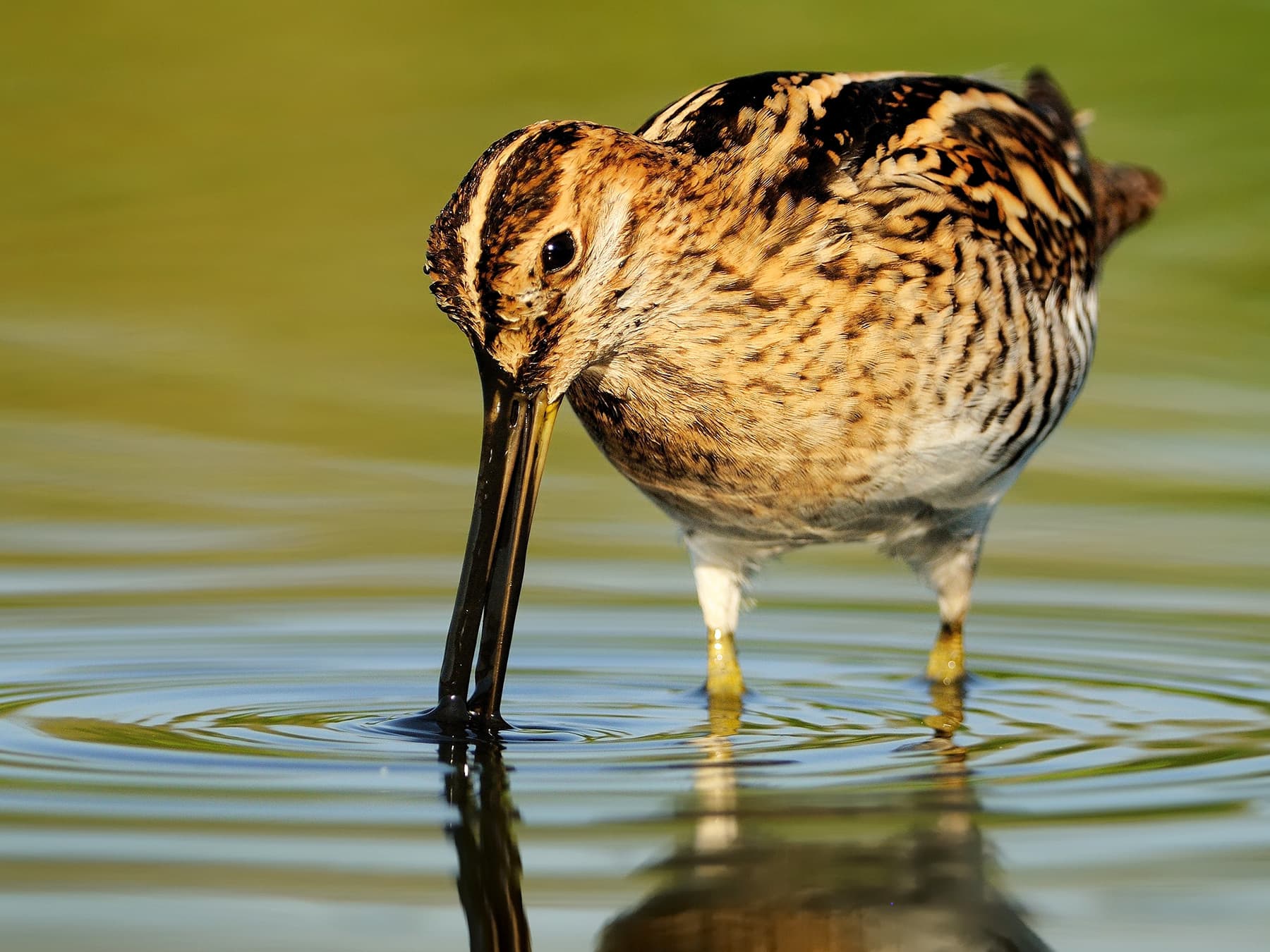
Snipes search for food in soft, muddy substrates by probing with their bill in search of worms. They also eat many other invertebrates, including insect larvae, crustaceans, and molluscs. Berries and seeds make up a small proportion of their diet.
What do Snipe chicks eat?
Both Snipe parents feed the young. Each parent is responsible for half of the brood, feeding them directly bill-to-bill with small invertebrates.
Nesting and breeding
Where do Snipes nest?
Snipes breed in moorland in the United Kingdom, selecting a well-hidden, dry spot on the ground surrounded by reeds and other wetland vegetation. The female prepares the nest, which is a simple scrape in the ground lined with soft grass.
When do Snipes nest?
Common Snipes nest in the spring and summer. They lay their eggs between April and June, and incubation usually takes 17 to 21 days.
What do Snipe eggs look like?
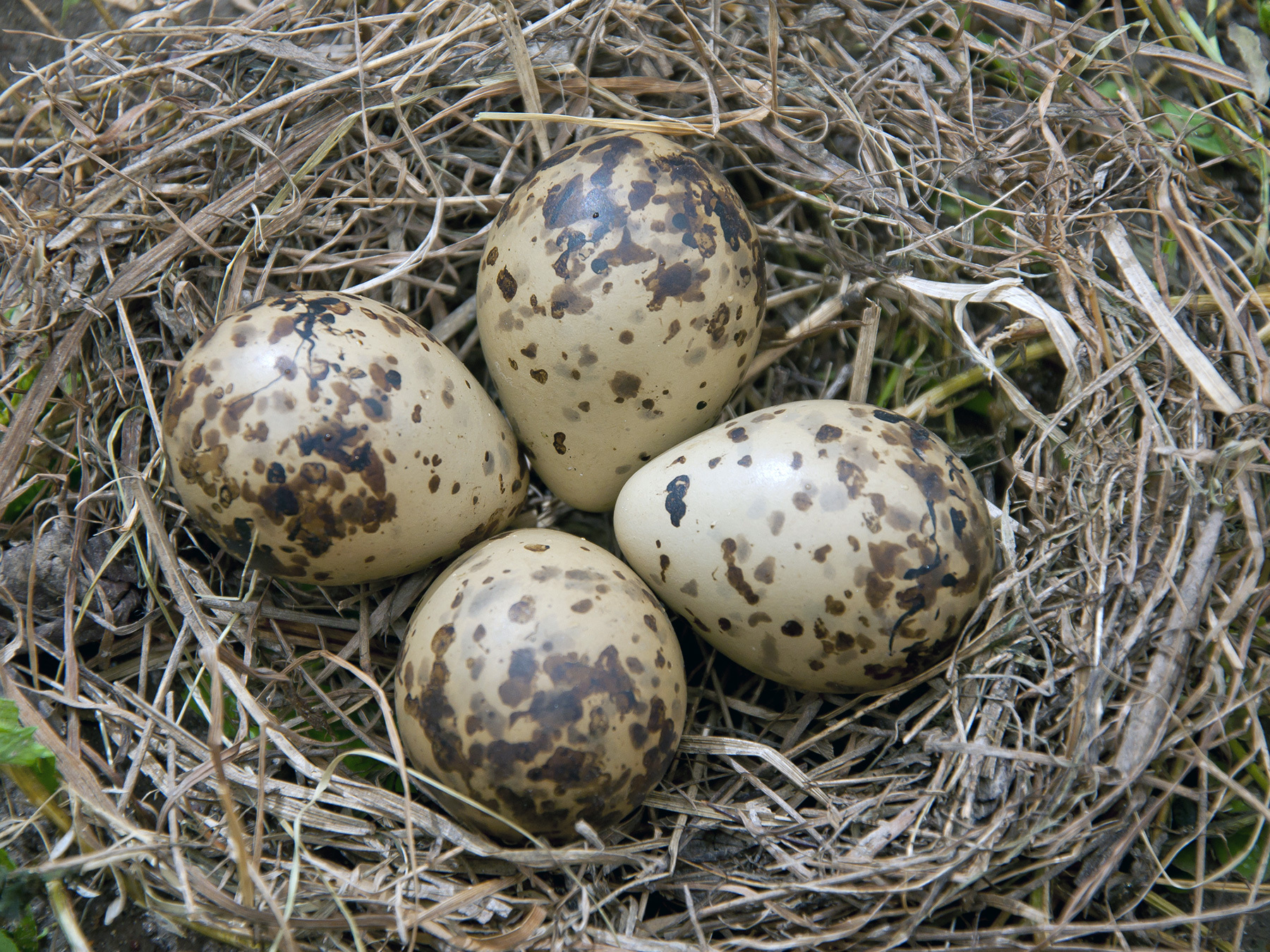
Snipes lay four eggs, each measuring approximately 40 millimetres long and 28 millimetres wide. Their eggs vary between pale green and buff colour and are variously spotted and blotched in darker brown shades.
Do Snipes mate for life?
Snipes are monogamous in the breeding season, although both sexes will mate with other partners until they settle down to incubate eggs and raise their chicks. Pair bonds last only for a single season.
Behaviour
Are Snipes aggressive?
Snipes are generally shy and elusive, although they are territorial and may act aggressively towards each other. Aggressive territorial behaviour may occur at the start of the breeding season or in crowded foraging areas. Aggressive birds fan their tails and hold them up at a steep angle. They will fight by ‘fencing’ with their sword-like bills until either opponent flees.
Lifespan and predators
How long do Snipes live?
Common Snipes can live for at least 18 years, although their average life expectancy is approximately three years.
What are the predators of Snipes?
Little information is available on the predators of the Common Snipe, although small waders are vulnerable to birds of prey like Peregrines and Marsh Harriers. In North America, the similar Wilson’s Snipe is hunted by various carnivores, including the Great-horned Owl and the Northern Goshawk.
Are Snipes protected?
Common Snipes in the UK are protected by the Wildlife and Countryside Act 1981.
Are Snipes endangered?
The Snipe has an Amber Conservation status in the UK and is globally classified as a ‘Least Concern’ species.
Conservation
While listed as Least Concern globally, Common Snipes face localised threats from habitat loss and degradation. Wetland conservation efforts benefit this species. In some regions, sustainable hunting practices are implemented to manage populations.
Similar birds
Often mistaken for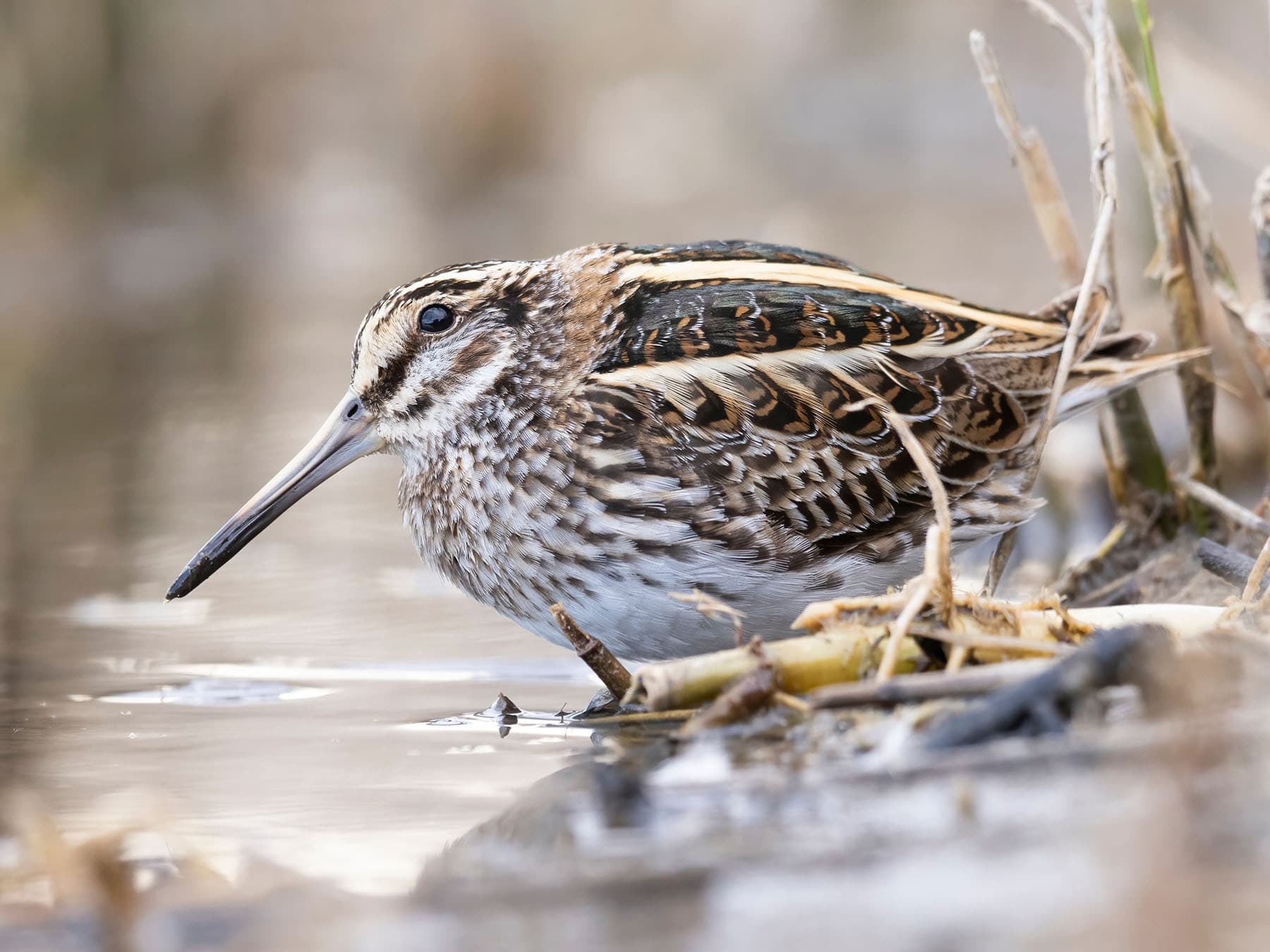
More photos
5 photos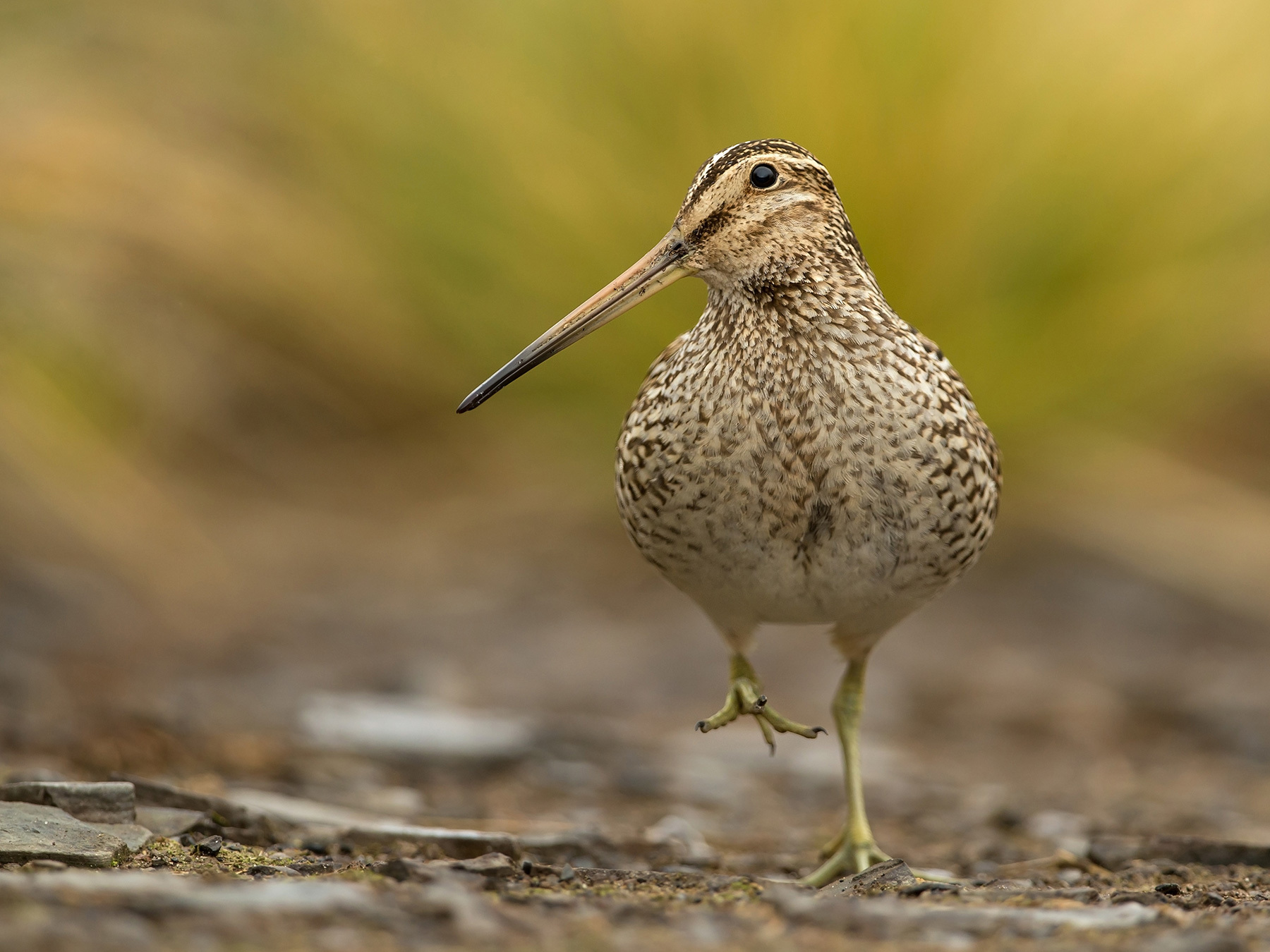
Quick facts
- Length
- 25–27 cm
- Wingspan
- 44–47 cm
- Weight
- 80–140 g
- Lifespan
- 3 years · oldest recorded 18.2 years
- Family
- Sandpipers & Snipes
- Migration
- Partial migrant
- Global status (IUCN)
- Least Concern
- World population
- 15,000,000 - 29,000,000 mature individuals
- Population trend
- Decreasing
- Also called
- Fantail Snipe
- Scientific name
- Gallinago gallinago
Questions
4Is a Common Snipe a Woodcock?
Common Snipes are not the same as Woodcocks, although the two are superficially similar, and both belong to the Scolopacidae family. The nocturnal Woodcock has a shorter bill and legs than the Snipe and is more at home in woodlands and moist forests.
Do people eat Common Snipe?
Snipes are popular gamebirds, prized by hunters and sold by some butchers. Interestingly, these small birds are traditionally cooked without removing most of their innards.
Is a Snipe a real bird?
To many, the Snipe is a bird of fiction, conjured up to fool hopeful young hunters into sitting out alone as a practical joke or right of passage. For this prank, the victim is instructed to sit out in the marsh at night while attempting to lure in or capture a bird whose description varies according to those who describe it! Of course, the Snipe is a real bird, although its shy nature makes it challenging to see and even more difficult to capture.
Can you hunt Snipe?
Snipe hunting is popular with wing shooters in many parts of the world. These small birds are flushed from their wetland habitats, and their zig-zagging flight path makes them a challenging but rather unsubstantial target. Open seasons and bag limits vary by country and state.
Sources
4- 1BirdLife International. 2019. Gallinago gallinago (amended version of 2017 assessment). The IUCN Red List of Threatened Species 2019: e.T22693097A155504420. Source (opens in a new tab)
- 2Wetlands International; EBCC (2015)
- 3BirdLife International. 2019. Gallinago gallinago (amended version of 2017 assessment). The IUCN Red List of Threatened Species 2019: e.T22693097A155504420. Source (opens in a new tab)
- 4Fransson et al., EURING list of longevity records for European birds (2010) Source (opens in a new tab)

Checked by
Nathan Cope, founder and editor
Nathan founded Birdfact and leads its writers and contributors in the UK, the US and Canada. He has watched and studied birds for more than ten years, and checks every article and species guide before it’s published.