


Redshank
Common Redshank · Tringa totanus
By the Birdfact teamChecked by Nathan Cope
On this page14 sections
How to recognise it
What do Redshanks look like?
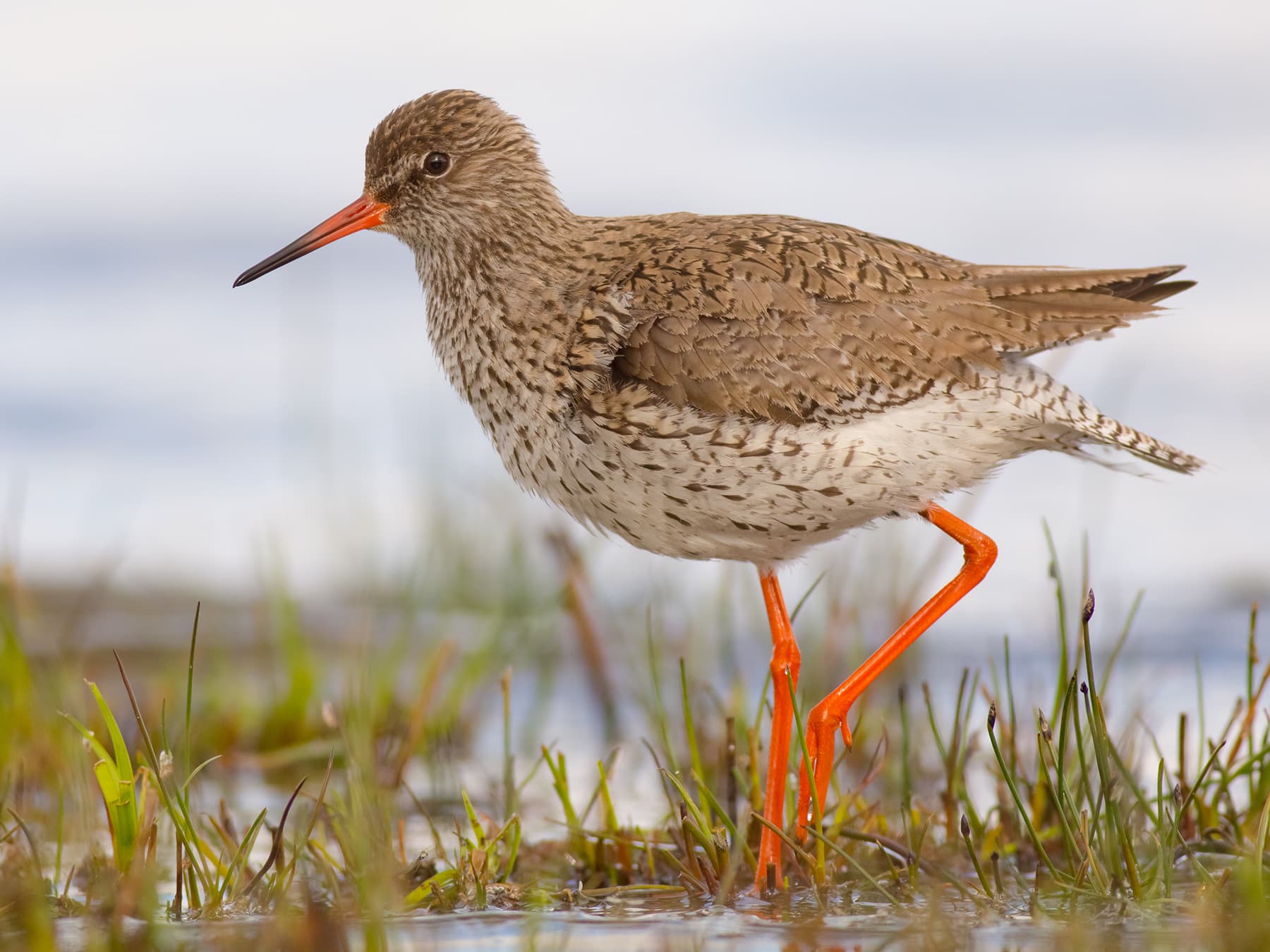
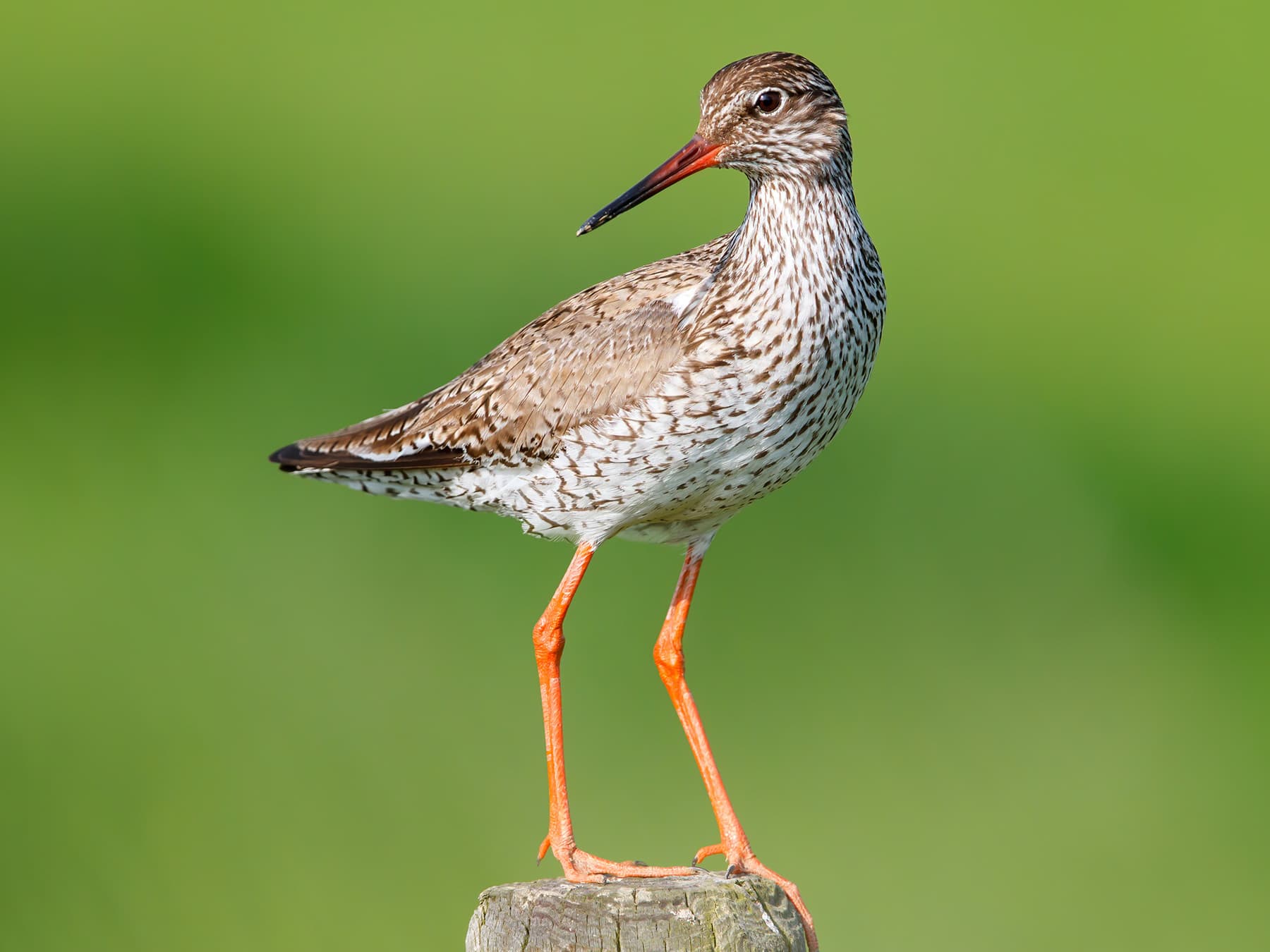
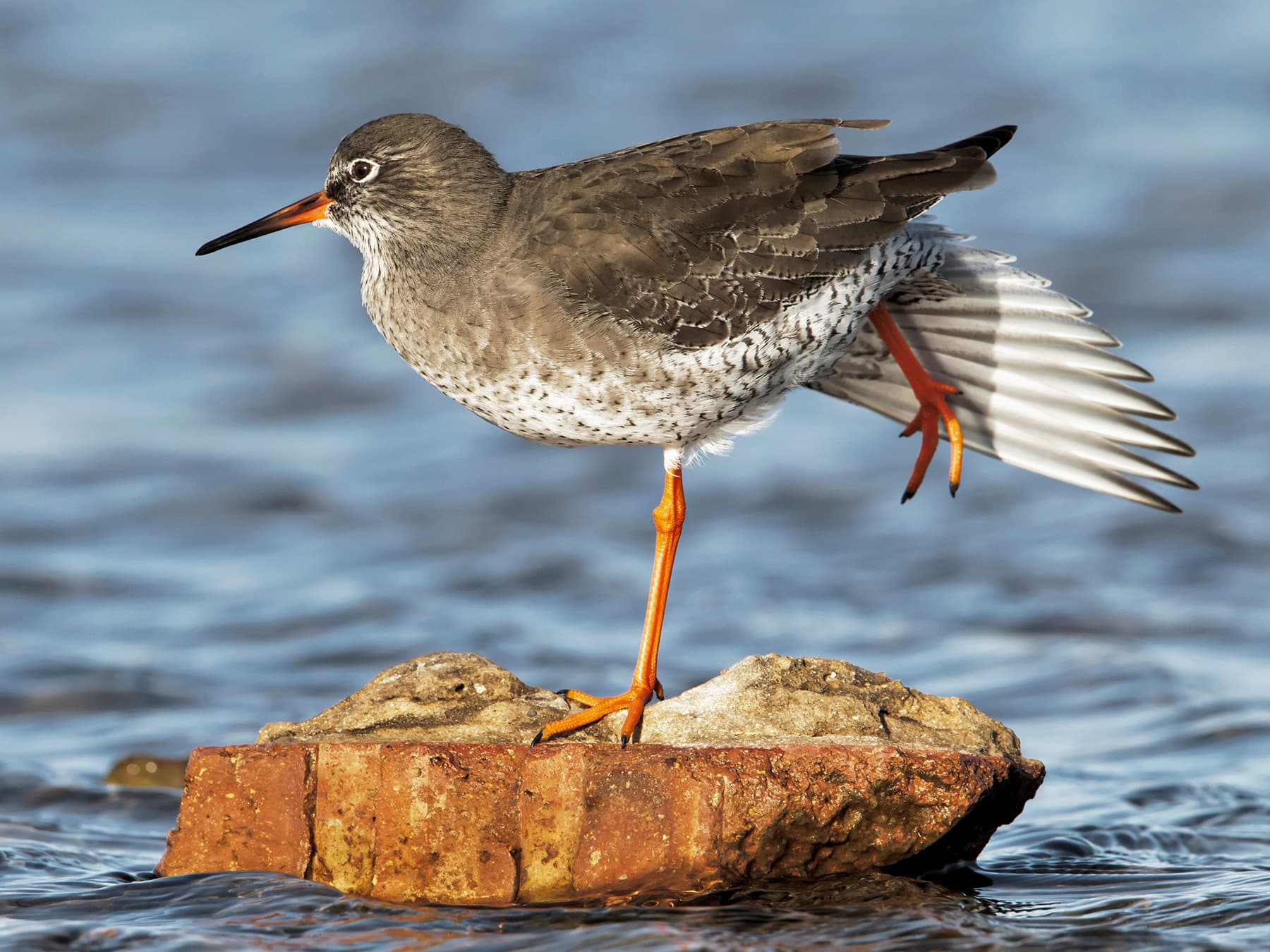
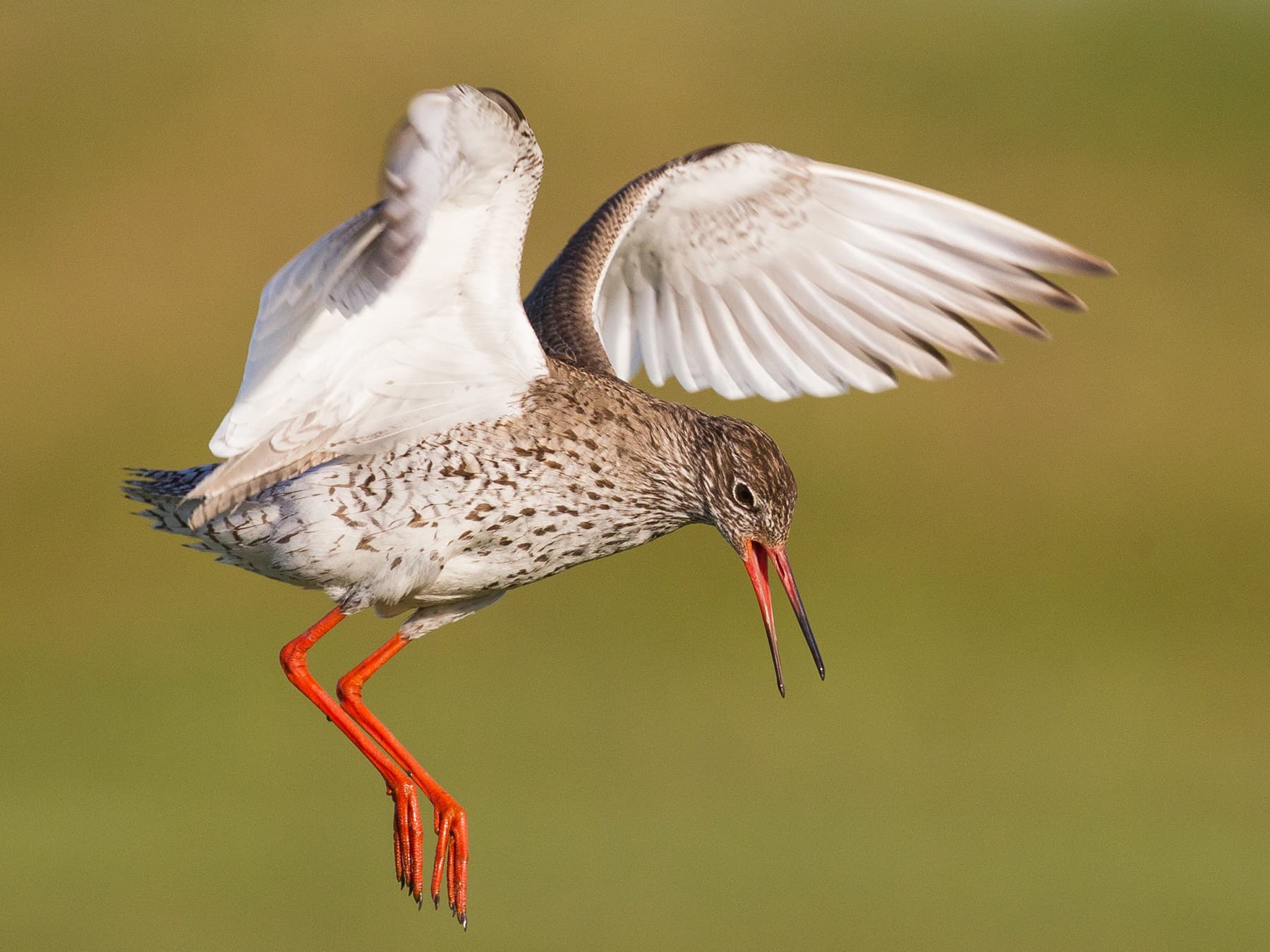
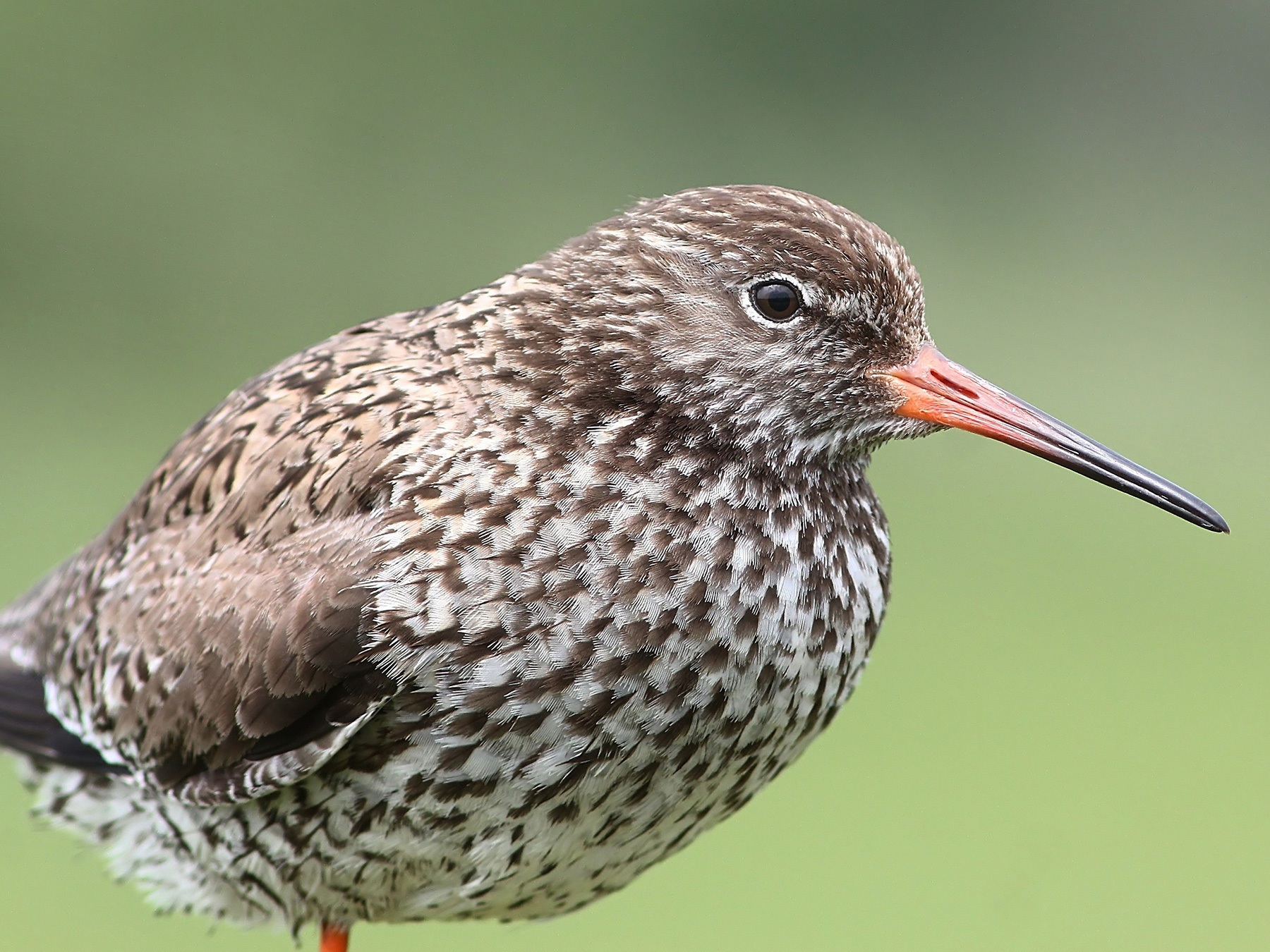
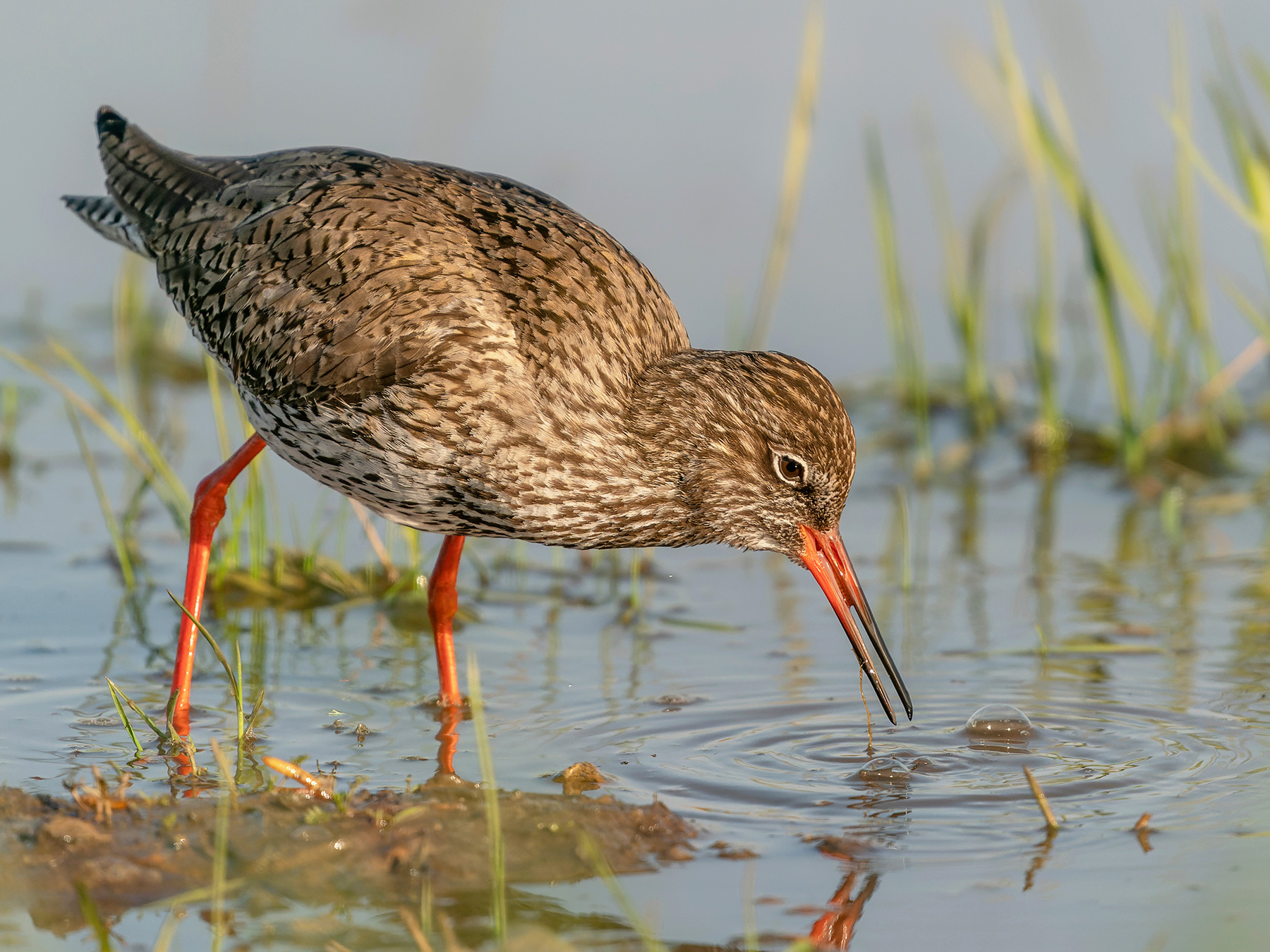
The Redshank is a fairly non-descript wader, although they have conspicuous long bright-orange legs and a long straight orange bill with a black tip. Their plumage is primarily brown, darker above than below, and variably speckled, and they may have a faint stripe through each eye.
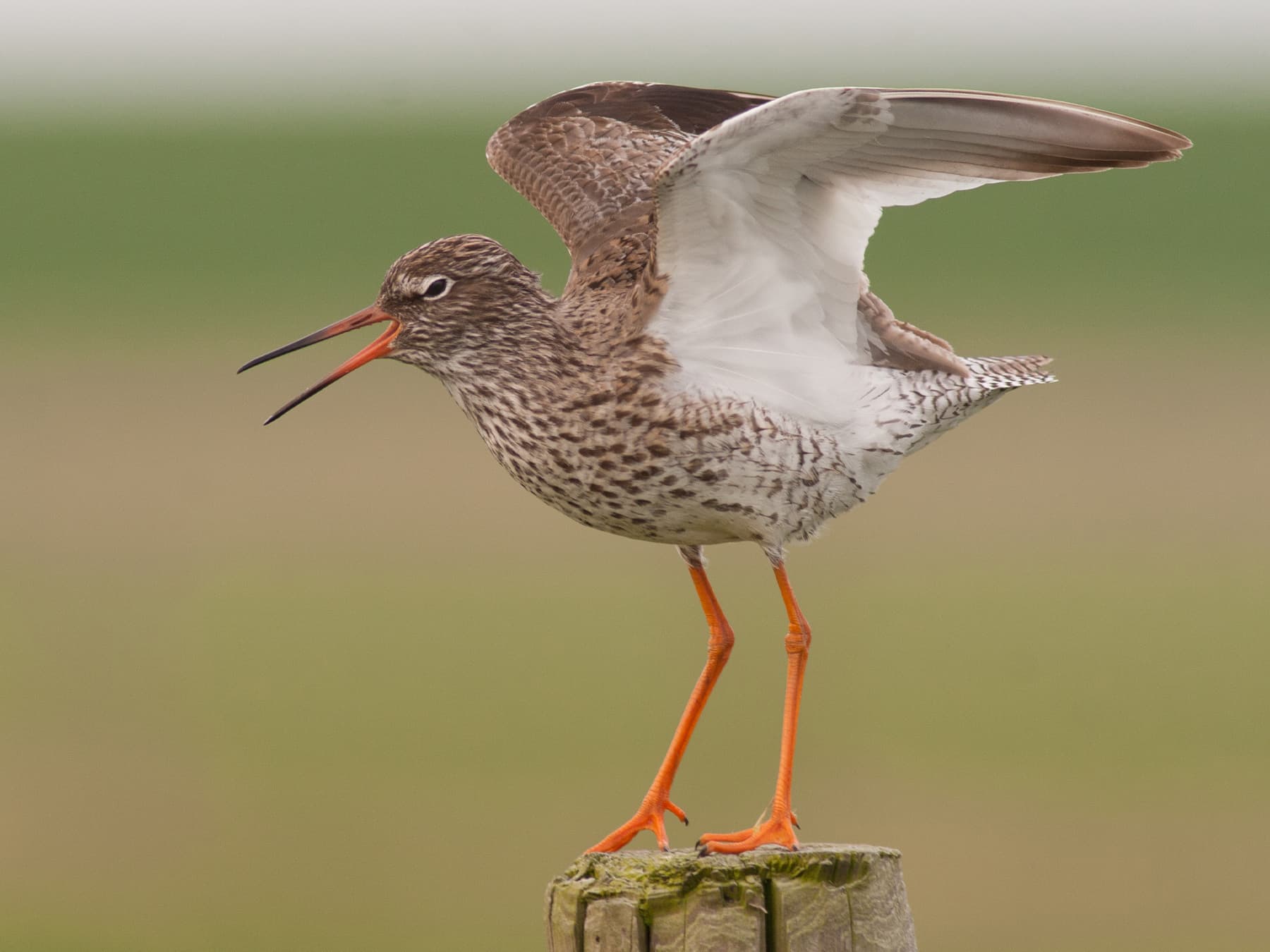
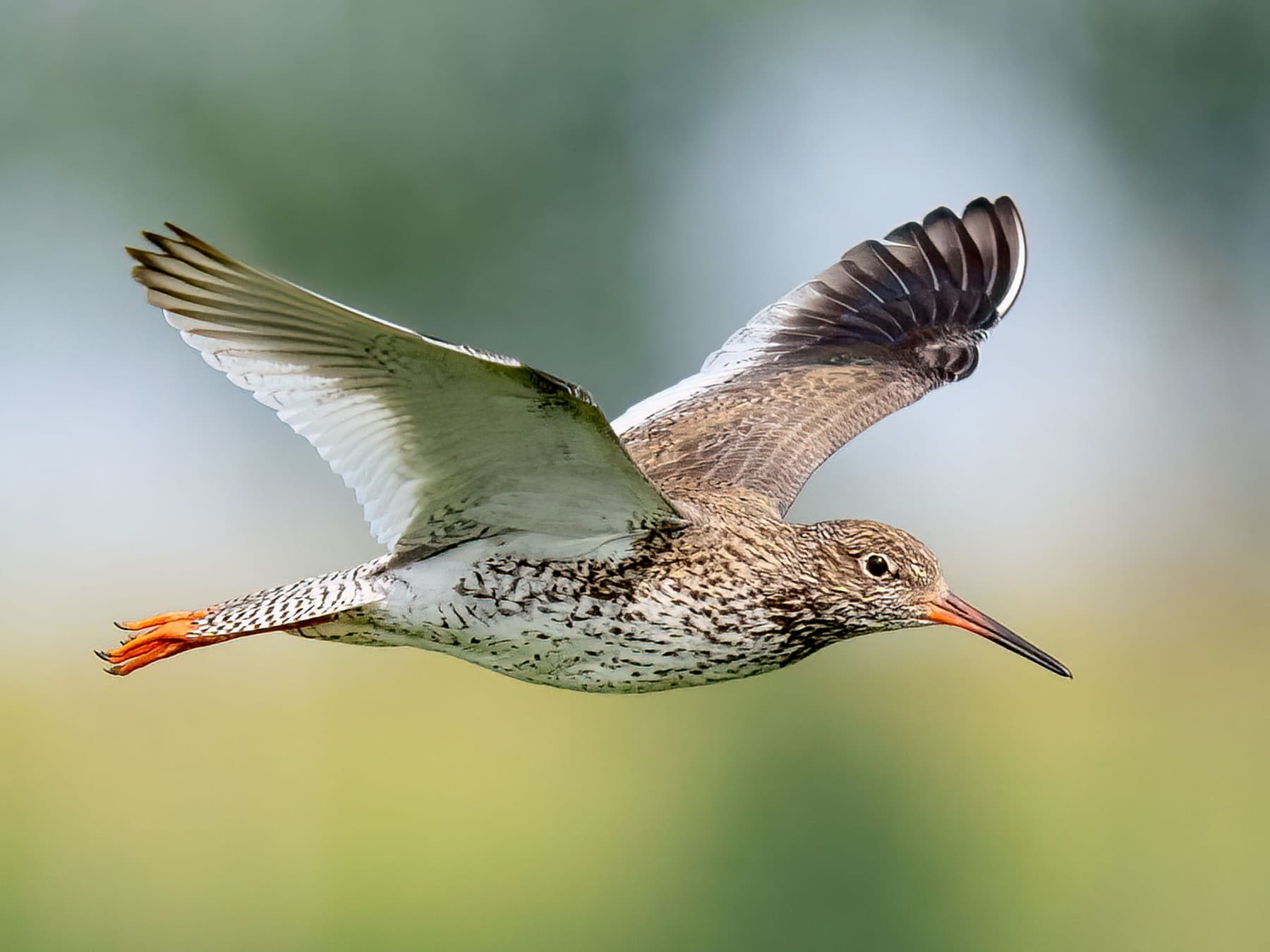
In flight, the Redshank shows a pure white lower back and white secondary feathers that contrast with dark wingtips. Their plumage differs slightly depending on the time of year. Breeding birds are slightly darker and more boldly marked.
Females appear similar to males, although they are somewhat larger and have paler underparts. Juvenile Redshanks are similar to non-breeding adults but have bolder streaking on their underparts.
Waders, in general, pose a challenge for birdwatchers, and despite their colourful limbs and bills, Redshanks are no exception. These common waders can be confused with the much rarer Spotted Redshank and Ruff.
How big are Redshanks?
The Redshank is a medium-sized UK wader, smaller than the Godwits but larger than the Dunlin.
Length
The Redshank has a total length of 27 to 29 centimetres. They are about as tall as they are long.
Weight
Redshanks weigh 85 to 184 grams, with an average of approximately 153 grams. Females are heavier than males.
Wingspan
These fast-flying birds have a wingspan of 59 to 66 centimetres.
Its size
Adults- Length
- 27–29 cm
- Wingspan
- 45–52 cm
- Weight
- 85–155 g
Its song and calls
What sound does a Redshank make?
Redshanks are noisy birds, particularly in the breeding season when males make long display flights. Their vocalisations are variations of a ‘teeuu’ or ‘tyooo’ note, uttered just once on taking flight or sometimes repeated for several minutes in display.
- Song and calls0:00 / 0:47
Recorded in Kalmar County, Sweden · May 2024
- Flight call0:00 / 0:21
Recorded in Hauts-de-France, France · April 2025
When and where to see it
OctoberIn season
Most recorded in October
- 1. Louth3.3%
- 2. Derry3.1%
- 3. East Lothian2.4%
- 4. Stockton-on-Tees2.2%
- 5. Shetland Islands2.2%
Each dot is a county, state or province: the bigger and darker, the larger the bird’s share of that place’s bird records that month. Grey dots: no regular records. The ringed point is the centre of the bird’s records this month; the arrow shows how it moved since last month, and the dashed loop its path through the year. “Arrivals” colours places where it becomes regular this month (orange) or is in its last regular month (grey). GBIF eBird Observation Dataset, 2019–2024. Map data: Natural Earth, US Census Bureau; place centres © OpenStreetMap contributors.
In your area
See when the Redshank is recorded in your county, state or province.
How often the Redshank turns up in the UK and Ireland through the year, from birdwatchers' records.
United Kingdom
Resident · all year · most records in September
Ireland
Resident · all year · most records in January
Show as a table
| Month | United Kingdom | Ireland |
|---|---|---|
| January | 0.64% (regular) | 1.6% (regular) |
| February | 0.58% (regular) | 1.5% (regular) |
| March | 0.61% (regular) | 1.3% (regular) |
| April | 0.55% (regular) | 0.67% (regular) |
| May | 0.44% (regular) | 0.21% (regular) |
| June | 0.41% (regular) | 0.28% (regular) |
| July | 0.59% (regular) | 0.79% (regular) |
| August | 0.68% (regular) | 1.2% (regular) |
| September | 0.71% (regular) | 1.4% (regular) |
| October | 0.71% (regular) | 1.5% (regular) |
| November | 0.65% (regular) | 1.6% (regular) |
| December | 0.62% (regular) | 1.6% (regular) |
Recorded regularly in
Worldwide: recorded regularly in 108 countries
Countries where it was recorded in at least 3 of the 6 years 2019–2024. Linked countries have their own bird list.
Europe (44)
- Åland Islands
- Albania
- Austria
- Belarus
- Belgium
- Bosnia & Herzegovina
- Bulgaria
- Croatia
- Czechia
- Denmark
- Estonia
- Faroe Islands
- Finland
- France
- Germany
- Greece
- Guernsey
- Hungary
- Iceland
- Ireland
- Isle of Man
- Italy
- Jersey
- Kosovo
- Latvia
- Lithuania
- Luxembourg
- Malta
- Moldova
- Montenegro
- Netherlands
- Norway
- Poland
- Portugal
- Romania
- Russia
- Serbia
- Slovakia
- Slovenia
- Spain
- Sweden
- Switzerland
- Ukraine
- United Kingdom
Africa (17)
- Algeria
- Cape Verde
- Djibouti
- Egypt
- Ethiopia
- Gabon
- Gambia
- Ghana
- Guinea
- Guinea-Bissau
- Kenya
- Libya
- Mauritania
- Morocco
- Senegal
- Tunisia
- Western Sahara
Asia (43)
- Armenia
- Azerbaijan
- Bahrain
- Bangladesh
- Bhutan
- Cambodia
- China
- Cyprus
- Georgia
- Hong Kong SAR China
- India
- Indonesia
- Iran
- Iraq
- Israel
- Japan
- Jordan
- Kazakhstan
- Kuwait
- Kyrgyzstan
- Lebanon
- Macao SAR China
- Malaysia
- Mongolia
- Myanmar (Burma)
- Nepal
- Oman
- Pakistan
- Palestinian Territories
- Philippines
- Qatar
- Saudi Arabia
- Singapore
- South Korea
- Sri Lanka
- Taiwan
- Tajikistan
- Thailand
- Timor-Leste
- Turkey
- United Arab Emirates
- Uzbekistan
- Vietnam
Oceania (4)
- Australia
- Cocos (Keeling) Islands
- Northern Mariana Islands
- Palau
Data: EOD – eBird Observation Dataset (Cornell Lab of Ornithology), accessed via GBIF.org, CC BY 4.0. Records from 2019–2024, aggregated and filtered by Birdfact. How these lists are made
What is the habitat of a Redshank?
Redshanks are waders that inhabit a variety of tidal and freshwater wetland environments. Look out for these birds in the following habitats:
- Coastal mudflats
- Estuaries
- Marshes
- Moist heathlands
- Sewage farms
What is the range of a Redshank?
Redshanks can be seen in suitable habitats across much of the United Kingdom. They occur around virtually the entire coastline, particularly in the winter. Breeding birds range far inland in Scotland and northern England.
Elsewhere, Redshanks have a vast distribution in Europe, from Iceland to Russia. They occur across Asia to Japan and through Southeast Asia to Australia. They also visit Africa as far south as Angola and Tanzania.
Where do Redshanks live?
Redshanks spend almost all their lives on the ground along estuaries, river and lake banks, and other shallow water environments. They occasionally swim and often perch prominently on posts and rocks.
How rare are Redshanks?
Redshanks are fairly common waders in the United Kingdom, especially in the winter when their numbers more than double. The breeding population is approximately 22,00 pairs, and about 100,000 birds overwinter.
Where can you see Redshanks in the UK?
Redshanks are most numerous along estuaries and coastal marshes in the winter months. The southeast of England, Lancashire, and Northern Scotland support the most breeding birds in the spring and summer.
Migration
Do Redshanks migrate?
Redshanks are generally migratory, although some individuals remain in the United Kingdom throughout the year. Most of the breeding population moves south, often to France, for the non-breeding season. The population swells to about 100,000 in the winter when non-breeding birds visit from Iceland.
Are Redshanks native to the UK?
Redshanks are native to the United Kingdom and have not been introduced outside of their natural range.
Tips for seeing it
- Look for Redshanks in coastal mudflats, estuaries, and inland wetlands
- Listen for their loud, clear 'teu-hu' alarm call
- Observe their distinctive red legs and white wing bars in flight
- In the UK, visit nature reserves along the coast for the best chances of spotting them
What it eats
What do Redshanks eat?
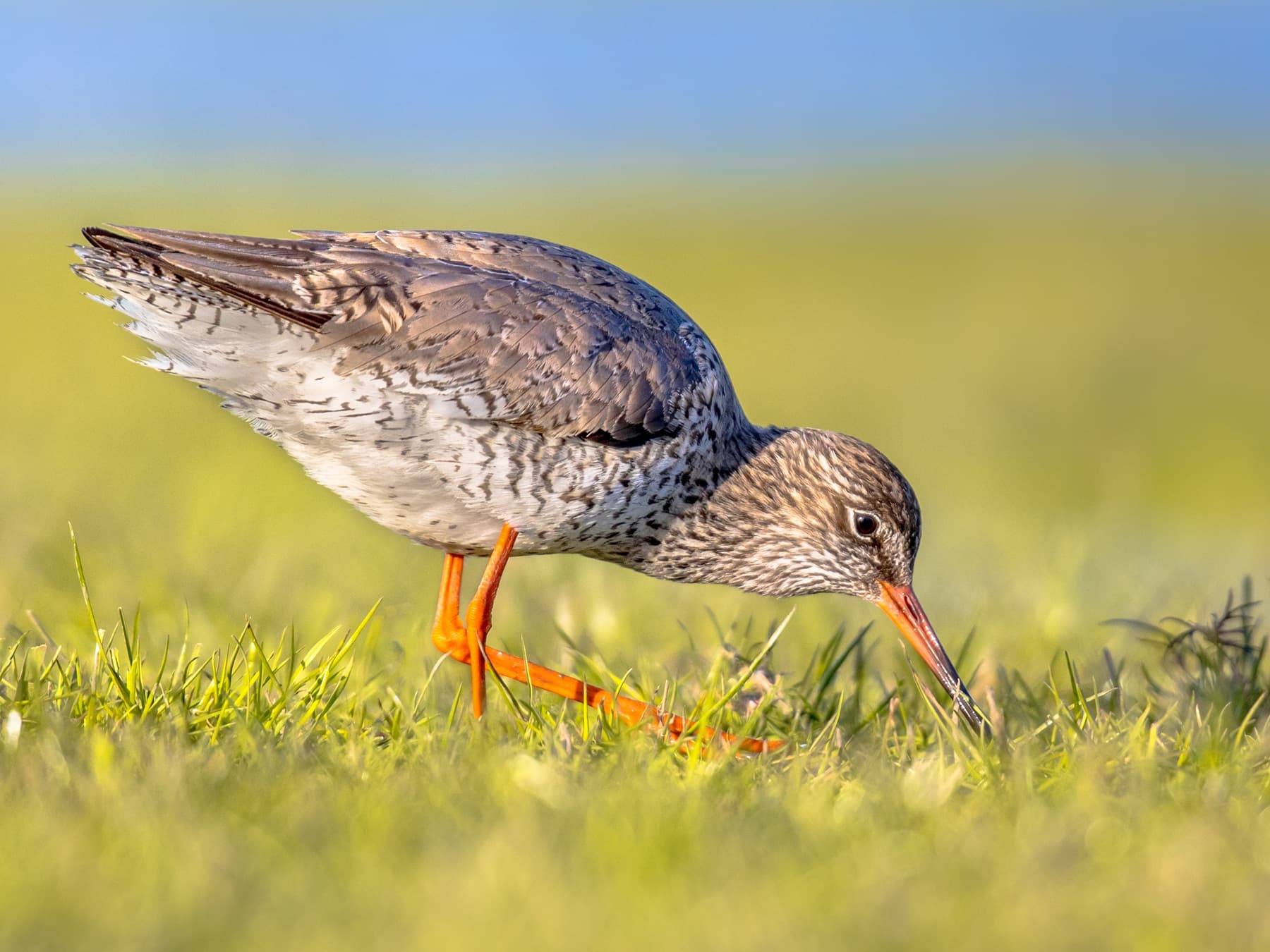
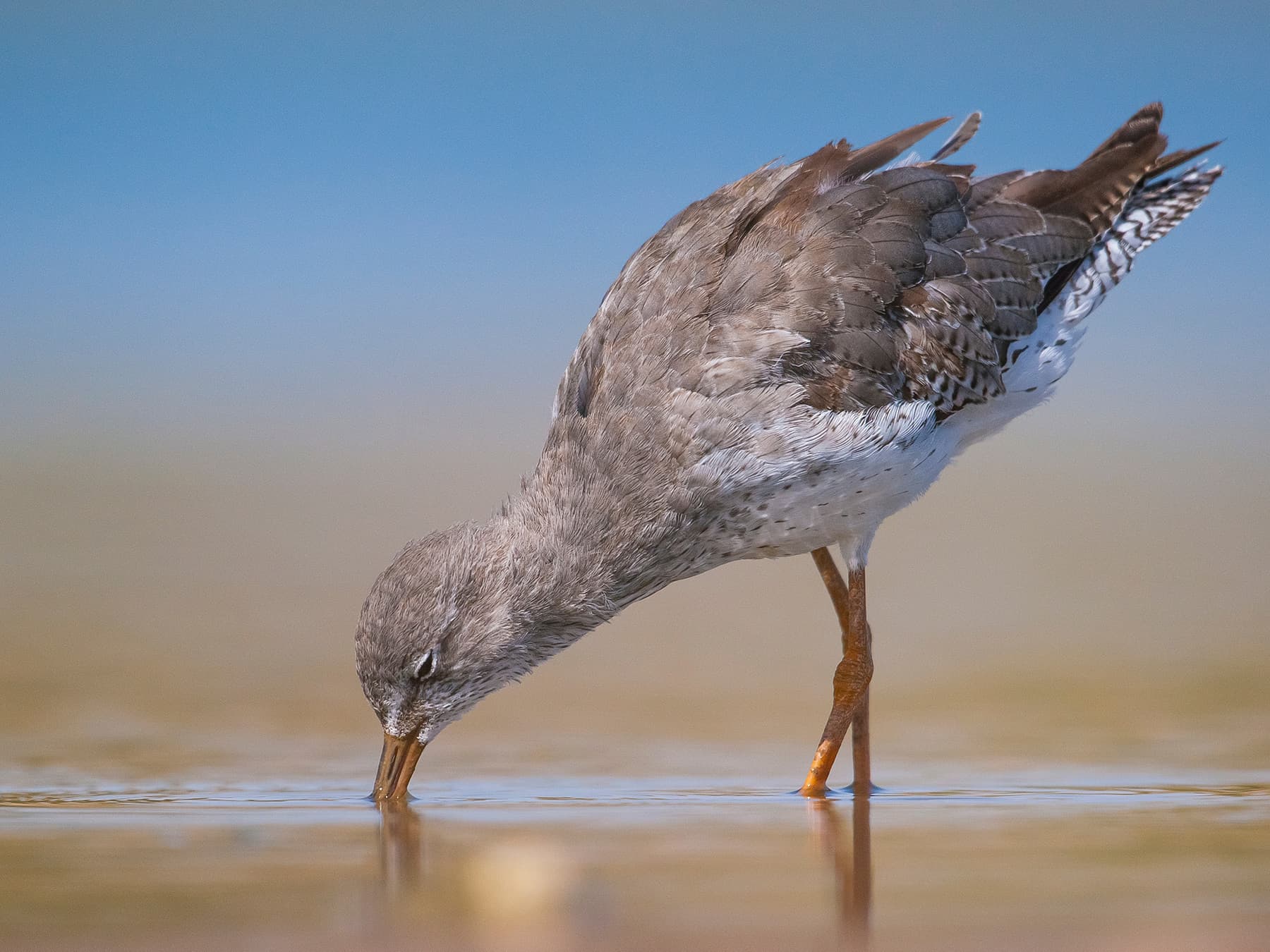
Red Shanks are carnivorous birds, perfectly adapted to extract their burrowing prey from the mud. They use their long straight bills to probe for invertebrates like worms and crustaceans, although they will take swimming prey like tadpoles and small fish when possible.
What do Redshank chicks eat?
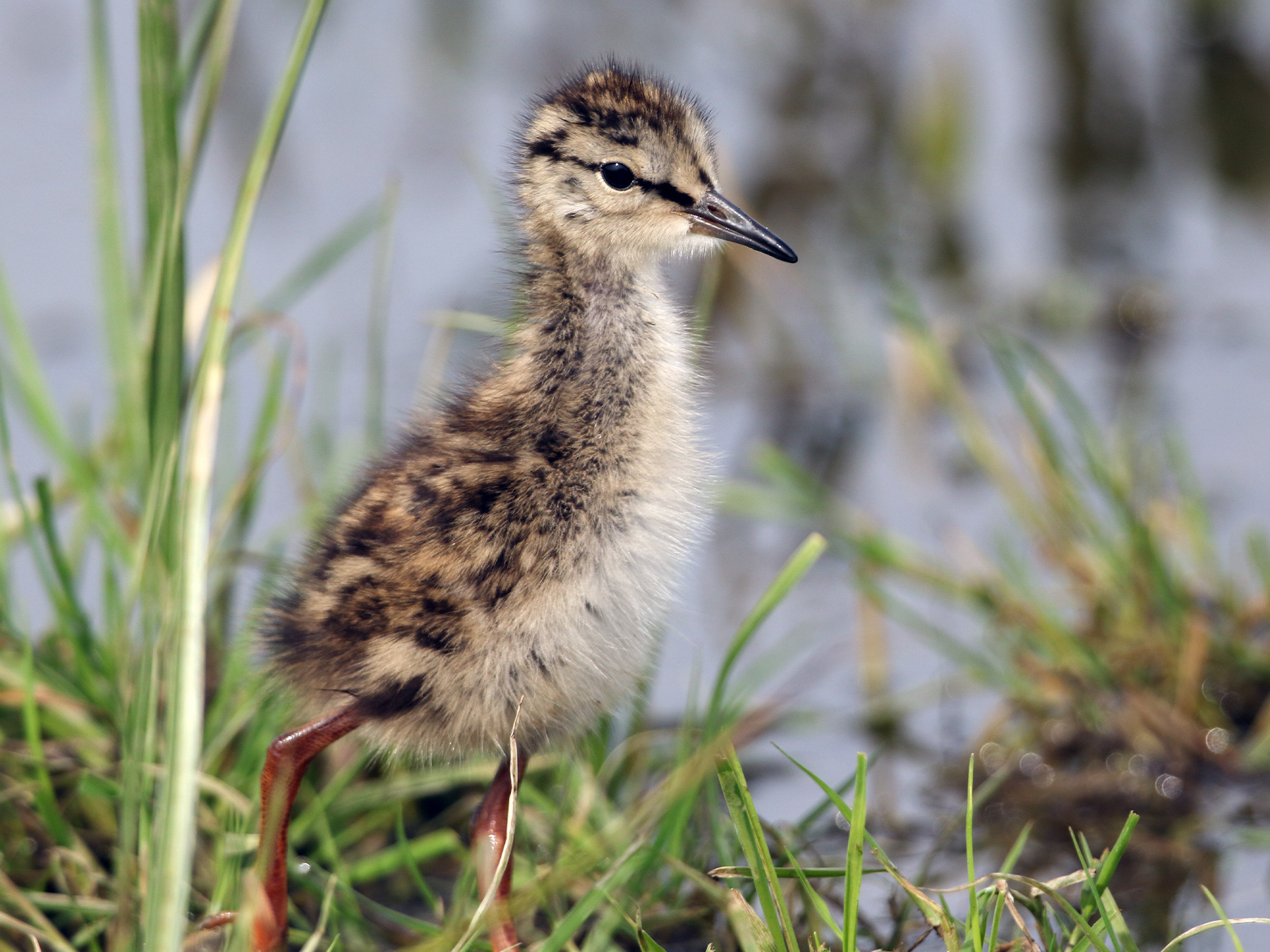
Redshank chicks are able to walk, run, and feed themselves soon after hatching. Like their parents, the young birds search for small wetland invertebrates on damp sand and mud.
Nesting and breeding
Where do Redshanks nest?
Redshanks nest in low-lying wetland areas with good grass cover. Most pairs that nest in the UK occur in north-west England and Scotland. The female builds her nest alone, usually on the ground below dense vegetation and often at the base of a grass tussock.
When do Redshanks nest?
Redshanks nest between April and June in the United Kingdom. Their eggs take 22 to 29 days to hatch, and the young birds gain flight after about a month.
What do Redshank eggs look like?
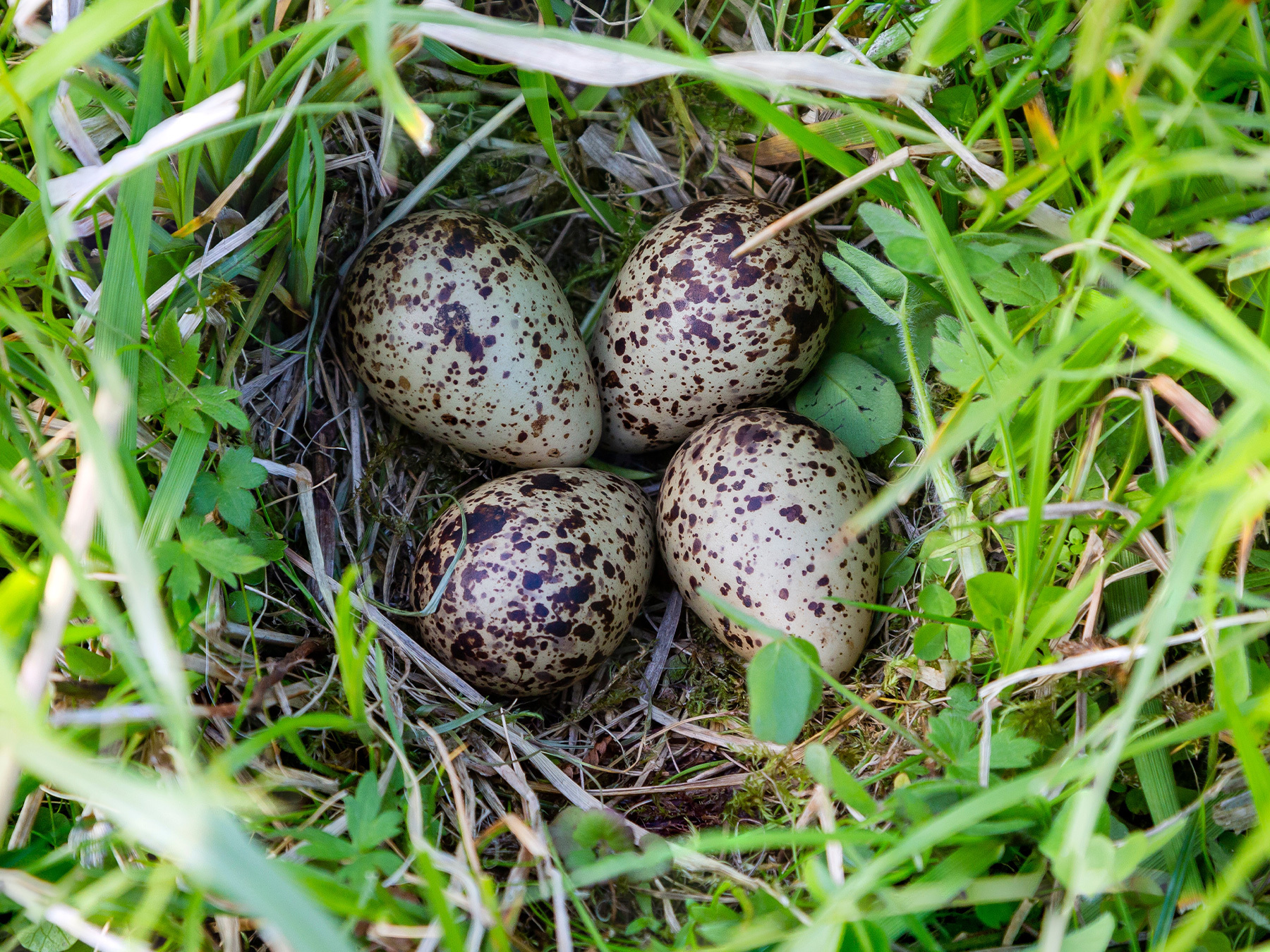
Redshanks lay a single clutch of three to five (usually four) teardrop-shaped eggs. Each egg measures about 45 millimetres long and 32 millimetres wide and is a buff colour with bold brown speckles.
Do Redshanks mate for life?
Redshanks frequently reunite with the same partner, and pairs may remain together for many consecutive years. However, they may seek a new partner after nest failure or the loss of a mate.
Behaviour
Are Redshanks aggressive?
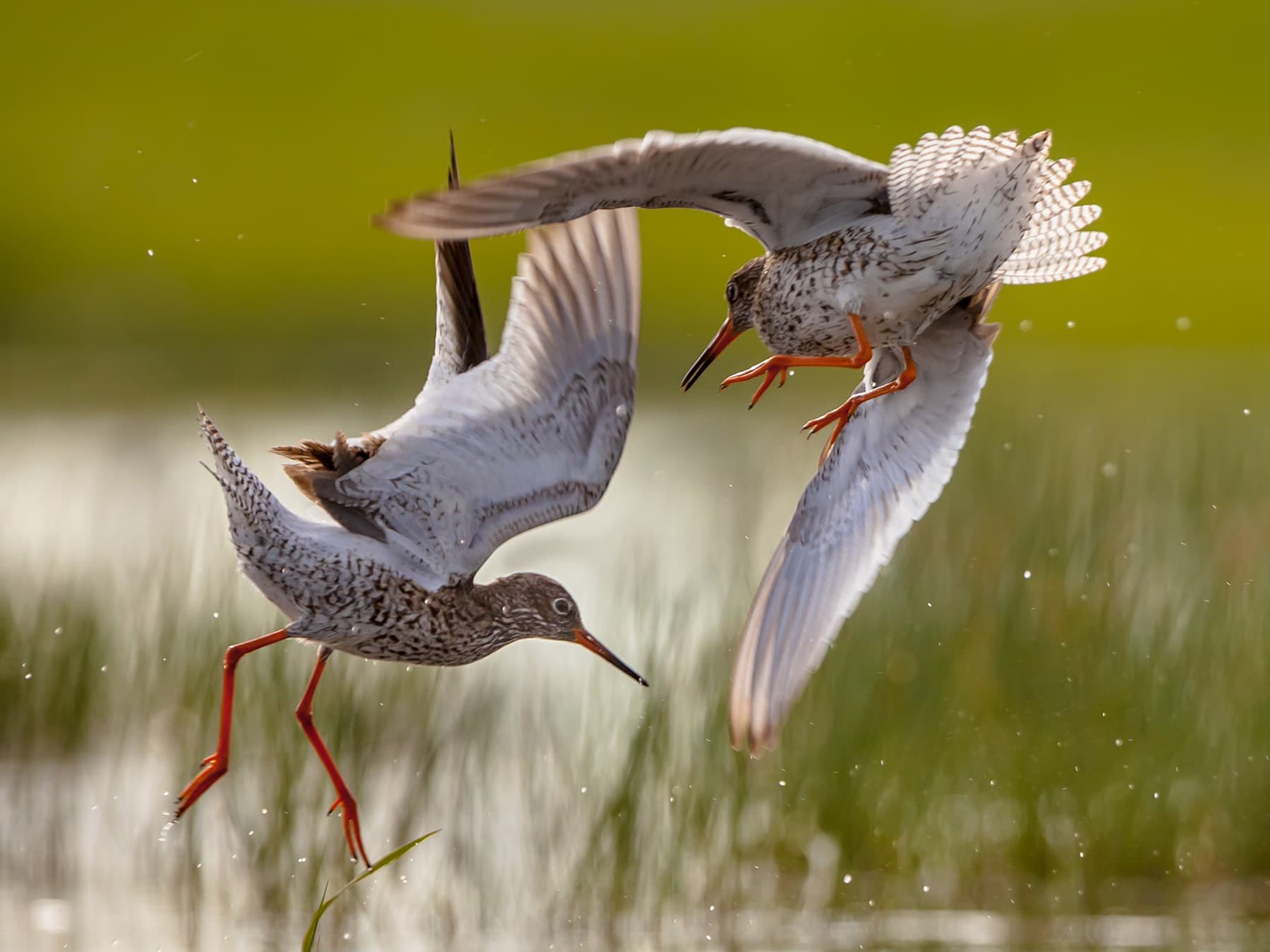
Redshanks are most often seen singly or in pairs. However, they can be rather gregarious and frequently forage together, often with other species and sometimes in large flocks. They are not particularly aggressive, although some individuals may defend a feeding area.
Where do Redshanks sleep at night?
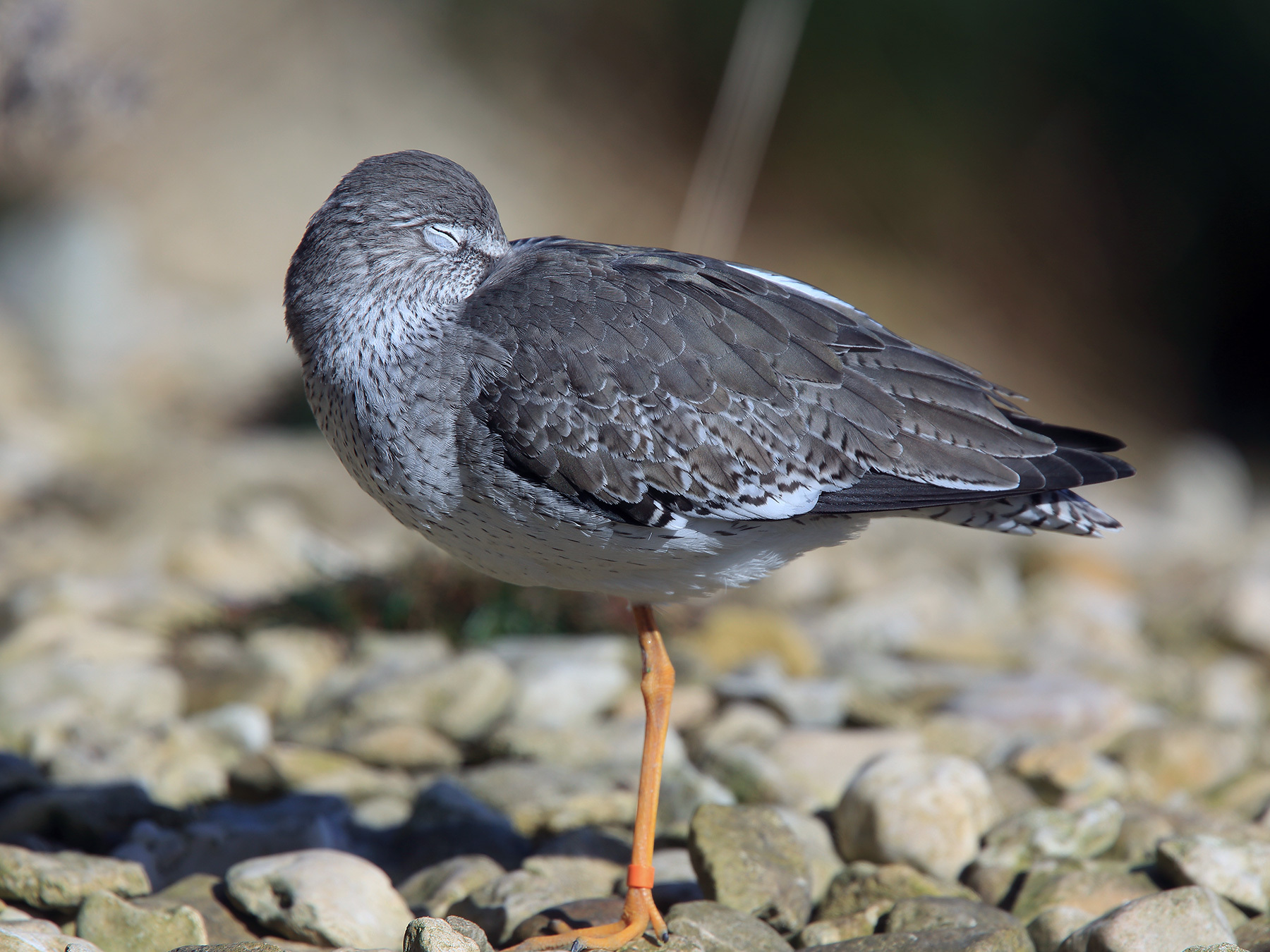
Redshanks are active by day or night, and time their foraging by tides rather than time in coastal areas. They roost at high tide when their feeding areas are submerged.
Lifespan and predators
How long do Redshanks live?
Redshanks can live for over twenty years, although most birds have a life expectancy of about four years.
What are the predators of Redshanks?
Redshank eggs and chicks are most vulnerable to stoats, foxes, crows, and gulls. Speedy birds of prey like the Peregrine Falcon and Sparrowhawk hunt adults and juveniles.
Are Redshanks protected?
Redshanks are protected by the Wildlife and Countryside Act 1981 in the United Kingdom.
Are Redshanks endangered?
The Redshank is globally assessed as a ‘Least Concern’ species on the IUCN Red List and is not endangered. In the United Kingdom, they have an amber conservation status due to declines both as a breeding and overwintering bird.
Conservation
While listed as Least Concern globally, Redshanks face threats from habitat loss due to coastal development and climate change.
Conservation efforts focus on protecting and managing wetland habitats, particularly in key breeding and wintering areas across Europe and Asia.
Similar birds
Often mistaken for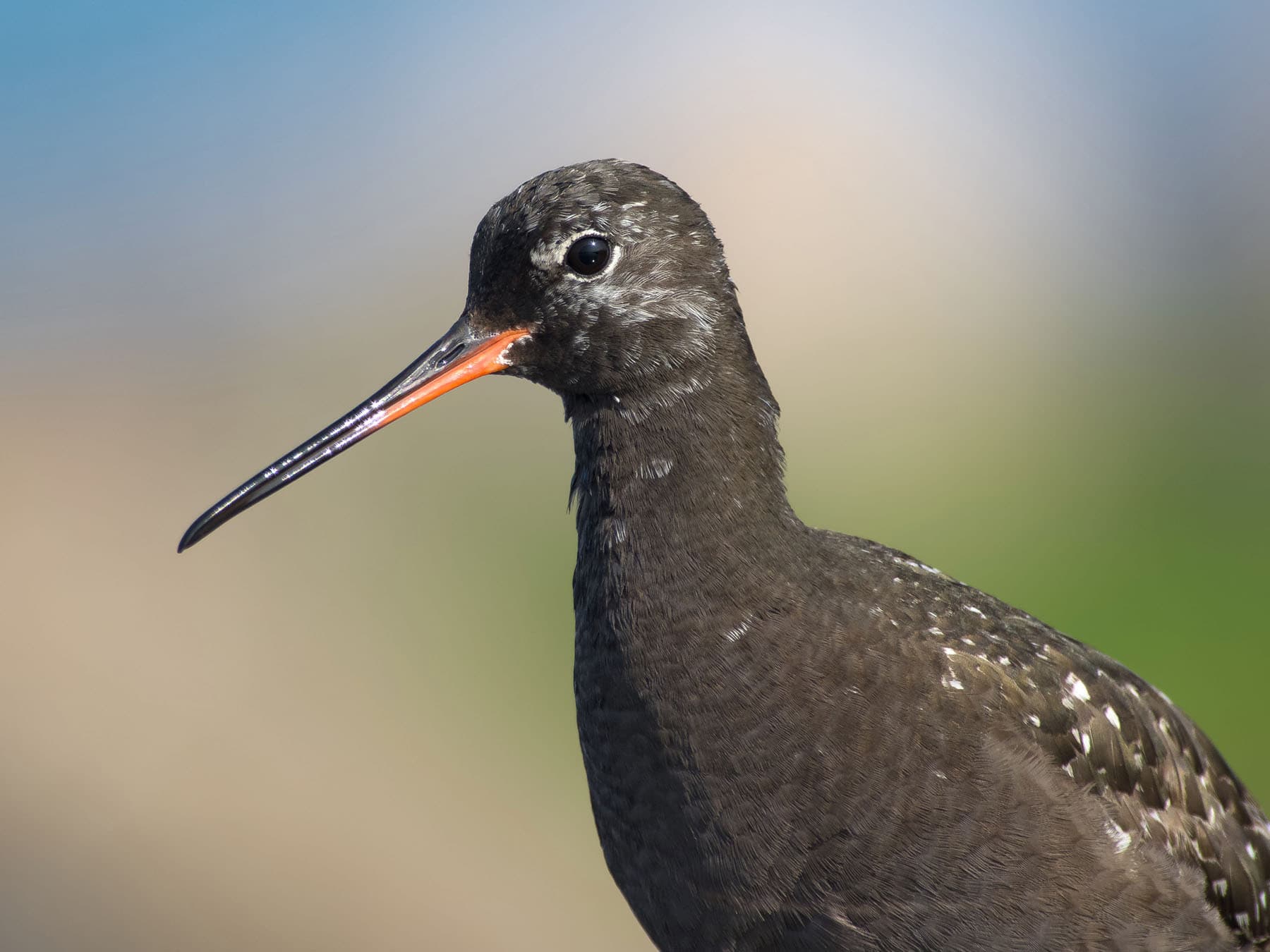
More photos
6 photos
Quick facts
- Length
- 27–29 cm
- Wingspan
- 45–52 cm
- Weight
- 85–155 g
- Lifespan
- 4–6 years · oldest recorded 26.9 years
- Family
- Sandpipers & Snipes
- Migration
- Partial migrant
- Global status (IUCN)
- Least Concern
- World population
- 1,300,000 - 3,100,000 individuals
- Population trend
- Decreasing
- Also called
- Common Redshank
- Scientific name
- Tringa totanus
Questions
4Why are they called Redshank?
Redshanks get their delightfully descriptive common name from their bright orange legs. They share this feature with a similar but much rarer wader, the Spotted Redshank.
Do Redshanks flock?
Redshanks are usually spotted in small groups, although they may be seen singly or in large flocks. You are most likely to see bigger groups in the winter months when large numbers arrive to overwinter in the UK. Redshanks also migrate in flocks, although they generally fly after dark.
Do Redshanks swim?
Redshanks can swim, although their long legs and unwebbed feet are not ideal for moving through the water. Birdwatchers are far likelier to spot them walking along the bank or wading in the shallows.
Do Redshanks bob?
Redshanks frequently bob their heads and tails when alarmed. These shy and nervous birds often call in alarm and fly off before you can get a good look at them.
Sources
4- 1BirdLife International. 2016. Tringa totanus. The IUCN Red List of Threatened Species 2016: e.T22693211A86687799. Source (opens in a new tab)
- 2EBCC (2015)
- 3Wetlands International (2015)
- 4Fransson et al., EURING list of longevity records for European birds (2010) Source (opens in a new tab)

Checked by
Nathan Cope, founder and editor
Nathan founded Birdfact and leads its writers and contributors in the UK, the US and Canada. He has watched and studied birds for more than ten years, and checks every article and species guide before it’s published.