


Spotted Redshank
Dusky Redshank · Tringa erythropus
By the Birdfact teamChecked by Nathan Cope
On this page13 sections
How to recognise it
What do Spotted Redshanks look like?
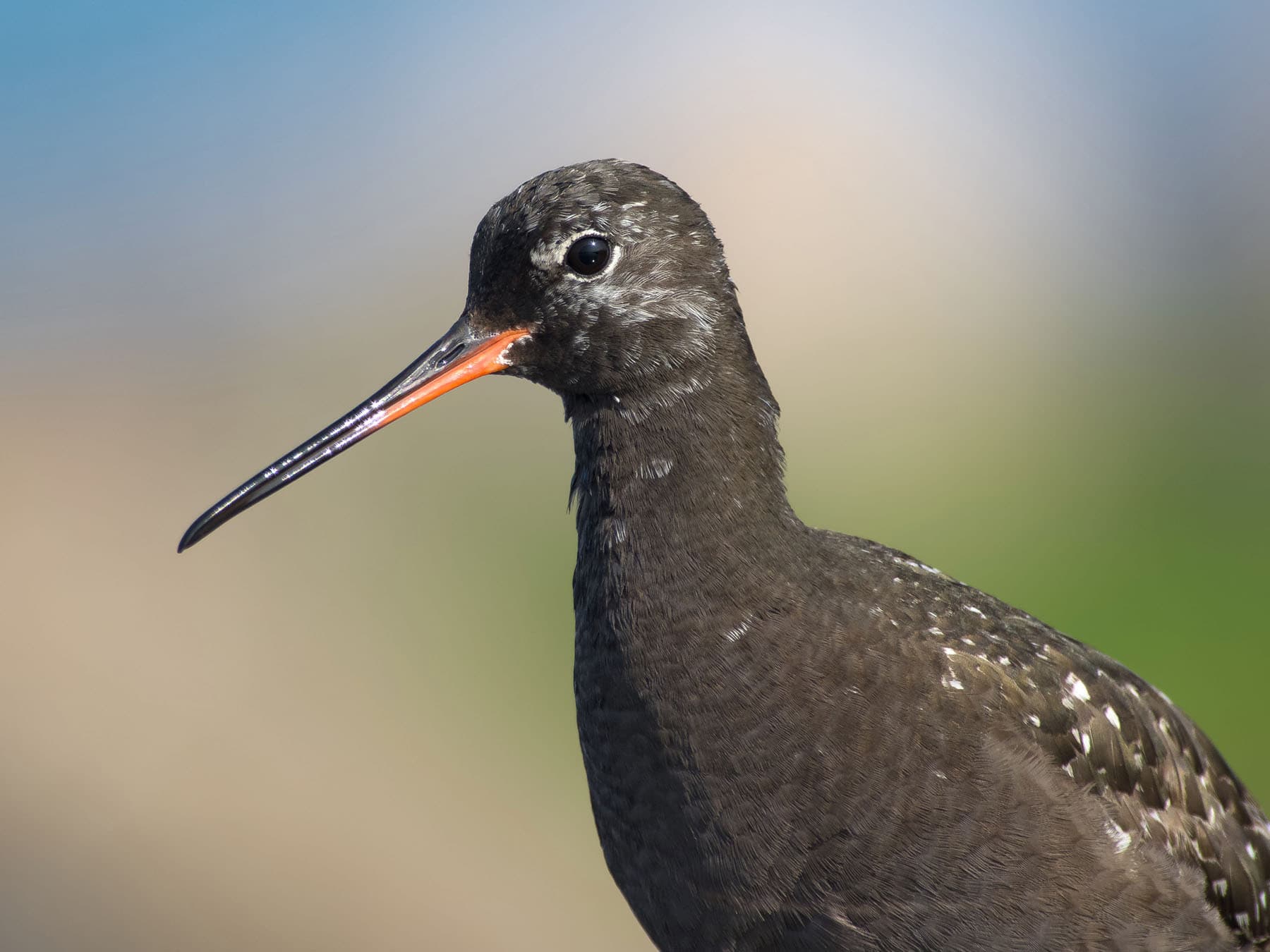
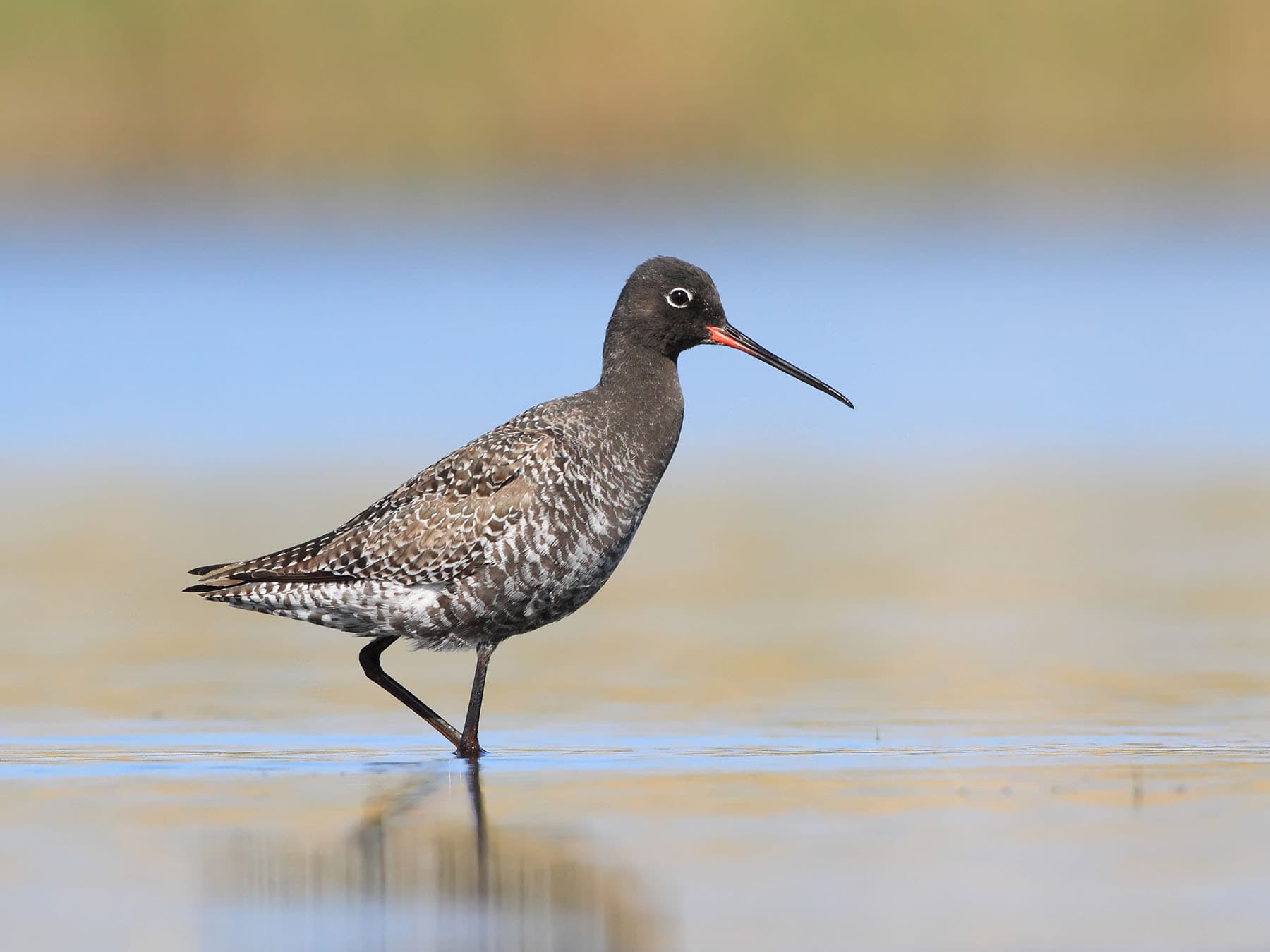
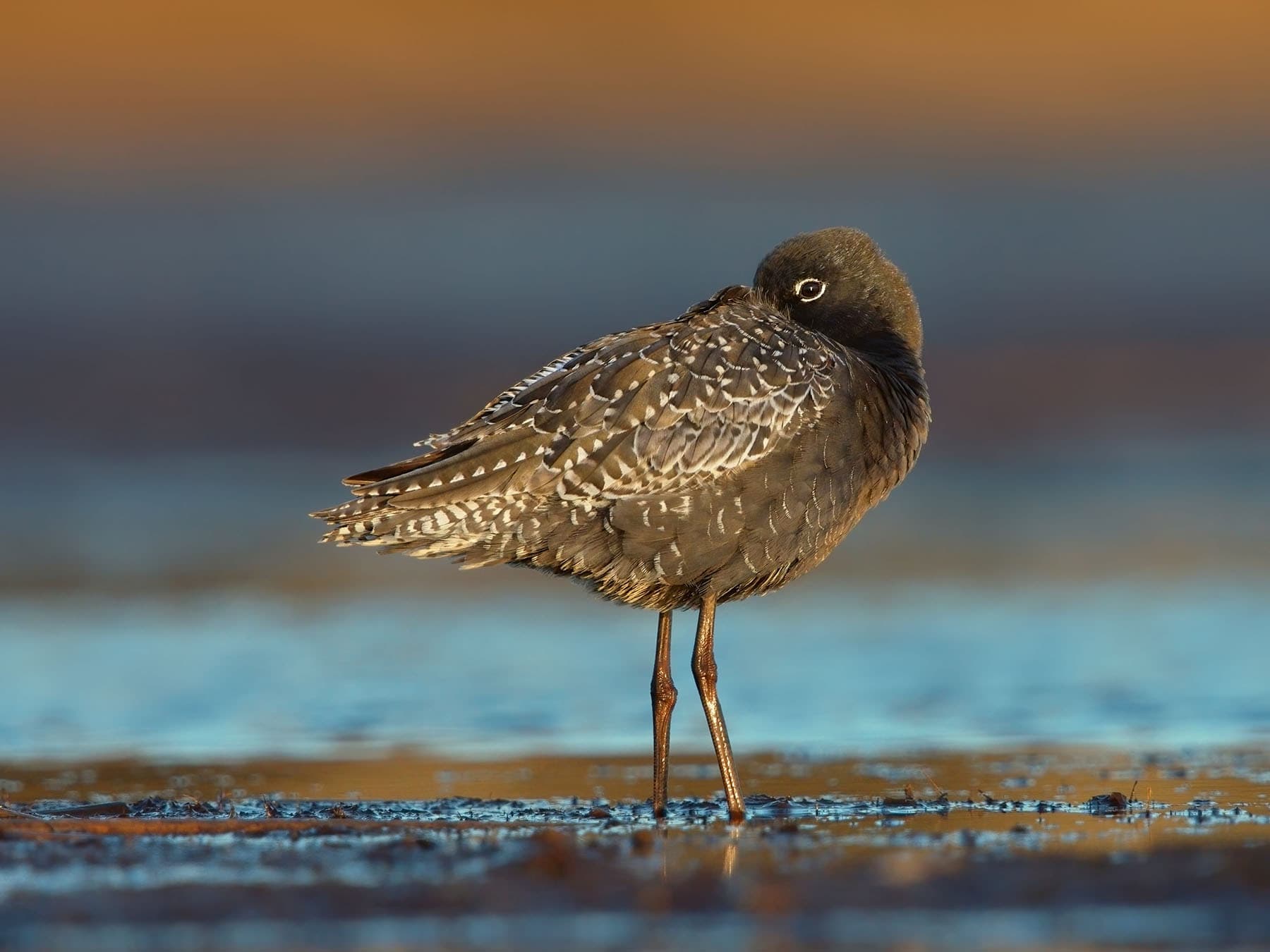
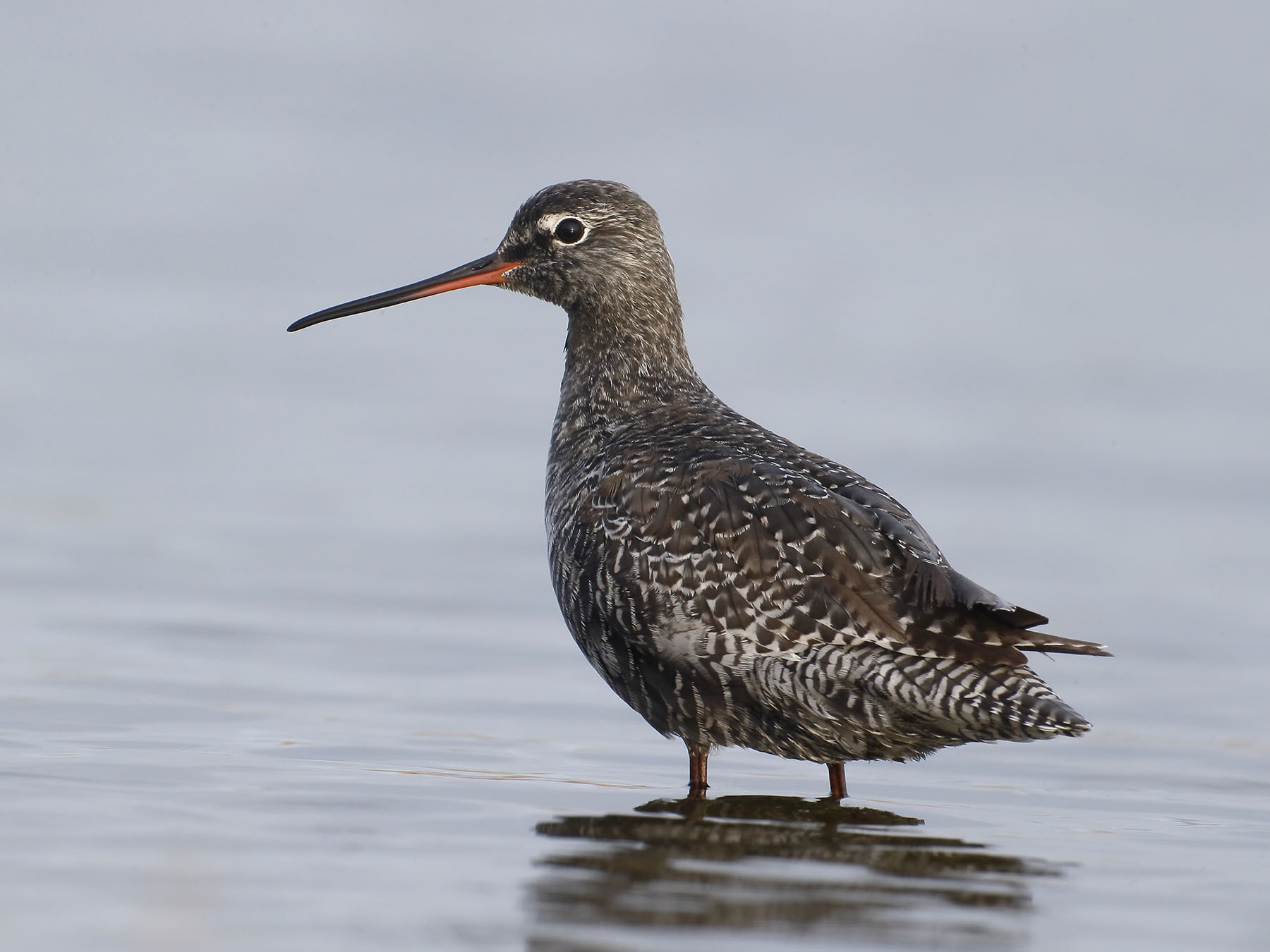
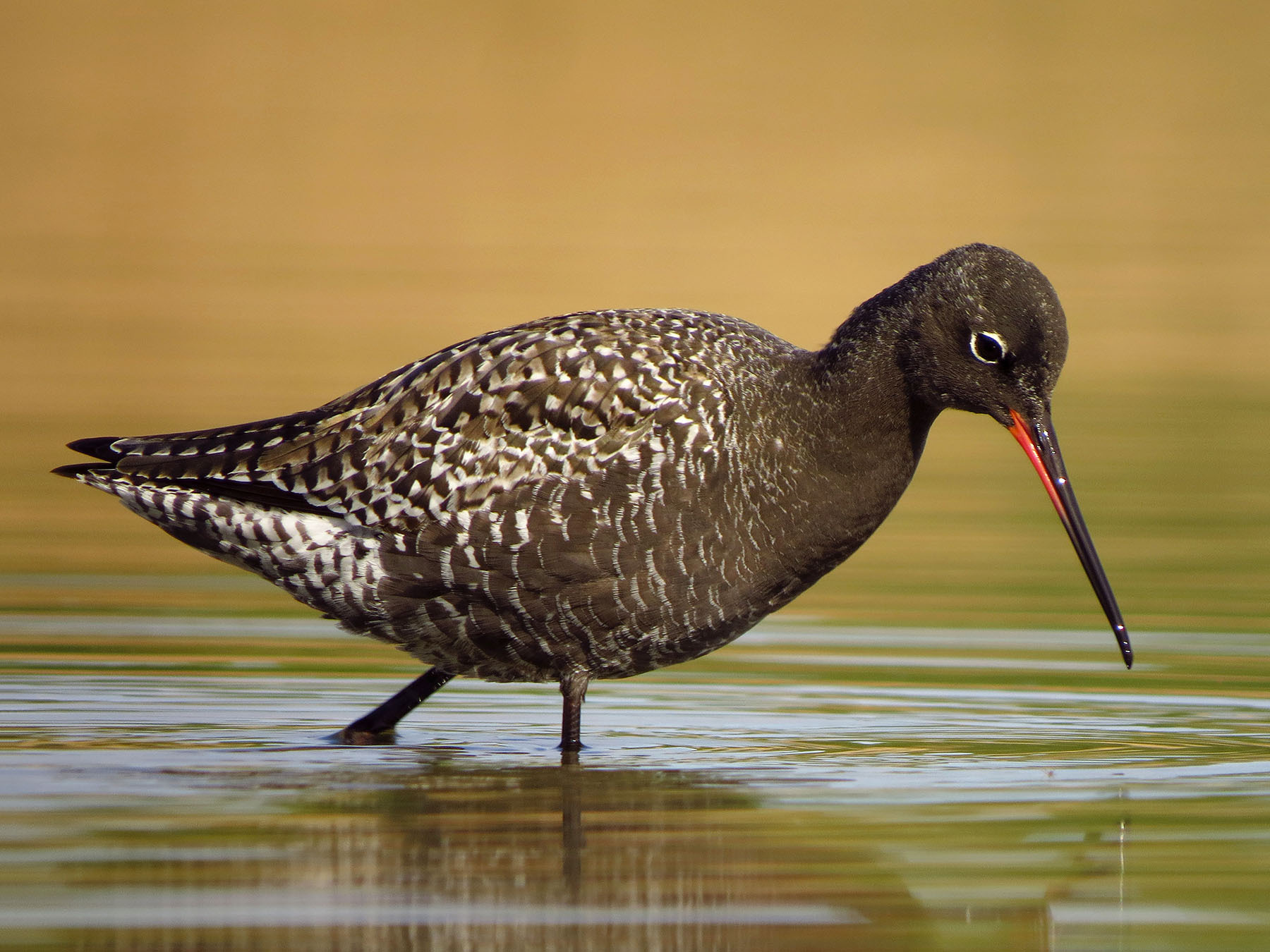
Spotted redshanks are medium-sized graceful waders, with two distinct seasonal plumages. In summer, adult spotted redshanks have a glossy black plumage, marked with white ‘spotting’ on their wings.
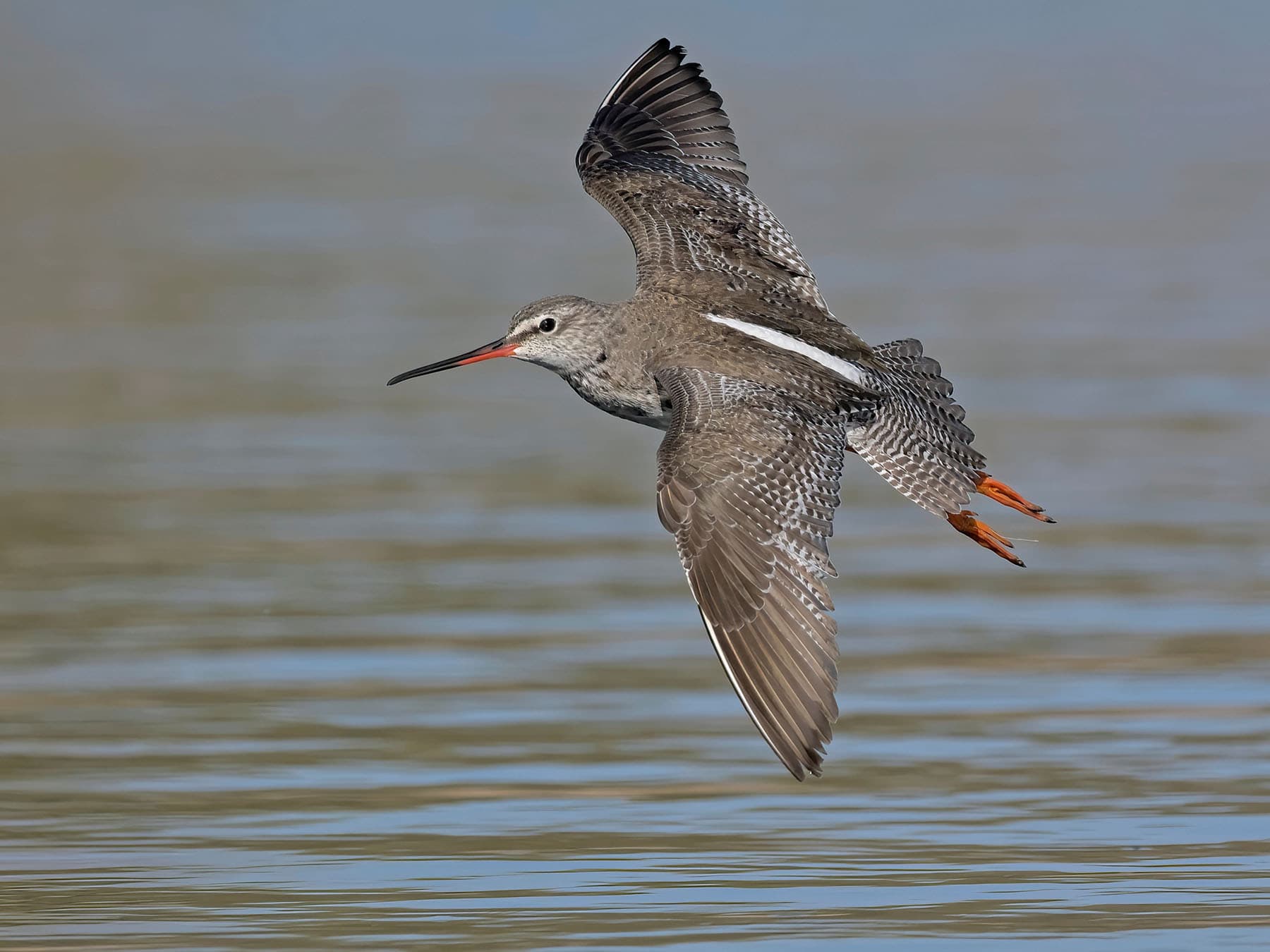
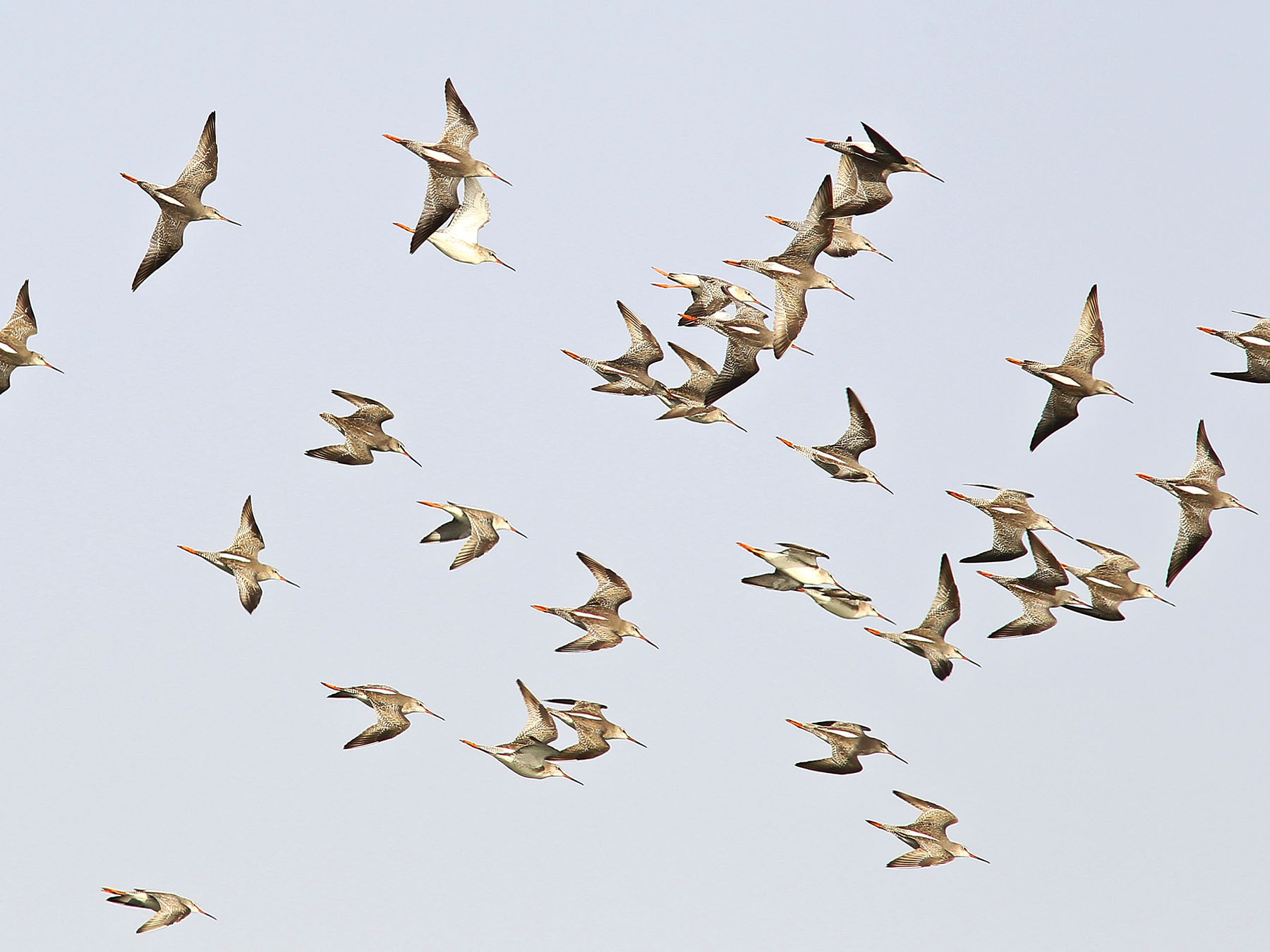
The spotty markings are in fact white edging to wing feathers, which creates an overall dotted effect. A white wedge-shaped patch is visible at the base of the tail in flight, and their tail is barred with black and white.
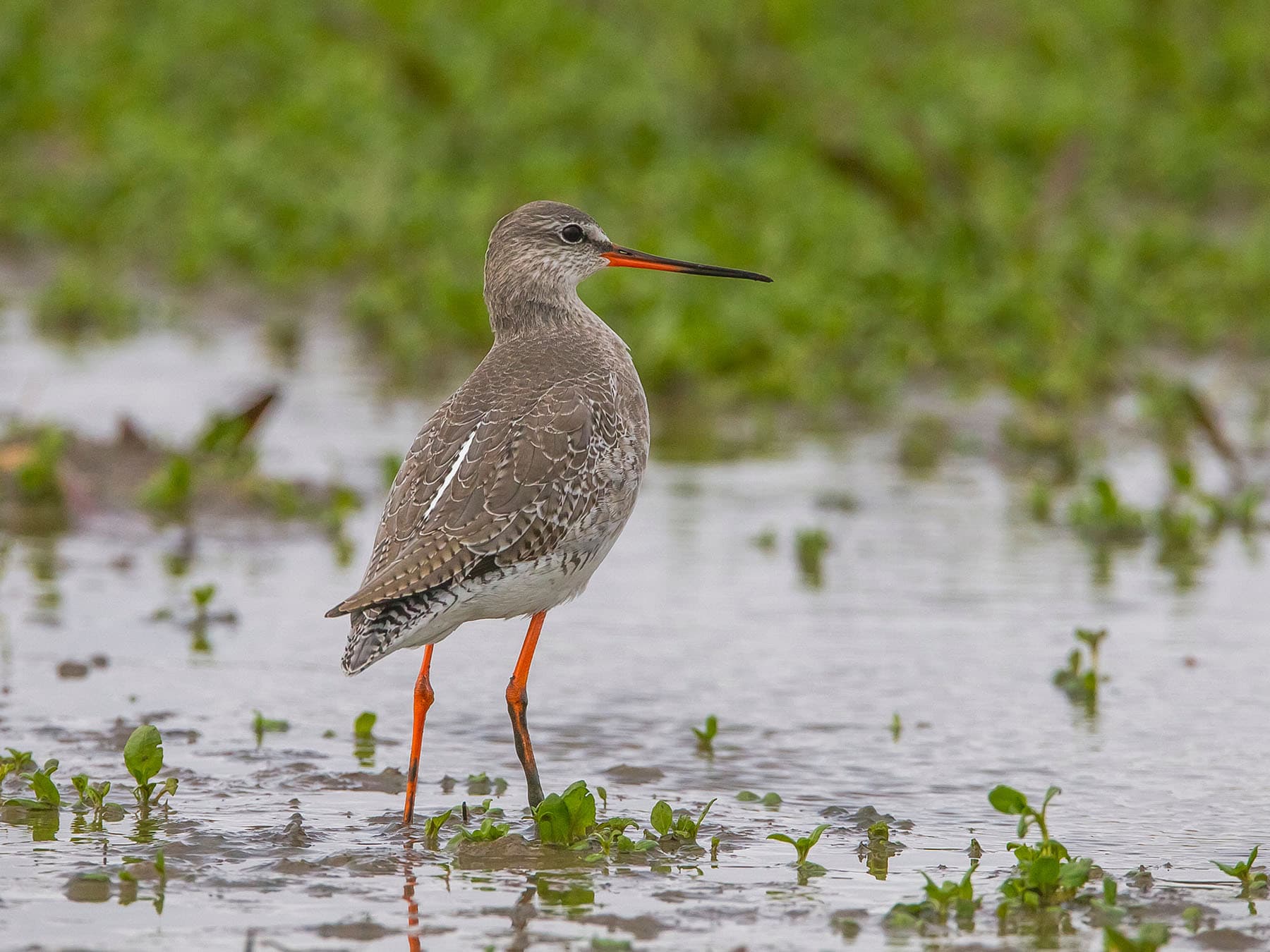
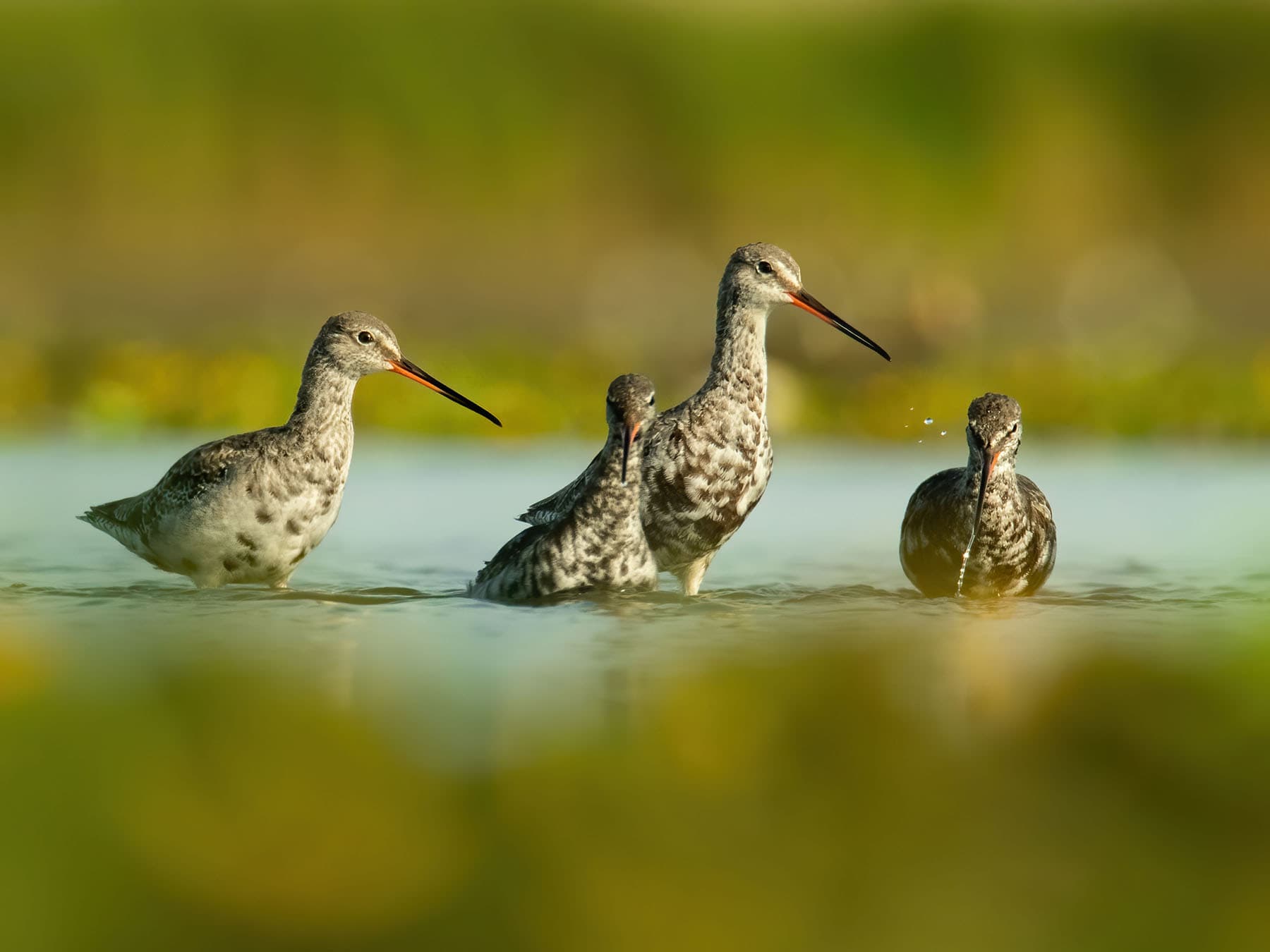
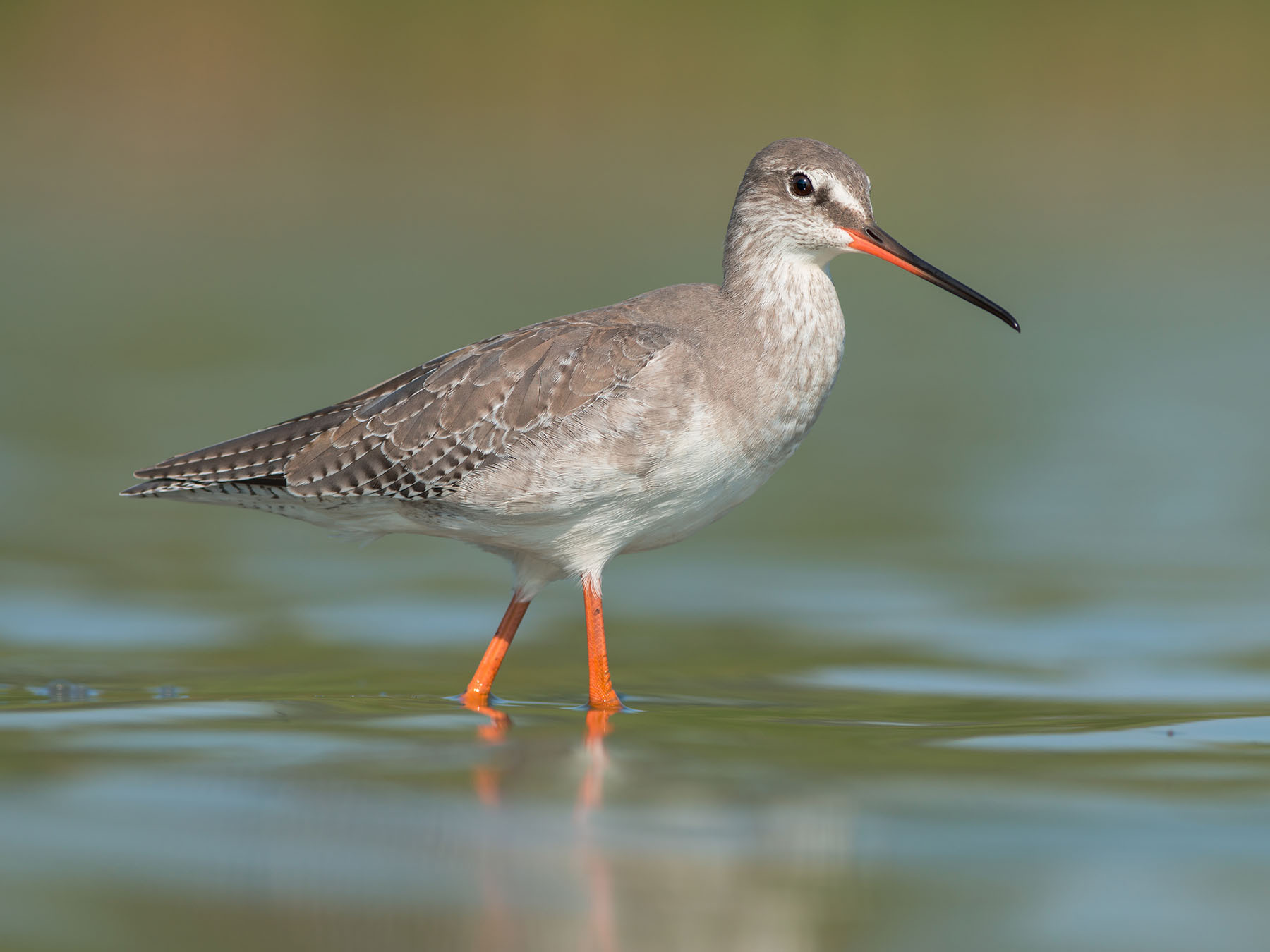
In winter, both male and female spotted redshanks adopt a rather less striking non-breeding plumage, with pale off-white underparts, light grey back and darker grey wings. Their head is grey, and marked with a bold white eye stripe.
Unlike the similar common redshank, spotted redshanks lack the barred wing markings in their winter plumage.
In both summer and winter, spotted redshanks have distinctive long red legs, and a long thin bill, which is red on the bottom half and dark greyish-black on the upper half.
Females and males both display similar markings in summer and in winter, although in summer, the female’s black plumage shows more spotting than that of the male.
Juvenile spotted redshanks are mottled dark grey all over, have a prominent light eye stripe, and have the characteristic red legs and lower red bill seen in adult birds.
How big are Spotted Redshanks?
Spotted redshanks are reasonably large but graceful wading birds, with long legs making them one of the tallest waders to visit the UK. Females are often slightly larger and heavier than males all year round.
- Length: 29 cm to 31 cm (11.4 in to 12.2 in)
- Wingspan: 61 cm to 67 cm (24 in to 26 in)
- Weight: 140 g to 200 g (4.9 oz to 7.1 oz)
Its size
Adults- Length
- 29–31 cm
- Wingspan
- 59–67 cm
- Weight
- 121–205 g
Its song and calls
What sound does a Spotted Redshank make?
Spotted redshanks can be heard both in flight and while feeding, with the most recognisable sound made a rising “du-it”, “chu-it” or “tee-veet” whistle, usually made as a contact call or made after a nest site is disturbed.
- Flight call0:00 / 0:13
Recorded in Normandie, France · August 2024
When and where to see it
OctoberLeaving
Most recorded in October
- 1. Gloucestershire0.42%
- 2. Stockton-on-Tees0.27%
- 3. Merseyside0.24%
- 4. Dorset0.15%
- 5. Lincolnshire0.15%
Each dot is a county, state or province: the bigger and darker, the larger the bird’s share of that place’s bird records that month. Grey dots: no regular records. The ringed point is the centre of the bird’s records this month; the arrow shows how it moved since last month, and the dashed loop its path through the year. “Arrivals” colours places where it becomes regular this month (orange) or is in its last regular month (grey). GBIF eBird Observation Dataset, 2019–2024. Map data: Natural Earth, US Census Bureau; place centres © OpenStreetMap contributors.
In your area
See when the Spotted Redshank is recorded in your county, state or province.
How often the Spotted Redshank turns up in the UK and Ireland through the year, from birdwatchers' records.
United Kingdom
Resident · all year · most records in August
Ireland
Winter visitor · regularly Jul–Apr · most records in February
Show as a table
| Month | United Kingdom | Ireland |
|---|---|---|
| January | 0.030% (regular) | 0.036% (regular) |
| February | 0.031% (regular) | 0.044% (regular) |
| March | 0.029% (regular) | 0.023% (regular) |
| April | 0.040% (regular) | 0.009% (regular) |
| May | 0.012% (regular) | 0.005% |
| June | 0.029% (regular) | <0.001% |
| July | 0.088% (regular) | 0.004% (regular) |
| August | 0.11% (regular) | 0.022% (regular) |
| September | 0.10% (regular) | 0.027% (regular) |
| October | 0.055% (regular) | 0.022% (regular) |
| November | 0.033% (regular) | 0.025% (regular) |
| December | 0.023% (regular) | 0.022% (regular) |
Recorded regularly in
Worldwide: recorded regularly in 85 countries
Countries where it was recorded in at least 3 of the 6 years 2019–2024. Linked countries have their own bird list.
Europe (35)
Africa (14)
Asia (36)
- Armenia
- Azerbaijan
- Bahrain
- Bangladesh
- Cambodia
- China
- Cyprus
- Georgia
- Hong Kong SAR China
- India
- Iran
- Israel
- Japan
- Jordan
- Kazakhstan
- Kuwait
- Kyrgyzstan
- Laos
- Macao SAR China
- Malaysia
- Mongolia
- Myanmar (Burma)
- Nepal
- Oman
- Pakistan
- Palestinian Territories
- Qatar
- Saudi Arabia
- South Korea
- Taiwan
- Tajikistan
- Thailand
- Turkey
- United Arab Emirates
- Uzbekistan
- Vietnam
Data: EOD – eBird Observation Dataset (Cornell Lab of Ornithology), accessed via GBIF.org, CC BY 4.0. Records from 2019–2024, aggregated and filtered by Birdfact. How these lists are made
What is the habitat of a Spotted Redshank?
Breeding grounds for spotted redshanks are usually found in woodland tundra landscapes, with open heathland and shrubby expanses of moorland also popular. Coniferous and mixed woodland are also regularly chosen as nest locations.
Once breeding is complete, spotted redshanks head to coastal mudflats, estuaries and lagoons.
What is the range of a Spotted Redshank?
Spotted redshanks breed from northern Norway, across Fennoscandinavia and northern Russia into Siberia. Their wintering grounds lie to the south, with a handful scattered across Britain and Ireland, but the majority are found in southern Europe, central Africa, west India, and as far east as South East Asia.
Where do Spotted Redshanks live?
In winter, large populations of spotted redshanks take up temporary residence in Mali, Egypt, south-central Asia, and along the floodplain of China’s Yangtze River.
Countries with the most notable breeding populations include Norway, Sweden, Finland, and Russia.
How rare are Spotted Redshanks?
Spotted redshanks are relatively rare overwintering visitors on British shores, but are slightly more commonly spotted in migrant passage. According to BTO data, 68 spotted redshanks overwinter in the UK, with a further 540 observed in migration passage.
Where can you see Spotted Redshanks in the UK?
During winter, the best place to stand a chance of a spotted redshank sighting is at coastal wetlands, with sites in North Kent and Essex, Hampshire and West Wales regularly reporting visiting birds between autumn and early spring.
Migration
Do Spotted Redshanks migrate?
Once the breeding season comes to a close, spotted redshanks migrate south, leaving northern Europe and Siberia for milder wintering grounds across Europe.
They migrate from northern European across and northern Siberian breeding areas, to winter in Europe, Africa, China and South-east Asia.
Tips for seeing it
- Look for Spotted Redshanks in coastal mudflats and estuaries during migration and winter.
- Listen for their distinctive 'chew-it' call, which is often heard before the bird is seen.
- Observe their feeding behaviour, as they often wade belly-deep in water.
- In the UK, the best spots include coastal areas in East Anglia and Southeast England.
What it eats
What do Spotted Redshanks eat?
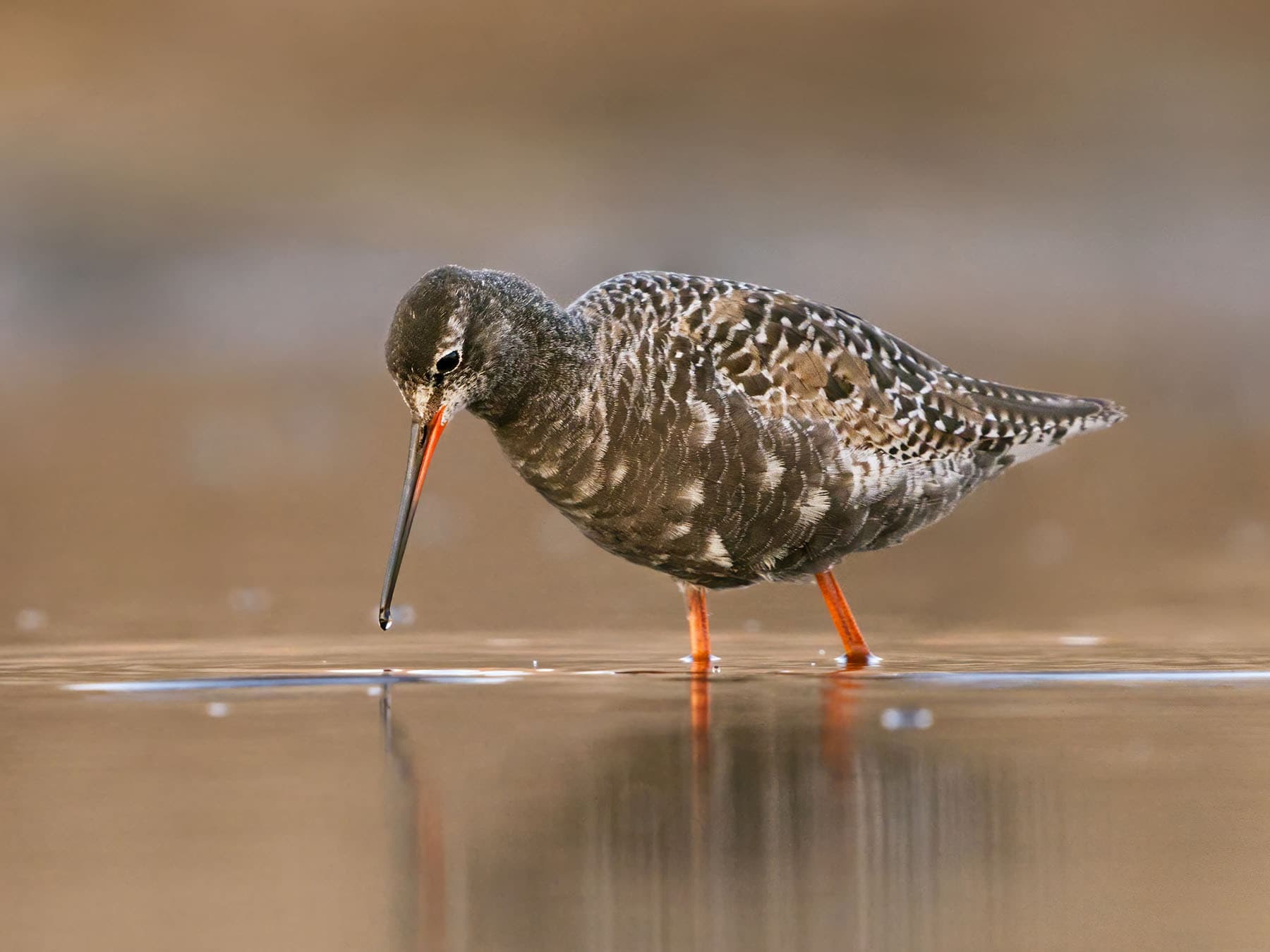
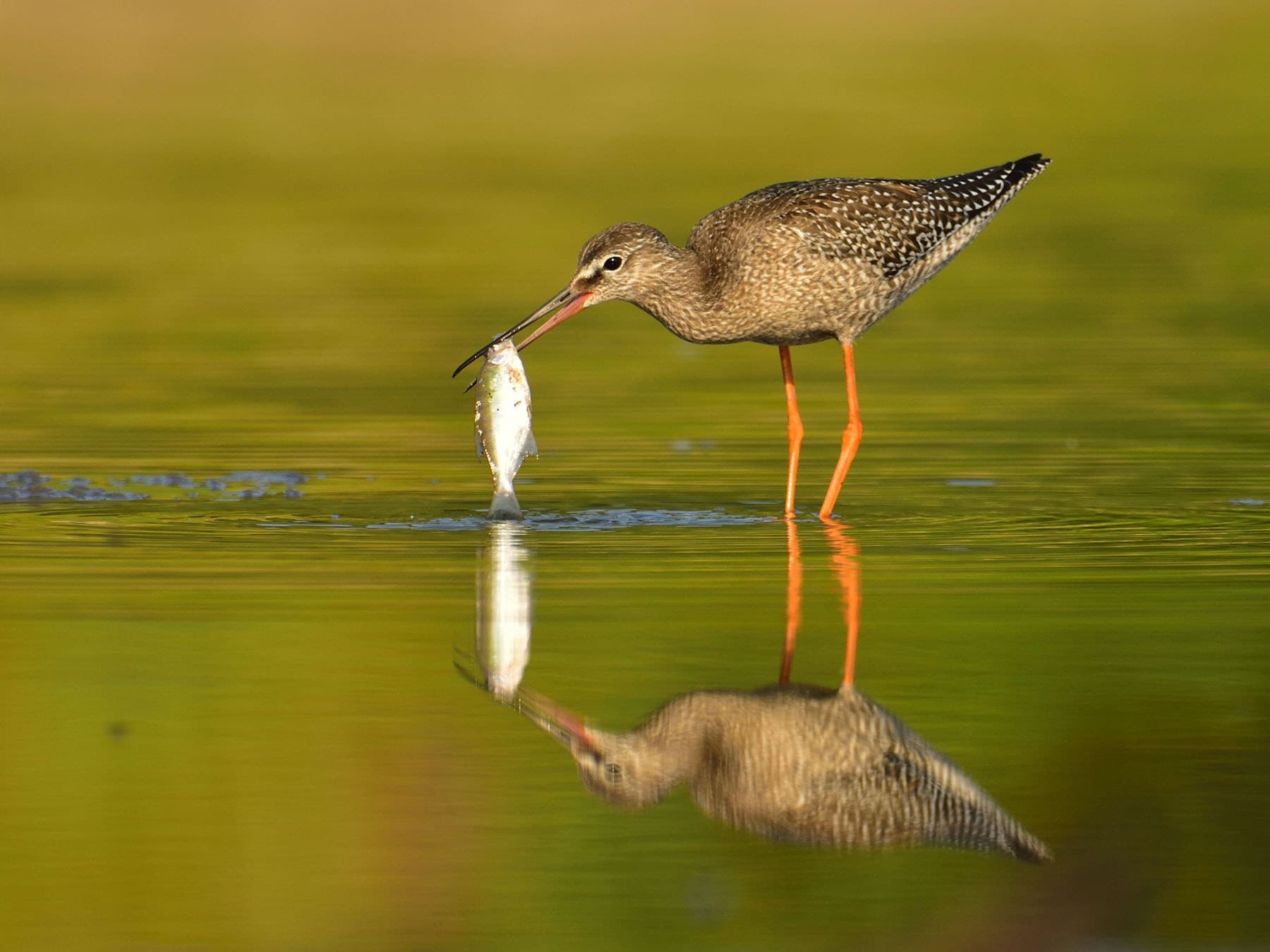
The usual diet of spotted redshanks is chiefly based on aquatic insects and their larvae, flying insects, crustaceans, molluscs, worms, small fish and amphibians.
Spotted redshanks feed by pecking, probing and jabbing the ground, or moving their bill from side to side through water with a sweeping motion. They are also observed to feed at night as well as during daylight hours.
What do Spotted Redshank chicks eat?
Young spotted redshanks are fairly independent from an early stage and follow the same diet as adult birds, mainly eating insect larvae, small crustaceans, flies, worms and small fish.
Nesting and breeding
Where do Spotted Redshanks nest?
Spotted redshank nests are shallow scrapes in the ground, with a few leaves, pine needles, moss or other plant parts used as a basic lining. Nest locations are chosen on boggy or marshland or among grassy tussocks, in close proximity to woodlands and areas of swampy forest.
What do Spotted Redshank eggs look like?
A typical spotted redshank clutch consists of between 3 and 5 olive to pale green eggs that are blotched with dark brown-purple streaks. The eggs, which measure 47 mm × 32.3 mm are incubated for 23 to 24 days.
The female’s involvement in incubation tails off as the days pass, and by the final week, it’s common for the male alone to be left as the sole guardian of the eggs and young.
Do Spotted Redshanks mate for life?
Pair bonds formed between breeding spotted redshanks are short-lived. In a reversal to breeding patterns seen in many bird species, males incubate the eggs largely without any female assistance, and by the time the young hatch, males have been left to care for their young alone.
Behaviour
Are Spotted Redshanks aggressive?
During the courtship and breeding season, males are observed to be highly aggressive and territorial, clashing physically with each other in quite spectacular aerial fights.
Once breeding is complete, females gather in large flocks together and move on to moulting grounds together.
Where do Spotted Redshanks sleep at night?
Roosting spots are chosen at shallow roost ponds and on the edges of salt marshes at high tide. Such sites offer safety from land predators.
Lifespan and predators
How long do Spotted Redshanks live?
Spotted redshanks are assumed to have a similar average lifespan to common redshanks - around 4 years. Occasionally older ringed individuals are found, with one example bird found to have reached 7 years and 5 months. Breeding occurs for the first time at one year old.
What are the predators of Spotted Redshanks?
Known to be wary birds, spotted redshanks will take flight at the first threat of an intruder. Their ground-level nests are vulnerable to predation, particularly from crows, magpies, jackdaws and jays.
Are Spotted Redshanks protected?
The Wildlife and Countryside Act, 1981, offers protection to spotted redshanks in Britain against being intentionally killed, injured or captured. Destroying or damaging their eggs and nest site are also considered offences under this Act.
Are Spotted Redshanks endangered?
In the UK, spotted redshanks are rated as an Amber species on the Birds of Conservation Concern list. The species is considered rare and scarce in Britain, with more than half of the population found at fewer than 10 sites across the country each winter.
Conservation
While currently listed as Least Concern, Spotted Redshanks face threats from habitat loss due to coastal development and climate change.
Conservation efforts focus on protecting key wetland habitats along their migration routes and wintering grounds, particularly in Europe and Africa.
Similar birds
Often mistaken for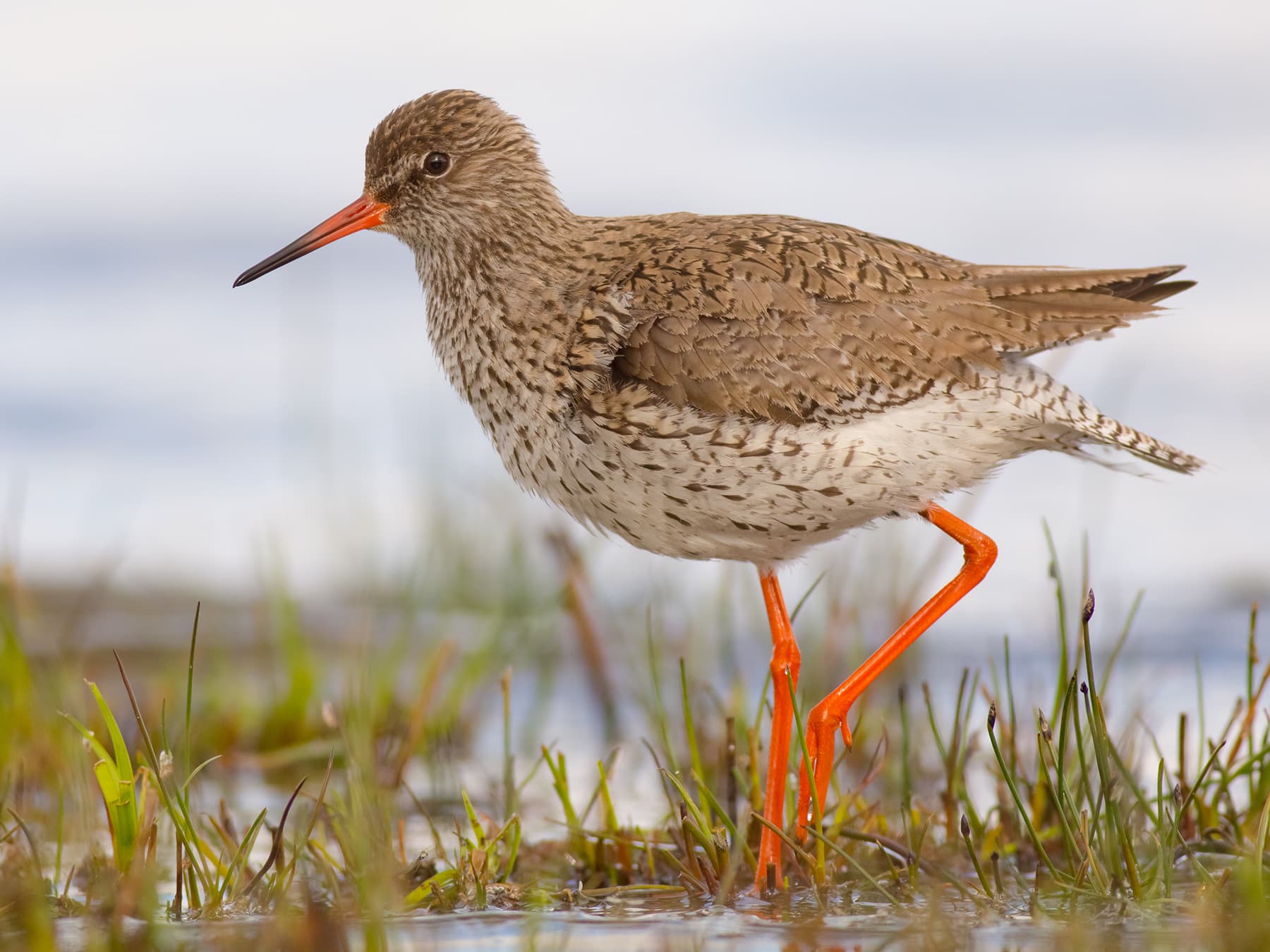
More photos
5 photos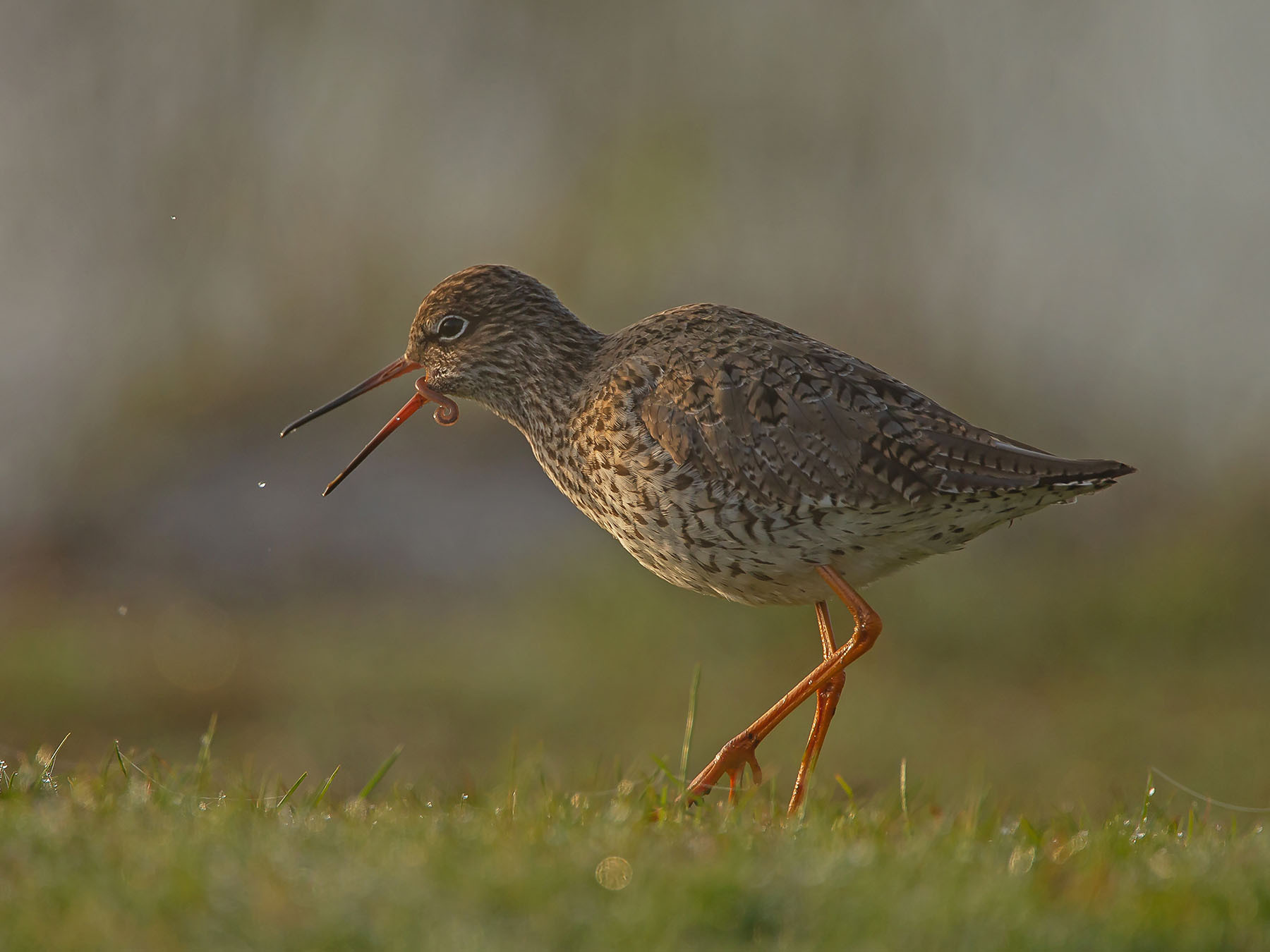
Quick facts
- Length
- 29–31 cm
- Wingspan
- 59–67 cm
- Weight
- 121–205 g
- Lifespan
- 4 years · oldest recorded 8.6 years
- Family
- Sandpipers & Snipes
- Migration
- Long-distance Migrant
- Global status (IUCN)
- Least Concern
- World population
- 110,000 - 270,000 individuals
- Population trend
- Stable
- Also called
- Dusky Redshank
- Scientific name
- Tringa erythropus
Sources
4- 1BirdLife International. 2016. Tringa erythropus. The IUCN Red List of Threatened Species 2016: e.T22693207A86682083. Source (opens in a new tab)
- 2BirdLife International; Wetlands International (2015)
- 3Wetlands International (2015)
- 4Fransson et al., EURING list of longevity records for European birds (2010) Source (opens in a new tab)

Checked by
Nathan Cope, founder and editor
Nathan founded Birdfact and leads its writers and contributors in the UK, the US and Canada. He has watched and studied birds for more than ten years, and checks every article and species guide before it’s published.