


Red-necked Phalarope
Northern Phalarope · Phalaropus lobatus
By the Birdfact teamChecked by Nathan Cope
On this page12 sections
How to recognise it
What do Red-necked Phalaropes look like?
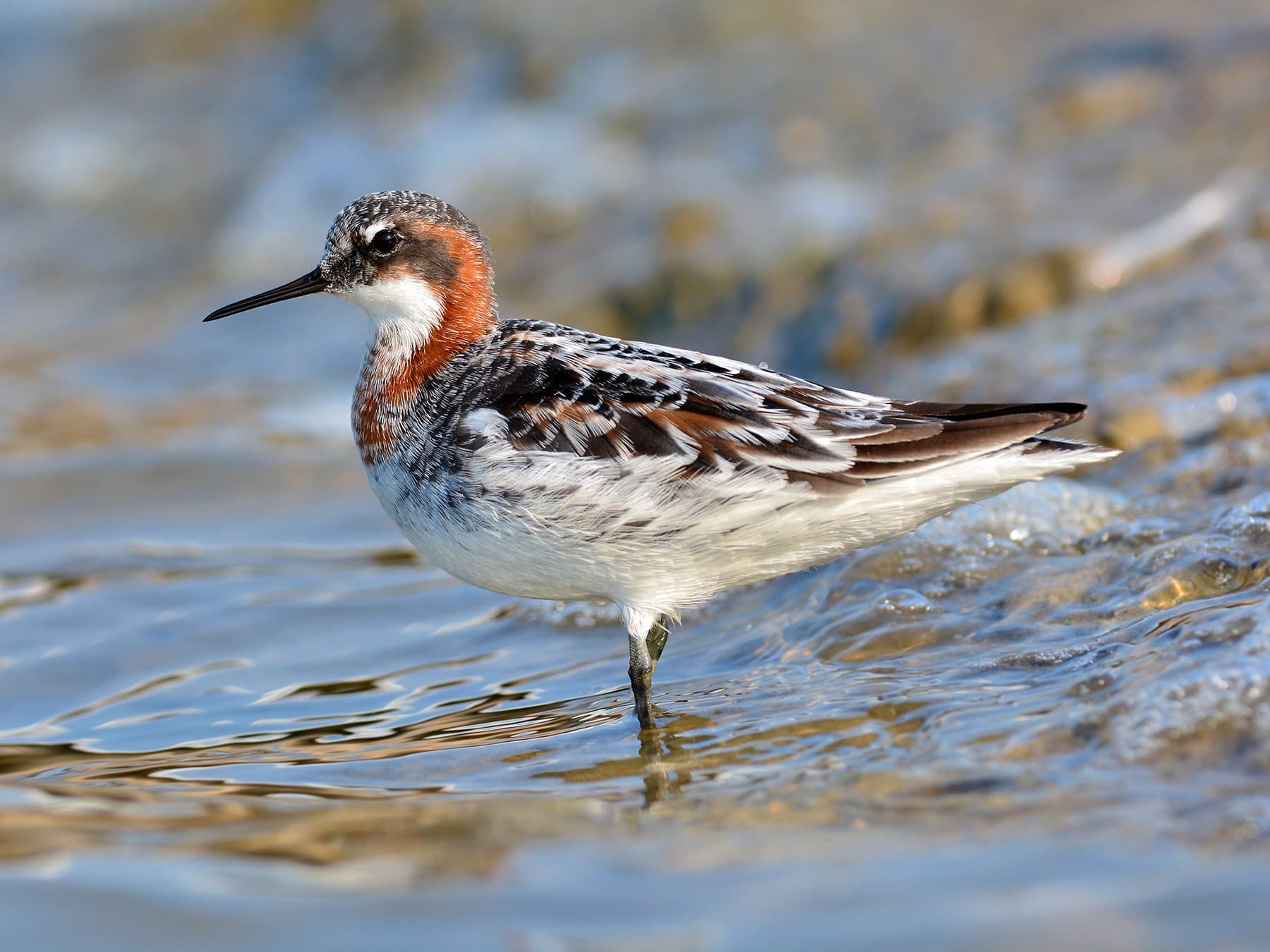
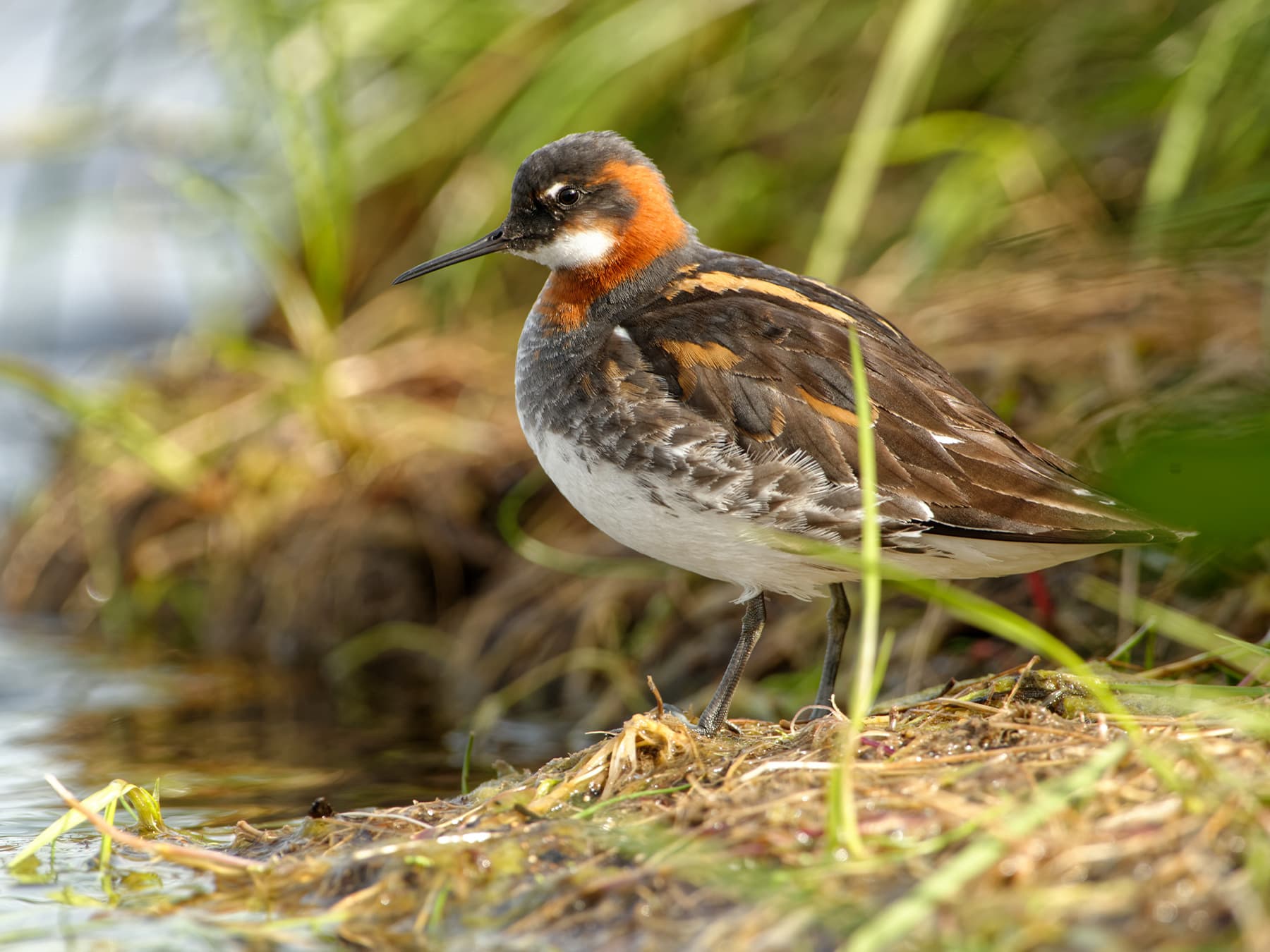
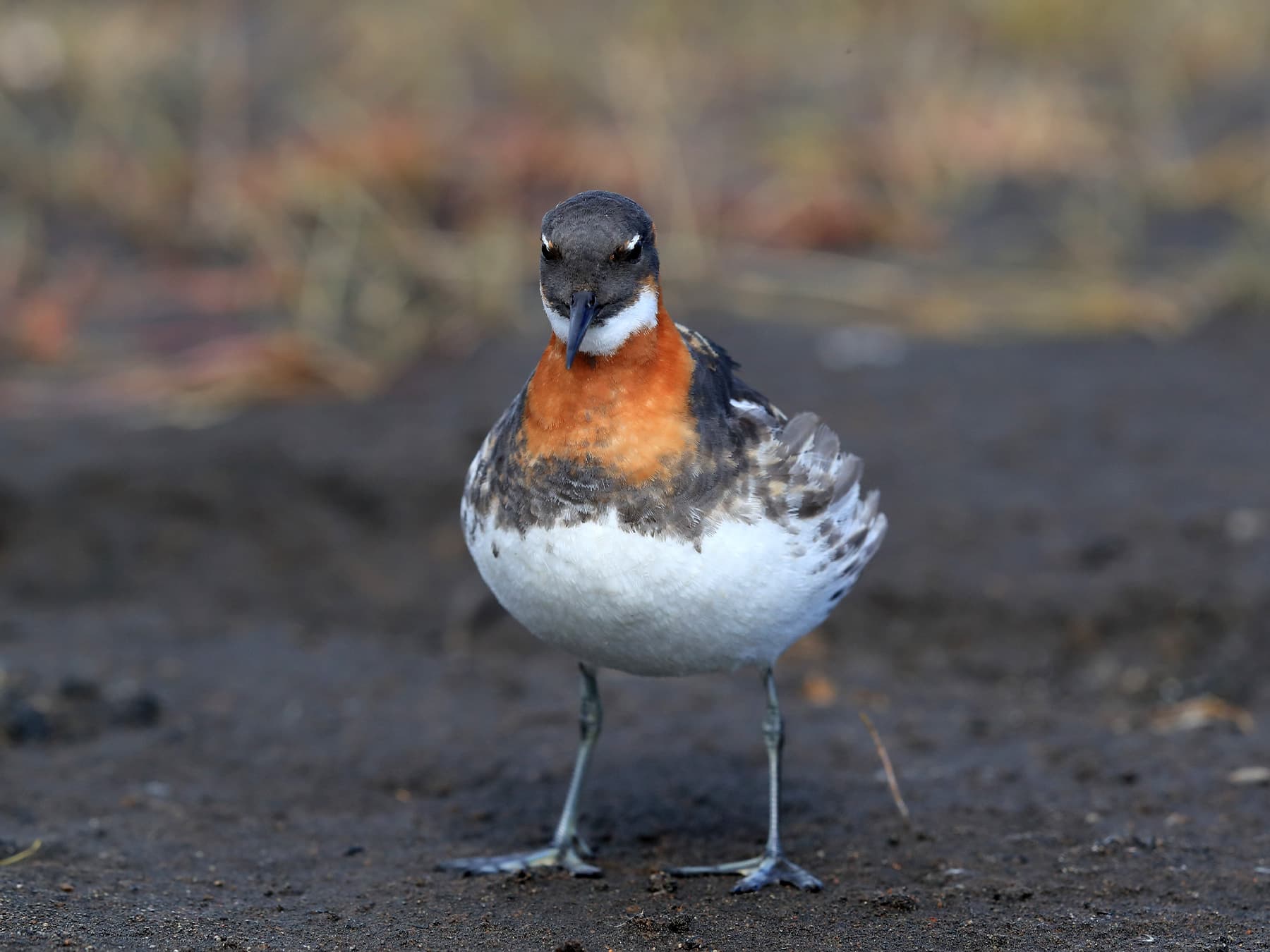
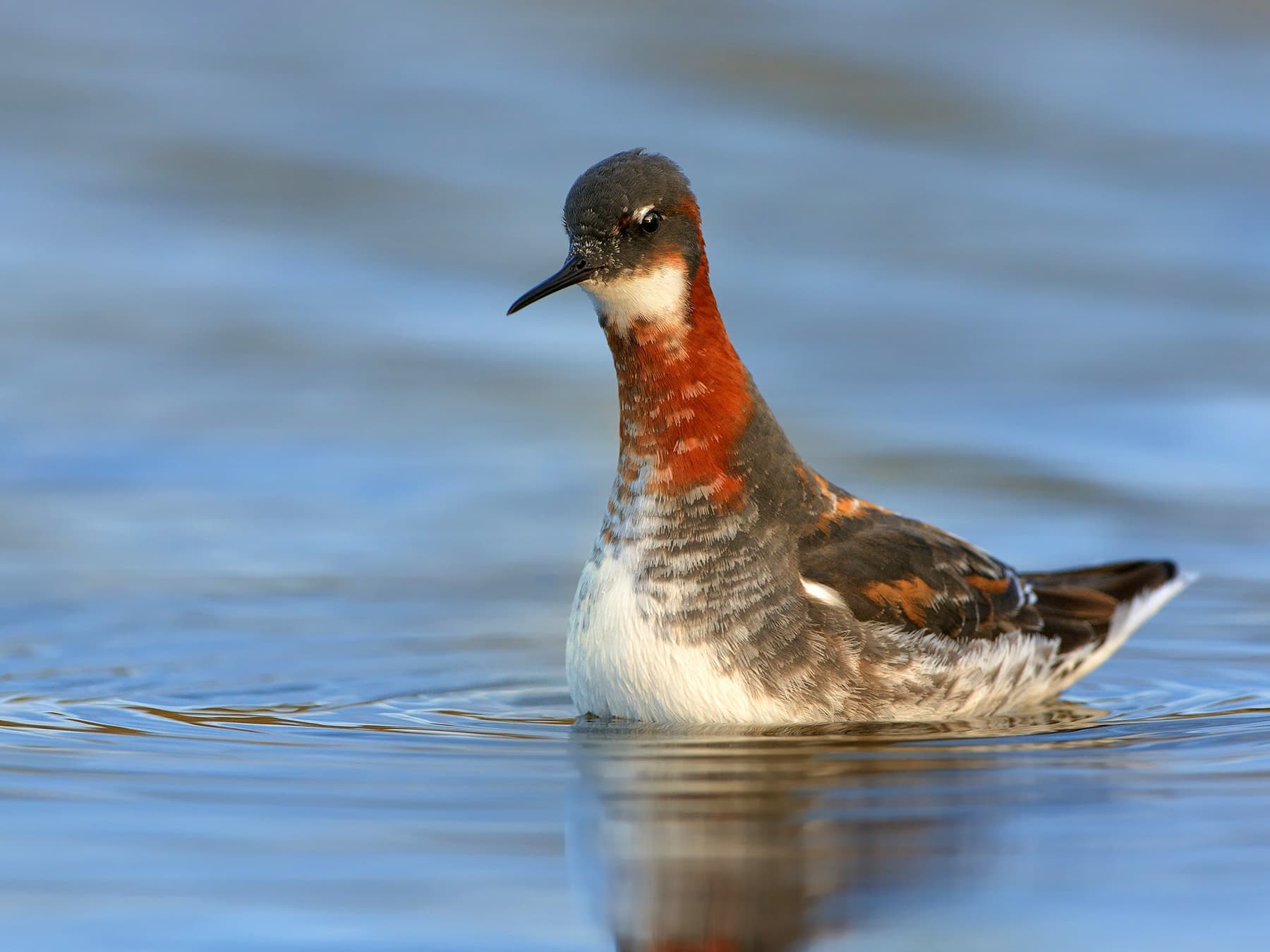
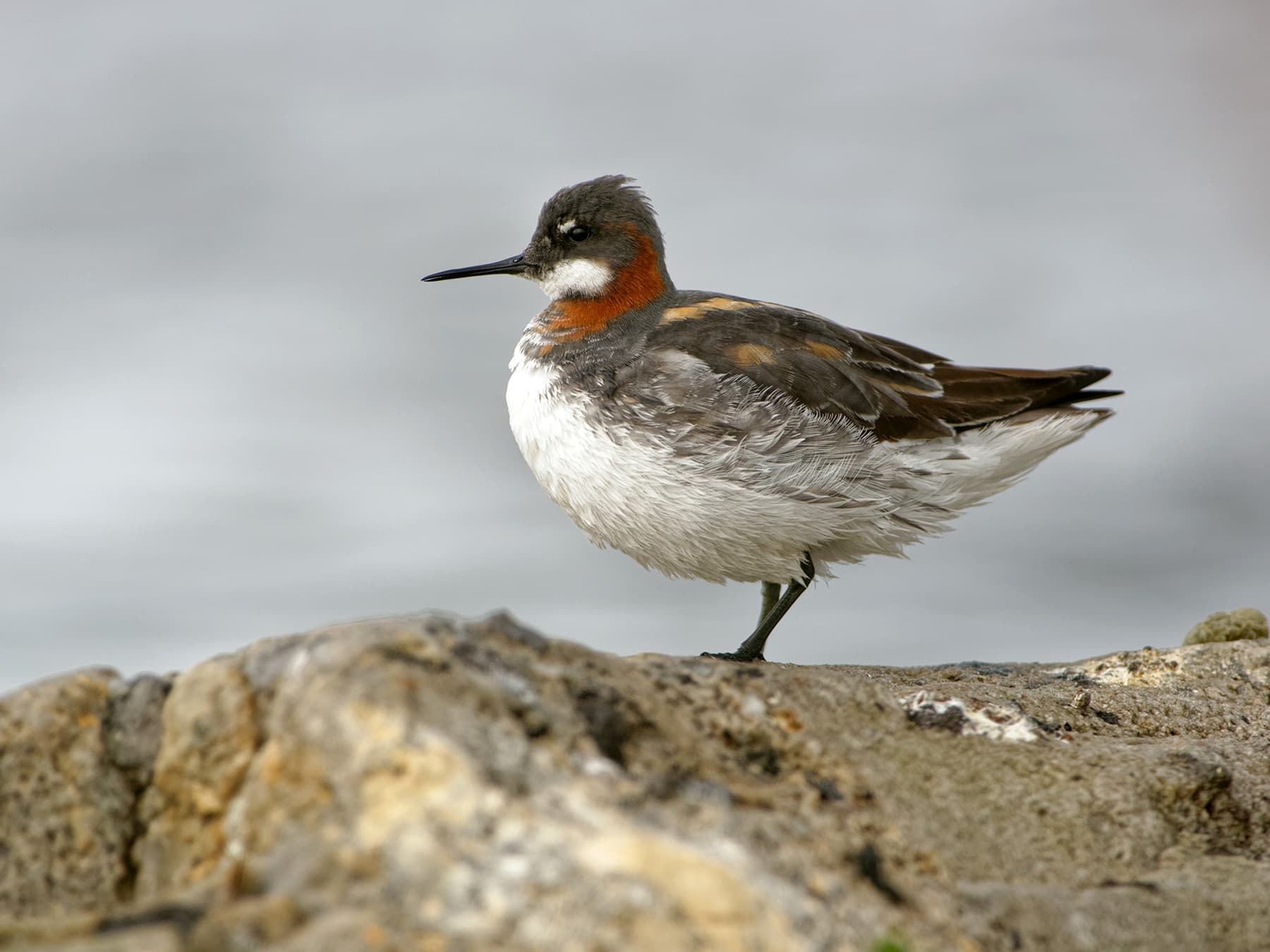
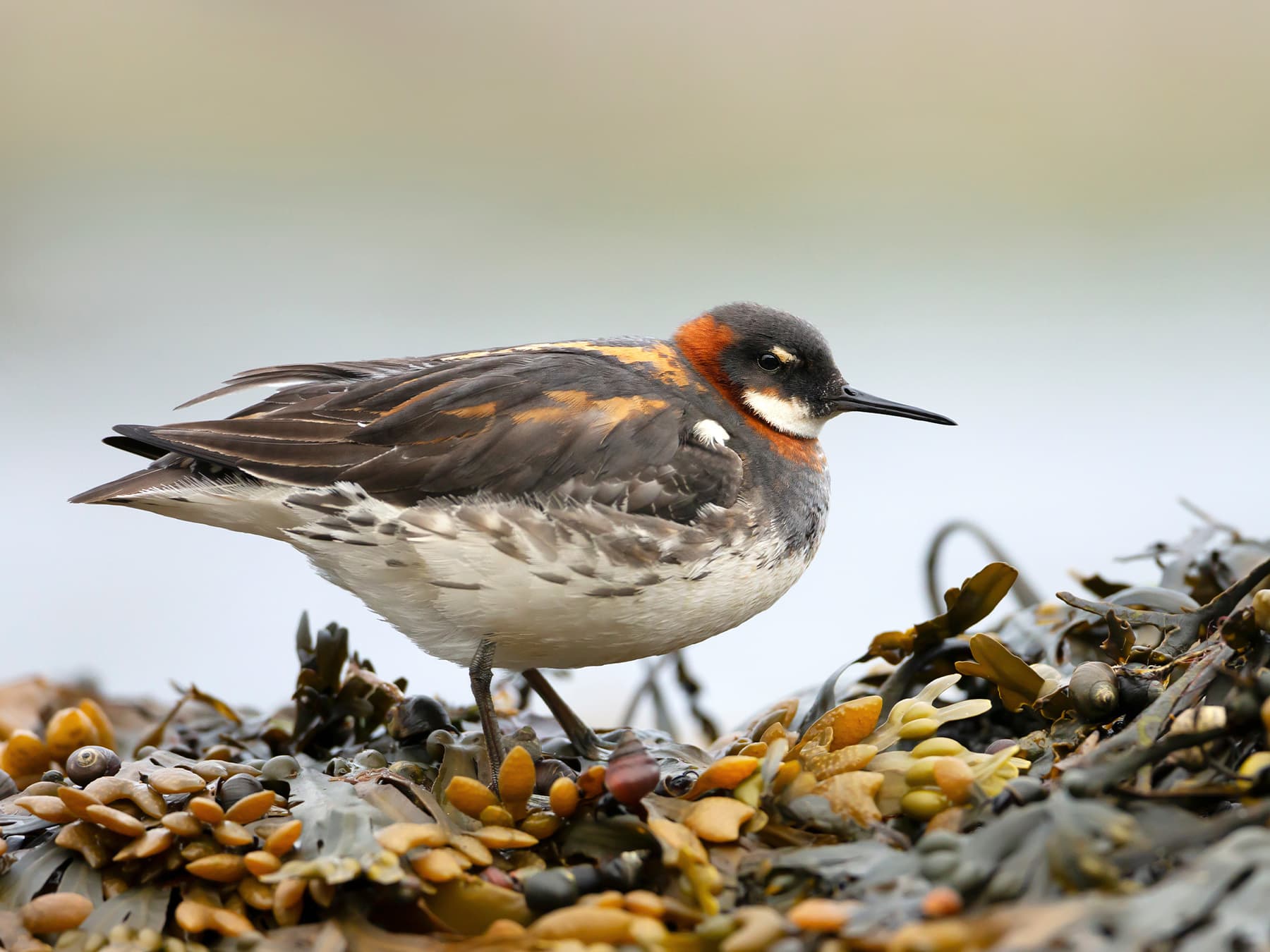
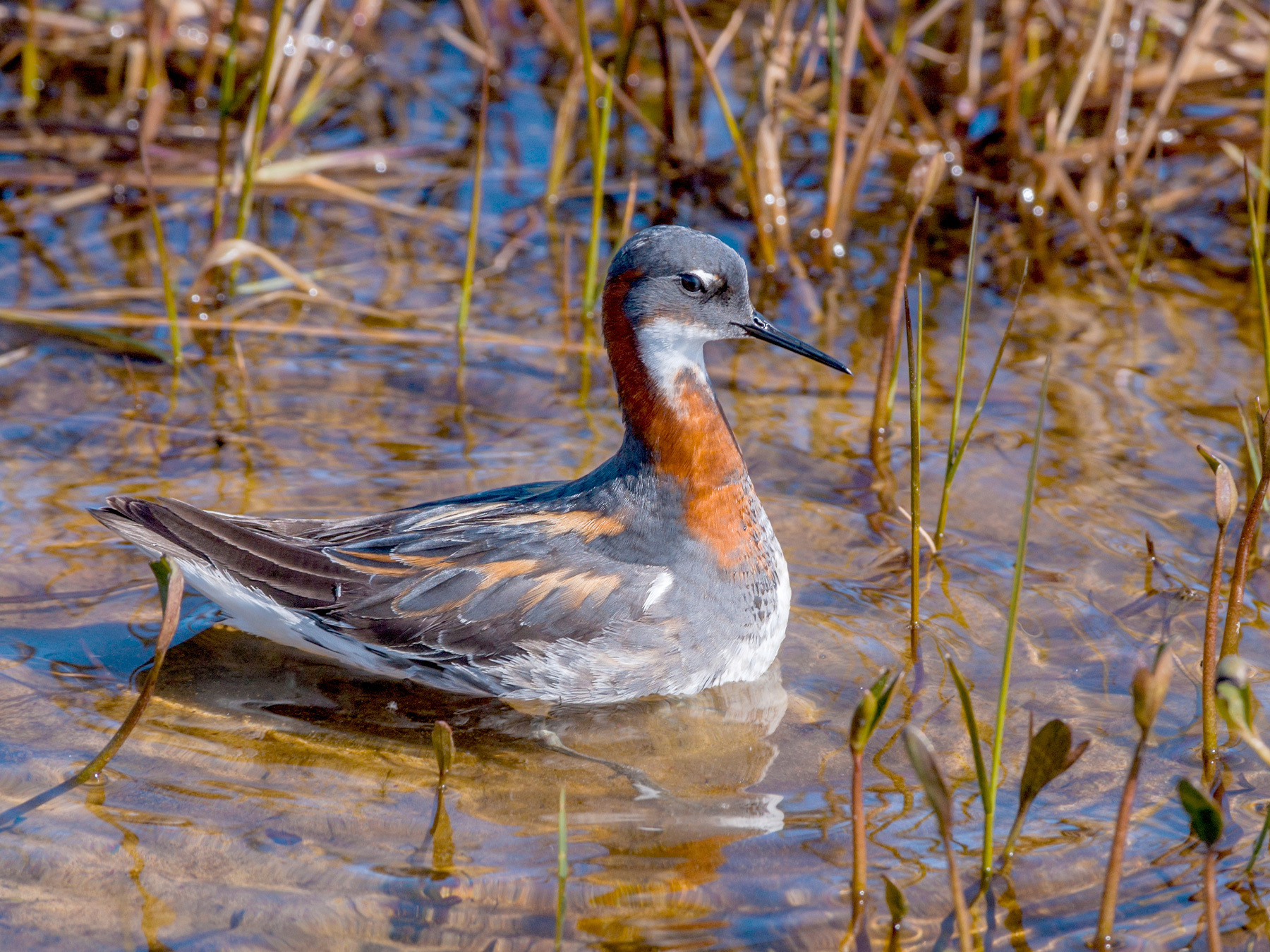
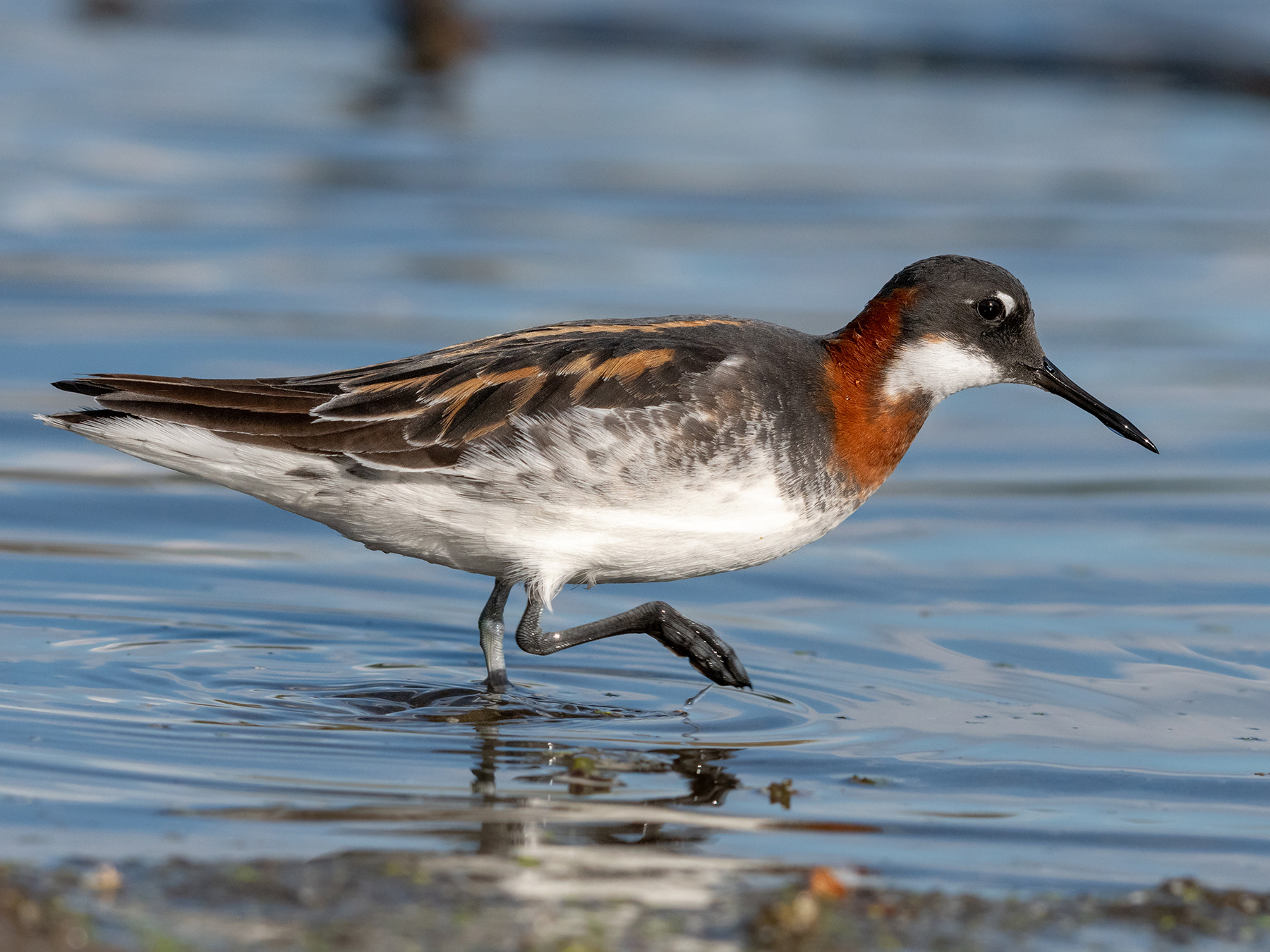
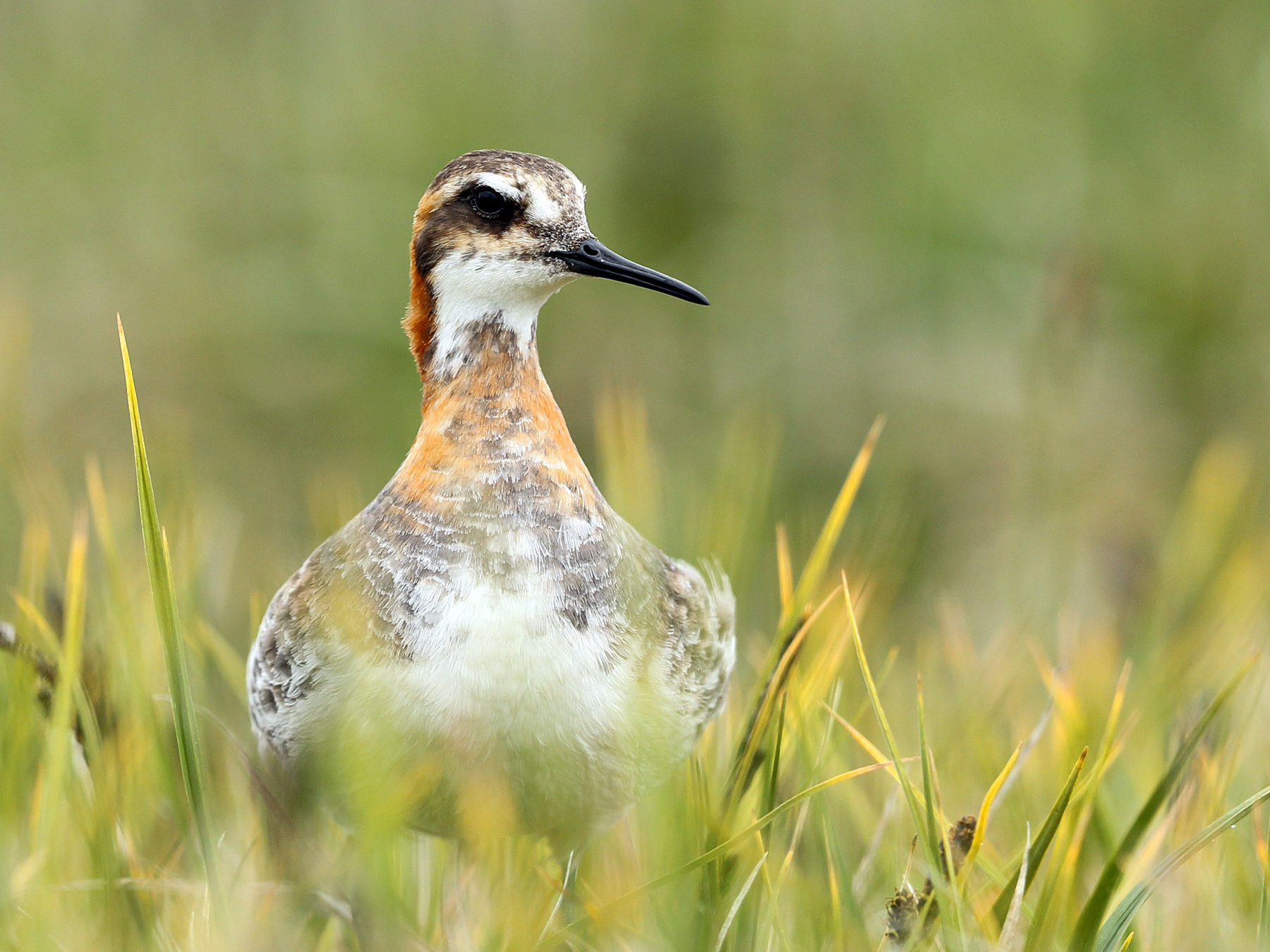
During the breeding season, female red-necked phalaropes have more vivid coloring than their duller male counterparts. They have a rich black head, neck, and breast, punctuated by a bold red patch that runs down the side of the neck, from which the species gets its name.
Red-necked phalarope females have a white chin and throat and a small white spot above the eye. Their flanks are grey and their wings a darker grey. The mantle and scapulars (upper wings) are dark grey, edged with buff, which creates a golden stripe at the top of the wing.
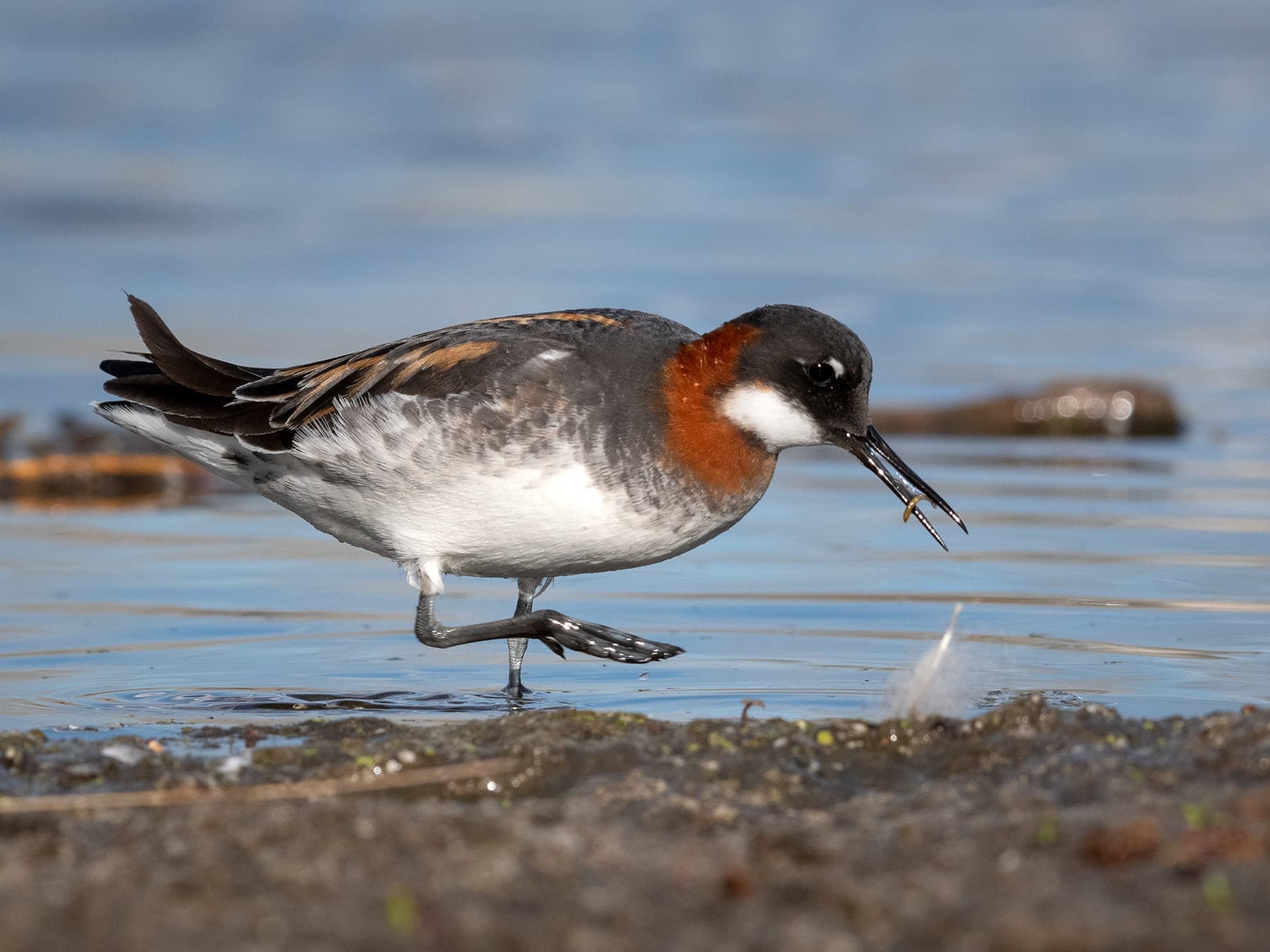
The belly is a mottled white and brownish grey, the legs are grayish-blue and their bill is fine, slim, and black. Toes are lobed, which provides extra thrust when swimming.
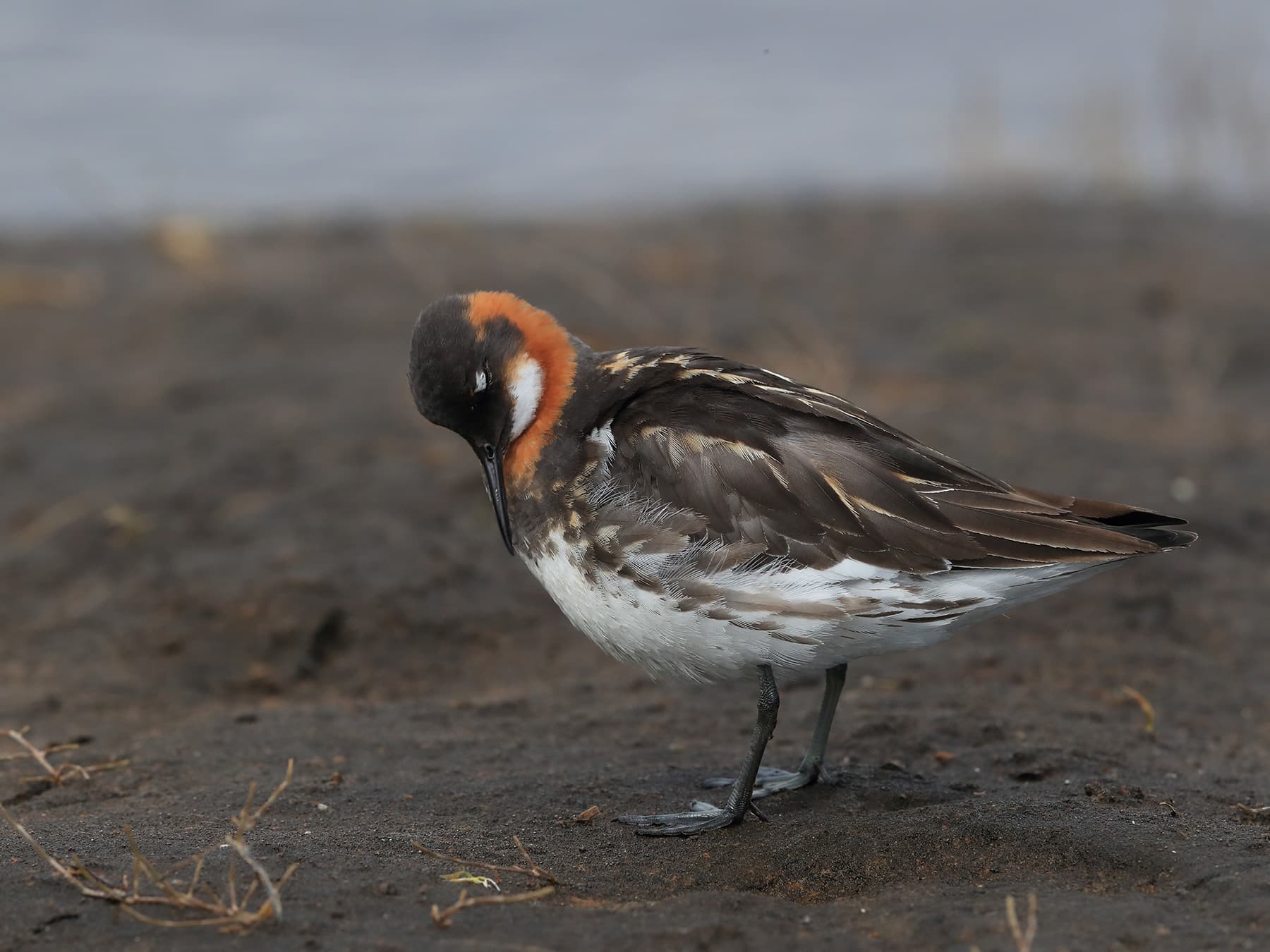
Breeding males have similar markings to females but are more washed out, and not as striking. The red neck patch is usually visible, but smaller and less bright, and in some birds it is absent. Males have altogether more brown coloring and are smaller and lighter than females.
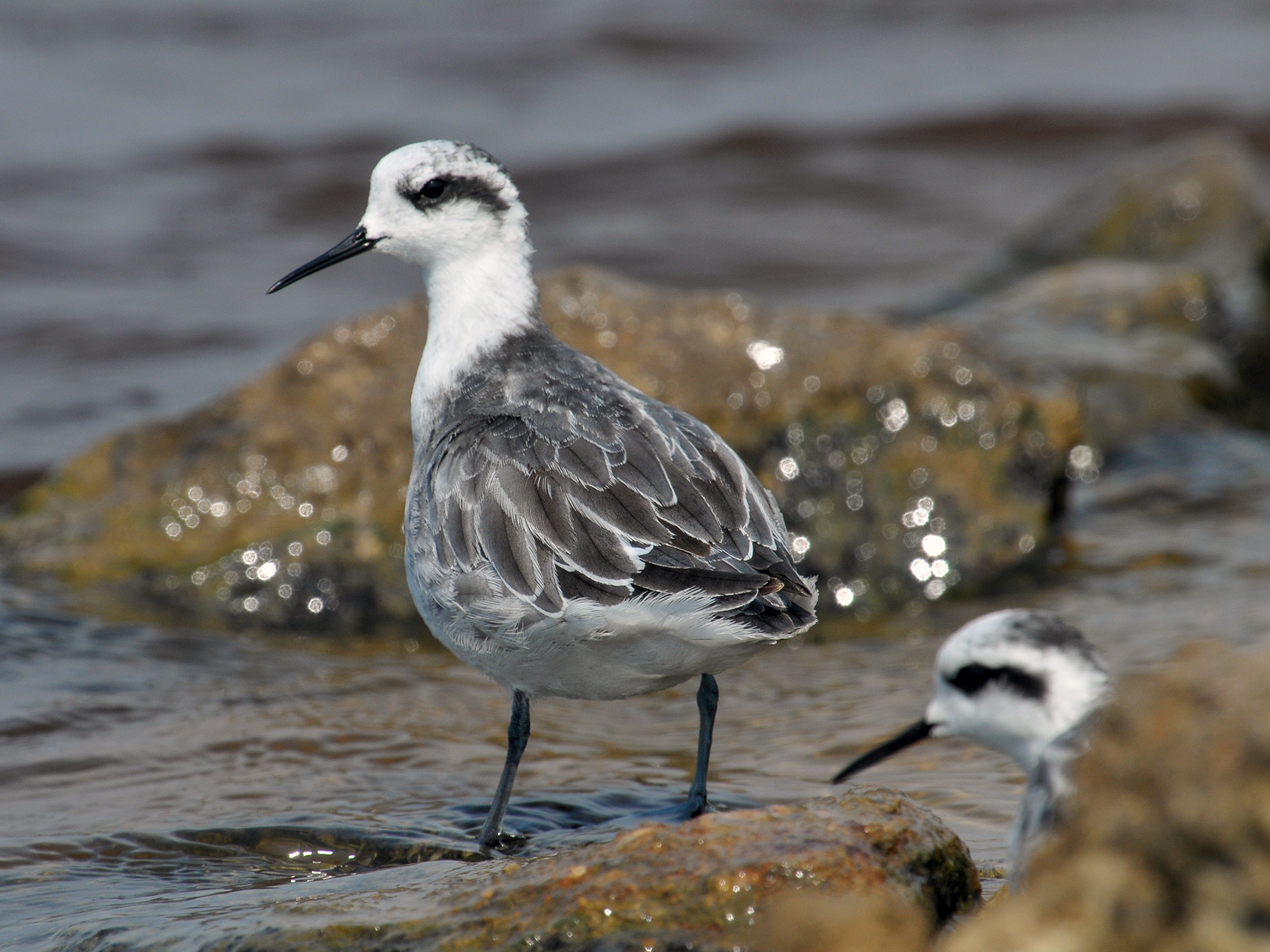
In the non-breeding season, the plumage of males and females changes to a less notable grey and white. The upper back is mid-grey, and the white flanks are streaked with grey. The breast, belly, chin, and head are white, with a blackish patch at the rear of the crown, and a dark stripe that runs from the eye towards the back of the head. Tail feathers are grey, edged with white.
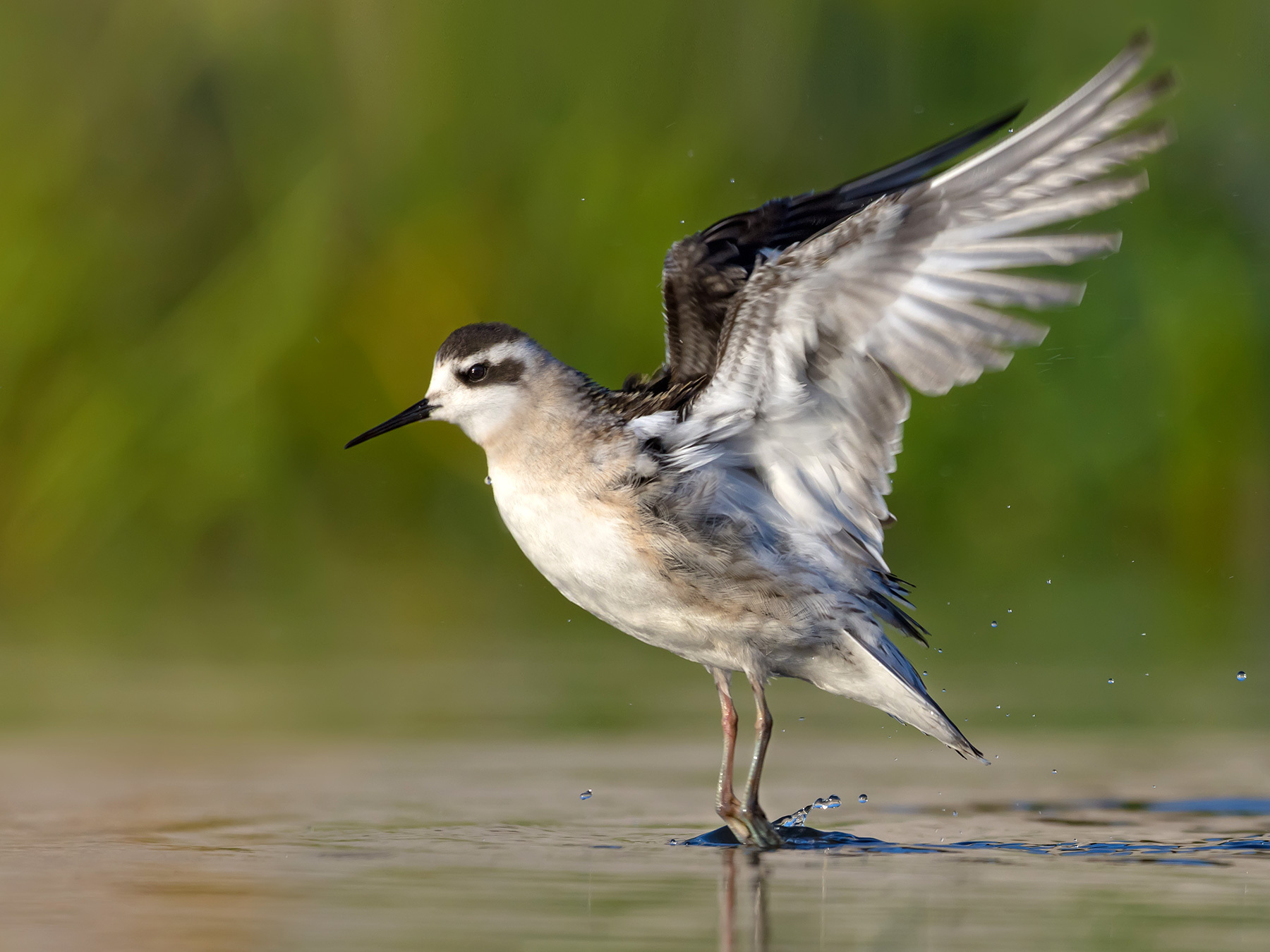
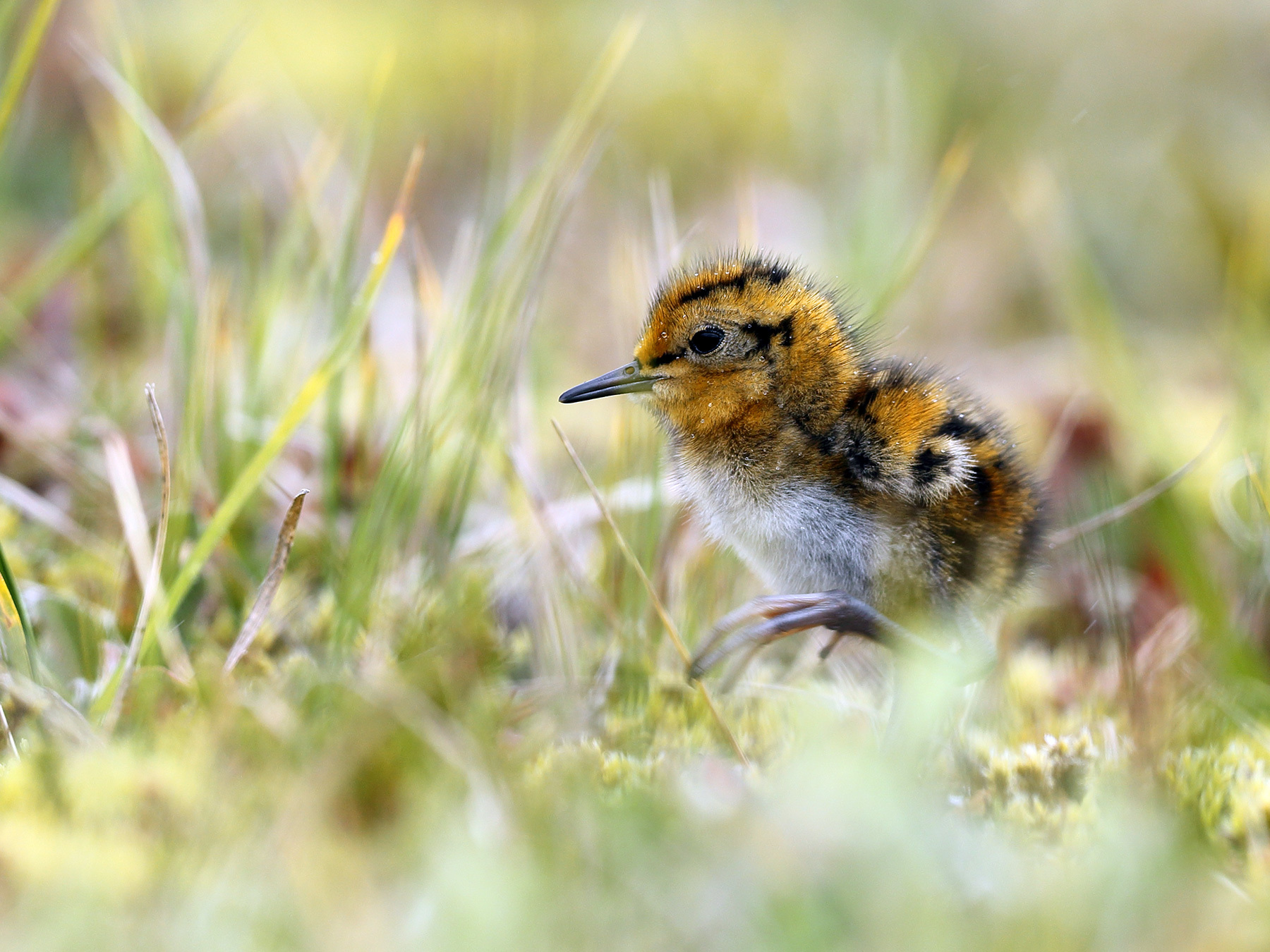
Juvenile red-necked phalaropes have dark brown upperparts, including the nape, back, crown, tail, and eye stripe. The breast and belly are buff-tan with a slight pinkish wash, and their shoulder feathers are edged with orange. Juvenile red-necked phalaropes have whitish underparts, but gain their full adult plumage by the end of their first year.
How big are Red-necked Phalaropes?
The smallest of the three phalarope species, red-necked phalaropes are also one of the world’s smallest seabirds. Males are typically smaller and lighter than females although there is some overlap between the sexes.
- Length: 17 cm to 19 cm (6.7 in to 7.5 in)
- Wingspan: 32 cm to 41 cm (12.6 in to 14.1 in)
- Weight: 27 g to 48 g (1 oz to 1.7 oz)
Its size
Adults- Length
- 18–19 cm
- Wingspan
- 31–34 cm
- Weight
- 25–48 g
Its song and calls
What sound does a Red-necked Phalarope make?
A common call of red-necked phalaropes is a repetitive series of ‘pip-pip-pip’ single notes. Contact calls include a metallic ‘plunk’ and a ‘wedu-wedu’ that is heard mostly during courtship and nest building.
- Call0:00 / 0:24
Recorded in Finnmark, Norway · July 2026
When and where to see it
OctoberLeaving
Most recorded in October
- 1. Anglesey0.11%
- 2. Orkney Islandsunder 0.1%
- 3. East Sussexunder 0.1%
- 4. West Yorkshireunder 0.1%
- 5. Essexunder 0.1%
Each dot is a county, state or province: the bigger and darker, the larger the bird’s share of that place’s bird records that month. Grey dots: no regular records. The ringed point is the centre of the bird’s records this month; the arrow shows how it moved since last month, and the dashed loop its path through the year. “Arrivals” colours places where it becomes regular this month (orange) or is in its last regular month (grey). GBIF eBird Observation Dataset, 2019–2024. Map data: Natural Earth, US Census Bureau; place centres © OpenStreetMap contributors.
In your area
See when the Red-necked Phalarope is recorded in your county, state or province.
How often the Red-necked Phalarope turns up in the UK, Ireland, the United States and Canada through the year, from birdwatchers' records.
United Kingdom
Summer visitor · regularly May–Oct · most records in September
Ireland
Passage migrant · regularly Jun · most records in June
United States
Summer visitor · regularly Apr–Oct · most records in August
Canada
Summer visitor · regularly May–Sep · most records in August
Show as a table
| Month | United Kingdom | Ireland | United States | Canada |
|---|---|---|---|---|
| January | – | – | <0.001% | – |
| February | – | – | <0.001% | – |
| March | – | – | <0.001% | – |
| April | <0.001% | – | 0.006% (regular) | <0.001% |
| May | 0.003% (regular) | – | 0.037% (regular) | 0.018% (regular) |
| June | 0.004% (regular) | 0.015% (regular) | 0.035% (regular) | 0.020% (regular) |
| July | 0.001% (regular) | 0.004% | 0.031% (regular) | 0.030% (regular) |
| August | 0.005% (regular) | <0.001% | 0.13% (regular) | 0.11% (regular) |
| September | 0.010% (regular) | <0.001% | 0.11% (regular) | 0.076% (regular) |
| October | 0.002% (regular) | – | 0.021% (regular) | 0.005% |
| November | <0.001% | – | 0.001% | <0.001% |
| December | – | – | <0.001% | – |
Recorded regularly in
Worldwide: recorded regularly in 86 countries
Countries where it was recorded in at least 3 of the 6 years 2019–2024. Linked countries have their own bird list.
Europe (30)
Africa (3)
Asia (33)
North America (13)
- Belize
- Canada
- Costa Rica
- Cuba
- El Salvador
- Greenland
- Guatemala
- Honduras
- Mexico
- Nicaragua
- Panama
- St Pierre & Miquelon
- United States
Oceania (2)
Data: EOD – eBird Observation Dataset (Cornell Lab of Ornithology), accessed via GBIF.org, CC BY 4.0. Records from 2019–2024, aggregated and filtered by Birdfact. How these lists are made
What is the habitat of a Red-necked Phalarope?
Breeding grounds of red-necked phalaropes are found on tundra landscapes across the Arctic. Forested areas and pools lined with grass, sedge, or moss are popular nesting sites, as well as freshwater marshes and bogs. Expanses of coastal moorland and floodplains may also be selected as breeding sites.
Winters are spent at sea, with warm tropical waters providing ample foraging opportunities for red-necked phalaropes to feed on marine plankton and other aquatic life. As they spend a lot of time on the open sea, they rarely come into contact with humans and can be unexpectedly tame on the rare occasions that they do cross paths.
What is the range of a Red-necked Phalarope?
Red-necked phalaropes breed across the northernmost region of North America, within the Arctic Circle and as far south as the Labrador coast of Newfoundland. To the east, breeding occurs around the coast of Greenland, Iceland, the Shetland Isles off the northern coast of Scotland, and through the extreme north of Scandinavia through northern Russia, Siberia, and the Kamchatka Peninsula.
Winters are spent offshore in four specific regions. In the Pacific Ocean, the northernmost winter region is concentrated on the coastal waters off Mexico and throughout the southern edge of Central America. Further south, marine waters off the coast of Peru and around the Galapagos Isles welcome the largest numbers of migrating red-necked phalaropes.
To the east, a stretch of water in the Arabian Sea, south of Oman and Yemen is the winter destination of some Scandinavian breeding populations. Eastern Siberian breeding populations spend winters at sea around the Philippines and New Guinea.
Where do Red-necked Phalaropes live?
The global population of red-necked phalaropes was estimated at up to 4.5 million individuals in 2015. Of these, upwards of 2 million breed in Canada and 42,000 in the Alaska National Wildlife Refuge. The European population is estimated at between 590,000 to 1,280,000 individuals, with the majority in Russia, but up to 50,000 pairs in Iceland, 10,000 to 20,000 pairs in Finland, and 10,000 to 25,000 pairs in Sweden.
How rare are Red-necked Phalaropes?
Spotting a red-necked phalarope would certainly count as a rare sighting, due to the species’ preference of spending a long period of the year out at sea and the remaining few months at inaccessible breeding grounds in the high Arctic.
Sightings are not unheard of though, and perhaps most likely during spring and autumn passage. In the UK, there are only around 64 breeding males, and a further 30 arrive from Scandinavia in the autumn to break their journey south.
Where can you see Red-necked Phalaropes in the US?
Alaska is the only US state with breeding red-necked phalaropes, but regular sightings along the Pacific Coast are reported during spring and fall migration passage.
Popular staging areas for onward migration to the ocean waters off Peru and Chile can also be found further inland. Each year, reports of tens of thousands of red-necked phalaropes are recorded at Mono Lake in California and up to 240,000 at Utah’s Great Salt Lake.
Where can you see Red-necked Phalaropes in Canada?
Eastern Canada offers some of the most concentrated breeding grounds of red-necked phalaropes, with up to 3 million reported at lower Pasamaquoddy Bay, New Brunswick in 1978 and a further 1 million recorded at the Quoddy region of Bay of Fundy, New Brunswick.
Where can you see Red-necked Phalaropes in the UK?
A small number of red-necked phalaropes breed in Shetland each year, with an average of 64 breeding males counted raising young on an annual basis.
Sightings are limited to between May, when the earliest females arrive or passage migrants pass through on their way further north, and September, when the last juvenile birds may be spotted as they head south.
Migration
Do Red-necked Phalaropes migrate?
Red-necked phalaropes have a particularly short breeding season – arrivals begin in May, and females start leaving in June, with males and juveniles following in July. The post-breeding period is spent at sea, foraging on open tropical waters until spring, when migration to return to the northern breeding grounds begins again.
Why do Red-necked Phalaropes migrate?
Red-necked phalaropes seem to have a stronger preference for life on the water than on land and depart as soon as they can after their role in the breeding process is complete. They spend up to 9 months at sea, feeding on the ocean waters where their main prey is marine plankton.
Arctic breeding grounds are not suitable for sustaining red-necked phalaropes all year round, and they appear to head off at the earliest possible opportunity.
Where do Red-necked Phalaropes migrate?
The main wintering regions favored by red-necked phalaropes are found off the coast of Peru and Chile, in the tropical waters of the Pacific Ocean, the Arabian Sea, and in South East Asia. Migrations take place both over land and water, with red-necked phalaropes regularly breaking their journeys at inland stopovers.
Tips for seeing it
- Look for them spinning in shallow waters of tundra ponds or coastal areas
- Observe their distinctive swimming behavior, often in tight circles
- During migration, scan open ocean areas where they may gather in large numbers
- In North America, watch for them at stopover sites along both coasts
What it eats
What do Red-necked Phalaropes eat?
On breeding grounds, the main element of a red-necked phalarope’s diet is invertebrates, especially flies, their larvae and eggs, beetles and spiders. At sea, copepods and other tiny crustaceans are eaten, as well as gastropods, molluscs, fish eggs and seeds of marine plants.
An interesting feeding tactic is used by red-necked phalaropes when feeding on shallow waters. They use their feet to kick themselves around, creating a spinning motion which in turn churns up any invertebrates and crustaceans living in the water below and brings them swirling to the surface, making it easier to catch.
What do Red-necked Phalarope chicks eat?
Red-necked phalarope chicks are able to walk shortly after hatching and accompany the male to foraging grounds to feed themselves.
Insects are important on breeding grounds, with young red-necked phalaropes picking flies, beetles and their larvae from overhead vegetation. They usually only begin to eat fish as they embark on their fall migrations.
Nesting and breeding
Where do Red-necked Phalaropes nest?
Red-necked phalaropes lay their eggs in a basic shallow scrape on the bare ground close to water. Nesting sometimes occurs in areas with barely any plant cover, as well as landscapes with thickets, sedge clumps, and grassy hummocks that offer some camouflage against predators.
When do Red-necked Phalaropes nest?
Females arrive on breeding grounds ahead of males, and pairing usually occurs immediately after arrival. Eggs are typically laid between late May and early June, with females departing on migration once the clutch is complete. Incubation and care for the young is the sole responsibility of the male. Hatching occurs after around 21 days.
What do Red-necked Phalarope eggs look like?
Red-necked phalaropes lay up to four pale olive-light brown eggs, covered in dense dark brown scrawls. Eggs are pointed, measuring 29 mm by 21 mm (1.1 in by 0.8 in).
Do Red-necked Phalaropes mate for life?
Red-necked phalaropes have a pretty unique approach to mating and pair bonds do not last beyond around 10 or 11 days, often ending once the final egg has been laid. Females then leave the nest site and the male incubates and raises young alone.
Occasionally the female will breed again with a different mate before embarking on the migration south. New pairings form at the start of the breeding season, and it’s unlikely that previous mates will reunite.
Behaviour
Are Red-necked Phalaropes aggressive?
While they are generally classed as a non-territorial species, occasionally female red-necked phalaropes will show aggression towards other females attempting to use the same pond for foraging during the breeding season. No territorial or aggressive behavior is shown by males.
Lifespan and predators
How long do Red-necked Phalaropes live?
The oldest ringed individual bird identified from ringing records reached the age of 12 years and 10 months. The average lifespan for the species is believed to be around 5 years, with breeding occurring for the first time at one year.
What are the predators of Red-necked Phalaropes?
Arctic foxes, red foxes, short-tailed weasels, and Arctic ground squirrels are the main land predators encountered by nesting red-necked phalaropes on their breeding grounds. Avian predators of eggs include parasitic jaegers, sharp-shinned hawks, glaucous gulls and sandhill cranes.
At sea, records exist of dolphins preying on red-necked phalaropes, and aerial attacks by birds of prey and predatory seabirds, including jaegers, are not uncommon.
Are Red-necked Phalaropes protected?
Red-necked phalaropes are protected under the Agreement on the Conservation of African-Eurasian Migratory Waterbirds (AEWA) and as an Annex I species in the EU Birds Directive.
In the UK, they are classed as a Schedule I species in the Wildlife and Countryside Act, 1981, legislation which makes it an offense to interfere with nesting birds or their eggs or young, or to kill, capture or injure a red-necked phalarope. Similar levels of protection are ensured by the Canadian Migratory Birds Convention Act and the Migratory Birds Treaty Act of 1918 in the United States.
Are Red-necked Phalaropes endangered?
While the red-necked phalarope is classified as a species of least concern across its global range, numbers are thought to be declining since the 1980s, and in the UK they are registered as a Red status species on the British Birds of Conservation Concern list.
Habitat loss and degradation caused by peat extraction and coastal drainage projects may impact the population security of the species in the near future.
Conservation
While currently listed as Least Concern, Red-necked Phalaropes face threats from climate change affecting their Arctic breeding grounds. Oil spills and marine pollution pose risks during their oceanic migrations.
Conservation efforts focus on protecting key stopover sites and breeding habitats.
More photos
7 photos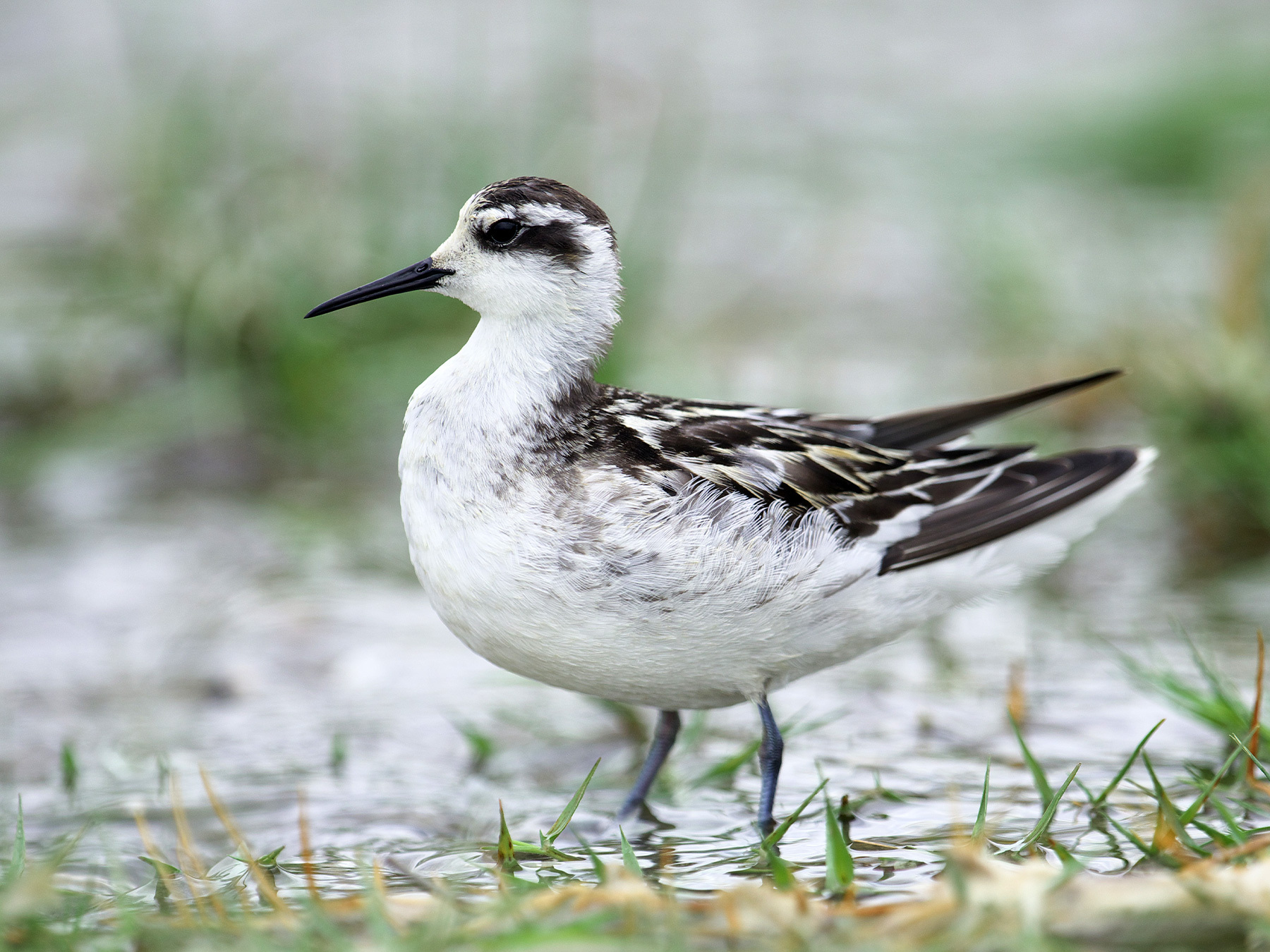
Quick facts
- Length
- 18–19 cm
- Wingspan
- 31–34 cm
- Weight
- 25–48 g
- Lifespan
- 5 years · oldest recorded 12.9 years
- Family
- Sandpipers & Snipes
- Migration
- Long-distance Migrant
- Global status (IUCN)
- Least Concern
- World population
- 3,600,000 - 4,500,000 individuals
- Population trend
- Decreasing
- Also called
- Northern Phalarope
- Scientific name
- Phalaropus lobatus
Sources
4- 1BirdLife International. 2019. Phalaropus lobatus (amended version of 2018 assessment). The IUCN Red List of Threatened Species 2019: e.T22693490A155525960. Source (opens in a new tab)
- 2Wetlands International (2015)
- 3Wetlands International (2015)
- 4Robinson and Clark, The Online Ringing Report: Bird ringing in Britain & Ireland in 2011 (2011) Source (opens in a new tab)

Checked by
Nathan Cope, founder and editor
Nathan founded Birdfact and leads its writers and contributors in the UK, the US and Canada. He has watched and studied birds for more than ten years, and checks every article and species guide before it’s published.