


Greenshank
Common Greenshank · Tringa nebularia
By the Birdfact teamChecked by Nathan Cope
On this page13 sections
How to recognise it
What do Greenshanks look like?
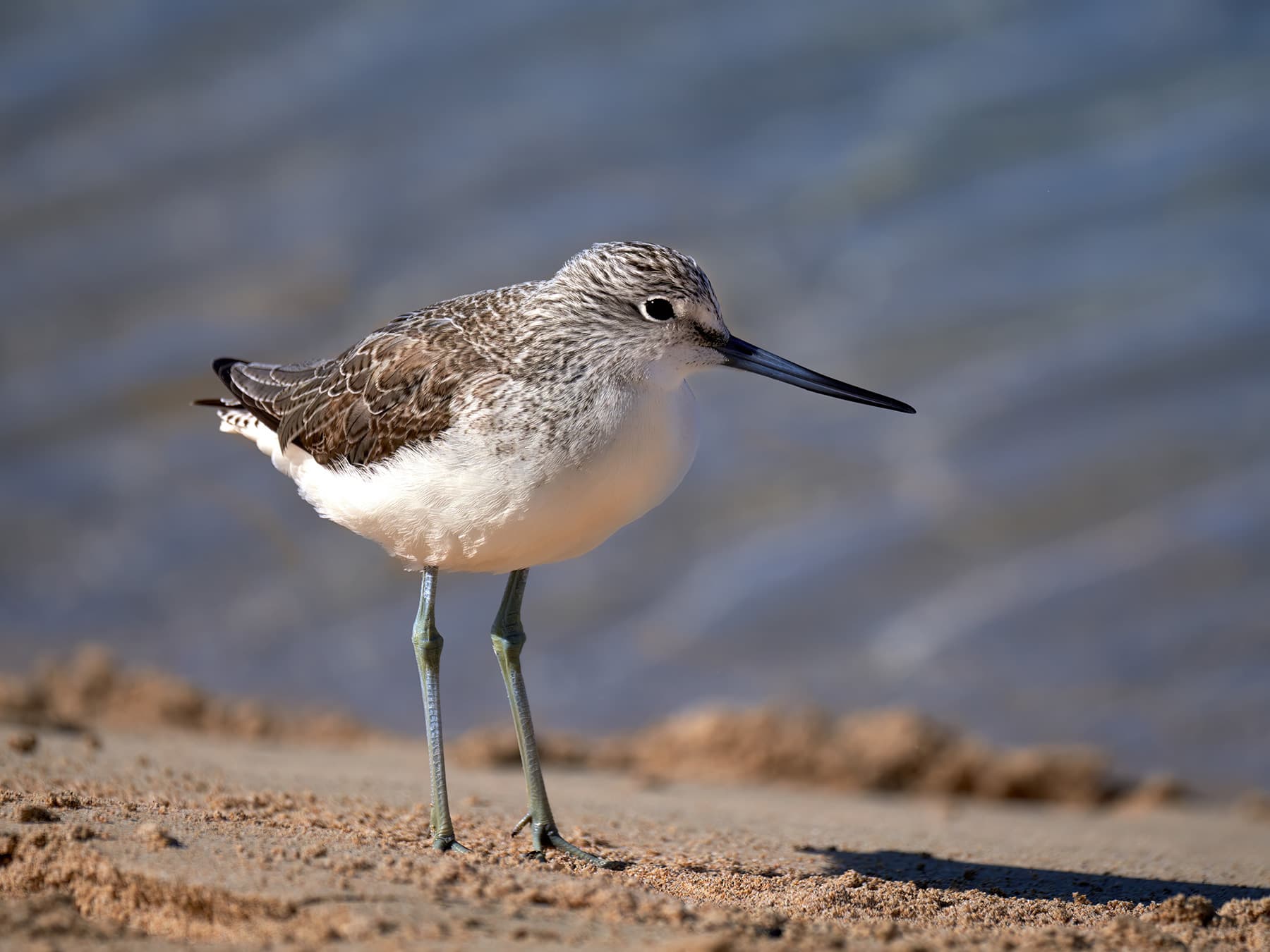
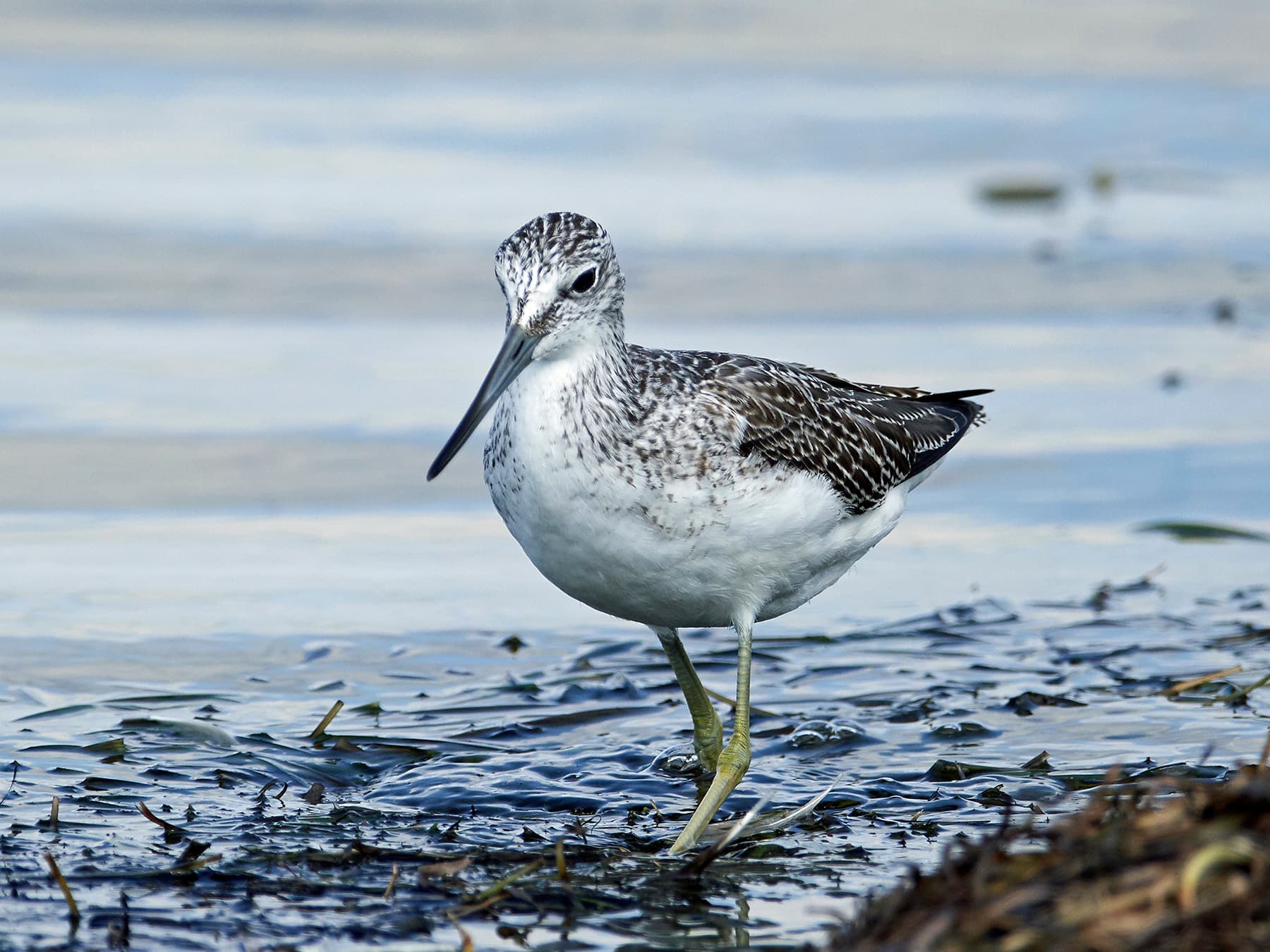
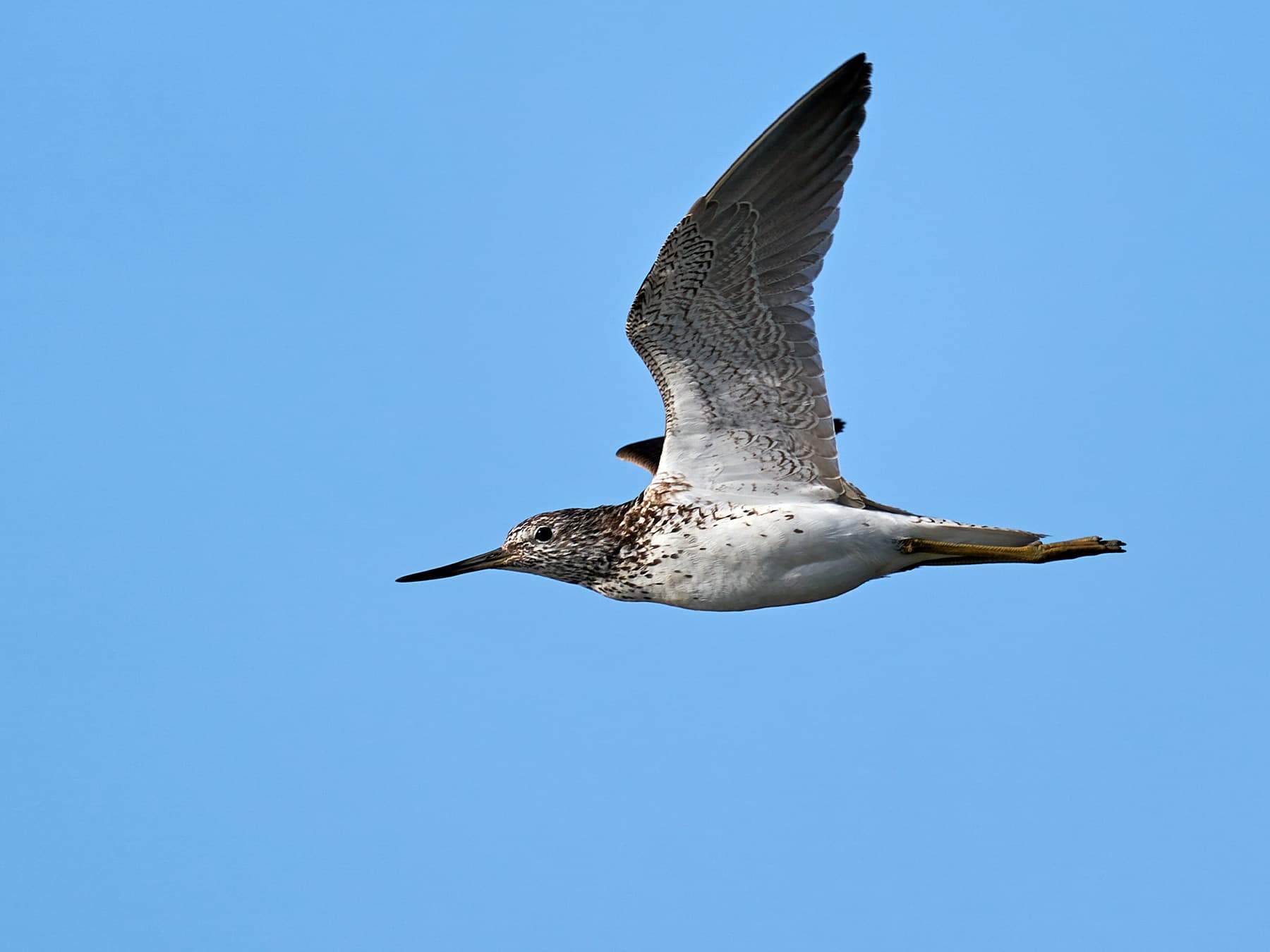
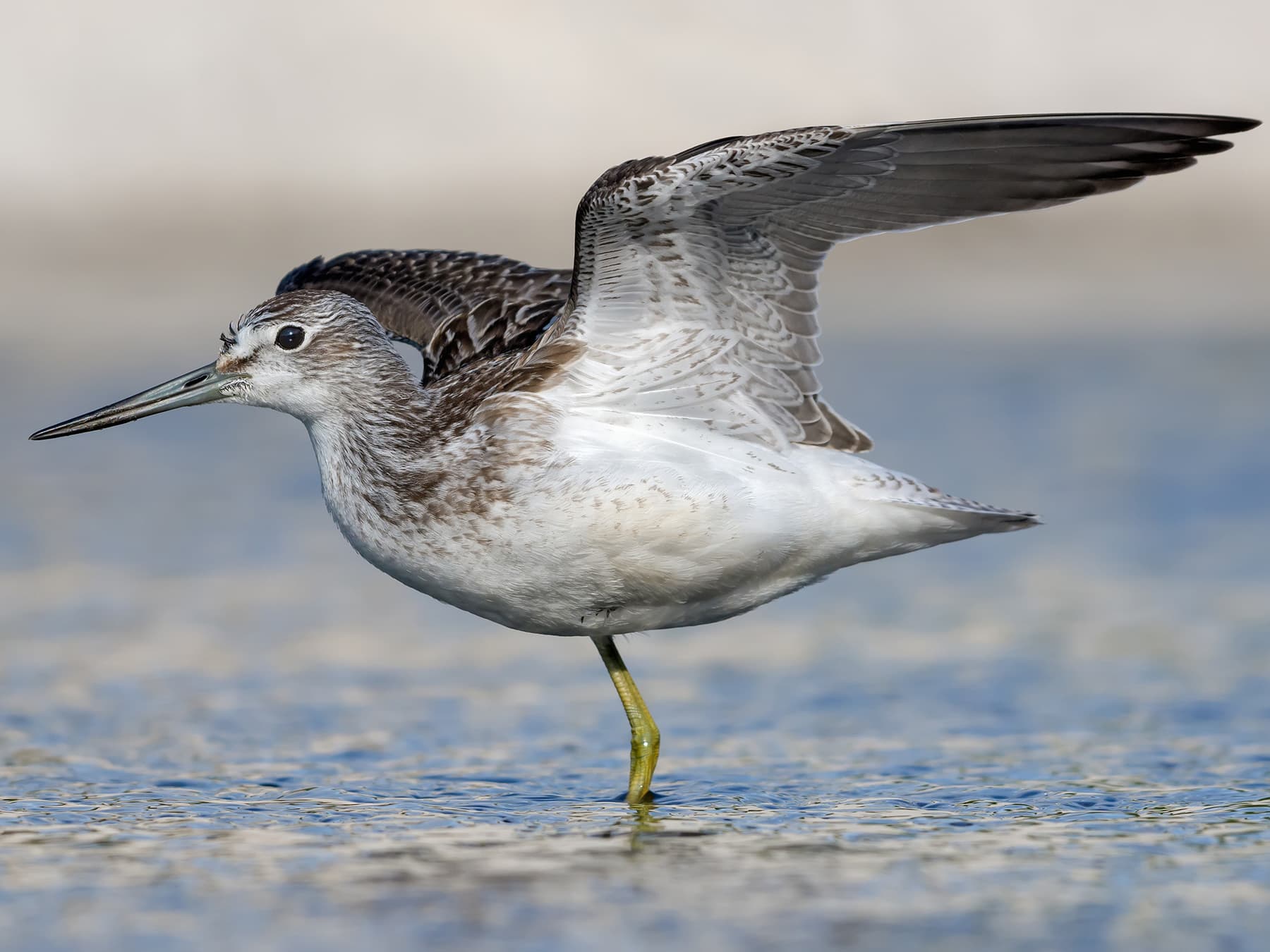
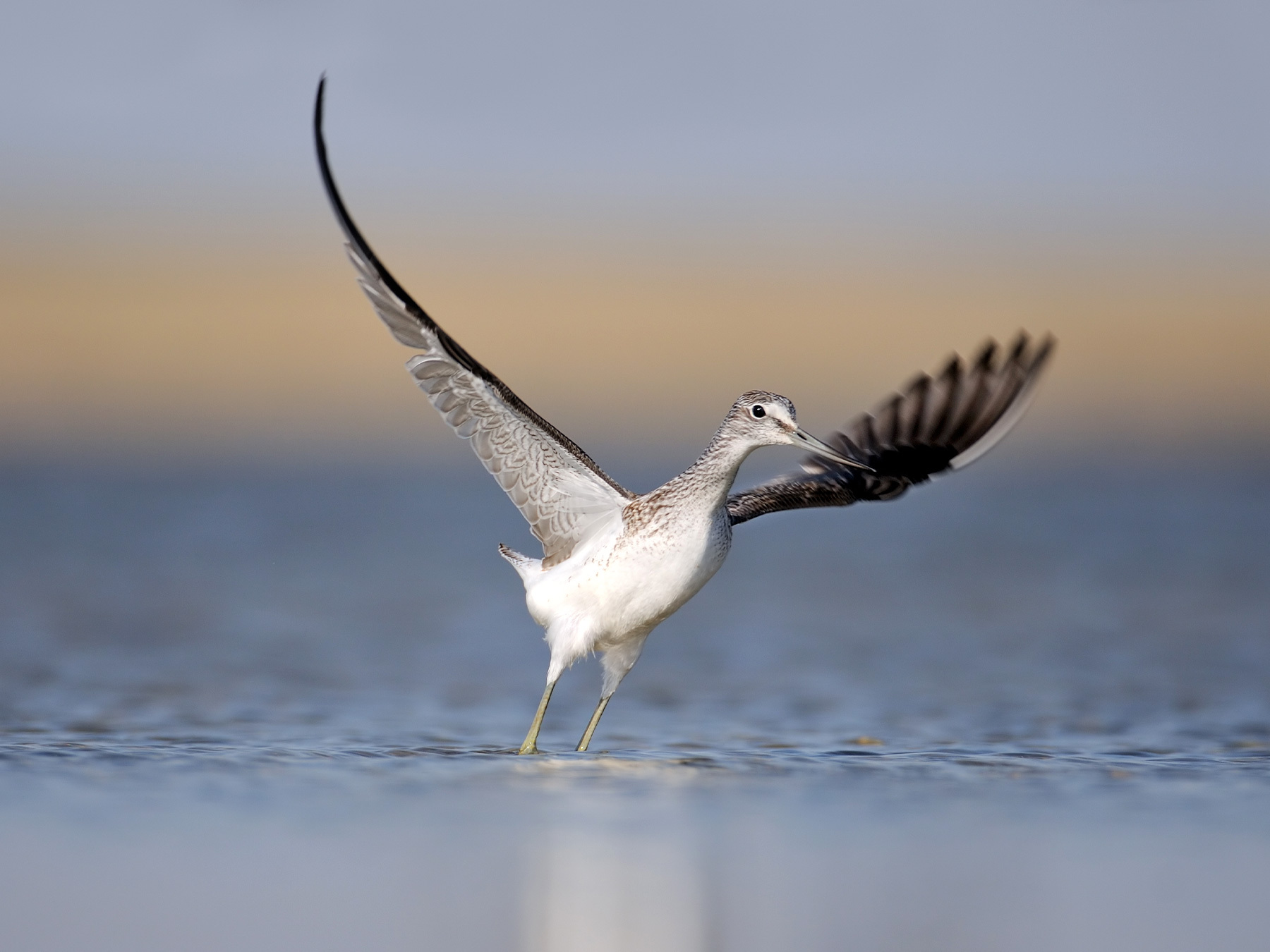
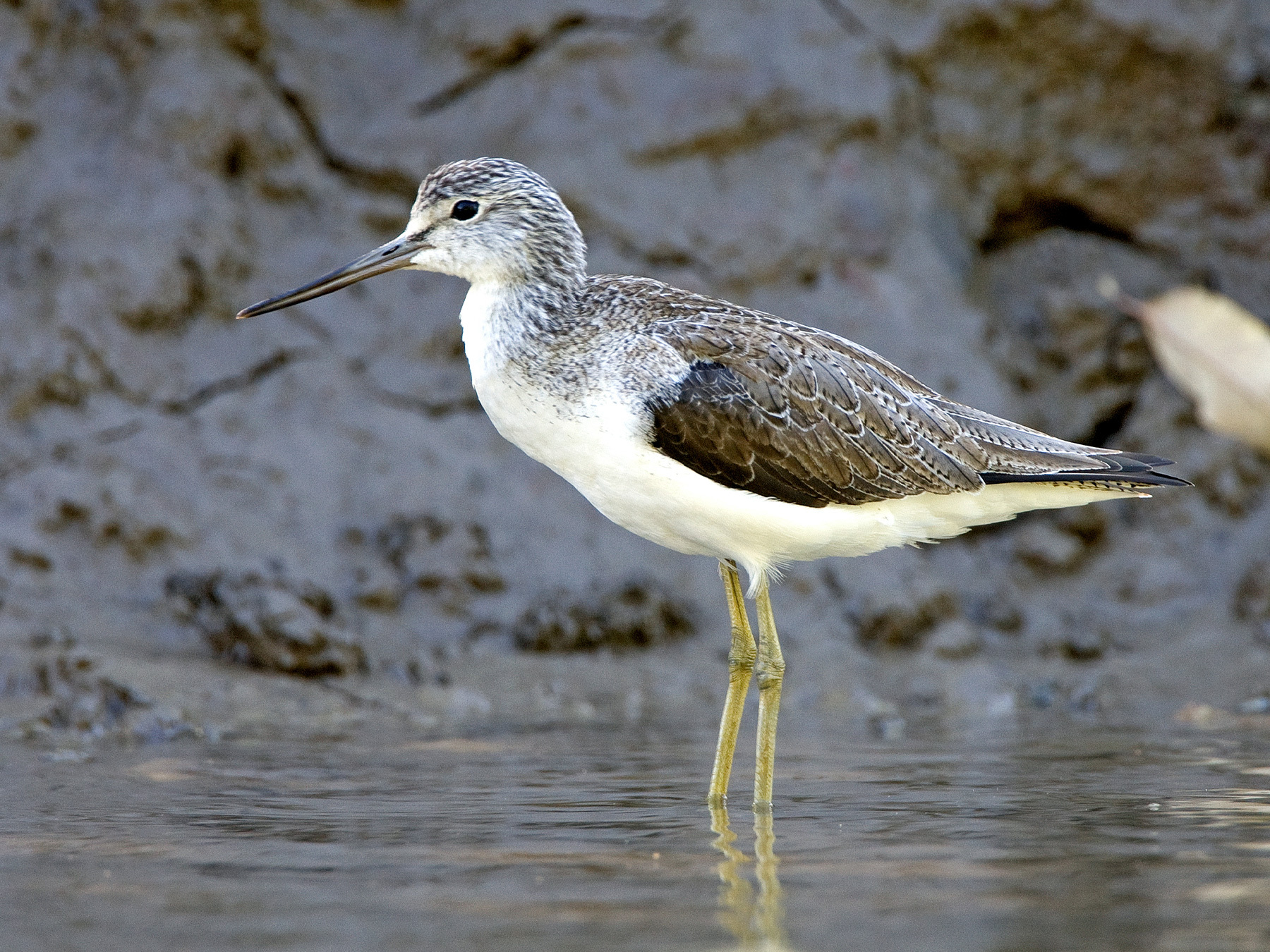
Male and female greenshanks are alike in plumage, although females are usually noticeably larger than males. During the breeding season, they have dark brown upperparts that are spotted and streaked with white. Their rump and back are white and can be clearly seen in flight. The upper tail is white and barred with dark brown. Their neck, breast, and flanks are mainly white but densely marked with black-brown spots and streaks.
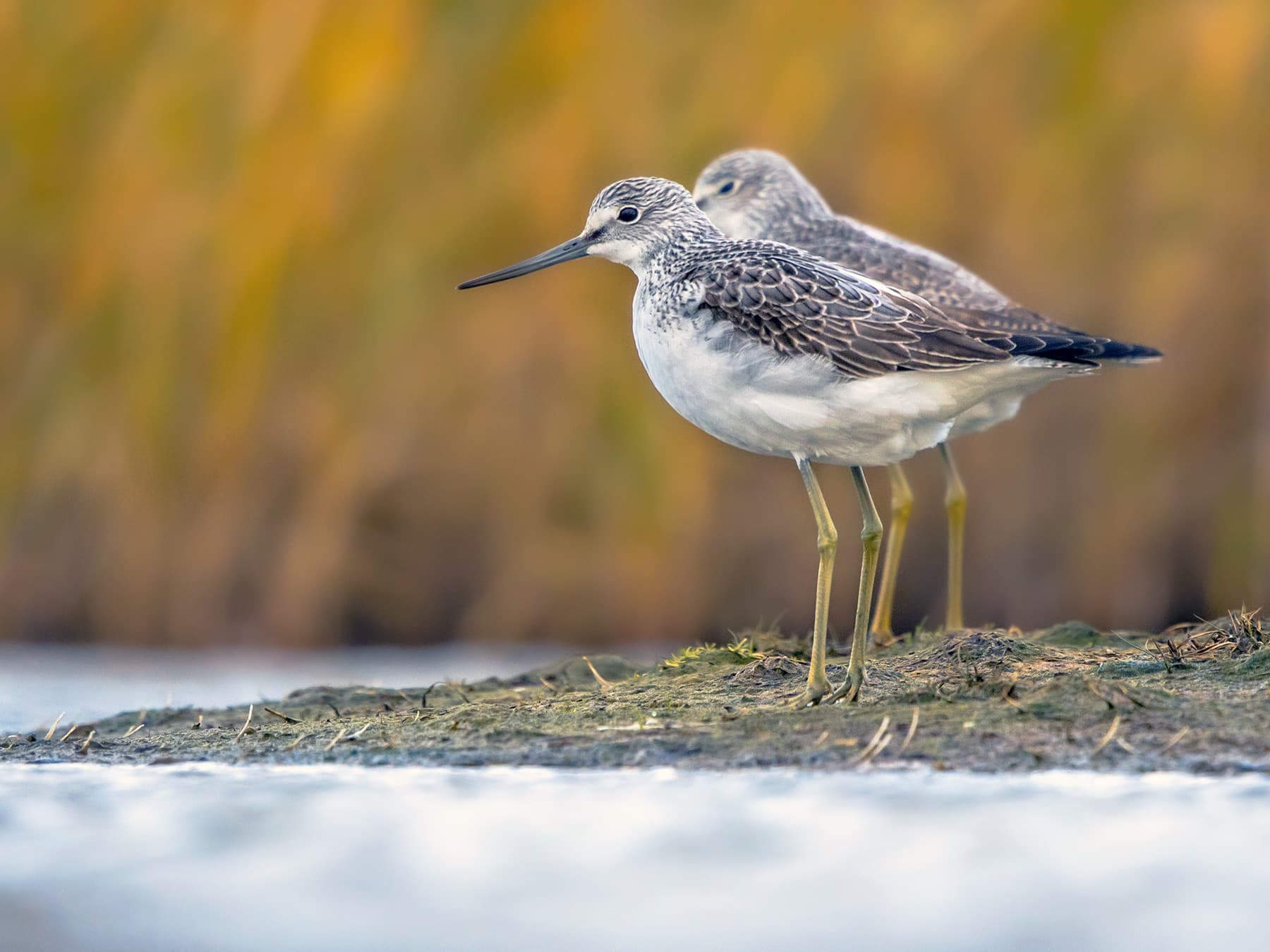
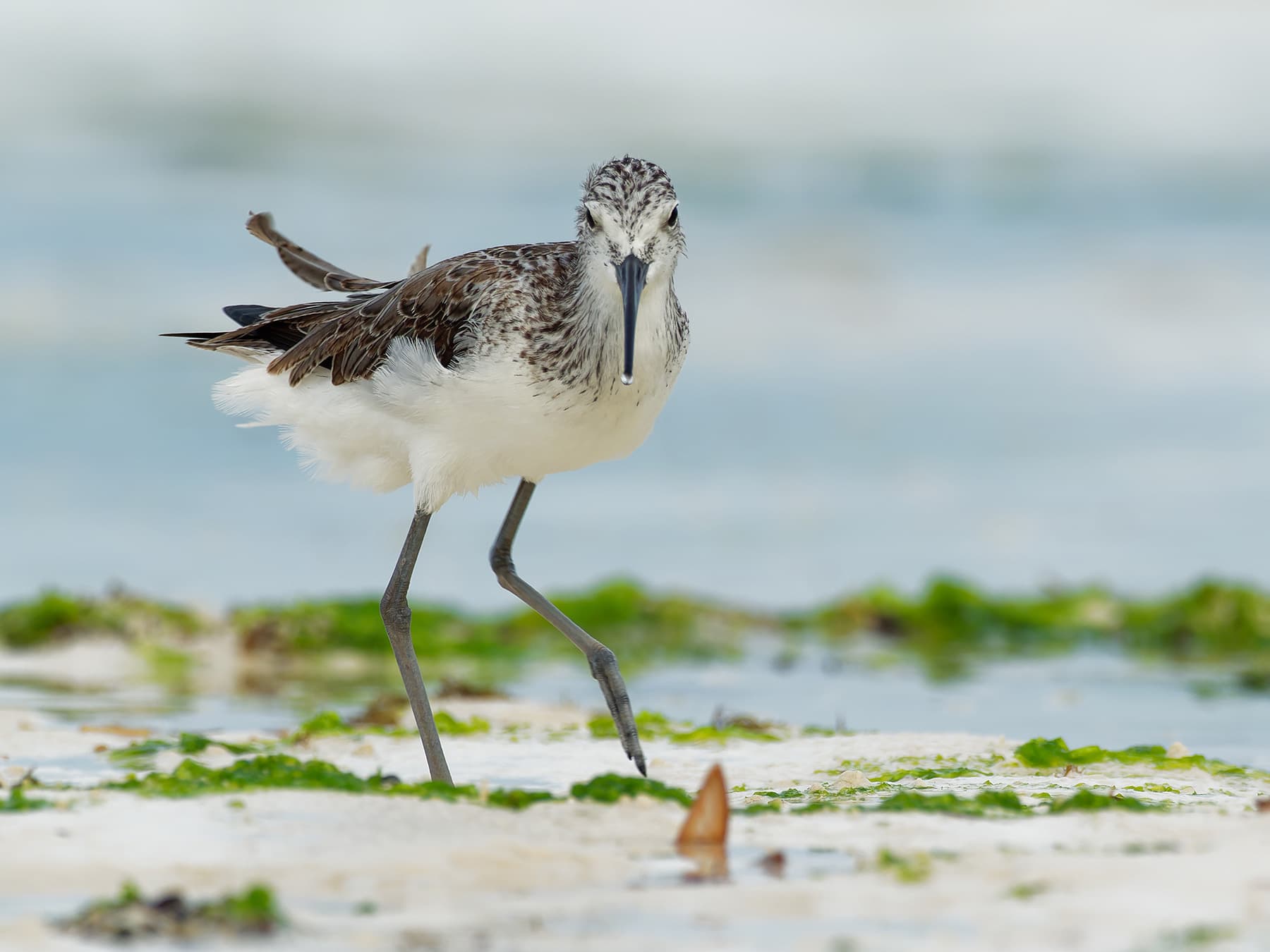
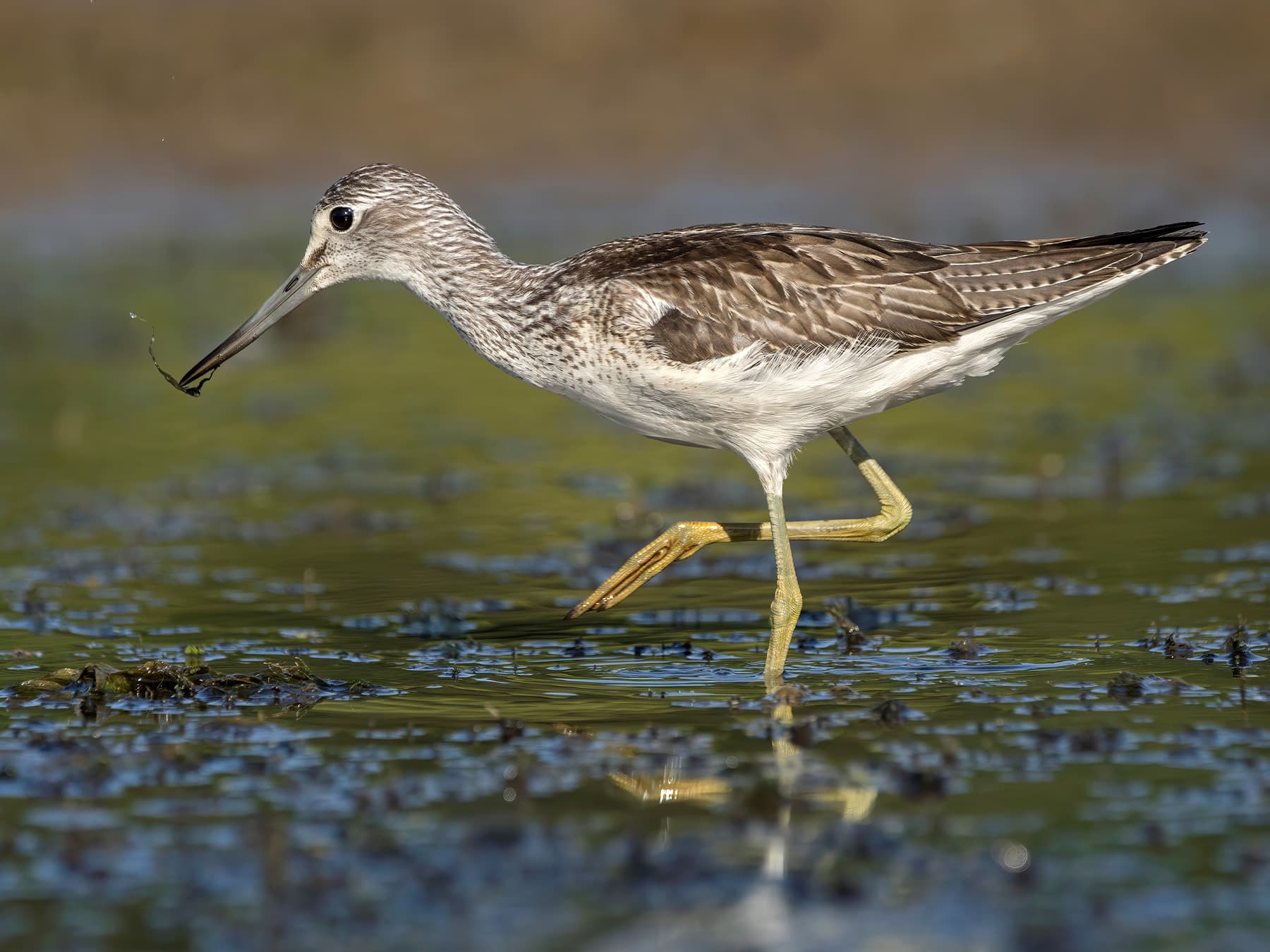
Greenshanks have slender bills that are greyish-green at the base and tipped with black. The bill is long and curves slightly upwards. They have dark brown eyes and pale green to yellow legs and feet.
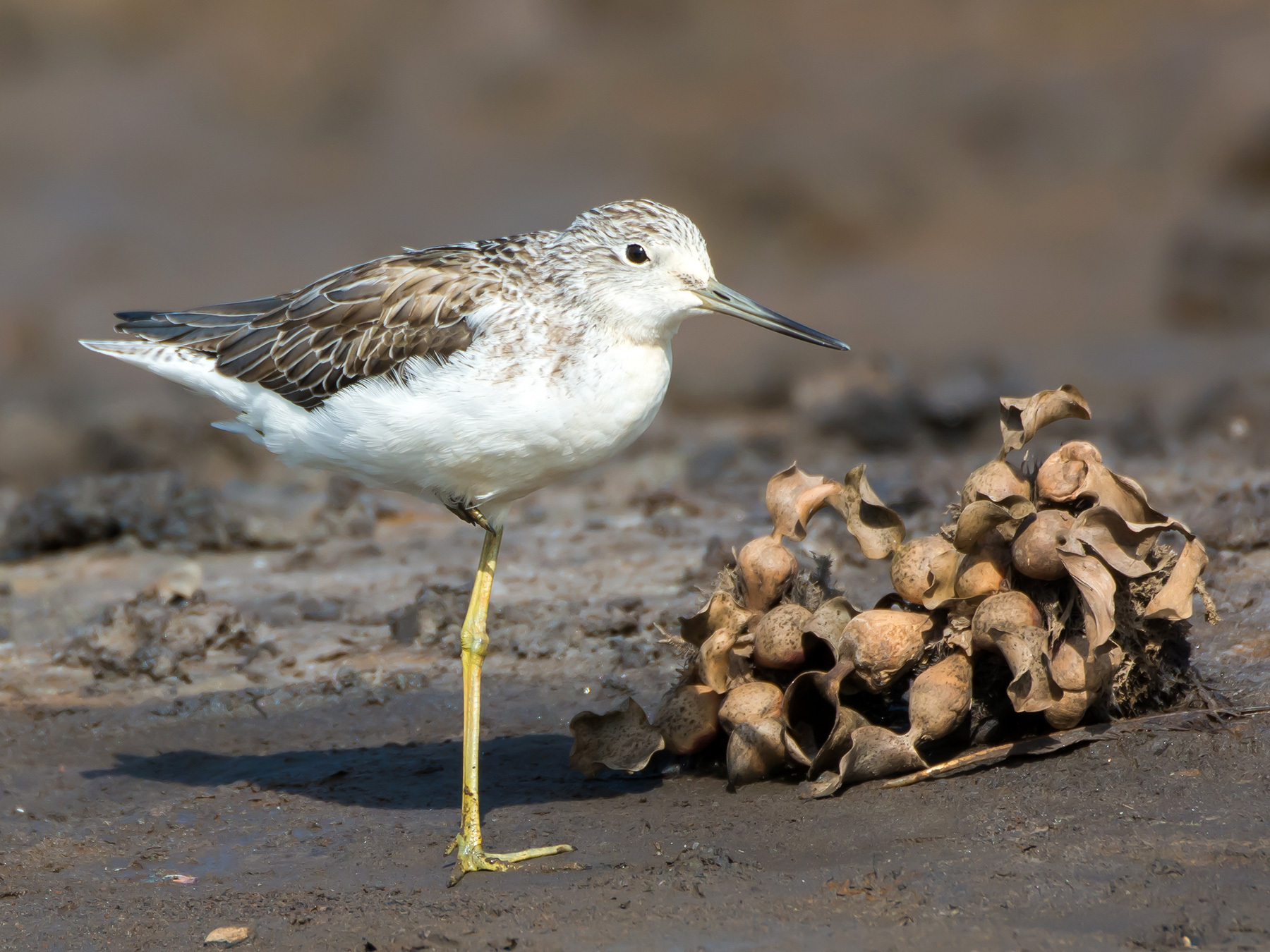
Post-breeding, greenshanks moult into a basic plumage with mainly grey upperparts, a white breast, throat, and face, and contrasting dark upper wings.
Juvenile greenshanks are similar to non-breeding adults, but their upperparts are browner and edged with pale buff, giving a scaled appearance. Their neck and breast are heavily streaked with brown and white.
How big are Greenshanks?
Greenshanks are one of the largest members of the Tringa family, which consists of sandpipers, shanks and tattlers. Females are slightly larger and heavier than males.
- Length: 30 cm to 35 cm (11.8 in to 13.8 in)
- Wingspan: 69 cm (27.2 in)
- Weight: 125 g to 300 g (4.4 in to 10.6 in)
Its size
Adults- Length
- 30–35 cm
- Wingspan
- 55–65 cm
- Weight
- 130–260 g
Its song and calls
What sound does a Greenshank make?
Greenshanks have a loud call that is easily recognised among wading birds. A series of up to three ringing ‘tyu-tyu-tyu’ notes are repeated in flight and when leaving the nest, both during the day and night.
- Song and calls0:00 / 0:35
Recorded in Vaud, Switzerland · April 2025
- Call0:00 / 0:22
Recorded in Normandie, France · May 2022
When and where to see it
OctoberLeaving
Most recorded in October
- 1. Louth1.7%
- 2. Kerry1.5%
- 3. Cork1.0%
- 4. Sligo0.95%
- 5. Falkirk0.92%
Each dot is a county, state or province: the bigger and darker, the larger the bird’s share of that place’s bird records that month. Grey dots: no regular records. The ringed point is the centre of the bird’s records this month; the arrow shows how it moved since last month, and the dashed loop its path through the year. “Arrivals” colours places where it becomes regular this month (orange) or is in its last regular month (grey). GBIF eBird Observation Dataset, 2019–2024. Map data: Natural Earth, US Census Bureau; place centres © OpenStreetMap contributors.
In your area
See when the Greenshank is recorded in your county, state or province.
How often the Greenshank turns up in the UK and Ireland through the year, from birdwatchers' records.
United Kingdom
Summer visitor · all year · most records in August
Ireland
Winter visitor · regularly Jun–Apr · most records in September
Show as a table
| Month | United Kingdom | Ireland |
|---|---|---|
| January | 0.069% (regular) | 0.89% (regular) |
| February | 0.069% (regular) | 0.87% (regular) |
| March | 0.049% (regular) | 0.74% (regular) |
| April | 0.098% (regular) | 0.20% (regular) |
| May | 0.084% (regular) | 0.042% |
| June | 0.037% (regular) | 0.092% (regular) |
| July | 0.17% (regular) | 0.39% (regular) |
| August | 0.38% (regular) | 0.69% (regular) |
| September | 0.32% (regular) | 0.91% (regular) |
| October | 0.19% (regular) | 0.85% (regular) |
| November | 0.078% (regular) | 0.89% (regular) |
| December | 0.060% (regular) | 0.83% (regular) |
Recorded regularly in
Worldwide: recorded regularly in 147 countries
Countries where it was recorded in at least 3 of the 6 years 2019–2024. Linked countries have their own bird list.
Europe (44)
- Åland Islands
- Albania
- Austria
- Belarus
- Belgium
- Bosnia & Herzegovina
- Bulgaria
- Croatia
- Czechia
- Denmark
- Estonia
- Finland
- France
- Germany
- Greece
- Guernsey
- Hungary
- Iceland
- Ireland
- Isle of Man
- Italy
- Jersey
- Kosovo
- Latvia
- Lithuania
- Luxembourg
- Malta
- Moldova
- Montenegro
- Netherlands
- North Macedonia
- Norway
- Poland
- Portugal
- Romania
- Russia
- Serbia
- Slovakia
- Slovenia
- Spain
- Sweden
- Switzerland
- Ukraine
- United Kingdom
Africa (49)
- Algeria
- Angola
- Botswana
- Burundi
- Cameroon
- Cape Verde
- Central African Republic
- Chad
- Comoros
- Congo - Brazzaville
- Congo - Kinshasa
- Côte d’Ivoire
- Djibouti
- Egypt
- Eswatini
- Ethiopia
- Gabon
- Gambia
- Ghana
- Guinea
- Guinea-Bissau
- Kenya
- Liberia
- Libya
- Madagascar
- Malawi
- Mauritania
- Mauritius
- Mayotte
- Morocco
- Mozambique
- Namibia
- Nigeria
- Réunion
- Rwanda
- São Tomé & Príncipe
- Senegal
- Seychelles
- Sierra Leone
- Somalia
- South Africa
- Sudan
- Tanzania
- Togo
- Tunisia
- Uganda
- Western Sahara
- Zambia
- Zimbabwe
Asia (48)
- Armenia
- Azerbaijan
- Bahrain
- Bangladesh
- Bhutan
- British Indian Ocean Territory
- Brunei
- Cambodia
- China
- Cyprus
- Georgia
- Hong Kong SAR China
- India
- Indonesia
- Iran
- Iraq
- Israel
- Japan
- Jordan
- Kazakhstan
- Kuwait
- Kyrgyzstan
- Laos
- Lebanon
- Macao SAR China
- Malaysia
- Maldives
- Mongolia
- Myanmar (Burma)
- Nepal
- Oman
- Pakistan
- Palestinian Territories
- Philippines
- Qatar
- Saudi Arabia
- Singapore
- South Korea
- Sri Lanka
- Taiwan
- Tajikistan
- Thailand
- Timor-Leste
- Turkey
- United Arab Emirates
- Uzbekistan
- Vietnam
- Yemen
Antarctica (1)
- French Southern Territories
Data: EOD – eBird Observation Dataset (Cornell Lab of Ornithology), accessed via GBIF.org, CC BY 4.0. Records from 2019–2024, aggregated and filtered by Birdfact. How these lists are made
What is the habitat of a Greenshank?
Greenshanks breed throughout the taiga zone, where they live in forest clearings, marshes, and boggy moorlands with some patchy tree cover.
During migration, greenshanks appear inland as well as in coastal regions, with sandbars, marshes, flooded meadows and dried-up lakes among the common sites for passage sightings.
Greenshanks spend winters at both marine and freshwater wetlands, and can commonly be found at estuaries, beaches, lagoons and mangroves, as well as along muddy river banks.
What is the range of a Greenshank?
Greenshanks breed at northern latitudes, with their main range extending from northern Scotland, Scandinavia, through Central Asia to Siberia and far-eastern Russia.
In winter, greenshanks can be found across western Europe, particularly around the Mediterranean coast, along Africa’s northern, western, and eastern coasts, and along the River Nile, as well as being widespread across the entire sub-Saharan African continent and the Middle East. In Asia, greenshanks are present in south and south-east Asia, Indonesia, and in parts of Australia, particularly the south west, north east and south east.
Where do Greenshanks live?
Of the European breeding population of greenshanks, more than 1,000 pairs are found in Scotland, 15,000 to 20,000 pairs in Sweden, 15,000 to 30,000 pairs in Norway and 25,000 to 40,000 pairs in Finland.
Up to 100,000 greenshanks are estimated to spend winters in East Africa and south-west Asia, with a further 20,000 individuals in each of Australia, east Asia and South East Asia.
How rare are Greenshanks?
There is no exact figure for the worldwide population of greenshanks, but it is thought to be in the hundreds of thousands. They are not globally threatened and considered a species of least concern. In the UK, there are upwards of 1,000 breeding pairs, and a further 900+ individuals arrive for the winter. With additional passage sightings each year, they are not uncommon birds at coastal wetlands and estuaries.
Australia has no breeding greenshanks, but up to 20,000 individuals spend the winter there every year. Around a quarter of these settle until spring in the north-western region of the country, and sightings are relatively common.
Where can you see Greenshanks in the UK?
The UK’s breeding greenshanks are found on boggy wetlands in northern and western Scotland and are present between April and August. Sightings of birds in passage reach a peak in April to May and from July to September, en-route to and from breeding grounds in Scandinavia, and are reported at inland wetlands and freshwater marshes across the UK.
The UK’s winter population of greenshanks arrive from October onwards and remain until March, with the most sightings reported at estuaries around the coast of south-west England, Wales, Northern Ireland, and western Scotland.
Where can you see Greenshanks in Australia?
The Australian winter population of greenshanks is estimated at around 20,000 individuals, of which about 5,000 are temporarily resident in north-western Australia.
Migration
Do Greenshanks migrate?
Greenshanks are fully migratory birds, with distinct and separate breeding and wintering territories. Breeding occurs in the northern hemisphere only, at northerly latitudes from Scotland across Scandinavia and throughout northern Russia.
Winters are spent further south, for some subpopulations only as far south as southern England and northern France and around the Mediterranean, but largely deeper into sub-Saharan Africa, the Middle East, South and South East Asia and into Australia.
How far do Greenshanks migrate?
After the breeding season ends, greenshanks move south, with some populations reaching as far as Australia and South Africa.
Not all migrations are long distance, however, with some movement to the UK and France from northern Scandinavia, and Scottish breeders identified in southern England and northern France. Migrations take place across the land, with frequent stopovers at inland lakes and freshwater wetlands along the way.
Why do Greenshanks migrate?
In winter months, northern wetland habitats become colder and inhospitable, with frozen lakes and a declining availability of prey. Moving south to foraging grounds with more abundant food enables greenshanks to survive during winter, with a return to northern breeding grounds possible when local conditions improve in spring.
Tips for seeing it
- Look for Greenshanks in coastal estuaries, mudflats, and inland wetlands
- Listen for their distinctive 'teu-teu-teu' call, often given in flight
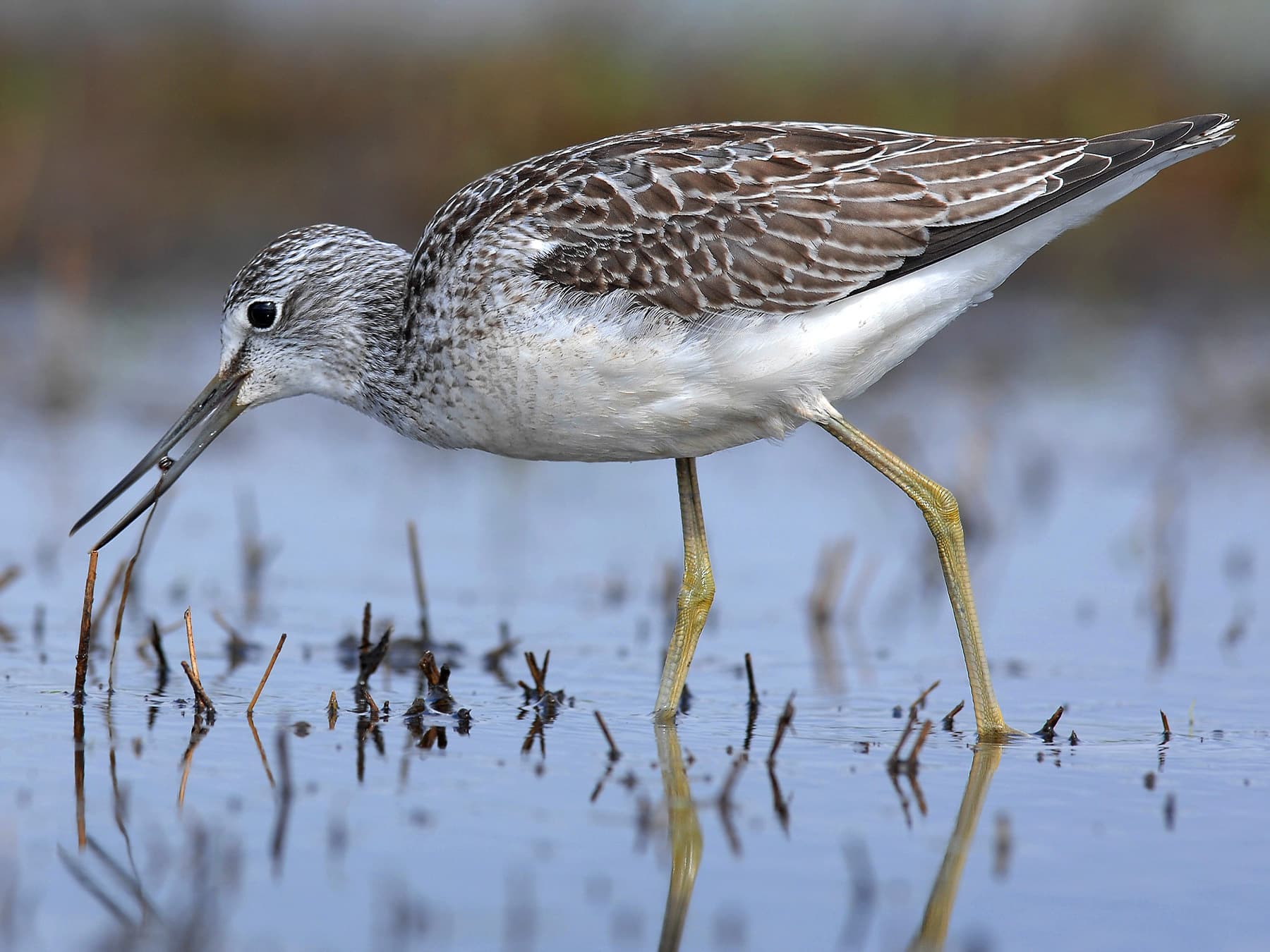
- Observe their feeding behaviour, characterised by rapid probing in shallow water
- In the UK, watch for them during spring and autumn migrations
What it eats
What do Greenshanks eat?
Worms, insects, snails and fish are among the main foods of greenshanks. They feed in shallow water, and forage in flocks, pecking beneath the water’s surface for crustaceans, molluscs, small fish and amphibians. Larvae of beetles and other insects are also popular, and rodents may occasionally be eaten. In winter, crabs are particularly important.
What do Greenshank chicks eat?
Greenshank chicks are able to forage for themselves from birth and follow the same diet as adult birds, preying mainly on insects, larvae, snails and worms.
Nesting and breeding
Where do Greenshanks nest?
Nest scrapes, shallow depressions in open boggy landscapes, are created by male greenshanks and lined with a few leaves and feathers. Nests are commonly crafted next to logs, rocks or fallen trees, and it’s not uncommon for birds to reuse nest spots in subsequent years.
When do Greenshanks nest?
Eggs are laid from late April onwards, and one sole brood is raised each year. The latest eggs are laid in mid-June, with breeding usually complete by late July. Some females arrive on wintering grounds as early as June, with most arriving in July and juveniles appearing from August onwards.
What do Greenshank eggs look like?
Greenshanks lay three to four pale cream-buff eggs, flecked with dark brown spots, measuring 51 mm by 34 mm (2 in by 1.3 in). Both adults share incubation duties for 23 to 26 days; however, if the male has two mates (see below) the female will take a much larger share.
Do Greenshanks mate for life?
Greenshanks are mainly a monogamous species, remaining with the same mate throughout the breeding season, but usually pair up with a different mate the following year although occasionally previous pairs may reunite. Some males may mate with two females in the same season, and actively participate in raising the different broods.
Behaviour
Are Greenshanks aggressive?
A relatively peaceful species, greenshanks do occasionally engage in aggressive clashes at foraging grounds if food is in short supply. These encounters are usually a short-lived physical bill-to-bill challenge, with frantic wing flapping.
Where do Greenshanks sleep at night?
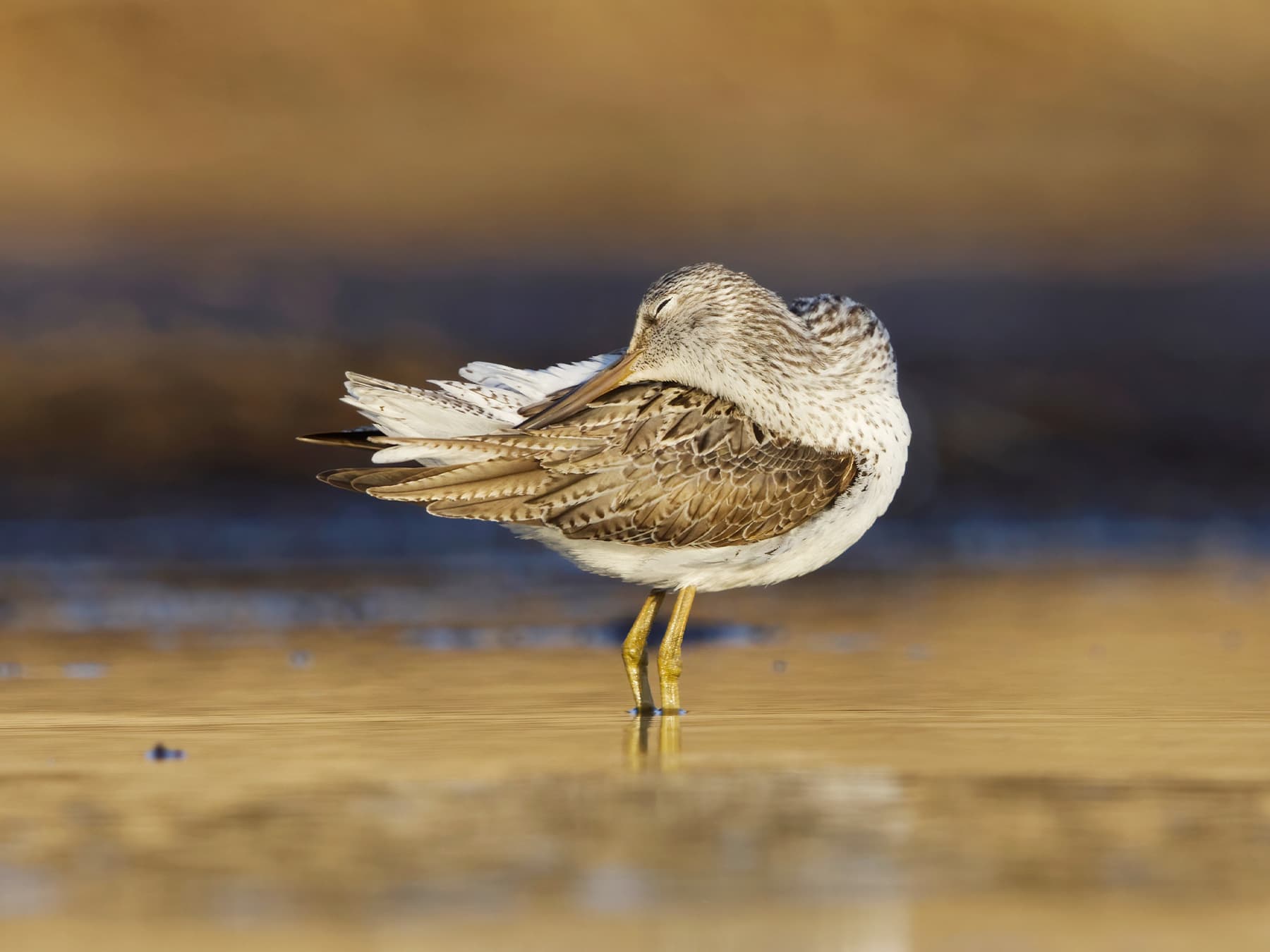
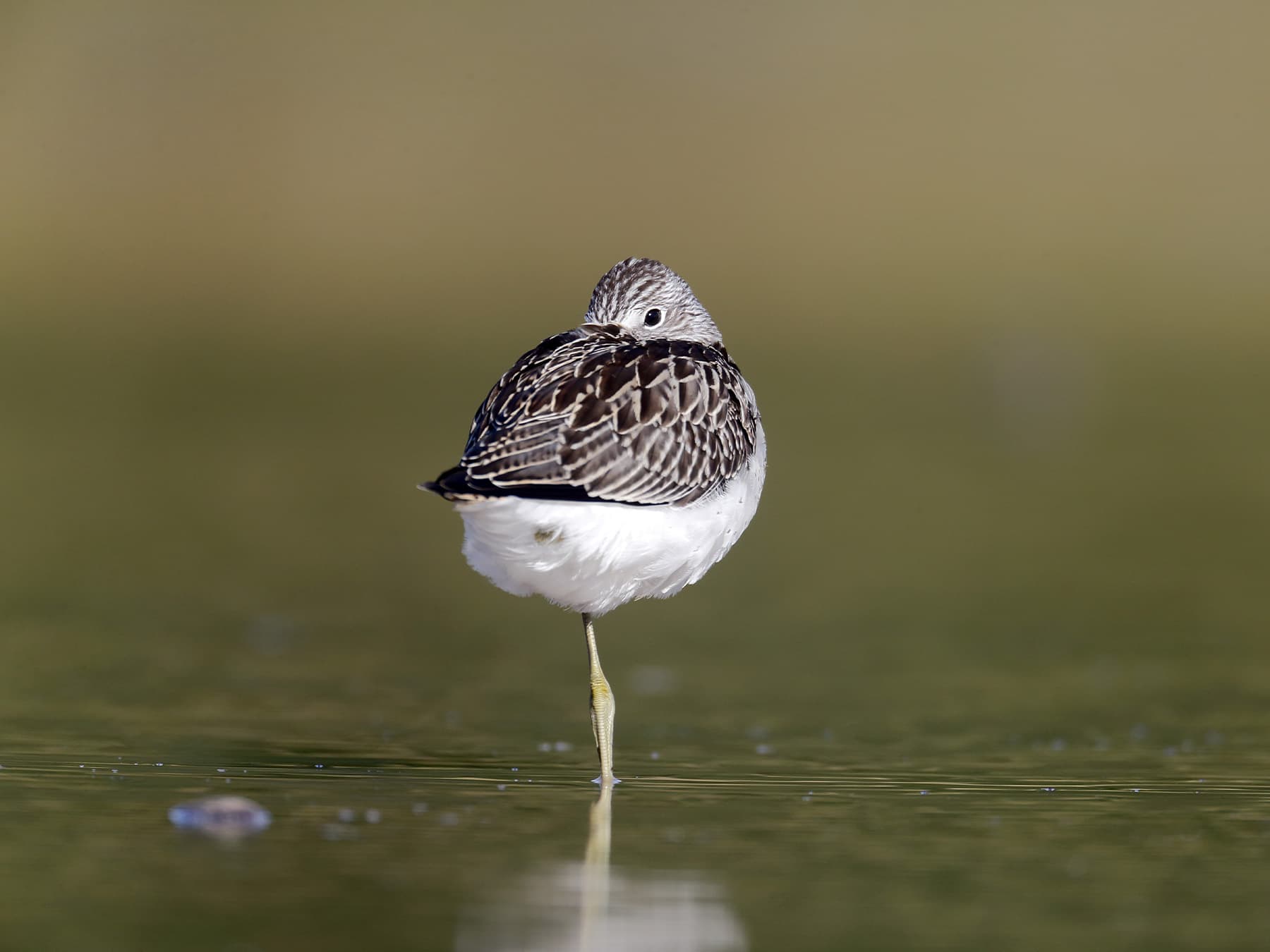
Greenshanks are active both at night and during the day, feeding on shorelines depending on tide patterns rather than daylight. They roost communally in shallow water, with their heads tucked into their wings.
Lifespan and predators
How long do Greenshanks live?
The average life expectancy for greenshanks is around 9 years, although some individuals do live much longer. From ringing records, the oldest redshank reached 24 years and 5 months.
Breeding is thought to occur for the first time at two years of age, although some year-old birds arrive on breeding grounds in the spring the year after hatching.
What are the predators of Greenshanks?
Foxes, badgers and birds of prey are among the leading predators of greenshanks, and corvids raid nests for young birds and unhatched eggs.
Are Greenshanks protected?
Greenshanks in the UK are protected as Schedule I birds under the Wildlife and Countryside Act, 1981. This legislation makes it illegal to disturb nesting birds or their eggs and young, as well as it is an offence to kill, injure or take a greenshank into captivity.
Are Greenshanks endangered?
Across Europe and their wider global range, greenshanks are considered a species of least concern and are widespread and locally common. In the UK they have Amber status on the British Birds of Conservation Concern list, due to breeding being limited to a small geographic area.
Conservation
While the Greenshank is currently listed as Least Concern, it faces threats from habitat loss due to coastal development and climate change. Conservation efforts focus on protecting key wetland habitats along their migration routes and in breeding areas.
More photos
4 photos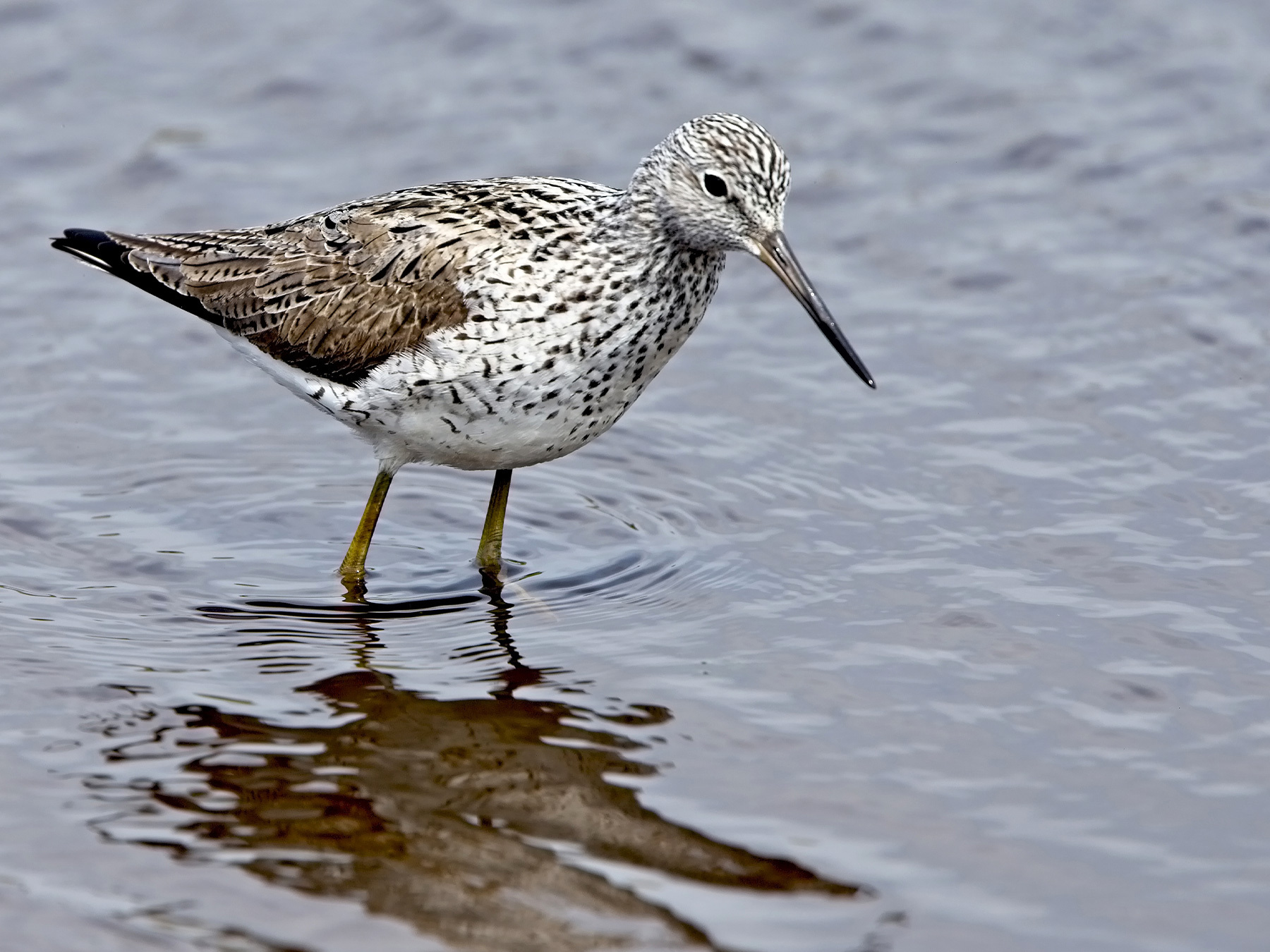
Quick facts
- Length
- 30–35 cm
- Wingspan
- 55–65 cm
- Weight
- 130–260 g
- Lifespan
- 10–15 years
- Family
- Sandpipers & Snipes
- Migration
- Long-distance Migrant
- Global status (IUCN)
- Least Concern
- World population
- 440,000 - 1,500,000 mature individuals
- Population trend
- Stable
- Also called
- Common Greenshank
- Scientific name
- Tringa nebularia
Questions
1What’s the difference between a Greenshank and Green Sandpiper?
Greenshanks and green sandpipers are similar in appearance and may be easily confused. A few key features enable us to tell them apart, including the greenshank’s slightly upcurved bill, which contrasts with the slightly shorter, downturned bill of a green sandpiper.
Greenshanks are generally longer, slimmer and more elegant than green sandpipers, and have more white on their throat, while green sandpipers are stockier and their face and throat are more grey than white.
Sources
3- 1BirdLife International. 2016. Tringa nebularia. The IUCN Red List of Threatened Species 2016: e.T22693220A86684205. Source (opens in a new tab)
- 2BirdLife International, Wetlands International (2015)
- 3Wetlands International (2015)

Checked by
Nathan Cope, founder and editor
Nathan founded Birdfact and leads its writers and contributors in the UK, the US and Canada. He has watched and studied birds for more than ten years, and checks every article and species guide before it’s published.