


Common Sandpiper
Eurasian Sandpiper · Actitis hypoleucos
By the Birdfact teamChecked by Nathan Cope
On this page14 sections
How to recognise it
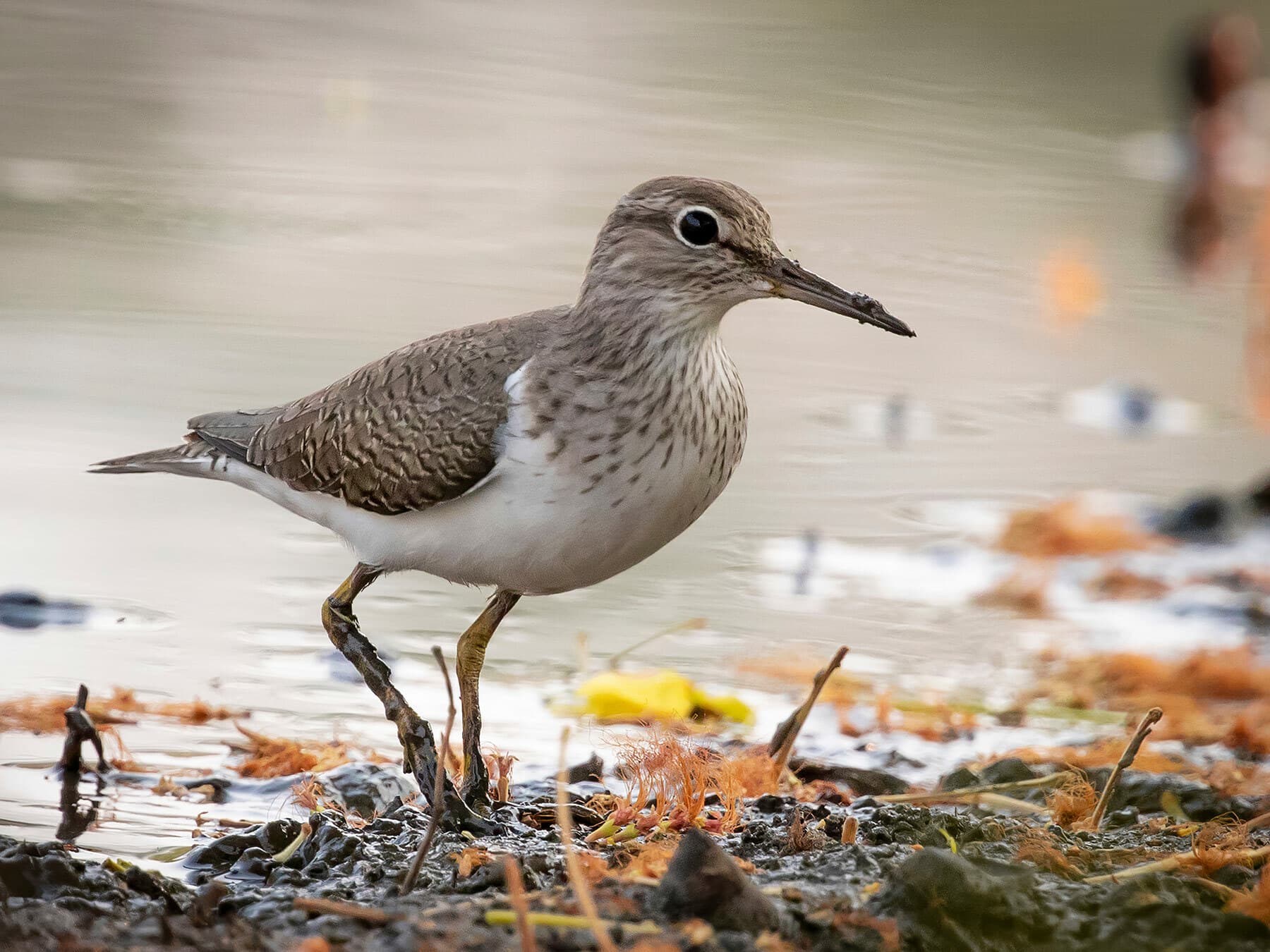
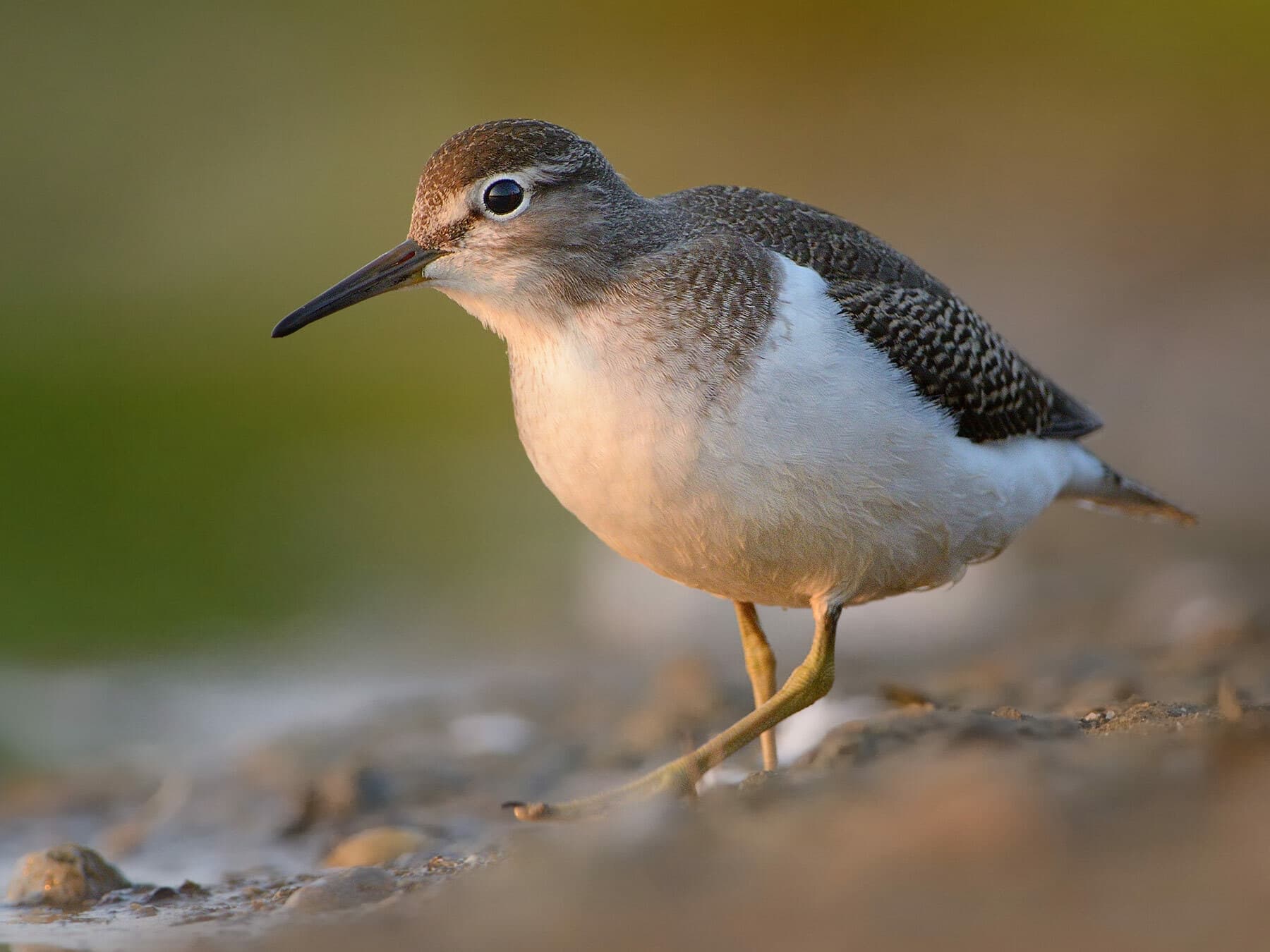
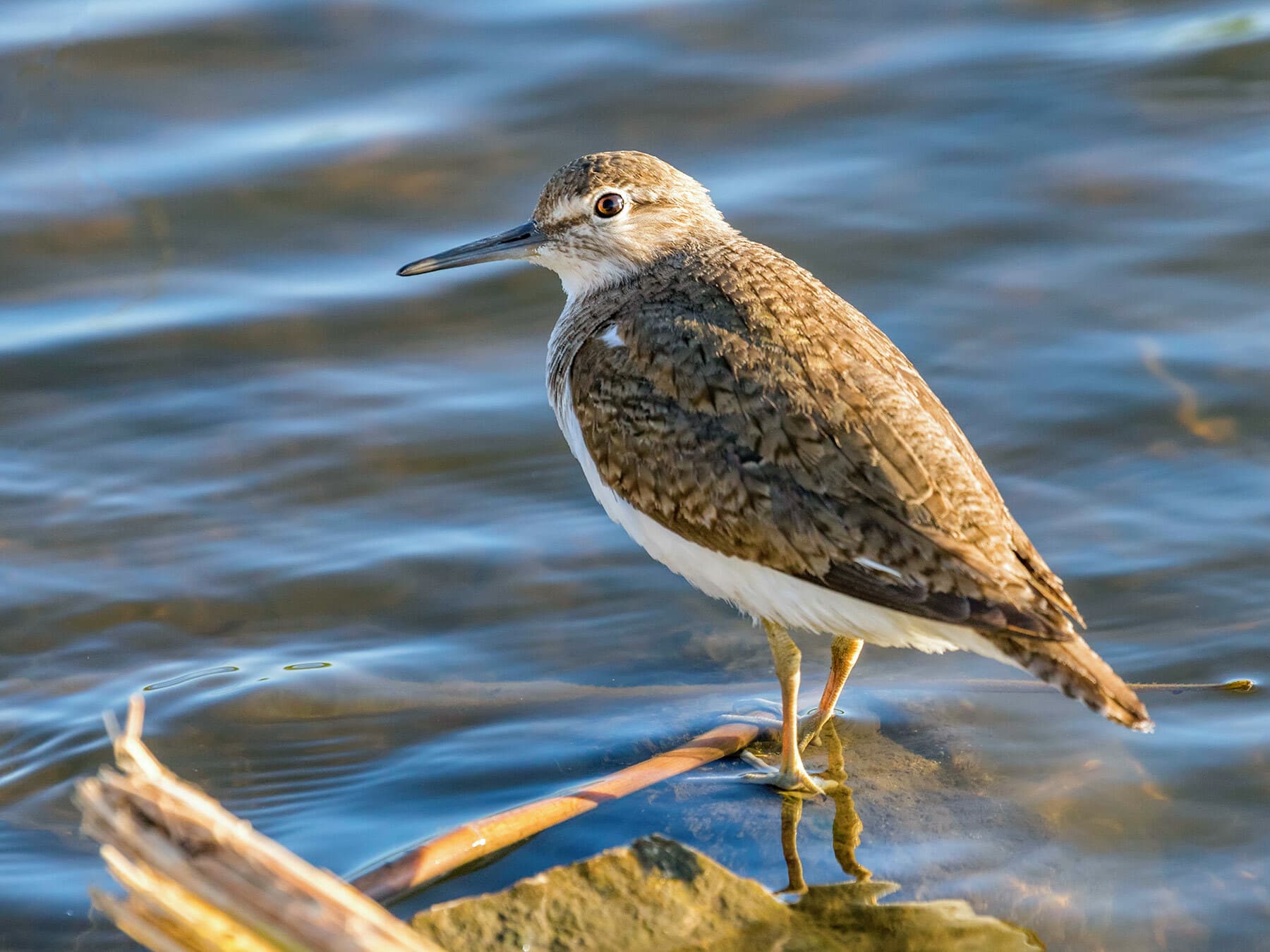
The Common Sandpiper displays a brown upperside with a distinctive white underside. Its back and wings have a mottled brown pattern, while the breast has fine brown streaks. The bird has a medium-length, straight bill and olive-green legs.
There is little difference between males and females. Juveniles resemble adults but have buff-tipped wing coverts and a more barred appearance on the upperparts.
Its size
Adults- Length
- 18–20 cm
- Wingspan
- 32–35 cm
- Weight
- 40–60 g
Its song and calls
A loud, high pitched and lengthened ‘tew’ sound often repeated in bursts of three, identifies the common sandpiper.
- Song0:00 / 0:42
Recorded in South Yorkshire, England · May 2025
- Call0:00 / 0:25
Recorded in Normandie, France · August 2023
When and where to see it
OctoberLeaving
Most recorded in October
- 1. Devon0.28%
- 2. Carlow0.23%
- 3. Belfast0.22%
- 4. Ceredigion0.20%
- 5. Flintshire0.19%
Each dot is a county, state or province: the bigger and darker, the larger the bird’s share of that place’s bird records that month. Grey dots: no regular records. The ringed point is the centre of the bird’s records this month; the arrow shows how it moved since last month, and the dashed loop its path through the year. “Arrivals” colours places where it becomes regular this month (orange) or is in its last regular month (grey). GBIF eBird Observation Dataset, 2019–2024. Map data: Natural Earth, US Census Bureau; place centres © OpenStreetMap contributors.
In your area
See when the Common Sandpiper is recorded in your county, state or province.
How often the Common Sandpiper turns up in the UK and Ireland through the year, from birdwatchers' records.
United Kingdom
Summer visitor · regularly Apr–Nov · most records in August
Ireland
Summer visitor · all year · most records in July
Show as a table
| Month | United Kingdom | Ireland |
|---|---|---|
| January | 0.026% | 0.032% (regular) |
| February | 0.020% | 0.054% (regular) |
| March | 0.017% | 0.025% (regular) |
| April | 0.19% (regular) | 0.15% (regular) |
| May | 0.27% (regular) | 0.14% (regular) |
| June | 0.16% (regular) | 0.20% (regular) |
| July | 0.48% (regular) | 0.47% (regular) |
| August | 0.57% (regular) | 0.37% (regular) |
| September | 0.33% (regular) | 0.12% (regular) |
| October | 0.048% (regular) | 0.042% (regular) |
| November | 0.029% (regular) | 0.040% (regular) |
| December | 0.027% | 0.031% (regular) |
Recorded regularly in
Worldwide: recorded regularly in 153 countries
Countries where it was recorded in at least 3 of the 6 years 2019–2024. Linked countries have their own bird list.
Europe (44)
- Åland Islands
- Albania
- Austria
- Belarus
- Belgium
- Bosnia & Herzegovina
- Bulgaria
- Croatia
- Czechia
- Denmark
- Estonia
- Finland
- France
- Germany
- Gibraltar
- Greece
- Guernsey
- Hungary
- Ireland
- Isle of Man
- Italy
- Jersey
- Kosovo
- Latvia
- Lithuania
- Luxembourg
- Malta
- Moldova
- Montenegro
- Netherlands
- North Macedonia
- Norway
- Poland
- Portugal
- Romania
- Russia
- Serbia
- Slovakia
- Slovenia
- Spain
- Sweden
- Switzerland
- Ukraine
- United Kingdom
Africa (53)
- Algeria
- Angola
- Benin
- Botswana
- Burkina Faso
- Burundi
- Cameroon
- Cape Verde
- Central African Republic
- Chad
- Comoros
- Congo - Brazzaville
- Congo - Kinshasa
- Côte d’Ivoire
- Djibouti
- Egypt
- Equatorial Guinea
- Eswatini
- Ethiopia
- Gabon
- Gambia
- Ghana
- Guinea
- Guinea-Bissau
- Kenya
- Liberia
- Libya
- Madagascar
- Malawi
- Mali
- Mauritania
- Mauritius
- Mayotte
- Morocco
- Mozambique
- Namibia
- Nigeria
- Réunion
- Rwanda
- São Tomé & Príncipe
- Senegal
- Seychelles
- Sierra Leone
- Somalia
- South Africa
- Sudan
- Tanzania
- Togo
- Tunisia
- Uganda
- Western Sahara
- Zambia
- Zimbabwe
Asia (48)
- Armenia
- Azerbaijan
- Bahrain
- Bangladesh
- Bhutan
- British Indian Ocean Territory
- Brunei
- Cambodia
- China
- Cyprus
- Georgia
- Hong Kong SAR China
- India
- Indonesia
- Iran
- Iraq
- Israel
- Japan
- Jordan
- Kazakhstan
- Kuwait
- Kyrgyzstan
- Laos
- Lebanon
- Macao SAR China
- Malaysia
- Maldives
- Mongolia
- Myanmar (Burma)
- Nepal
- Oman
- Pakistan
- Palestinian Territories
- Philippines
- Qatar
- Saudi Arabia
- Singapore
- South Korea
- Sri Lanka
- Taiwan
- Tajikistan
- Thailand
- Timor-Leste
- Turkey
- United Arab Emirates
- Uzbekistan
- Vietnam
- Yemen
Oceania (8)
- Australia
- Christmas Island
- Cocos (Keeling) Islands
- Guam
- Northern Mariana Islands
- Palau
- Papua New Guinea
- Solomon Islands
Data: EOD – eBird Observation Dataset (Cornell Lab of Ornithology), accessed via GBIF.org, CC BY 4.0. Records from 2019–2024, aggregated and filtered by Birdfact. How these lists are made
The common sandpiper is an early migrant to the UK arriving in late March and early April. Whilst many remain here and breed, others passage through from northern Europe en route to West Africa. A small number winter along our south coast and an even smaller number are permanent residents around lakes and rivers in the north west of England. Whilst those passing through en route to warmer climes will often choose estuaries or rocky sea shores to rest and feed, these birds normally prefer fresh water and will select fast-flowing riverside locations and lakes/lochs for their nesting and feeding sites. Those birds that come here to breed will depart from late June through to early October.
Signs and Spotting tips
The unmistakable bobbing and swinging motion coupled with its oval body shape, which is accentuated as it forages for food at the water’s edge, helps to positively identify this bird. They are rarely spotted in large groups and are unique from other waders with their distinctive under wing brown/grey and white wing bars. They can often be seen flying low over the water
What it eats
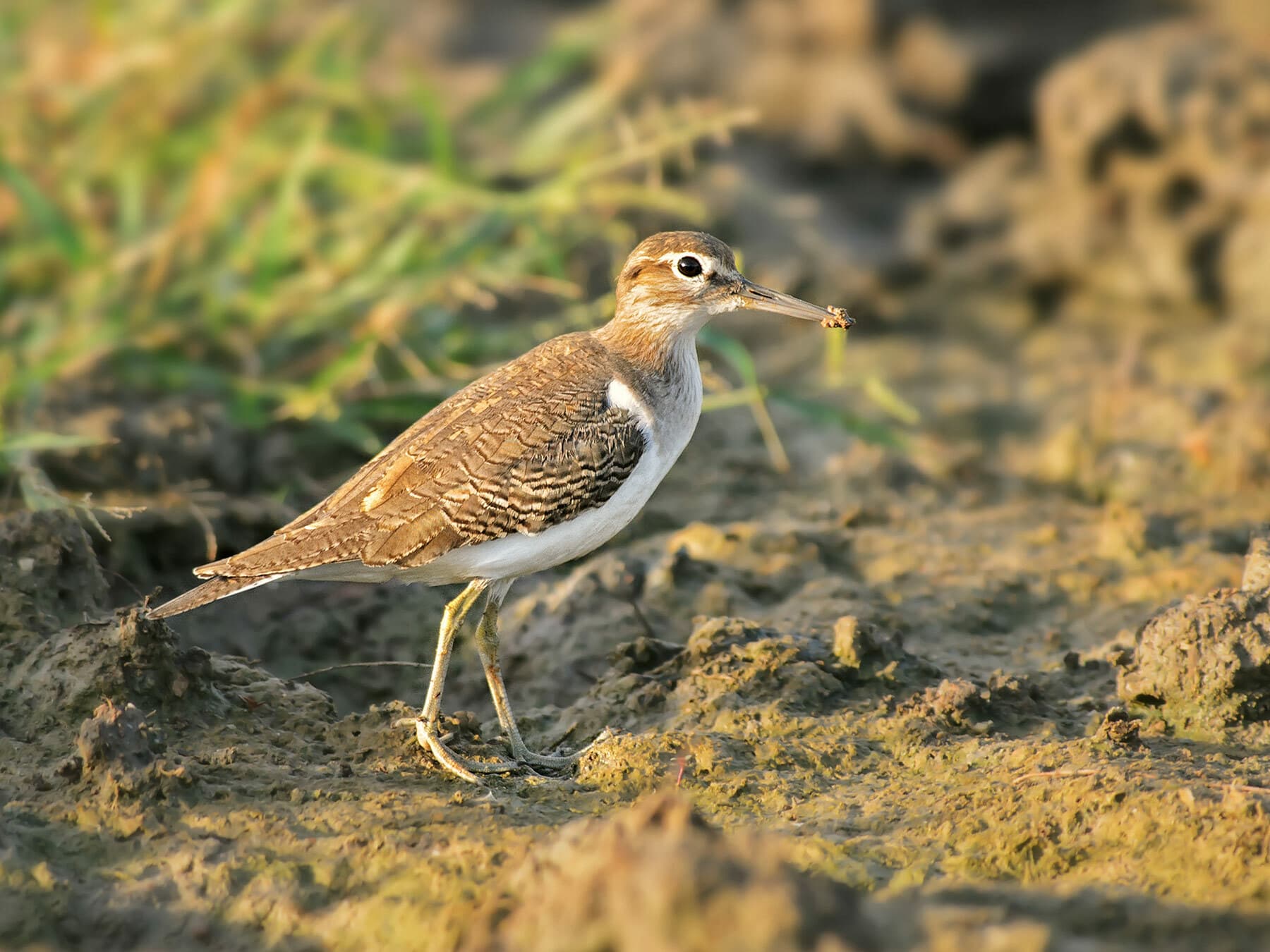
The diet of the common sandpiper is mainly confined to molluscs, insects and worms which it catches whilst foraging along the water’s edge in a lolling motion, swinging its tail up and down as it goes.
Nesting and breeding
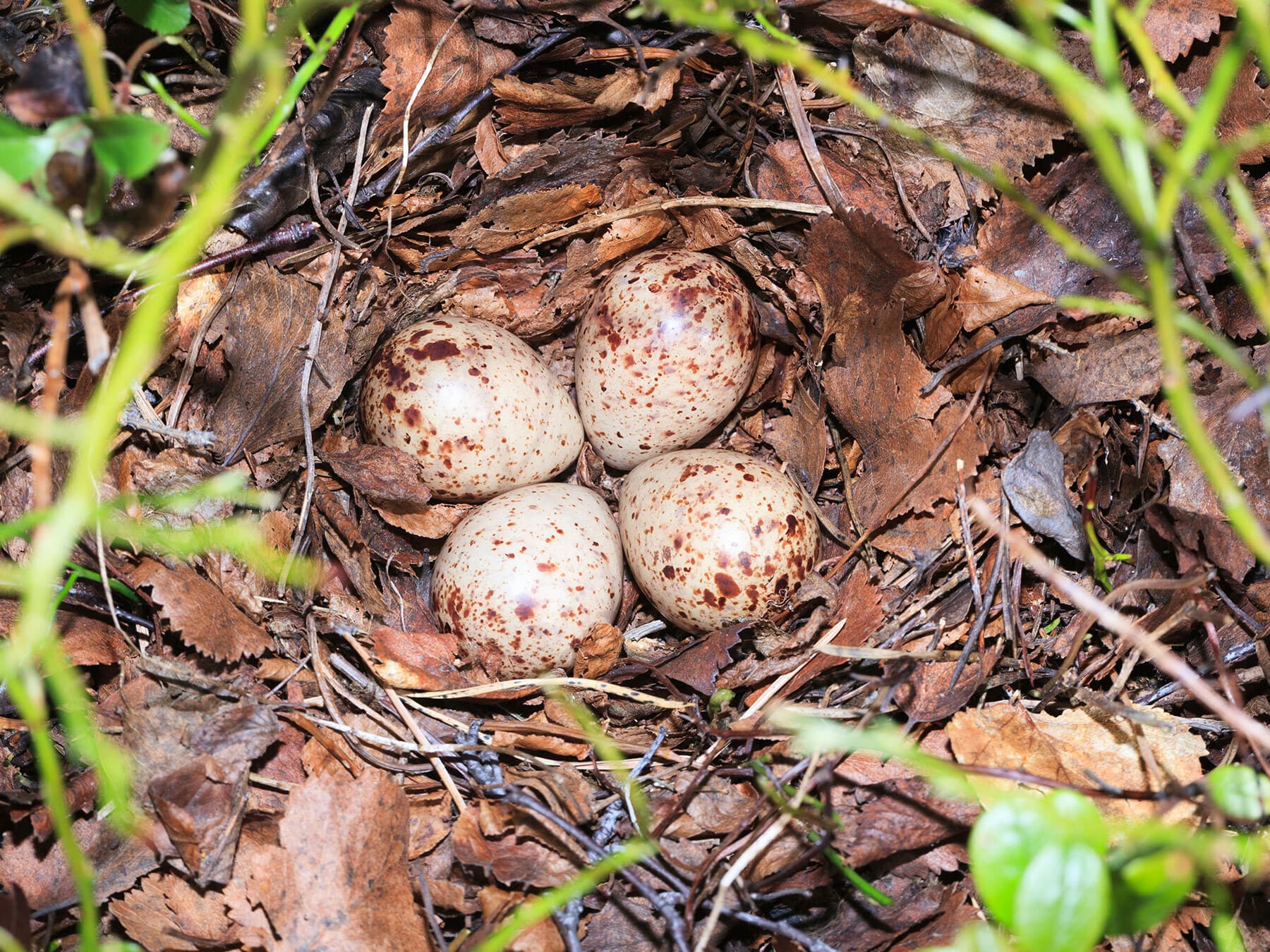
Nesting generally takes place in grass lined scrapes or on grassy banks where, between the months of April through to July, one clutch of up to 4 eggs is laid and incubated by both parents.
Behaviour
Lifespan and predators
The common sandpiper has a life expectancy of up to ten years.
Conservation
While listed as Least Concern globally, Common Sandpipers face threats from habitat loss and degradation. Conservation efforts focus on protecting wetlands and coastal areas, particularly their breeding grounds in northern Europe and wintering sites in Africa and Asia.
What does a Common Sandpiper look like?
Unlike many waders, at first glance, the common sandpiper appears to be a relatively portly bird with its round almost oval body and short legs. The bird has bright white underparts and medium brown upper parts and head which darken and become mottled during the winter. Whilst the upper chest can appear greyish in colour the sides of the chest mirror the colour of the upper body. It has a fairly long dark tail edged in white and a single white wing bar above. The underside of the wing is unusually patterned with both white and brown wing bars. When the wings are folded a white crescent shaped patch is apparent on the body just in front of the wing, extending upwards. The bill is straight and dark at the tip with a pale base and its legs have a greenish hue. Strikingly there is a very pale circle in the plumage around each eye and a dark stripe, also in the plumage, which follows the line of the bill and crosses the eye. Both adults are similar although the female is slightly larger.
Similar birds
Often mistaken for
Common Sandpiper guides
1 guidesQuick facts
- Length
- 18–20 cm
- Wingspan
- 32–35 cm
- Weight
- 40–60 g
- Lifespan
- 8–10 years
- Family
- Sandpipers & Snipes
- Migration
- Long-distance Migrant
- Global status (IUCN)
- Least Concern
- World population
- 2,600,000 - 3,200,000 mature individuals
- Population trend
- Overall population is decreasing, due to habitat loss and climate change
- Also called
- Eurasian Sandpiper
- Scientific name
- Actitis hypoleucos
Sources
3- 1BirdLife International. 2016. Actitis hypoleucos. The IUCN Red List of Threatened Species 2016: e.T22693264A86678952. Source (opens in a new tab)
- 2Wetlands International (2015)
- 3Wetlands International (2015)

Checked by
Nathan Cope, founder and editor
Nathan founded Birdfact and leads its writers and contributors in the UK, the US and Canada. He has watched and studied birds for more than ten years, and checks every article and species guide before it’s published.