
Wood Sandpiper
Tringa glareola
By the Birdfact teamChecked by Nathan Cope
On this page14 sections
How to recognise it
What do Wood Sandpipers look like?
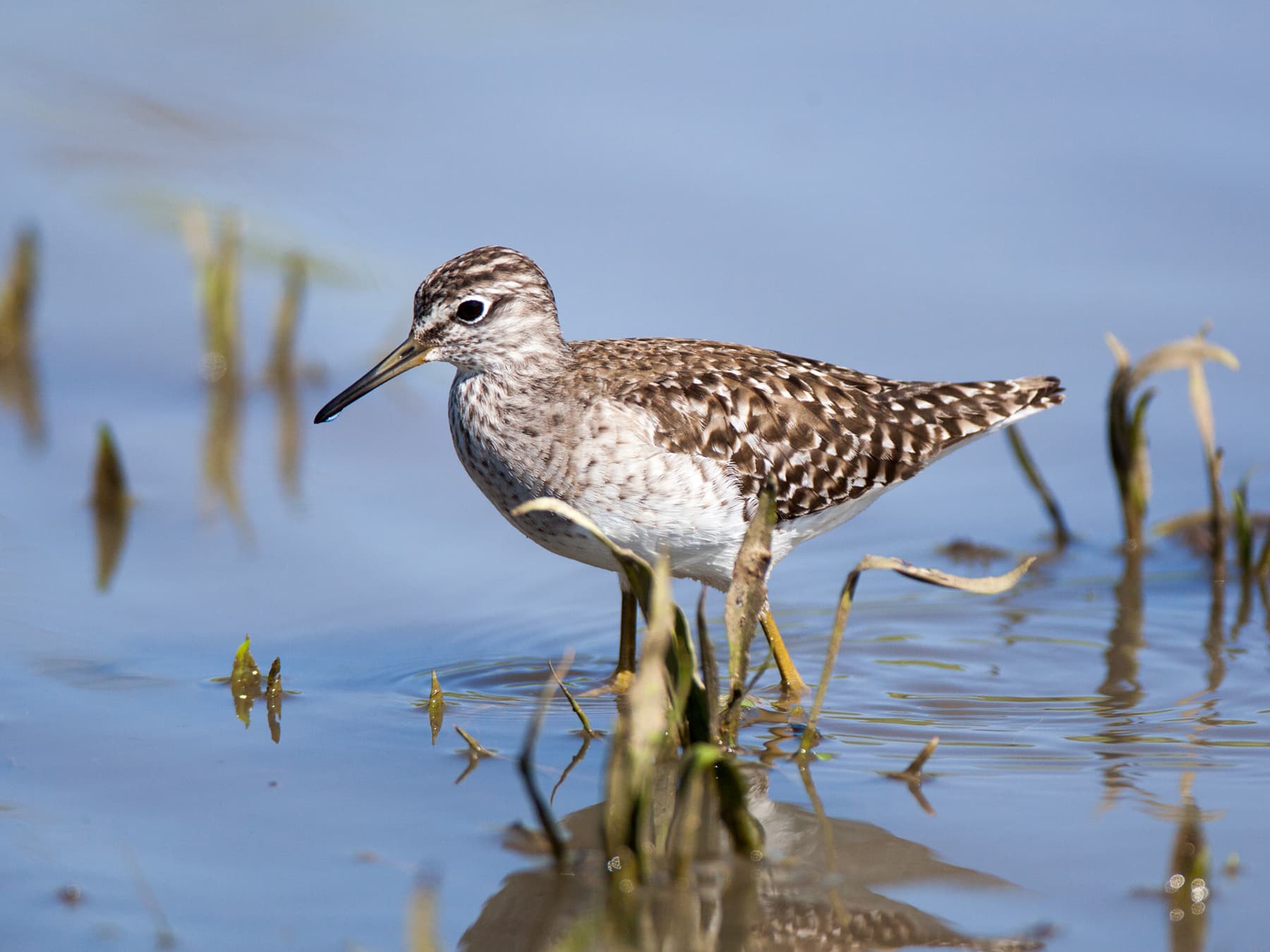
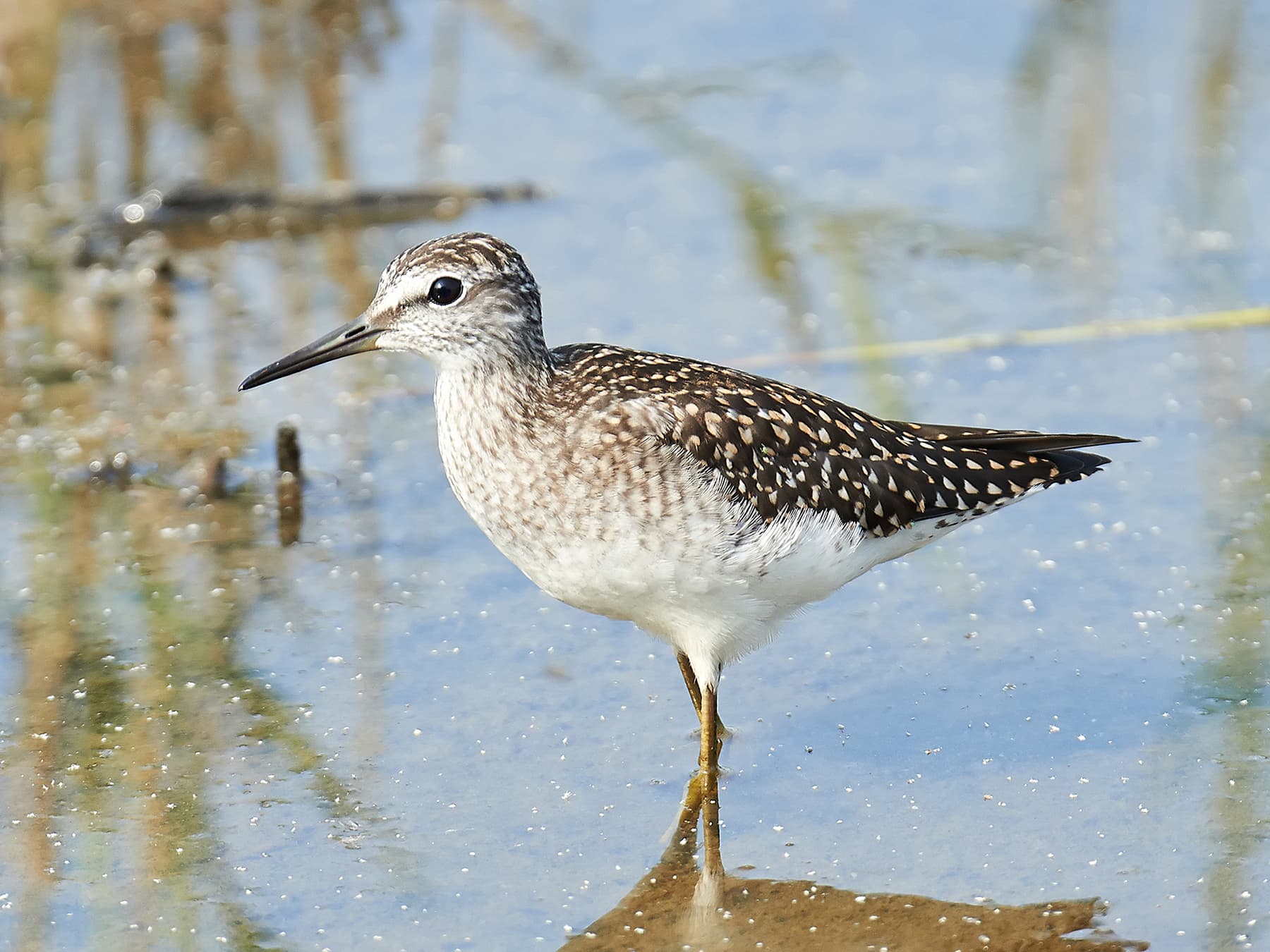
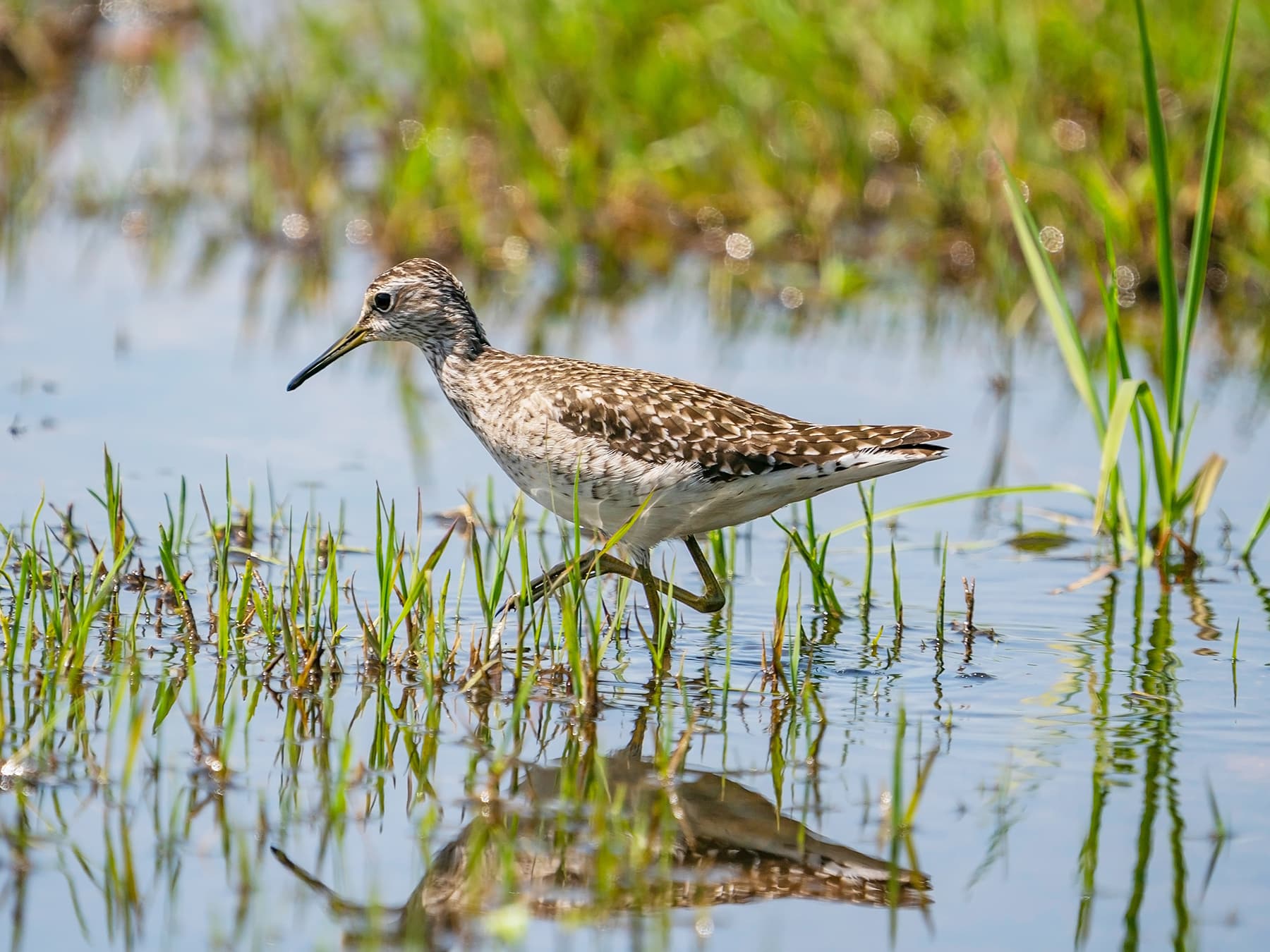
With mottled black-brown upper parts, dotted with white, and a white throat, wood sandpipers are similar in appearance to the related green sandpiper, but can be distinguished by their paler plumage and longer legs.
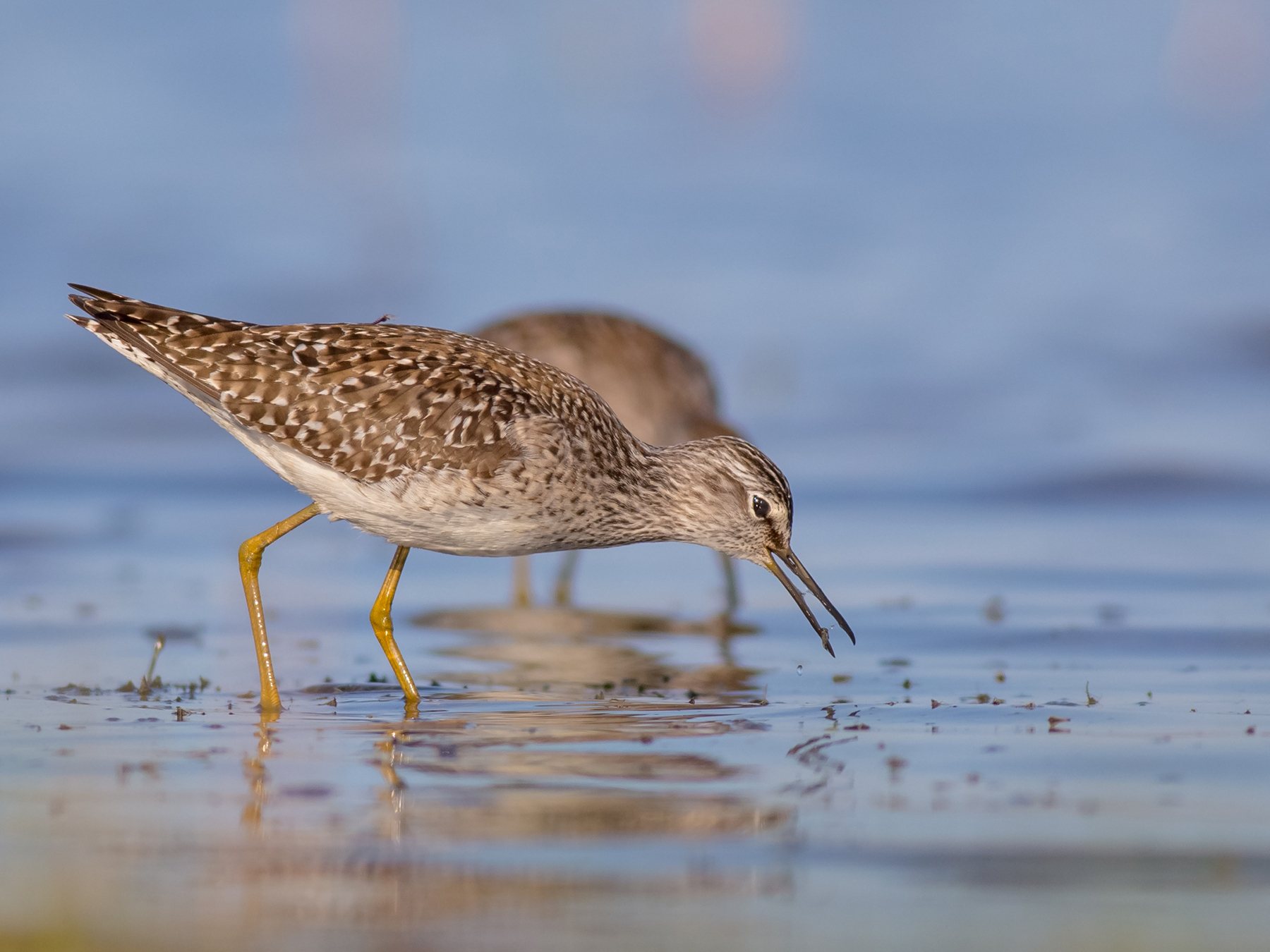
A dark brown eye stripe is topped by a paler eyebrow marking, and the iris has a pale ring. A wood sandpiper’s head, breast and neck are lightly streaked with paler greyish-brown. Their long slender legs are yellowish-green and their dark yellow bill is tipped with grey.
Females and males are alike in plumage, although females are slightly larger.
Outside of the breeding season, both sexes become less conspicuous, with upperparts becoming browner, and underparts and breast is washed with grey . Female wood sandpipers develop their breeding plumage slightly earlier in the season, which can be used as a key way to determine between the sexes.
Juvenile wood sandpipers are similar to mature birds, although their colouring is a slightly warmer, richer shade of brown, spotted with buff markings rather than white. The breast of younger birds is more grey than white.
How big are Wood Sandpipers?
Wood sandpipers are the smallest members of the shank family of long-legged wading birds.
Females are slightly larger than males, a difference that is particularly obvious during the breeding season.
- Length: 19 cm to 21 cm (7.5 in to 8.3 in)
- Wingspan: 36 cm to 40cm (14.2 in to 15.7 in)
- Weight: 50 g to 90 g (1.8 oz to 3.2 oz)
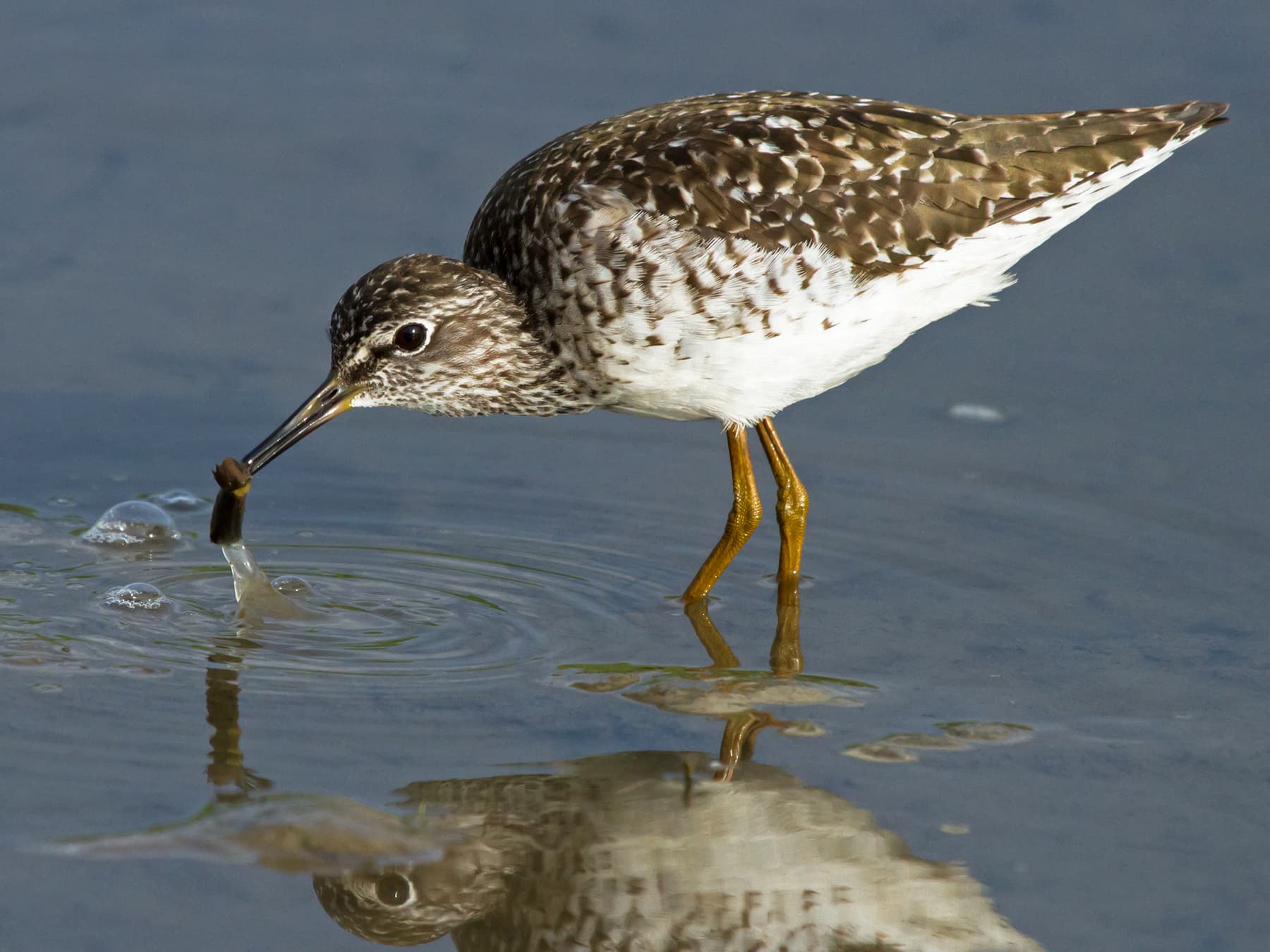
Its size
Adults- Length
- 19–21 cm
- Wingspan
- 36–40 cm
- Weight
- 50–90 g
Its song and calls
What sound does a Wood Sandpiper make?
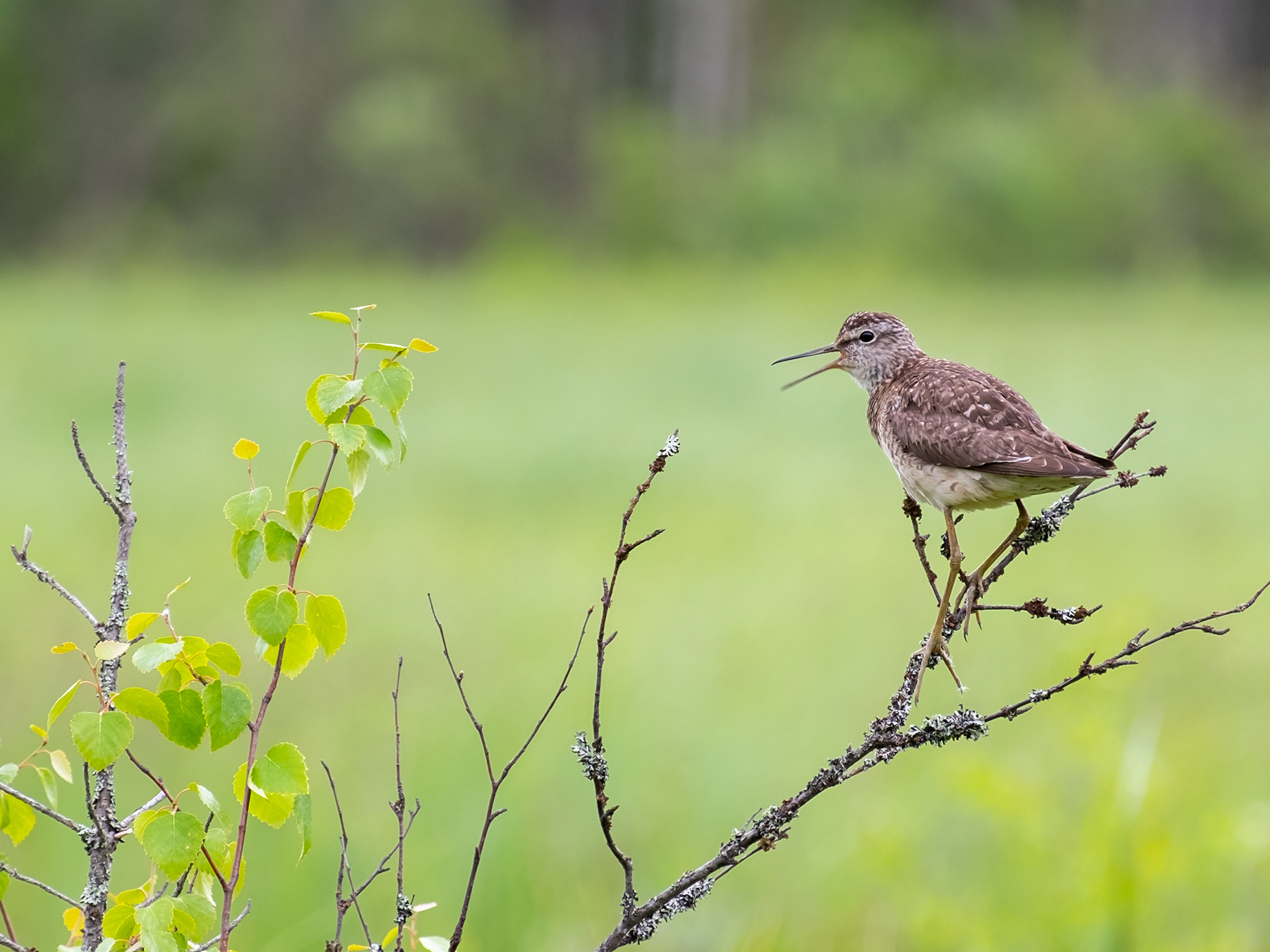
Flight calls of wood sandpipers are loud and repetitive, with the ‘deele’ and ‘tweedly’ notes carrying across long distances both in the day and during the night.
Common calls heard on the ground include a shrill ‘chiff-chiff-chiff’ cry.
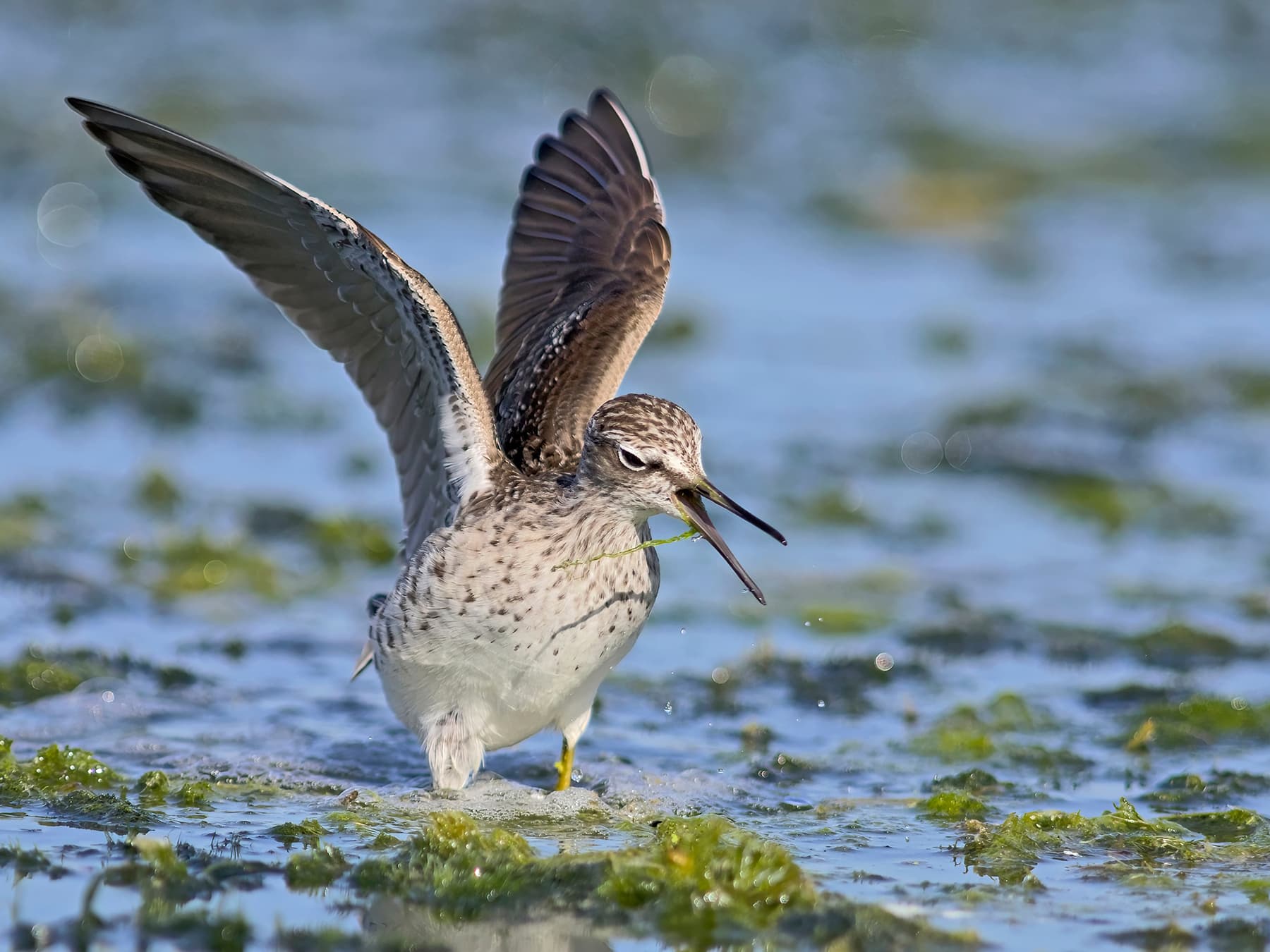
- Song and calls0:00 / 0:05
Recorded in Normandy, France · April 2026
- Call0:00 / 0:10
Recorded in Normandie, France · May 2023
When and where to see it
OctoberMostly absent
Most recorded in October
- 1. Wicklowunder 0.1%
- 2. Gloucestershireunder 0.1%
- 3. Rutlandunder 0.1%
- 4. Argyll and Buteunder 0.1%
- 5. Warwickshireunder 0.1%
Each dot is a county, state or province: the bigger and darker, the larger the bird’s share of that place’s bird records that month. Grey dots: no regular records. The ringed point is the centre of the bird’s records this month; the arrow shows how it moved since last month, and the dashed loop its path through the year. “Arrivals” colours places where it becomes regular this month (orange) or is in its last regular month (grey). GBIF eBird Observation Dataset, 2019–2024. Map data: Natural Earth, US Census Bureau; place centres © OpenStreetMap contributors.
In your area
See when the Wood Sandpiper is recorded in your county, state or province.
How often the Wood Sandpiper turns up in the UK and Ireland through the year, from birdwatchers' records.
United Kingdom
Summer visitor · regularly Apr–Sep · most records in August
Ireland
Passage migrant · regularly Jul–Oct · most records in August
Show as a table
| Month | United Kingdom | Ireland |
|---|---|---|
| January | <0.001% | – |
| February | – | – |
| March | – | – |
| April | 0.014% (regular) | 0.002% |
| May | 0.039% (regular) | 0.005% |
| June | 0.014% (regular) | 0.006% |
| July | 0.050% (regular) | 0.013% (regular) |
| August | 0.12% (regular) | 0.064% (regular) |
| September | 0.036% (regular) | 0.025% (regular) |
| October | 0.003% | 0.006% (regular) |
| November | 0.001% | – |
| December | <0.001% | – |
Recorded regularly in
Worldwide: recorded regularly in 132 countries
Countries where it was recorded in at least 3 of the 6 years 2019–2024. Linked countries have their own bird list.
Europe (42)
- Åland Islands
- Albania
- Austria
- Belarus
- Belgium
- Bosnia & Herzegovina
- Bulgaria
- Croatia
- Czechia
- Denmark
- Estonia
- Finland
- France
- Germany
- Greece
- Hungary
- Iceland
- Ireland
- Isle of Man
- Italy
- Kosovo
- Latvia
- Lithuania
- Luxembourg
- Malta
- Moldova
- Montenegro
- Netherlands
- North Macedonia
- Norway
- Poland
- Portugal
- Romania
- Russia
- Serbia
- Slovakia
- Slovenia
- Spain
- Sweden
- Switzerland
- Ukraine
- United Kingdom
Africa (39)
- Algeria
- Angola
- Benin
- Botswana
- Burkina Faso
- Burundi
- Cape Verde
- Central African Republic
- Chad
- Congo - Brazzaville
- Congo - Kinshasa
- Djibouti
- Egypt
- Eswatini
- Ethiopia
- Gabon
- Gambia
- Ghana
- Guinea-Bissau
- Kenya
- Libya
- Madagascar
- Malawi
- Mauritania
- Morocco
- Mozambique
- Namibia
- Nigeria
- Rwanda
- São Tomé & Príncipe
- Senegal
- South Africa
- Sudan
- Tanzania
- Togo
- Tunisia
- Uganda
- Zambia
- Zimbabwe
Asia (46)
- Armenia
- Azerbaijan
- Bahrain
- Bangladesh
- Bhutan
- Brunei
- Cambodia
- China
- Cyprus
- Georgia
- Hong Kong SAR China
- India
- Indonesia
- Iran
- Iraq
- Israel
- Japan
- Jordan
- Kazakhstan
- Kuwait
- Kyrgyzstan
- Laos
- Lebanon
- Macao SAR China
- Malaysia
- Mongolia
- Myanmar (Burma)
- Nepal
- Oman
- Pakistan
- Palestinian Territories
- Philippines
- Qatar
- Saudi Arabia
- Singapore
- South Korea
- Sri Lanka
- Taiwan
- Tajikistan
- Thailand
- Timor-Leste
- Turkey
- United Arab Emirates
- Uzbekistan
- Vietnam
- Yemen
Data: EOD – eBird Observation Dataset (Cornell Lab of Ornithology), accessed via GBIF.org, CC BY 4.0. Records from 2019–2024, aggregated and filtered by Birdfact. How these lists are made
What is the habitat of a Wood Sandpiper?
As its name suggests, the wood sandpiper favours woodland environments, in particular boreal forest and coniferous woodlands, as well as peatlands and more open areas of swamp and marshland. Breeding wood sandpipers also thrive in scrubland and sparsely vegetated tundra landscapes.
In the non-breeding season, a woodland habitat becomes less important, with sightings more common in open marshland, paddy fields, sewage works, and along the edges of streams and lakes.
What is the range of a Wood Sandpiper?
Wood sandpipers are migratory, and have a breeding range that extends across Europe from northern Scotland in the west to Scandinavia and Finland in the north, throughout Russia to SIberia to the east, and occasionally south as far as Poland and Ukraine.
Wintering grounds are found along the banks of the Nile through Egypt and Sudan, and across the entire African continent south of the Sahara. Winter populations also head to parts of the Middle East and South and South-East Asia.
Where do Wood Sandpipers live?
The European population of breeding wood sandpipers is estimated at up to 1.4 million pairs, with the majority of these nesting in Russia (up to 1 million pairs). Finland reported an estimated 300,000 pairs in the 1980s, although numbers have since declined. Around 50,000 to 100,000 pairs breed in Sweden, with a further 20,000 to 40,000 pairs in Norway.
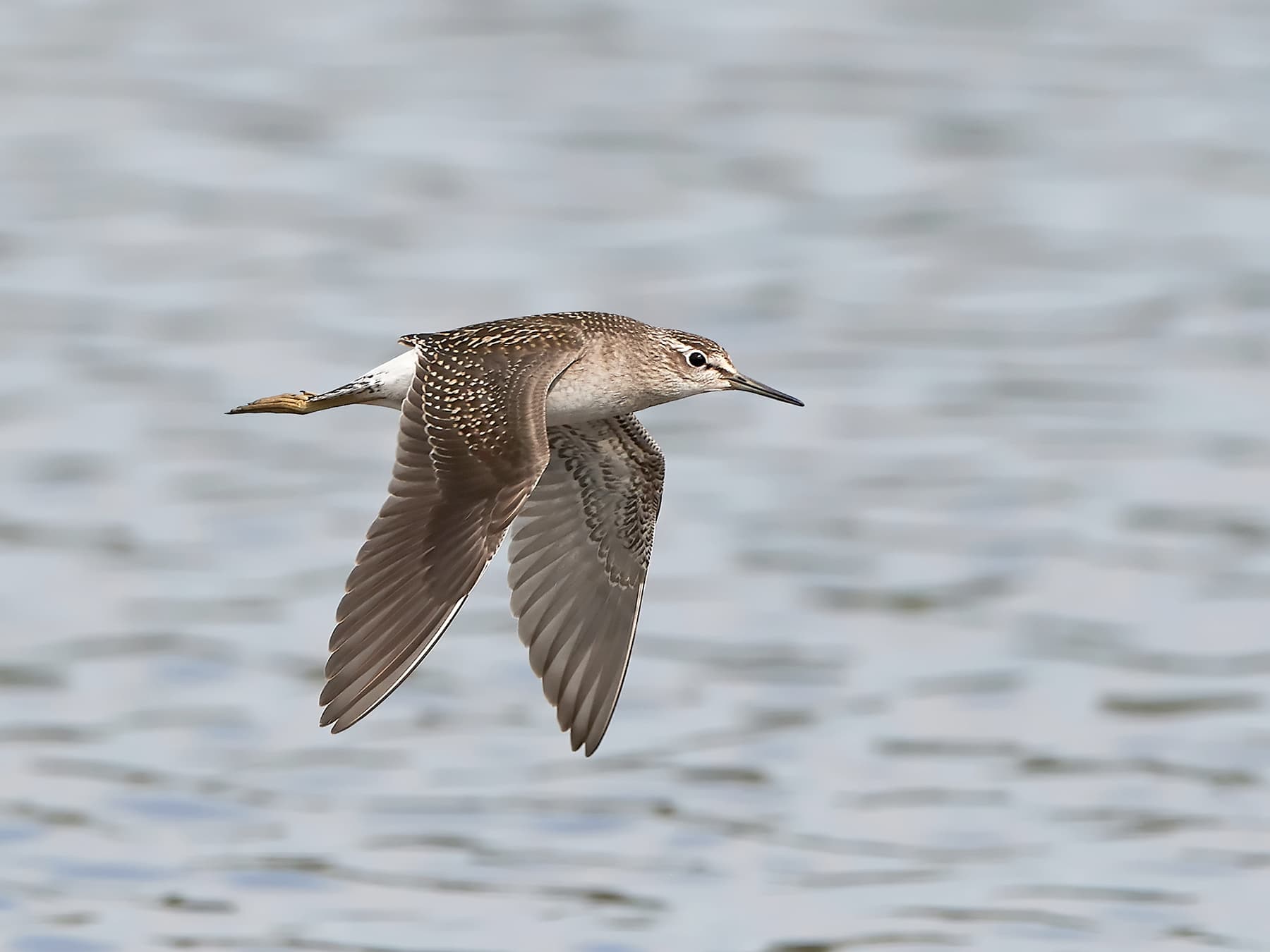
How rare are Wood Sandpipers?
Within the UK, wood sandpipers are classed as rare breeding birds and are not commonly seen during the summer.
Sightings are more common during passage, but are not regular or guaranteed, so would definitely count as exceptional occurrence.
Where can you see Wood Sandpipers in the UK?
Up to 30 pairs of wood sandpipers breed in the UK each year, but these are limited to a small area of marshy land in the western Highlands of Scotland.
Sightings during migration are far more common, and have been regularly recorded in eastern and southern England from April to May and again from September to October.
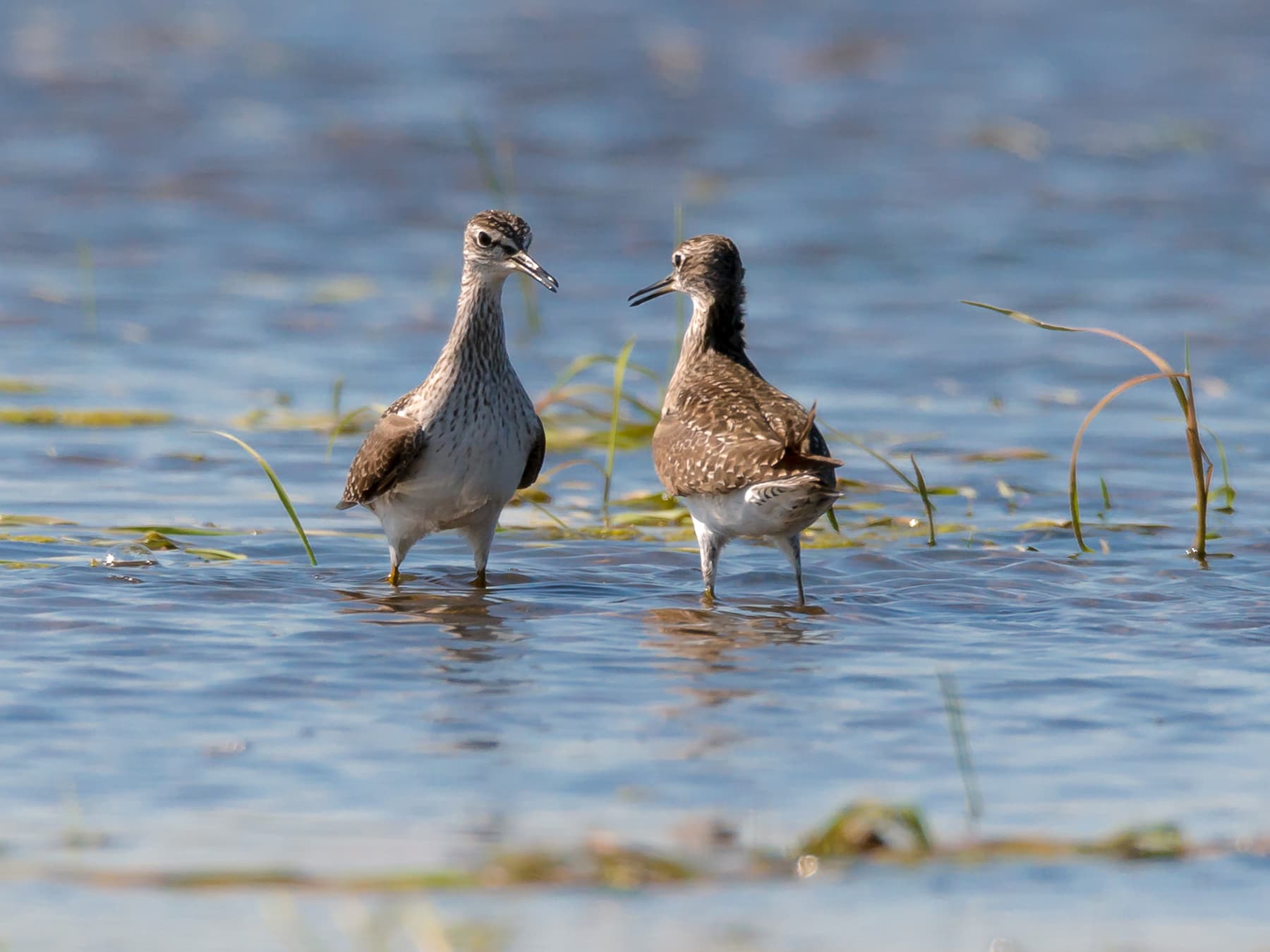
Migration
Do Wood Sandpipers migrate?
Wood sandpipers are a fully migratory species, breeding across northern Europe and Asia, before returning to wintering grounds in sub-Saharan Africa, along the River Nile in Egypt and Sudan, and across much of South and South-East Asia.
Are Wood Sandpipers native to the UK?
Some limited breeding of wood sandpipers does occur in the UK, although by autumn, pairs have departed for their wintering grounds across southern and central Africa.
No wood sandpipers are resident in Britain all year round. Passage birds may be seen in migration in southern and eastern regions during the late spring and again between August and October, but these are temporary visitors en-route to their winter territories from breeding sites in northern Europe.
Tips for seeing it
- Look for Wood Sandpipers near freshwater habitats, especially during migration.
- Listen for their distinctive 'chiff-if-if' call when in flight.
- Observe their characteristic tail-bobbing behaviour when foraging.
- In the UK, check coastal wetlands and inland reservoirs during autumn migration.
What it eats
What do Wood Sandpipers eat?
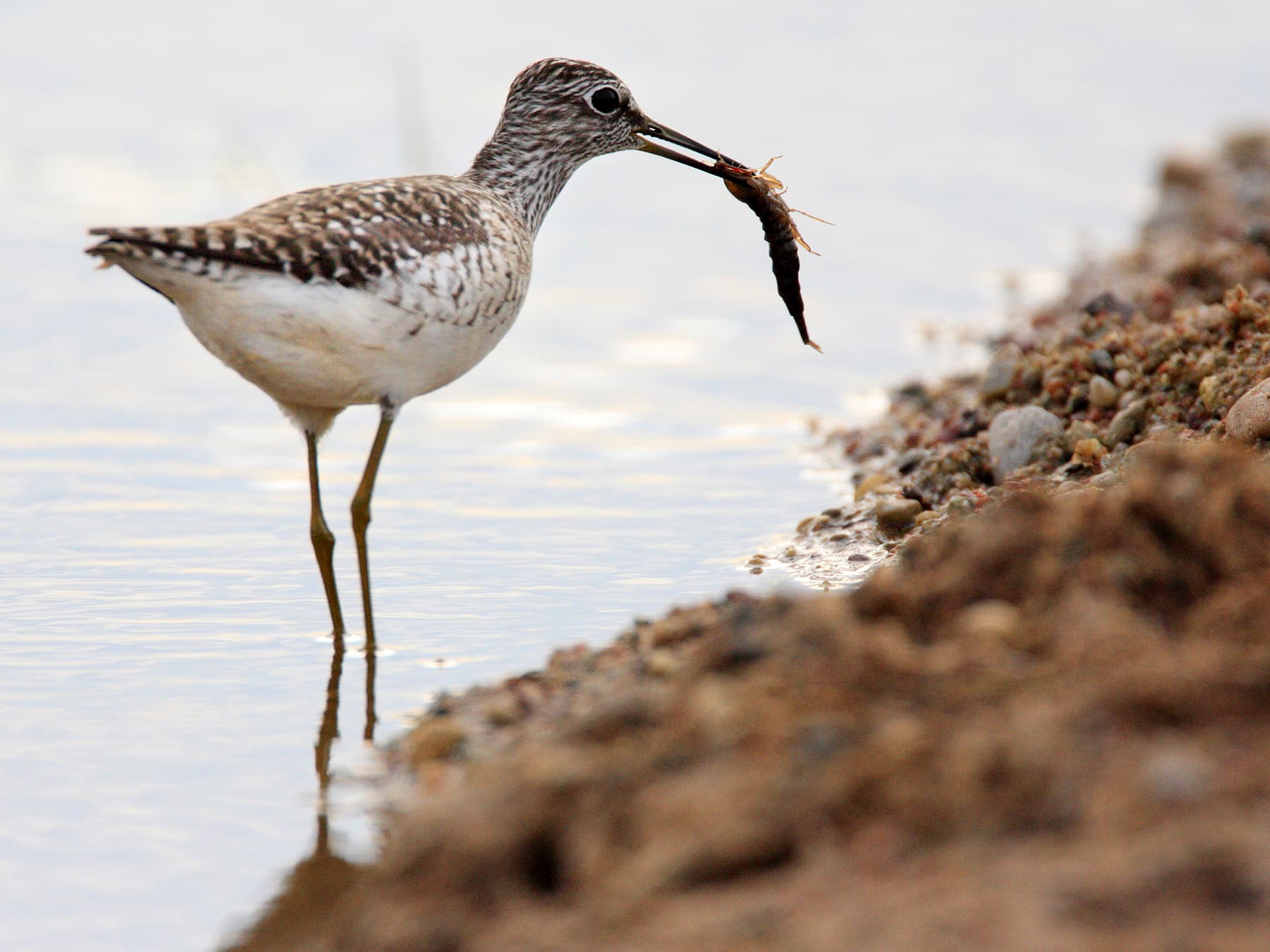
The typical diet of a wood sandpiper includes insects, worms, spiders, small fish, crustaceans and small aquatic invertebrates.
What do Wood Sandpiper chicks eat?
From a very early stage, wood sandpipers master the art of foraging for their own food, following their parents to feeding grounds and picking soft-bodied insects, larvae, spiders and worms off the earth’s surface.
Before long, they are able to eat harder-shelled crustaceans and snails as well.
Nesting and breeding
Where do Wood Sandpipers nest?
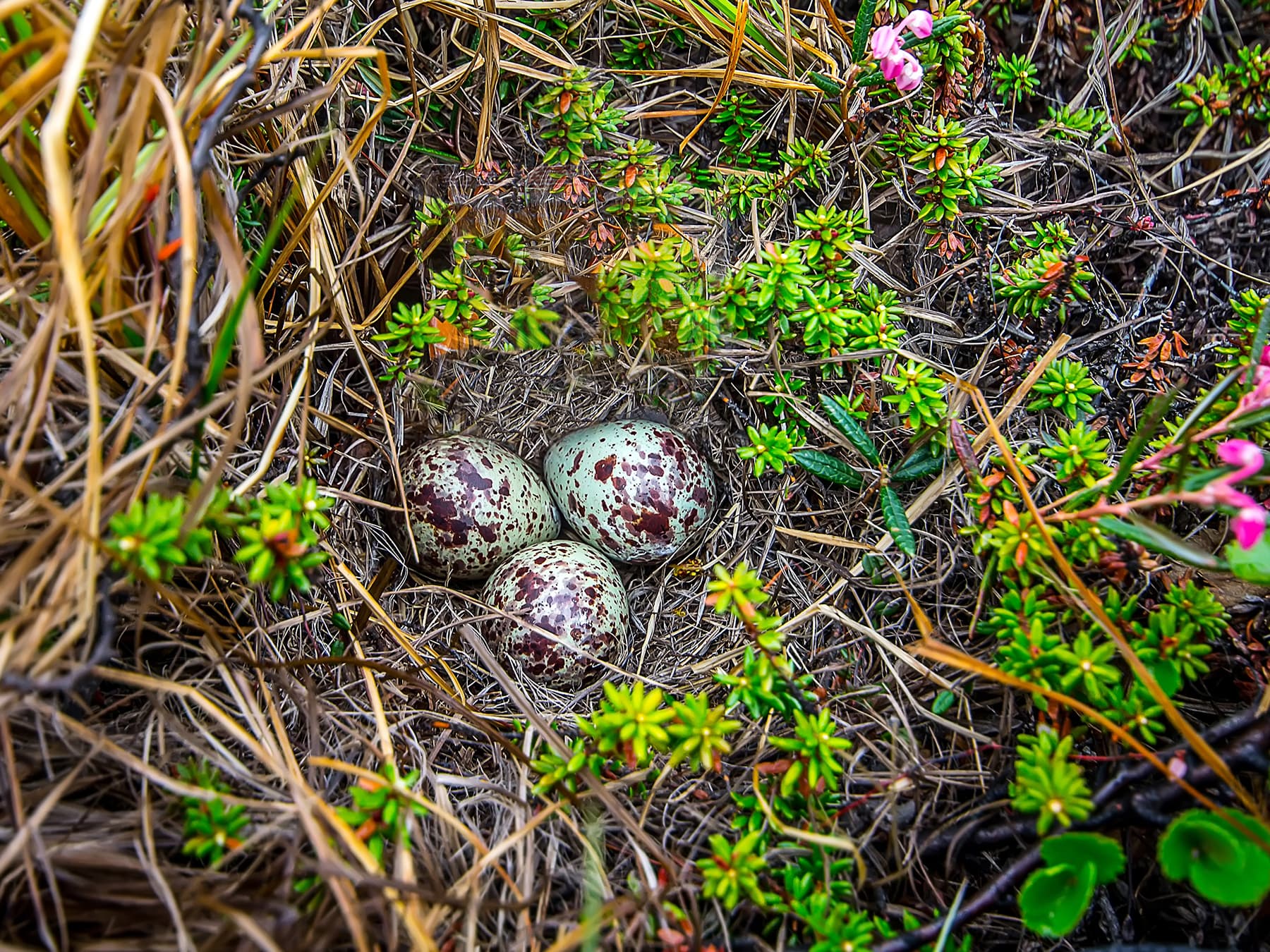
Wood sandpipers usually nest in shallow scrapes on the ground that are lined with moss, leaves and plant stems, concealed by dense vegetation.
Higher altitude nests are also common, with wood sandpipers frequently observed to reuse tree nests that have been abandoned by other species, including thrushes and fieldfares.
When do Wood Sandpipers nest?
Breeding typically takes place between May and mid-July with wood sandpipers usually raising one single brood a year. Incubation lasts for 22 to 23 days and is shared between females and males.
What do Wood Sandpiper eggs look like?
Wood sandpipers’ eggs are a pale greenish-olive colour, with brown, black or purple scrawls. They measure 38 mm by 24 mm (1.5 in by 0.9 in).
Do Wood Sandpipers mate for life?
Wood sandpipers form monogamous pair bonds for the length of a season and arrive on their breeding grounds already paired. They typically raise one brood together, with the male doing most of the parental care post-hatching. Once young have successfully fledged, pair bonds dissolve and do not last into the autumn migration.
Behaviour
Are Wood Sandpipers aggressive?
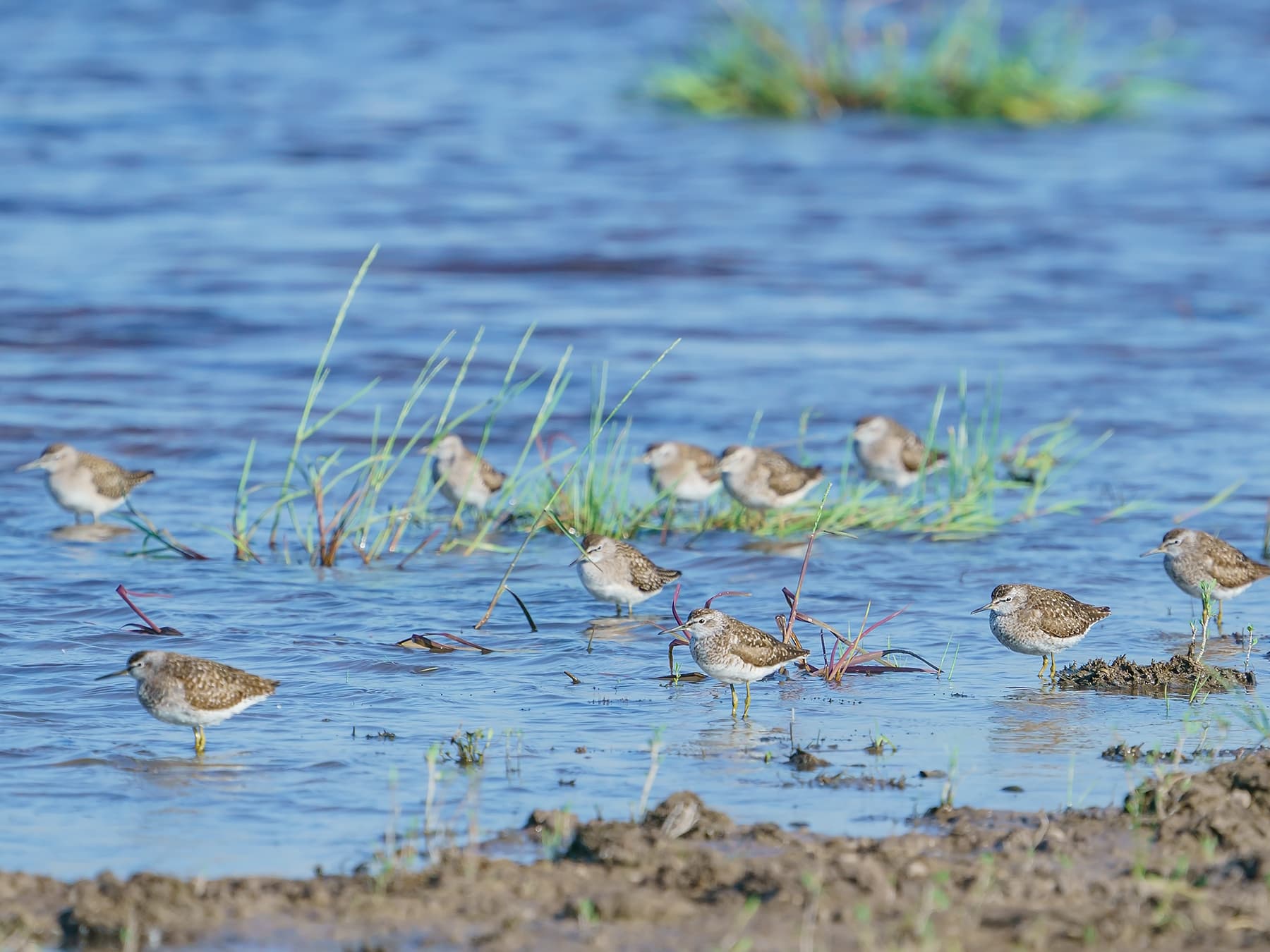
An aggressive and territorial species, wood sandpipers can frequently be seen physically defending their feeding territories against other birds of the same species, with face-offs and confrontational flight displays.
Territorial behaviour is also observed during migration when individual birds quickly establish a claim to a foraging site and do not welcome company.
Where do Wood Sandpipers sleep at night?
Overnight roosting spots of wood sandpipers include raised hillocks in flooded meadows, as well as in the low branches of trees.
Lifespan and predators
How long do Wood Sandpipers live?
The oldest recorded wood sandpiper lived to 11 years and 7 months. No reliable data is available for the average life expectancy of the species, although breeding is known to occur from one year onwards.
What are the predators of Wood Sandpipers?
Known predators of wood sandpipers include foxes, weasels, gulls, skuas, and birds of prey, in particular falcons and hawks. They are commonly observed to use a ‘broken wing’ distraction technique when predators approach to divert attention from their nest site.
Are Wood Sandpipers protected?
In the UK, wood sandpipers are designated Schedule 1 birds under the Wildlife and Countryside Act, 1981, which protects their eggs and nest sites against being destroyed or damaged, as well as making it illegal to kill, injure or capture individual birds.
Are Wood Sandpipers endangered?
Numbers of wood sandpipers have declined since the 1980s in many parts of their range, largely due to drainage of peatlands for construction and development. However, in some areas, population revivals are being noticed, due in part by conservation efforts to restore previously drained marshlands to their original state.
They are classified as Amber in the British Birds of Conservation Concern list but as a species of least concern in their wider global range.
Conservation
While the Wood Sandpiper is currently listed as Least Concern, it faces threats from habitat loss and degradation, particularly in its breeding and wintering grounds.
Conservation efforts focus on protecting wetland habitats and managing water levels in key areas.
Similar birds
Often mistaken for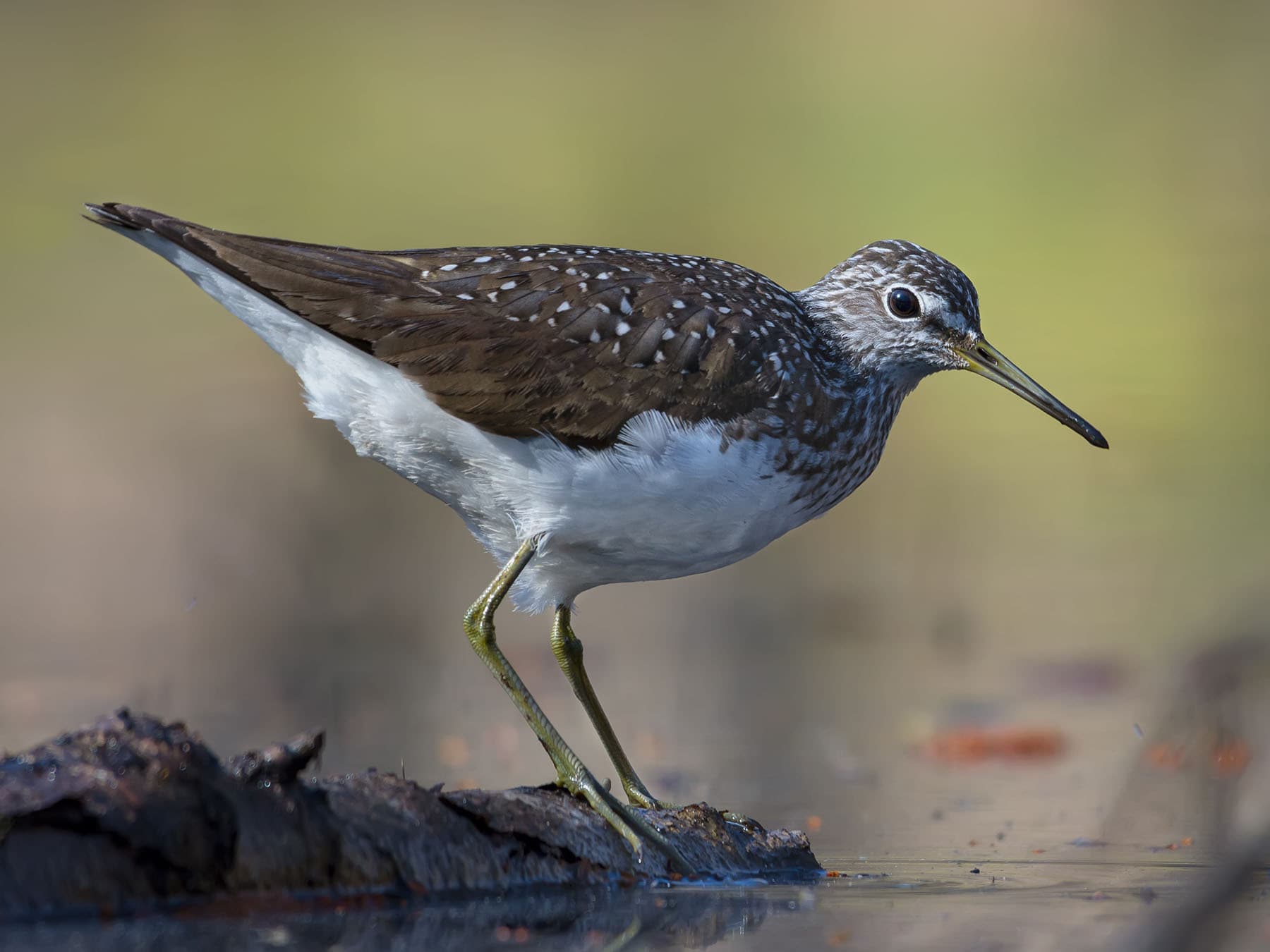
More photos
3 photos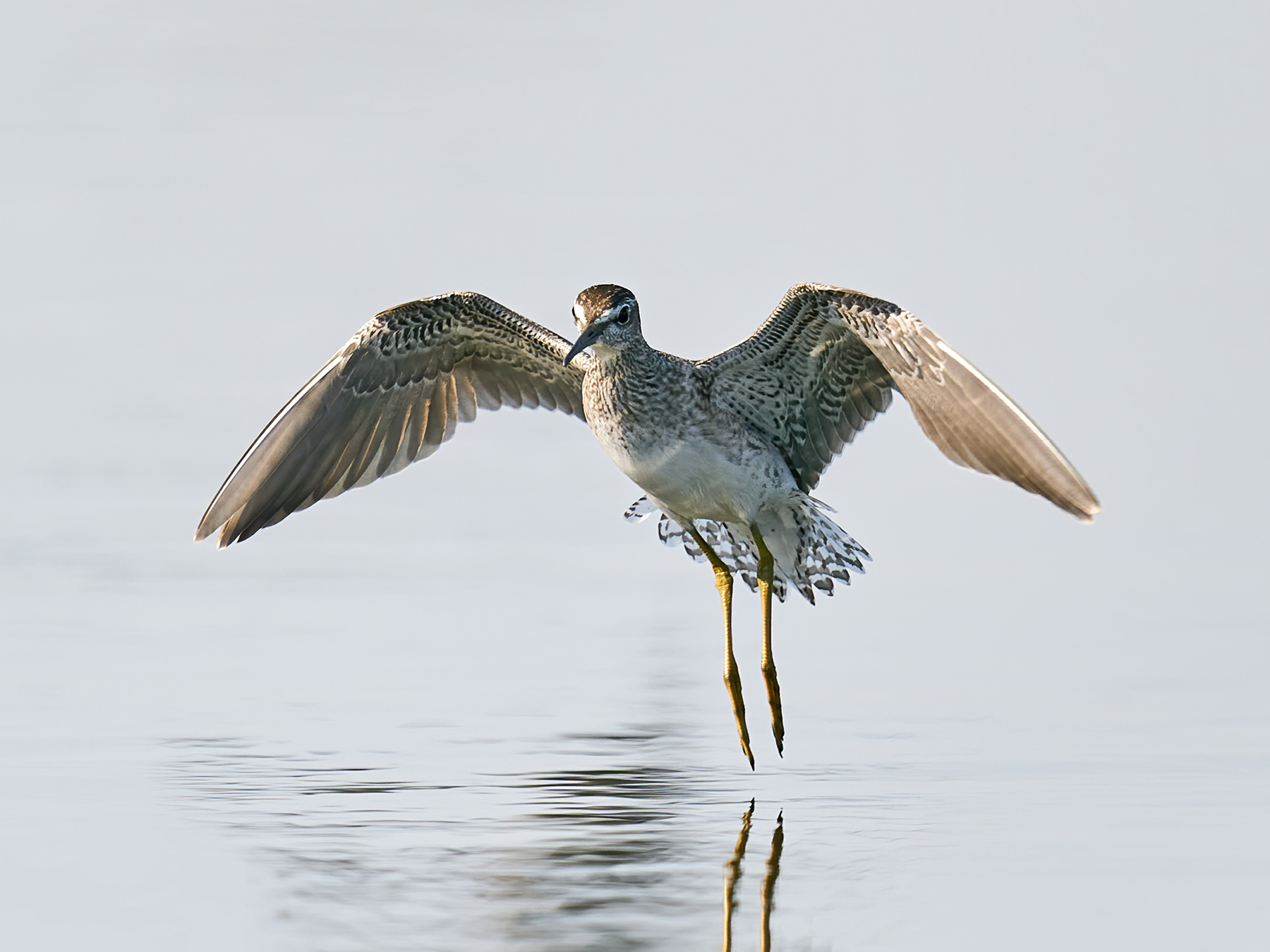
Wood Sandpiper guides
1 guidesQuick facts
- Length
- 19–21 cm
- Wingspan
- 36–40 cm
- Weight
- 50–90 g
- Lifespan
- 7–9 years · oldest recorded 11.7 years
- Family
- Sandpipers & Snipes
- Migration
- Long-distance Migrant
- Global status (IUCN)
- Least Concern
- World population
- 3,100,000 - 3,500,000 individuals
- Population trend
- Stable
- Scientific name
- Tringa glareola
Sources
4- 1BirdLife International. 2016. Tringa glareola. The IUCN Red List of Threatened Species 2016: e.T22693247A86689640. Source (opens in a new tab)
- 2EBCC (2015)
- 3Wetlands International (2015)
- 4Fransson et al., EURING list of longevity records for European birds (2010) Source (opens in a new tab)

Checked by
Nathan Cope, founder and editor
Nathan founded Birdfact and leads its writers and contributors in the UK, the US and Canada. He has watched and studied birds for more than ten years, and checks every article and species guide before it’s published.