


Temminck's Stint
Temminck's Sandpiper · Calidris temminckii
By the Birdfact teamChecked by Nathan Cope
On this page12 sections
How to recognise it
What do Temminck's Stints look like?
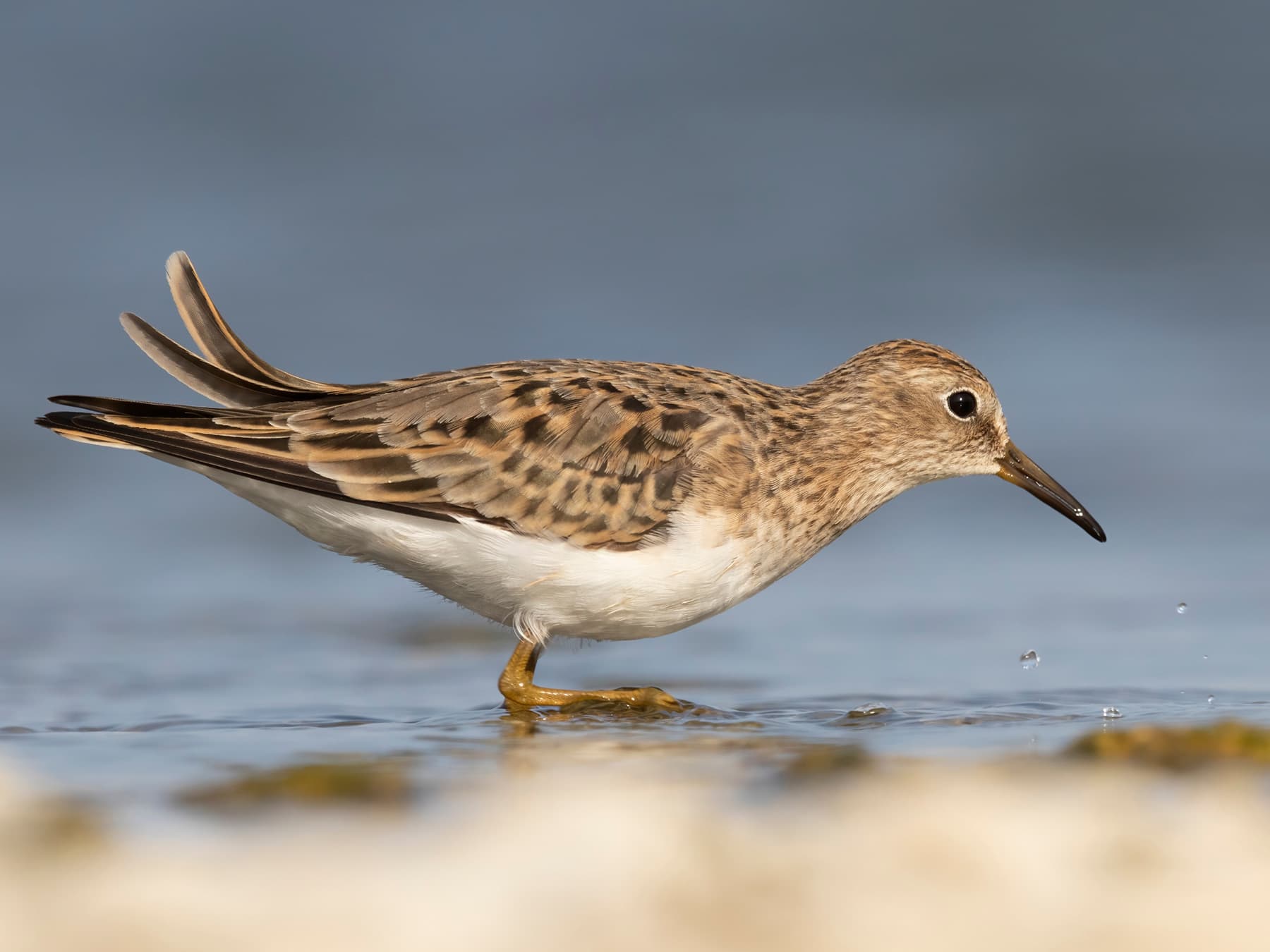
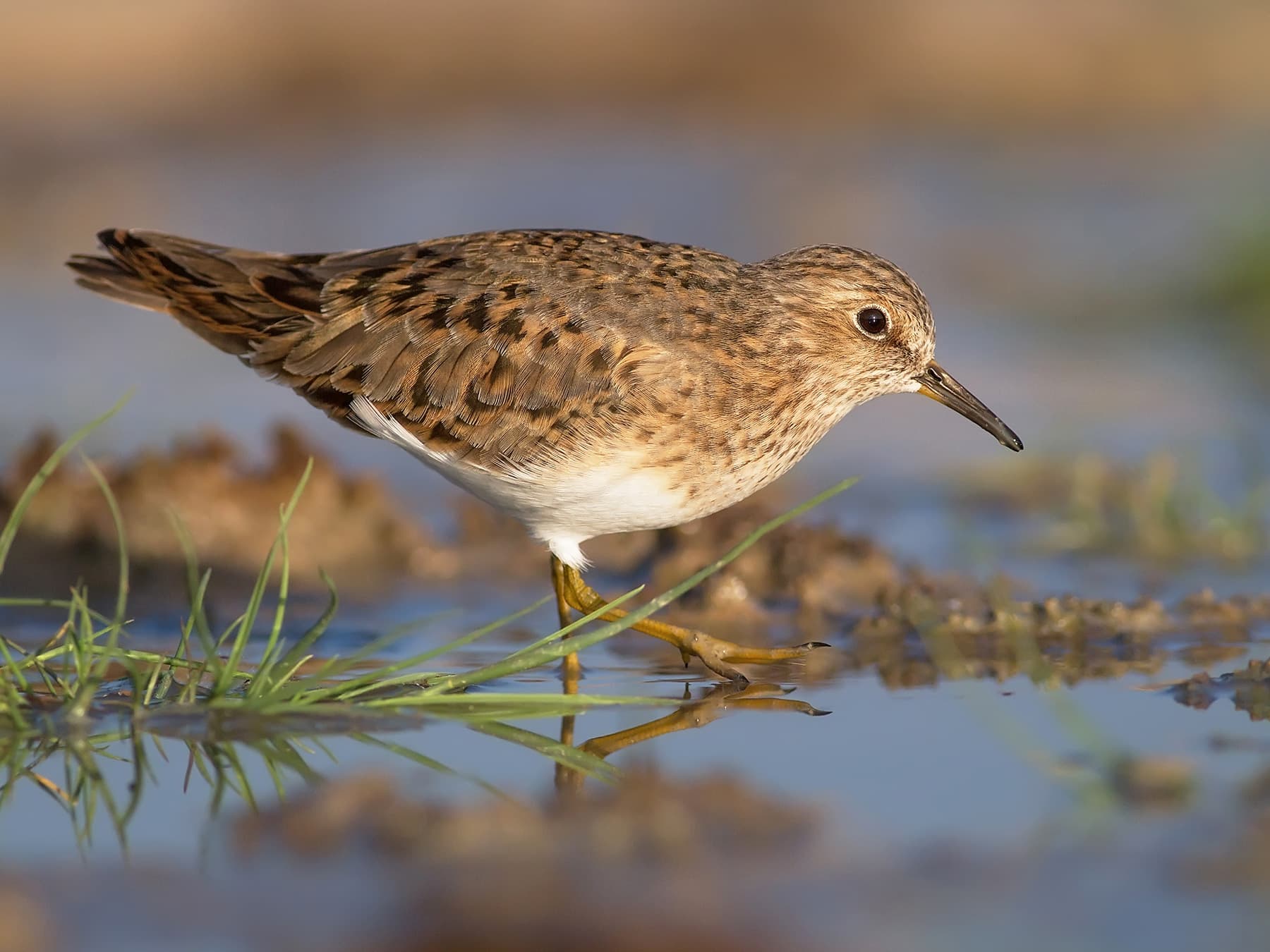
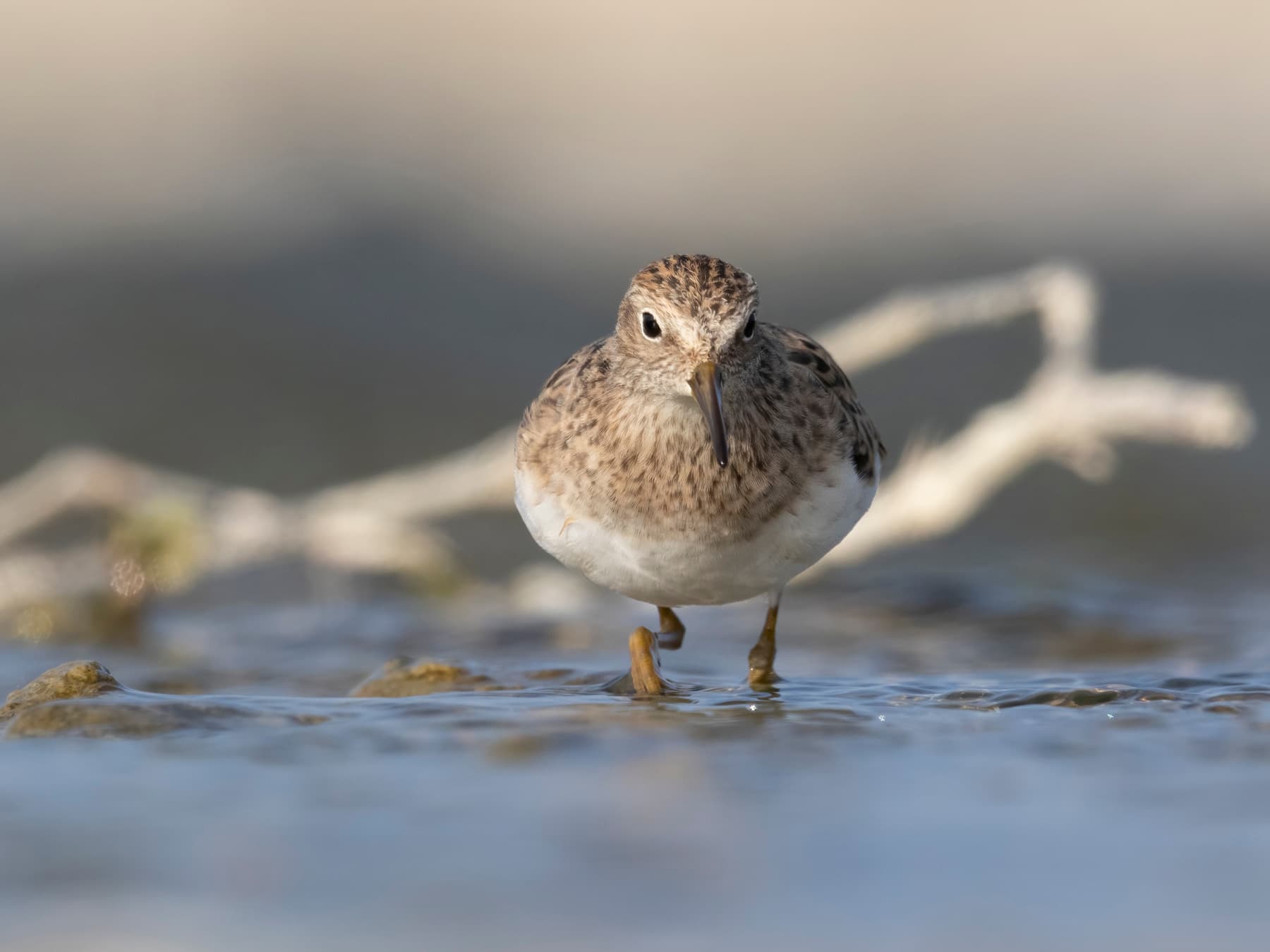
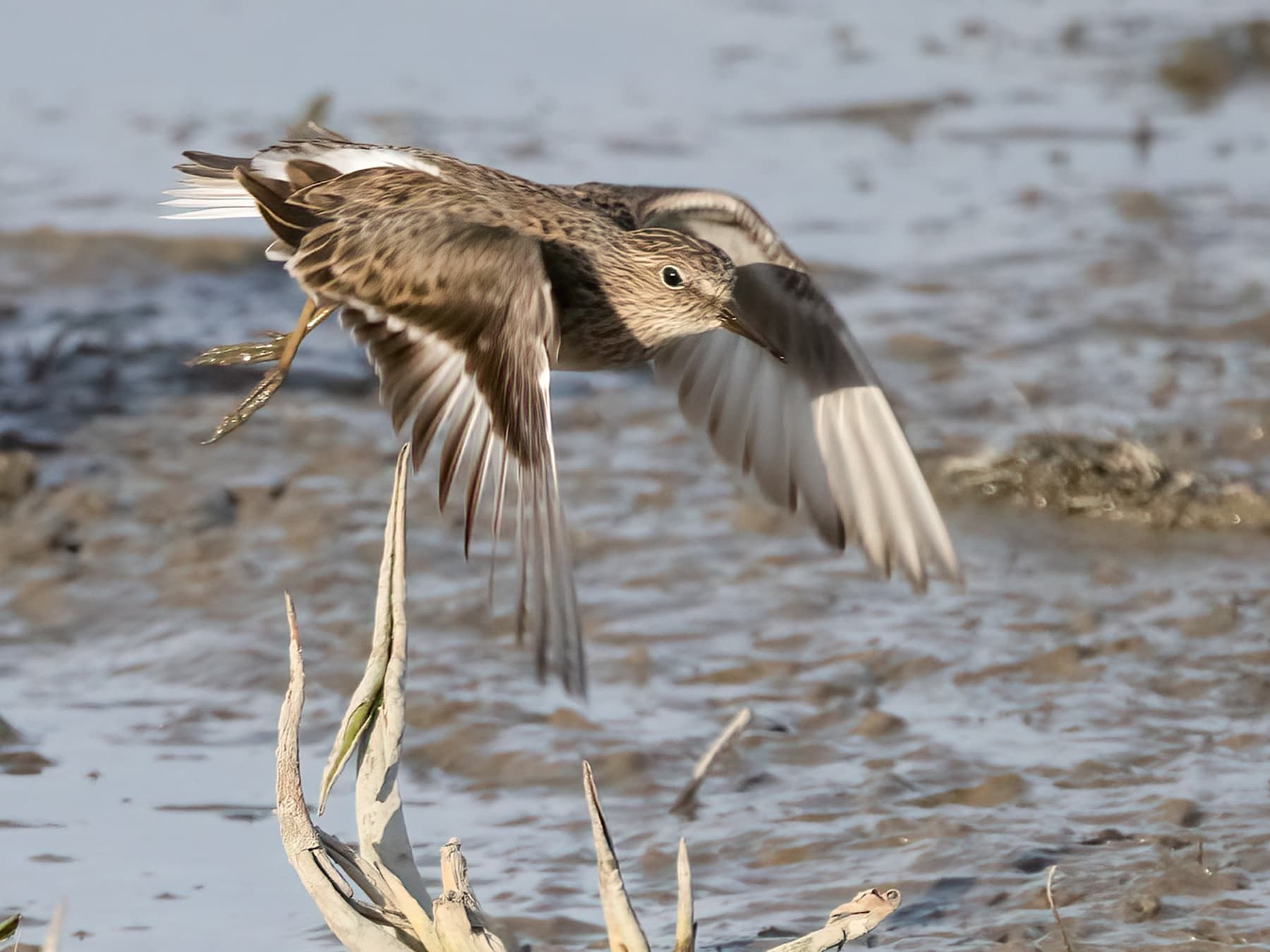
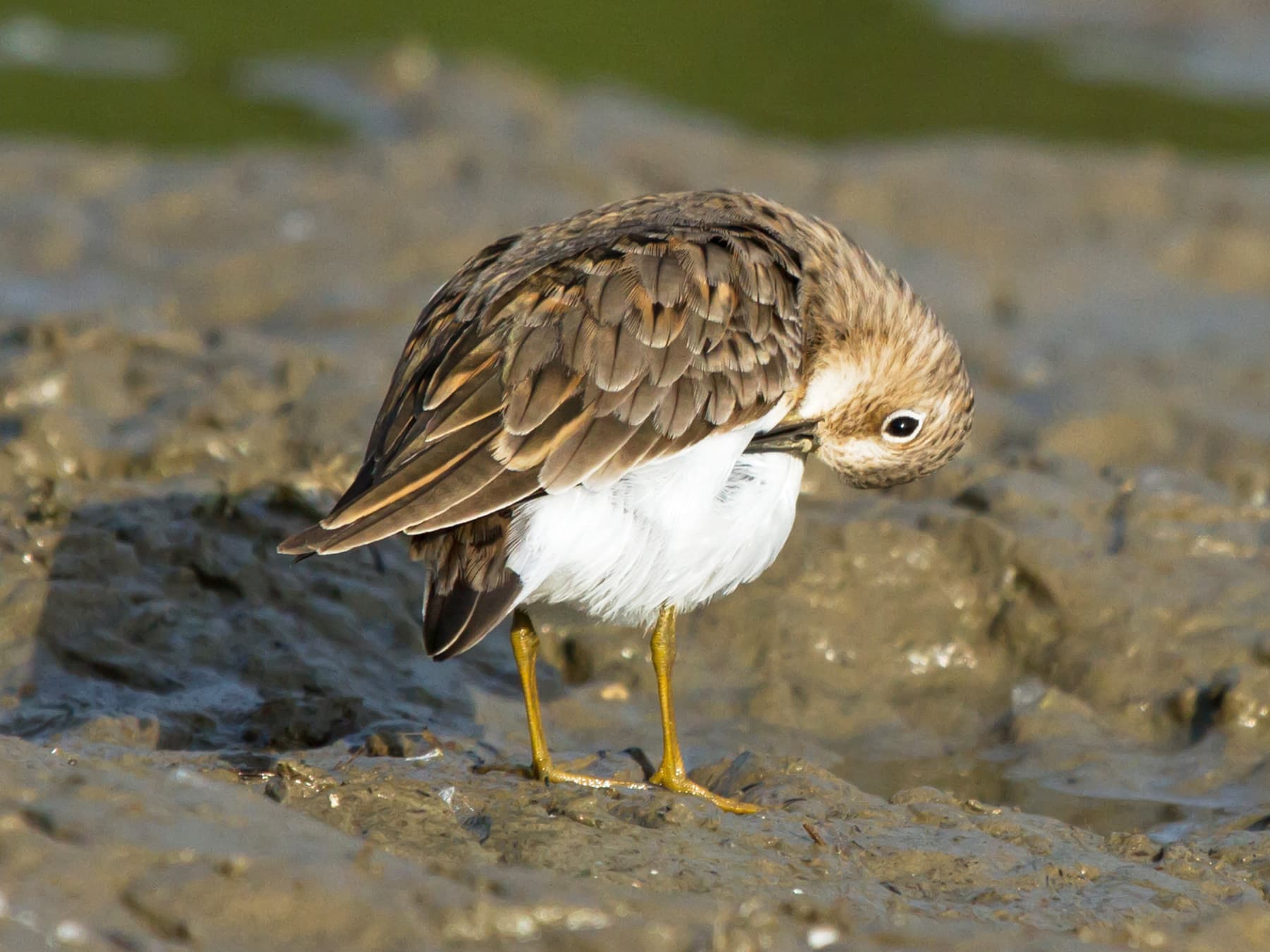
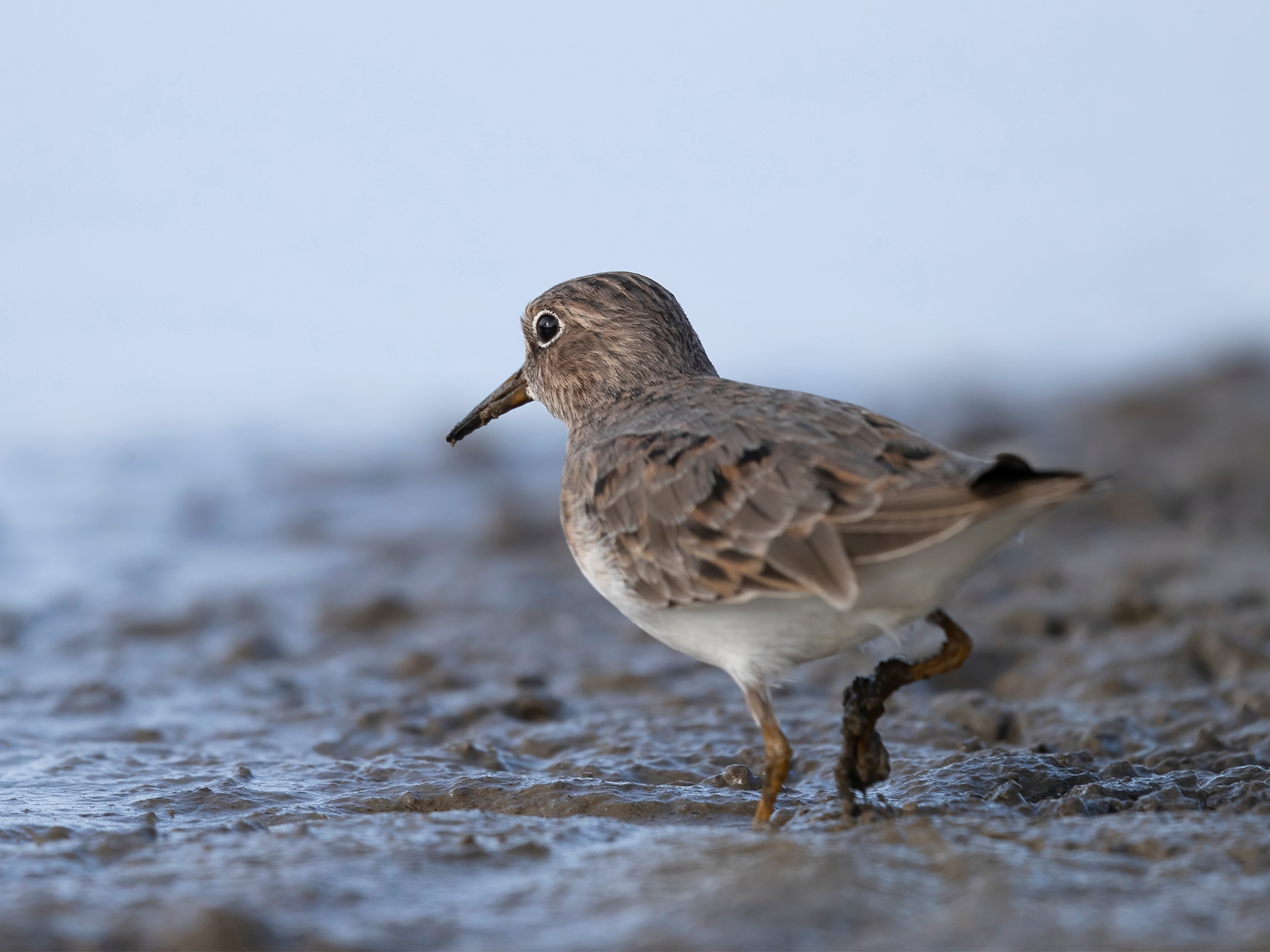
Temminck’s stints are small grey and white wading birds, which display different plumages at different times of year. Breeding adults have grey-olive brown upperparts, which may appear patchy and mottled with black, rusty and grey-brown. Their flanks and rump are white, and their grey-brown tail feathers are edged with white.
The throat, chin and bellow of a Temminck’s stint are white, and its breast, also white, is heavily streaked with dark brown. Its face is also streaky, with darker brown mottling on the crown. Its bill is dark grey, and its short legs are yellowish-grey.
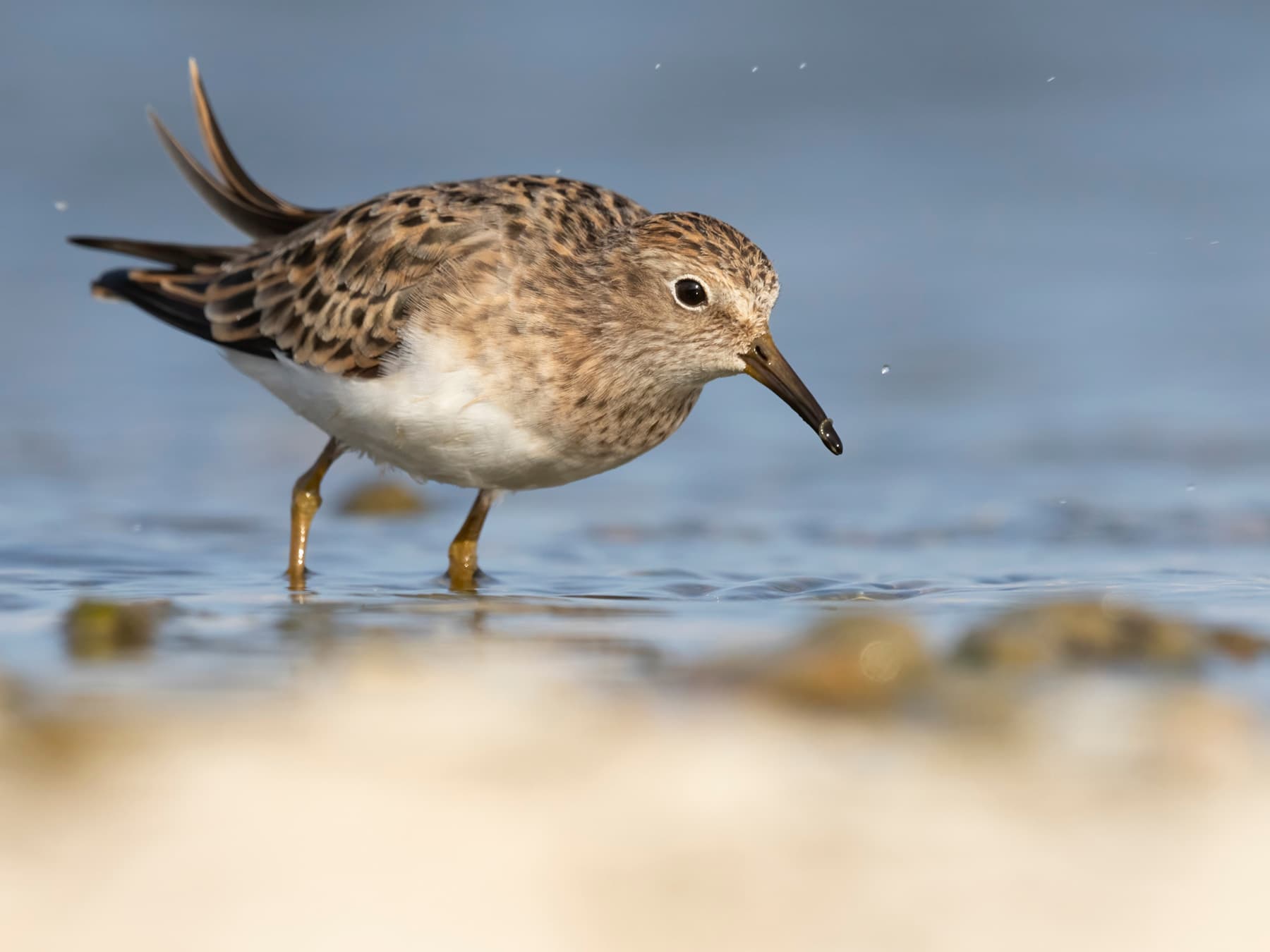
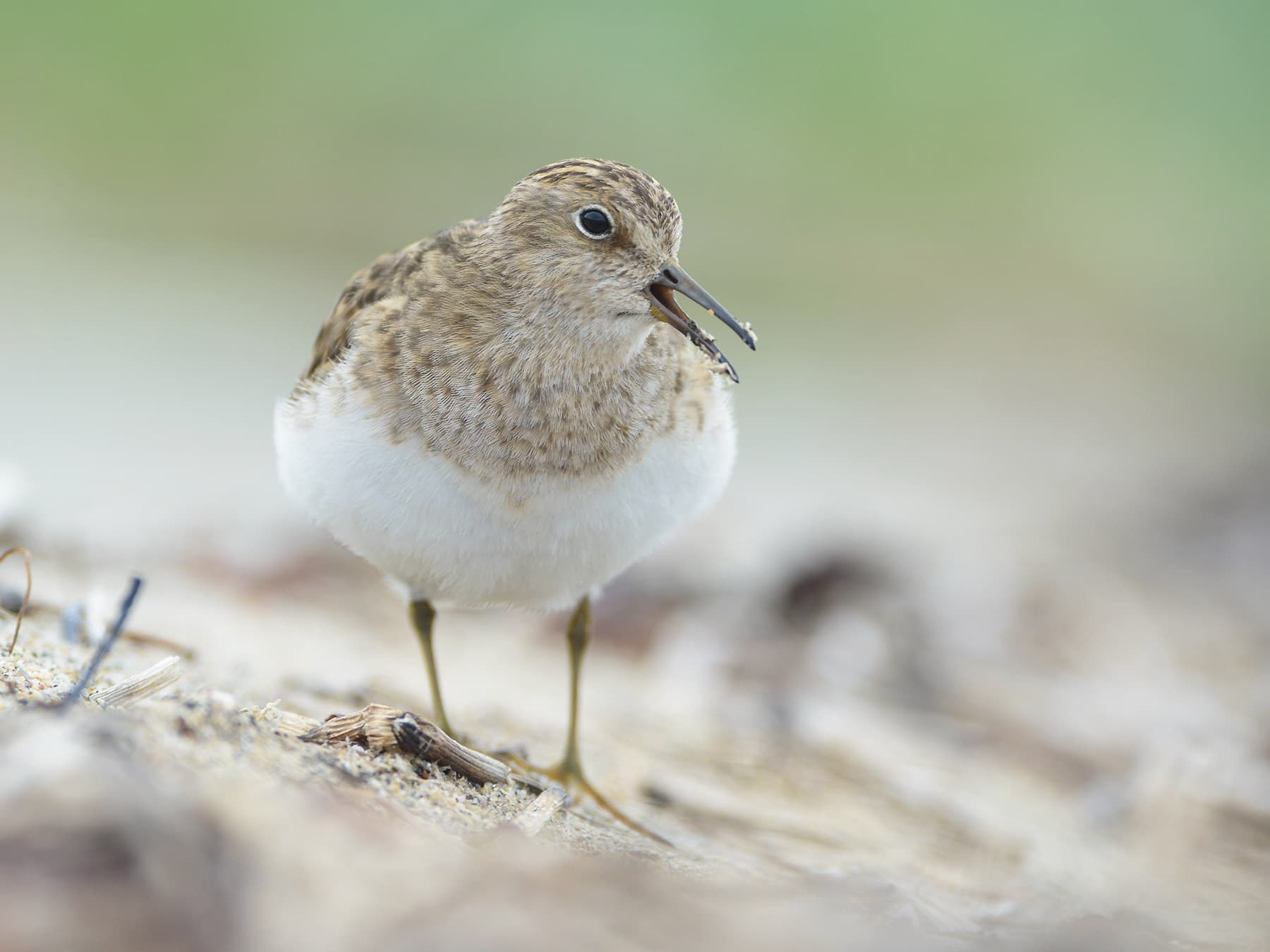
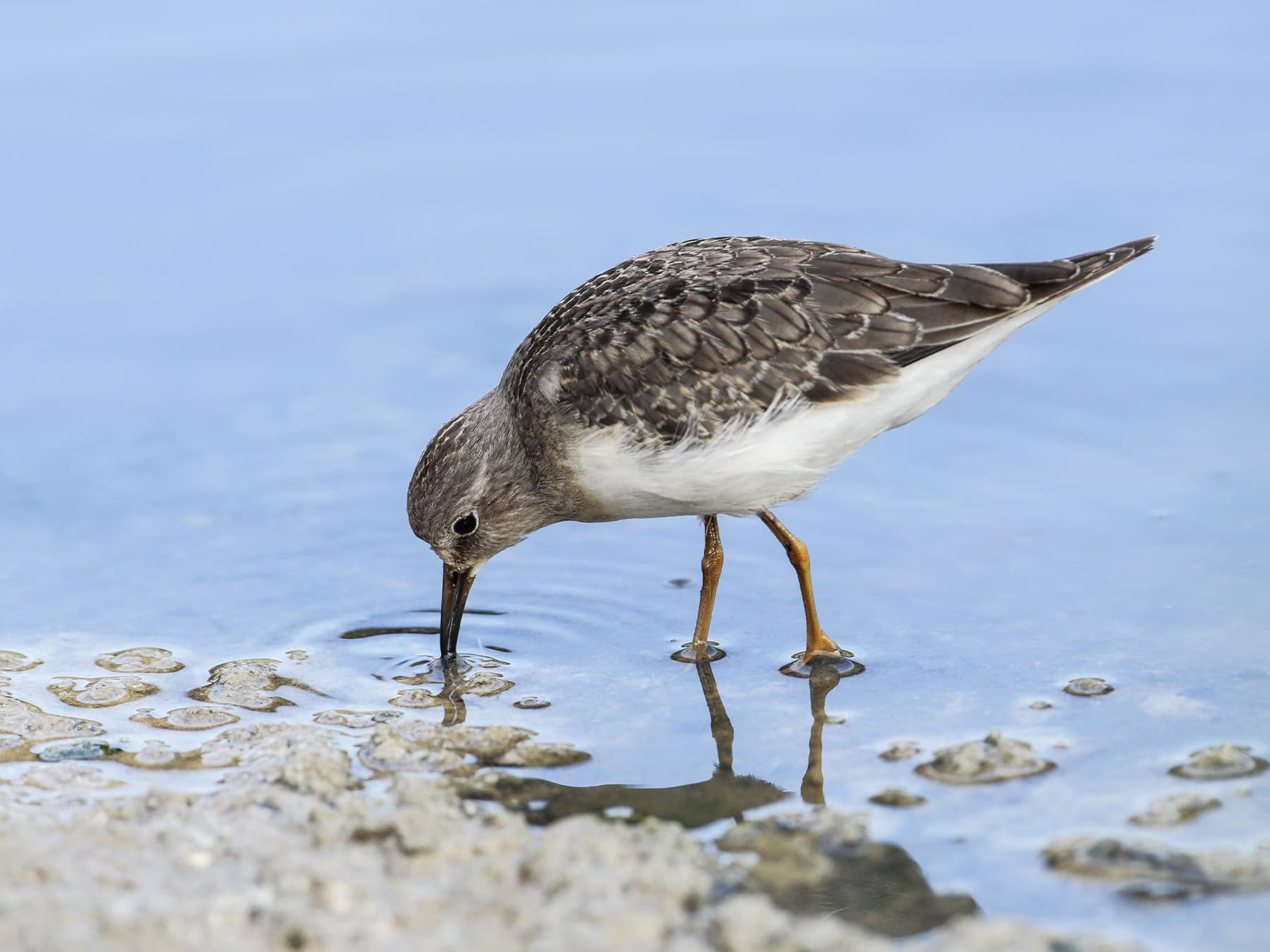
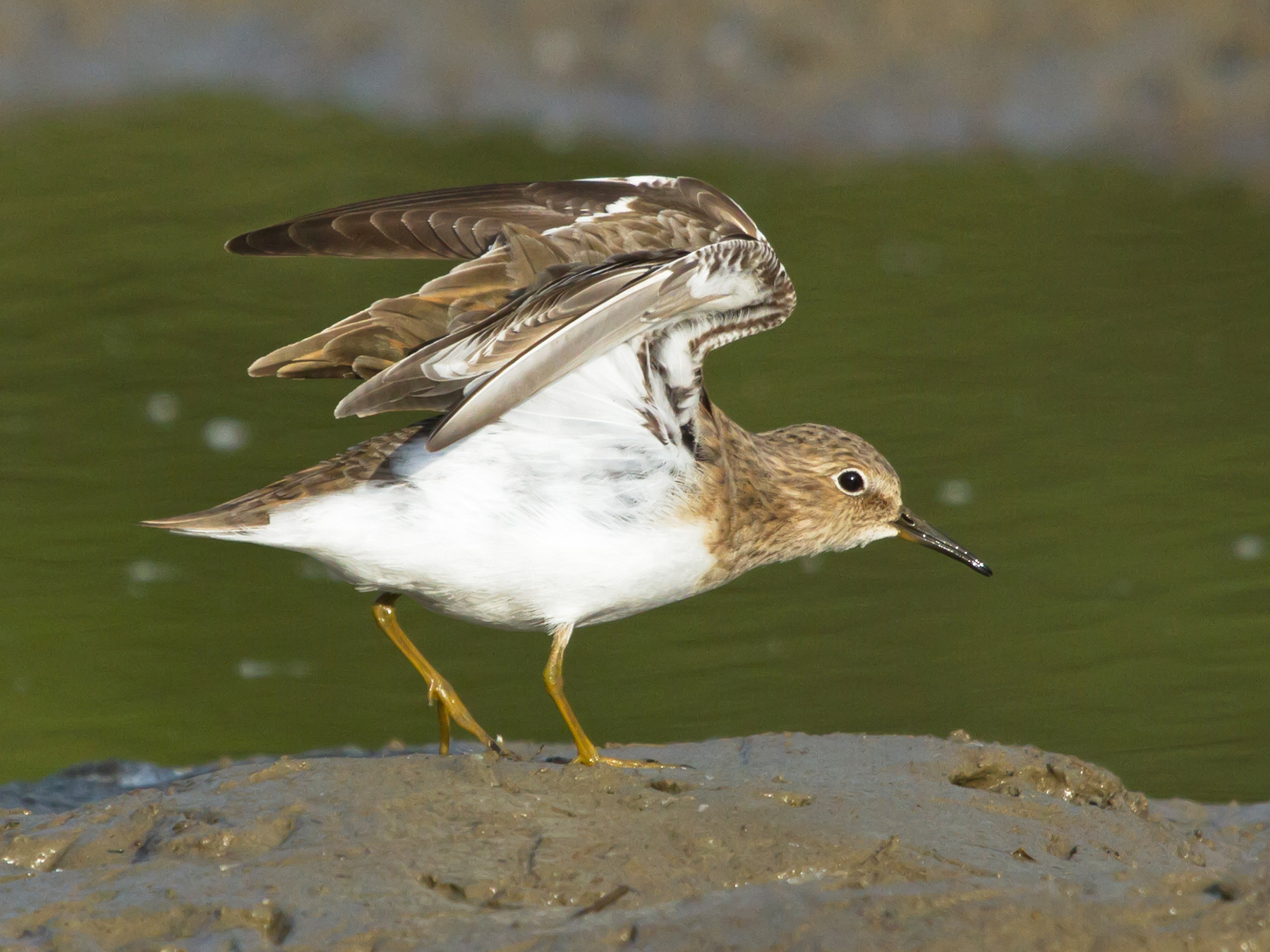
The non-breeding adult has dark grey-brown upperparts and head, with a dull grey breast which is lighter at the centre than the edges. Their chin and throat are white, and a faint white ring can be seen around their black iris, on an otherwise light grey face. Male and female Temminck’s stints are alike in plumage in both summer and winter, although females are slightly larger overall than males.
Juvenile Temminck’s stints are similar in appearance to non-breeding adults, with brown-grey upperparts with deep buff fringes, which creates a slightly scaled pattern. A buff-brown band is visible across the breast.
How big are Temminck's Stints?
Temminck’s stints are one of the smallest species of wading birds, smaller in length than a house sparrow. Females are usually slightly larger than males, with longer wings and a heavier overall body mass.
- Length: 13 cm to 15 cm (5.1 in to 5.9 in)
- Wingspan: 34 cm to 37 cm (13.4 in to 14.7 in)
- Weight: 24 g (0.8 oz)
Its size
Adults- Length
- 13–15 cm
- Wingspan
- 34–37 cm
- Weight
- 22–35 g
Its song and calls
What sound does a Temminck's Stint make?
A sustained trilling sound, similar to the buzzy notes of a grasshopper warbler, is commonly heard by male Temminck’s stints in display flight. A shorter chipped ‘trrrit’ call is used as an alarm call or heard when flushed.
- Song0:00 / 0:25
When and where to see it
OctoberMostly absent
Most recorded in October
- 1. Aberdeenshireunder 0.1%
Each dot is a county, state or province: the bigger and darker, the larger the bird’s share of that place’s bird records that month. Grey dots: no regular records. The ringed point is the centre of the bird’s records this month; the arrow shows how it moved since last month, and the dashed loop its path through the year. “Arrivals” colours places where it becomes regular this month (orange) or is in its last regular month (grey). GBIF eBird Observation Dataset, 2019–2024. Map data: Natural Earth, US Census Bureau; place centres © OpenStreetMap contributors.
In your area
See when the Temminck's Stint is recorded in your county, state or province.
How often the Temminck's Stint turns up in the UK through the year, from birdwatchers' records.
United Kingdom
Passage migrant · regularly Apr–Sep · most records in May
Show as a table
| Month | United Kingdom |
|---|---|
| January | <0.001% |
| February | <0.001% |
| March | <0.001% |
| April | 0.002% (regular) |
| May | 0.021% (regular) |
| June | <0.001% |
| July | 0.003% (regular) |
| August | 0.011% (regular) |
| September | 0.004% (regular) |
| October | <0.001% |
| November | – |
| December | – |
Recorded regularly in
Worldwide: recorded regularly in 78 countries
Countries where it was recorded in at least 3 of the 6 years 2019–2024. Linked countries have their own bird list.
Europe (32)
Asia (38)
- Armenia
- Azerbaijan
- Bahrain
- Bangladesh
- Bhutan
- Cambodia
- China
- Cyprus
- Georgia
- Hong Kong SAR China
- India
- Iran
- Israel
- Japan
- Jordan
- Kazakhstan
- Kuwait
- Kyrgyzstan
- Laos
- Malaysia
- Mongolia
- Myanmar (Burma)
- Nepal
- Oman
- Pakistan
- Palestinian Territories
- Qatar
- Saudi Arabia
- South Korea
- Sri Lanka
- Taiwan
- Tajikistan
- Thailand
- Turkey
- United Arab Emirates
- Uzbekistan
- Vietnam
- Yemen
Data: EOD – eBird Observation Dataset (Cornell Lab of Ornithology), accessed via GBIF.org, CC BY 4.0. Records from 2019–2024, aggregated and filtered by Birdfact. How these lists are made
What is the habitat of a Temminck's Stint?
Preferred breeding habitats of Temminck’s stint include shrubby tundra landscapes, flat treeless floodplains, and open expanses of bare land, covered with short grass or stony shorelines. On their breeding grounds, they are often spotted at inlets, along fjords, deltas and streams.
During winter months, Temminck’s stints move to a variety of different wetland habitats, including freshwater wetlands further inland, such as sewage farms, irrigated fields, and flooded meadows.
Open coasts are avoided, and sightings at tidal mudflats, lagoons and salt marshes are less common than in summer months.
What is the range of a Temminck's Stint?
Temminck’s stints are migratory, breeding in extreme northern regions of Europe, from Norway in the west to northern Siberia in the east. Occasional breeding is recorded in Scotland, but this is no longer regular.
The winter range of Temminck’s stints covers parts of the southern Mediterranean region and extends into North Africa, through Egypt and Sudan, along the River Nile.
The main African wintering grounds are located south of the Sahara in a strip across central Africa from Senegal to Ethiopia, and across into Yemen. Winter populations also gather in India and Pakistan, and further east, in south-east Asia and along the eastern coast of China.
Where do Temminck's Stints live?
Russia is home to the majority of the world’s breeding population of Temminck’s stints, with estimates in the 1990s of between 1 and 10 million pairs.
No recent data exists for breeding numbers in Fennoscandia, but in the 1980s, up to 10,000 pairs bred in Norway and Sweden, with up to 5,000 pairs in Finland.
How rare are Temminck's Stints?
With an official conservation status of ‘former breeder’ in the UK, Temminck’s stints are now considered a rarity, with only occasional breeding now reported, and sightings limited to brief visitors during spring migration.
Populations are well established in Russia during the breeding season, and on south-central Asian wintering grounds, particularly India and Pakistan, Temminck’s stints are considered fairly common and widespread.
Where can you see Temminck's Stints in the UK?
Sightings of Temminck’s stints in the UK generally reach a peak in May as birds head north to their Arctic breeding grounds.
Reports of passage visitors are also occasionally made on the return leg in September but are not as numerous.
Temminck’s s can be spotted in estuaries and freshwater marshes near the east and south-eastern coasts of England and along the coast between North Wales and Merseyside.
Some rare and occasional breeding continues in a coastal region of northern Scotland but is now sporadic rather than regular or guaranteed.
Migration
Do Temminck's Stints migrate?
Temminck’s stints are a fully migratory species, breeding across the extreme northern coast of Europe, from northern Norway across northern Finland into Arctic Russia.
Their annual autumn migration takes them to Africa, along the Nile and the region of central Africa immediately south of the Sahara. Additional wintering grounds are located in India, China, Malaysia, and the Philippines.
Are Temminck's Stints native to the UK?
Temminck’s stints used to breed in the UK, but have all but disappeared as a native species, with only a handful of nesting pairs (and sometimes none) raising young in the Scottish Highlands each year.
Up to around 100 individual Temminck’s stints are recorded in spring migration passage each year, with sightings along the eastern and south-eastern coasts of England, and along the border between North Wales and western England.
Tips for seeing it
- Look for Temminck's Stint on muddy edges of freshwater habitats
- Observe its distinctive bobbing motion while foraging
- Listen for its trilling call during the breeding season
- In the UK, watch for it during spring and autumn migrations
What it eats
What do Temminck's Stints eat?
The main elements of a Temminck’s stint’s diet are insects and their larvae, worms, crustaceans and molluscs.
Prey is usually found on the surface of the ground; some prey is gained by probing into the wet mud with their relatively short bill, although this is less common.
What do Temminck's Stint chicks eat?
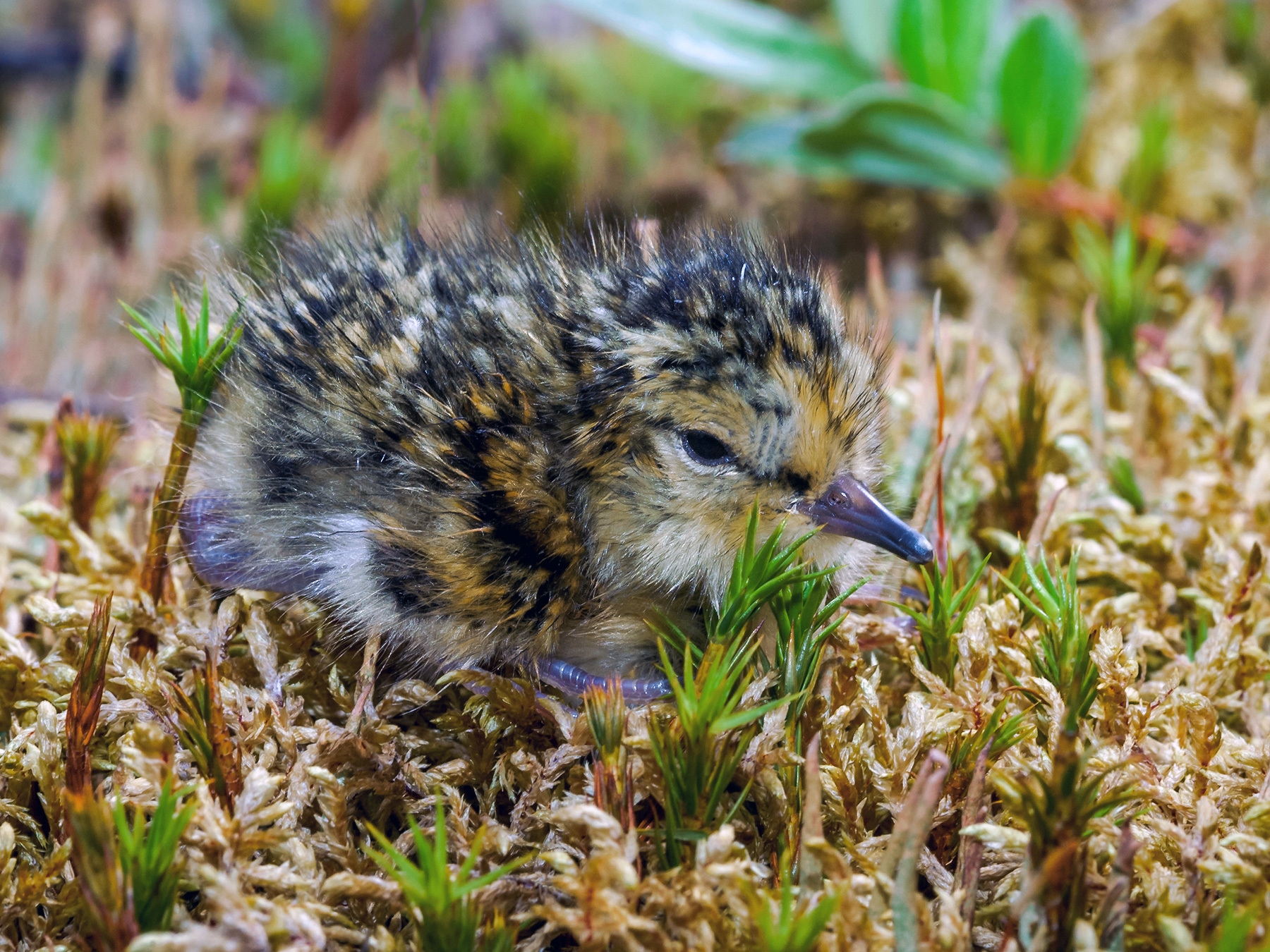
Shortly after hatching, Temminck’s stints leave their nest and are tended by one parent but find their own food, foraging alongside their parent for invertebrates and larvae.
Nesting and breeding
Where do Temminck's Stints nest?
Temminck’s stints use shallow scrapes for nesting, made directly on the ground and usually concealed by clumps of grass or low-lying tundra shrubbery.
Nest scrapes are typically lined with moss, leaves, and grass stems, although some feathers may be added. Two or even three scrapes may be used at the same, with females laying in multiple sites and clutches incubated independently by the female and male, and occasionally a second male if a third clutch is laid.
When do Temminck's Stints nest?
Temminck’s stints arrive on spring breeding grounds from May onwards, with eggs usually being laid in late May and June.
Departure for wintering grounds begins in late July but can continue until October for those raising later clutches. Incubation lasts for 21 to 22 days, with young fledging after between 15 and 18 days.
What do Temminck's Stint eggs look like?
Temminck’s stints’ eggs are a greenish-buff colour, heavily mottled with brown spotting, blending in well with the stony tundra landscapes on which they are laid.
Usually, four eggs are laid, which measure 28 mm by 20 mm (1.1 in to 0.8 in).
Do Temminck's Stints mate for life?
Far from mating for life, the pair bonds of Temminck’s stints last for barely a week. It’s common for females to lay in two or three nest scrapes at the same time, and each clutch may be from a different male.
Behaviour
Are Temminck's Stints aggressive?
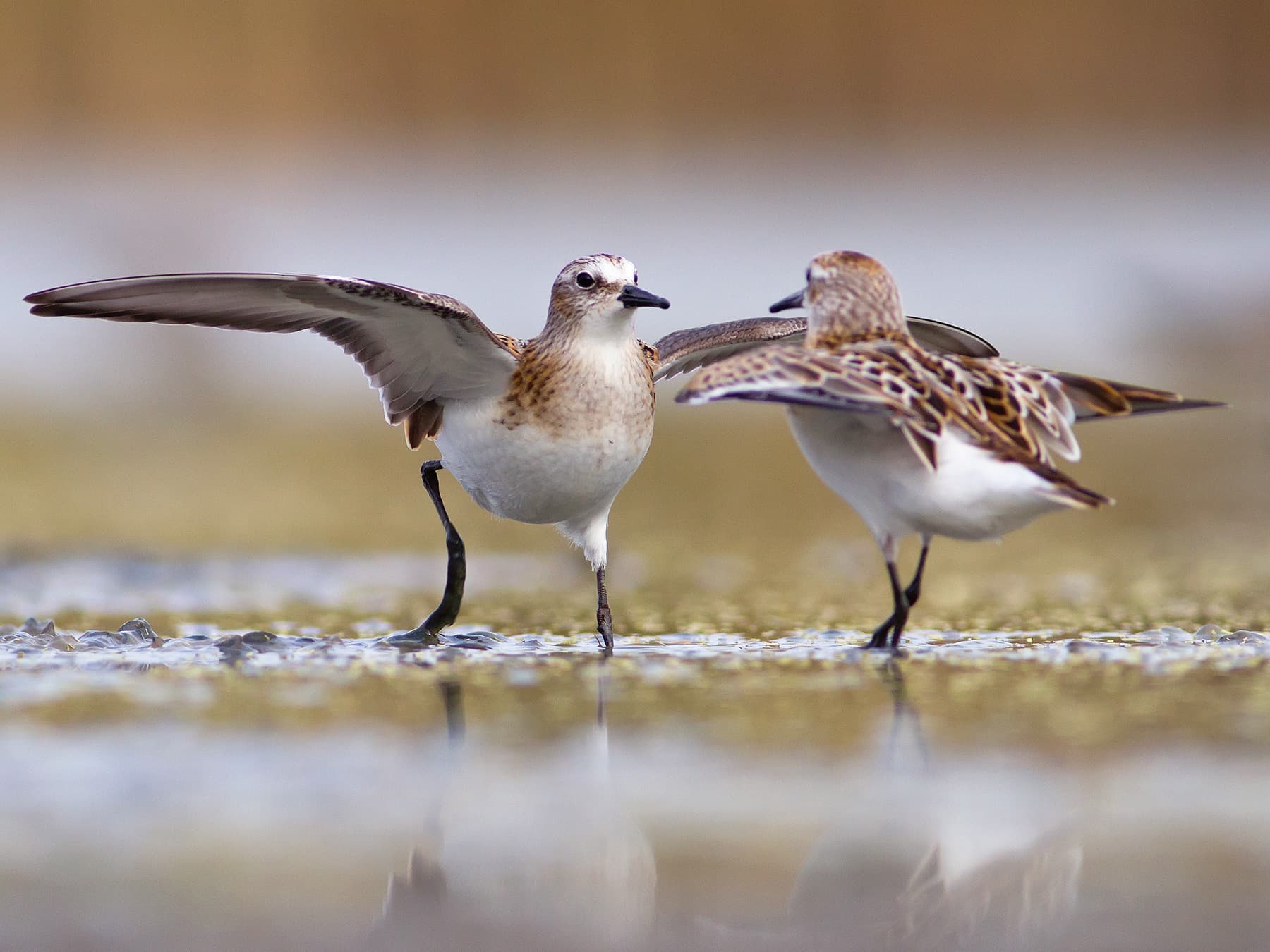
Generally, a passive and non-aggressive bird, Temminck’s stints have been only occasionally observed to display highly territorial and confrontational behaviour. This is limited to their nest sites in the short period before incubation begins.
Confrontations are rarely physical, with vocal displays and posturing usually being enough to deter any threats.
Where do Temminck's Stints sleep at night?
Temminck’s stints are largely nocturnal, roosting during the day along the high tide line and foraging for food on muddy or sandy seashores overnight.
Lifespan and predators
How long do Temminck's Stints live?
The average lifespan of a Temminck’s stint is around 7 years, with breeding thought to occur for the first time at one year of age, although success is more likely from two years. The oldest ringed bird identified to date reached 11 years.
What are the predators of Temminck's Stints?
Predation is a key factor to blame for up to 80 percent of egg losses. Ruddy turnstones and common gulls are among the chief predators of Temminck’s stints’ nests.
Are Temminck's Stints protected?
Listed as Schedule I birds under the Wildlife and Countryside Act, 1981, Temminck’s stints are protected against being knowingly killed, injured, or taken into captivity, with their nest sites, eggs, and young being provided with additional protection.
Are Temminck's Stints endangered?
Globally, the population of Temminck’s stints is secure and stable, and they are considered a species of least concern.
Some small declines in breeding numbers have been recorded in Norway, Sweden and Finland since the 1990s and the species is particularly vulnerable to habitat loss in Arctic areas where global warming is a concern.
Temminck’s stints are listed as a former breeding species on the British Birds of Conservation Concern list.
Conservation
While currently listed as Least Concern, Temminck's Stint faces threats from habitat loss and climate change.
Conservation efforts focus on protecting breeding and stopover sites along its migration routes.
More photos
4 photos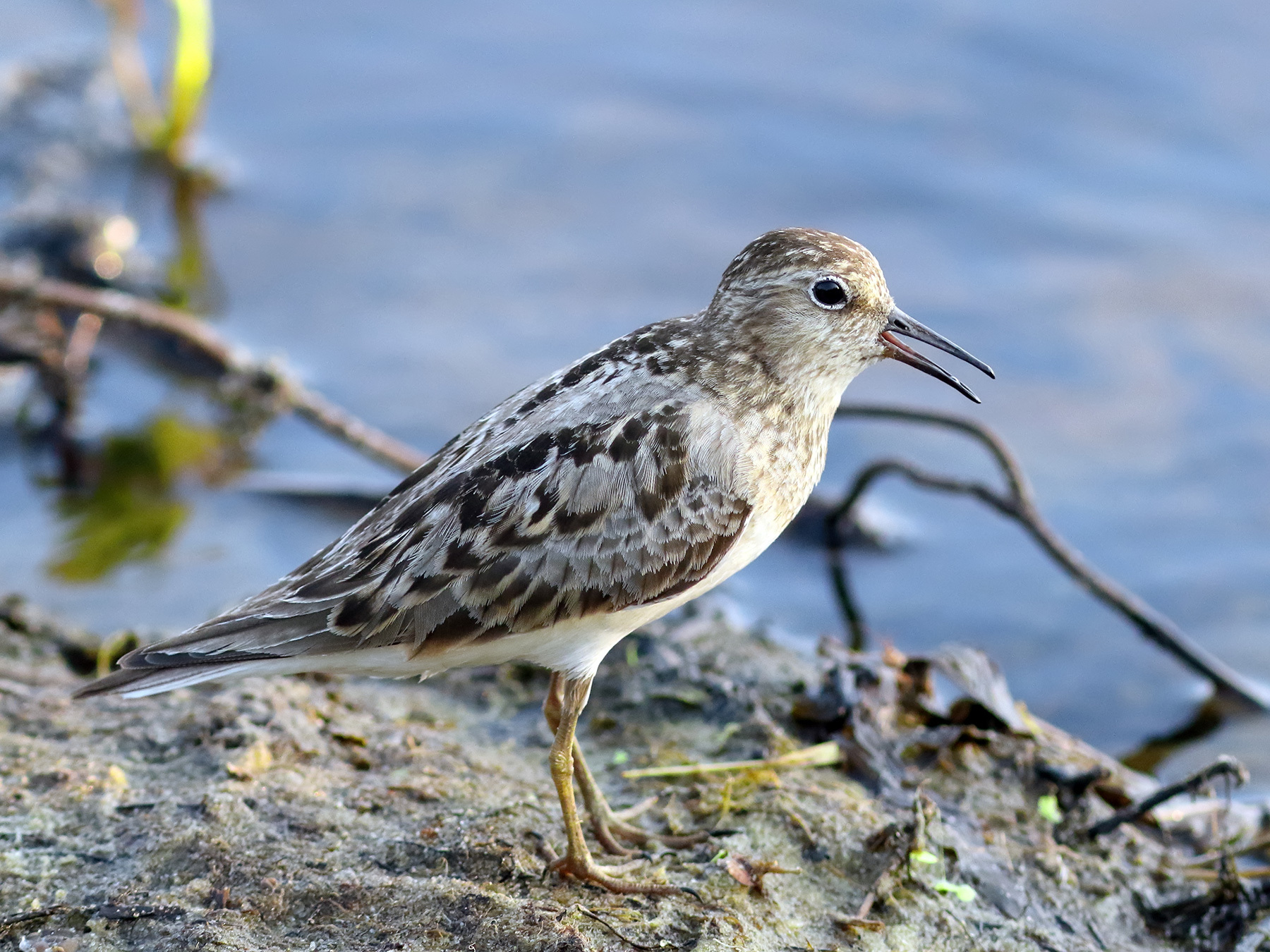
Quick facts
- Length
- 13–15 cm
- Wingspan
- 34–37 cm
- Weight
- 22–35 g
- Lifespan
- 7 years · oldest recorded 12.9 years
- Family
- Sandpipers & Snipes
- Migration
- Long-distance Migrant
- Global status (IUCN)
- Least Concern
- World population
- 165,000 - 1,255,000 individuals
- Population trend
- Stable
- Also called
- Temminck's Sandpiper
- Scientific name
- Calidris temminckii
Sources
4- 1BirdLife International. 2019. Calidris temminckii. The IUCN Red List of Threatened Species 2019: e.T22693388A146637675. Source (opens in a new tab)
- 2BirdLife International. 2019. Calidris temminckii. The IUCN Red List of Threatened Species 2019: e.T22693388A146637675. Source (opens in a new tab)
- 3Wetlands International (2015)
- 4Fransson et al., EURING list of longevity records for European birds (2010) Source (opens in a new tab)

Checked by
Nathan Cope, founder and editor
Nathan founded Birdfact and leads its writers and contributors in the UK, the US and Canada. He has watched and studied birds for more than ten years, and checks every article and species guide before it’s published.