Published 8 Oct 2026
Wren Symbolism and Folklore: King of the Birds and Wren Day
By the Birdfact teamChecked by Nathan Cope
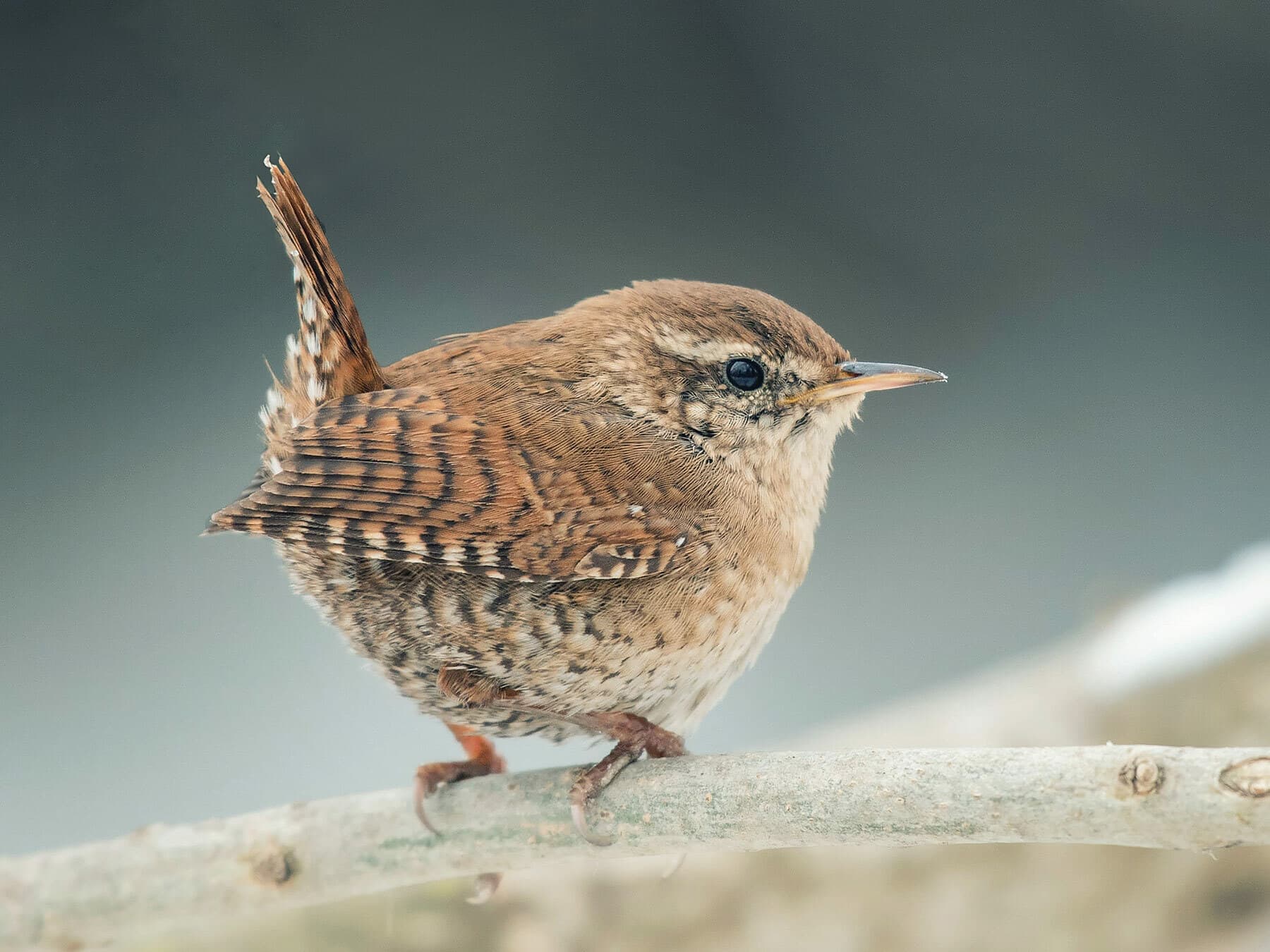
In the folklore of Britain, Ireland and Europe the Wren is the king of the birds, a bird it was unlucky to harm, and the bird of the St Stephen's Day wren hunt, a custom now kept without harming any bird. What the old sources say, and what they don't.
On this page12 sections
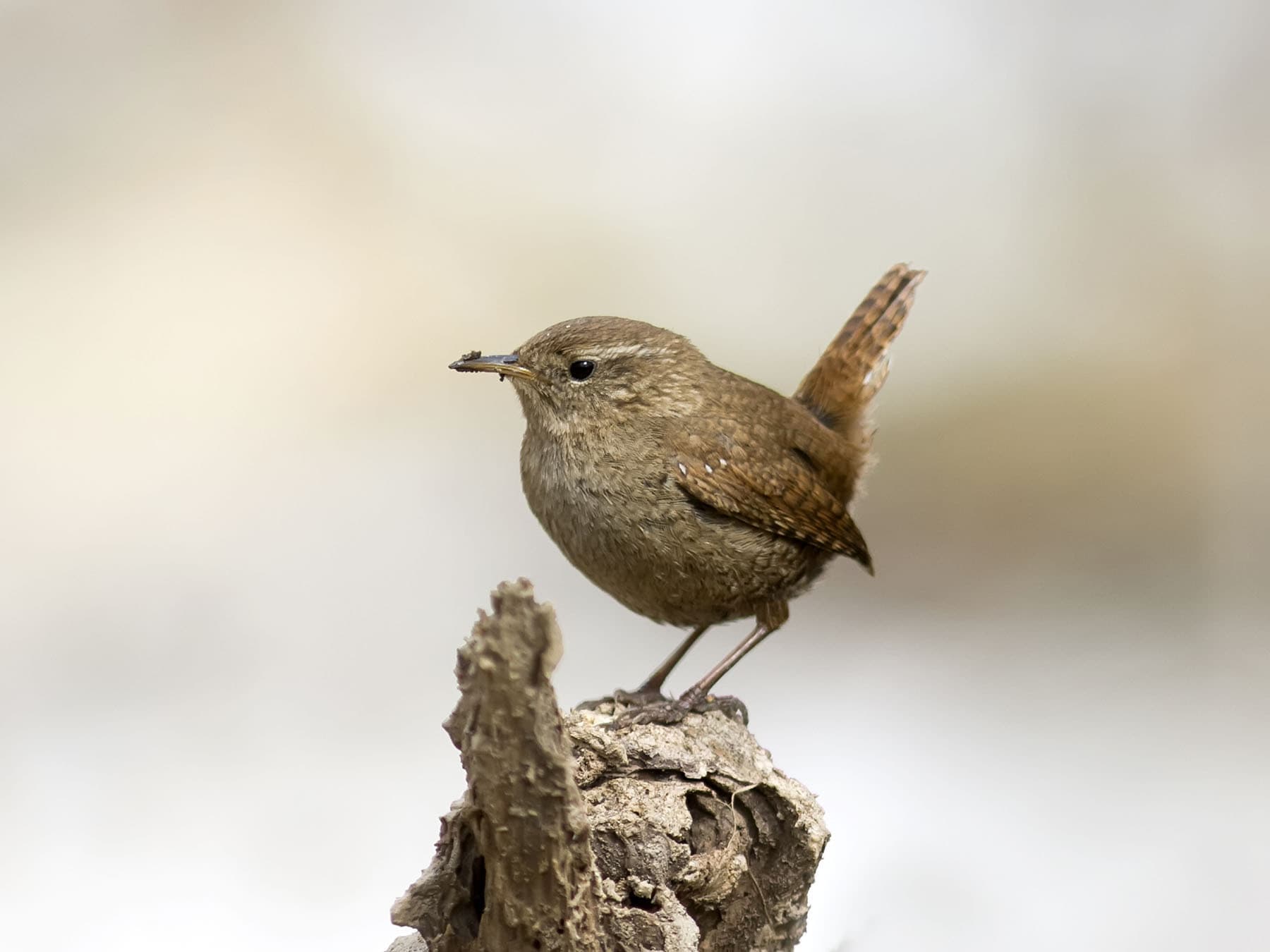
What the Wren has meant to people in Britain, Ireland and beyond: the "king of the birds", a bird it was unlucky to harm, the St Stephen's Day custom of hunting the wren and how it is kept today, and the Wren in rhymes, books and on the farthing. Every belief here is one that an old text, a scholar or a museum records; none is a claim about what a Wren means for you. For the bird itself, see Wren identification, song and facts.
What does the Wren symbolise?
In the folklore of Britain, Ireland and much of Europe, the Wren is the king of the birds: many languages and old writers called it the king, the little king or the hedge king.1 It was also a bird that people believed it was unlucky to harm, and, in parts of Britain, Ireland and France, the bird at the centre of a midwinter custom in which it was hunted. Those three ideas run through everything below.
Why is the Wren called the King of the Birds?
Folk tales explain it with a story told across Europe. The birds agree that whoever flies highest will be their king. The eagle climbs above them all, but a tiny bird has hidden in his feathers, and when the eagle can climb no higher it flies higher still and claims the crown. The Brothers Grimm wrote the story down as "Der Zaunkönig", the hedge king, which is still the German name for the Wren.2 In their version the other birds, furious at the trick, set a second contest, to go lowest into the ground, which the little bird won by slipping into a mouse-hole; the birds set an owl to guard the hole, the owl fell asleep, the bird escaped, and it lives in the hedges ever after.3
The same tale was told in Ireland, where Halliwell recorded in 1849 that the Irish called the Wren "the king of birds",4 and in Skye and the West Highlands.5
The king in ancient Greece and Rome
The idea is old. Aristotle wrote of an artful bird of thickets and holes, called the trochilus or basileus, Greek for king, which was said to fight with the eagle.6 Pliny the Elder repeated that the eagle and the trochilus were enemies, "if we are to believe the story", because the trochilus was called the king of the birds.7 Which bird they meant is not certain: their 19th-century translators suggested the Wren or the Goldcrest.
A bird it was unlucky to harm
Folklorists recorded that harming a Wren was thought to bring bad luck. In England it was said that anyone who killed a Wren or robbed its nest would break a bone or meet some dreadful misfortune within the year. In Scotland the Wren was "the Lady of Heaven's hen", and boys warned that whoever robbed its nest would earn "malisons, malisons, mair than ten": curses, more than ten of them. In France, it was said, a house could be struck by lightning.1
English rhymes made the Robin and the Wren a holy pair: "The robin red-breast and the wren / Are God Almighty's cock and hen". From Essex came a plain warning: "If ye take out o' their nest, / Ye'll never thrive agen!" Halliwell, who published these rhymes in 1849, thought such beliefs protected small birds from the "wanton destroyer". He added that the Wren was also called "our Lady's hen".4 The BTO lists that name among the Wren's English folk names, with Stumpy Toddy and Sumpit.2
Hunting the Wren
Against that, in parts of Britain, Ireland and France the Wren was hunted once a year, around Christmas and St Stephen's Day, 26 December.1 Moore, in 1891, gathered accounts from the Isle of Man, Ireland, Essex, Pembrokeshire and the south of France.5
On the Isle of Man the first published description, by George Waldron, dates from 1731: after the midnight service at Christmas, servants went out to hunt a wren and gave it a mock funeral with dirges in Manx. By 1791 the hunt had moved to St Stephen's Day and was linked with luck for the herring fishing.8 In 1816 Hannah Bullock wrote that the feathers were kept as charms against shipwreck. Moore, the Manx folklorist, called it "the cruel but curious custom".5
In Ireland, Frazer recorded, the hunt still took place in his day in parts of Leinster and Connaught: on St Stephen's Day boys carried a wren from house to house in a bush of holly and ivy, singing "The wren, the wren, the king of all birds" and asking for a treat.1 The custom also had opponents: in 1849 Halliwell noted that a Mayor of Cork had lately issued a proclamation forbidding it "to prevent cruelty to animals".4 Schoolchildren in County Kerry later wrote down wren boys' rhymes for the Schools' Collection of Ireland's National Folklore Collection.9 In Pembrokeshire, Halliwell recorded, a wren was carried on Twelfth Day in a box with glass windows, hung with coloured ribbons.4
Wren Day today
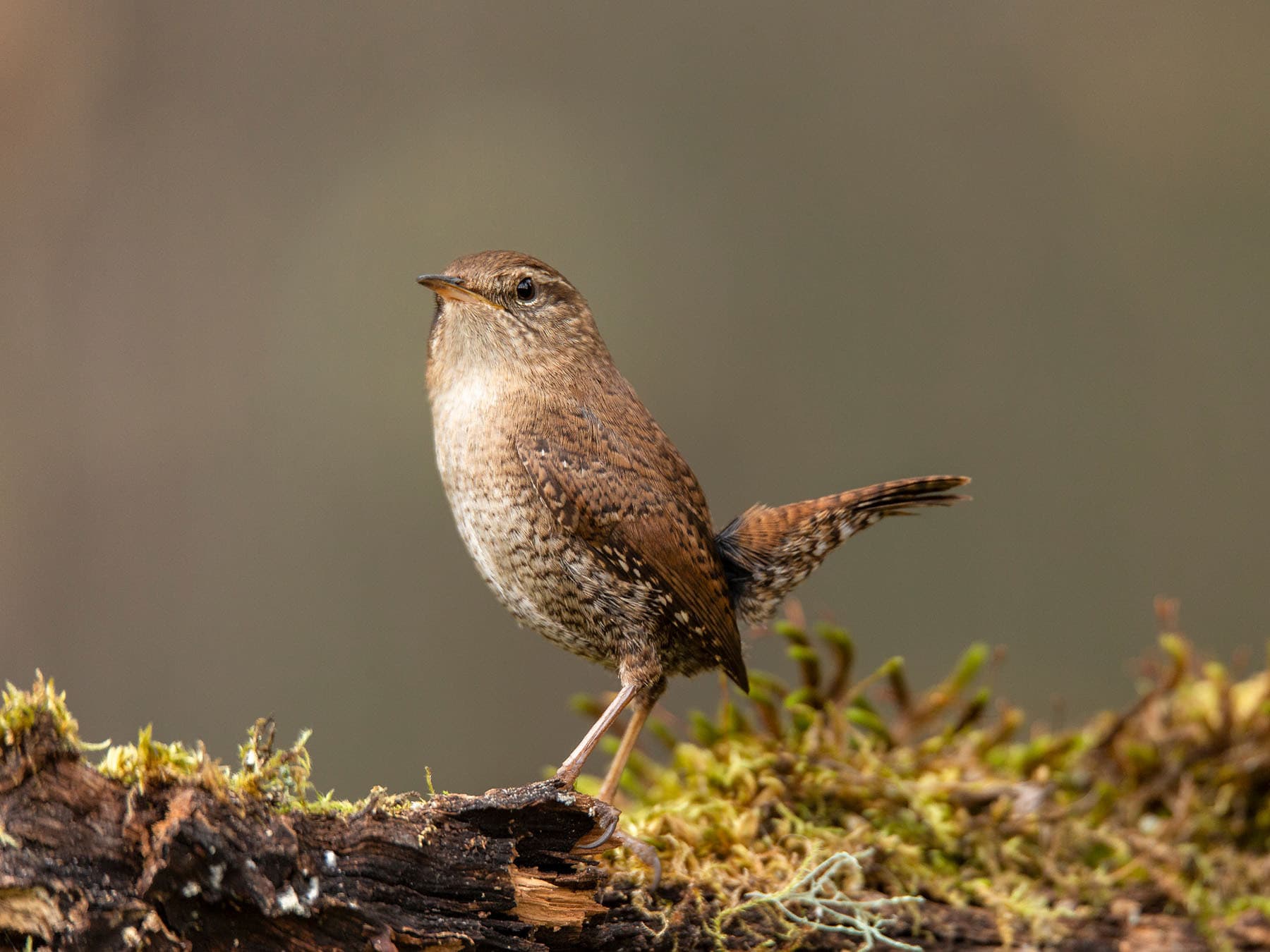
The custom lives on without harm to any bird. On the Isle of Man, Hunt the Wren is held on St Stephen's Day in towns and villages around the island, with the decorated wren pole, music and dancing, and no birds are harmed.10 In Ireland, Wren Day is kept in a few places, including Dingle in County Kerry, where thousands watch the costumed wren boys parade; today no wrens are harmed there either.11
The bird itself is protected by law. In the Republic of Ireland, hunting or injuring a protected wild bird is an offence under the Wildlife Act 1976, which covers the Wren.12 In Northern Ireland, the Wildlife (Northern Ireland) Order 1985 makes it an offence to kill, injure or take any wild bird intentionally or recklessly.13 On the Isle of Man, the Wildlife Act 1990 protects all wild birds, their nests and eggs.14 In Great Britain, the Wildlife and Countryside Act 1981 makes it an offence intentionally to kill, injure or take any wild bird.15
Where did the custom come from?
No one knows, and some popular explanations do not stand up. In The Golden Bough the anthropologist James Frazer argued that the hunt was a survival of an ancient rite in which a sacred animal was killed once a year and carried from door to door,1 and Moore thought it pointed to a sacrifice.5 Those are their interpretations, not established fact.
Other stories were told to explain it. In her History of the Isle of Man (1816), Hannah Bullock told of a fairy enchantress who escaped death by turning into a wren; a 2018 study for Culture Vannin judges that her tale "stems more from her own pen than any oral tradition".8 Moore quotes the antiquary John Aubrey's story that wrens pecking on drums once woke sleeping soldiers before an attack in the north of Ireland. The often-repeated claim that the Wren was the Druids' bird goes back to antiquarians of the 18th and early 19th centuries: Charles Vallancey wrote that "the Druids represented this as the king of all birds", and the Manx scholar John Kelly derived its Manx name, dreain, from "the druid's bird", a derivation Moore called bold, noting that the meaning of the name is uncertain.5 Versions you may read online, of wrens betraying Viking raiders or of the Robin killing the Wren at the turn of the year, do not appear in the old sources we checked.
Jenny Wren
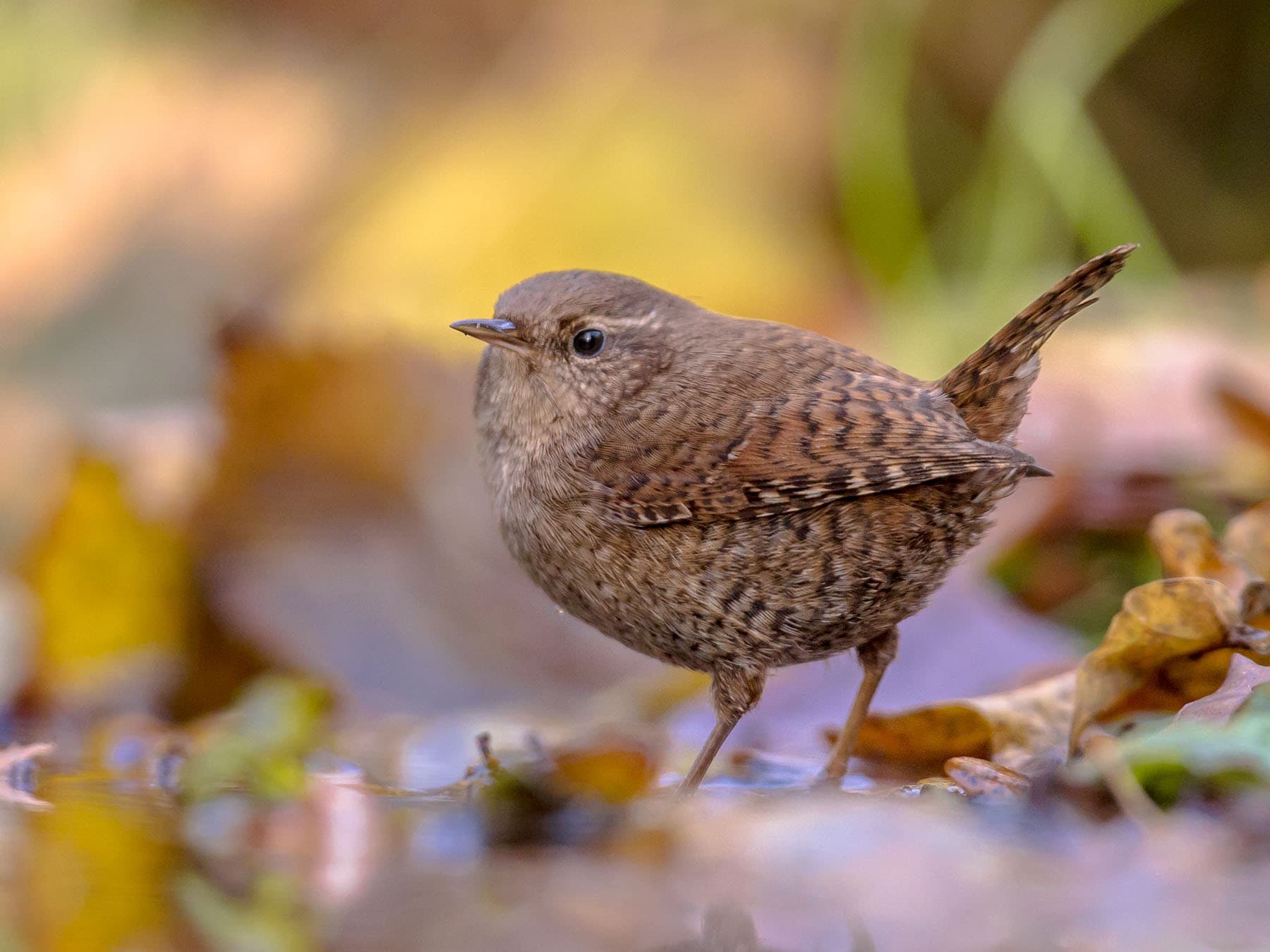
"Jenny Wren" is one of the old pet names given to familiar birds, like Jack Daw, Tom Tit and Robin Redbreast; folklore also made the Wren the Robin's wife.4 Charles Dickens borrowed the name for the dolls' dressmaker in Our Mutual Friend, whose real name was Fanny Cleaver but who had chosen to call herself Miss Jenny Wren.16
In literature
Shakespeare gave the Wren a famous line about courage. In Macbeth, Lady Macduff says that "the poor wren, / The most diminutive of birds, will fight, / Her young ones in her nest, against the owl."17 In 1612 John Webster wrote of the robin and the wren covering the friendless dead with leaves and flowers, an old belief Halliwell traced through the poets of Shakespeare's time.4
On the farthing
In 1937 the British farthing was given a Wren on its reverse: the Royal Collection holds a proof of the 1937 design, a Wren facing left above the word FARTHING.18
The name
The Old English name was wrenna, or wrænna.19 In Welsh the Wren is dryw, in Irish dreoilín and in Scottish Gaelic dreathann-donn.2 Its scientific name, Troglodytes, means cave-dweller, after its habit of creeping into holes and crevices.20
To hear the voice behind the "king", listen to Wren song and calls.
Sources
- Frazer, J. G. (1922). The Golden Bough: A Study in Magic and Religion (abridged edition), chapter LIV, section 2. Macmillan, London. Accessed 8 October 2026. Source
- BTO. Wren (Troglodytes troglodytes). BTO BirdFacts. Accessed 8 October 2026. Source
- Grimm, J., Grimm, W., Hunt, M. (translator) (1884). Household Tales: 171, The Willow-Wren (Der Zaunkönig). George Bell and Sons, London. Accessed 8 October 2026. Source
- Halliwell, J. O. (1849). Popular Rhymes and Nursery Tales. John Russell Smith, London. Accessed 8 October 2026. Source
- Moore, A. W. (1891). The Folk-lore of the Isle of Man. Brown & Son, Douglas; D. Nutt, London. Accessed 8 October 2026. Source
- Aristotle, Cresswell, R. (translator) (1862). Aristotle's History of Animals, in Ten Books. Henry G. Bohn, London. Accessed 8 October 2026. Source
- Pliny the Elder, Bostock, J., Riley, H. T. (translators) (1855). The Natural History, Book X, chapter 95. Taylor and Francis, London. Accessed 8 October 2026. Source
- Miller, S. (2018). Hunt the Wren: The Early Descriptions (1731-1845). Chiollagh Books for Culture Vannin, Isle of Man. Accessed 8 October 2026. Source
- National Folklore Collection, UCD. Amhrán an Dreoilín (Killorglin, Co. Kerry), The Schools' Collection, vol. 0435, p. 242. dúchas.ie. Accessed 8 October 2026. Source
- Manx Radio. Find out where to Hunt the Wren. Manx Radio news. Accessed 8 October 2026. Source
- Eveleth, R. (2012). The Irish used to celebrate the day after Christmas by killing wrens. Smithsonian Magazine. Accessed 8 October 2026. Source
- Oireachtas (1976). Wildlife Act, 1976, section 22 and Third Schedule. Accessed 8 October 2026. Source
- UK Government (1985). The Wildlife (Northern Ireland) Order 1985, Article 4. Accessed 8 October 2026. Source
- Isle of Man Government. A Code for Birdwatchers and Photographers: Birds and the law. gov.im. Accessed 8 October 2026. Source
- UK Parliament (1981). Wildlife and Countryside Act 1981, section 1. Accessed 7 October 2026. Source
- Dickens, C. (1865). Our Mutual Friend. Chapman and Hall, London. Accessed 8 October 2026. Source
- Shakespeare, W. (1623). Macbeth, Act IV, scene ii. First Folio. Accessed 8 October 2026. Source
- Royal Collection Trust. George VI uniface proof of the reverse of the farthing, 1937 (RCIN 443692). Royal Collection Trust. Accessed 8 October 2026. Source
- Bosworth, J., Toller, T. N.. An Anglo-Saxon Dictionary: wrenna. Bosworth-Toller (online). Accessed 8 October 2026. Source
- Kroodsma, D. E., Brewer, D., Christie, D. A., Marks, J. S. (2020). Eurasian Wren (Troglodytes troglodytes), version 1.0. Birds of the World (J. del Hoyo, A. Elliott, J. Sargatal, D. A. Christie and E. de Juana, editors). Cornell Lab of Ornithology. doi:10.2173/bow.winwre4.01