


Barn Swallow
European Swallow, Common Swallow · Hirundo rustica
By the Birdfact teamChecked by Nathan Cope
On this page15 sections
How to recognise it
Barn Swallows are familiar birds, unlikely to be confused with other species in the United Kingdom. In North America, however, they could be mistaken for the similar Cliff Swallow. Read on for more Barn Swallow Identification tips for the UK and USA.
What do Swallows look like?
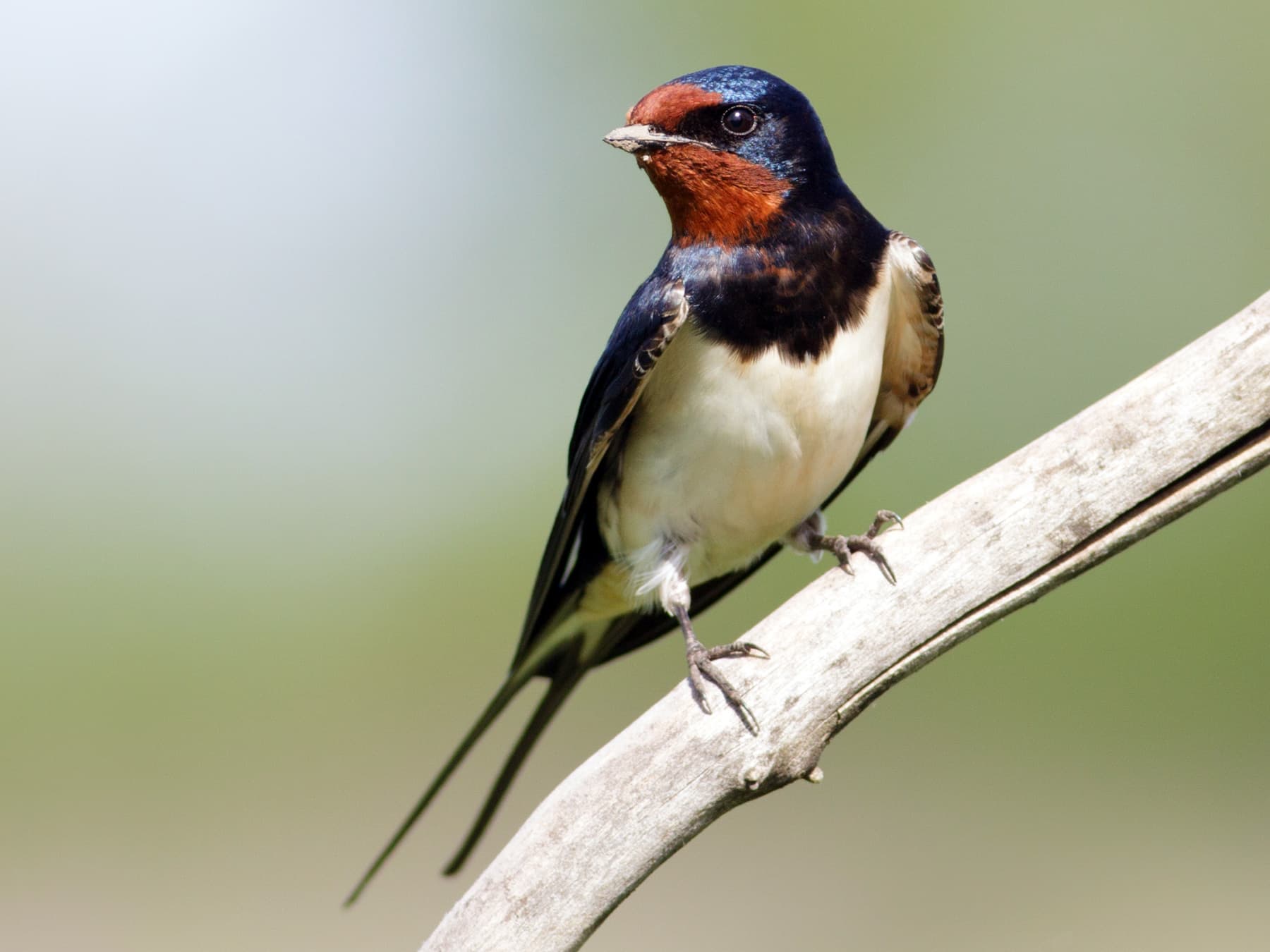
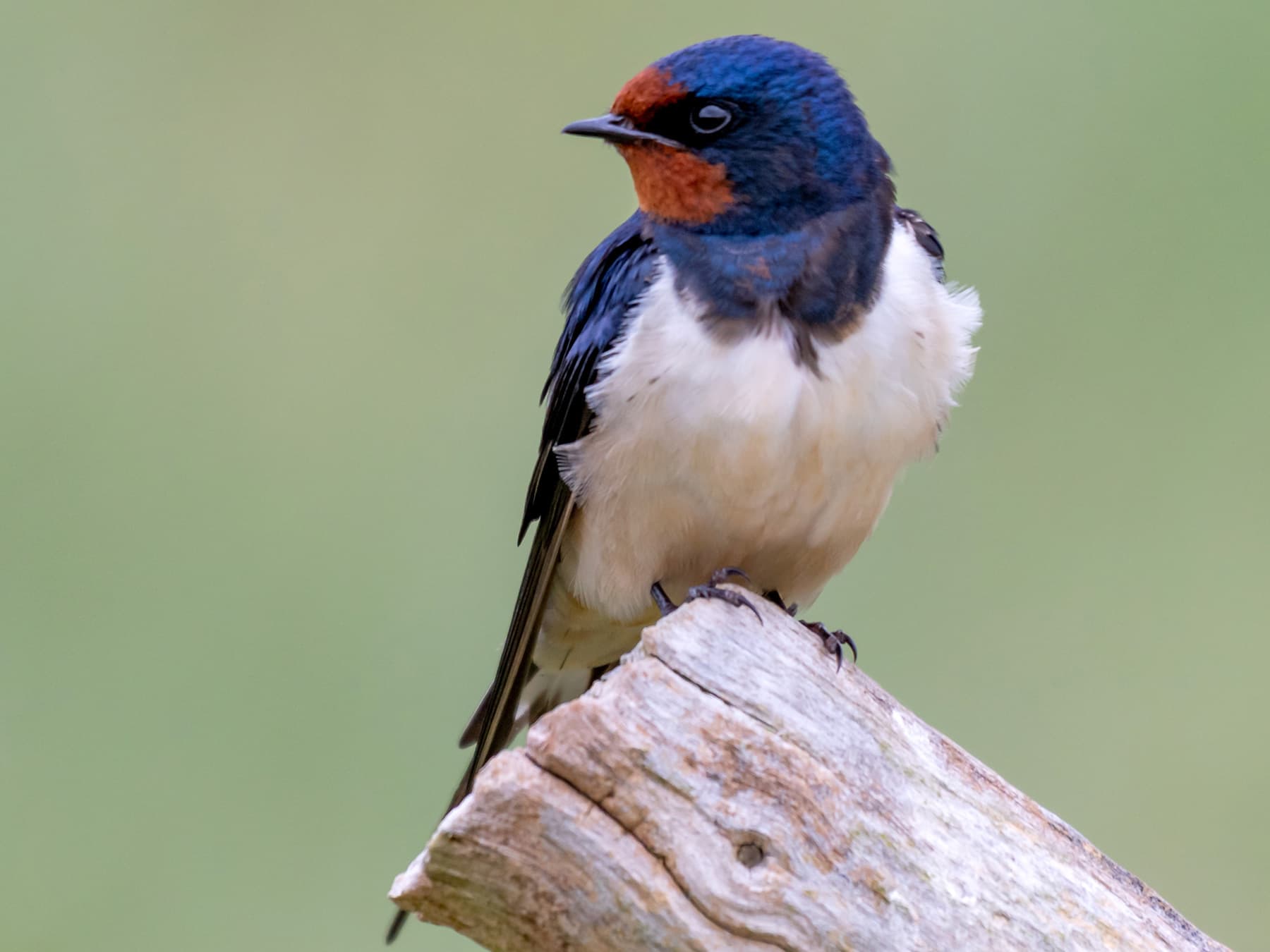
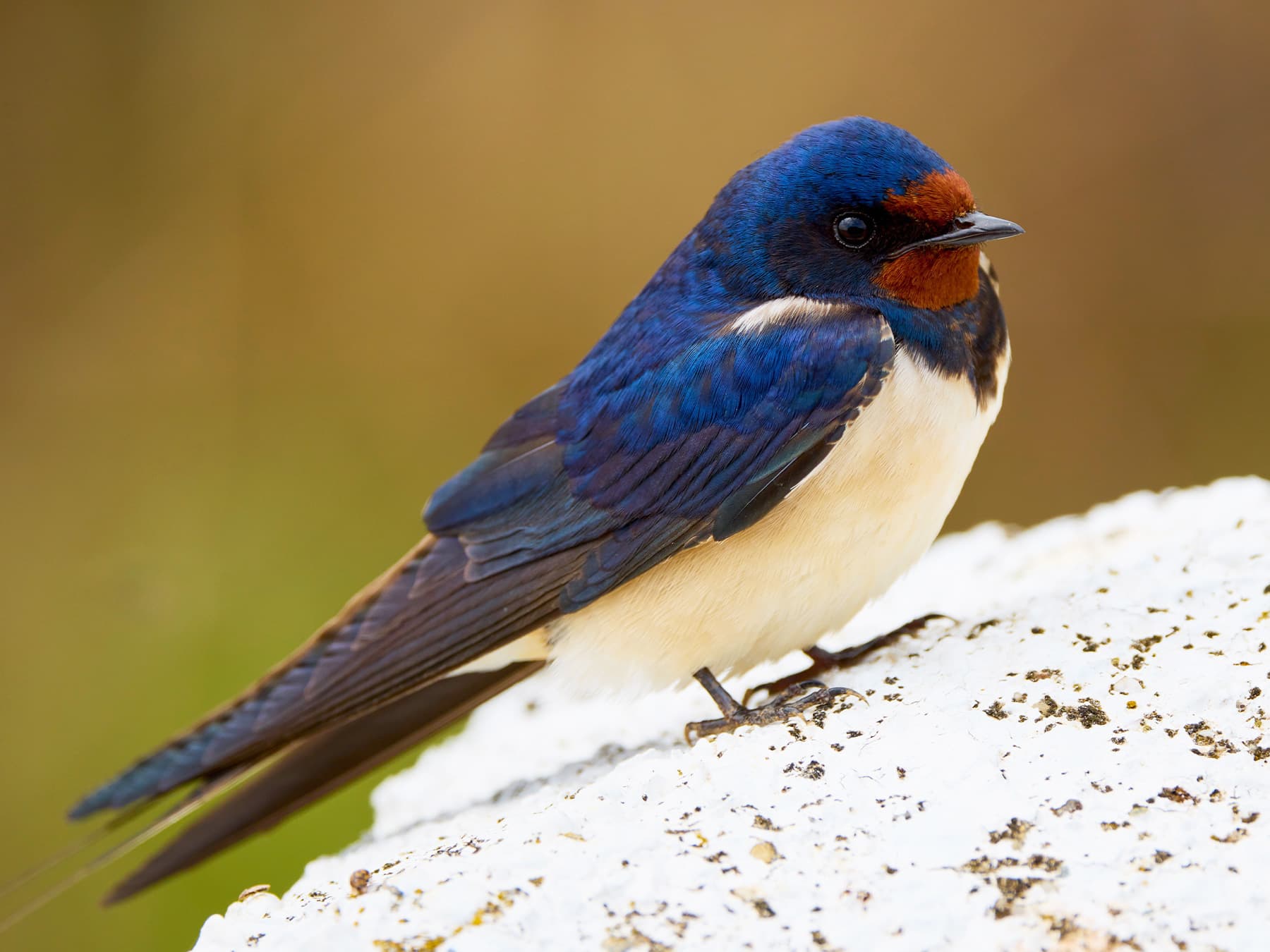
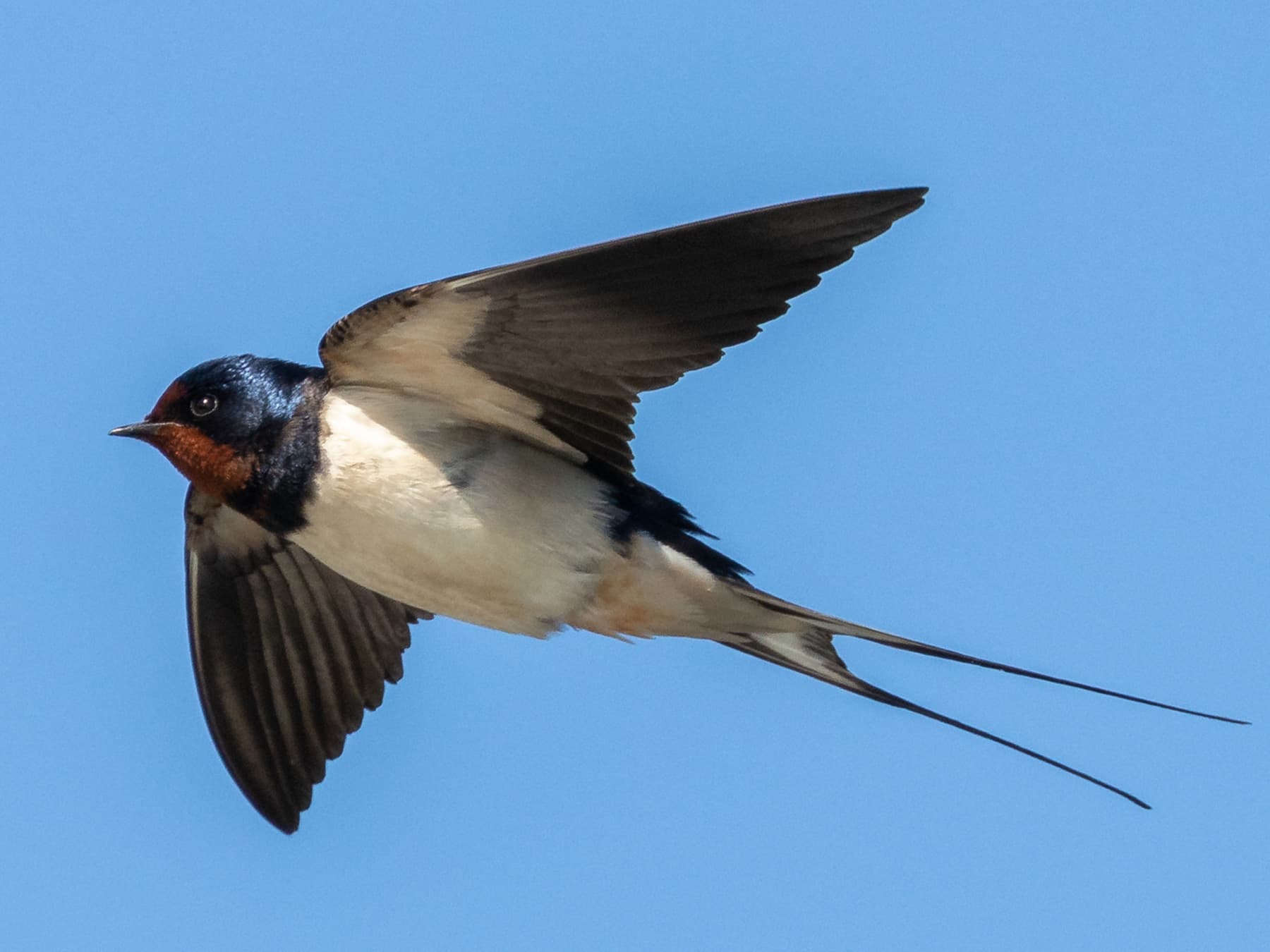
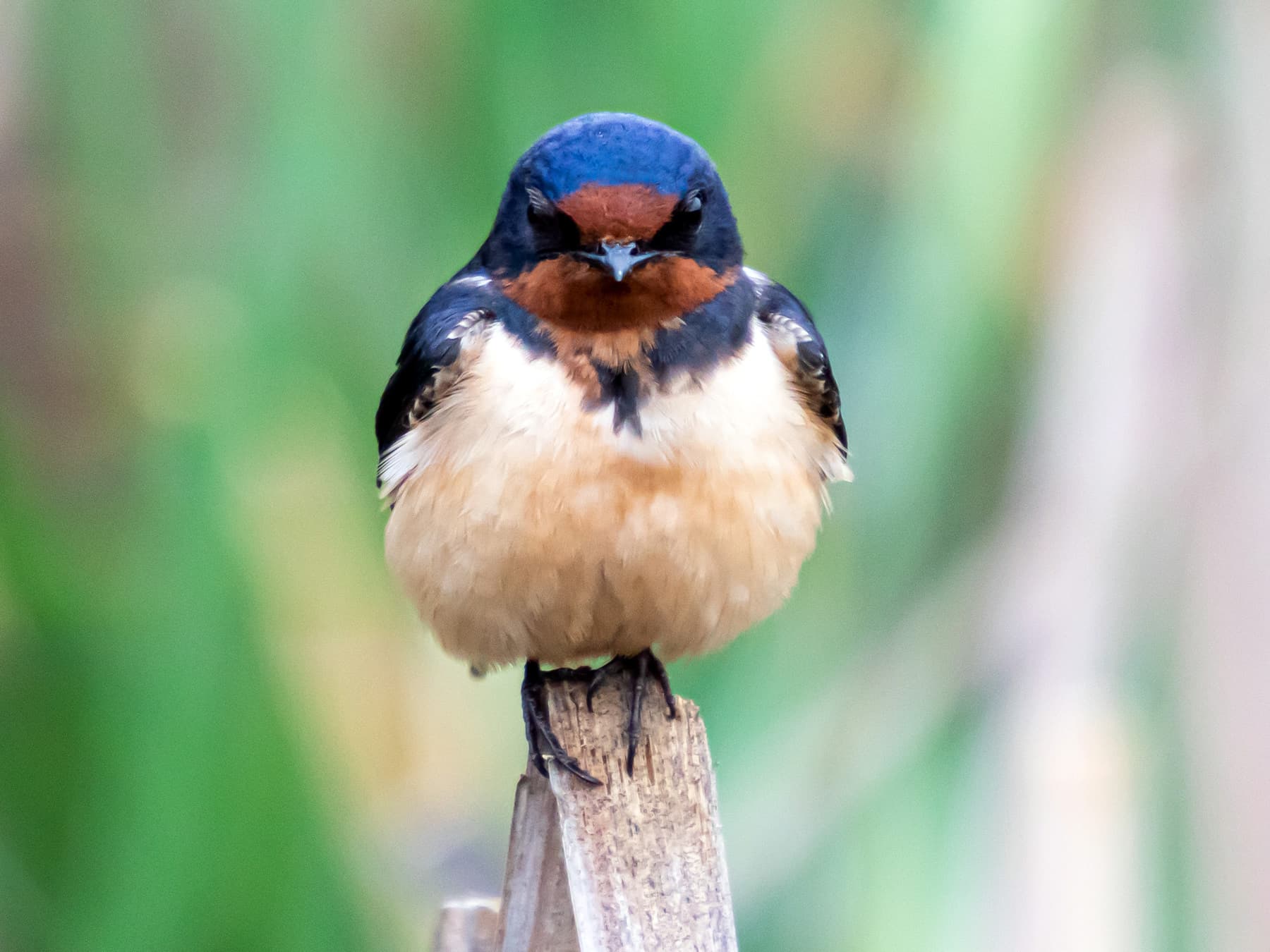
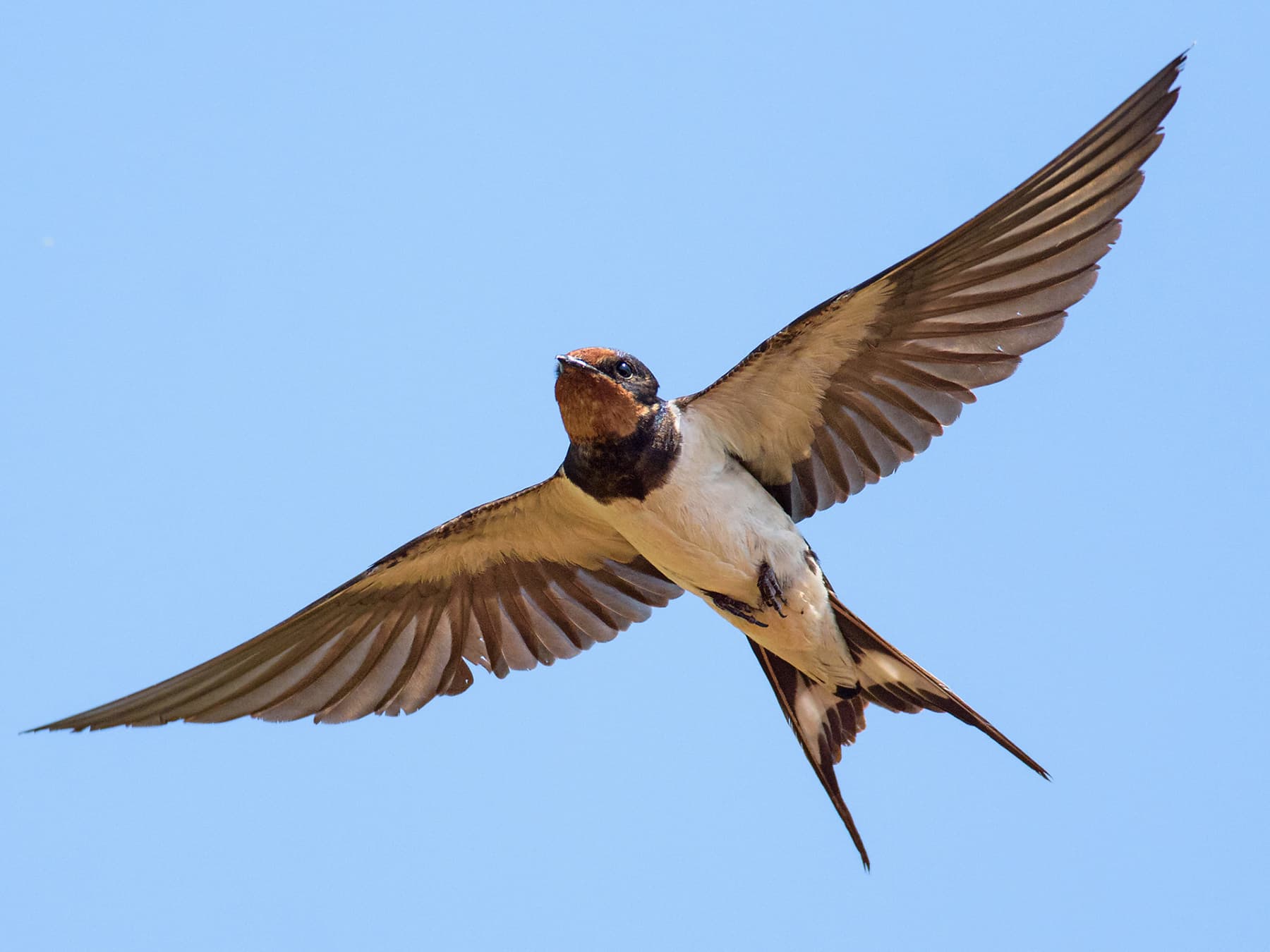
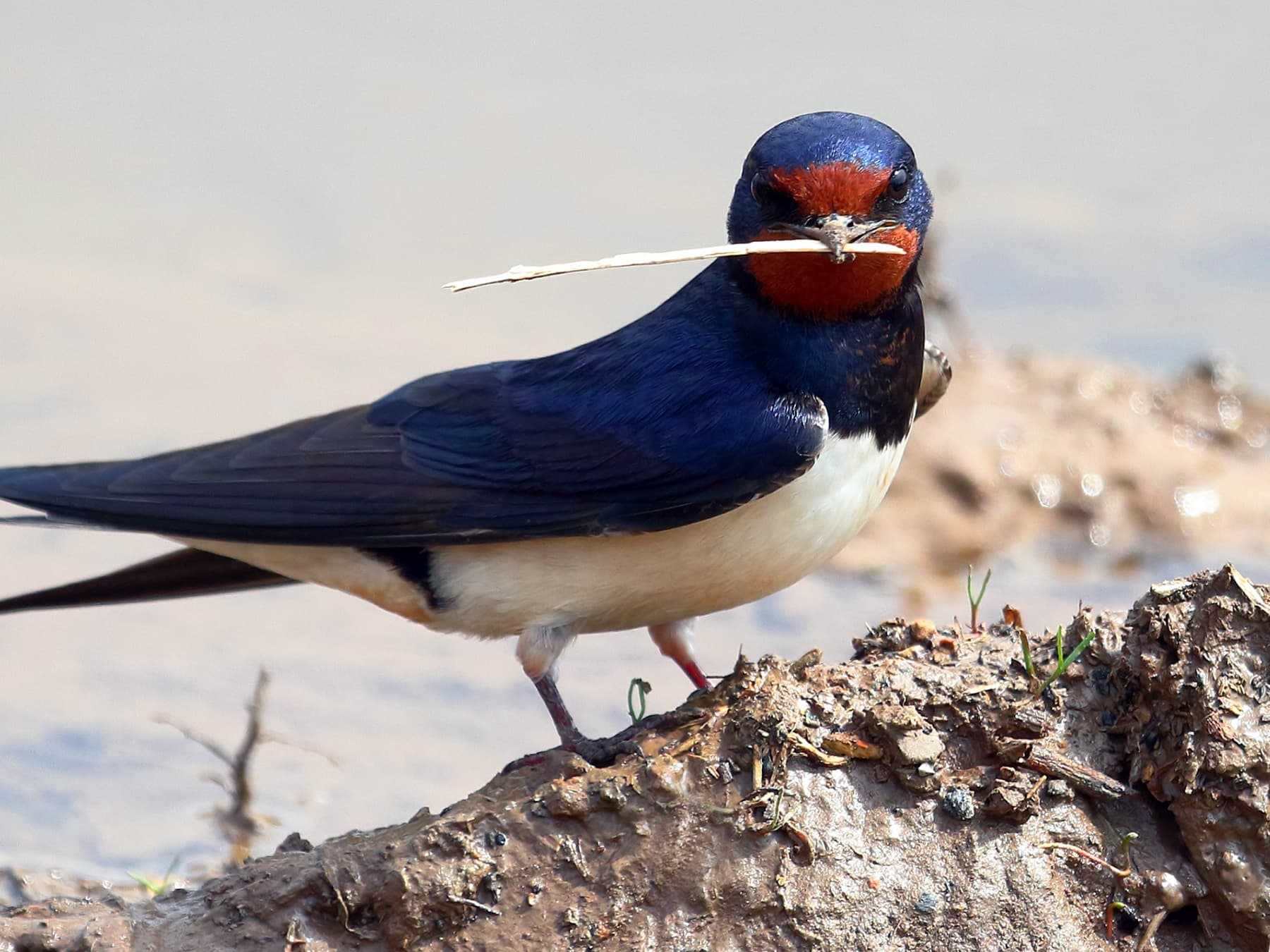
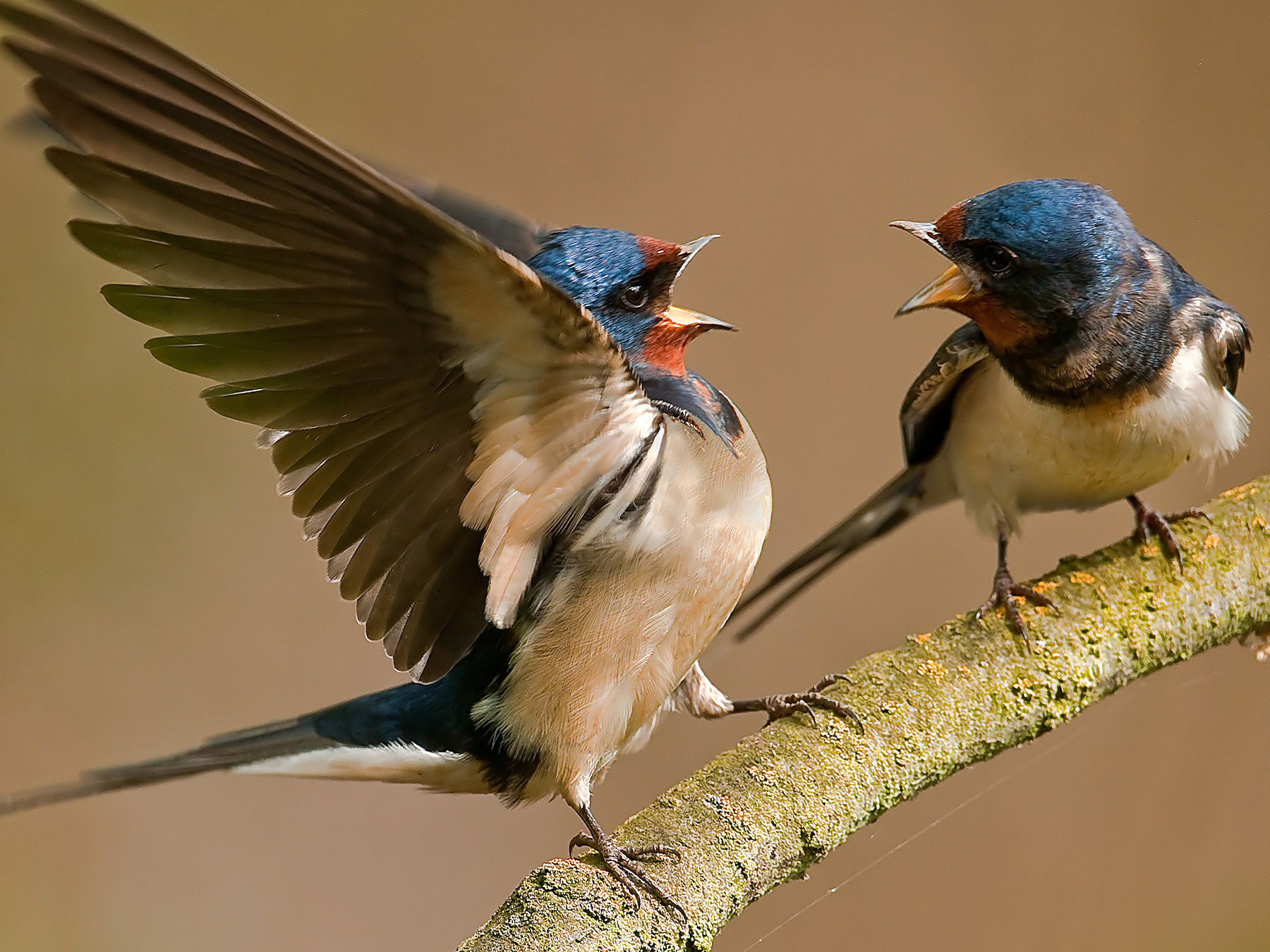
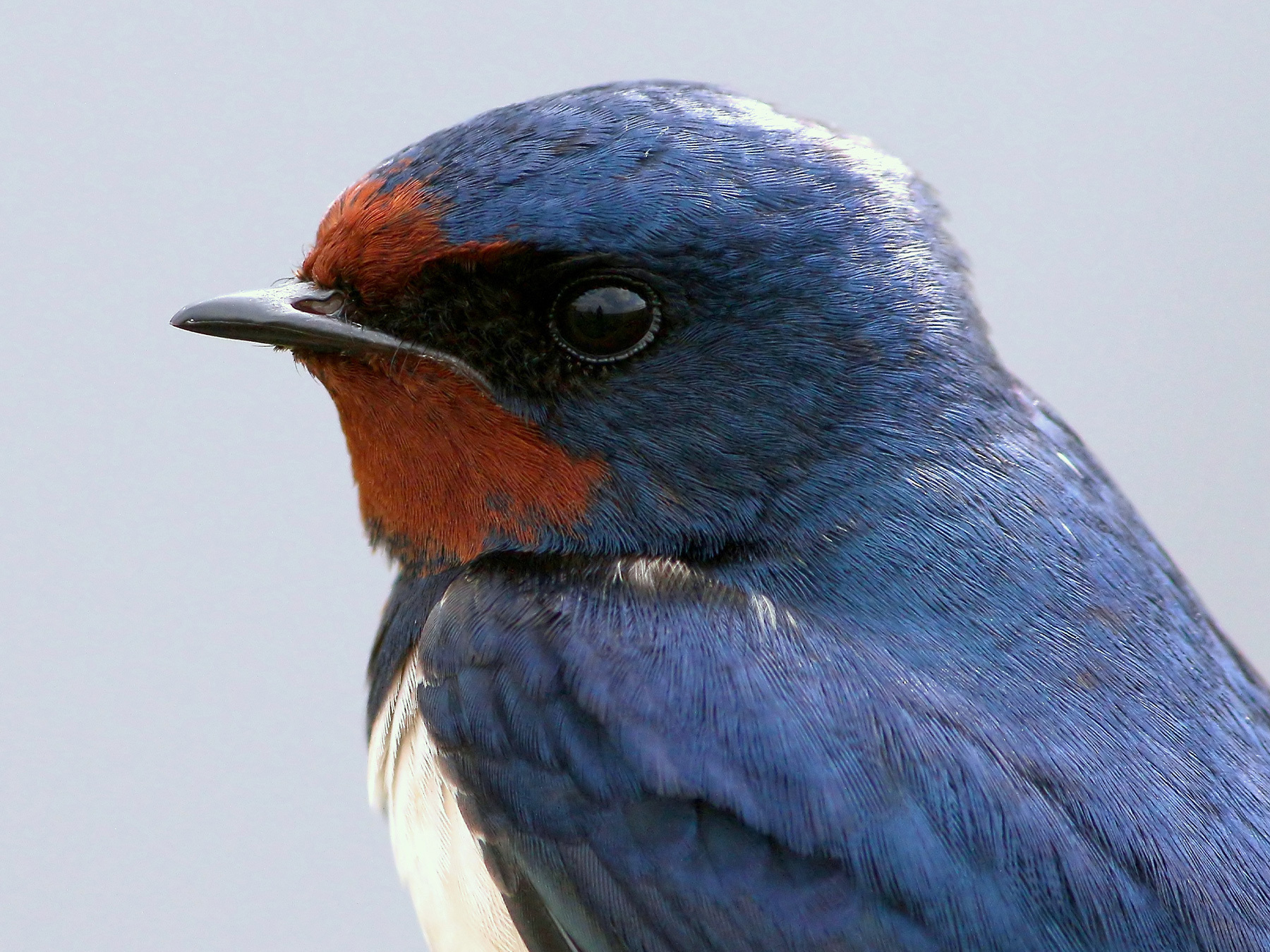
Barn Swallows are distinctive birds, with long pointed wings and a broad, triangular tail with a long narrow feather on either side, creating a forked impression. They have metallic navy blue upperparts that extend to the crown of the head and a full or partial band around the chest.
The forehead, chin, and throat are red, and their eyes and bills are black. They are elegant birds both in flight and when perched, and their short legs indicate that they are most at home in the air.
There are several recognized Barn Swallow subspecies across their global range, and each varies somewhat in color and pattern. American Barn Swallows have buffy underparts and a weak or broken breast band, while Swallows from the United Kingdom have white underparts and a broad blue chest band.
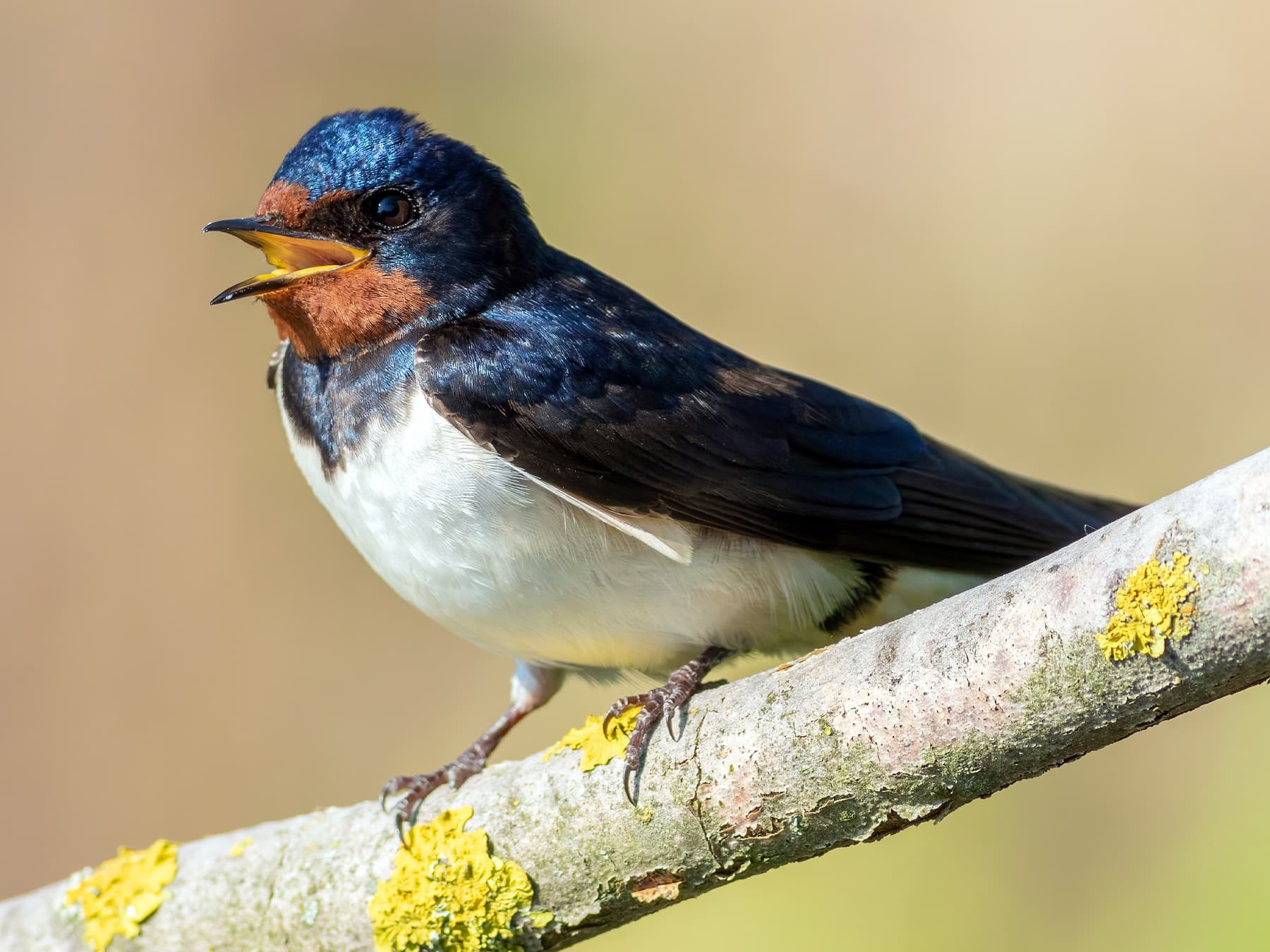
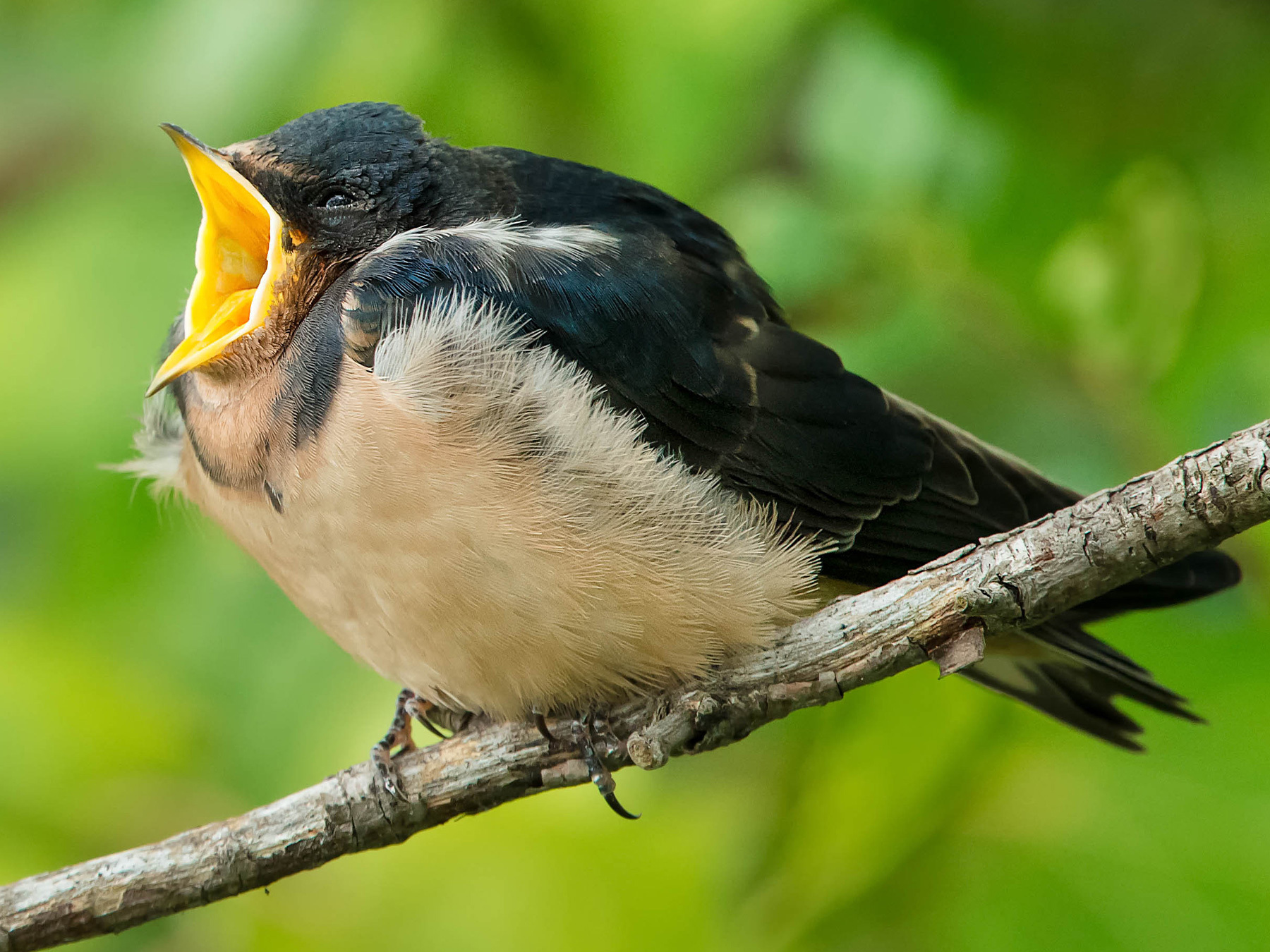
Males and females appear similar, but females have shorter outer tail feathers. Juvenile tail feathers are shorter still, and the young birds have duller plumage and yellow bill gapes.
How big are Swallows?
Barn Swallows are small, streamlined birds with long wings and tails.
Length
Barn Swallows have a total body length of about seven inches (17 - 19 cm). At rest, their wings extend well beyond the base of their tails, and their long, trailing tail feathers add an extra two or three inches to their total length.
Weight
Swallows are lightweight birds that weigh less than an ounce (16 - 24 g).
Wingspan
Their wingspan measures approximately 12.5 to 14 inches (32 - 35 cm).
Its size
Adults- Length
- 17–19 cm
- Wingspan
- 32–34 cm
- Weight
- 16–22 g
Its song and calls
What sound does a Swallow make?
Barn Swallows of both sexes produce a rapid twittering and chirping song, particularly during courtship. They also produce alarm calls when they detect a threat and when attempting to deter predators from the nest.
- Song0:00 / 0:18
Recorded in Minnesota, United States · July 2011
- Call0:00 / 1:18
Recorded in Auvergne-Rhône-Alpes, France · August 2019
When and where to see it
OctoberLeaving
Most recorded in October
- 1. Pembrokeshire1.7%
- 2. Isle of Wight1.7%
- 3. Vale of Glamorgan1.7%
- 4. Longford1.6%
- 5. East Sussex1.3%
Each dot is a county, state or province: the bigger and darker, the larger the bird’s share of that place’s bird records that month. Grey dots: no regular records. The ringed point is the centre of the bird’s records this month; the arrow shows how it moved since last month, and the dashed loop its path through the year. “Arrivals” colours places where it becomes regular this month (orange) or is in its last regular month (grey). GBIF eBird Observation Dataset, 2019–2024. Map data: Natural Earth, US Census Bureau; place centres © OpenStreetMap contributors.
In your area
See when the Barn Swallow is recorded in your county, state or province.
How often the Barn Swallow turns up in the UK, Ireland, the United States and Canada through the year, from birdwatchers' records.
United Kingdom
Summer visitor · regularly Apr–Oct · most records in August
Ireland
Summer visitor · regularly Apr–Oct · most records in August
United States
Summer visitor · regularly Mar–Oct · most records in August
Canada
Summer visitor · regularly Apr–Sep · most records in July
Show as a table
| Month | United Kingdom | Ireland | United States | Canada |
|---|---|---|---|---|
| January | 0.001% | 0.009% | 0.014% | 0.006% |
| February | <0.001% | 0.010% | 0.020% | 0.018% |
| March | 0.052% | 0.054% | 0.19% (regular) | 0.011% |
| April | 1.2% (regular) | 1.6% (regular) | 0.76% (regular) | 0.29% (regular) |
| May | 1.8% (regular) | 2.8% (regular) | 1.2% (regular) | 0.94% (regular) |
| June | 1.8% (regular) | 2.8% (regular) | 1.3% (regular) | 0.95% (regular) |
| July | 1.9% (regular) | 3.0% (regular) | 1.6% (regular) | 1.1% (regular) |
| August | 2.2% (regular) | 3.0% (regular) | 1.7% (regular) | 1.1% (regular) |
| September | 1.6% (regular) | 2.2% (regular) | 0.61% (regular) | 0.28% (regular) |
| October | 0.45% (regular) | 0.48% (regular) | 0.15% (regular) | 0.007% |
| November | 0.033% | 0.021% | 0.037% | 0.003% |
| December | 0.003% | 0.019% | 0.009% | 0.001% |
Recorded regularly in
Worldwide: recorded regularly in 208 countries
Countries where it was recorded in at least 3 of the 6 years 2019–2024. Linked countries have their own bird list.
Europe (50)
- Åland Islands
- Albania
- Andorra
- Austria
- Belarus
- Belgium
- Bosnia & Herzegovina
- Bulgaria
- Croatia
- Czechia
- Denmark
- Estonia
- Faroe Islands
- Finland
- France
- Germany
- Gibraltar
- Greece
- Guernsey
- Hungary
- Iceland
- Ireland
- Isle of Man
- Italy
- Jersey
- Kosovo
- Latvia
- Liechtenstein
- Lithuania
- Luxembourg
- Malta
- Moldova
- Montenegro
- Netherlands
- North Macedonia
- Norway
- Poland
- Portugal
- Romania
- Russia
- San Marino
- Serbia
- Slovakia
- Slovenia
- Spain
- Sweden
- Switzerland
- Ukraine
- United Kingdom
- Vatican City
Africa (49)
- Algeria
- Angola
- Benin
- Botswana
- Burundi
- Cameroon
- Cape Verde
- Central African Republic
- Chad
- Congo - Brazzaville
- Congo - Kinshasa
- Côte d’Ivoire
- Djibouti
- Egypt
- Equatorial Guinea
- Eswatini
- Ethiopia
- Gabon
- Gambia
- Ghana
- Guinea
- Guinea-Bissau
- Kenya
- Lesotho
- Liberia
- Libya
- Madagascar
- Malawi
- Mauritania
- Morocco
- Mozambique
- Namibia
- Nigeria
- Rwanda
- São Tomé & Príncipe
- Senegal
- Seychelles
- Sierra Leone
- Somalia
- South Africa
- South Sudan
- Sudan
- Tanzania
- Togo
- Tunisia
- Uganda
- Western Sahara
- Zambia
- Zimbabwe
Asia (49)
- Afghanistan
- Armenia
- Azerbaijan
- Bahrain
- Bangladesh
- Bhutan
- Brunei
- Cambodia
- China
- Cyprus
- Georgia
- Hong Kong SAR China
- India
- Indonesia
- Iran
- Iraq
- Israel
- Japan
- Jordan
- Kazakhstan
- Kuwait
- Kyrgyzstan
- Laos
- Lebanon
- Macao SAR China
- Malaysia
- Maldives
- Mongolia
- Myanmar (Burma)
- Nepal
- Oman
- Pakistan
- Palestinian Territories
- Philippines
- Qatar
- Saudi Arabia
- Singapore
- South Korea
- Sri Lanka
- Syria
- Taiwan
- Tajikistan
- Thailand
- Timor-Leste
- Turkey
- Turkmenistan
- United Arab Emirates
- Uzbekistan
- Vietnam
North America (40)
- Anguilla
- Antigua & Barbuda
- Aruba
- Bahamas
- Barbados
- Belize
- Bermuda
- British Virgin Islands
- Canada
- Caribbean Netherlands
- Cayman Islands
- Costa Rica
- Cuba
- Curaçao
- Dominica
- Dominican Republic
- El Salvador
- Grenada
- Guadeloupe
- Guatemala
- Haiti
- Honduras
- Jamaica
- Martinique
- Mexico
- Montserrat
- Nicaragua
- Panama
- Puerto Rico
- Sint Maarten
- St Barthélemy
- St Kitts & Nevis
- St Lucia
- St Martin
- St Pierre & Miquelon
- St Vincent & the Grenadines
- Trinidad & Tobago
- Turks & Caicos Islands
- United States
- US Virgin Islands
South America (14)
Oceania (6)
- Australia
- Christmas Island
- Cocos (Keeling) Islands
- Northern Mariana Islands
- Palau
- Papua New Guinea
Data: EOD – eBird Observation Dataset (Cornell Lab of Ornithology), accessed via GBIF.org, CC BY 4.0. Records from 2019–2024, aggregated and filtered by Birdfact. How these lists are made
Barn Swallows are one of the world’s most widespread birds, partially due to a wide habitat tolerance. Continue reading to learn more about the Barn Swallow’s range and where you might spot these elegant avians.
What is the habitat of a Swallow?
Barn Swallows hunt over various open habitats like meadows, farmlands, and savannahs, especially near wetlands. They require human structures like barns and bridges for nesting and must be within close proximity of muddy areas to collect nesting material.
What is the range of a Swallow?
Barn Swallows occur on every continent except Antarctica. Their New World range includes most of North America (including parts of Alaska) and much of South America in suitable habitats.
Across the Atlantic, the Swallow occurs throughout most of Europe and across Asia to the Bering Sea. They reach only the northernmost shores of Australia but are widespread in Africa as far as its southern tip.
Where do Swallows live?
Barn Swallows spend most of their day in flight, usually below about 30 feet or 10 meters and sometimes very low to the ground. They rarely land on the ground except when collecting mud to build their nest. They perch on tree branches, fences, and powerlines to roost.
How rare are Swallows?
Barn Swallows are ubiquitous in many parts of the world. Their total population is roughly 290 million to 487 million individuals, of which an estimated 41 million visit North America and about 58 to 97 million visit Europe.
Where can you see Swallows in North America?
Barn Swallows can be seen in open habitats and farmlands virtually anywhere in North America. However, they avoid high, mountainous terrain and dense forest, and they are most common between April and October.
Where can you see Swallows in the UK?
Birdwatchers can see Swallows almost anywhere in the UK where farmlands, open pasture, and other low vegetation habitats occur. They are particularly common near wetlands where flying insects are abundant and near nesting sites like barns and bridges.
Migration
The Barn Swallow migration is one of the most impressive in all the bird world. These tiny birds weigh under an ounce but travel thousands of miles between wintering and breeding grounds on opposite ends of the globe.
Continue reading to learn more about Swallow migration.
Do Swallows migrate?
Barn Swallows are highly migratory birds which explains why we only see them in the spring and summer. Their flying insect prey becomes scarce as the days shorten, prompting them to head south of the equator and avoid ever experiencing a true winter.
Would you like to learn more about Barn Swallow Migration? Read this in-depth guide for more fascinating Swallow migration facts.
Are Swallows native to North America?
Barn Swallows are native breeding migrants to North America. They begin to arrive in the south of the United States in mid-March but only reach the far north around the start of June. They start the long journey from the north in August and have mostly left the United States by mid-November. They will spend the winter enjoying the long days and warm weather in Central and South America.
Are Swallows native to the UK?
Swallows are native breeding visitors to the United Kingdom. They leave for their African overwintering grounds in September and return in April. Worryingly, some individuals have begun to remain in the UK throughout the year, possibly due to the effects of climate change.
Tips for seeing it
- Look for Barn Swallows near open fields, farmlands, and water bodies.
- Observe their distinctive forked tails during flight.
- Listen for their cheerful, twittering calls, especially near nesting sites.
- In the UK and North America, check barns and outbuildings for nesting pairs in spring and summer.
What it eats
Swallows are specialized hunters, evolved to catch their prey in flight. Continue reading to learn more about the Barn Swallow’s diet.
What do Swallows eat?
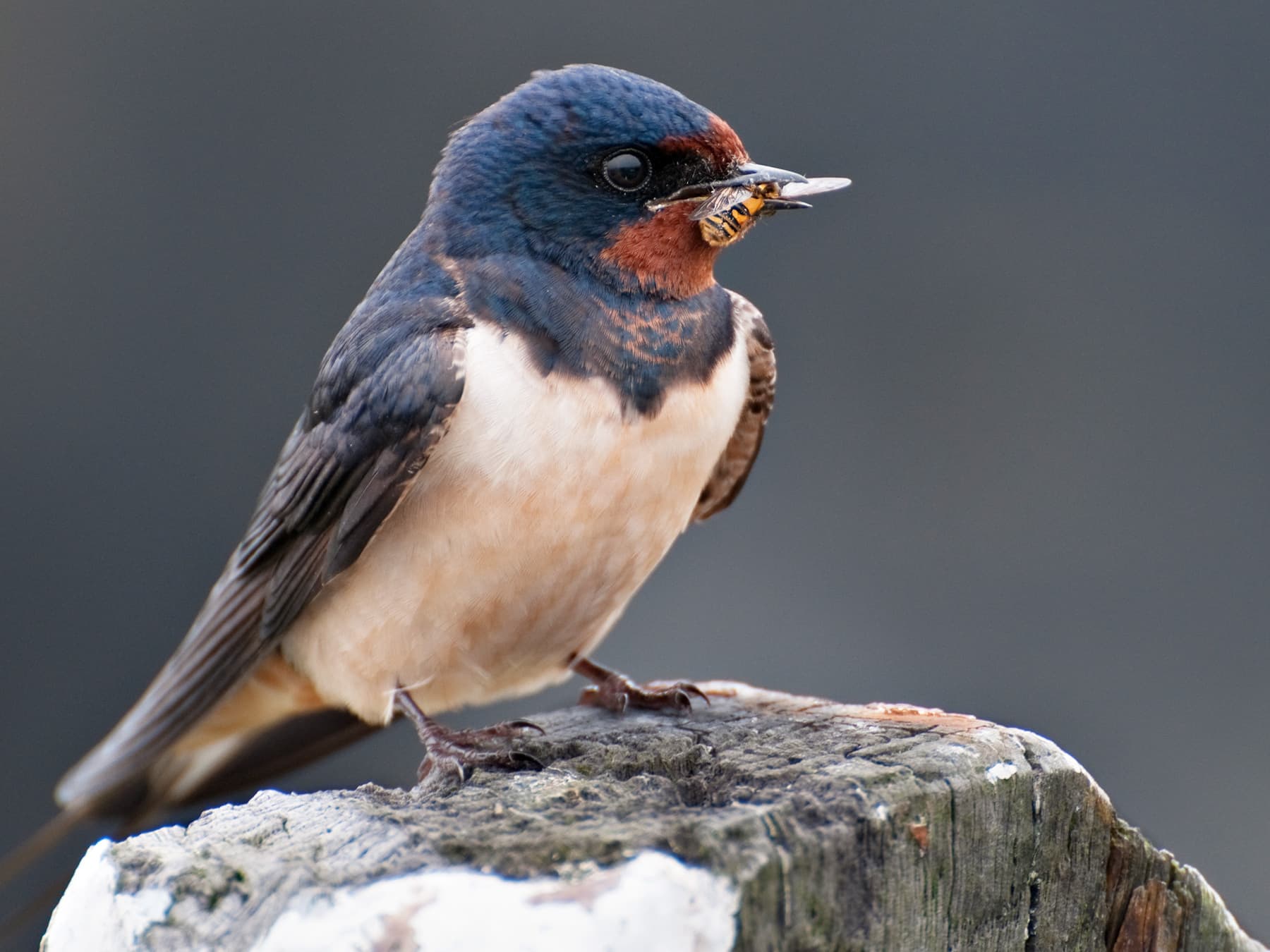
Barn Swallows are insectivorous and live almost solely on small flying insects caught on the wing. Most of their prey come from various fly families, but they also eat flying ants, moths, and beetles.
What do Swallow chicks eat?
Barn Swallow chicks eat small flying insects like ants, flies, and bugs. The young birds remain in the nest for about three weeks and then rely on their parents for another week or two.
Both parents provide food equally in North America, but females in Europe supply the most food, frequently losing significant body weight due to their efforts.
Nesting and breeding
Where do Swallows nest?
Barn Swallows build their nests on vertical surfaces like walls and under horizontal surfaces like ceilings. They probably evolved to nest on cliffs, caves, and large trees that provide these characteristics, but modern Swallows rely heavily on our barns, buildings, and other infrastructure.
Barn Swallows prefer to nest in rural areas in the United States but happily nest in urban centers in other parts of their range.
When do Swallows nest?
Barn Swallows nest in the spring and summer, between May and September. Pairs form shortly after their arrival on the breeding grounds in the northern hemisphere and lay their first clutch one to three weeks later.
What do Swallow eggs look like?
Barn Swallows usually lay four or five eggs, although clutches of two to seven are possible. Their eggs are cream-white with fine spots and speckles of various darker shades, and they measure approximately 19 millimeters long and 14 millimeters wide.
Do Swallows mate for life?
Barn Swallows do not mate for life. Successful pairs may breed together in successive years, although they usually find a new mate each breeding season. These birds form monogamous pairs, although infidelity is common.
Would you like to learn more about Barn Swallow nesting? Check out this in-depth guide for more Swallow breeding facts.
Behaviour
Are Swallows aggressive?
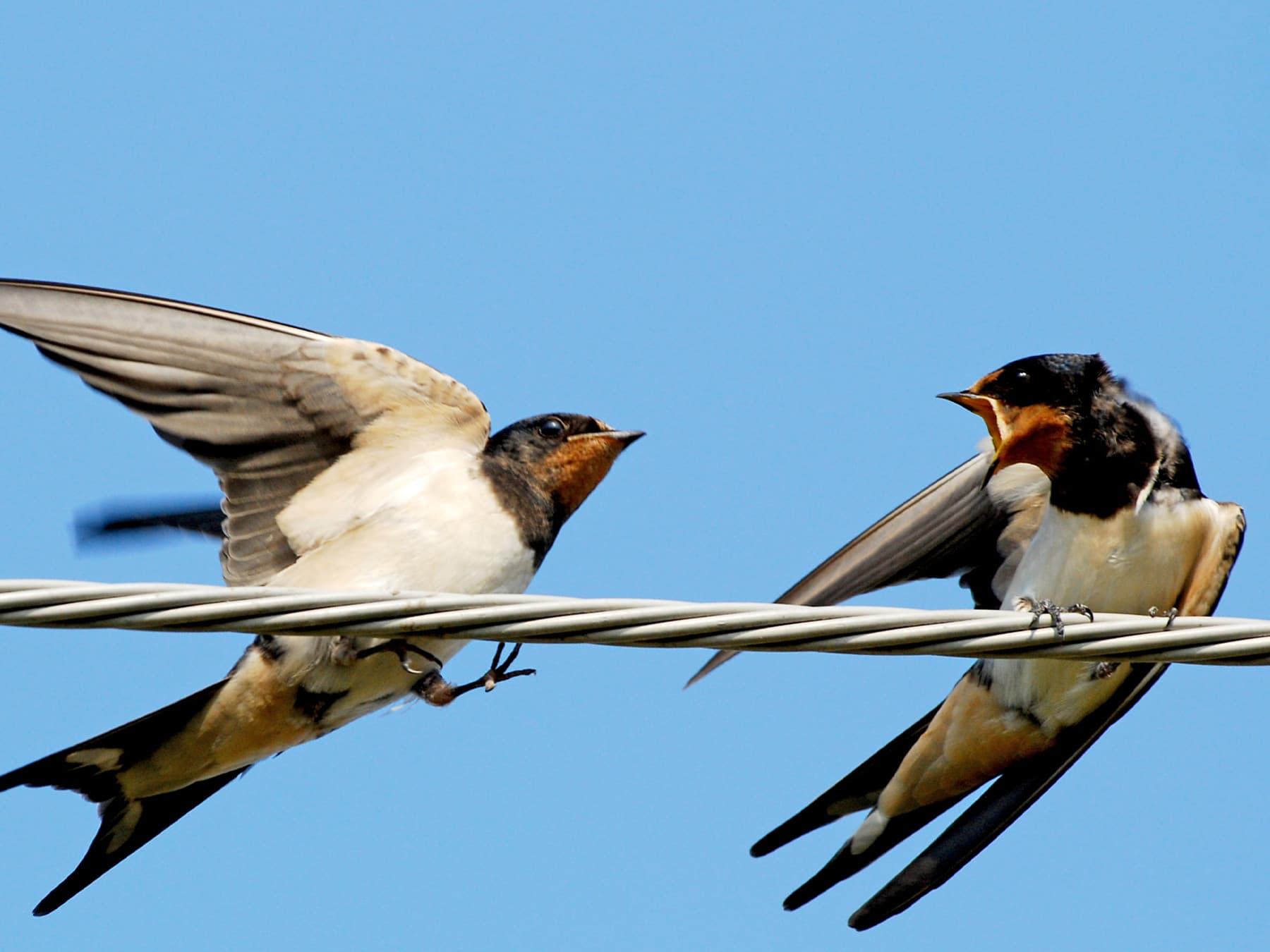
Barn Swallows may show aggression towards intruders at their nest site. They will attack other Swallows and fearlessly mob any other birds which may be a potential nest predator.
Where do Swallows sleep at night?
Barn Swallows sleep in their nest or close nearby during the breeding season. At other times of the year, they roost communally in reedbeds and marshes, often in impressive flocks of thousands of birds.
Lifespan and predators
How long do Swallows live?
Barn Swallows can live up to 15 years. However, most Swallows never make it to adulthood, and those that do have a much shorter life expectancy of about two years.
What are the predators of Swallows?
Adult Barn Swallows are most vulnerable to agile birds of prey like Cooper’s Hawks and Sparrowhawks. Other raptors like Kestrels and Falcons also catch these fast-flying birds, and owls may hunt them after dark. Rodents, cats, and corvids feed on their eggs and chicks.
Are Swallows protected?
Barn Swallows are protected by the Migratory Bird Treaty Act in North America and the Wildlife and Countryside Act in the United Kingdom.
Are Swallows endangered?
Barn Swallows are not endangered, although their population shows a decreasing trend. Their most significant threats are thought to be from modernized farming techniques and the use of pesticides. Nevertheless, the species remains common and is currently assessed as ‘Least Concern’ on the IUCN Red List.
Conservation
While globally listed as Least Concern, Barn Swallow populations have declined in some regions due to agricultural intensification and loss of nesting sites.
Conservation efforts focus on maintaining suitable nesting habitats and reducing pesticide use in foraging areas.
Similar birds
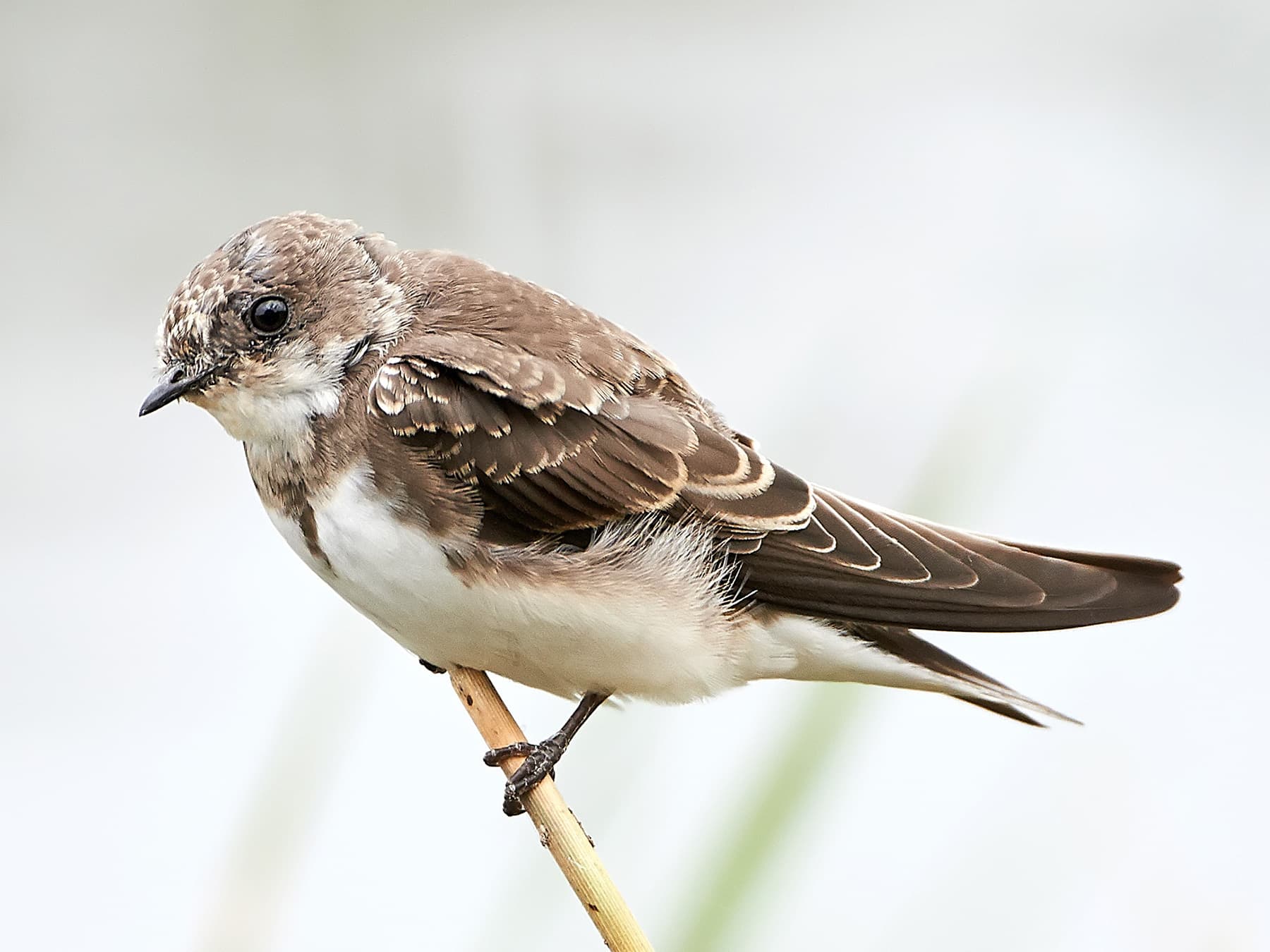
Often mistaken for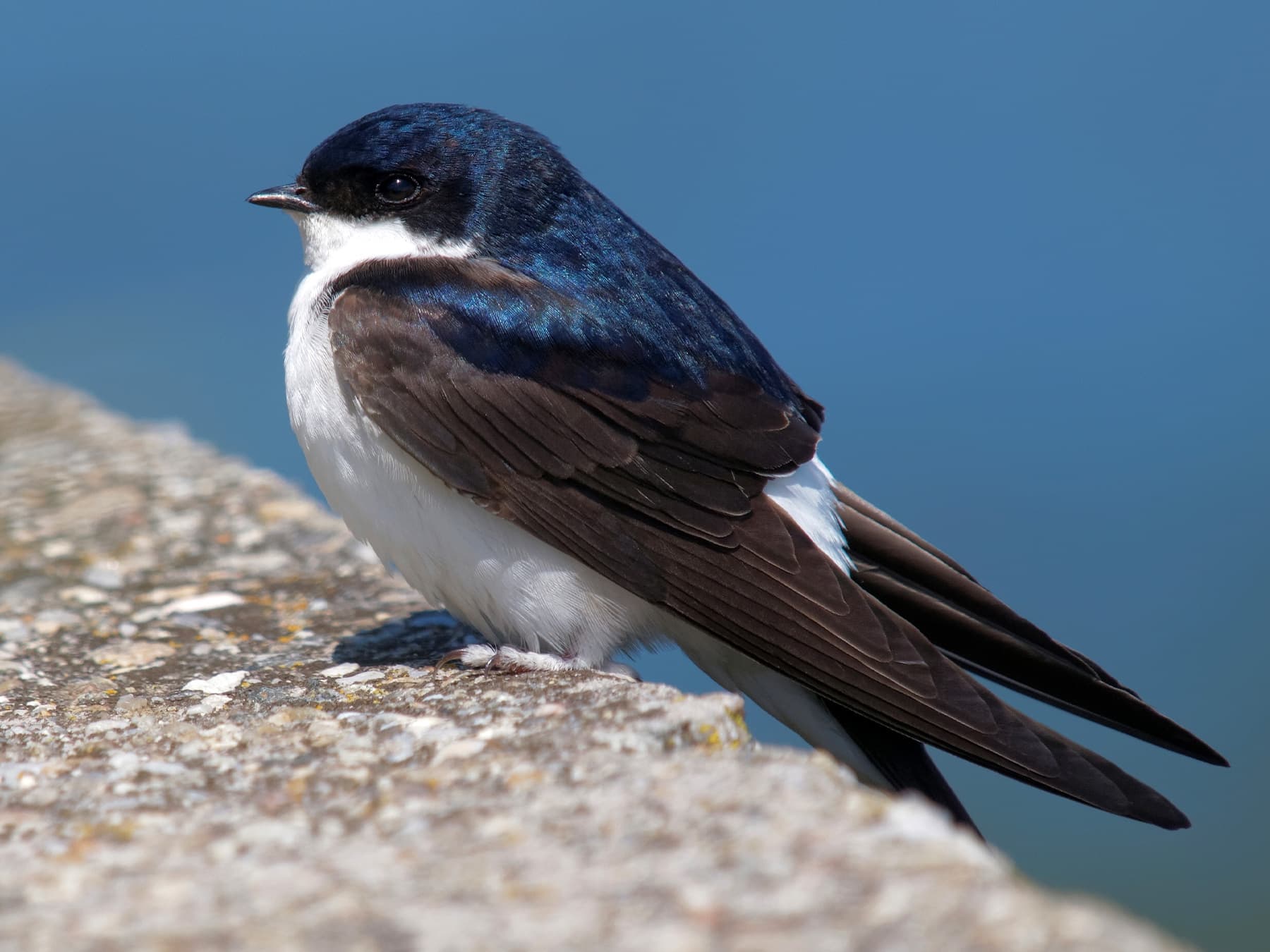
More photos
4 photos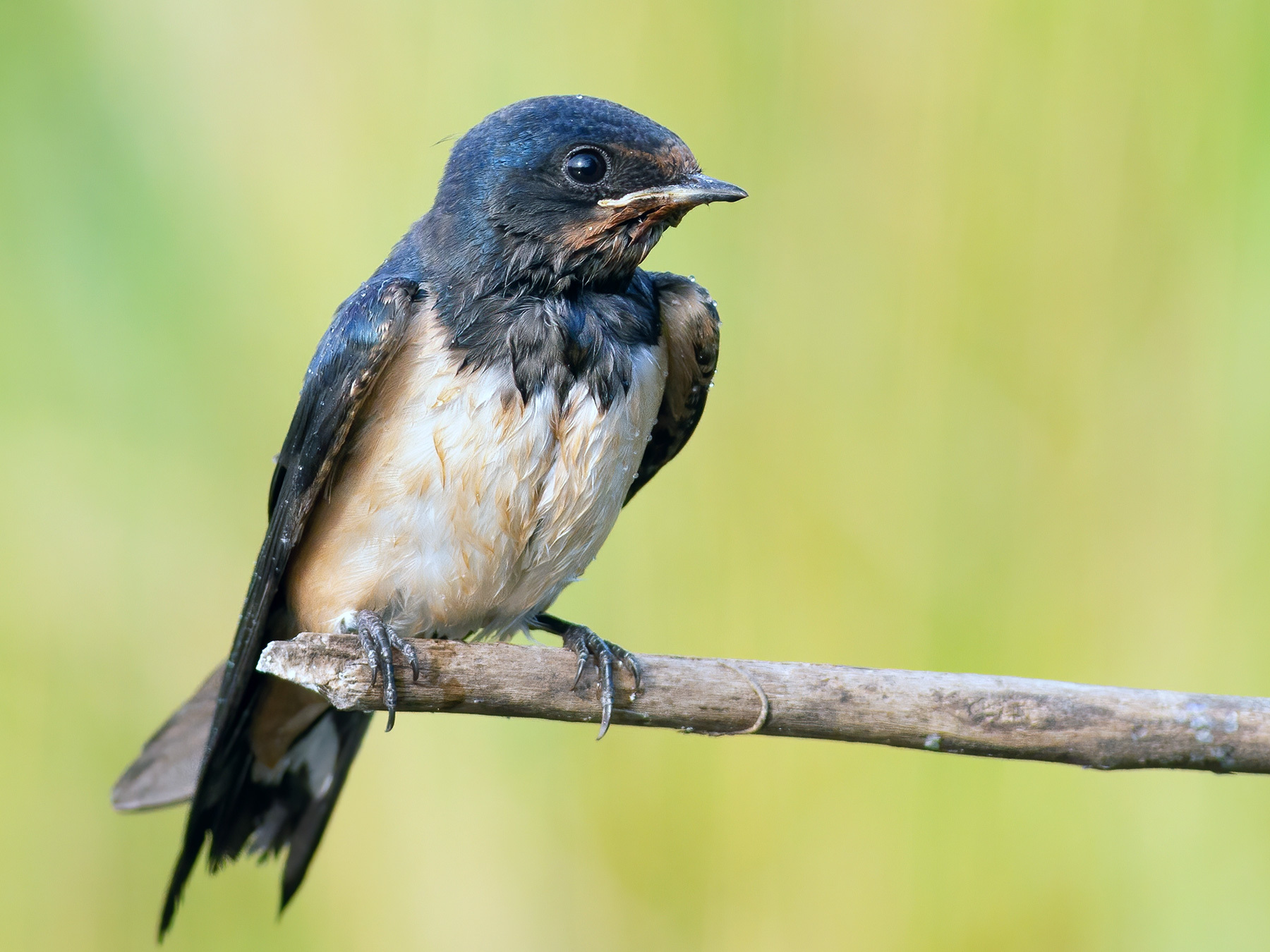
Barn Swallow guides
5 guidesQuick facts
- Length
- 17–19 cm
- Wingspan
- 32–34 cm
- Weight
- 16–22 g
- Lifespan
- 2 years · oldest recorded 11.1 years
- Family
- Swallows & Martins
- Migration
- Long-distance Migrant
- Global status (IUCN)
- Least Concern
- World population
- 290,000,000 - 487,000,000 mature individuals
- Population trend
- Decreasing
- Also called
- European Swallow, Common Swallow
- Scientific name
- Hirundo rustica
Questions
2What is special about a Swallow bird?
The Swallow’s impressive annual migration is one of its most fascinating behaviors. These tiny birds switch between the Northern and Southern Hemispheres each year to take advantage of the alternating spring and summer seasons on either side of the equator. They can fly over a hundred miles in a day and may have to fly even further when crossing open stretches of the ocean.
Are Swallows good to have around your house?
Homeowners do not always appreciate Swallows. Their mud nest and droppings make them unpopular with some people, although their presence also has some great benefits. These birds are highly effective at controlling small flying insects like mosquitoes and other pests.
Sources
4- 1BirdLife International. 2019. Hirundo rustica. The IUCN Red List of Threatened Species 2019: e.T22712252A137668645. Source (opens in a new tab)
- 2BirdLife International. 2019. Hirundo rustica. The IUCN Red List of Threatened Species 2019: e.T22712252A137668645. Source (opens in a new tab)
- 3BirdLife International. 2019. Hirundo rustica. The IUCN Red List of Threatened Species 2019: e.T22712252A137668645. Source (opens in a new tab)
- 4Fransson et al., EURING list of longevity records for European birds (2010) Source (opens in a new tab)

Checked by
Nathan Cope, founder and editor
Nathan founded Birdfact and leads its writers and contributors in the UK, the US and Canada. He has watched and studied birds for more than ten years, and checks every article and species guide before it’s published.