


Sand Martin
Bank Swallow, Collared Sand Martin · Riparia riparia
By the Birdfact teamChecked by Nathan Cope
On this page13 sections
How to recognise it
What do Sand Martins look like?
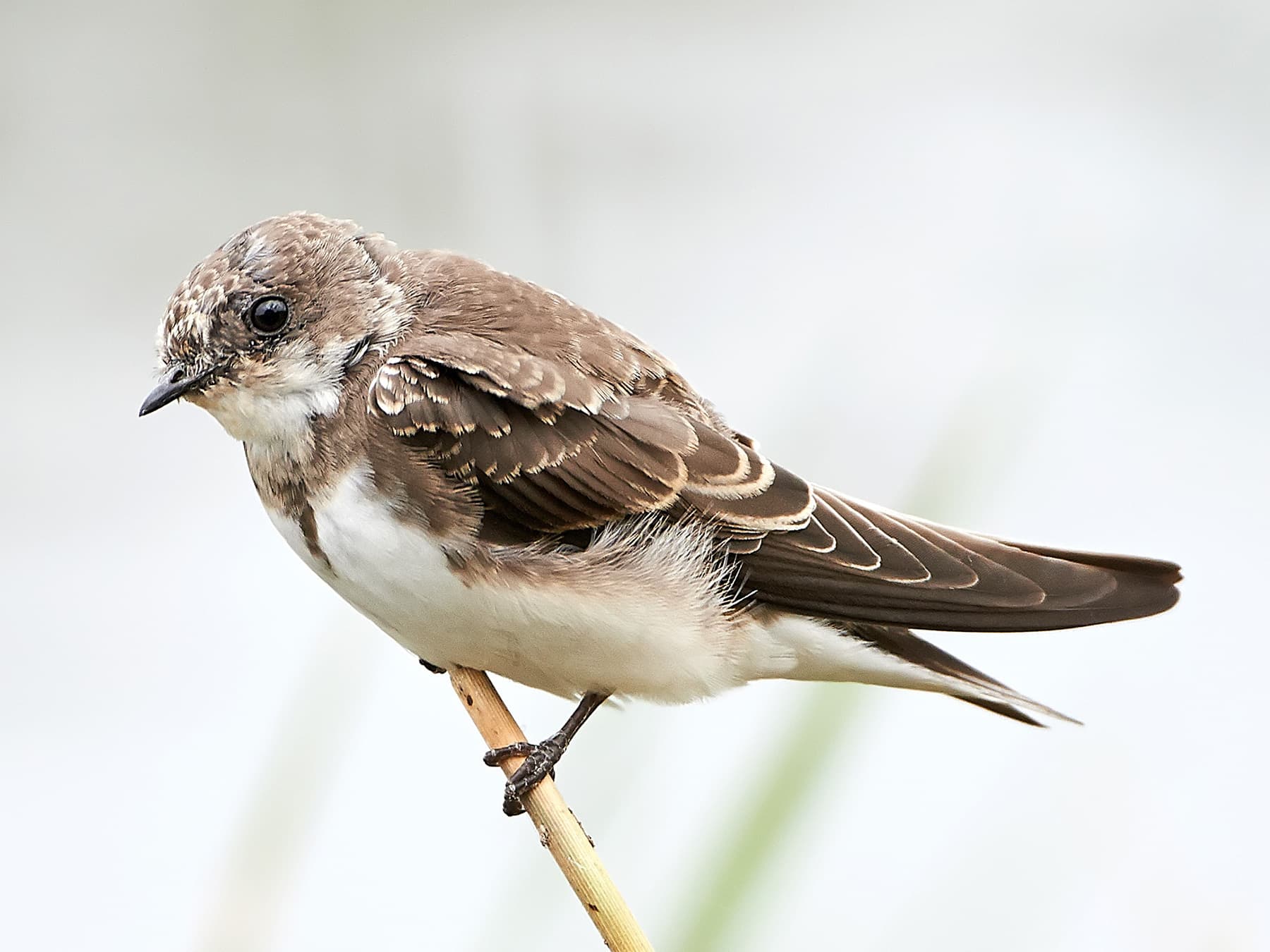
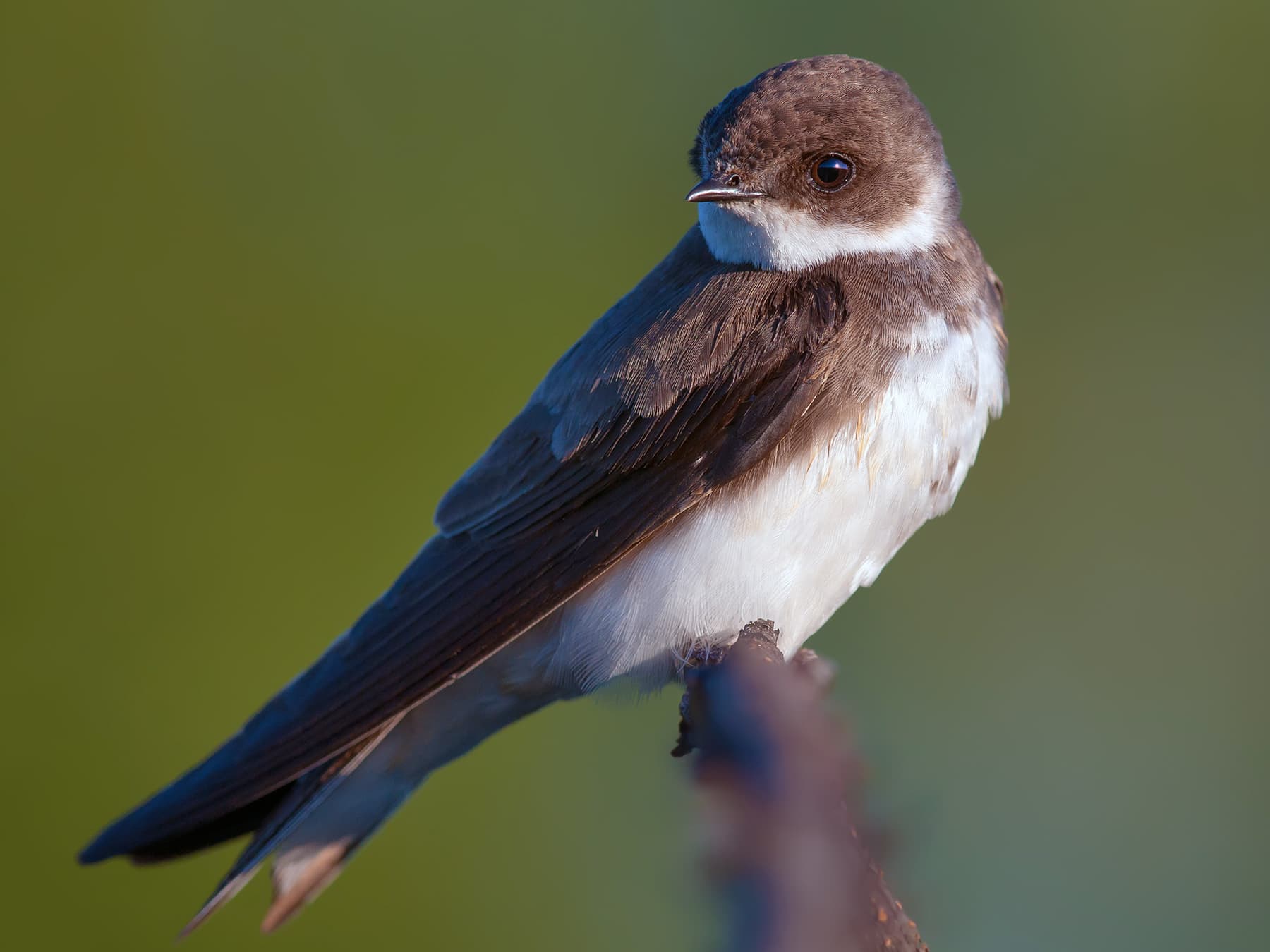
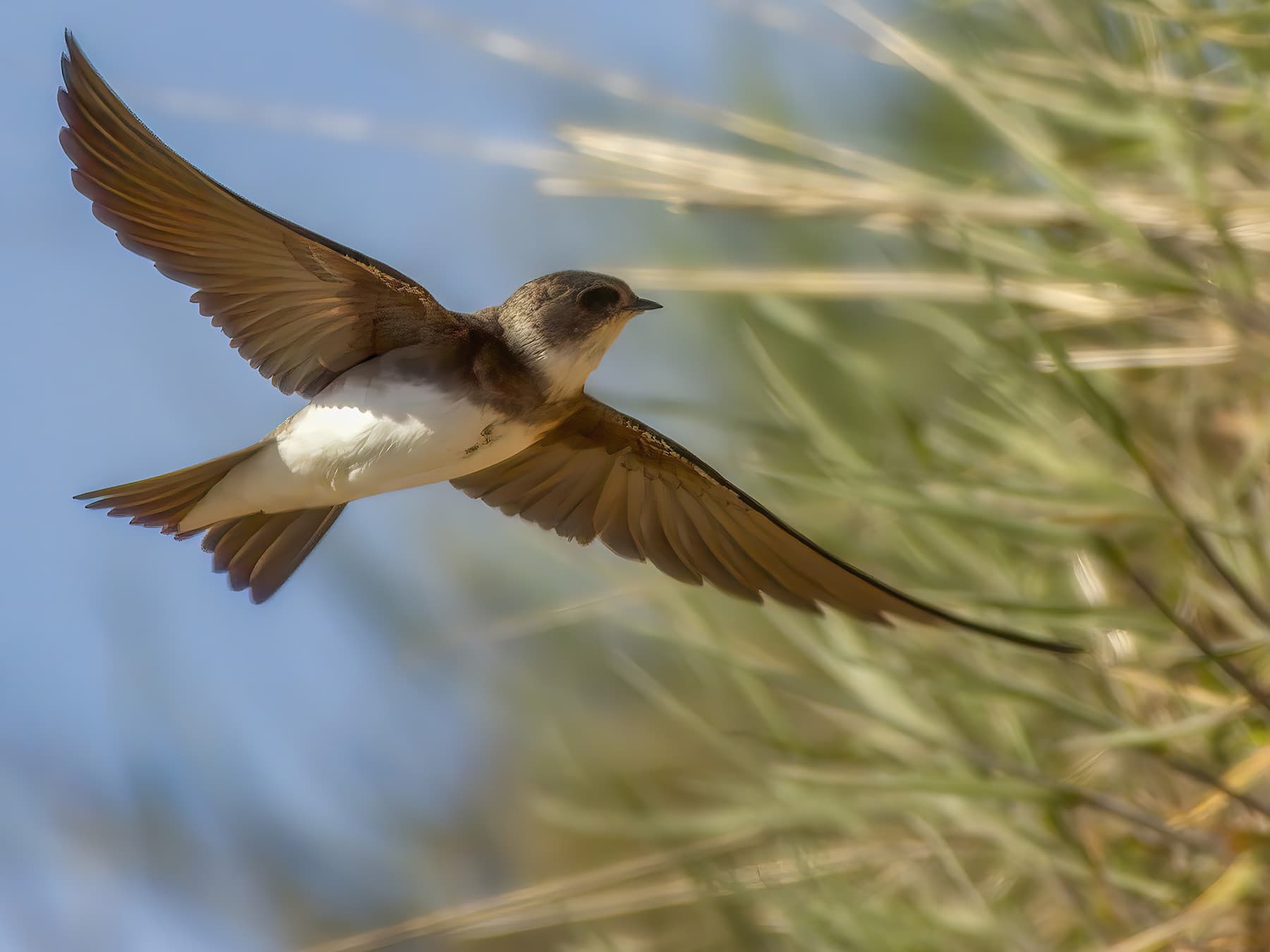
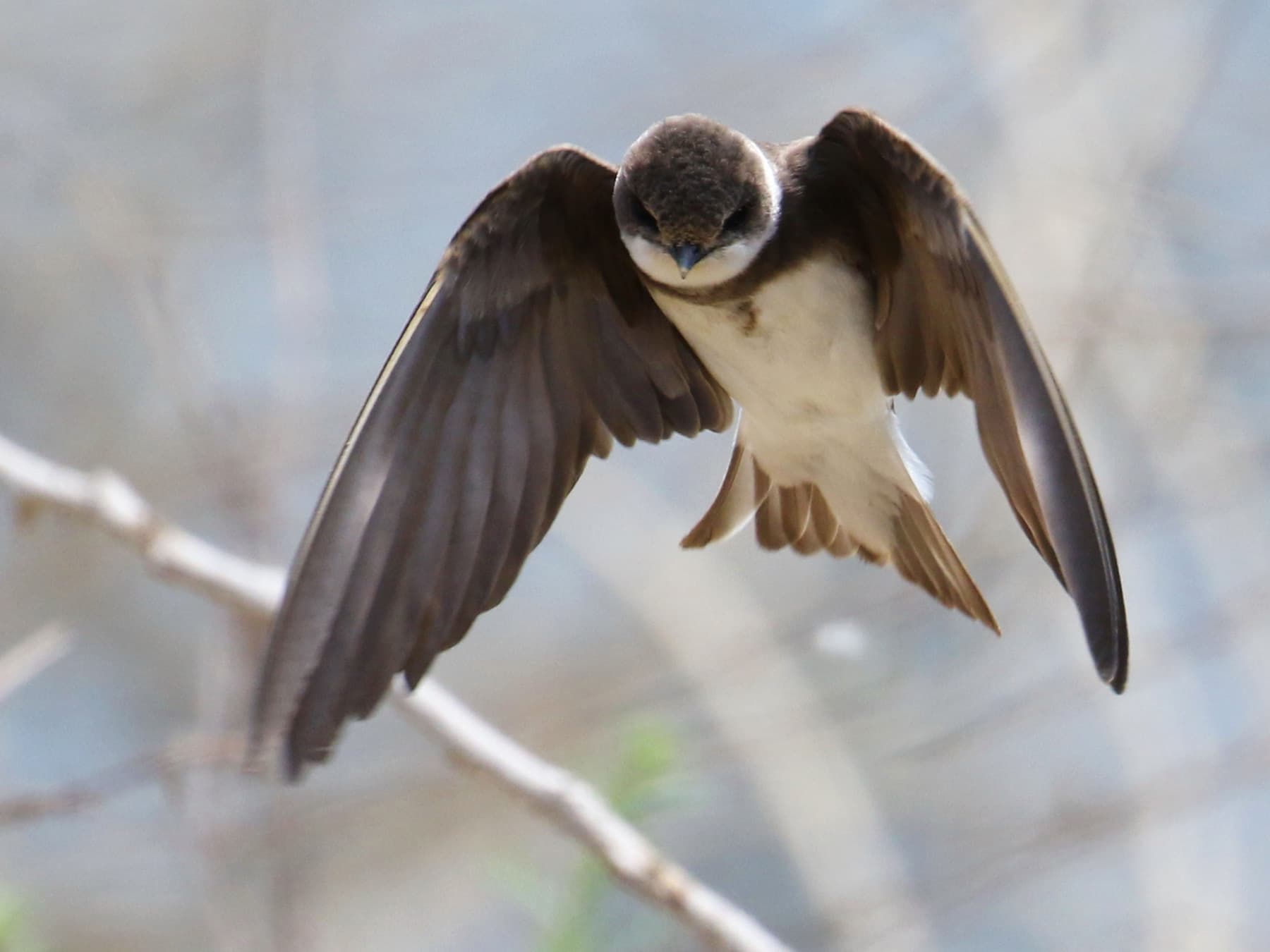
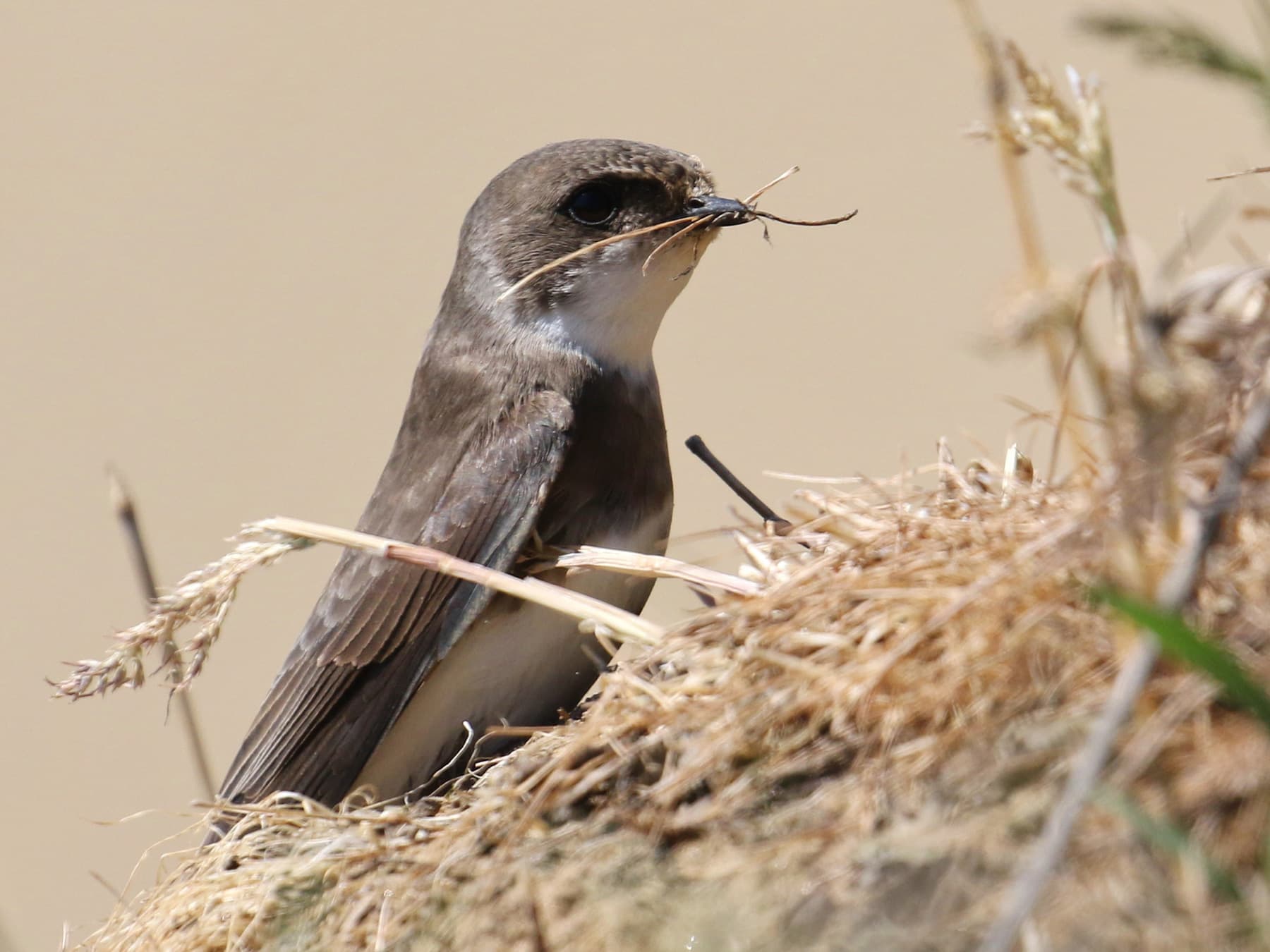
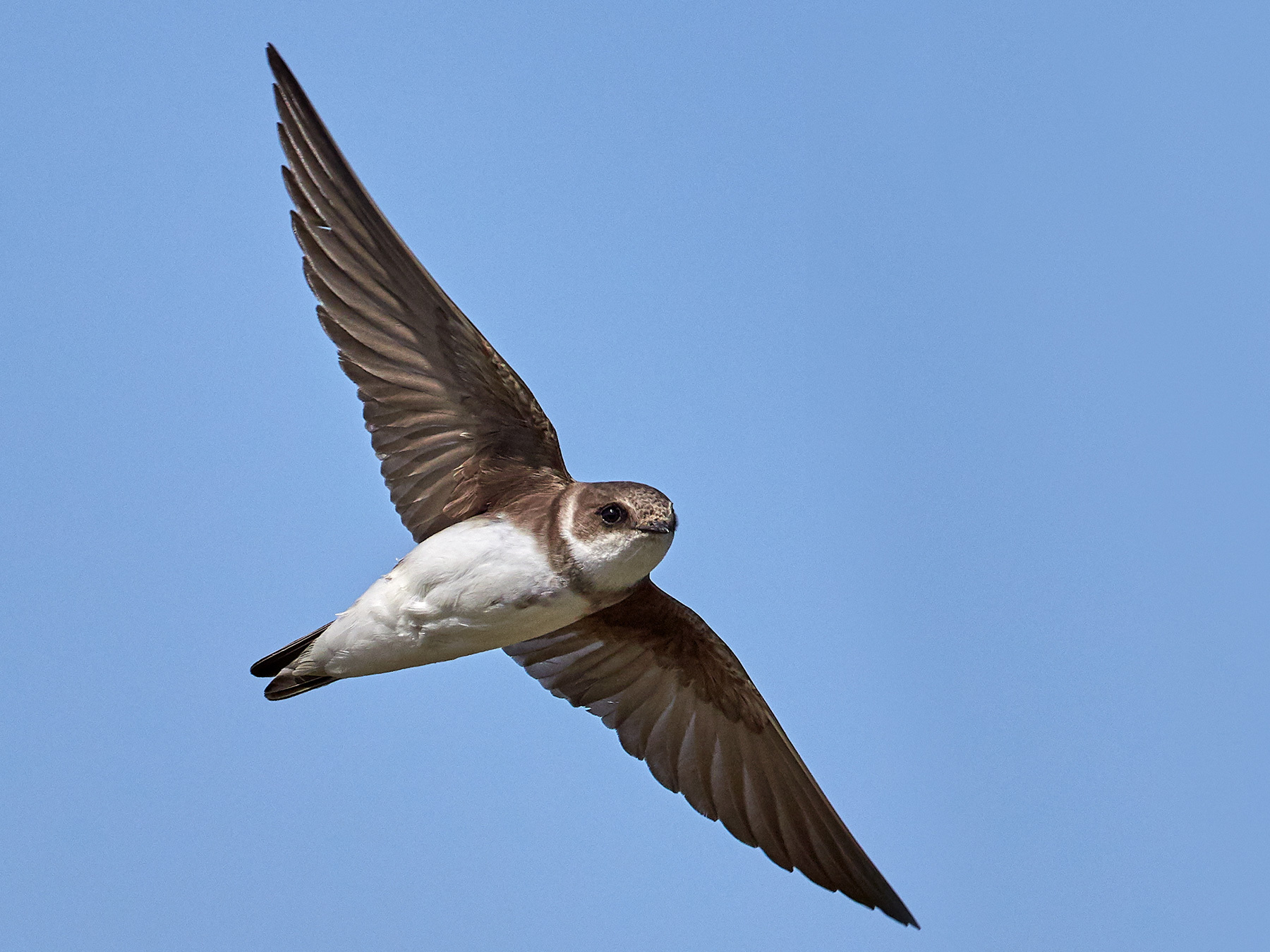
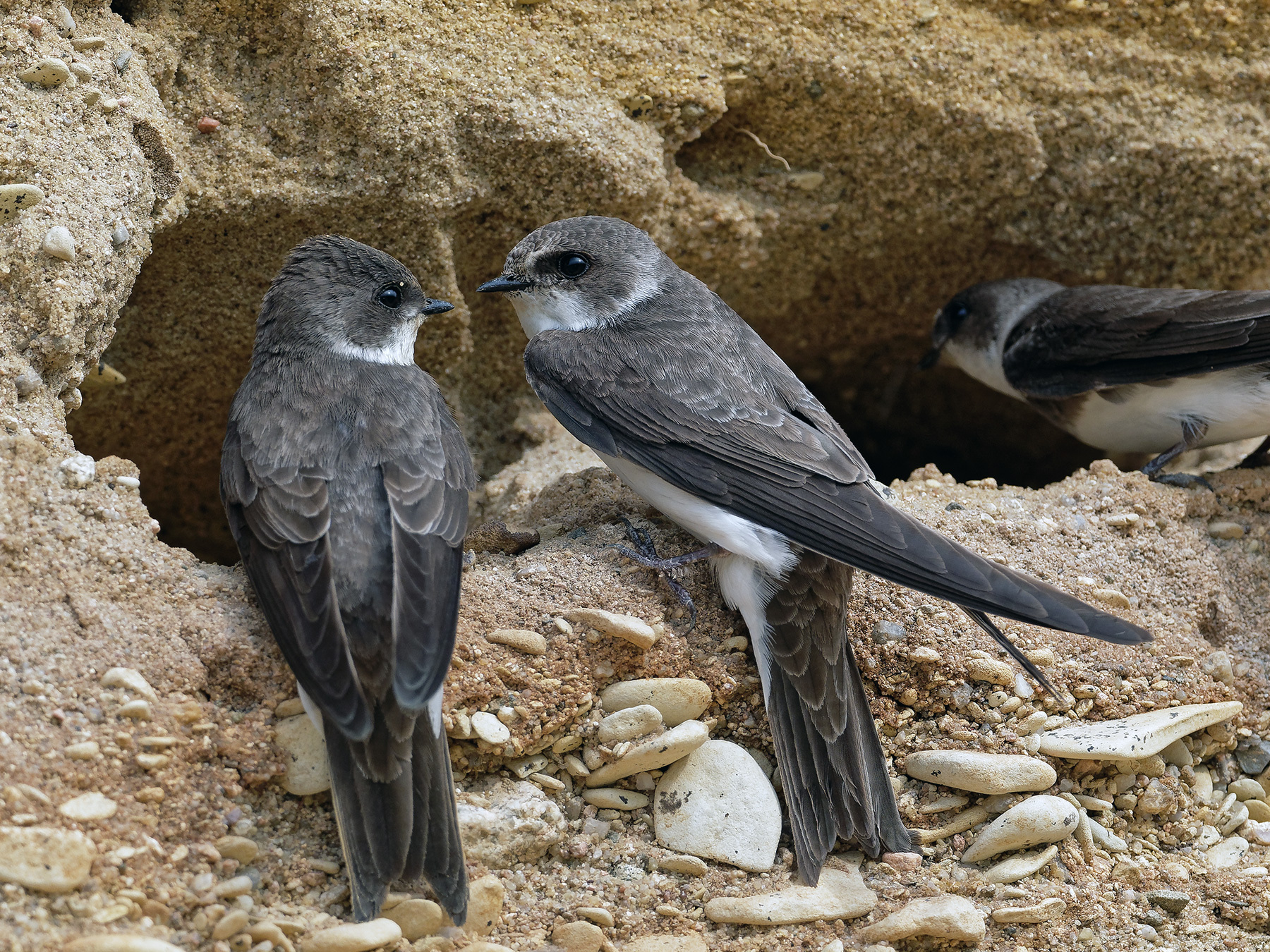
The Sand Martin is a small member of the Swallow family with dark brown upperparts and a pale whitish throat and belly. Their most characteristic feature is a clear brown band across their chest, which may include a narrower vertical streak that extends to the belly.
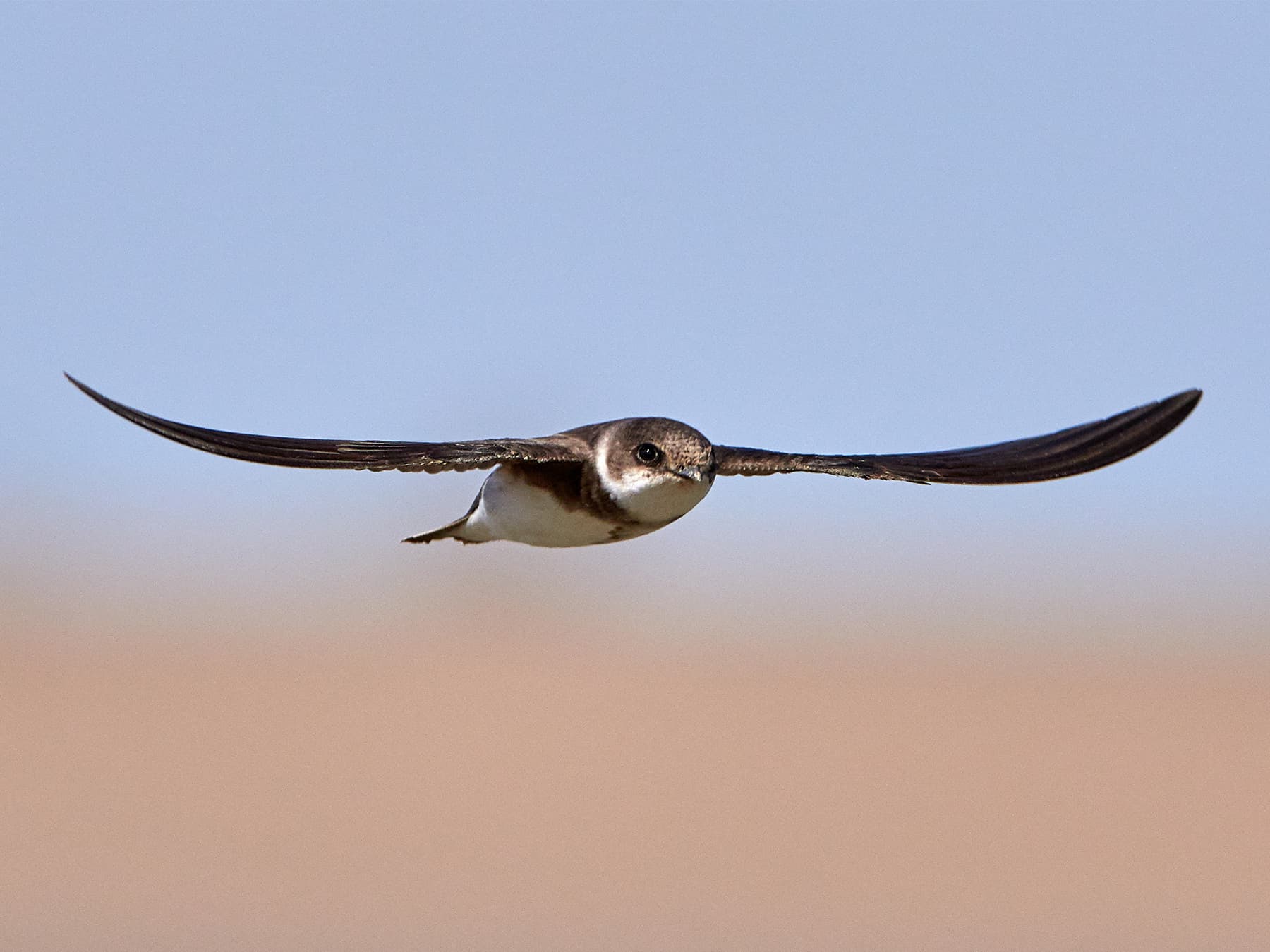
These agile birds have sharply pointed wings and forked tails. Their short legs are greyish, and they have large black eyes and a short, straight black bill.
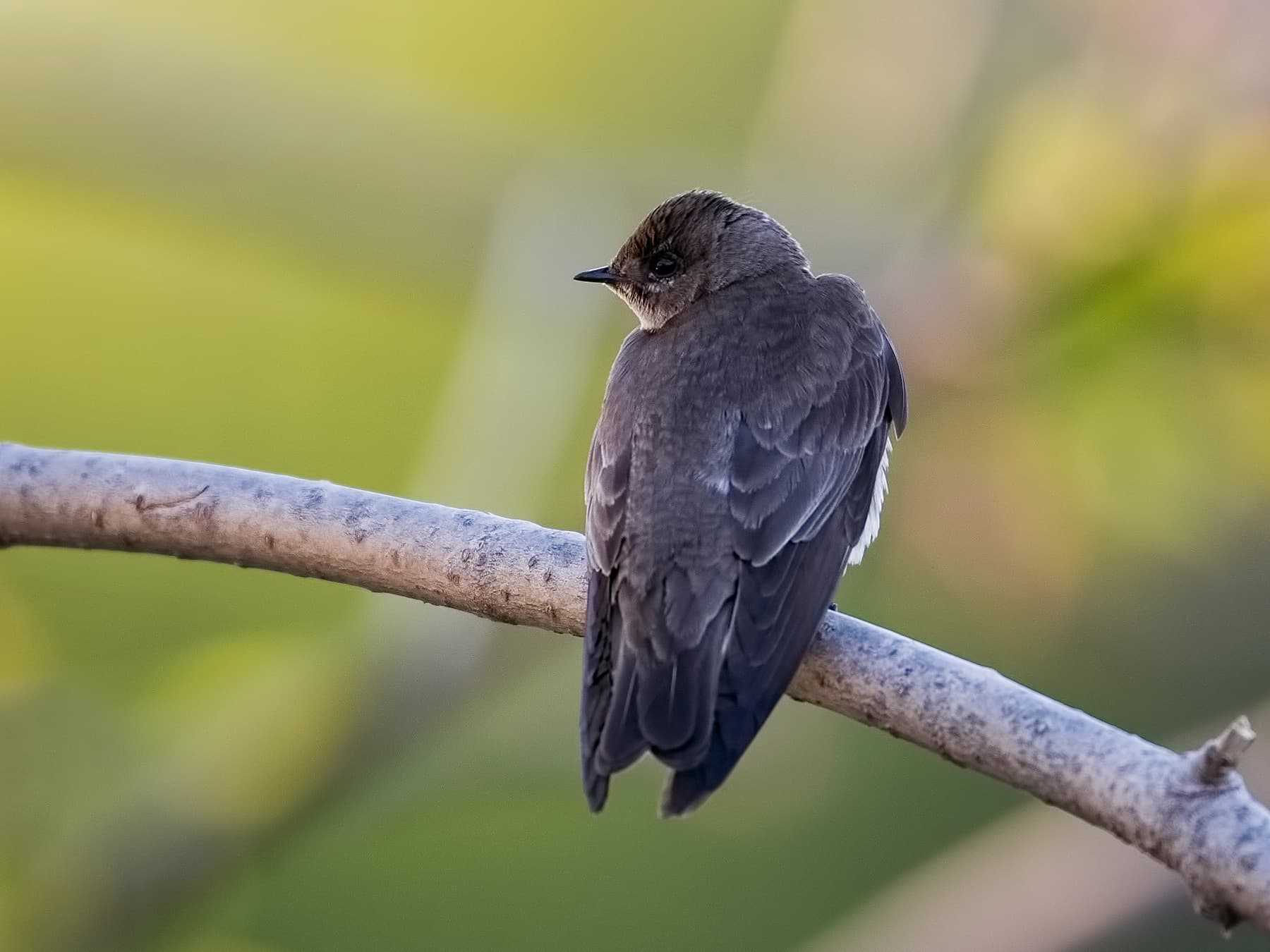
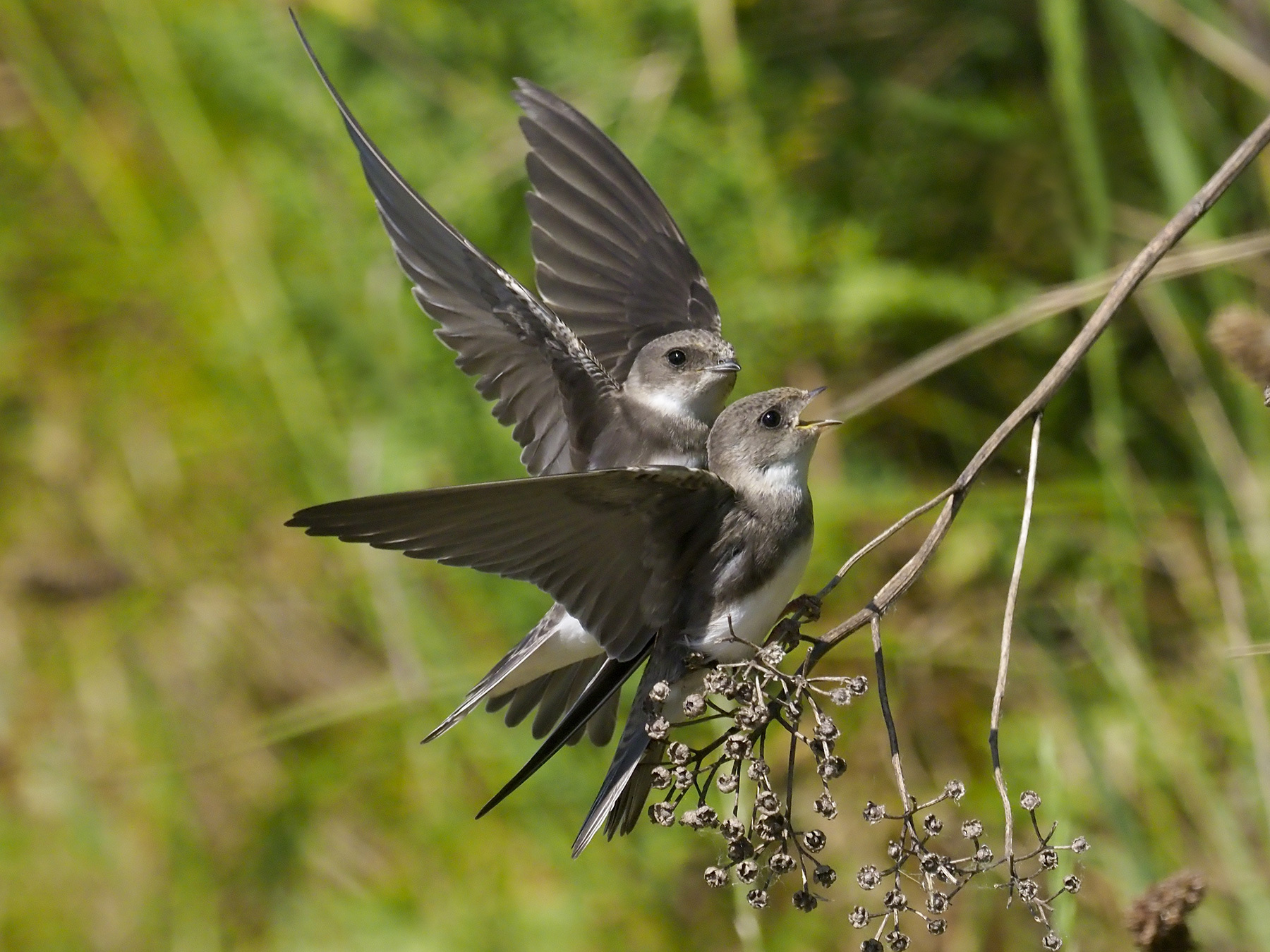
Male and female Sand Martins look alike. Juvenile Martins are similar to adults but have a less clearly defined chest band with a pinkish or brownish throat. The brown feathers of their upperparts have buff or silvery edges, creating a slightly mottled effect.
Sand Martins are unlikely to be confused with any other species in the United Kingdom. However, American birders should compare them with the Northern Rough-winged Swallow and the juvenile Tree Swallow.
How big are Sand Martins?
Sand Martins are compact but graceful birds, noticeably smaller than the Swallow. They are the smallest member of the Swallow family in both the United Kingdom and the United States.
Length
Sand Martins have a total body length of approximately 12 centimetres (4 ¾ inches).
Weight
They weigh just 10 - 18 grams (⅓ - ⅔ ounces), with females averaging slightly heavier.
Wingspan
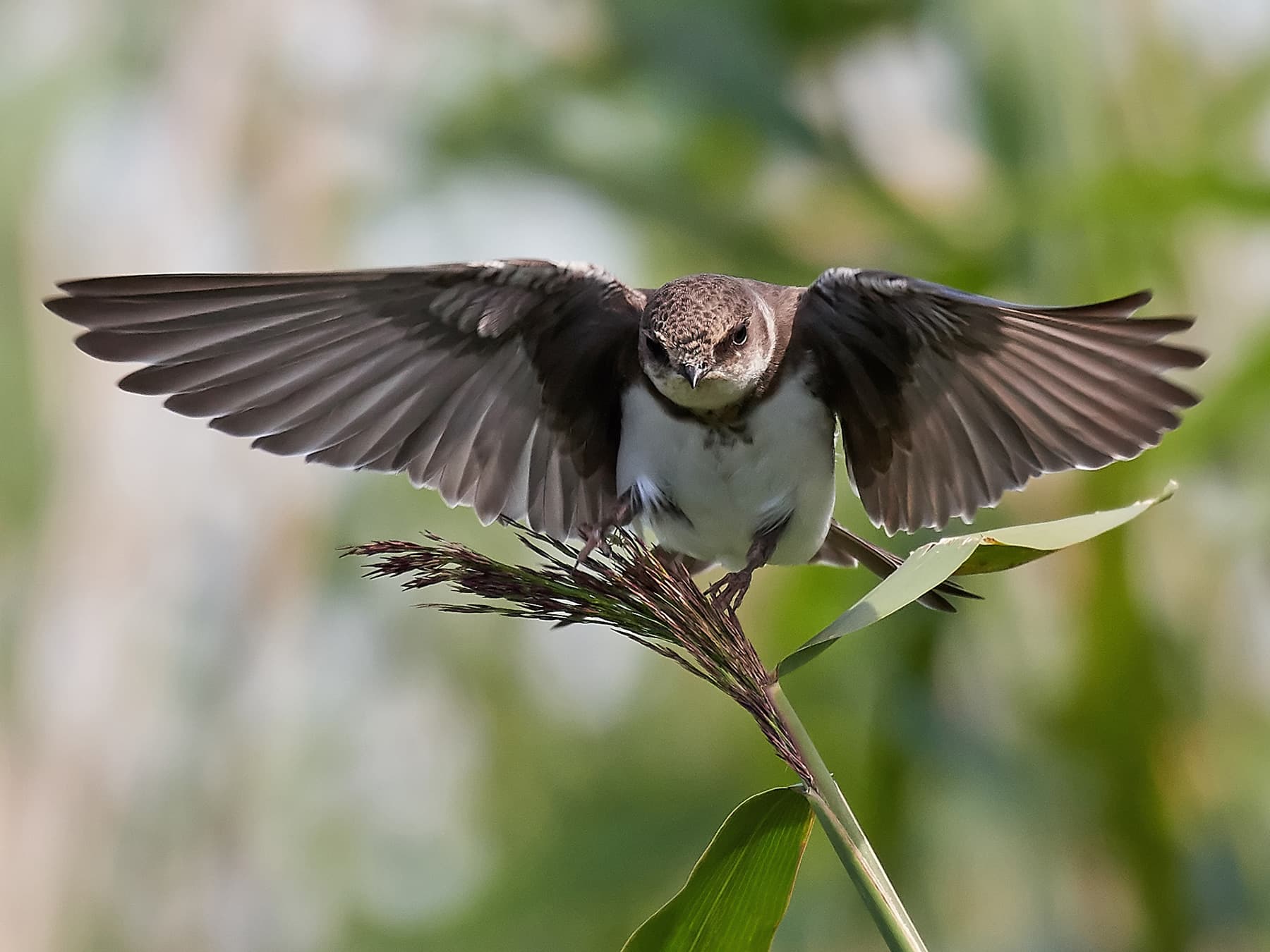
These agile and fast-flying birds have a wingspan of 26 - 29 centimetres (9 - 11 inches).
Its size
Adults- Length
- 12–14 cm
- Wingspan
- 26–29 cm
- Weight
- 10–18 g
Its song and calls
What sound does a Sand Martin make?
The male Sand Martin produces a rapid twittering song when advertising his nest site and courting his partner. Females may also sing in aggressive encounters and during pair formation. These birds also make a harsh two-noted contact call and other simple vocalisations to express alarm and excitement.
- Song and calls0:00 / 0:30
Recorded in Bern, Switzerland · June 2025
- Call0:00 / 0:17
Recorded in Normandie, France · July 2026
When and where to see it
OctoberMostly absent
Most recorded in October
- 1. Tipperary0.15%
- 2. Pembrokeshire0.12%
- 3. Isle of Wight0.12%
- 4. Donegal0.11%
- 5. Carmarthenshire0.11%
Each dot is a county, state or province: the bigger and darker, the larger the bird’s share of that place’s bird records that month. Grey dots: no regular records. The ringed point is the centre of the bird’s records this month; the arrow shows how it moved since last month, and the dashed loop its path through the year. “Arrivals” colours places where it becomes regular this month (orange) or is in its last regular month (grey). GBIF eBird Observation Dataset, 2019–2024. Map data: Natural Earth, US Census Bureau; place centres © OpenStreetMap contributors.
In your area
See when the Sand Martin is recorded in your county, state or province.
How often the Sand Martin turns up in the UK, Ireland, the United States and Canada through the year, from birdwatchers' records.
United Kingdom
Summer visitor · regularly Mar–Sep · most records in July
Ireland
Summer visitor · regularly Mar–Sep · most records in July
United States
Summer visitor · regularly Apr–Sep · most records in August
Canada
Summer visitor · regularly Apr–Sep · most records in July
Show as a table
| Month | United Kingdom | Ireland | United States | Canada |
|---|---|---|---|---|
| January | <0.001% | – | <0.001% | – |
| February | <0.001% | – | <0.001% | – |
| March | 0.16% (regular) | 0.13% (regular) | 0.002% | <0.001% |
| April | 0.64% (regular) | 0.74% (regular) | 0.042% (regular) | 0.023% (regular) |
| May | 0.59% (regular) | 0.86% (regular) | 0.12% (regular) | 0.20% (regular) |
| June | 0.56% (regular) | 1.00% (regular) | 0.11% (regular) | 0.25% (regular) |
| July | 0.69% (regular) | 1.0% (regular) | 0.15% (regular) | 0.26% (regular) |
| August | 0.61% (regular) | 0.70% (regular) | 0.16% (regular) | 0.19% (regular) |
| September | 0.27% (regular) | 0.28% (regular) | 0.050% (regular) | 0.027% (regular) |
| October | 0.021% | 0.028% | 0.005% | <0.001% |
| November | <0.001% | – | <0.001% | – |
| December | <0.001% | – | <0.001% | – |
Recorded regularly in
Worldwide: recorded regularly in 153 countries
Countries where it was recorded in at least 3 of the 6 years 2019–2024. Linked countries have their own bird list.
Europe (45)
- Åland Islands
- Albania
- Austria
- Belarus
- Belgium
- Bosnia & Herzegovina
- Bulgaria
- Croatia
- Czechia
- Denmark
- Estonia
- Faroe Islands
- Finland
- France
- Germany
- Greece
- Guernsey
- Hungary
- Iceland
- Ireland
- Isle of Man
- Italy
- Jersey
- Kosovo
- Latvia
- Lithuania
- Luxembourg
- Malta
- Moldova
- Montenegro
- Netherlands
- North Macedonia
- Norway
- Poland
- Portugal
- Romania
- Russia
- Serbia
- Slovakia
- Slovenia
- Spain
- Sweden
- Switzerland
- Ukraine
- United Kingdom
Africa (28)
- Algeria
- Botswana
- Burundi
- Chad
- Djibouti
- Egypt
- Ethiopia
- Gambia
- Ghana
- Guinea-Bissau
- Kenya
- Liberia
- Malawi
- Mauritania
- Morocco
- Mozambique
- Namibia
- Rwanda
- Senegal
- Sierra Leone
- South Africa
- Tanzania
- Togo
- Tunisia
- Uganda
- Western Sahara
- Zambia
- Zimbabwe
Asia (40)
- Armenia
- Azerbaijan
- Bahrain
- Bangladesh
- Bhutan
- Cambodia
- China
- Cyprus
- Georgia
- Hong Kong SAR China
- India
- Iran
- Iraq
- Israel
- Japan
- Jordan
- Kazakhstan
- Kuwait
- Kyrgyzstan
- Laos
- Lebanon
- Malaysia
- Mongolia
- Myanmar (Burma)
- Oman
- Pakistan
- Palestinian Territories
- Philippines
- Qatar
- Saudi Arabia
- Singapore
- South Korea
- Sri Lanka
- Taiwan
- Tajikistan
- Thailand
- Turkey
- United Arab Emirates
- Uzbekistan
- Vietnam
North America (27)
- Aruba
- Bahamas
- Barbados
- Belize
- Bermuda
- British Virgin Islands
- Canada
- Caribbean Netherlands
- Cayman Islands
- Costa Rica
- Cuba
- Curaçao
- Dominica
- El Salvador
- Grenada
- Guadeloupe
- Guatemala
- Honduras
- Mexico
- Nicaragua
- Panama
- Puerto Rico
- St Kitts & Nevis
- St Lucia
- St Pierre & Miquelon
- Trinidad & Tobago
- United States
Data: EOD – eBird Observation Dataset (Cornell Lab of Ornithology), accessed via GBIF.org, CC BY 4.0. Records from 2019–2024, aggregated and filtered by Birdfact. How these lists are made
What is the habitat of a Sand Martin?
Sand Martins are usually associated with freshwater environments like streams and lakes where erosion makes the vertical banks they need for nesting. However, they have adapted to use artificial walls created by quarrying and road construction, allowing them to expand into new habitats.
Away from the nest colony, Sand Martins forage over a variety of usually open habitats such as open water, wetlands, grasslands, pasture, and arable farmland. They avoid heavily wooded and mountainous environments.
What is the range of a Sand Martin?
The Sand Martin has an extensive global range on five of the world’s seven continents. These birds breed across most of the United Kingdom and Europe, North America, and temperate Asia in the summer. They occupy large parts of South America, Africa, and limited areas of Southeast Asia in the non-breeding season.
Where do Sand Martins live?
Sand Martins are most at home in the air and spend most of their time near the breeding colony during the nesting season, particularly when they have hungry mouths to feed.
These birds spend more than half their day flying over water bodies and adjacent areas in search of flying insects. They generally fly about 15 meters (50 ft) above the water or ground, although they may fly higher or lower depending on weather conditions and their prey.
How rare are Sand Martins?
Sand Martins are generally common in suitable habitats across their range. They are common summer visitors to the United Kingdom, although their numbers fluctuate depending on climatic conditions and food availability. According to the British Trust for Ornithology, there were approximately 71,000 Sand Martin nests in the UK in 2016.
Where can you see Sand Martins in North America?
Sand Martins (Bank Swallows) breed in suitable habitats across the northern half of the Lower 48 and much of Canada and Alaska. They can be seen almost anywhere in the South while on migration to and from their South American overwintering grounds.
Where can you see Sand Martins in the UK?
Sand Martins are widespread in the United Kingdom and Ireland, although localised in the south of England. Look out for these agile little birds flying along rivers and over nearby fields in the summer months, or search the skies near a local gravel pit or reservoir.
Migration
Do Sand Martins migrate?
Sand Martins are summer visitors to both the United Kingdom and the United States. They arrive in the UK in March and depart in September to overwinter in Africa south of the Sahara desert. North American birds overwinter in South America.
Are Sand Martins native to North America?
Bank Swallows, or Sand Martins as they are also known, are native to North America, including the Contiguous United States, Canada, and Alaska.
However, these migratory birds are only present for the summer breeding season.
Are Sand Martins native to the UK?
Sand Martins are native to the United Kingdom. They have been recorded on the British Isles for hundreds of years.
Tips for seeing it
- Look for Sand Martins near rivers, lakes, and coastal areas with sandy banks
- Observe their distinctive flight pattern: quick, with rapid wing beats and short glides
- Listen for their soft, rippling calls as they fly overhead
- Visit known breeding colonies in spring and summer for the best viewing opportunities
- In the UK, check coastal areas and inland waterways during spring and autumn migrations
What it eats
What do Sand Martins eat?
Sand Martins eat small flying insects. They occasionally take invertebrates from the ground or the water’s surface but generally catch their prey mid-air. The following types of insects are favoured:
- Ants
- Bees
- Wasps
- Flies
- Beetles
- Mayflies
- Dragonflies
What do Sand Martin chicks eat?
Sand Martin chicks eat small flying insects. They are fed by both parents, who work together to feed their young upwards of thirty times every hour. In order to feed the chicks more efficiently, adults will squeeze many insects into a single bolus (ball) and deliver it directly into the young bird's mouth.
Nesting and breeding
Where do Sand Martins nest?
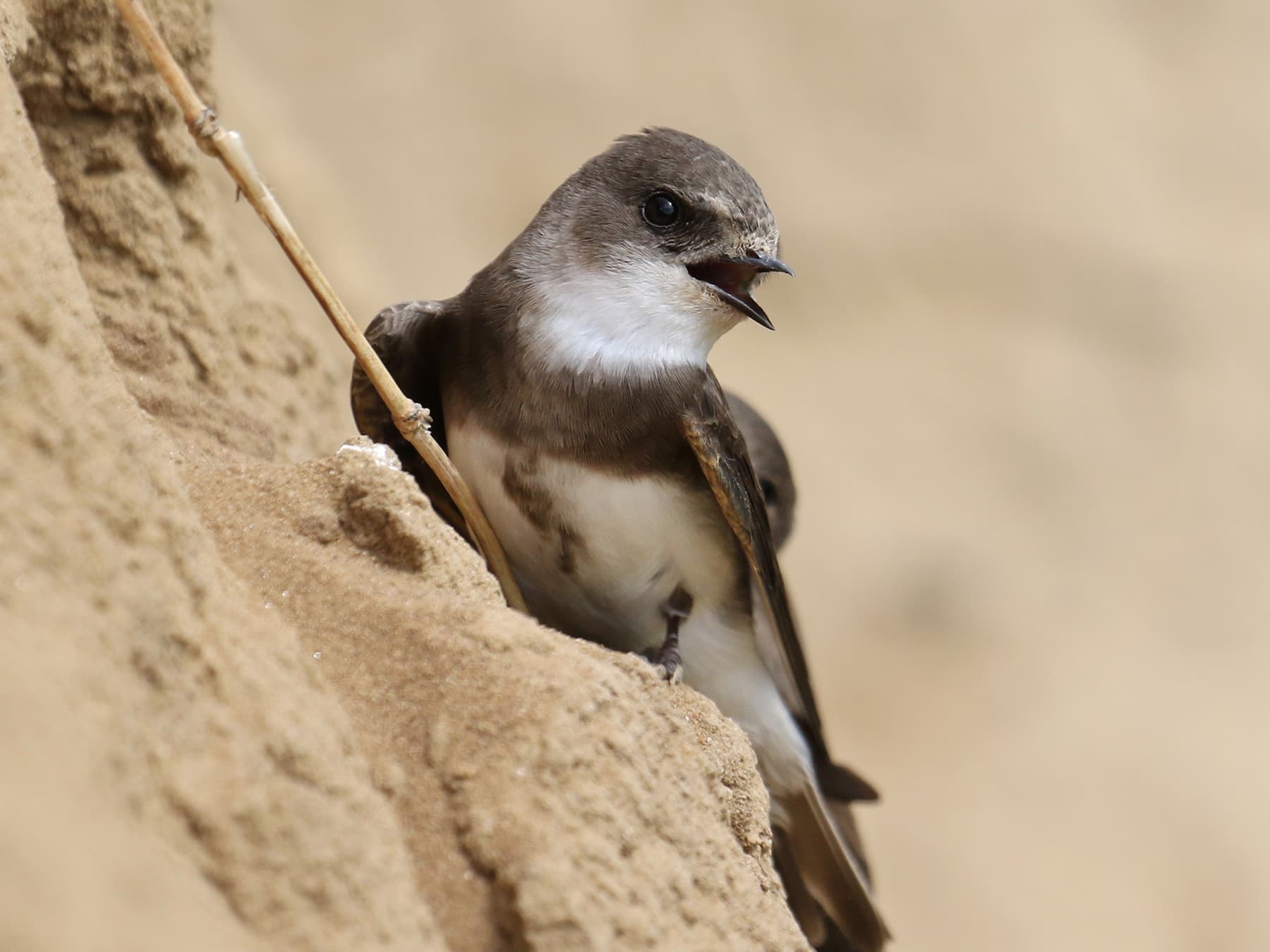
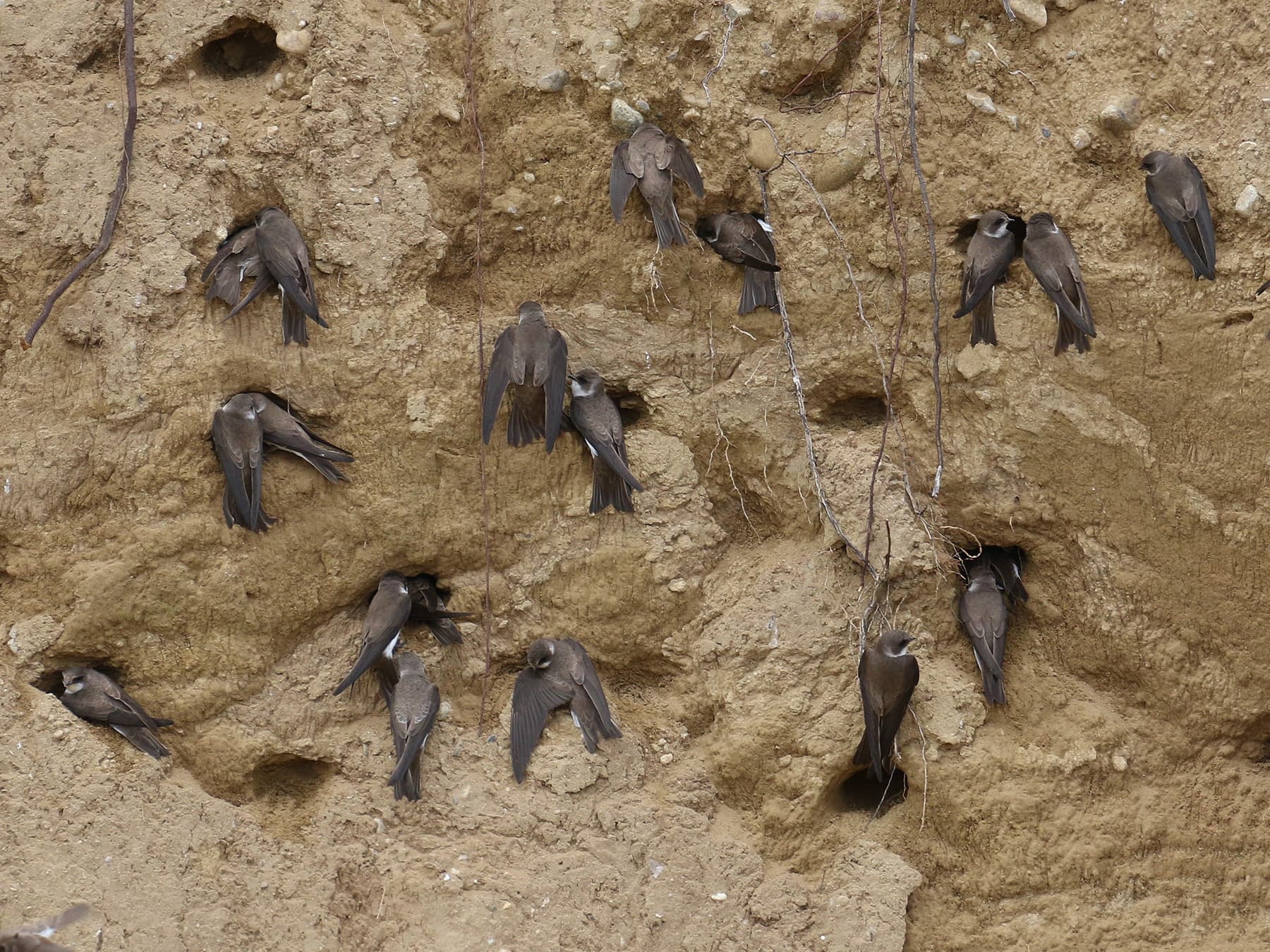
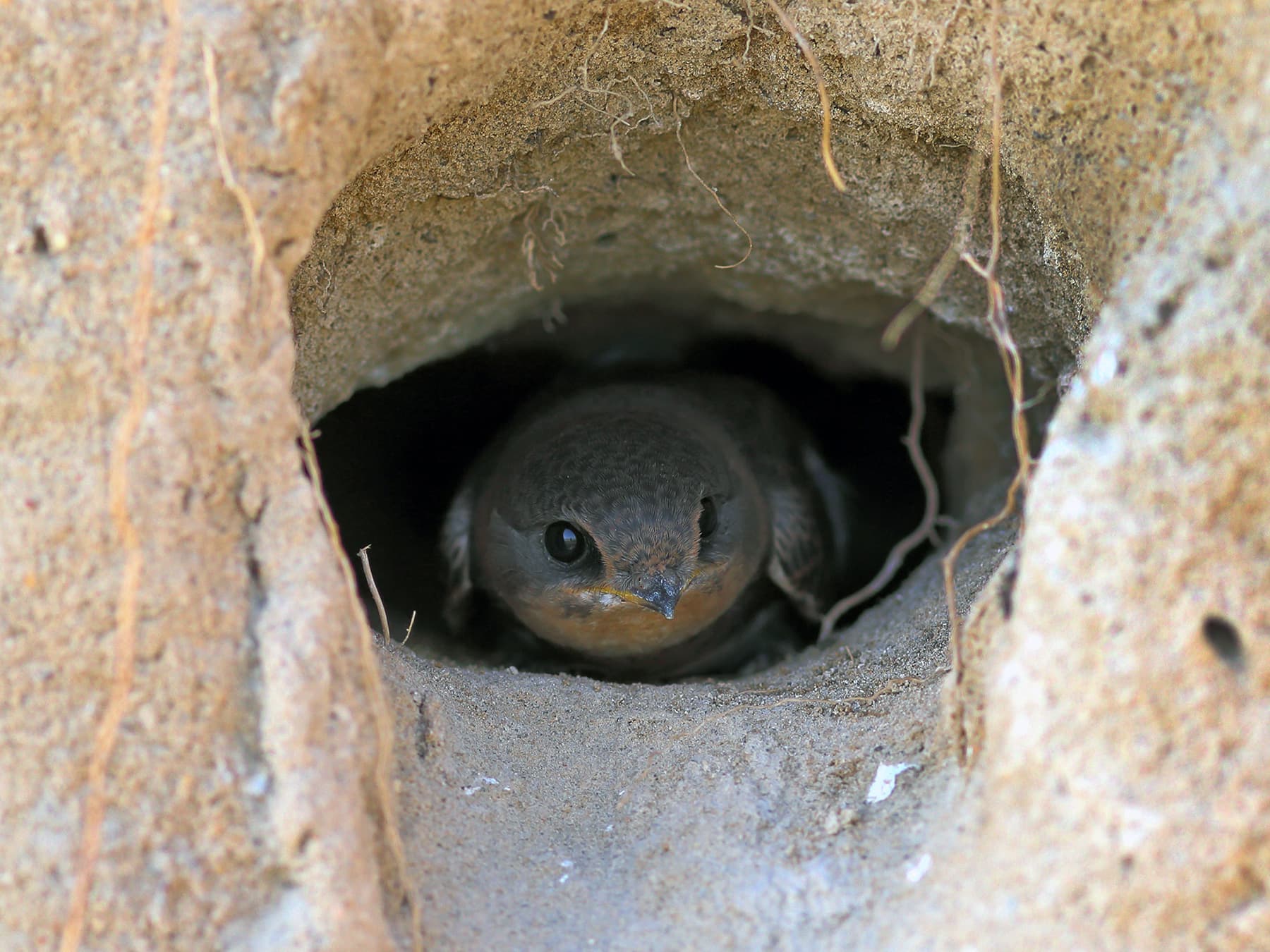
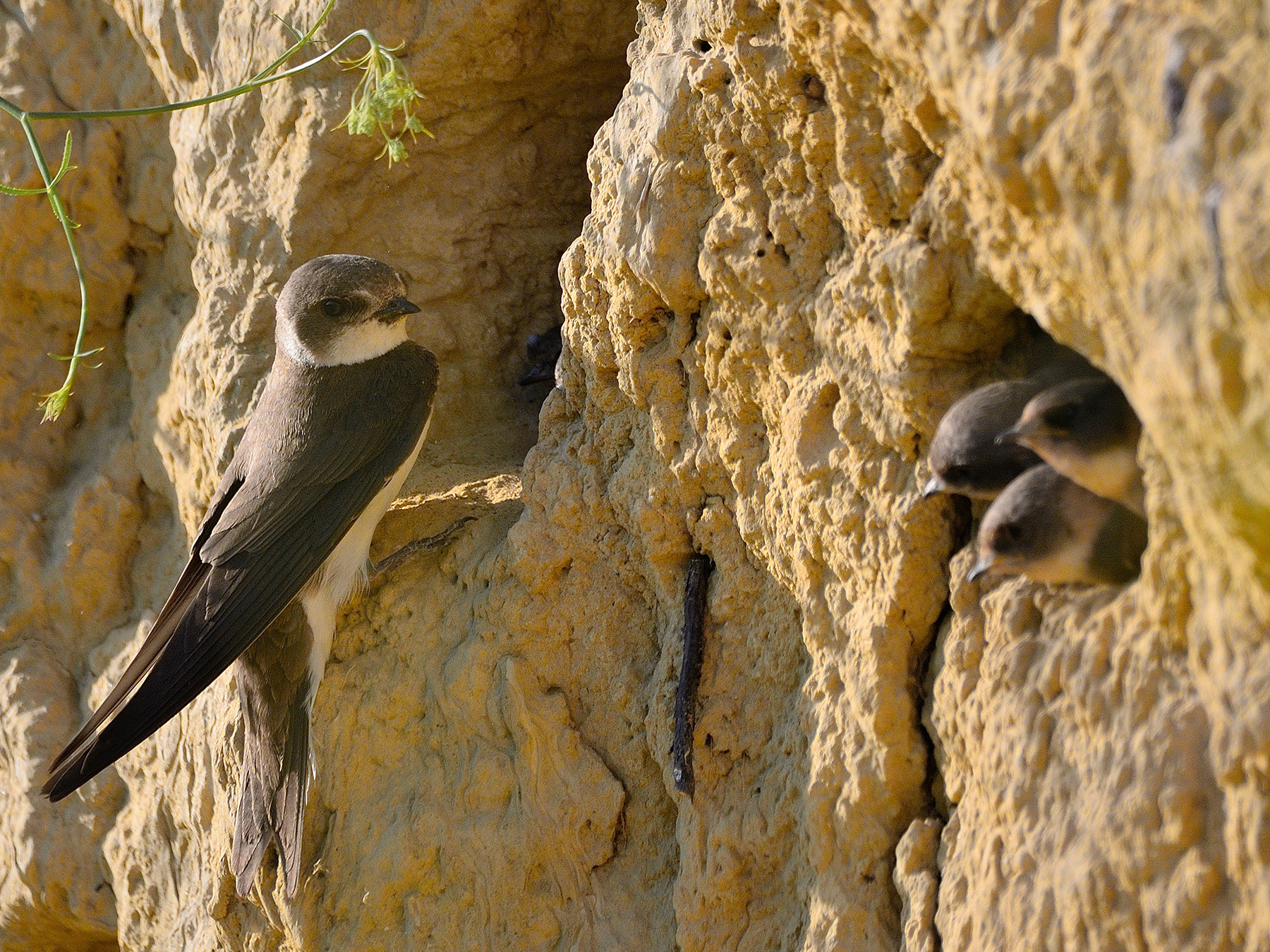
Sand Martins nest in colonies. They excavate burrows into vertical earth banks, usually along rivers but also at artificial sites like quarries. These burrows are usually half a meter to a meter (1.5 - 3 ft) deep.
Excavation usually takes less than a week, but they make slower progress in harder substrates. The adults then enlarge the end of the burrow to form a chamber and build a small platform nest of plant material and feathers. Sand Martin pairs may have a second brood but typically construct a new burrow to limit the risk of collapse and escape nest parasites.
When do Sand Martins nest?
Sand Martins nest in the spring and summer. They begin in March in the United Kingdom and lay their eggs in late May or early June.
They often produce a second brood before the breeding season ends in September. Nesting begins between mid-April and mid-May in the United States.
What do Sand Martin eggs look like?
Sand Martins usually lay four or five eggs, although clutches of two to seven have been recorded. Their eggs are white and measure approximately 18 millimetres long and 13 millimetres (0.71 x 0.51 inches) wide.
Do Sand Martins mate for life?
Sand Martins form stable partnerships during the breeding season but probably find a new mate each year.
Behaviour
Are Sand Martins aggressive?
Sand Martins are gregarious birds that nest in colonies. However, they are not afraid to fight to defend nest materials, nest sites, or their partner. In serious fights, they will grasp each other by the feet such that both birds fall from the air and continue to peck at their opponent on the ground.
Where do Sand Martins sleep at night?
Sand Martins roost in their nest tunnels until their chicks are approaching two weeks of age. Thereafter, they sleep nearby in other burrows or among the branches of trees, shrubs, or other vegetation. They may roost close together in bad weather or in enormous numbers (up to two million in some places) while on migration.
Lifespan and predators
How long do Sand Martins live?
Sand Martins have a typical lifespan of about two years, although they can live for at least nine years in some cases.
What are the predators of Sand Martins?
Sand Martins are hunted by small birds of prey like the Sparrowhawk, Merlin, Hobby and American Kestrel. They are also vulnerable to nest predators like foxes, badgers, mink, and weasels.
Are Sand Martins protected?
Sand Martins are protected by the Wildlife and Countryside Act in the United Kingdom.
Are Sand Martins endangered?
Sand Martins are decreasing globally but remain common and extremely widespread. They are not endangered and have a green conservation status in the United Kingdom.
Conservation
While globally listed as Least Concern, Sand Martin populations face localised threats. Habitat loss due to river management and sand extraction impacts breeding sites. Climate change affects their insect prey availability.
Conservation efforts focus on protecting nesting banks and creating artificial nesting walls in suitable habitats.
More photos
5 photos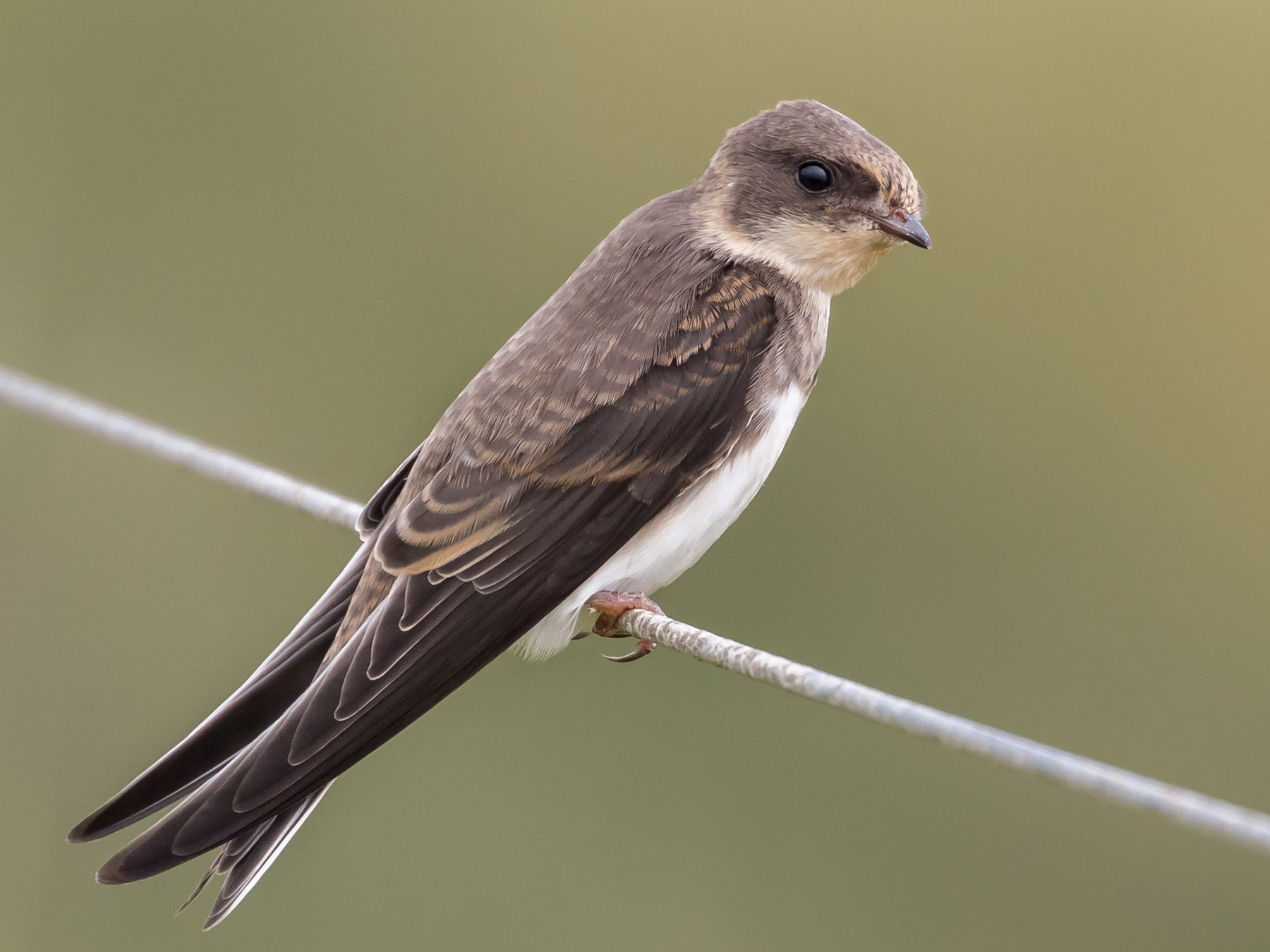
Quick facts
- Length
- 12–14 cm
- Wingspan
- 26–29 cm
- Weight
- 10–18 g
- Lifespan
- 2 years · oldest recorded 10.1 years
- Family
- Swallows & Martins
- Migration
- Long-distance Migrant
- Global status (IUCN)
- Least Concern
- World population
- 29,000,000 mature individuals
- Population trend
- Decreasing
- Also called
- Bank Swallow, Collared Sand Martin
- Scientific name
- Riparia riparia
Questions
1How do you attract Sand Martins?
Sand Martins rarely visit gardens except for those near rivers and other freshwater environments. Farmers and other landowners with larger properties containing ponds and reservoirs can encourage these birds by maintaining vertical sand banks 1.5 meters or higher at the water's edge. Seek permission from landowners and relevant authorities before initiating such a project.
Sources
4- 1BirdLife International. 2019. Riparia riparia (amended version of 2016 assessment). The IUCN Red List of Threatened Species 2019: e.T103815961A155536007. Source (opens in a new tab)
- 2Breeding Bird Survey and/or Christmas Bird Count: Butcher and Niven (2007)
- 3Partners in Flight (2022) Source (opens in a new tab)
- 4Fransson et al., EURING list of longevity records for European birds (2010) Source (opens in a new tab)

Checked by
Nathan Cope, founder and editor
Nathan founded Birdfact and leads its writers and contributors in the UK, the US and Canada. He has watched and studied birds for more than ten years, and checks every article and species guide before it’s published.