


House Martin
Common House Martin, Northern House Martin, Western House Martin · Delichon urbicum
By the Birdfact teamChecked by Nathan Cope
On this page15 sections
How to recognise it
What do House Martins look like?
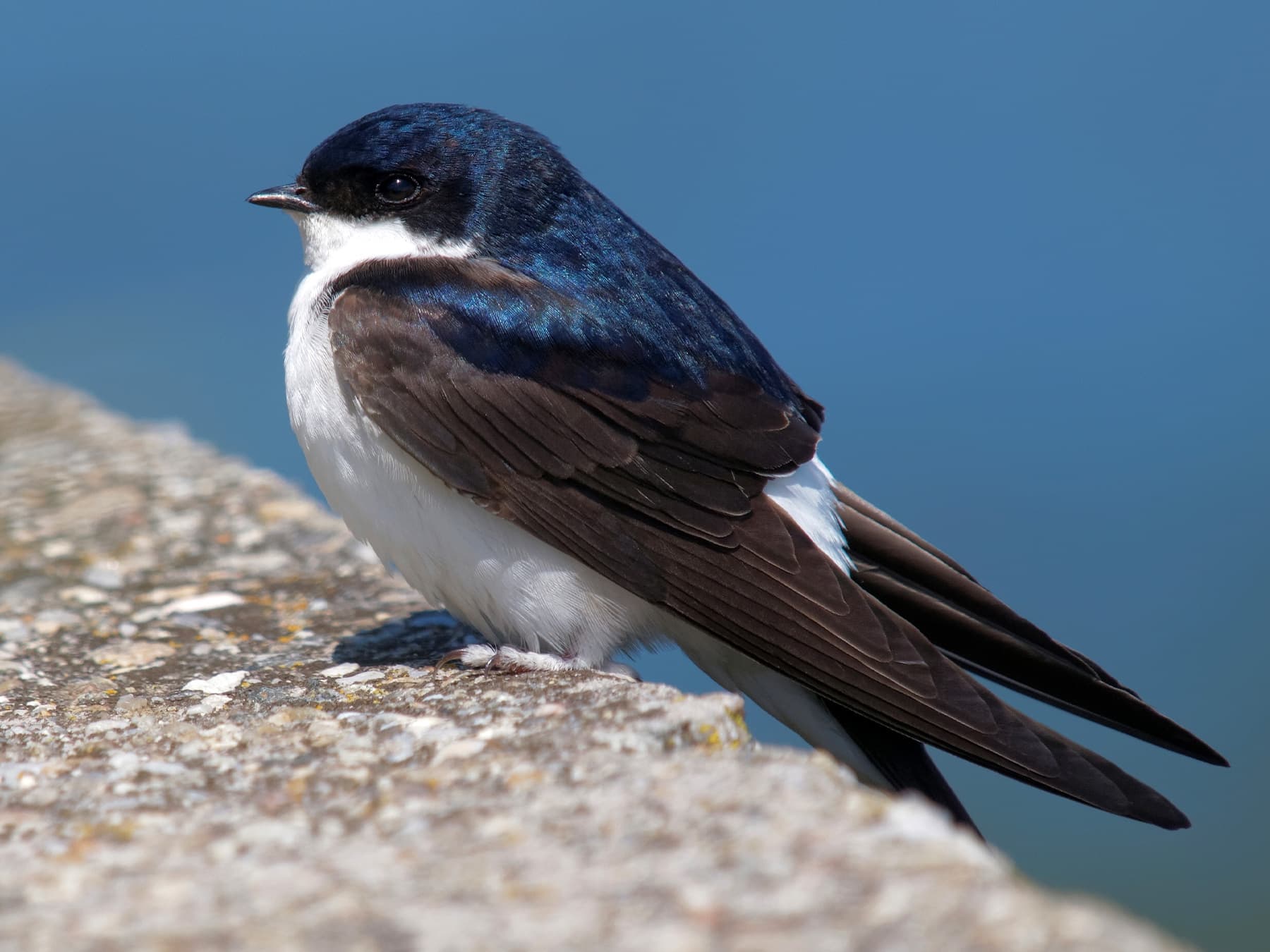
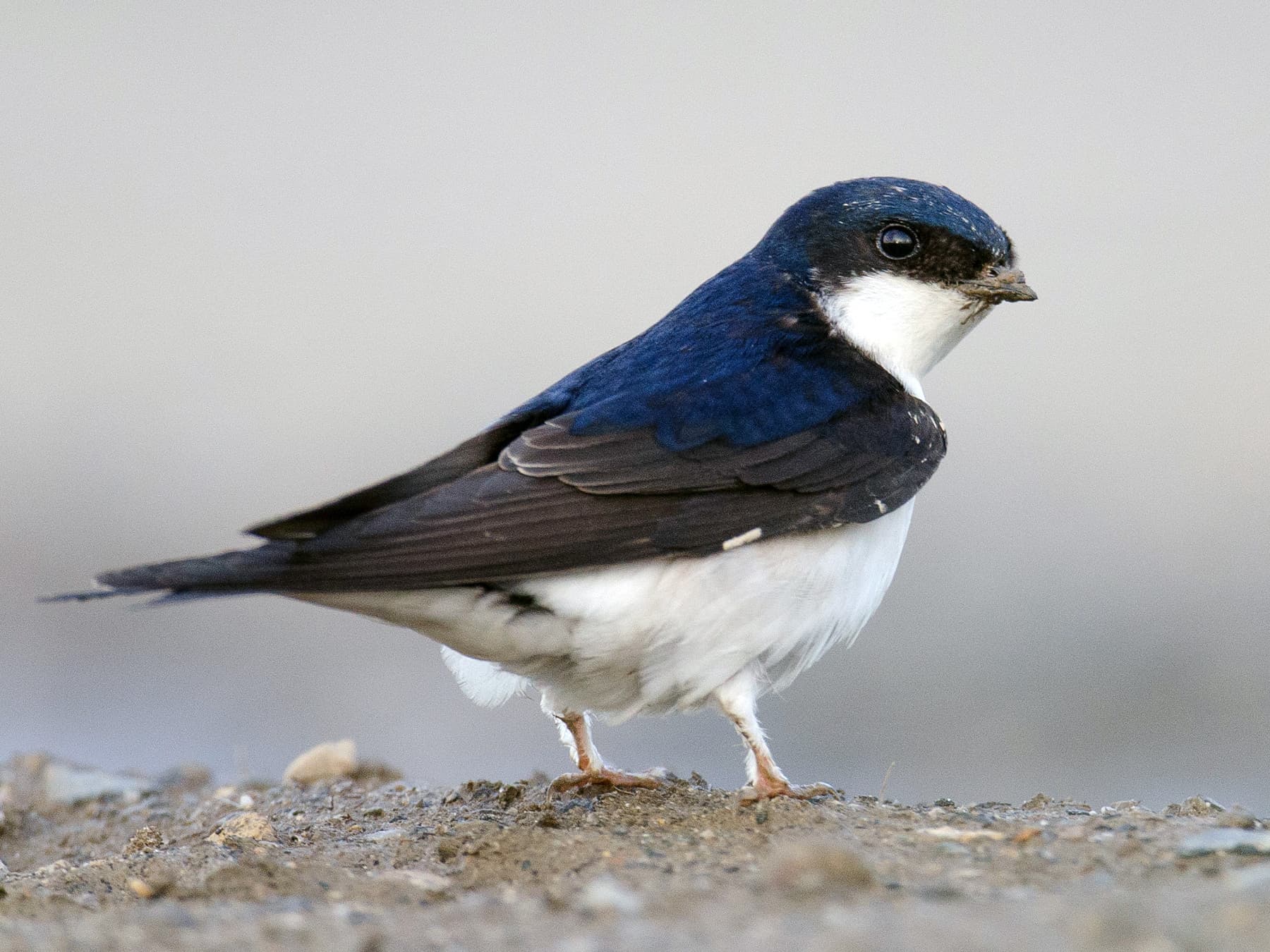
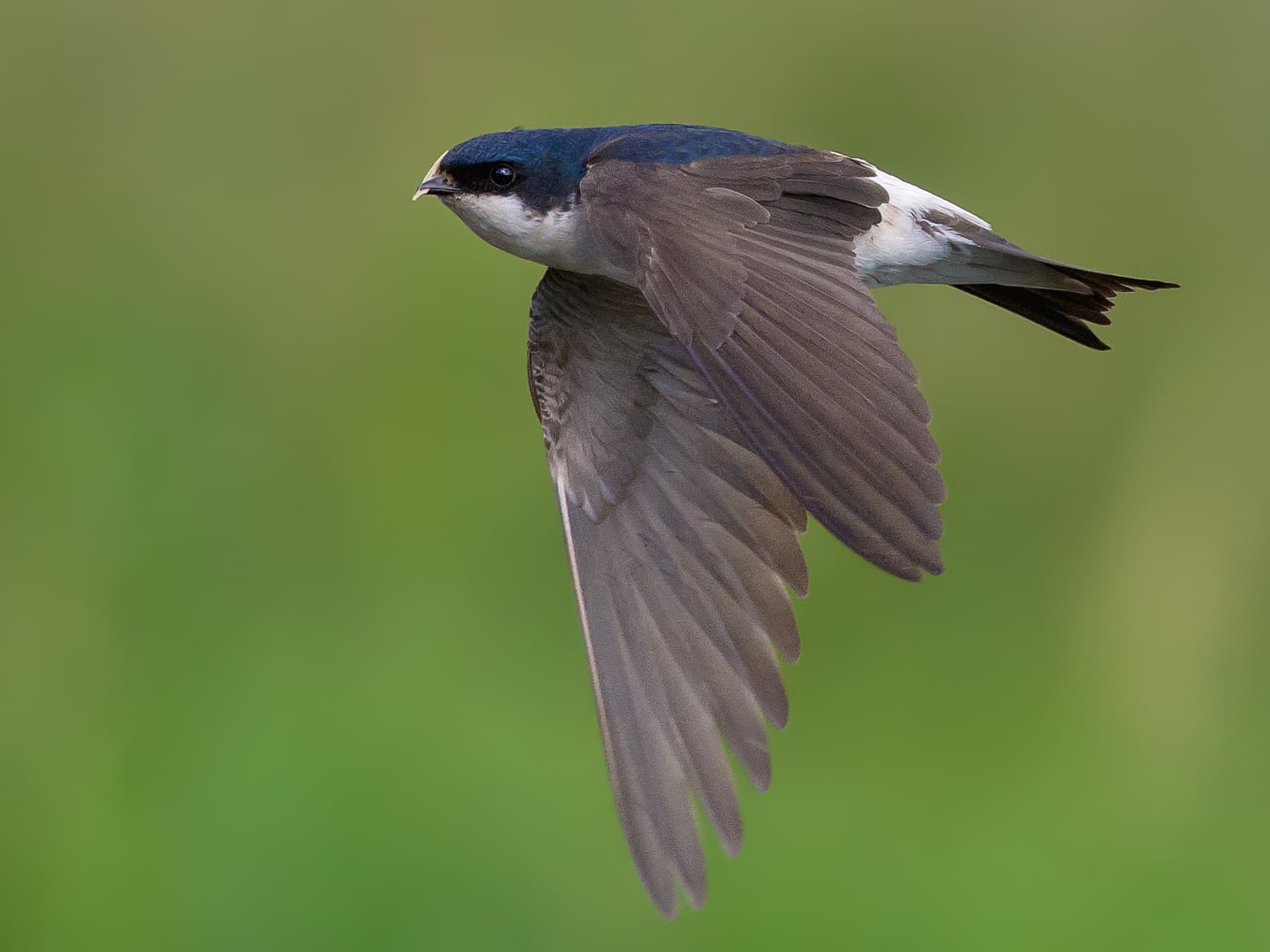
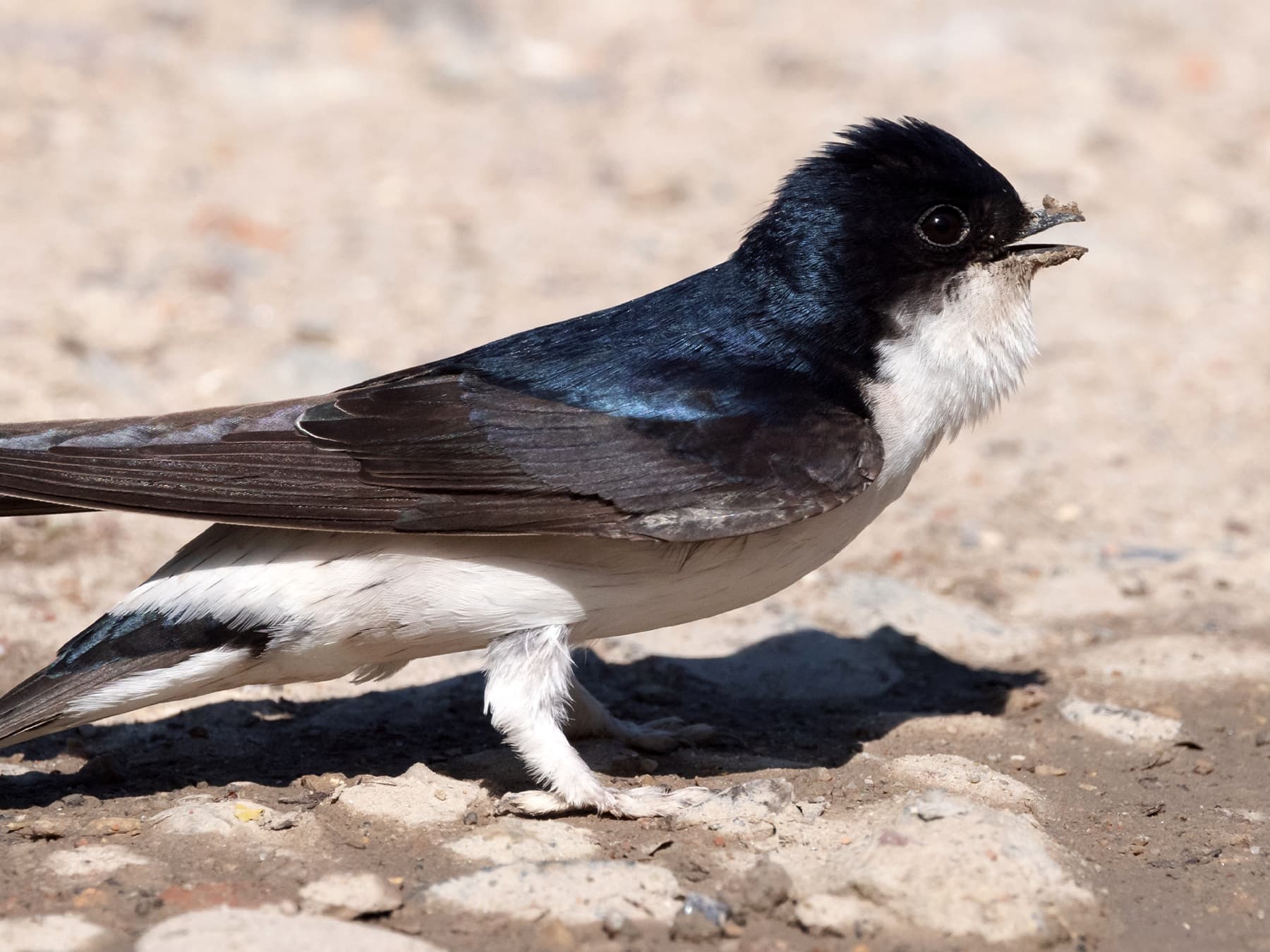
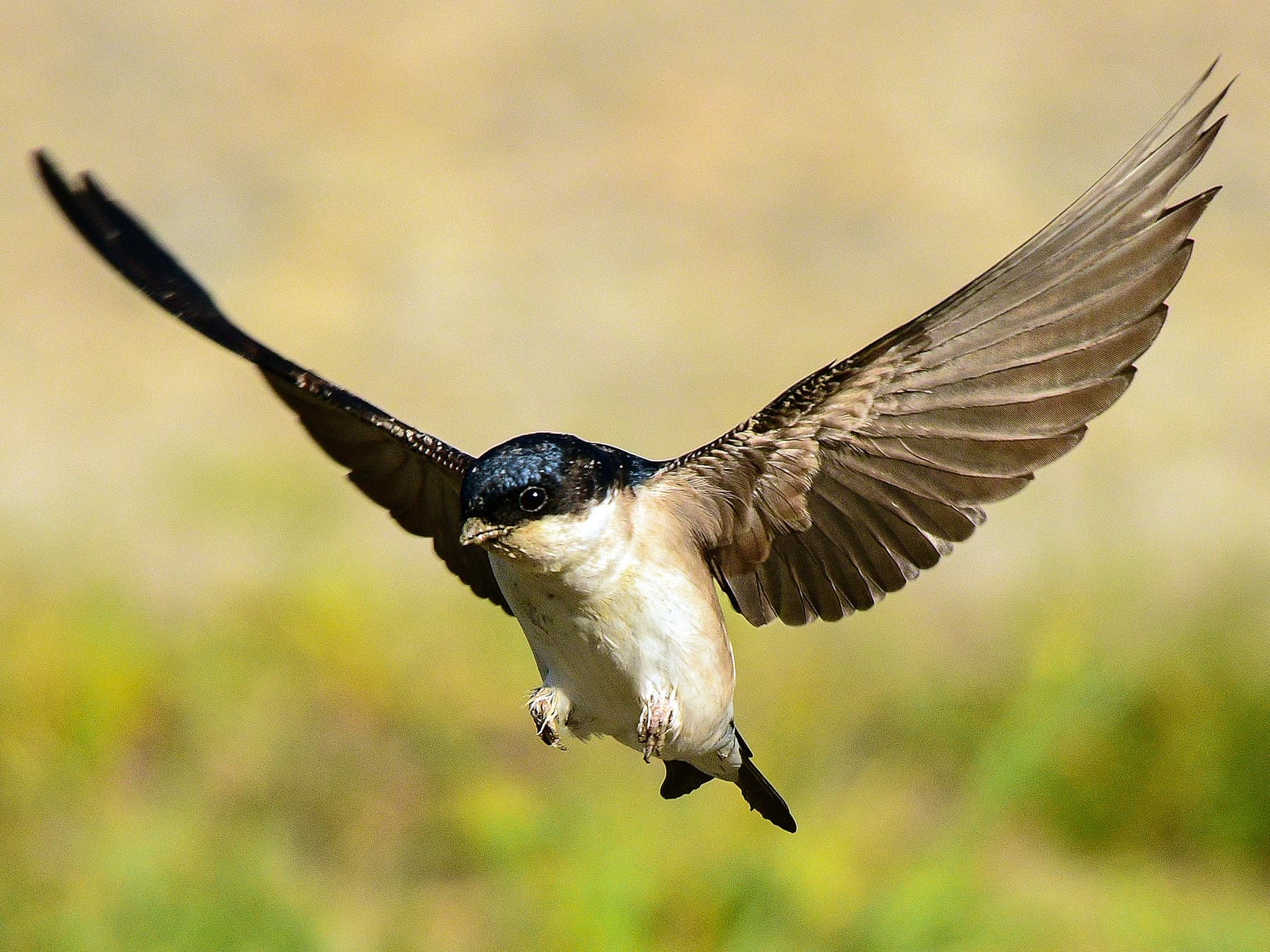
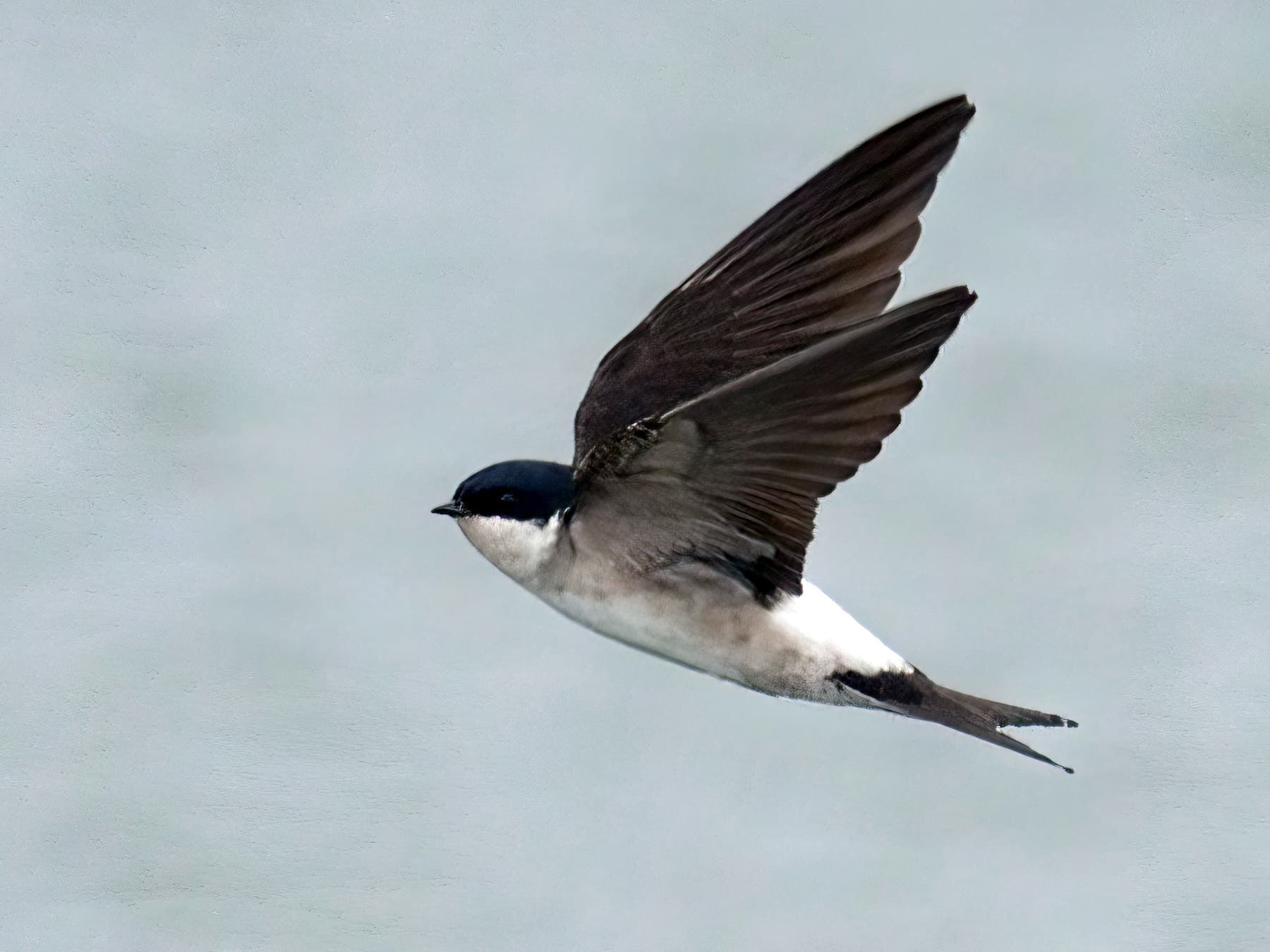
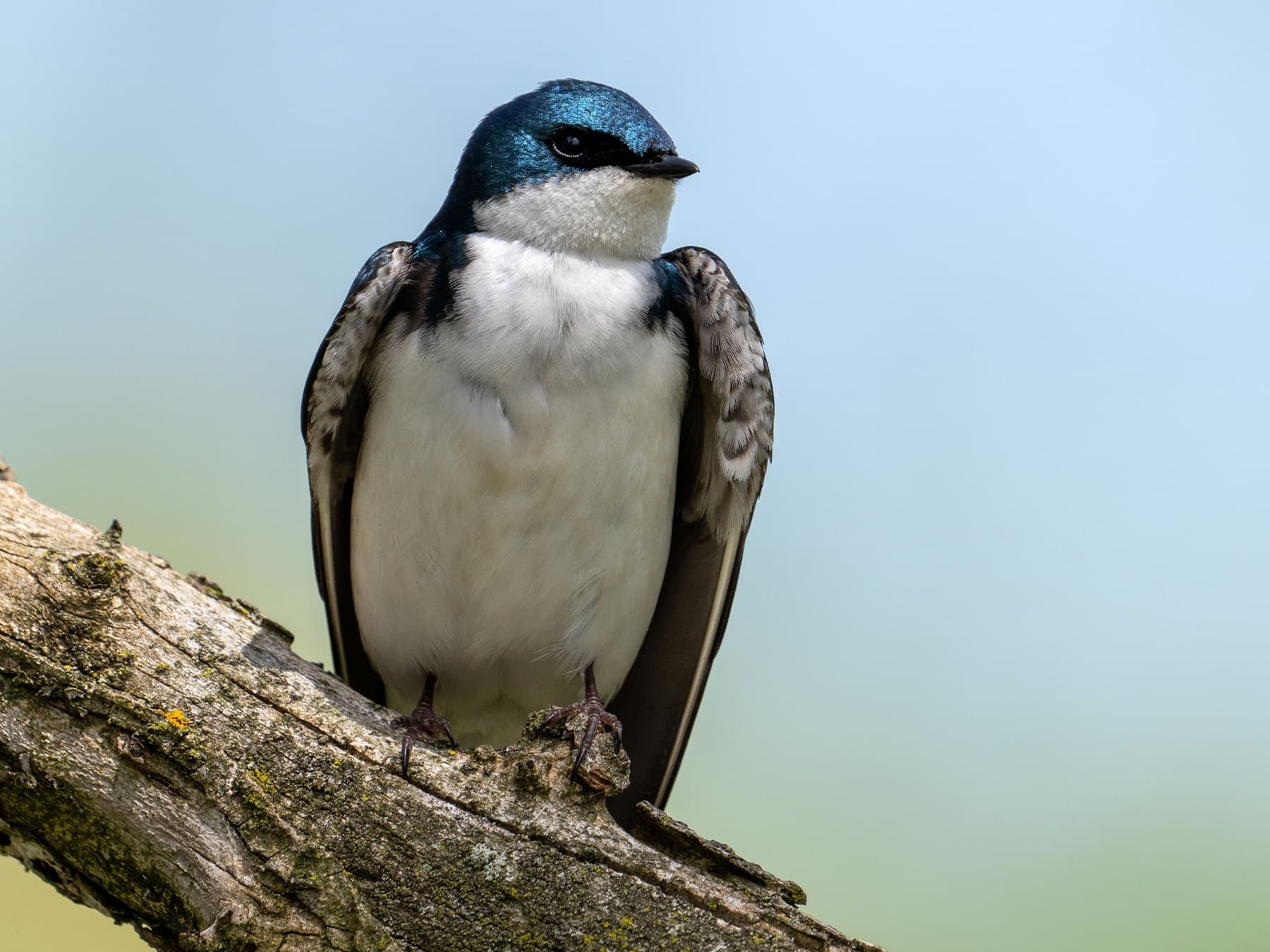
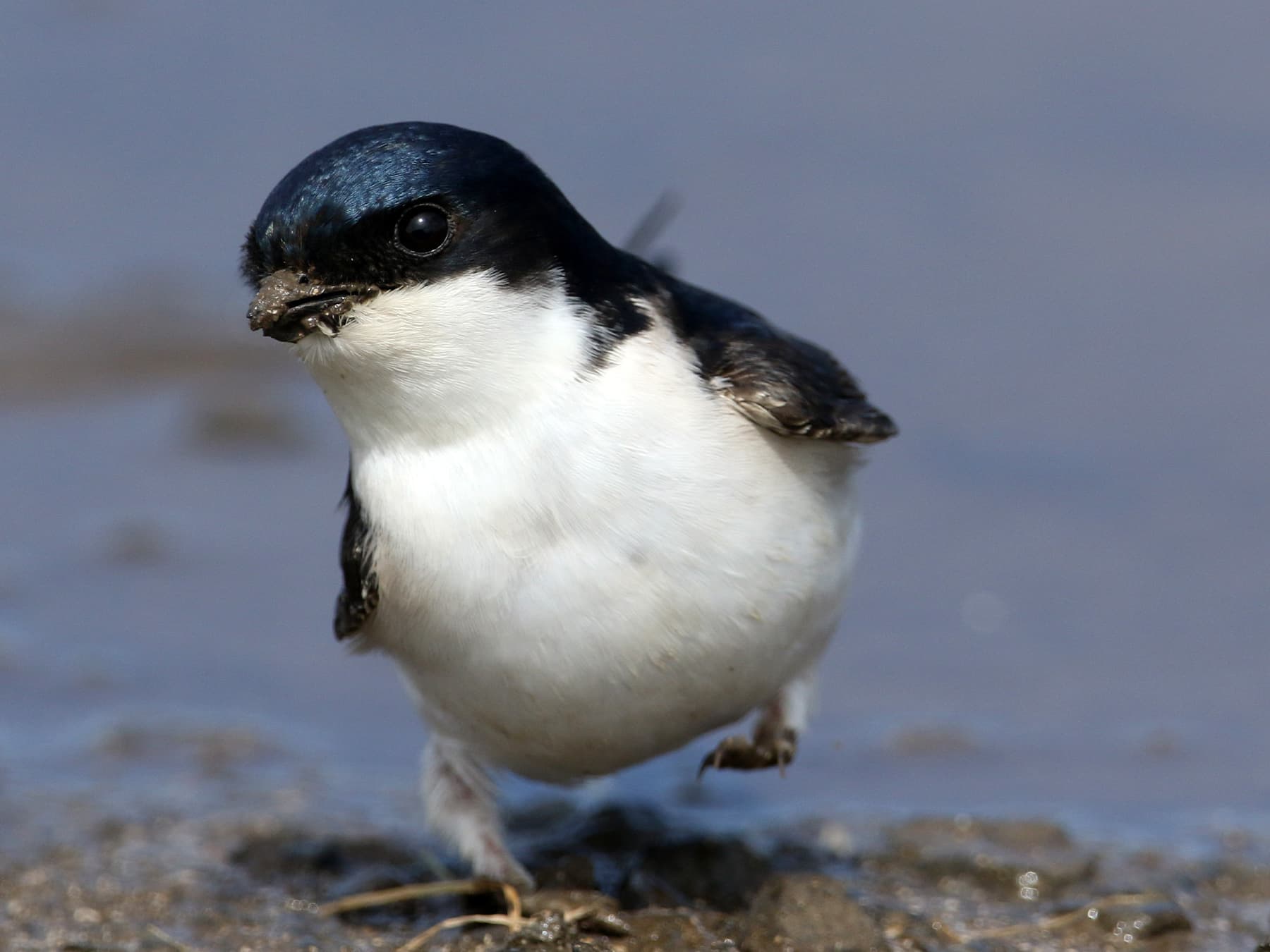
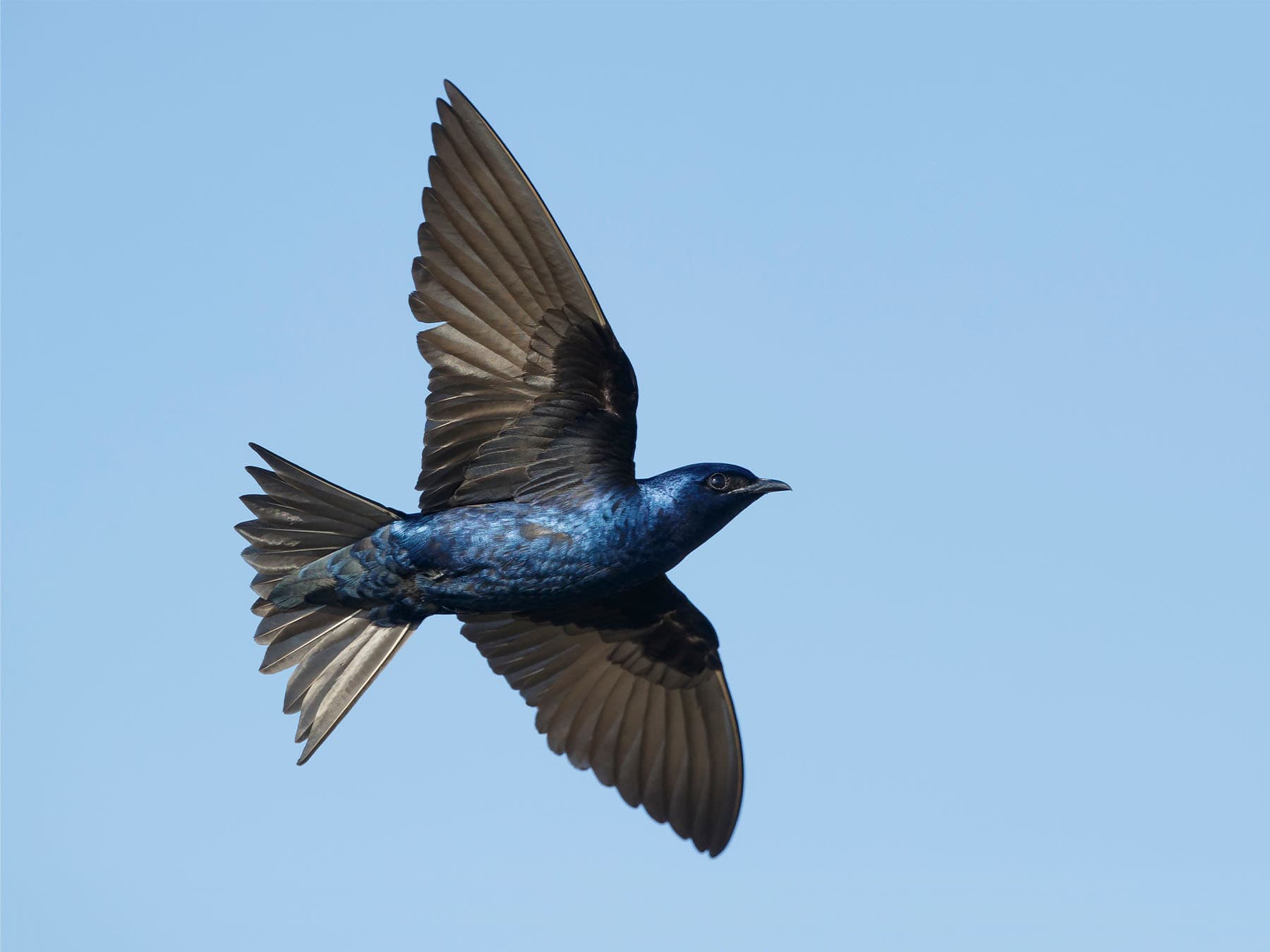
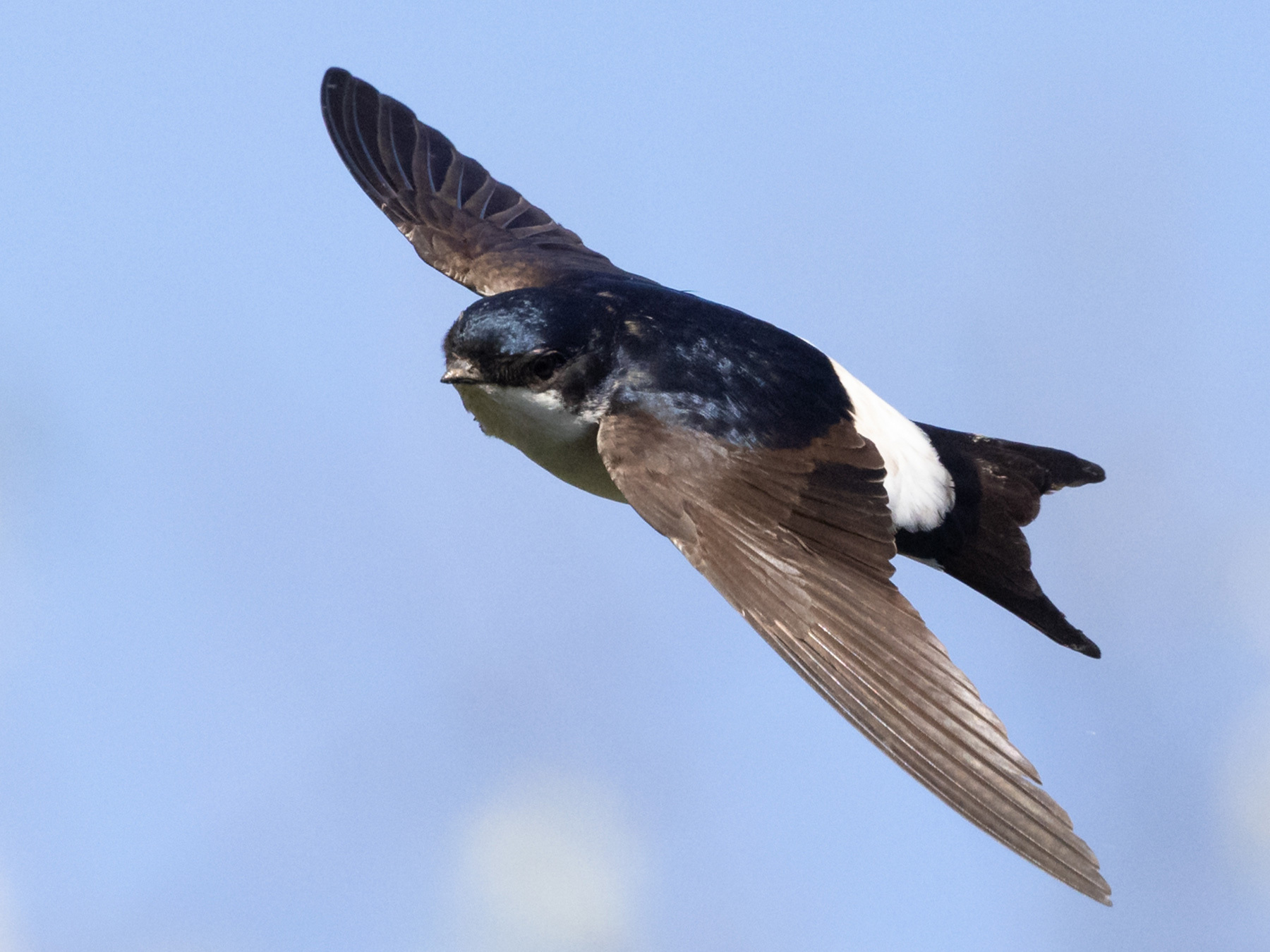
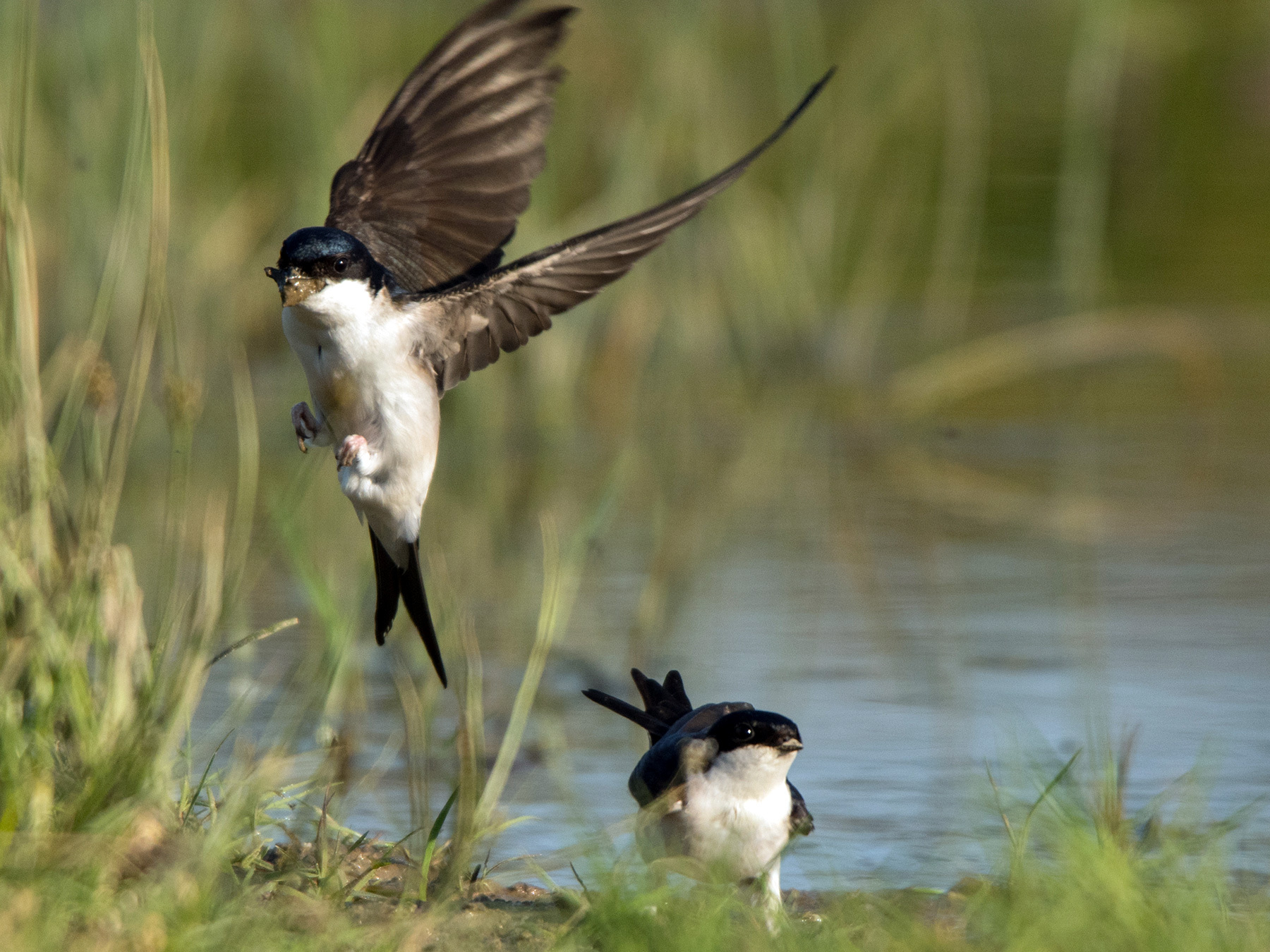
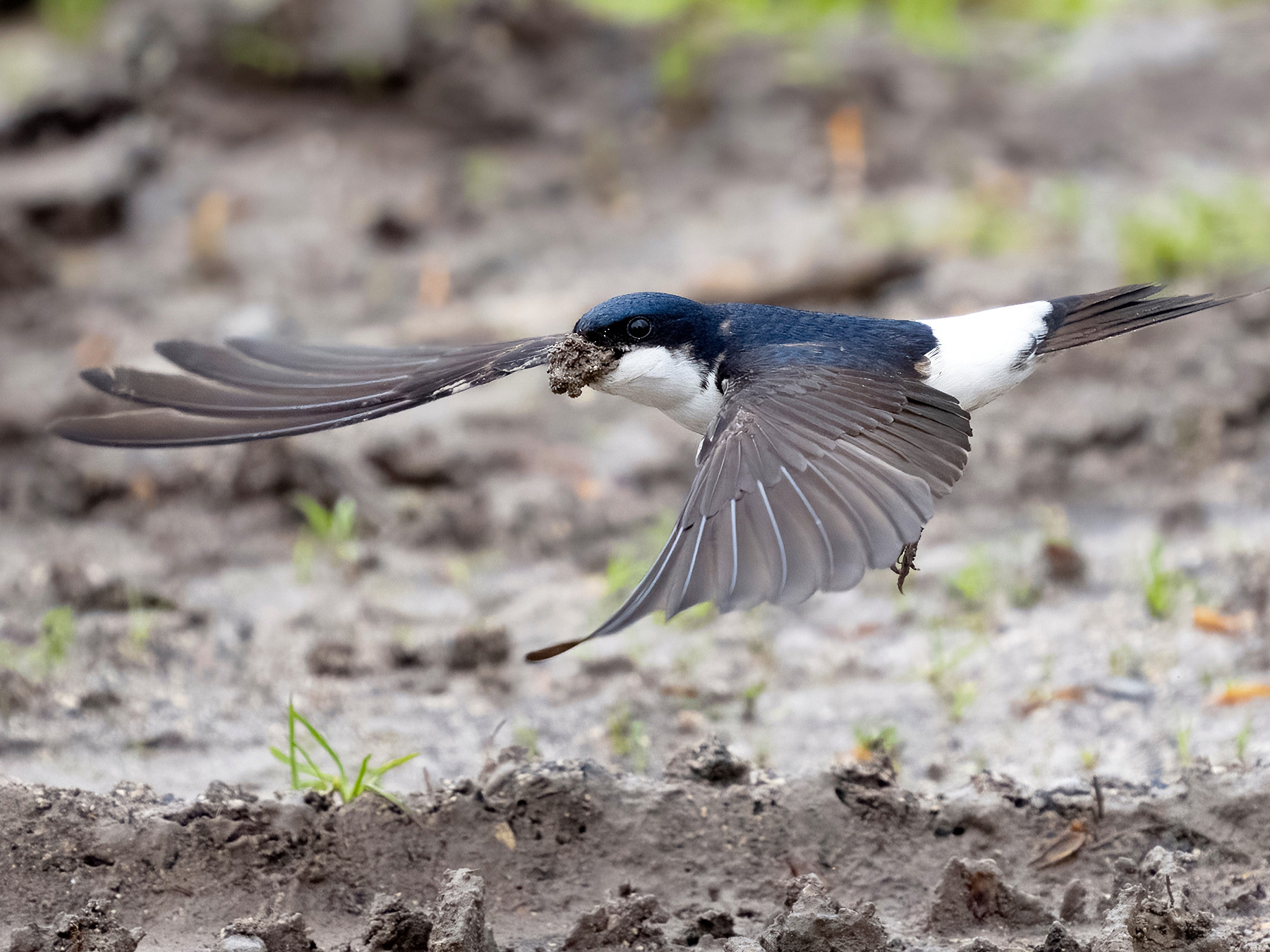
The House Martin is a neat, compact member of the Swallow family with metallic blue upperparts, white underparts and characteristic downy legs. They have black wings, a black tail, and a conspicuous white rump. Their tail is forked but does not end in long streaming feathers like the Swallow.
Male and female House Martins are very similar in breeding plumage. Juveniles can be identified by their shorter tails and duller (browner) plumage.
The House Martin is very similar in profile to the Sand Martin, although that species has brown upper parts and a clear band across its upper breast.
How big are House Martins?
House Martins are small birds, similar in size but more compact than the Swallow.
Length
House Martins have a body length of 12 to 14 centimeters, with very little difference between males and females.
Weight
They weigh 15 to 23 grams, with an average of 18 grams in the United Kingdom.
Wingspan
These agile birds have broad, triangular wings and a 26 to 29 centimeter wingspan.
Its size
Adults- Length
- 13–15 cm
- Wingspan
- 26–29 cm
- Weight
- 15–23 g
Its song and calls
What sound does a House Martin make?
House Martins are vocal birds that produce various chirps and twittering notes. They also make one or two-noted contact calls and high-pitched or hissing alarm and distress calls.
- Song0:00 / 0:06
Recorded in Normandie, France · May 2023
- Alarm call0:00 / 0:09
Recorded in Normandie, France · May 2023
When and where to see it
OctoberLeaving
Most recorded in October
- 1. East Sussex0.82%
- 2. Vale of Glamorgan0.76%
- 3. Isle of Wight0.67%
- 4. West Sussex0.58%
- 5. Pembrokeshire0.49%
Each dot is a county, state or province: the bigger and darker, the larger the bird’s share of that place’s bird records that month. Grey dots: no regular records. The ringed point is the centre of the bird’s records this month; the arrow shows how it moved since last month, and the dashed loop its path through the year. “Arrivals” colours places where it becomes regular this month (orange) or is in its last regular month (grey). GBIF eBird Observation Dataset, 2019–2024. Map data: Natural Earth, US Census Bureau; place centres © OpenStreetMap contributors.
In your area
See when the House Martin is recorded in your county, state or province.
How often the House Martin turns up in the UK and Ireland through the year, from birdwatchers' records.
United Kingdom
Summer visitor · regularly Apr–Oct · most records in August
Ireland
Summer visitor · regularly Apr–Oct · most records in June
Show as a table
| Month | United Kingdom | Ireland |
|---|---|---|
| January | <0.001% | – |
| February | <0.001% | – |
| March | 0.009% | 0.015% |
| April | 0.37% (regular) | 0.40% (regular) |
| May | 0.83% (regular) | 1.1% (regular) |
| June | 1.1% (regular) | 1.5% (regular) |
| July | 1.2% (regular) | 1.5% (regular) |
| August | 1.3% (regular) | 1.4% (regular) |
| September | 0.91% (regular) | 0.80% (regular) |
| October | 0.18% (regular) | 0.087% (regular) |
| November | 0.006% | – |
| December | <0.001% | – |
Recorded regularly in
Worldwide: recorded regularly in 106 countries
Countries where it was recorded in at least 3 of the 6 years 2019–2024. Linked countries have their own bird list.
Europe (51)
- Åland Islands
- Albania
- Andorra
- Austria
- Belarus
- Belgium
- Bosnia & Herzegovina
- Bulgaria
- Croatia
- Czechia
- Denmark
- Estonia
- Faroe Islands
- Finland
- France
- Germany
- Gibraltar
- Greece
- Guernsey
- Hungary
- Iceland
- Ireland
- Isle of Man
- Italy
- Jersey
- Kosovo
- Latvia
- Liechtenstein
- Lithuania
- Luxembourg
- Malta
- Moldova
- Monaco
- Montenegro
- Netherlands
- North Macedonia
- Norway
- Poland
- Portugal
- Romania
- Russia
- San Marino
- Serbia
- Slovakia
- Slovenia
- Spain
- Sweden
- Switzerland
- Ukraine
- United Kingdom
- Vatican City
Africa (31)
- Algeria
- Angola
- Botswana
- Cape Verde
- Egypt
- Eswatini
- Ethiopia
- Gambia
- Ghana
- Guinea
- Guinea-Bissau
- Kenya
- Liberia
- Malawi
- Mauritania
- Morocco
- Mozambique
- Namibia
- Nigeria
- Rwanda
- Senegal
- Seychelles
- Sierra Leone
- South Africa
- Tanzania
- Togo
- Tunisia
- Uganda
- Western Sahara
- Zambia
- Zimbabwe
Asia (24)
- Armenia
- Azerbaijan
- China
- Cyprus
- Georgia
- India
- Iran
- Iraq
- Israel
- Jordan
- Kazakhstan
- Kuwait
- Kyrgyzstan
- Lebanon
- Mongolia
- Oman
- Pakistan
- Palestinian Territories
- Qatar
- Saudi Arabia
- Tajikistan
- Turkey
- United Arab Emirates
- Uzbekistan
Data: EOD – eBird Observation Dataset (Cornell Lab of Ornithology), accessed via GBIF.org, CC BY 4.0. Records from 2019–2024, aggregated and filtered by Birdfact. How these lists are made
What is the habitat of a House Martin?
House Martins nest and forage around farmland, meadows and other open habitats, often near towns and villages. They are often attracted to wetlands and other freshwater habitats.
What is the range of a House Martin?
House Martins occur practically throughout the United Kingdom, with the exception of parts of northern Scotland. Elsewhere they occur throughout most of Europe, west to Mongolia in Asia and south to Central and Southern Africa.
Where do House Martins live?
House Martins are a commensal species, which means they are generally associated with people. While you might spot them in remote wilderness areas, these agile birds are most at home over farmland and even towns and villages.
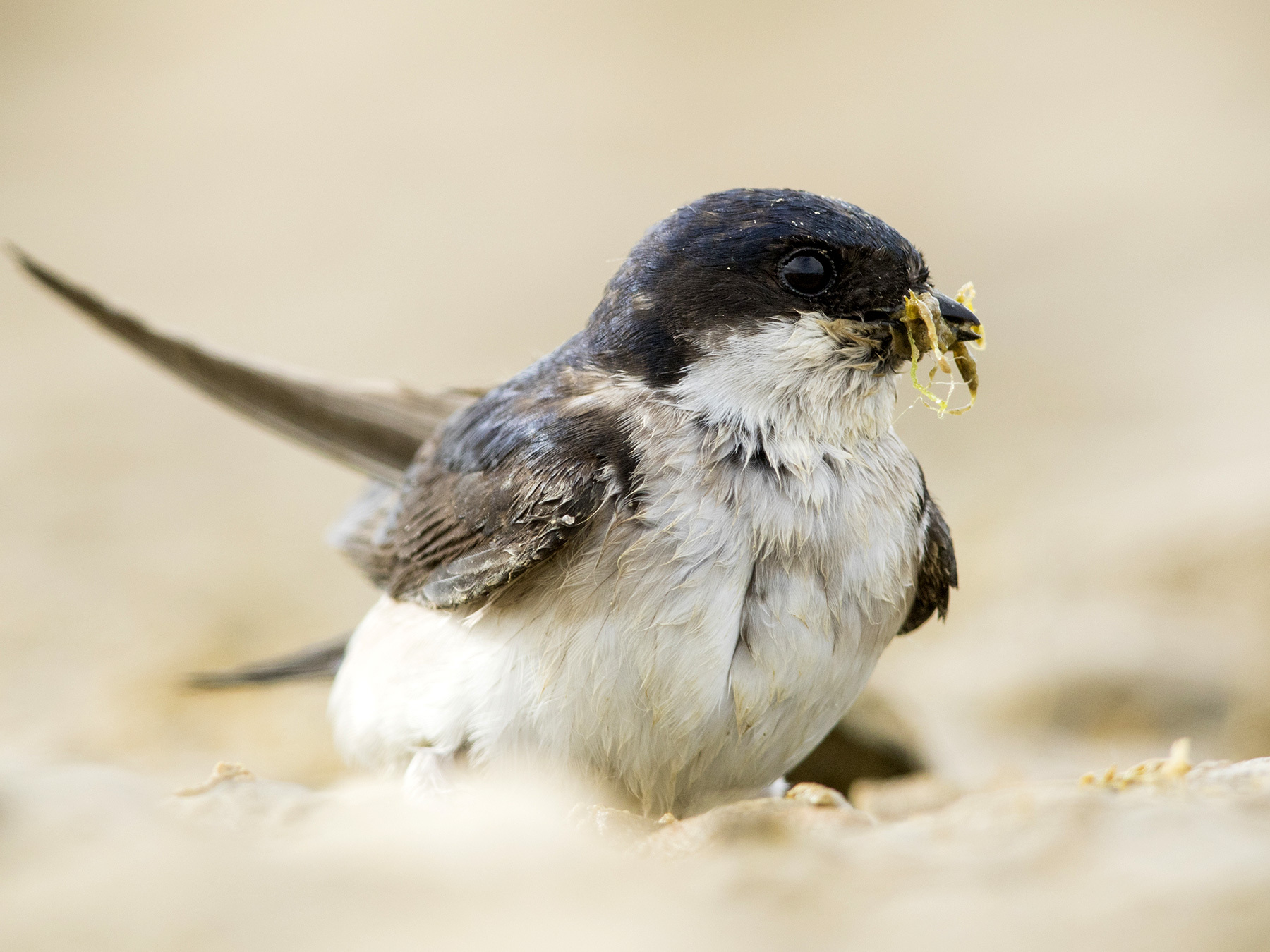
House Martins are tireless in flight and spend much of the day wheeling through the skies in pursuit of insects. They also descend to the ground to collect mud for their nests and sometimes to feed on terrestrial invertebrates.
How rare are House Martins?
Despite worrying declines, House Martins remain common in the United Kingdom, with approximately half a million breeding pairs visiting each spring.
Where can you see House Martins in the UK?
House Martins are very widespread in the United Kingdom. Look out for flocks of small, agile birds hunting fairly high above the ground in the vicinity of towns, villages, and farmland, especially near water.
Migration
Do House Martins migrate?
House Martins are long-distance migrants that breed in the UK and spend the winter in Africa. These birds migrate between the Northern and Southern Hemispheres and thus avoid the cold of winter and a shortage of flying insects.
A warming climate may be responsible for the House Martin arriving slightly earlier and leaving slightly later from its summer breeding grounds. However, climate change could also negatively affect these birds as they are susceptible to extreme weather events during migration.
Are House Martins native to the UK?
House Martins are native to the United Kingdom, although they are only present during the warmer months. These birds have not been introduced outside of their natural range.
When do House Martins arrive in the UK?
House Martins arrive in the United Kingdom as early as the end of March, although most arrive in April. They have a long nesting season, and late breeders depart as late as October.
Do House Martins arrive before Swallows?
Swallows usually arrive back in the United Kingdom before House Martins, although there is little difference, and the Martins may return before the Swallows in some areas and years.
Tips for seeing it
- Look for House Martins near buildings, especially those with overhanging eaves
- Observe their distinctive white rump in flight, which distinguishes them from swallows
- Listen for their soft, twittering calls, especially around nesting sites
- In the UK, watch for them from April to September during their breeding season
What it eats
What do House Martins eat?
House Martins eat flying insects like flies, aphids and beetles. They forage in flocks, fairly high above the ground, and catch their prey directly with their beaks. Occasionally, these birds will follow farmers' ploughs and livestock in search of the insects they disturb.
What do House Martin chicks eat?
Nestling House Martins eat the same small flying invertebrates as adult birds. They are fed by both parents for the four weeks or so that they spend in the nest and then for a further few days before becoming independent.
Nesting and breeding
Where do House Martins nest?
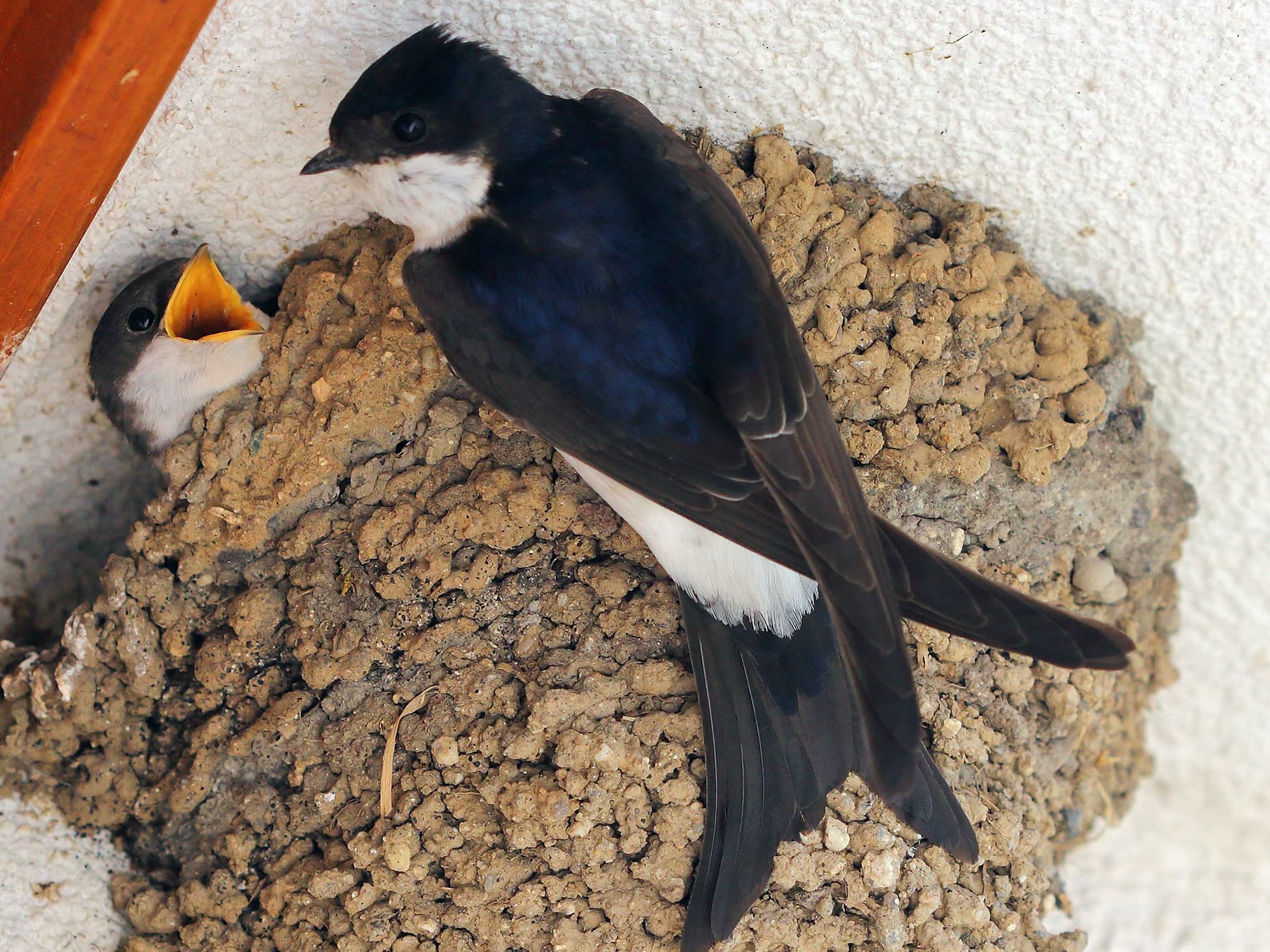
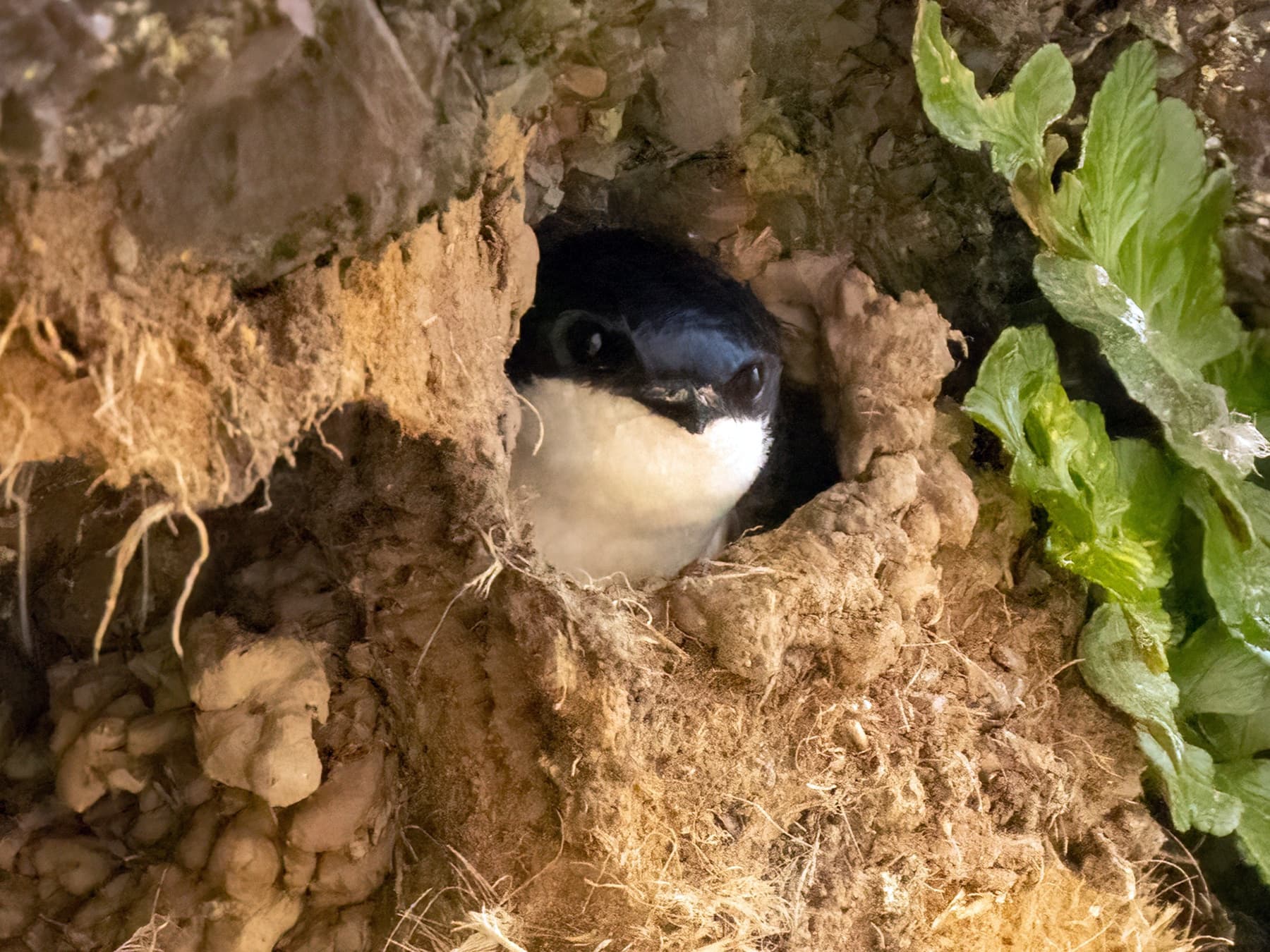
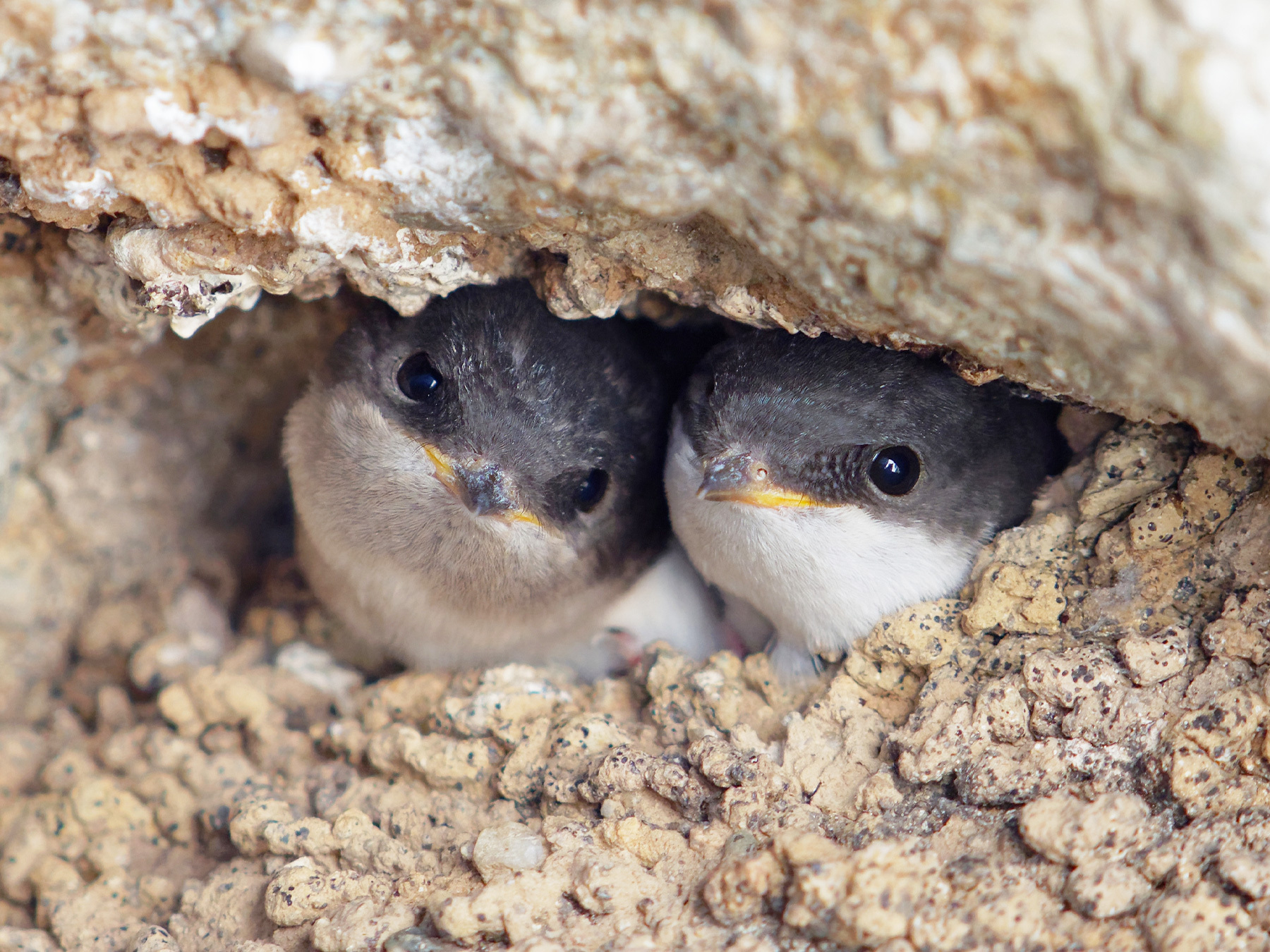
House Martins evolved to nest on cliffs, although they have learned that buildings and other artificial structures like bridges offer a better alternative. They usually nest in small colonies of a handful of pairs, although they may also spread themselves out or nest singly.
You can attract House Martins to nest around your home by installing nest cups. These are commercially available, or you can build your own from cement and sawdust. Fix your nest cups under the eaves in a quiet part of your building, not above a door or window.
When do House Martins nest?
House Martins usually nest between May and August in the United Kingdom, producing two broods each year. The female lays a single egg each day until her clutch is complete, and both parents incubate them for 14 to 16 days. The young Martins are ready to fledge the nest after 22 to 32 days.
What do House Martin eggs look like?
House Martins typically lay four or five plain white eggs, each measuring approximately 19 millimetres long and 13 millimetres wide.
Do House Martins mate for life?
House Martins form monogamous pairs and return to use the same nest each year. Infidelity is common, however, and up to a third of all broods have different fathers.
Behaviour
Are House Martins aggressive?
House Martins are gregarious birds that often nest in small colonies and feed together in flocks. However, they will defend their nest aggressively against other intruding House Martins or Swifts. Unfortunately, they are not aggressive enough to protect their space against House Sparrows, which occasionally steal their nests.
Where do House Martins sleep at night?
House Martins sleep in trees and in their nests. They may be able to sleep on the wing during migration and while overwintering.
Lifespan and predators
How long do House Martins live?
House Martins are short-lived birds with a typical lifespan of about two years, although they can live for over 14 years.
What are the predators of House Martins?
Agile birds of prey like the Sparrowhawk and Hobby are the adult House Martins’ most serious threats. Great Spotted Woodpeckers and Tawny Owls have been known to break into their nests to eat eggs and chicks.
Are House Martins protected?
House Martins are protected by the Wildlife and Countryside Act 1981. As such, it is an offence to disturb or harm these birds, their eggs or their active nests.
Are House Martins endangered?
House Martins are listed as a ‘Least Concern’ species on the IUCN Red List. Unfortunately, these birds have a decreasing global population trend and local declines have resulted in their inclusion on the United Kingdom’s red list.
Conservation
While currently listed as Least Concern, House Martin populations have declined in parts of Europe. Factors include loss of nesting sites due to modern building practices and changes in insect abundance.
Conservation efforts focus on protecting existing colonies and promoting the use of artificial nest cups.
Similar birds
Often mistaken for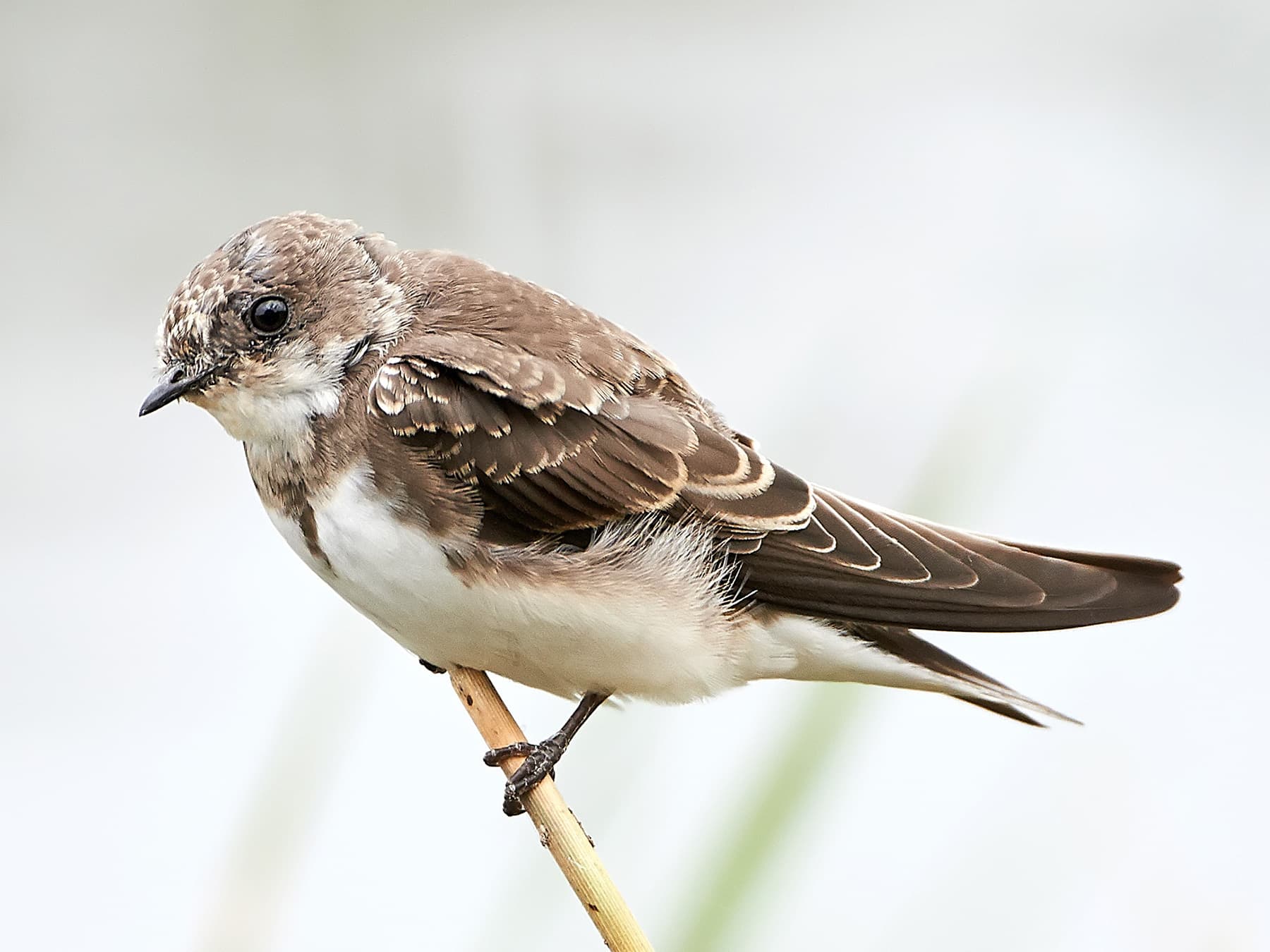
More photos
6 photos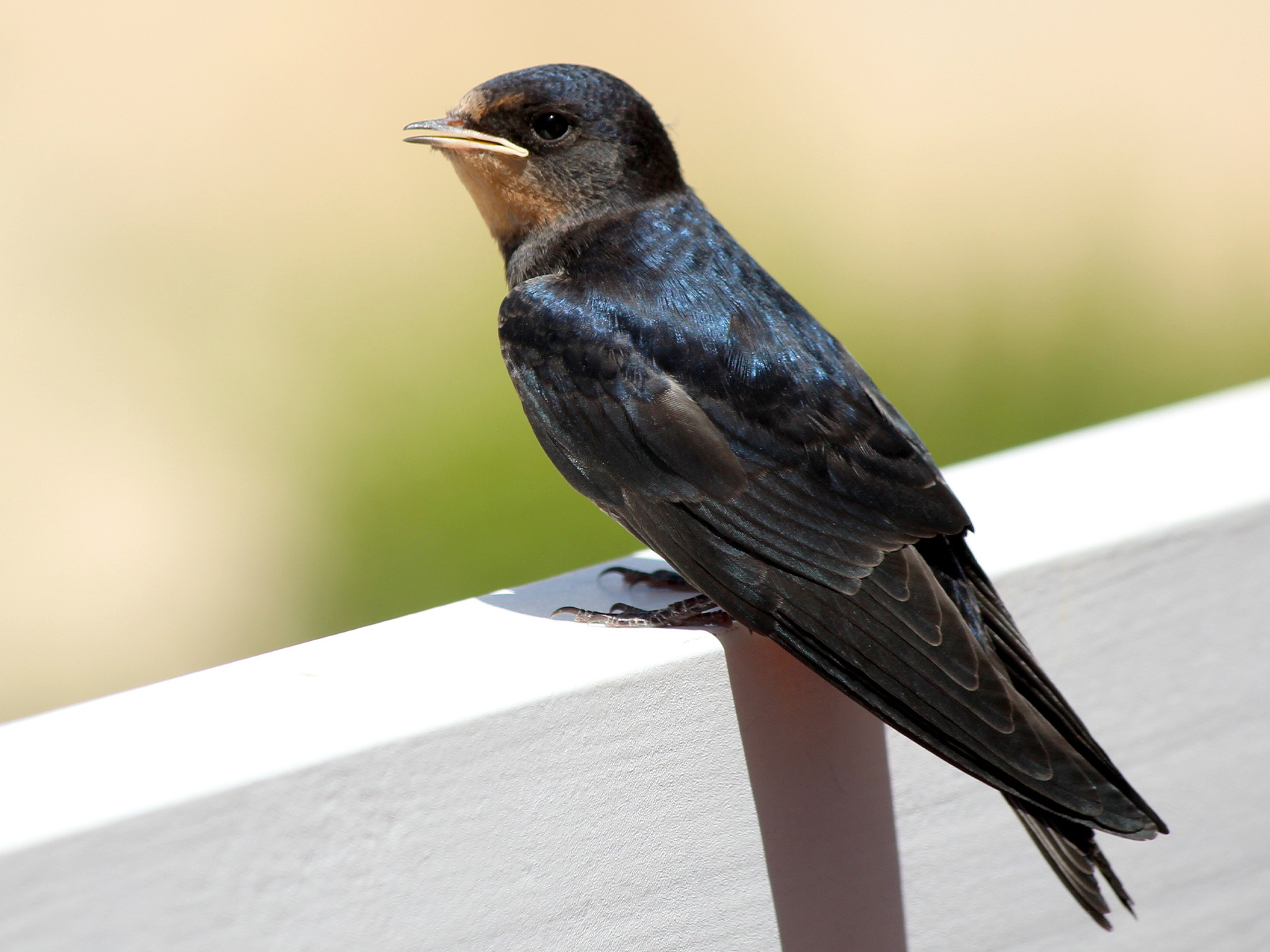
House Martin guides
1 guidesQuick facts
- Length
- 13–15 cm
- Wingspan
- 26–29 cm
- Weight
- 15–23 g
- Lifespan
- 5–8 years · oldest recorded 7.1 years
- Family
- Swallows & Martins
- Migration
- Long-distance Migrant
- Global status (IUCN)
- Least Concern
- World population
- 10,000,000 - 500,000,000 mature individuals
- Population trend
- Decreasing
- Also called
- Common House Martin, Northern House Martin, Western House Martin
- Scientific name
- Delichon urbicum
Questions
2What is the difference between House Martins and Swallows?
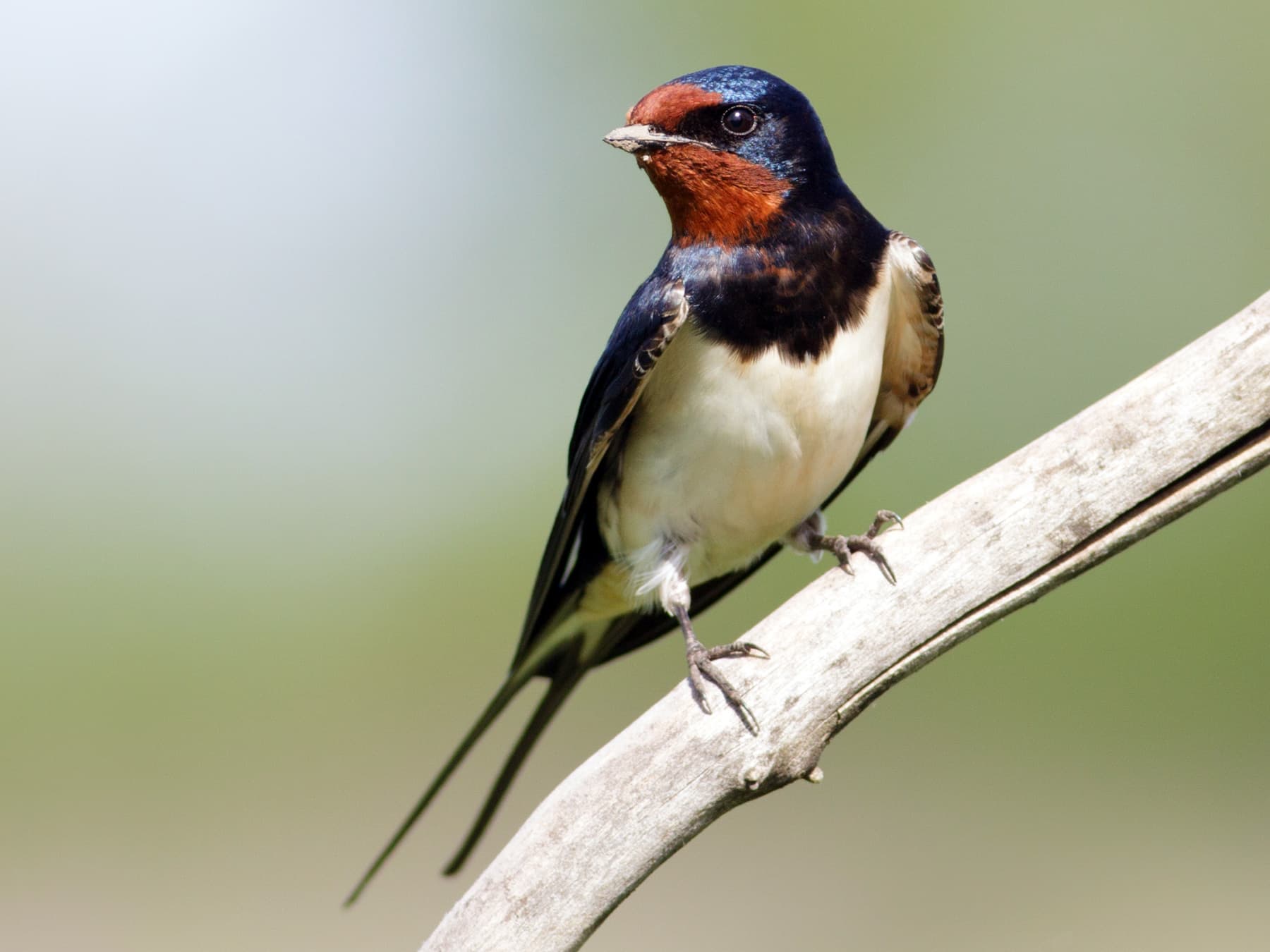
House Martins differ from Swallows by being slightly smaller, having white (not blue and red) throats, and a moderately forked tail without long feathers on either side. House Martins have a large white patch on their lower back (rump), and this is another reliable marker to help distinguish between these two common migrants.
Are House Martins related to Swallows?
House Martins and Swallows are both from the Hirundinidae family. Despite being from different genera, the two are closely related enough to interbreed and hybridise, and this happens fairly often in nature.
Sources
4- 1BirdLife International. 2017. Delichon urbicum (amended version of 2016 assessment). The IUCN Red List of Threatened Species 2017: e.T103811886A118748864. Source (opens in a new tab)
- 2EBCC (2015)
- 3BirdLife International. 2017. Delichon urbicum (amended version of 2016 assessment). The IUCN Red List of Threatened Species 2017: e.T103811886A118748864. Source (opens in a new tab)
- 4BTO longevity records: maximum age from a ringed bird, 7 years, 1 month, 12 days (set in 2002), BirdFacts: House Martin (2002) Source (opens in a new tab)

Checked by
Nathan Cope, founder and editor
Nathan founded Birdfact and leads its writers and contributors in the UK, the US and Canada. He has watched and studied birds for more than ten years, and checks every article and species guide before it’s published.