


Purple Martin
Progne subis
By the Birdfact teamChecked by Nathan Cope
On this page13 sections
How to recognise it
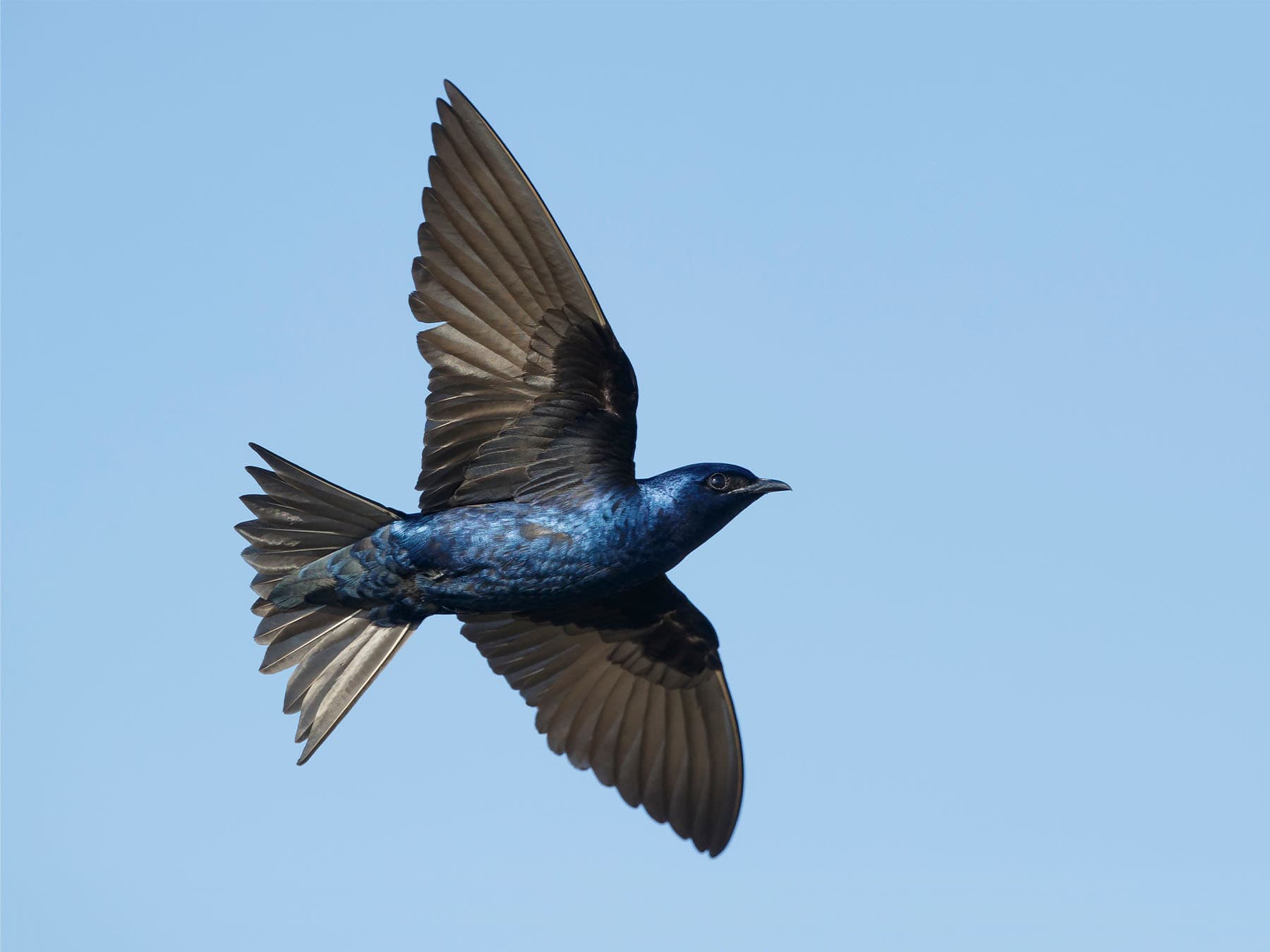
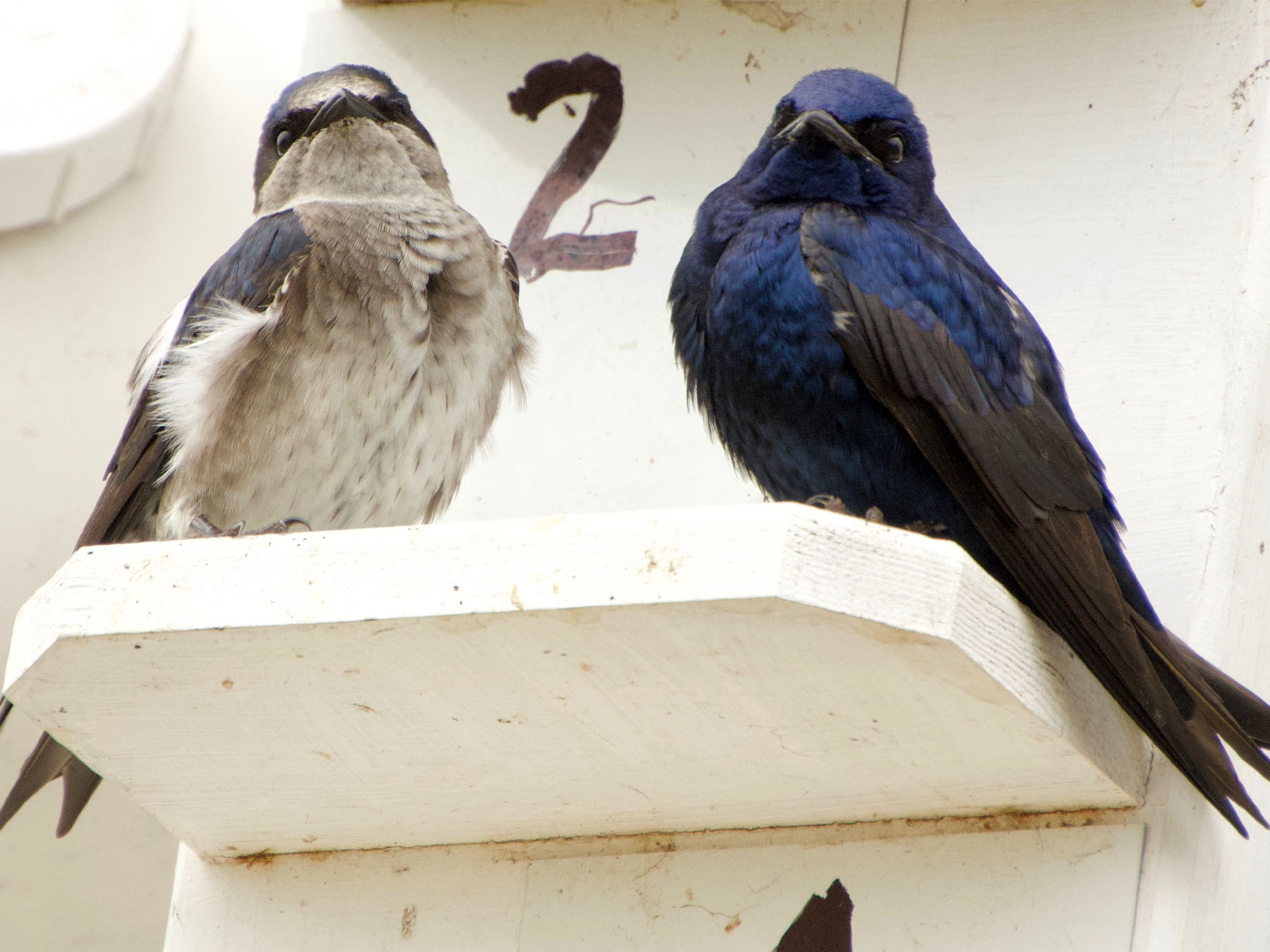
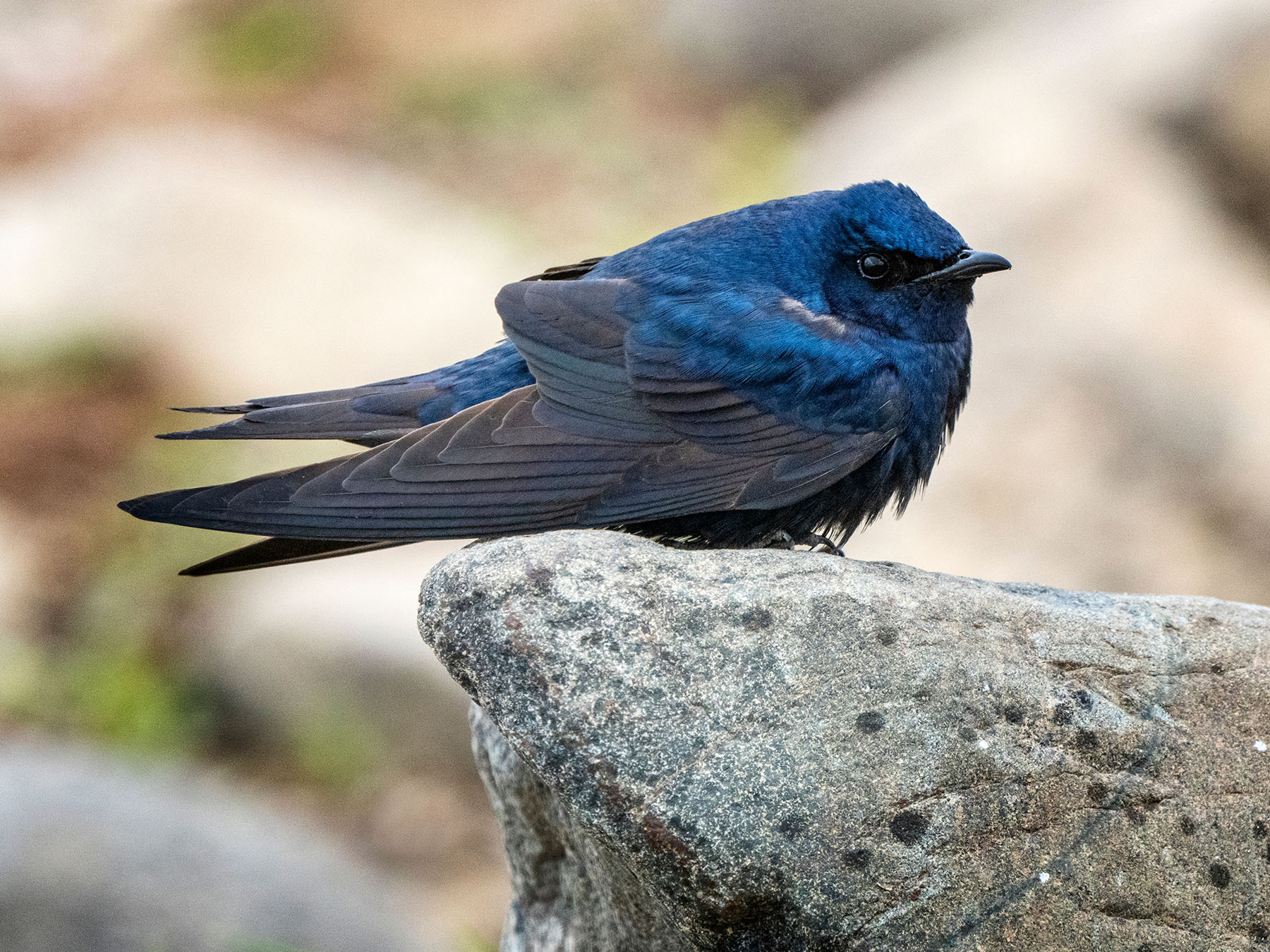
Purple Martins are the largest North American swallows. Adult males are unmistakable, with their glossy, iridescent purple-blue plumage covering most of their body. Their wings and tail are black, creating a striking contrast.
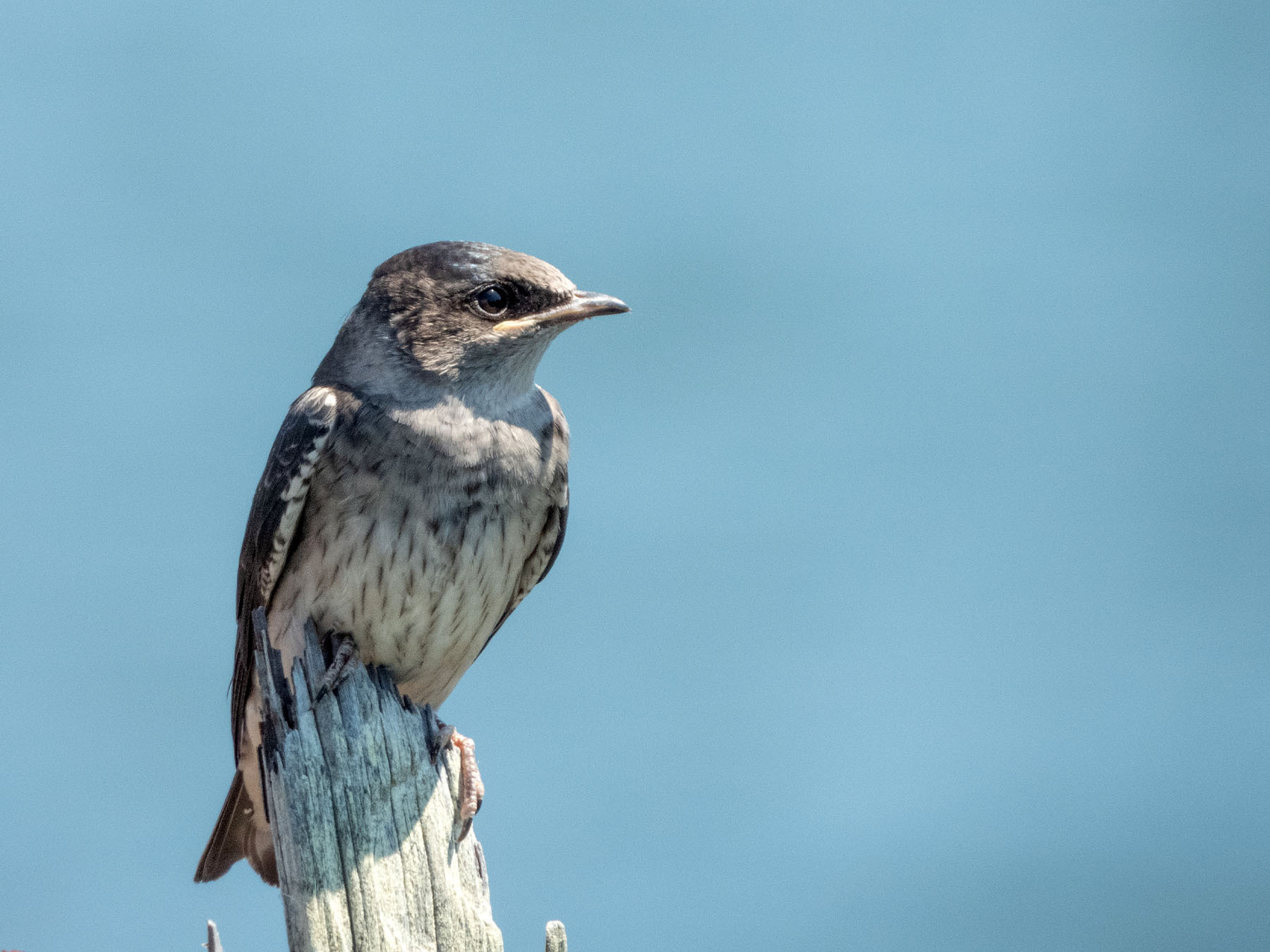
Females and immature birds are less colorful, with a mix of grey and brown upperparts and lighter underparts. They often have a faint collar and some purple sheen, though not as pronounced as in males.
Its size
Adults- Length
- 18–20 cm
- Wingspan
- 38–46 cm
- Weight
- 45–60 g
Its song and calls
Purple Martins are known for their cheerful, chattering vocalizations. Their song is a series of rich, liquid chirps and gurgles, often described as 'choo-choo' or 'peew-peew'.
During courtship and territorial displays, males produce a distinctive 'dawn song', a complex series of chirps and warbles.
- Call0:00 / 0:14
Recorded in Iowa, United States · July 2011
When and where to see it
OctoberMostly absent
Most recorded in October
- 1. Texasunder 0.1%
- 2. Alaskaunder 0.1%
- 3. Arizonaunder 0.1%
- 4. Floridaunder 0.1%
- 5. Mississippiunder 0.1%
Each dot is a county, state or province: the bigger and darker, the larger the bird’s share of that place’s bird records that month. Grey dots: no regular records. The ringed point is the centre of the bird’s records this month; the arrow shows how it moved since last month, and the dashed loop its path through the year. “Arrivals” colours places where it becomes regular this month (orange) or is in its last regular month (grey). GBIF eBird Observation Dataset, 2019–2024. Map data: Natural Earth, US Census Bureau; place centres © OpenStreetMap contributors.
In your area
See when the Purple Martin is recorded in your county, state or province.
How often the Purple Martin turns up in the United States and Canada through the year, from birdwatchers' records.
United States
Summer visitor · regularly Feb–Sep · most records in July
Canada
Summer visitor · regularly Apr–Sep · most records in August
Show as a table
| Month | United States | Canada |
|---|---|---|
| January | 0.009% | – |
| February | 0.048% (regular) | <0.001% |
| March | 0.14% (regular) | <0.001% |
| April | 0.26% (regular) | 0.082% (regular) |
| May | 0.28% (regular) | 0.21% (regular) |
| June | 0.33% (regular) | 0.18% (regular) |
| July | 0.45% (regular) | 0.27% (regular) |
| August | 0.34% (regular) | 0.30% (regular) |
| September | 0.054% (regular) | 0.040% (regular) |
| October | 0.003% | <0.001% |
| November | <0.001% | – |
| December | <0.001% | – |
Worldwide: recorded regularly in 25 countries
Countries where it was recorded in at least 3 of the 6 years 2019–2024. Linked countries have their own bird list.
North America (17)
Data: EOD – eBird Observation Dataset (Cornell Lab of Ornithology), accessed via GBIF.org, CC BY 4.0. Records from 2019–2024, aggregated and filtered by Birdfact. How these lists are made
Tips for seeing it
- Look for Purple Martins near open areas with water, such as fields, parks, and wetlands
- Listen for their distinctive chirping and chattering calls, especially near nesting sites
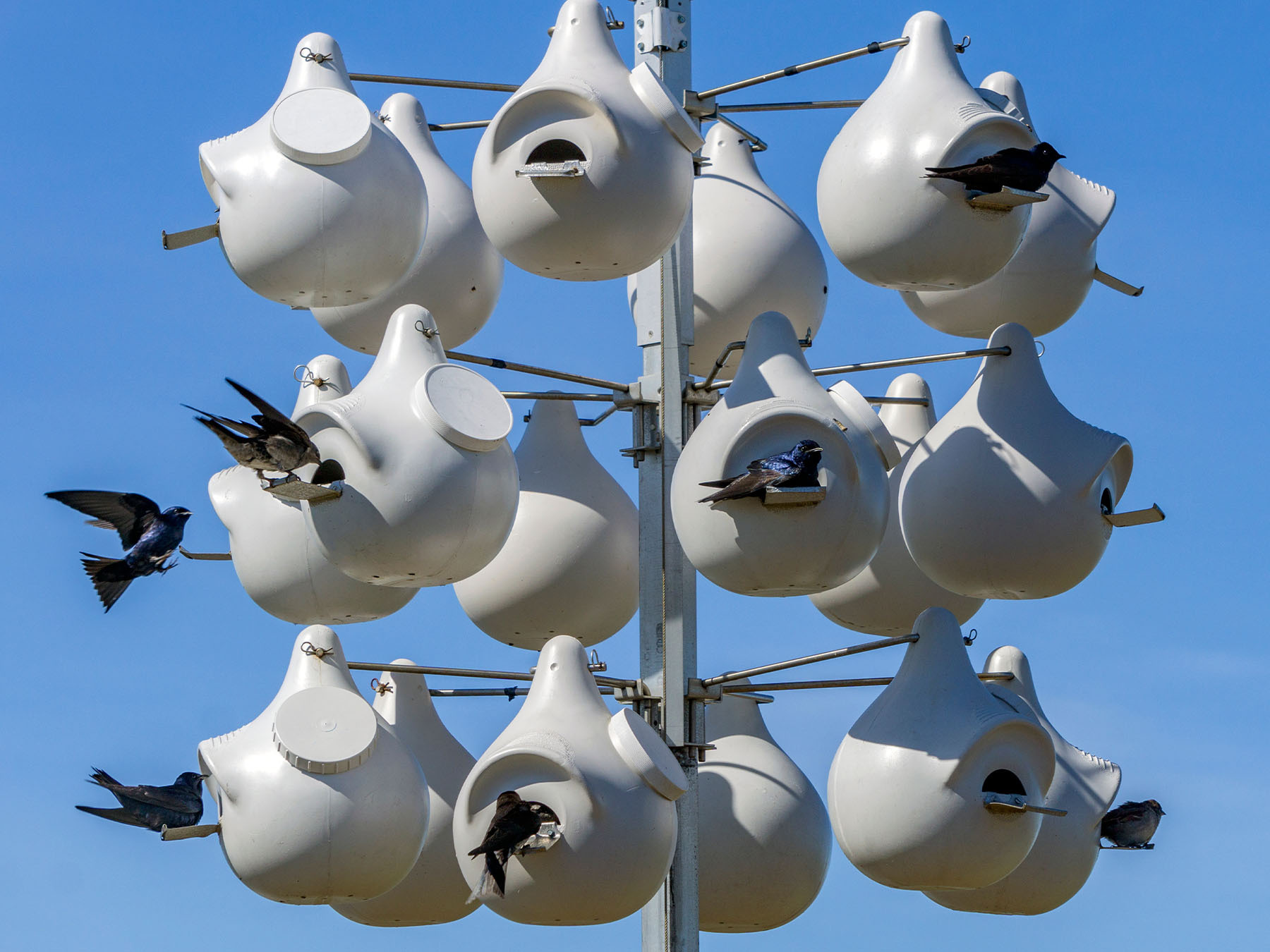
- Check purpose-built martin houses and gourds in suburban and rural areas
- Observe their acrobatic flight patterns as they hunt insects in the air
What it eats
Purple Martins are insectivores, feeding exclusively on flying insects caught in mid-air. Their diet includes dragonflies, damselflies, flies, midges, mayflies, and flying ants.
Contrary to popular belief, they do not significantly impact mosquito populations, as mosquitoes make up only a small portion of their diet.
Nesting and breeding
Purple Martins typically form monogamous pairs each breeding season. In eastern North America, they nest almost exclusively in human-provided housing, while western populations still use natural cavities.
Females lay 3-6 white eggs in a nest made of twigs, grass, and mud. Both parents participate in nest building, though females do most of the work.
Incubation lasts about 15-18 days, with both parents sharing duties. Nestlings fledge after about 26-31 days but may return to the nest to roost for several days after fledging.
Behaviour
Purple Martins are highly social birds, often seen in large flocks during migration and roosting. They are aerial insectivores, catching insects on the wing with remarkable agility.
These birds have a unique relationship with humans and rely heavily on man-made nesting structures in eastern North America.
Conservation
While Purple Martins are currently listed as Least Concern, they face challenges from habitat loss and competition with invasive species like European Starlings and House Sparrows.
Conservation efforts focus on providing and maintaining suitable nesting sites, particularly in eastern North America where they are almost entirely dependent on human-provided housing.
Similar birds
Often mistaken for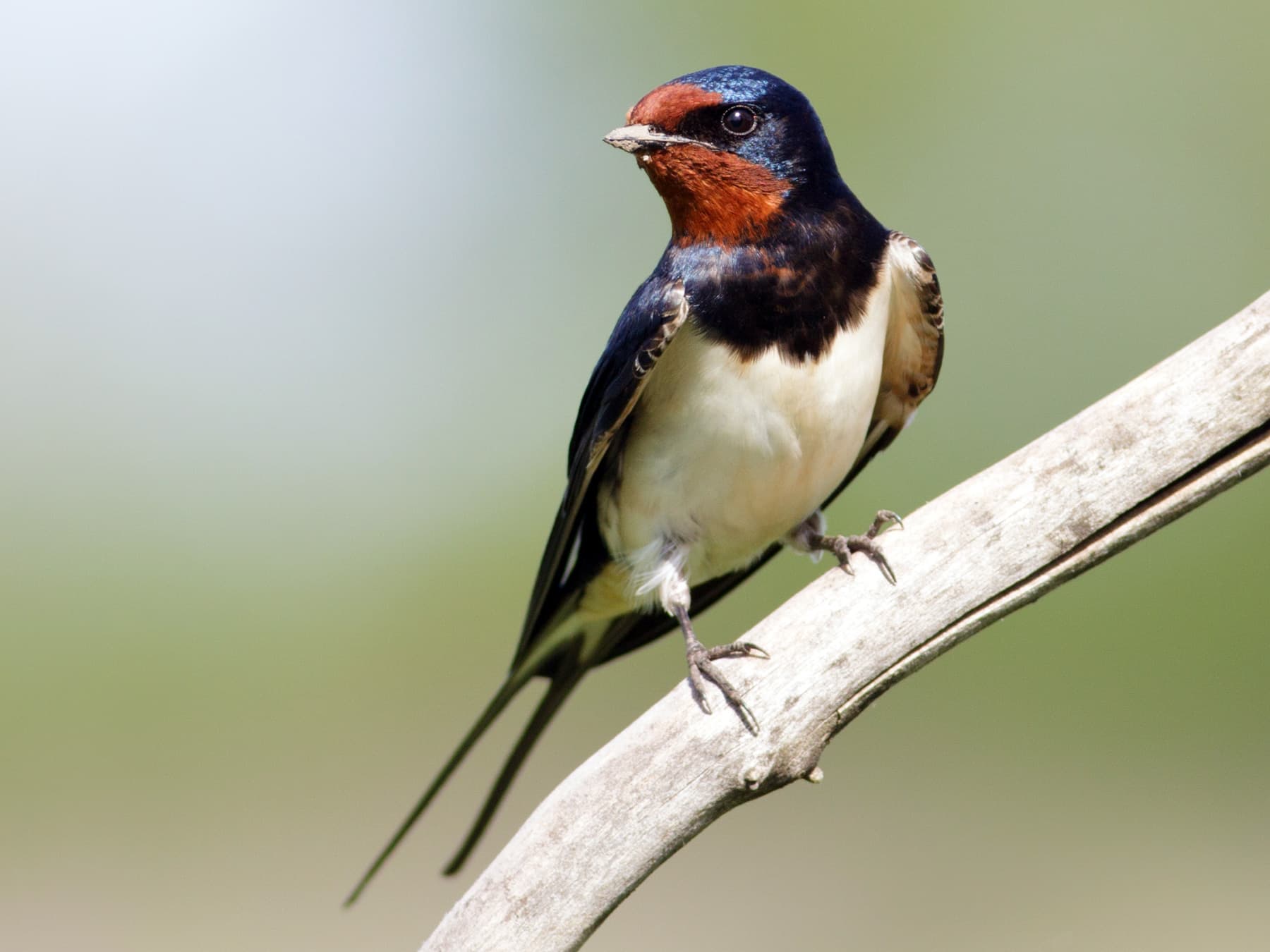
More photos
5 photos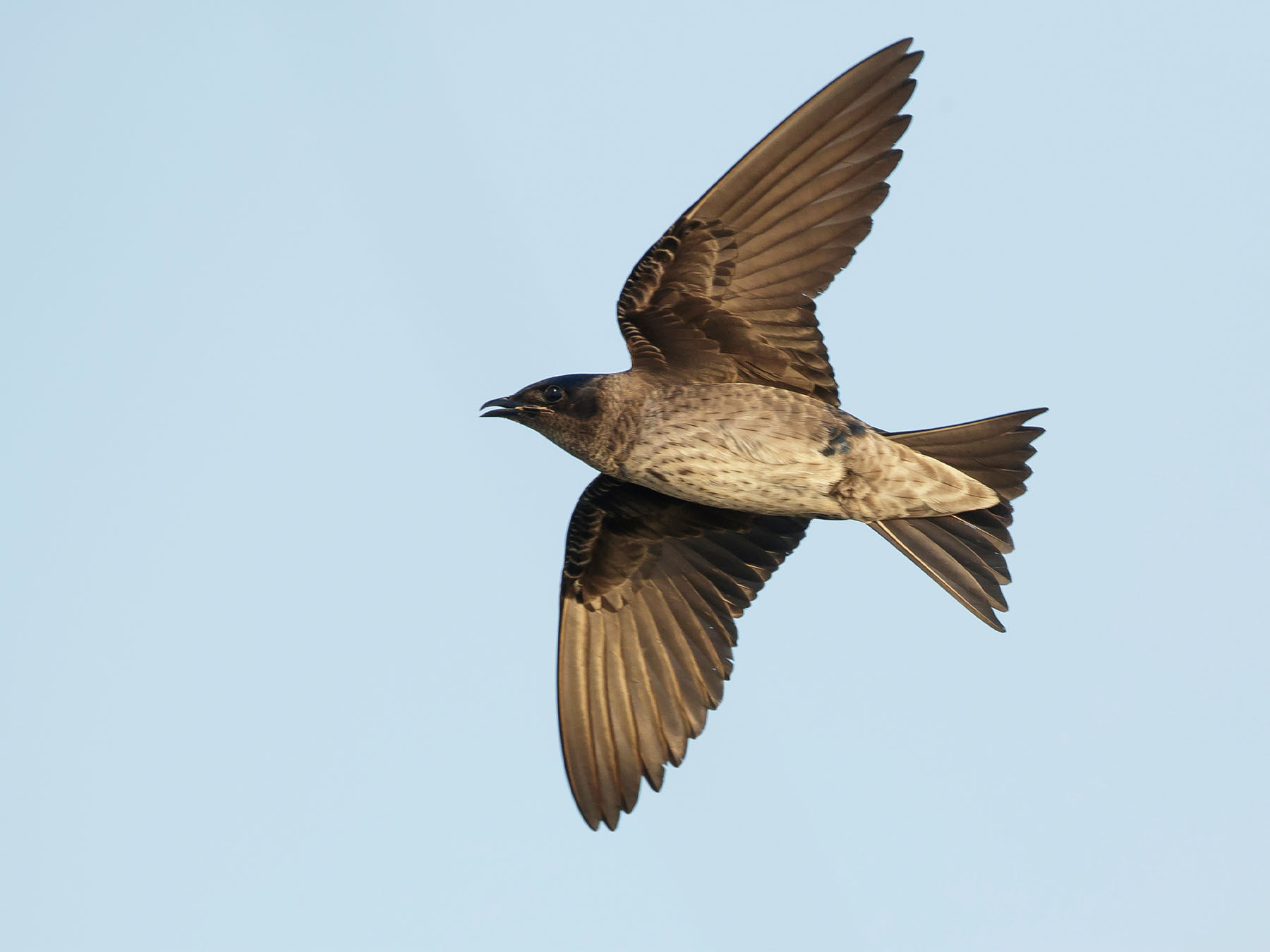
Purple Martin guides
1 guidesQuick facts
- Length
- 18–20 cm
- Wingspan
- 38–46 cm
- Weight
- 45–60 g
- Lifespan
- 5–7 years · oldest recorded 13 years
- Family
- Swallows & Martins
- Migration
- Long-distance Migrant
- Global status (IUCN)
- Least Concern
- World population
- 9,300,000 mature individuals
- Population trend
- Population declining due to habitat loss and competition for nesting sites
- Scientific name
- Progne subis
Sources
4- 1BirdLife International. 2016. Progne subis. The IUCN Red List of Threatened Species 2016: e.T22712098A94319217. Source (opens in a new tab)
- 2Breeding Bird Survey and/or Christmas Bird Count: Butcher and Niven (2007)
- 3Partners in Flight (2022) Source (opens in a new tab)
- 4Longevity Records Of North American Birds. Version 2023.1 Source (opens in a new tab)

Checked by
Nathan Cope, founder and editor
Nathan founded Birdfact and leads its writers and contributors in the UK, the US and Canada. He has watched and studied birds for more than ten years, and checks every article and species guide before it’s published.