
Common Swift
European Swift, Eurasian Swift · Apus apus
By the Birdfact teamChecked by Nathan Cope
On this page14 sections
How to recognise it
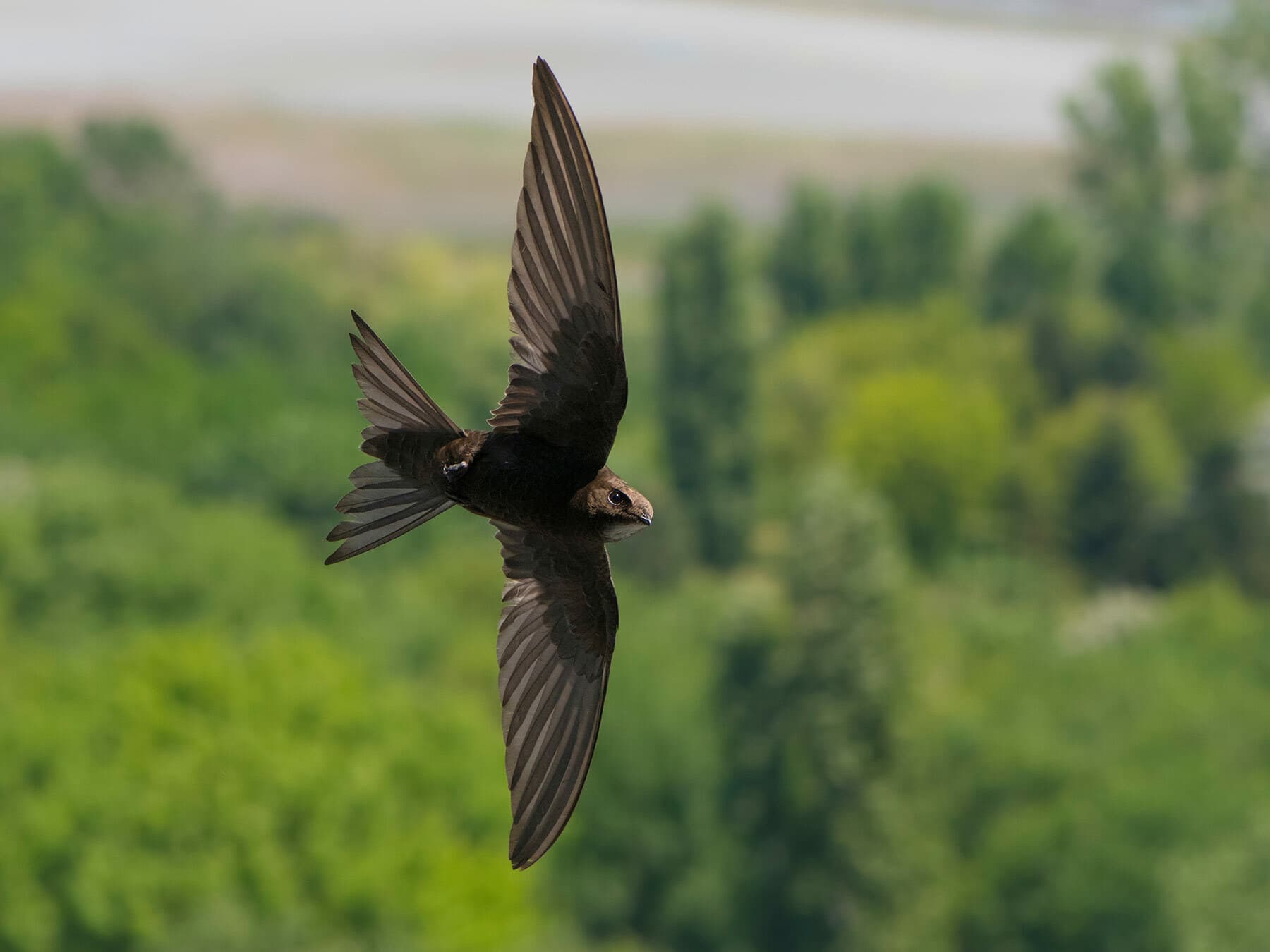
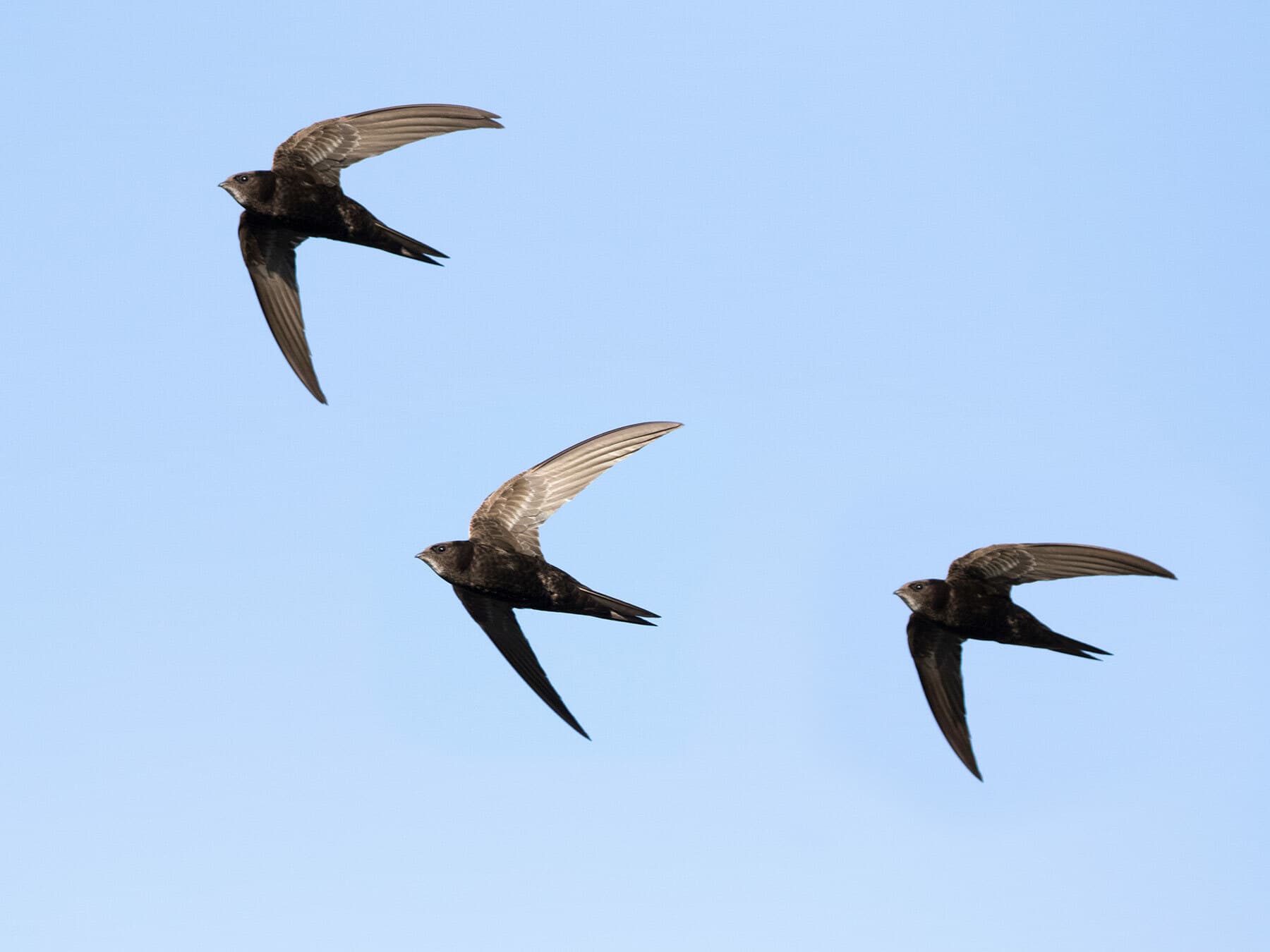
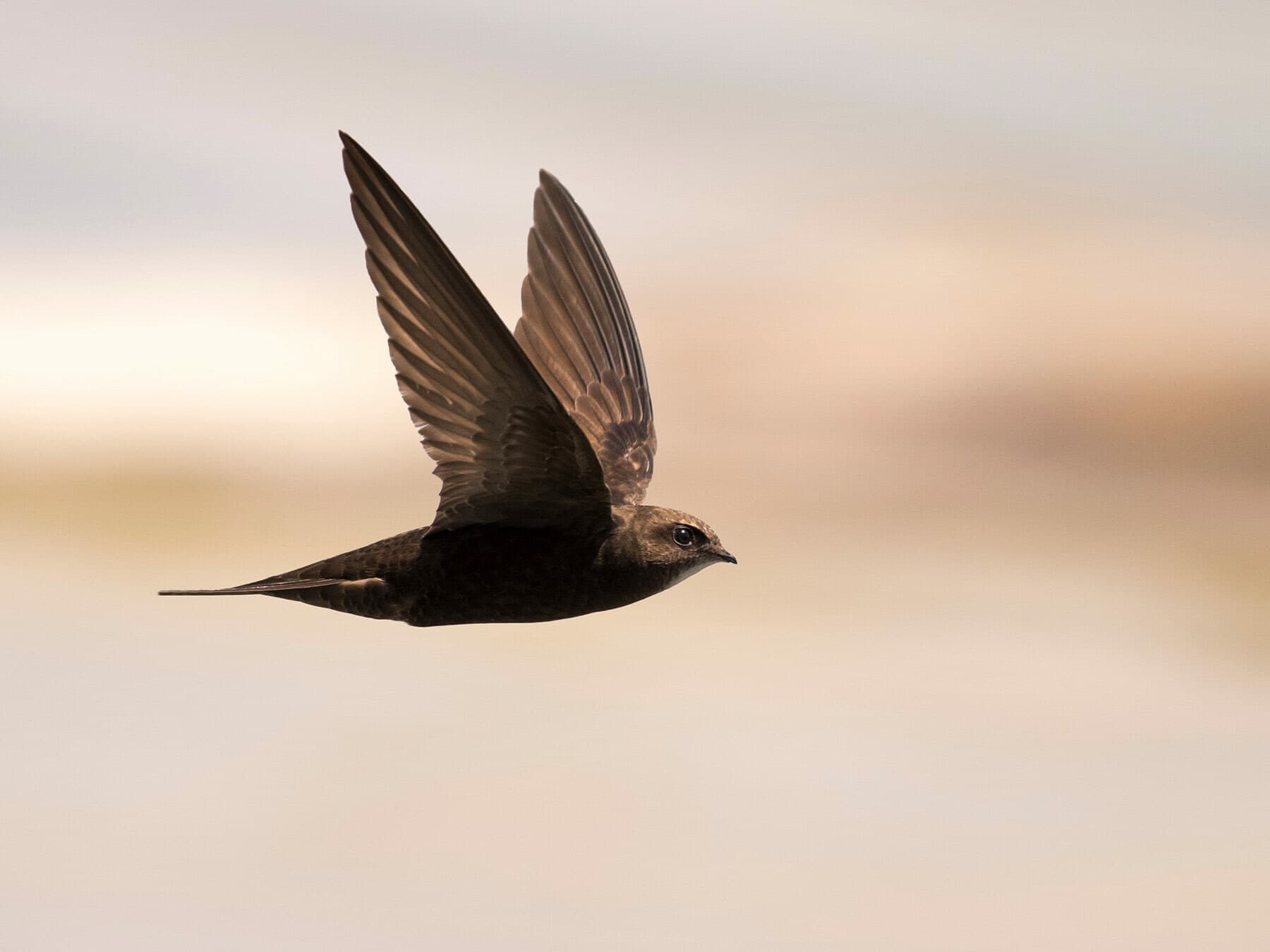
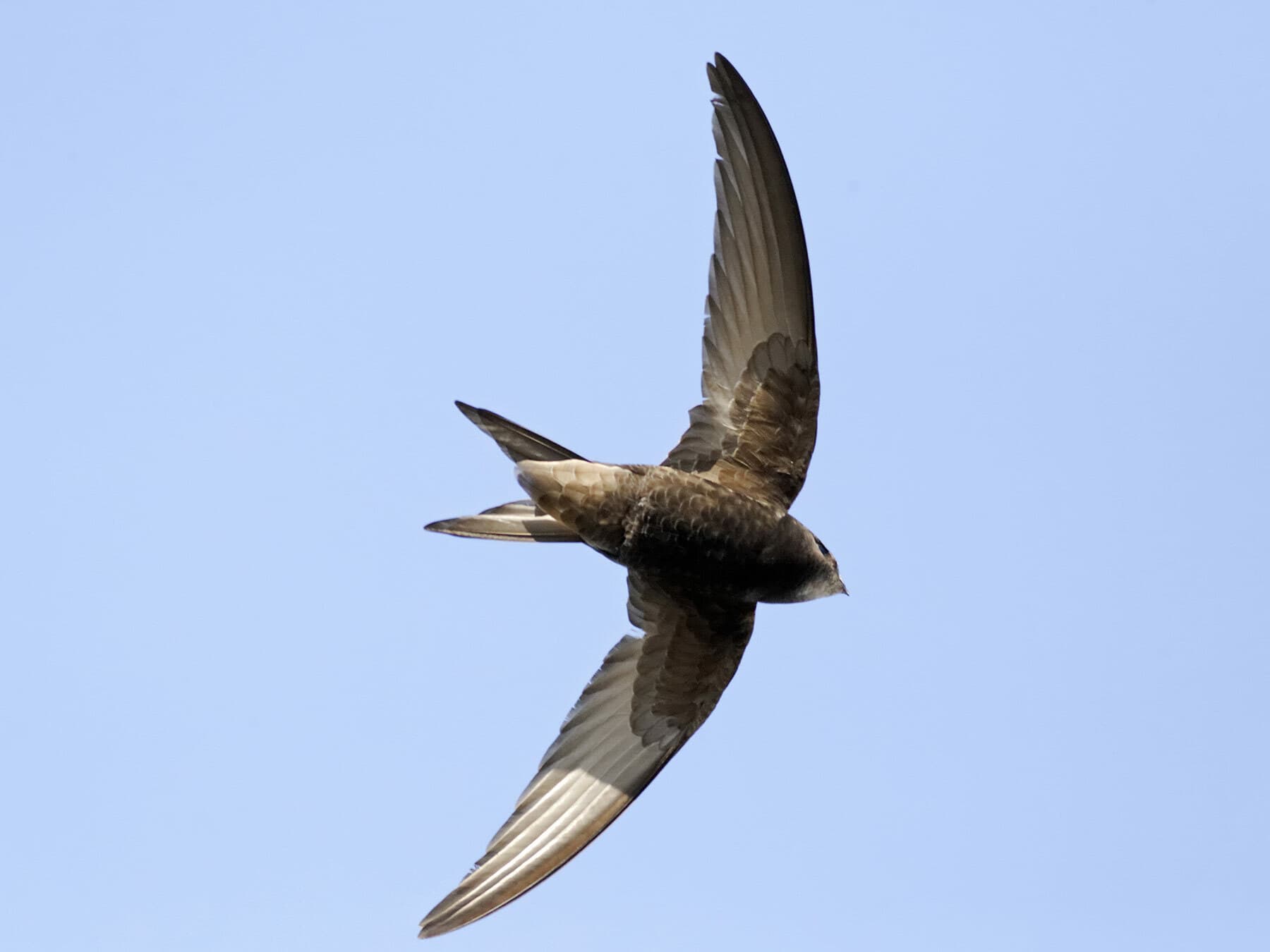
The Common Swift is a sleek, sickle-shaped bird with long, narrow wings and a short, forked tail. Its plumage is predominantly sooty brown, appearing black in flight, with a small pale throat patch. The body is streamlined, with a flat head and short, wide beak.
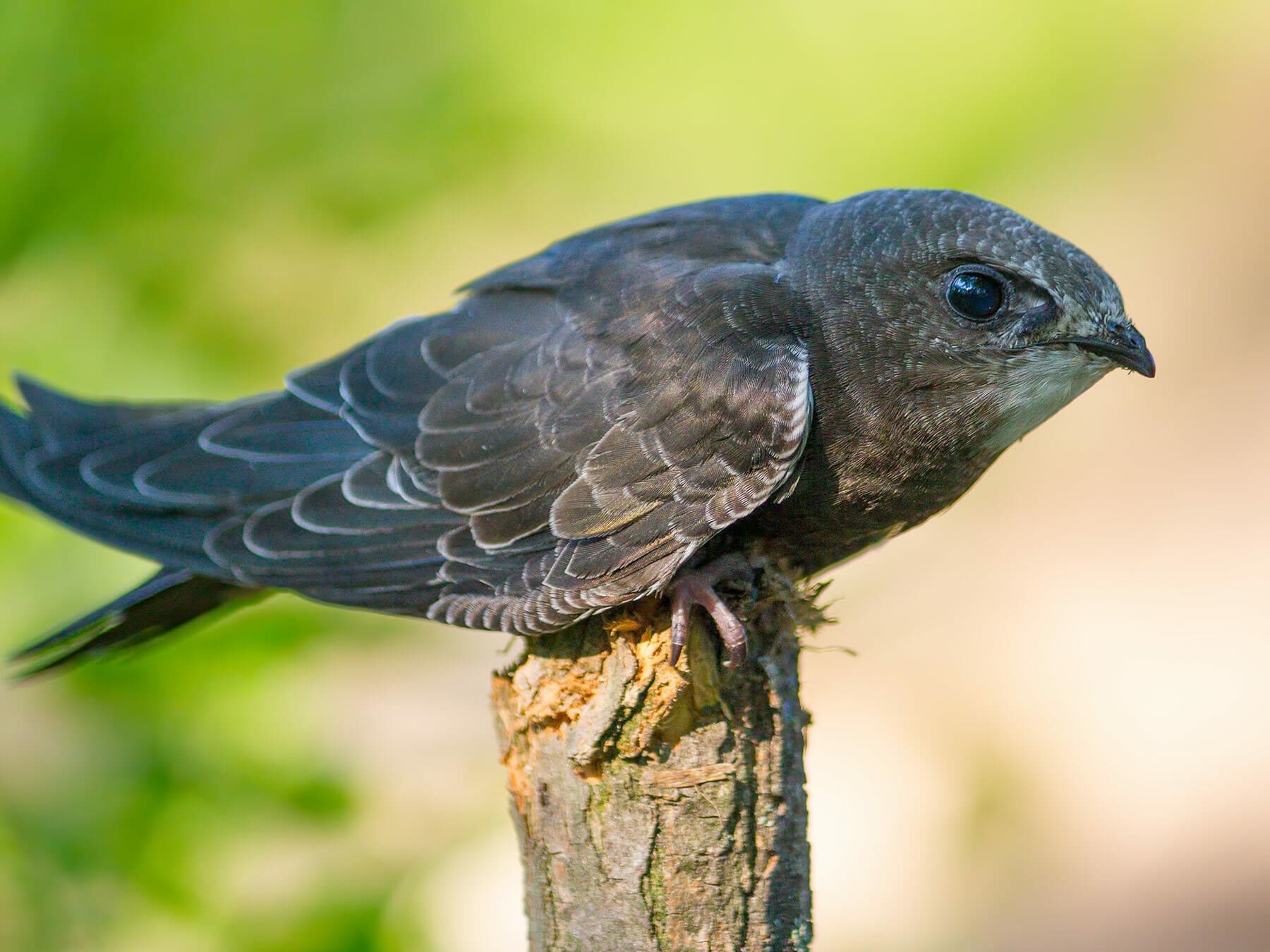
Juveniles closely resemble adults but may have slightly paler feather edges. There is no significant difference between males and females in appearance. The swift's plumage remains consistent throughout the year, with no seasonal variations.
While challenging to observe in flight, they have miniature feet with four forward-pointing toes, which prevent them from perching on overhead wires or small branches.
Its size
Adults- Length
- 16–17 cm
- Wingspan
- 42–48 cm
- Weight
- 31–56 g
Its song and calls
Swifts vocalise with a piercing screaming “shreee” call, particularly when flying in groups.
What is a group of Swifts called?
Known collective nouns for a group of Swifts are as follows:
- a box of swifts
- a drift of swifts
- a flock of swifts
- a screaming frenzy of swifts
- a swoop of swifts
- Song0:00 / 0:18
Recorded in Bienne, Switzerland · July 2023
- Flight call0:00 / 0:10
Recorded in Principado de Asturias, Spain · May 2020
When and where to see it
OctoberMostly absent
Most recorded in October
- 1. East Riding of Yorkshireunder 0.1%
- 2. Dumfries and Gallowayunder 0.1%
- 3. Pembrokeshireunder 0.1%
- 4. Kentunder 0.1%
- 5. Norfolkunder 0.1%
Each dot is a county, state or province: the bigger and darker, the larger the bird’s share of that place’s bird records that month. Grey dots: no regular records. The ringed point is the centre of the bird’s records this month; the arrow shows how it moved since last month, and the dashed loop its path through the year. “Arrivals” colours places where it becomes regular this month (orange) or is in its last regular month (grey). GBIF eBird Observation Dataset, 2019–2024. Map data: Natural Earth, US Census Bureau; place centres © OpenStreetMap contributors.
In your area
See when the Common Swift is recorded in your county, state or province.
How often the Common Swift turns up in the UK and Ireland through the year, from birdwatchers' records.
United Kingdom
Summer visitor · regularly Apr–Aug · most records in July
Ireland
Summer visitor · regularly May–Aug · most records in July
Show as a table
| Month | United Kingdom | Ireland |
|---|---|---|
| January | – | – |
| February | – | – |
| March | <0.001% | – |
| April | 0.12% (regular) | 0.048% |
| May | 1.3% (regular) | 0.79% (regular) |
| June | 1.8% (regular) | 1.2% (regular) |
| July | 1.9% (regular) | 1.3% (regular) |
| August | 0.64% (regular) | 0.46% (regular) |
| September | 0.081% | 0.017% |
| October | 0.004% | – |
| November | <0.001% | – |
| December | <0.001% | – |
Recorded regularly in
Worldwide: recorded regularly in 118 countries
Countries where it was recorded in at least 3 of the 6 years 2019–2024. Linked countries have their own bird list.
Europe (51)
- Åland Islands
- Albania
- Andorra
- Austria
- Belarus
- Belgium
- Bosnia & Herzegovina
- Bulgaria
- Croatia
- Czechia
- Denmark
- Estonia
- Faroe Islands
- Finland
- France
- Germany
- Gibraltar
- Greece
- Guernsey
- Hungary
- Iceland
- Ireland
- Isle of Man
- Italy
- Jersey
- Kosovo
- Latvia
- Liechtenstein
- Lithuania
- Luxembourg
- Malta
- Moldova
- Monaco
- Montenegro
- Netherlands
- North Macedonia
- Norway
- Poland
- Portugal
- Romania
- Russia
- San Marino
- Serbia
- Slovakia
- Slovenia
- Spain
- Sweden
- Switzerland
- Ukraine
- United Kingdom
- Vatican City
Africa (40)
- Algeria
- Angola
- Botswana
- Burkina Faso
- Cameroon
- Central African Republic
- Congo - Brazzaville
- Congo - Kinshasa
- Côte d’Ivoire
- Egypt
- Equatorial Guinea
- Eswatini
- Ethiopia
- Gabon
- Gambia
- Ghana
- Guinea
- Guinea-Bissau
- Kenya
- Lesotho
- Liberia
- Malawi
- Mauritania
- Morocco
- Mozambique
- Namibia
- Nigeria
- Rwanda
- Senegal
- Sierra Leone
- South Africa
- St Helena
- Sudan
- Tanzania
- Togo
- Tunisia
- Uganda
- Western Sahara
- Zambia
- Zimbabwe
Asia (27)
- Armenia
- Azerbaijan
- Bahrain
- China
- Cyprus
- Georgia
- India
- Iran
- Iraq
- Israel
- Jordan
- Kazakhstan
- Kuwait
- Kyrgyzstan
- Lebanon
- Mongolia
- Nepal
- Oman
- Pakistan
- Palestinian Territories
- Qatar
- Saudi Arabia
- Tajikistan
- Turkey
- Turkmenistan
- United Arab Emirates
- Uzbekistan
Data: EOD – eBird Observation Dataset (Cornell Lab of Ornithology), accessed via GBIF.org, CC BY 4.0. Records from 2019–2024, aggregated and filtered by Birdfact. How these lists are made
There are roughly 100 different species of swift around the world but only the Common Swift nests within the UK. Swifts generally arrive from sub-Saharan Africa in late April early May and depart in late August. They nest in May and June and prefer old buildings and small holes in roof spaces. Old barns and churches are ideal but modern houses no longer have open eaves and gables and this is having a detrimental effect on the birds with UK numbers falling. Swifts often return to the same nest year after year which they line with feathers, leaves and grasses they collect during flight then bond together with saliva. Once away from their nest they can be seen in any and every environment and region within the UK.
Signs and spotting tips
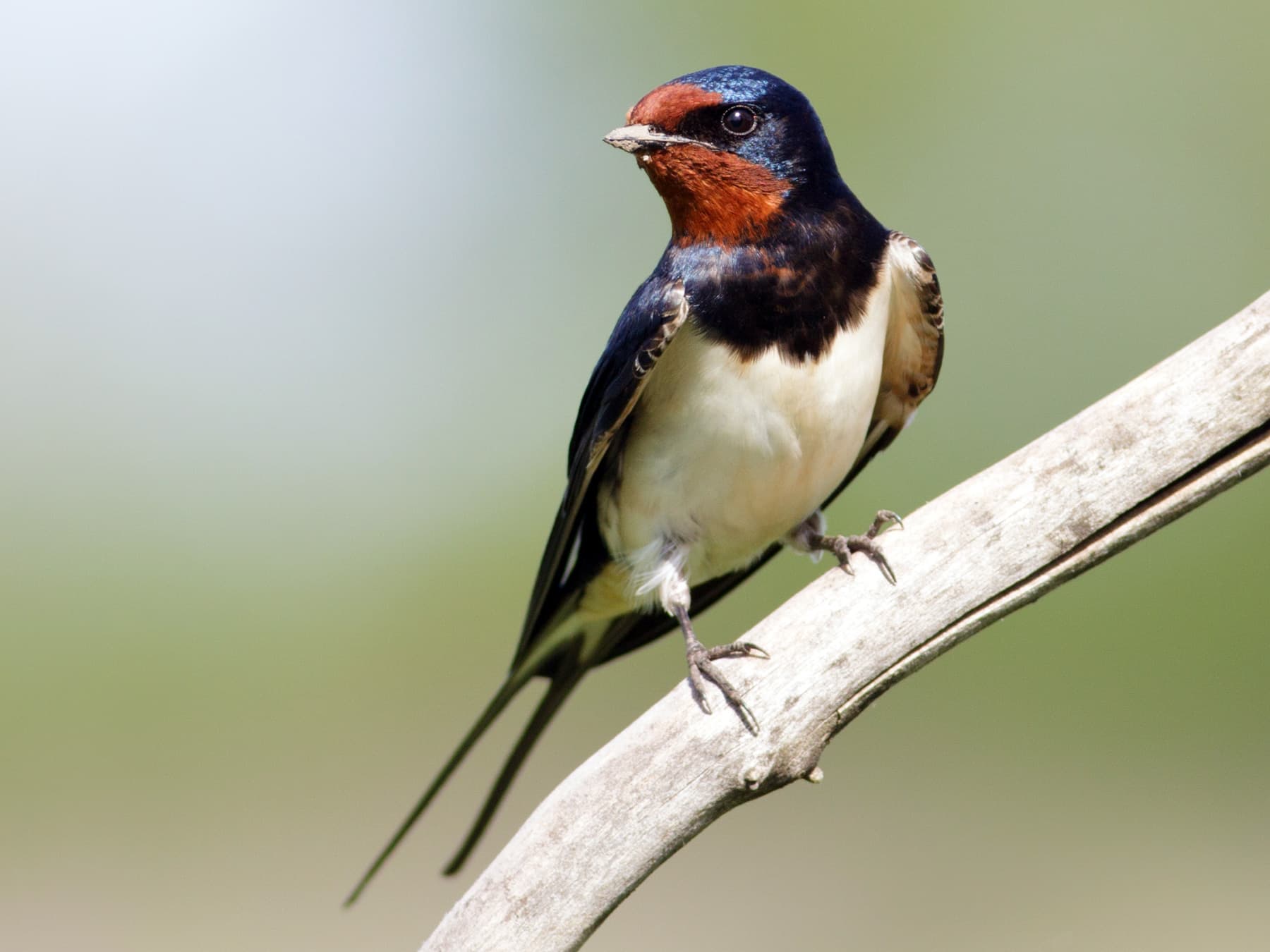
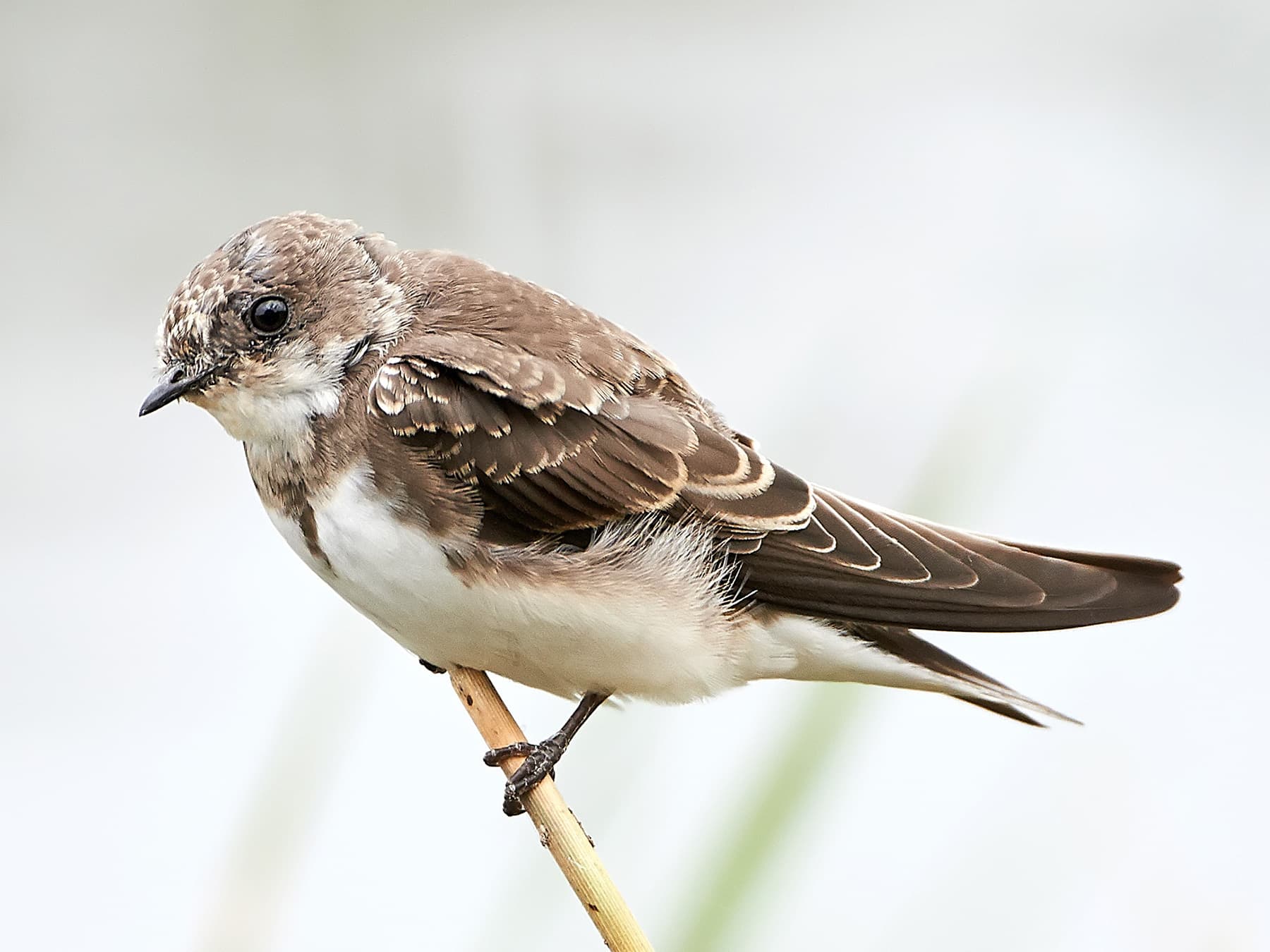
Don’t confuse the swift with the swallow or house martin which are both smaller and have a white underside. Swallows and house martins can also perch whilst swifts cannot. Their aerobatics whilst in large groups are wonderful to behold with rapid changes of speed and direction.
What it eats
Whilst the swift has a small beak it has a large gape enabling the bird to easily catch flying insects whilst it, itself, is also on the wing. It only feeds on small flying insects. Once caught these insects collect in a pouch at the back of the swift’s throat where they form a pellet that can be either swallowed or regurgitated to feed chicks.
Nesting and breeding
One brood of 2 – 3 smooth white eggs is laid in May or June and incubated in turn by both parents.
Behaviour
Common Swifts are aerial masters, spending most of their lives on the wing. They feed, drink, mate, and even sleep while flying, only landing to nest.
These birds are highly social, often seen in screaming parties, swirling around buildings and calling to each other in excitement.
Lifespan and predators
The lifespan of the common swift is up to 10 years. The oldest ringed bird lived for at least 21 years.
Conservation
While listed as Least Concern globally, Common Swift populations are declining in parts of Europe, including the UK. Loss of nesting sites due to building renovations and insect decline are primary threats.
Conservation efforts focus on providing artificial nest boxes and preserving existing nesting locations.
What does a Swift look like?
This small to medium-sized bird has a plain sooty brown plumage often perceived as black in colour when seen soaring and gliding through the air. A small pale throat patch completes its make up. It is unlikely you will see one land as they spend their lives on the wing apart from when they nest, from May to June. They feed on the wing and even breed and sleep during flight. Their pointed scythe shaped wings and forked tail, coupled with their short head and tiny bill are an excellent aid to identification. Whilst difficult to observe in flight, they have minute feet with four forward-pointing toes rendering them unable to perch on overhead wires or small branches.
Similar birds
Often mistaken for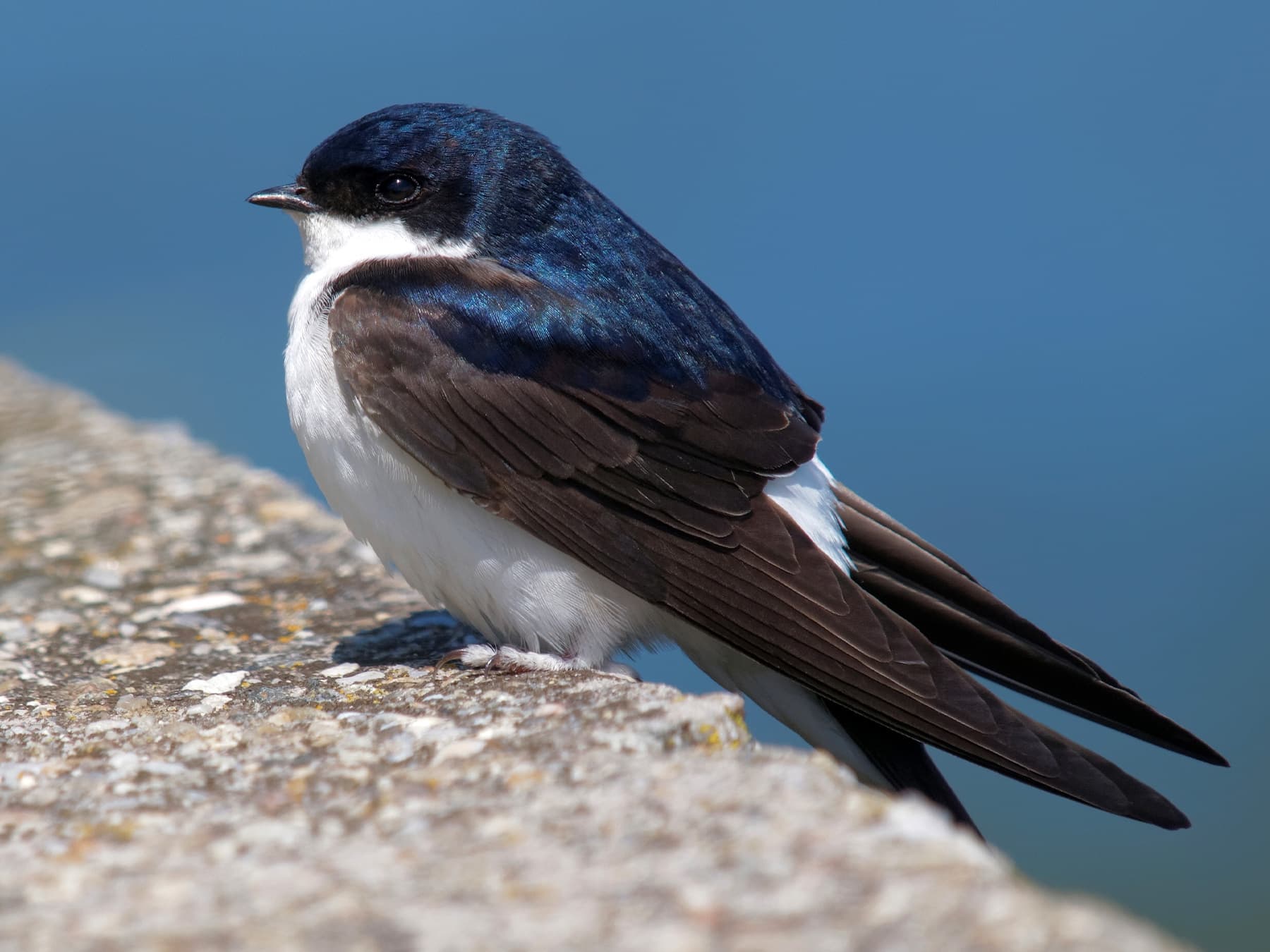
Common Swift guides
4 guidesQuick facts
- Length
- 16–17 cm
- Wingspan
- 42–48 cm
- Weight
- 31–56 g
- Lifespan
- 10 years · oldest recorded 21.1 years
- Family
- Swifts
- Migration
- Long-distance Migrant
- Global status (IUCN)
- Least Concern
- World population
- 95,500,000 - 162,500,000 mature individuals
- Population trend
- Stable
- Also called
- European Swift, Eurasian Swift
- Scientific name
- Apus apus
Sources
4- 1BirdLife International. 2016. Apus apus. The IUCN Red List of Threatened Species 2016: e.T22686800A86111691. Source (opens in a new tab)
- 2EBCC (2015)
- 3BirdLife International. 2016. Apus apus. The IUCN Red List of Threatened Species 2016: e.T22686800A86111691. Source (opens in a new tab)
- 4Fransson et al., EURING list of longevity records for European birds (2010) Source (opens in a new tab)

Checked by
Nathan Cope, founder and editor
Nathan founded Birdfact and leads its writers and contributors in the UK, the US and Canada. He has watched and studied birds for more than ten years, and checks every article and species guide before it’s published.