


Rock Dove
Feral Pigeon, City Pigeon, Street Pigeon · Columba livia
By the Birdfact teamChecked by Nathan Cope
On this page15 sections
How to recognise it
What do Rock Doves look like?
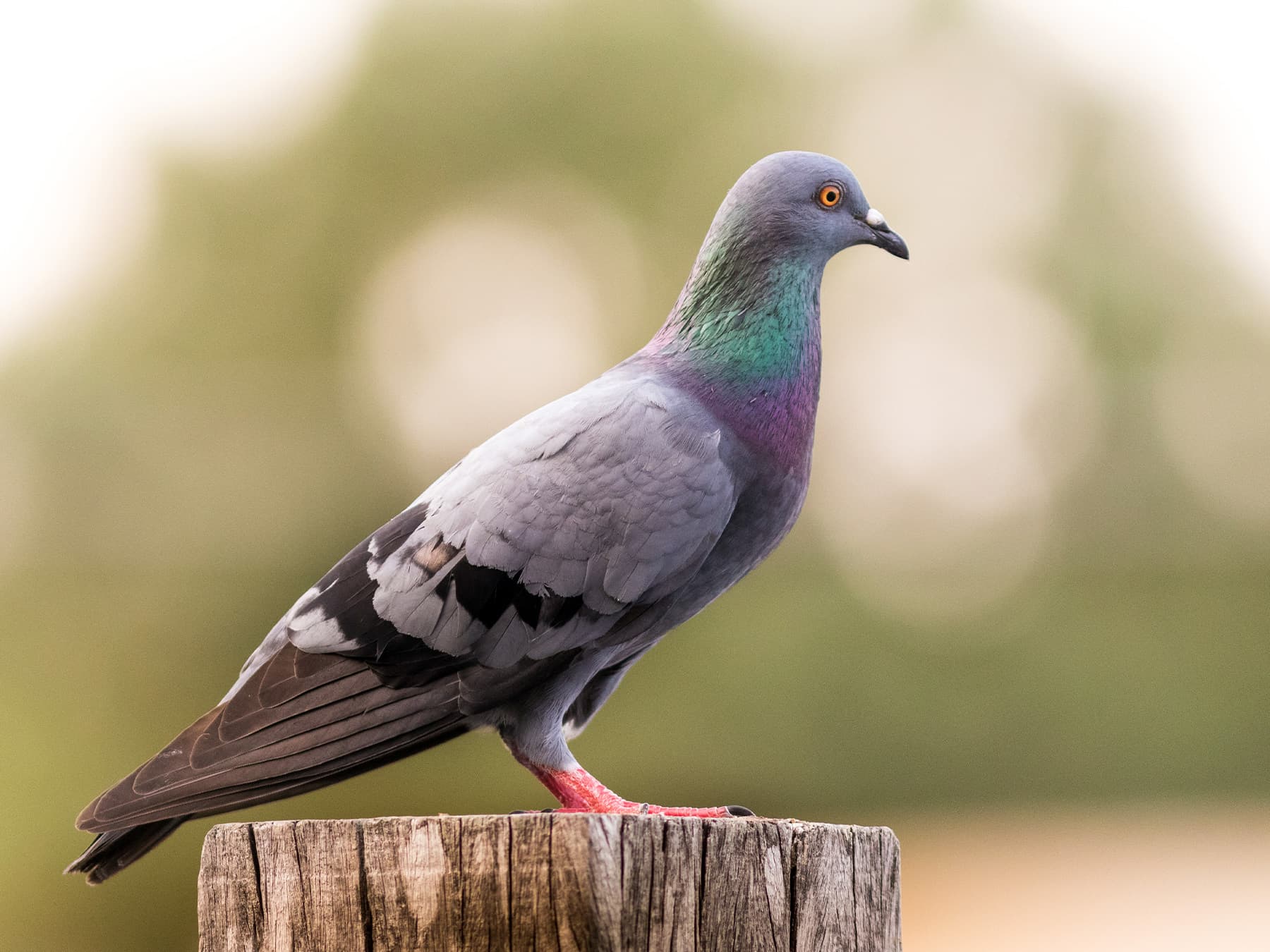
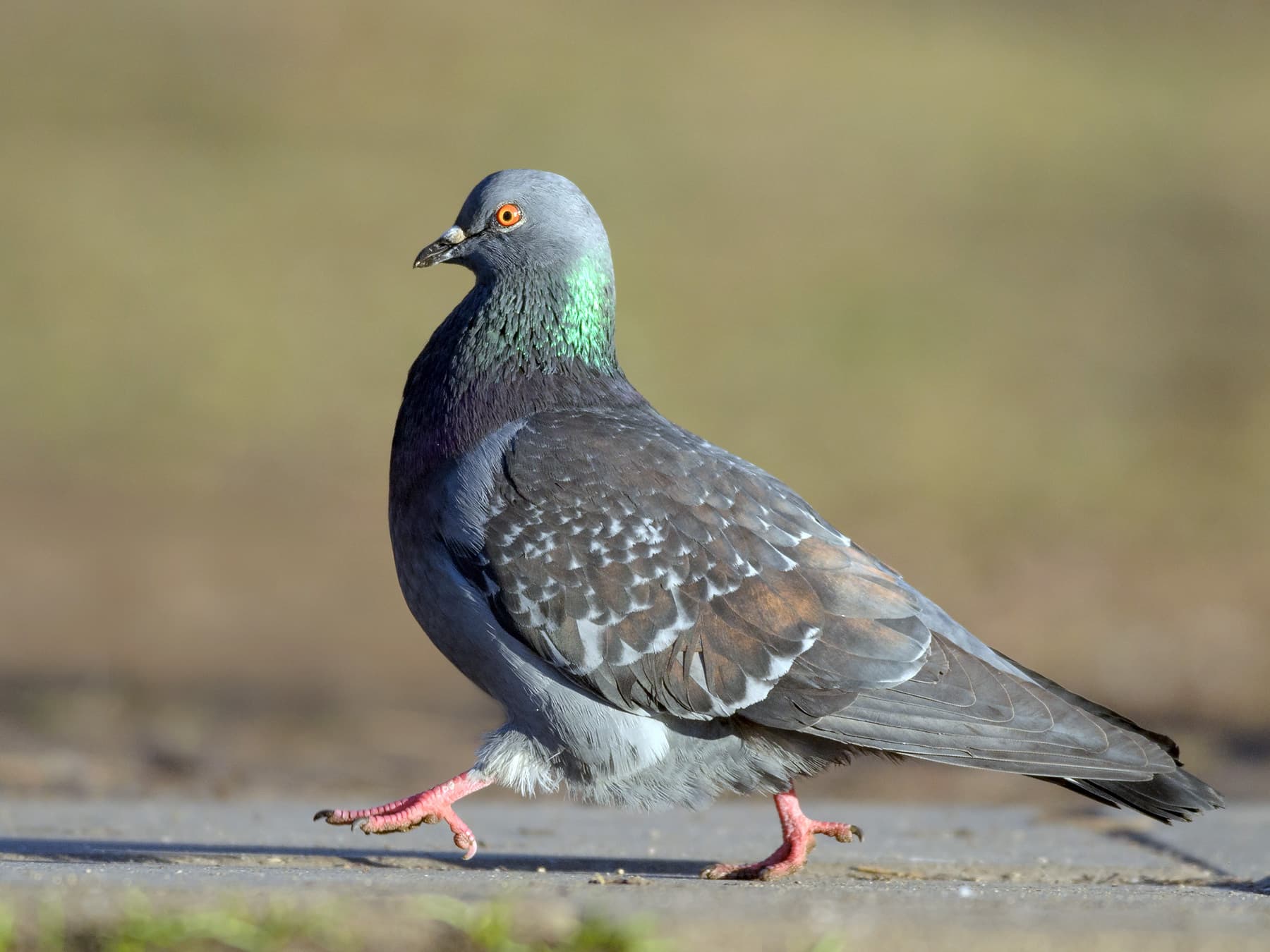
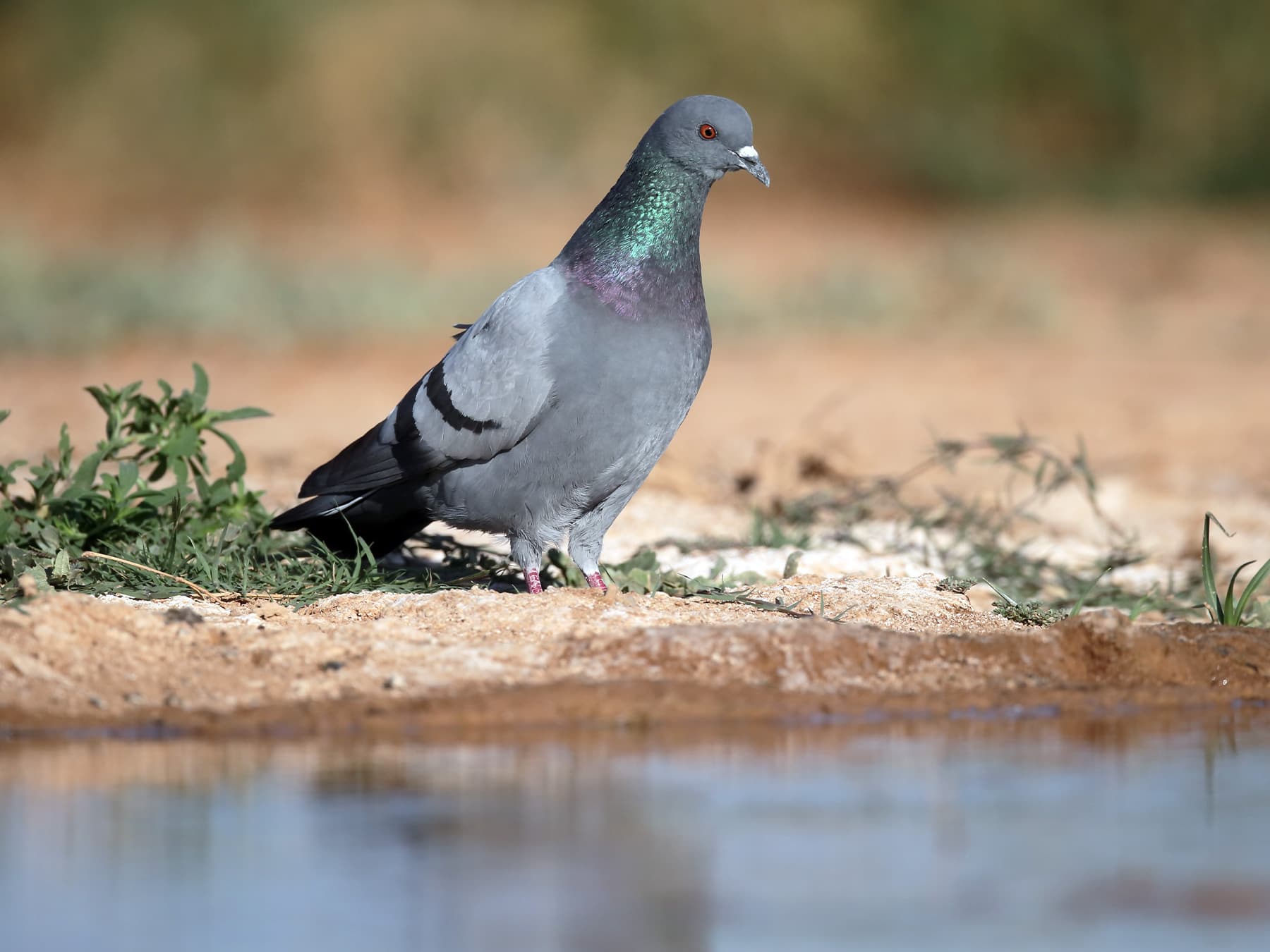
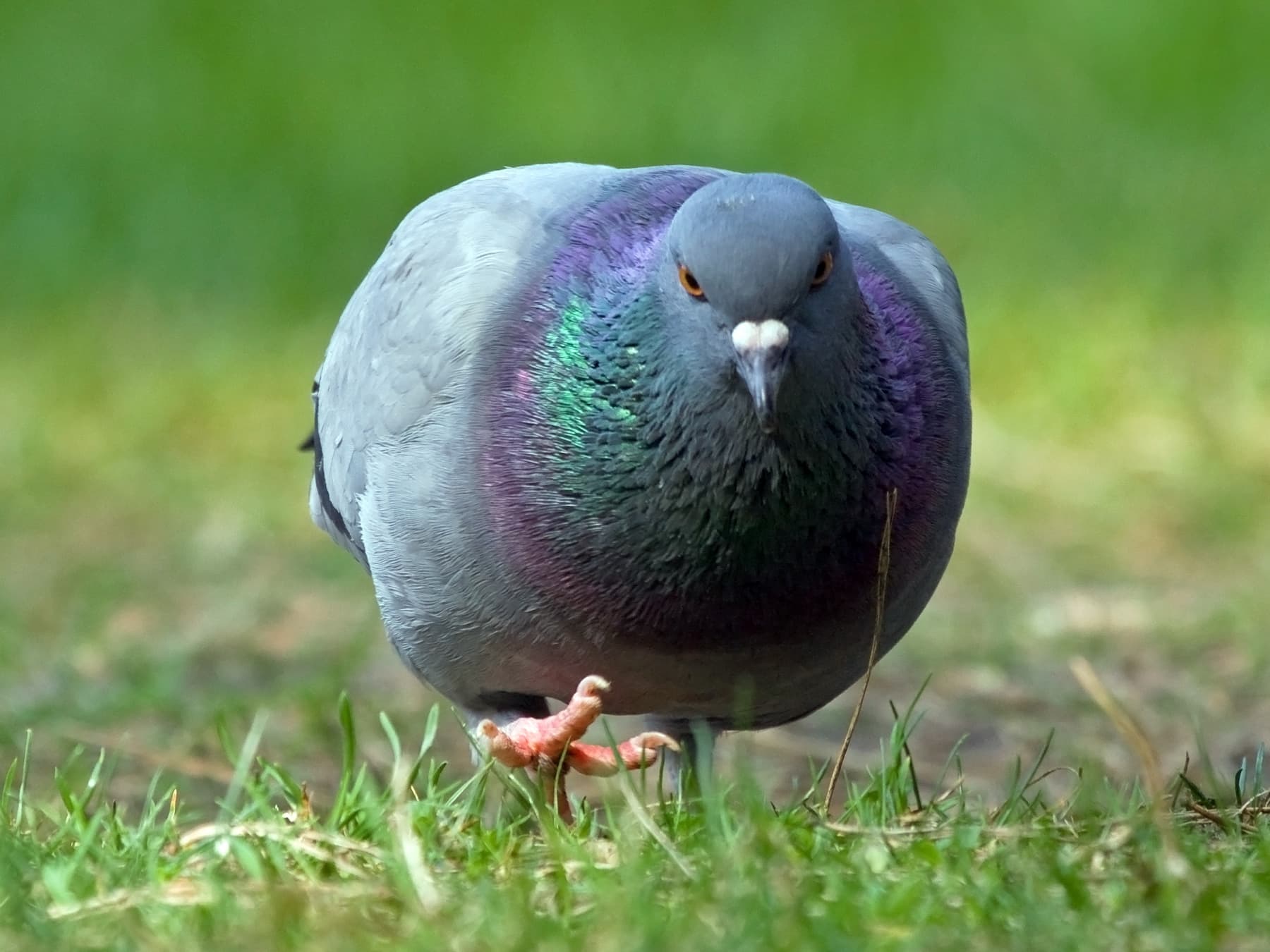
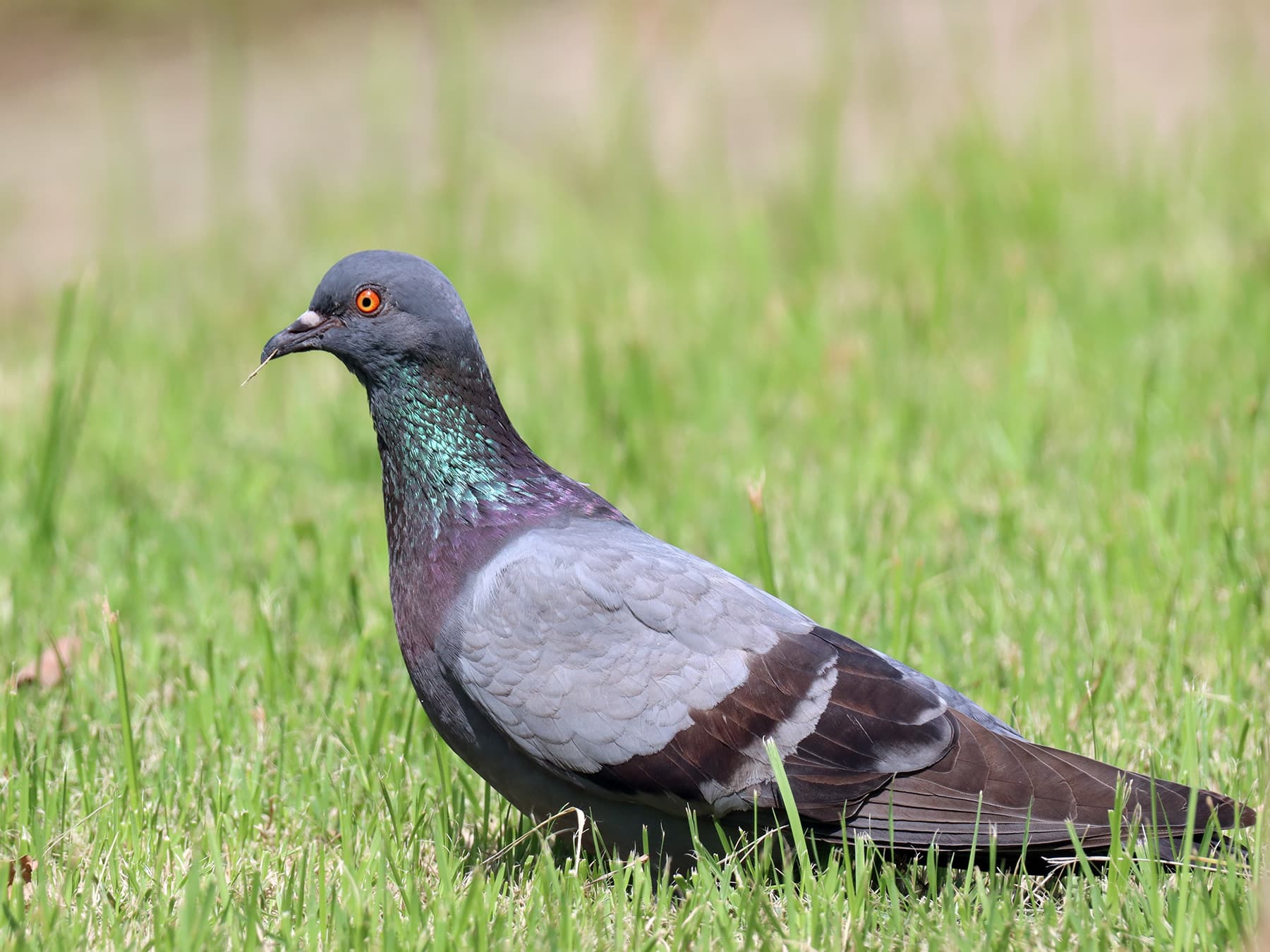
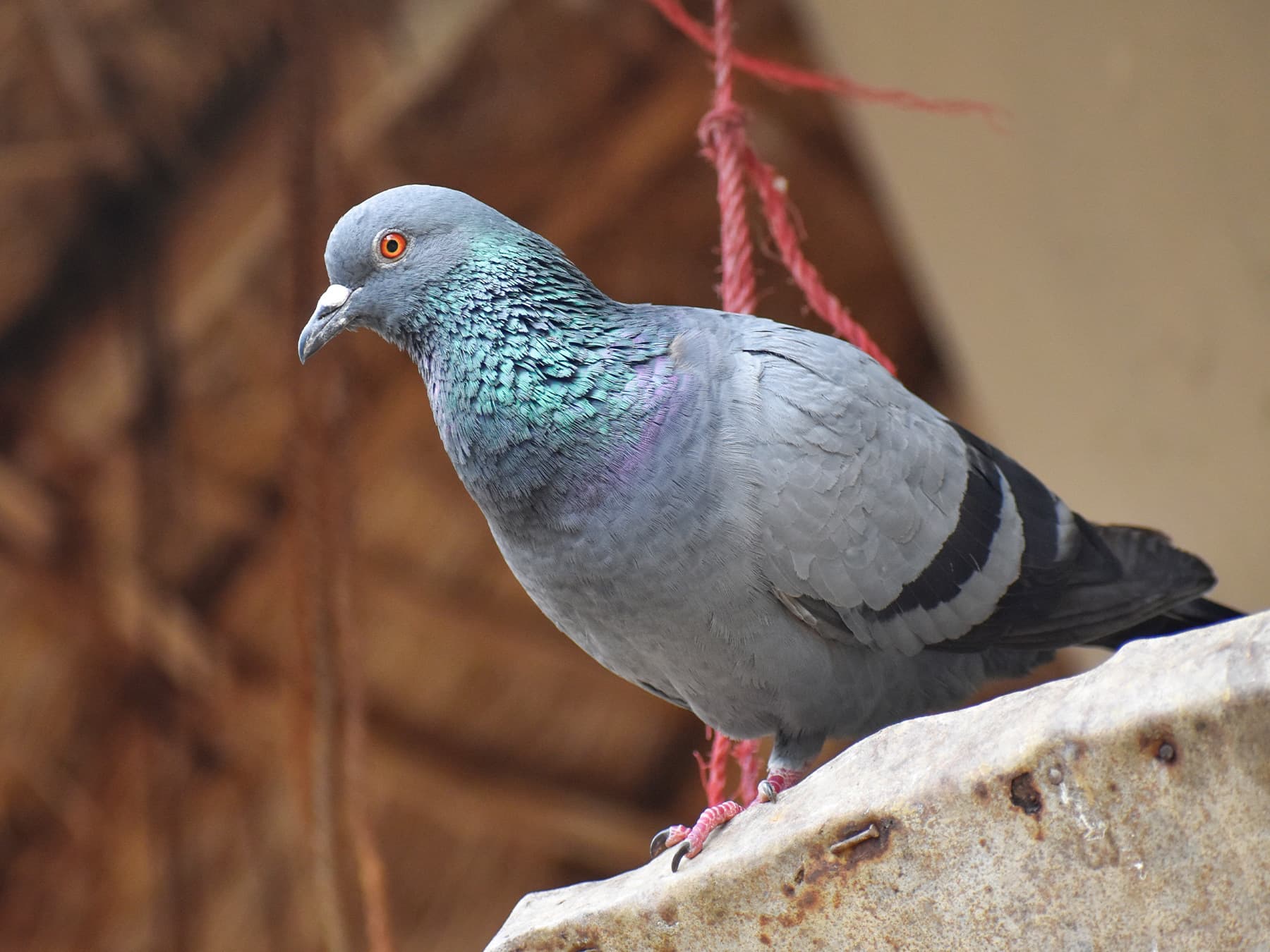
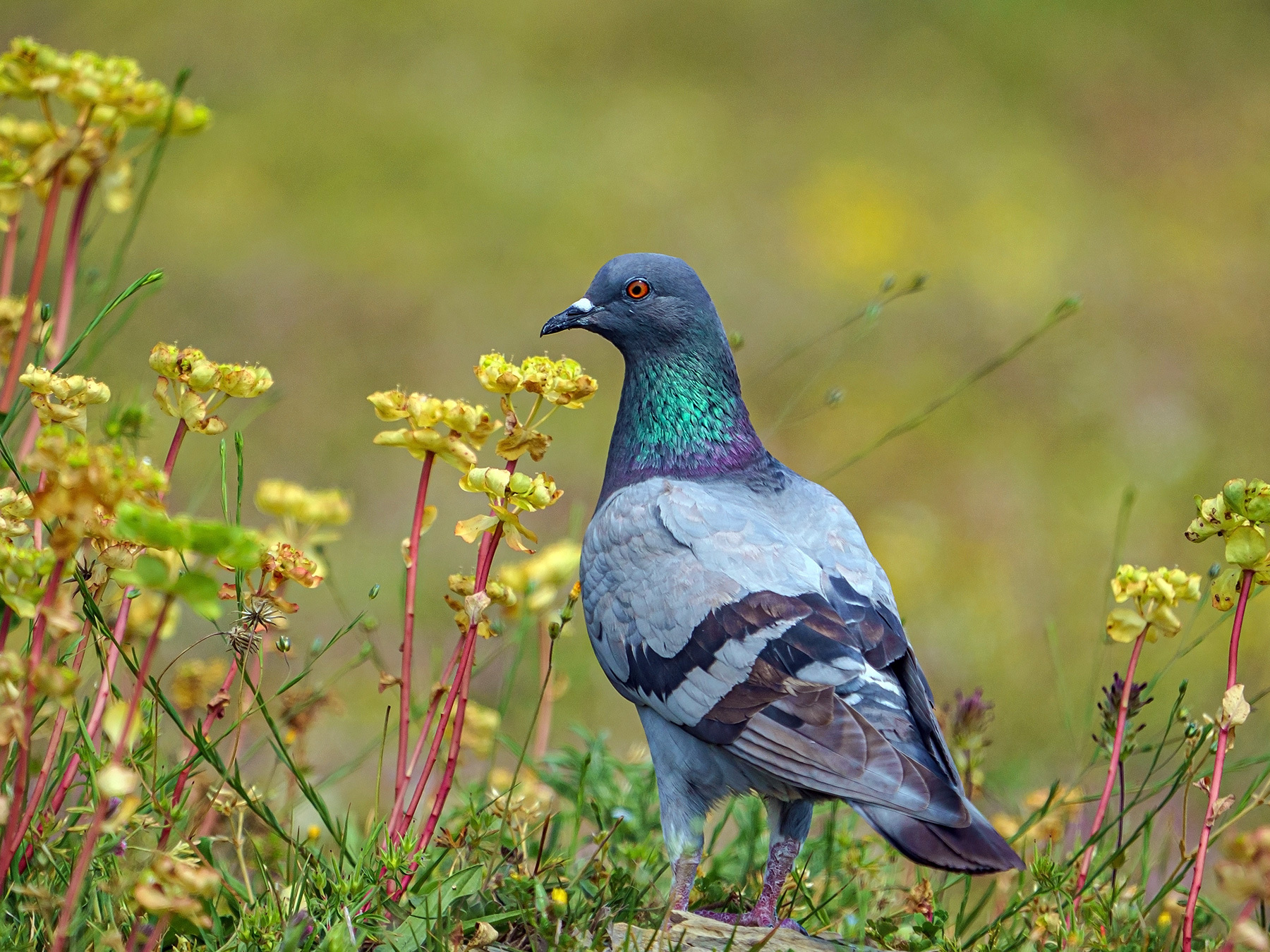
The Rock Dove is a very familiar species with a variable appearance. The wild-type bird is gray overall, with a darker head and throat. Iridescent green and violet plumage are visible on the sides of the neck in good light, and bright red legs and eyes contrast with their smokey plumage.
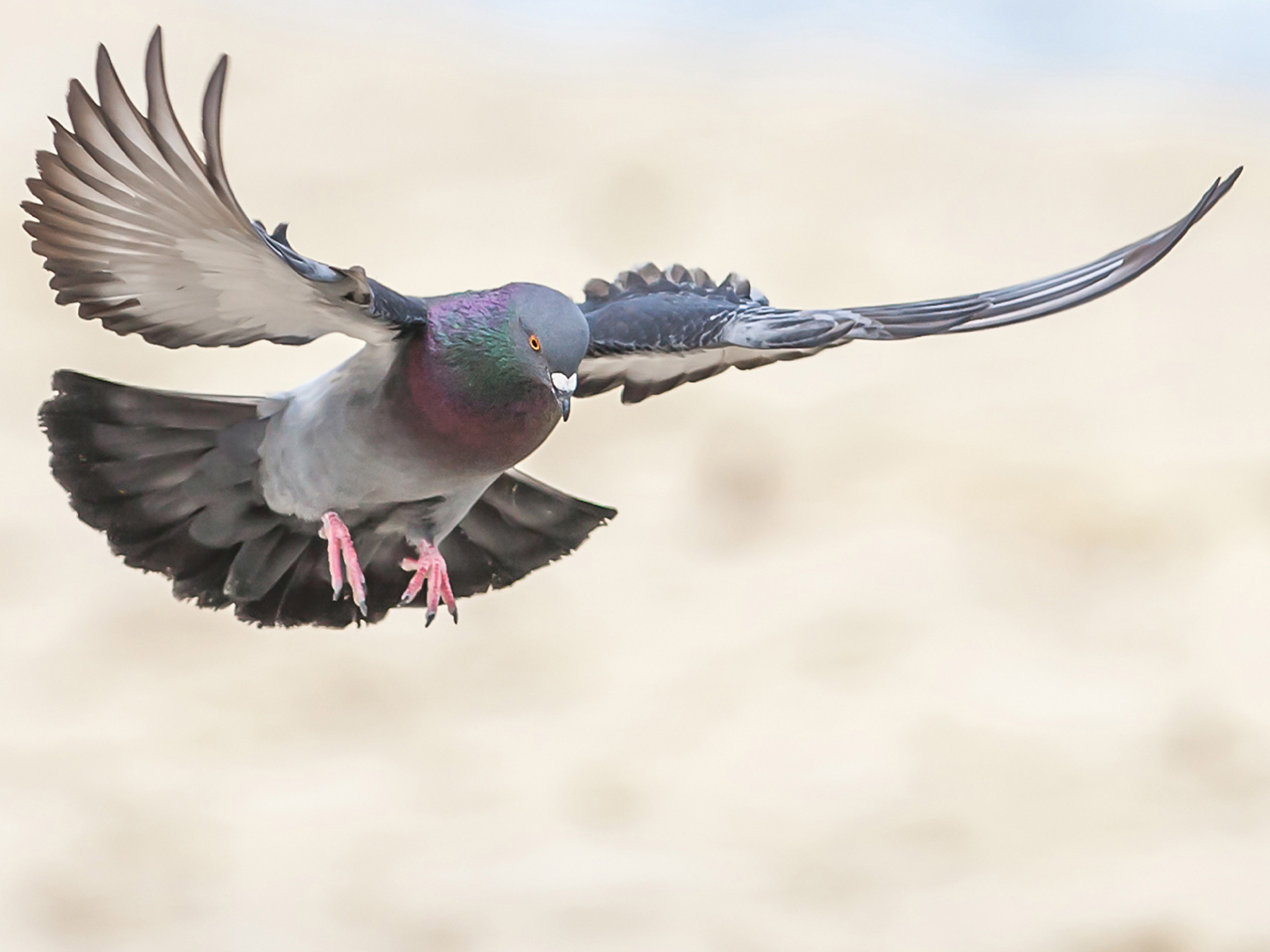
They have two dark bars across each wing, and the ends of their primary and secondary feathers are dark. Their lower back is whitish when seen in flight, and their dark tail ends in a black tip.
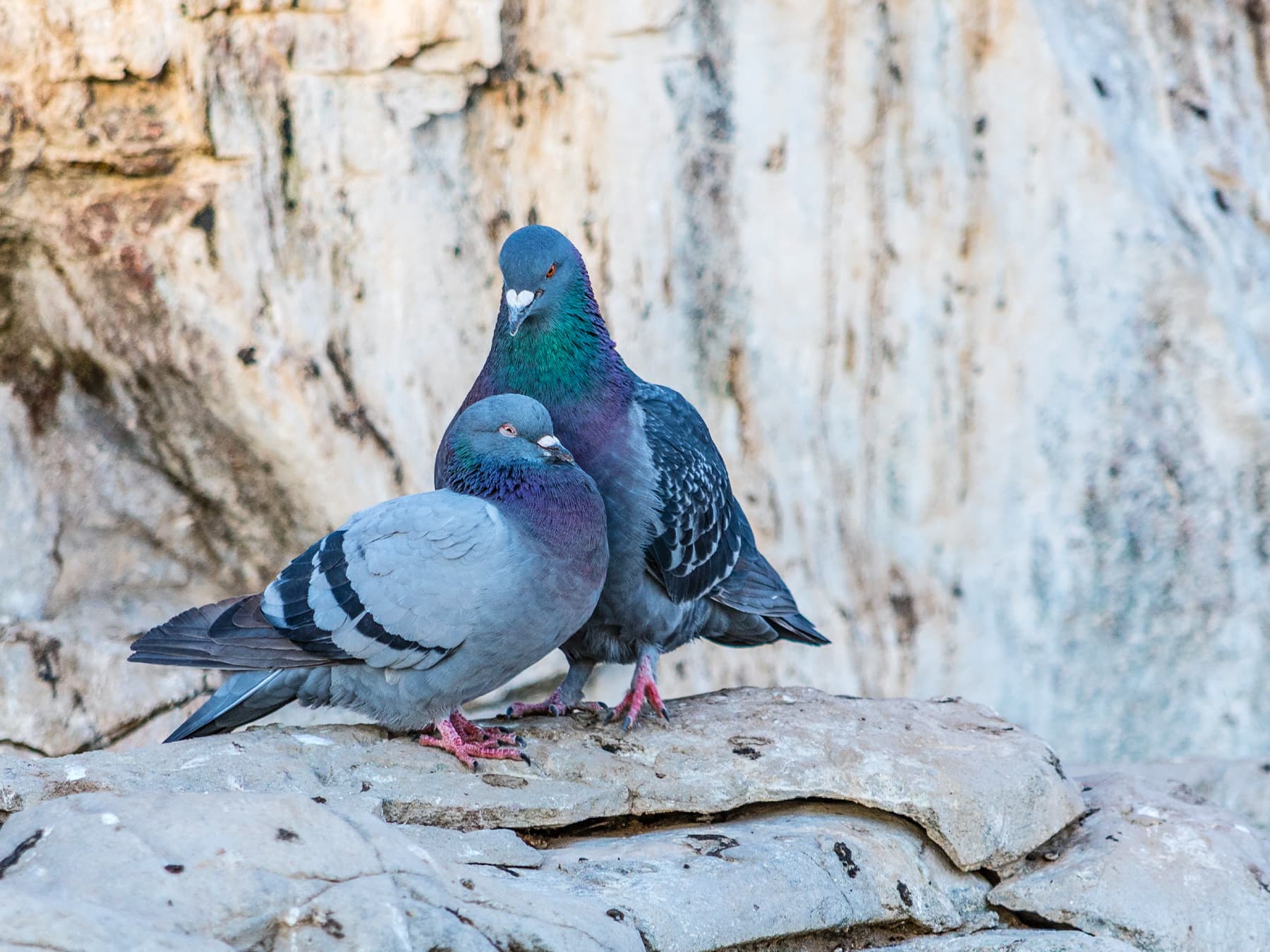
Females are a little smaller but otherwise similar to males. They usually have less color on their necks and are generally slightly duller. Juveniles are similar to adults but have duller plumage, eyes, and legs.
Domesticated and feral pigeons in captivity and urban areas are the same species, yet they can have completely different plumage patterns. Many look very similar to wild birds, but they can also be darker in color, pure white, reddish brown, or many other color combinations.
How big are Rock Doves
Length
Most adult Rock Doves and Feral Pigeons measure 11½ to 14 inches or 29 to 36 centimeters long. Males grow a little larger than females, but they overlap in size.
Weight
These robust birds average roughly 12 ounces (355 grams) but range from 8 to 13 ounces or 230 to 370 grams.
Wingspan
Their long, well-shaped wings measure over two feet, usually between 25 and 27.5 inches (63-70cm).

Its size
Adults- Length
- 29–37 cm
- Wingspan
- 62–72 cm
- Weight
- 230–370 g
Its song and calls
What sound does a Rock Dove make?
Rock Doves produce typical pigeon like coo-ing calls. Displaying males make a rhythmic four-noted call while strutting their stuff. They also make a three-noted nest call and a grunting alarm call when faced with a threat.
- Song0:00 / 0:15
Recorded in Normandie, France · April 2026
- Call0:00 / 0:28
Recorded in Île-de-France, France · April 2020
When and where to see it
OctoberHere all year
Most recorded in October
- 1. Dundee6.5%
- 2. Glasgow5.0%
- 3. Down3.8%
- 4. Bristol3.5%
- 5. South Ayrshire3.4%
Each dot is a county, state or province: the bigger and darker, the larger the bird’s share of that place’s bird records that month. Grey dots: no regular records. The ringed point is the centre of the bird’s records this month; the arrow shows how it moved since last month, and the dashed loop its path through the year. “Arrivals” colours places where it becomes regular this month (orange) or is in its last regular month (grey). GBIF eBird Observation Dataset, 2019–2024. Map data: Natural Earth, US Census Bureau; place centres © OpenStreetMap contributors.
In your area
See when the Rock Dove is recorded in your county, state or province.
How often the Rock Dove turns up in the UK, Ireland, the United States and Canada through the year, from birdwatchers' records.
United Kingdom
Resident · all year · most records in September
Ireland
Resident · all year · most records in August
United States
Resident · all year · most records in January
Canada
Resident · all year · most records in January
Show as a table
| Month | United Kingdom | Ireland | United States | Canada |
|---|---|---|---|---|
| January | 1.2% (regular) | 1.4% (regular) | 0.85% (regular) | 1.9% (regular) |
| February | 1.2% (regular) | 1.4% (regular) | 0.75% (regular) | 1.8% (regular) |
| March | 1.2% (regular) | 1.5% (regular) | 0.65% (regular) | 1.5% (regular) |
| April | 1.0% (regular) | 1.4% (regular) | 0.48% (regular) | 0.89% (regular) |
| May | 0.99% (regular) | 1.4% (regular) | 0.37% (regular) | 0.50% (regular) |
| June | 1.2% (regular) | 1.6% (regular) | 0.46% (regular) | 0.54% (regular) |
| July | 1.3% (regular) | 1.7% (regular) | 0.59% (regular) | 0.71% (regular) |
| August | 1.3% (regular) | 1.7% (regular) | 0.68% (regular) | 0.84% (regular) |
| September | 1.3% (regular) | 1.4% (regular) | 0.64% (regular) | 0.86% (regular) |
| October | 1.2% (regular) | 1.3% (regular) | 0.65% (regular) | 1.0% (regular) |
| November | 1.2% (regular) | 1.3% (regular) | 0.73% (regular) | 1.4% (regular) |
| December | 1.3% (regular) | 1.4% (regular) | 0.82% (regular) | 1.8% (regular) |
Recorded regularly in
Worldwide: recorded regularly in 212 countries
Countries where it was recorded in at least 3 of the 6 years 2019–2024. Linked countries have their own bird list.
Europe (51)
- Åland Islands
- Albania
- Andorra
- Austria
- Belarus
- Belgium
- Bosnia & Herzegovina
- Bulgaria
- Croatia
- Czechia
- Denmark
- Estonia
- Faroe Islands
- Finland
- France
- Germany
- Gibraltar
- Greece
- Guernsey
- Hungary
- Iceland
- Ireland
- Isle of Man
- Italy
- Jersey
- Kosovo
- Latvia
- Liechtenstein
- Lithuania
- Luxembourg
- Malta
- Moldova
- Monaco
- Montenegro
- Netherlands
- North Macedonia
- Norway
- Poland
- Portugal
- Romania
- Russia
- San Marino
- Serbia
- Slovakia
- Slovenia
- Spain
- Sweden
- Switzerland
- Ukraine
- United Kingdom
- Vatican City
Africa (48)
- Algeria
- Angola
- Benin
- Botswana
- Burkina Faso
- Cameroon
- Cape Verde
- Chad
- Comoros
- Congo - Kinshasa
- Côte d’Ivoire
- Djibouti
- Egypt
- Equatorial Guinea
- Eswatini
- Ethiopia
- Gabon
- Gambia
- Ghana
- Guinea
- Guinea-Bissau
- Kenya
- Lesotho
- Liberia
- Madagascar
- Malawi
- Mauritania
- Mauritius
- Morocco
- Mozambique
- Namibia
- Nigeria
- Réunion
- Rwanda
- São Tomé & Príncipe
- Senegal
- Seychelles
- Sierra Leone
- South Africa
- St Helena
- Sudan
- Tanzania
- Togo
- Tunisia
- Uganda
- Western Sahara
- Zambia
- Zimbabwe
Asia (50)
- Afghanistan
- Armenia
- Azerbaijan
- Bahrain
- Bangladesh
- Bhutan
- Brunei
- Cambodia
- China
- Cyprus
- Georgia
- Hong Kong SAR China
- India
- Indonesia
- Iran
- Iraq
- Israel
- Japan
- Jordan
- Kazakhstan
- Kuwait
- Kyrgyzstan
- Laos
- Lebanon
- Macao SAR China
- Malaysia
- Maldives
- Mongolia
- Myanmar (Burma)
- Nepal
- Oman
- Pakistan
- Palestinian Territories
- Philippines
- Qatar
- Saudi Arabia
- Singapore
- South Korea
- Sri Lanka
- Syria
- Taiwan
- Tajikistan
- Thailand
- Timor-Leste
- Turkey
- Turkmenistan
- United Arab Emirates
- Uzbekistan
- Vietnam
- Yemen
North America (37)
- Antigua & Barbuda
- Aruba
- Bahamas
- Barbados
- Belize
- Bermuda
- British Virgin Islands
- Canada
- Caribbean Netherlands
- Cayman Islands
- Costa Rica
- Cuba
- Curaçao
- Dominica
- Dominican Republic
- El Salvador
- Grenada
- Guadeloupe
- Guatemala
- Haiti
- Honduras
- Jamaica
- Martinique
- Mexico
- Nicaragua
- Panama
- Puerto Rico
- Sint Maarten
- St Kitts & Nevis
- St Lucia
- St Martin
- St Pierre & Miquelon
- St Vincent & the Grenadines
- Trinidad & Tobago
- Turks & Caicos Islands
- United States
- US Virgin Islands
South America (13)
Oceania (13)
- Australia
- Fiji
- French Polynesia
- Guam
- Kiribati
- New Caledonia
- New Zealand
- Norfolk Island
- Northern Mariana Islands
- Papua New Guinea
- Samoa
- Tonga
- Vanuatu
Data: EOD – eBird Observation Dataset (Cornell Lab of Ornithology), accessed via GBIF.org, CC BY 4.0. Records from 2019–2024, aggregated and filtered by Birdfact. How these lists are made
What is the habitat of a Rock Dove?
Rock Doves inhabit areas with steep rocky habitats for nesting and roosting and low or sparsely vegetated surroundings for foraging. Their usual nesting grounds include mountain and sea cliffs, and they forage in scrub, grassland, and agricultural areas. Their preference for cliffs and low vegetation explains why they have adapted so well to city environments and farming areas.
What is the range of a Rock Dove?
Rock Doves naturally occur in North Africa, Europe, and Asia. Today, their feral descendants can be seen in towns and cities all over the world.
Where do Rock Doves live?
Rock Doves usually forage on the ground but sleep and nest on cliffs. They are powerful in flight and can travel long distances each day between their feeding and roosting areas. These birds live everywhere from wild sea cliffs to urban metropolises and backyard lofts.
How rare are Rock Doves?
Rock Doves are among the most successful bird species on the planet when you consider their huge global range and ability to thrive in our towns and cities. Feral pigeons live alongside us all over the world, so they benefit from our success too.
Where can you see Rock Doves in the US?
Rock Doves occur in every state of the United States, including Hawaii. Look for them in cities, towns, and around farming areas where they roost and nest in barns, bridges, and other cliff-like structures.
Where can you see Rock Doves in Canada?
Rock Doves are most common in the south and west of Canada, where they live in towns, cities, and farmland.
Where can you see Rock Doves in the UK?
Rock Doves live in villages, towns, and cities throughout the United Kingdom. Wild birds still live and breed in coastal areas around Northern Ireland and the west and north of Scotland.
Migration
Do Rock Doves migrate?
Rock Pigeons do not migrate, and they may live and nest in the same areas for several years. However, the species has a natural homing ability, and trained racing pigeons have returned from distances of over a thousand miles!
Are Rock Doves native to the US?
Rock Doves are not native to the United States or elsewhere in North America. They were brought over from Europe as early as the 1600s.
Are Rock Doves native to the UK?
Rock Doves are a native species in the United Kingdom. Wild populations still live and breed in Scotland and Northern Ireland, although the common feral pigeons of towns and cities are descended from domesticated birds.

Tips for seeing it
- Look for Rock Doves in urban areas, especially near buildings and in city squares.
- Observe their distinctive flight pattern: quick takeoff followed by steady, direct flight.
- Listen for their soft, rolling 'coo-COO-coo' calls, often heard from building ledges.
- In coastal areas, check cliff faces where wild populations may nest.
What it eats
What do Rock Doves eat?
Rock Doves do eat some insects, although they are mostly vegetarian. Seeds are the most important component of their diet, but they also eat fruits.
What do Rock Dove chicks eat?
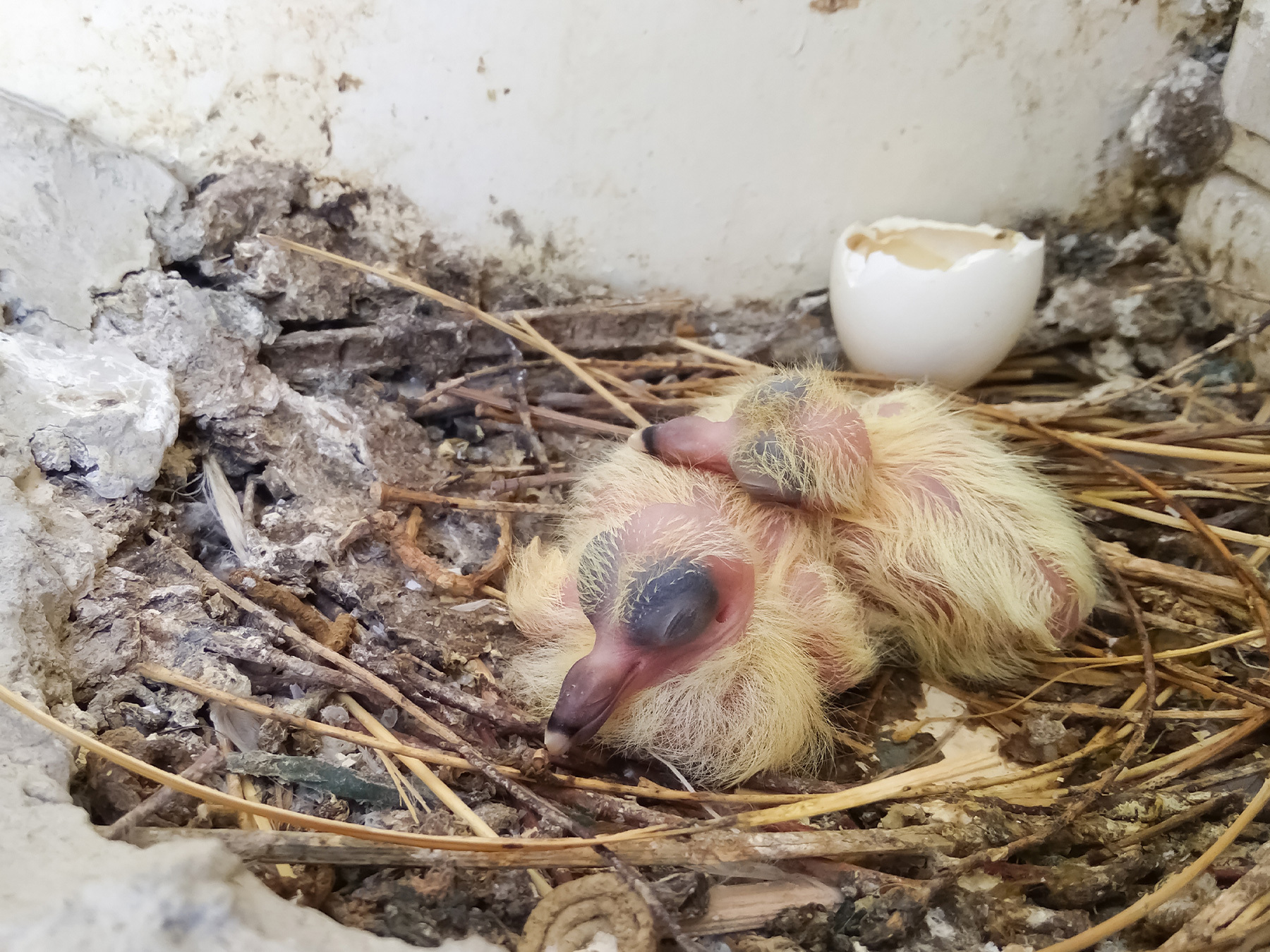
Baby Rock Doves start life on a nutritious diet of crop milk. They are weaned onto seeds after a few days and switch to their adult diet in their second week.
Nesting and breeding
Where do Rock Doves nest?
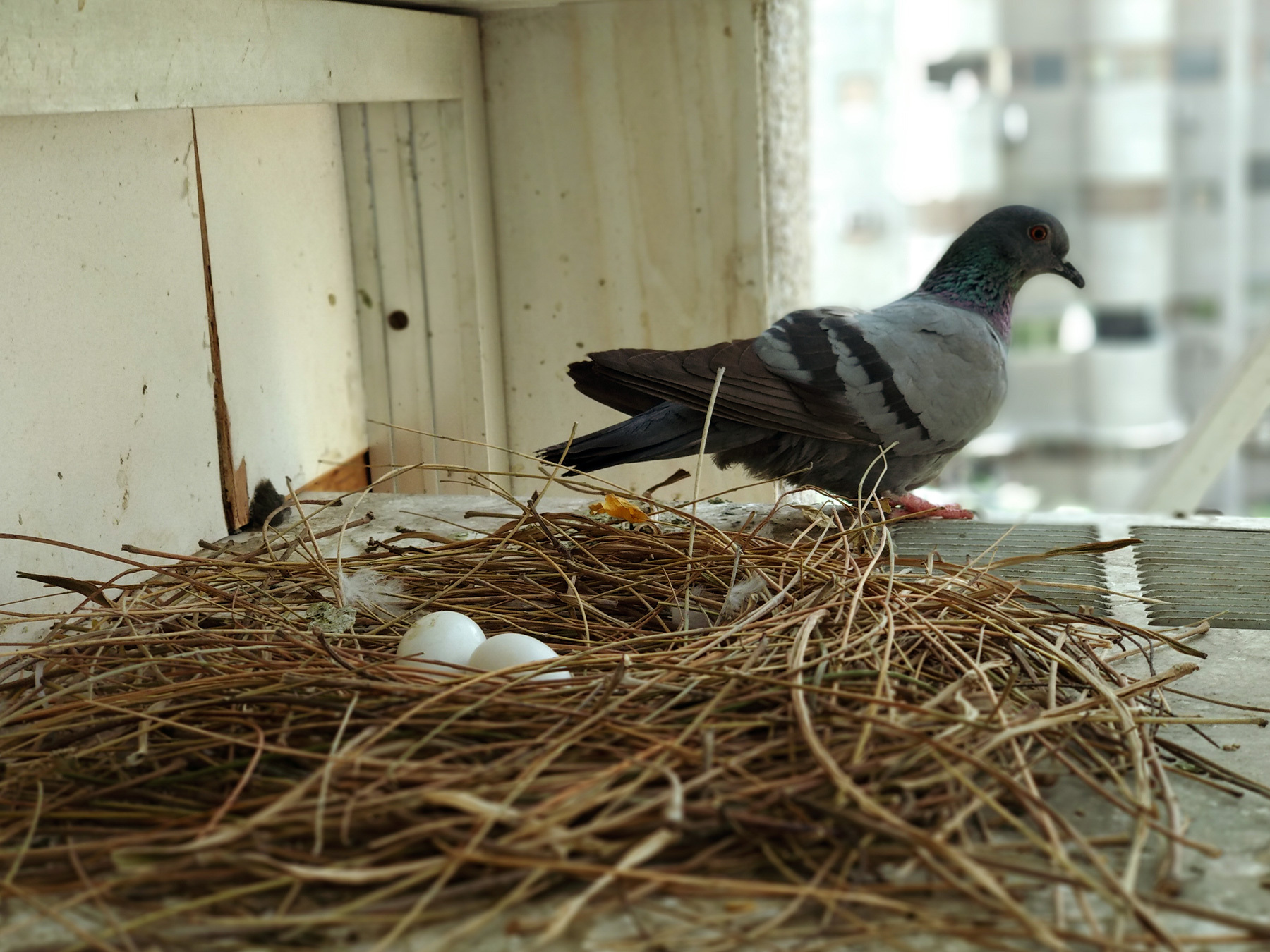
Rock Doves nest on flat surfaces with overhead cover. Wild birds use cliff ledges, but feral birds use rooftops, window sills, and barns. In typical pigeon fashion, they build a sparse and flimsy nest of twigs, grass, and feathers that becomes covered in droppings and greatly enlarged over time.
When do Rock Doves nest?
Rock Doves nest at any time of the year. They reach sexual maturity within their first year and may produce more than five broods each year in areas with good nesting habitats and a rich food supply.
What do Rock Dove eggs look like?
Rock Doves lay one to three plain white eggs, each measuring about 39 millimeters long and 29 millimeters across.
Do Rock Doves mate for life?
Rock Doves form close pair bonds and usually mate for life. The pair may use the same nest for many years.
Behaviour
Are Rock Doves friendly?
Wild Rock Doves are completely wild and skittish. However, feral birds can be very tame and even feed from the hand in many parks and city squares. Their domesticated ancestors can also make affectionate pets.
Where do Rock Doves sleep at night?
Rock Doves are diurnal birds that forage by day and sleep at night. Wild birds roost in nooks and crannies on cliffs and mountains, while feral birds prefer buildings, bridges, barns, and other man-made structures that provide shelter and protection from ground predators.
Lifespan and predators
How long do Rock Doves live?
Wild and feral Rock Doves have a maximum lifespan of about seven years. However, domestic birds can survive much longer and may live for over fifteen years. The oldest known specimens reach their mid-twenties or even early thirties.
What are the predators of Rock Doves?
Rock Dove adults, chicks, and eggs have many potential predators wherever they live. Many medium to large birds of prey, like Peregrine Falcons and Golden Eagles, will hunt them. They are also vulnerable to many mammals, ranging from domestic cats and humans to raccoons and foxes.
Are Rock Doves protected?
Rock Doves are protected by the Wildlife and Countryside Act in the United Kingdom, where they are a native species. They are not protected in the United States, although control methods are regulated, and they are protected against animal cruelty.
Are Rock Doves endangered?
Rock Doves are a ‘Least Concern’ species on the IUCN Red List. However, wild populations could be threatened by interbreeding with feral birds.

Conservation
While Rock Doves are not of conservation concern globally, some cities implement control measures due to their large populations.
Conservation efforts focus on managing feral populations humanely and preventing conflicts with human activities.
Similar birds
Often mistaken for
More photos
5 photos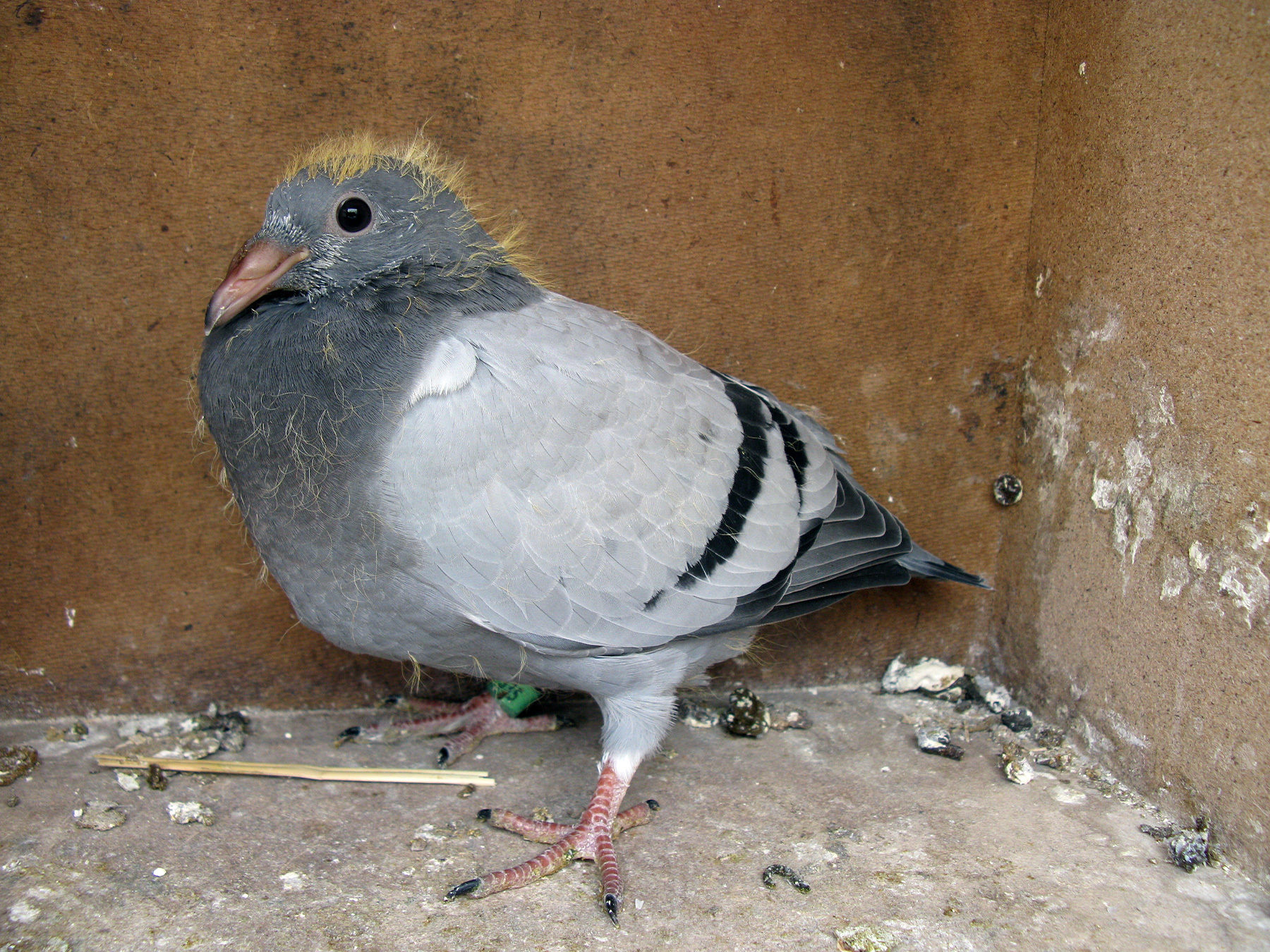
Rock Dove guides
5 guidesQuick facts
- Length
- 29–37 cm
- Wingspan
- 62–72 cm
- Weight
- 230–370 g
- Lifespan
- 3–6 years · oldest recorded 7.7 years
- Family
- Pigeons & Doves
- Migration
- Resident
- Global status (IUCN)
- Least Concern
- World population
- 260,000,000 individuals
- Population trend
- Decreasing
- Also called
- Feral Pigeon, City Pigeon, Street Pigeon
- Scientific name
- Columba livia
Questions
4Is a Rock Dove the same as a pigeon?
Despite its traditional name, the Rock Dove is a true pigeon in the Columba genus. Rock Doves are the parent species of the common feral pigeon as well as the domesticated pigeon. Domestic birds have been selectively bred into a huge range of breeds, from all-white fan-tailed specimens to king pigeons that weigh up to two pounds.
Why are they called Rock Doves?
Rock Doves probably take their name from their habit of roosting and nesting in rocky cliffs and mountain slopes.
Are Rock Pigeons protected in the US?
Rock Pigeons are an introduced species in the United States of America. Like the House Sparrow and European Starling, these familiar urban birds are not federally protected.
Are Rock Pigeons protected in the UK?
Rock Doves are protected in the United Kingdom. Wild populations still live around the coast of Scotland and Northern Ireland, but even feral birds are protected by law. As such, it is an offense to harm them or disturb them when nesting.
Sources
4- 1BirdLife International. 2019. Columba livia (amended version of 2016 assessment). The IUCN Red List of Threatened Species 2019: e.T22690066A155493121. Source (opens in a new tab)
- 2Rich et al. (2004)
- 3del Hoyo et al. (1997)
- 4BTO longevity records: maximum age from a ringed bird, 7 years, 8 months, 25 days (set in 2010), BirdFacts: Rock Dove (2010) Source (opens in a new tab)

Checked by
Nathan Cope, founder and editor
Nathan founded Birdfact and leads its writers and contributors in the UK, the US and Canada. He has watched and studied birds for more than ten years, and checks every article and species guide before it’s published.