


Canada Goose
Canadian Goose, Honker · Branta canadensis
By the Birdfact teamChecked by Nathan Cope
On this page14 sections
How to recognise it
What do Canadian Geese look like?
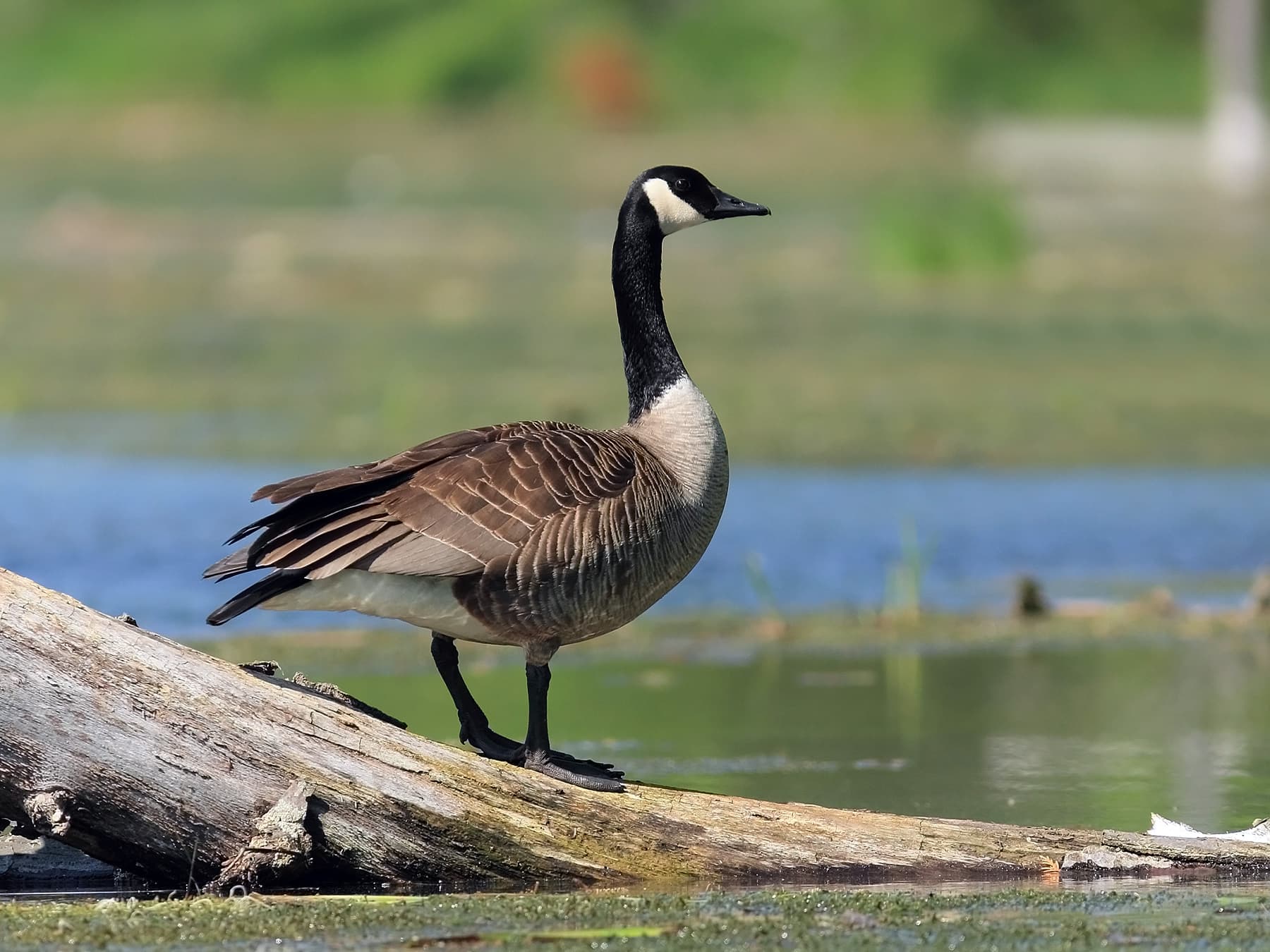
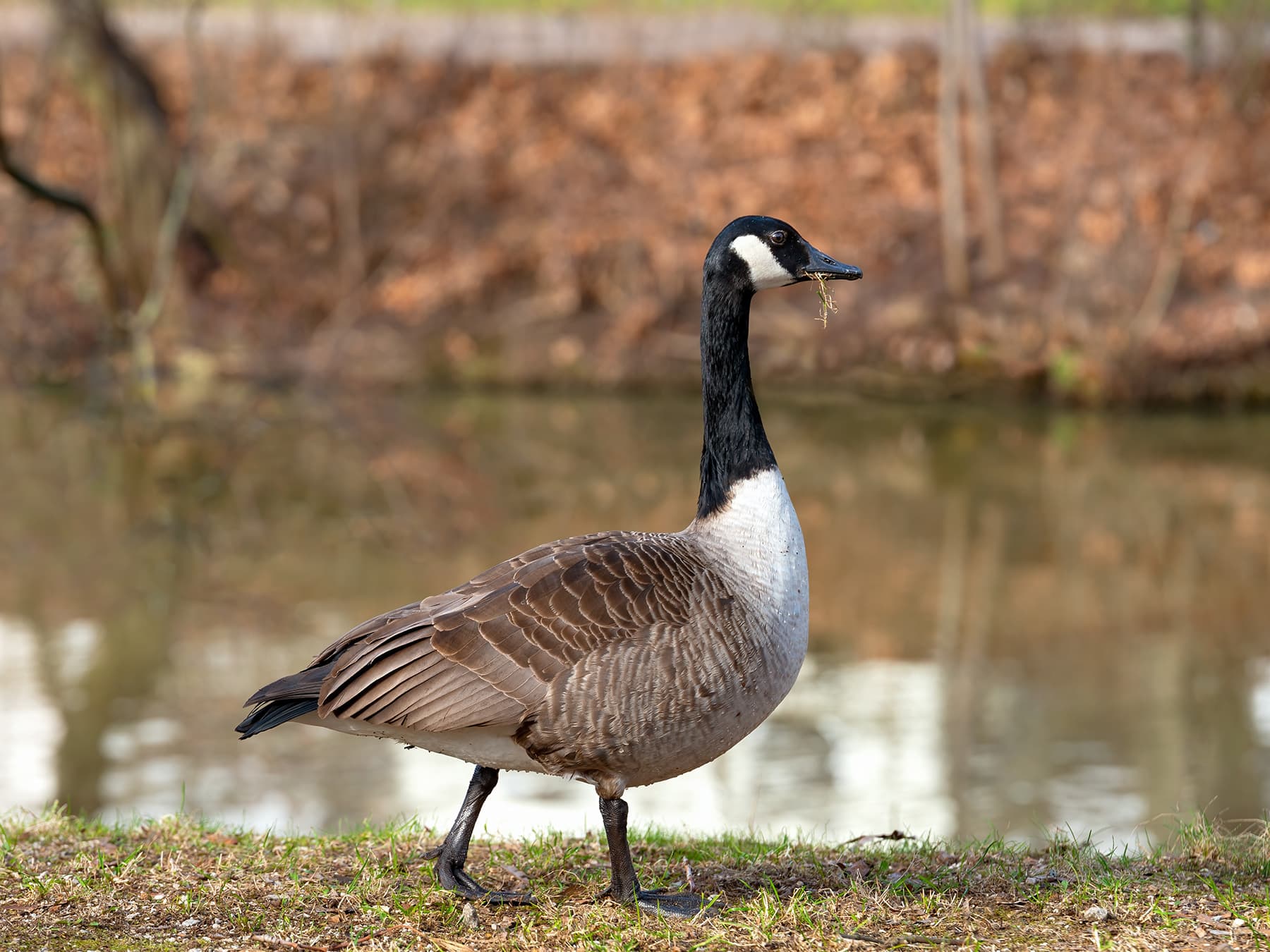
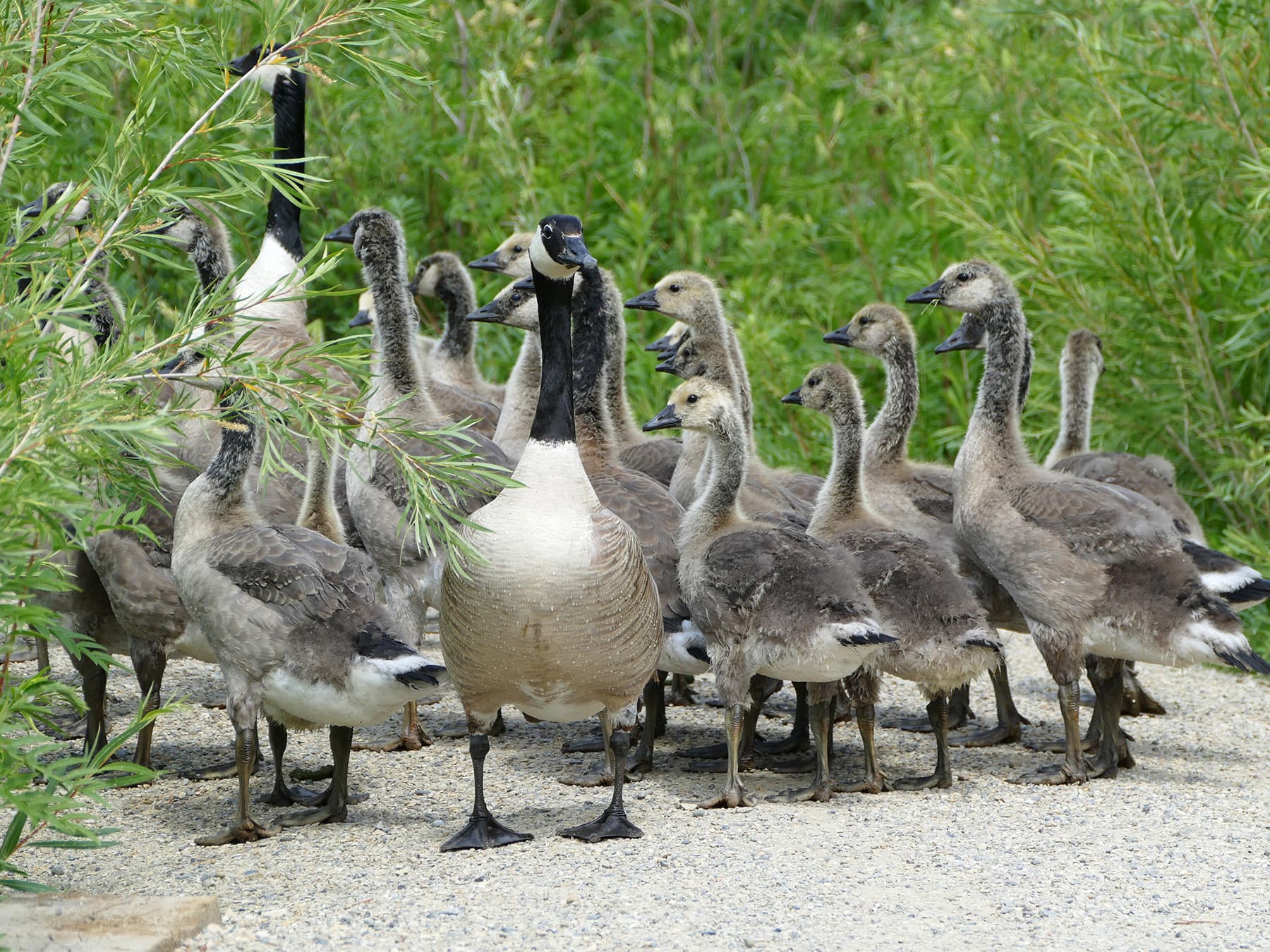
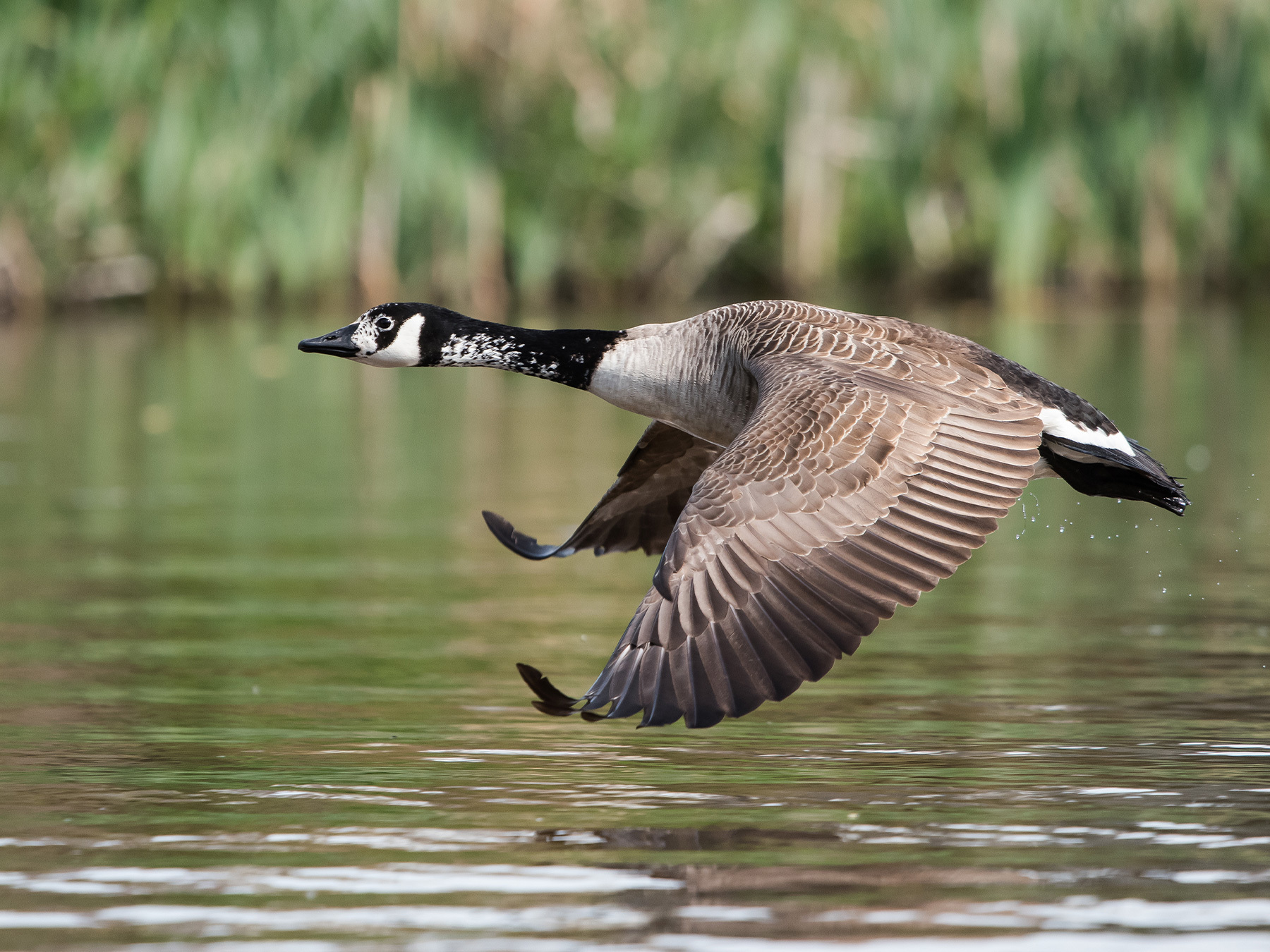
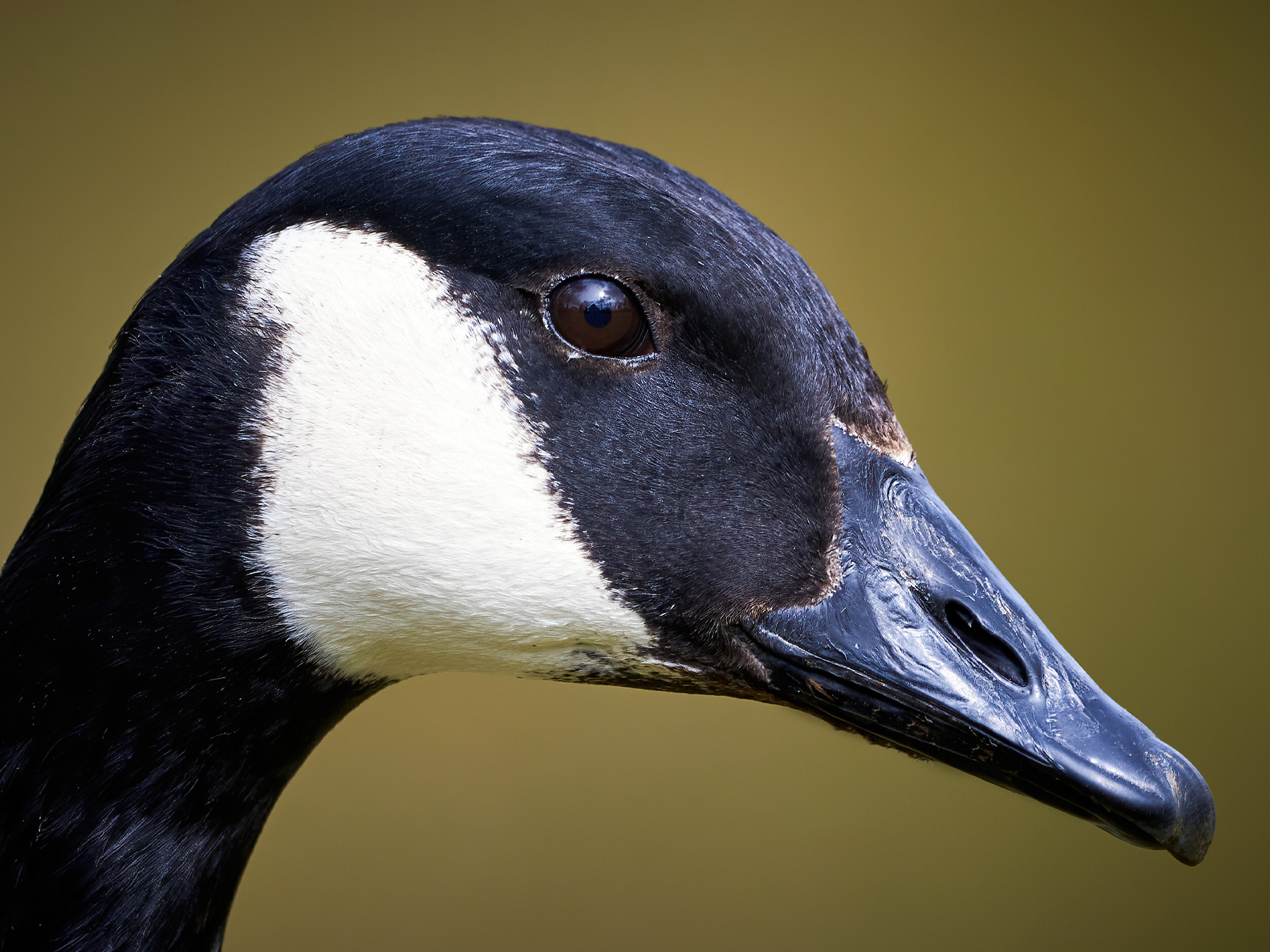
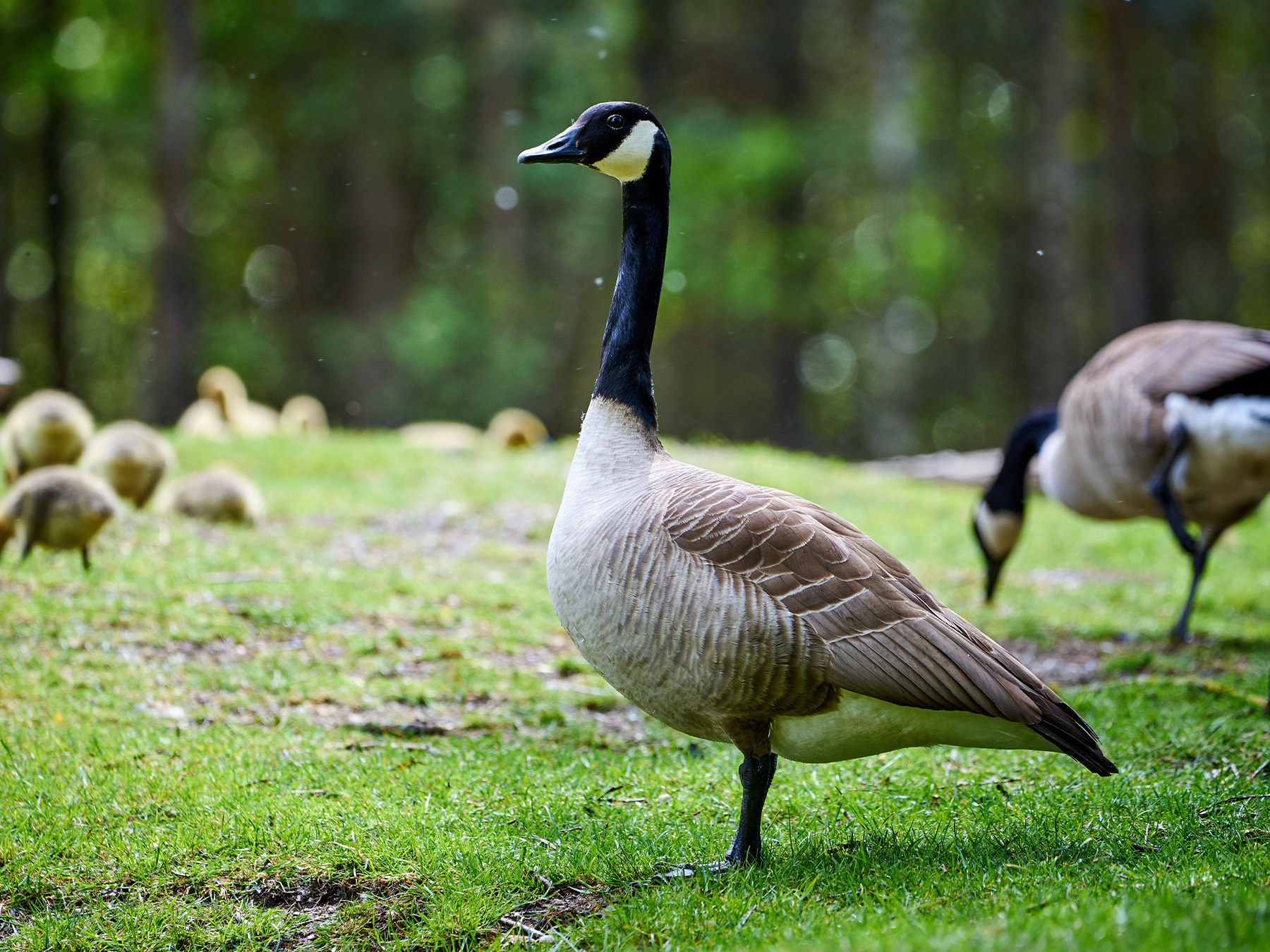
The Canada Goose is a large, handsome wildfowl species with a long black neck and head and a broad white strap that runs under the chin to either side of the face. They are dark gray-brown above but paler below, with white under the tail and vent. Their thickset legs and webbed feet are black.
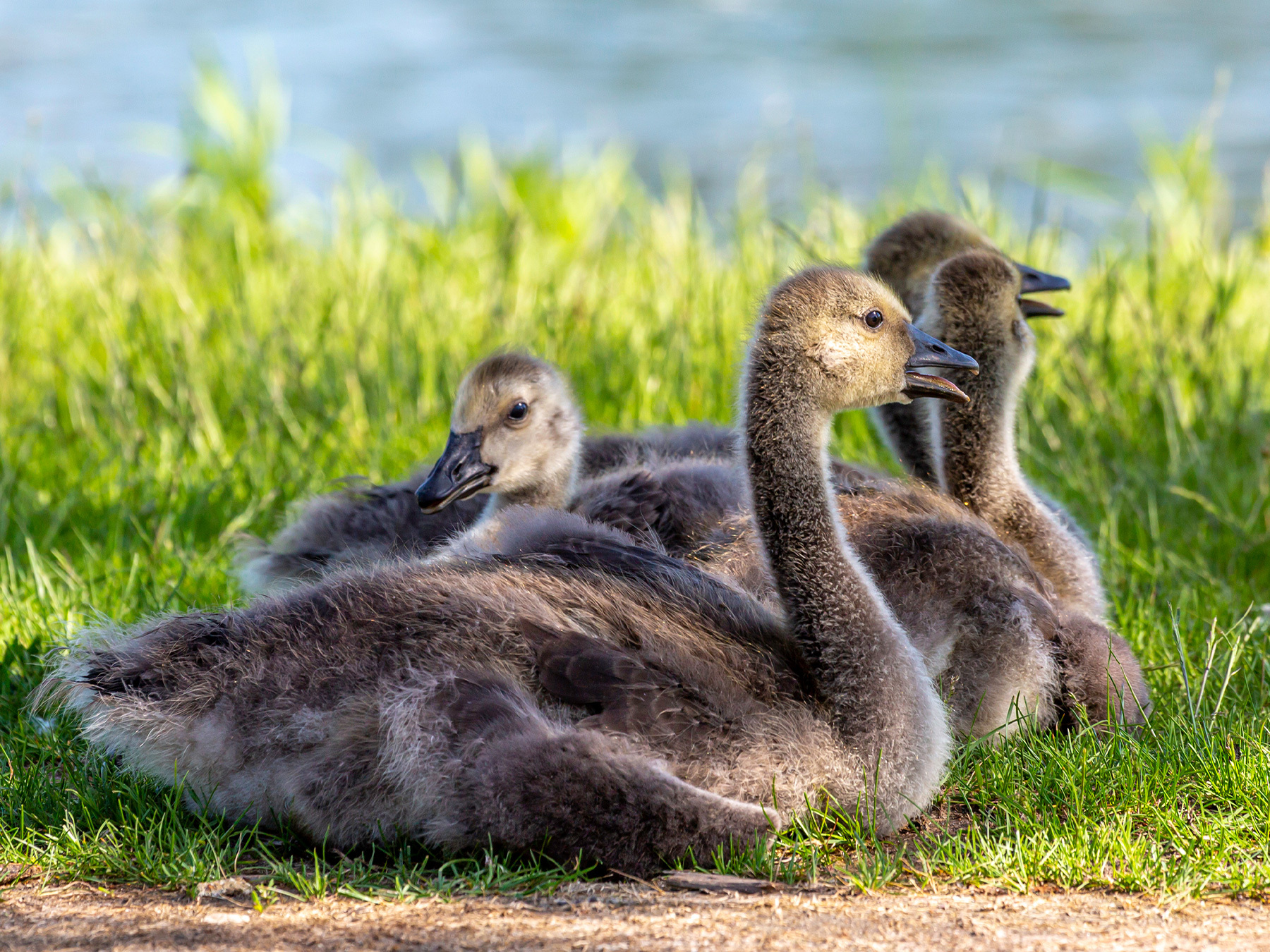
Females look the same as males, although they tend to be smaller. Juveniles have a more uniform brownish back without the pale-edged feathers typical of adults. The start of their black neck plumage is also less crisply defined.
Canada Geese have very similar plumage to the Cackling Goose, which is much smaller and has a shorter neck.
How big are Canadian Geese?
Canada Geese are the world’s largest goose species. Their size varies among the seven known subspecies, with B. c. maxima (Giant Canada Goose) being the largest.
Length
Canada Geese may have a body length of up to 45 inches or 1.15m.
Weight
Adults can weigh anything from five to over 20 pounds, and males are generally larger than females.
Wingspan
These birds have a typical wingspan of 51 to 71 inches or 1.3 to 1.8 meters, although the largest specimens can top seven feet (2.1 m).
Its size
Adults- Length
- 76–110 cm
- Wingspan
- 127–185 cm
- Weight
- 3000–9000 g
Its song and calls
What sound does a Canada Goose make?
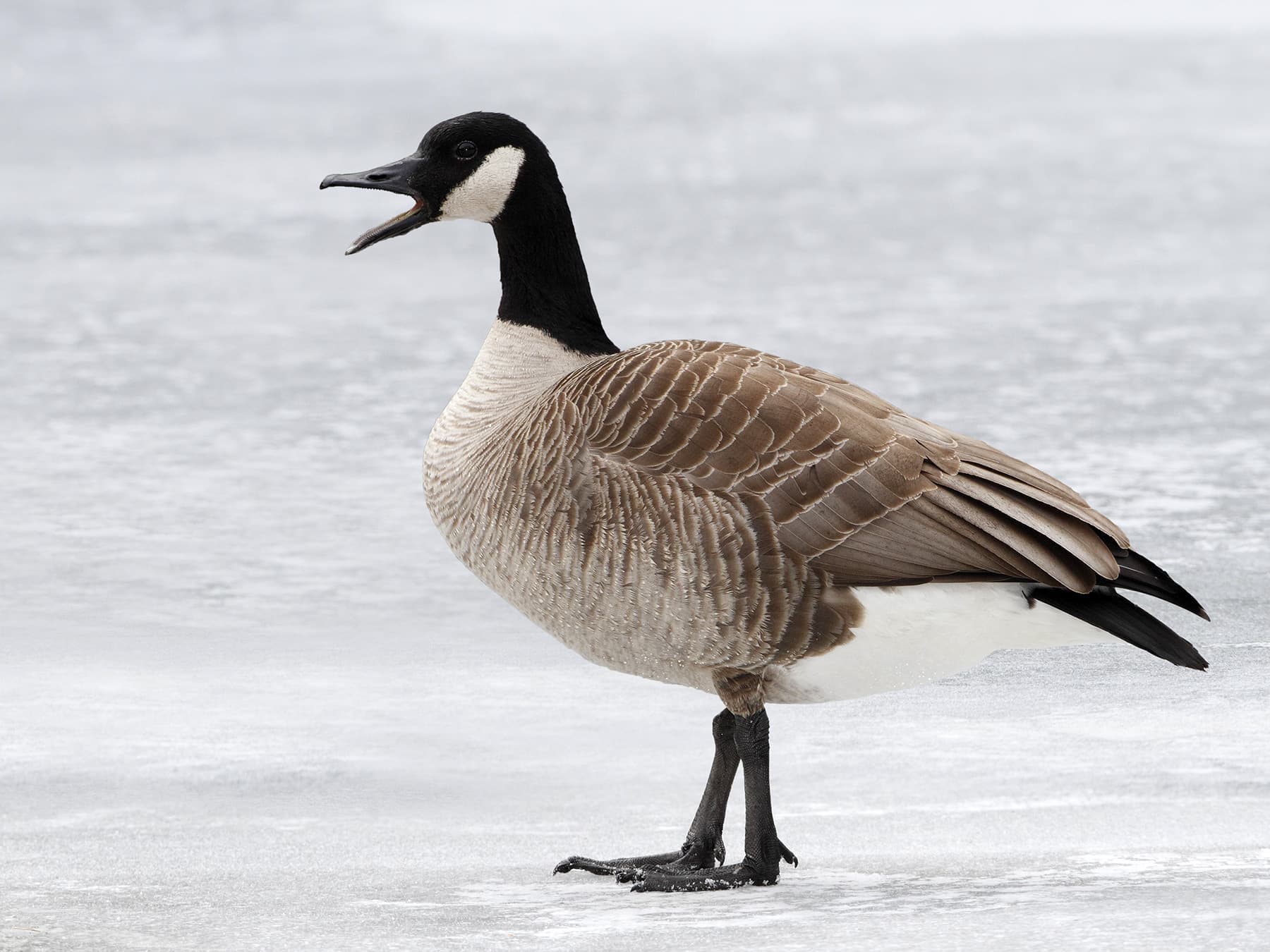
Canada Geese produce a familiar honking call. Females have a higher pitched voice, and their call is often described as a ‘hrink.’ They also hiss when agitated.
- Flight call0:00 / 0:19
Recorded in Île-de-France, France · April 2021
When and where to see it
OctoberHere all year
Most recorded in October
- 1. Stockton-on-Tees2.4%
- 2. Cheshire2.3%
- 3. Berkshire2.1%
- 4. London1.9%
- 5. Staffordshire1.8%
Each dot is a county, state or province: the bigger and darker, the larger the bird’s share of that place’s bird records that month. Grey dots: no regular records. The ringed point is the centre of the bird’s records this month; the arrow shows how it moved since last month, and the dashed loop its path through the year. “Arrivals” colours places where it becomes regular this month (orange) or is in its last regular month (grey). GBIF eBird Observation Dataset, 2019–2024. Map data: Natural Earth, US Census Bureau; place centres © OpenStreetMap contributors.
In your area
See when the Canada Goose is recorded in your county, state or province.
How often the Canada Goose turns up in the UK, Ireland, the United States and Canada through the year, from birdwatchers' records.
United Kingdom
Resident · all year · most records in March
Ireland
Resident · all year · most records in November
United States
Resident · all year · most records in March
Canada
Resident · all year · most records in March
Show as a table
| Month | United Kingdom | Ireland | United States | Canada |
|---|---|---|---|---|
| January | 1.1% (regular) | 0.015% (regular) | 1.8% (regular) | 2.1% (regular) |
| February | 1.3% (regular) | 0.027% (regular) | 1.9% (regular) | 2.1% (regular) |
| March | 1.5% (regular) | 0.022% (regular) | 2.3% (regular) | 3.9% (regular) |
| April | 1.4% (regular) | 0.008% (regular) | 1.9% (regular) | 3.5% (regular) |
| May | 1.2% (regular) | 0.014% (regular) | 1.5% (regular) | 2.1% (regular) |
| June | 0.96% (regular) | 0.012% (regular) | 0.87% (regular) | 1.3% (regular) |
| July | 1.1% (regular) | 0.009% (regular) | 1.00% (regular) | 1.1% (regular) |
| August | 1.2% (regular) | 0.032% (regular) | 1.2% (regular) | 1.7% (regular) |
| September | 1.0% (regular) | 0.008% (regular) | 1.3% (regular) | 2.5% (regular) |
| October | 0.94% (regular) | 0.016% (regular) | 1.5% (regular) | 3.0% (regular) |
| November | 0.99% (regular) | 0.034% (regular) | 1.7% (regular) | 3.1% (regular) |
| December | 1.1% (regular) | 0.019% (regular) | 1.7% (regular) | 2.4% (regular) |
Recorded regularly in
Worldwide: recorded regularly in 39 countries
Countries where it was recorded in at least 3 of the 6 years 2019–2024. Linked countries have their own bird list.
Data: EOD – eBird Observation Dataset (Cornell Lab of Ornithology), accessed via GBIF.org, CC BY 4.0. Records from 2019–2024, aggregated and filtered by Birdfact. How these lists are made
What is the habitat of a Canada Goose?
Canada Geese are very adaptable, living and feeding in many different habitats. They have adapted to life around our towns, cities, and farms but also occur in wilderness areas from the treeless Arctic to arid deserts. Typical habitats include marshes, lakes, and ponds, but they often feed in fields away from water.
What is the range of a Canada Goose?
Canada Geese are widespread in North America, occurring in Mexico, The United States (including Alaska), and Canada. They were also introduced to New Zealand, the United Kingdom, and several mainland European countries.
Where do Canadian Geese live?
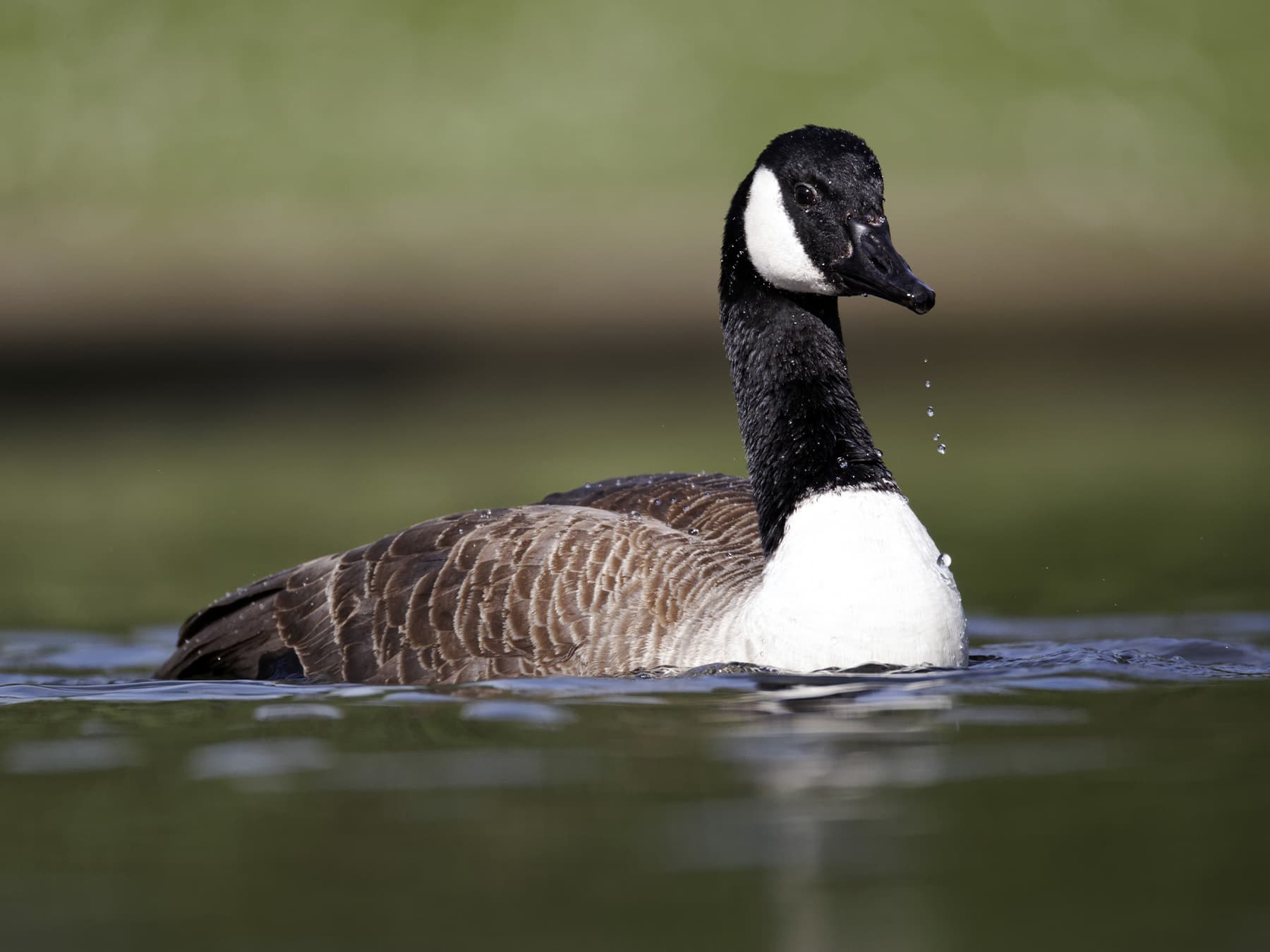
Some Canada Geese live in the same area all their lives, while others are great travelers, flying thousands of miles each year. They may be waterfowl, but they are quite comfortable on foot and can run pretty fast. They swim well too, even diving and feeding on plants growing under the water. You are most likely to see these birds foraging near water or flying overhead.
How rare are Canadian Geese?
Canada Geese are an abundant species in North America and highly successful where they have been introduced in Europe. Their numbers usually vary with the seasons as they migrate to and from their breeding grounds, although they are common throughout the year in many areas.
Where can you see Canadian Geese in the US?
Birdwatchers can see Canada Geese in any state in the Continental US, although they are strictly summer visitors in Alaska and mostly winter visitors in the South. These birds are now year-round residents across most of the northern half of the lower 48, where they are frequently seen around lawned areas near ponds, sports fields, and farmland.
Where can you see Canadian Geese in Canada?
As their name suggests, Canada Geese are widespread breeding visitors to Canada, occurring in every province and territory. They can be seen year-round along the west coast and in the south of British Columbia, along the St. Lawrence River in Quebec, and in coastal areas of New Brunswick and Nova Scotia.
Where can you see Canadian Geese in the UK?
Canada Geese are a familiar sight in the UK, despite being a non-native species. They can be seen around lakes, ponds, and lawned areas across most of England and Wales, with smaller numbers in Northern Ireland and Scotland.
Migration
Do Canadian Geese migrate?
Canada Geese have various migration strategies. Large flocks flying in skeins (V-formation) in spring and fall are still a common sight, although increasing numbers have become sedentary. They migrate during the day or night, flying fast and usually below about 3,000 feet.
Check out our in-depth guide to learn much more about the Canada Goose migration.
How far do Canadian Geese migrate?
Canada Geese can migrate impressive distances of over 2000 miles, sometimes traveling over a thousand miles in a single day with favorable winds.
Where do Canadian Geese migrate to?
Migratory Canada Goose populations move between nesting grounds as far north as the North Coast of Alaska in the summer and return to the Lower 48 US states and northern Mexico for the winter. However, the various subspecies have different breeding and overwintering ranges.
Tips for seeing it
- Look for Canada Geese near water bodies, including lakes, ponds, and coastal areas.
- Listen for their distinctive honking calls, especially during flight.
- Observe their behavior in urban parks, where they have become common residents.
- In the UK and parts of Europe, watch for them as introduced species in similar habitats.
What it eats
What do Canadian Geese eat?
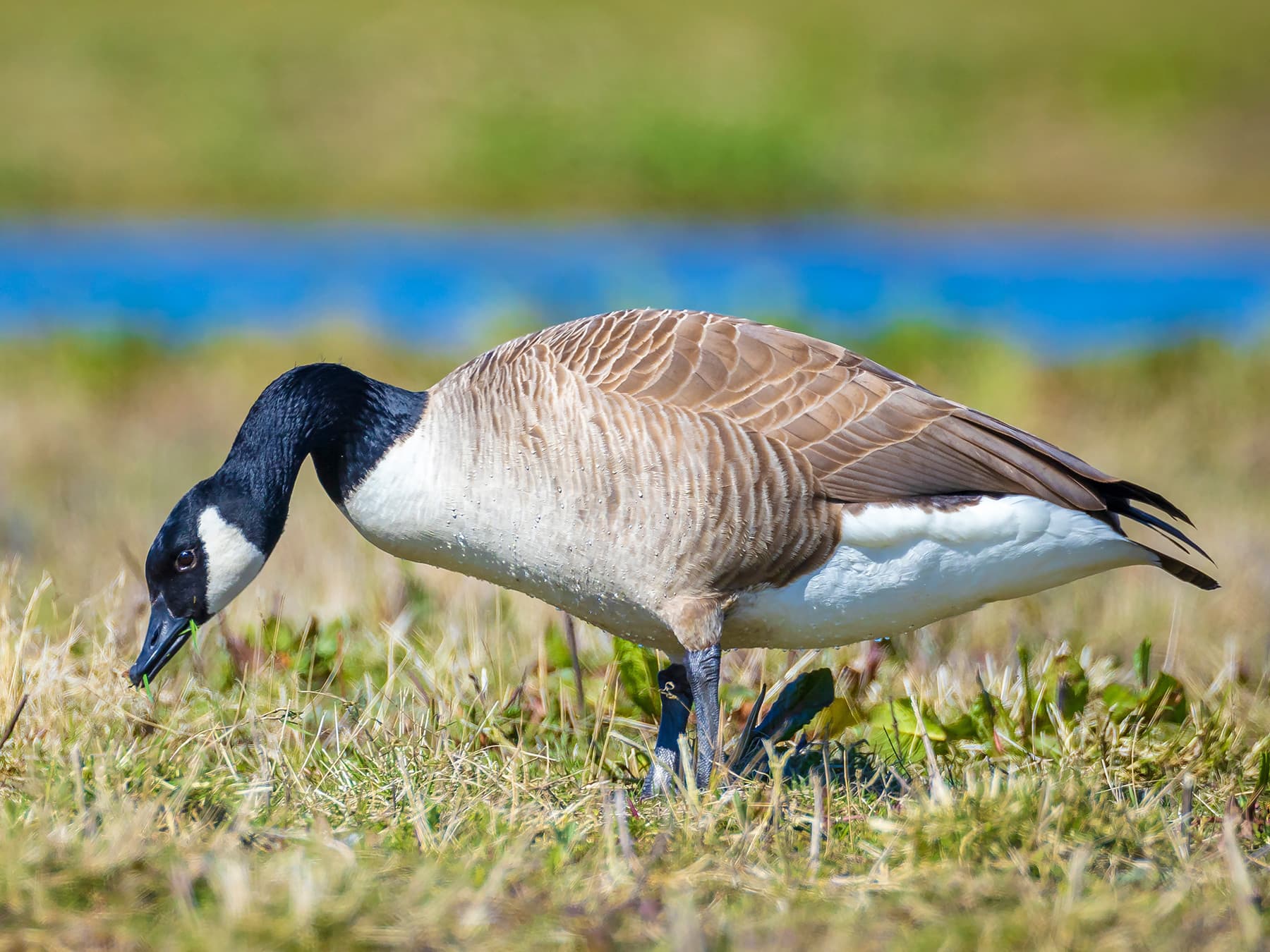
Canada Geese are mostly vegetarian, feeding on grass, seeds, berries, and bulbs. Their strong, serrated bills are ideal for tearing grass and uprooting plants, but they also feed on softer aquatic vegetation. Agricultural grains like corn and wheat are important during the winter months.
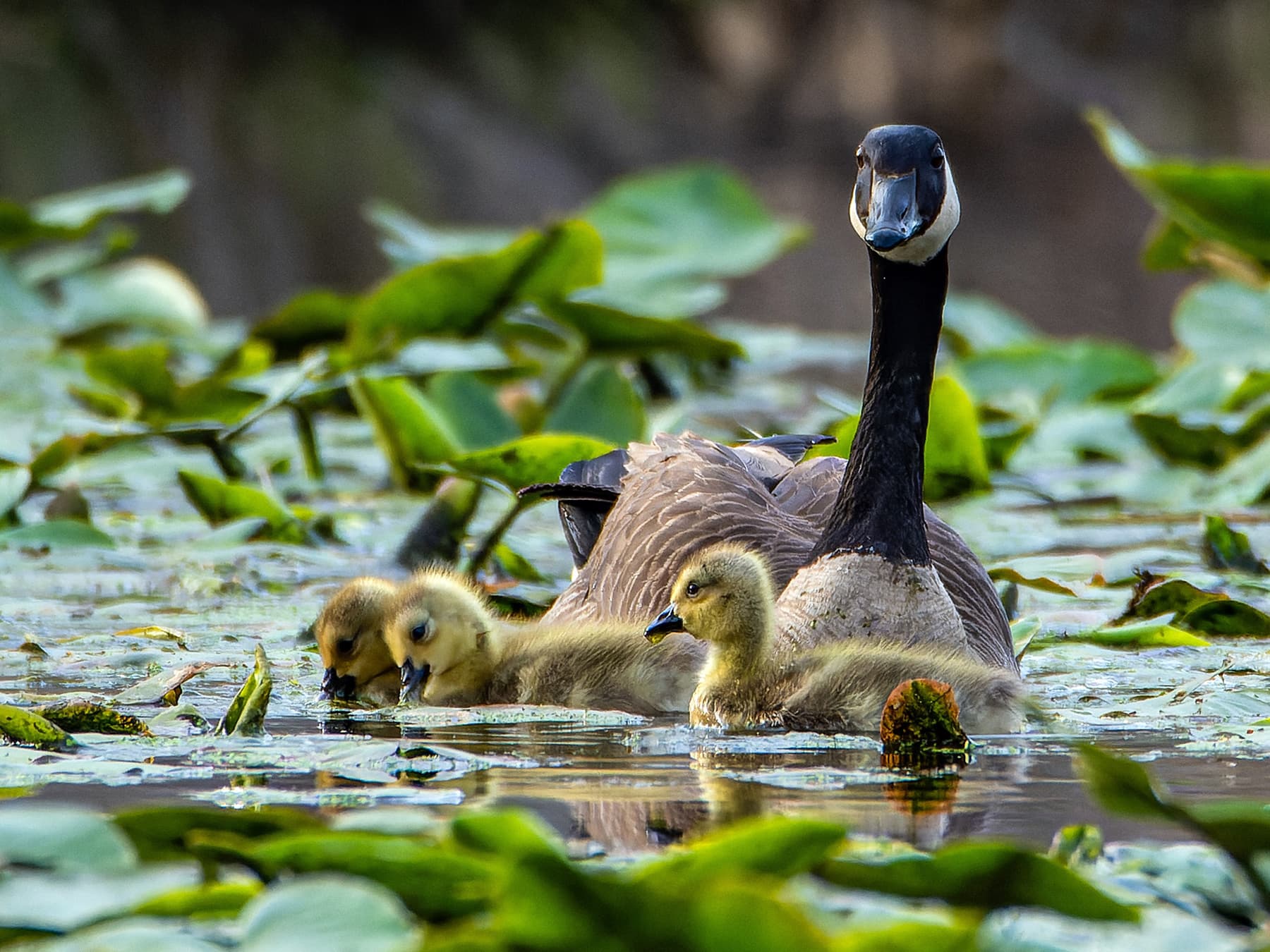
What do Canada Goose chicks eat?
Canada Goose goslings hatch out ready to walk, swim, and feed themselves. They eat grass at first, feeding themselves without help from their parents.
Nesting and breeding
Where do Canadian Geese nest?
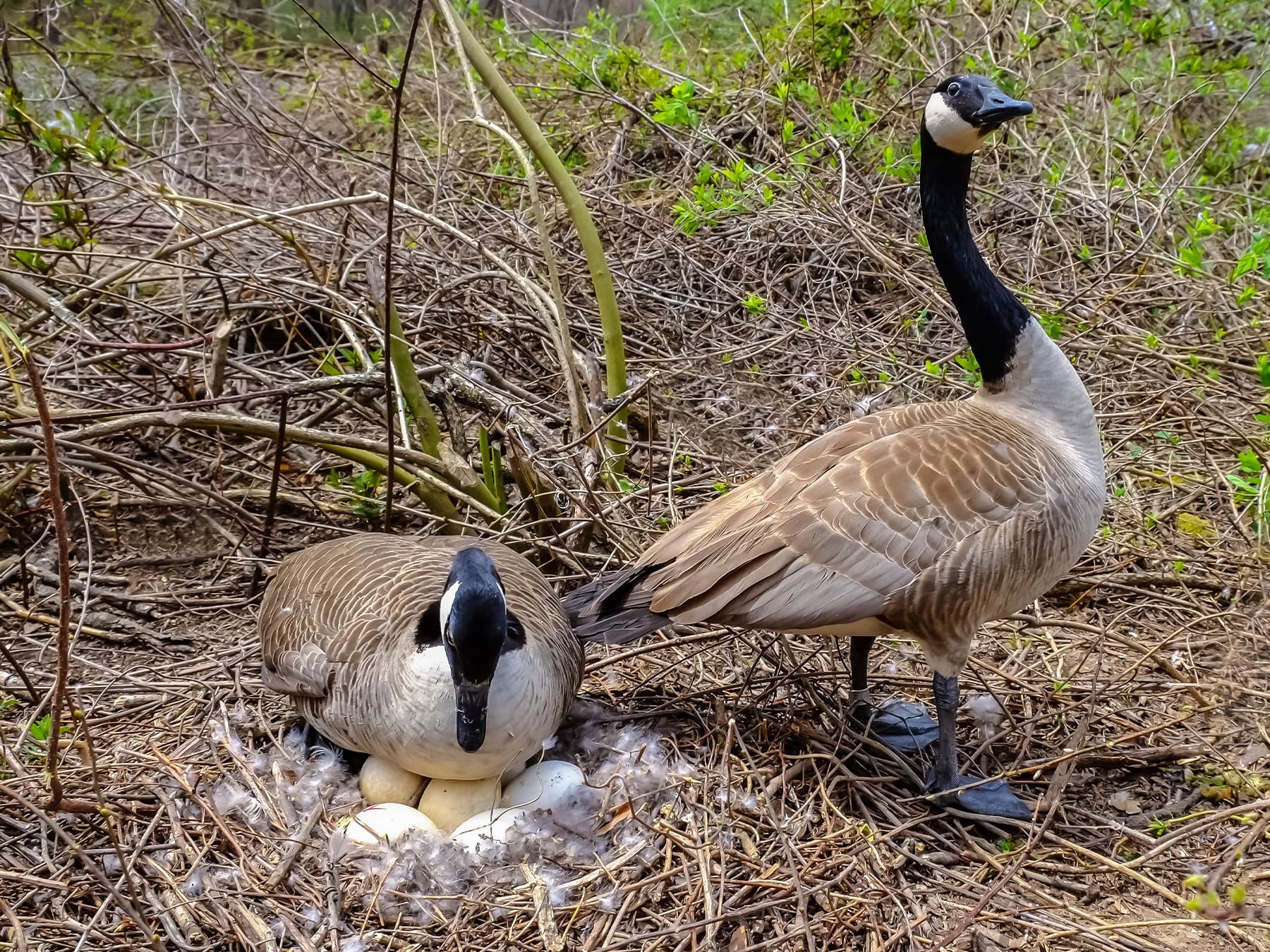
Canada Geese usually nest on the ground near water. The nest begins as a shallow scrape which is then lined with whatever plant material is found nearby. The female will also add her own soft feathers to the nest, but only after she has begun to lay her eggs.
Check out our in-depth guide for much more information on Canada Goose nesting.
When do Canadian Geese nest?
Canada Geese nest in the spring and summer, although their timing varies from year to year, depending on the weather. They may begin as early as March in some areas, while northern populations wait until mid-summer to lay their eggs.
What do Canada Goose eggs look like?
Canada Geese lay two to eight large, cream-white eggs. Their size and number vary depending on the subspecies.
Do Canadian Geese mate for life?
Canada Geese form strong, life-long pair bonds. However, they will seek a new partner if their mate dies.
Behaviour
Are Canadian Geese aggressive?
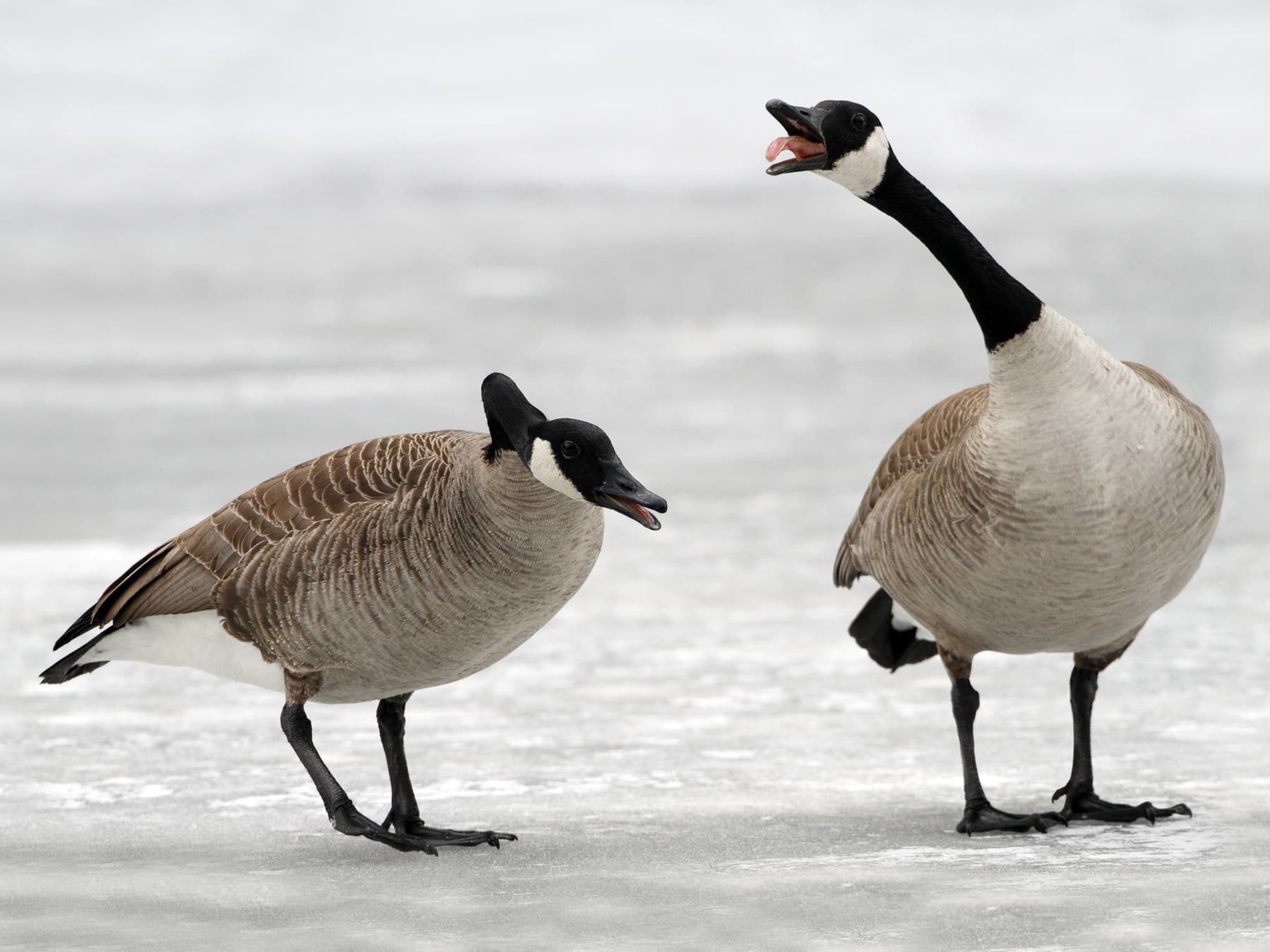
Canada Geese are large, powerful birds, and they can be aggressive toward humans when nesting, particularly in suburban settings where they are used to our presence. Wild birds rarely attack humans but are highly territorial when nesting and often fight over feeding areas.
Read this article to learn more about aggression in geese.
Where do Canadian Geese sleep at night?
Canada Geese sleep at the water’s edge or while floating/swimming. They prefer islands where they are safer from predators, and they may sleep standing on one or both legs. Swimming birds can control their position by drifting or even swimming in a circle.
Lifespan and predators
How long do Canadian Geese live?
Canada Geese can live for over 30 years in the wild, although 10 to 25 years is more typical.
What are the predators of Canadian Geese?
The Adult Canada Goose presents a large and intimidating target for most predators. However, Humans, Coyotes, and large birds of prey like Snowy Owls, Bald Eagles, and Golden Eagles can overpower them. Their eggs and chicks are vulnerable to foxes, Ravens, and larger Gull species.
Are Canadian Geese protected?
Canada Geese are protected by both the Migratory Bird Treaty Act (USA) and the Migratory Birds Convention Act (Canada) in North America. They are also a protected species in the United Kingdom, despite being introduced there.
Are Canadian Geese endangered?
Canada Geese are not endangered. These widespread waterfowl have an increasing population trend and a ‘Least Concern’ status on the IUCN Red List.
Conservation
While the Canada Goose is not globally threatened, some populations face localized challenges.
In many urban areas, they are considered overabundant, leading to management efforts. Conservation focuses on maintaining healthy populations while mitigating human-wildlife conflicts.
Similar birds
Often mistaken for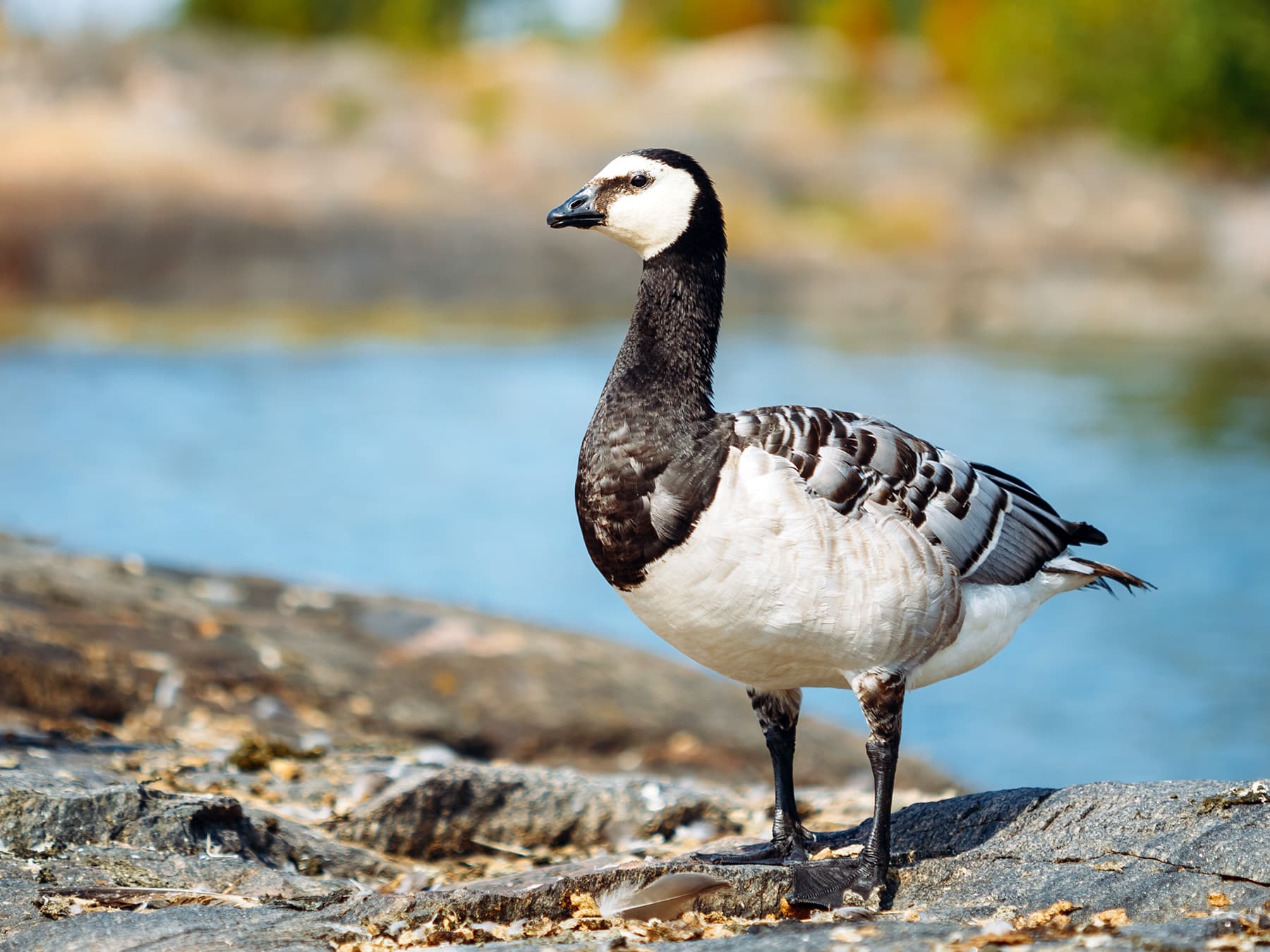
More photos
6 photos
Canada Goose guides
5 guidesQuick facts
- Length
- 76–110 cm
- Wingspan
- 127–185 cm
- Weight
- 3000–9000 g
- Lifespan
- 10–25 years · oldest recorded 31.9 years
- Family
- Ducks, Geese & Swans
- Migration
- Partial migrant
- Global status (IUCN)
- Least Concern
- World population
- 5,000,000 - 6,200,000 mature individuals
- Population trend
- Increasing
- Also called
- Canadian Goose, Honker
- Scientific name
- Branta canadensis
Sources
4- 1BirdLife International. 2018. Branta canadensis. The IUCN Red List of Threatened Species 2018: e.T22679935A131909406. Source (opens in a new tab)
- 2BirdLife International. 2018. Branta canadensis. The IUCN Red List of Threatened Species 2018: e.T22679935A131909406. Source (opens in a new tab)
- 3Wetlands International (2015)
- 4BTO longevity records: maximum age from a ringed bird, 31 years, 10 months, 29 days (set in 2007), BirdFacts: Canada Goose (2007) Source (opens in a new tab)

Checked by
Nathan Cope, founder and editor
Nathan founded Birdfact and leads its writers and contributors in the UK, the US and Canada. He has watched and studied birds for more than ten years, and checks every article and species guide before it’s published.