


Barnacle Goose
Barnacle · Branta leucopsis
By the Birdfact teamChecked by Nathan Cope
On this page14 sections
How to recognise it
What do Barnacle Geese look like?
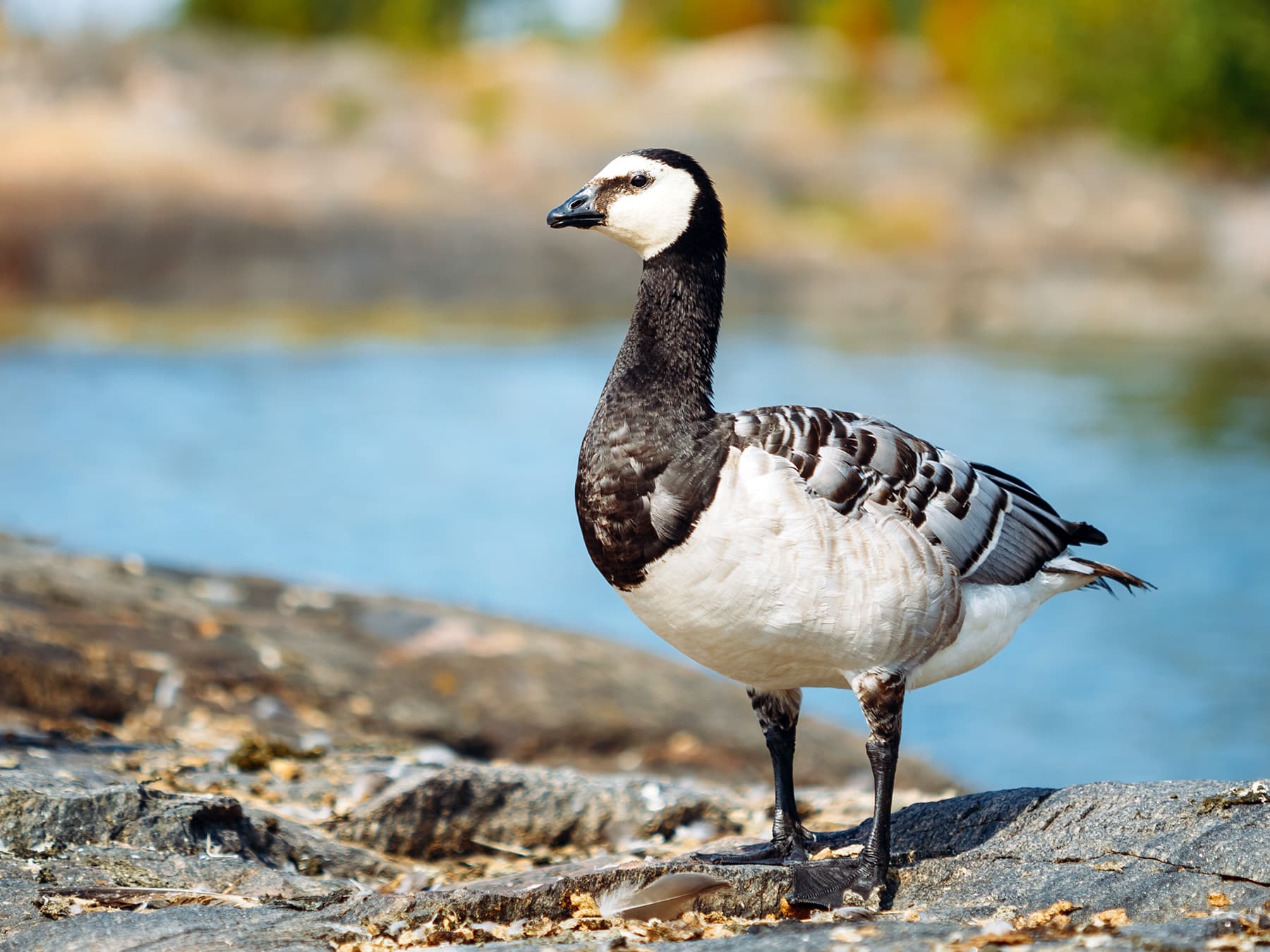
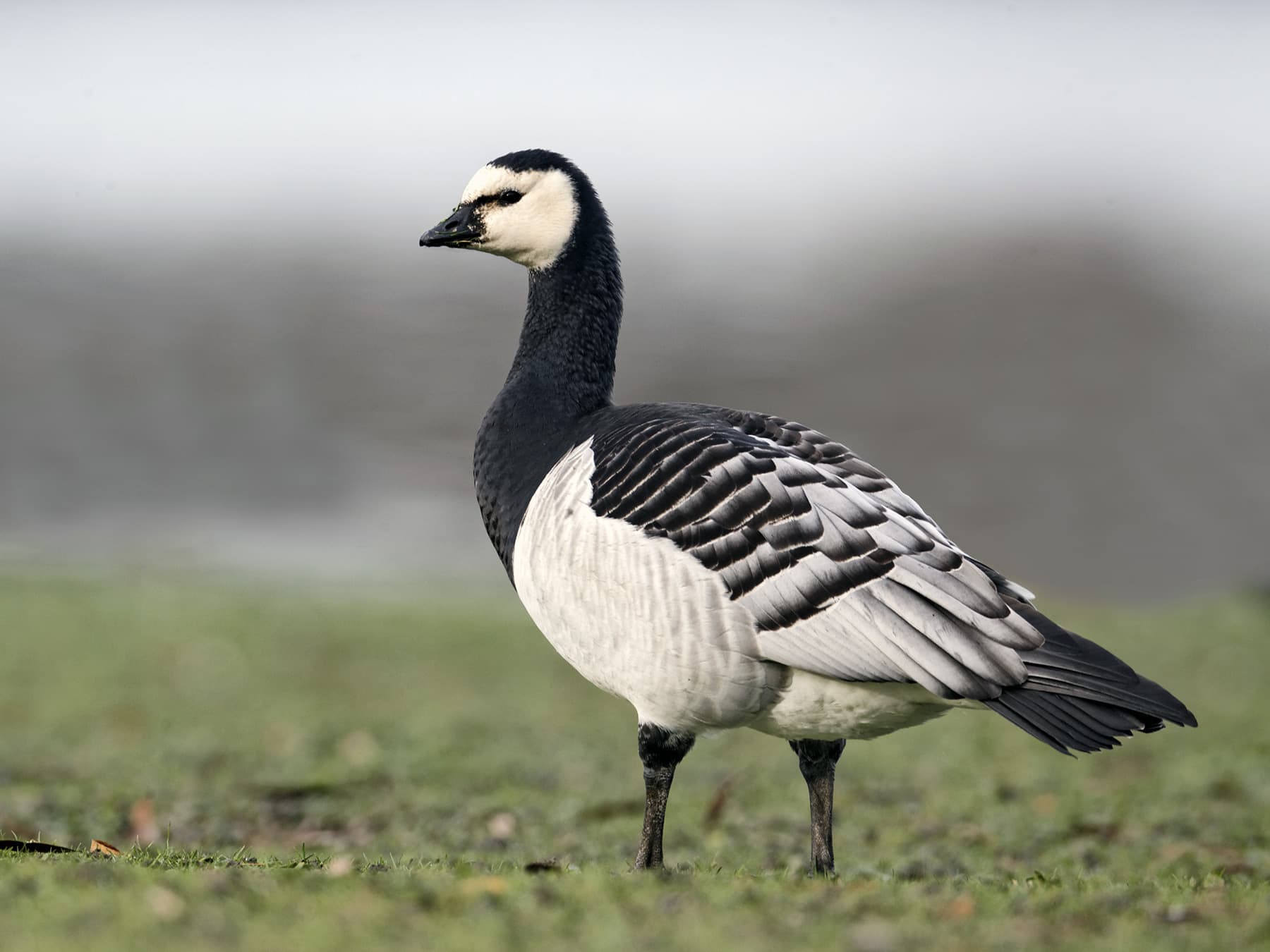
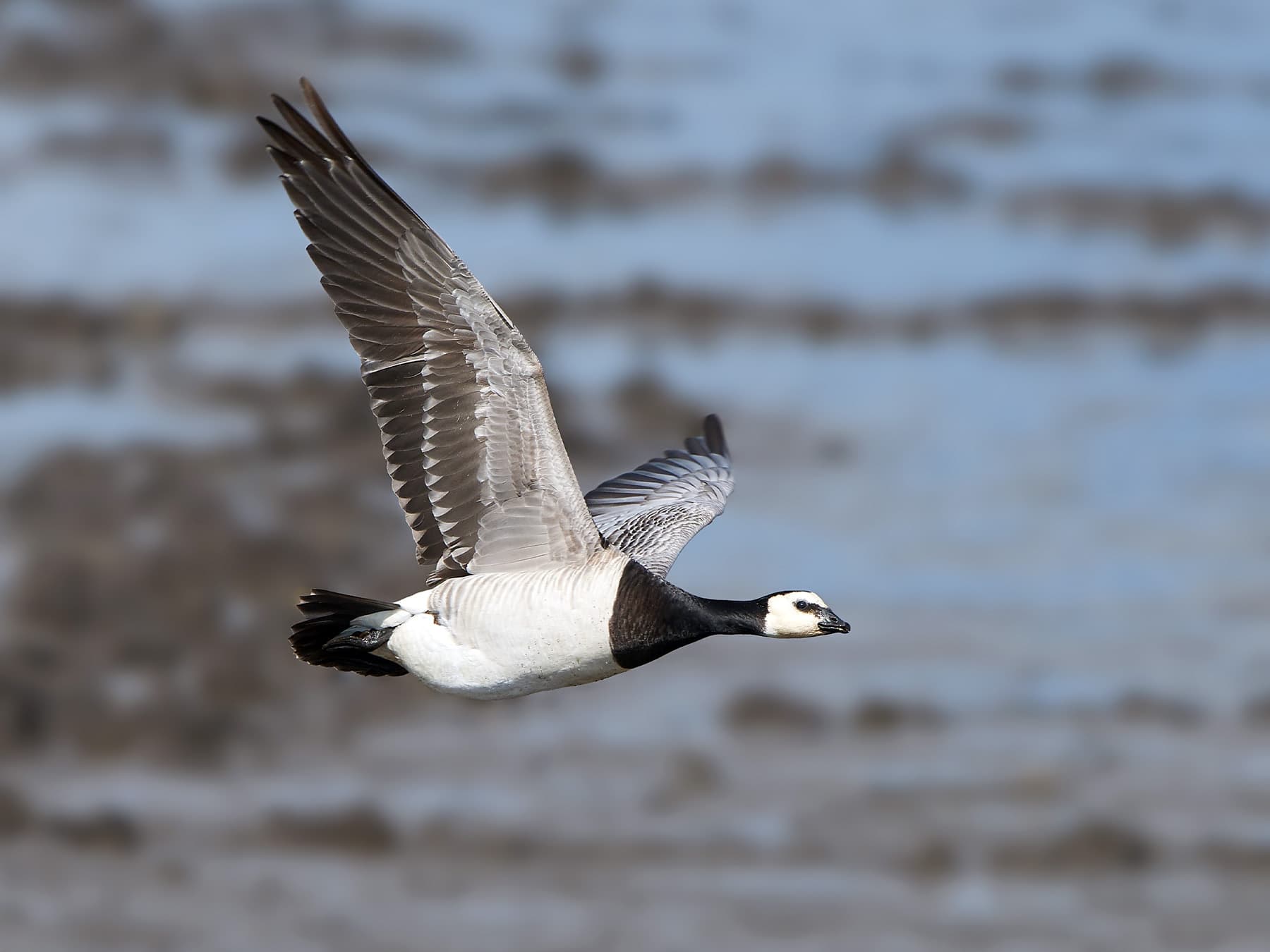
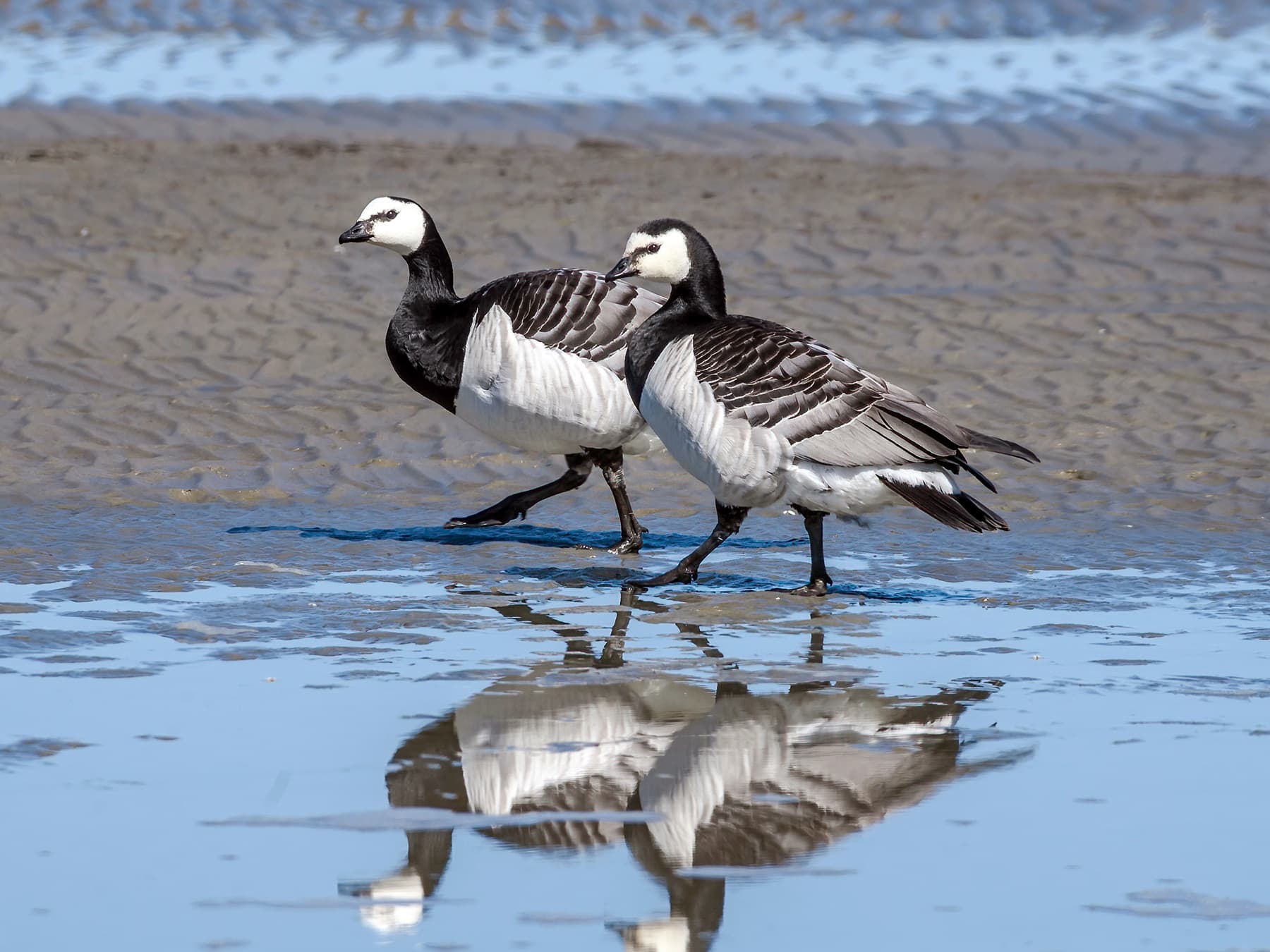
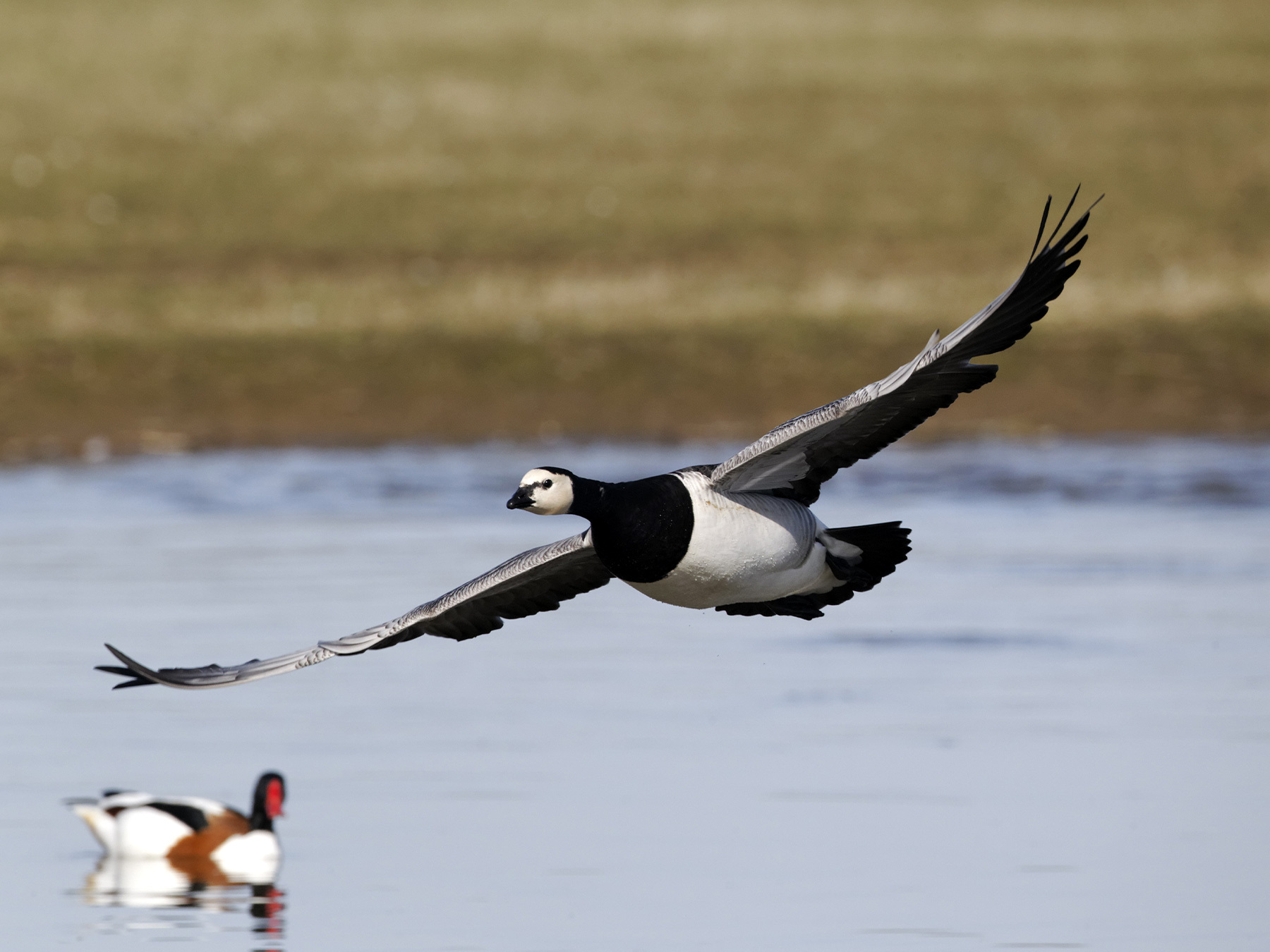
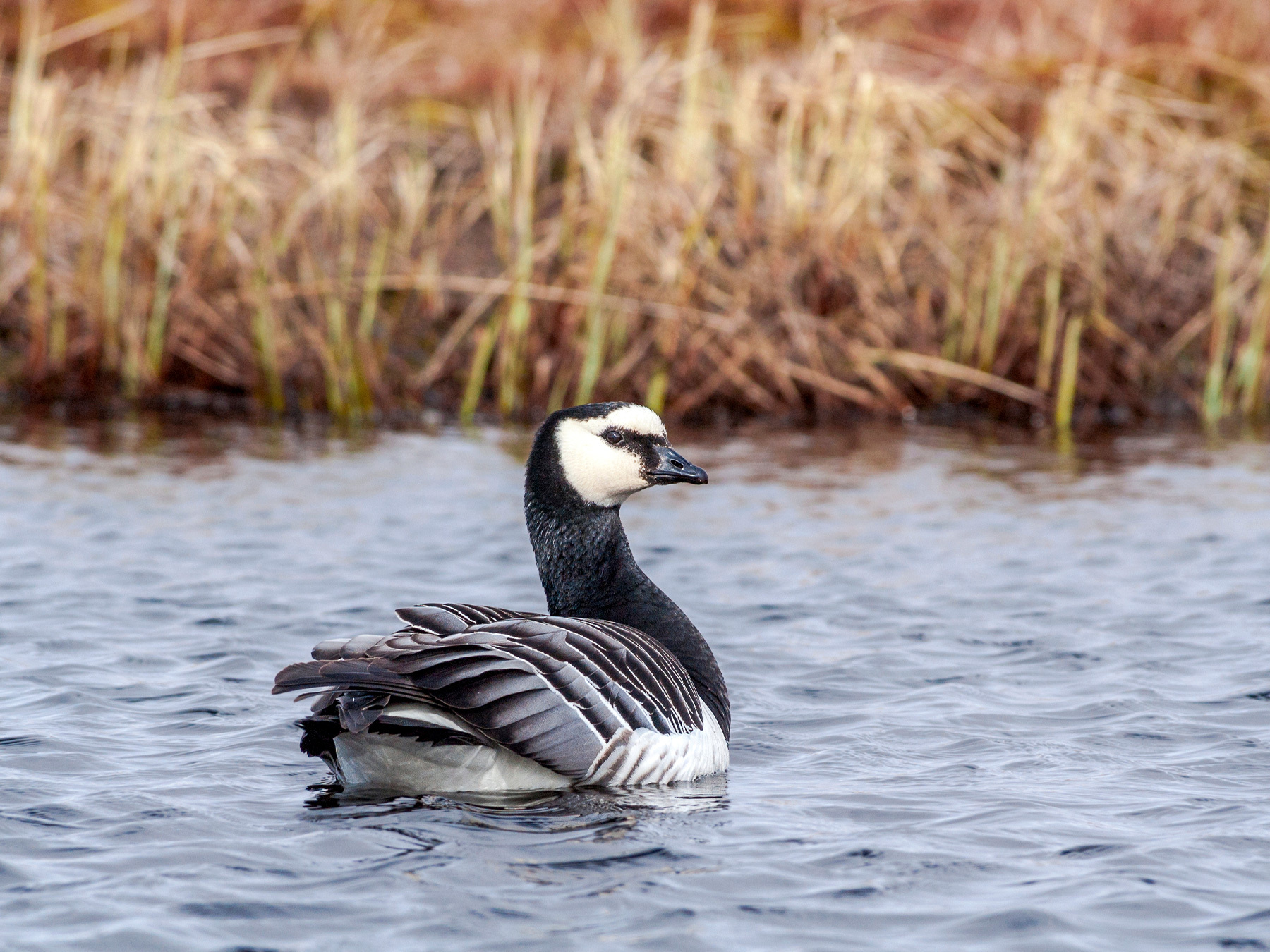
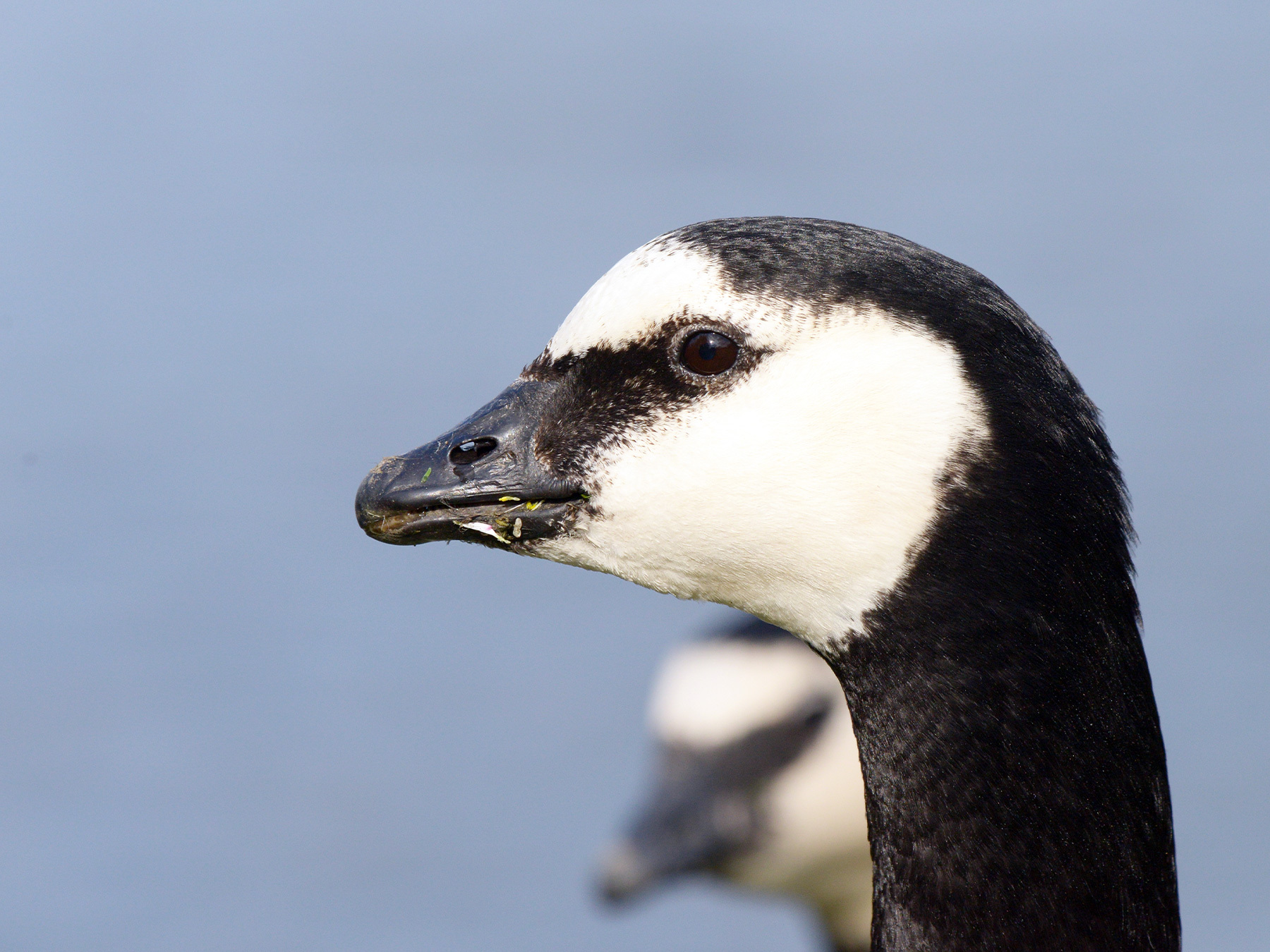
The Barnacle Goose is a small and vividly patterned wildfowl with a white face, black cap, neck, and breast. The belly is white or pale grey, and their back is barred in black and blue-grey becoming paler toward the tail. Their thick legs and short, stubby bills are black.
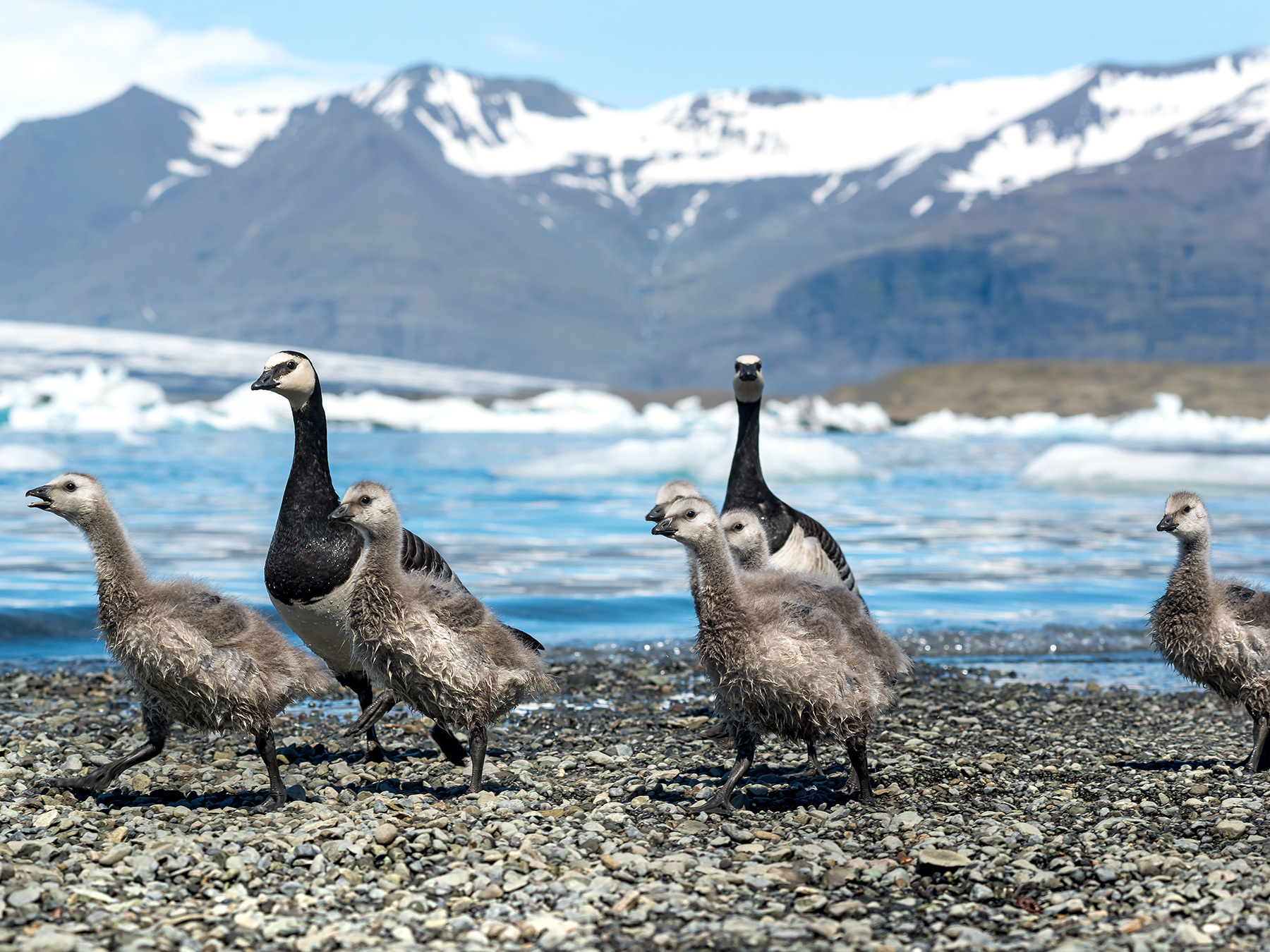
Male and female Barnacle Geese look alike, although females are generally smaller. Juveniles start life as downy grey goslings and progress into paler, duller versions of their parents before attaining adult plumage.
The Barnacle Goose is easily identified by its white face, although it may be confused with the related Brent Goose (UK & North America) and Cackling Goose (North America). Barnacle Geese may hybridise with these birds and the larger Canada Goose.
How big are Barnacle Geese?
The Barnacle Goose is a small species, similar in length but bulkier than the Mallard. Males are generally larger than females in all respects, although there is significant overlap.
Length
Barnacle Geese have a total length of 58 - 71cm or 23 to 28 inches.
Weight
Males weigh 1.5 to 2.2 kilograms (3.3 - 4.9 pounds), and females weigh 1.3 - 1.9 kilograms (2.9 - 4.2 pounds)
Wingspan
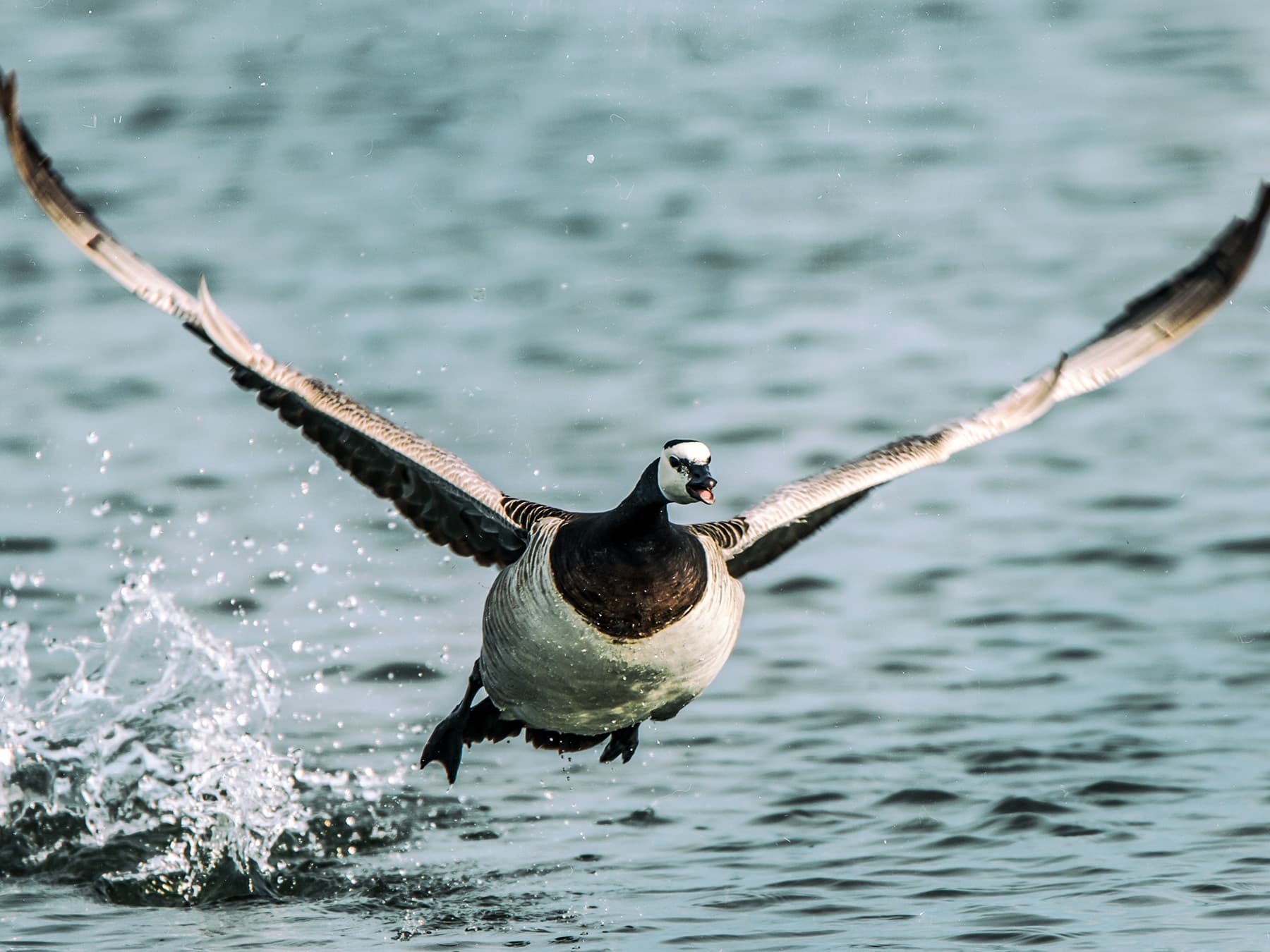
These small geese have a wingspan of 132 to 145 centimetres or 52 to 57 inches.
Its size
Adults- Length
- 58–70 cm
- Wingspan
- 132–145 cm
- Weight
- 1300–2270 g
Its song and calls
What sound does a Barnacle Goose make?
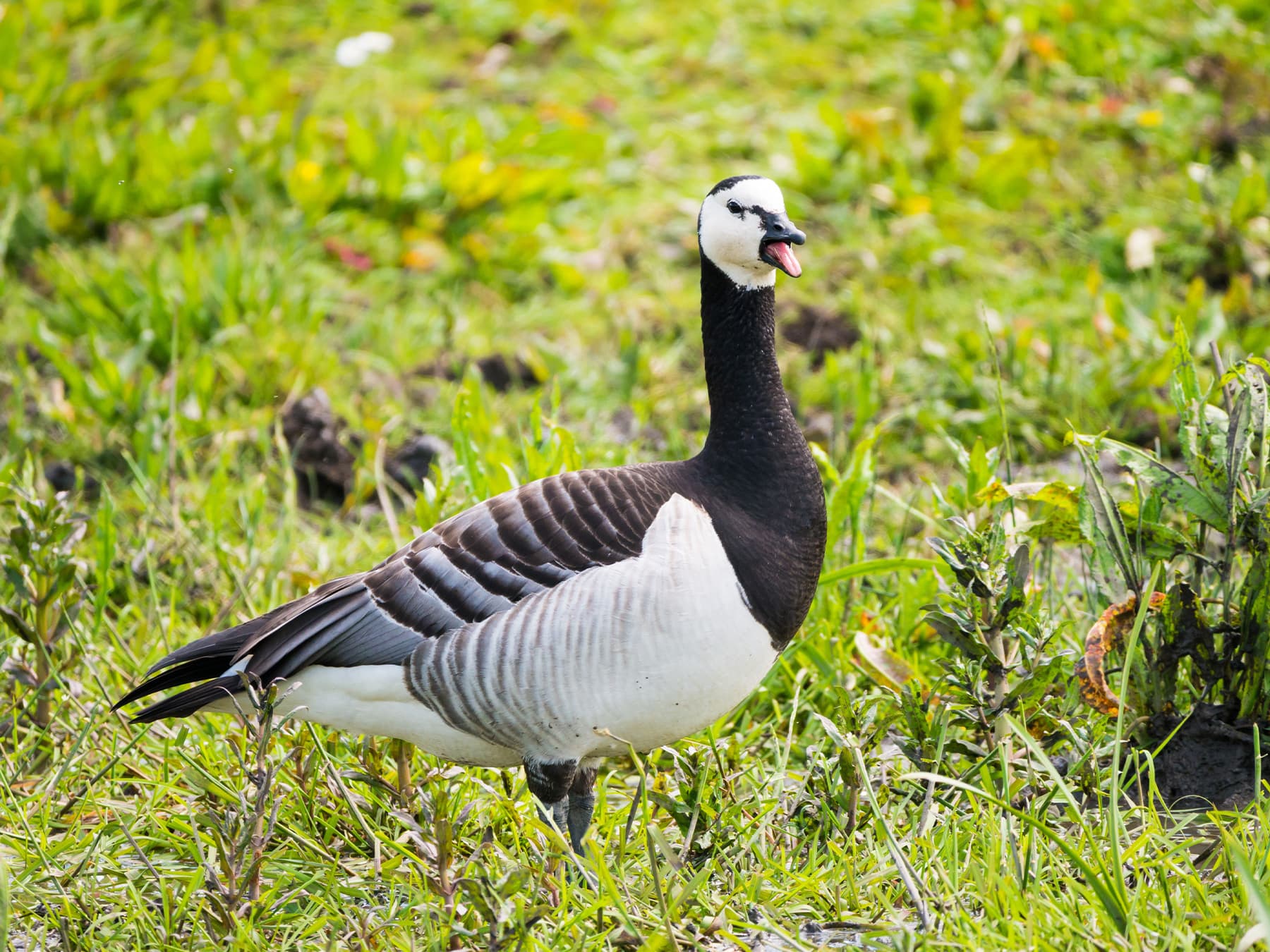
Barnacle Geese produce a brief honk or bark to maintain contact with partners and young. They call both on the ground and in flight and can be very noisy in flocks, particularly when alarmed.
- Call0:00 / 1:40
Recorded in Kalmar County, Sweden · May 2024
When and where to see it
OctoberPeak season
Most recorded in October
- 1. Stockton-on-Tees1.9%
- 2. Dumfries and Galloway1.4%
- 3. Eilean Siar1.2%
- 4. Argyll and Bute1.1%
- 5. Sligo1.0%
Each dot is a county, state or province: the bigger and darker, the larger the bird’s share of that place’s bird records that month. Grey dots: no regular records. The ringed point is the centre of the bird’s records this month; the arrow shows how it moved since last month, and the dashed loop its path through the year. “Arrivals” colours places where it becomes regular this month (orange) or is in its last regular month (grey). GBIF eBird Observation Dataset, 2019–2024. Map data: Natural Earth, US Census Bureau; place centres © OpenStreetMap contributors.
In your area
See when the Barnacle Goose is recorded in your county, state or province.
How often the Barnacle Goose turns up in the UK, Ireland, the United States and Canada through the year, from birdwatchers' records.
United Kingdom
Resident · all year · most records in October
Ireland
Winter visitor · regularly Sep–Apr · most records in February
United States
Winter visitor · regularly Oct–Mar · most records in January
Canada
Passage migrant · regularly Sep–May · most records in November
Show as a table
| Month | United Kingdom | Ireland | United States | Canada |
|---|---|---|---|---|
| January | 0.11% (regular) | 0.11% (regular) | 0.003% (regular) | 0.001% (regular) |
| February | 0.098% (regular) | 0.13% (regular) | 0.001% (regular) | <0.001% |
| March | 0.072% (regular) | 0.067% (regular) | <0.001% (regular) | 0.003% (regular) |
| April | 0.071% (regular) | 0.017% (regular) | <0.001% | 0.003% (regular) |
| May | 0.075% (regular) | 0.006% | <0.001% | <0.001% (regular) |
| June | 0.068% (regular) | 0.002% | <0.001% | – |
| July | 0.068% (regular) | 0.003% | – | – |
| August | 0.070% (regular) | 0.005% | – | <0.001% |
| September | 0.078% (regular) | 0.007% (regular) | – | 0.001% (regular) |
| October | 0.12% (regular) | 0.066% (regular) | <0.001% (regular) | 0.004% (regular) |
| November | 0.092% (regular) | 0.085% (regular) | 0.002% (regular) | 0.005% |
| December | 0.092% (regular) | 0.12% (regular) | 0.003% (regular) | <0.001% (regular) |
Recorded regularly in
Worldwide: recorded regularly in 36 countries
Countries where it was recorded in at least 3 of the 6 years 2019–2024. Linked countries have their own bird list.
Data: EOD – eBird Observation Dataset (Cornell Lab of Ornithology), accessed via GBIF.org, CC BY 4.0. Records from 2019–2024, aggregated and filtered by Birdfact. How these lists are made
What is the habitat of a Barnacle Goose?
In the breeding season, Barnacle Geese forage along the shores of lakes and other water bodies in the tundra and on islands, mudflats, and grassy meadows in more temperate areas. Winters are spent foraging in similar habitats like salt marshes, tidal flats, and pastures near the coast.
What is the range of a Barnacle Goose?
Barnacle Geese breed in Russia, Greenland, Iceland, and other Northern and Western European countries. They overwinter in parts of the United Kingdom, the Republic of Ireland, Belgium, the Netherlands, Germany, Norway, Sweden and Poland. Some also visit Canada and the northeast coast of the USA during the winter, often in the company of Canada Geese.
Where do Barnacle Geese live?
Barnacle Geese live in cold, open environments where they can graze freely while keeping an eye out for predators. These wildfowl spend most of their time on land, although they are powerful in flight and comfortable in the water, where they can retreat from predators.
How rare are Barnacle Geese?
Wild Barnacle Geese are rare in the United States and Canada but regular and common winter visitors to parts of The United Kingdom. Their global population has increased dramatically since the mid-1900s and is now estimated at approximately 880,000 individuals.
In the UK, Barnacle Geese are rare in the summer, although a small population of about 1450 breeding pairs is present throughout the year. However, the population swells in the winter when over 90,000 individuals arrive from Greenland and Svalbard.
Where can you see Barnacle Geese in the UK?
The greatest number of Barnacle Geese visit Islay and the Solway Firth on the west coast between September and April. Birds from the much smaller naturalised population are widespread and may turn up at just about any suitable wetland across the UK and England in particular.
Where can you see Barnacle Geese in the US?
Wild Barnacle Geese are occasionally sighted in the Northeast of the United States, from New England south to about Virginia. They are popular ornamental birds, however, so there is always the chance that sightings may be escapees rather than vagrants.
Migration
Do Barnacle Geese migrate?
Barnacle Geese are generally migratory, although some populations in the United Kingdom and Western Europe are sedentary. Northern breeders are short to medium-distance migrants, and some vagrants travel as far as the United States.
Why do Barnacle Geese migrate?
Populations that nest in the Arctic migrate because their breeding grounds, while ideal in the summer, are too cold and snow-covered to survive throughout the year. The relatively mild climates of the British Isles and Western Europe provide suitable feeding opportunities in the winter.
Are Barnacle Geese native to the UK?
Barnacle Geese are native to the United Kindom, although they are traditionally winter visitors from Svalbard and Greenland. The small, newly-established resident population is expanding its range and increasing in number.
Tips for seeing it
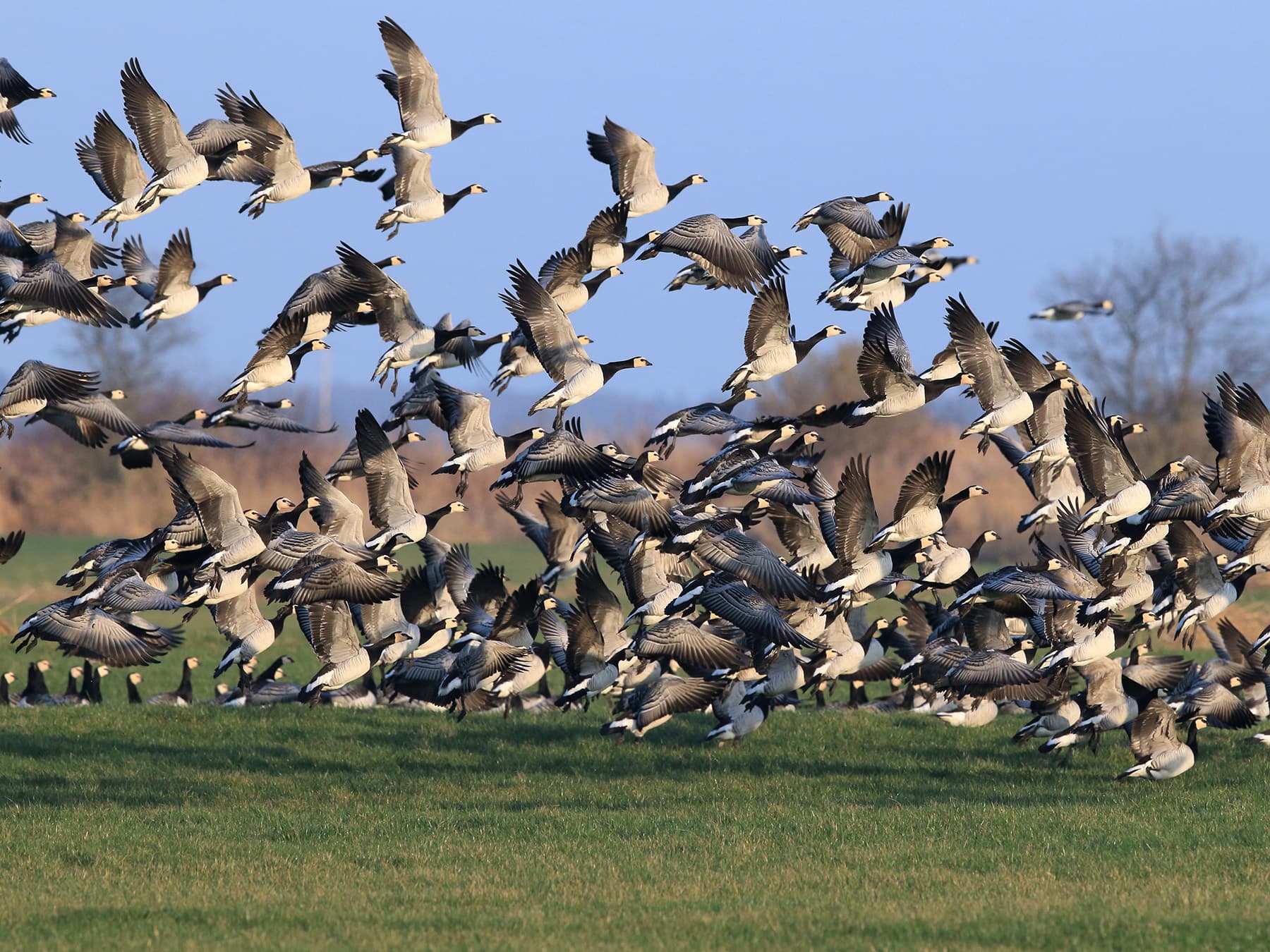
- Look for large flocks in coastal grasslands and salt marshes during winter.
- Listen for their distinctive barking call, which sounds like a high-pitched 'kaw-kaw'.
- Observe their feeding behaviour in short grass fields, where they graze in tight groups.
- In the UK, popular viewing spots include the Solway Firth and the Isle of Islay.
What it eats
What do Barnacle Geese eat?
Barnacle Geese are grazers. Grasses like Fescue and Timothy are their most important food sources in the winter, but they eat moss, grass, and herb stems and leaves on their nesting grounds. They eat a lot - sometimes over 150 grams per day (dry weight), and defecate 160 times each day on average.
What do Barnacle Goose chicks eat?
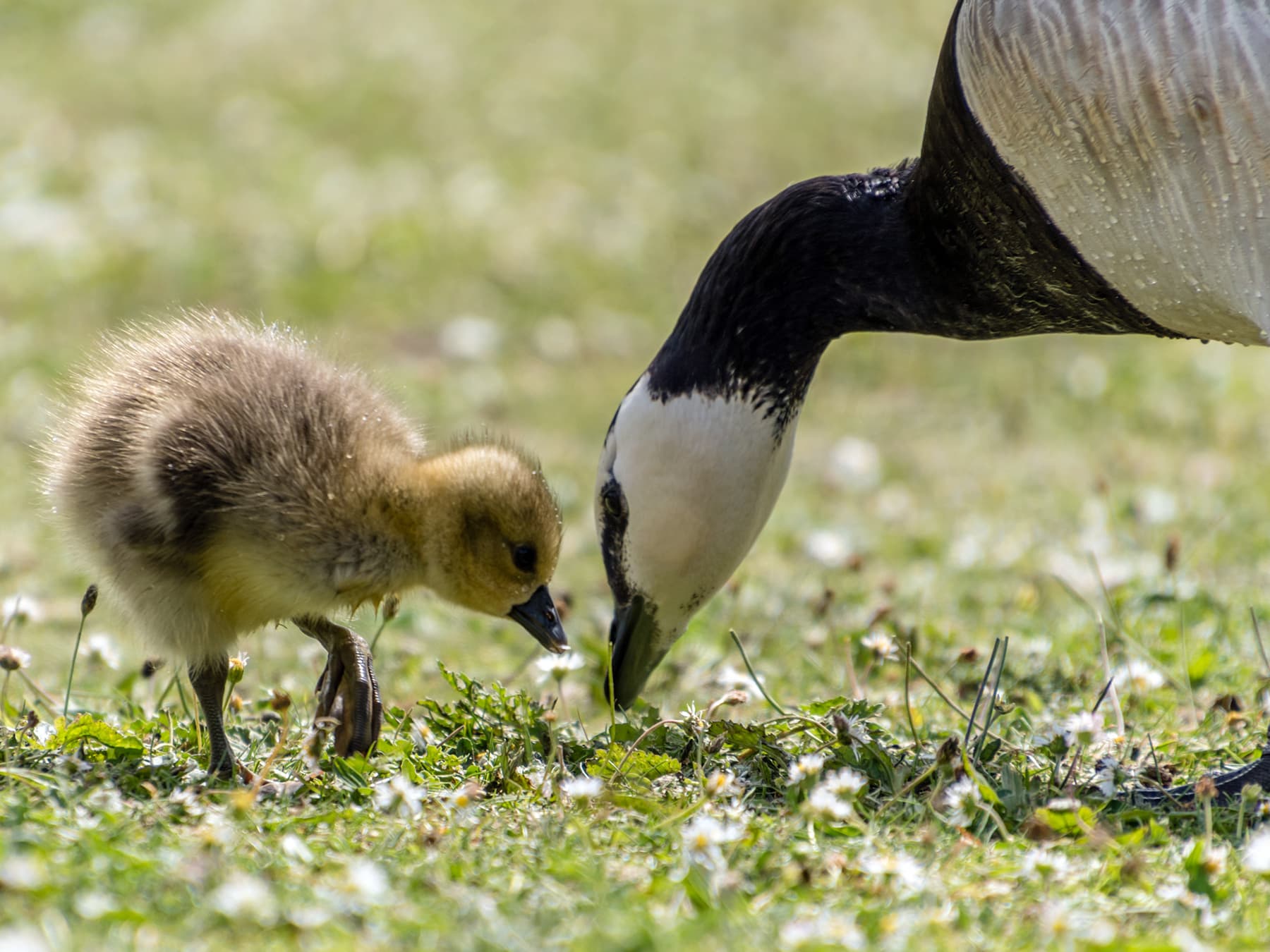
Barnacle Geese are ready to feed themselves right after hatching. The downy young goslings eat plant matter and learn the best food sources by following their parents.
Nesting and breeding
Where do Barnacle Geese nest?
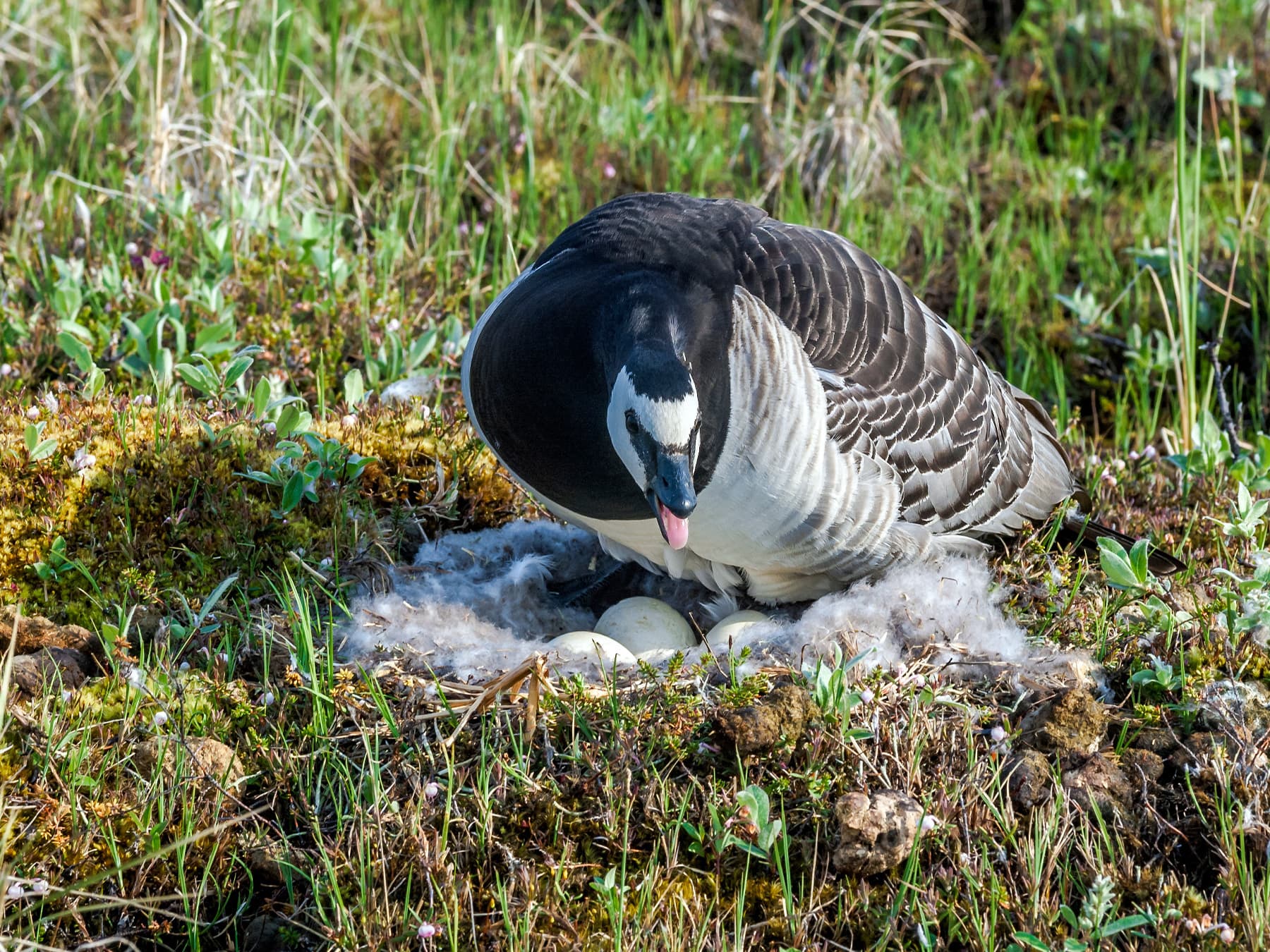
Barnacle Geese nest on the ground in a depression lined with down and soft plant material like moss and grass. Traditional sites are cliffs, which are safe from ground predators like Polar Bears and Arctic Foxes. Increasing numbers now nest on islands, often near nesting seabird colonies.
When do Barnacle Geese nest?
Barnacle Geese begin to arrive at their breeding territories in April and lay their eggs in May and June. Their eggs hatch after 24 or 25 days, and the young family immediately march to feeding grounds which may be up to 25 kilometres (15 miles) away. They return to their overwintering areas in August and September.
What do Barnacle Goose eggs look like?
Barnacle Geese lay a single clutch of three to five large (approximately 77 x 50mm) eggs. Their eggs are lightly mottled in brown over a pale grey/cream background colour.
Do Barnacle Geese mate for life?
Barnacle Geese generally mate for life, although they may find a new partner in some cases. These faithful birds form pairs that can last up to fourteen years, and just twelve percent of failed partnerships result from divorce, with the vast majority caused by death.
Behaviour
Are Barnacle Geese aggressive?
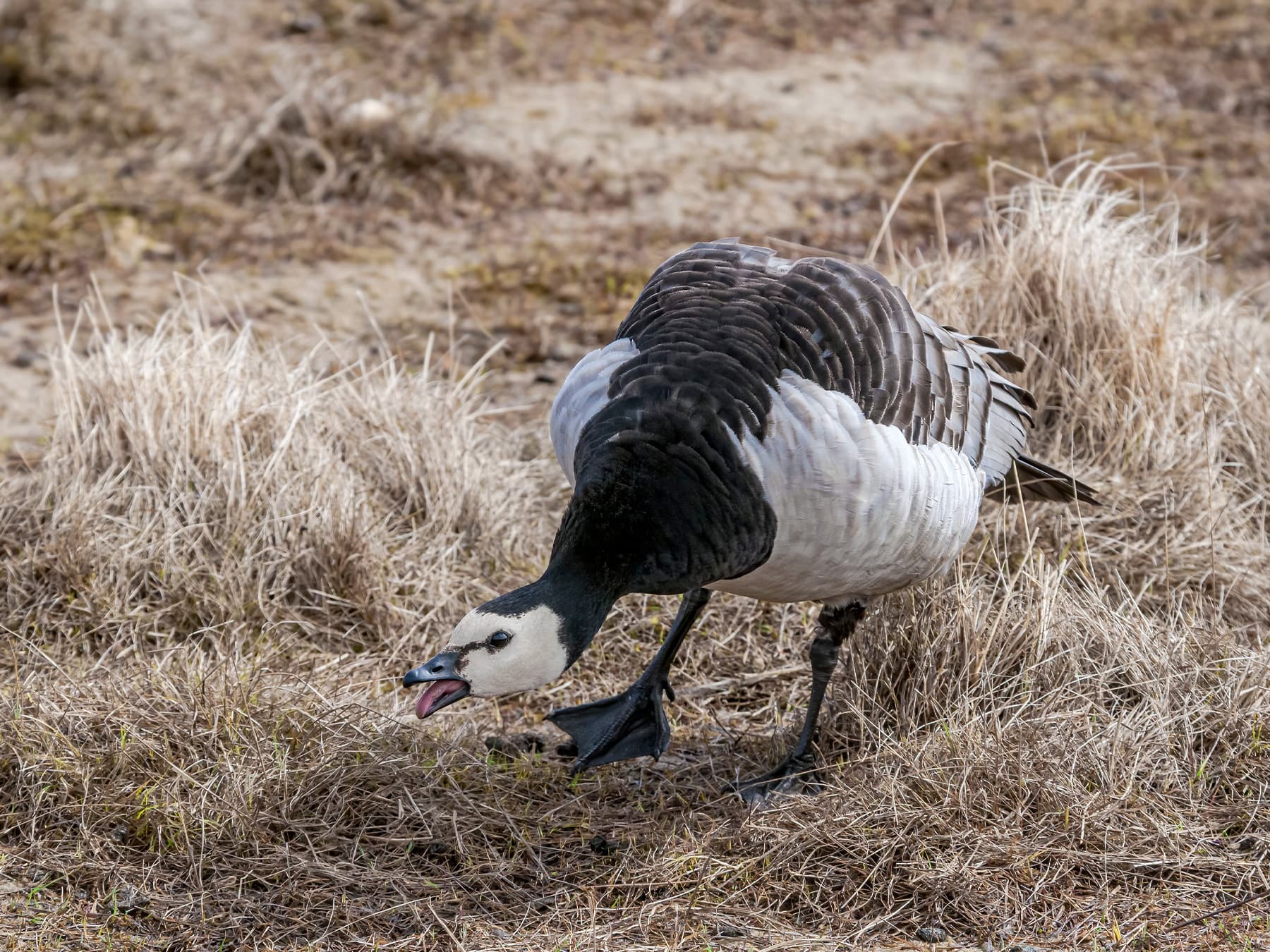
Barnacle Geese display several aggressive behaviours. Breeding pairs will protect a small territory around their nests, and they become increasingly aggressive toward their own young to encourage their independence as the winter season progresses. These birds have a feeding dominance hierarchy based on group size, meaning larger families get access to the best grazing.
Lifespan and predators
How long do Barnacle Geese live?
Barnacle Geese have a maximum recorded lifespan of 26 years, although their typical lifespan is estimated at 14 years.
What are the predators of Barnacle Geese?
Barnacle Geese are vulnerable to a variety of predators at each stage of their lives. The following birds and mammals are major threats:
Nest predators
- Arctic Fox
- Great Skua
- Arctic Skua (Parasitic Jaeger)
- Glaucous Gull
- Great Black-backed Gull
Adult Predators
- Red Fox
- Polar Bear
- Gyrfalcon
- White-tailed Eagle
- Golden Eagle
- Peregrine Falcon
- Northern Goshawk
Are Barnacle Geese protected?
Barnacle Geese are protected by various conventions and directives throughout their European Range. In the United Kingdom, these geese are protected by the Wildlife and Countryside Act.
Are Barnacle Geese endangered?
Barnacle Geese are not endangered. Their global population is increasing, and they are listed as a ‘Least Concern’ species on the IUCN Red List.
Conservation
While currently listed as Least Concern, Barnacle Geese face threats from habitat loss due to climate change in their Arctic breeding grounds.
Conservation efforts focus on protecting key wintering sites and managing agricultural conflicts in their wintering range.
More photos
5 photos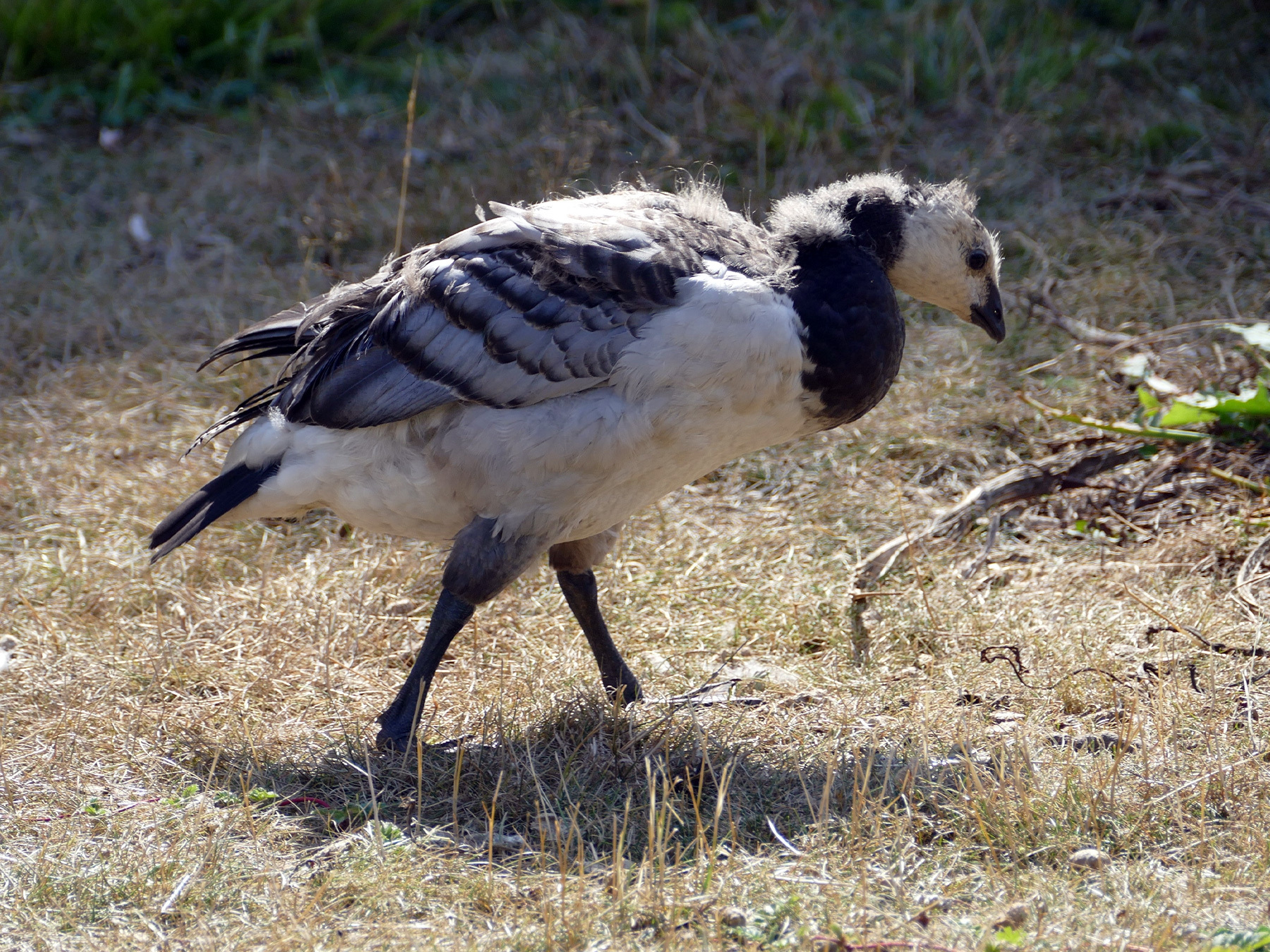
Barnacle Goose guides
6 guides- What Do Geese Eat? (Full Diet, Feeding, Habits + Behavior)
- Geese in the UK (Identification Guide with Pictures)
- Collective Nouns for Geese: What's the Official Terms?
- How Long Do Geese Live? (Complete Guide)
- Do Geese Migrate? Insights into Their Seasonal Travels
- Black and White Birds in the UK (Identification Guide)
Quick facts
- Length
- 58–70 cm
- Wingspan
- 132–145 cm
- Weight
- 1300–2270 g
- Lifespan
- 14 years · oldest recorded 28.2 years
- Family
- Ducks, Geese & Swans
- Migration
- Long-distance Migrant
- Global status (IUCN)
- Least Concern
- World population
- 880,000 mature individuals
- Population trend
- Increasing
- Also called
- Barnacle
- Scientific name
- Branta leucopsis
Questions
3What is the Barnacle Goose myth?
Barnacle Geese have a curious myth attached to their name. Until as late as the 1700s, these migratory wildfowl were believed to grow from goose barnacles, which are marine crustaceans that attach to floating driftwood!
Why do Barnacle Geese jump off cliffs?
Barnacle Geese nest on cliffs to protect their eggs from land predators like Arctic Foxes and Polar Bears. However, this extreme security measure comes with its own set of risks. The goslings are precocial and must feed themselves, necessitating a leap from the cliff to the rocky ground or water below. Many do not survive this first step toward adulthood.
How many Barnacle Geese are there in the UK?
Barnacle Goose numbers in the United Kingdom vary throughout the year from about 4,400 in the summer to over 90,000 in the winter.
Sources
4- 1BirdLife International. 2018. Branta leucopsis. The IUCN Red List of Threatened Species 2018: e.T22679943A131909954. Source (opens in a new tab)
- 2BirdLife International. 2018. Branta leucopsis. The IUCN Red List of Threatened Species 2018: e.T22679943A131909954. Source (opens in a new tab)
- 3Wetlands International (2015)
- 4Fransson et al., EURING list of longevity records for European birds (2010) Source (opens in a new tab)

Checked by
Nathan Cope, founder and editor
Nathan founded Birdfact and leads its writers and contributors in the UK, the US and Canada. He has watched and studied birds for more than ten years, and checks every article and species guide before it’s published.