
Identification · Updated 8 Oct 2026
Which Birds in the UK Have Red Heads? A Colourful Guide
By the Birdfact teamChecked by Nathan Cope
On this page19 sections
- The most common birds with red heads
- Goldfinch
- Great Spotted Woodpecker
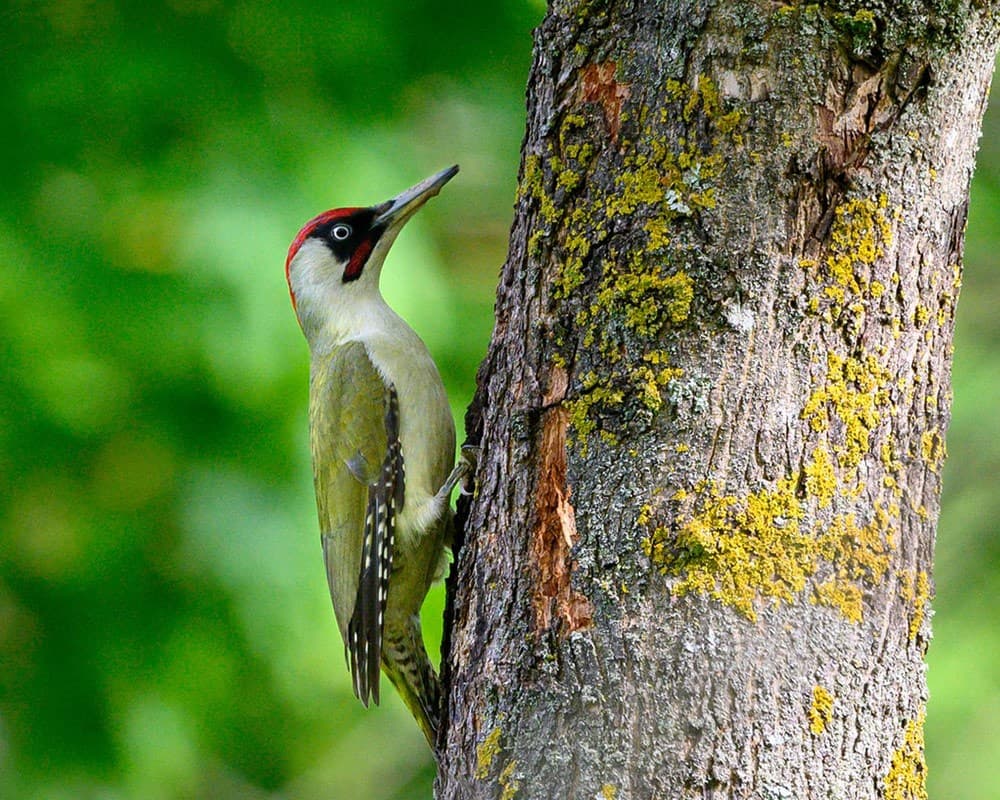
- European Green Woodpecker
- Lesser Redpoll
- Linnet
- Pheasant
- Robin
- Swallow
- Less common birds with red heads in the UK
- Common Redpoll
- Crane
- Lesser Spotted Woodpecker
- Little Grebe
- Pochard
- Red-Necked Grebe
- Red-Crested Pochard
- Waxwing
- What is the most common bird with a red head?
With over 260 different types of birds in the UK, it can almost be impossible to identify every single species. There are still a fair few contenders to sift through when it comes to birds with red heads or red patches on their heads.
Luckily, we've put together this article with all the birds that may help you with your identification.
The most common birds with red heads
The birds below are the most likely birds to see in the UK that have red heads, as they are generally quite common. However, it can vary slightly depending on your location.
European Goldfinch
Carduelis carduelis
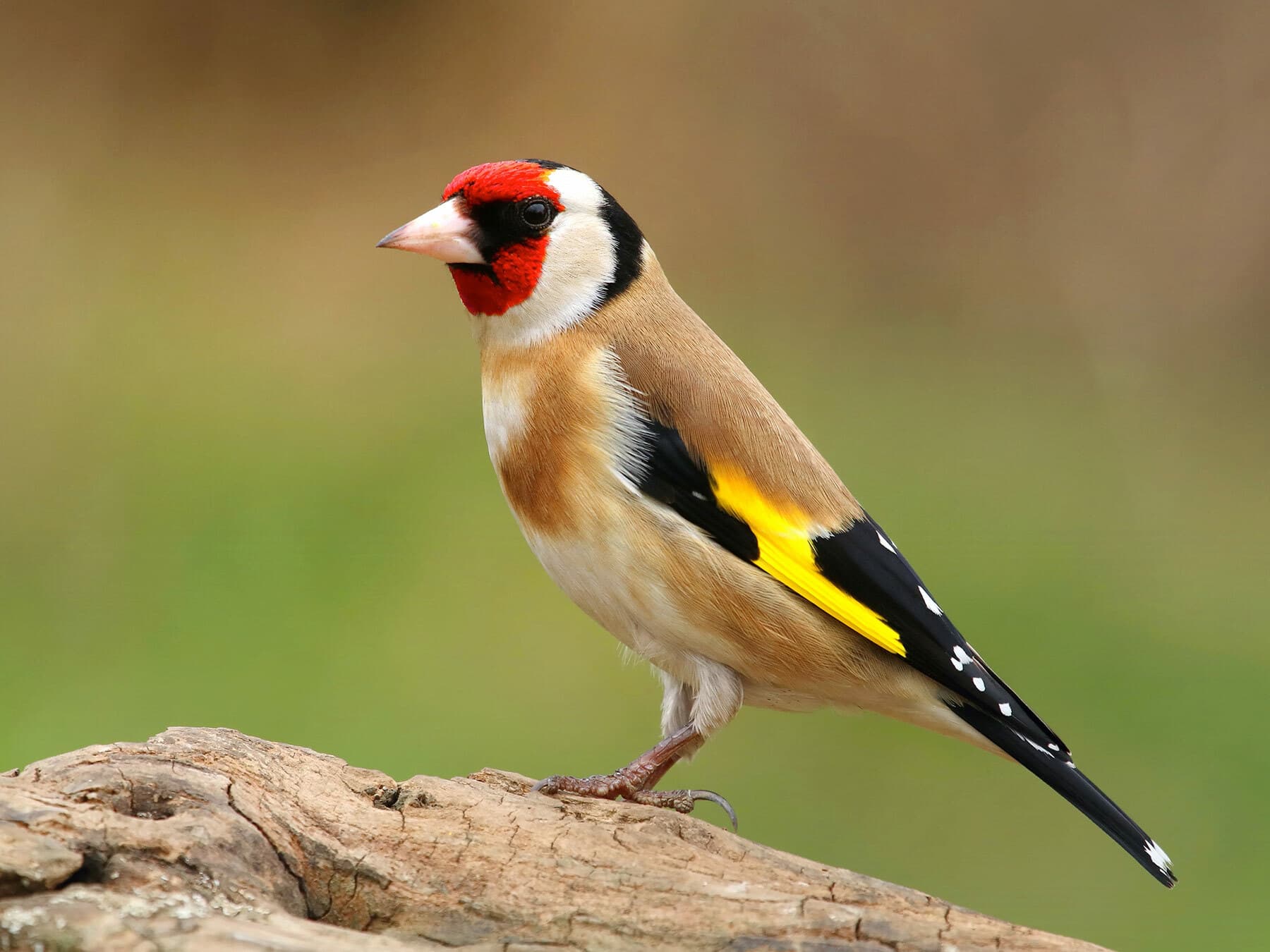
The Goldfinch is a small, sociable finch with a red face, a black-and-white head and a broad gold band across black wings, found in gardens, parks, orchards and rough ground across Britain and Ireland
Goldfinch
There is a large population of goldfinches in the UK, and they can be seen everywhere in the country - although they are more popular in Southern England. These birds will usually be around scattered bushes and trees, thistles and any rough ground.
Great Spotted Woodpecker
Dendrocopos major
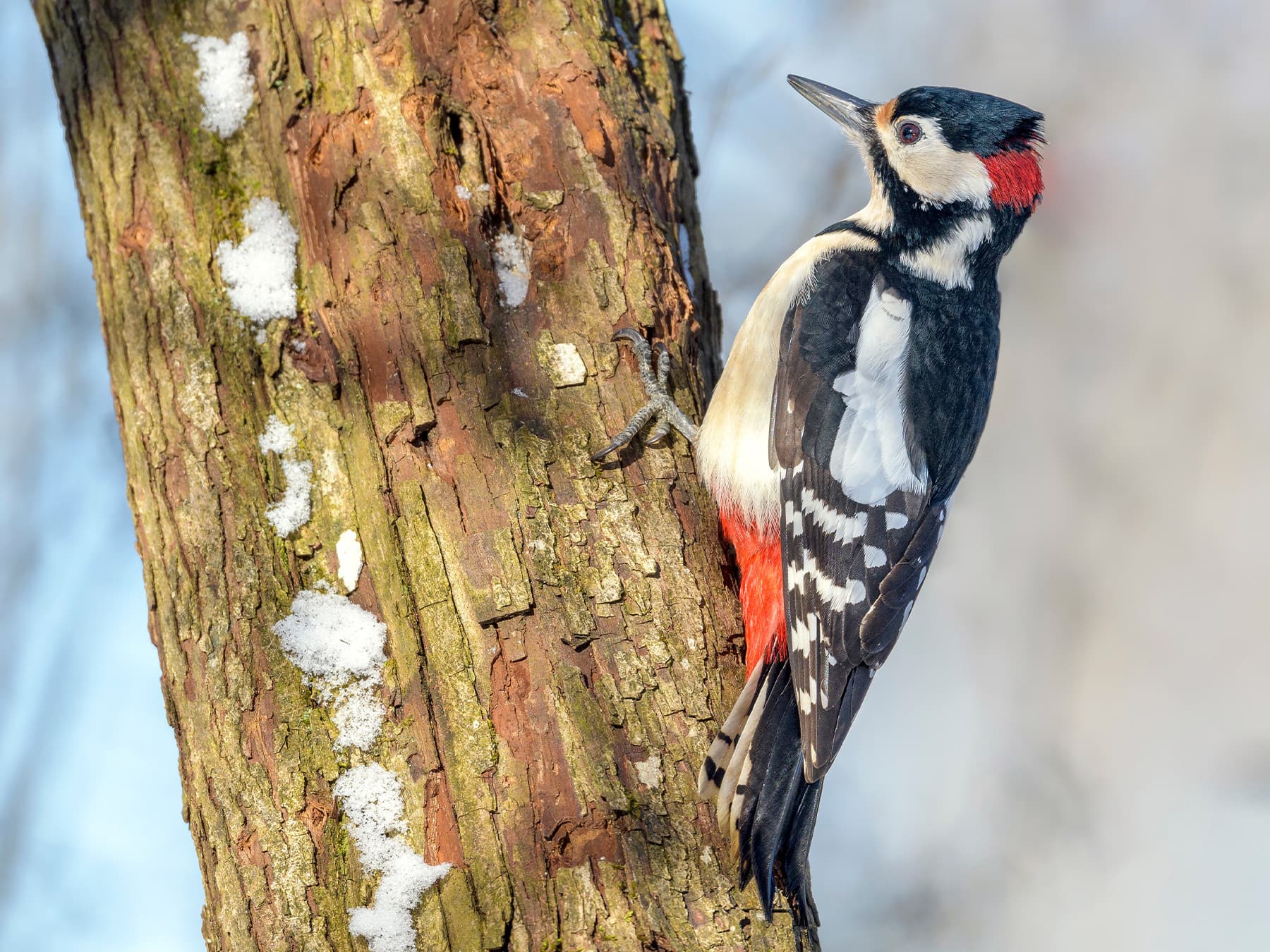
With its striking black-and-white plumage and bright red patches, this master drummer is a forest favourite worldwide.
Great Spotted Woodpecker
These woodpeckers are usually found in woodland, parks and large gardens. They like more mature, broad trees and conifers. They are much more common in England and Wales but can be seen throughout the country.
Great Spotted Woodpeckers are rather fond of peanut feeders and bird tables too.
European Green Woodpecker
Picus viridis
This charismatic climber, often heard before it's seen, brings a flash of green to woodlands and parklands across Europe.
European Green Woodpecker
These are the largest breeding woodpeckers in the UK, and you can usually see them on garden lawns and in parks. This is because they spend most of their time feeding on the ground, particularly hunting for ants.
Green Woodpeckers can generally be seen throughout the country but are absent from the far north and west and Ireland.
Lesser Redpoll
Acanthis cabaret
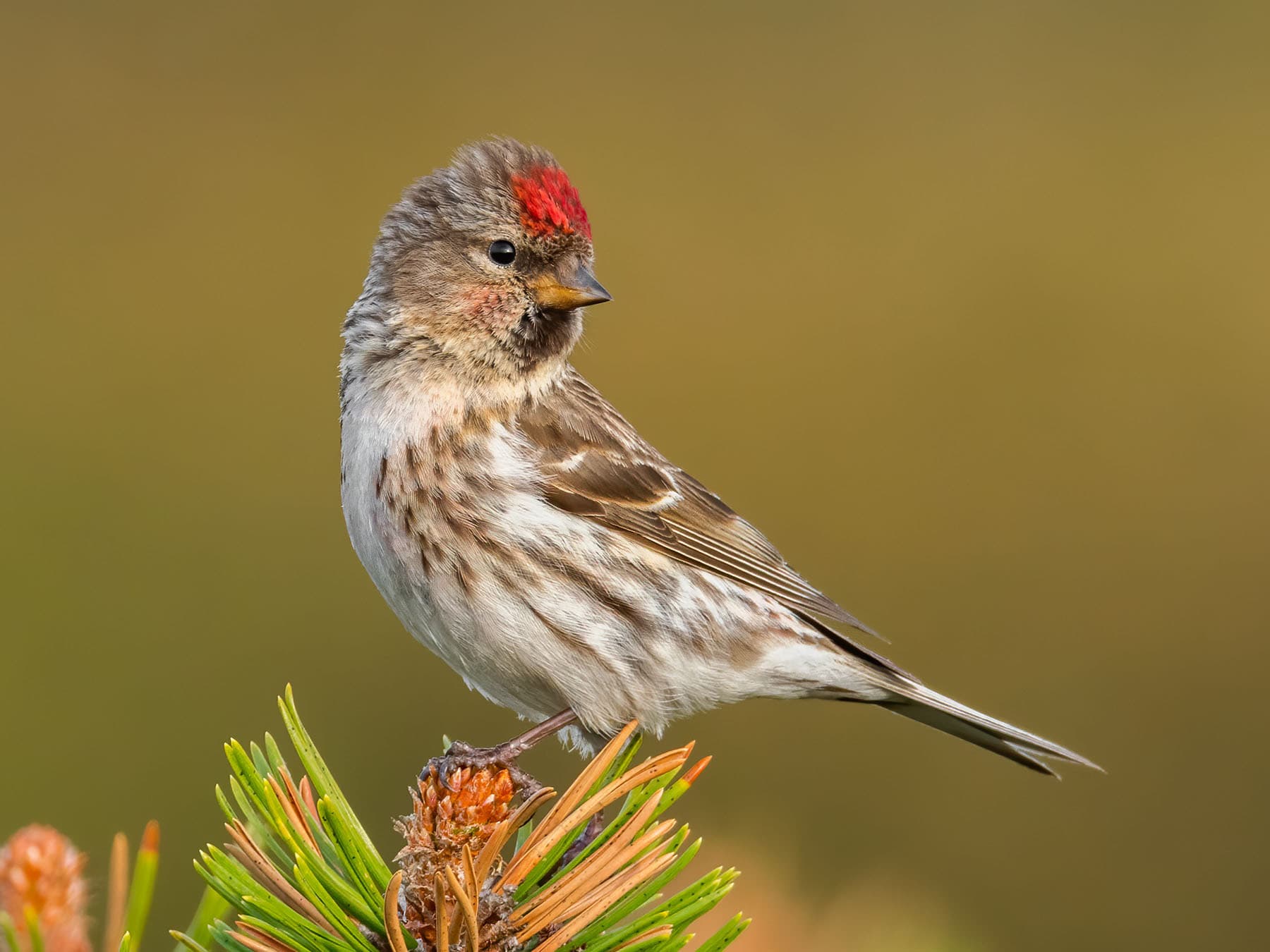
A tiny finch, only marginally larger than a blue tit, flits through woodlands and gardens, charming birdwatchers with its acrobatic feeding habits and cheerful calls.
Lesser Redpoll
You'd assume that the common redpoll would be more common than the lesser redpoll, but the lesser is much more abundant in the UK. These tiny finches were recently split into their own species from the common redpoll. They are only slightly bigger than a blue tit and can mainly be seen in woodland and gardens.
The lesser redpoll has a breeding population across Scotland, northern and eastern England and Wales. You're a lot less likely to see these birds in other parts of England, but sightings can happen during the winter months.
Linnet
Linaria cannabina
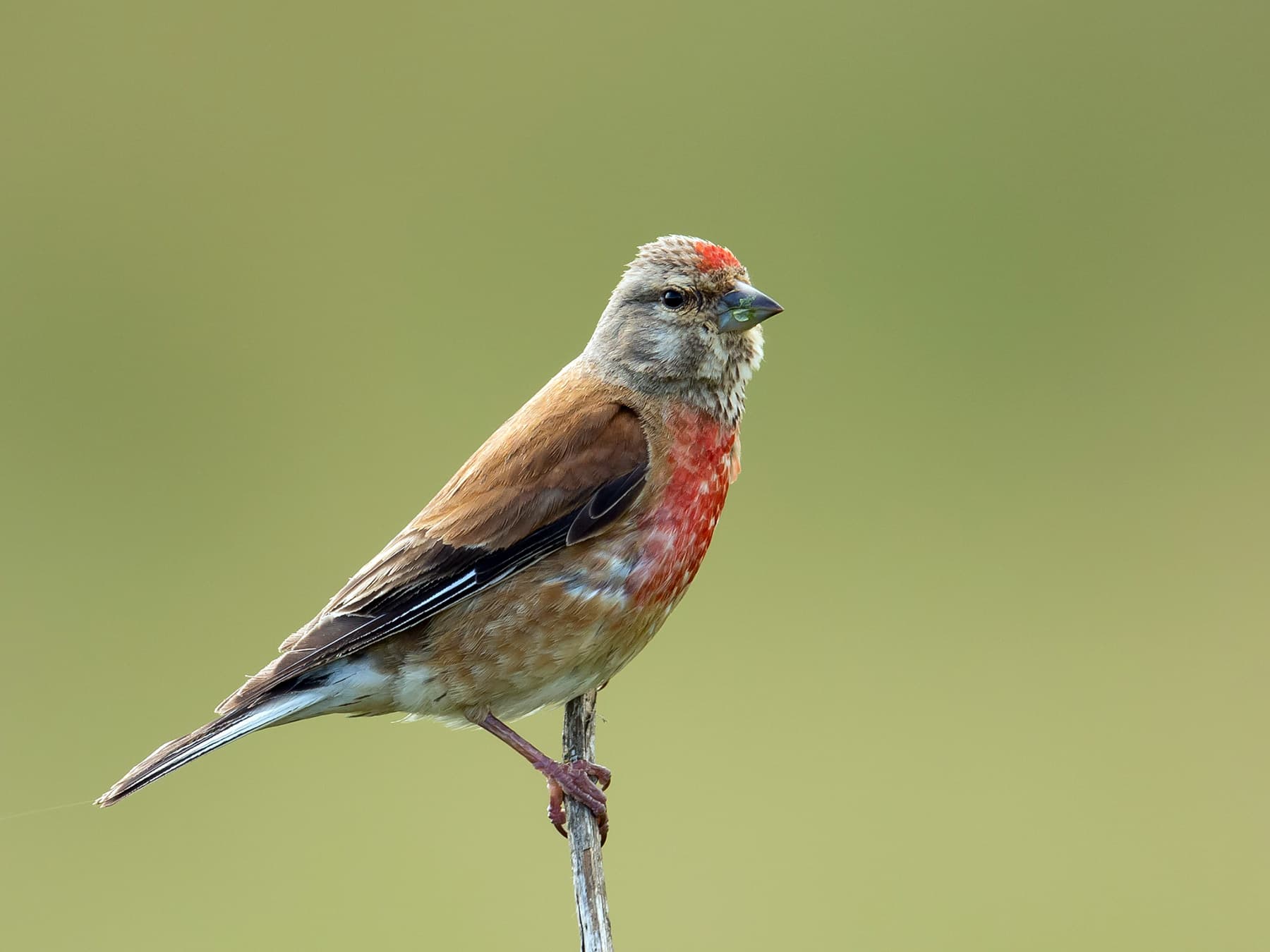
A cheerful songster with a rosy breast, this small finch brightens fields and gardens across Europe and beyond.
Linnet
Once a popular caged bird, these small, slender finches are residents over most of the UK and have a well-established population. Male linnets have reddish breasts and foreheads, with females being much browner all over.
Large numbers of these birds can usually be seen along the coast from Kent all the way up to Aberdeenshire. Usually, they can be found on parks, gardens, saltmarshes, farmland hedges and rough ground.
Common Pheasant
Phasianus colchicus
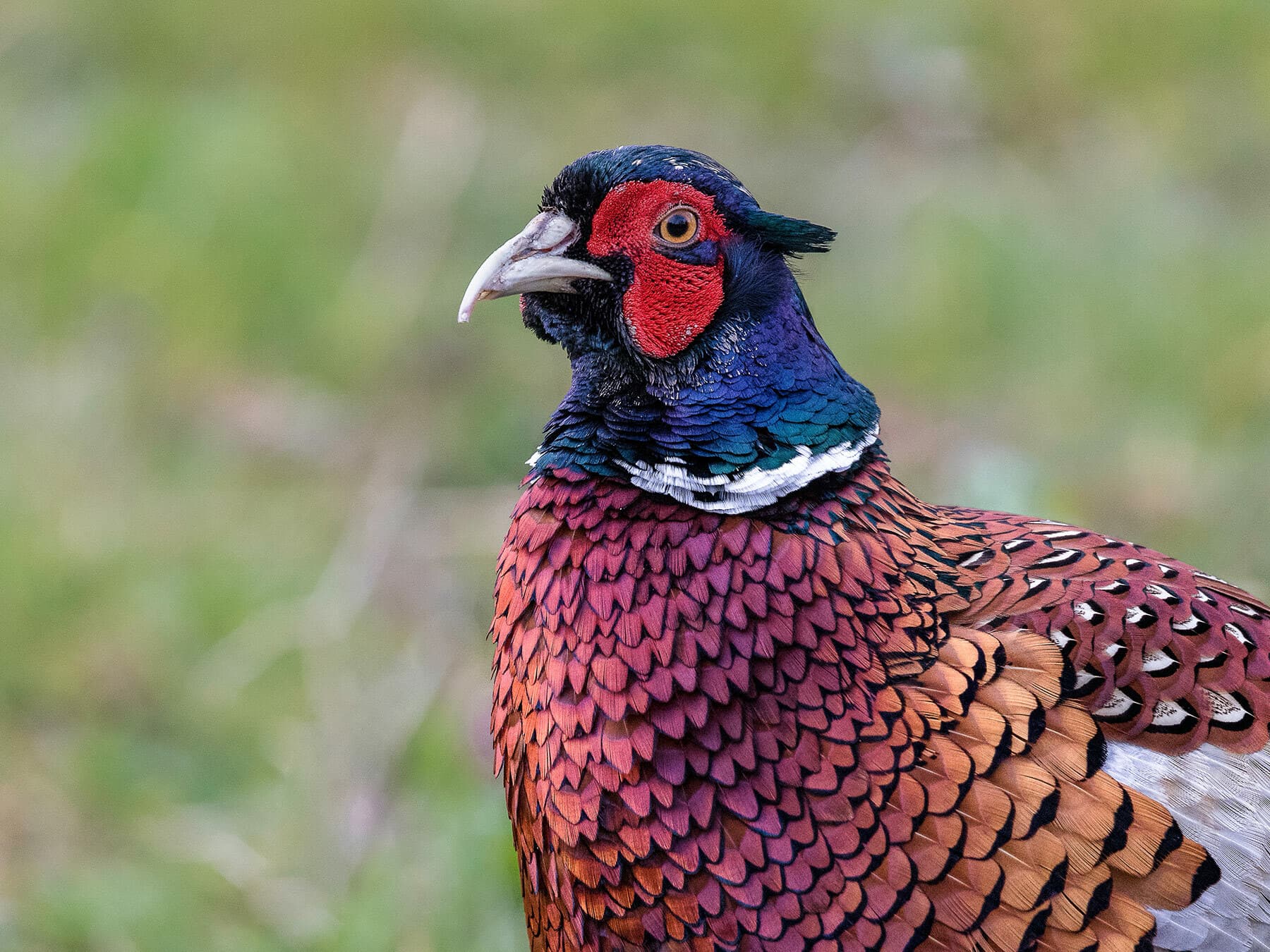
Look out for this striking game bird with its iridescent plumage and long tail strutting through fields and woodlands.
Pheasant
These large, vocal gamebirds can be seen almost everywhere across the country. Male pheasants are the more colourful out of the sexes, and they have dark green heads with red face markings.
European Robin
Erithacus rubecula
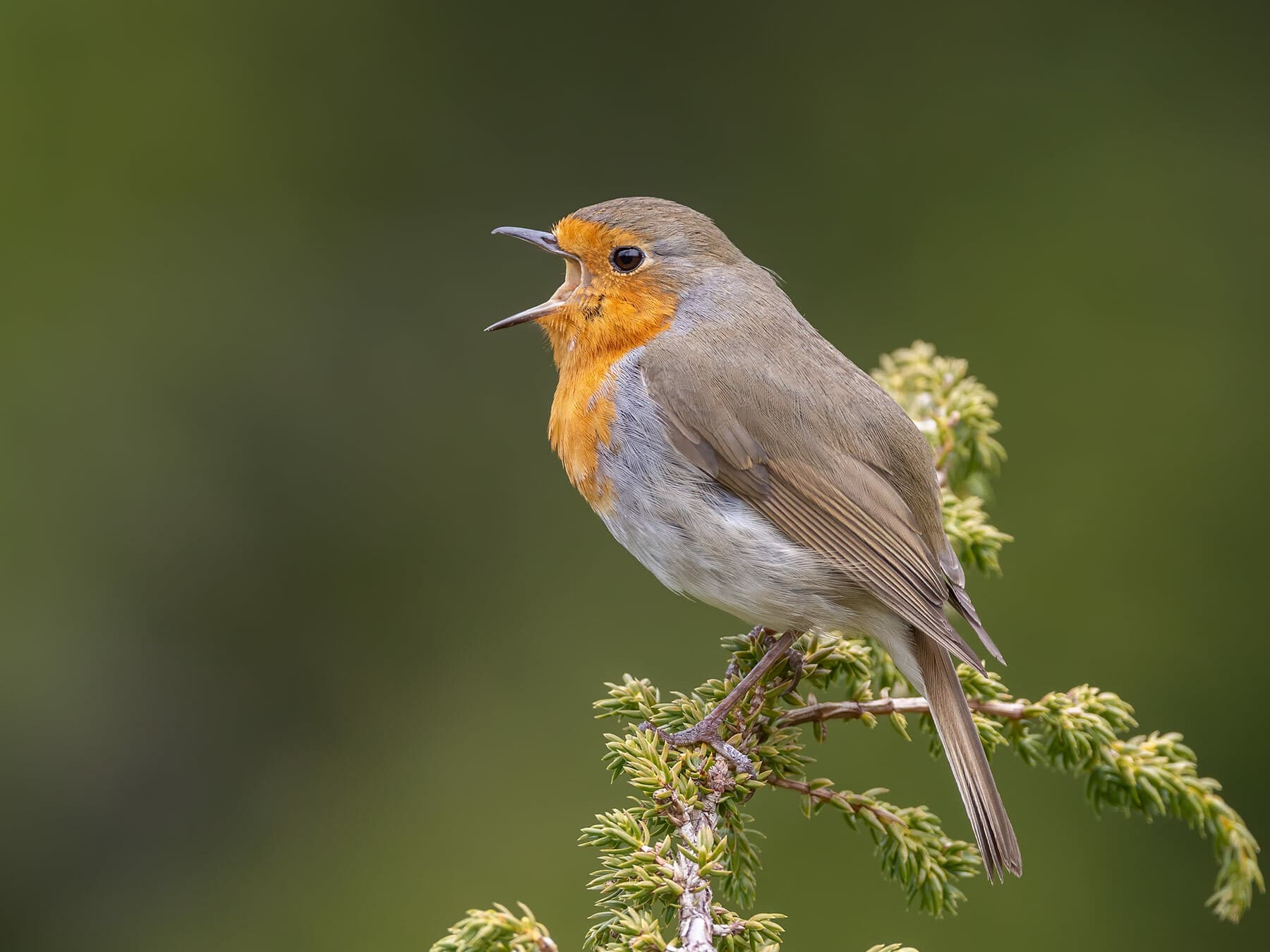
The Robin is the small, round bird with an orange-red breast that follows you round the garden. It lives in Britain and Ireland all year, sings in almost every month, and males and females each defend
Robin
One of the UK's favourite birds, the robin has a distinctive red breast and can be seen all year round all over the country. Male and female robins look exactly the same, with juveniles having no red breasts; instead, it's a golden brown colour with spots.
Barn Swallow
Hirundo rustica
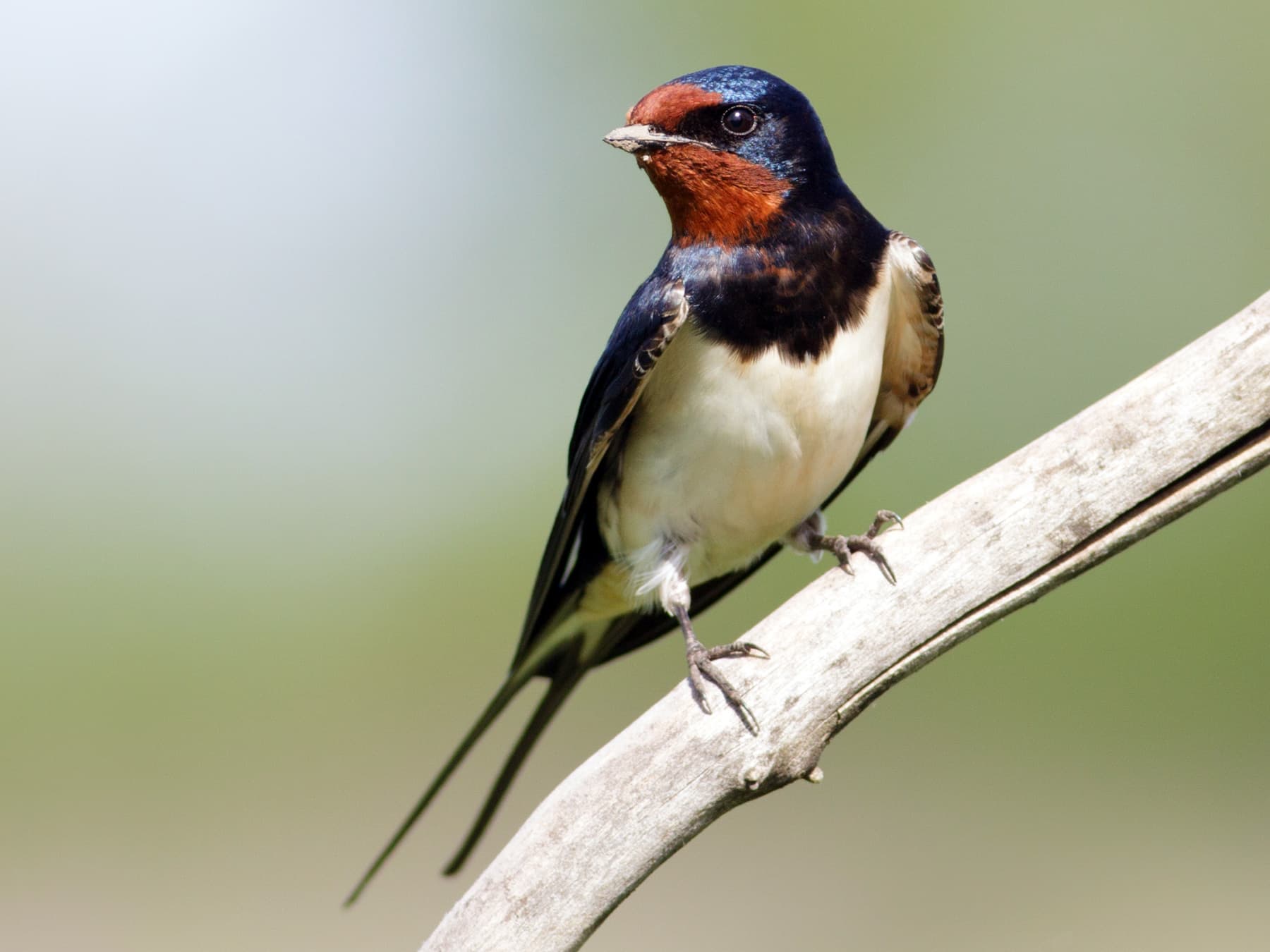
Swooping gracefully through the skies, this agile flyer catches insects on the wing and heralds the arrival of spring in many parts of the world.
Swallow
These small birds have reddish throats, glossy blue backs and distinctive long tail streamers. They arrive in the UK for summer and can be seen most of the time performing superb displays in the air. When winter comes, swallows migrate south.
Less common birds with red heads in the UK
The re headed birds below are fairly rare and much less common in the UK. However, it can vary slightly depending on your location.
Common Redpoll
Acanthis flammea
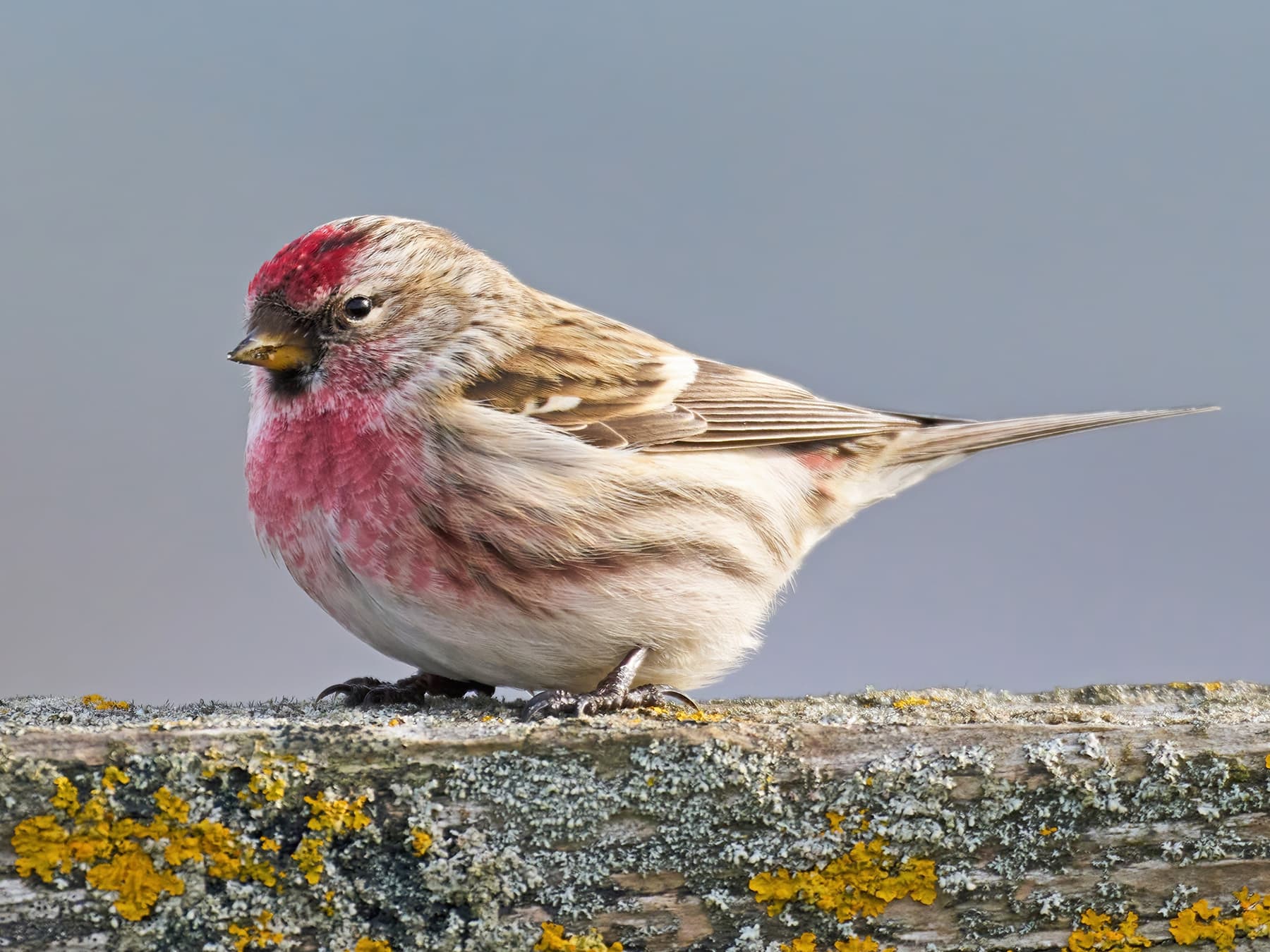
With its rosy blush and distinctive red cap, this small finch brightens up winter feeders across the Northern Hemisphere.
Common Redpoll
Don't let the name fool you, as the Common Redpoll isn't actually that common at all here in the UK. With an estimated UK breeding of between 1-4 birds and 300 wintering, you'll have to be extremely lucky to see one of these.
In winter, you're most likely to see these birds on the east coast.
Common Crane
Grus grus
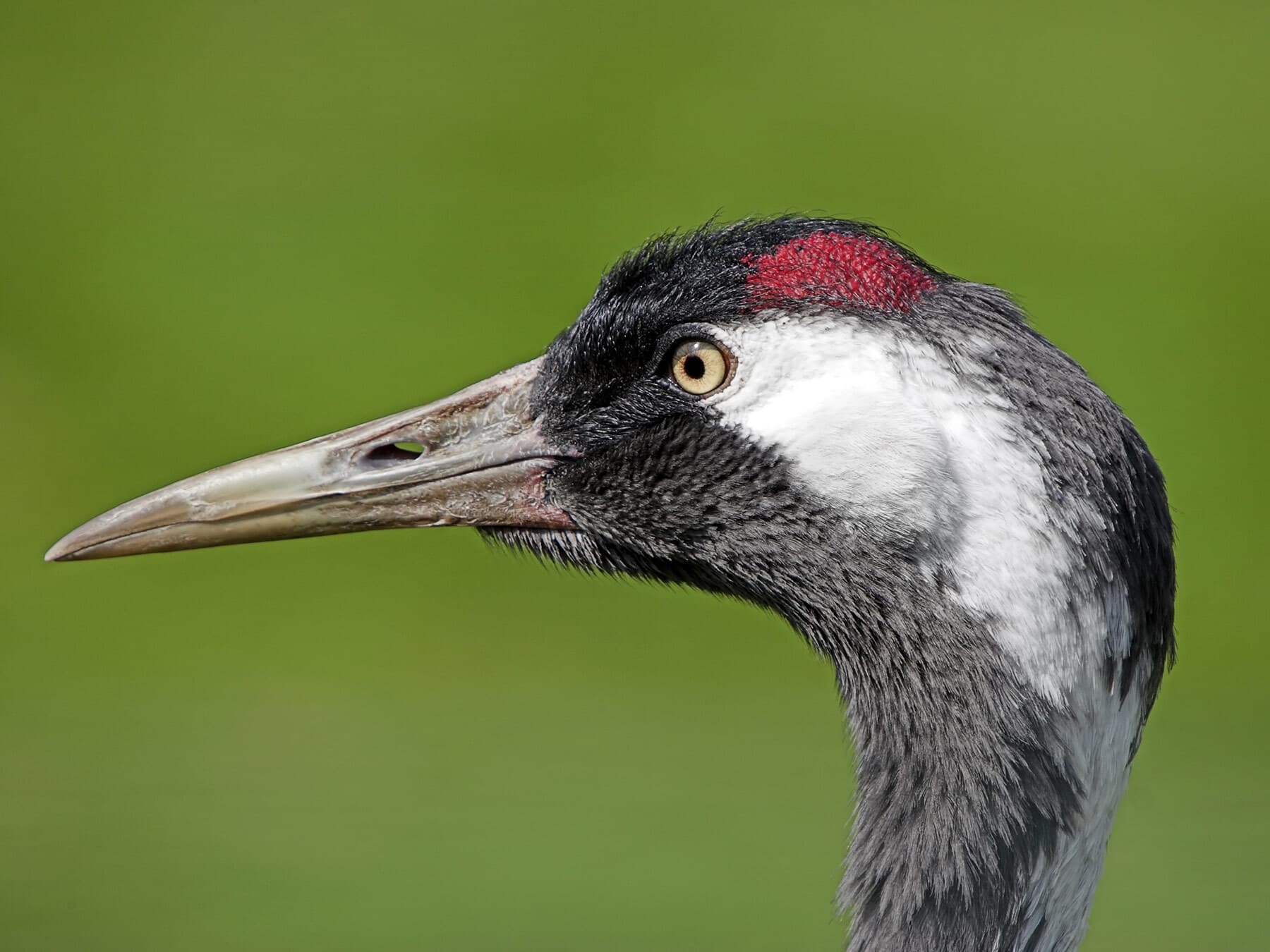
A graceful giant of wetlands and grasslands, this bird's trumpeting call echoes across Europe and Asia during its spectacular migrations.
Crane
These large, pleasant birds have a small breeding population in Norfolk and a re-introduced population in Somerset. In spring and autumn, small numbers can be found passing through Britain.
Cranes are predominately grey but have dark necks, with patches of white and a red mark.
Lesser Spotted Woodpecker
Dryobates minor
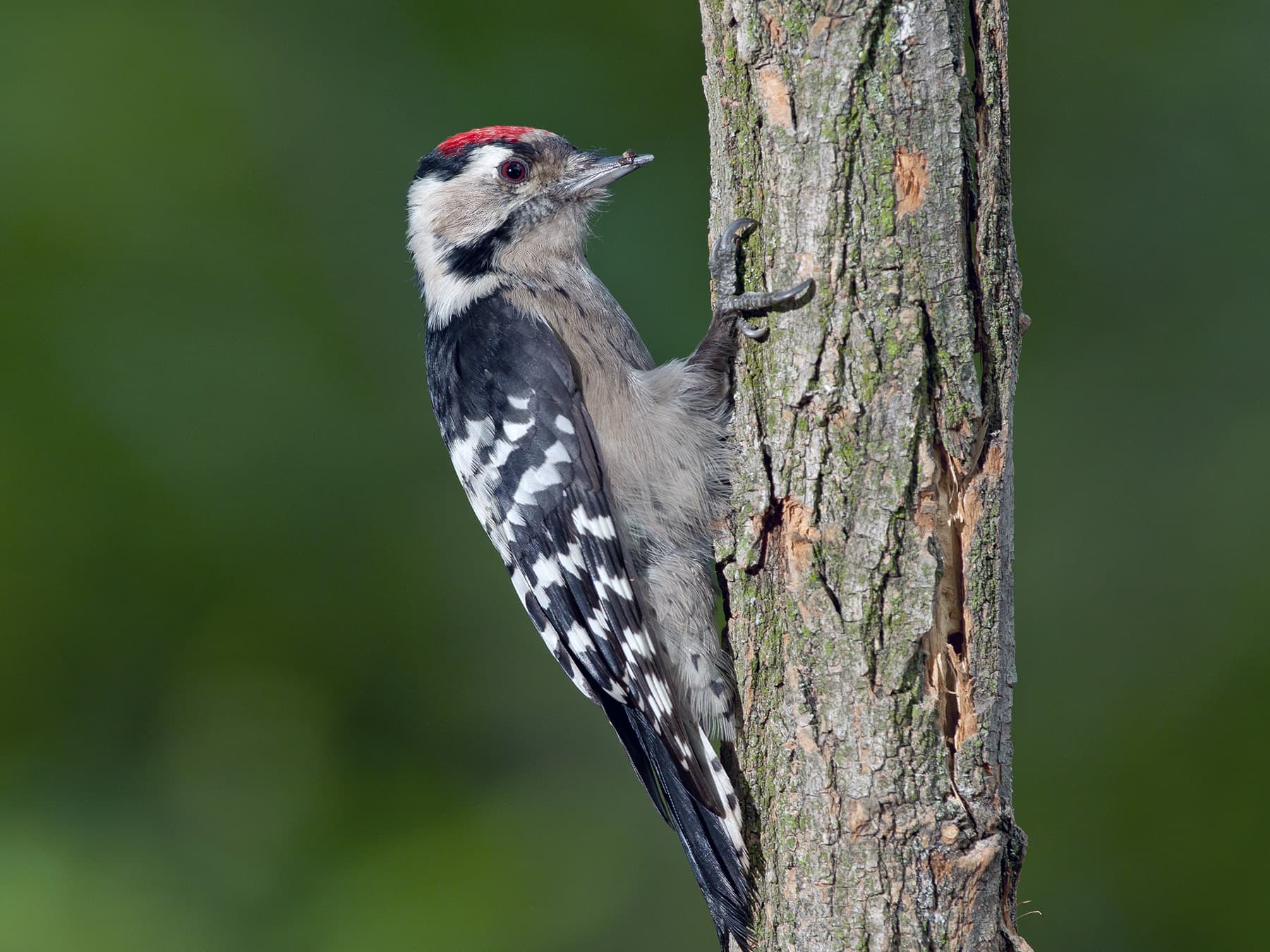
This tiny tree-tapper brings a burst of life to woodlands with its rapid drumming and acrobatic foraging skills.
Lesser Spotted Woodpecker
Unlike the great spotted and green woodpeckers, these small resident woodpeckers are a lot less common. Males are the only sex to have a vibrant red crown.
These woodpeckers are generally much quieter with their tapping and will nest and feed higher up.
Little Grebe
Tachybaptus ruficollis
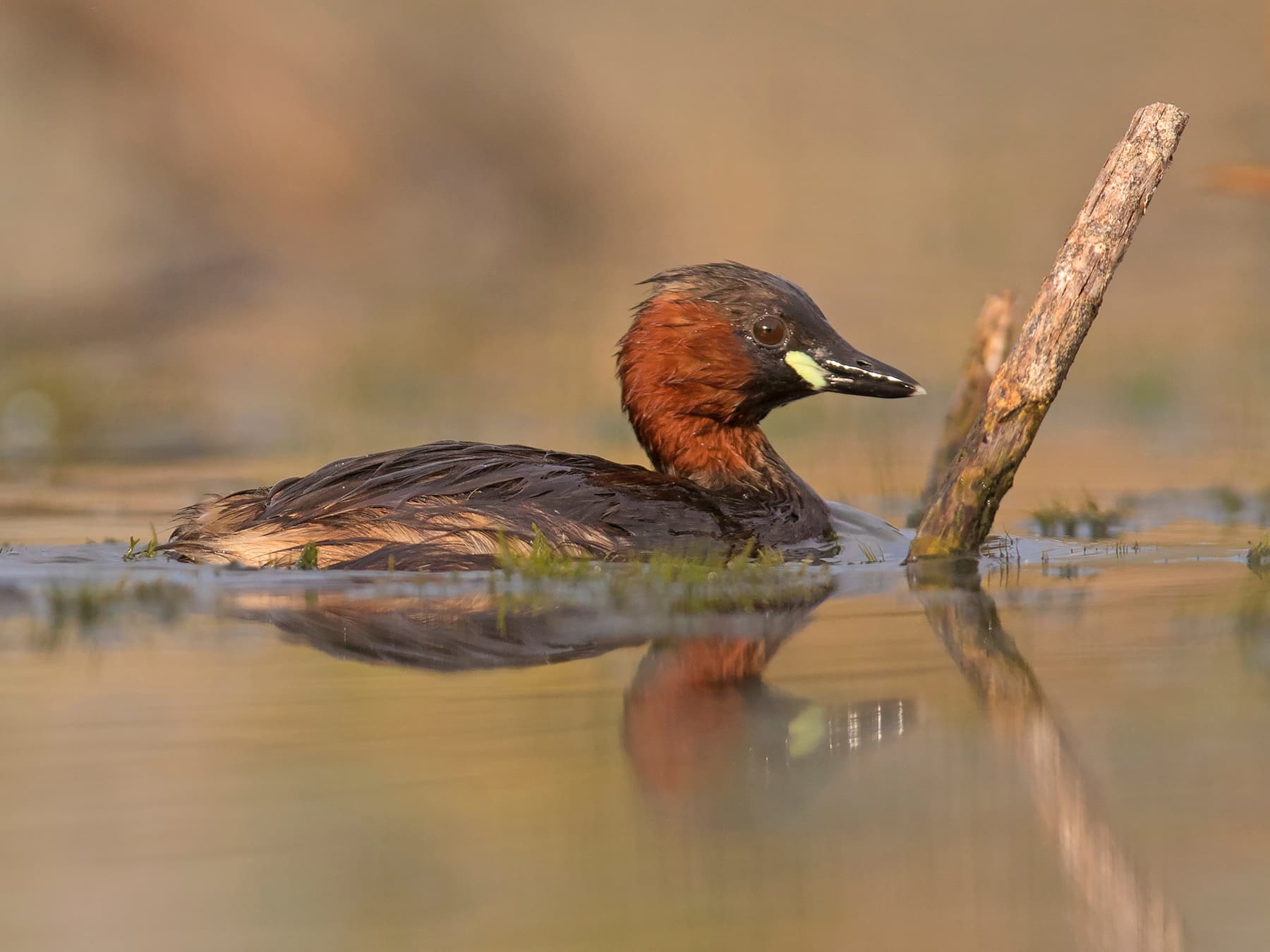
This small, feisty and noisy diving expert is a master of freshwater habitats, vanishing beneath the surface in the blink of an eye.
Little Grebe
In the summer months, the little grebe has bright reddish cheeks and throat. They are small and rather plump looking and can sometimes appear to have a fluffy rear end.
These birds can be seen in most parts of the UK, but not usually in upland areas.
Pochard
Aythya ferina
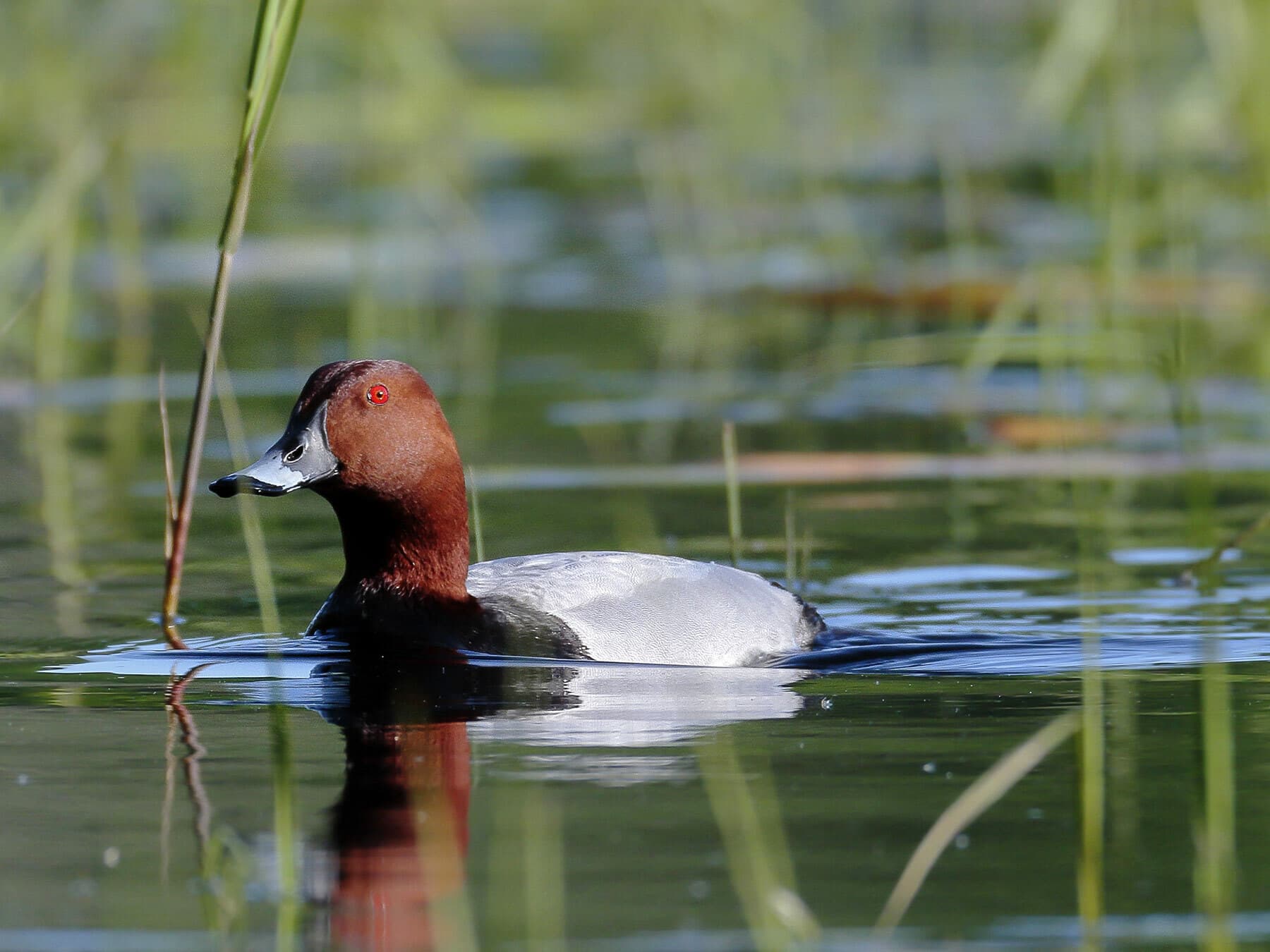
Diving beneath the surface with grace, this rusty-red headed duck thrives in freshwater lakes and wetlands across Europe and Asia.
Pochard
During the spring and winter months, it's quite straightforward to distinguish male pochards. Their heads are a reddish-brown colour, with dark breasts and light bodies. Female pochards are often mistaken with other species, as they are mostly brown with grey bodies and pale cheeks.
However, when pochards grow new feathers, males and females do look extremely similar.
Red-necked Grebe
Podiceps grisegena
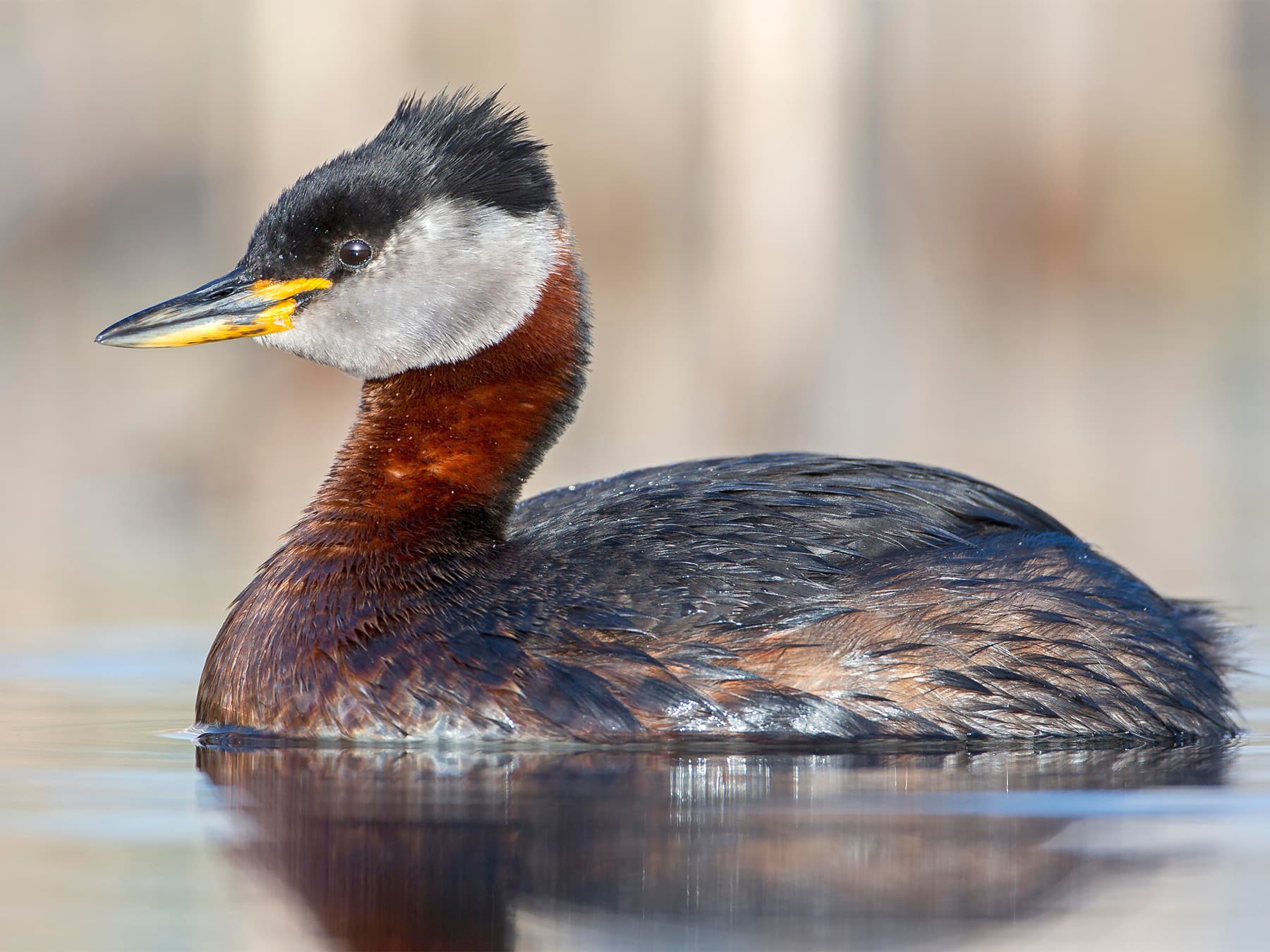
With its elaborate courtship display, striking rusty neck and piercing red eyes, this aquatic acrobat dives for fish in lakes and coastal waters around the Northern Hemisphere.
Red-Necked Grebe
Red Grebes are rare in the UK, with less than 20 of these birds spending the summer here. During winter, the number of these birds increases slightly, but usually not by many.
In summer, these birds have red necks and chests.
Red-crested Pochard
Netta rufina
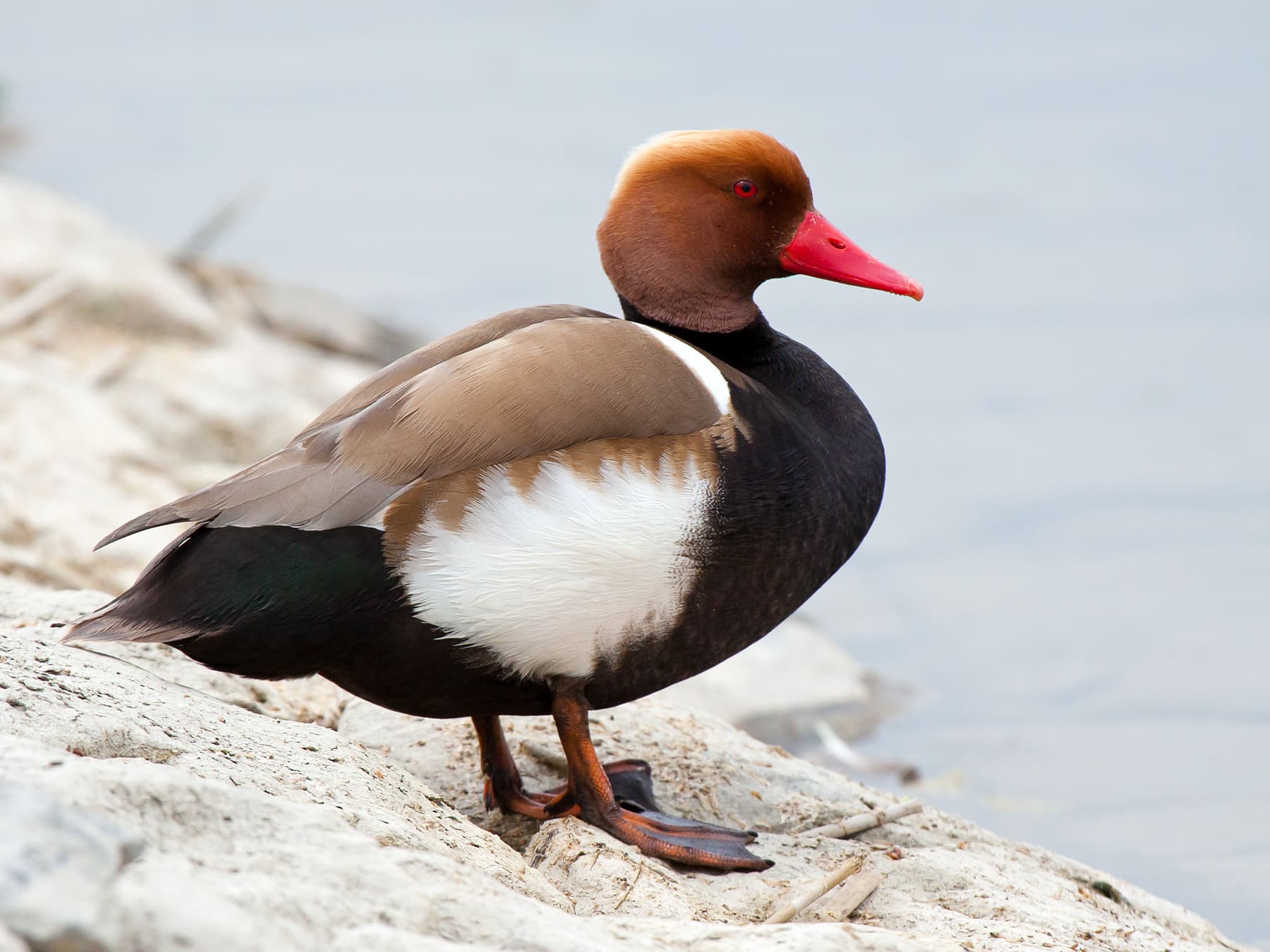
This colourful and instantly recognisable diving duck turns heads with its striking red bill and crest, a standout feature in wetlands across Europe and Asia.
Red-Crested Pochard
Males have orange-brown heads, with pale flanks and red beaks. Females have pale cheeks and are brown all over.
Spain has a substantial population of red-crested pochards, but closer to the UK, France, Netherlands and Germany all have small but good populations of these birds.
This is where sometimes the occasional bird will come over to the UK. All of the breeding birds in the UK are said to come from escaped birds.
Bohemian Waxwing
Bombycilla garrulus
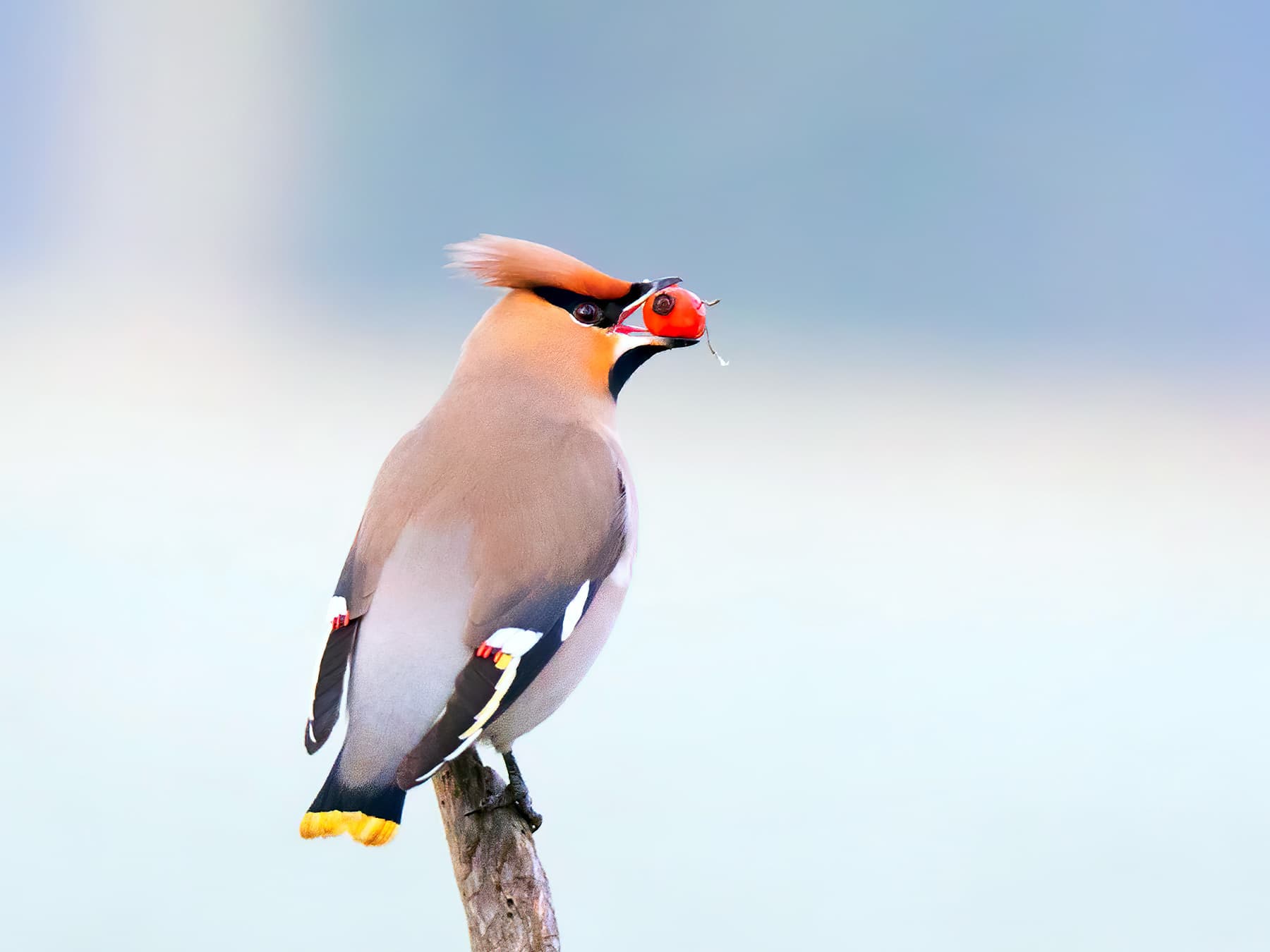
This berry-loving nomad roams northern forests in search of fruit, sporting a rakish crest and striking wing markings that make it a winter treat for birdwatchers worldwide.
Waxwing
Waxwings are winter visitors to the UK and are slightly smaller than starlings in size. They don't breed in the UK but can be seen in large numbers during some winters.
They have a very distinctive crest, with reddish-brown bodies and black throats. They have a yellow tip on their tails, white and yellow on the wings and small black masks around their eyes.
Birds in this article
16 birds- LinnetLinaria cannabina13–14 cm · finches
- Common PheasantPhasianus colchicus50–90 cm · pheasants & grouse
- Bohemian WaxwingBombycilla garrulus19–23 cm · waxwings
See all 16 birds
- Common RedpollAcanthis flammea12–14 cm · finches
- European Green WoodpeckerPicus viridis30–36 cm · woodpeckers
- Great Spotted WoodpeckerDendrocopos major23–26 cm · woodpeckers
- Red-crested PochardNetta rufina53–57 cm · ducks, geese & swans
- Lesser RedpollAcanthis cabaret11–13 cm · finches
- Lesser Spotted WoodpeckerDryobates minor14–16 cm · woodpeckers
- Common CraneGrus grus100–130 cm · cranes
- PochardAythya ferina42–49 cm · ducks, geese & swans
- Little GrebeTachybaptus ruficollis23–29 cm · grebes
- European RobinErithacus rubecula13–14 cm · old world flycatchers
- European GoldfinchCarduelis carduelis12–13 cm · finches
- Barn SwallowHirundo rustica17–19 cm · swallows & martins
- Red-necked GrebePodiceps grisegena40–50 cm · grebes