


Common Crane
Eurasian Crane, Crane · Grus grus
By the Birdfact teamChecked by Nathan Cope
On this page14 sections
How to recognise it
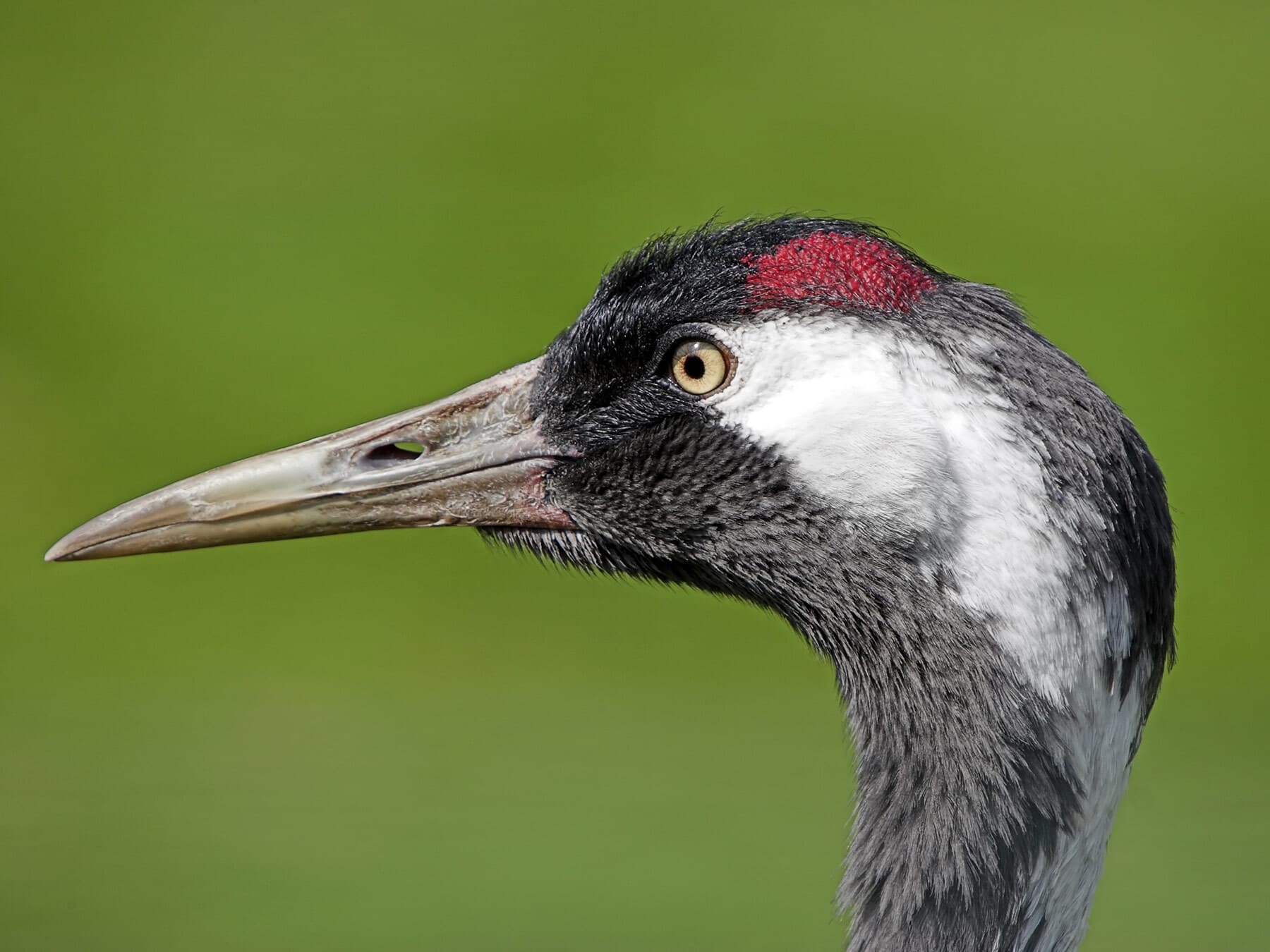
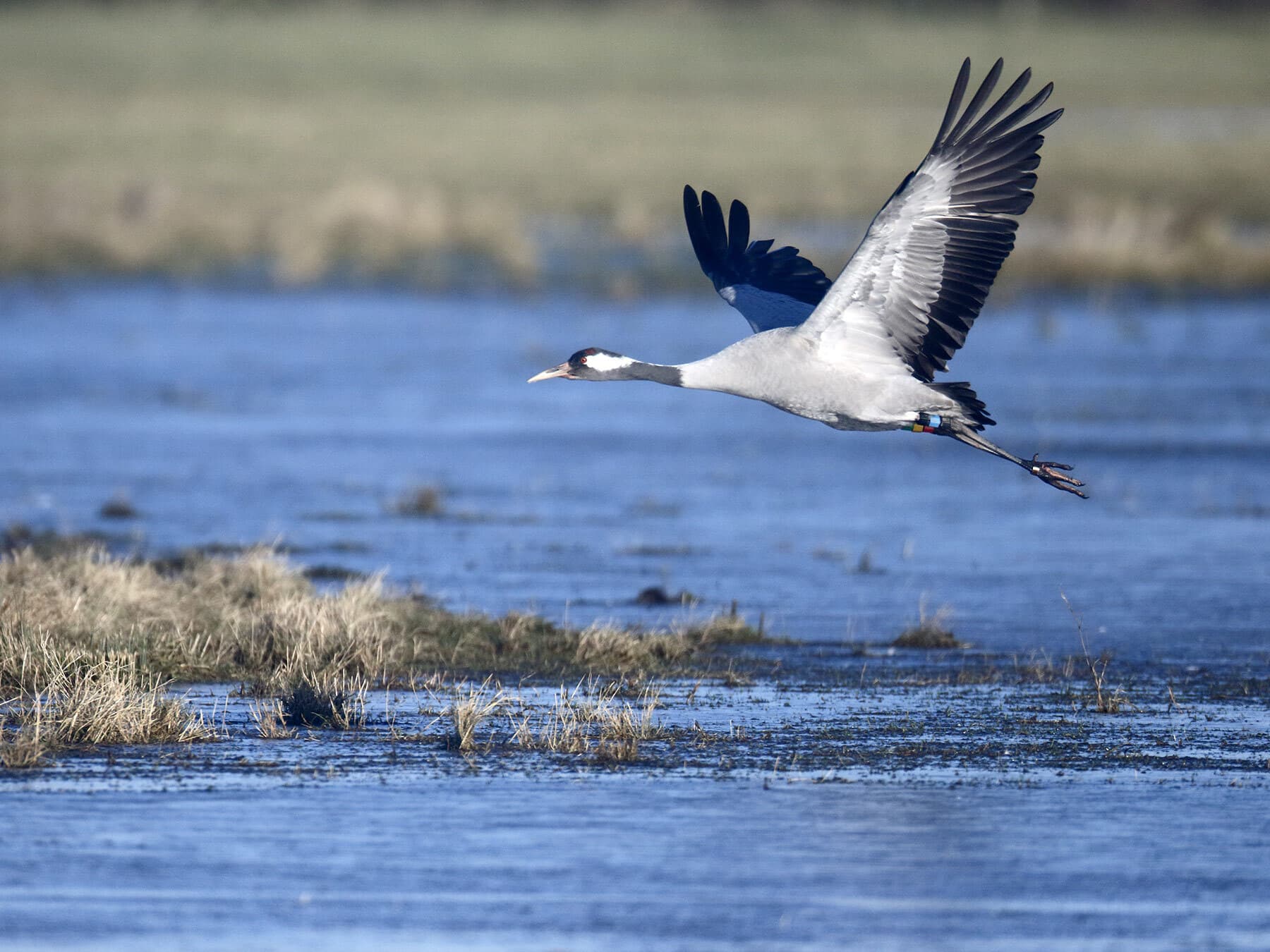
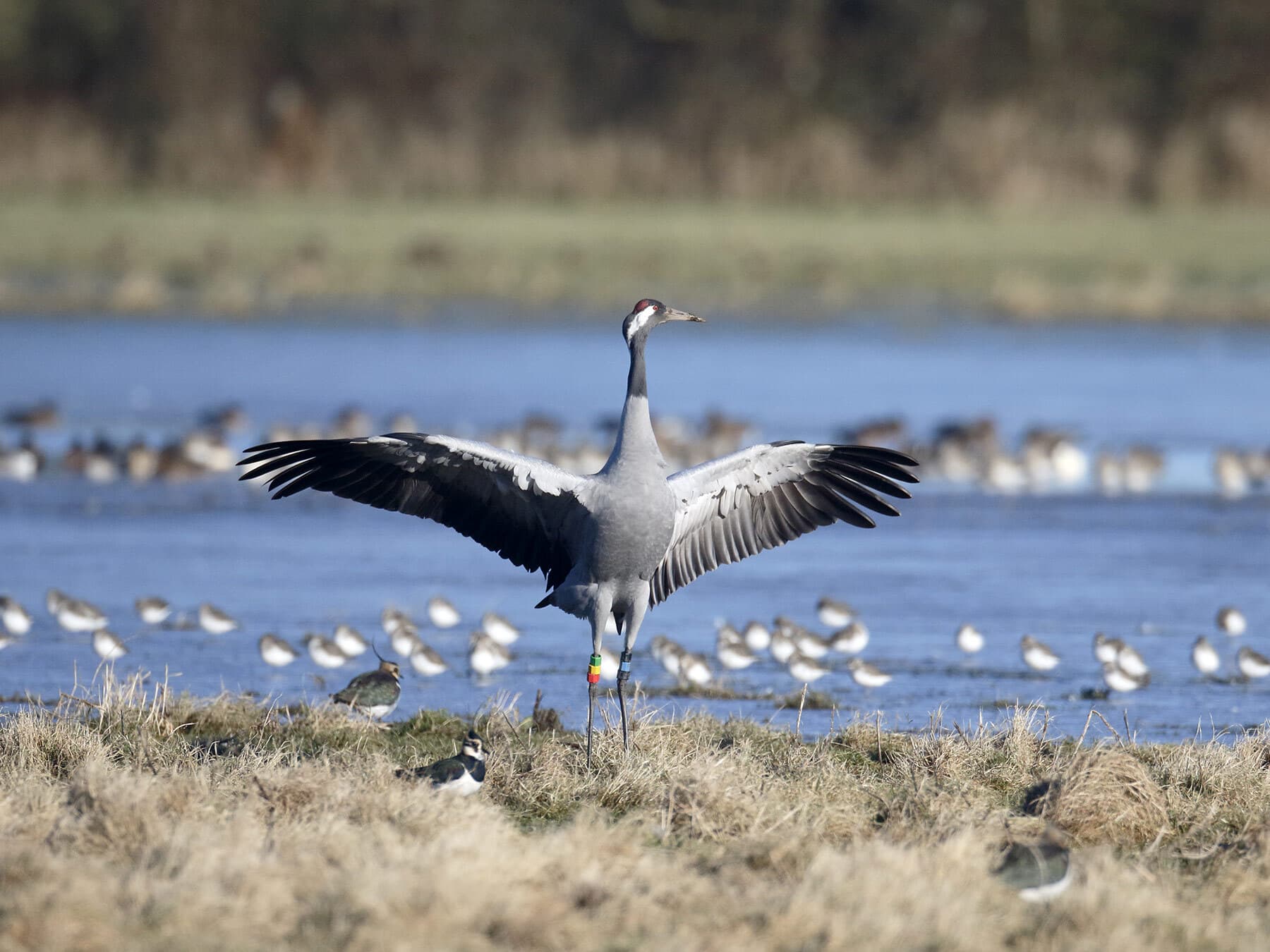
The Common Crane is a tall, long-necked bird with predominantly ash-grey plumage. Its most distinctive features include a black and white head pattern, with a red crown patch, and elongated, drooping black tertial feathers that form a 'bustle' over the tail.
The bill, which is medium length, is a pale greyish yellow and the legs are thick, long and dark grey.
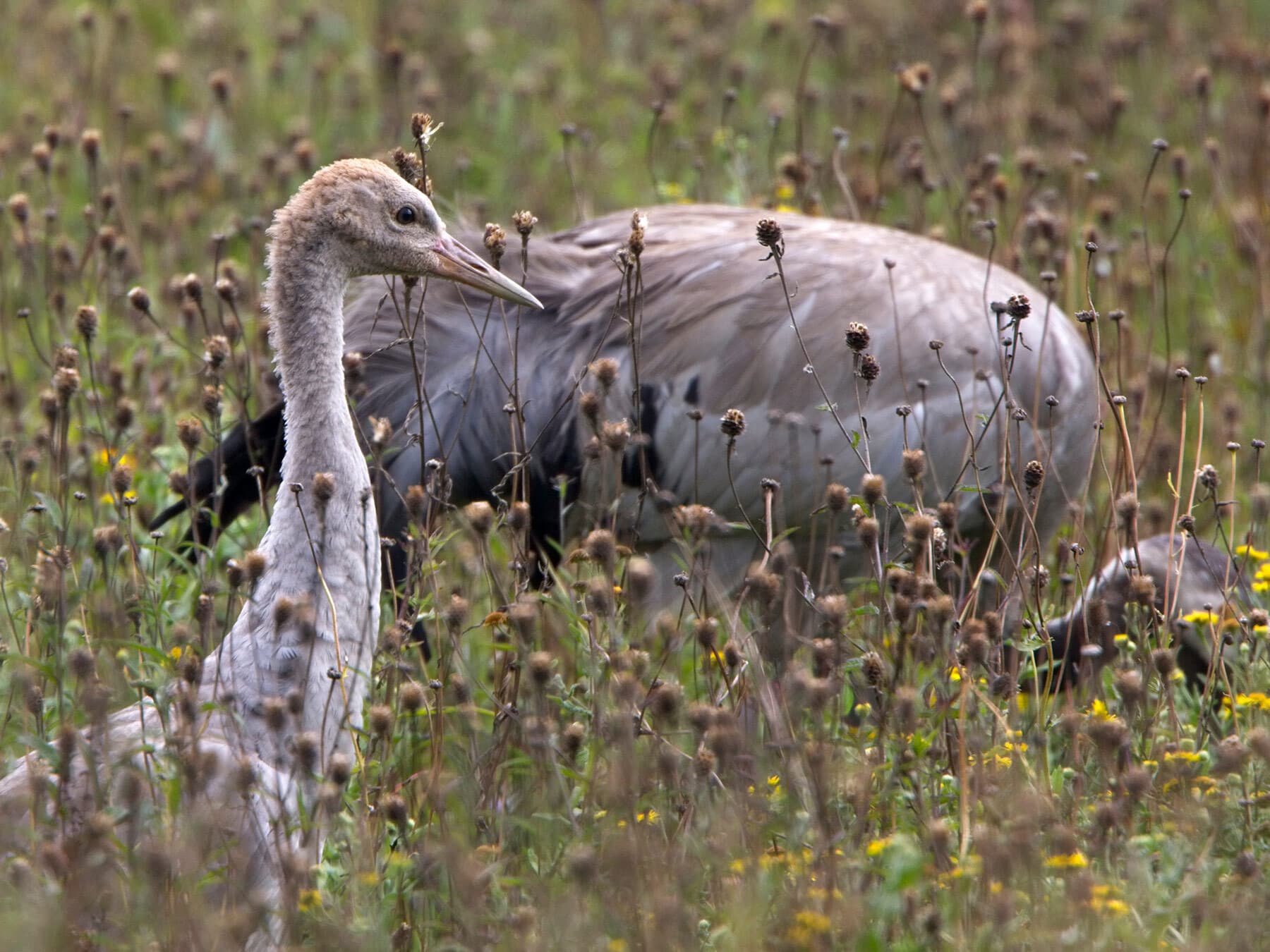
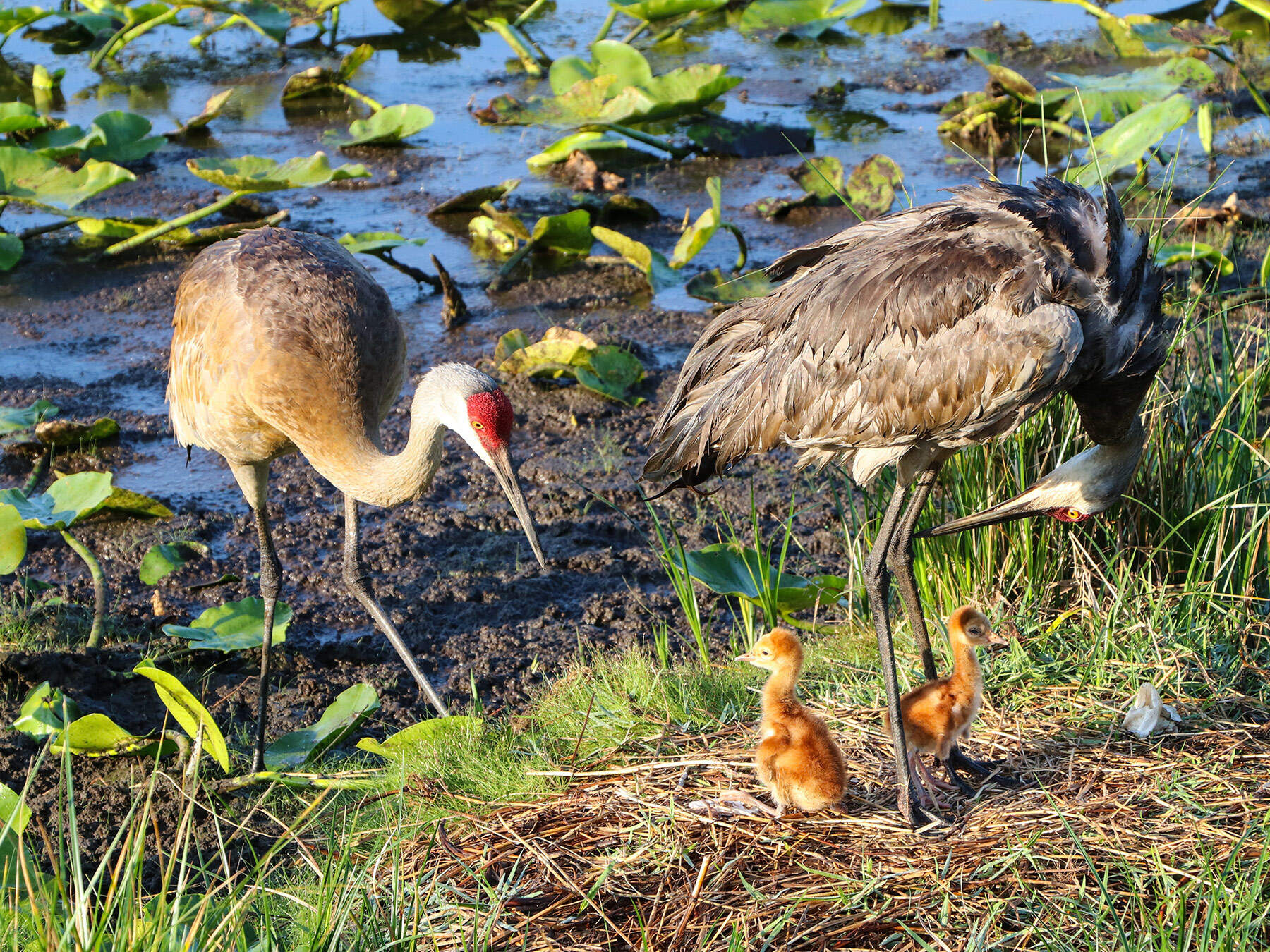
Both sexes are similar, with females being slightly smaller. Adults and juveniles share similar colouration, though young birds lack vibrant red crowns and have brownish-tinged heads. It takes roughly 3 years for young birds to fully get their red crowns.
Its size
Adults- Length
- 100–130 cm
- Wingspan
- 180–240 cm
- Weight
- 3000–6100 g
Its song and calls
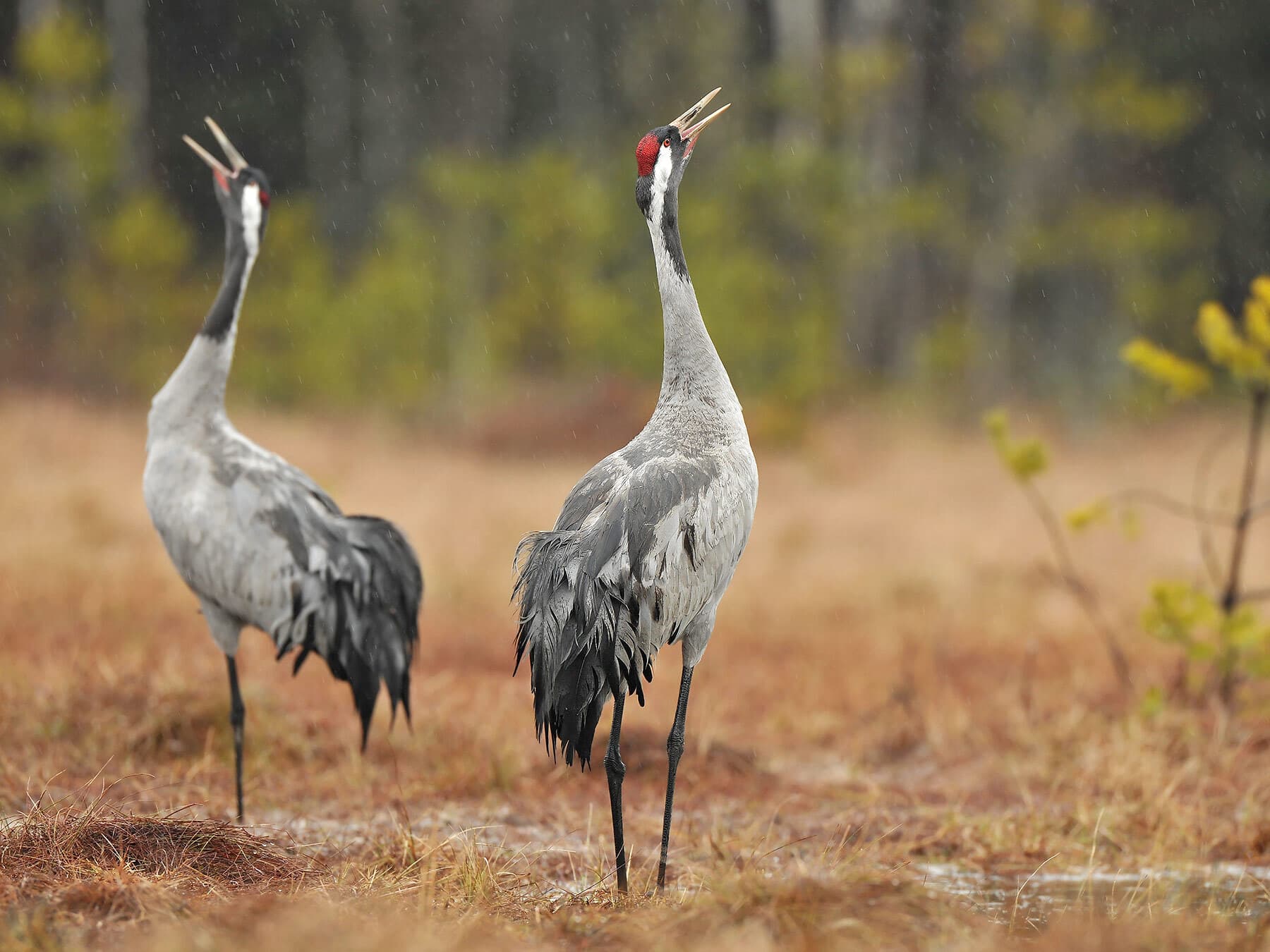
During the breeding season pairs will dance with each other and issue bugling or trumpeting sounds. Outside of the dancing rituals they may still trumpet but their usual call is deep and loud, often heard in flight as, ‘krra – krra’.
- Song and calls0:00 / 1:36
Recorded in Grand Est, France · December 2022
- Flight call0:00 / 0:29
Recorded in Nouvelle-Aquitaine, France · February 2025
When and where to see it
OctoberIn season
Most recorded in October
- 1. Gloucestershire0.46%
- 2. Somerset0.21%
- 3. Aberdeenshire0.13%
- 4. Cambridgeshireunder 0.1%
- 5. Norfolkunder 0.1%
Each dot is a county, state or province: the bigger and darker, the larger the bird’s share of that place’s bird records that month. Grey dots: no regular records. The ringed point is the centre of the bird’s records this month; the arrow shows how it moved since last month, and the dashed loop its path through the year. “Arrivals” colours places where it becomes regular this month (orange) or is in its last regular month (grey). GBIF eBird Observation Dataset, 2019–2024. Map data: Natural Earth, US Census Bureau; place centres © OpenStreetMap contributors.
In your area
See when the Common Crane is recorded in your county, state or province.
How often the Common Crane turns up in the UK and Ireland through the year, from birdwatchers' records.
United Kingdom
Resident · all year · nesting-season records held back
Ireland
Scarce · most records in July
Show as a table
| Month | United Kingdom | Ireland |
|---|---|---|
| January | 0.038% (regular) | – |
| February | 0.039% (regular) | 0.001% |
| March | 0.005% (regular) | <0.001% |
| April | held back (protected) | – |
| May | held back (protected) | <0.001% |
| June | held back (protected) | <0.001% |
| July | held back (protected) | 0.008% |
| August | 0.026% (regular) | <0.001% |
| September | 0.019% (regular) | <0.001% |
| October | 0.022% (regular) | – |
| November | 0.023% (regular) | – |
| December | 0.030% (regular) | – |
Nesting-season records (April to July) are held back to protect nests, so those months show as present but unmeasured.
Recorded regularly in
Worldwide: recorded regularly in 65 countries
Countries where it was recorded in at least 3 of the 6 years 2019–2024. Linked countries have their own bird list.
Europe (36)
Asia (25)
- Armenia
- Azerbaijan
- China
- Cyprus
- Georgia
- India
- Iran
- Israel
- Japan
- Jordan
- Kazakhstan
- Kyrgyzstan
- Lebanon
- Mongolia
- Myanmar (Burma)
- Nepal
- Oman
- Pakistan
- Palestinian Territories
- Saudi Arabia
- South Korea
- Thailand
- Turkey
- United Arab Emirates
- Uzbekistan
Data: EOD – eBird Observation Dataset (Cornell Lab of Ornithology), accessed via GBIF.org, CC BY 4.0. Records from 2019–2024, aggregated and filtered by Birdfact. How these lists are made
Common cranes are found in the northern regions of the Palearctic from Scandinavia through to Eastern Siberia. Small populations can also be found within the British Isles. During the winter months all common cranes migrate south from their breeding grounds into Southern Europe, Eastern China, Northern India, North Africa and Western Asia.
Signs and Spotting tips
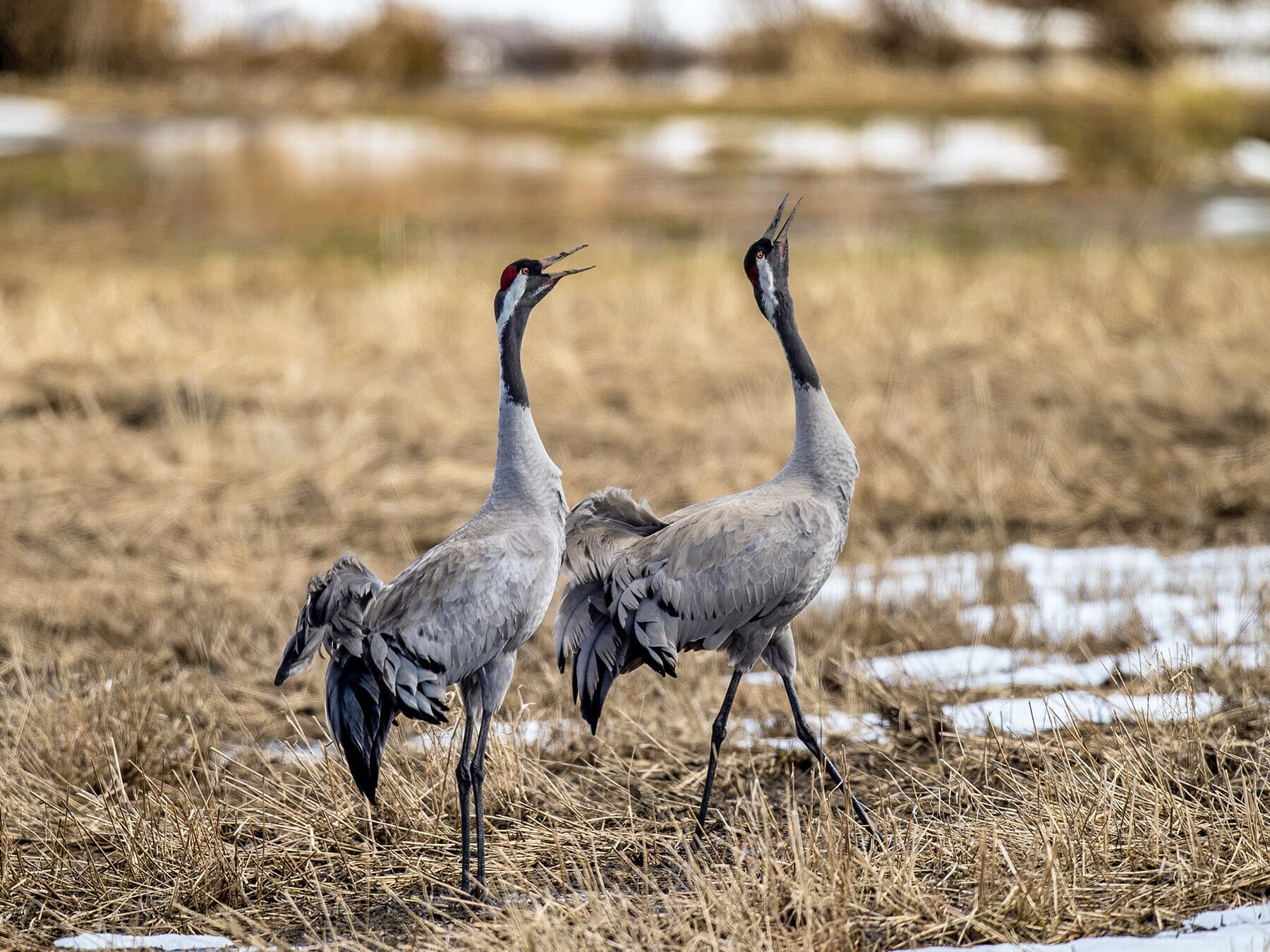
Breeding grounds are frequently on boggy areas or near marshland in remote forests where the Springtime courtship rituals of dancing, pirouetting, leaping and trumpeting, sometimes in large numbers, is an impressive sight. The patternation of the adult is distinctive and huge flocks can often be seen in flight during migration. In flight, when viewed from below, the long black under neck contrasting with the pale grey body, tail and fore wing area, with black fingered wing tips and a dark wing trailing edge, is an excellent guide to identification. Unlike many species in flight the common crane is not confined to a specific flight configuration and may be spotted in a V formation, a single line of many birds or a simple haphazard group. With their long legs trailing behind them and their trumpeting calls they are an inspiring sight.
What it eats
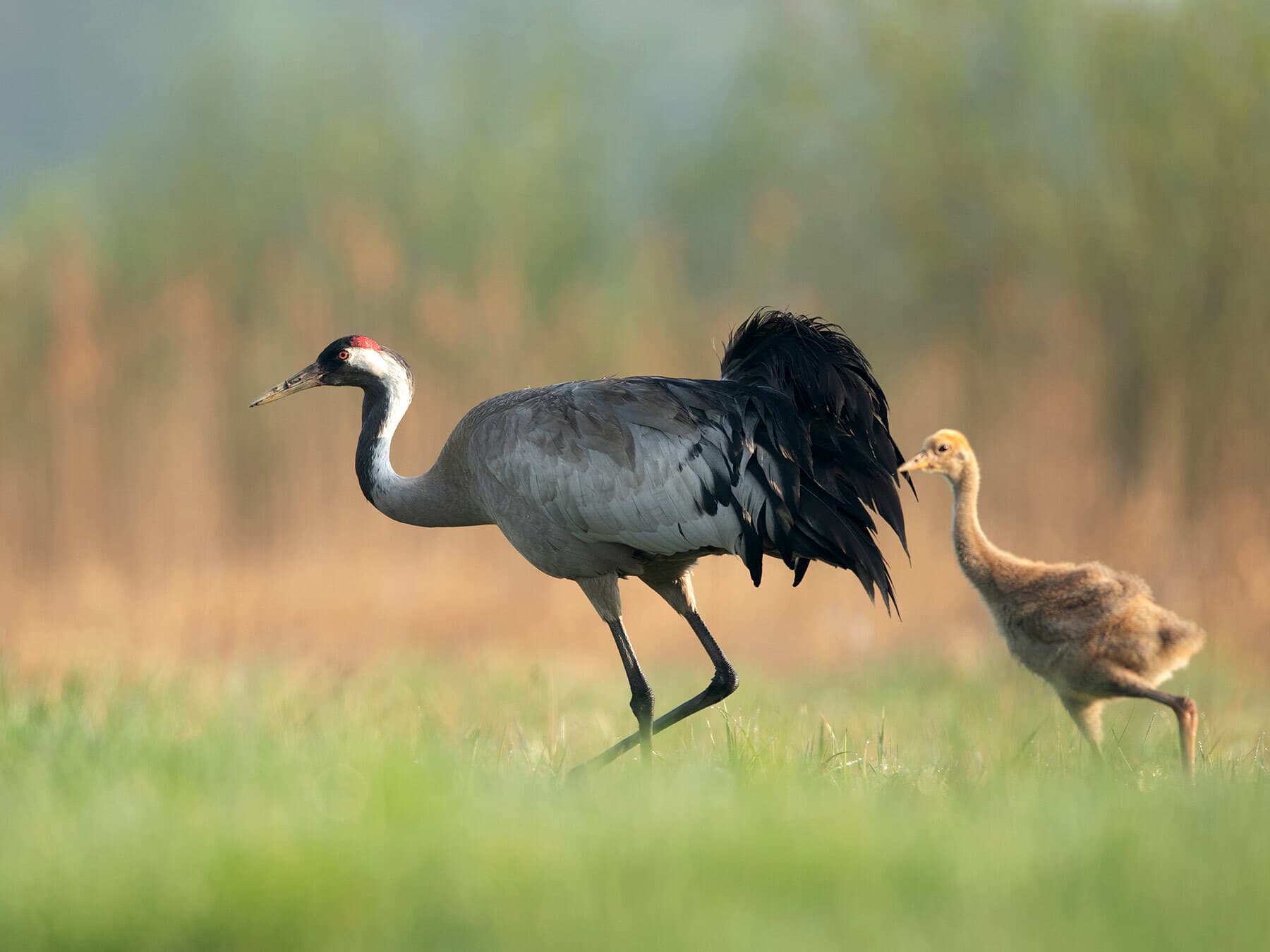
Cranes forage from the ground or in shallow water as they stride around, often in small groups, and their diet consists, in the main, of grains, roots, aquatic plants, berries, leaves, grasses and shoots as well as insects, worms, lizards, small fish and frogs.
Nesting and breeding
Although common cranes are monogamous, they will start each breeding season in ritual mutual displays of dancing and courtship. A large mound of reeds and marshy vegetation is built on the ground either in, or close to shallow water where usually during the month of May, one clutch consisting of 2 eggs is laid. The buff coloured eggs are speckled with mid and dark brown splodges and incubated for a period of around thirty one days. Fledging occurs between sixty five to seventy days later and full sexual maturity may take up to six years to achieve.
Behaviour
Common Cranes are highly social birds, often seen in large flocks during migration and winter. They perform elaborate courtship dances involving bowing, jumping, and wing-flapping, strengthening pair bonds.
These cranes are diurnal foragers. They use their bills to probe the ground for food in shallow waters or fields.
Lifespan and predators
The expected lifespan of a common crane is up to twenty years.
Conservation
While currently listed as Least Concern, Common Cranes face threats from habitat loss and degradation, particularly in their breeding and wintering grounds.
Conservation efforts focus on protecting and restoring wetland habitats and managing agricultural areas to support crane populations.
What does a Common Crane look like?
The common crane is a tall erect bird with longs legs and a long neck which thickens significantly where it joins with the shoulders and breast. The adult is predominantly grey all over the body with some birds showing a grey brown hue to their back. The culmen and head is black and the face and throat black or very dark grey to approximately half way down the neck, where it changes to grey. There is a bare patch on the crown which is coloured deep red. The back of the head and area immediately behind the yellow eye is a bright white which extends to the nape and continues down the rear of the neck as a wide stripe, changing to grey where it meets the scapulars. The upper and lower wing areas are grey and the tips of the flight feathers are black and fingered. When standing, dark tipped feathers become apparent which are bunched up and extending over the tail. The bill, which is medium length, is a pale greyish yellow and the legs are thick, long and dark grey. Adult males and females are similar although generally the females are slightly smaller. Juveniles are a light to mid brown with a dull brown feathered head. The adult’s bare red area on the crown does not appear fully until the bird is three years old although it becomes discernible at the age of two.
More photos
2 photos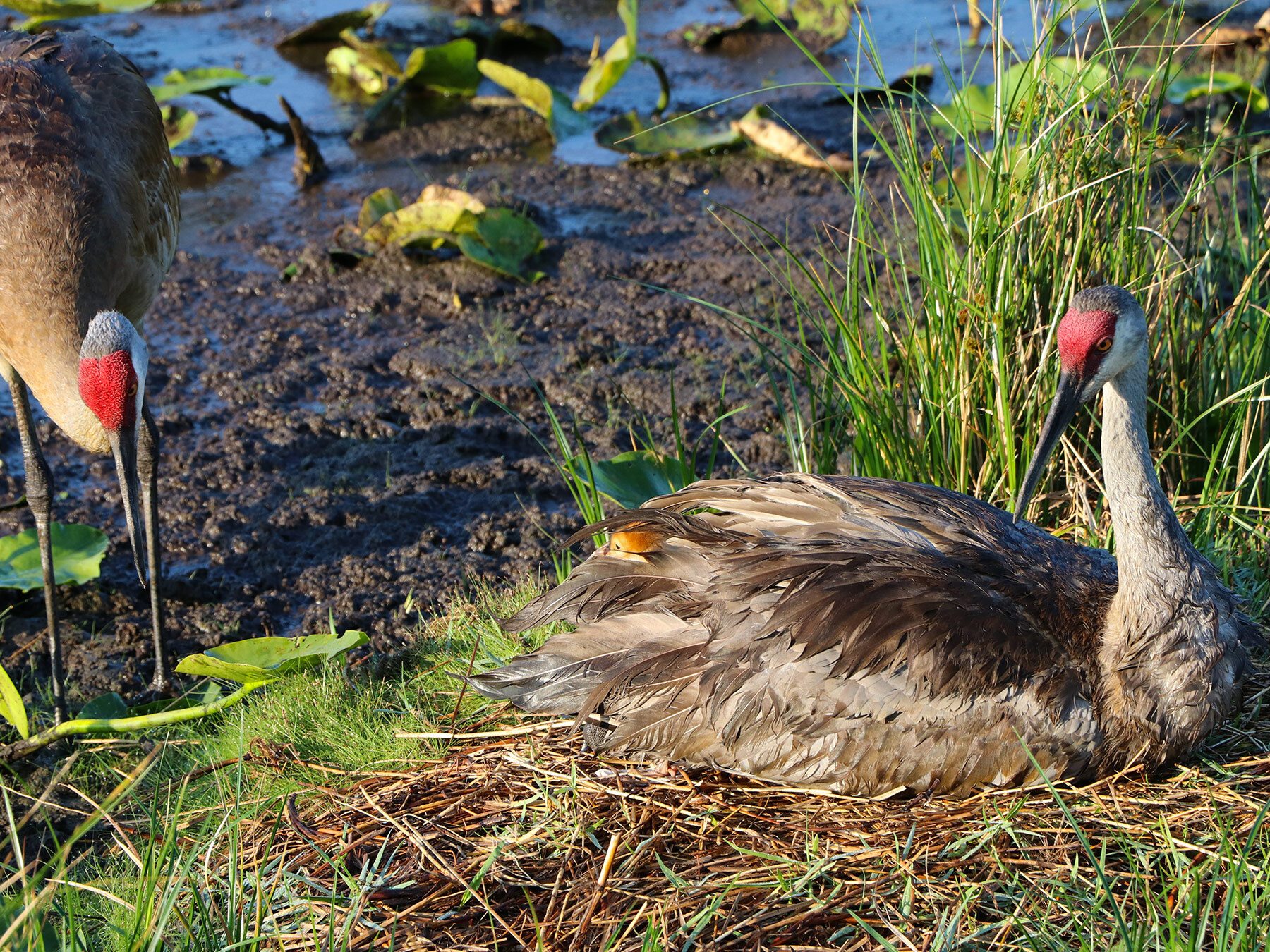
Common Crane guides
1 guidesQuick facts
- Length
- 100–130 cm
- Wingspan
- 180–240 cm
- Weight
- 3000–6100 g
- Lifespan
- 13 years · oldest recorded 20.3 years
- Family
- Cranes
- Migration
- Long-distance Migrant
- Global status (IUCN)
- Least Concern
- World population
- 491,000 - 503,000 mature individuals
- Population trend
- Increasing
- Also called
- Eurasian Crane, Crane
- Scientific name
- Grus grus
Sources
4- 1BirdLife International. 2016. Grus grus. The IUCN Red List of Threatened Species 2016: e.T22692146A86219168. Source (opens in a new tab)
- 2Wetlands International (2015)
- 3Wetlands International (2015)
- 4Fransson et al., EURING list of longevity records for European birds (2010) Source (opens in a new tab)

Checked by
Nathan Cope, founder and editor
Nathan founded Birdfact and leads its writers and contributors in the UK, the US and Canada. He has watched and studied birds for more than ten years, and checks every article and species guide before it’s published.