


Little Grebe
Dabchick · Tachybaptus ruficollis
By the Birdfact teamChecked by Nathan Cope
On this page14 sections
How to recognise it
What do Little Grebes look like?
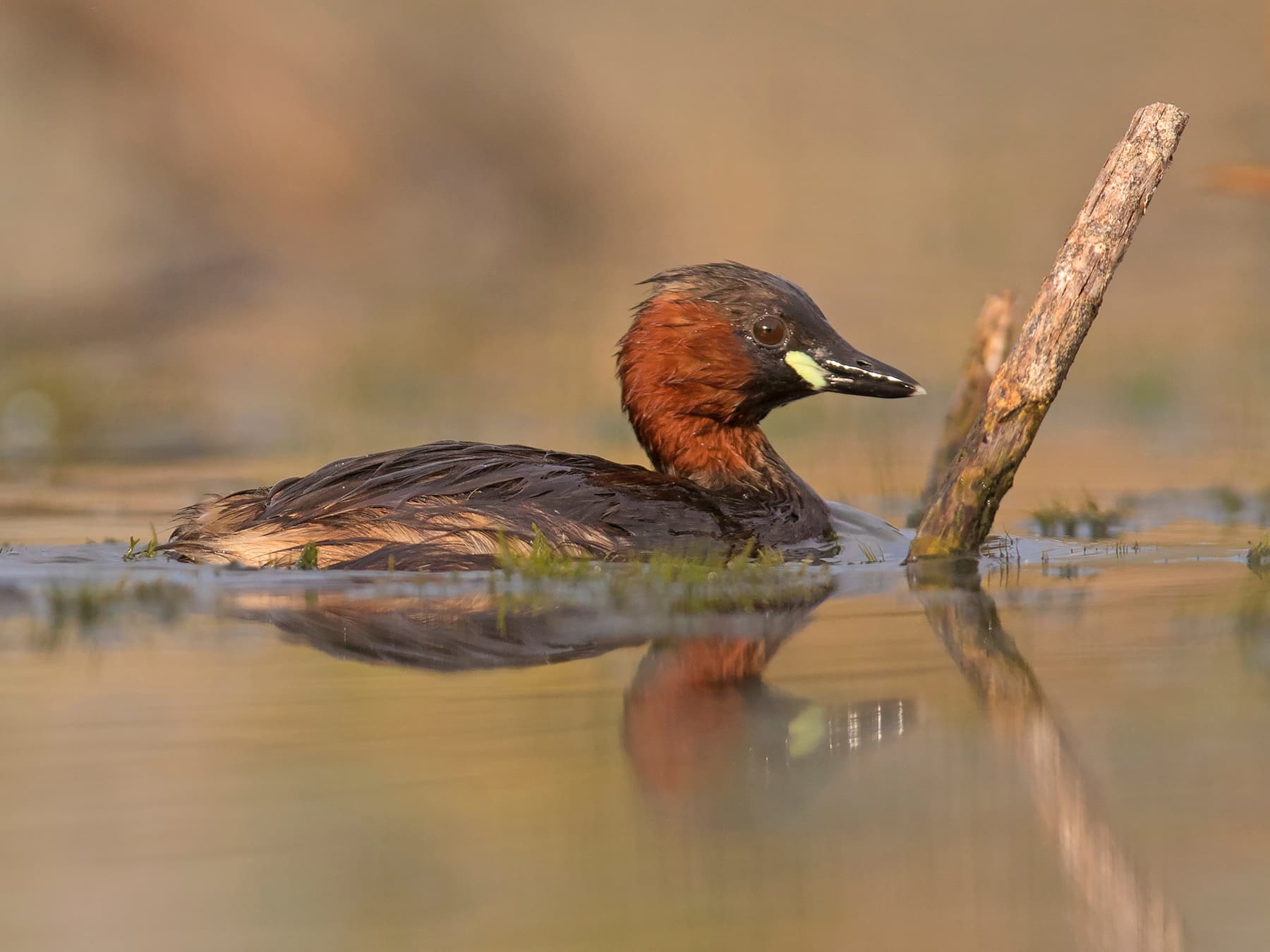
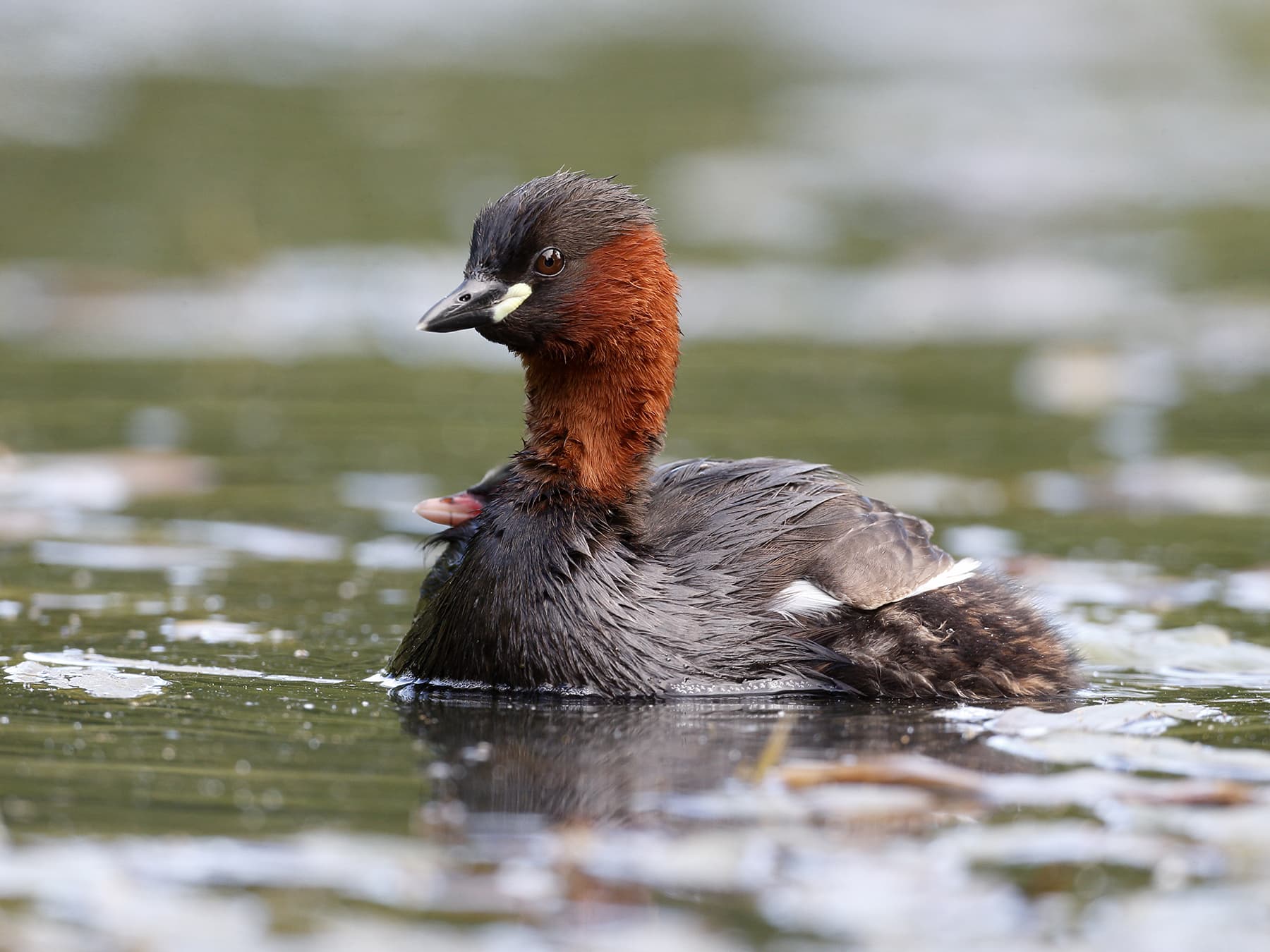
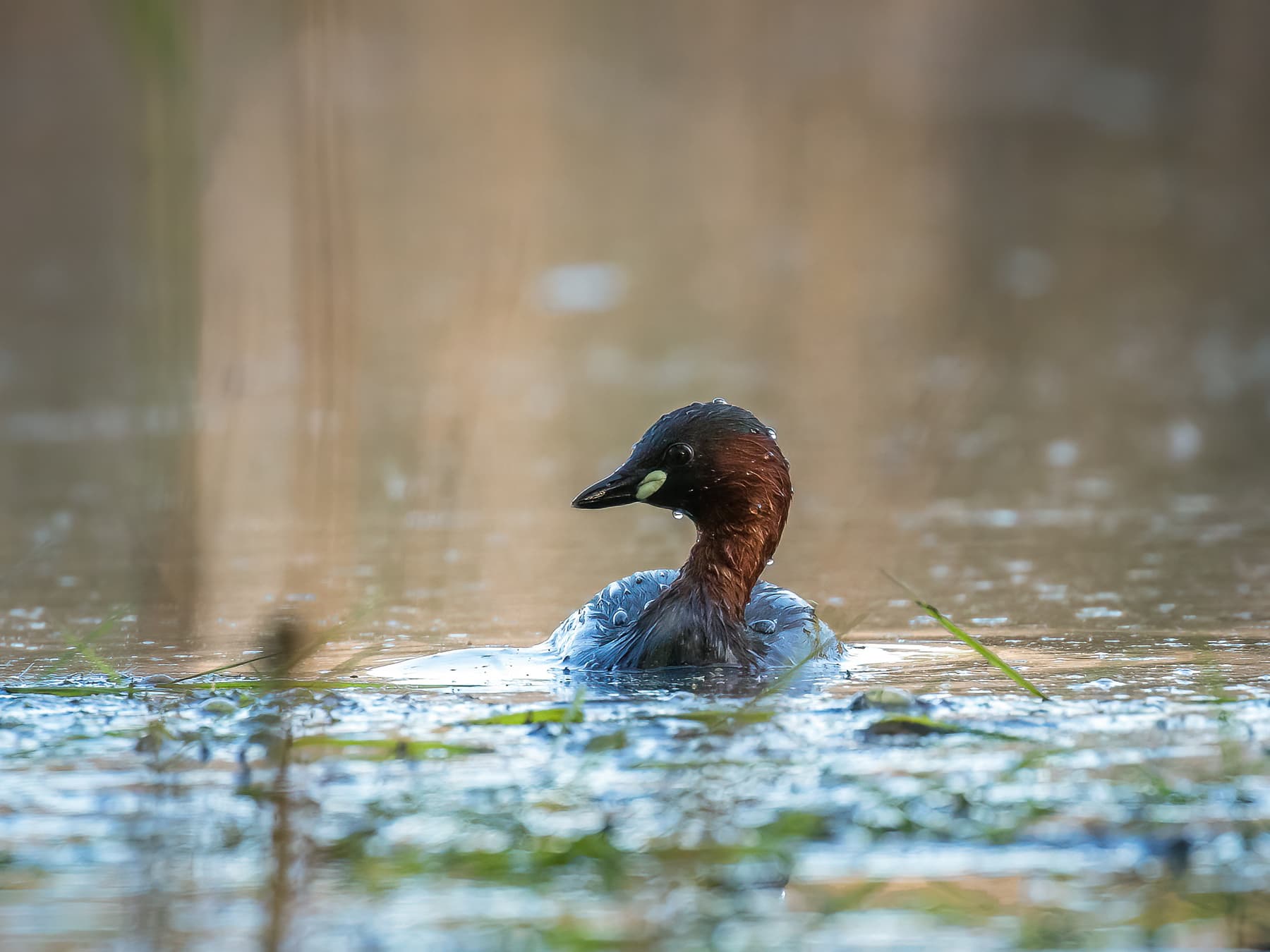
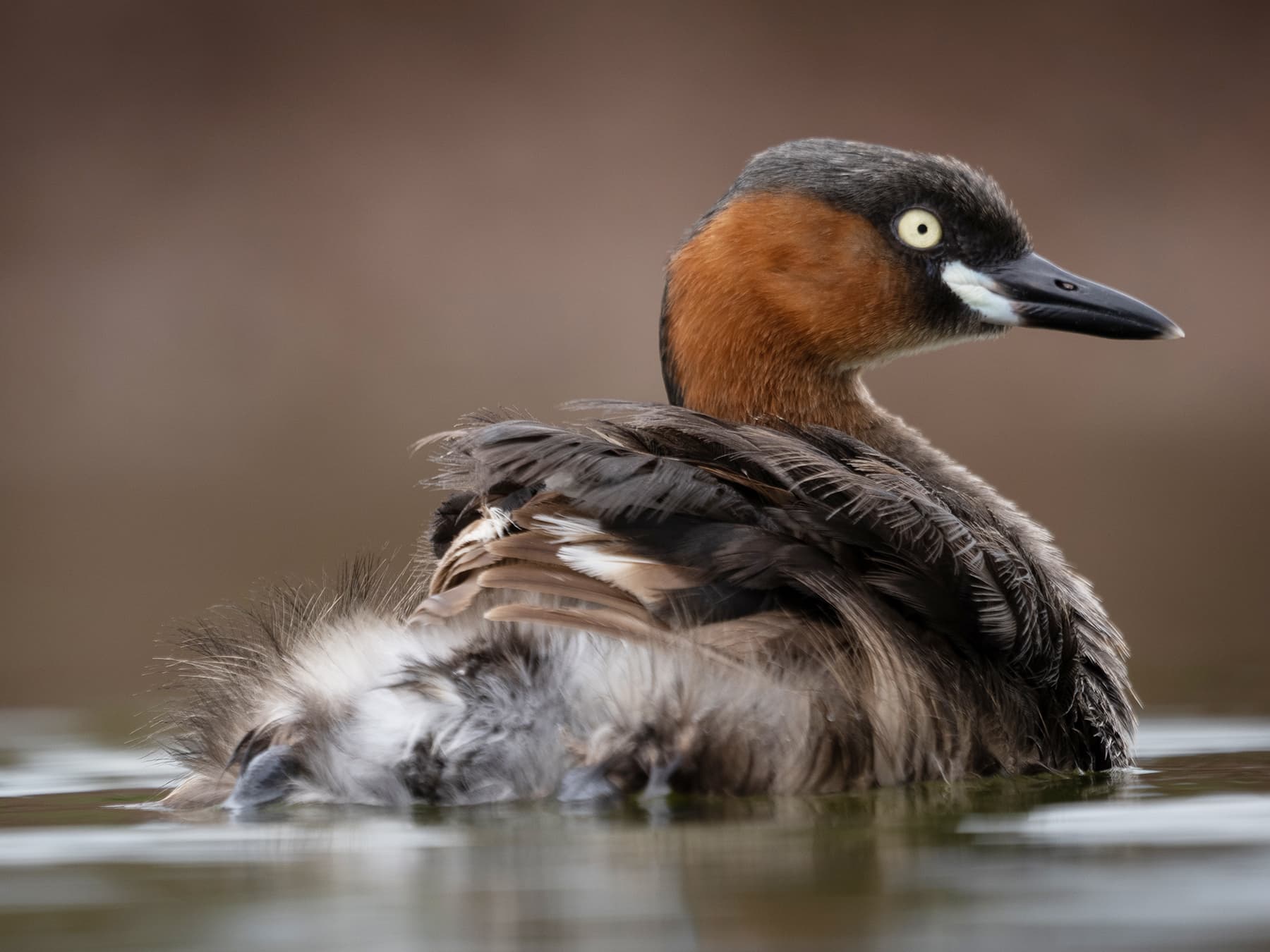
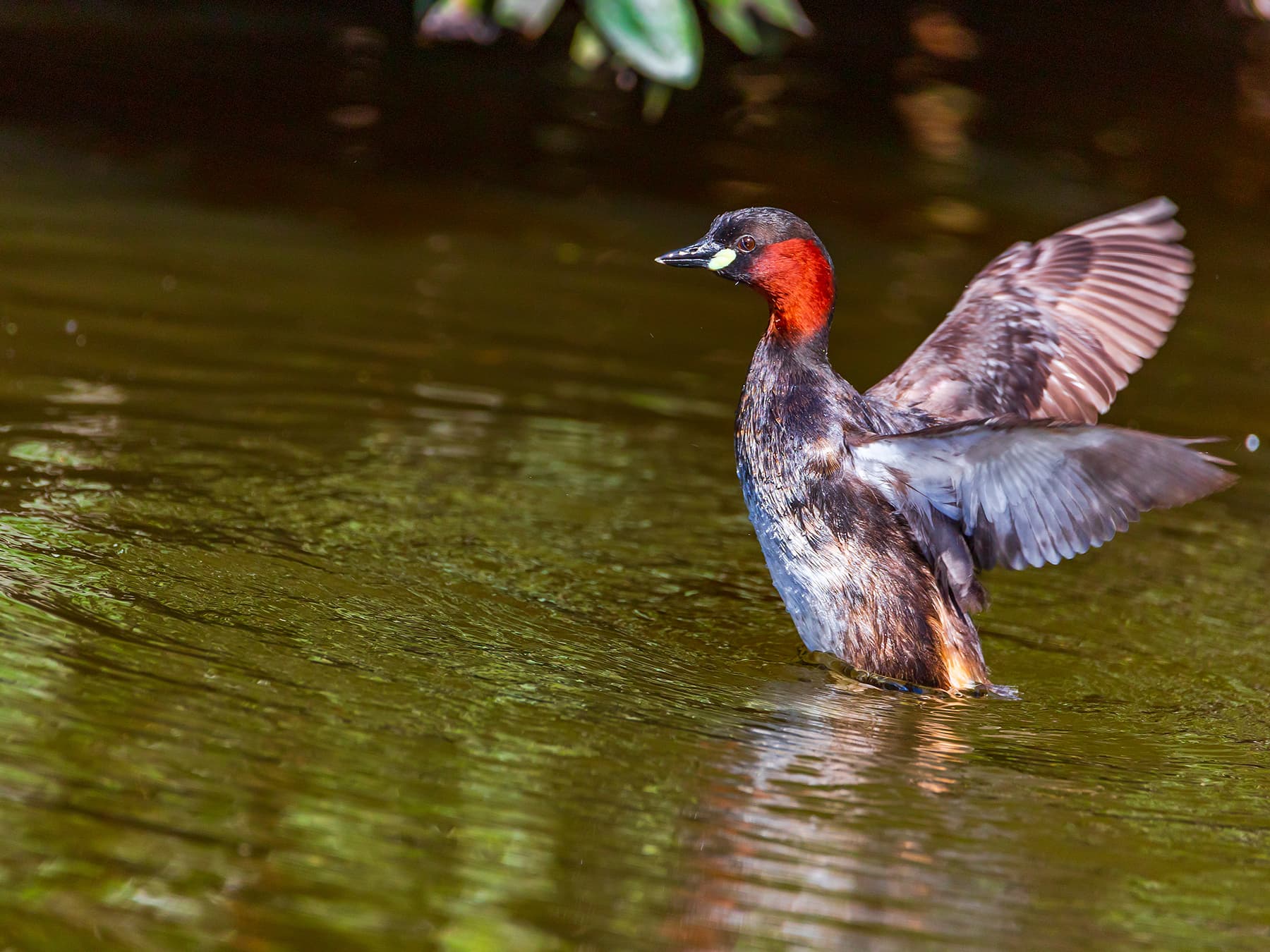
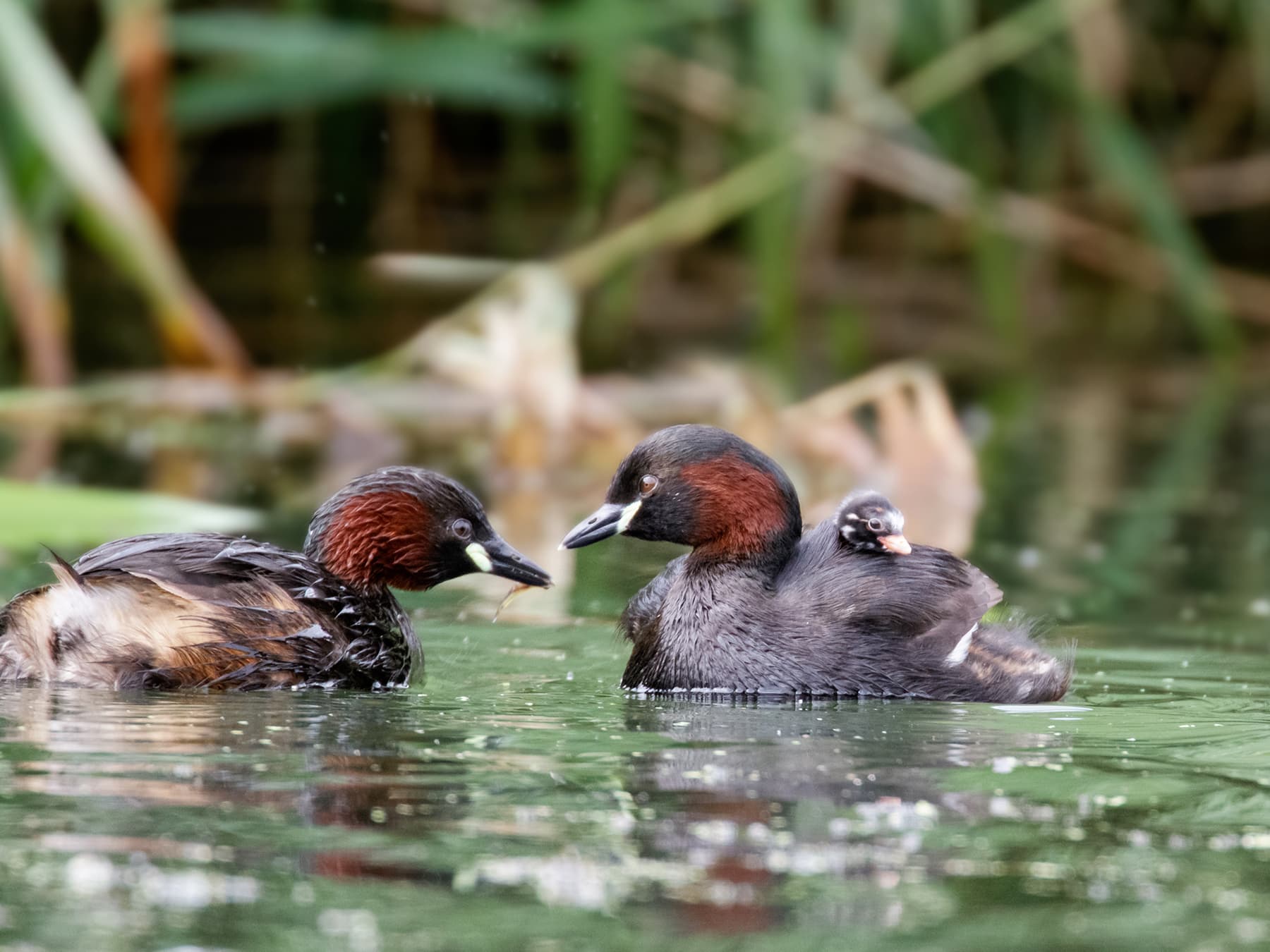
Little grebes are small, rounded water birds, with plumages that vary according to the time of year. In breeding season, little grebes are blackish-brown, with a chestnut throat and cheeks, and a pale yellowish patch at the base of the bill. Their flanks are a lighter brown, fading to a paler tail, which appears fluffy. Their legs are greenish, and placed far back on their bodies, meaning that they can only walk very clumsily on land.
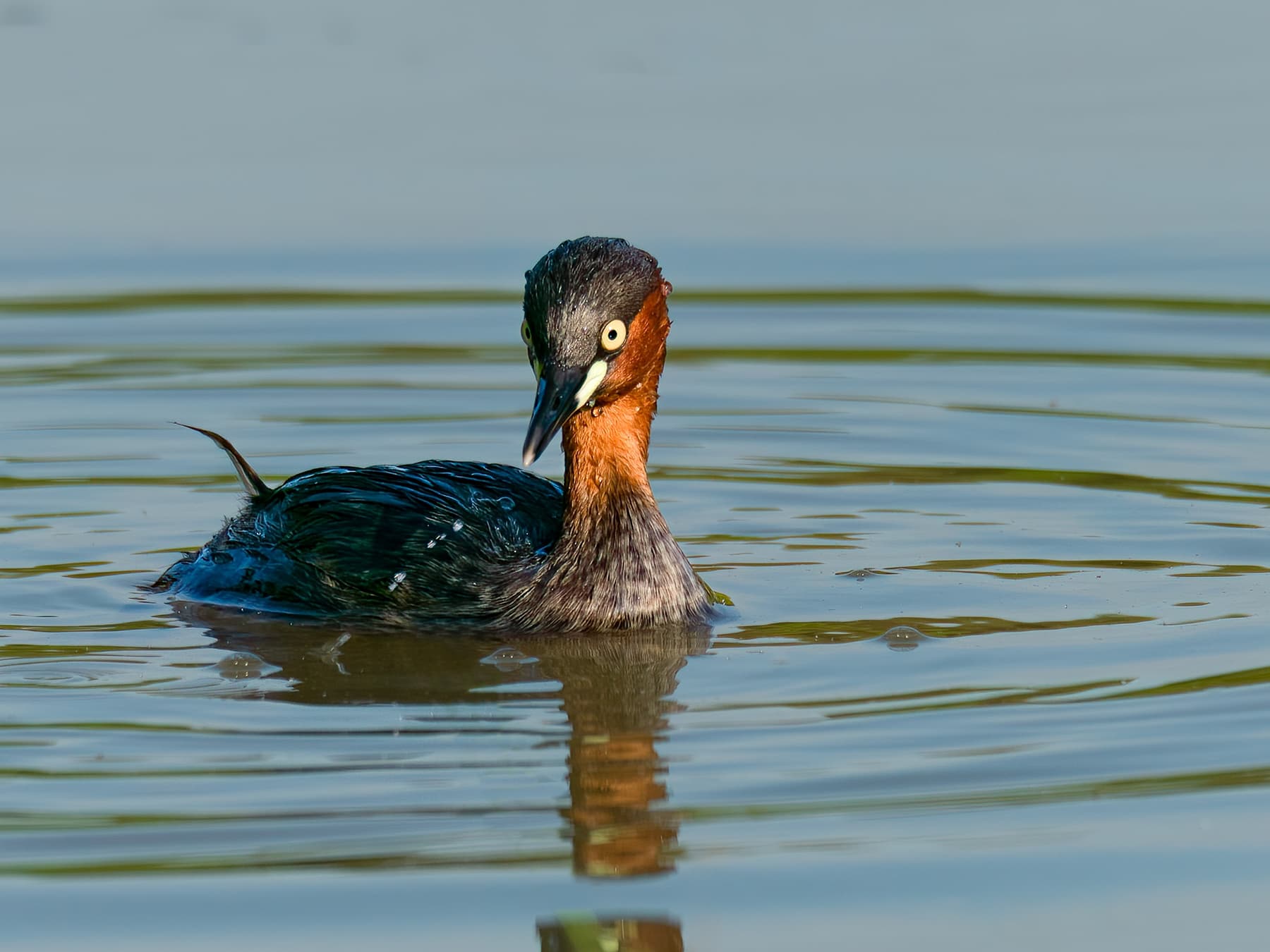
The non-breeding plumage of a little grebe is less vibrant, with grey-brown upperparts and crown, a whitish throat, chin and breast, and buff-brown streaky markings on the face, neck and flanks.
Sexes are alike in appearance, although females are usually slightly smaller than males.
The plumage of juvenile little grebes is similar to that of non-breeding adults, but features more dark markings on the face, with an overall darker appearance than the buff-brown of adults.
Its size
Adults- Length
- 23–29 cm
- Wingspan
- 40–45 cm
- Weight
- 120–300 g
Its song and calls
What sound does a Little Grebe make?
Little grebes are noisy birds, with both males and females emitting a powerful whinnying trill. A harsh alarm call that sounds like ‘weeeib’ can also be heard around the nest site when threats are detected.
- Song0:00 / 0:04
Recorded in Normandie, France · June 2021
- Call0:00 / 0:52
Recorded in Normandie, France · May 2022
When and where to see it
OctoberPeak season
Most recorded in October
- 1. West Lothian2.9%
- 2. Rhondda, Cynon, Taff1.9%
- 3. Carlow1.8%
- 4. Stockton-on-Tees1.7%
- 5. Conwy1.6%
Each dot is a county, state or province: the bigger and darker, the larger the bird’s share of that place’s bird records that month. Grey dots: no regular records. The ringed point is the centre of the bird’s records this month; the arrow shows how it moved since last month, and the dashed loop its path through the year. “Arrivals” colours places where it becomes regular this month (orange) or is in its last regular month (grey). GBIF eBird Observation Dataset, 2019–2024. Map data: Natural Earth, US Census Bureau; place centres © OpenStreetMap contributors.
In your area
See when the Little Grebe is recorded in your county, state or province.
How often the Little Grebe turns up in the UK and Ireland through the year, from birdwatchers' records.
United Kingdom
Resident · all year · most records in September
Ireland
Resident · all year · most records in January
Show as a table
| Month | United Kingdom | Ireland |
|---|---|---|
| January | 0.64% (regular) | 1.0% (regular) |
| February | 0.60% (regular) | 0.88% (regular) |
| March | 0.59% (regular) | 0.61% (regular) |
| April | 0.45% (regular) | 0.42% (regular) |
| May | 0.36% (regular) | 0.26% (regular) |
| June | 0.35% (regular) | 0.31% (regular) |
| July | 0.49% (regular) | 0.36% (regular) |
| August | 0.62% (regular) | 0.48% (regular) |
| September | 0.68% (regular) | 0.68% (regular) |
| October | 0.65% (regular) | 0.87% (regular) |
| November | 0.67% (regular) | 0.90% (regular) |
| December | 0.67% (regular) | 0.98% (regular) |
Recorded regularly in
Worldwide: recorded regularly in 123 countries
Countries where it was recorded in at least 3 of the 6 years 2019–2024. Linked countries have their own bird list.
Europe (45)
- Åland Islands
- Albania
- Austria
- Belarus
- Belgium
- Bosnia & Herzegovina
- Bulgaria
- Croatia
- Czechia
- Denmark
- Estonia
- Faroe Islands
- Finland
- France
- Germany
- Greece
- Guernsey
- Hungary
- Ireland
- Isle of Man
- Italy
- Jersey
- Kosovo
- Latvia
- Liechtenstein
- Lithuania
- Luxembourg
- Malta
- Moldova
- Montenegro
- Netherlands
- North Macedonia
- Norway
- Poland
- Portugal
- Romania
- Russia
- Serbia
- Slovakia
- Slovenia
- Spain
- Sweden
- Switzerland
- Ukraine
- United Kingdom
Africa (34)
Asia (44)
- Armenia
- Azerbaijan
- Bahrain
- Bangladesh
- Cambodia
- China
- Cyprus
- Georgia
- Hong Kong SAR China
- India
- Indonesia
- Iran
- Iraq
- Israel
- Japan
- Jordan
- Kazakhstan
- Kuwait
- Kyrgyzstan
- Laos
- Lebanon
- Macao SAR China
- Malaysia
- Mongolia
- Myanmar (Burma)
- Nepal
- Oman
- Pakistan
- Palestinian Territories
- Philippines
- Qatar
- Saudi Arabia
- Singapore
- South Korea
- Sri Lanka
- Taiwan
- Tajikistan
- Thailand
- Timor-Leste
- Turkey
- United Arab Emirates
- Uzbekistan
- Vietnam
- Yemen
Data: EOD – eBird Observation Dataset (Cornell Lab of Ornithology), accessed via GBIF.org, CC BY 4.0. Records from 2019–2024, aggregated and filtered by Birdfact. How these lists are made
What is the habitat of a Little Grebe?
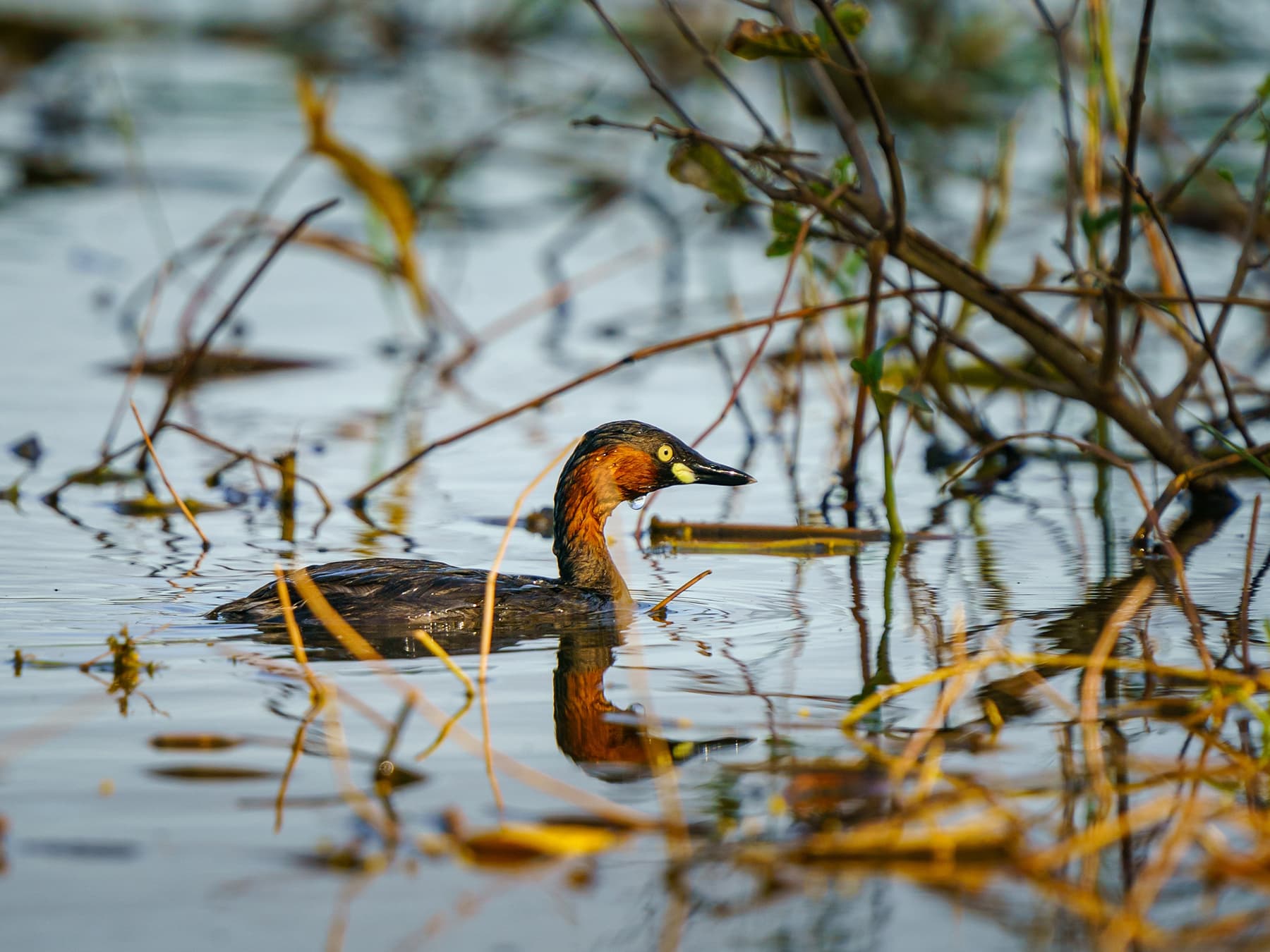
A range of wetland environments offer a suitable habitat for breeding little grebes, including lakes, reservoirs, bays, slow rivers and canals, and gravel pits with plenty of vegetation and shelter around the fringes.
They are unable to walk well on land, so spend much of their lives on water or at the very edges of lake shores.
In winter months, vegetation cover becomes less important and little grebes become more common at estuaries and sheltered coasts.
What is the range of a Little Grebe?
Little grebes are resident across Europe from the British Isles in the west, north as far as parts of southern Scandinavia, into Poland in the east, and along the Mediterranean coast into North Africa in the south.
Breeding occurs further east, throughout eastern Europe and into Central Asia. Resident populations are also present across sub-Saharan Africa, south Asia, and parts of east and south-east Asia.
Where do Little Grebes live?
Across Europe, countries with notable populations of little grebes include Hungary, Germany and Poland.
Populations in Scandinavia have increased in recent decades as a result of warmer conditions throughout the year.
How rare are Little Grebes?
With a population of around 3,650 to 7,300 breeding pairs in the UK, little grebes are not the most common waterbirds, but during winter, this number increases to up to 15,000 birds, and sightings become less rare.
Globally, little grebes are relatively common and widespread, with a total population across Europe estimated at up to 3.5 million birds.
Where can you see Little Grebes in the UK?
Little grebes breed throughout the UK, but are not usually found in upland areas or the extreme northern regions of Scotland, south-west England and much of the interior of Wales.
In winter, it’s common for little grebe populations to shift temporarily towards coastal and estuary environments, and sightings are concentrated in the Thames Estuary, Chew Valley Lake and Rutland Water.
Migration
Do Little Grebes migrate?
Some migration does occur, particularly where the lakes and reservoirs used for breeding freeze in winter.
Relocation to coastal wetlands or estuaries is common in winter, and in the eastern part of their European range, migration west and south is frequently observed until conditions improve the following spring.
Are Little Grebes native to the UK?
Little grebes are native to the UK, both breeding and spending winters in the British Isles.
They do temporarily move to coasts, estuaries and lakes without vegetation during winter months, but return to canals, ponds, and inland lakes to breed.
Tips for seeing it
- Look for Little Grebes in small ponds, lakes, and slow-moving rivers
- Listen for their distinctive whinnying trill, often heard during the breeding season
- Observe their frequent diving behaviour, which can help distinguish them from ducks
- In the UK, check wetland areas year-round, as many birds are resident
What it eats
What do Little Grebes eat?
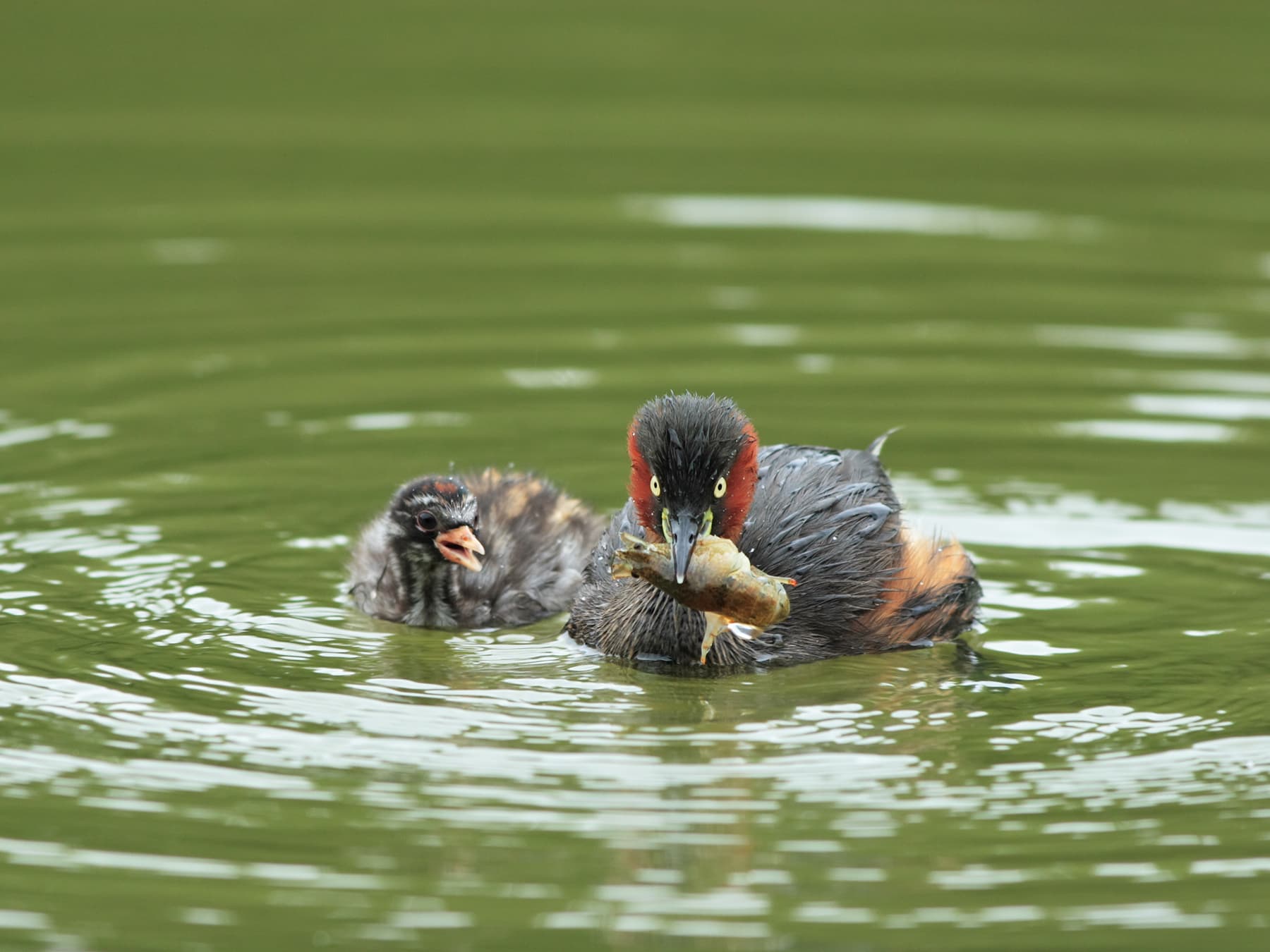
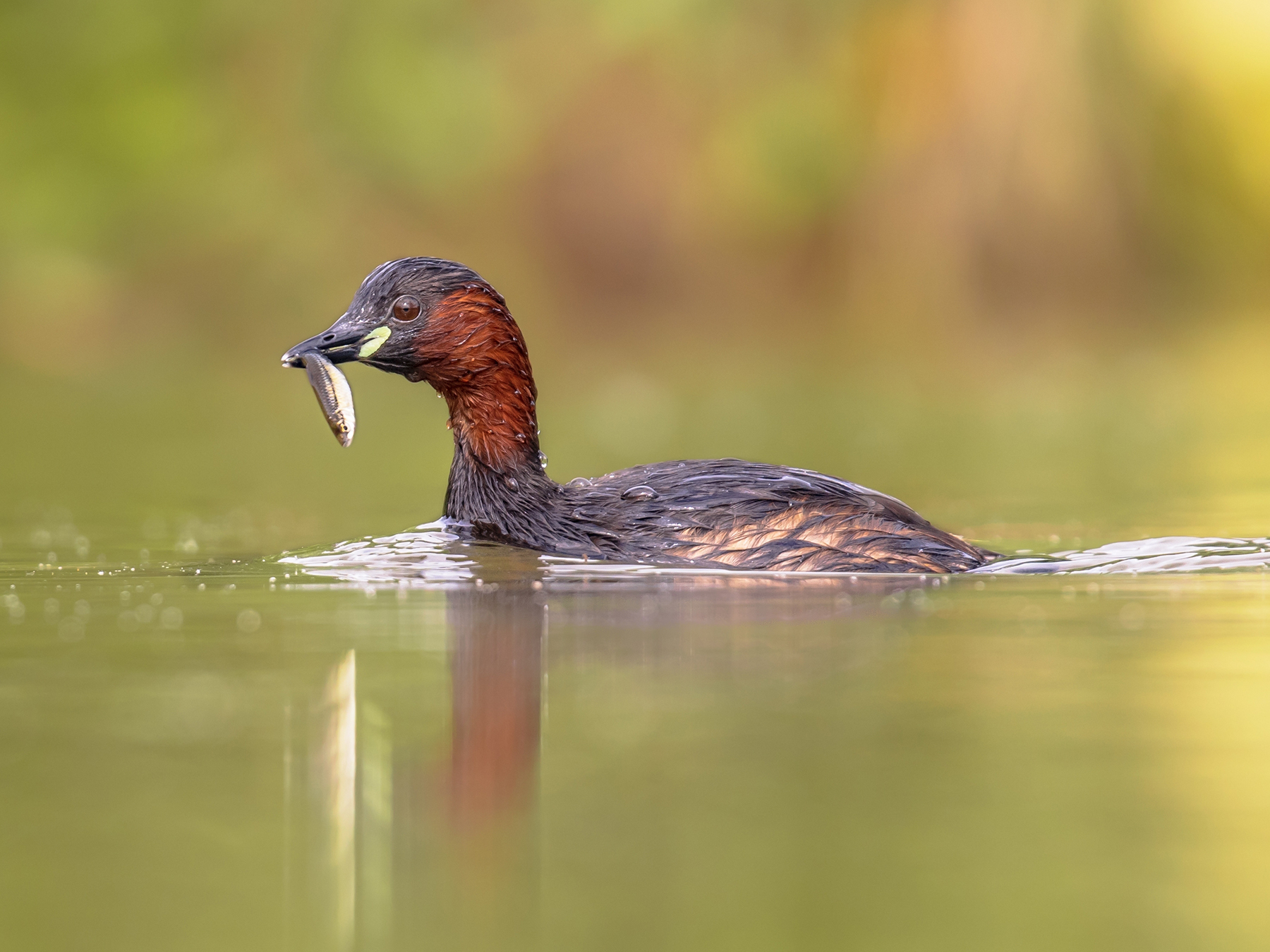
The diet of little grebes comprises insects, small fish, and amphibians, particularly small newts and frogs.
Crane flies and mayflies and their larvae are among the most important food sources, and crustaceans and molluscs are also eaten.
What do baby Little Grebes eat?
Baby little grebes are able to swim and hunt almost immediately and follow a similar diet to adults from the outset, eating small insects and their larvae from the water’s surface, before they quickly master the art of diving for prey.
Nesting and breeding
Where do Little Grebes nest?
As they’re unable to walk well on land, little grebes’ nest sites are located in vegetation at the edges of wetlands and in reedbeds.
A floating nest is built from plant matter, sticks, grasses, moss and reeds, and anchored to the stems of waterside plants.
What do Little Grebe eggs look like?
The breeding season for little grebes takes place between February and September, although most are laid between April and late June. Between four and seven eggs are usually laid per clutch, and are off-white to cream in colour, measuring 38 mm by 26 mm (1.5 in by 1 in).
The incubation period lasts for 19 to 23 days, with males and females sharing the task.
Do Little Grebes mate for life?
Little grebes raise two to three broods together in a typical season and are a monogamous species, usually remaining paired for longer than one breeding season.
Outside of the breeding season they become solitary, but pair up again with an elaborate courtship ritual at the start of each spring.

Behaviour
Are Little Grebes aggressive?
Little grebes are generally solitary birds, but sometimes nest in loose colonies, in groups of between 5 and 30 birds. They avoid danger by diving under the water’s surface, where they can remain for up to 30 seconds.
They regularly associate with other larger waterbirds, such as coots and mallards, feeding on prey that is disturbed and brought to the water’s surface by the movement of the larger birds.
Lifespan and predators
How long do Little Grebes live?
The average lifespan of a little grebe is thought to be between 10 and 15 years, with first-time breeding typical at one year.
What are the predators of Little Grebes?
Due to their tiny size, little grebes are at risk of predation from a number of birds, animals, and even fish.
Northern pike are known to eat little grebe hatchlings, while birds such as herons and cormorants are also a threat.
Due to the species rarely spending any time on land, little grebes are not typically at risk from land predators such as foxes, but water-dwelling mammals, such as otters, may sometimes catch them.
Are Little Grebes protected?
Little grebes are included in the Wildlife and Countryside Act, 1991, which offers them protection against being knowingly killed, injured or taken into captivity.
Are Little Grebes endangered?
Little grebes are classed as a species of least concern and are ranked as Green on the British Birds of Conservation Concern list.
Due to their size, cold winters may impact survival, and notable declines in numbers have followed the harshest winter seasons, particularly in Britain in 1962-1963 and in the Netherlands in 1984-1985.
Conservation
While the Little Grebe is listed as Least Concern globally, it faces localised threats from habitat loss and degradation.
Wetland conservation efforts, particularly in Europe and Asia, are crucial for maintaining healthy populations. Climate change and water pollution also pose potential long-term risks to this species.
How big are Little Grebes?
Little grebes are by far the smallest members of the grebe family, and also the smallest British fish-eating waterbird, with males slightly larger than females in length, weight and wingspan:
- Length: 25 cm to 29 cm (9.8 in to 11.4 in)
- Wingspan: 40 cm to 45 cm (15.7 in to 17.7 in)
- Weight: 100 g to 140 g (3.5 oz to 4.9 oz)
More photos
3 photos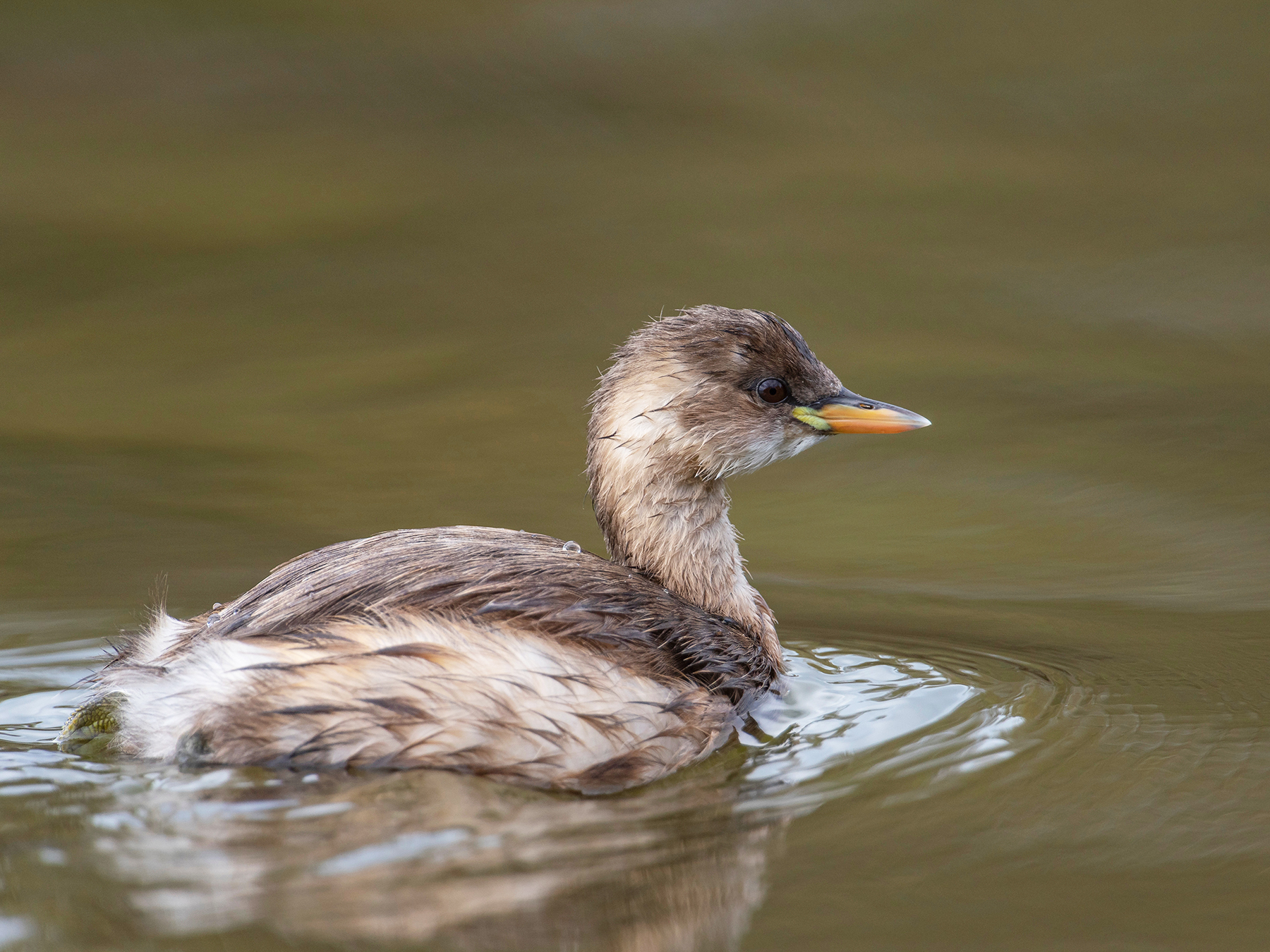

Quick facts
- Length
- 23–29 cm
- Wingspan
- 40–45 cm
- Weight
- 120–300 g
- Lifespan
- 10–15 years · oldest recorded 6 years
- Family
- Grebes
- Migration
- Partial migrant
- Global status (IUCN)
- Least Concern
- World population
- 610,000 - 3,500,000 individuals
- Population trend
- Decreasing
- Also called
- Dabchick
- Scientific name
- Tachybaptus ruficollis
Questions
2Do Little Grebes fly?
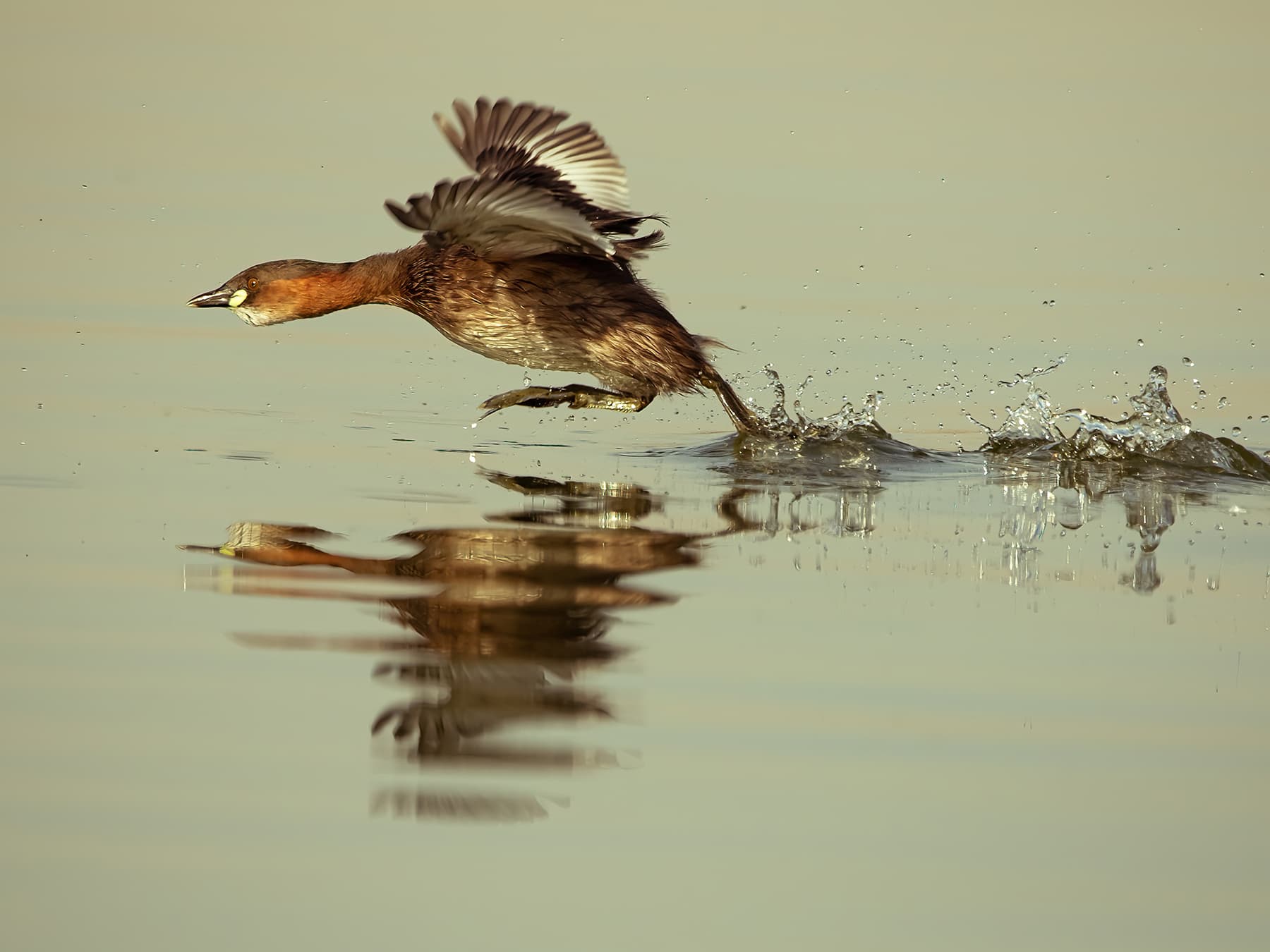
Little grebes are largely sedentary and remain in their home waters for extended periods of time. However, they are able to fly considerable distances, which can especially be observed during migration from frozen inland waters to ice-free estuaries and coasts in winter months.
Is a Little Grebe a duck?
Although duckling-sized, and similar in appearance to smaller ducks, little grebes belong to a distinct and separate family of waterbirds called grebes.
Sources
4- 1BirdLife International. 2019. Tachybaptus ruficollis (amended version of 2017 assessment). The IUCN Red List of Threatened Species 2019: e.T22696545A155540155. Source (opens in a new tab)
- 2Wetlands International (2015)
- 3Wetlands International (2015)
- 4BTO longevity records: maximum age from a ringed bird, 6 years, 23 days (set in 1995), BirdFacts: Little Grebe (1995) Source (opens in a new tab)

Checked by
Nathan Cope, founder and editor
Nathan founded Birdfact and leads its writers and contributors in the UK, the US and Canada. He has watched and studied birds for more than ten years, and checks every article and species guide before it’s published.