


Pochard
Common Pochard, Eurasian Pochard · Aythya ferina
By the Birdfact teamChecked by Nathan Cope
On this page15 sections
How to recognise it
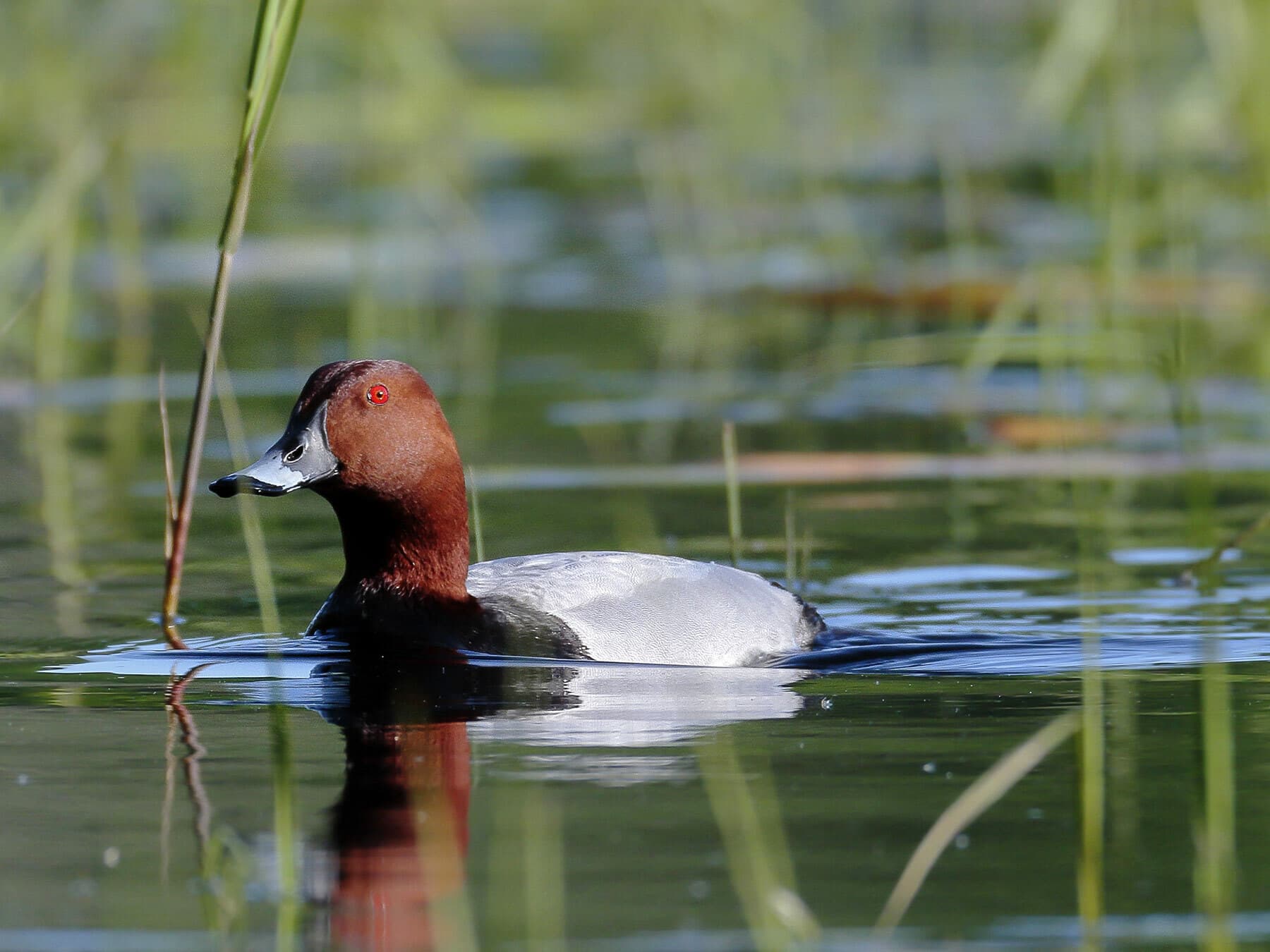
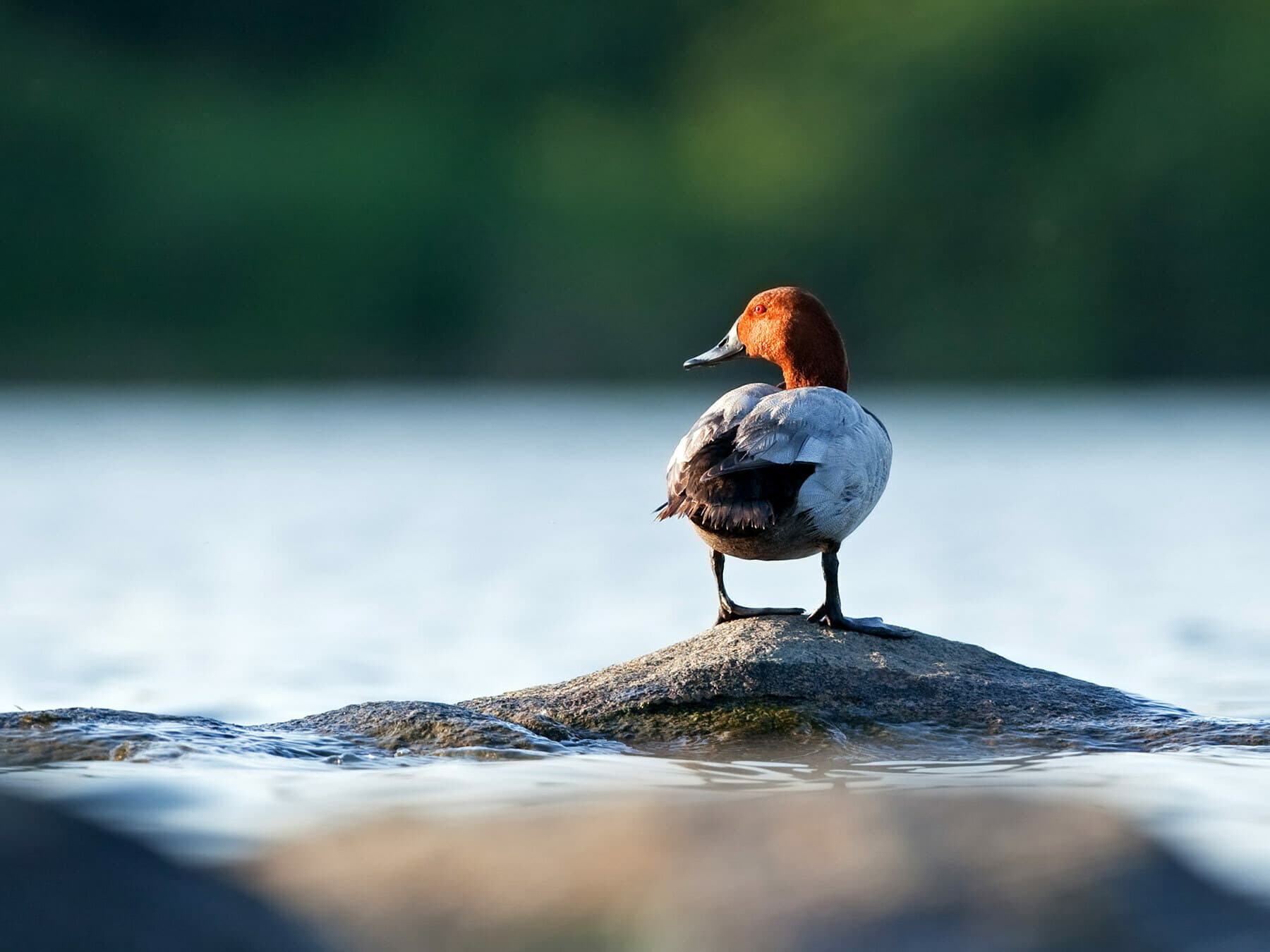
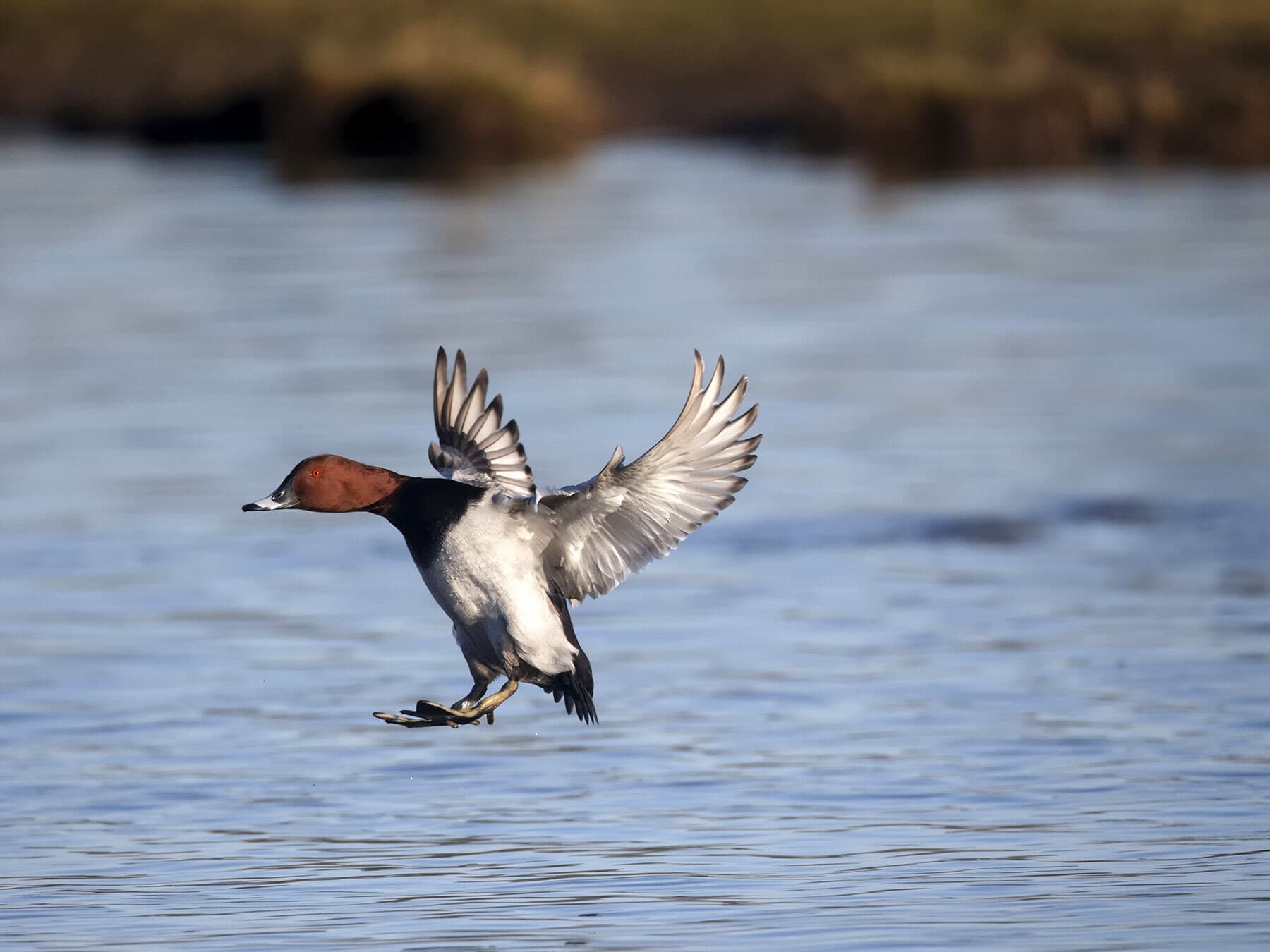
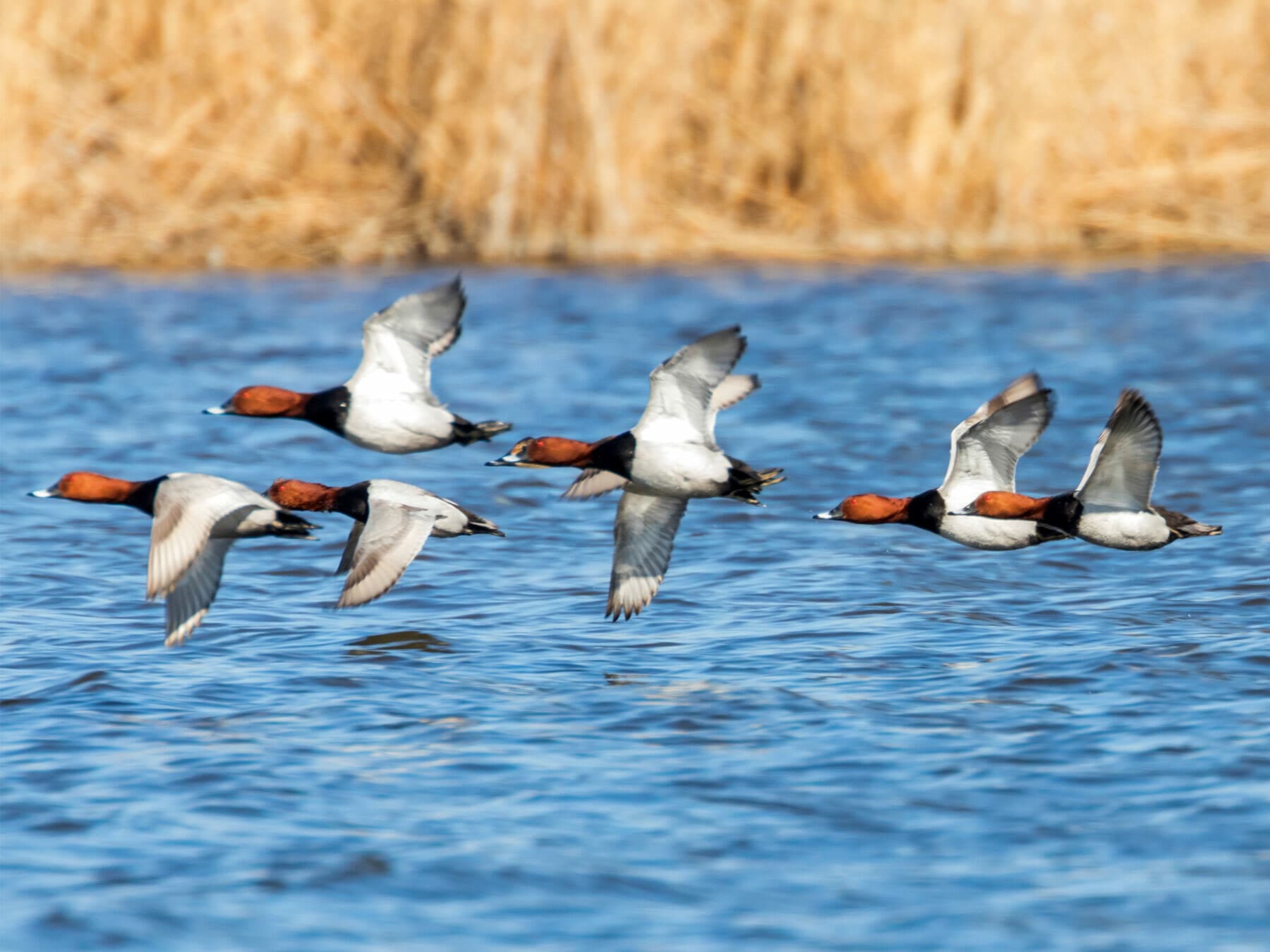
The Pochard is a medium-sized diving duck with a distinctive rounded head and sloping forehead. Males in breeding plumage have a striking rusty-red head, black breast, and pale grey body. Their back is finely vermiculated grey, creating a subtle, elegant pattern.
The drake’s winter plumage is bold and striking with a pale grey body, darker grey upperwing coverts and paler grey flight feathers. In eclipse plumage, males are similar to females but have greyer bodies, darker breasts and a plain face.
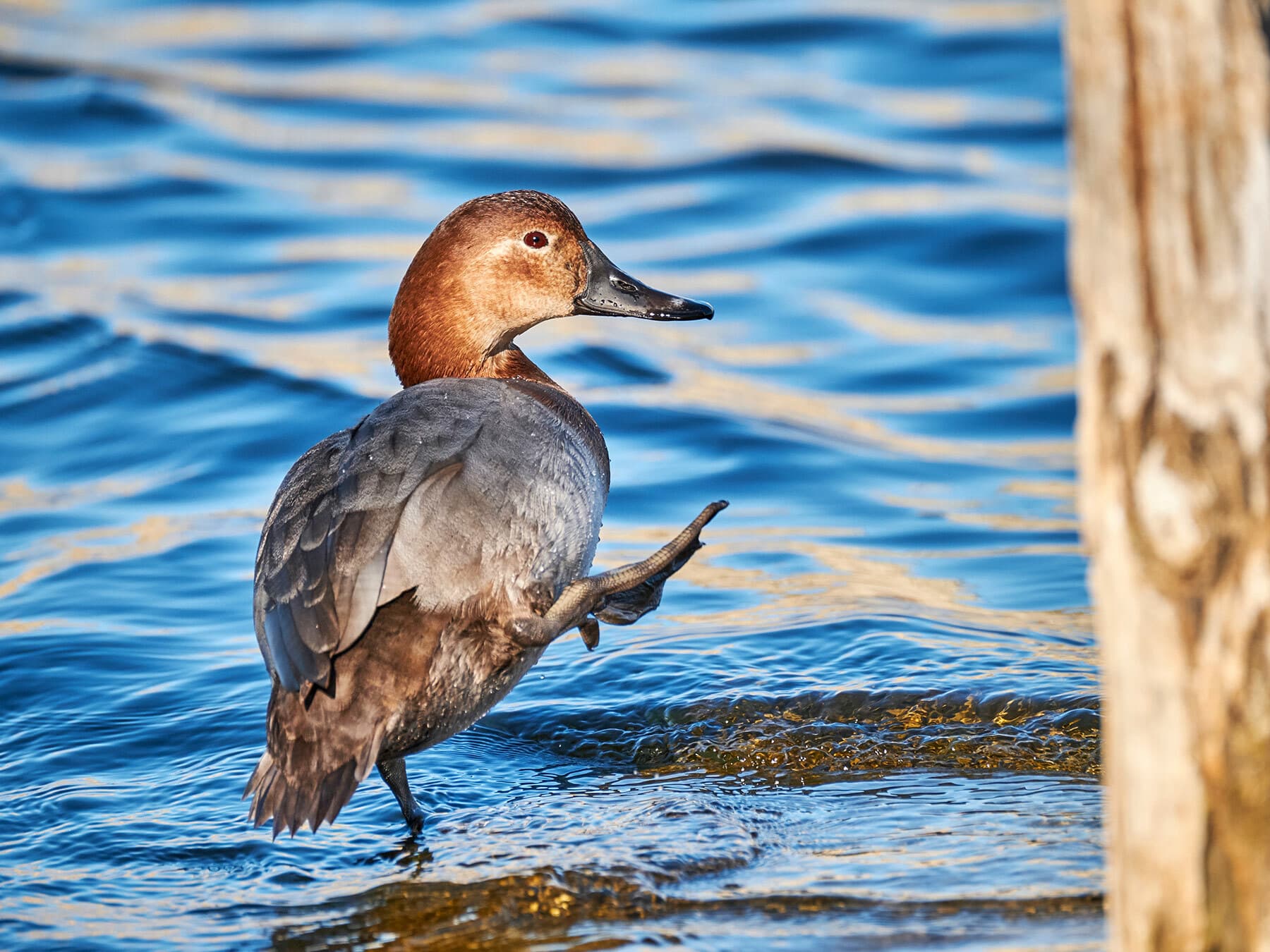
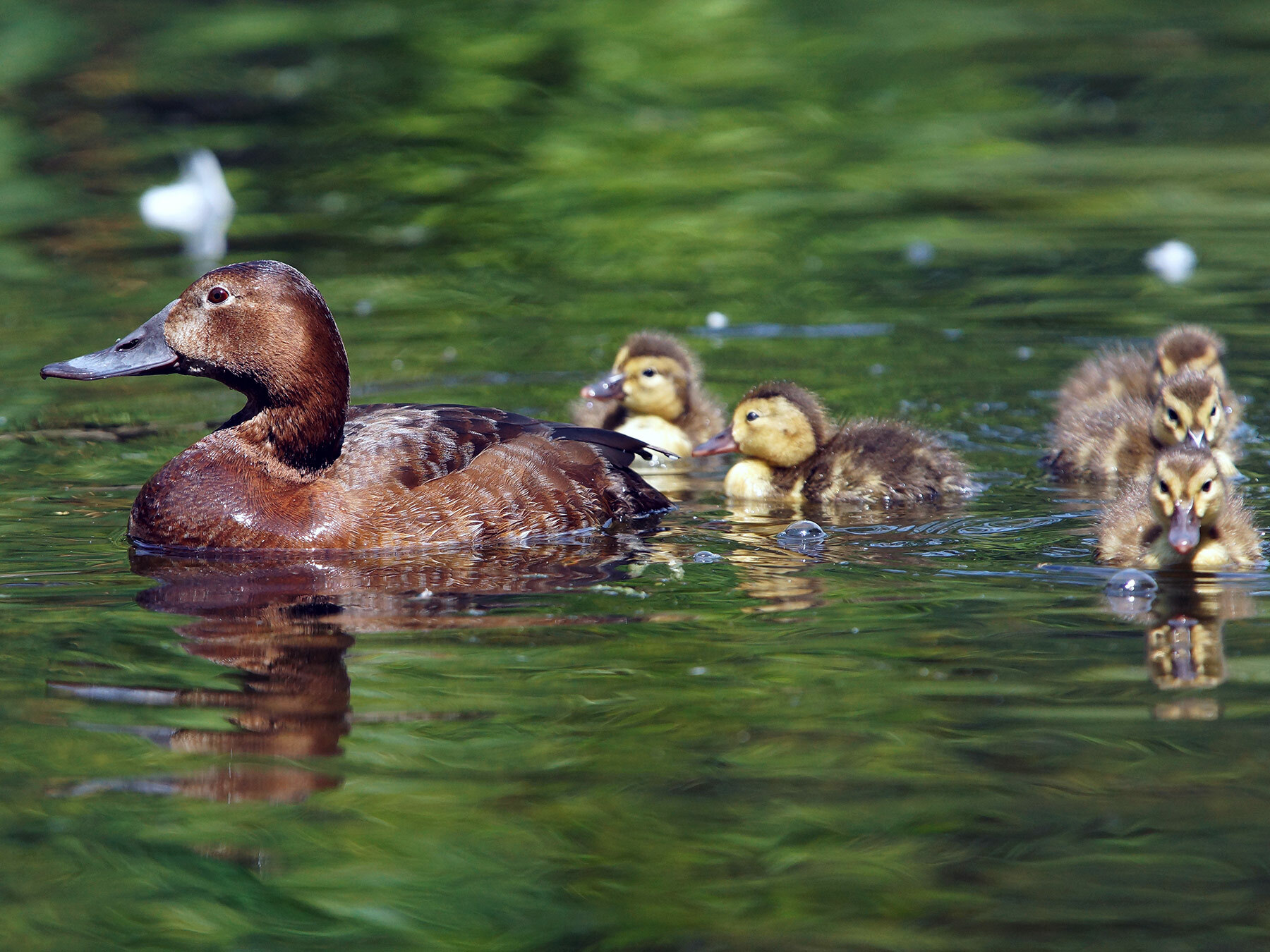
Females are more subdued, with a brown head and body and slightly paler cheeks. Both sexes have a grey bill with a black tip and grey legs. In flight, both show a pale grey wing stripe.
Its size
Adults- Length
- 42–49 cm
- Wingspan
- 67–75 cm
- Weight
- 690–1200 g
Its song and calls
Both males and females are generally quiet birds but during the breeding season the male has a display call consisting of a wheezing whistle which rises and falls similar to ‘kil – kil’. The female has a softer purring growl.
- Song0:00 / 0:18
Recorded in Bretagne, France · March 2022
- Flight call0:00 / 0:14
Recorded in Hauts-de-France, France · April 2025
When and where to see it
OctoberArriving
Most recorded in October
- 1. Stockton-on-Tees1.2%
- 2. Perthshire and Kinross0.90%
- 3. London0.86%
- 4. Hertfordshire0.85%
- 5. Rutland0.84%
Each dot is a county, state or province: the bigger and darker, the larger the bird’s share of that place’s bird records that month. Grey dots: no regular records. The ringed point is the centre of the bird’s records this month; the arrow shows how it moved since last month, and the dashed loop its path through the year. “Arrivals” colours places where it becomes regular this month (orange) or is in its last regular month (grey). GBIF eBird Observation Dataset, 2019–2024. Map data: Natural Earth, US Census Bureau; place centres © OpenStreetMap contributors.
In your area
See when the Pochard is recorded in your county, state or province.
How often the Pochard turns up in the UK and Ireland through the year, from birdwatchers' records.
United Kingdom
Resident · all year · most records in January
Ireland
Winter visitor · all year · most records in November
Show as a table
| Month | United Kingdom | Ireland |
|---|---|---|
| January | 0.52% (regular) | 0.10% (regular) |
| February | 0.50% (regular) | 0.069% (regular) |
| March | 0.42% (regular) | 0.035% (regular) |
| April | 0.32% (regular) | 0.032% (regular) |
| May | 0.30% (regular) | 0.013% (regular) |
| June | 0.25% (regular) | 0.008% (regular) |
| July | 0.24% (regular) | 0.005% (regular) |
| August | 0.26% (regular) | 0.017% (regular) |
| September | 0.24% (regular) | 0.006% (regular) |
| October | 0.27% (regular) | 0.023% (regular) |
| November | 0.44% (regular) | 0.10% (regular) |
| December | 0.49% (regular) | 0.098% (regular) |
Recorded regularly in
Worldwide: recorded regularly in 78 countries
Countries where it was recorded in at least 3 of the 6 years 2019–2024. Linked countries have their own bird list.
Europe (42)
- Åland Islands
- Albania
- Austria
- Belarus
- Belgium
- Bosnia & Herzegovina
- Bulgaria
- Croatia
- Czechia
- Denmark
- Estonia
- Finland
- France
- Germany
- Greece
- Hungary
- Iceland
- Ireland
- Isle of Man
- Italy
- Jersey
- Kosovo
- Latvia
- Lithuania
- Luxembourg
- Moldova
- Montenegro
- Netherlands
- North Macedonia
- Norway
- Poland
- Portugal
- Romania
- Russia
- Serbia
- Slovakia
- Slovenia
- Spain
- Sweden
- Switzerland
- Ukraine
- United Kingdom
Asia (32)
- Armenia
- Azerbaijan
- Bangladesh
- Bhutan
- China
- Cyprus
- Georgia
- Hong Kong SAR China
- India
- Iran
- Israel
- Japan
- Jordan
- Kazakhstan
- Kuwait
- Kyrgyzstan
- Mongolia
- Myanmar (Burma)
- Nepal
- Oman
- Pakistan
- Palestinian Territories
- Philippines
- Qatar
- Saudi Arabia
- South Korea
- Taiwan
- Tajikistan
- Thailand
- Turkey
- United Arab Emirates
- Uzbekistan
Data: EOD – eBird Observation Dataset (Cornell Lab of Ornithology), accessed via GBIF.org, CC BY 4.0. Records from 2019–2024, aggregated and filtered by Birdfact. How these lists are made
Pochards spend the summer in lowland lakes, reservoirs or gravel pits particularly in eastern England and Scotland. In the winter, with the dramatic increase of migrants, they are widespread throughout the UK mainly in estuaries and on larger lakes and reservoirs.
Signs and Spotting tips
Pochards are social birds and will often be seen in flocks. Spring and summer are the best times to spot Pochards as the male is in its clearly defined breeding plumage which is easily recognisable. Females and males in eclipse plumage closely resemble many other species of dull brown ducks, particularly at a distance.
What it eats
Frequently a nocturnal feeder, diving for its food, the pochard eats aquatic plants, roots, shoots and seeds and occasional aquatic insects and their larvae. When diving the pochard will regularly reach depths of up to 2.5 metres.
Nesting and breeding
The nest is normally well concealed, built on the ground or over water constructed using grasses, leaves and reeds lined with down. A single brood consisting of between 8 – 10 grey green eggs is laid from April to July. Incubation lasts for around twenty five days with fledging taking up to fifty five days after hatching.
Behaviour
Pochards are skilled divers, often submerging themselves for 15-30 seconds to forage. During winter, they form large flocks on open water, sometimes mixing with other diving ducks.
During the breeding season, males perform head-throws and whistling calls to attract mates.
Lifespan and predators
The lifespan of the pochard is between eight to ten years.
Conservation
The Pochard is classified as Vulnerable due to significant population declines across its range. Threats include habitat loss, particularly the drainage of wetlands, hunting, and climate change impacts. Conservation efforts focus on protecting and restoring wetland habitats.
What does a Pochard look like?
Often referred to as the Common Pochard, the drake, in line with many other duck species, is readily identifiable in the winter and breeding season with its bright coloured plumage and distinct patternation but in its ‘eclipse plumage’ during the summer months, becomes a rather dull non descript bird, not unlike the female. The drake’s winter plumage is bold and striking with a pale grey body, darker grey upperwing coverts and paler grey flight feathers. The primary and secondary flight feathers have dark tips and the underwing is slightly off white. The breast is gloss black as are the rump, tail, undertail coverts and mantle (below the nape of the neck). The head is a rich red brown with a sloping forehead and peaked crown. The eyes are orange and the bill a dark grey with a black tip and a pale grey band across the upper mandible, between just below the nostrils and finishing approximately two thirds of the way down the bill. Legs and webbed feet are a bluey grey. In eclipse plumage the male almost mirrors the female but overall has a greyer body and darker breast area with a plain face. The female has a matt brown head with pale grey cheeks and above eye stripe extending from the base of the bill and a pale grey throat. The body is grey brown morphing to a darker brown on the back with dark grey brown upper wings. The bill is similar to that of the male but the eyes are a dark brown. Juvenile birds are similar to the adult female but without the eye stripe and with more mottling on the underparts.
Similar birds
Often mistaken for
More photos
2 photos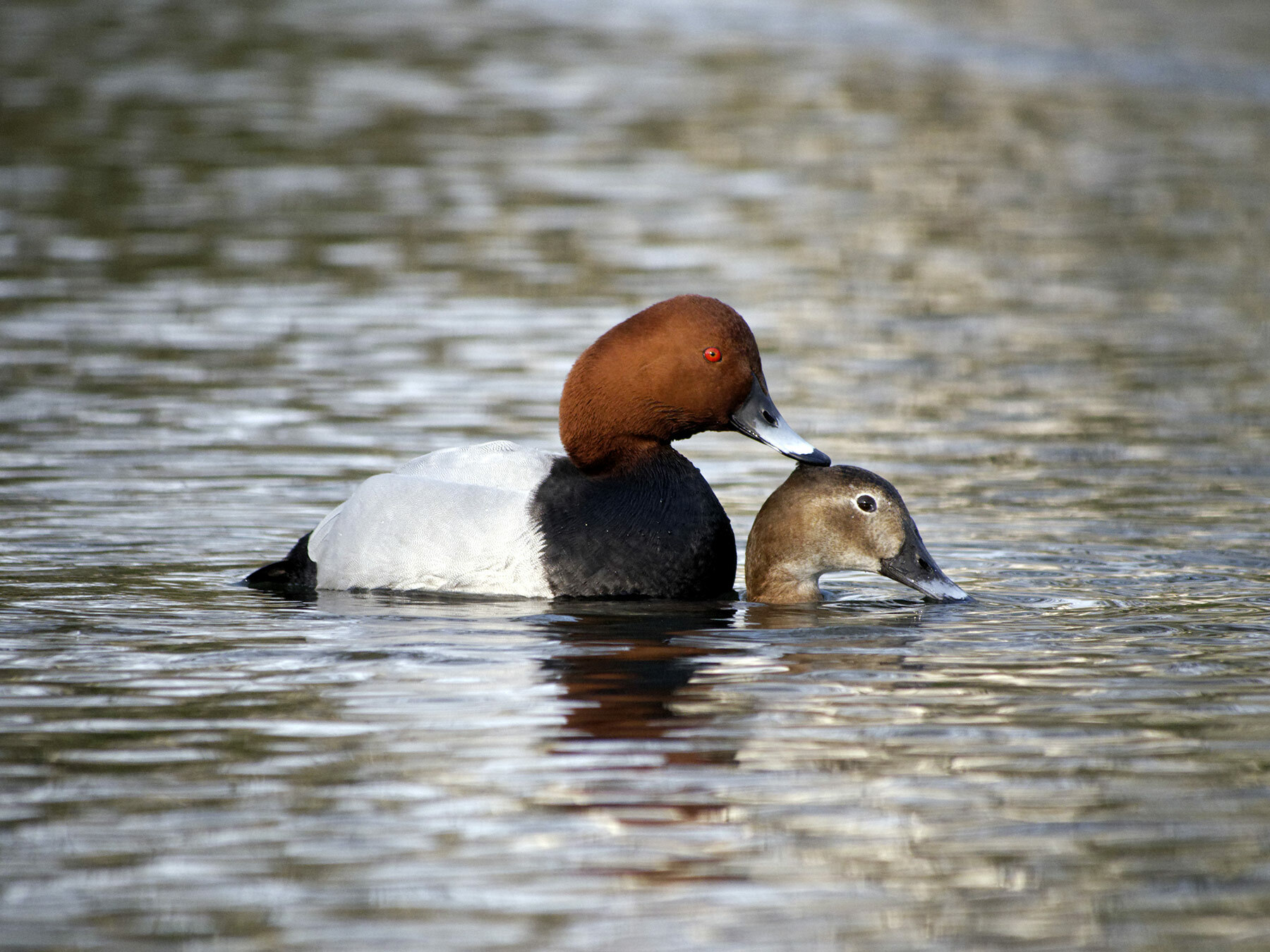
Pochard guides
4 guidesQuick facts
- Length
- 42–49 cm
- Wingspan
- 67–75 cm
- Weight
- 690–1200 g
- Lifespan
- 10–12 years · oldest recorded 23 years
- Family
- Ducks, Geese & Swans
- Migration
- Partial migrant
- Global status (IUCN)
- Vulnerable
- World population
- 760,000 - 790,000 mature individuals
- Population trend
- Decreasing
- Also called
- Common Pochard, Eurasian Pochard
- Scientific name
- Aythya ferina
Sources
4- 1BirdLife International. 2021. Aythya ferina. The IUCN Red List of Threatened Species 2021: e.T22680358A205288455. Source (opens in a new tab)
- 2Wetlands International (2021)
- 3Wetlands International (2021)
- 4Fransson et al., EURING list of longevity records for European birds (2010) Source (opens in a new tab)

Checked by
Nathan Cope, founder and editor
Nathan founded Birdfact and leads its writers and contributors in the UK, the US and Canada. He has watched and studied birds for more than ten years, and checks every article and species guide before it’s published.