


Tufted Duck
Tufted Scaup, Tufted Pochard · Aythya fuligula
By the Birdfact teamChecked by Nathan Cope
On this page15 sections
How to recognise it
What do Tufted Ducks look like?
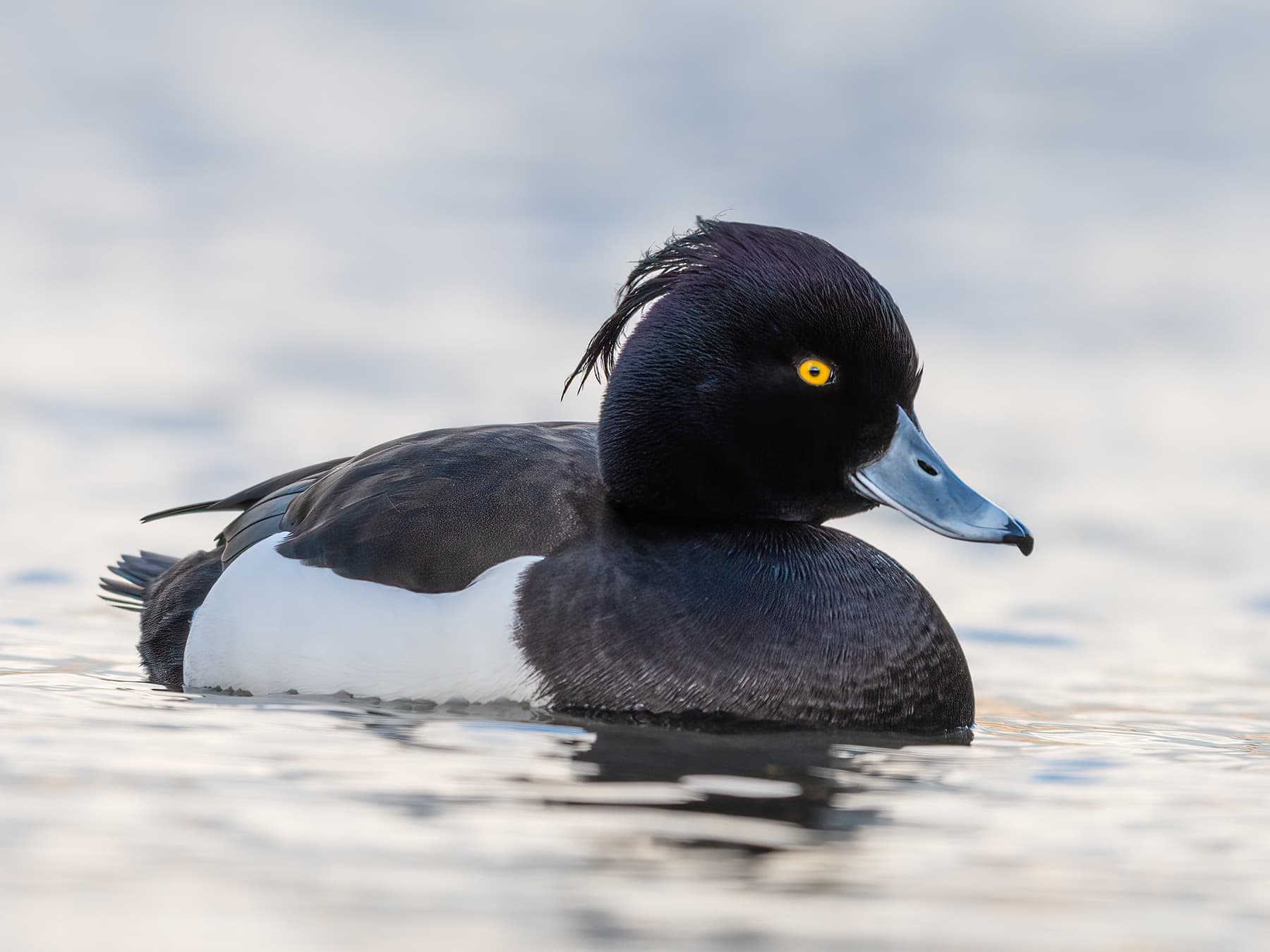
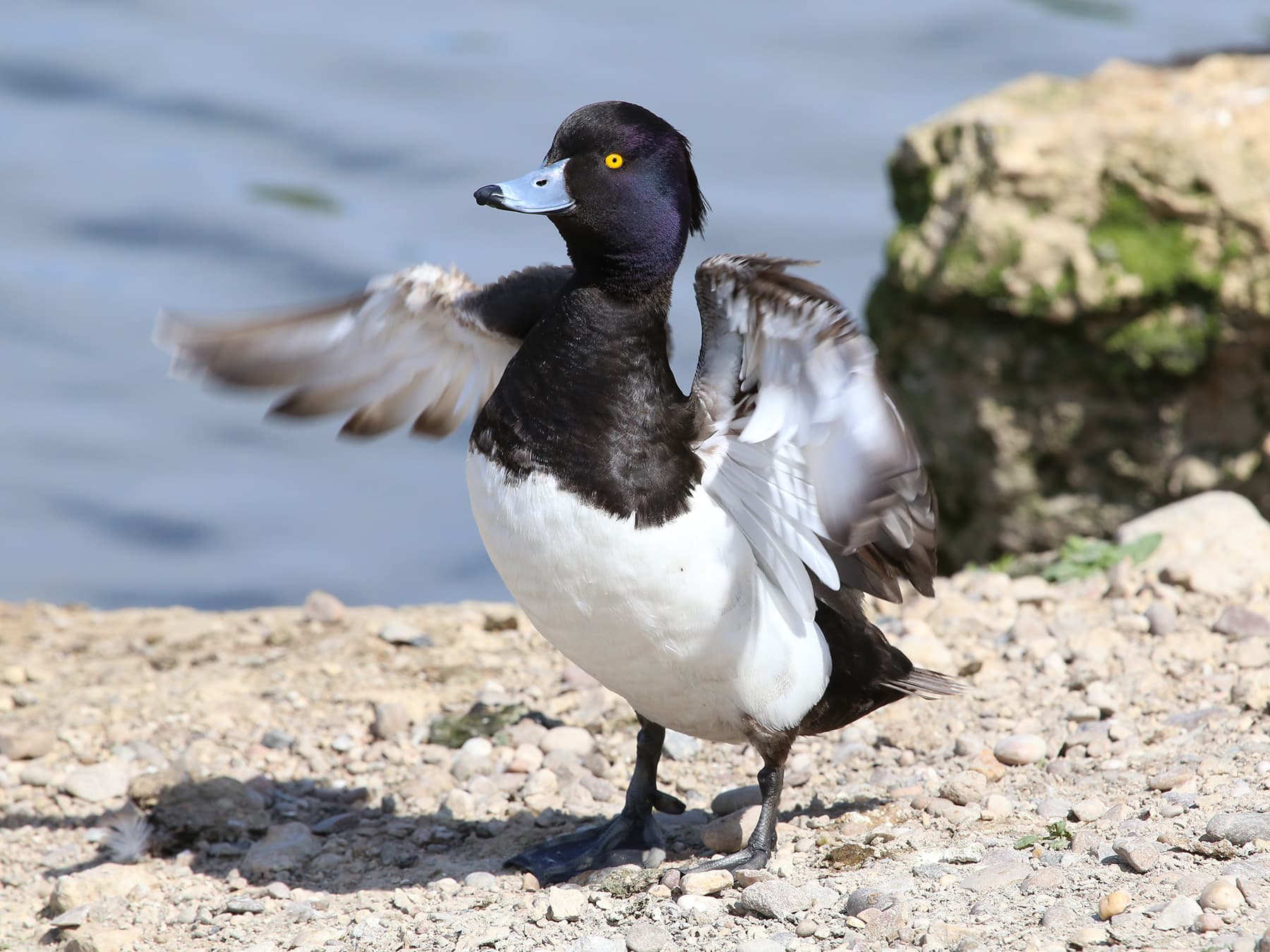
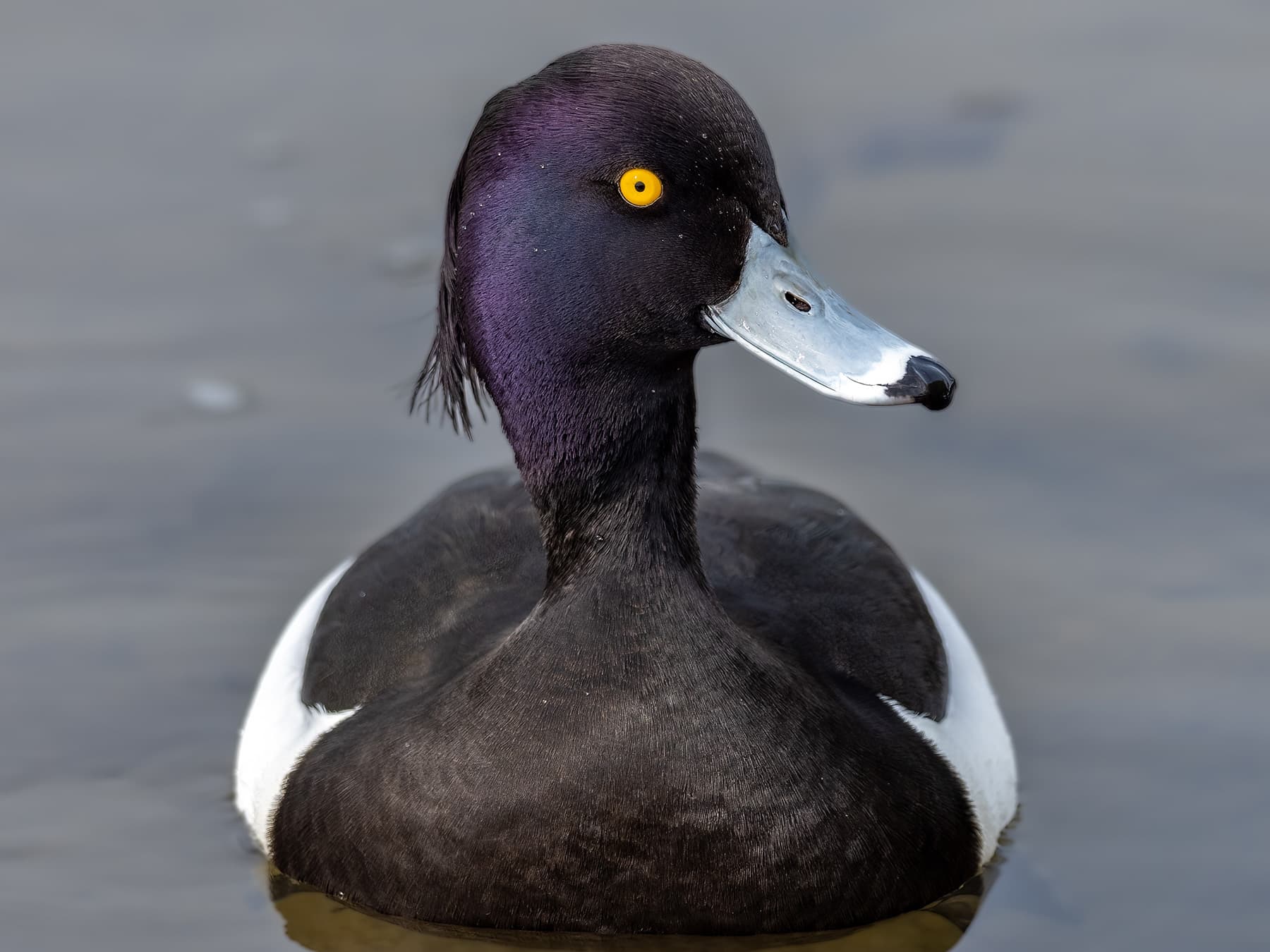
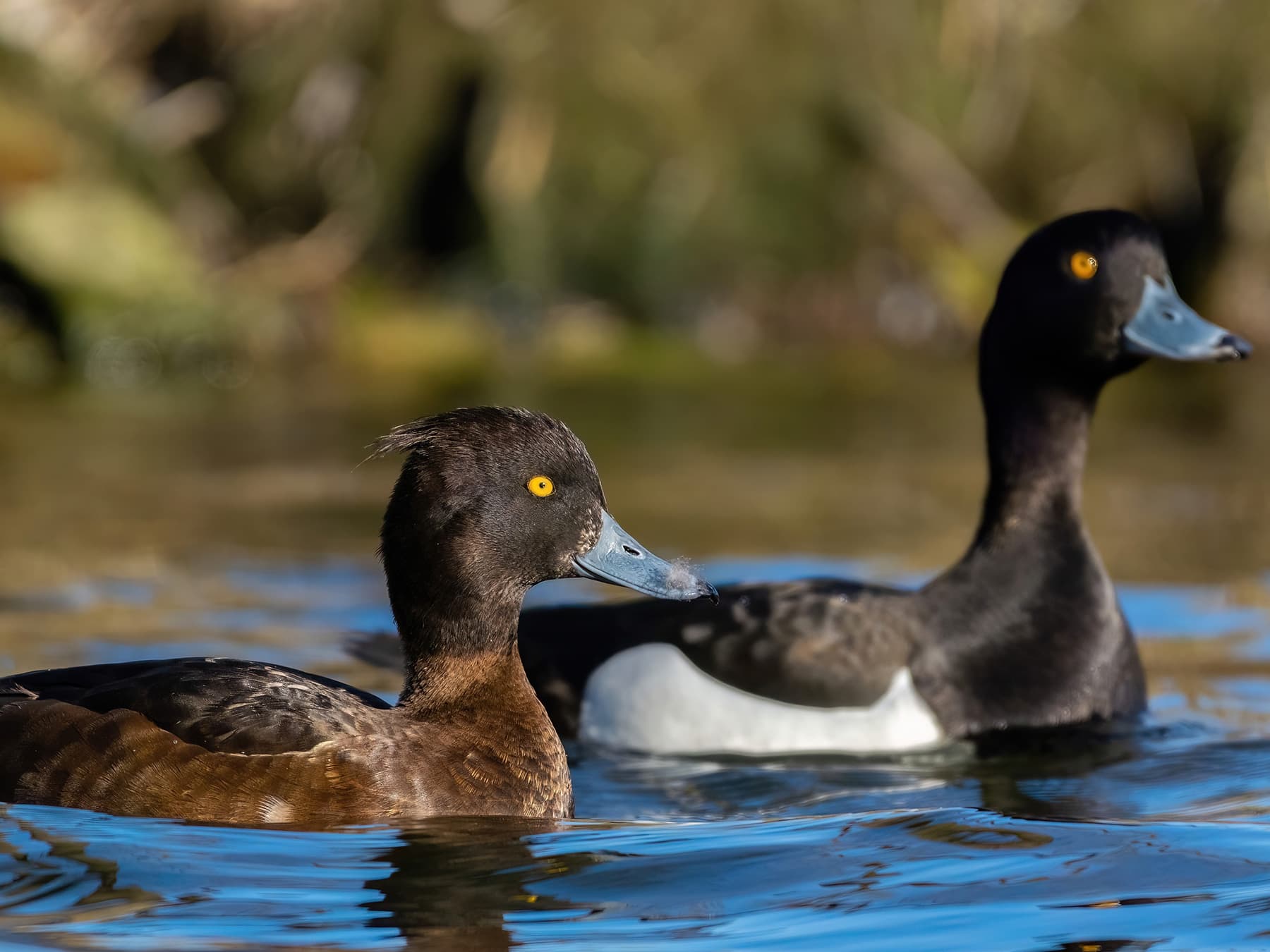
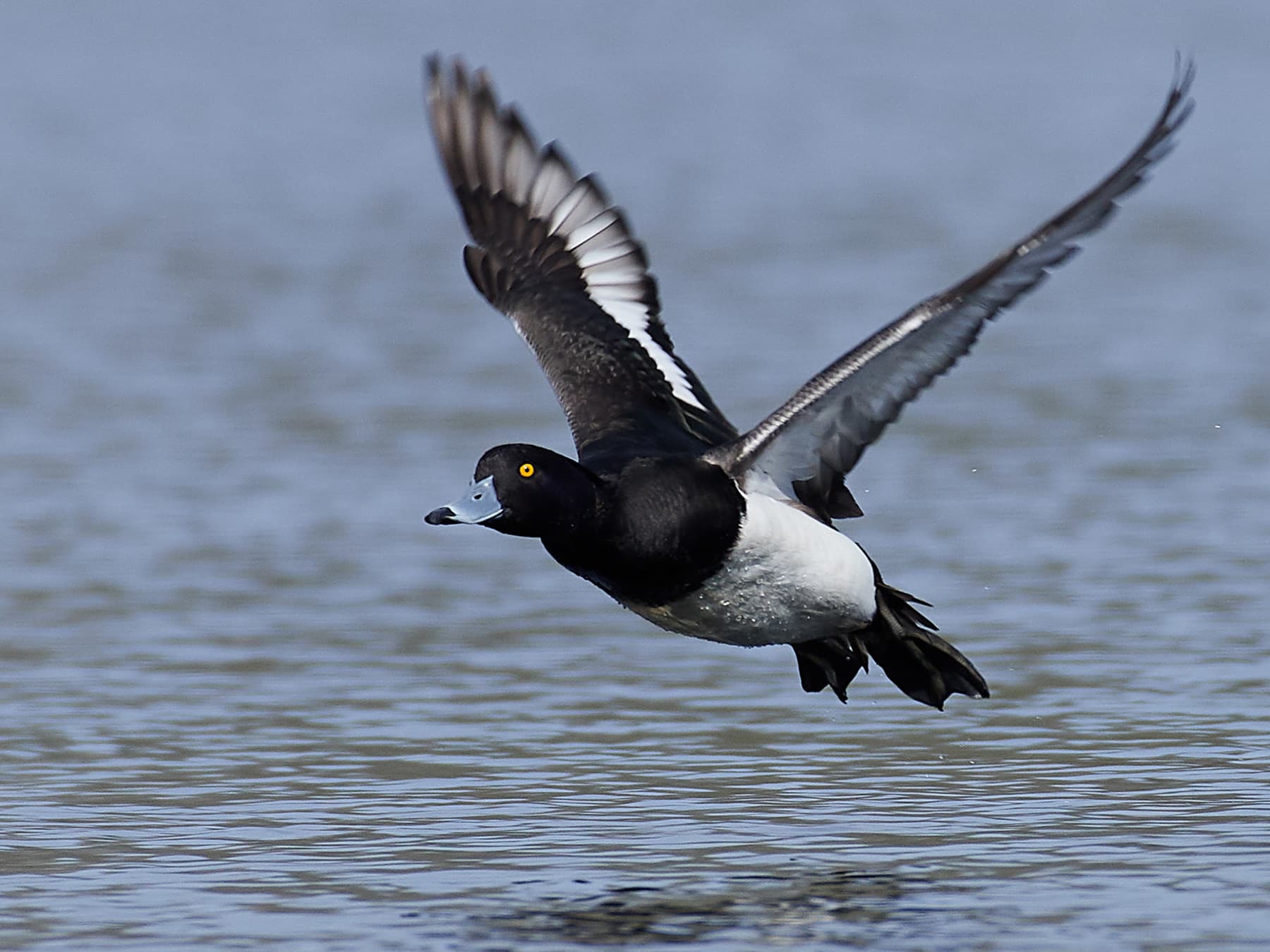
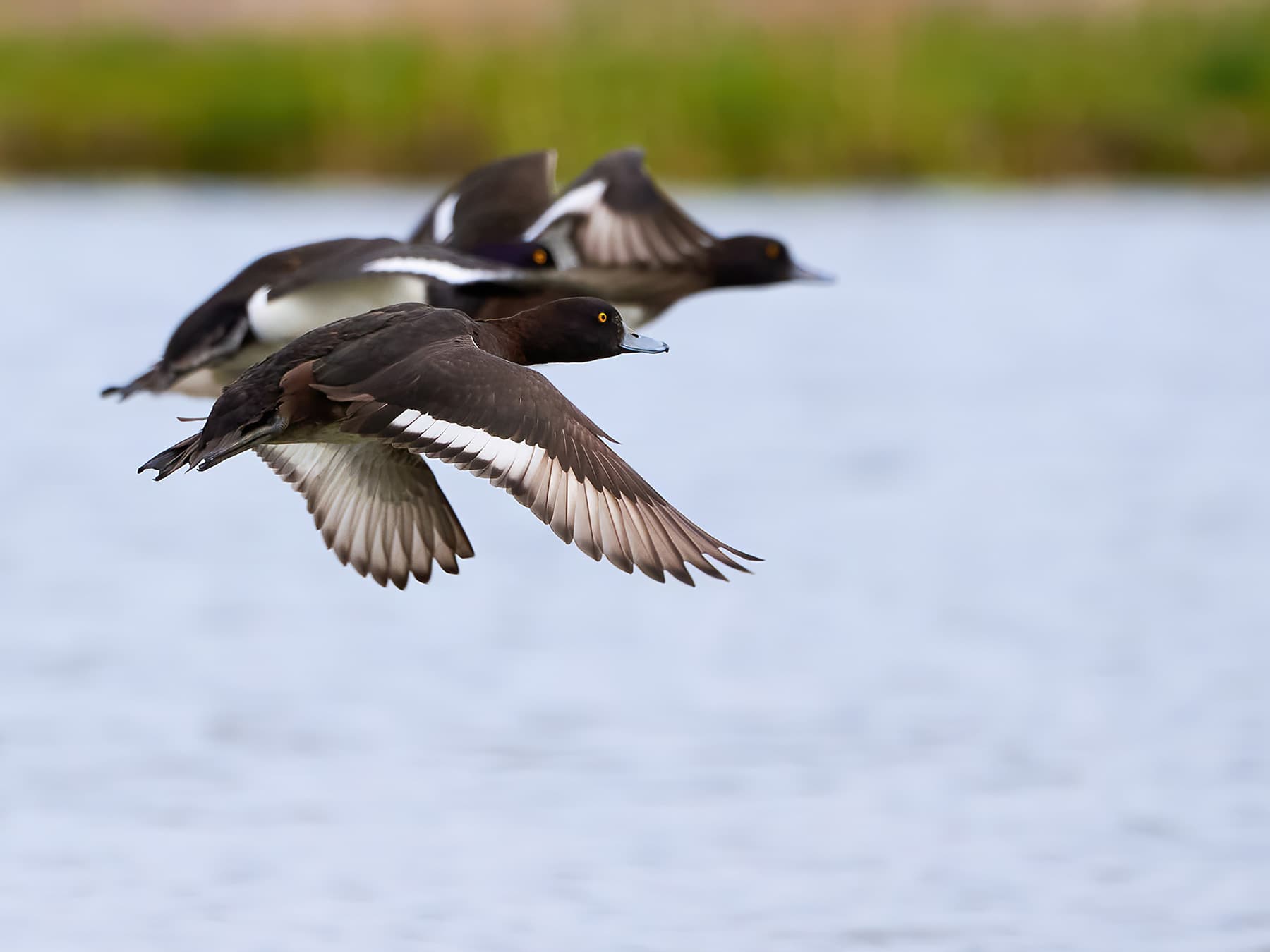
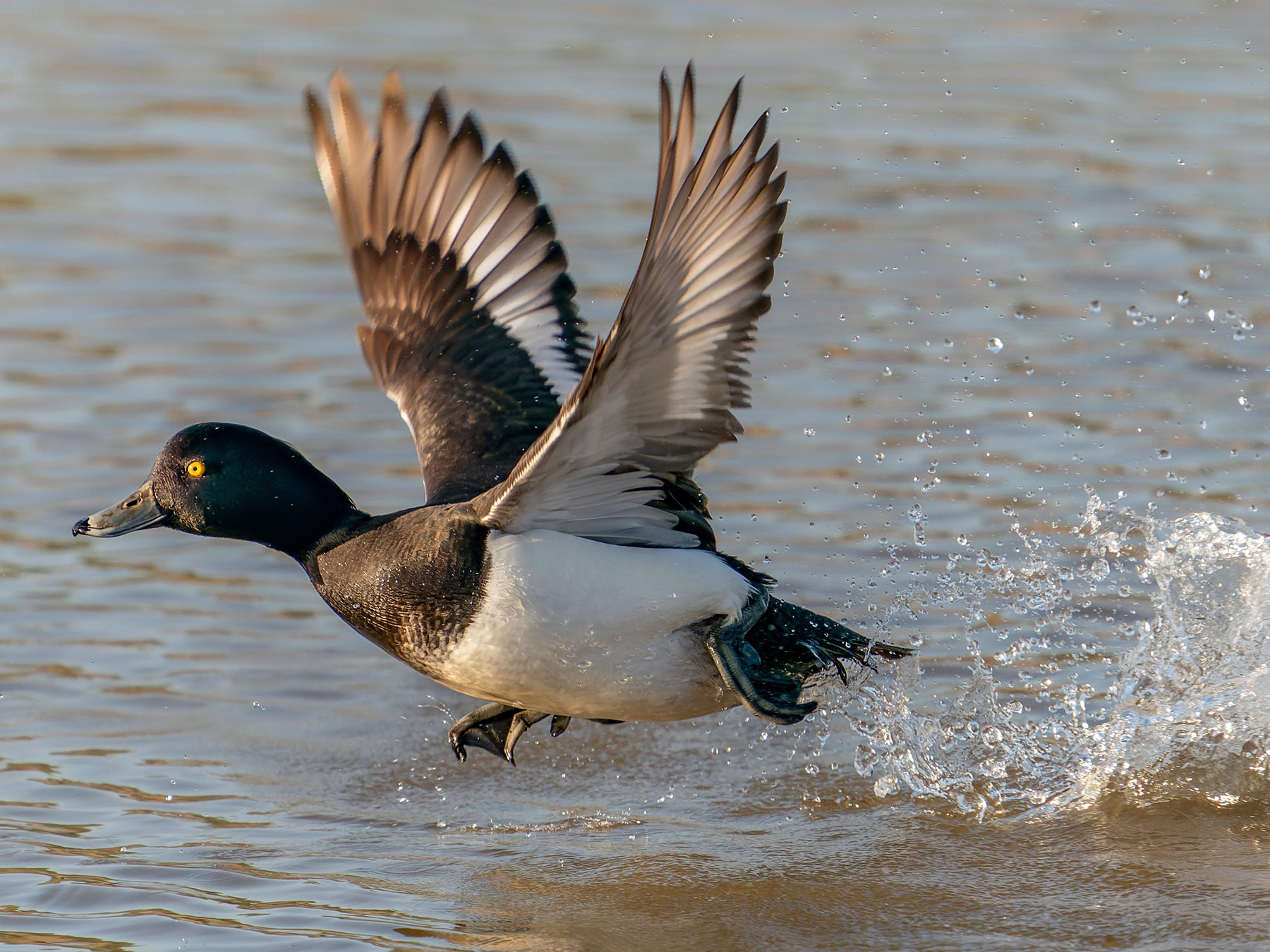
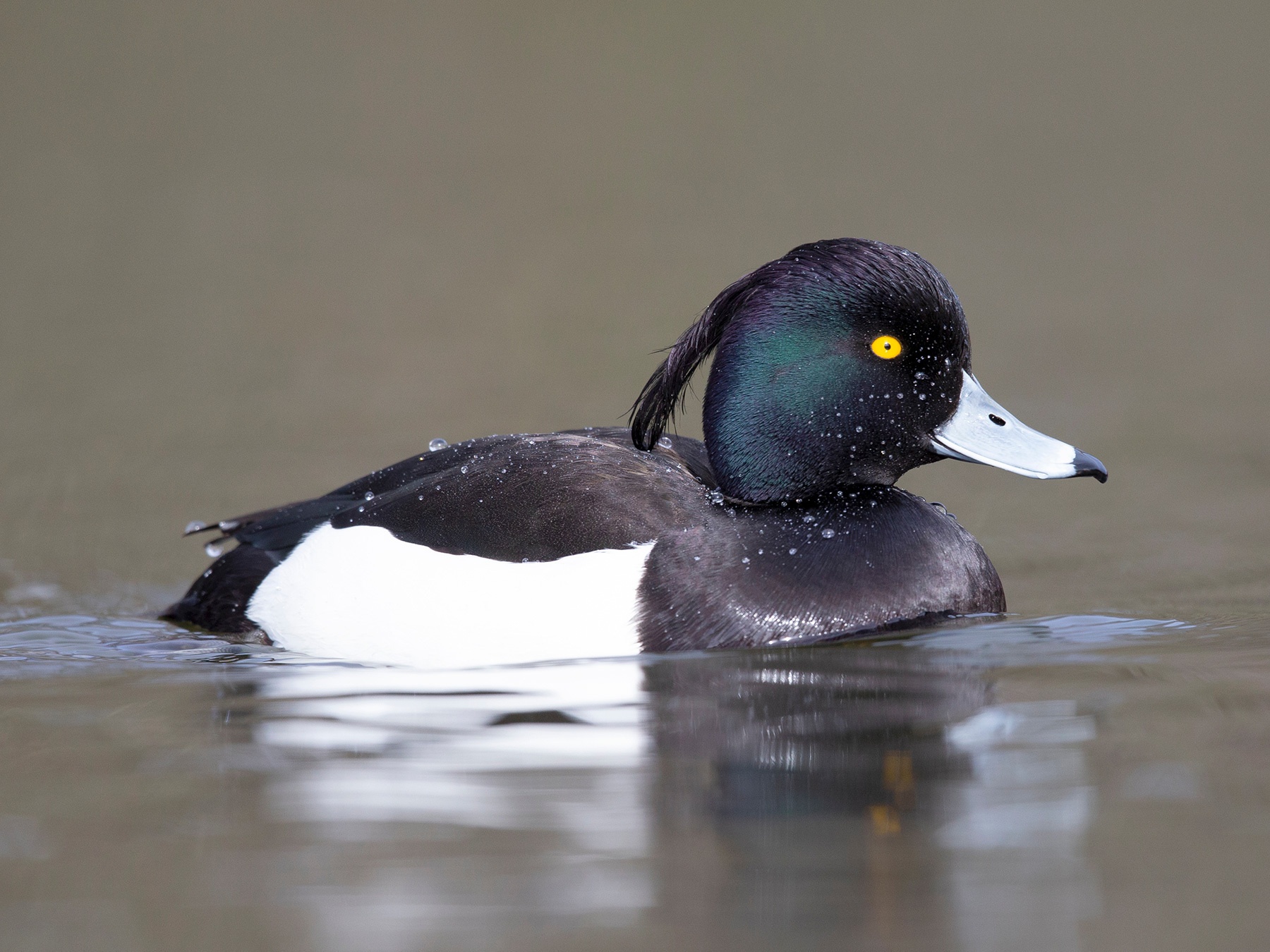
Adult male Tufted Ducks have a distinctive hanging crest. From a distance, these small ducks appear black with large white patches on their sides. Their dark plumage has a beautiful oily iridescence that reflects purple and green in good light. They have yellow eyes and a pale blue bill with a dark tip.
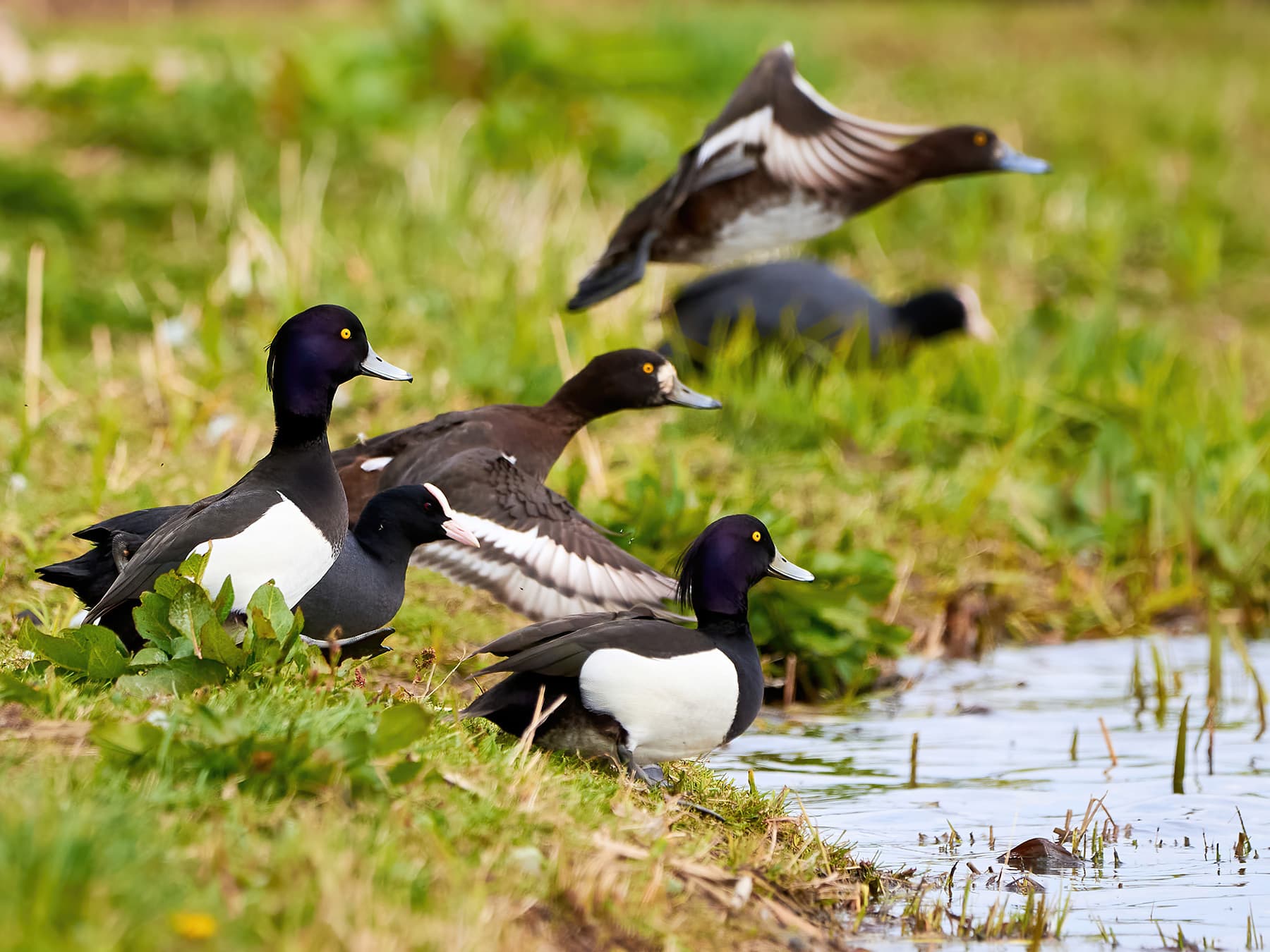
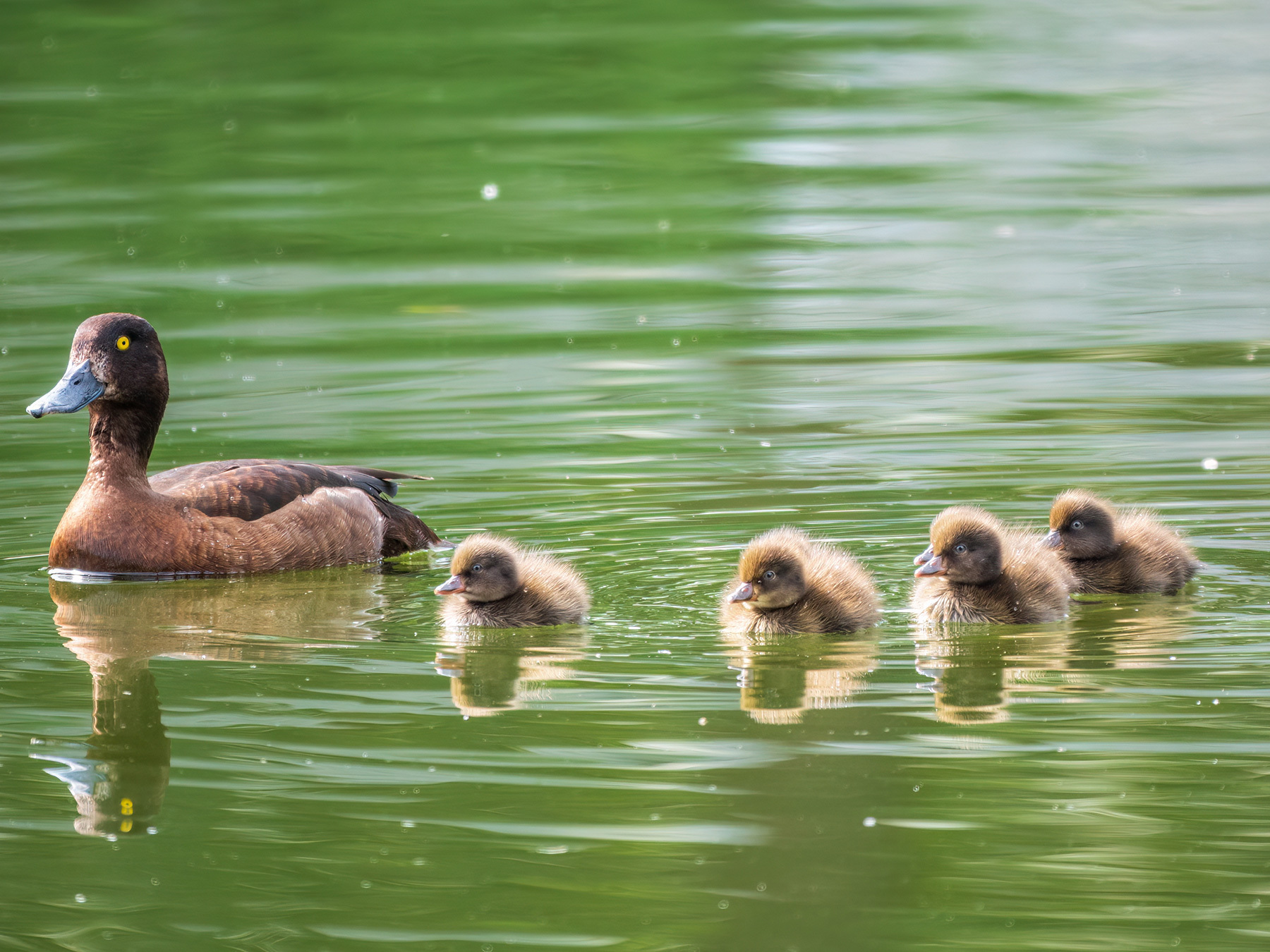
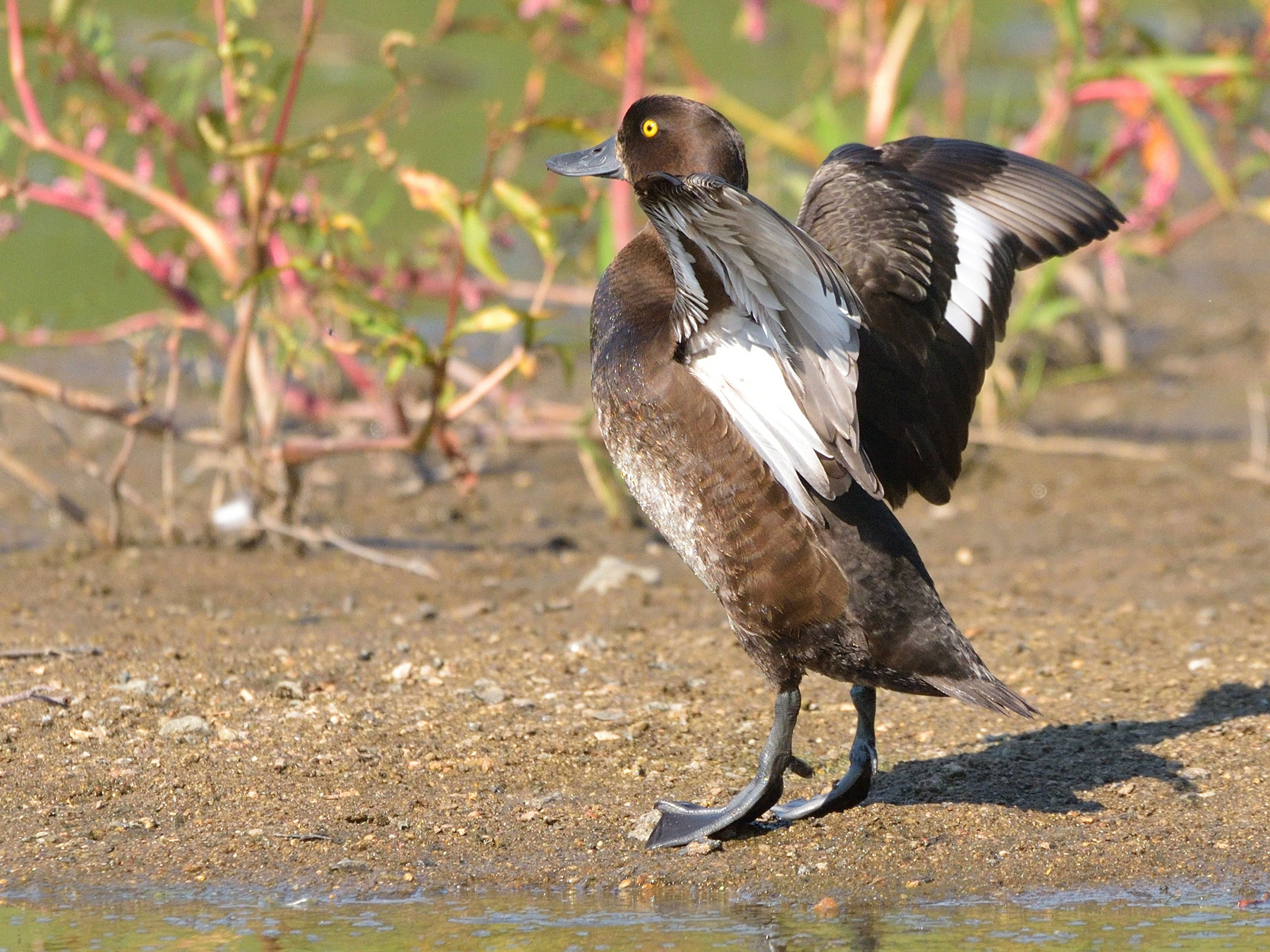
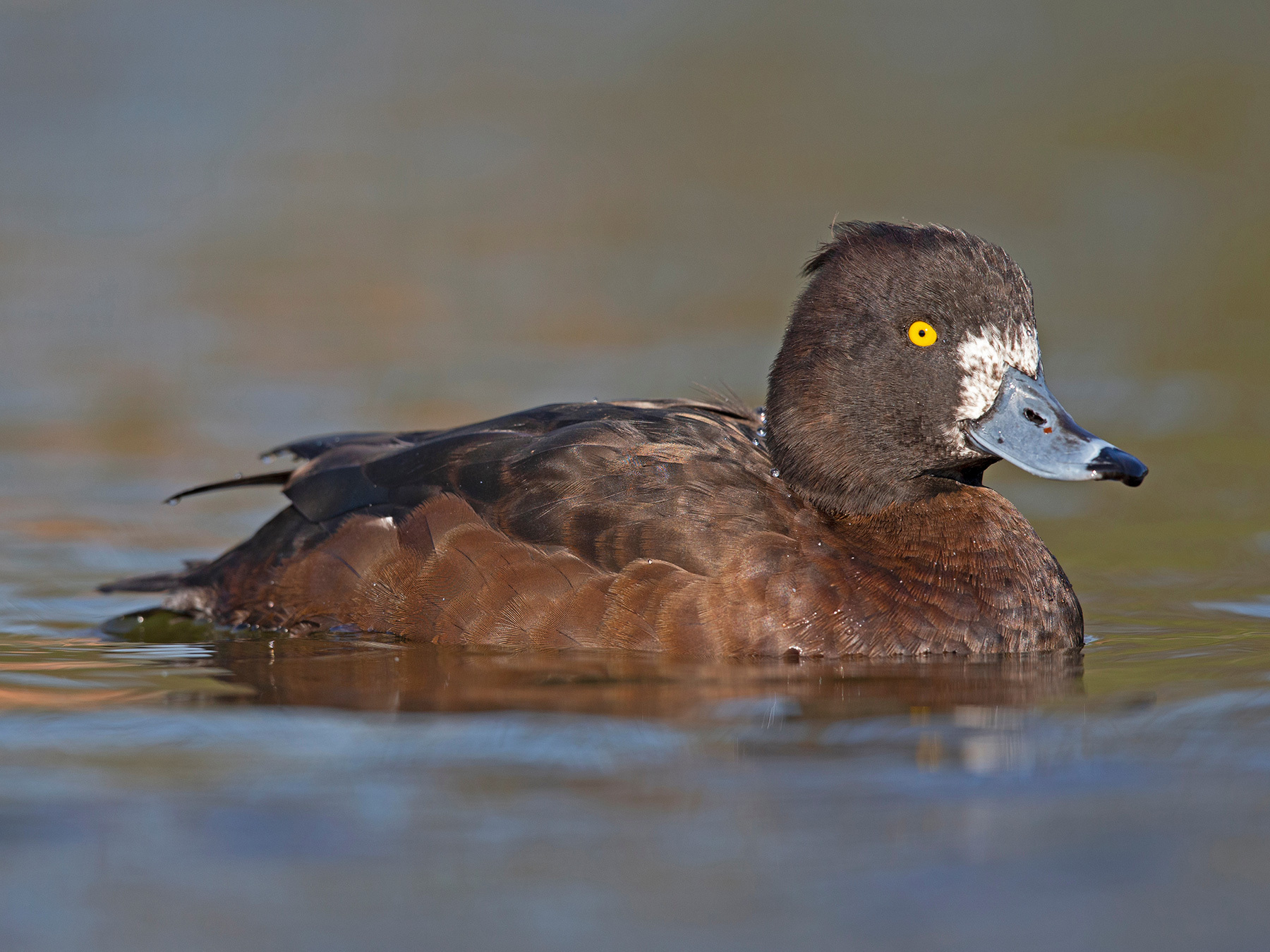
Female Tufted Ducks are easily distinguished from males. They have a much shorter tuft and lack the conspicuous white sides of the male. They have brown sides and dark brown upper parts without the purple gloss of the males. Some females have a whitish patch of plumage around the base of their bill.
In the UK, females are most likely to be confused with female Pochard and Scaup. American birdwatchers should rule out Greater and Lesser Scaup, which are common migratory waterfowl in the USA. Juvenile Tufted Ducks resemble adult females but have darker eyes and a darker bill.
How big are Tufted Ducks?
Tufted Ducks are small waterfowl, much larger than the Teal but smaller than the Mallard. Hens are slightly smaller than drakes on average.
Length
Tufted Ducks have a body length of 40 to 47 centimetres or 16 to 18 inches.
Weight
Male Tufted Ducks weigh 600 to 1020 grams (1lb 5oz - 2lb 4oz), while females weigh 560 to 930 grams (1lb 4oz - 2lb 1oz).
Wingspan
They have a wingspan of 65 to 73 centimetres or 25 to 29 inches.
Its size
Adults- Length
- 40–47 cm
- Wingspan
- 67–73 cm
- Weight
- 550–1200 g
Its song and calls
What sound does a Tufted Duck make?
Tufted Ducks are generally quiet, although the males and females produce various soft calls during courtship, including quacks, whistles, and grunts. They also call in flight and to communicate with their young.
- Call0:00 / 0:10
Recorded in Brittany, France · April 2026
When and where to see it
OctoberIn season
Most recorded in October
- 1. Blaenau Gwent4.0%
- 2. Stockton-on-Tees1.8%
- 3. Glasgow1.8%
- 4. Nottinghamshire1.7%
- 5. Rutland1.7%
Each dot is a county, state or province: the bigger and darker, the larger the bird’s share of that place’s bird records that month. Grey dots: no regular records. The ringed point is the centre of the bird’s records this month; the arrow shows how it moved since last month, and the dashed loop its path through the year. “Arrivals” colours places where it becomes regular this month (orange) or is in its last regular month (grey). GBIF eBird Observation Dataset, 2019–2024. Map data: Natural Earth, US Census Bureau; place centres © OpenStreetMap contributors.
In your area
See when the Tufted Duck is recorded in your county, state or province.
How often the Tufted Duck turns up in the UK, Ireland, the United States and Canada through the year, from birdwatchers' records.
United Kingdom
Resident · all year · most records in January
Ireland
Resident · all year · most records in January
United States
Winter visitor · regularly Oct–Jun · most records in January
Canada
Winter visitor · regularly Oct–Apr · most records in January
Show as a table
| Month | United Kingdom | Ireland | United States | Canada |
|---|---|---|---|---|
| January | 1.1% (regular) | 0.61% (regular) | 0.004% (regular) | 0.031% (regular) |
| February | 1.1% (regular) | 0.59% (regular) | 0.003% (regular) | 0.022% (regular) |
| March | 1.1% (regular) | 0.58% (regular) | 0.002% (regular) | 0.015% (regular) |
| April | 1.00% (regular) | 0.45% (regular) | <0.001% (regular) | 0.006% (regular) |
| May | 0.89% (regular) | 0.28% (regular) | <0.001% (regular) | 0.001% |
| June | 0.82% (regular) | 0.35% (regular) | <0.001% (regular) | <0.001% |
| July | 0.75% (regular) | 0.30% (regular) | <0.001% | 0.001% |
| August | 0.70% (regular) | 0.27% (regular) | <0.001% | 0.001% |
| September | 0.71% (regular) | 0.28% (regular) | <0.001% | 0.001% |
| October | 0.70% (regular) | 0.44% (regular) | <0.001% (regular) | 0.004% (regular) |
| November | 0.93% (regular) | 0.56% (regular) | 0.002% (regular) | 0.013% (regular) |
| December | 1.1% (regular) | 0.56% (regular) | 0.003% (regular) | 0.016% (regular) |
Recorded regularly in
Worldwide: recorded regularly in 88 countries
Countries where it was recorded in at least 3 of the 6 years 2019–2024. Linked countries have their own bird list.
Europe (43)
- Åland Islands
- Albania
- Austria
- Belarus
- Belgium
- Bosnia & Herzegovina
- Bulgaria
- Croatia
- Czechia
- Denmark
- Estonia
- Faroe Islands
- Finland
- France
- Germany
- Greece
- Hungary
- Iceland
- Ireland
- Isle of Man
- Italy
- Jersey
- Latvia
- Lithuania
- Luxembourg
- Moldova
- Montenegro
- Netherlands
- North Macedonia
- Norway
- Poland
- Portugal
- Romania
- Russia
- Serbia
- Slovakia
- Slovenia
- Spain
- Svalbard & Jan Mayen
- Sweden
- Switzerland
- Ukraine
- United Kingdom
Asia (35)
- Armenia
- Azerbaijan
- Bangladesh
- Bhutan
- Cambodia
- China
- Cyprus
- Georgia
- Hong Kong SAR China
- India
- Iran
- Israel
- Japan
- Jordan
- Kazakhstan
- Kuwait
- Kyrgyzstan
- Macao SAR China
- Malaysia
- Mongolia
- Myanmar (Burma)
- Nepal
- Oman
- Pakistan
- Palestinian Territories
- Philippines
- Qatar
- Saudi Arabia
- South Korea
- Taiwan
- Tajikistan
- Thailand
- Turkey
- United Arab Emirates
- Uzbekistan
North America (3)
Oceania (5)
- Guam
- Marshall Islands
- Northern Mariana Islands
- Palau
- US Outlying Islands
Data: EOD – eBird Observation Dataset (Cornell Lab of Ornithology), accessed via GBIF.org, CC BY 4.0. Records from 2019–2024, aggregated and filtered by Birdfact. How these lists are made
What is the habitat of a Tufted Duck?
Tufted Ducks inhabit a variety of freshwater habitats. They prefer moderately deep (3-5m) still waters, although you may spot them in any of the following habitats:
- Lakes
- Gravel pits
- Ponds
- Reservoirs
- Larger rivers
- Canals
What is the range of a Tufted Duck?
Tufted Ducks are widespread in the UK, occurring practically everywhere except high-lying areas in the north of Scotland. They are widely distributed in the old world, from Iceland in the west to Japan and the Bering Sea in the east.
They also visit North and East Africa in the non-breeding season. Tufted Ducks are a rarity in the United States and Canada, although vagrants turn up on both the west and east coasts.
Where do Tufted Ducks live?
Tufted Ducks are highly aquatic waterfowl that are most comfortable out on the water. They also spend time on land, floating vegetation, or islands when nesting but remain near the water’s edge.
How rare are Tufted Ducks?
Tufted Ducks are common waterfowl, with up to 19,000 resident breeding pairs in the UK. Their numbers increase greatly in the winter when over a hundred thousand birds arrive from Mainland Europe and Asia.
Where can you see Tufted Ducks in North America?
Tufted Ducks are very rare in the United States. Vagrants occasionally arrive from Europe to the east and Asia to the west.
Where can you see Tufted Ducks in the UK?
Birdwatchers can spot Tufted Ducks on just about any freshwater body in the UK, including lakes, ponds, rivers, and even in urban areas. These attractive waterfowl are present throughout the year, although they are most common in the winter months.
Migration
Do Tufted Ducks migrate?
Tufted Ducks are a common resident species in England, although they are migratory in the north of the United Kingdom. Many individuals that breed in Scotland move south into Ireland and England for the non-breeding season.
These birds are highly migratory in other parts of their range, and large numbers migrate to the UK each winter after breeding in Scandinavia and Western Russia. Tufted Ducks that breed in Iceland spend the winter in Ireland.
Are Tufted Ducks native to North America?
Tufted Ducks are not native to North America. They occasionally reach American shores but do not breed or migrate there regularly.
Are Tufted Ducks native to the UK?
Tufted Ducks are native to the United Kingdom, although their numbers have dramatically increased in the last three centuries. These birds colonised the British Isles in the mid-19th century after the introduction of a mollusc called the Zebra Mussel and have benefited greatly from the construction of new gravel pits and reservoirs.
Tips for seeing it
- Look for Tufted Ducks on large, deep lakes and reservoirs
- Observe their diving behaviour, as they submerge for 15-30 seconds at a time
- In the UK, check coastal areas during winter for large congregations
- Listen for the soft whistling call of males during the breeding season
What it eats
What do Tufted Ducks eat?
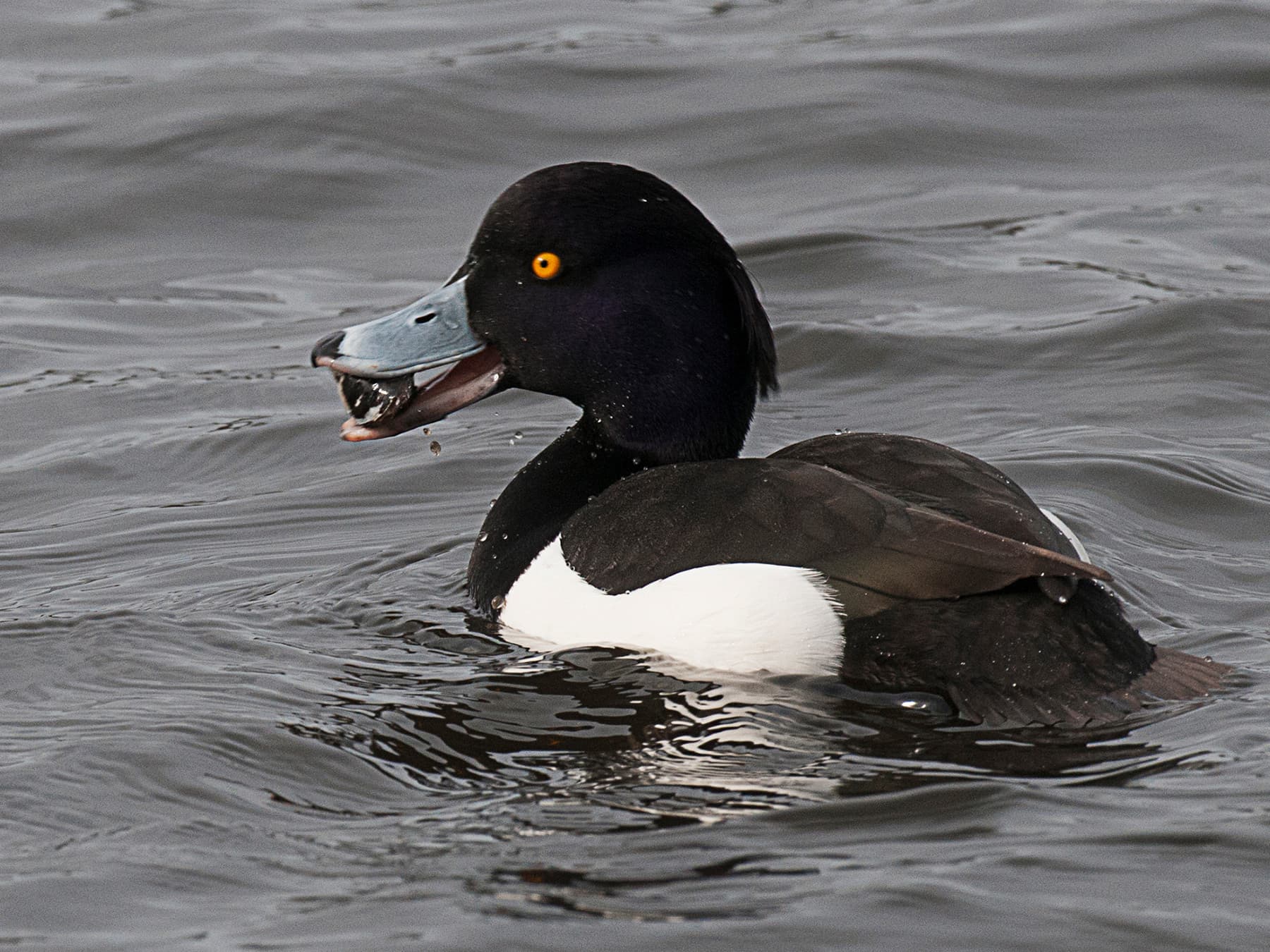
Tufted Ducks are omnivorous, feeding on aquatic vegetation and invertebrates. Molluscs like snails and mussels are their most important food source, although they also eat small insects and crustaceans.
These diving ducks find most of their food down on the bottom, although they also dabble and take food from the surface.
What do Tufted Duck chicks eat?
Tufted Duck ducklings eat insects and seeds. They feed themselves and can dive down to find food as soon as they leave the nest.
Nesting and breeding
Where do Tufted Ducks nest?
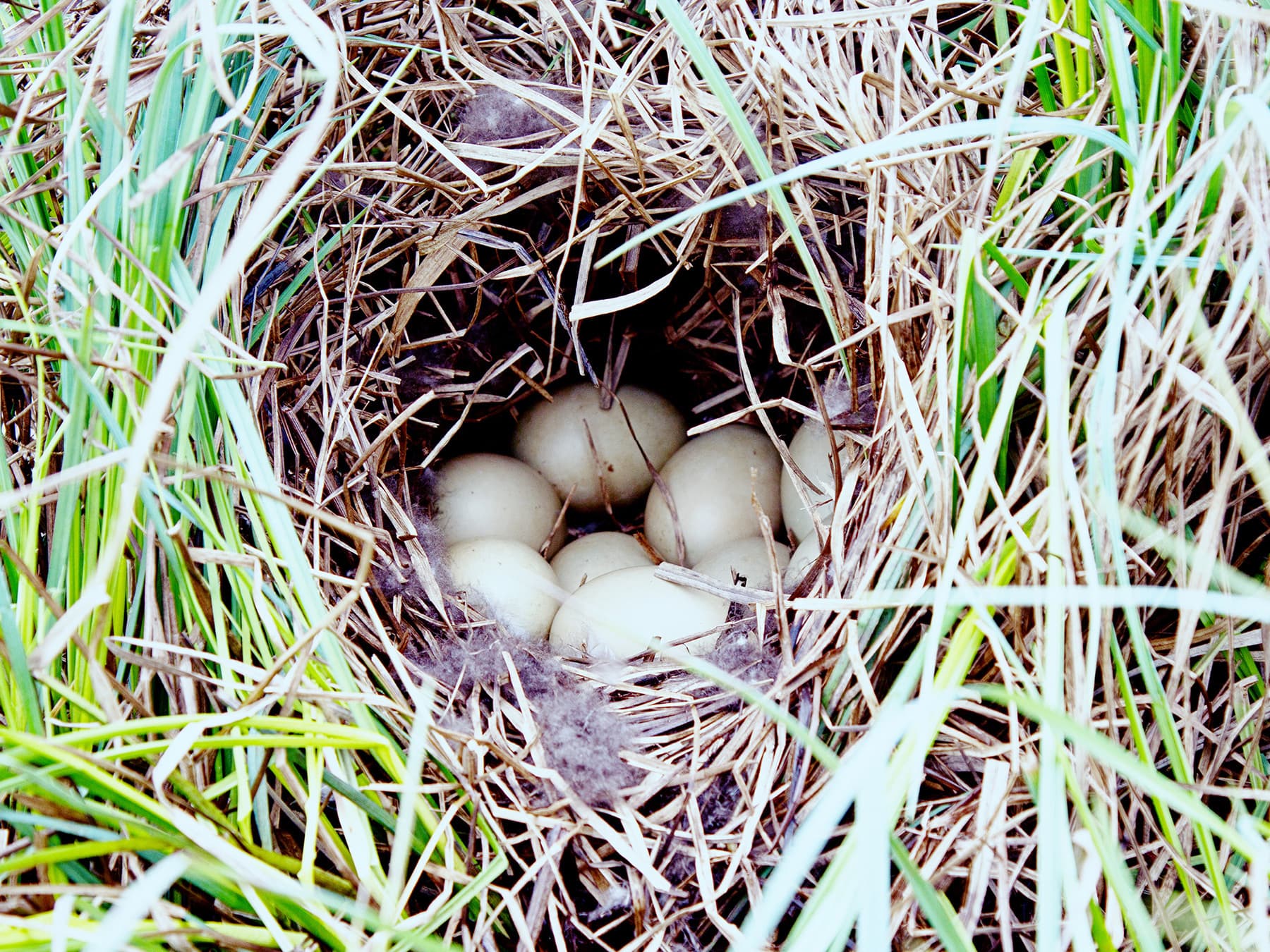
Tufted Ducks nest on the ground, often between grass or other vegetation. They nest alone or in small groups with several meters between nests. Females build their nests from grass stalks and line them with down and soft plant material.
When do Tufted Ducks nest?
Tufted Ducks begin breeding in their first year as adults. They start nesting in the spring when the female lays and incubates her eggs for 23 to 28 days. The ducklings associate with their mother for up to 42 days before she leaves them to fend for themselves.
What do Tufted Duck eggs look like?
Tufted Ducks lay a single clutch of eight to eleven grey-green eggs, each measuring about 59 millimetres long and 41 millimetres wide.
Do Tufted Ducks mate for life?
Tufted Ducks do not mate for life. Pairs form in spring and separate soon afterwards in the summer.
Behaviour
Are Tufted Ducks aggressive?
Tufted Ducks are social and gregarious, forming large flocks in the winter. These birds are not known for their aggression, although they may defend their nest territory in the breeding season.
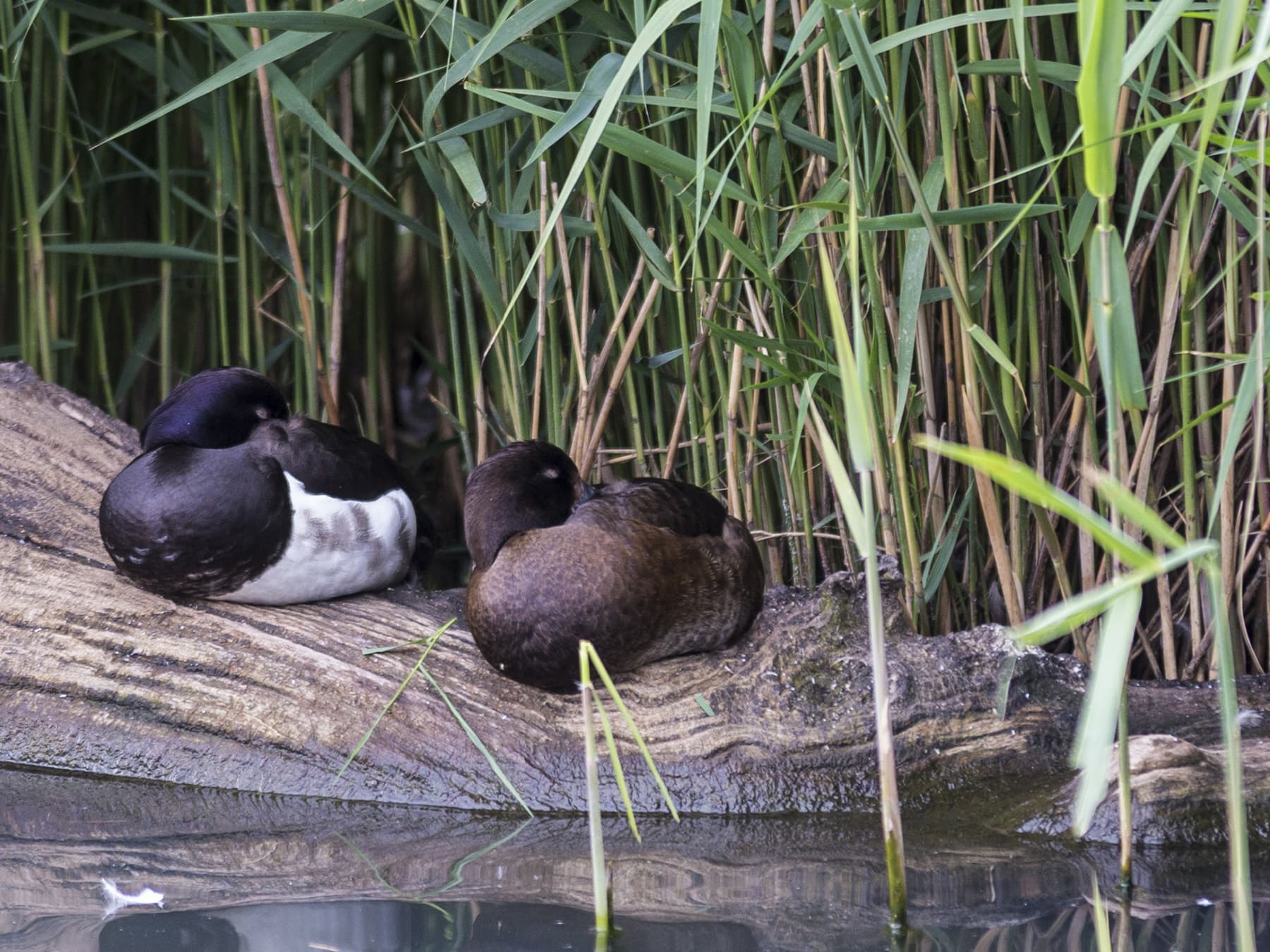
Where do Tufted Ducks sleep at night?
Tufted Ducks sleep on the water. They are not strictly diurnal and may sleep during the day and feed at night.
Lifespan and predators
How long do Tufted Ducks live?
Tufted Ducks have a typical lifespan of about four years, although they can live for over 24 years.
What are the predators of Tufted Ducks?
Adult Tufted Ducks have few enemies, although their eggs and ducklings are more vulnerable. Nest predators include Marsh Harriers, Crows, Ravens, and Mink.
Are Tufted Ducks protected?
Tufted Ducks are protected by the Wildlife and Countryside Act 1981.
Are Tufted Ducks endangered?
Tufted Ducks are a ‘Least Concern’ species on the IUCN Red List and have a green conservation status in the United Kingdom. They are not endangered and have a stable population trend.
Conservation
While currently listed as Least Concern, Tufted Ducks face threats from habitat loss and degradation of wetlands. Climate change may affect their breeding and wintering ranges.
Conservation efforts focus on protecting and restoring wetland habitats across their range.
Similar birds
Often mistaken for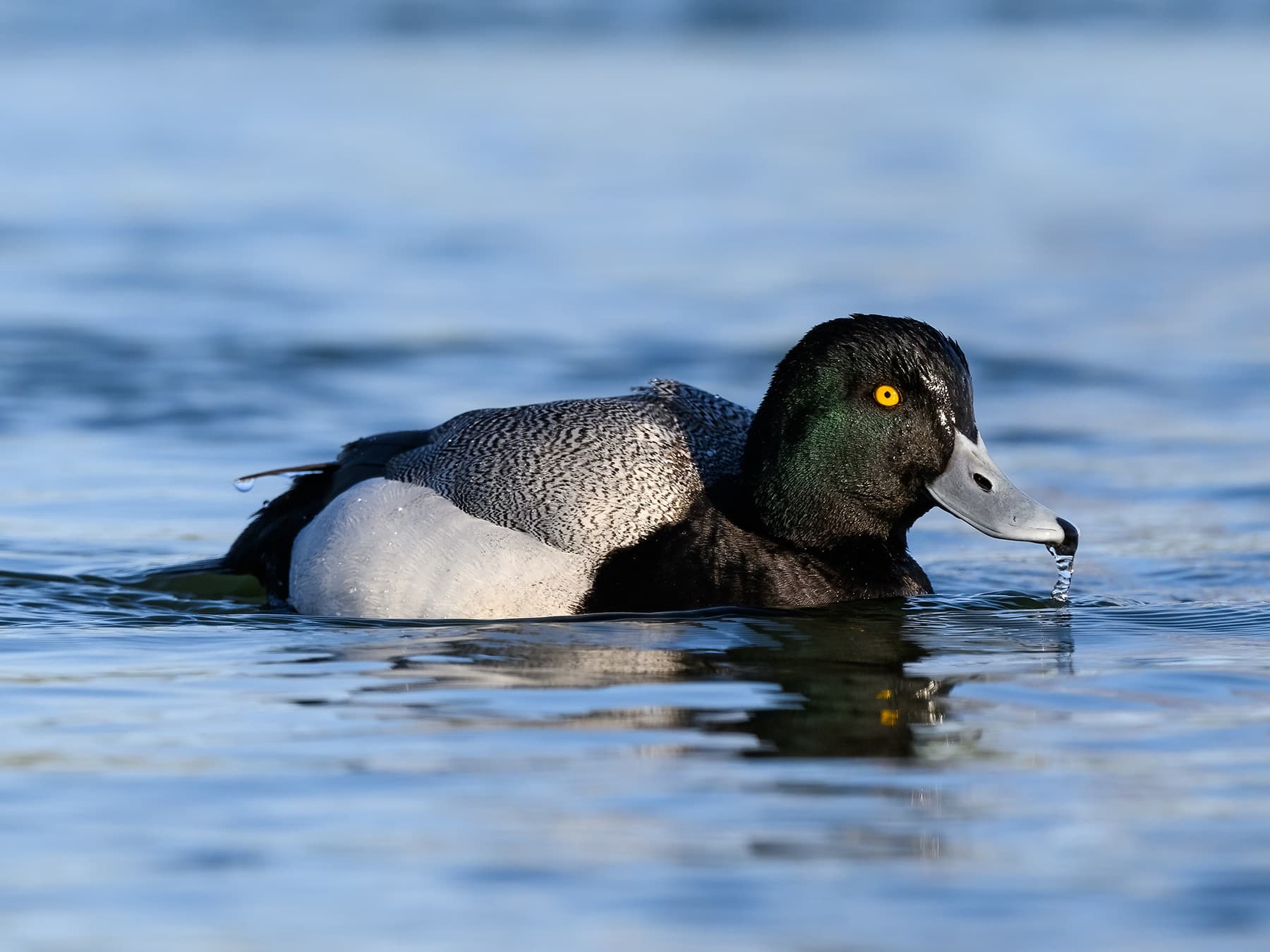
More photos
6 photos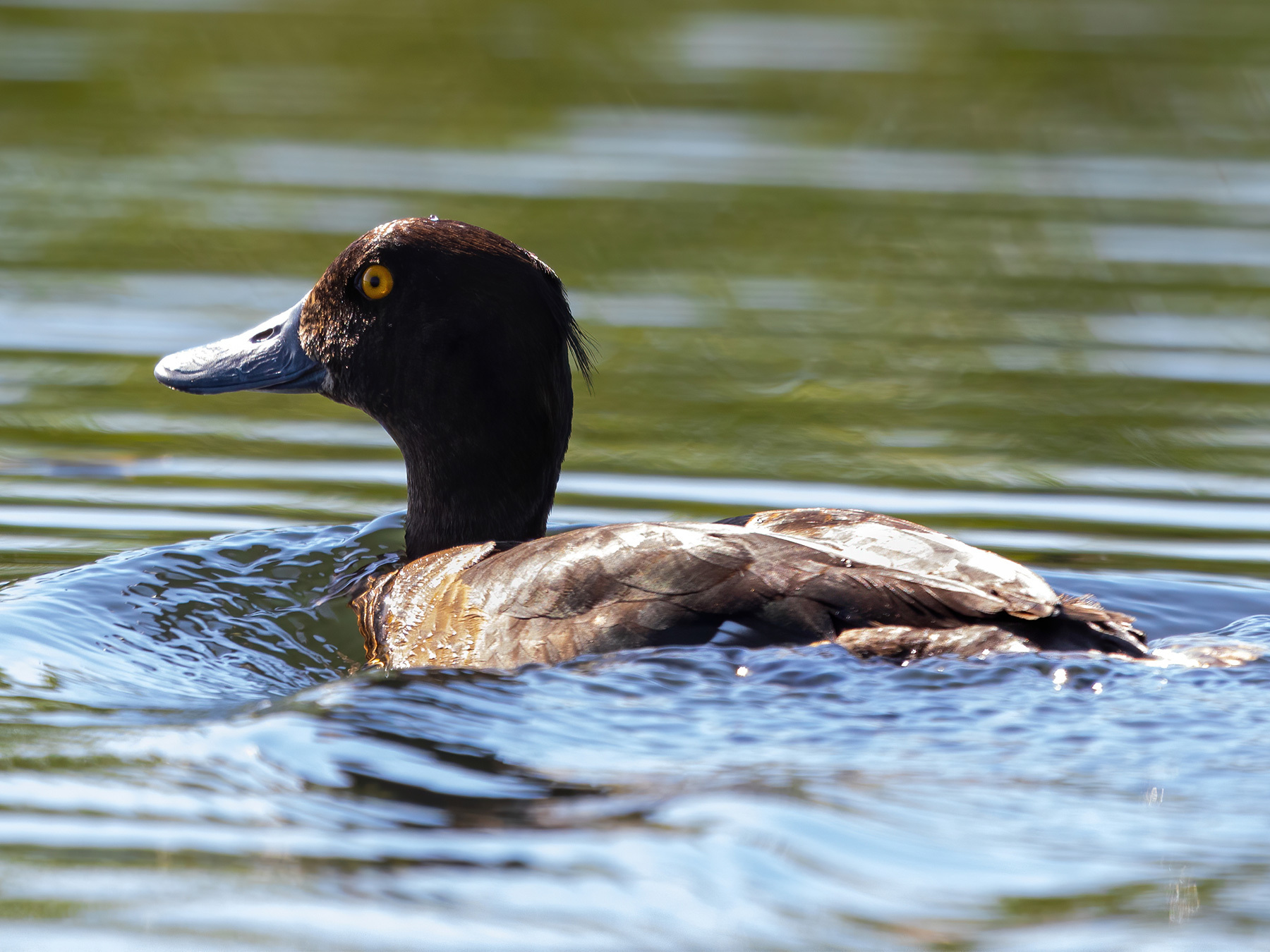
Tufted Duck guides
5 guidesQuick facts
- Length
- 40–47 cm
- Wingspan
- 67–73 cm
- Weight
- 550–1200 g
- Lifespan
- 4 years · oldest recorded 45.2 years
- Family
- Ducks, Geese & Swans
- Migration
- Partial migrant
- Global status (IUCN)
- Least Concern
- World population
- 2,600,000 - 2,900,000 individuals
- Population trend
- Stable
- Also called
- Tufted Scaup, Tufted Pochard
- Scientific name
- Aythya fuligula
Questions
2How deep can Tufted Ducks dive?
Tufted Ducks can dive to the impressive depth of 14 meters or about 46 feet, although most dives are down to about five meters. They dive frequently, spending up to 20 seconds under the water and often dive twice per minute.
Do Tufted Ducks eat fish?
Tufted Ducks generally feed on plants and slow-moving or stationary invertebrates. Fish are not a regular part of their diet, although they would probably take a small fish if they could catch it.
Sources
4- 1BirdLife International. 2016. Aythya fuligula. The IUCN Red List of Threatened Species 2016: e.T22680391A86013549. Source (opens in a new tab)
- 2Wetlands International (2006)
- 3Wetlands International (2015)
- 4Fransson et al., EURING list of longevity records for European birds (2010) Source (opens in a new tab)

Checked by
Nathan Cope, founder and editor
Nathan founded Birdfact and leads its writers and contributors in the UK, the US and Canada. He has watched and studied birds for more than ten years, and checks every article and species guide before it’s published.