


Red-crested Pochard
Red-crested Duck · Netta rufina
By the Birdfact teamChecked by Nathan Cope
On this page13 sections
How to recognise it
What do Red-crested Pochards look like?
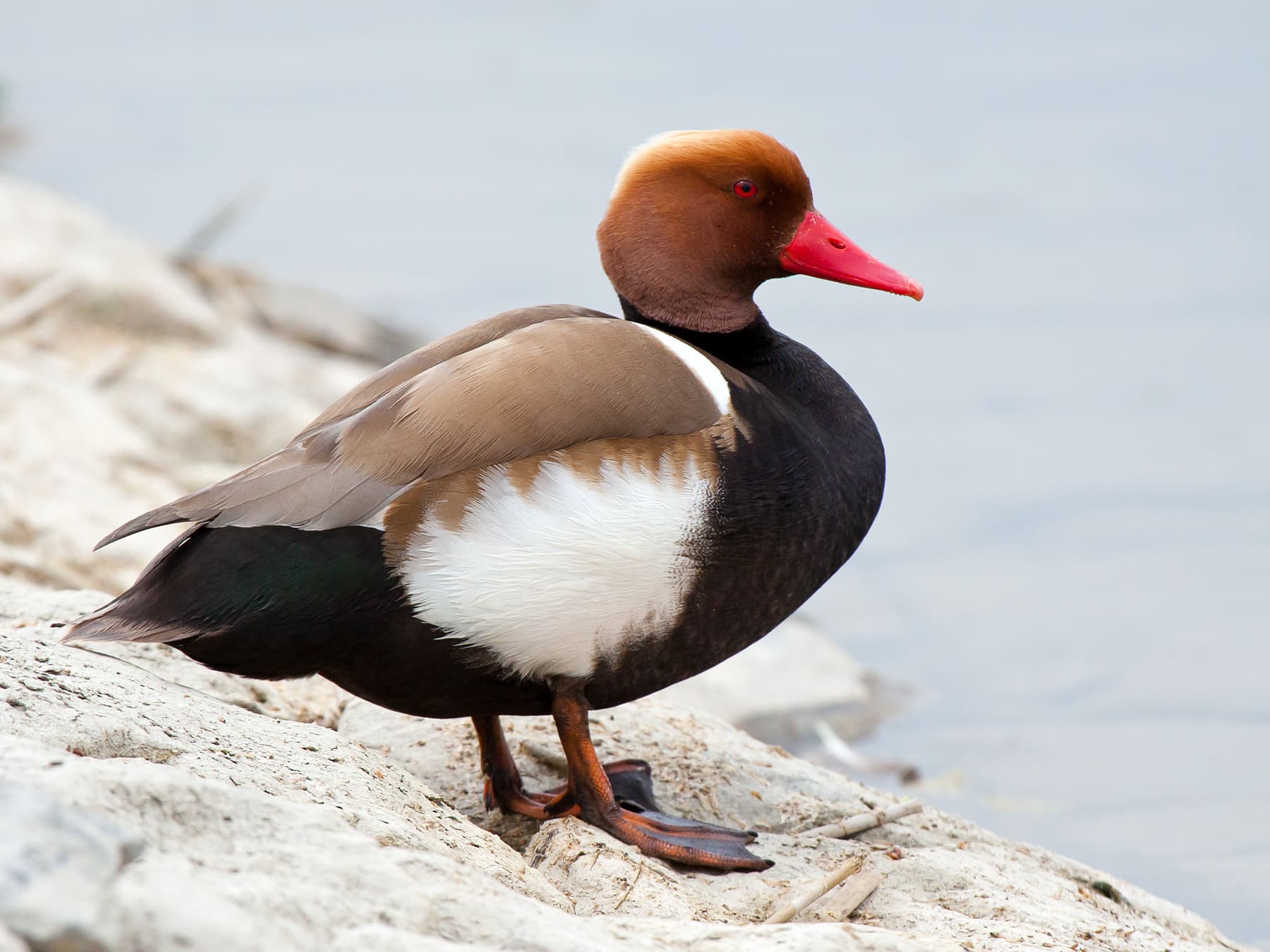
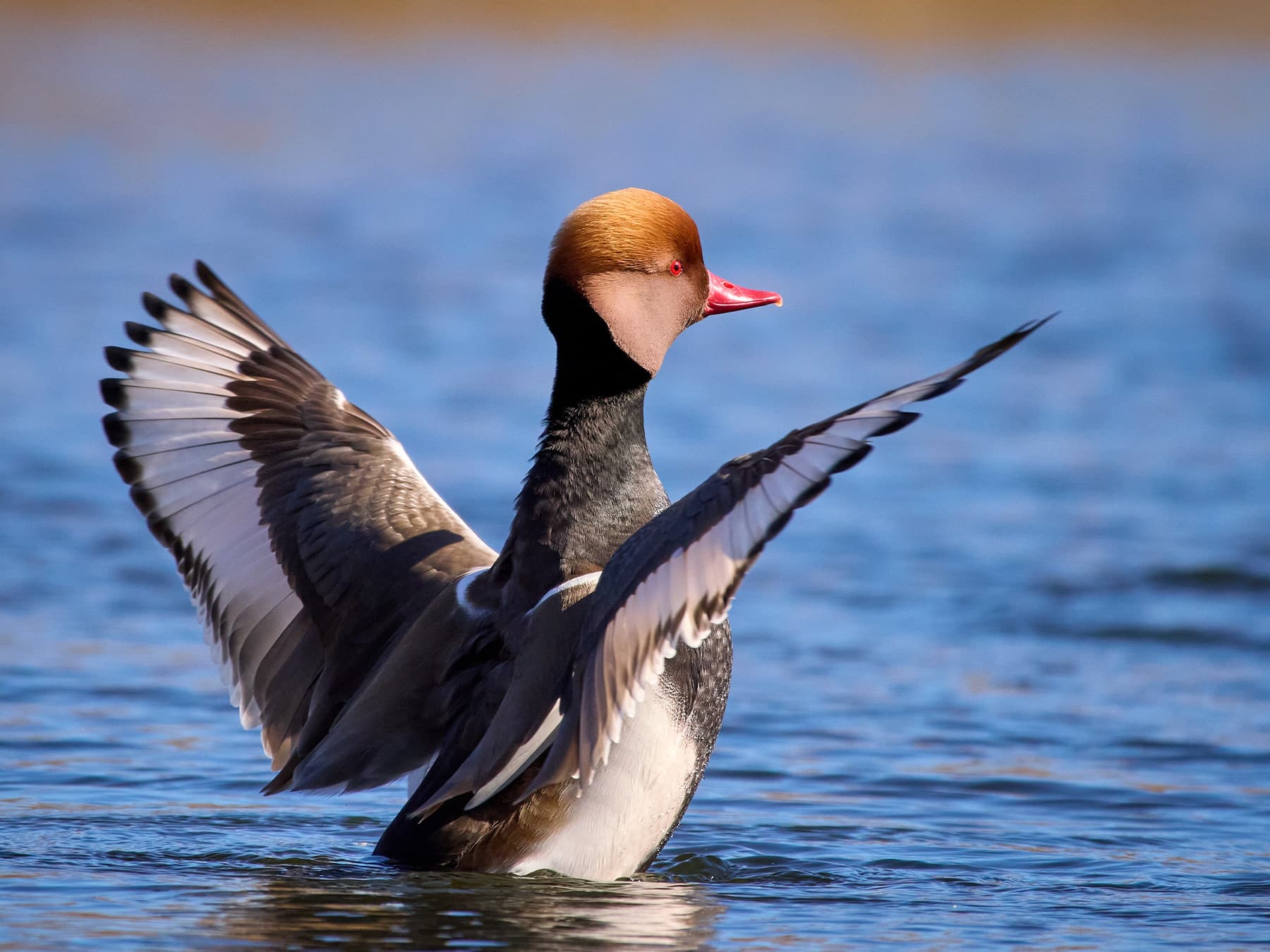
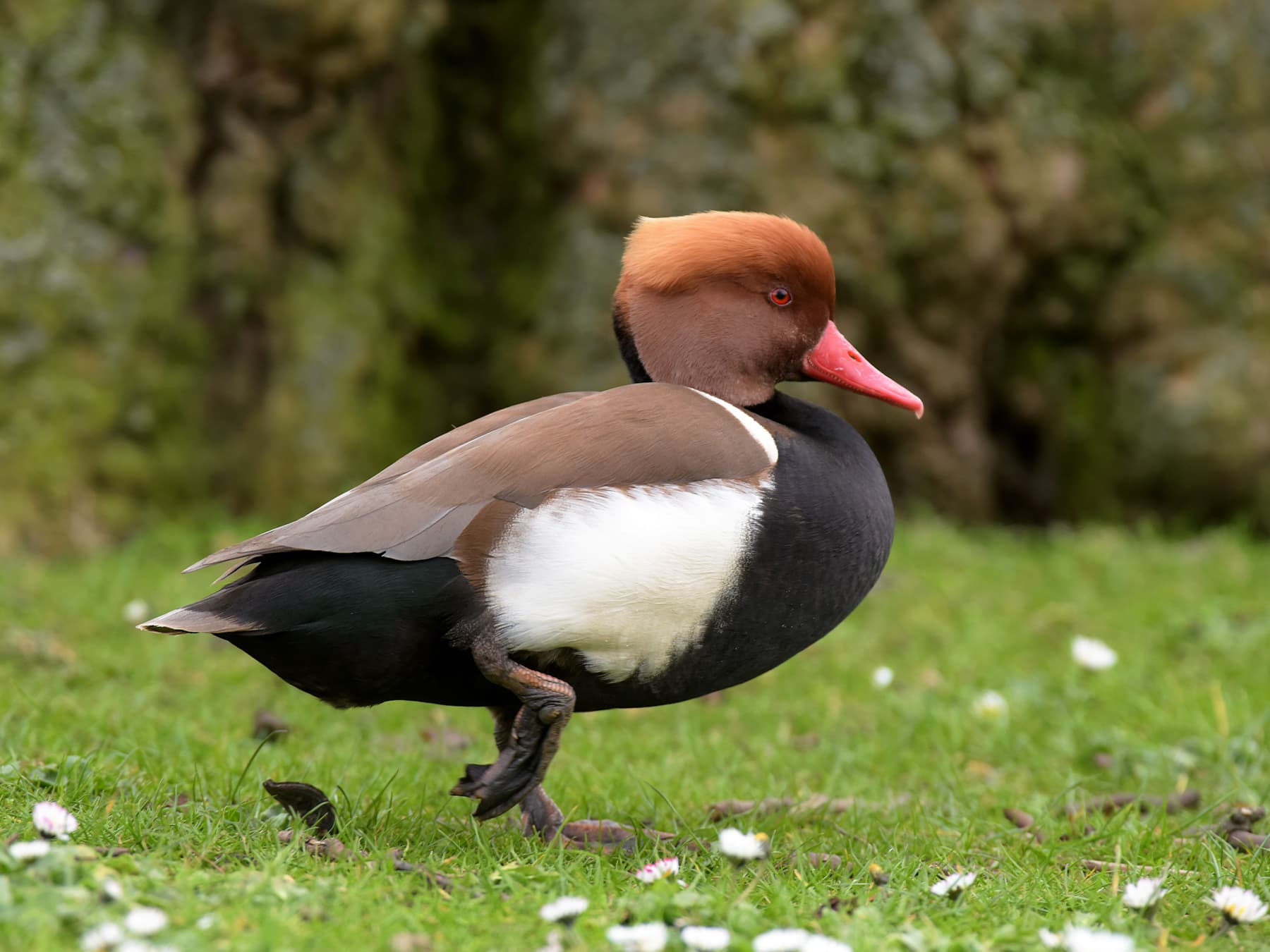
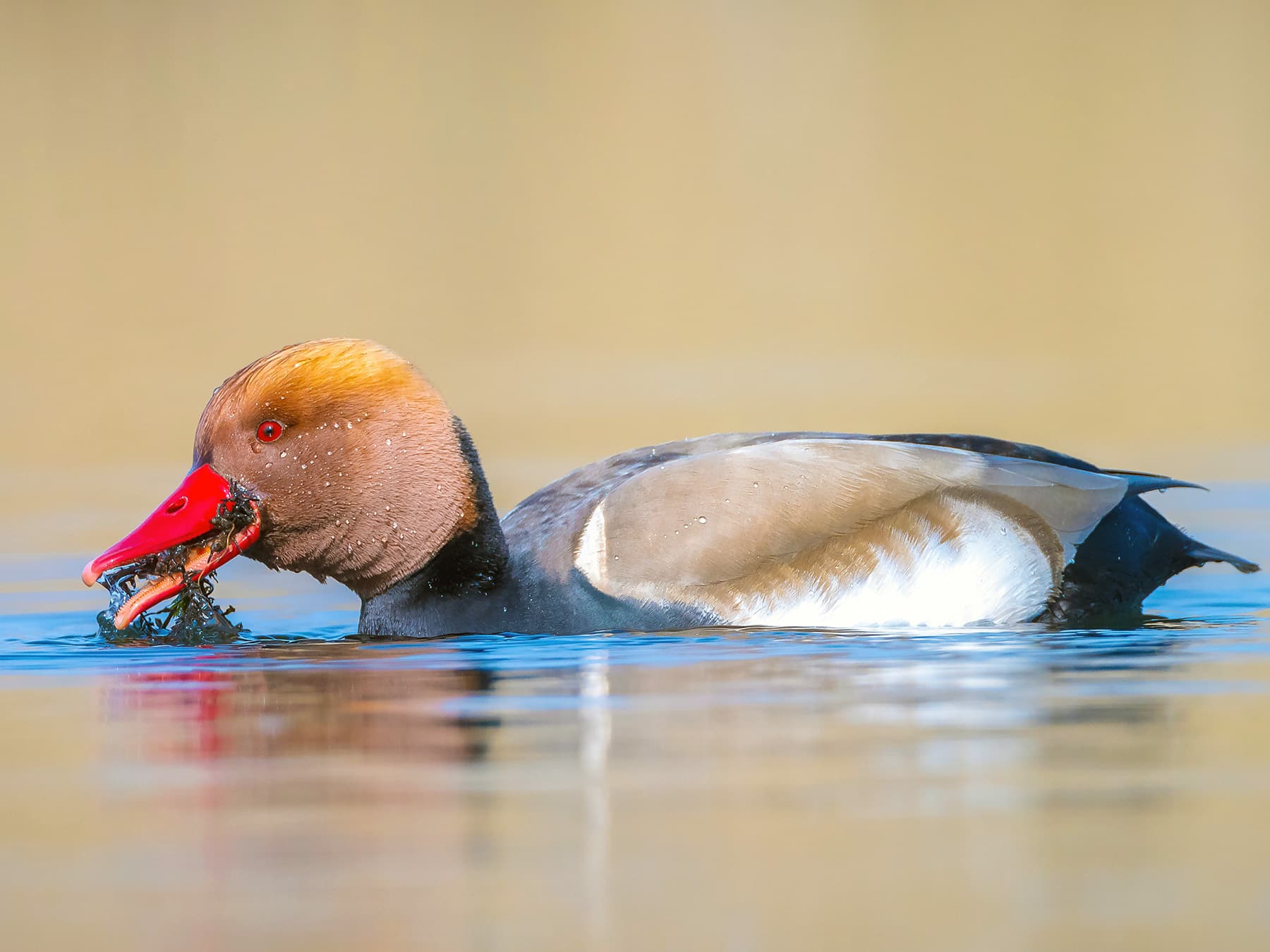
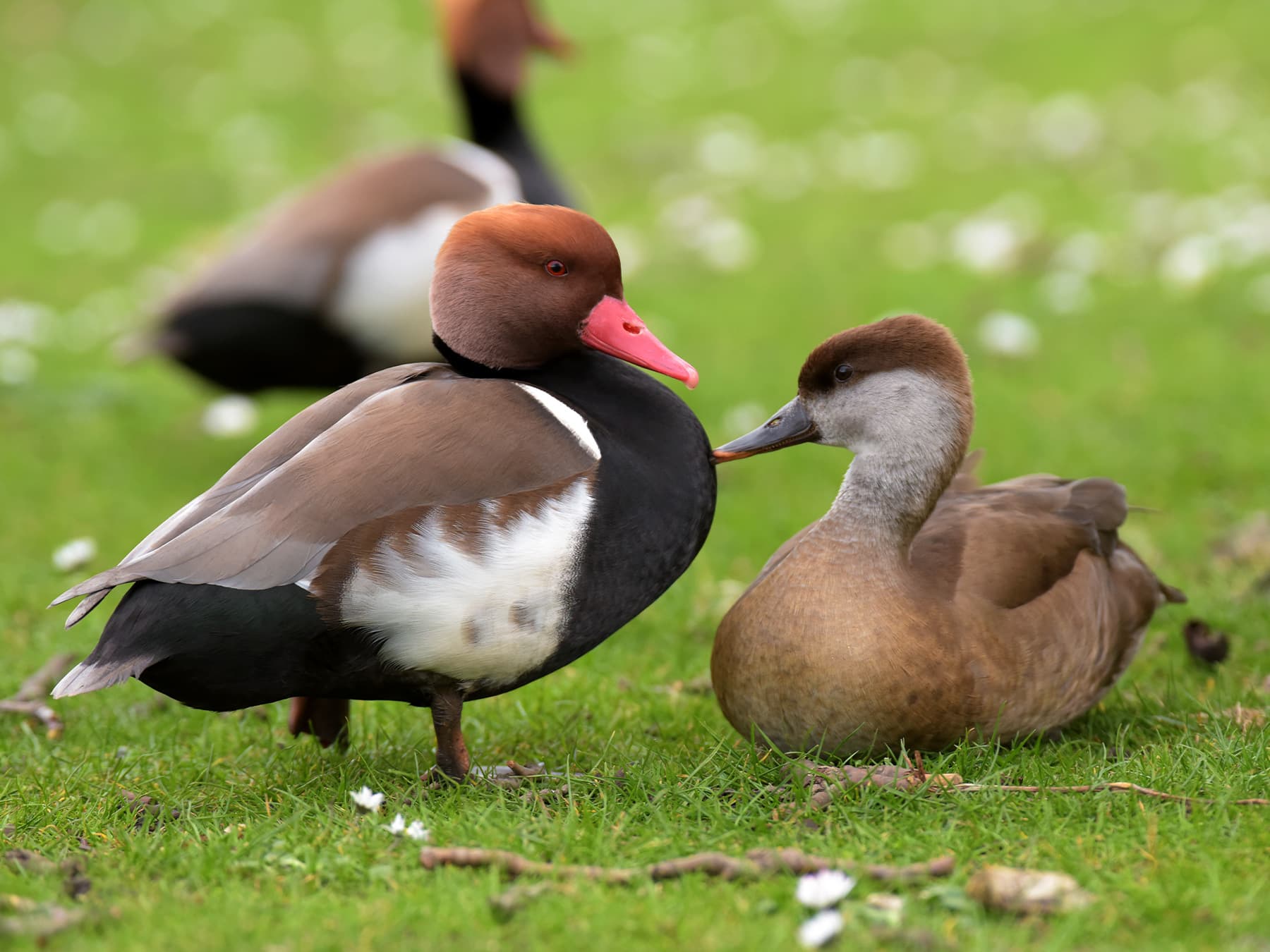
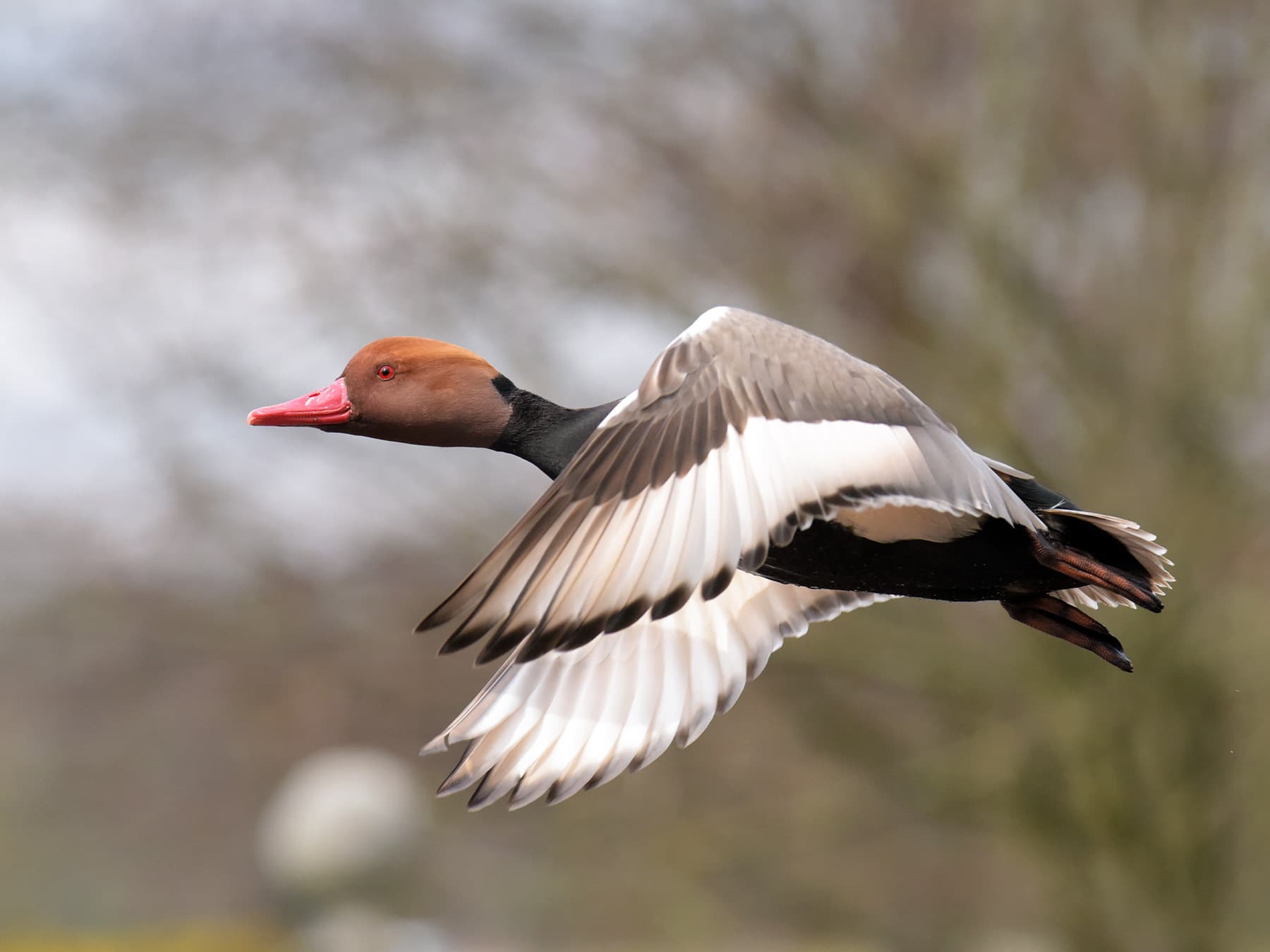
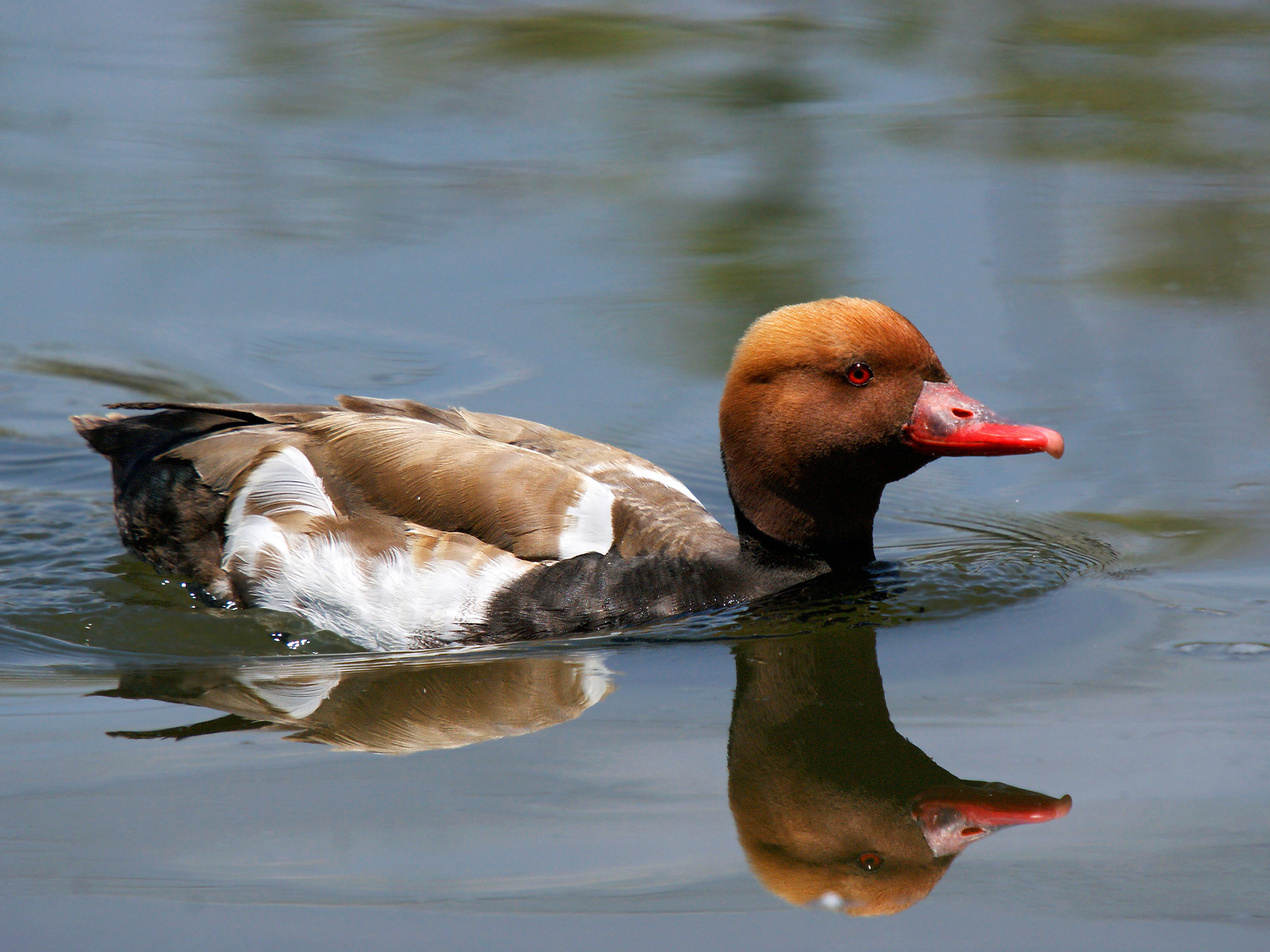
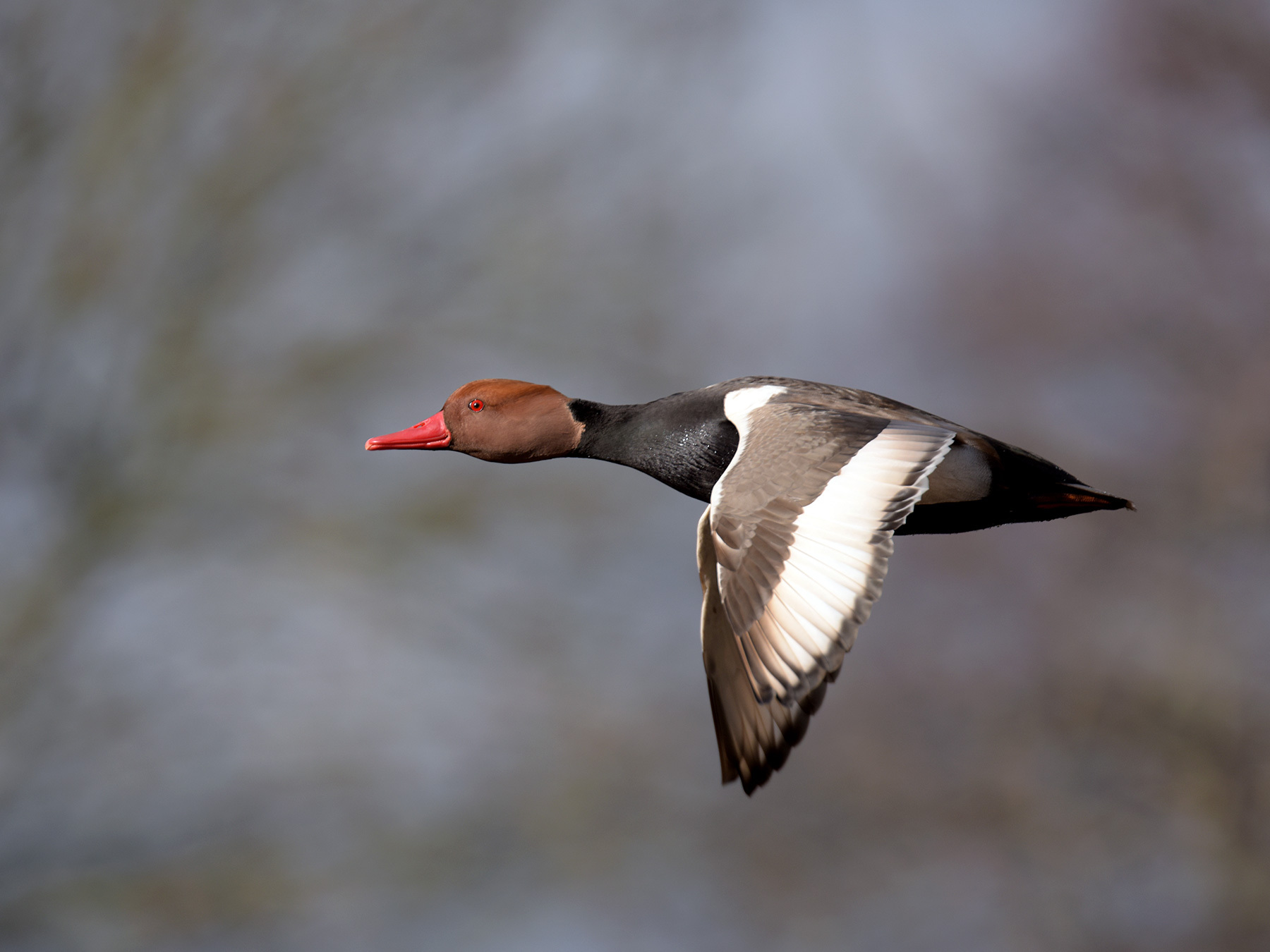
Male red-crested pochards have a striking appearance, which enables a relatively straightforward and confident identification. They have a rounded chestnut head, with a bright red bill with a sharp orange nail at the end. Their eyes are red, and their legs are either orange or bright scarlet, with some darker markings on the webbing.
Red-crested pochards have black breasts, necks and undertail. Their flanks are white and they have a bold white shoulder bar. The wings and upper tail are dark brown, tipped with a paler grey.
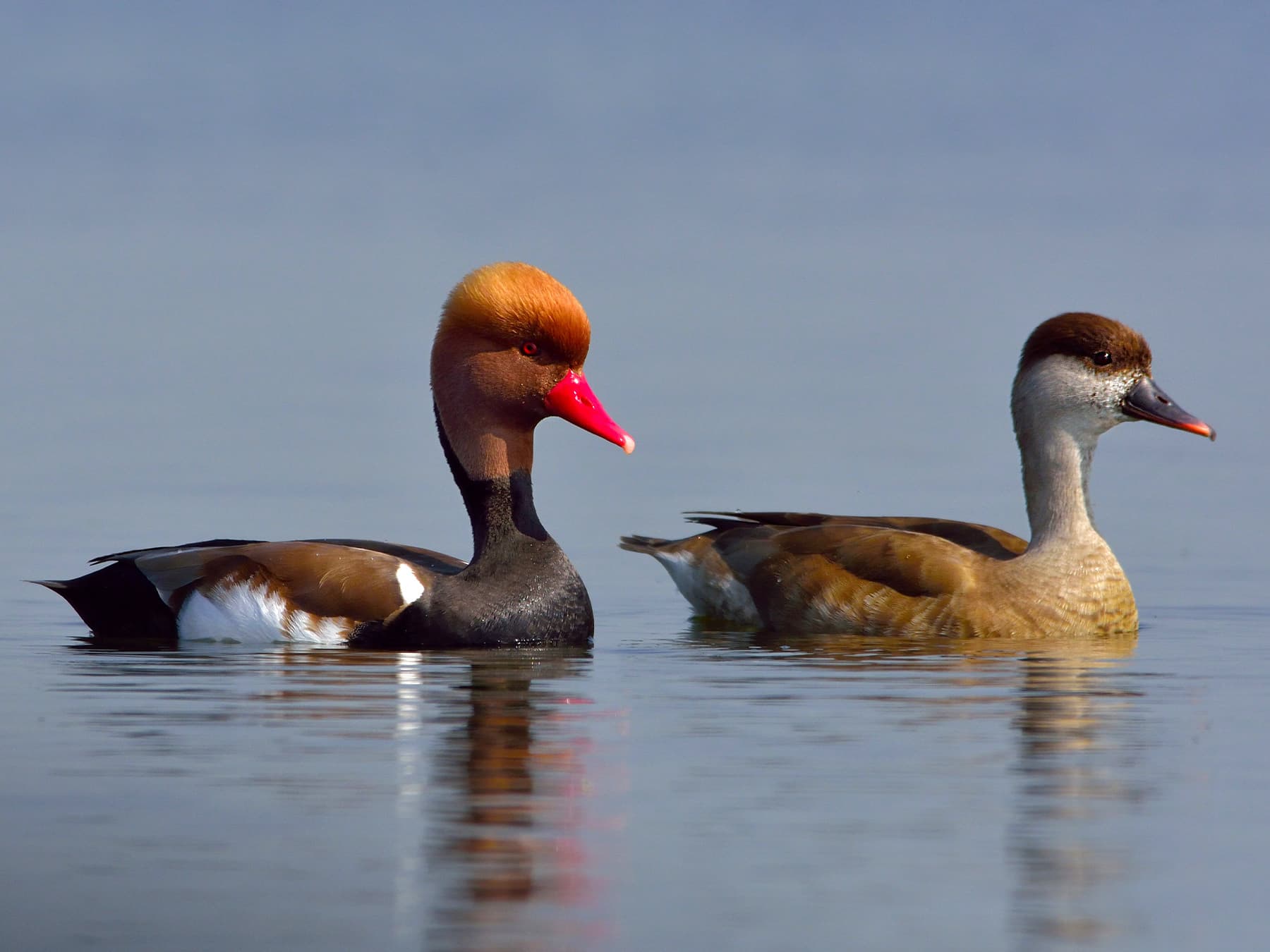
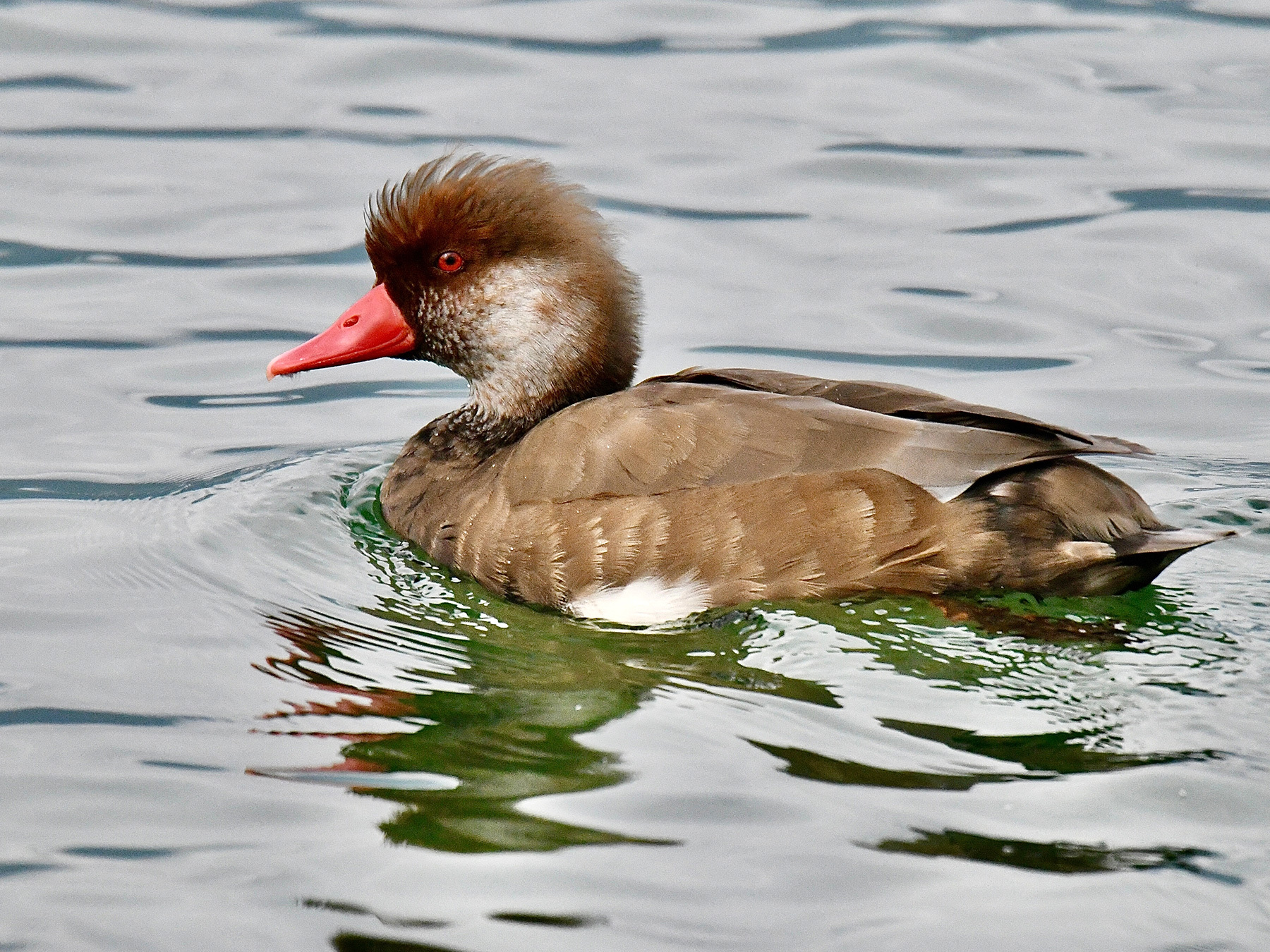
After breeding, male red-crested pochards undergo an extensive moult into what is known as an eclipse plumage. Their vibrant colours are replaced with a drabber brownish-grey which resembles the year-round plumage of females. They do, however, retain their red bill, which is a useful way of telling the sexes apart at this time of year.
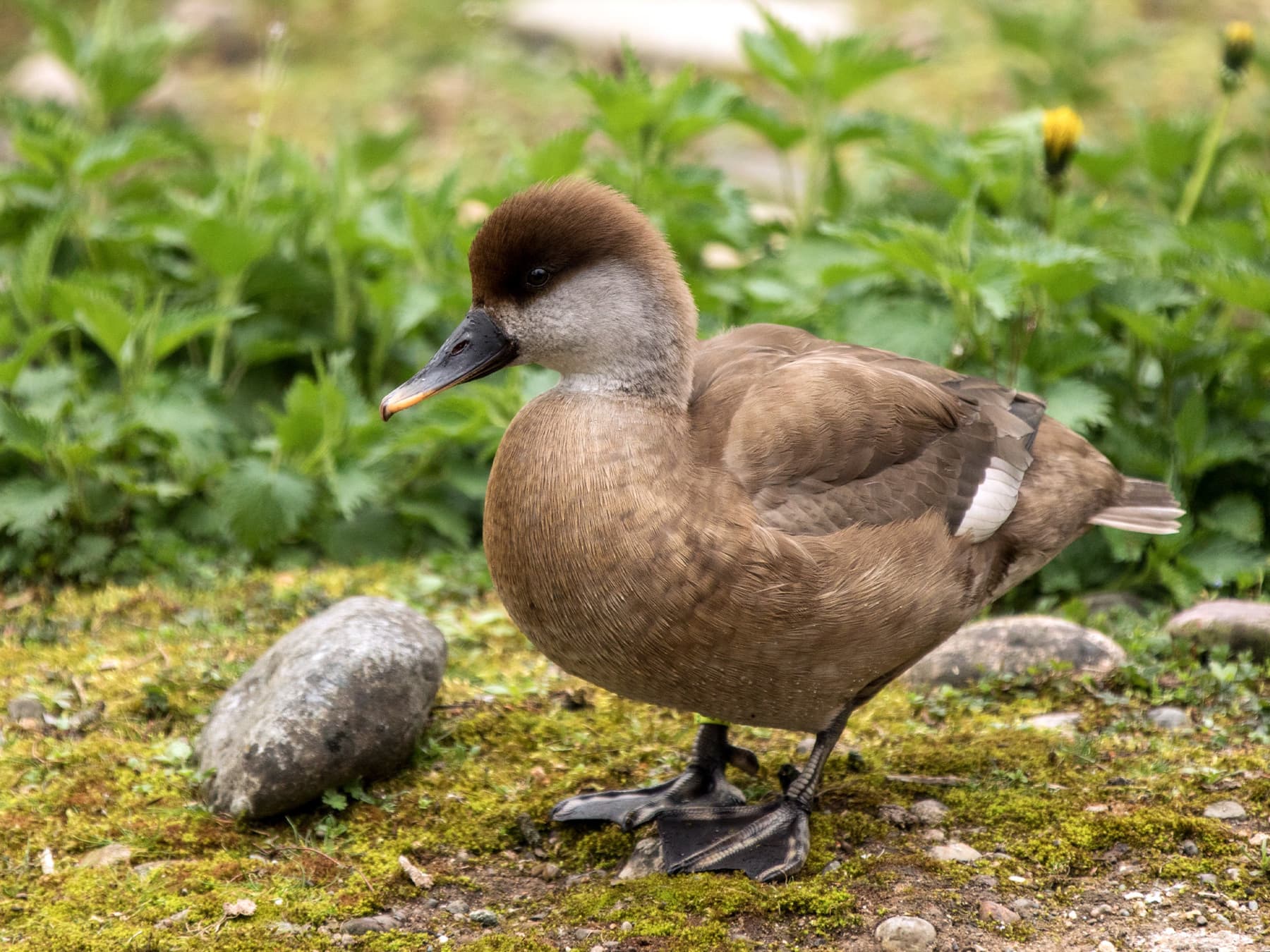
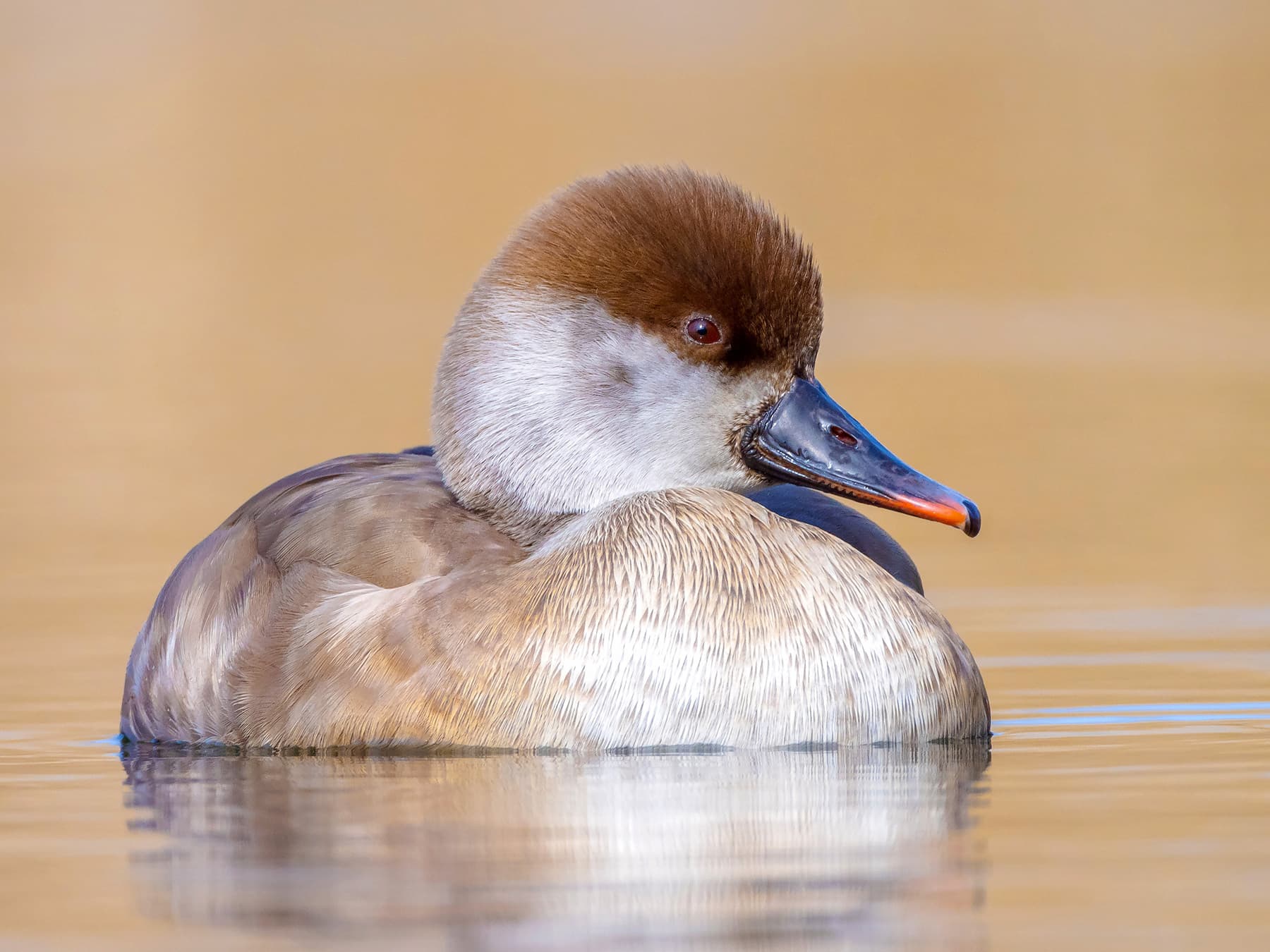
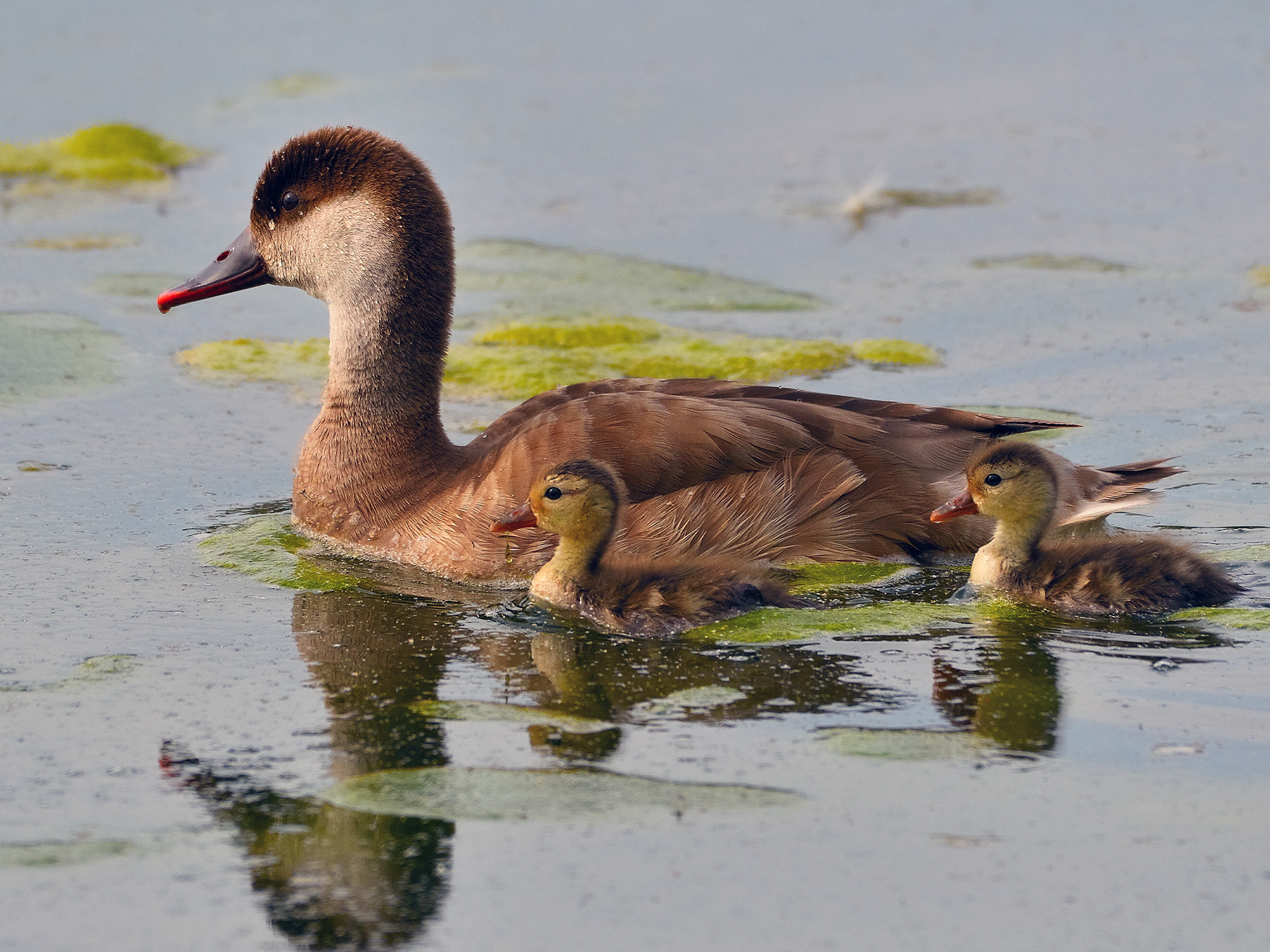
Female red-crested pochards’ plumage is in stark contrast to the bright colours seen on the male. Females are various shades of brown, with a mid-brown body, wings, breast and neck, a darker brown cap and pale brown cheeks. Their bill is grey, with a patch of pink near the base.
Young red-crested pochards are similar to males in eclipse plumage, not having developed the striking colouration of adult breeding males. Rather than the scarlet colouring of the adult male’s bill, the juvenile red-crested pochard has a pink bill instead.
How big are Red-crested Pochards?
Red-crested pochards are larger than the closely related common pochard and are considered one of the larger species of dabbling duck. Females are smaller and lighter than males.
- Length: 53 cm to 57 cm (21 in to 22 in)
- Wingspan: 85 cm to 90 cm (33 in to 35 in)
- Weight: 900 g to 1,400 g (2 lb to 3 lb)
Its size
Adults- Length
- 53–57 cm
- Wingspan
- 85–100 cm
- Weight
- 900–1400 g
Its song and calls
What sound does a Red-crested Pochard make?
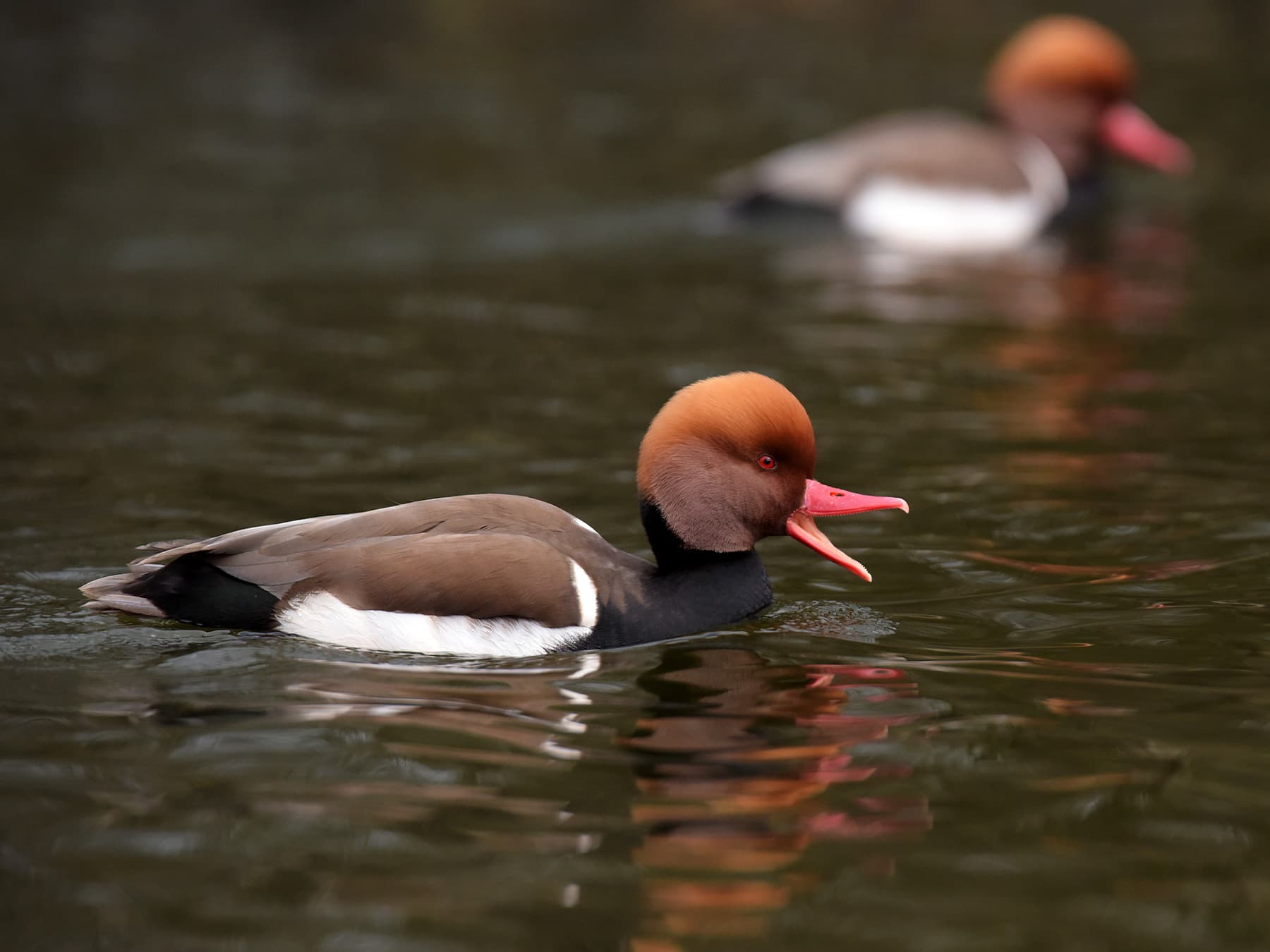
Male red-crested pochards use a throaty ‘veht’ contact call, while females are heard making hoarse ‘vrah-vrah-vrah’ calls to their mates and young.
- Flight call0:00 / 0:05
Recorded in Occitanie, France · May 2026
When and where to see it
OctoberHere all year
Most recorded in October
- 1. Rutland0.34%
- 2. Nottinghamshire0.27%
- 3. Hertfordshire0.19%
- 4. London0.15%
- 5. Wiltshireunder 0.1%
Each dot is a county, state or province: the bigger and darker, the larger the bird’s share of that place’s bird records that month. Grey dots: no regular records. The ringed point is the centre of the bird’s records this month; the arrow shows how it moved since last month, and the dashed loop its path through the year. “Arrivals” colours places where it becomes regular this month (orange) or is in its last regular month (grey). GBIF eBird Observation Dataset, 2019–2024. Map data: Natural Earth, US Census Bureau; place centres © OpenStreetMap contributors.
In your area
See when the Red-crested Pochard is recorded in your county, state or province.
How often the Red-crested Pochard turns up in the UK through the year, from birdwatchers' records.
United Kingdom
Resident · all year · most records in November
Show as a table
| Month | United Kingdom |
|---|---|
| January | 0.046% (regular) |
| February | 0.040% (regular) |
| March | 0.038% (regular) |
| April | 0.036% (regular) |
| May | 0.037% (regular) |
| June | 0.037% (regular) |
| July | 0.031% (regular) |
| August | 0.028% (regular) |
| September | 0.032% (regular) |
| October | 0.031% (regular) |
| November | 0.052% (regular) |
| December | 0.049% (regular) |
Recorded regularly in
Worldwide: recorded regularly in 59 countries
Countries where it was recorded in at least 3 of the 6 years 2019–2024. Linked countries have their own bird list.
Europe (34)
Africa (1)
Asia (24)
- Armenia
- Azerbaijan
- Bangladesh
- Bhutan
- China
- Cyprus
- Georgia
- India
- Iran
- Israel
- Japan
- Kazakhstan
- Kyrgyzstan
- Mongolia
- Myanmar (Burma)
- Nepal
- Oman
- Pakistan
- South Korea
- Tajikistan
- Thailand
- Turkey
- United Arab Emirates
- Uzbekistan
Data: EOD – eBird Observation Dataset (Cornell Lab of Ornithology), accessed via GBIF.org, CC BY 4.0. Records from 2019–2024, aggregated and filtered by Birdfact. How these lists are made
What is the habitat of a Red-crested Pochard?
Wetlands surrounded with rich vegetation, particularly reeds and rushes, offer suitable breeding grounds for red-crested pochards. Shallow lakes, stagnant pools, reservoirs, and floodplains lined with reedbed cover are all popular nest sites, with large open bodies of water nearby that are used for resting and roosting.
Brackish and freshwater reservoirs, marshlands, and aquaculture lakes with pondweed are among the most popular overwintering destinations for red-crested pochards.
What is the range of a Red-crested Pochard?
Red-crested pochards breed in parts of western Europe, including Spain, France, the Netherlands, and Germany, as well as parts of Italy, Austria, Switzerland, Slovenia, Czechia and Slovakia.
Further east, breeding grounds of red-crested pochards form a solid band across central Asia from the Black Sea and the Caspian Sea to north-west China and western Mongolia.
As a mostly migrational species, distinct wintering grounds are visited by red-crested pochards each autumn, although these are not always a long distance from their breeding grounds. Red-crested pochards that migrate from central Asia disperse to India, Pakistan, and Myanmar.
In parts of Spain and the UK, red-crested pochards are year-round residents, while migration may also occur to these areas, as well as to the north-west coast of Africa and along the Nile Delta.
Where do Red-crested Pochards live?
Within Europe, the largest number of red-crested pochards live in Spain. France, Germany, and the Netherlands also have sizeable populations.
Between 50,000 and 60,000 individuals live in southern, central, and western Europe, while between 25,000 and 50,000 red-crested pochards nest near the Black Sea and in the eastern Mediterranean.
How rare are Red-crested Pochards?
The global population of red-crested pochards is estimated to be up to 600,000 individuals, and in its native range, it is a fairly common bird to see, with its distinctive appearance making it easy to confidently identify.
In the UK, only a small number of breeding pairs are present, believed to have originally descended from birds that escaped from wildfowl collections. In winter, sightings become more common with the arrival of migrant visitors from Europe.
Where can you see Red-crested Pochards in the UK?
Southern and eastern England offer the best chances of seeing red-crested pochards, with the Cotswold Water Park and Abberton Reservoir in Essex two sites with regular sightings.
Migration
Do Red-crested Pochards migrate?
Red-crested pochards are mostly migratory, leaving their breeding grounds in western and central Europe and central Asia for wintering sites in southern and south-western Europe, around the Black and Caspian seas, and in south Asia, in particular India, Pakistan and Myanmar.
Not all migrations are long-distance and a trend is emerging for birds that breed in central Europe to relocate to nearby wetlands, and in Spain and Portugal, most populations are resident all year round, leaving only temporarily while they are moulting after breeding.
Are Red-crested Pochards native to the UK?
Small numbers of red-crested pochards do breed in the UK, and many more arrive in winter months. However, they are classed as an introduced species, rather than a native one, with most of the wild population today having originated from birds that escaped from private wildfowl collections.
Tips for seeing it
- Look for them on large, open bodies of water with abundant aquatic vegetation
- Observe their diving behavior as they submerge for longer periods than dabbling ducks
- Listen for the male's distinctive whistling call during breeding season
- In the UK, visit wetland reserves in East Anglia for the best chances of spotting them
What it eats
What do Red-crested Pochards eat?
Dabbling just below the water’s surface and diving deeper toward the bottom of a lake or reservoir are two common ways for red-crested pochards to find food.
Their diet is mainly plant-based, with underwater vegetation and seeds of aquatic plants being of the greatest importance. Occasionally fish will be eaten, particularly when stolen from other nearby birds.
Tadpoles, dragonfly larvae, crabs, and molluscs are also sometimes eaten but are not a major element of their diet.
What do Red-crested Pochard chicks eat?
Small invertebrates such as mayflies are particularly important in the diet of red-crested pochard ducklings. Duckweed is one of the main sources of food from the first few days onwards.
Nesting and breeding
Where do Red-crested Pochards nest?
It’s common practice for red-crested pochards to reuse nests that have been built and abandoned by other waterfowl. Nests may also be built from scratch by the female, either on the ground within dense waterside vegetation or built up within flooded landscapes, using twigs and rushes lined with downy feathers.
When do Red-crested Pochards nest?
The arrival of red-crested pochards at breeding grounds begins from March onwards, and the earliest clutches may be laid as early as late March. Laying continues until July, depending on location, with sites in Central Asia typically later than those in Spain and France, where April and May are the peak laying times.
Incubation lasts between 26 and 28 days, and only by the female, who covers the nest with feathers when she takes a brief break to feed.
What do Red-crested Pochard eggs look like?
The clutch size varies greatly and can contain up to 12 eggs or as few as 4. Larger broods do occur but these are frequently due to egg dumping, with more than one female laying their eggs in the same nest. Eggs are pale green to stone in colour, and measure 58 mm by 42 mm (2.3 in by 1.7 in).
Do Red-crested Pochards mate for life?
Red-crested pochards are seasonally monogamous, pairing up with a mate on arrival at breeding grounds each spring. Once incubation begins, males have no further active role in looking after eggs or raising young but may continue to bring food to their mate on the nest.
Behaviour
Are Red-crested Pochards aggressive?
With a reputation as an aggressive and messy duck species, red-crested pochards are often observed to flap and bite at each other to assert their claim to a territory or mate.
Lifespan and predators
How long do Red-crested Pochards live?
Red-crested pochards breed for the first time from one year of age and on average live until they are five years of age. Older birds are occasionally recorded, including an individual identified as 11 years and 10 months.
What are the predators of Red-crested Pochards?
Ravens, crows, gulls, magpies and black kites are known predators of eggs and ducklings of red-crested pochards. Records also show nests being destroyed by wild boar, brown rats, water voles, and feral cats and dogs.
Are Red-crested Pochards protected?
Red-crested pochards are protected by the Agreement on the Conservation of African-Eurasian Migratory Waterbirds (AEWA), as well as by the UK’s Wildlife and Countryside Act, 1981. This legislation protects wild birds against being killed, injured, or taken into captivity.
Are Red-crested Pochards endangered?
Globally, red-crested pochards are recognised as a species of least concern, and their numbers are on the increase. Habitat loss and the impact of climate change are both a concern, although do not pose any immediate challenge to the future survival of the species.
Conservation
While currently listed as Least Concern, Red-crested Pochards face threats from habitat loss and degradation of wetlands.
Conservation efforts focus on protecting and restoring their breeding and wintering habitats, particularly in Europe and Asia.
More photos
5 photos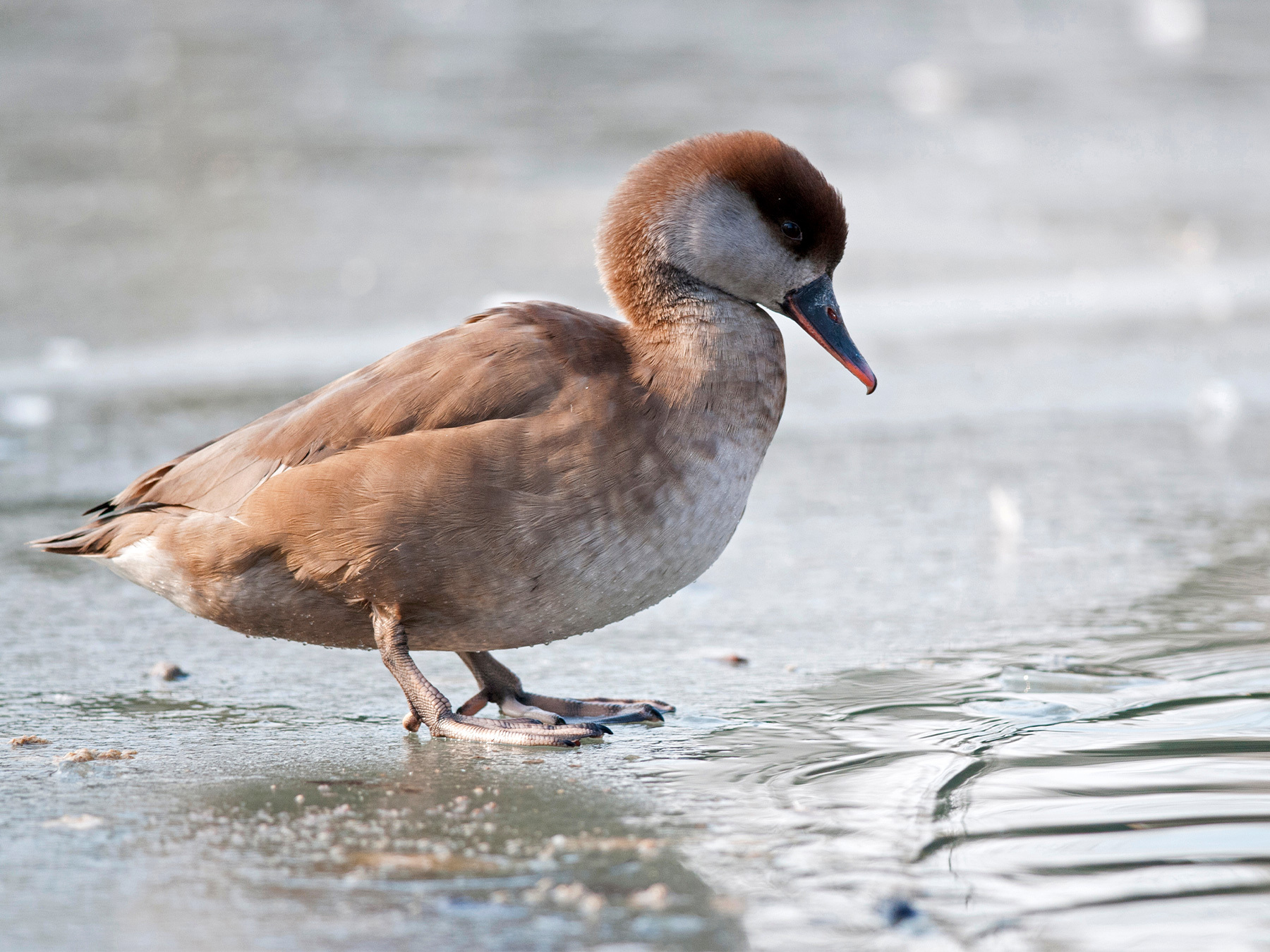
Red-crested Pochard guides
4 guidesQuick facts
- Length
- 53–57 cm
- Wingspan
- 85–100 cm
- Weight
- 900–1400 g
- Lifespan
- 5 years · oldest recorded 12.9 years
- Family
- Ducks, Geese & Swans
- Migration
- Partial migrant
- Global status (IUCN)
- Least Concern
- World population
- 420,000 - 600,000 individuals
- Population trend
- Unknown
- Also called
- Red-crested Duck
- Scientific name
- Netta rufina
Sources
4- 1BirdLife International. 2016. Netta rufina. The IUCN Red List of Threatened Species 2016: e.T22680348A86012189. Source (opens in a new tab)
- 2Wetlands International (2015)
- 3Wetlands International (2015)
- 4Fransson et al., EURING list of longevity records for European birds (2010) Source (opens in a new tab)

Checked by
Nathan Cope, founder and editor
Nathan founded Birdfact and leads its writers and contributors in the UK, the US and Canada. He has watched and studied birds for more than ten years, and checks every article and species guide before it’s published.