


Lesser Spotted Woodpecker
Dryobates minor
By the Birdfact teamChecked by Nathan Cope
On this page14 sections
How to recognise it
What do Lesser Spotted Woodpeckers look like?
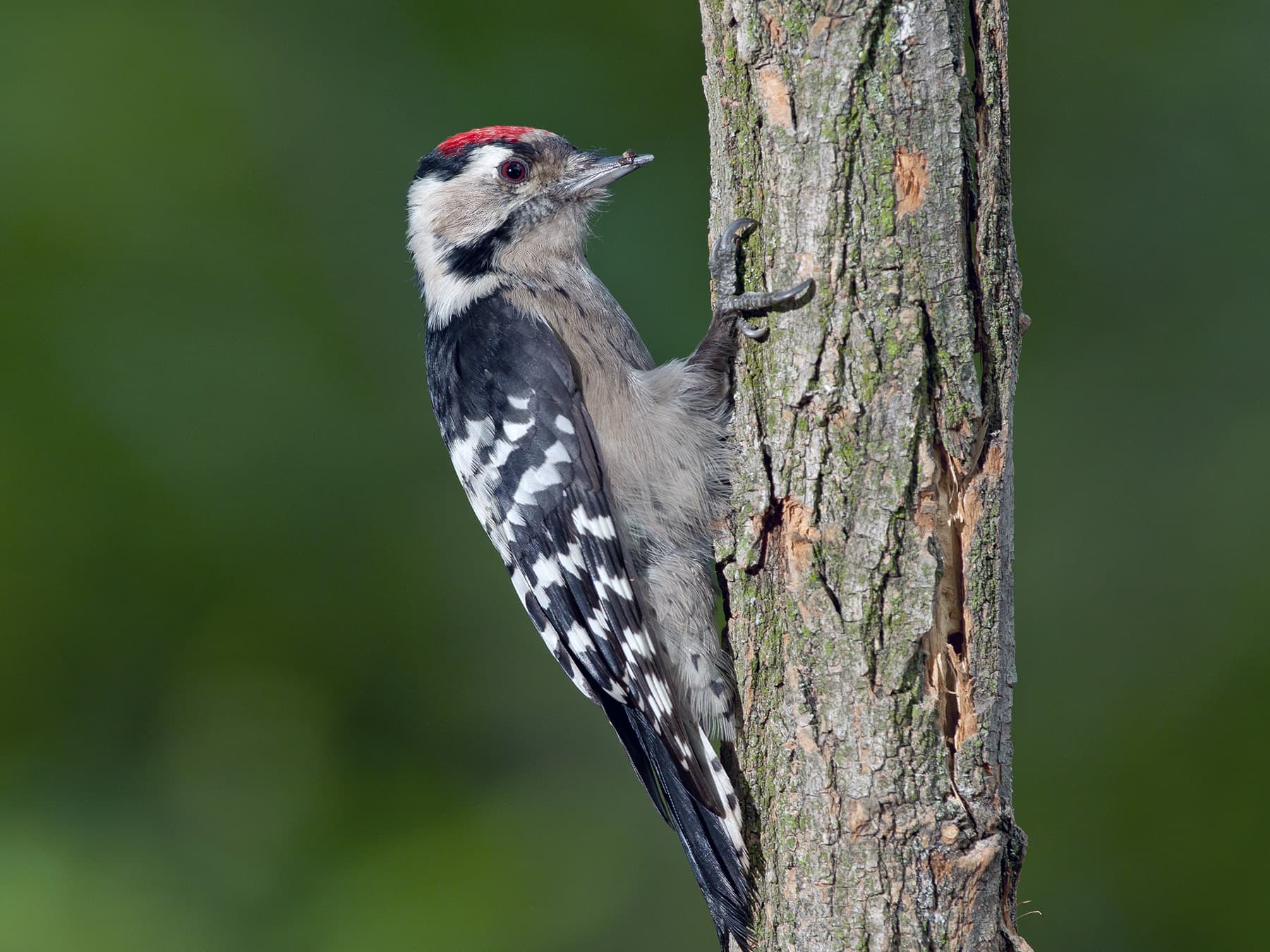
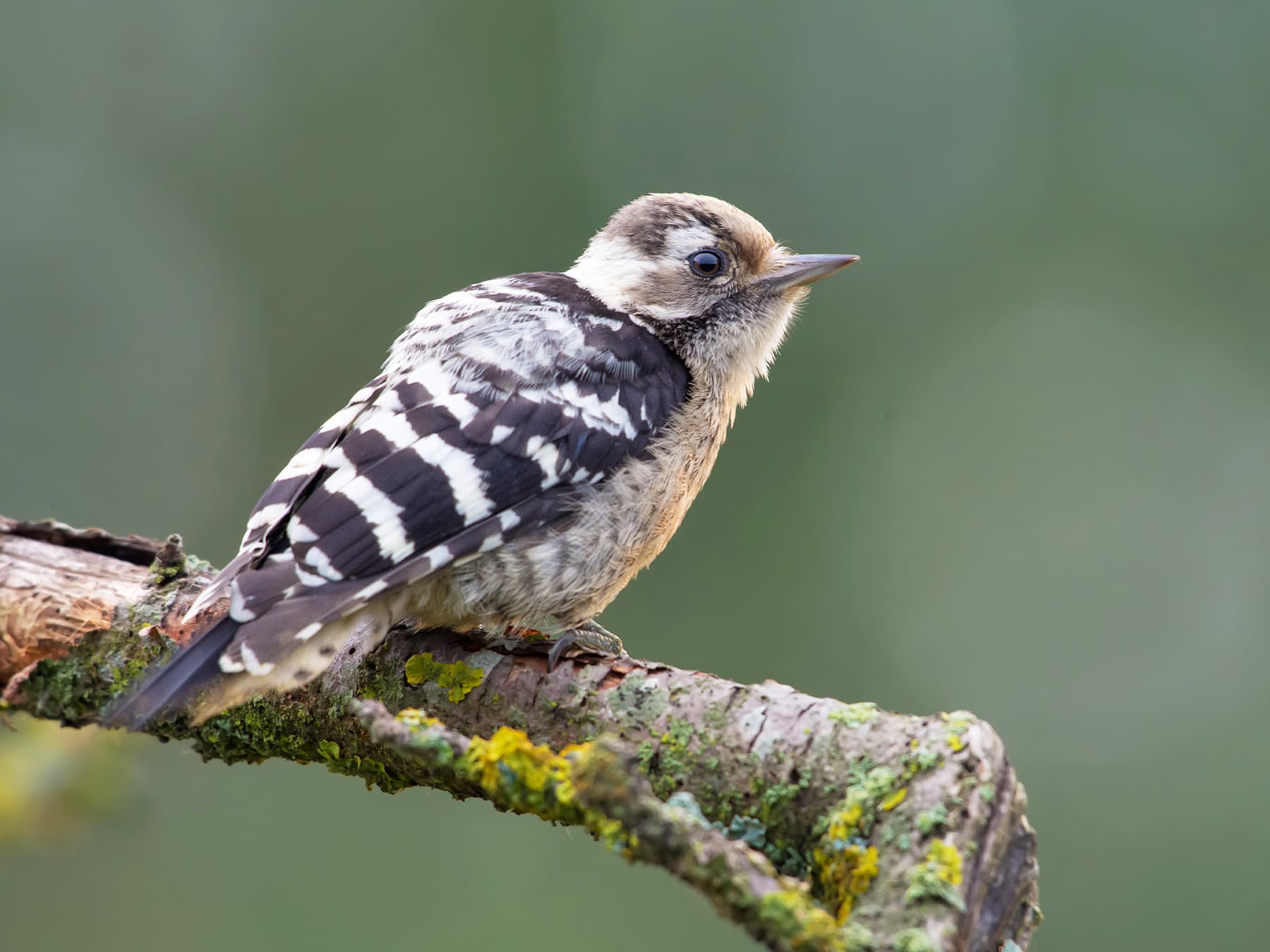
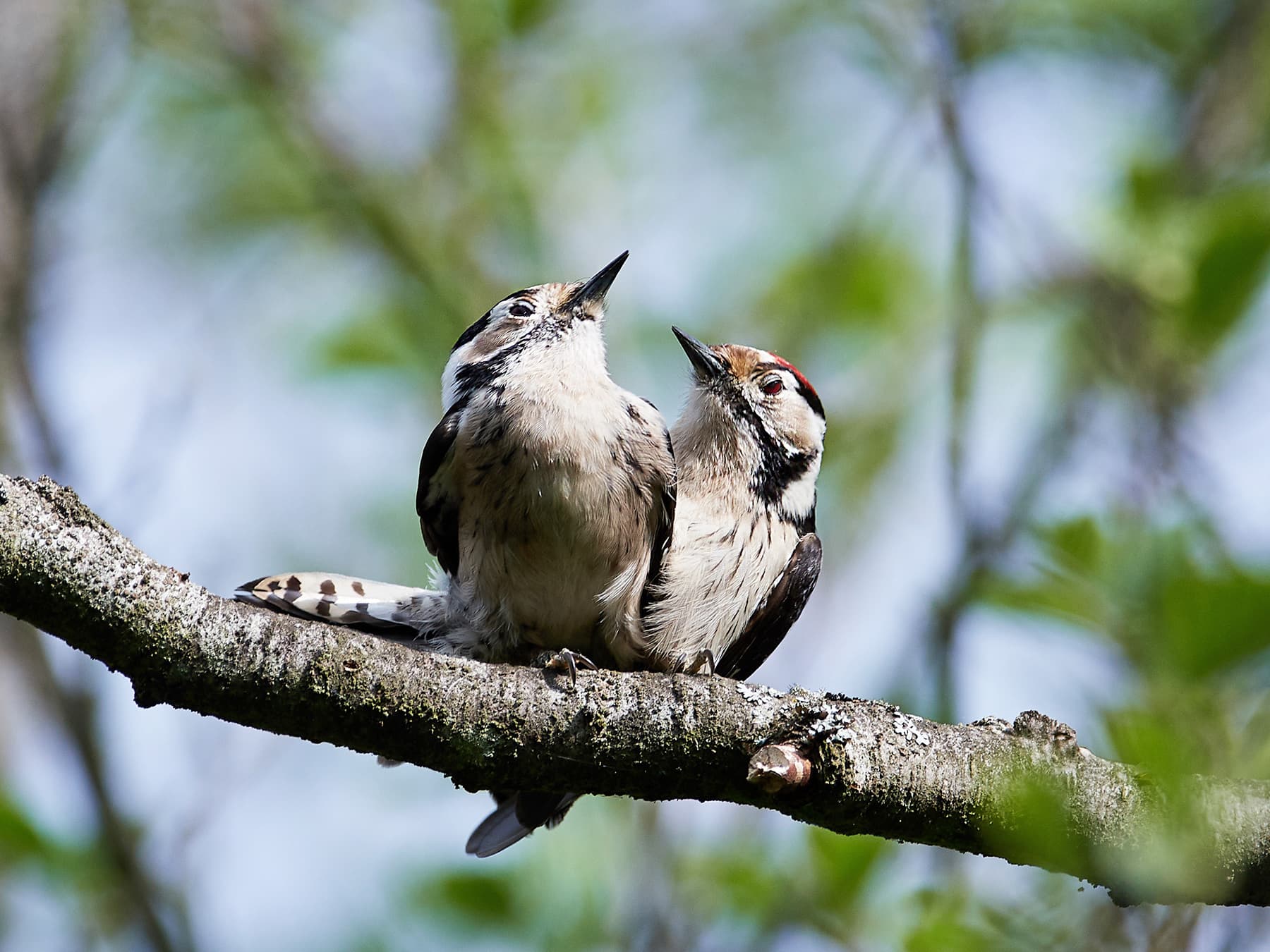
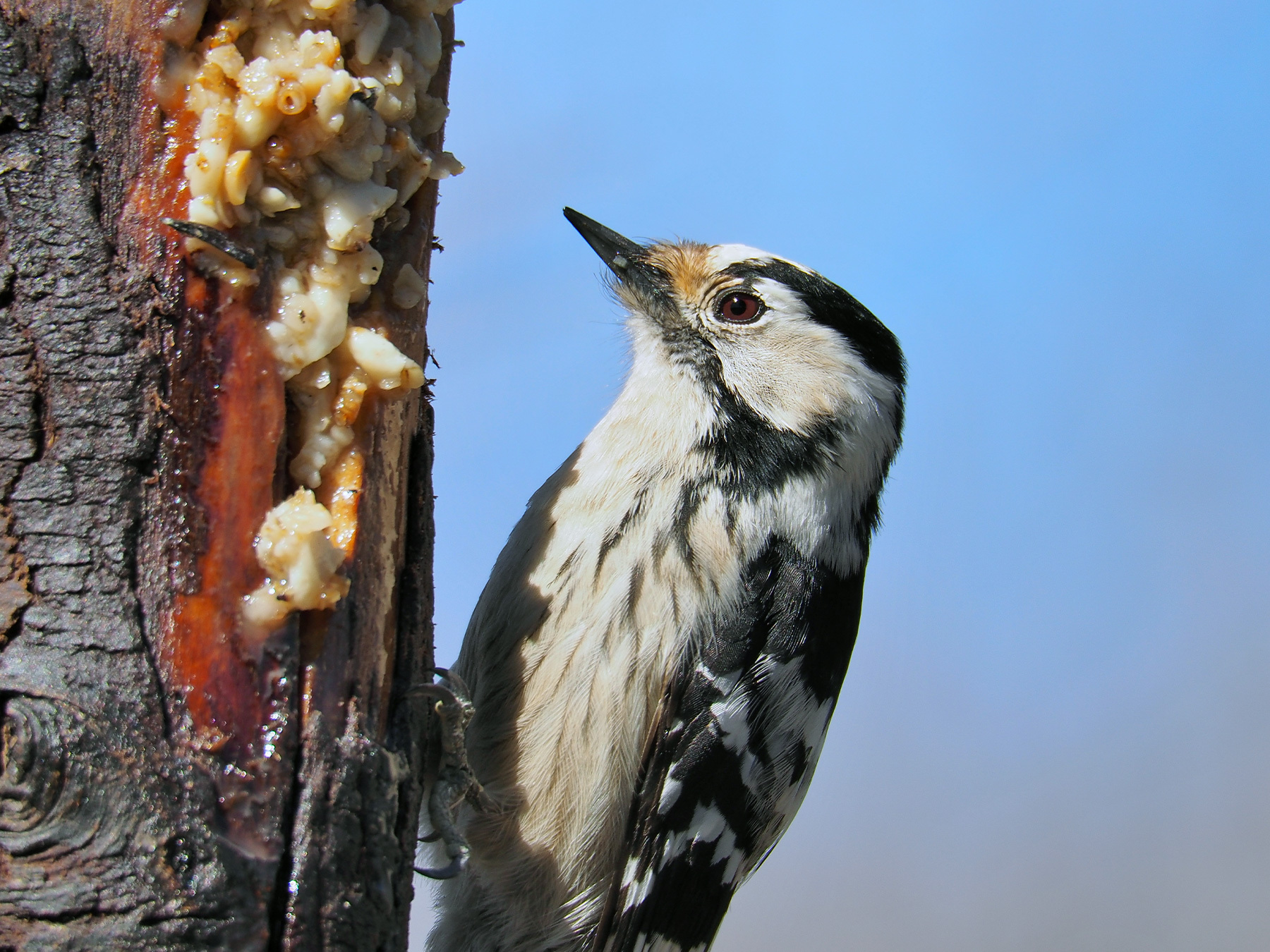
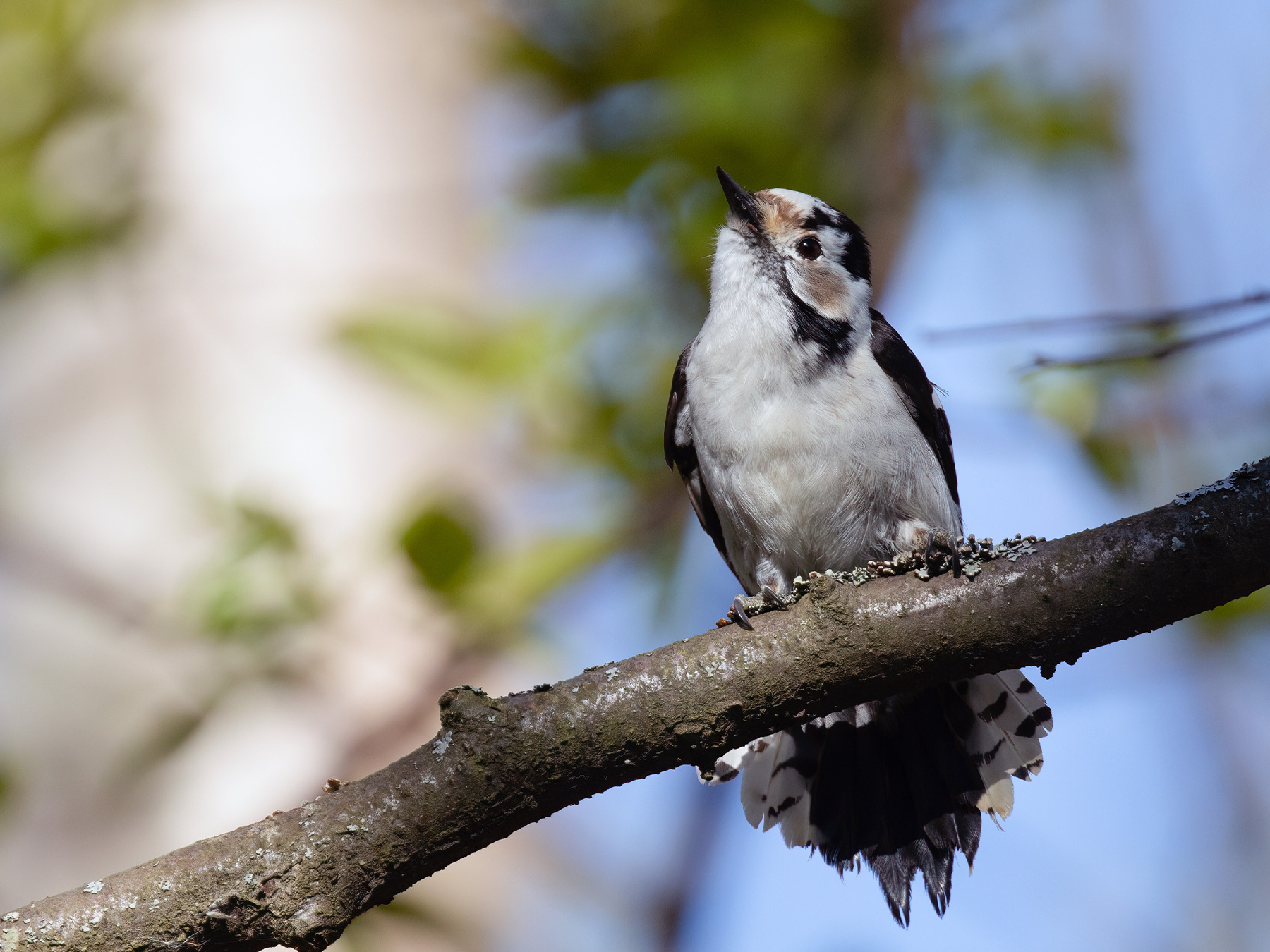
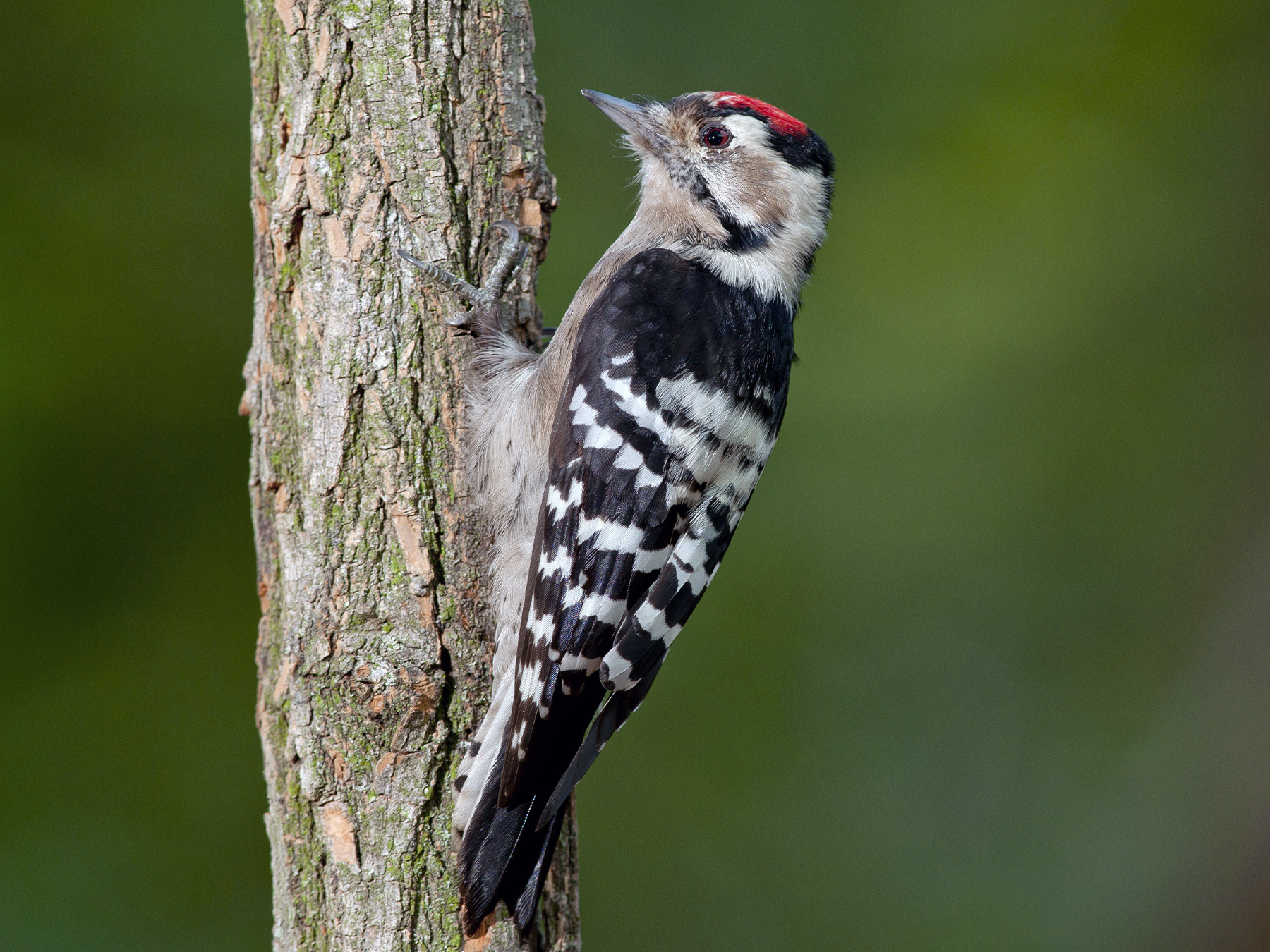
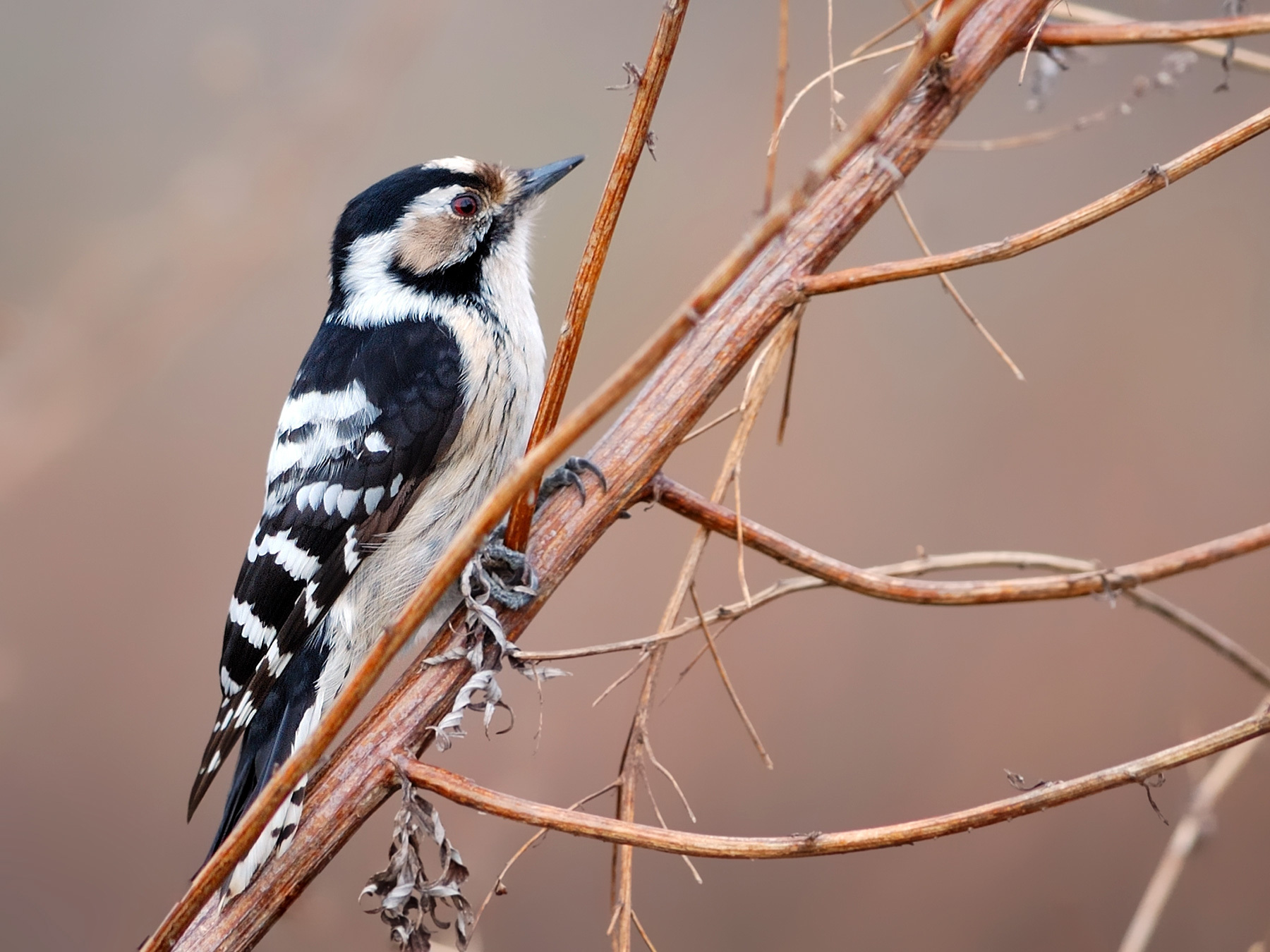
The Lesser Spotted Woodpecker is a small pied bird with a straight, black bill. Unmistakeably a woodpecker, they are tiny compared to the other UK woodpecker species.
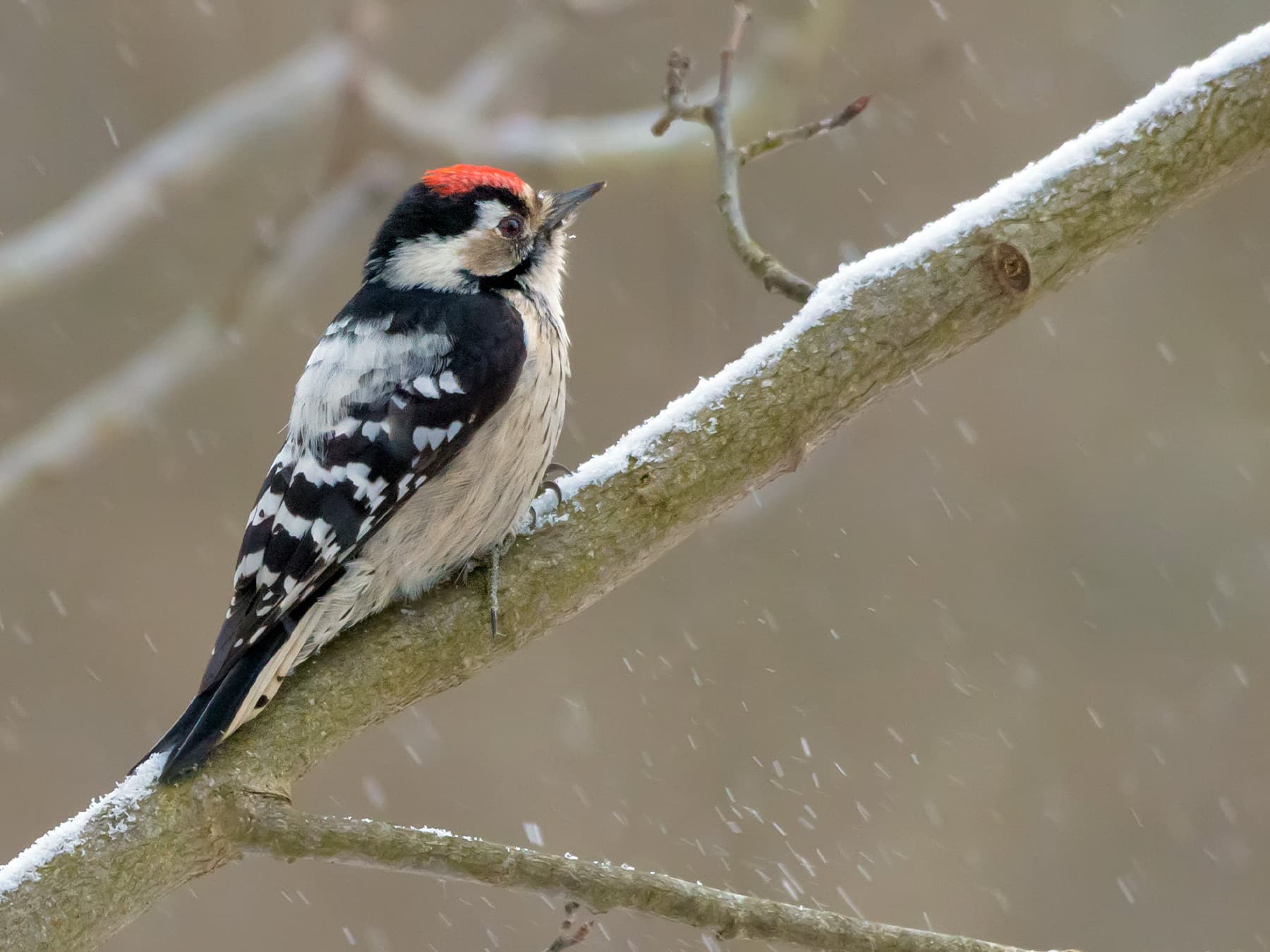
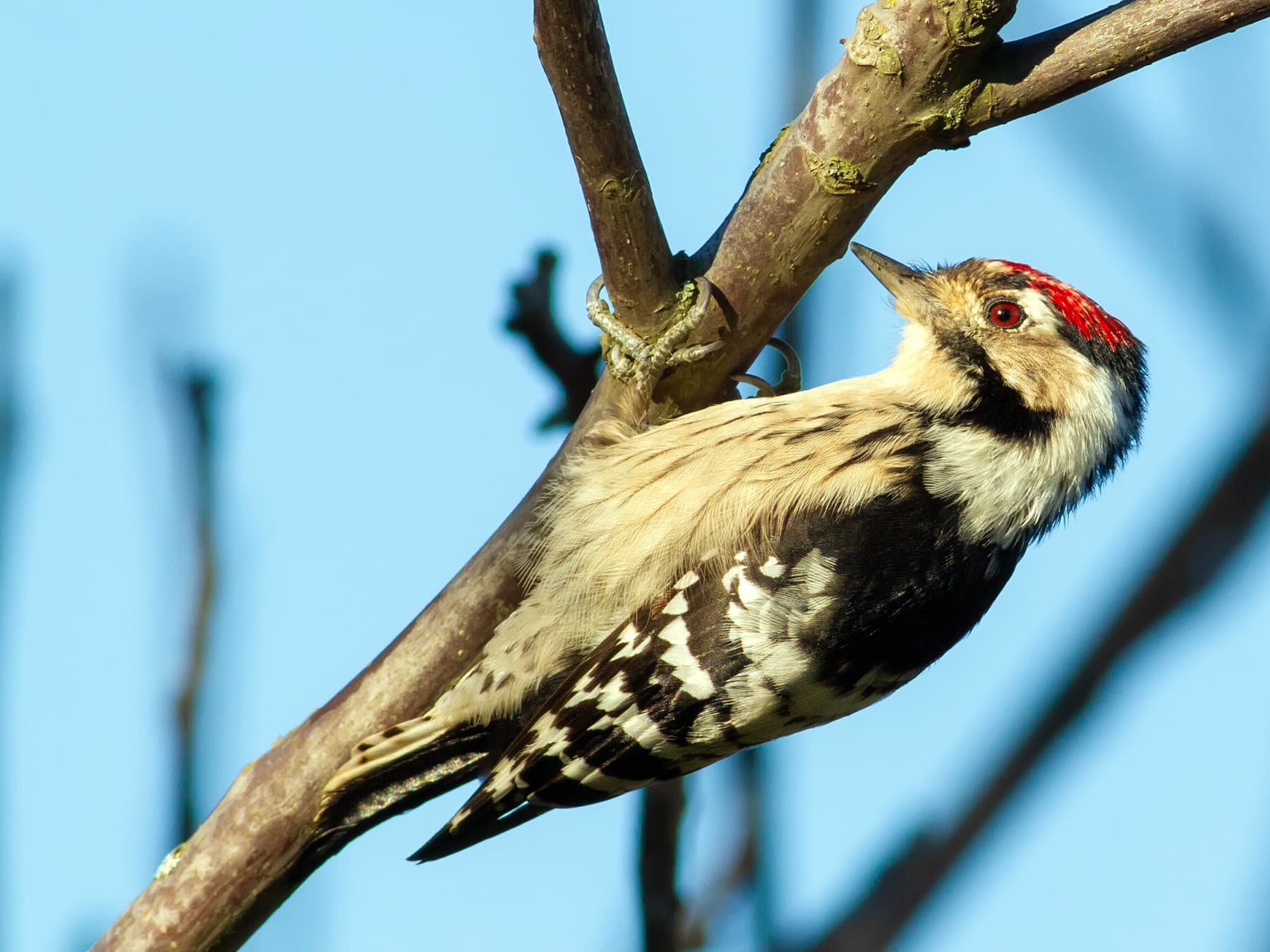
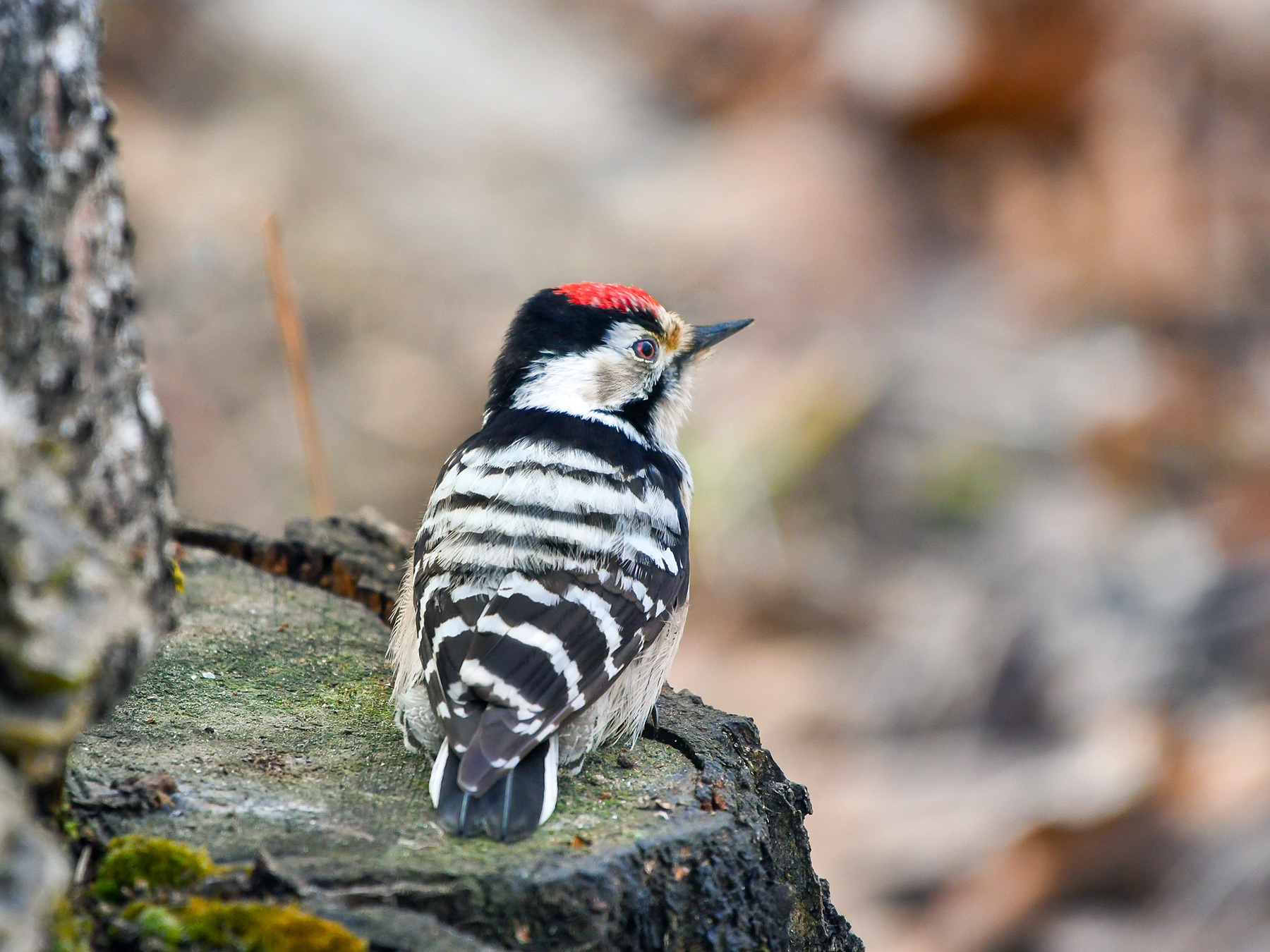
They are black above, with irregular white barring on the wings and lower back that blur and merge somewhat on the upper back. Their underparts are whitish from the tail to the face, with fine dark streaking on the breast and spots on the lower belly and under their tail. The tail is black above with white outer tail feathers (rectrices), and whitish below.
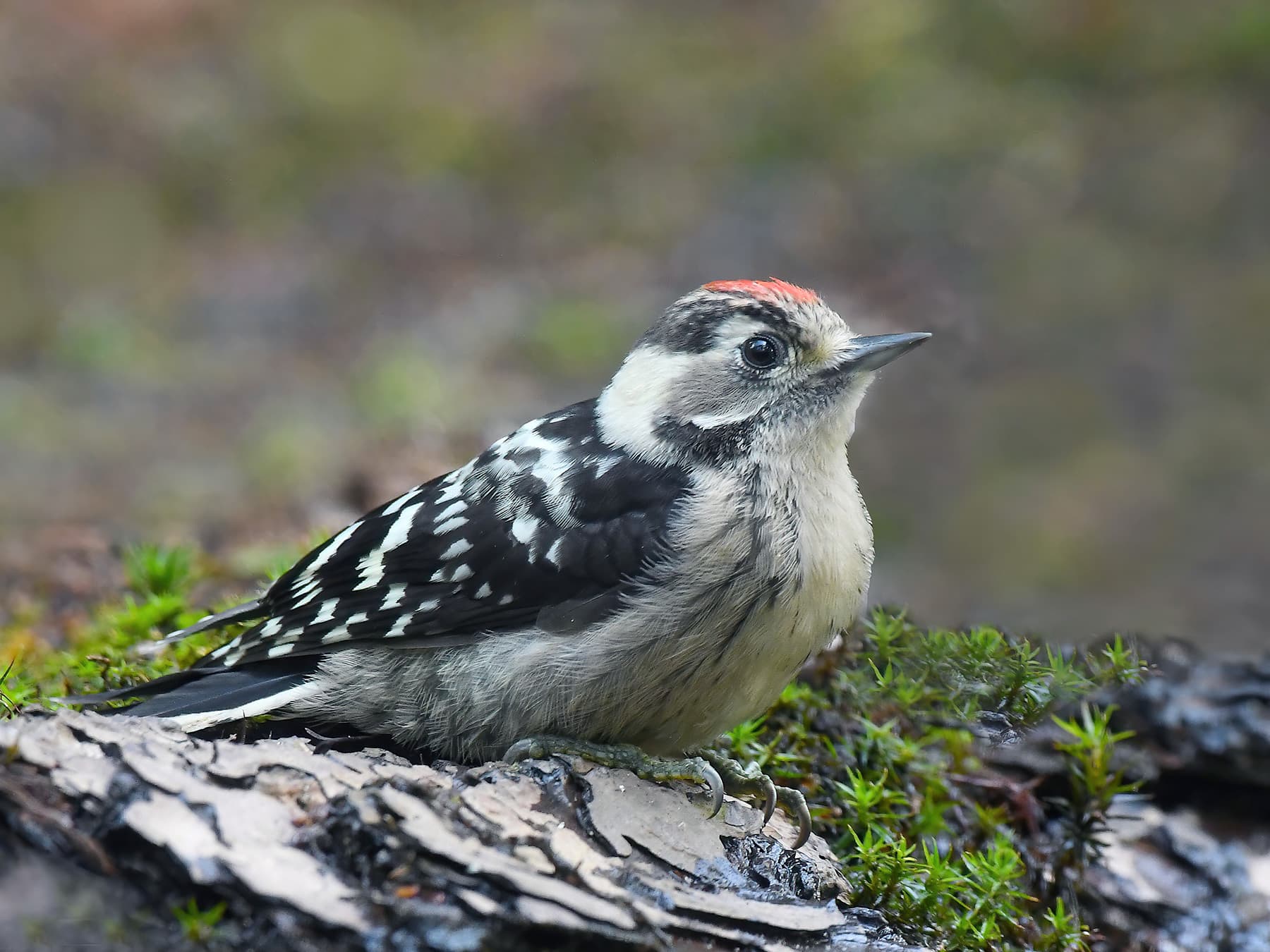
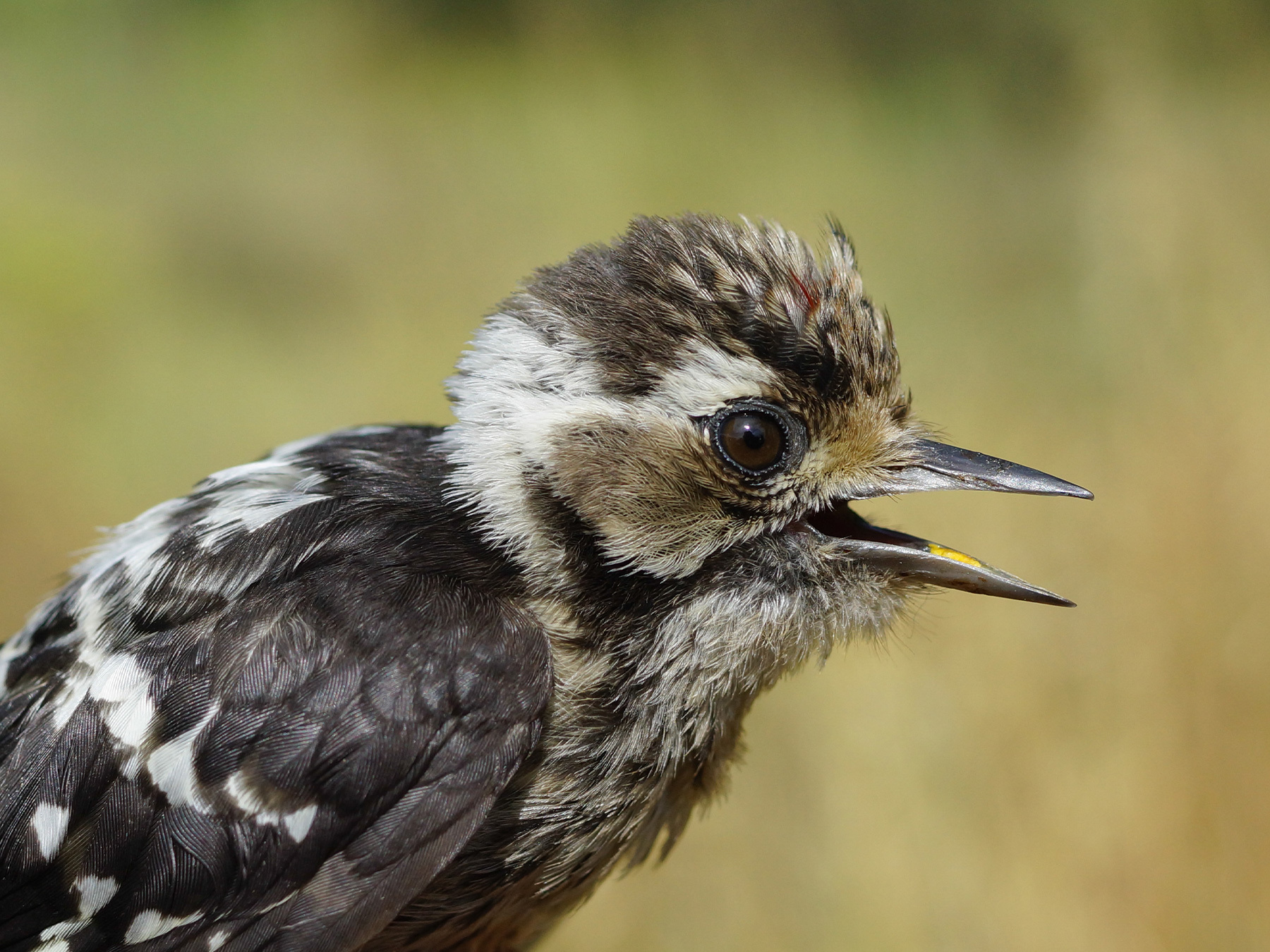
Females are similar to males but have a white and black crown with no red markings. Like the adult male, juveniles of both sexes have a red cap but differ in having duller plumage.
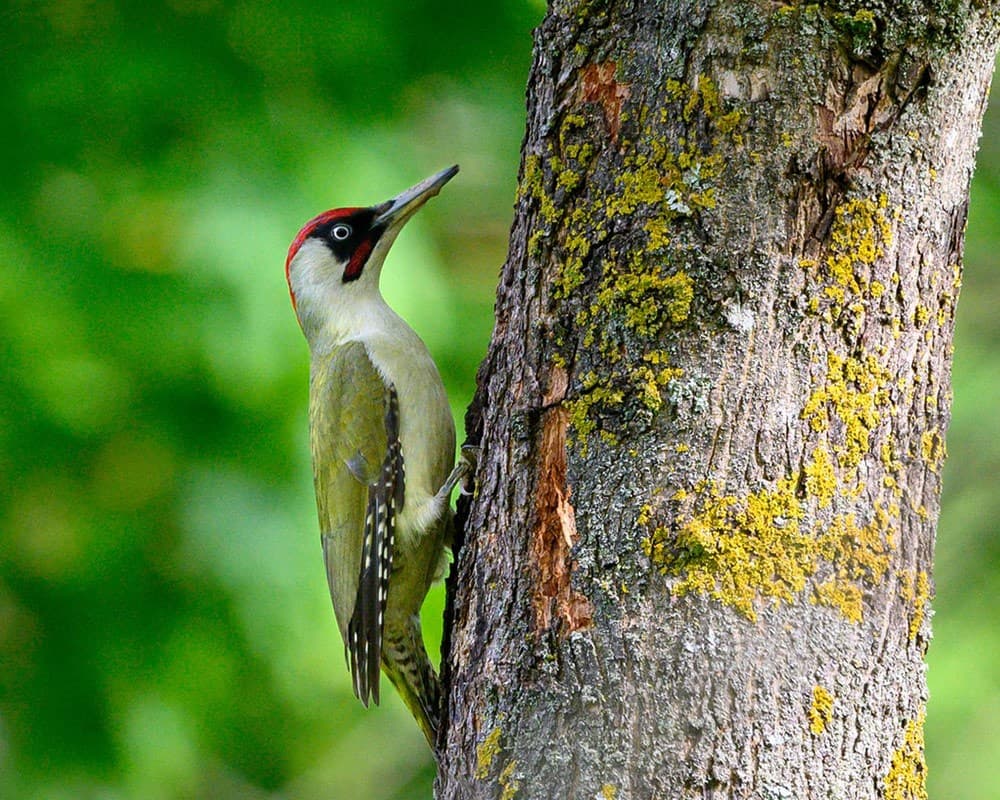
The Lesser Spotted Woodpecker looks most similar to the Great Spotted Woodpecker, although that species is much larger and has red feathers under its tail.
How big are Lesser Spotted Woodpeckers?
Length
Lesser Spotted Woodpeckers measure just 14 to 16 centimetres in length.
Weight
Adults typically weigh 17 to 25 grams, with an approximate average of just 21 grams.
Wingspan
These small birds have a 25 to 27 centimetre wingspan.
Its size
Adults- Length
- 14–16 cm
- Wingspan
- 25–27 cm
- Weight
- 17–25 g
Its song and calls
What sound does a Lesser Spotted Woodpecker make?
The Lesser Spotted Woodpecker is best located by listening for its drumming and calls, particularly on spring mornings. These elusive birds produce a high-pitched piping ‘Ki-ki-ki’ or ‘kee-kee-kee call,’ similar to the Kestrel. They also tap on wood, producing an even, rolling drumming sound that is softer than the more commonly heard Great Spotted Woodpecker.
- Song0:00 / 0:05
Recorded in Lombardy, Italy · October 2022
- Call0:00 / 0:04
Recorded in Grand Est, France · March 2025
When and where to see it
OctoberLeaving
Most recorded in October
- 1. West Sussexunder 0.1%
- 2. Shropshireunder 0.1%
- 3. Surreyunder 0.1%
- 4. Hampshireunder 0.1%
- 5. Somersetunder 0.1%
Each dot is a county, state or province: the bigger and darker, the larger the bird’s share of that place’s bird records that month. Grey dots: no regular records. The ringed point is the centre of the bird’s records this month; the arrow shows how it moved since last month, and the dashed loop its path through the year. “Arrivals” colours places where it becomes regular this month (orange) or is in its last regular month (grey). GBIF eBird Observation Dataset, 2019–2024. Map data: Natural Earth, US Census Bureau; place centres © OpenStreetMap contributors.
In your area
See when the Lesser Spotted Woodpecker is recorded in your county, state or province.
How often the Lesser Spotted Woodpecker turns up in the UK through the year, from birdwatchers' records.
United Kingdom
Winter visitor · all year · most records in March
Show as a table
| Month | United Kingdom |
|---|---|
| January | 0.007% (regular) |
| February | 0.018% (regular) |
| March | 0.019% (regular) |
| April | 0.011% (regular) |
| May | 0.005% (regular) |
| June | 0.003% (regular) |
| July | 0.002% (regular) |
| August | 0.002% (regular) |
| September | 0.003% (regular) |
| October | 0.001% (regular) |
| November | 0.003% (regular) |
| December | 0.004% (regular) |
Recorded regularly in
Worldwide: recorded regularly in 49 countries
Countries where it was recorded in at least 3 of the 6 years 2019–2024. Linked countries have their own bird list.
Europe (38)
- Åland Islands
- Albania
- Austria
- Belarus
- Belgium
- Bosnia & Herzegovina
- Bulgaria
- Croatia
- Czechia
- Denmark
- Estonia
- Finland
- France
- Germany
- Greece
- Hungary
- Italy
- Kosovo
- Latvia
- Lithuania
- Luxembourg
- Moldova
- Montenegro
- Netherlands
- North Macedonia
- Norway
- Poland
- Portugal
- Romania
- Russia
- Serbia
- Slovakia
- Slovenia
- Spain
- Sweden
- Switzerland
- Ukraine
- United Kingdom
Asia (9)
- Armenia
- Azerbaijan
- China
- Georgia
- Iran
- Japan
- Kazakhstan
- Mongolia
- Turkey
Data: EOD – eBird Observation Dataset (Cornell Lab of Ornithology), accessed via GBIF.org, CC BY 4.0. Records from 2019–2024, aggregated and filtered by Birdfact. How these lists are made
What is the habitat of a Lesser Spotted Woodpecker?
Lesser Spotted Woodpeckers are woodland birds that prefer mature broadleaf woodland, especially with plenty of Oak trees and dead wood. They can also be seen in orchards and occasionally in well-wooded gardens.
What is the range of a Lesser Spotted Woodpecker?
Lesser Spotted Woodpeckers are confined to England and Wales in the United Kingdom but widespread across Europe and Asia, reaching Kamchatka in the east. There is also a small population in North Africa. There are at least 11 recognised subspecies, each with different ranges.
Where do Lesser Spotted Woodpeckers live?
Lesser Spotted Woodpeckers spend most of their lives in trees, often foraging in the high canopy among thin branches. They live within large home ranges in the winter but occupy smaller nesting territories in spring and summer.
How rare are Lesser Spotted Woodpeckers?
Lesser Spotted Woodpeckers have become very scarce indeed, although their shy nature, small size, and habit of foraging in treetops and dense vegetation make them a challenging species to monitor. Their severe decline since the 1980s is of great concern, and they are now on the United Kingdom’s red list of conservation concern.
Where can you see Lesser Spotted Woodpeckers in the UK?
Lesser Spotted Woodpeckers are rare and localised in England and Wales, making them a challenging species to find. RSPB Nagshead and RSPB Highnam Wood in Gloucestershire and the New Forest offer chances of spotting (or hearing) these birds.
February to April is the best time to find Lesser Spotted Woodpeckers in the United Kingdom as they are especially vocal and trees are not yet in leaf. However, they are present throughout the year, and a patient birdwatcher could be rewarded in any season.
Migration
Do Lesser Spotted Woodpeckers migrate?
Lesser Spotted Woodpeckers are not known to migrate in the United Kingdom, although they are partially migratory in northern Europe.
Are Lesser Spotted Woodpeckers native to the UK?
Lesser Spotted Woodpeckers are a native, non-introduced species in England and Wales.
Tips for seeing it
- Listen for their distinctive drumming sound, which is faster but softer than larger woodpecker species.
- Look for movement high up in trees, especially on thin outer branches.
- Search for fresh holes in dead wood, a sign of recent foraging activity.
- In the UK, visit deciduous woodlands in early spring when trees are bare for better visibility.
What it eats
What do Lesser Spotted Woodpeckers eat?
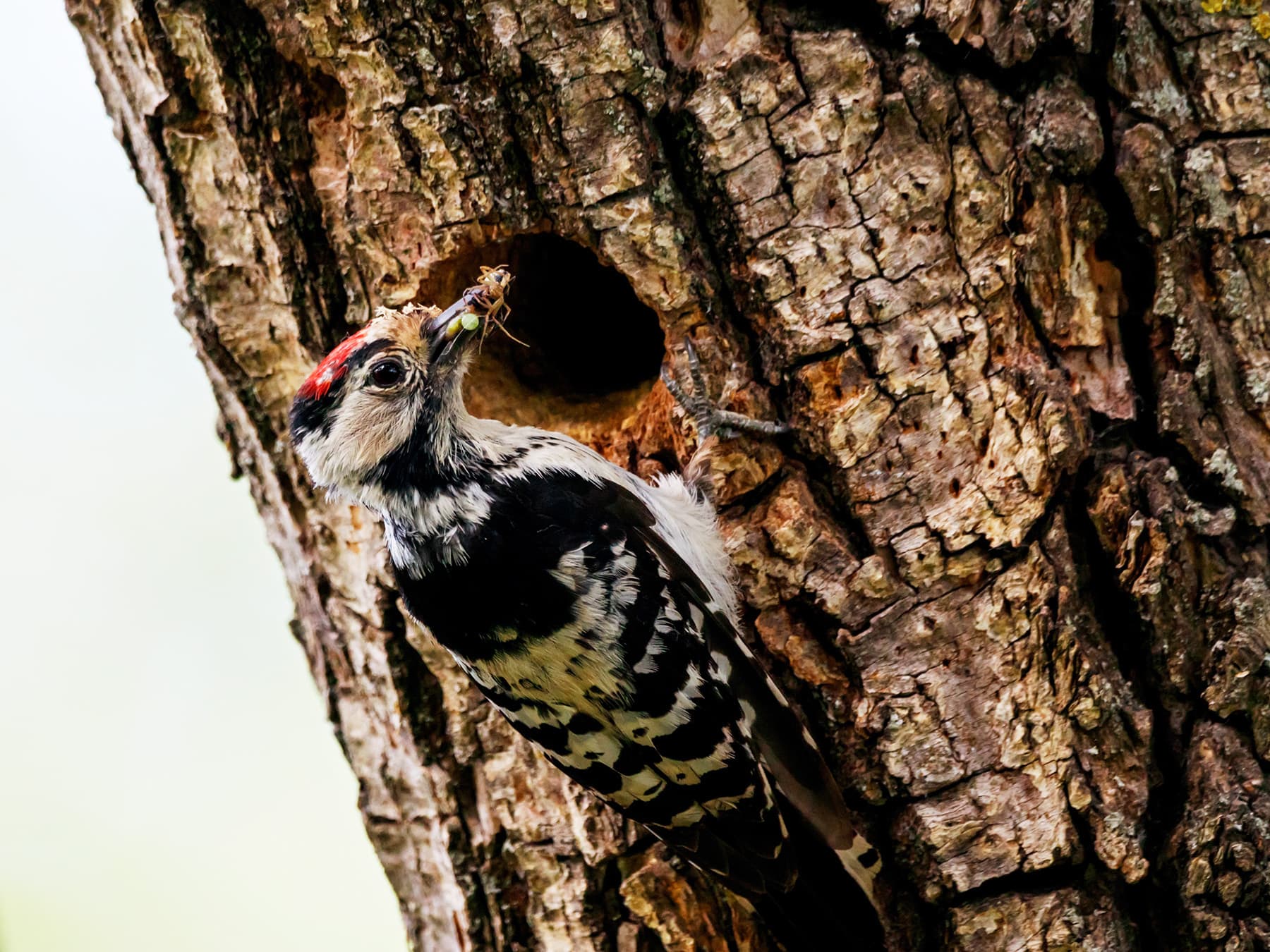
Lesser Spotted Woodpeckers eat insects, spiders, and other invertebrates. They find their prey on the bark and foliage in the warmer months but search under bark or drill into wood cavities when food is scarce.
What do Lesser Spotted Woodpecker chicks eat?
Lesser Spotted Woodpecker chicks eat small insects like aphids, caterpillars, and grubs. Both parents bring food to the nest, although males are often the more devoted parents.
Nesting and breeding
Where do Lesser Spotted Woodpeckers nest?
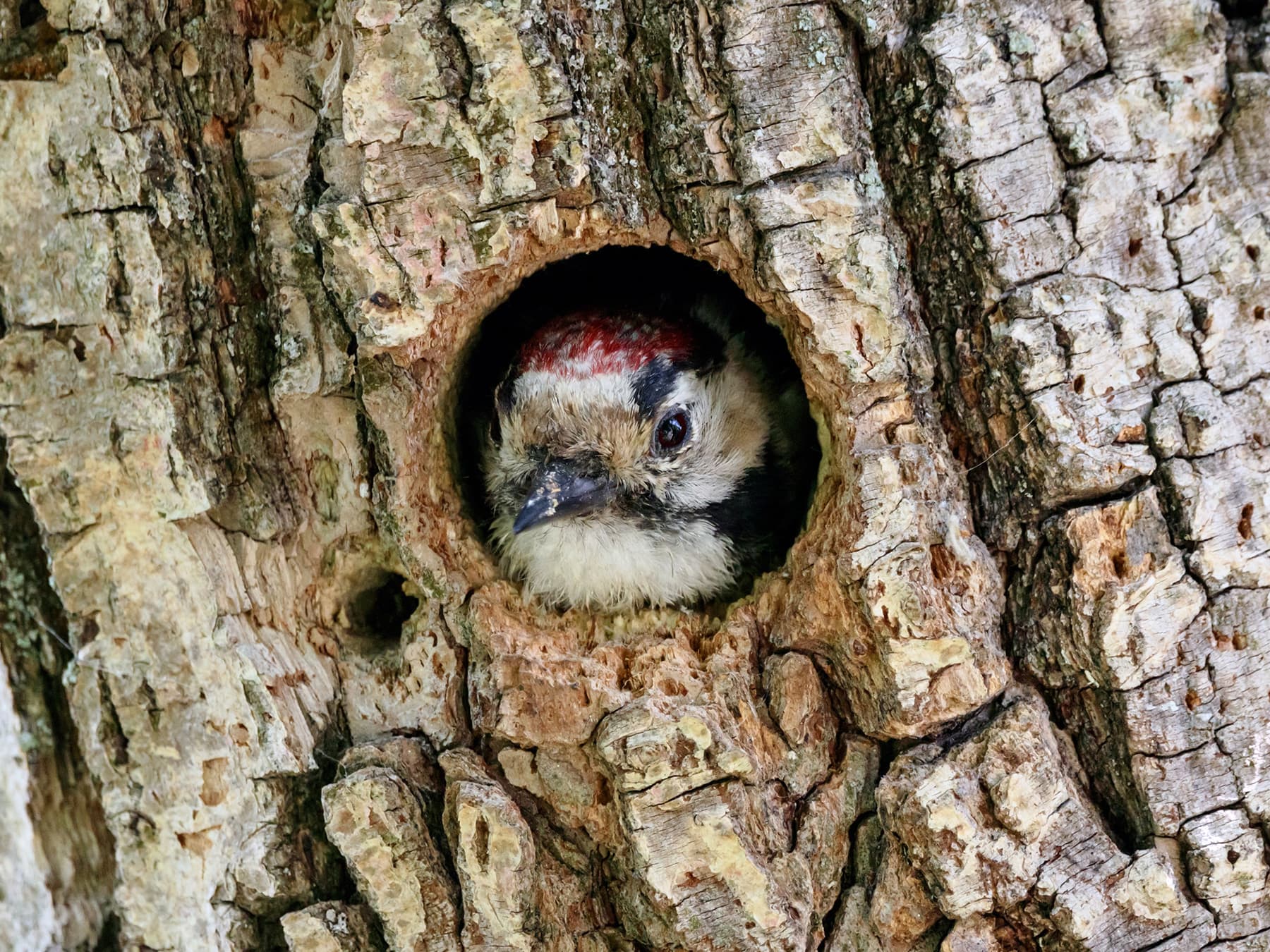
Lesser Spotted Woodpeckers nest in holes that they excavate in trees up to twenty metres above the ground. Suitable trees include Birch, Elm, Alder, and Willow, especially if they are near water. Dead trees are particularly important, although they also use dead branches on live softwood species. The nest is visible as an excavation with a small entrance hole of about three centimetres in diameter.
When do Lesser Spotted Woodpeckers nest?
Lesser Spotted Woodpeckers nest in the spring and summer, usually from April to June. Nest excavation may take several weeks, and the eggs hatch after about 11 days. Their chicks fledge after a further three weeks or so.
What do Lesser Spotted Woodpecker eggs look like?
Lesser Spotted Woodpeckers typically lay a single clutch of four to six glossy white eggs each year.
Do Lesser Spotted Woodpeckers mate for life?
Lesser Spotted Woodpeckers are monogamous and may form long-lasting partnerships, although both males and females occasionally mate with a second partner.
Behaviour
Are Lesser Spotted Woodpeckers aggressive?
Lesser Spotted Woodpeckers defend nesting territories in the breeding season. These birds drum on dead wood to highlight their presence to nearby rivals and prevent the need for physical conflict.
Where do Lesser Spotted Woodpeckers sleep at night?
Lesser Spotted Woodpeckers are diurnal birds that roost in tree cavities at night. These may be old nests or holes excavated specifically for sleeping.
Lifespan and predators
How long do Lesser Spotted Woodpeckers live?
Lesser Spotted Woodpeckers have an estimated lifespan of 5 to 10 years.
What are the predators of Lesser Spotted Woodpeckers?
Lesser Spotted Woodpeckers are most vulnerable to birds of prey like the Sparrowhawk. Their eggs and chicks are vulnerable to Magpies, Great Spotted Woodpeckers, and Jays.
Are Lesser Spotted Woodpeckers protected?
Lesser Spotted Woodpeckers are protected by the Wildlife and Countryside Act in the UK.
Are Lesser Spotted Woodpeckers endangered?
Lesser Spotted Woodpeckers have declined drastically in the United Kingdom. Despite their increasing local rarity, these birds are not officially endangered at a species level and remain in the ‘Least Concern’ category on the IUCN’s Red List.
Conservation
While listed as Least Concern globally, the Lesser Spotted Woodpecker has experienced significant declines in parts of its range, particularly in the UK. Habitat loss and fragmentation pose the main threats.
Conservation efforts focus on preserving mature deciduous woodlands and maintaining dead wood in forests.
Similar birds
Often mistaken for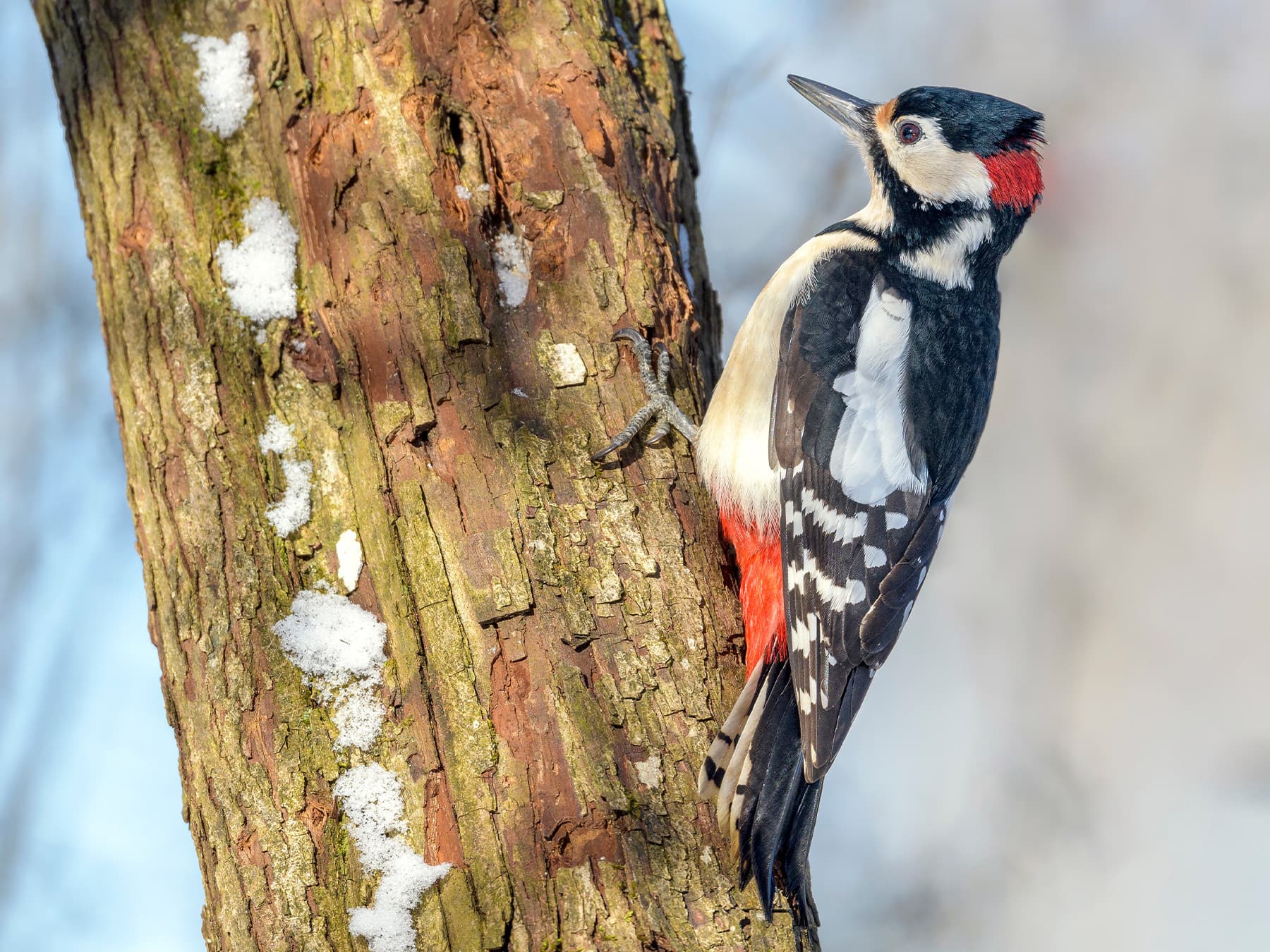
More photos
7 photos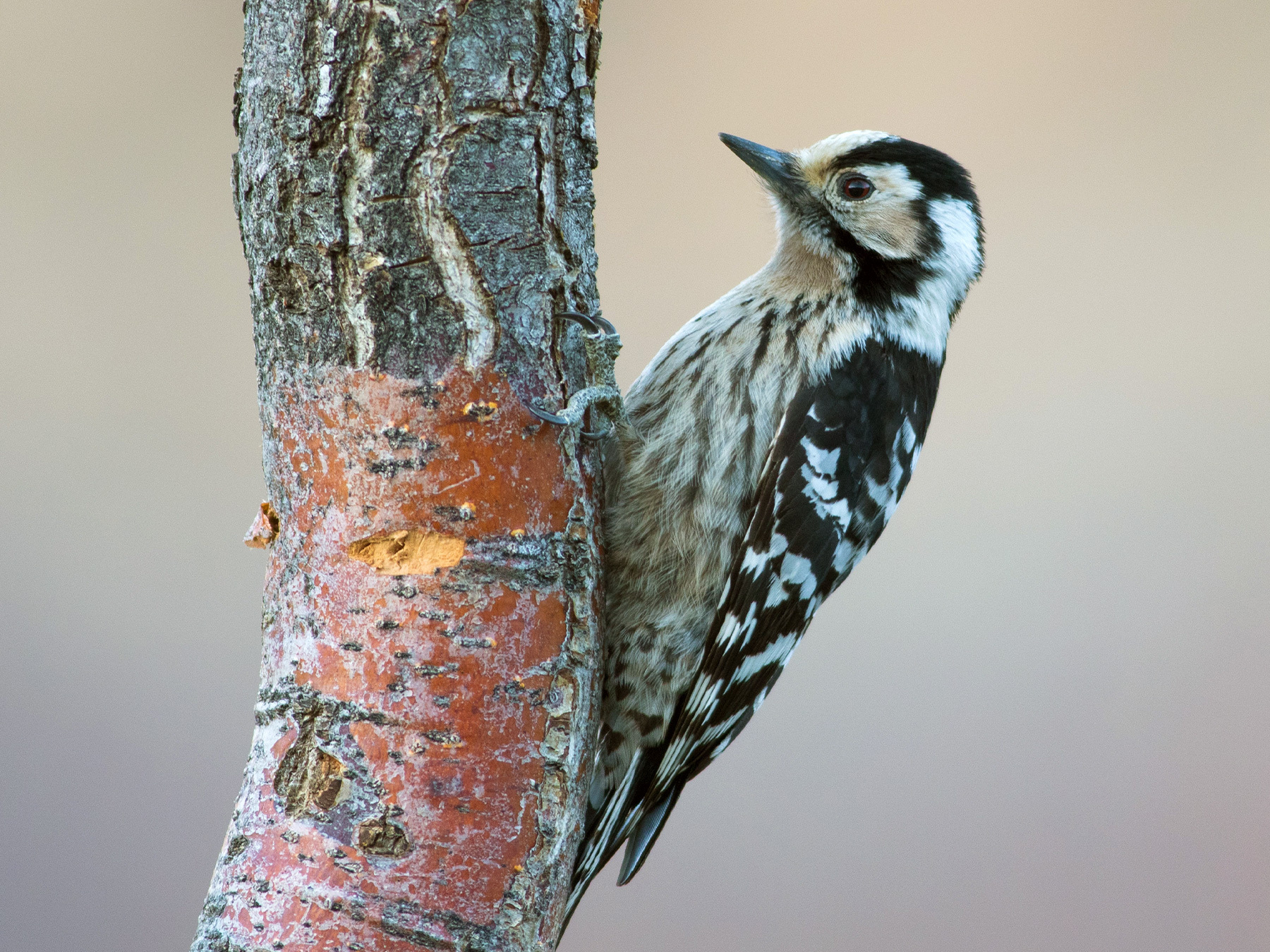
Lesser Spotted Woodpecker guides
2 guidesQuick facts
- Length
- 14–16 cm
- Wingspan
- 25–27 cm
- Weight
- 17–25 g
- Lifespan
- 5–10 years
- Family
- Woodpeckers
- Migration
- Resident
- Global status (IUCN)
- Least Concern
- World population
- 2,180,000 - 4,700,000 mature individuals
- Population trend
- Decreasing
- Scientific name
- Dryobates minor
Sources
3- 1BirdLife International. 2018. Dryobates minor. The IUCN Red List of Threatened Species 2018: e.T22681076A130037386. Source (opens in a new tab)
- 2Tracewski et al. (2016)
- 3BirdLife International. 2018. Dryobates minor. The IUCN Red List of Threatened Species 2018: e.T22681076A130037386. Source (opens in a new tab)

Checked by
Nathan Cope, founder and editor
Nathan founded Birdfact and leads its writers and contributors in the UK, the US and Canada. He has watched and studied birds for more than ten years, and checks every article and species guide before it’s published.