


Bohemian Waxwing
Waxwing · Bombycilla garrulus
By the Birdfact teamChecked by Nathan Cope
On this page15 sections
How to recognise it
What do Bohemian Waxwings look like?
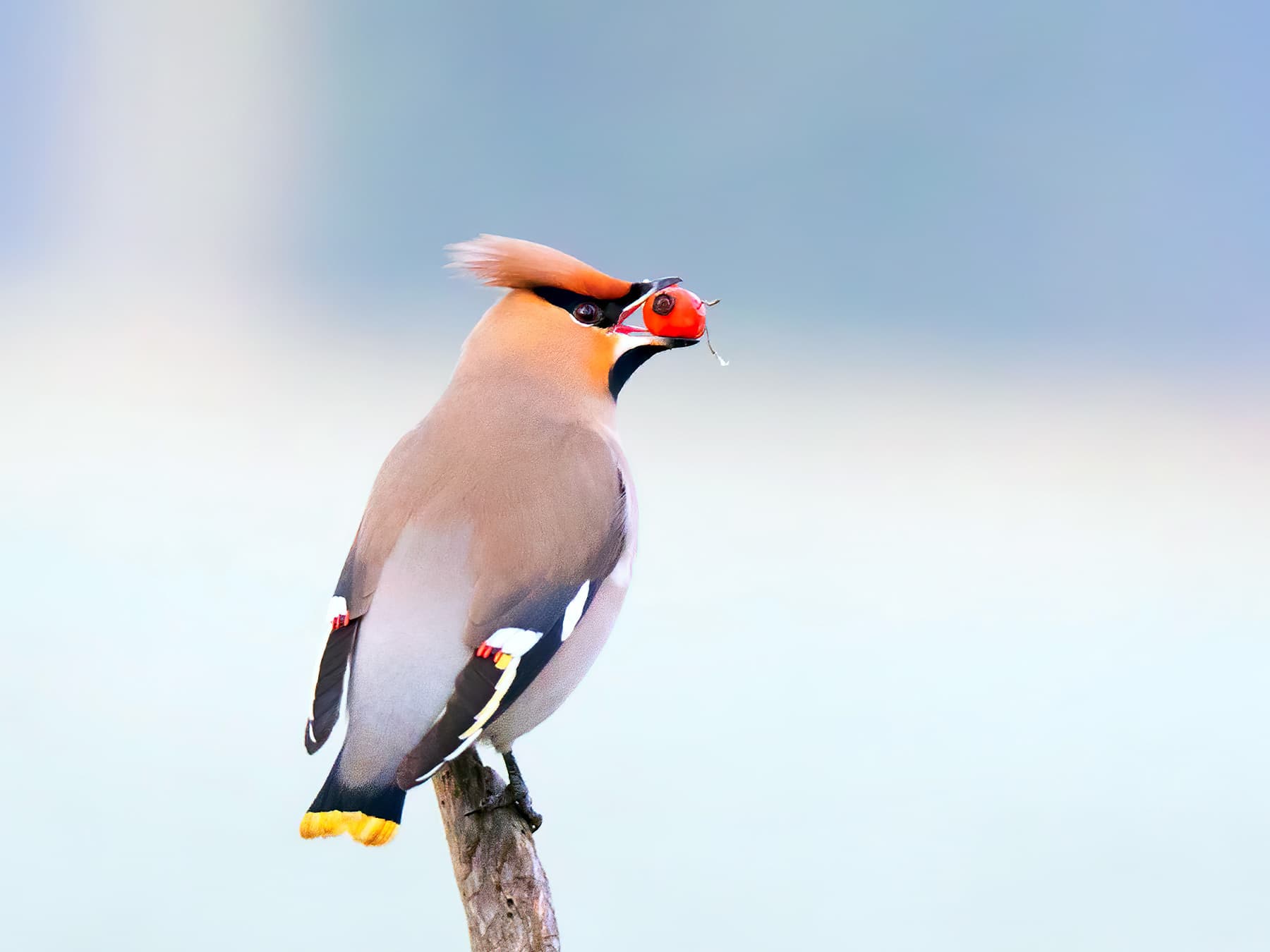
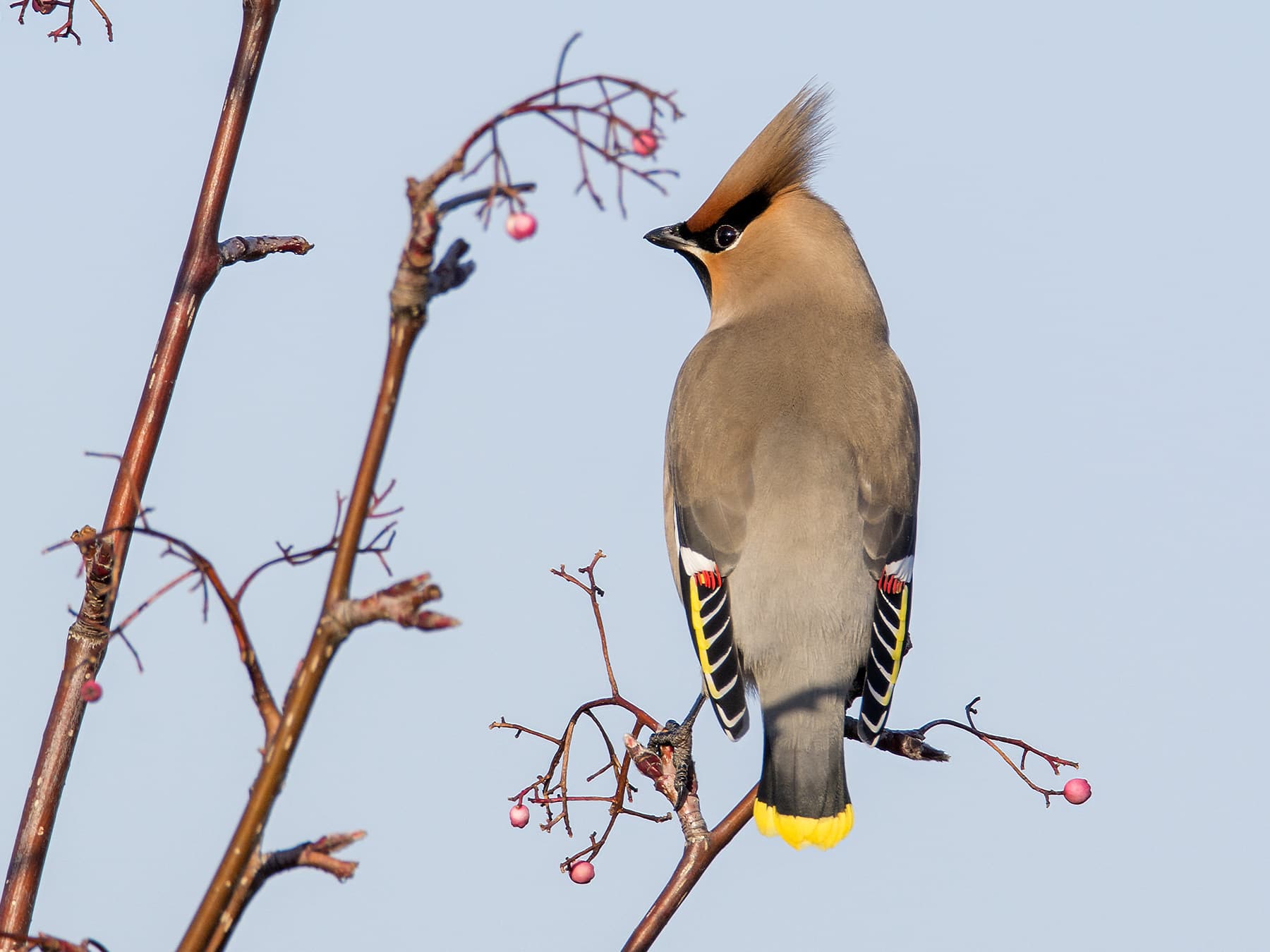
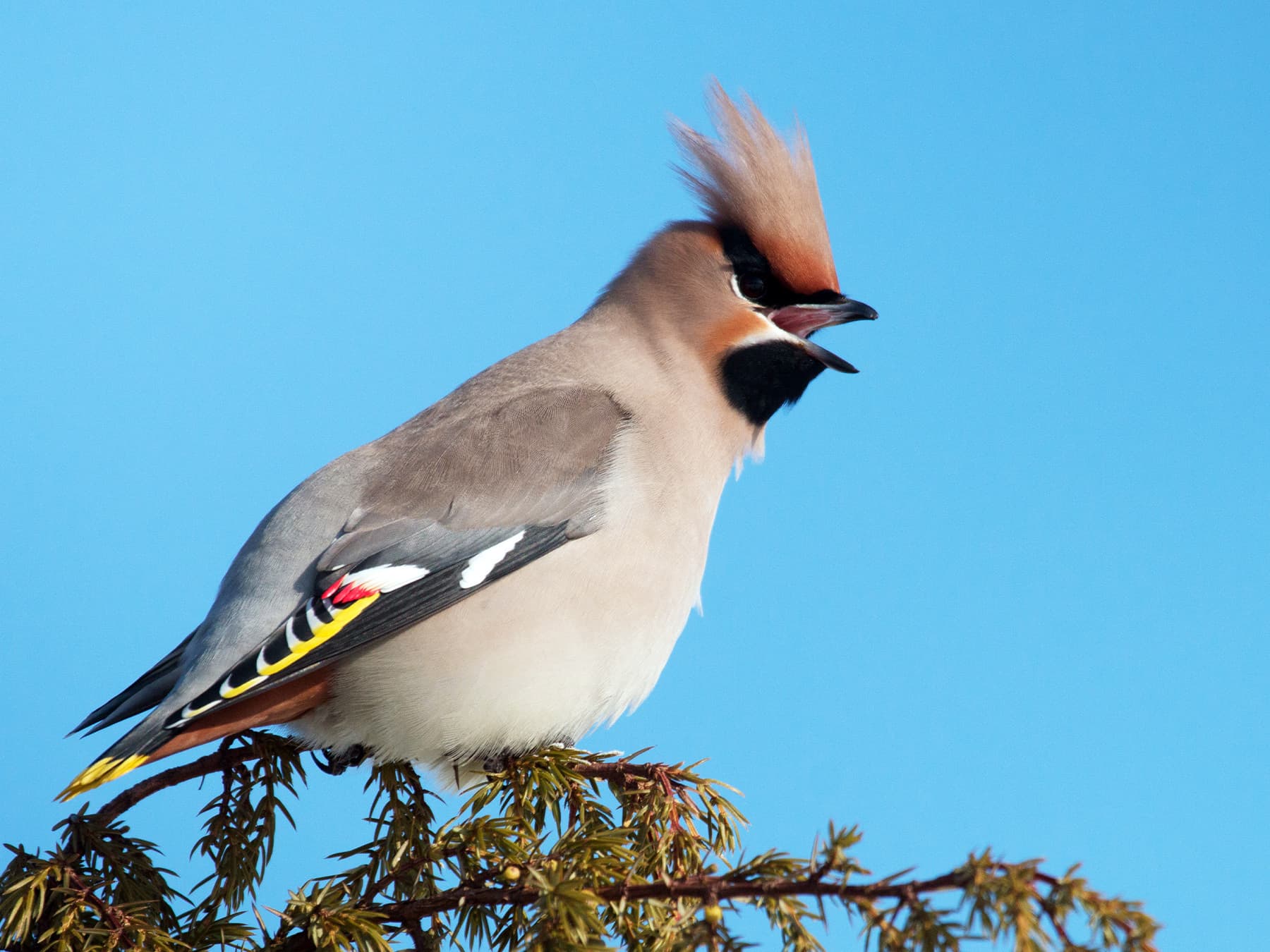
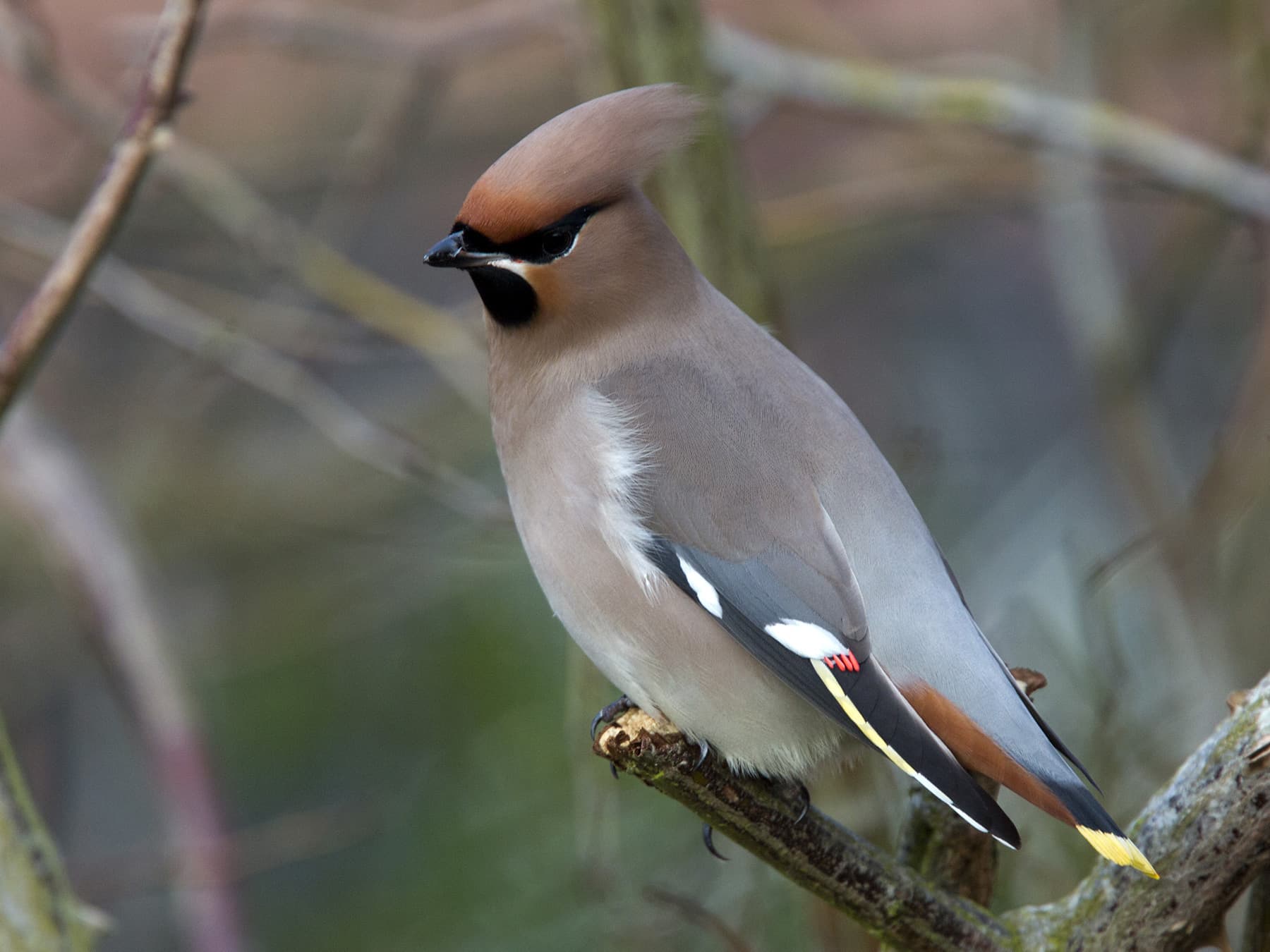
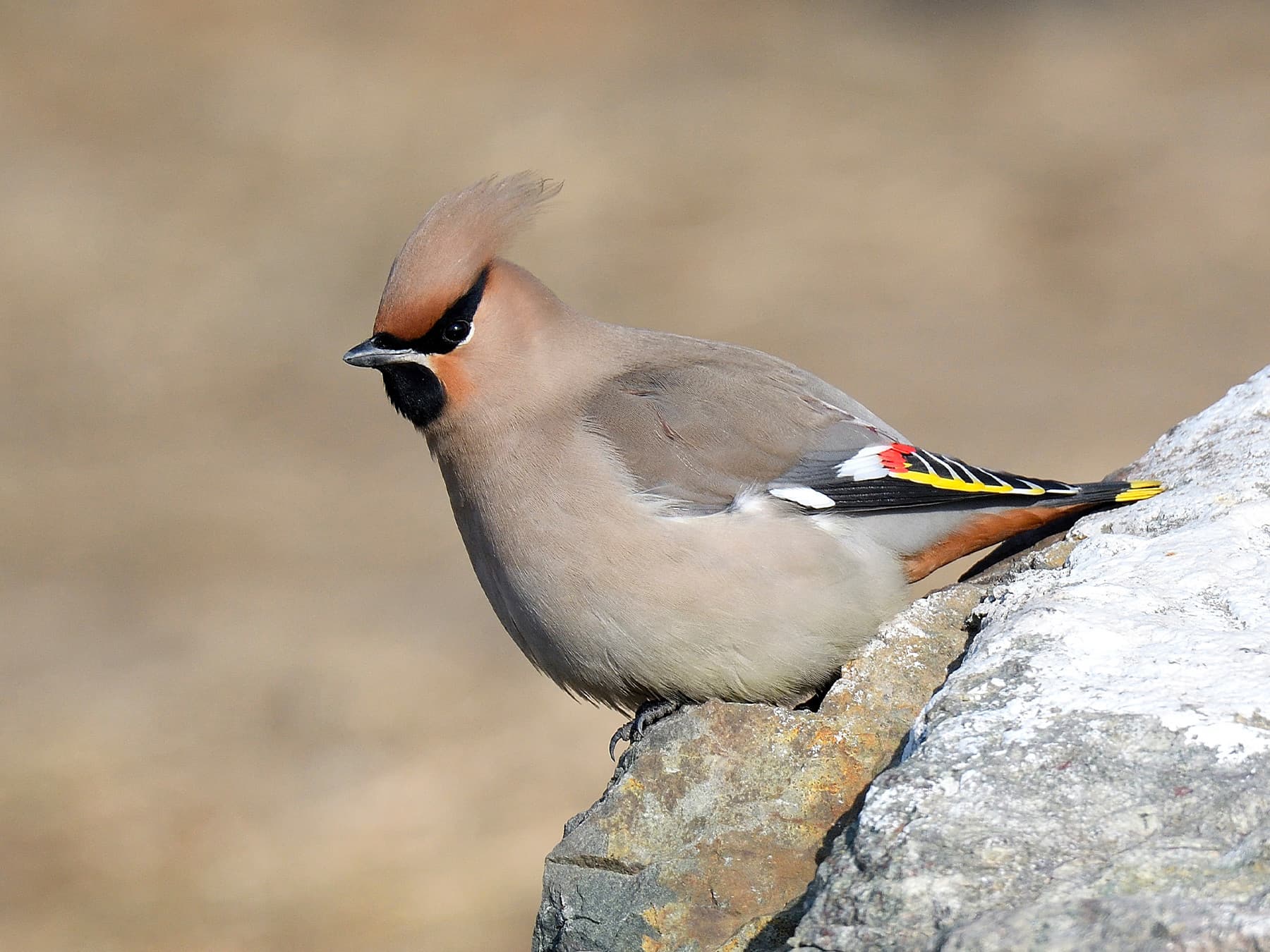
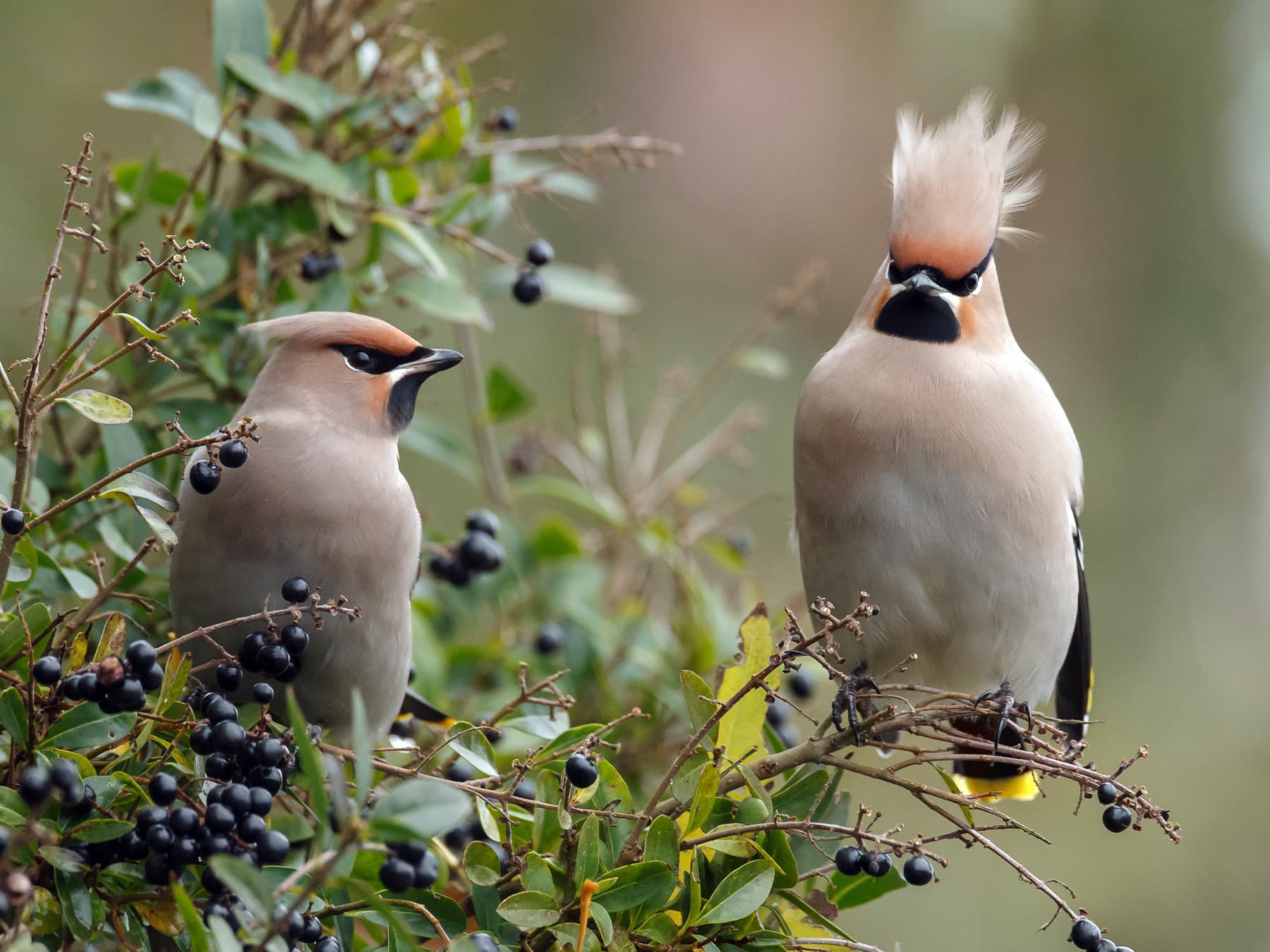
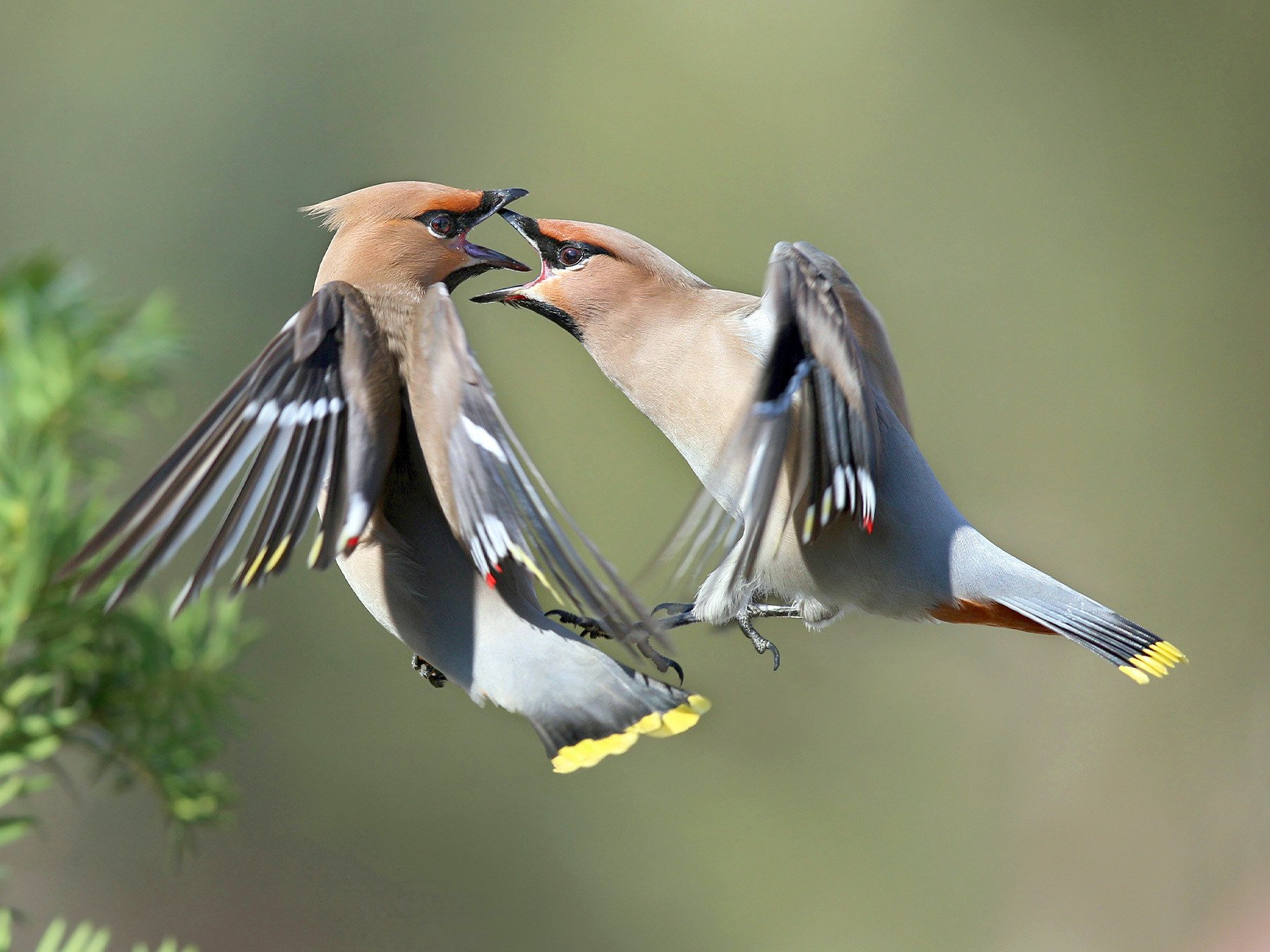
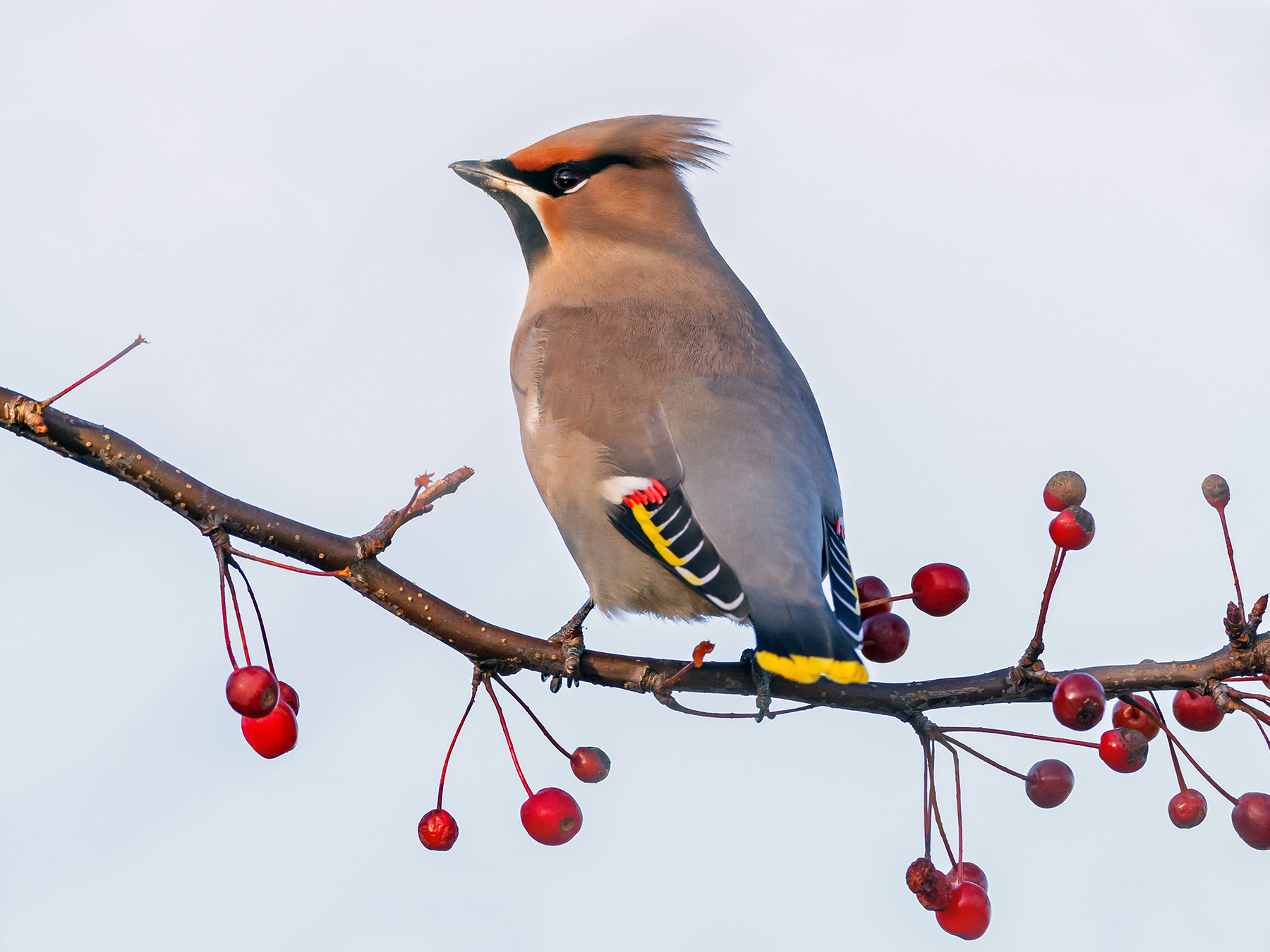
Bohemian Waxwings are handsome birds with a velvety look and a crest that is usually held flat except in courtship. Their overall color is gray-brown, tinged with peach around the head and face. A black chin and ‘bandit’ mask contrast with white markings below the eye and at the bill base.
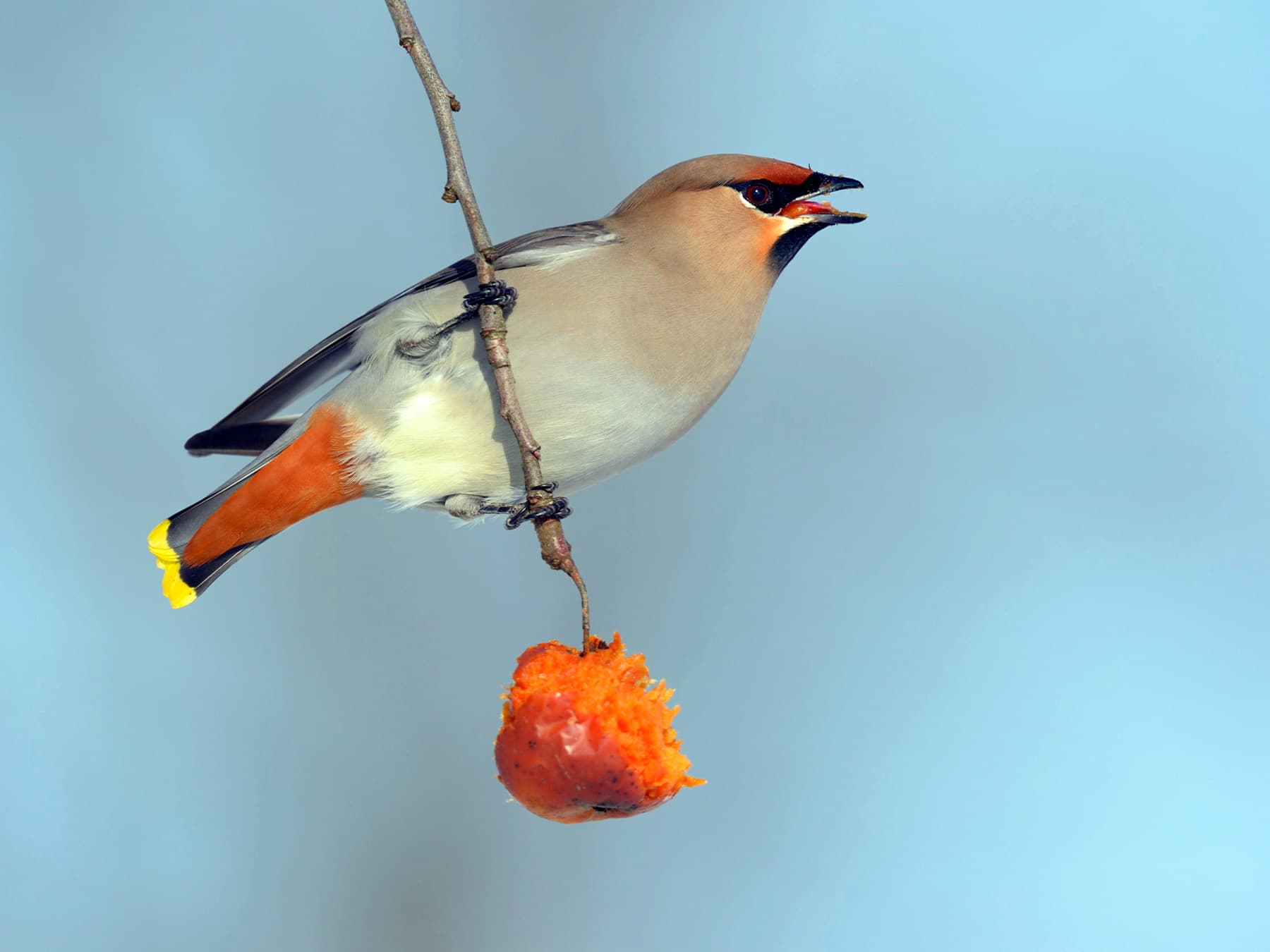
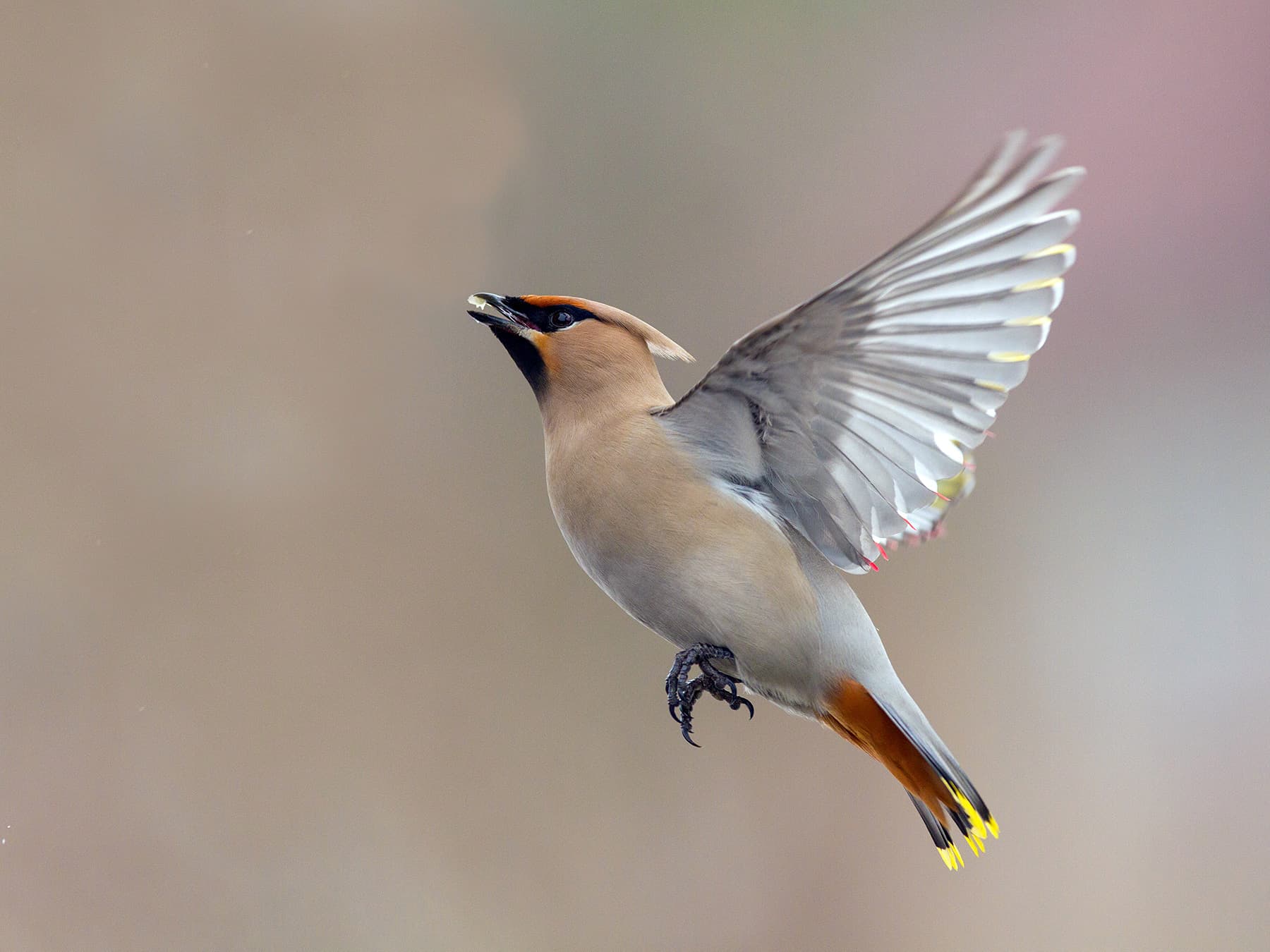
Other distinctive features include an orange vent (tail underside) and a yellow band across the end of the tail. Their wings are a darker slate-gray color, each with two white patches, a yellow streak, and characteristic red waxy tips on the ends of the secondaries.
Female Bohemian Waxwings are similar to males, although they have fewer waxy wingtips. Females also have a narrower yellow band at the tail tip and a smaller, less clearly defined black chin patch.
Juveniles have smaller crests and lack waxy red feather tips. The breast is paler and streaked, and the overall plumage color is duller. They also have a narrower yellow tail tip and less black on the face and chin.
Birdwatchers are most likely to confuse this species with the smaller Cedar Waxwing in North America. Check out our in-depth guide to learn how to distinguish between these two elegant North American migrants.
How big are Bohemian Waxwings?
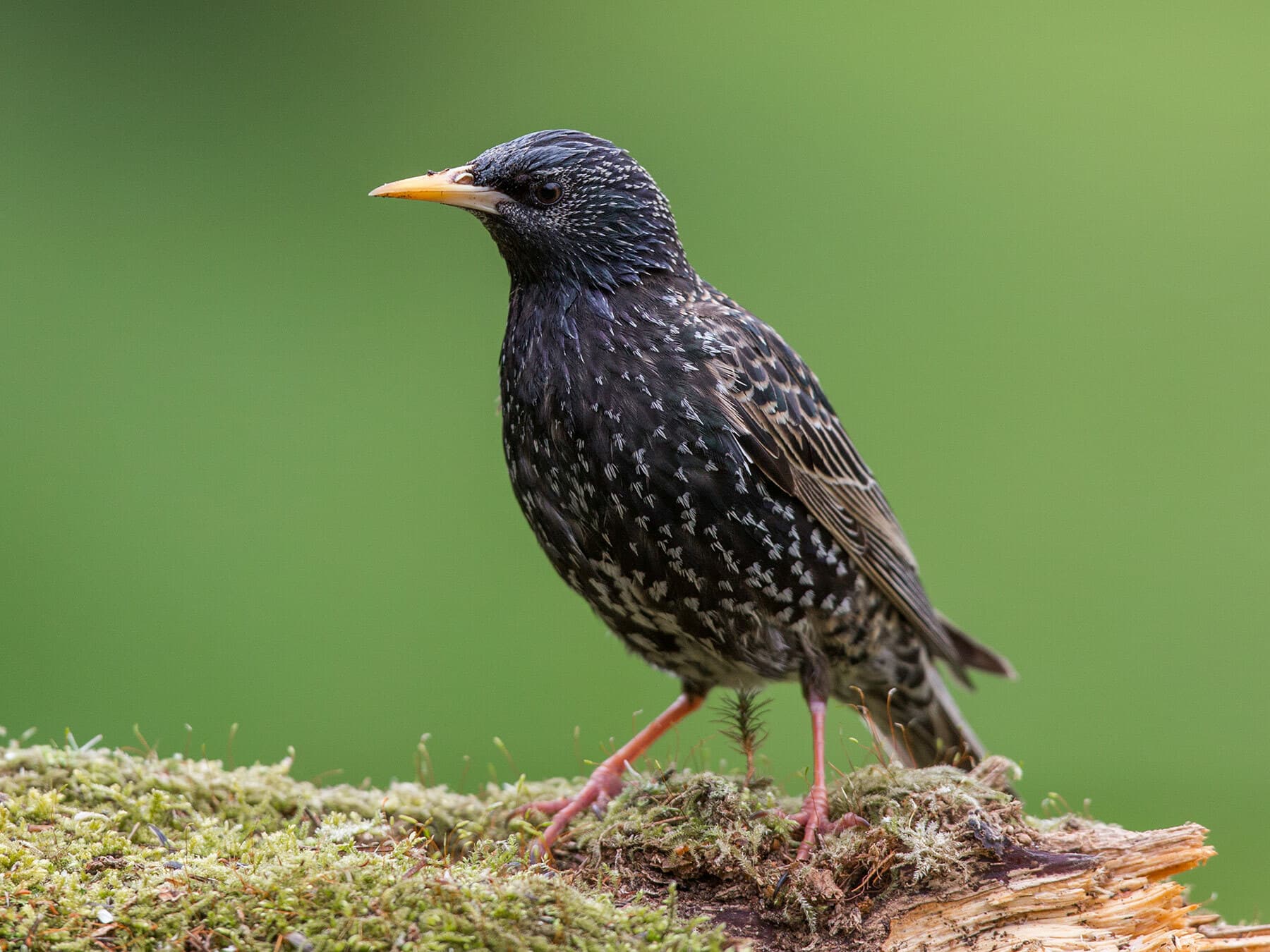
Bohemian Waxwings are medium-sized birds, slightly smaller than the European Starling.
Length
These stout songbirds have a body length of 7½ to 9 inches or 19 to 23 centimeters. Females are slightly smaller, although the difference is unnoticeable.
Weight
Most Adults weigh approximately 1⅔ to 2½ ounces or 45 to 70 grams.
Wingspan
They have short, pointed wings and a wingspan of 13 inches or 33 centimeters.
Its size
Adults- Length
- 19–23 cm
- Wingspan
- 32–35 cm
- Weight
- 55–80 g
Its song and calls
What sound does a Bohemian Waxwing make?
Bohemian Waxwings have no song, although they produce high-pitched trills and whistling calls when flocking and feeding.
- Song0:00 / 0:54
Recorded in Newfoundland and Labrador, Canada · January 2010
- Call0:00 / 1:00
When and where to see it
OctoberArriving
Most recorded in October
- 1. Eilean Siar0.14%
- 2. Orkney Islands0.13%
- 3. Shetland Islands0.12%
- 4. Scottish Bordersunder 0.1%
- 5. Aberdeenshireunder 0.1%
Each dot is a county, state or province: the bigger and darker, the larger the bird’s share of that place’s bird records that month. Grey dots: no regular records. The ringed point is the centre of the bird’s records this month; the arrow shows how it moved since last month, and the dashed loop its path through the year. “Arrivals” colours places where it becomes regular this month (orange) or is in its last regular month (grey). GBIF eBird Observation Dataset, 2019–2024. Map data: Natural Earth, US Census Bureau; place centres © OpenStreetMap contributors.
In your area
See when the Bohemian Waxwing is recorded in your county, state or province.
How often the Bohemian Waxwing turns up in the UK, the United States and Canada through the year, from birdwatchers' records.
United Kingdom
Winter visitor · regularly Oct–Mar · most records in January
United States
Winter visitor · regularly Oct–Jul · most records in January
Canada
Winter visitor · regularly Oct–Apr · most records in January
Show as a table
| Month | United Kingdom | United States | Canada |
|---|---|---|---|
| January | 0.060% (regular) | 0.021% (regular) | 0.42% (regular) |
| February | 0.025% (regular) | 0.019% (regular) | 0.39% (regular) |
| March | 0.014% (regular) | 0.010% (regular) | 0.25% (regular) |
| April | 0.003% | 0.004% (regular) | 0.11% (regular) |
| May | <0.001% | <0.001% | 0.007% |
| June | – | 0.002% (regular) | 0.005% |
| July | – | 0.002% (regular) | 0.008% |
| August | – | <0.001% | 0.004% |
| September | – | <0.001% | 0.006% |
| October | 0.010% (regular) | 0.002% (regular) | 0.066% (regular) |
| November | 0.037% (regular) | 0.010% (regular) | 0.26% (regular) |
| December | 0.054% (regular) | 0.013% (regular) | 0.33% (regular) |
Recorded regularly in
Worldwide: recorded regularly in 30 countries
Countries where it was recorded in at least 3 of the 6 years 2019–2024. Linked countries have their own bird list.
Data: EOD – eBird Observation Dataset (Cornell Lab of Ornithology), accessed via GBIF.org, CC BY 4.0. Records from 2019–2024, aggregated and filtered by Birdfact. How these lists are made
What is the habitat of a Bohemian Waxwing?
Bohemian Waxwings are habitat generalists in the non-breeding season, visiting almost any area with abundant fruiting trees. Common habitats include forest edges, farmland, and even gardens. They are more specific in the summer, generally nesting in open coniferous forests.
What is the range of a Bohemian Waxwing?
Bohemian Waxwings are the most widespread species in their family, ranging across much of the Northern Hemisphere. In North America, they are widespread in Alaska, Canada, and the west of the Contiguous United States. Across the Atlantic, these nomadic birds occur widely in Europe and Asia, stretching from the United Kingdom in the west to the Kamchatka Peninsula in the east.
Where do Bohemian Waxwings live?
These birds live and nest in boreal forest habitats in the winter but travel widely each winter, moving wherever food sources are plentiful. They forage and sleep in trees and other vegetation, although they will descend to the ground for fallen berries and fruits.
How rare are Bohemian Waxwings?
Bohemian Waxwings are not rare, although their erratic winter movements make them difficult to track down in the south of their range. They may be locally abundant in some years but scarce or completely absent in others.
Where can you see Bohemian Waxwings in the US?
Bohemian Waxwings are widespread winter visitors to the north and west of the Lower 48 States. In some years, these birds may migrate as far south as southern California and Arkansas, although their movements are governed by fickle food resources that change from year to year. They are a more reliable sighting in Alaska, where they breed each summer.
Read through our in-depth guide to learn more about the Bohemian Waxwing range and habitat in North America.
Where can you see Bohemian Waxwings in Canada?
Bohemian Waxwings are widespread in Canada, nesting in the boreal forests of the west and northwest. They disperse south and eastwards for the non-breeding winter season.
Where can you see Bohemian Waxwings in the UK?
Birdwatchers in the United Kingdom are most likely to see Waxwings in the east of Scotland, although they move south to East Anglia and further inland as food sources begin to run low. They are most fond of the Rowan tree (Sorbus aucuparia), although their arrival is not guaranteed every year as they will remain in mainland Europe when food is plentiful.
Migration
Do Bohemian Waxwings migrate?
Bohemian Waxwings are partial migrants with unpredictable migration patterns. They are present in parts of their range throughout the year but also migrate medium to long distances to warmer climates. In some years (irruption years), these birds travel in unusually high numbers or to locations south of their normal range.
Why do Bohemian Waxwings migrate?
Bohemian Waxwings find ideal nesting conditions in the boreal forests of Canada, Alaska, Northern Europe, and Russia. However, they must retreat from the northernmost limits of their range to avoid the harsh winter. They move south, southeast, and southwest in search of milder weather and their favorite fruiting plants.
Are Bohemian Waxwings native to North America?
Bohemian Waxwings are a native species in North America. They live in Alaska, Canada, and roughly the northern half of the Lower 48 states.
Are Bohemian Waxwings native to the UK?
Waxwings are native to the United Kingdom, although they do not nest locally. They are non-breeding winter visitors from Scandinavia.
Tips for seeing it
- Look for large flocks in winter, especially near fruit-bearing trees or shrubs
- Listen for their high-pitched, trilling calls, which often announce their presence
- Observe urban parks and gardens, where they may visit to feed on ornamental fruit trees
- In North America, check areas with mountain ash or crabapple trees during irruption years
What it eats
What do Bohemian Waxwings eat?
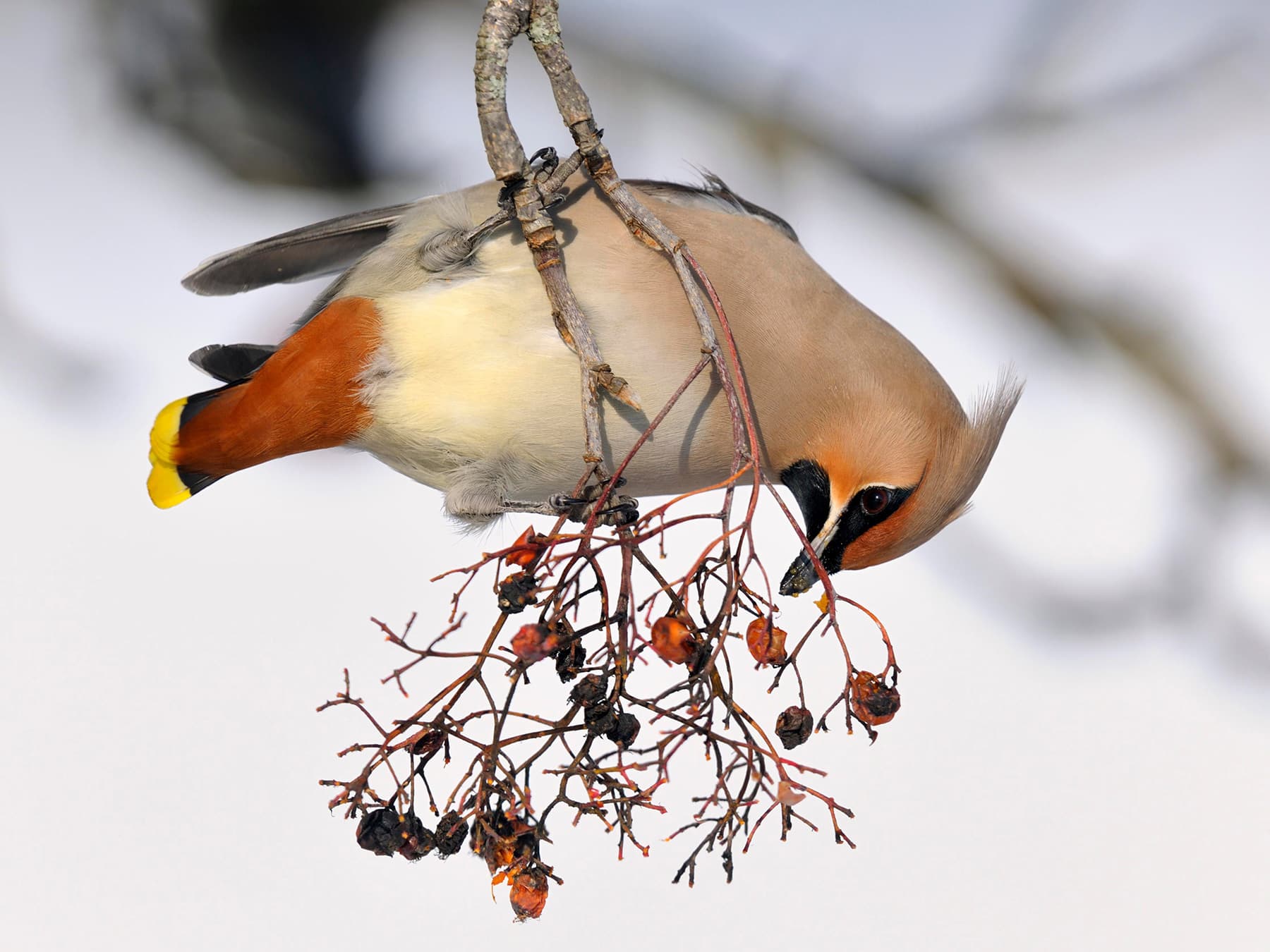
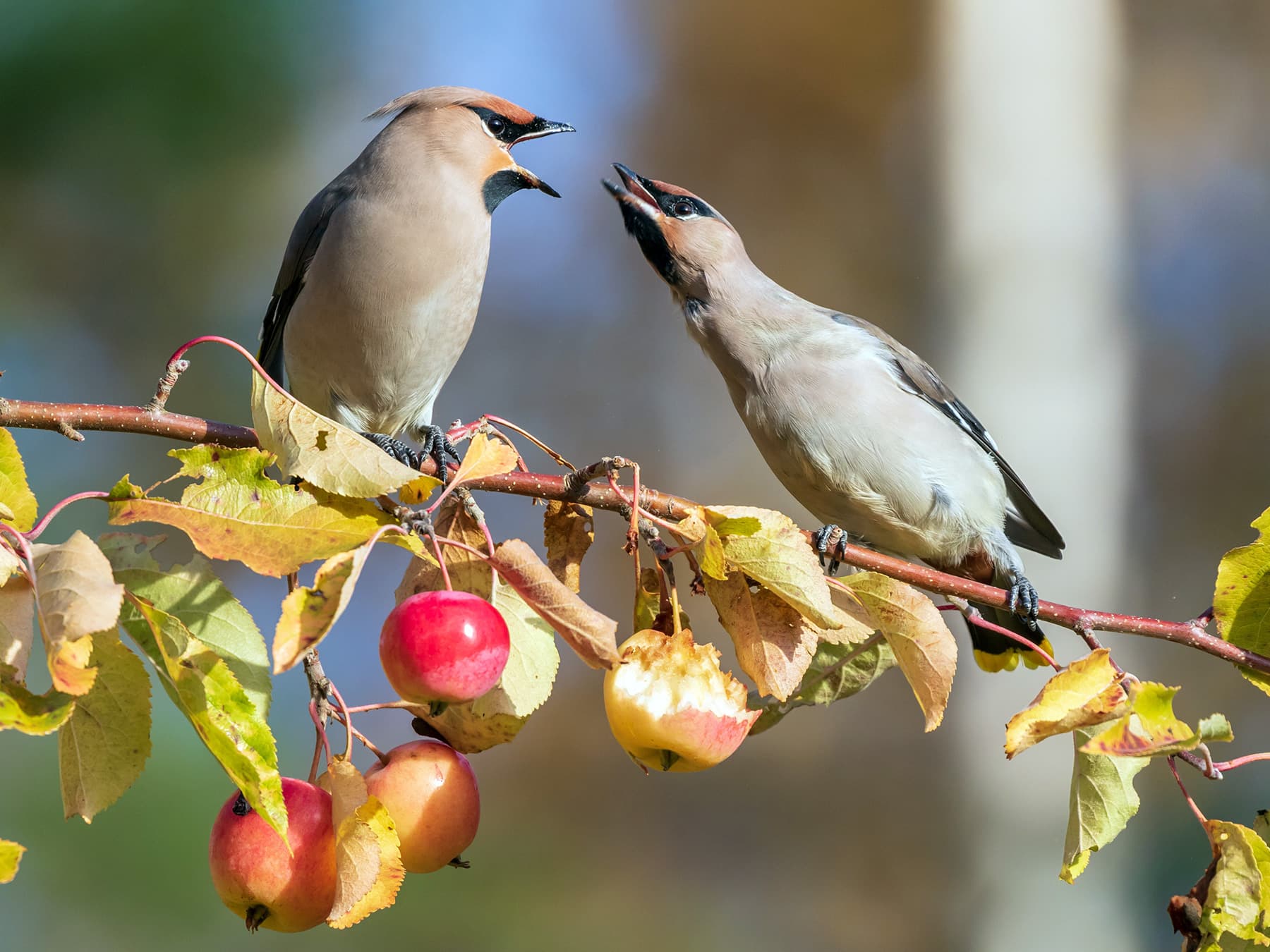
Bohemian Waxwings are mostly frugivorous, specializing in fruits from a variety of trees, shrubs, and vines. They also eat insects in the warmer months, catching them from the air or gleaning them from leaves and branches. Flowers, tree sap, and other plant matter are eaten in small amounts.
What do Bohemian Waxwing chicks eat?
Both parents feed the chicks a mixed diet of regurgitated fruits and insects.
Nesting and breeding
Where do Bohemian Waxwings nest?
Bohemian Waxwings build their nests in trees, often near streams and other water bodies. They prefer to nest in open coniferous forests or along their edges but also use mixed and deciduous forest habitats. They build a small woven cup of twigs, grasses, moss, and down feathers on a limb six to 50 feet above the ground.
When do Bohemian Waxwings nest?
These birds breed relatively late, typically beginning nest construction in June or even July. The building process takes less than a week, however, and the female begins to lay eggs soon after. The eggs hatch after two weeks, and the chicks leave the nest 15 to 18 days later.
What do Bohemian Waxwing eggs look like?
Bohemian Waxwings lay four to six pale blue eggs with sparse dark spots. Each egg measures about 24 millimeters long and 18 millimeters across.
Behaviour
Are Bohemian Waxwings aggressive?
Bohemian Waxwings are gregarious and non-territorial. They are usually non-aggressive except when males guard their partners during the nesting season.
Where do Bohemian Waxwings sleep at night?
These sociable birds roost in dense vegetation like hedges and trees, often in large flocks in the winter and sometimes communally with other species like the American Robin. They may perch close together for body warmth in very cold weather.

Lifespan and predators
How long do Bohemian Waxwings live?
Banding/ringing data suggests these birds can live for at least 15 years in the wild, although the average individual has a much shorter life expectancy.
What are the predators of Bohemian Waxwings?
Bohemian Waxwings are most vulnerable to small birds of prey like Merlins and Sparrowhawks, although domestic cats and other mammals are also potential threats.
Are Bohemian Waxwings protected?
Bohemian Waxwings are protected in the United States, Canada, and the United Kingdom.
Are Bohemian Waxwings endangered?
Bohemian Waxwings are a secure species with a growing population estimated at 14 to 29 million individuals.
Conservation
While currently listed as Least Concern, Bohemian Waxwings face threats from habitat loss and climate change. Their reliance on specific fruit-bearing trees makes them vulnerable to changes in vegetation patterns.
Conservation efforts focus on preserving boreal forest habitats and maintaining urban green spaces with suitable food sources.
Similar birds
Often mistaken for
More photos
3 photos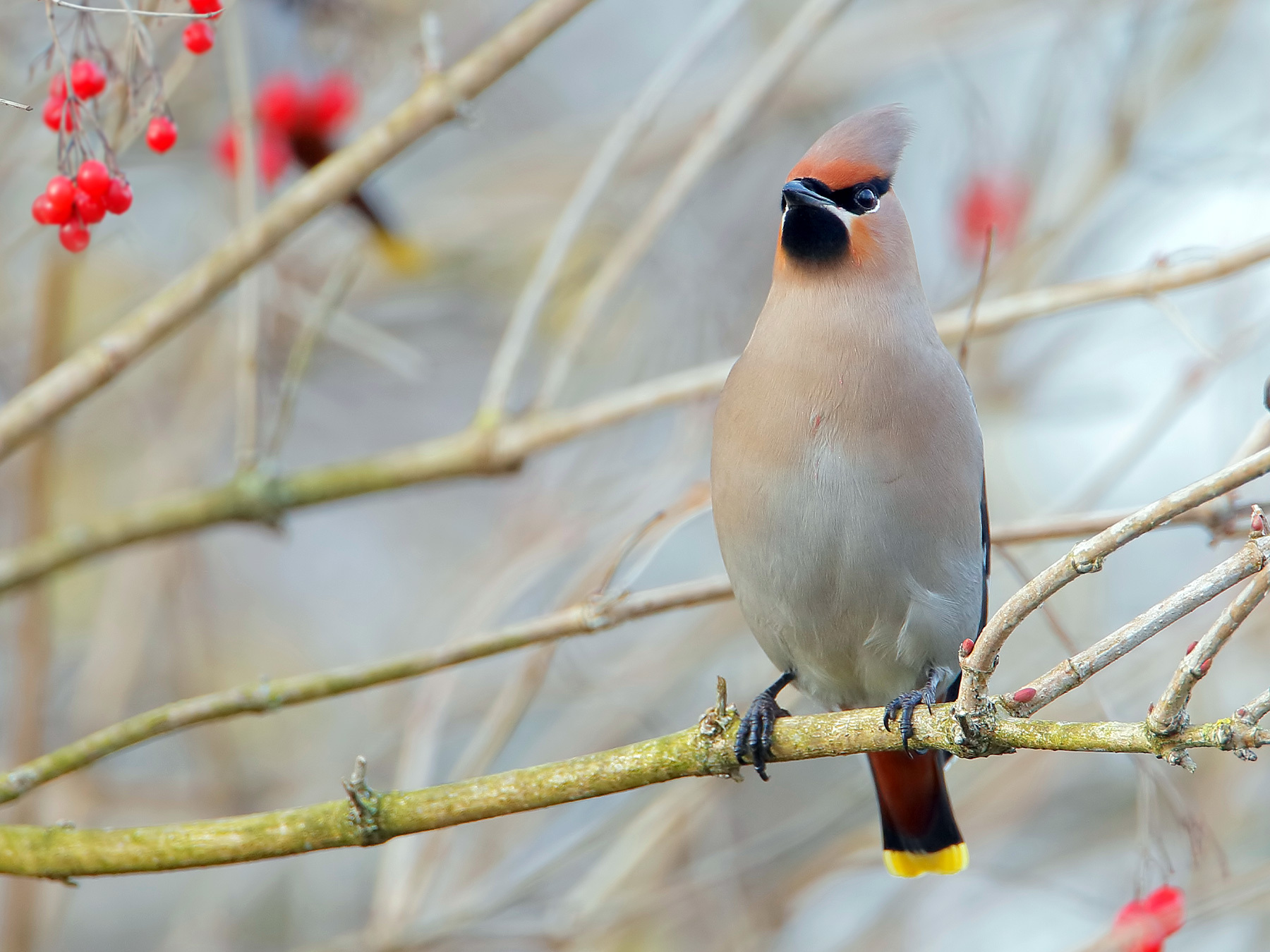
Bohemian Waxwing guides
2 guidesQuick facts
- Length
- 19–23 cm
- Wingspan
- 32–35 cm
- Weight
- 55–80 g
- Lifespan
- 5 years · oldest recorded 13.5 years
- Family
- Waxwings
- Migration
- Irruptive migrant
- Global status (IUCN)
- Least Concern
- World population
- 14,400,000 - 28,150,000 mature individuals
- Population trend
- Increasing
- Also called
- Waxwing
- Scientific name
- Bombycilla garrulus
Questions
2What does a Bohemian Waxwing symbolize?
For some, the Bohemian Waxwing represents the arrival of winter, while for others, these nomadic birds may symbolize a free spirit that travels in search of nourishment or fulfillment.
Why are they called Waxwings?
Waxwings are named for the waxy tips on their secondary feathers, visible as red spots on their folded wings. Just why these birds develop waxy wingtips is something of a mystery, although they may be useful for impressing a mate.
Sources
4- 1BirdLife International. 2016. Bombycilla garrulus. The IUCN Red List of Threatened Species 2016: e.T22708146A87399543. Source (opens in a new tab)
- 2EBCC (2015)
- 3BirdLife International. 2016. Bombycilla garrulus. The IUCN Red List of Threatened Species 2016: e.T22708146A87399543. Source (opens in a new tab)
- 4Fransson et al., EURING list of longevity records for European birds (2010) Source (opens in a new tab)

Checked by
Nathan Cope, founder and editor
Nathan founded Birdfact and leads its writers and contributors in the UK, the US and Canada. He has watched and studied birds for more than ten years, and checks every article and species guide before it’s published.