
Northern Rough-winged Swallow
Rough-winged Swallow · Stelgidopteryx serripennis
By the Birdfact teamChecked by Nathan Cope
On this page13 sections
How to recognise it
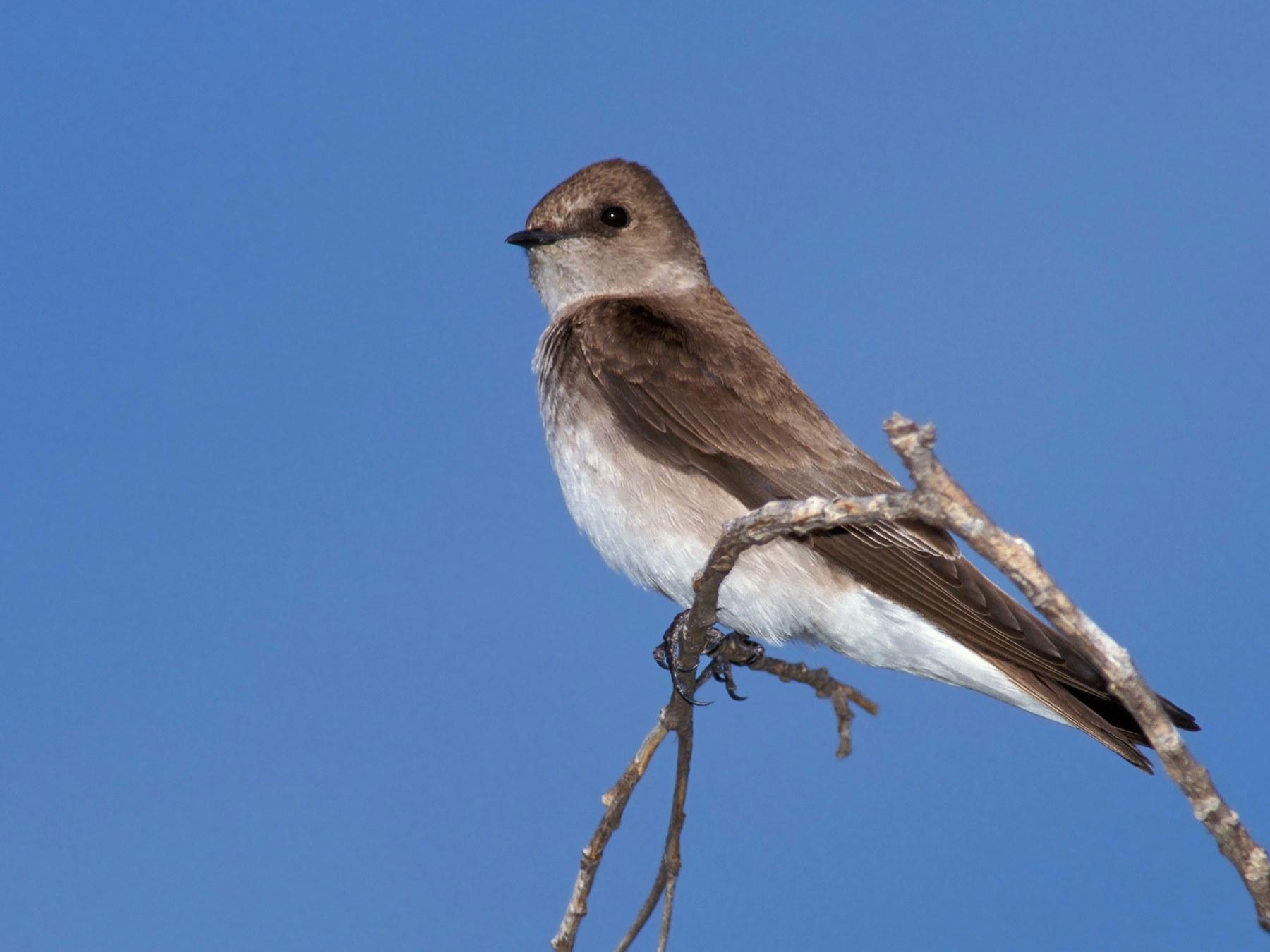
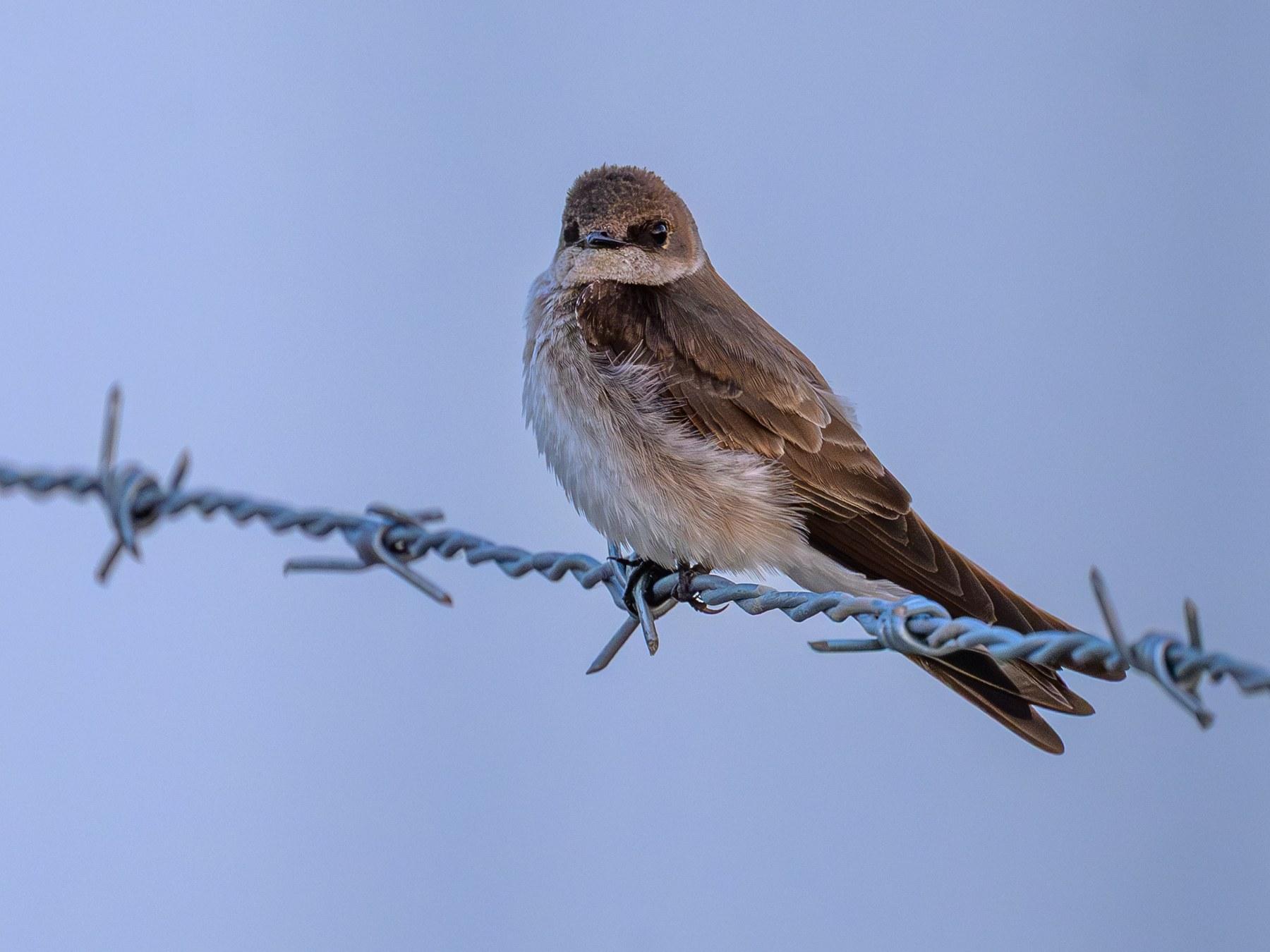
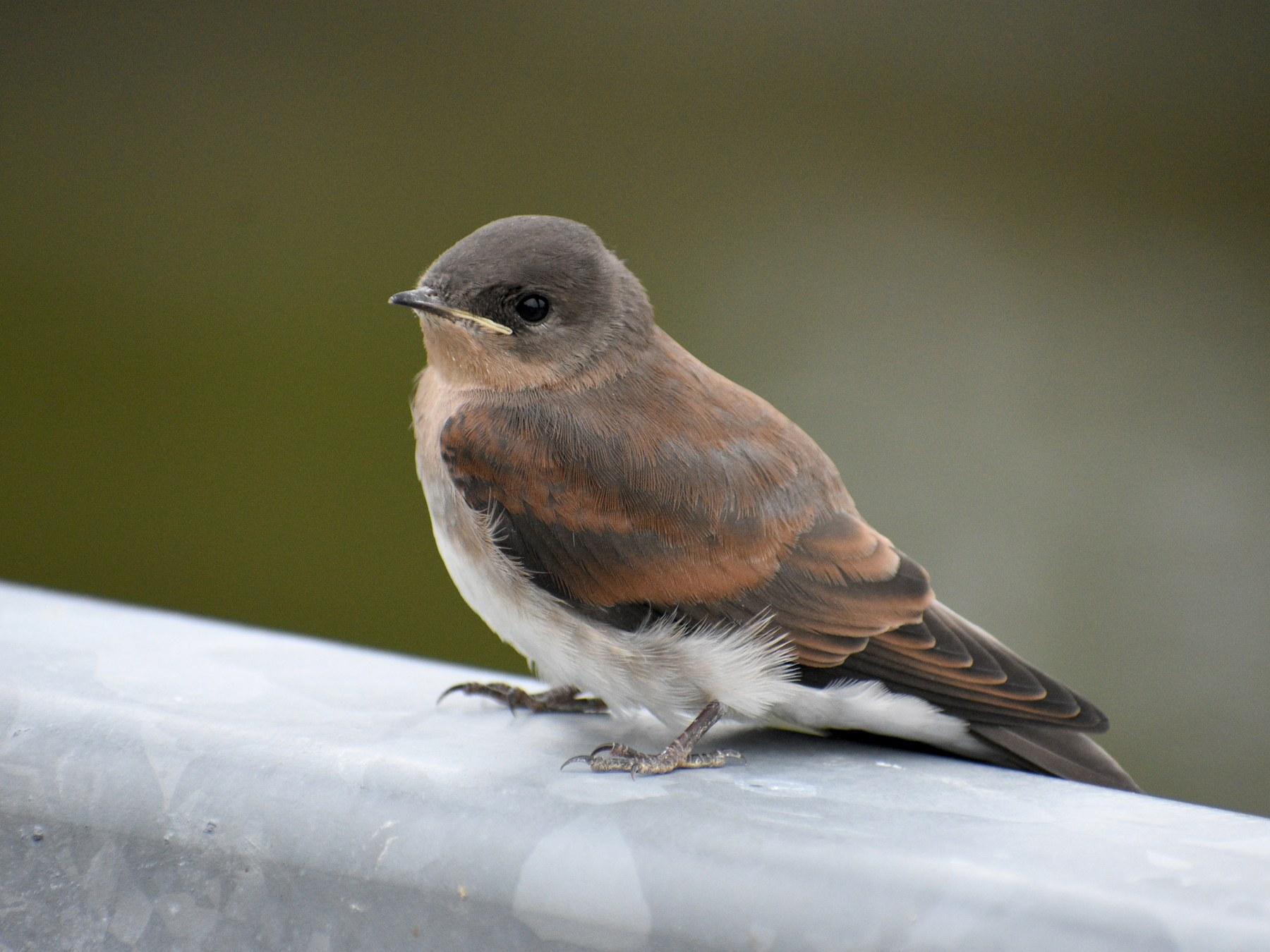
Look for a small swallow that is plain grayish brown above, with the back and wings an even shade and the rump only slightly paler. Below, a pale throat, sometimes tinged buff or cinnamon, runs into a soft gray-brown wash across the chest, sides and flanks. There is no sharp breast band. The belly and undertail are dull white, and the tail is square or slightly notched.
It often raises its crown feathers, males especially, which gives the head an angular look with a hint of a crest, unlike the rounded head of a Bank Swallow. In the air its wingbeats are slower, more deliberate and floppier than a Bank Swallow's, and it glides on wings held straight out, without a sharp bend at the wrist. It hunts lower over the ground, and more often over water, than most swallows.
Size and shape
It is 4.7–5.9 in (12–15 cm) long, with a wingspan of 10.6–11.8 in (27–30 cm), and weighs 0.3–0.6 oz (10–18 g). The body is long, the head and bill small, and the wings long, fairly broad and pointed; the tail is square or slightly notched. A Bank Swallow is slightly smaller.
Six subspecies are recognized, and most of the variation is gradual: birds are paler in the hot, dry Southwest and northwestern Mexico, and longer-winged toward the northwest. Two resident forms of the Yucatán Peninsula and the lowlands of southern Mexico, northern Guatemala and Belize are together called Ridgway's Rough-winged Swallow, and have sometimes been treated as a separate species. They are darker and sootier, with a dull whitish spot above the front of the lores, near the bill, a deeper tail fork and larger size. In 2025 the global checklist AviList kept them in this species, judging the differences modest, and said more research is needed.1
Male, female and young
Males and females look alike. Males have slightly longer wings and tails and longer, broader white feathers under the tail, and only males have the hooked feather edge that gives the bird its name.
Juveniles, this year's young, look warmer above, with broad cinnamon edges to the upperpart feathers. Cinnamon edges on the wing coverts look like wing bars, and the throat and breast are grayish with a pinkish or pale cinnamon wash. Some birds in their second year may keep a few pinkish juvenile chin feathers, though how often this happens is not known.
Identification: the hooked wing feather
The rough wing is the outer edge of the outermost flight feather. In adult males the barbs along that edge end in tiny hooks that curve back, and a finger drawn along it from base to tip feels like a file. A female's barbs are short and stout and end in a bare point with little or no curve. Young males lack the hooks, and a small fraction of males still have a smooth edge in their first breeding season. We found no source that says the rough edge can be seen in the field.
What the hooks are for is unknown. The author of the classic Michigan study called them an enigma and leaned toward a role in sound: he heard a shrill, quickly repeated whir from birds swooping past a burrow, but wrote that his observations "do not prove any connection".2 A 2020 review of silent flight in birds and other animals says their function is not known.3
Identification: similar birds
The Bank Swallow often nests in the same banks. It is slightly smaller, with a clean white throat and a sharp brown band across the breast, and from above its grayer back contrasts with darker wings. Its wingbeats are quicker and more flicking. A Northern Rough-winged Swallow is evenly brown above, with a soft wash on the throat and breast instead of a band. By ear, the Bank Swallow gives a grating chatter, and this bird a slightly buzzy or rolled note.
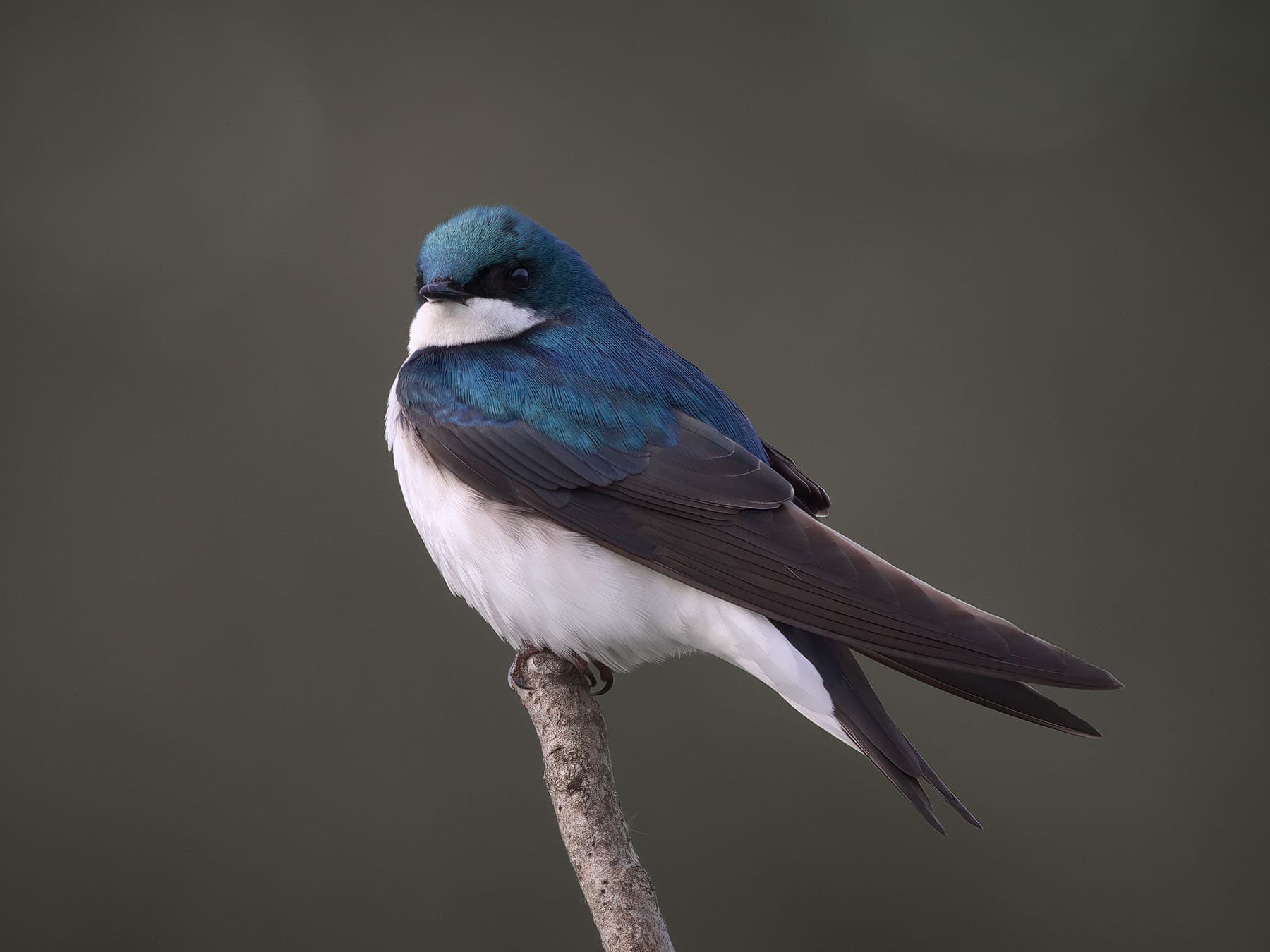
A young Tree Swallow is sooty gray-brown above, with a white throat and a dusky band across the chest, where this bird has a brownish wash over both throat and breast. Adult male Tree Swallows are steely blue above and white below, but one-year-old females stay dull brown above.
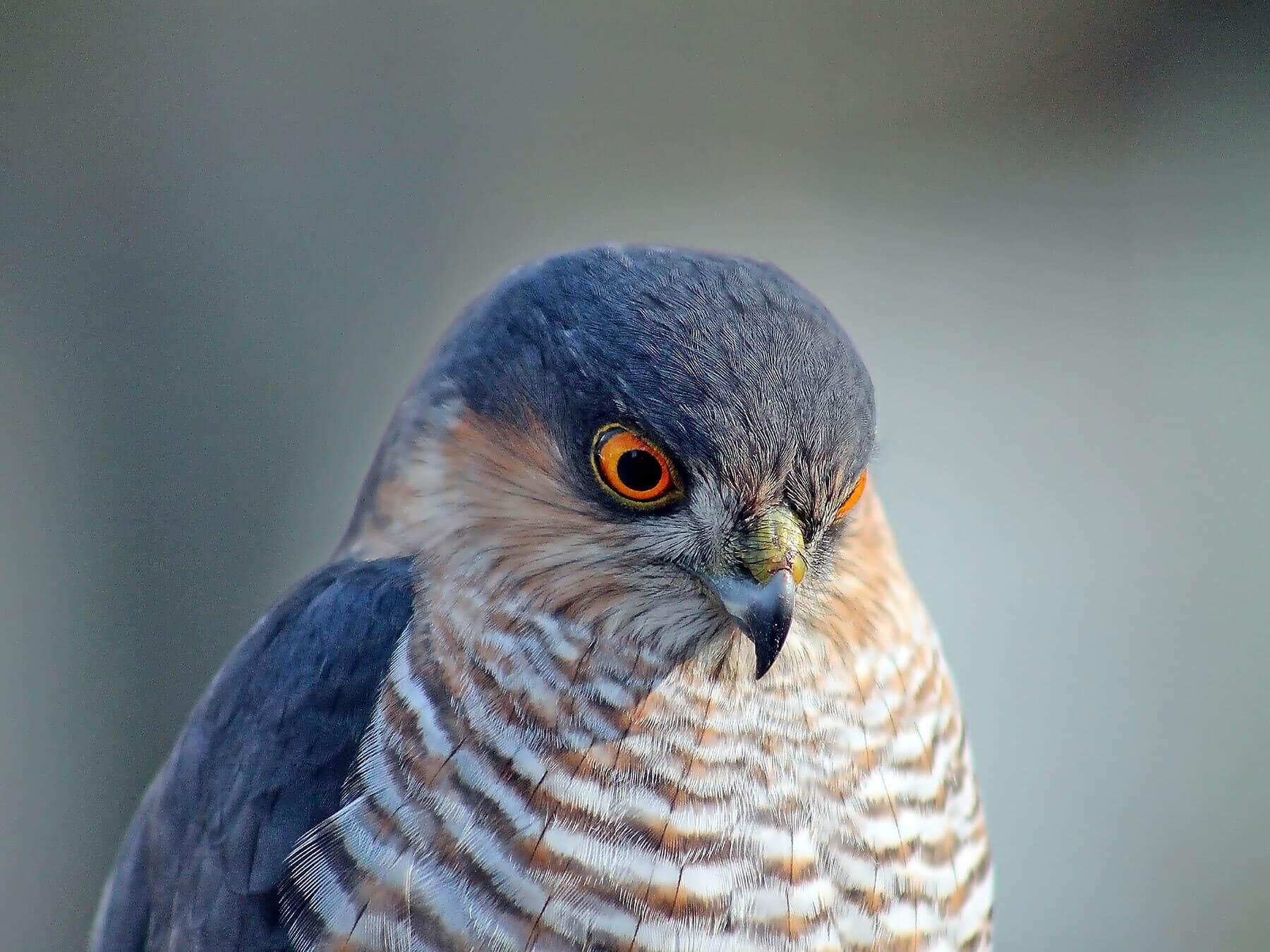
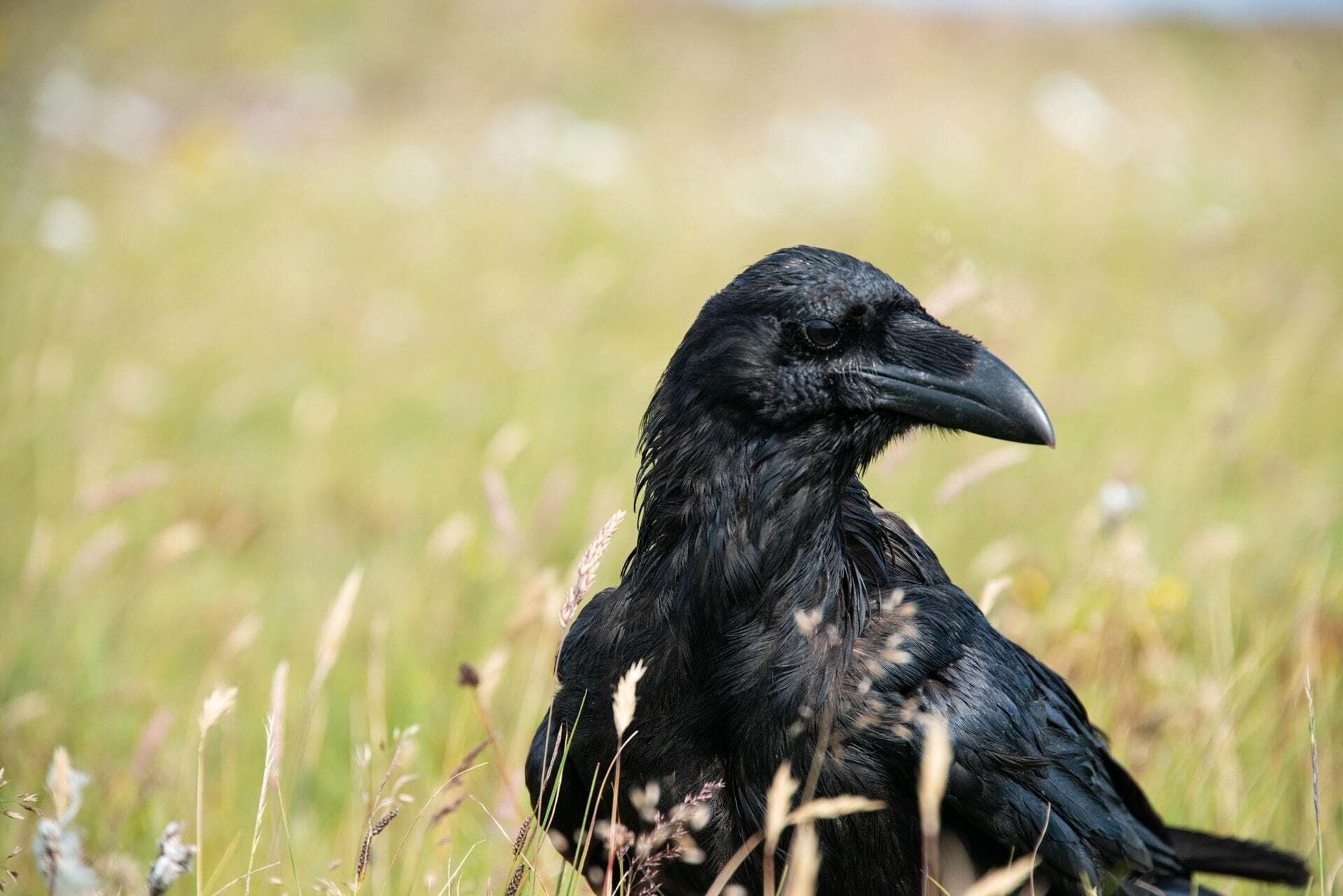
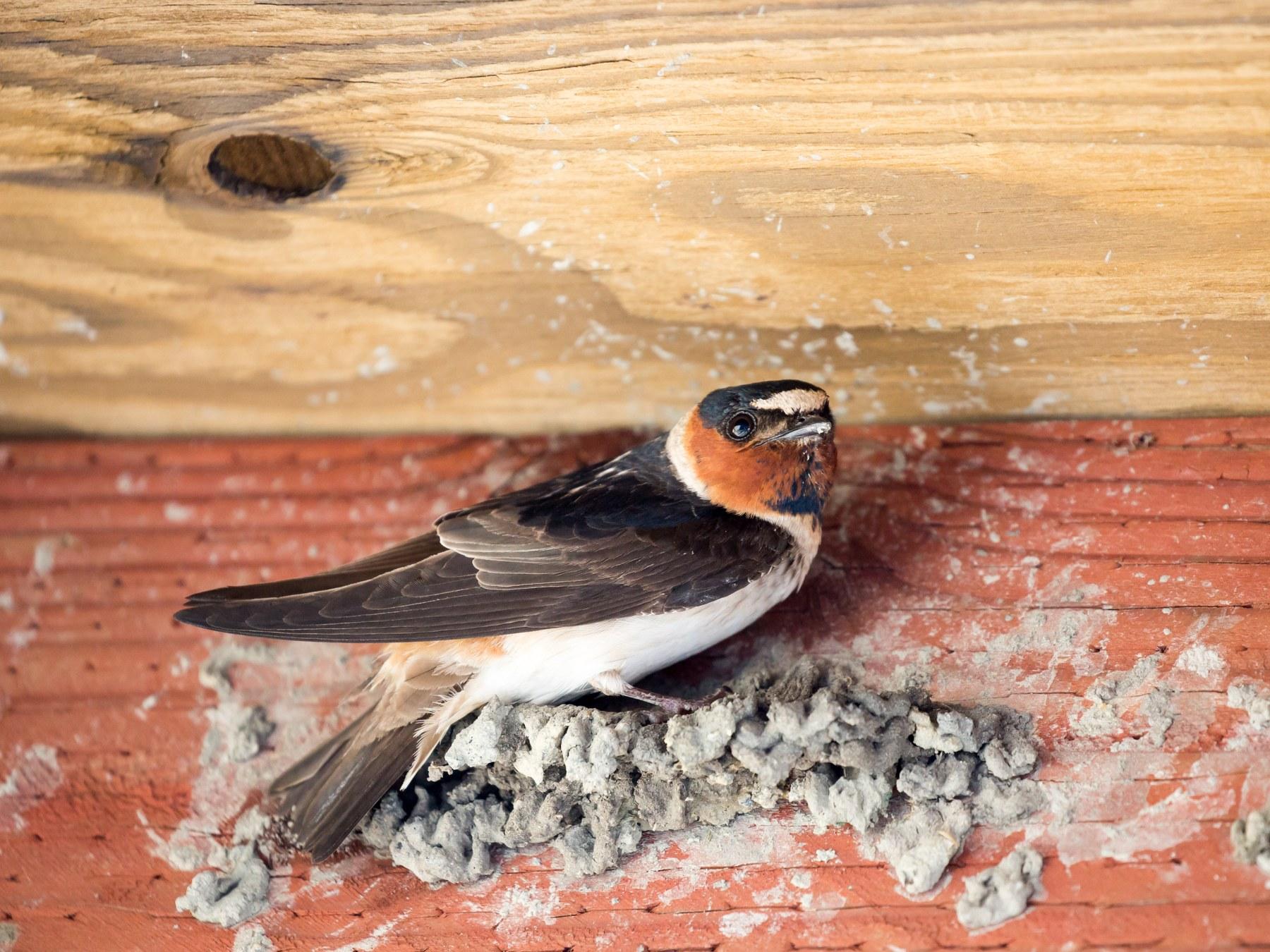
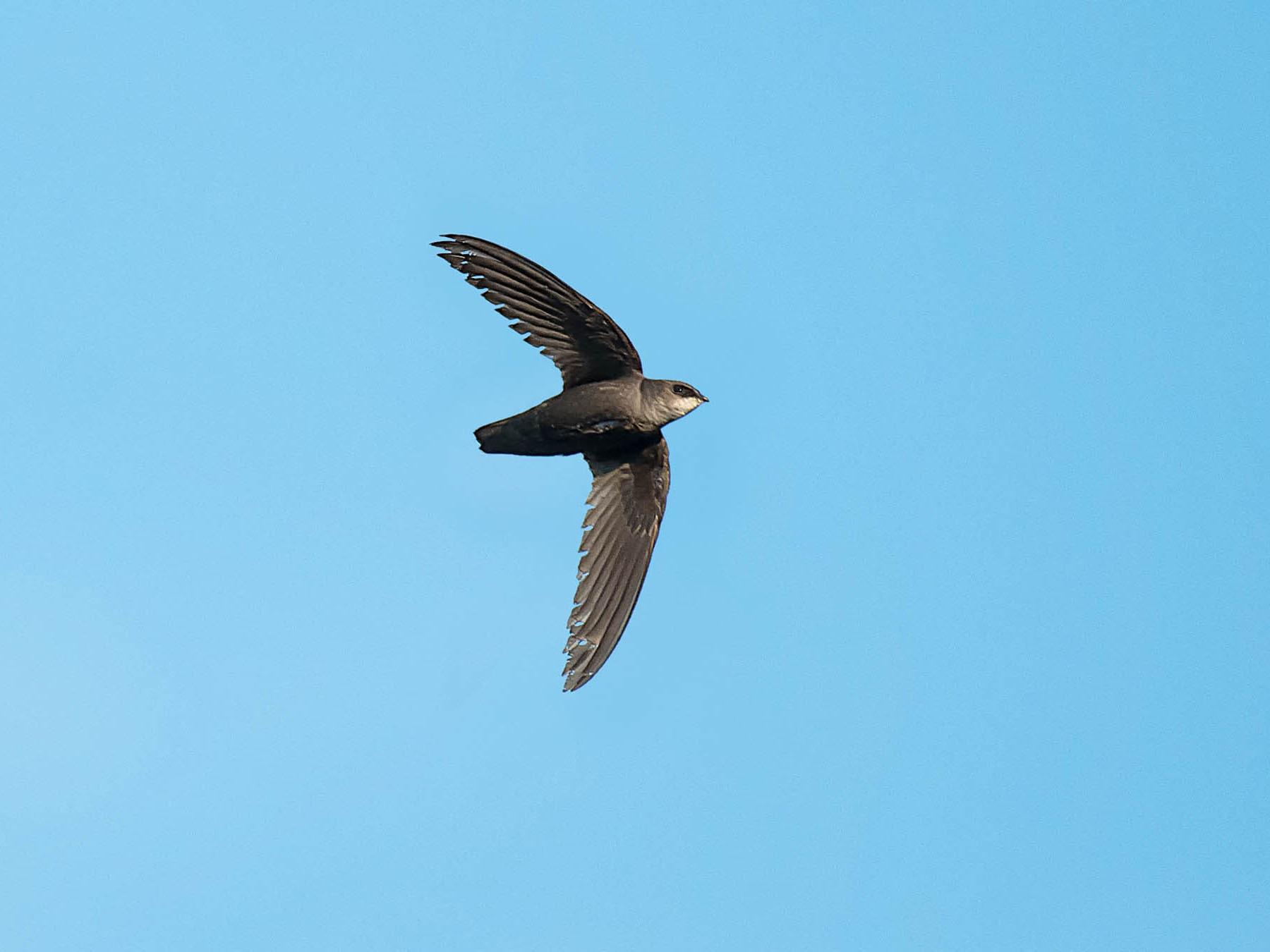
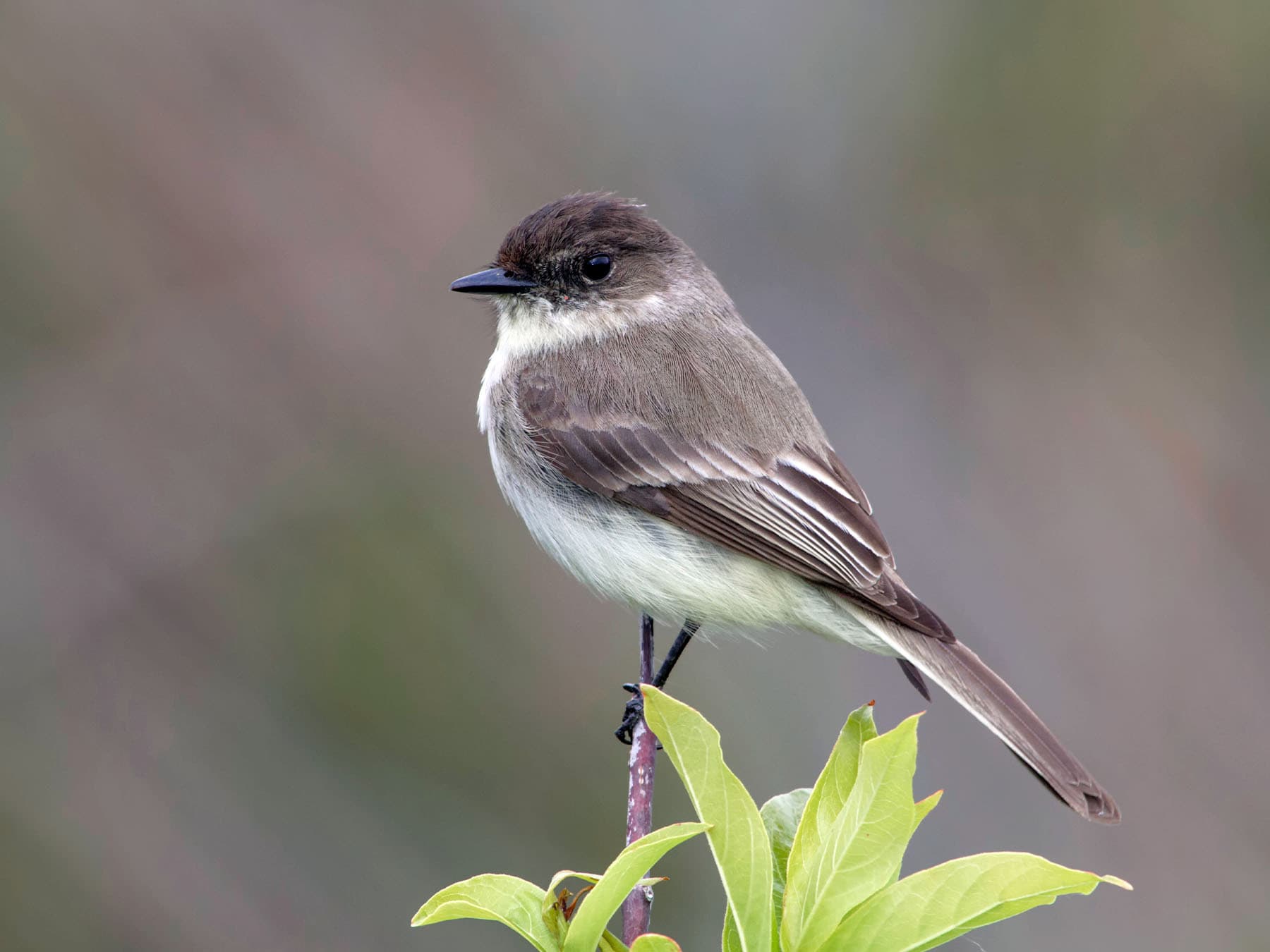
A Cliff Swallow has a pale buff rump, a chestnut throat and, in most subspecies, a pale forehead patch. A Chimney Swift is sooty brown above and gray-brown below, paler only on the throat, with no white belly, a very short rounded tail and rapid, twittery wingbeats. An Eastern Phoebe is a flycatcher that perches and regularly wags its tail; it is gray-brown above, darker on the crown and tail, and whitish below.
The Southern Rough-winged Swallow, of southern Central America and South America, has a pale rump, a bright orange-cinnamon throat and a yellowish belly. The Northern is much drabber, with a whitish belly.
Not sure it’s a Northern Rough-winged Swallow? Check your photo: Birdfact names the bird and shows the look-alike side by side.
Its size
Adults- Length
- 12–15 cm
- Wingspan
- 27–30 cm
- Weight
- 10–18 g
Its song and calls
It is a fairly quiet bird away from the nest, and calls most around it early in the season. Most adult calls are variants of one basic buzzy sound, changed in pitch and rhythm.
The commonest call is a series of short, rapid, low buzzy notes, about 3–5 a second, with a slight rising inflection, written brrrt. Territorial males give it mostly near the nest, and single or doubled notes are heard too. The female's alarm, given at any disturbance near the nest, is a longer, harsher, higher brzzzt, singly or in runs of 2–8. Each bird seems to keep to one pitch, and in the Michigan study males called lower than females.2
None of the accounts we read describes a musical song from birds in the US or Canada. Lunk, who made that study, wrote that the male's call near the nest "might thus be regarded as a territorial 'song'".2 From Costa Rica, though, Skutch reported soft singing notes and a brief musical trill, which Lunk set apart as unlike anything northern birds give.4, 2
It calls most from spring arrival through nest building, and much less once eggs are laid. Nestlings give a thin peep at first and a louder, harsher food call by 5–6 days old.
- Calls0:00 / 0:43
Recorded in Ontario, Canada · April 2018
- Calls0:00 / 0:19
Recorded in Virginia, United States · April 2021
Heard one and not sure? Let the bird song identifier listen.
When and where to see it
November
Mostly absent
The year across North America
Choose a place on the map to see its year, or find yours.
Most recorded in November
Up to 0.81% of a place’s bird records that monthHere in other months
How this map is made
Each county, state or province is shaded by the Northern Rough-winged Swallow’s share of all the bird records there that month: the darker, the larger the share. A place with only a trace of records in a month is left unshaded. Shades compare places on this map with each other, not one bird with another. Records: GBIF eBird Observation Dataset, 2019–2024. Map: Natural Earth; place centres © OpenStreetMap contributors.
How often the Northern Rough-winged Swallow turns up in the United States and Canada through the year, from birdwatchers' records.
United States
Summer visitor · regularly Jan–Nov · most records in May
Canada
Summer visitor · regularly Apr–Aug · most records in May
Show as a table
| Month | United States | Canada |
|---|---|---|
| January | 0.023% (regular) | <0.001% |
| February | 0.052% (regular) | <0.001% |
| March | 0.18% (regular) | 0.002% |
| April | 0.46% (regular) | 0.16% (regular) |
| May | 0.47% (regular) | 0.29% (regular) |
| June | 0.41% (regular) | 0.25% (regular) |
| July | 0.32% (regular) | 0.23% (regular) |
| August | 0.21% (regular) | 0.12% (regular) |
| September | 0.10% (regular) | 0.014% |
| October | 0.064% (regular) | 0.002% |
| November | 0.033% (regular) | <0.001% |
| December | 0.018% | – |
Worldwide: recorded regularly in 18 countries
Countries where it was recorded in at least 3 of the 6 years 2019–2024. Linked countries have their own bird list.
North America (18)
- Bahamas
- Belize
- Canada
- Cayman Islands
- Costa Rica
- Cuba
- Dominican Republic
- El Salvador
- Guatemala
- Haiti
- Honduras
- Jamaica
- Mexico
- Nicaragua
- Panama
- Puerto Rico
- Turks & Caicos Islands
- United States
Data: EOD – eBird Observation Dataset (Cornell Lab of Ornithology), accessed via GBIF.org, CC BY 4.0. Records from 2019–2024, aggregated and filtered by Birdfact. How these lists are made
It breeds across most of the US and southern Canada. In Canada it reaches central British Columbia, southern Alberta, Saskatchewan and Manitoba, southern Ontario and Quebec, and southern New Brunswick. In the US it breeds north to northern New England and south to northern Baja California, southern Arizona and New Mexico, Texas, the Gulf Coast and much of Florida. It is rare north to southeastern Alaska, and resident races carry the range on through Mexico and Central America to Costa Rica.
Look for it in open country, including open woodland, wherever there are banks or walls with holes: rocky gorges, eroded stream banks, road cuts, railroad embankments, gravel and sand pits, bridges, culverts and walls. It is often near water, and it is also common at coastal harbors and jetties. In the US it nests from sea level to about 6,500 ft (2,000 m).
It has spread north and east since the mid-1800s. A 2024 review lists first breeding records in the Northeast from New York in 1872 to Maine in 1941, Quebec in 1959, New Brunswick in 1969 and Nova Scotia in 2012. Part of the apparent spread may reflect better recording, and the review's author suggests that nesting in drainpipes and other structures helped it.5
Do they migrate?
Birds that breed in the US and Canada do: they are medium-distance migrants that travel by day, often in flocks with other swallows, especially Bank Swallows, while the races of southern Mexico and Central America are mostly resident. Spring flocks are loose groups of 4–20; fall flocks are much larger.
It is an early spring migrant. Birds arrive in numbers from mid-February in southern California and early March in Florida, in late March in Missouri and Illinois, in early to mid-April in Massachusetts, Michigan and Minnesota, and in late April in Ontario, British Columbia and Alberta. They leave from late summer to mid-fall: western birds from August to November, most of them gone from the western states by mid-September, and eastern birds from July to October.
In winter it stays in a few small areas of the southern US: California's Imperial Valley, the lower Colorado River, the Rio Grande valley of southern Texas, the Gulf Coast, especially Louisiana, and southern Florida. Otherwise it winters from northern Mexico to Panama, with most Middle American winter records south of the Isthmus of Tehuantepec, and small numbers reach the Caribbean. A sizable wintering group in Pennsylvania sits more than 600 miles (1,000 km) farther north than the closest regular wintering area, in southern Florida.5
Molt and migration
Adults and young replace all their feathers once a year after breeding, and the molt overlaps fall migration. Studies of museum specimens and feather isotopes suggest that eastern and western birds go about it differently.6, 7 Eastern adults begin replacing their flight feathers some 40 days before western adults do. On the way south, eastern birds stop on the northern Gulf of Mexico coast for about two months to complete the molt of the flight feathers, and only then cross the Gulf, in October and November.6
Western breeders instead fly to the monsoon region of northwestern Mexico to molt, as a 2011 study of feather isotopes showed. Its authors suggest that the species status of the two populations be looked at where they meet: a call for study, not a split.7
Tips for seeing it
What it eats
Flying insects, caught in the air. It feeds from dawn to dusk, skimming low over the surface when it is cool or windy and sometimes picking insects off the water. No source we read recommends any feeder food for it.
In an early study of 136 stomachs from the US and Canada, collected from April to September and published in 1918, insects made up 99.23% of the food. The main groups were flies (33%), bees, wasps and ants (31%), true bugs (15%) and beetles (15%).4
Nestlings are fed mostly small flies, bees and wasps. In Michigan, adults carrying food had their mouths filled almost entirely with flies.2
Now and then it lands to take dead midges at a lake edge, fly larvae on a dead fish or flies on waterfowl droppings. One Georgia report from 1990–1991 describes birds eating cracked corn under a feeder in spring.4
Nesting and breeding
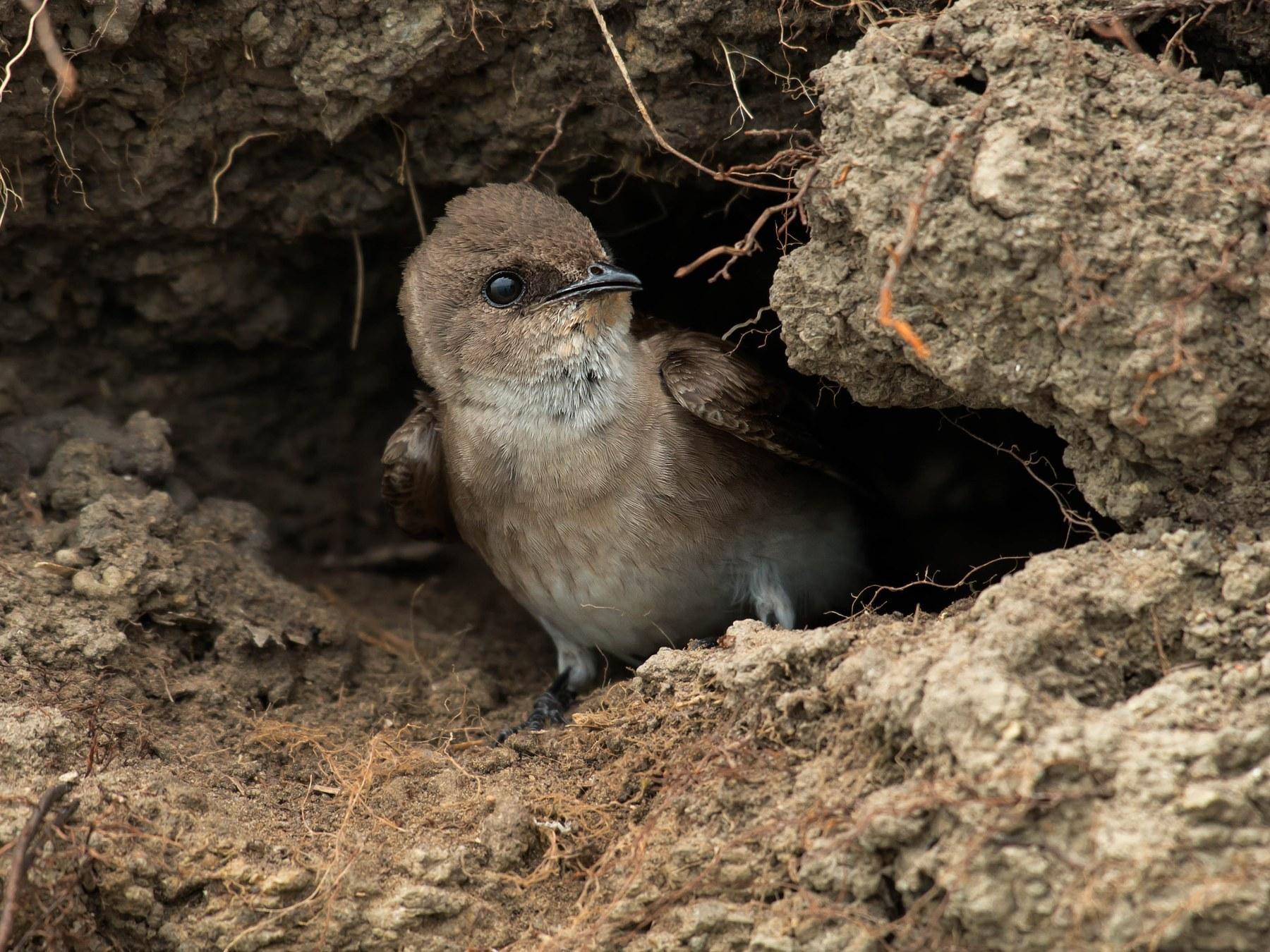
It nests in holes: burrows in vertical banks of clay, sand or gravel, and almost any cavity or crevice in a vertical surface, such as gutters, culverts, drainpipes and holes in walls, wharves and bridges. Boats and semitrailers have been used. Tree holes are rarely chosen, and it almost never takes to nest boxes. We found no garden nest-box design for it.
It is not colonial in the way the Bank Swallow is. Pairs nest alone or in small groups of 2–25, often on the fringe of a Bank Swallow colony. In Sacramento, highway bridges and overpasses give it nest holes in town, and the authors of a study there suggest such structures may let it live in urban areas that would otherwise not suit it.8
Nest burrows: do they dig their own?
Sometimes, but usually not. It appears mostly to use burrows that other animals dug and left, such as Bank Swallows, kingfishers, motmots and ground squirrels, and in a kingfisher burrow it builds at the first bend. Burrows run 8–79 in (20–200 cm) deep, most often 12–39 in (30–100 cm), and are usually 3–15 ft (0.9–4.5 m) up a bank.
Whether it digs has long been debated. Lunk and Skutch found no evidence that it does, though Lunk thought it probably dug now and then, while other writers reported digging, among them Weydemeyer in northwestern Montana in 1933.4, 5 In 2017 a pair on Staten Island, New York, was watched digging its own burrows in fresh clay. The observer calls this the first description of a burrow dug entirely by the swallows themselves, and the reason to call the species a "weak primary cavity nester": one that can dig, but usually does not.5
Nesting and breeding
The female collects nearly all the material. She builds a loose foundation topped by a well-shaped cup of twigs, grass, roots, leaves and moss, neatly lined; feathers are rarely used. In Michigan, 14% of nests held horse or cow dung.2 A clutch is 4–8 eggs, usually 5–7. The eggs are white, pinkish when fresh, and about 0.7 by 0.5 in (18–19 by 13 mm).
The female incubates alone, and both parents feed the young. It raises one brood a year: a pair that loses an early nest often tries again, but second broods after a successful nest are not known. Females can breed in their first year. Fledglings can fly when they leave, though laboriously, and rarely return to the burrow.
The most detailed study is from southeastern Michigan in 1949–1952. There, building began on average on May 15, clutches averaged 6.25 eggs (61 nests), incubation took about 16 days and young left the nest at about 19–19.5 days (17–21.5).2 Over four seasons there, 73% of 403 eggs hatched, 65% of 66 nests fledged young, and about 3.7 young fledged per clutch.2 Other accounts give 16–17 days for incubation and 17–22 days in the nest.9
Elsewhere, eggs have been found from April 11 to June 21 in Texas, and in British Columbia most clutches are started from June 15 to 20.4, 10
Artificial nest tubes set into a cliff or quarry face have drawn pairs well in Michigan and Minnesota, with 80–90% annual use, though less so in upstate New York, and placing such burrows and managing quarry or cliff sites may help local populations.4
Behaviour
At the nest it defends only the hole and its immediate surroundings, most fiercely from arrival until the nest is built. Rival males may spar 23–33 ft (7–10 m) up and now and then tumble to the ground locked together. Outside the breeding season it joins mixed flocks of swallows.
Pairs appear to be monogamous, and the male guards his mate closely while she builds and lays. Males spread their broad white undertail feathers so that they curl up beside the tail. This was once thought to be a courtship display, and is now thought to help the birds tell each other's sex.
On the ground it has a jerky, shuffling walk and will fly rather than walk even very short distances. It drinks by dipping the tip of its bill into the water in low flight, and bathes the same way, dipping its breast and belly. During laying and incubation the female sleeps in the burrow, while the male and the fledged young sleep in waterside trees and shrubs. It is notably tolerant of people near the nest, and pairs will chase an American Kestrel far from the nest site.
Flight
It reaches the burrow by swooping low, rising on an upward slant and darting straight in, and it leaves in a long glide. Long straight flights end with a marked climb. In a 1948 study, wingbeats averaged 3.3 a second in coursing flight and 3.9 a second when climbing, in samples of nine for each.4
Lifespan and predators
The oldest in the USGS Bird Banding Laboratory's longevity records was a female at least 7 years 10 months old. She was banded in Ontario in May 2018 as a bird hatched in an earlier year, and caught and released alive in Ontario in April 2025, so she may have lived longer. The earlier record holder was a male at least 5 years 11 months old, recaptured and released in California in 1988.11
We found no source that gives a typical lifespan or a measured survival rate. Birds of the World's account, written in 1996, knew of only 15 recoveries of banded birds.4
Predators and other dangers
Recorded predators of young or adults include snakes, toads and frogs, long-tailed weasels, badgers, woodchucks and thirteen-lined ground squirrels. Adults are not often taken by birds or mammals. In the Michigan study, weasels took 33 eggs or young and killed at least two adult females.4
High spring water that floods burrows is a possibly important cause of nest loss. Along streams, concrete riprap laid on the banks usually makes them unsuitable for nesting swallows and kingfishers.12
Conservation
It is rated Least Concern on the IUCN Red List and globally secure by NatureServe.13, 14 Partners in Flight estimates about 27 million breeding-age birds worldwide, 20 million of them in the US and Canada, with a reference year of about 2010. It gives the species a Continental Concern Score of 9 out of 20, scores its threats as low and notes that information from the southern wintering areas is scarce.15
It is declining. Across the North American Breeding Bird Survey area, numbers fell by a statistically significant 0.45% a year from 1966 to 2025 (95% credible interval −0.78 to −0.15). The fall is significant in the US, at 0.36% a year, but not in Canada. Numbers were roughly level from 1966 to 1995, and the decline came after: 0.75% a year over 1995–2025 and 1.05% a year over the last ten years, 2015–2025, both significant survey-wide.16
The survey's modeled index fell by about a quarter between 1966 and 2025; this is a model index, not a count. Partners in Flight, working from the same survey, estimates a cumulative change of about −24.5% over 1970–2021.15 State trends are mixed, with significant long-term rises in Mississippi, Illinois and Connecticut, and narrowly in Tennessee, and significant falls in Oregon, Minnesota, Wisconsin, Idaho, Kansas, Washington, Colorado, California and Ontario.16
Conservation: what is known
Birds of the World's 1996 account says habitat destruction and water pollution on the breeding or wintering grounds may affect it.4 Birds that catch insects in flight have declined widely, for reasons not well understood; fewer flying insects through pollutants or pesticides, and climate change, are among the possible causes.9
People have also given it places to nest. Between 30% and 60% of Canadian nests were in sites people had altered, such as road cuts, gravel pits, buildings and walls.4
Legal status
In the US it is a protected migratory bird under the Migratory Bird Treaty Act.17 The Act and its regulations cover the bird and its parts, nests and eggs, and taking or possessing them is unlawful except under a permit or as the regulations allow.18, 19 It is not listed under the Endangered Species Act.20
In Canada it is protected under the Migratory Birds Convention Act, 1994. Under the 2022 regulations, nobody may damage, destroy, remove or disturb its nest without a permit while the nest holds a live bird or a viable egg.21, 22, 23
It is not on the 2010 version of Mexico's list of species at risk (NOM-059); we did not read the later amendment.24
Similar birds
Often mistaken for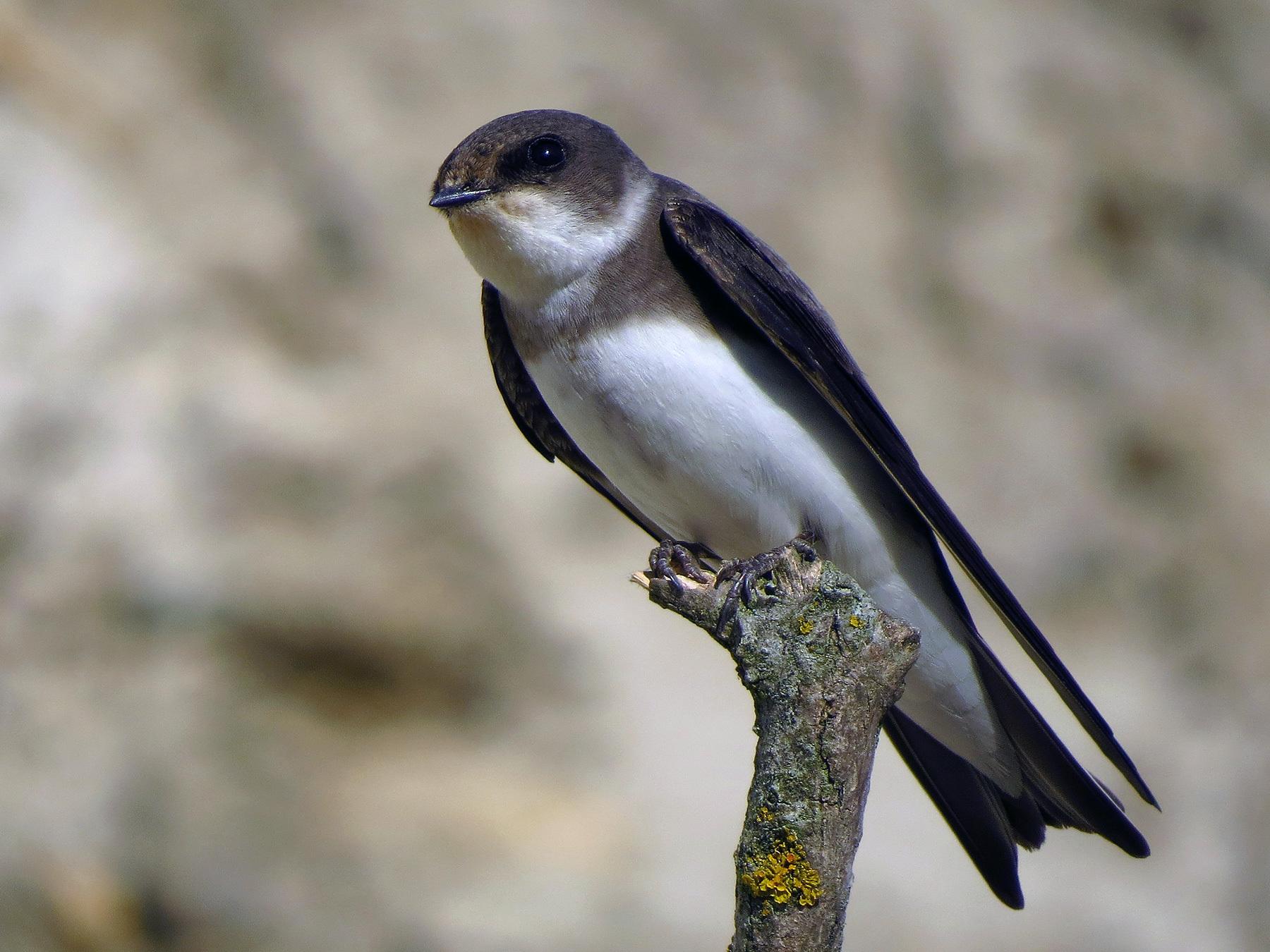
Quick facts
- Length
- 12–15 cm
- Wingspan
- 27–30 cm
- Weight
- 10–18 g
- Lifespan
- oldest recorded 7 years 10 months
- Family
- Swallows & Martins
- Migration
- Partial migrant
- Global status (IUCN)
- Least Concern
- World population
- About 27 million breeding-age birds worldwide, 20 million in the US and Canada (Partners in Flight, reference year about 2010)
- Population trend
- Declining: the Breeding Bird Survey shows a statistically significant fall of about 0.45% a year across the survey area since 1966, with no significant change from 1966 to 1995 and the fall since then. It is significant in the US but not in Canada, and continues over the last ten years.
- Also called
- Rough-winged Swallow
- Scientific name
- Stelgidopteryx serripennis
Questions
2What does the scientific name mean?
The genus name Stelgidopteryx is Greek for "scraper-wing", from words for a strigil, or scraper, and a wing. Baird named it in 1858, as a subgenus, for the outer wing feather whose barbs are "converted into a series of stiffened recurved hooks". The species name serripennis is Latin for "saw-winged".25, 26 Audubon described the bird in 1838 as Hirundo serripennis.
Is it the same bird as the Southern Rough-winged Swallow?
No. Until 1983 the two were treated as one species, the Rough-winged Swallow, whose range ran from southern Canada to Argentina, and older books use that name. They meet in Costa Rica, where the Northern breeds mainly in the mountains and the Southern in the lowlands, and molecular data in a 2005 thesis support treating them as separate species.27
Sources
42- 1AviList Core Team (2025). AviList: The Global Avian Checklist, v2025b. AviList. Accessed 28 November 2026. Source (opens in a new tab)
- 2Lunk, W. A. (1962). The rough-winged swallow, Stelgidopteryx ruficollis (Vieillot); a study based on its breeding biology in Michigan. Publications of the Nuttall Ornithological Club, No. 4. Cambridge, Mass.: Nuttall Ornithological Club. doi:10.5962/bhl.title.155026 (opens in a new tab)
- 3Clark, Christopher J, LePiane, Krista and Liu, Lori (2020). Evolution and Ecology of Silent Flight in Owls and Other Flying Vertebrates. Integrative Organismal Biology 2(1). doi:10.1093/iob/obaa001 (opens in a new tab)
- 4De Jong, M. J. (2020). Northern Rough-winged Swallow (Stelgidopteryx serripennis), version 1.0. Birds of the World (A. F. Poole and F. B. Gill, editors). Cornell Lab of Ornithology. doi:10.2173/bow.nrwswa.01 (opens in a new tab)
- 5Ramírez‐Garofalo, José R. (2024). Insights Into the Ecology of a Widespread but Poorly Known Aerial Insectivore and a Theoretical Basis for Range Expansion Following Repeated Vagrancy Events. Ecology and Evolution 14(11). doi:10.1002/ece3.70576 (opens in a new tab)
- 6Yuri, Tamaki and Rohwer, Sievert (1997). Molt and Migration in the Northern Rough-Winged Swallow. The Auk 114(2): 249-262. doi:10.2307/4089166 (opens in a new tab)
- 7Rohwer, Sievert, Hobson, Keith A. and Yang, Sylvia (2011). Stable Isotopes (δD) Reveal East–West Differences in Scheduling of Molt and Migration in Northern Rough-Winged Swallows (Stelgidopteryx serripennis). The Auk 128(3): 522-530. doi:10.1525/auk.2011.10273 (opens in a new tab)
- 8Airola, Daniel A. and Kopp, Dan (2008). Nesting Use of Bridges by the Northern Rough-winged Swallow in the Sacramento Area. Central Valley Birds 11(1): 13-19. doi:10.64555/jbj0ee79 (opens in a new tab)
- 9Cornell Lab of Ornithology. Northern Rough-winged Swallow. All About Birds. Accessed 28 November 2026. Source (opens in a new tab)
- 10Arnold, K. A.. Northern Rough-winged Swallow. Texas Breeding Bird Atlas (Texas A&M AgriLife Research). Accessed 28 November 2026. Source (opens in a new tab)
- 11USGS Bird Banding Laboratory. Longevity Records of North American Birds (current table, AOU 6170). USGS Eastern Ecological Science Center, Bird Banding Laboratory. Accessed 28 November 2026. Source (opens in a new tab)
- 12Missouri Department of Conservation. Northern Rough-Winged Swallow. MDC Field Guide. Accessed 28 November 2026. Source (opens in a new tab)
- 13BirdLife International (2025). Stelgidopteryx serripennis. The IUCN Red List of Threatened Species 2025 (via the GBIF IUCN Red List checklist). GBIF dataset 19491596-35ae-4a91-9a98-85cf505f1bd3. Accessed 28 November 2026. Source (opens in a new tab)
- 14NatureServe (2026). Stelgidopteryx serripennis (NatureServe Explorer record, ELEMENT_GLOBAL.2.100539). NatureServe Explorer. Accessed 28 November 2026. Source (opens in a new tab)
- 15Partners in Flight (2024). Avian Conservation Assessment Database, version 2024.05.23 (global). Partners in Flight / Bird Conservancy of the Rockies. Accessed 28 November 2026. Source (opens in a new tab)
- 16Hostetler, J. A. et al. (2026). The North American Breeding Bird Survey, Analysis Results 1966-2025. U.S. Geological Survey data release. doi:10.5066/P1OSNSFC (opens in a new tab)
- 17U.S. Fish and Wildlife Service. 50 CFR 10.13 List of Migratory Birds. Electronic Code of Federal Regulations (version of 2026-11-17). Accessed 28 November 2026. Source (opens in a new tab)
- 18U.S. Fish and Wildlife Service. 50 CFR 10.12 Definitions. Electronic Code of Federal Regulations (version of 2026-11-17). Accessed 28 November 2026. Source (opens in a new tab)
- 19U.S. Fish and Wildlife Service. 50 CFR Part 21 Migratory bird permits (whole part, including 21.10). Electronic Code of Federal Regulations (version of 2026-11-17). Accessed 28 November 2026. Source (opens in a new tab)
- 20U.S. Fish and Wildlife Service. 50 CFR 17.11 Endangered and threatened wildlife. Electronic Code of Federal Regulations (version of 2026-11-17). Accessed 28 November 2026. Source (opens in a new tab)
- 21Environment and Climate Change Canada. Birds protected in Canada under the Migratory Birds Convention Act, 1994. Canada.ca (Wayback capture 4 Oct 2026). Accessed 28 November 2026. Source (opens in a new tab)
- 22Government of Canada. Migratory Birds Convention Act, 1994 (S.C. 1994, c. 22). Justice Laws Website (current to 2026-11-12). Accessed 28 November 2026. Source (opens in a new tab)
- 23Government of Canada. Migratory Birds Regulations, 2022 (SOR/2022-105). Justice Laws Website (current to 2026-11-12). Accessed 28 November 2026. Source (opens in a new tab)
- 24SEMARNAT. NOM-059-SEMARNAT-2010 (DOF 30/12/2010). Diario Oficial de la Federacion. Accessed 28 November 2026.
- 25Jobling, J. A.. Stelgidopteryx. The Key to Scientific Names (Birds of the World). Accessed 28 November 2026. Source (opens in a new tab)
- 26Jobling, J. A.. serripennis. The Key to Scientific Names (Birds of the World). Accessed 28 November 2026. Source (opens in a new tab)
- 27Babin, M. J. (2005). Geographic variation and speciation in Rough-winged swallows (Aves: Hirundinidae: Stelgidopteryx). MS thesis, Louisiana State University and Agricultural and Mechanical College. doi:10.31390/gradschool_theses.1360 (opens in a new tab)
- 28National Audubon Society. Northern Rough-winged Swallow. Guide to North American Birds. Accessed 28 November 2026. Source (opens in a new tab)
- 29Tobias, J. A. et al. (2022). AVONET: morphological, ecological and geographical data for all birds. Ecology Letters 25: 581-597. Accessed 28 November 2026. Source (opens in a new tab)
- 30Myhrvold, N. P. et al. (2015). An amniote life-history database to perform comparative analyses with birds, mammals, and reptiles. Ecology 96: 3109. Accessed 28 November 2026. Source (opens in a new tab)
- 31United States Congress. 16 U.S. Code 703 (Migratory Bird Treaty Act, taking, killing or possessing migratory birds unlawful). Legal Information Institute, Cornell Law School. Accessed 28 November 2026. Source (opens in a new tab)
- 32Rohwer, Sievert, Ricklefs, Robert E., Rohwer, Vanya G. and Copple, Michelle M. (2009). Allometry of the Duration of Flight Feather Molt in Birds. PLoS Biology 7(6): e1000132. doi:10.1371/journal.pbio.1000132 (opens in a new tab)
- 33Sheldon, Frederick H. et al. (2005). Phylogeny of swallows (Aves: Hirundinidae) estimated from nuclear and mitochondrial DNA sequences. Molecular Phylogenetics and Evolution 35(1): 254-270. doi:10.1016/j.ympev.2004.11.008 (opens in a new tab)
- 34Boesman, P. (2016). Notes on the vocalizations of Northern Rough-winged Swallow (Stelgidopteryx serripennis). HBW Alive Ornithological Note 239. Handbook of the Birds of the World Alive. Lynx Edicions, Barcelona. doi:10.2173/bow-on.100239 (opens in a new tab)
- 35Garrison, B. A. and Turner, A. (2020). Bank Swallow (Riparia riparia), version 1.0. Birds of the World (S. M. Billerman, editor). Cornell Lab of Ornithology. doi:10.2173/bow.banswa.01 (opens in a new tab)
- 36Winkler, D. W. et al. (2020). Tree Swallow (Tachycineta bicolor), version 1.0. Birds of the World (A. F. Poole, editor). Cornell Lab of Ornithology. doi:10.2173/bow.treswa.01 (opens in a new tab)
- 37Brown, C. R., Brown, M. B., Pyle, P. and Patten, M. A. (2020). Cliff Swallow (Petrochelidon pyrrhonota), version 1.0. Birds of the World (P. G. Rodewald, editor). Cornell Lab of Ornithology. doi:10.2173/bow.cliswa.01 (opens in a new tab)
- 38Steeves, T. K. et al. (2020). Chimney Swift (Chaetura pelagica), version 1.0. Birds of the World (A. F. Poole, editor). Cornell Lab of Ornithology. doi:10.2173/bow.chiswi.01 (opens in a new tab)
- 39Weeks, H. P., Jr. (2020). Eastern Phoebe (Sayornis phoebe), version 1.0. Birds of the World (A. F. Poole, editor). Cornell Lab of Ornithology. doi:10.2173/bow.easpho.01 (opens in a new tab)
- 40Turner, A. (2020). Southern Rough-winged Swallow (Stelgidopteryx ruficollis), version 1.0. Birds of the World (J. del Hoyo, A. Elliott, J. Sargatal, D. A. Christie and E. de Juana, editors). Cornell Lab of Ornithology. doi:10.2173/bow.srwswa1.01 (opens in a new tab)
- 41MacNeal, D. (iNaturalist user dan_macneal). iNaturalist observation 329007792, sound 1706516 (Northern Rough-winged Swallow calls). iNaturalist. Accessed 28 November 2026. Source (opens in a new tab)
- 42Babineau, G. (iNaturalist user guy23). iNaturalist observation 335216266, sound 1744423 (Northern Rough-winged Swallow calls). iNaturalist. Accessed 28 November 2026. Source (opens in a new tab)

Checked by
Nathan Cope, founder and editor
Nathan founded Birdfact and leads its writers and contributors in the UK, the US and Canada. He has watched and studied birds for more than ten years, and checks every article and species guide before it’s published.