


Chimney Swift
Chaetura pelagica
By the Birdfact teamChecked by Nathan Cope
On this page13 sections
How to recognise it
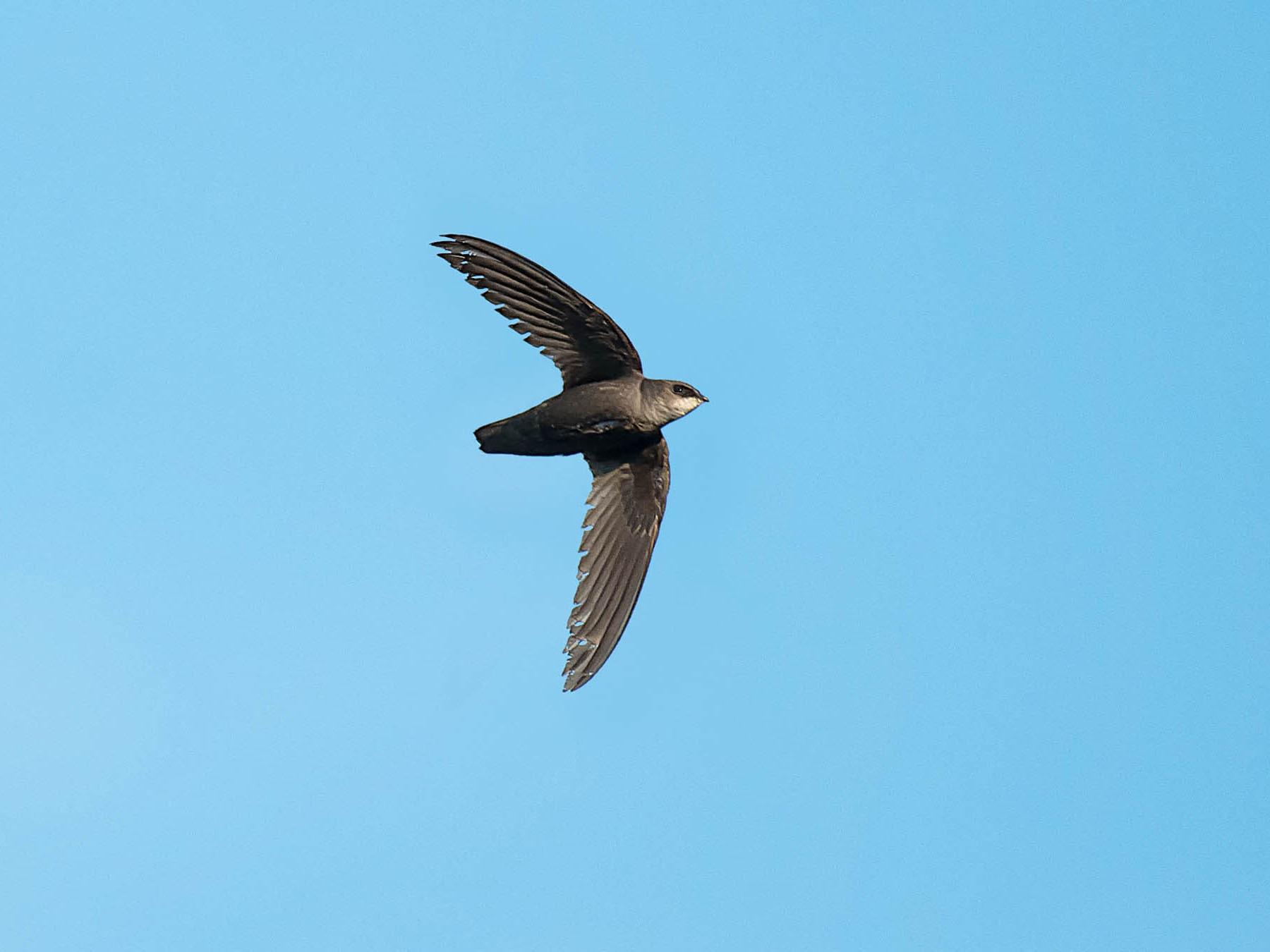
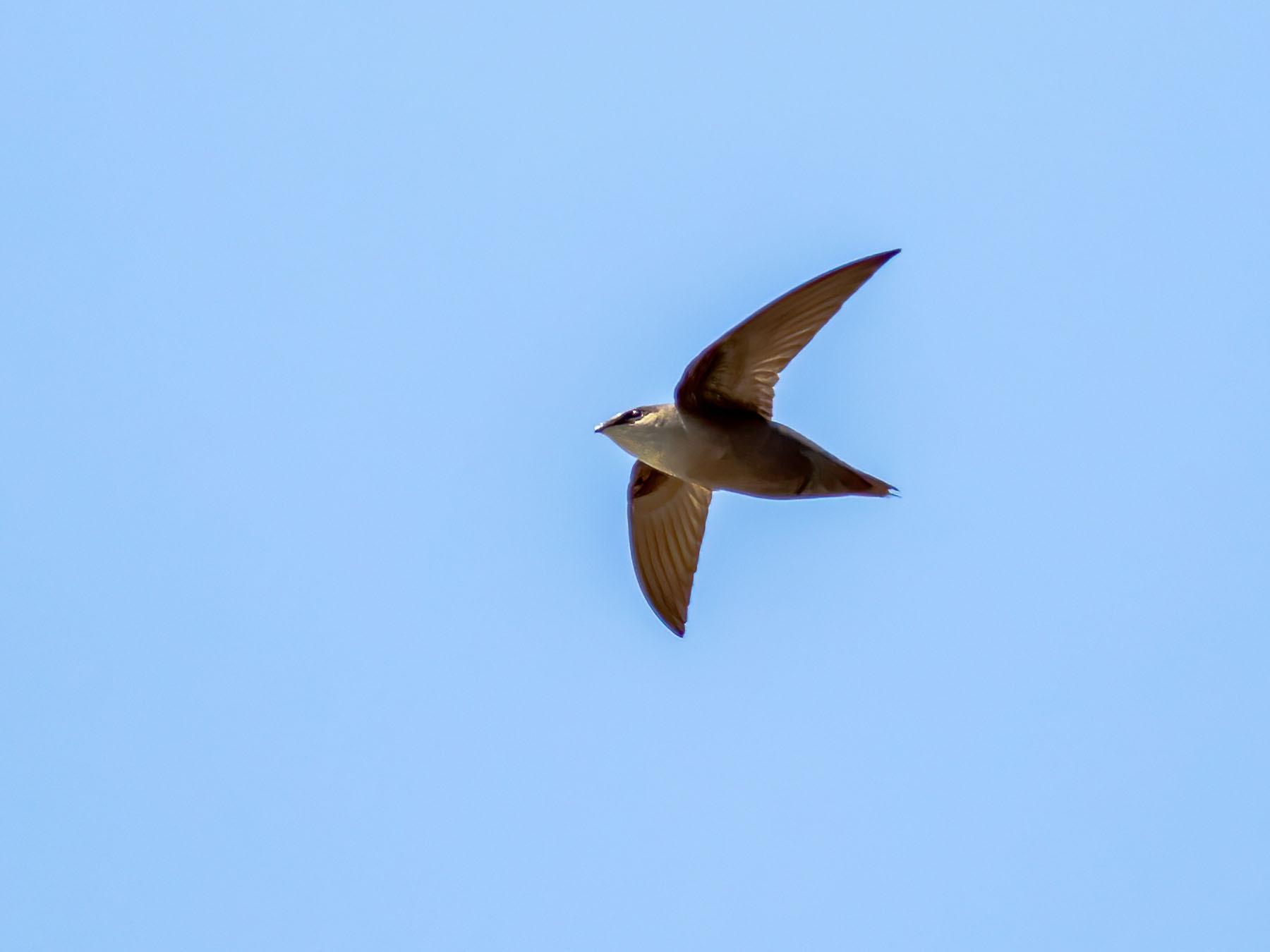
Look up, not around: this is a bird of the open sky over rooftops. It is plain dark sooty brown, grayer below and paler on the throat, and against the sky it can look all black. The shape gives it away: a slender body, long, narrow, curved wings and a very short tail, often likened to a cigar with wings.
It flies fast and erratically, with quick, stiff, shallow wingbeats, twisting and banking between glides, and often calls as it goes. The wings can seem to beat out of step, but a stroboscopic study showed that they always beat together.1
The tail is blackish, and each tail feather ends in a spiny shaft tip, which the bird uses as a prop when it clings to a wall.
Size and shape
It is 4.7–5.9 in (12–15 cm) long, with a wingspan of 10.6–11.8 in (27–30 cm), and weighs 0.6–1.1 oz (17–30 g): about the size of a Cliff Swallow.
Male, female and young
Males and females look alike and cannot safely be told apart by size, and the plumage shows no seasonal change that you would notice in the field.
Juveniles, mainly seen from June to September, look like adults, but the main wing feathers have thin whitish edges that soon wear off, and the outer wing and tail feathers are narrower and more pointed. Nestlings hatch naked and pink, with no down. Their feathers break through at about 6–8 days and their eyes open at 14–16 days.
Adults replace all their feathers once a year, mainly from June to September. The molt starts on the breeding grounds and often finishes on migration or in winter.
Identification: similar birds
Swallows are the usual confusion. They have broader wings and looser, more fluid wingbeats than a swift, and most show white or rusty underparts or a forked tail.
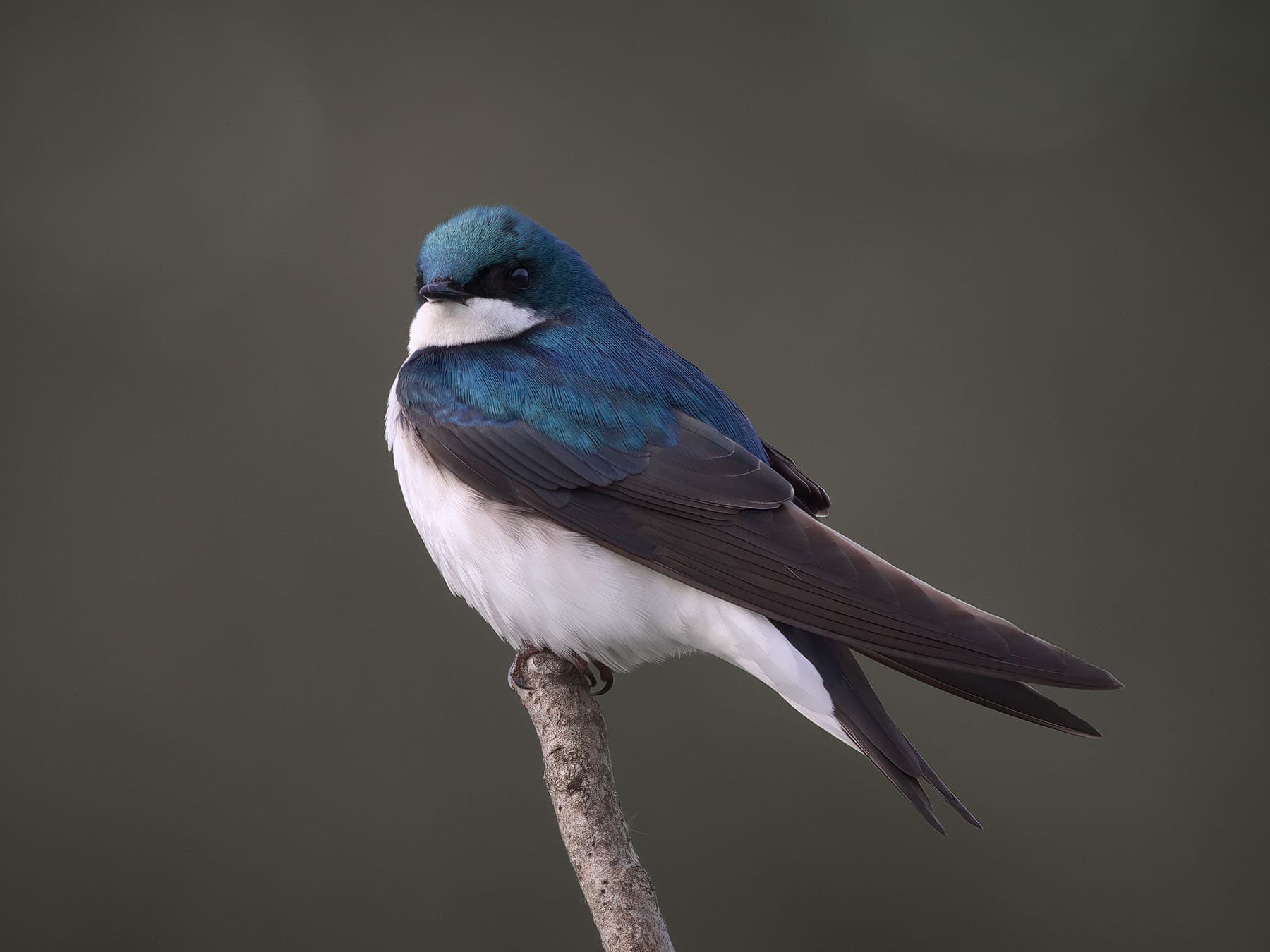
A Barn Swallow is longer, 6.7–7.5 in (17–19 cm), with a long forked tail, glossy steel-blue upperparts and a rufous throat. A Tree Swallow is about the same length but white below; adult males are glossy blue above, while young females and juveniles are brown or sooty gray above. A Northern Rough-winged Swallow is a similar size and grayish brown above and on the chest, but dull white on the belly and under the tail, and its tail is square.
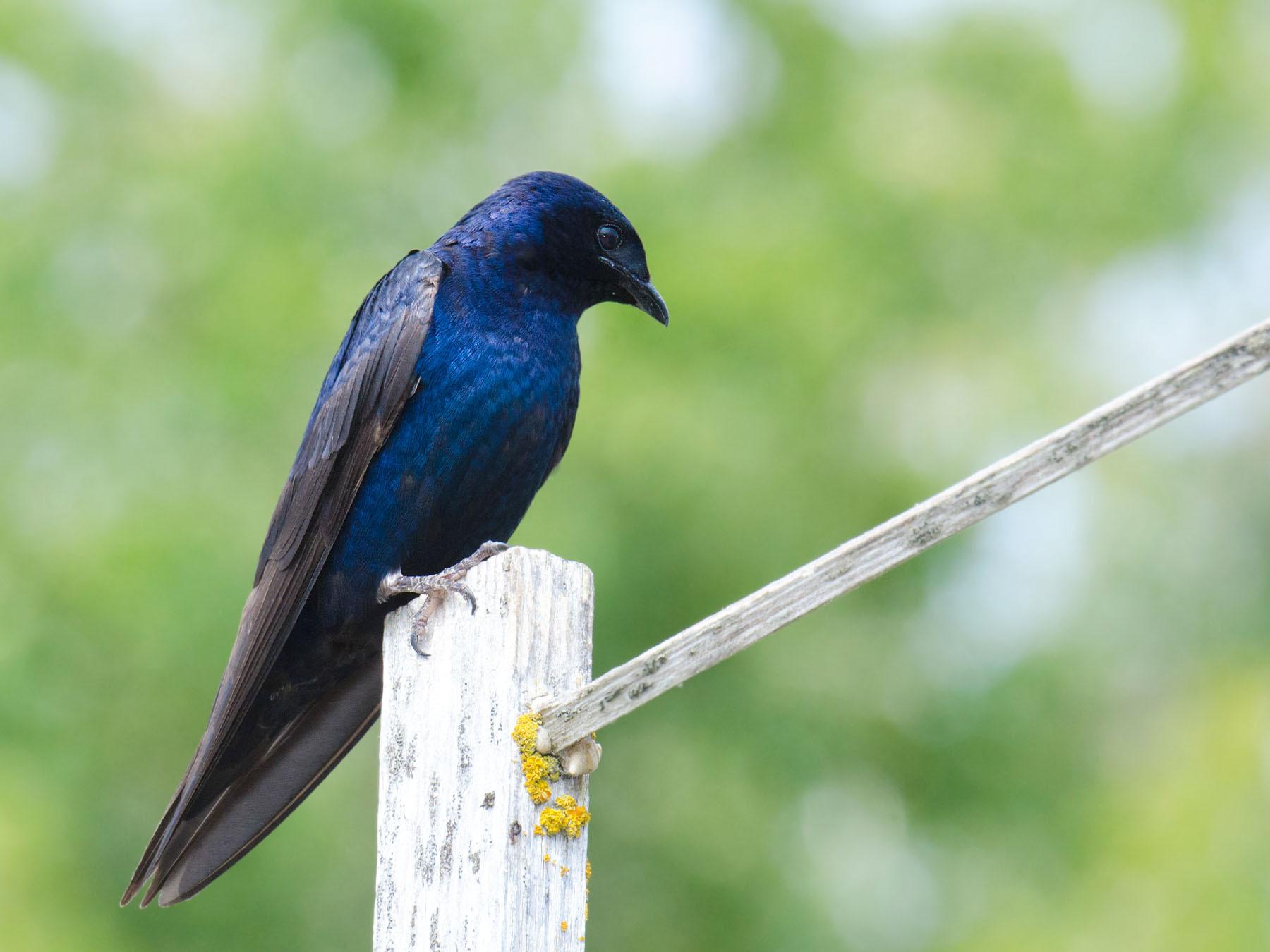
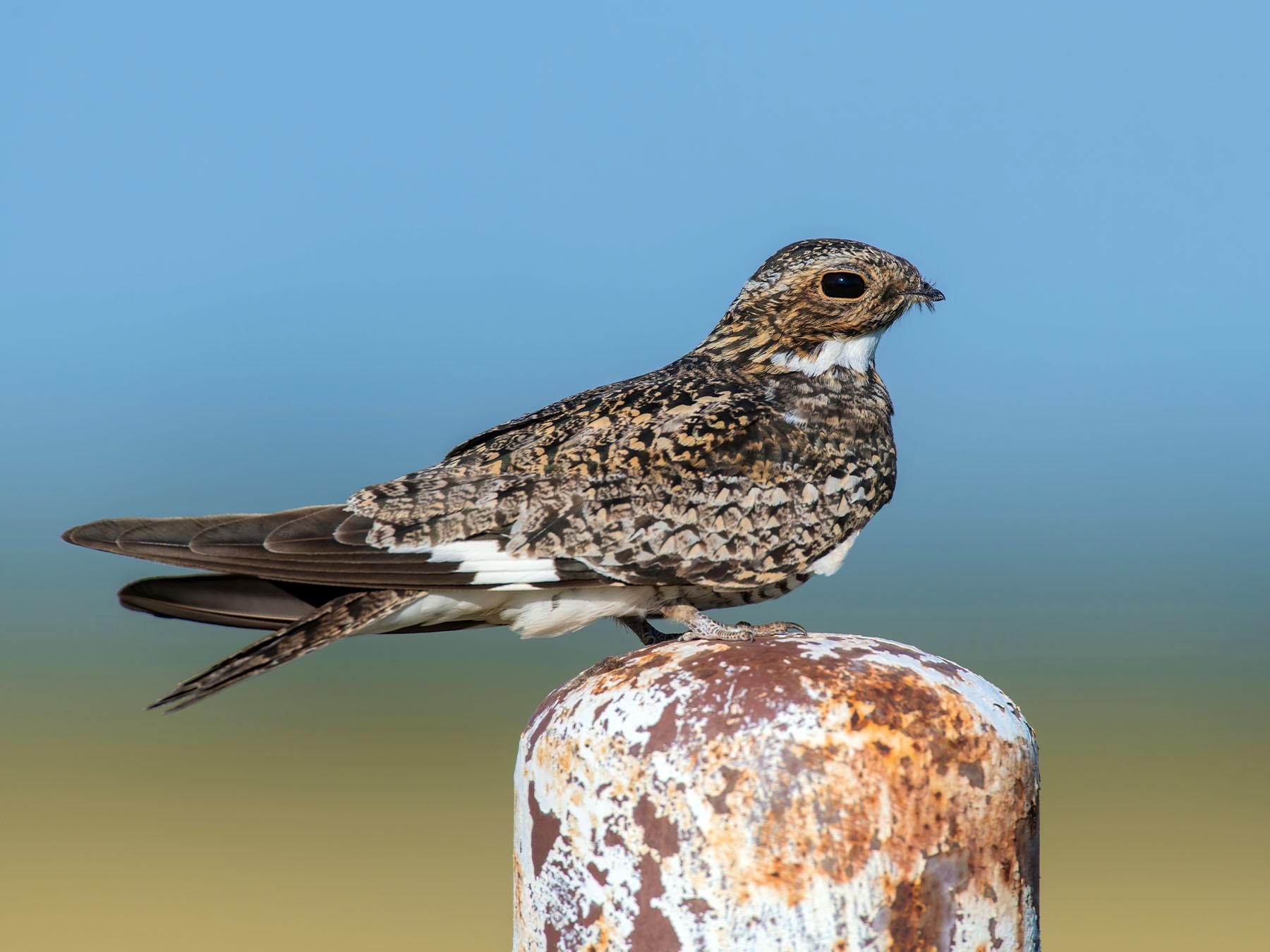
A Purple Martin is a much bigger swallow. The adult male is glossy blue-black all over, and the female shows a pale forehead and a grayish or brownish collar. A Common Nighthawk is far bigger again, 8.7–9.4 in (22–24 cm), mottled, with a white patch across its long, slender wings and barred underparts.
In the West, Vaux's Swift is the hard one. It is slightly smaller and shorter-winged, with much softer, higher-pitched calls, and usually has a paler rump and throat. Colors overlap, so voice and shape are the safer guides, and the two rarely meet. Telling them apart is counted among the more challenging identification problems in North America.2 Sight records of either outside its usual range may be open to some question.3
A Black Swift, also western, is much larger, up to 7.1 in (18 cm) and 1.6 oz (45 g), blacker all over, with a longer tail and no contrasting pale throat. The Old World's Common Swift is much bigger, 6.3–7.1 in (16–18 cm) long with a wingspan of 16.5–18.9 in (42–48 cm), and has a long, deeply forked tail.
Not sure it’s a Chimney Swift? Check your photo: Birdfact names the bird and shows the look-alike side by side.
Its size
Adults- Length
- 12–15 cm
- Wingspan
- 27–30 cm
- Weight
- 17–30 g
Its song and calls
Listen for a rapid, high-pitched chippering overhead. The chips run together into a buzzy, insect-like twitter in flight, or come spaced out in pairs and threes, and you usually hear them from flocks over rooftops. It has no song in the songbird sense.
Young swifts are noisy in the chimney. Nestlings squeak at hatching and give a loud, ratchet-like call by day 5; from about two weeks old, disturbed young give a loud rasping chorus that can go on for minutes. An alarmed adult at the nest may raise its wings, spring back from the wall and clap them together 3–6 times, a booming sound made with no call.
Birds of the World's account, last revised in 2014, calls the adult's calls poorly known, and says the meaning of the different chip rhythms had not been studied.1 A 2025 preprint, not yet peer reviewed, from one Kentucky site counted about 14 chips a second in fast bouts and 5 a second in steady ones, and suggests the twitter may tell other swifts where a bird is.4
- Flock at a chimney roost0:00 / 0:16
Recorded in North Carolina, United States · April 2023
- Flock calling in flight0:00 / 0:13
Recorded in North Carolina, United States · April 2023
Heard one and not sure? Let the bird song identifier listen.
When and where to see it
In summer, look over towns and cities with old chimneys across eastern North America, and over open country near settlements. Having somewhere to nest and roost seems to matter more than the habitat around it.
East of the Rockies, it breeds from southern Canada, between Nova Scotia and eastern Saskatchewan, south to Texas, the Gulf states and central Florida. In the Plains it reaches west-central North Dakota, eastern South Dakota, western Nebraska and Kansas, eastern Colorado and the eastern two-thirds of Texas. Farther west it is a rare but regular migrant and summer visitor in southern California, and it was first found breeding in the state in 1975, at Fort Bragg.1
When do they migrate?
Chimney Swifts arrive in March or April and most leave between late July and October. The first reach Florida in the third week of March, Kansas and southern West Virginia by mid-April, and New York, Massachusetts and southern Ontario in late April or early May. In fall, the first migrants appear in Nova Scotia in late July, passage peaks in mid-October in Arkansas, and a few pass through Texas as late as 27 November.1
They migrate by day, usually high, in flocks that stop at the first good roost each evening, most often 50 to 1,000 birds. Most probably cross the Gulf of Mexico in fall and go on overland through southern Mexico and Central America. In spring most travel north overland through Central America and Mexico, and the routes through South America are not well documented.
Where they spend the winter
It winters in South America, in coastal and Amazonian Peru, northern Chile and probably western Brazil. It is also an uncommon migrant on both slopes of the Andes in Ecuador. Little is known of its winter range or life there; it is found over open country and roosts in chimneys, churches and caves.
Where it went was a mystery until 1943, when 13 banded swifts were recovered in Peru, between the Putumayo and Napo rivers.1
Roosts on migration
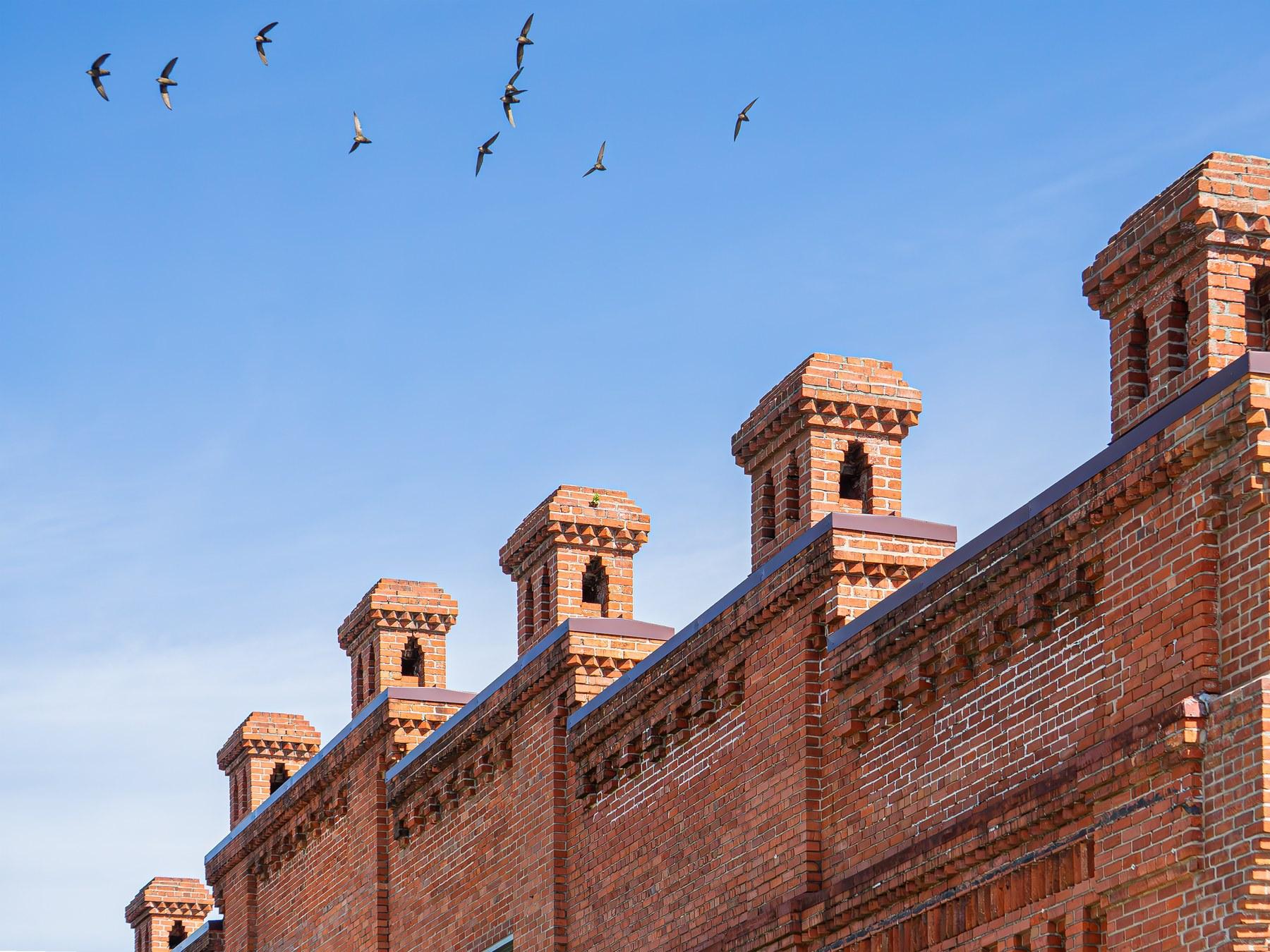
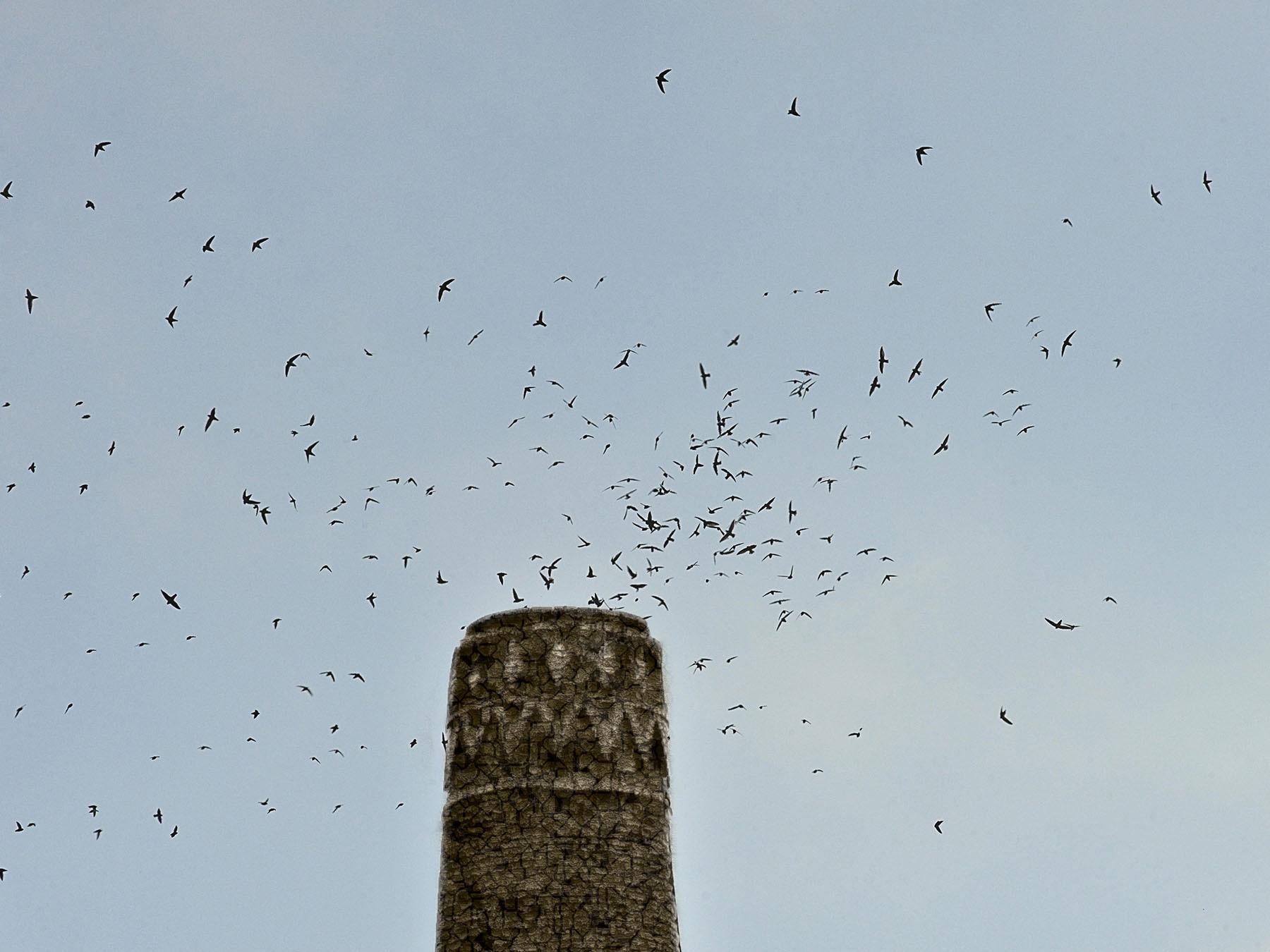
Swifts roost together in chimneys, and sometimes in hollow trees, caves or old buildings. At dusk the flock swirls over the chimney, then pours in.
A roost can hold anything from a few birds to 5,000 or more. Volunteer Swift Night Out counts in 2011–2013 reached 5,725 in Maryland and 8,000–9,000 at several North Carolina sites.1
Inside, they cling to the walls. In bad weather a roost chimney may be about 38°F (21°C) warmer than the air outside, and swifts may stay in for several days, huddled up to three deep.1 A camera on top of one 200 ft (61 m) industrial chimney found them packed closer on warmer nights, not colder ones.5
At one Raleigh, North Carolina roost, cameras tracked about 1,800 swifts over 30 minutes on one evening in 2014: the flock followed local rules based on the distance to neighbors, and the entry zone was the least cooperative part of the flock.6
Tips for seeing it
What it eats
Chimney Swifts eat flying insects, caught in the air: flies, beetles, true bugs, bees, wasps and flying ants, mayflies, stoneflies, caddisflies and crane flies, and now and then a spider. We found no source that recommends any feeder food for them.
They hunt 66–490 ft (20–150 m) above buildings and trees. Big insects are taken in the bill and small ones scooped into the wide mouth, and food for the young is carried as a ball in the throat. Odd records include swifts picking insects off a pond, fluttering at leafy branch tips, feeding low over lawns in cold rain, eating elderberries and hunting at night around street lights.1
Missouri's conservation department lists mosquitoes and other biting flies among its prey.7
Diet studies
In central New York in the 1950s, 95% of more than 1,000 prey items were true flies, leafhoppers and their kin, bees, mayflies and stoneflies, and nestlings got the smallest insects, 2–4 mm long, in their first week.1 A DNA study of droppings and food balls in Pennsylvania found beetles, flies and true bugs most often, and suggests swifts may not feed in proportion to the insects that sticky traps near the ground catch.8
One chimney in Kingston, Ontario held 48 years of droppings, from 1944 to 1992. The insect remains showed fewer beetles and more true bugs in the 1940s and 1950s, a shift the authors link to DDT use, which may have cut beetle numbers, though the key correlation was not statistically significant (p = 0.08).9
Nesting and breeding
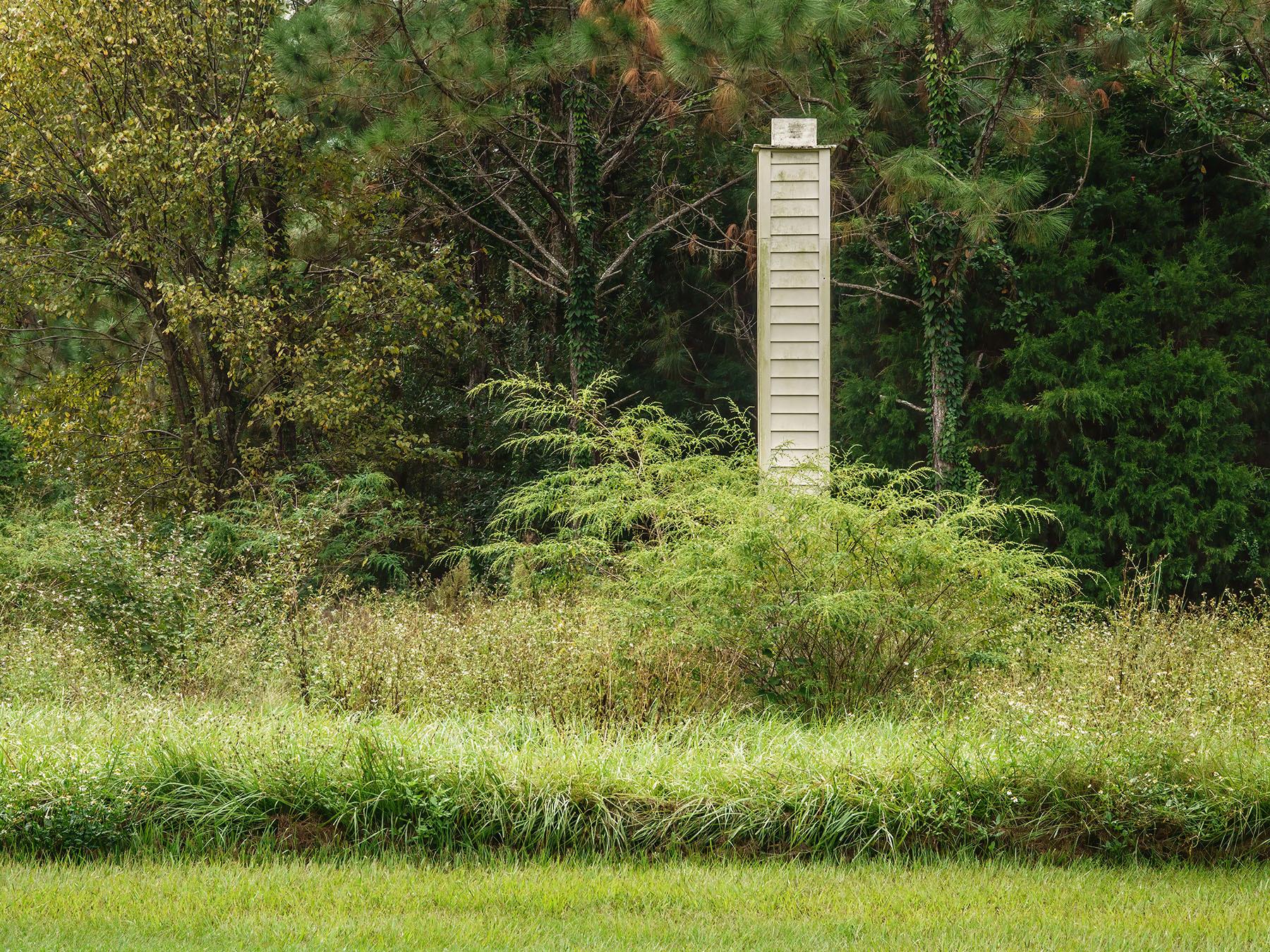
Each pair builds a small half-saucer of short twigs, glued to the inside wall of a chimney, and to each other, with sticky saliva. Only one pair nests in a chimney, even when many other swifts roost in it.
Both birds gather dead twigs in flight. Older accounts and some field guides say they snap them off with their feet; Birds of the World cites photographs of birds taking twigs in the bill.1
Non-breeders and failed nesters roost together all summer, sometimes in a chimney with a nesting pair: as many as 40 have been recorded with one pair. Such a flock is easily mistaken for a colony.1
Nest sites
Before European settlement these swifts probably nested on cave walls and in hollow trees. Today most nest in chimneys, and also in air shafts, old wells and cisterns, silos, barns, garages and other buildings. Tree nests are now rare, with fewer than two dozen reported since 1900.10 A review of 59 records of trees used for nesting or roosting found every one hollow and more than 1.6 ft (0.5 m) across, and in 15 reports a broken top made a chimney-like opening; how often trees are used now is not known.11
A nest chimney must be dark and sheltered, with a rough wall to cling to; metal liners are too slippery.12 In Kansas, nests were never found in chimneys under 10 in (25 cm) across.1 Even so, a pair has bred in an 8 in (20 cm) chimney in Manitoba.13
Eggs and young
First eggs are laid between mid-May and mid-July: from 14 May to 9 June in Ohio, 8 June to 1 July in New York and 3 to 20 June in Manitoba. The clutch is usually 4 or 5 pure white eggs, sometimes as few as 2 or as many as 7.
Both parents incubate, for about 19 days on average (16–21), and cold, rainy weather can stretch this by several days. Both brood and feed the young. At about 19–20 days the young leave the nest to cling to the wall beside it, as early as 14 days in broods of four or five, and they first fly out of the chimney at 28–30 days. Fledged young come back to roost in the nest chimney with their parents for a week or two.
Pairs normally raise one brood a year. After heavy rainstorms in Kansas up to 60% may nest again, usually laying one egg fewer.1
Sometimes one or two extra adults help a pair. At one Ohio rooftop over 25 years, 15% of 418 nestings involved three adults and 2% four; helpers joined 9 of 60 nesting attempts in Kansas, but only 1 of 45 in New York and none of 11 in Manitoba.1
At the northern edge of the range, in St. Adolphe, Manitoba (2010–2013), 56% of eggs hatched and 28% produced fledglings, about 1.4 young per nest at the two chimneys with full data. The authors call success there lower than farther south.14
Nest towers
People also put up purpose-built swift towers; the design that seems to work best is about 16 in (41 cm) square and 12 ft (366 cm) tall inside. Results vary. Its designers reported in 1998 that most of more than 50 towers in 20 states drew a nesting pair in their first season, but an email survey found only 17 of 41 towers occupied. More than 60 towers in five Canadian provinces went unused, except one in Quebec with added heat.1
Behaviour
Chimney Swifts are among the most aerial of landbirds. They fly almost all day, feeding, drinking and bathing on the wing, and come down only at the nest or roost. They are not known to walk or hop on flat ground and seldom perch on a branch; instead they cling upright to walls inside chimneys, hollow trees and similar dark places.
They drink by skimming low over a pond and dipping the bill, and bathe by gliding down to smack the water with the breast, shaking off as they rise. To go into a chimney, a swift drops in tail-first through a small opening, or head-first, turning inside, if the opening is wide.
We found no study that measures sleep in flight in this species. At night it roosts clinging to a wall, and nesting adults stay on the nest.
Pairs are only weakly territorial but very faithful to a site. In Ohio, 96% of pairs that came back together reused the same chimney, and when both members of 294 pairs came back, 84% stayed together.1
Lifespan and predators
The oldest known wild Chimney Swift was at least 14 years old: a male banded in Ohio in 1957 and caught and released alive there in 1970.15
We found no source that gives a typical lifespan. Older banding data, from swifts banded in the US and Canada in 1920–1956, put yearly mortality at about 37%, close to the 37.5% found from birds returning to their nests in New York. These data may be biased, because they did not allow for birds moving away or for change from year to year.1
Predators and other dangers
Little is known about predators. Black rat snakes are the only known nest predator. Eastern Screech-Owls go into chimneys to take swifts, Sharp-shinned Hawks seize them at dusk as they drop into a roost, and Mississippi Kites and Peregrine Falcons have taken them.
Long cold, rainy spells cut insect numbers until swifts starve, and heavy rain can wash nests off chimney walls. Hurricanes can throw migrants off course and kill them, and may catch hundreds on migration. Other recorded deaths include smoke from fires below roosts, lightning, cars and collisions with communication towers, which are estimated to kill 2,000 a year in eastern and central North America.1
Conservation
The Chimney Swift is listed as Vulnerable on the IUCN Red List (2018 assessment).16 Partners in Flight estimates about 8.8 million breeding-age birds, a figure calculated for around 2010.17
The North American Breeding Bird Survey shows a significant decline of 2.3% a year from 1966 to 2025, both survey-wide and in the US, and 3.3% a year in Canada.18 In the US the fall sped up after 1995, from 0.83% a year in 1966–1995 to 3.73% a year in 1995–2025, and it continued at 3.5% a year over 2015–2025. In Canada the last ten years show no clear change. The survey's US index is now about a quarter of its 1966 level.18
Declines run through nearly every state and province with enough survey routes, steep in Kansas and Missouri, and in Ontario on a low-credibility estimate.18 It is a Tipping Point species in the 2025 State of the Birds report, on Partners in Flight's Orange Watch List and a U.S. Fish and Wildlife Service Bird of Conservation Concern.19, 17, 12
Conservation: causes of the decline
The causes are not settled. Two likely factors are changes in the flying insects swifts eat and unknown threats on migration and in the winter range, but the specific reasons are not known.1, 20 Storms and cold spells on migration may cause short-term drops, though this is not well documented.1
Birds that feed on flying insects are declining as a group, and a review finds no single cause.21
Wildlife agencies in the US and Canada also point to the loss of chimneys.7, 12, 20 Old masonry chimneys are capped, lined with metal, rebuilt or demolished. At Connecticut survey sites about 5% of chimneys a year were capped in 2008–2011, and in one small northeastern Kansas community swifts fell 45% over 20 years after 20 of 48 potential nest chimneys were lost.1 In Manitoba, of 200 known chimney sites, 14.5% were lost to capping, lining or demolition in 2007–2016.13
Even so, Birds of the World finds that where chimney supply has been studied, in Connecticut, North Carolina and Ontario, chimney loss does not seem to be an important cause of the decline.1 In Ontario only 25% of suitable, available chimneys were occupied, and a Canadian study warns that suitable chimneys could become limiting in the future.11
Legal status
In the US the Chimney Swift is protected under the Migratory Bird Treaty Act, and the protection covers its nests and eggs.22, 23 Harassing, injuring or killing swifts, or harming their eggs or nests, is illegal.12 It is not listed under the Endangered Species Act; federally it is a Species of Concern, and 22 states count it a Species of Greatest Conservation Need.24, 12
In Canada it falls under the Migratory Birds Convention Act, 1994 and the Migratory Birds Regulations, 2022. Without a permit, these bar capturing, killing, taking, injuring or harassing the birds and destroying, taking or disturbing their eggs, and its nests are protected while they hold a live bird or a viable egg.25, 26 It is listed as Threatened on Schedule 1 of the Species at Risk Act, and as Threatened in Ontario since 2009.27, 20
It is not on Mexico's 2010 list of species at risk.28
Similar birds
Often mistaken for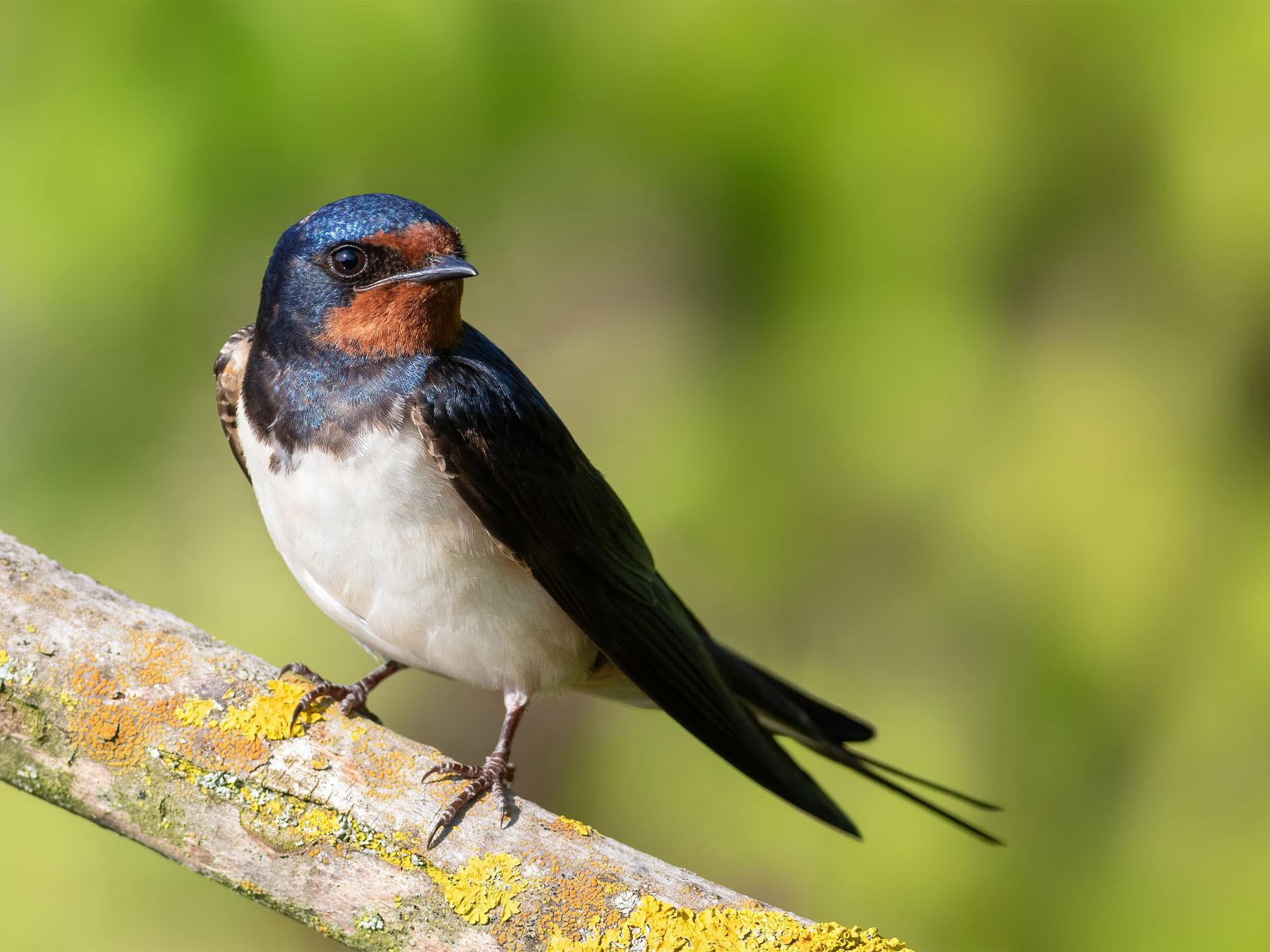

Quick facts
- Length
- 12–15 cm
- Wingspan
- 27–30 cm
- Weight
- 17–30 g
- Lifespan
- oldest recorded 14 years
- Family
- Swifts
- Migration
- Long-distance Migrant
- Global status (IUCN)
- Vulnerable
- World population
- About 8.8 million breeding-age birds (Partners in Flight, calculated for about 2010)
- Population trend
- Declining steeply: the Breeding Bird Survey shows a significant fall of about 2.3% a year since 1966, faster since the mid-1990s and still continuing in the US over the last ten years, leaving the US survey index about a quarter of its 1966 level; Canada's long-term fall is steeper, though its last ten years show no clear change
- Scientific name
- Chaetura pelagica
Questions
3Why is it called a Chimney Swift?
Because it nests in chimneys, which it took to as European settlers cleared the eastern forests. It used chimneys in New England by 1672 and, by the late 1700s, nested almost only in chimneys on the Atlantic coastal plain.10 The genus name, Chaetura, joins Greek words for long flowing hair and tail, after the spine-tipped tail feathers, and the species name, pelagica, is read as Pelasgian, after a wandering people of ancient Greece, rather than as "of the sea".29, 30 We found no source that says why Linnaeus chose it.
How long will swifts stay in my chimney?
At chimneys in Manitoba, a nesting pair took about eight weeks from nest building to fledging, and a whole nesting cycle took at least nine.31, 32 The nestlings beg loudly for about three weeks before they leave. The U.S. Fish and Wildlife Service advises cleaning chimneys only when swifts are away, which for most of the US means between September or October and March or April.12 Missouri's conservation department says to avoid May to August.7 Other swifts may roost in a chimney through the summer and on migration. Swifts are protected by law (see legal status).
Sources
43- 1Steeves, T. K. et al. (2020). Chimney Swift (Chaetura pelagica), version 1.0. Birds of the World (A. F. Poole, editor). Cornell Lab of Ornithology. doi:10.2173/bow.chiswi.01 (opens in a new tab)
- 2Wilder, J. A. (2020). Documentation and Identification of Northern Arizona's First Record of Chimney Swift. Arizona Birds: article 24. doi:10.65238/323.xyz (opens in a new tab)
- 3Schwitters, L., Schwitters, D., Bull, E. L. and Collins, C. T. (2021). Vaux's Swift (Chaetura vauxi), version 1.1. Birds of the World (P. G. Rodewald, editor). Cornell Lab of Ornithology. doi:10.2173/bow.vauswi.01.1 (opens in a new tab)
- 4Peppe, L. A. and Ritchison, G. (2025). Flight vocalizations and displays of Chimney Swifts (Chaetura pelagica): description and possible functions. bioRxiv (preprint). doi:10.1101/2025.08.16.670661 (opens in a new tab)
- 5Farquhar, M. L., Morin, A. and Nocera, J. J. (2018). High ambient temperatures induce aggregations of chimney swifts Chaetura pelagica inside a roost. Journal of Avian Biology 49(8): e01754. doi:10.1111/jav.01754 (opens in a new tab)
- 6Evangelista, D. J., Ray, D. D., Raja, S. K. and Hedrick, T. L. (2017). Three-dimensional trajectories and network analyses of group behaviour within chimney swift flocks during approaches to the roost. Proceedings of the Royal Society B 284(1849): 20162602. doi:10.1098/rspb.2016.2602 (opens in a new tab)
- 7Missouri Department of Conservation. Chimney Swift. MDC Field Guide. Accessed 20 November 2026. Source (opens in a new tab)
- 8Kautz, A. R., Hoenig, B. D., Sarver, M. and DeGroote, L. W. (2025). DNA metabarcoding reveals the diet of Chaetura pelagica (Chimney Swift), a declining aerial insectivore. Ornithology 143(1): 1-13. doi:10.1093/ornithology/ukaf052 (opens in a new tab)
- 9Nocera, J. J. et al. (2012). Historical pesticide applications coincided with an altered diet of aerially foraging insectivorous chimney swifts. Proceedings of the Royal Society B 279(1740): 3114-3120. doi:10.1098/rspb.2012.0445 (opens in a new tab)
- 10Graves, G. R. (2004). Avian commensals in Colonial America: when did Chaetura pelagica become the chimney swift?. Archives of Natural History 31(2): 300-307. doi:10.3366/anh.2004.31.2.300 (opens in a new tab)
- 11Zanchetta, C. et al. (2014). Tree cavity use by Chimney Swifts: implications for forestry and population recovery. Avian Conservation and Ecology 9(2): 1. doi:10.5751/ace-00677-090201 (opens in a new tab)
- 12Bogart, R. (U.S. Fish and Wildlife Service). On the Wing with Chimney Swifts. U.S. Fish and Wildlife Service stories. Accessed 20 November 2026. Source (opens in a new tab)
- 13Poole, T. F. and Ogilvie, G. (2020). Occupancy of Unconventional Nest and Roost Habitats by the Chimney Swift (Chaetura pelagica) in Manitoba. Blue Jay 78(1): 10-15. doi:10.29173/bluejay6289 (opens in a new tab)
- 14Stewart, B. E. and Stewart, R. E. A. (2013). Nest Site Use, Breeding Success, and Reproductive Rates of Chimney Swifts in St. Adolphe, MB, 2010-2013. Blue Jay 71(4): 166-182. doi:10.29173/bluejay346 (opens in a new tab)
- 15USGS Bird Banding Laboratory. Longevity Records of North American Birds, Version 2025.1 (last updated December 2025). USGS Eastern Ecological Science Center, Bird Banding Laboratory. Accessed 20 November 2026. Source (opens in a new tab)
- 16BirdLife International (2018). Chaetura pelagica. The IUCN Red List of Threatened Species 2018 (via the GBIF IUCN Red List checklist). GBIF dataset 19491596-35ae-4a91-9a98-85cf505f1bd3. Accessed 20 November 2026. Source (opens in a new tab)
- 17Partners in Flight (2024). Avian Conservation Assessment Database, version 2024.05.23 (global). Partners in Flight / Bird Conservancy of the Rockies. Accessed 20 November 2026. Source (opens in a new tab)
- 18Hostetler, J. A. et al. (2026). The North American Breeding Bird Survey, Analysis Results 1966 - 2025. U.S. Geological Survey data release. doi:10.5066/P1OSNSFC (opens in a new tab)
- 19Cornell Lab of Ornithology. Chimney Swift. All About Birds. Accessed 20 November 2026. Source (opens in a new tab)
- 20Ontario Ministry of the Environment, Conservation and Parks. Chimney swift. Ontario.ca species at risk. Accessed 20 November 2026. Source (opens in a new tab)
- 21Spiller, K. J. and Dettmers, R. (2019). Evidence for multiple drivers of aerial insectivore declines in North America. The Condor 121(2): duz010. doi:10.1093/condor/duz010 (opens in a new tab)
- 22U.S. Fish and Wildlife Service. 50 CFR 10.13 List of Migratory Birds. Electronic Code of Federal Regulations (version of 2026-11-17). Accessed 20 November 2026. Source (opens in a new tab)
- 23U.S. Fish and Wildlife Service. 50 CFR 10.12 Definitions. Electronic Code of Federal Regulations (version of 2026-11-17). Accessed 20 November 2026. Source (opens in a new tab)
- 24U.S. Fish and Wildlife Service. ECOS species profile: Chimney Swift (species 9406). Environmental Conservation Online System. Accessed 20 November 2026. Source (opens in a new tab)
- 25Government of Canada. Migratory Birds Convention Act, 1994 (S.C. 1994, c. 22). Justice Laws Website (current to 2026-10-29). Accessed 20 November 2026. Source (opens in a new tab)
- 26Government of Canada. Migratory Birds Regulations, 2022 (SOR/2022-105). Justice Laws Website (current to 2026-10-29). Accessed 20 November 2026. Source (opens in a new tab)
- 27Government of Canada. Species at Risk Act (S.C. 2002, c. 29), Schedule 1. Justice Laws Website (current to 2026-10-29). Accessed 20 November 2026. Source (opens in a new tab)
- 28SEMARNAT. NOM-059-SEMARNAT-2010 (DOF 30/12/2010). Diario Oficial de la Federacion. Accessed 20 November 2026.
- 29Jobling, J. A.. Chaetura. The Key to Scientific Names (Birds of the World). Accessed 20 November 2026. Source (opens in a new tab)
- 30Jobling, J. A.. pelagica. The Key to Scientific Names (Birds of the World). Accessed 20 November 2026. Source (opens in a new tab)
- 31Stewart, B. E. and Stewart, R. E. A. (2010). Nest Site use and Breeding Success of Chimney Swifts in St. Adolphe, Mb, 2007-2009. Blue Jay 68(3). doi:10.29173/bluejay6044 (opens in a new tab)
- 32Poole, T., Stewart, B. and Stewart, R. (2023). Impact of anthropogenic disturbance on nesting Chimney Swift (Chaetura pelagica) including best practices for conservation. The Canadian Field-Naturalist 136(4): 364-373. doi:10.22621/cfn.v136i4.2963 (opens in a new tab)
- 33AviList Core Team (2025). AviList: The Global Avian Checklist, v2025b. AviList. Accessed 20 November 2026. Source (opens in a new tab)
- 34National Audubon Society. Chimney Swift. Guide to North American Birds. Accessed 20 November 2026. Source (opens in a new tab)
- 35Brown, C. R., Airola, D. A. and Tarof, S. (2021). Purple Martin (Progne subis), version 2.0. Birds of the World (P. G. Rodewald, editor). Cornell Lab of Ornithology. doi:10.2173/bow.purmar.02 (opens in a new tab)
- 36Brown, M. B. and Brown, C. R. (2020). Barn Swallow (Hirundo rustica), version 1.0. Birds of the World (P. G. Rodewald, editor). Cornell Lab of Ornithology. doi:10.2173/bow.barswa.01 (opens in a new tab)
- 37Winkler, D. W. et al. (2020). Tree Swallow (Tachycineta bicolor), version 1.0. Birds of the World (A. F. Poole, editor). Cornell Lab of Ornithology. doi:10.2173/bow.treswa.01 (opens in a new tab)
- 38De Jong, M. J. (2020). Northern Rough-winged Swallow (Stelgidopteryx serripennis), version 1.0. Birds of the World (A. F. Poole and F. B. Gill, editors). Cornell Lab of Ornithology. doi:10.2173/bow.nrwswa.01 (opens in a new tab)
- 39Gunn, C. et al. (2026). Black Swift (Cypseloides niger), version 3.1. Birds of the World (B. K. Keeney and S. M. Billerman, editors). Cornell Lab of Ornithology. doi:10.2173/bow.blkswi.03.1 (opens in a new tab)
- 40Brigham, R. M., Ng, J. W., Poulin, R. G. and Grindal, S. D. (2020). Common Nighthawk (Chordeiles minor), version 1.0. Birds of the World (A. F. Poole, editor). Cornell Lab of Ornithology. doi:10.2173/bow.comnig.01 (opens in a new tab)
- 41Kirwan, G. M., Chantler, P., Boesman, P. F. D. and Pyle, P. (2025). Common Swift (Apus apus), version 1.1. Birds of the World (J. del Hoyo, A. Elliott, J. Sargatal, D. A. Christie, E. de Juana, G. M. Kirwan and B. K. Keeney, editors). Cornell Lab of Ornithology. doi:10.2173/bow.comswi.01.1 (opens in a new tab)
- 42stevestevens ('steve b', iNaturalist user; 'steve' on xeno-canto). iNaturalist observation 156834143, sound 657669 (Chimney Swift). iNaturalist. Accessed 20 November 2026. Source (opens in a new tab)
- 43stevestevens ('steve b', iNaturalist user; 'steve' on xeno-canto). iNaturalist observation 156834142, sound 657667 (Chimney Swift). iNaturalist. Accessed 20 November 2026. Source (opens in a new tab)

Checked by
Nathan Cope, founder and editor
Nathan founded Birdfact and leads its writers and contributors in the UK, the US and Canada. He has watched and studied birds for more than ten years, and checks every article and species guide before it’s published.