


Mallard
Wild Duck · Anas platyrhynchos
By the Birdfact teamChecked by Nathan Cope
On this page14 sections
How to recognise it
What do Mallards look like?
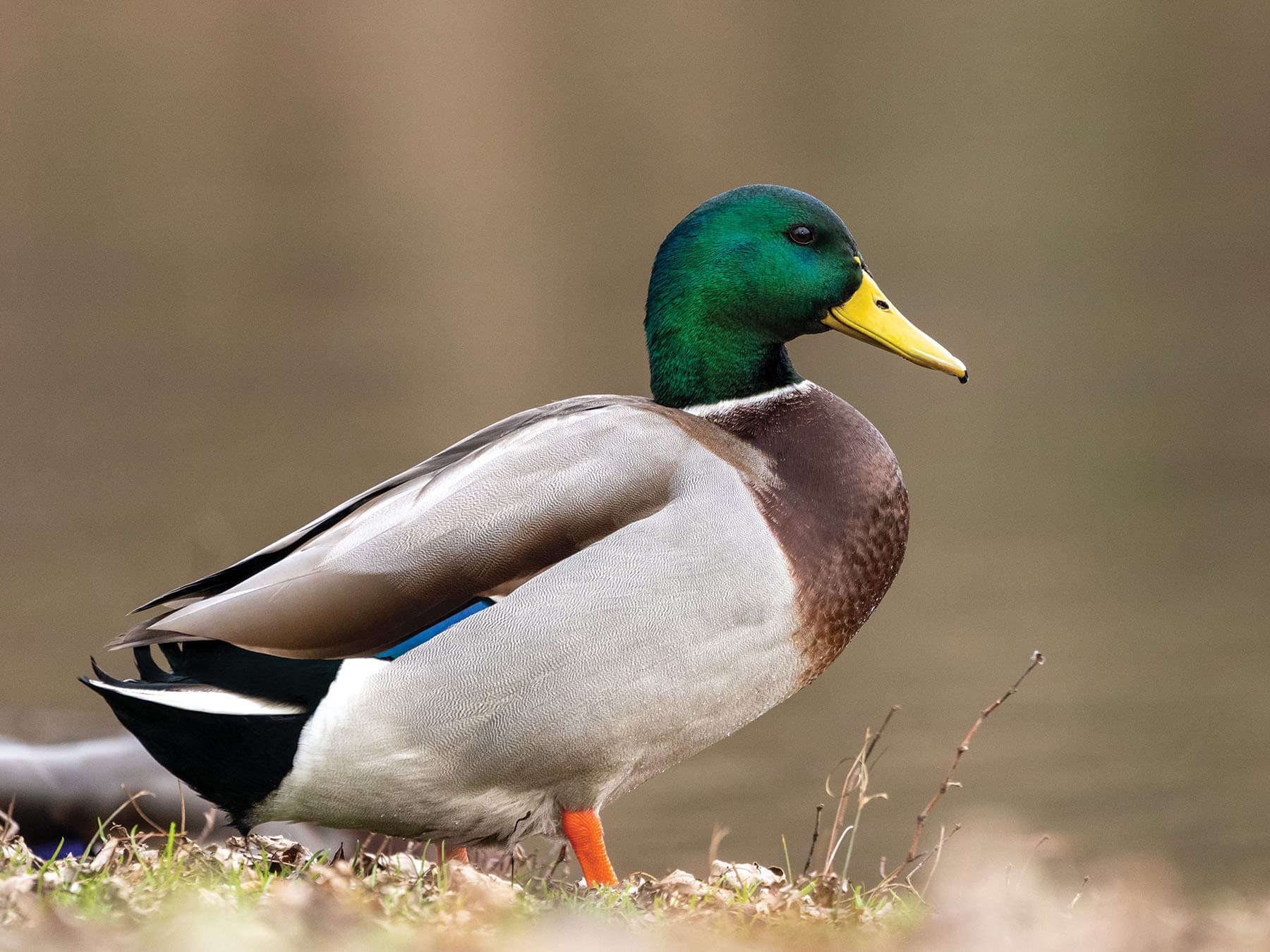
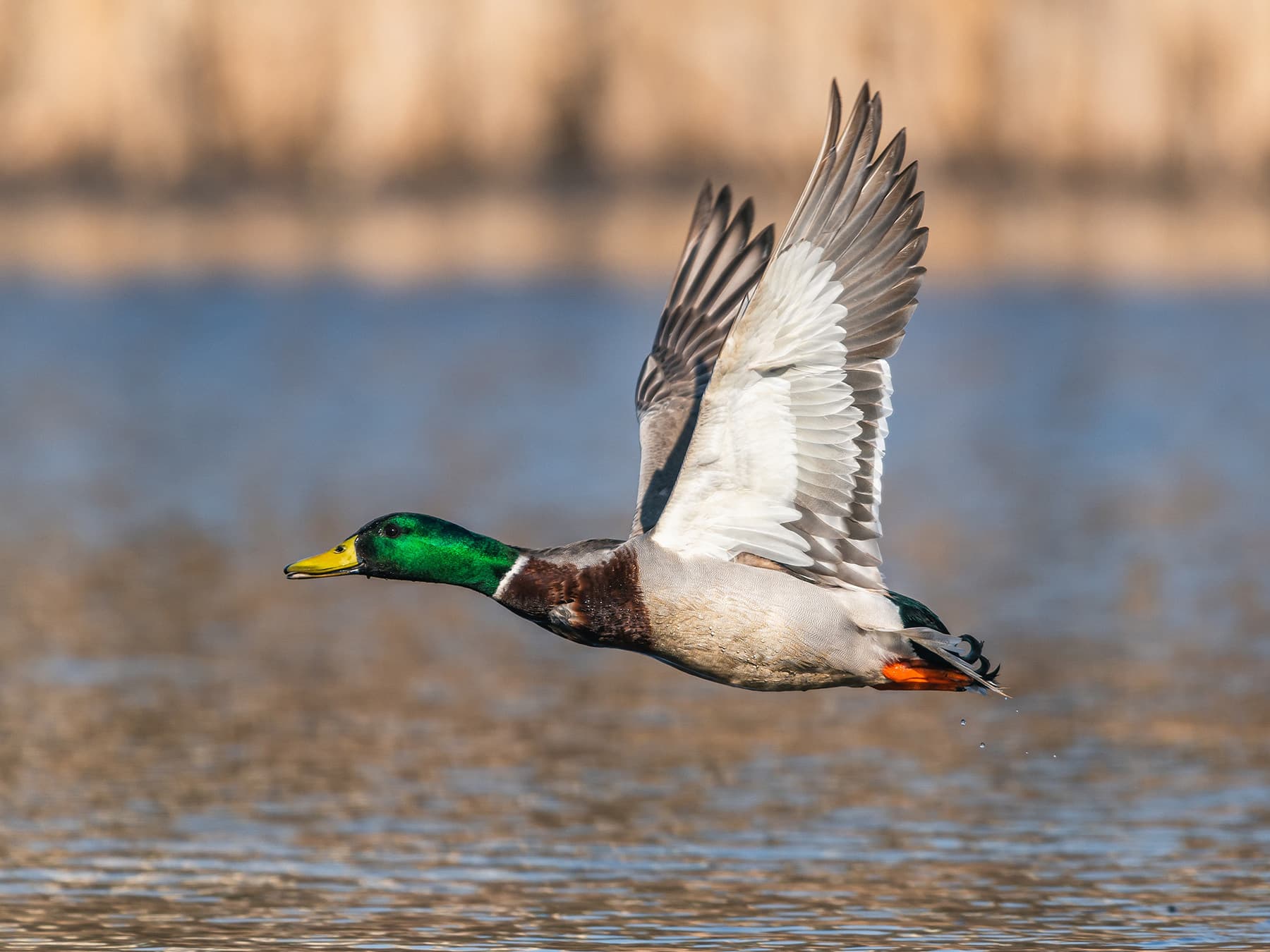
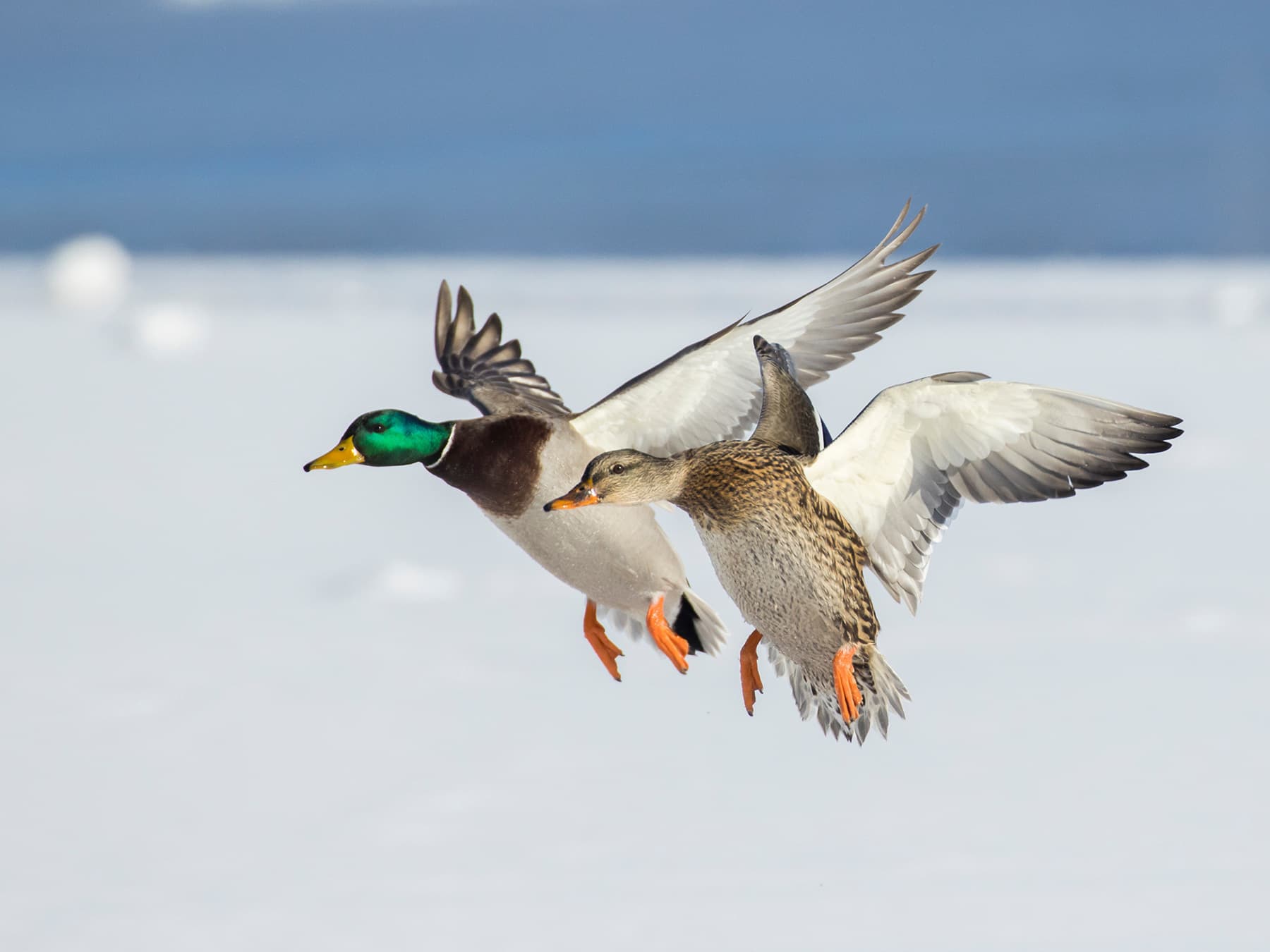
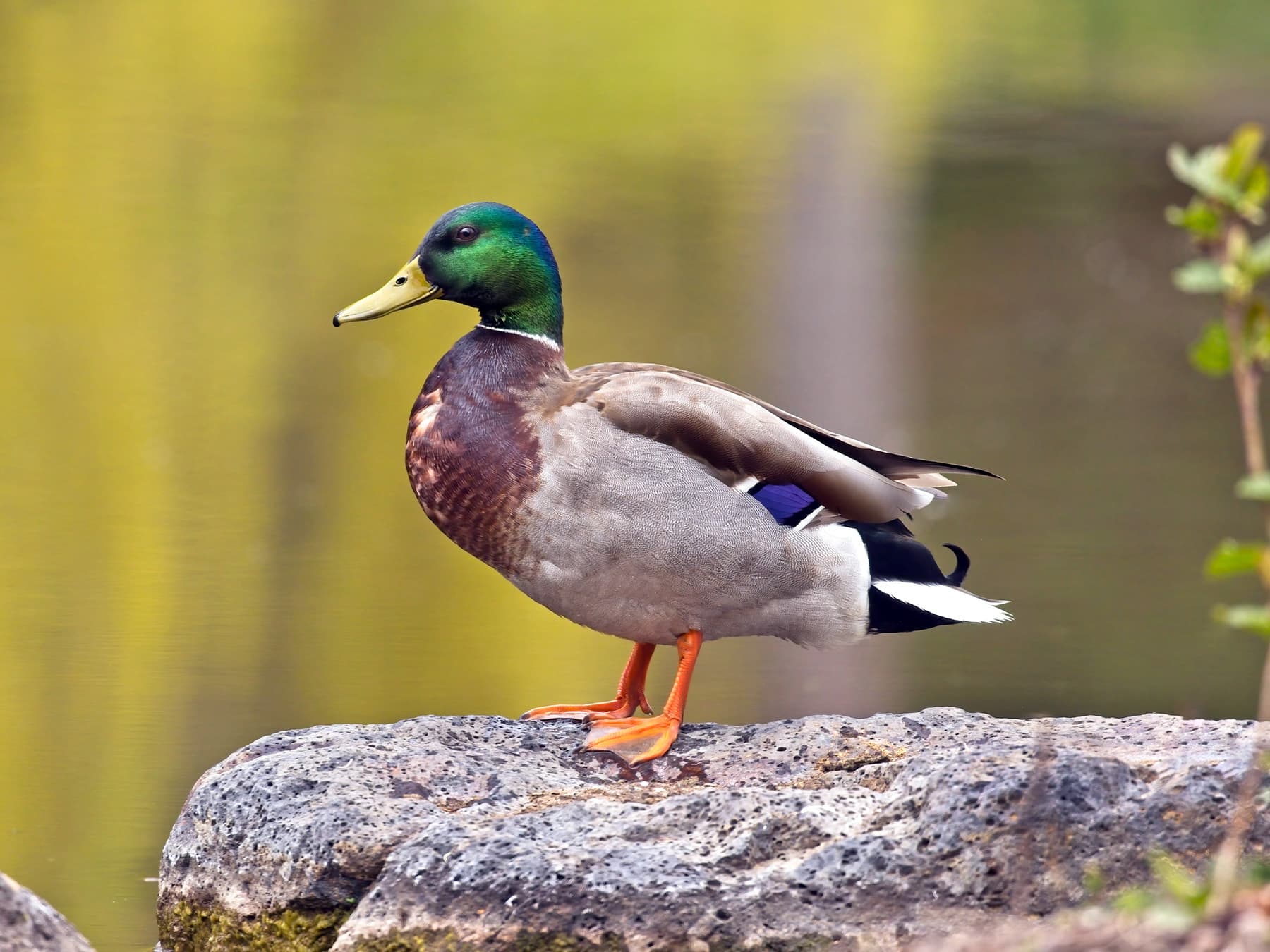
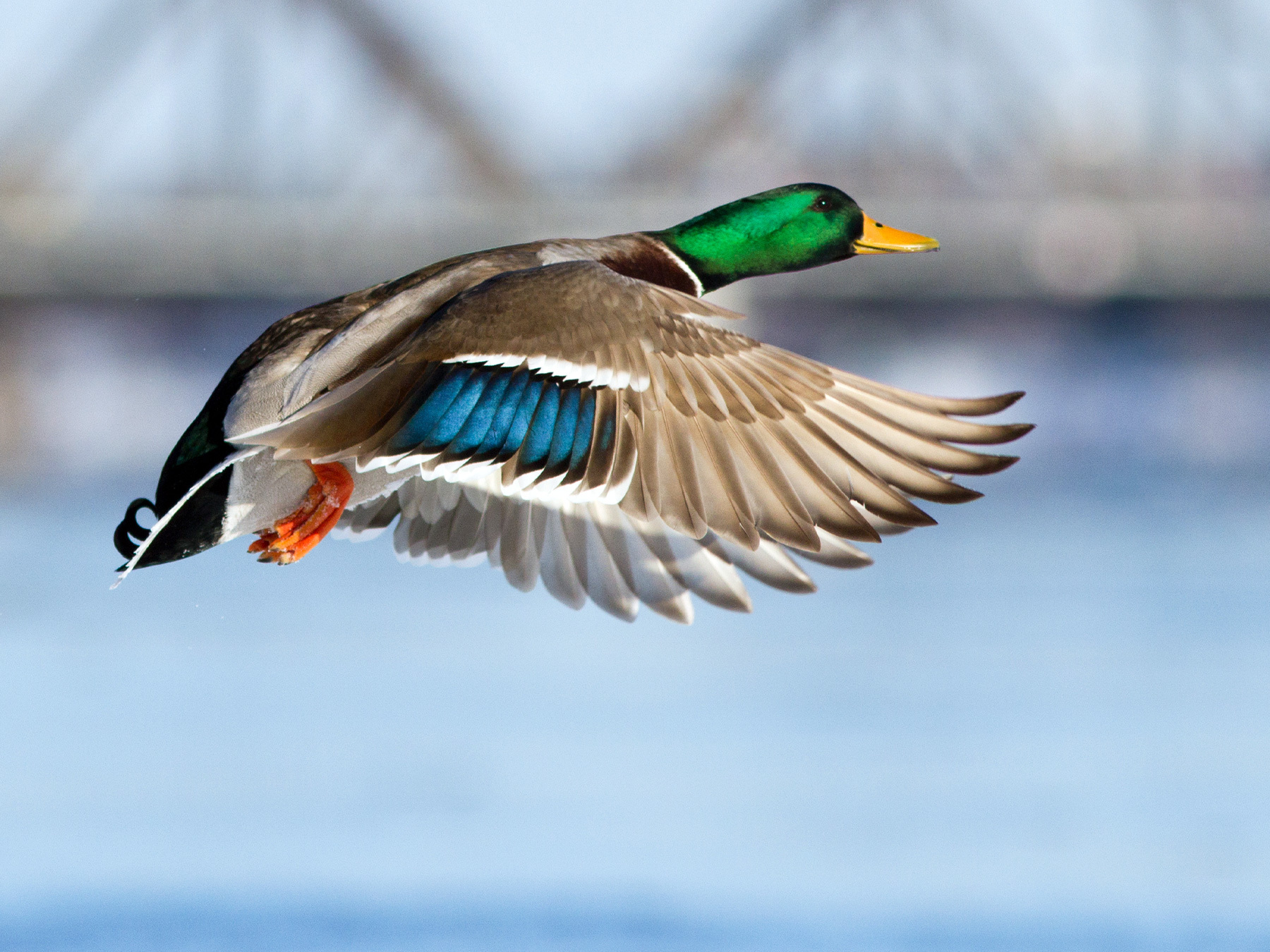
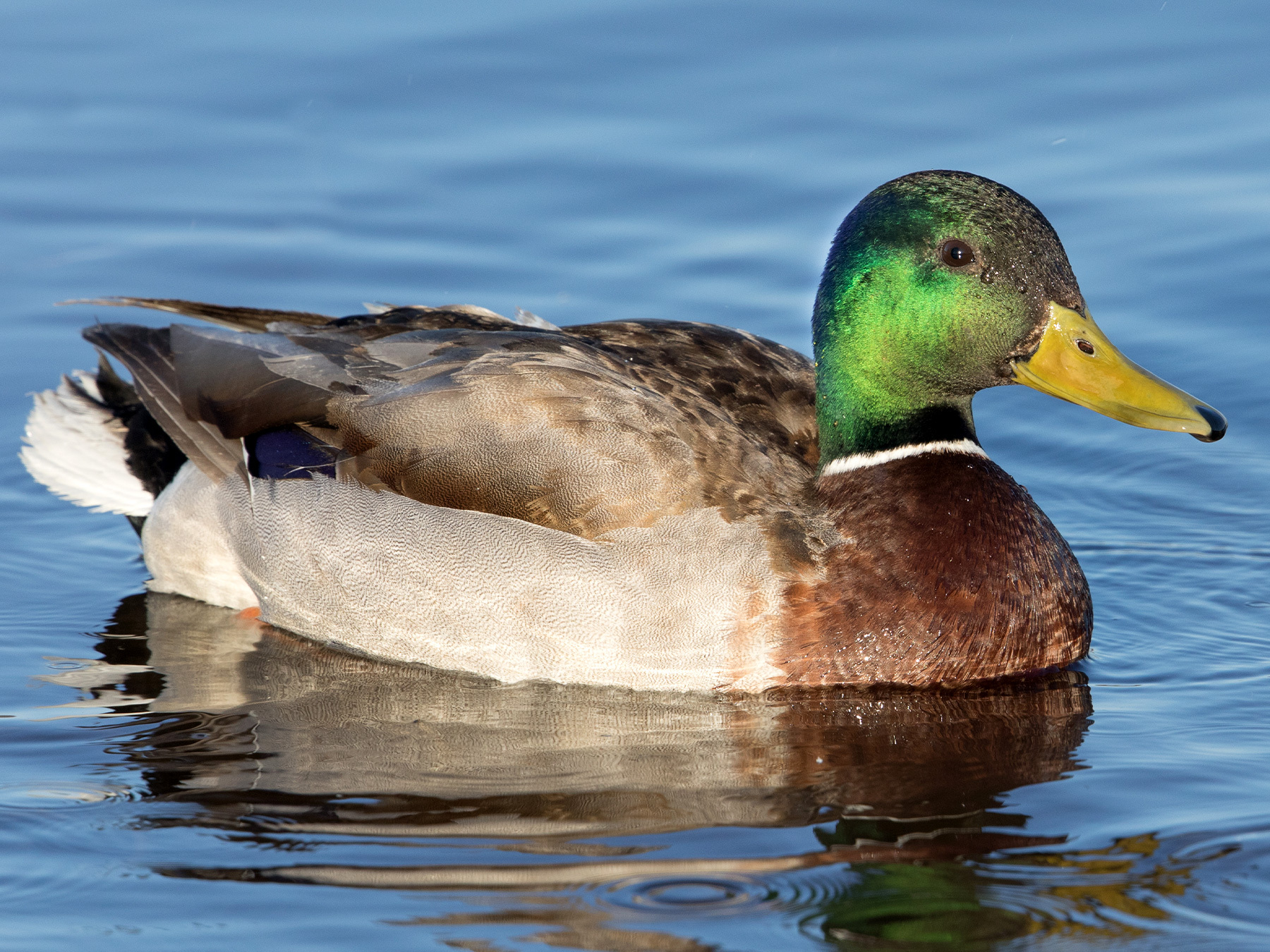
The male Mallard in breeding plumage is instantly recognizable by its yellow bill and metallic green head and neck. These ornate birds have a white collar ring, a chocolate brown chest, pale gray underparts, and a white tail. Their wings are pale brown with a violet-blue speculum (wing panel).
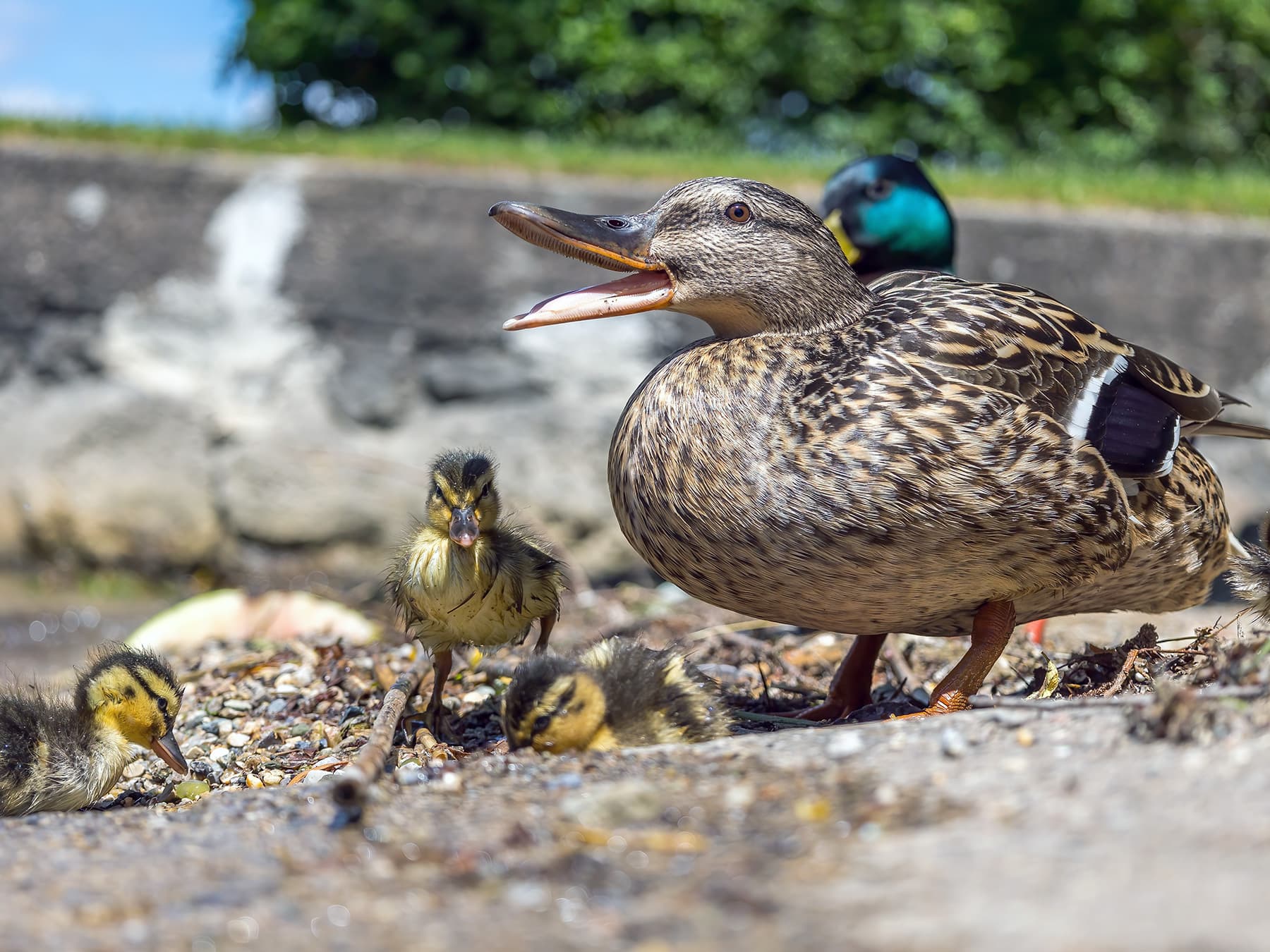
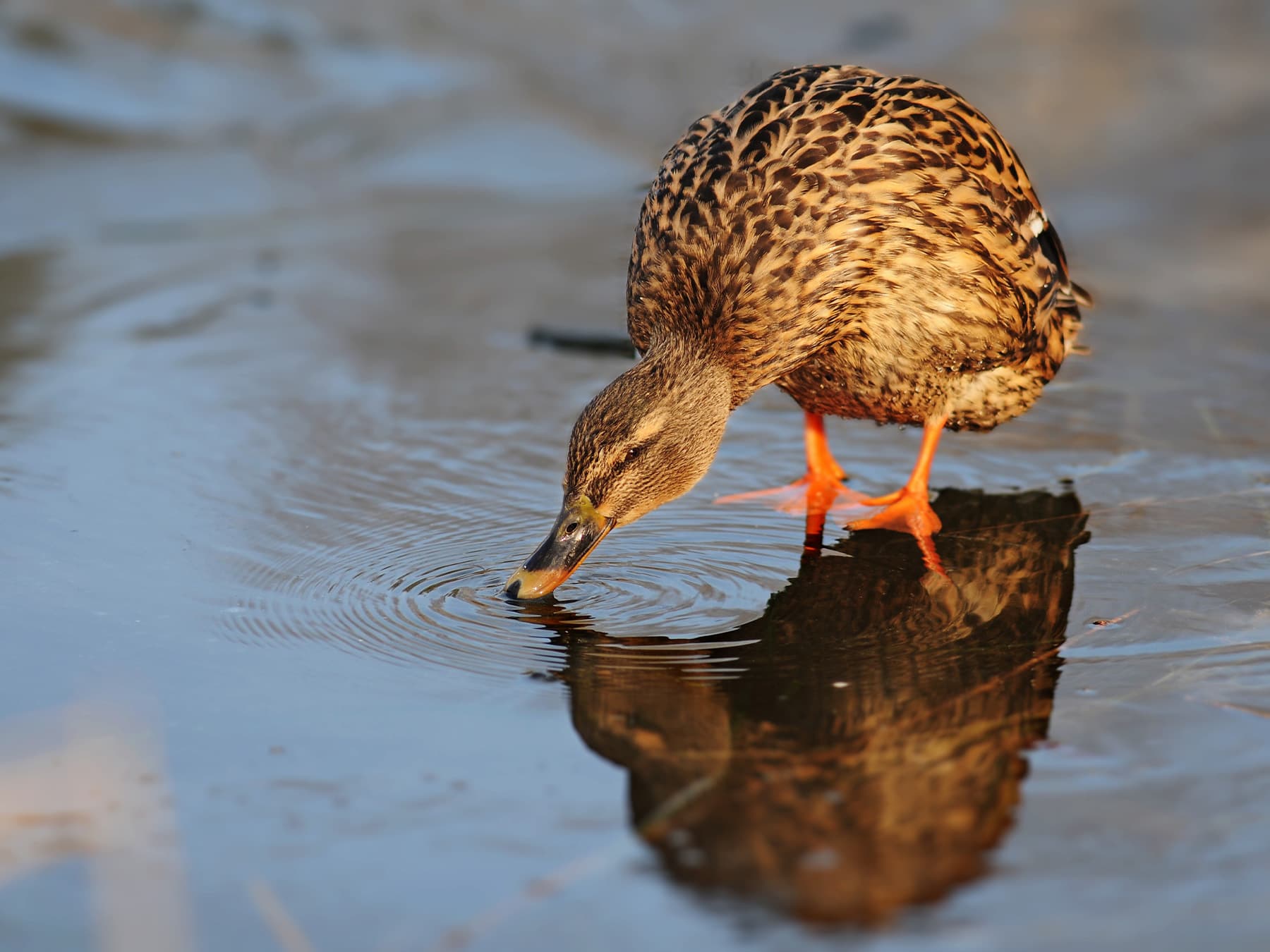
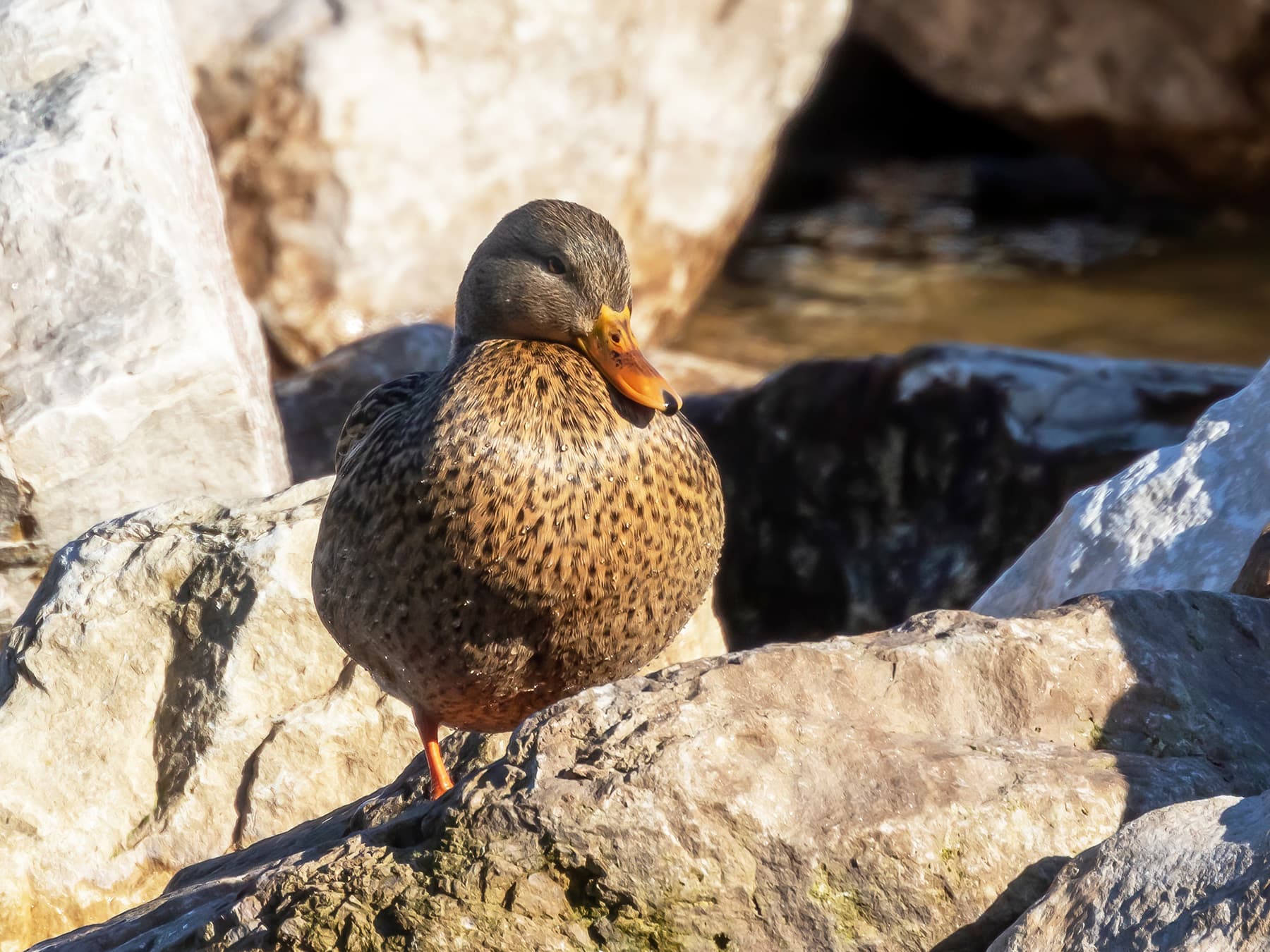
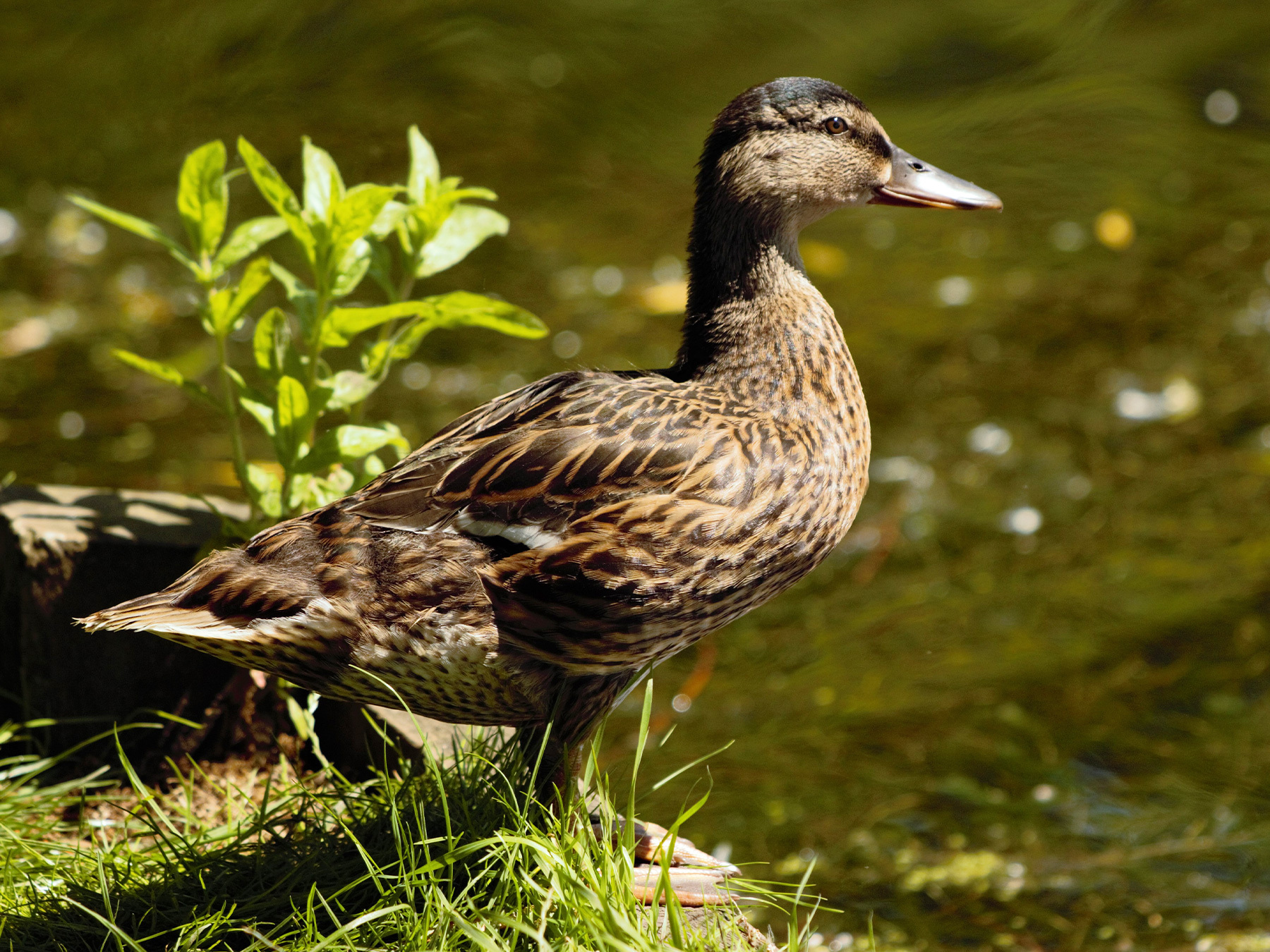
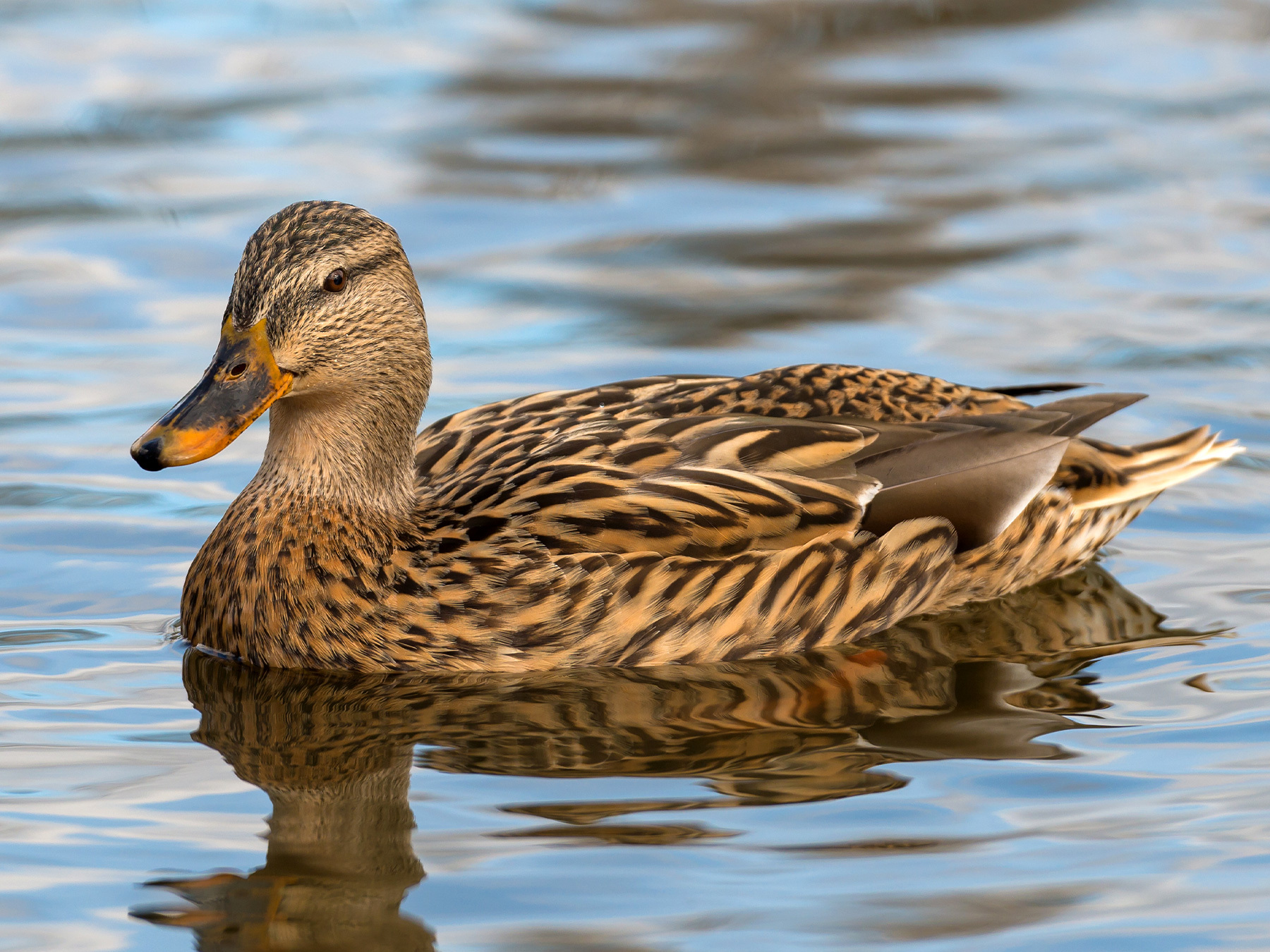
Both sexes have metallic blue wing bars and bright orange legs, although the female Mallard is far less colorful than the male. Hens appear tan brown from a distance, but closer inspection reveals richly mottled upperparts and a darker crown and eye stripe. Their bills are orange below, often with a darker upper half.
In the late summer, when the breeding season draws to a close, male Mallards lose their bright colors and take on a new set of feathers called eclipse plumage. They look similar to females at this time of the year, with earthy brown feathers. The easiest way to separate the sexes is to compare their bill colors. Males have yellow bills, and females have orange bills.
Juvenile Mallards look very similar to adult females, although they do not have the deep blue wing panel. Very young birds have dark bills, but they soon develop the characteristic yellow or orange bills of the adults.
How big are Mallards?
Mallards are relatively large dabbling ducks. The males are generally larger than females, and older birds are larger than first-year adults.
Length
Mallards have a total body length of 20 to 26 inches (50 - 65cm).
Weight
Adult Mallards weigh 1.5 to 3.5 pounds (700 - 1600g). Females may outweigh males temporarily when carrying eggs.
Wingspan
Mallard Ducks are fast-flying birds with a wingspan of roughly three feet (81 - 98 cm). Males have a larger wingspan than females.
Its size
Adults- Length
- 50–65 cm
- Wingspan
- 81–98 cm
- Weight
- 720–1580 g
Its song and calls
What sound does a Mallard make?
Both male and female Mallards call, although females are the more vocal sex. Females produce the well-known ‘decrescendo’ call consisting of two to ten rising and then falling quacking notes.
Males produce a softer note during courtship or to maintain contact with their mate. They also call during disputes with other males.
- Flight call0:00 / 0:15
Recorded in Normandie, France · March 2022
When and where to see it
OctoberHere all year
Most recorded in October
- 1. Blaenau Gwent4.4%
- 2. West Lothian3.6%
- 3. Glasgow3.5%
- 4. Kildare3.5%
- 5. Wrexham3.3%
Each dot is a county, state or province: the bigger and darker, the larger the bird’s share of that place’s bird records that month. Grey dots: no regular records. The ringed point is the centre of the bird’s records this month; the arrow shows how it moved since last month, and the dashed loop its path through the year. “Arrivals” colours places where it becomes regular this month (orange) or is in its last regular month (grey). GBIF eBird Observation Dataset, 2019–2024. Map data: Natural Earth, US Census Bureau; place centres © OpenStreetMap contributors.
In your area
See when the Mallard is recorded in your county, state or province.
How often the Mallard turns up in the UK, Ireland, the United States and Canada through the year, from birdwatchers' records.
United Kingdom
Resident · all year · most records in March
Ireland
Resident · all year · most records in March
United States
Resident · all year · most records in March
Canada
Resident · all year · most records in November
Show as a table
| Month | United Kingdom | Ireland | United States | Canada |
|---|---|---|---|---|
| January | 2.1% (regular) | 2.0% (regular) | 1.8% (regular) | 2.7% (regular) |
| February | 2.2% (regular) | 2.1% (regular) | 1.7% (regular) | 2.5% (regular) |
| March | 2.2% (regular) | 2.2% (regular) | 2.0% (regular) | 3.1% (regular) |
| April | 2.1% (regular) | 2.1% (regular) | 1.6% (regular) | 3.1% (regular) |
| May | 2.0% (regular) | 2.0% (regular) | 1.3% (regular) | 2.0% (regular) |
| June | 1.8% (regular) | 1.7% (regular) | 1.0% (regular) | 1.5% (regular) |
| July | 1.9% (regular) | 1.7% (regular) | 1.0% (regular) | 1.5% (regular) |
| August | 1.9% (regular) | 1.7% (regular) | 1.3% (regular) | 2.0% (regular) |
| September | 1.9% (regular) | 1.9% (regular) | 1.2% (regular) | 2.2% (regular) |
| October | 1.8% (regular) | 2.0% (regular) | 1.4% (regular) | 2.8% (regular) |
| November | 2.0% (regular) | 2.0% (regular) | 1.7% (regular) | 3.3% (regular) |
| December | 2.1% (regular) | 2.0% (regular) | 1.7% (regular) | 2.8% (regular) |
Recorded regularly in
Worldwide: recorded regularly in 120 countries
Countries where it was recorded in at least 3 of the 6 years 2019–2024. Linked countries have their own bird list.
Europe (49)
- Åland Islands
- Albania
- Andorra
- Austria
- Belarus
- Belgium
- Bosnia & Herzegovina
- Bulgaria
- Croatia
- Czechia
- Denmark
- Estonia
- Faroe Islands
- Finland
- France
- Germany
- Greece
- Guernsey
- Hungary
- Iceland
- Ireland
- Isle of Man
- Italy
- Jersey
- Kosovo
- Latvia
- Liechtenstein
- Lithuania
- Luxembourg
- Malta
- Moldova
- Monaco
- Montenegro
- Netherlands
- North Macedonia
- Norway
- Poland
- Portugal
- Romania
- Russia
- Serbia
- Slovakia
- Slovenia
- Spain
- Sweden
- Switzerland
- Ukraine
- United Kingdom
- Vatican City
Asia (38)
- Armenia
- Azerbaijan
- Bahrain
- Bangladesh
- Bhutan
- Cambodia
- China
- Cyprus
- Georgia
- Hong Kong SAR China
- India
- Iran
- Iraq
- Israel
- Japan
- Jordan
- Kazakhstan
- Kuwait
- Kyrgyzstan
- Lebanon
- Malaysia
- Mongolia
- Myanmar (Burma)
- Nepal
- Oman
- Pakistan
- Palestinian Territories
- Philippines
- Qatar
- Saudi Arabia
- South Korea
- Taiwan
- Tajikistan
- Thailand
- Turkey
- United Arab Emirates
- Uzbekistan
- Vietnam
North America (12)
Oceania (5)
- Australia
- New Zealand
- Norfolk Island
- US Outlying Islands
- Vanuatu
Data: EOD – eBird Observation Dataset (Cornell Lab of Ornithology), accessed via GBIF.org, CC BY 4.0. Records from 2019–2024, aggregated and filtered by Birdfact. How these lists are made
What is the habitat of a Mallard?
Mallards are waterfowl that visit just about any wetland or waterbody, from rivers and lakes to urban ponds and coastal areas. They prefer shallow water with aquatic vegetation, but they are highly adaptable. They also feed far from water in agricultural fields but return to water to roost.
What is the range of a Mallard?
The Mallard is the most widespread duck species on the planet and occurs over most of the Northern Hemisphere. Their native range includes almost all of North America, Europe, and much of Asia and Northeast Africa.
Mallards have also been introduced to various countries, including South Africa, New Zealand and Australia, and the Hawaiian Islands. They are the parent bird of the modern domestic duck and are raised commercially and kept as ornamental and pet birds all over the world.
Where do Mallards live?
Mallards spend most of their lives on or near water. They also forage near the water's edge and even great distances away in crop fields. These ducks rarely land in trees or other vegetation because their feet are not adapted for perching.
How rare are Mallards?
Mallards are an abundant species and are often the most common waterfowl on lakes, ponds, and other water bodies.
Where can you see Mallards in North America?
American Birdwatchers can look out for Mallards on just about any shallow waterbody in the Lower 48, Canada, and Alaska. However, they are migratory birds, so they may not be around at all times of the year.
Where can you see Mallards in the UK?
Mallards occur virtually throughout the United Kingdom, although absent from some high-lying areas of Wales and Scotland. They can be seen on practically any shallow water body and at any time of the year.
Migration
Do Mallards migrate?
Mallard movements vary across their extensive geographic range. They are sedentary across most of the United States but visit the Southeast only in the winter. Every year, much of the population migrate long distances to nest in Canada and Alaska before returning to the Lower 48.
Mallards are resident in the United Kingdom, although populations that breed in Northern Europe and Iceland visit each winter to escape the harsh northern winters. Mallards are also highly migratory across most of their Asian range.
Are Mallards native to North America?
Mallards are a native species in North America.
Are Mallards native to the UK?
Mallards are indigenous to Europe and the United Kingdom.
Tips for seeing it
- Look for Mallards in any wetland habitat, including urban parks and ponds
- Listen for the female's loud quack and the male's softer, raspy call
- Observe their dabbling behavior, with tails up and heads submerged
- In the UK and US, Mallards are common year-round in most areas
What it eats
What do Mallards eat?
Mallards have a varied diet that includes both plant and animal matter. In the warmer months, invertebrates like earthworms and various aquatic insect larvae are an essential food source, but they also rely on various plant seeds, acorns, and cereals like wheat and corn.
Mallards find their food on dry land, the water's surface, and below by tipping their bodies and reaching down to the bottom.
What do Mallard chicks eat?
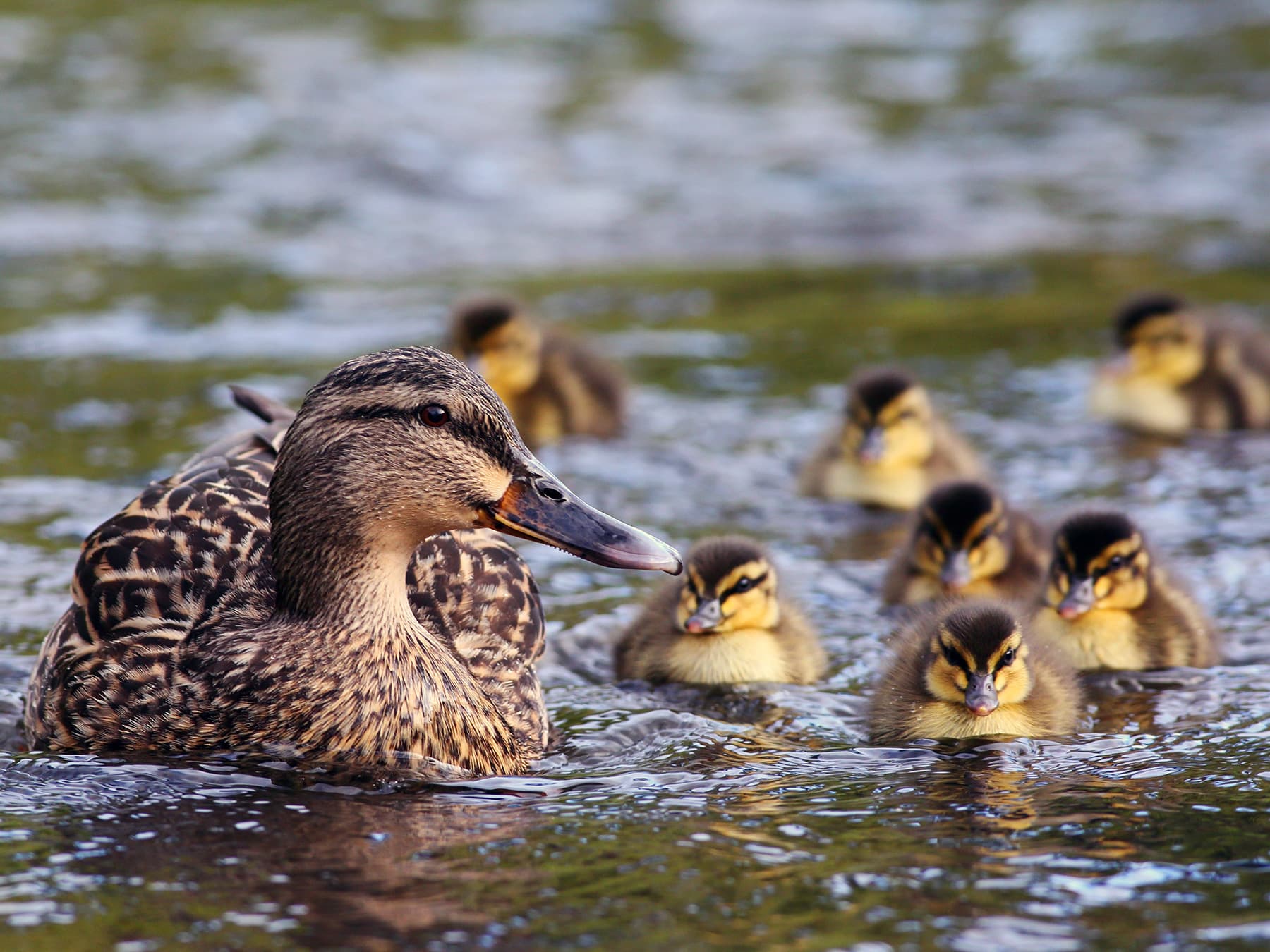
Mallard ducklings leave the nest soon after hatching and do not return. They feed themselves primarily on small insects for the first month or so but rely increasingly on plant seeds as they mature.
Nesting and breeding
Where do Mallards nest?
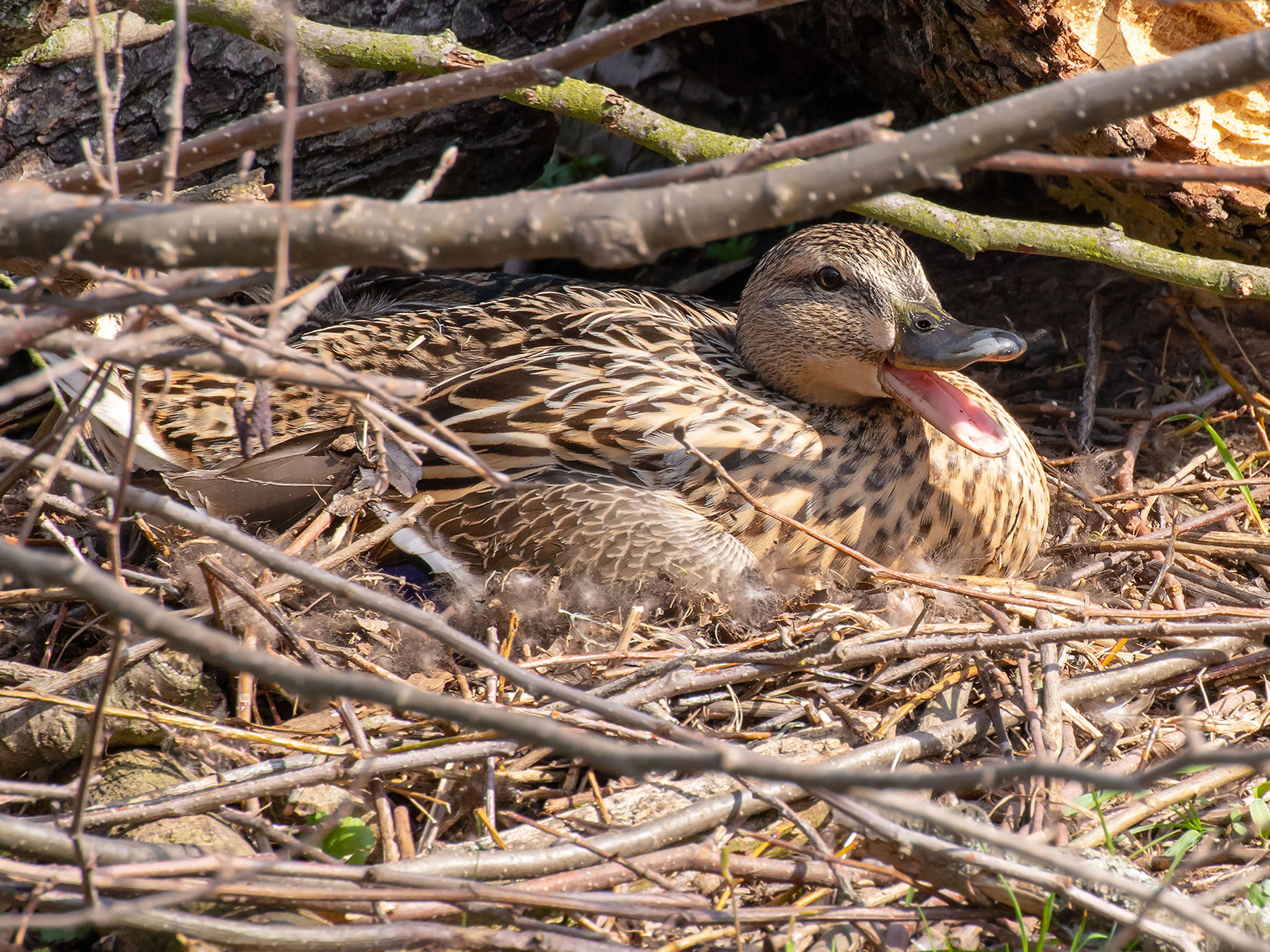
Mallards usually nest on the ground under overhanging foliage or among dense vegetation like grass and alfalfa. However, they will nest in a variety of sites, including buildings and holes at the base of trees. Some females nest above the ground in the forks of trees or abandoned nests of other birds like Crows.
When do Mallards nest?
Mallards nest in the spring and summer, raising a single brood each year. Females lay their eggs between April and July, and they hatch after about 28 days. The hatchlings leave the nest on their first day and are fully independent after about two months.
What do Mallard eggs look like?
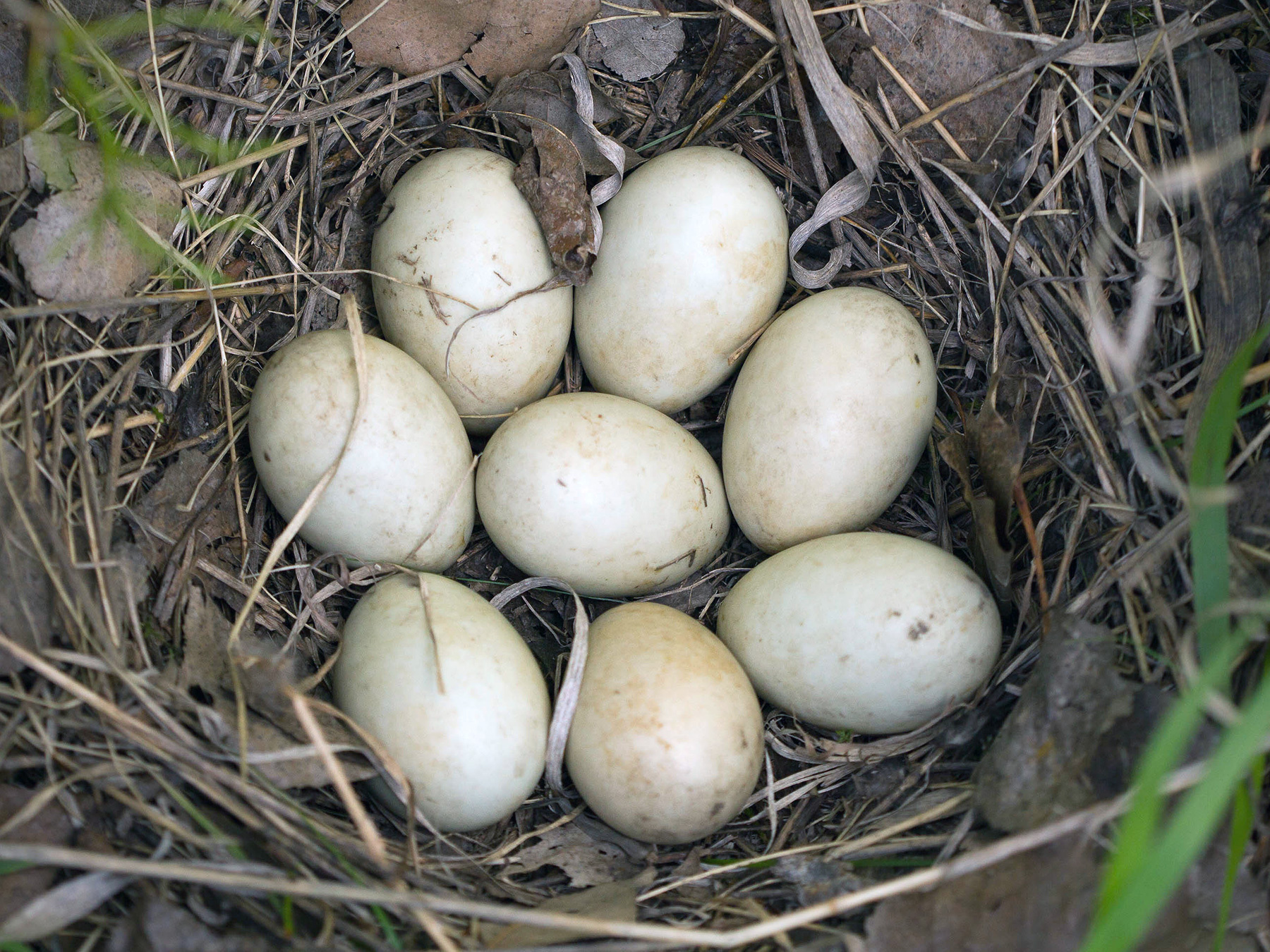
Mallards lay pale green, buff, or cream-colored eggs. Typical clutches contain 8 to 13 eggs, each measuring approximately 2¼ inches long and 1⅔ inch wide (57 x 41mm).
Do Mallards mate for life?
Mallards do not mate for life. They form new partnerships each breeding season.
Would you like to learn more about Mallard nesting? Check out our in-depth Mallard nesting guide for more fascinating facts.
Behaviour
Are Mallards aggressive?
Mallards exhibit aggressive behaviors at all times of the year. Males will threaten or chase opponents but readily resort to pecking, chest-to-chest wrestling, or even wing-striking in full combat.
Where do Mallards sleep at night?
Mallards generally sleep on the ground, either standing or lying down. They are vulnerable to predators on dry land, so they open their eyes frequently to check their surroundings or even sleep with one eye open.
Lifespan and predators
How long do Mallards live?
Mallards that reach adulthood have an average lifespan of two to three years, although they can live for nearly 30 years in the wild.
Would you like to learn more about the Mallard lifespan? Check out our in-depth guide for more fascinating facts.
What are the predators of Mallards?
Birds of prey and carnivorous mammals are the Mallard’s greatest enemies. Large raptors like Bald Eagles, Peregrine Falcons, and Red-tailed Hawks take adult Mallards, while their eggs and ducklings are vulnerable to Crows, Magpies, and Gulls.
Mammals like foxes, badgers, coyotes, and raccoons also take their toll. Mallards are popular with hunters too, although the harvest is regulated to licensed individuals and open seasons.
Are Mallards protected?
Mallards are protected in North America by the Migratory Bird Treaty Act and the Wildlife and Countryside Act in the United Kingdom.
Are Mallards endangered?
Mallards are an abundant and widespread species. They are classified as ‘Least Concern.’
Conservation
While Mallards are not currently of conservation concern due to their large population and wide distribution, they face threats from habitat loss and degradation.
Wetland conservation efforts benefit Mallards and many other waterfowl species. Hunting is regulated to maintain sustainable populations.
More photos
7 photos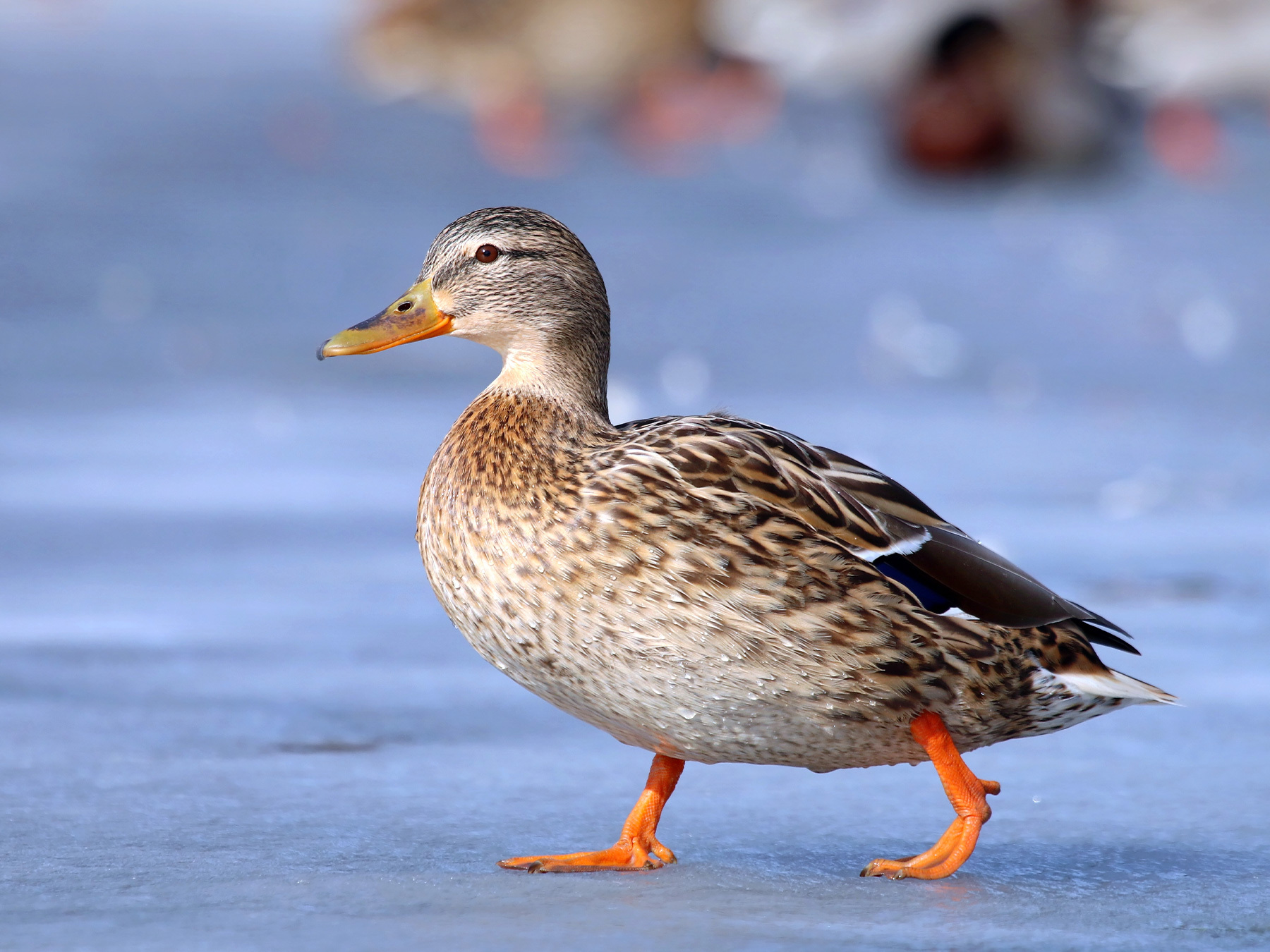
Mallard guides
6 guides- How Long Do Mallards Live? (Mallard Duck Lifespan)
- Female Mallards (Identification Guide: Male vs Female)
- Mallard Nesting (Behavior, Eggs + Location)
- What Do Mallards Eat? (Diet, Behavior + FAQs)
- What is a Group of Ducks Called? Discover the Collective Nouns for Ducks
- Baby Ducks (Ducklings): Complete Guide with Pictures
Quick facts
- Length
- 50–65 cm
- Wingspan
- 81–98 cm
- Weight
- 720–1580 g
- Lifespan
- 5–10 years
- Family
- Ducks, Geese & Swans
- Migration
- Partial migrant
- Global status (IUCN)
- Least Concern
- World population
- More than 19,000,000 individuals
- Population trend
- Increasing
- Also called
- Wild Duck
- Scientific name
- Anas platyrhynchos
Questions
5Is a Mallard a female?
Mallards include both males and females of a single duck species. Male Mallards are known as drakes, while females are called ducks or hens.
What is special about a Mallard duck?
The Mallard is the world's most common and widespread duck species. These well-known birds are the ancestors of the modern domestic duck, which is so common around farmyards today.
What's the difference between a duck and a Mallard duck?
All Mallards are ducks, but not all ducks are Mallards. Riddles aside, the Mallard is just one of over a hundred different duck species. Breeding males are easily identified by their bright yellow bills and green heads, although females are similar to other dabbling ducks.
When do male Mallards get their colors?
Male Mallards develop their colorful breeding plumage when they are a few months old. Adult drakes will lose these fancy feathers by June each summer after they have mated, and regrow them by September in time to attract a female before the next breeding season.
Do all male Mallard ducks have green heads?
Male Mallards do not have green heads between July and August each year. They look similar to females at this time, but birdwatchers can still identify them by their bright yellow bills.
Sources
3- 1BirdLife International. 2019. Anas platyrhynchos (amended version of 2017 assessment). The IUCN Red List of Threatened Species 2019: e.T22680186A155457360. Source (opens in a new tab)
- 2Wetlands International (2015)
- 3Wetlands International (2015)

Checked by
Nathan Cope, founder and editor
Nathan founded Birdfact and leads its writers and contributors in the UK, the US and Canada. He has watched and studied birds for more than ten years, and checks every article and species guide before it’s published.