Facts · Updated 7 Oct 2026
Sparrow Symbolism and Meaning: The Bible, Myth and Folklore
By the Birdfact teamChecked by Nathan Cope
Sparrows stand for God's care for the smallest life in the Bible, for love in Greek poetry and for the brevity of life in Bede. Here is what sparrows have meant across cultures, and where each meaning is written down.
On this page14 sections
- What is a sparrow?
- What do sparrows symbolise?
- Sparrows in the Bible
- Ancient Greece and Rome: love and a pet
- Ancient Egypt: the sign for small and bad
- Britain: Bede's sparrow, Shakespeare and Cock Robin
- British folklore and old names
- Japan and India: folk tales
- China, 1958: the campaign against sparrows
- India: World Sparrow Day
- Sparrows in modern culture
- What does it mean when you see a sparrow?
- Questions
- Sources
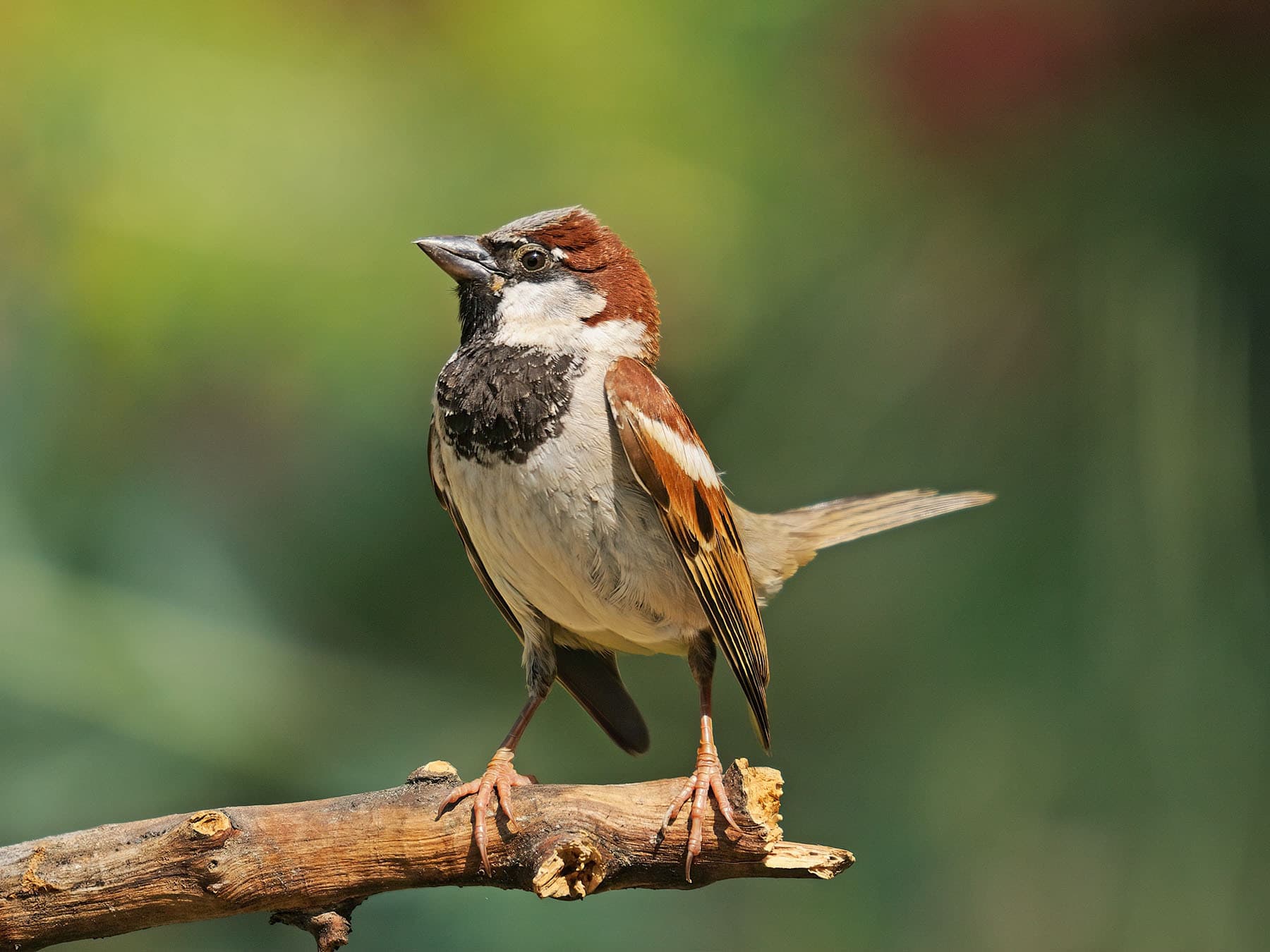
Sparrows are among the most familiar birds in the world, and for thousands of years people have written about them: in the Bible, in Greek and Latin poetry, in English history and nursery rhymes, and in the folk tales of Japan and India. This page goes through what sparrows have meant in each tradition, and where each meaning is written down. For the bird itself, see House Sparrow.
What is a sparrow?
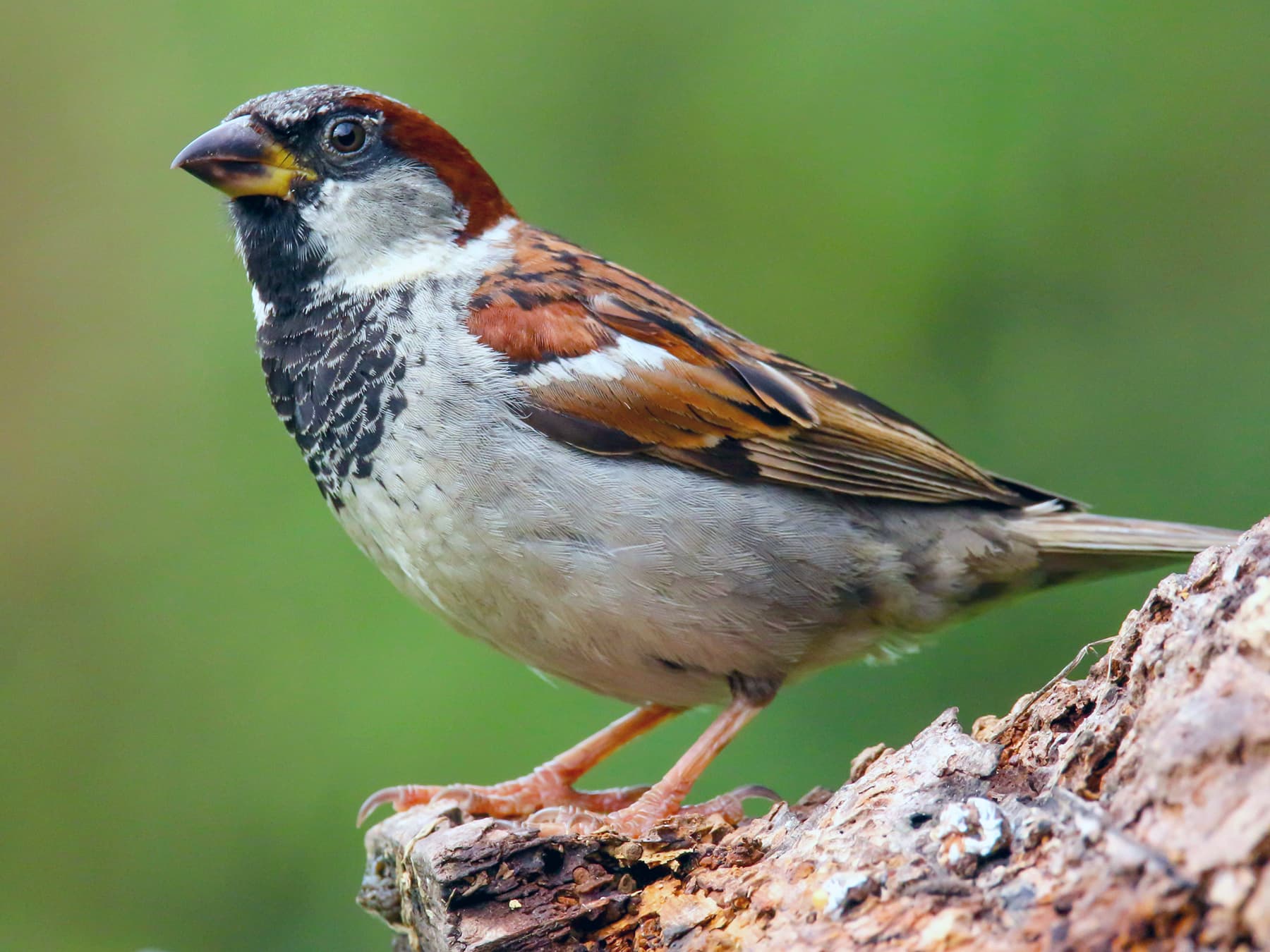
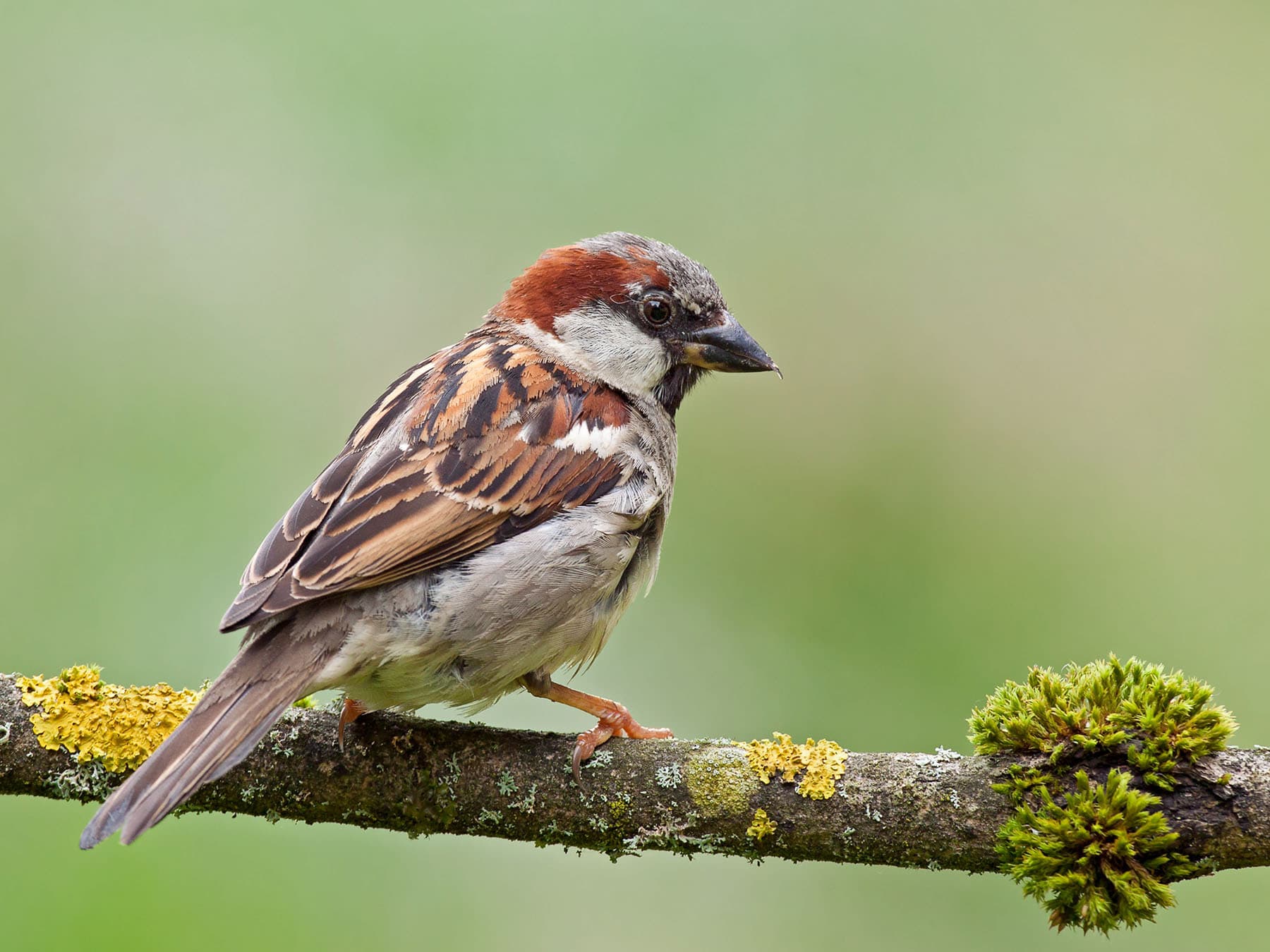
The sparrows of Europe, Asia and Africa are the Old World sparrows, a family of small, stout-billed seed-eaters. The one most people know is the House Sparrow, which has lived alongside people since farming began1 and was later carried around the world; in Britain the other is the Tree Sparrow.2 The many "sparrows" of the Americas, such as the Song Sparrow, belong to a different family. See Old World sparrows and New World sparrows.
In old texts the word did not always mean the same bird. The Hebrew word translated "sparrow" in the Psalms usually just means "bird", and the King James Version renders it "bird" or "fowl" far more often than "sparrow". The Greek word in the Gospels means a little bird, especially of the sparrow kind.3
What do sparrows symbolise?
No one meaning runs through every culture. The documented ones are these: God's care for the smallest creatures in the Bible; love and desire in ancient Greece; a much-loved pet in Roman and Tudor poems; the brevity of life in Anglo-Saxon England; providence in Shakespeare; smallness and badness in Egyptian writing; kindness rewarded in a Japanese folk tale; a grain-eating pest in China in 1958; and, more recently, a symbol of the urban wildlife people want to protect, in India and elsewhere.
Sparrows in the Bible
The best-known sparrows in any text are in the Gospels. "Are not two sparrows sold for a farthing? and one of them shall not fall on the ground without your Father," Jesus says in Matthew, and then: "Fear ye not therefore, ye are of more value than many sparrows" (Matthew 10:29-31). In Luke the price is five sparrows for two farthings, "and not one of them is forgotten before God" (Luke 12:6-7).4 The sparrow stands for the cheapest, smallest life, and so for the idea that even that is not overlooked.
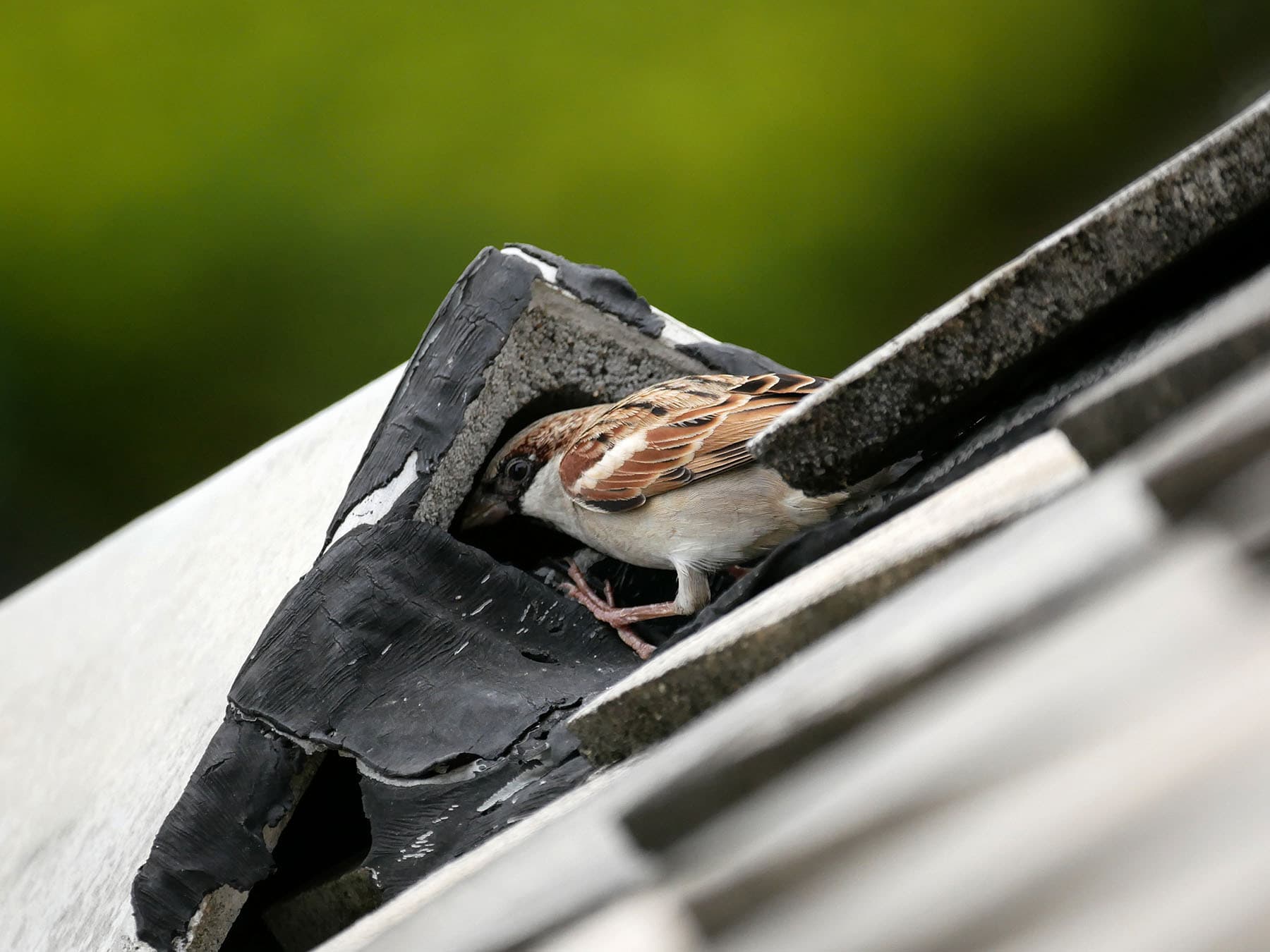
The Psalms use it differently. "The sparrow hath found an house" (Psalm 84:3) pictures a bird nesting safely at the altar, and "I watch, and am as a sparrow alone upon the house top" (Psalm 102:7) is an image of loneliness.
Ancient Greece and Rome: love and a pet
In the Greek poet Sappho's hymn to Aphrodite, the goddess comes down from heaven in a chariot drawn by "fair fleet sparrows", wings beating fast over the dark earth (fragment 1, lines 9-10).5 A later Greek writer, Athenaeus, explained the link: sparrows were thought "very amorous birds, and very prolific", and that is "perhaps" why Sappho has them pull the goddess of love.6
In Rome the poet Catullus wrote two famous poems about a sparrow: the pet of his girl, usually identified as Lesbia, and then a lament for its death, as it goes down "the dark road" from which no one returns (poems 2 and 3).7 Scholars have argued for centuries about whether the Latin passer really meant a sparrow, or another small bird such as a bullfinch, and whether the poems have a hidden sexual meaning.8
Ancient Egypt: the sign for small and bad
In Egyptian hieroglyphs the sparrow (sign G37, drawn with a rounded tail) was used to mark words meaning small, narrow, bad, defective or ill.9 A study of the sign traces its shift from marking inferiority (in size, age or status) in early Egypt to the "bad bird", a sign of disorder and evil, by the Sixth Dynasty, and asks whether hungry flocks on crops lay behind it.10
You will sometimes read that the sparrow was sacred to the goddess Isis. We could find no source for it. One bird documented with Isis is the swallow: in Plutarch's telling of the Osiris myth she turns into a swallow and flits round a pillar, lamenting.11
Britain: Bede's sparrow, Shakespeare and Cock Robin
The most famous sparrow in English history appears in a speech set in 627. In Bede's Ecclesiastical History, when King Edwin of Northumbria asks his counsellors whether to accept Christianity, one compares a man's life to "the swift flight of a sparrow through the house wherein you sit at supper in winter": in from the storm, a moment in the warm, and back out into the winter. "So this life of man appears for a little while, but of what is to follow or what went before we know nothing at all" (Book II, chapter 13).12
Tudor poetry has its own pet sparrow. John Skelton's Phyllyp Sparowe, written before the end of 1508, is an elegy in the voice of a girl, Jane Scrope, for her sparrow, killed by the cat Gib at Carrow, near Norwich; its editor thought it was suggested by Catullus' lament.13
In Hamlet, Shakespeare gives the sparrow its most quoted line: "There is a special providence in the fall of a sparrow" (Act 5, scene 2).14 Hamlet is echoing Matthew: the sparrow that does not fall without God knowing, as a Victorian study of Shakespeare's Bible pointed out.15
And in the nursery rhyme the sparrow is the villain: "Who killed Cock Robin? I, says the Sparrow, with my bow and arrow," as a Lichfield chapbook of about 1780 has it, the earliest printing we could read.16 The standard references date the rhyme to Tommy Thumb's Pretty Song Book of about 1744.17
British folklore and old names
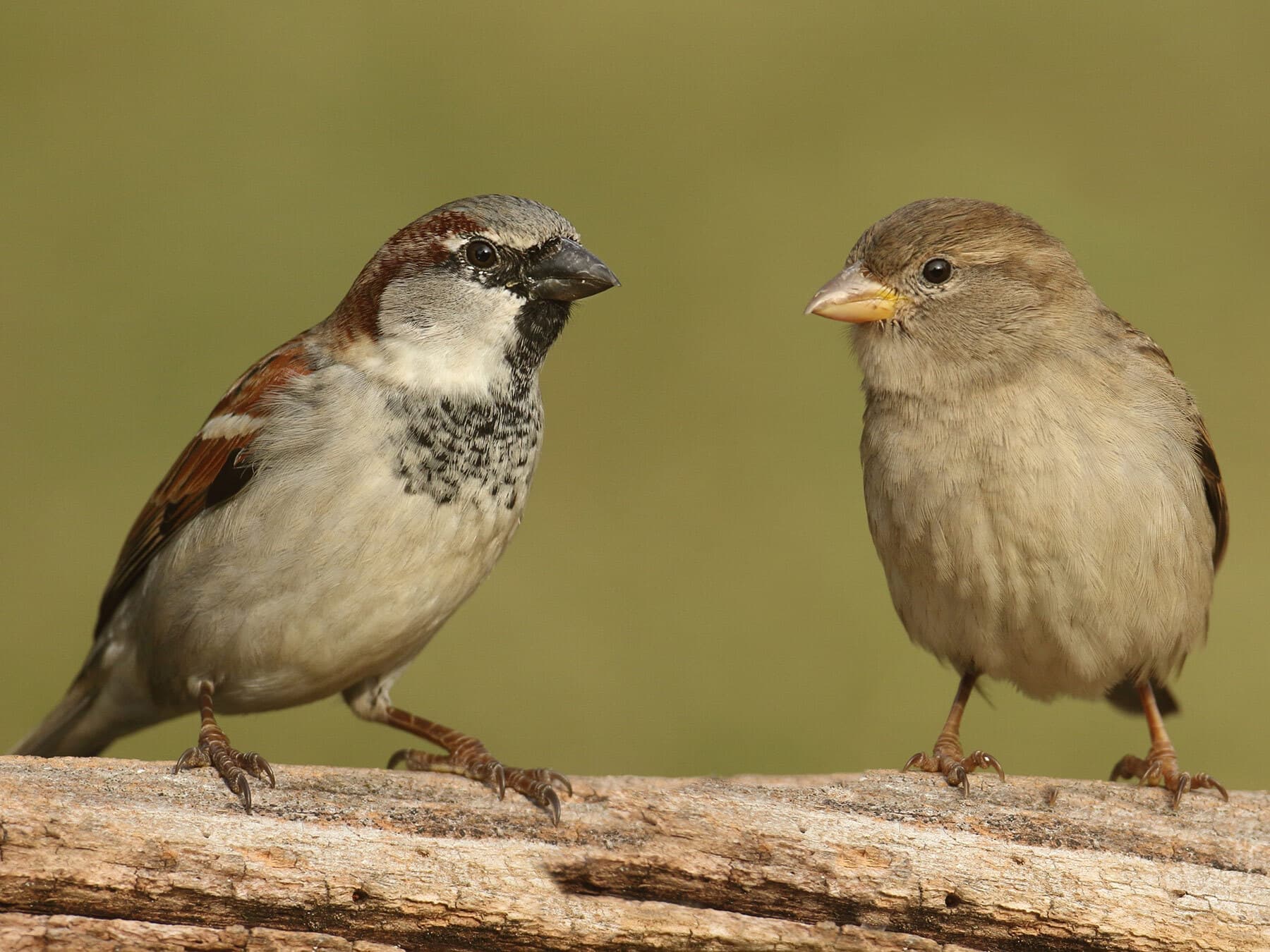
A collection of British bird folklore published in 1886 records many local names for the House Sparrow: Spadger; Spug and Spurdie in Scotland; Thatch sparrow, "Easing sparrow" (from the eaves of houses), and Philip or Phip, from its cry, the name behind Skelton's poem.18
It also records beliefs. In Kent, a sparrow, if caught, "must not be kept alive", or the catcher's parents would die. Sparrows were thought to have "prophetic power": the collection quotes John Aubrey on a sparrow that pecked at a sick officer's window in 1643 for as long as he was ill, and then stopped, and tells of a London man who believed a sparrow tapping at his window was the soul of his brother-in-law, who had just died. And in Yorkshire there was a saying that "there are no sparrows at Lindholme", from a local tale of Tom o' Lindholme starving them in a barn.
Japan and India: folk tales
Japan's best-known sparrow story is The Tongue-cut Sparrow. A kind old man keeps a pet sparrow; his bad-tempered wife cuts its tongue when it pecks at her starch paste. The old man finds the sparrow's home, is feasted, and chooses the lighter of two gift baskets, which is full of treasure; the greedy wife takes the heavier one, and goblins spring out of it. A. B. Mitford, who published the tale in English in 1871, called these stories the first put into a Japanese child's hands.19
In the Indian Panchatantra, sparrows appear twice. In "The Duel between Elephant and Sparrow", sparrows whose eggs an elephant has crushed get their revenge with the help of friends: the small defeat the mighty by working together. In "The Pert Hen-Sparrow", a sparrow gives advice to a shivering monkey, and he wrecks her nest: the moral is not to offer counsel to fools.20 (The Brothers Grimm have a sparrow tale too, The Dog and the Sparrow, about a sparrow's revenge on a cruel carter.)21
China, 1958: the campaign against sparrows
Sparrows have also been treated as enemies. In 1955 and 1956 China put the sparrow, for eating grain, on its list of "four pests", with flies, mosquitoes and rats. In the spring of 1958, during the Great Leap Forward, people were mobilised to destroy nests and eggs and to keep sparrows from landing, banging pots and pans until the birds dropped from exhaustion. One estimate is that about 2 billion sparrows were killed in 1958 and 1959.22
Scientists had objected, and insect outbreaks followed. In March 1960 Mao said the killing should stop and bedbugs should replace sparrows on the list, which was done in April. A 2025 economics study, not yet peer-reviewed, estimates that the loss of sparrows cut rice and wheat yields and contributed to about 2 million of the deaths in the famine of 1959 to 1961.
India: World Sparrow Day
Today the sparrow is more often a symbol of what people want to save. World Sparrow Day, on 20 March, was launched in 2010 by the Nature Forever Society of India and the Eco-Sys Action Foundation.23 In 2012 the House Sparrow became the state bird of Delhi.24 In Hindi it is the goraiya, in Tamil kuruvi and in Urdu chirya.25 In Britain the House Sparrow is now Red-listed after a steep decline26 (see conservation).
Sparrows in modern culture
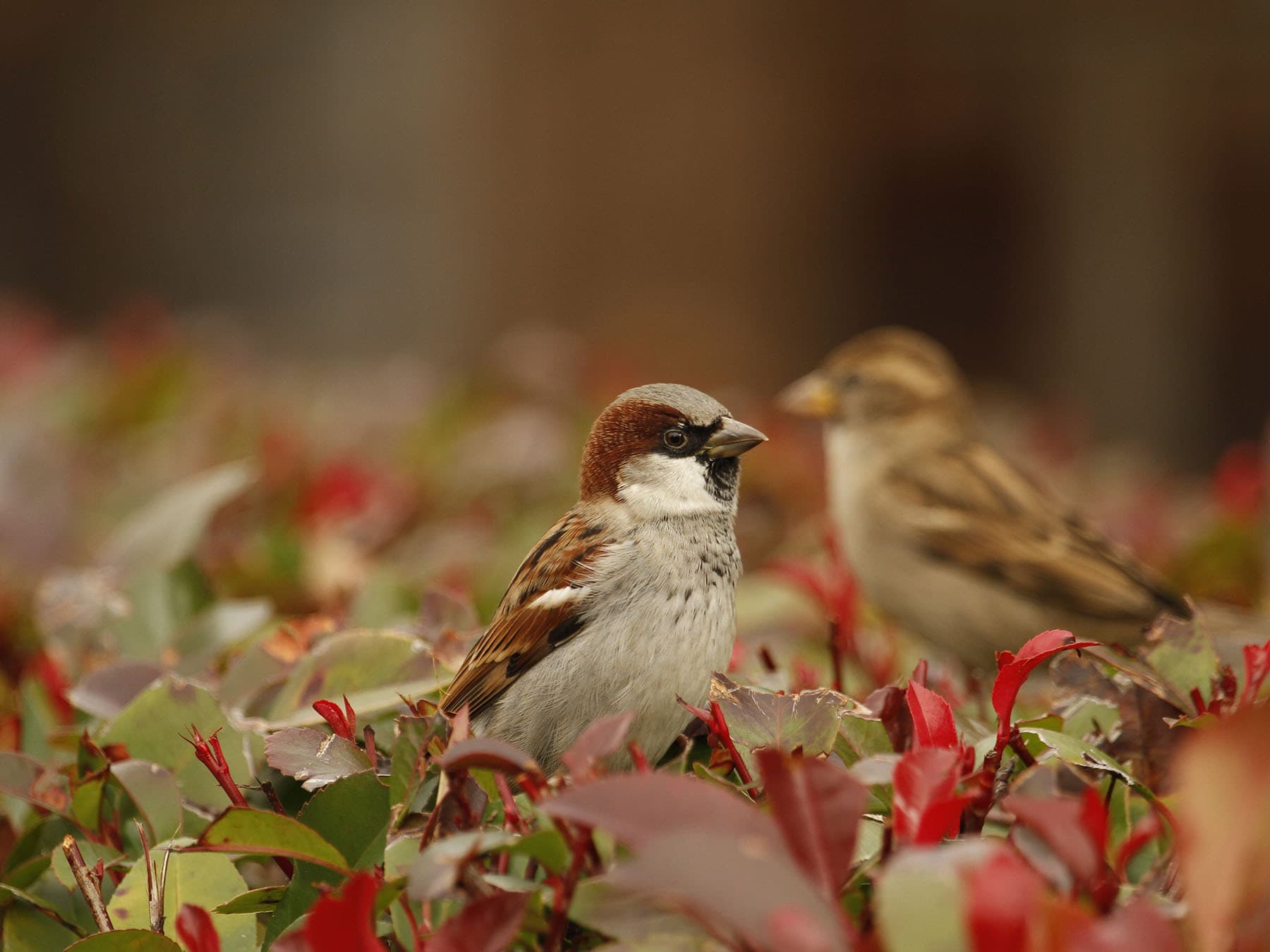
The singer Édith Piaf took her name from the bird: piaf is colloquial French for a sparrow, and the cabaret owner who launched her, Louis Leplée, called her "la Môme Piaf", the sparrow kid, because she was so small.27
Sparrows are often said to be a traditional sailor's tattoo, but the sailors' bird is the swallow. In naval tradition, as the Historic Dockyard Chatham describes it, each swallow stood for 5,000 nautical miles sailed, and a swallow with a dagger remembered a lost shipmate.28 (Swallows and sparrows are not closely related: see Swallow.)
What does it mean when you see a sparrow?
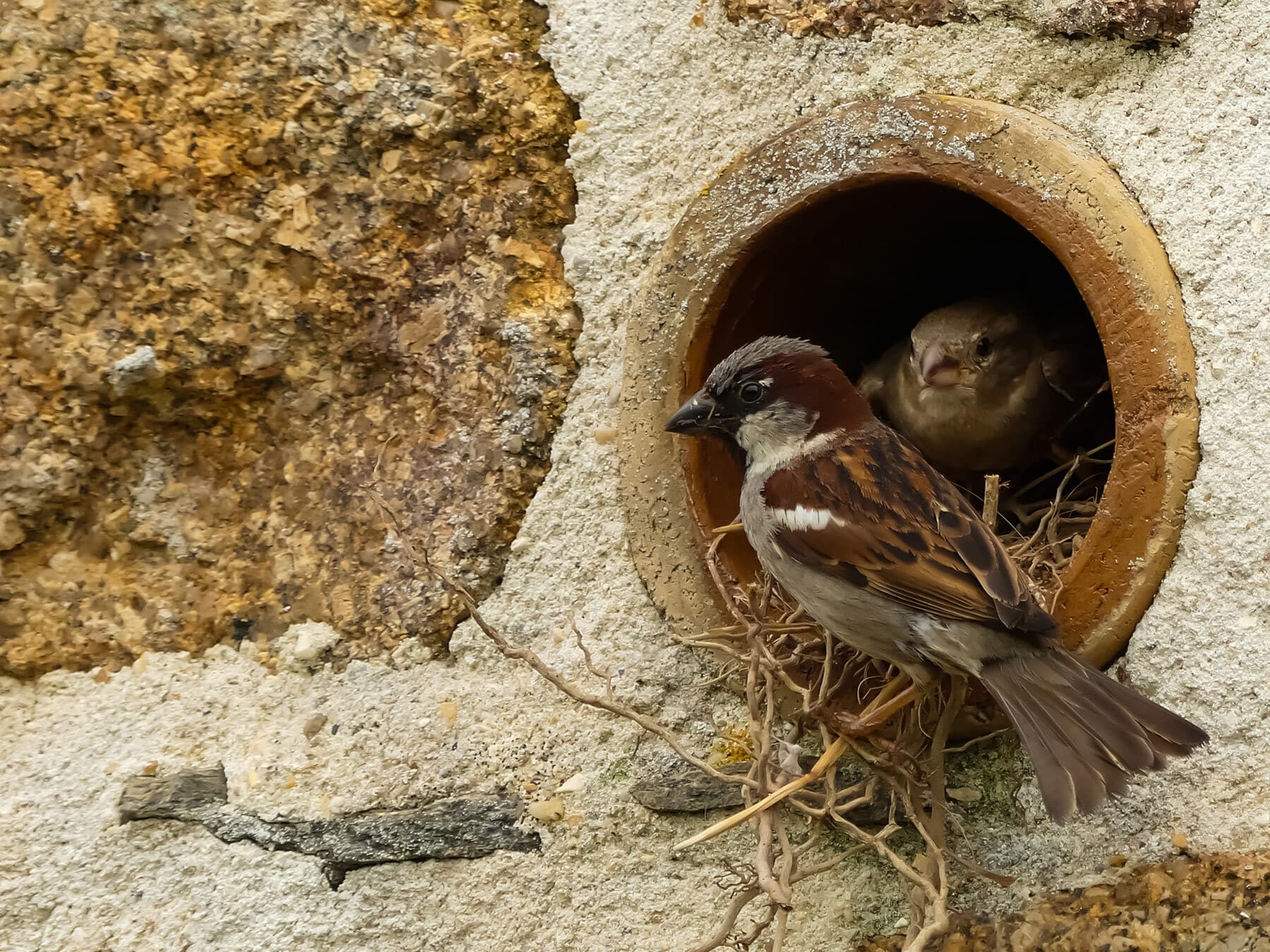
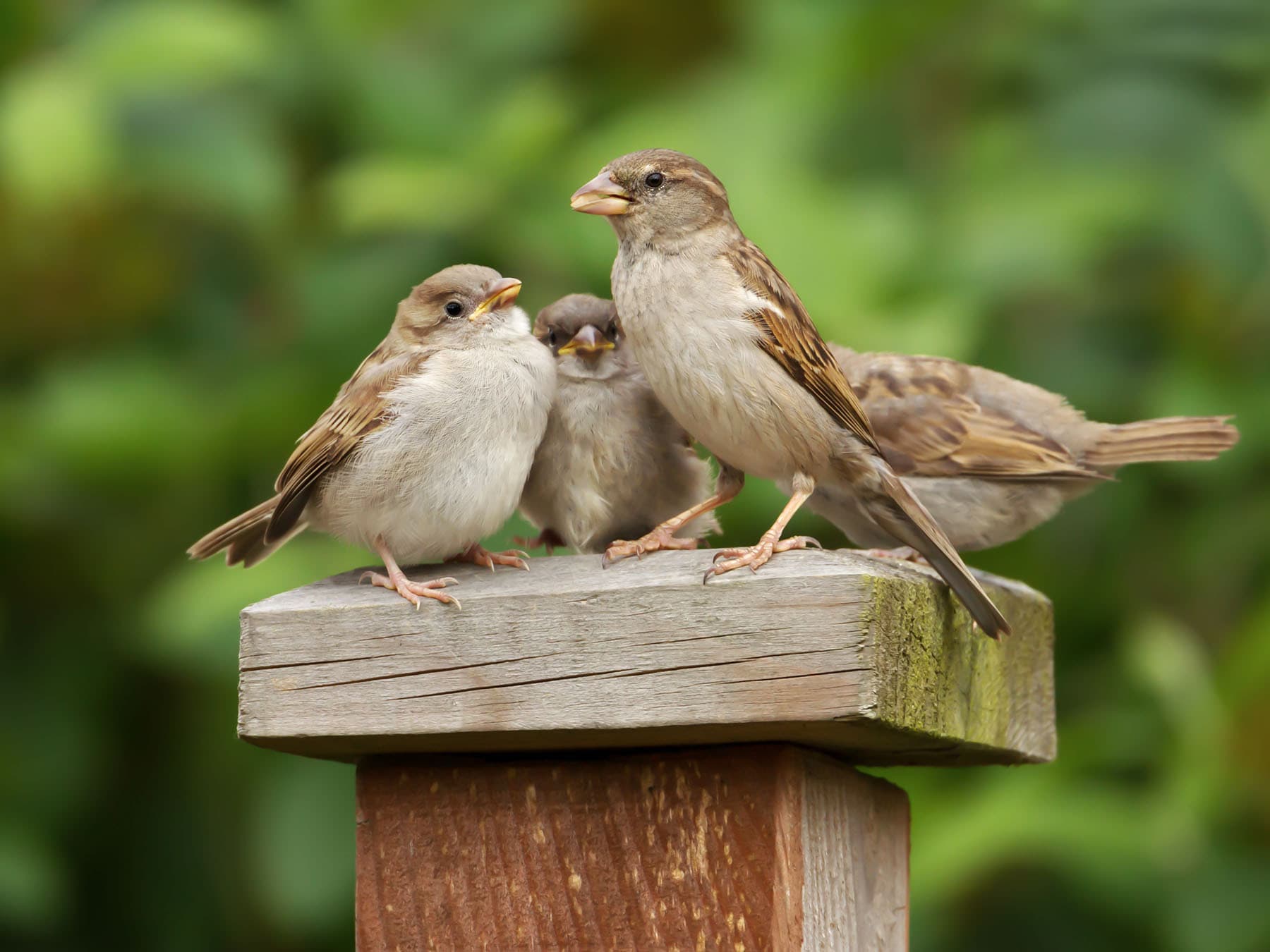
There is no traditional meaning shared across cultures, and we could not find a source for many of the spiritual meanings offered online. The documented traditions above are the ones with a history: the sparrow as the small life that is not forgotten (the Bible), as a sign of love (Sappho), of a short life (Bede) or of providence (Shakespeare), and, in some English folklore, as an omen. What a sparrow means to you is up to you; as a bird, it nests in buildings and raises two or three broods a summer. See House Sparrow.
Questions
What does a sparrow symbolise in the Bible?
God's care for even the smallest, cheapest life: "not one of them is forgotten before God" (Luke 12:6). See sparrows in the Bible.
Why does Hamlet talk about the fall of a sparrow?
He is echoing Matthew 10:29, the sparrow that does not fall to the ground without God knowing.
What does a sparrow tattoo mean?
The traditional sailor's tattoo is a swallow, not a sparrow. A sparrow tattoo has no single traditional meaning.
Is it good luck to see a sparrow?
We found no documented tradition that says so. An 1886 folklore collection records sparrows as having "prophetic power", and one account of a sparrow at the window at the moment of a death.
What sound does a sparrow make?
A loud, repeated cheep. Listen to House Sparrow song and calls.
What is a baby sparrow called?
A nestling, then a fledgling. See baby sparrows.
Sources
- Ravinet, M., Elgvin, T. O., Trier, C., Aliabadian, M. et al. (2018). Signatures of human-commensalism in the house sparrow genome. Proceedings of the Royal Society B 285: 20181246. doi:10.1098/rspb.2018.1246
- Lowther, P. E., Cink, C. L. (2020). House Sparrow (Passer domesticus), version 1.0. Birds of the World (S. M. Billerman, ed.). Cornell Lab of Ornithology. doi:10.2173/bow.houspa.01
- Blue Letter Bible. Lexicon entries G4765 (strouthion) and H6833 (tsippor) (Strong, Thayer, Brown-Driver-Briggs). Accessed 7 October 2026. Source
- The Holy Bible, King James Version (1611). Project Gutenberg eBook #10. Accessed 7 October 2026. Source
- Wharton, H. T. (1908). Sappho: Memoir, Text, Selected Renderings, and a Literal Translation (first edition 1885). John Lane. Accessed 7 October 2026. Source
- Athenaeus, Yonge, C. D. (trans.) (1854). The Deipnosophists, Book IX, chapter 46. Bohn. Accessed 7 October 2026. Source
- Catullus. Carmina 2 and 3 (Latin text). The Latin Library. Accessed 7 October 2026. Source
- Green, A. (2021). Lesbia's Controversial Bird: Testing the Cases for and against Passer as Sparrow. Antichthon 55: 6-20. doi:10.1017/ann.2021.7
- Gardiner, A. H. (1957). Egyptian Grammar (3rd edition, revised). Griffith Institute, Oxford. Accessed 7 October 2026.
- David, A. (2000). De l'infériorité à la perturbation: l'oiseau du 'mal' et la catégorisation en Égypte ancienne. Harrassowitz. ISBN 978-3-447-04316-8. Source
- Plutarch, Babbitt, F. C. (trans.) (1936). On Isis and Osiris, 16 (Moralia 357C), Loeb Classical Library. Accessed 7 October 2026. Source
- Bede, Sellar, A. M. (trans.) (1907). Bede's Ecclesiastical History of England: A Revised Translation. George Bell and Sons. Accessed 7 October 2026. Source
- Skelton, J., Dyce, A. (ed.) (1843). The Poetical Works of John Skelton. Accessed 7 October 2026. Source
- Shakespeare, W.. Hamlet, Act 5 scene 2, lines 233-234 (Folger Shakespeare Library edition, ed. B. Mowat and P. Werstine). Accessed 7 October 2026. Source
- Wordsworth, C. (1864). On Shakespeare's Knowledge and Use of the Bible. Smith, Elder. Accessed 7 October 2026. Source
- (c. 1780). The Death and Burial of Cock Robin. M. Morgan, Lichfield. Accessed 7 October 2026. Source
- Waltz, R. B., Engle, D. G.. Who Killed Cock Robin? (Roud 494). The Traditional Ballad Index. Accessed 7 October 2026. Source
- Swainson, C. (1886). The Folk Lore and Provincial Names of British Birds. Folk-Lore Society / Elliot Stock. Accessed 7 October 2026. Source
- Mitford, A. B. (1871). Tales of Old Japan. Macmillan. Accessed 7 October 2026. Source
- Ryder, A. W. (trans.) (1925). The Panchatantra. University of Chicago Press. Accessed 7 October 2026. Source
- Grimm, J. and W. (1857 (7th edition text)). Grimms' Fairy Tales: 'The Dog and the Sparrow' (KHM 58). Project Gutenberg eBook #2591. Accessed 7 October 2026. Source
- Frank, E. G., Wang, Q., Wang, S., Wang, X., You, Y. (2025). Campaigning for Extinction: Eradication of Sparrows and the Great Famine in China. NBER Working Paper 34087. doi:10.3386/w34087
- World Sparrow Day (2010 (launch)). World Sparrow Day. Accessed 7 October 2026. Source
- The Hindu (2012). House sparrow is now Delhi's State bird. The Hindu, 5 October 2012 (via India Environment Portal). Accessed 7 October 2026. Source
- Press Information Bureau, Government of India (2025). World Sparrow Day 2025 (press release, Ministry of Environment, Forest and Climate Change). Accessed 7 October 2026. Source
- RSPB. House Sparrow. RSPB Birds and wildlife. Accessed 7 October 2026. Source
- Larousse. Édith Giovanna Gassion, dite Édith Piaf; and dictionary entry piaf (moineau). Encyclopédie and Dictionnaire Larousse. Accessed 7 October 2026. Source
- The Historic Dockyard Chatham (2020). Every tattoo makes a statement but what do they mean?. Accessed 7 October 2026. Source