Facts · Updated 8 Oct 2026
Baby Sparrows: Chicks, Fledglings and What They Eat
By the Birdfact teamChecked by Nathan Cope
Baby House Sparrows hatch naked and blind, are fed mostly on insects, and leave the nest at about 15 days. A fledgling on the ground is usually fine: its parents are close by.
On this page10 sections
This page is mostly about baby House Sparrows, the sparrow of most gardens, from hatching to independence, with a note on young Tree Sparrows. If you have found a young bird, skip to what to do. For the adults, see House Sparrow.
What does a baby sparrow look like?
A newly hatched House Sparrow is tiny, about 2 to 2.6 g (under 0.1 oz), naked and blind. Its skin is red at first, fading to pink or light grey within hours; its mouth is red, edged with yellow flanges. The eyes open at about 4 days old, the feathers start to open at 7 or 8 days, and by 11 days it can keep itself warm.1
There is no special name for a baby sparrow: in the nest it is a nestling or chick, once out a fledgling, and until its first moult a juvenile.
Leaving the nest
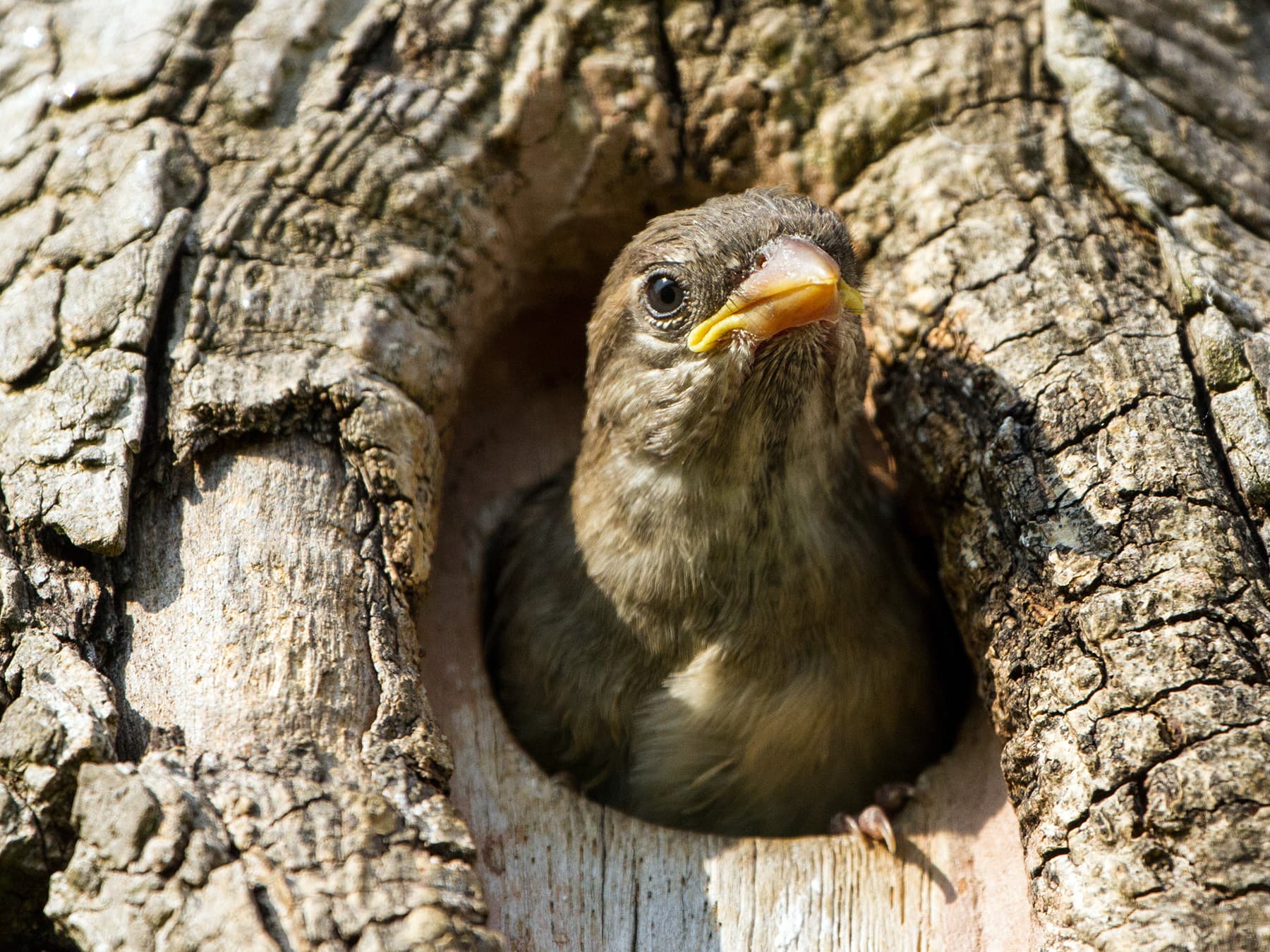
Chicks stay in the nest for about 15 days. In Britain, chicks typically leave the nest at 14.5 to 17 days old.2 They can usually fly reasonably well when they go, but disturbed chicks may leave early, at 10 days or more. The eggs take 12 to 15 days to hatch, and pairs often lay again in the same nest about a week after the young leave.
What do baby sparrows eat?
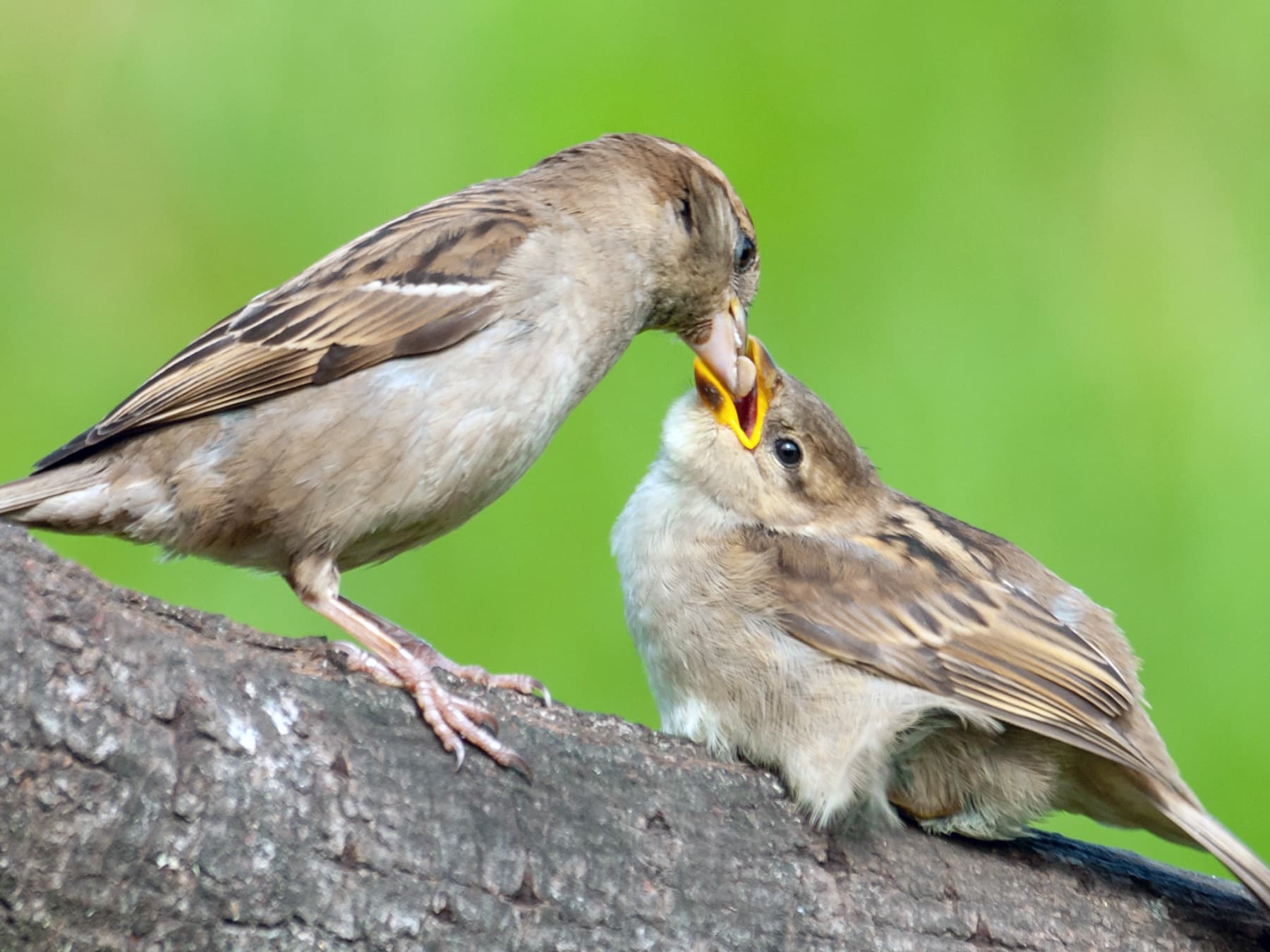
Insects, mostly. Adult House Sparrows live largely on seeds, but they raise their chicks on small animals: fly larvae above all, and aphids, weevils, grasshoppers and caterpillars. Both parents bring food, 15 to 19 times an hour, and regurgitate it for the chicks.1
The share of plant food grows as the chicks grow. In one study, invertebrates made up 90% of the food of chicks 1 to 3 days old, 65% at 4 to 6 days and 49% after a week.
Both parents feed the chicks
Both feed the chicks, the male making about 40% of the visits, and both carry away the droppings. The chicks hatch on different days, so the last one is often the smallest, and in a big brood it may get little food.
Fledglings
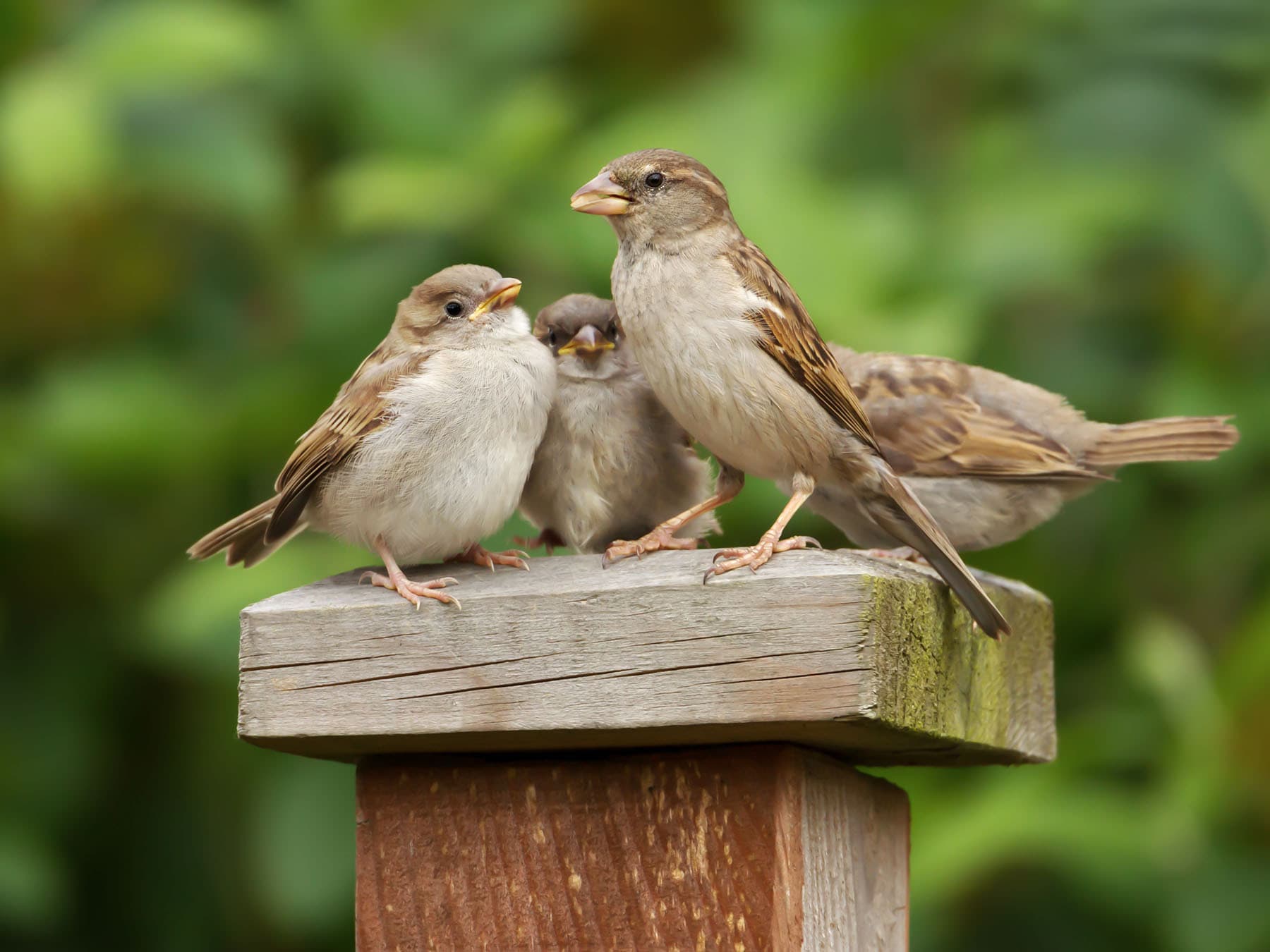
A House Sparrow fledgling looks like a female: plain brown with a striped back, a pale stripe behind the eye, and a yellow gape at the corners of the bill.3 For several days it stays with a parent, usually the father, begging for food, and then joins other young birds in a flock. It feeds itself about 7 to 10 days after leaving the nest.
If you find a baby sparrow
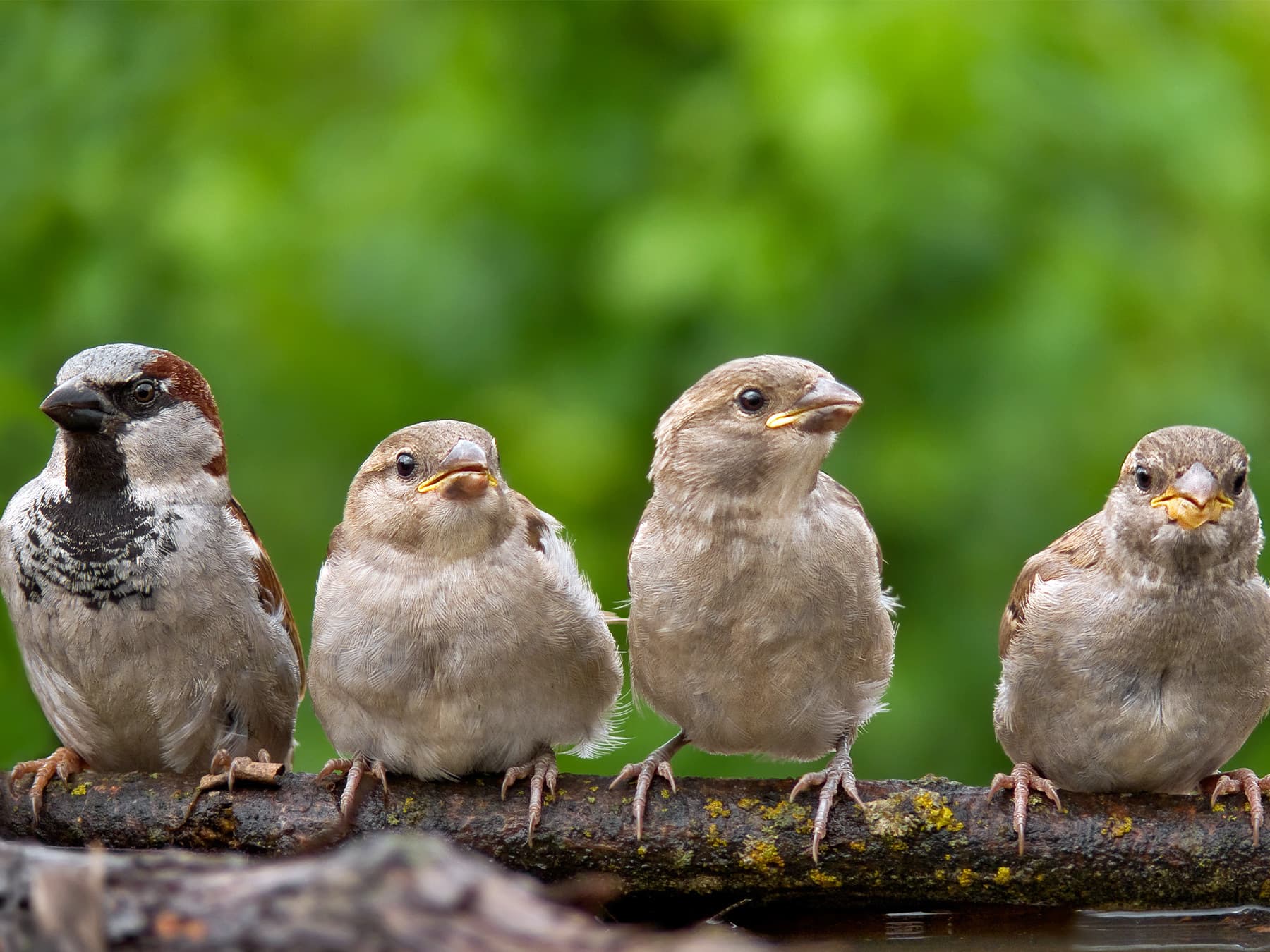
Usually you need do nothing. A fledgling, fully feathered but not yet a strong flier, on the ground is normal: young birds leave the nest before they can fly well, and the parents are usually nearby, waiting for you to go. It may be on the ground for a few days to a week while its flight feathers grow. Keep pets and people away. If it is in danger, move it a short way to a sheltered spot, such as under a hedge, within earshot of where you found it, and watch from a distance until a parent comes.4
A nestling with few or no feathers should not be out of the nest. If you can, put it back in its own nest. If it is hurt, or you cannot find the nest, contact a wildlife rescue for advice before doing anything else. Taking a baby bird home greatly reduces its chances of surviving.
What should I feed a baby sparrow?
Don't: leave the feeding to its parents, or to a wildlife rescue. In your garden, avoid putting out dry, hard food or bread in spring and summer, which parents may carry to the nest and the chicks can choke on.5
Clutches and broods
A House Sparrow usually lays 4 or 5 eggs and raises two or three broods a year, sometimes four. Many eggs and chicks are lost, and across 33 studies most pairs raised about five young a year.
Baby Tree Sparrows
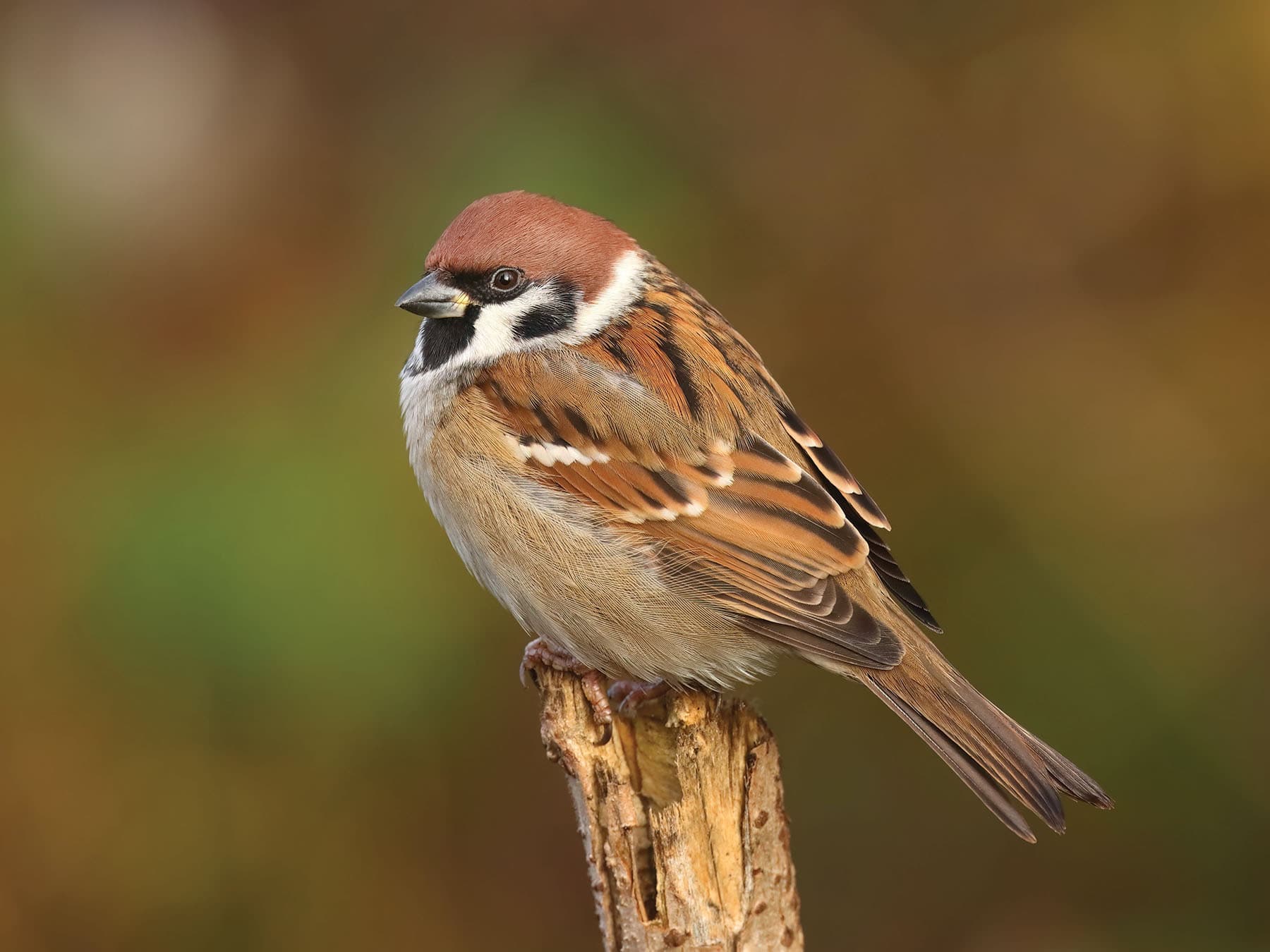
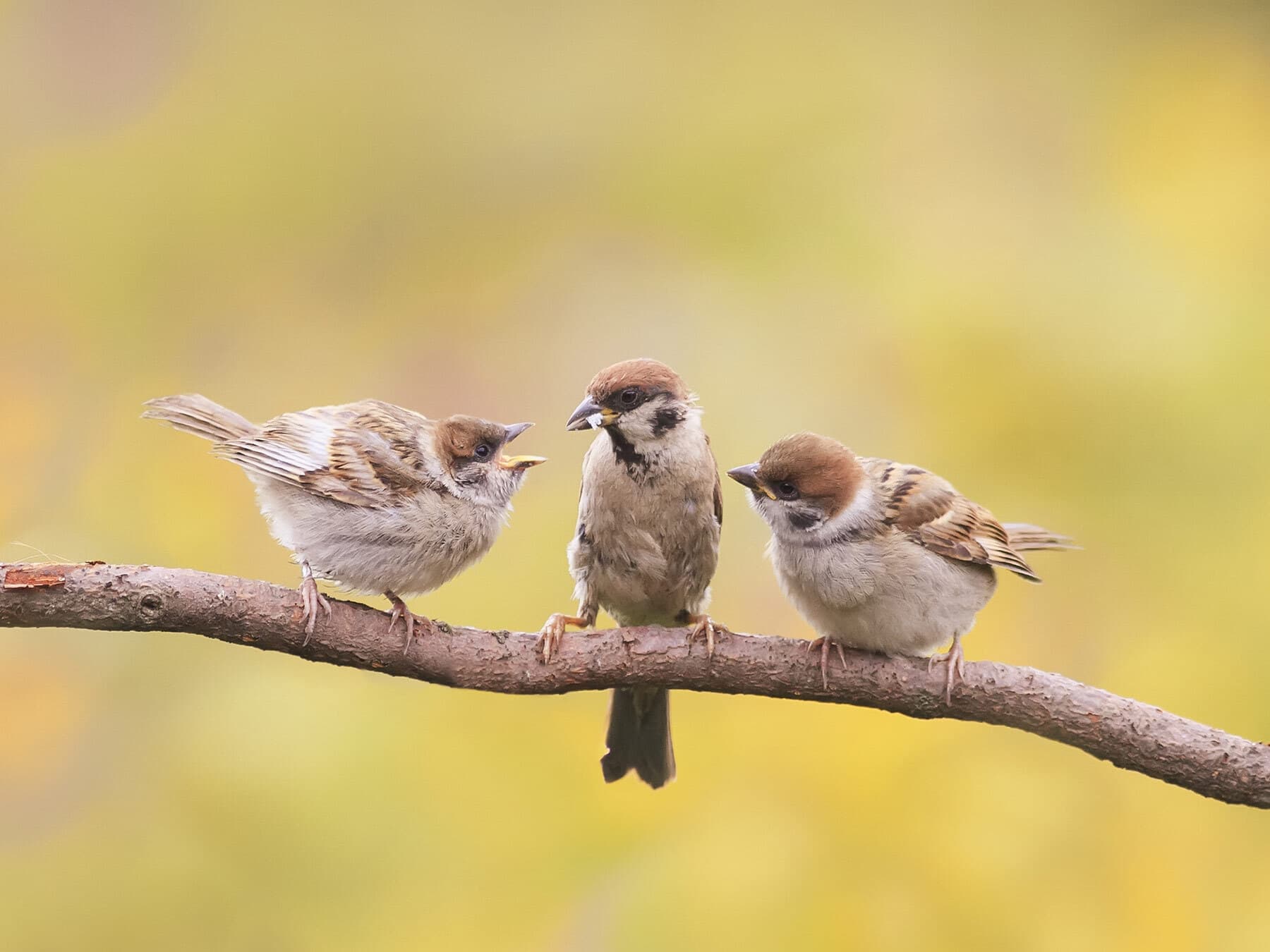
Young Tree Sparrows look like slightly faded adults, so even a young bird shows the Tree Sparrow's head pattern.6 Their chicks are fed mostly insects and spiders, mainly aphids while they are small, then caterpillars, grasshoppers and beetles.7
Sources
- Lowther, P. E., Cink, C. L. (2020). House Sparrow (Passer domesticus), version 1.0. Birds of the World (S. M. Billerman, ed.). Cornell Lab of Ornithology. doi:10.2173/bow.houspa.01
- BTO. House Sparrow (Passer domesticus). BTO BirdFacts. Accessed 7 October 2026. Source
- Cornell Lab of Ornithology. House Sparrow identification. All About Birds. Accessed 7 October 2026. Source
- RSPB. Who should I call if I am concerned about a bird? Baby garden birds. Accessed 7 October 2026. Source
- RSPB. How and what to feed your garden birds. Accessed 7 October 2026. Source
- RSPB. Tree Sparrow. RSPB Birds and wildlife. Accessed 7 October 2026. Source
- Barlow, J. C., Leckie, S. N., Pyle, P., Patten, M. A. (2020). Eurasian Tree Sparrow (Passer montanus), version 1.0. Birds of the World (S. M. Billerman, ed.). Cornell Lab of Ornithology. doi:10.2173/bow.eutspa.01
- Peach, W. J., Mallord, J. W., Ockendon, N., Orsman, C. J., Haines, W. G. (2015). Invertebrate prey availability limits reproductive success but not breeding population size in suburban House Sparrows Passer domesticus. Ibis 157: 601-613. doi:10.1111/ibi.12264