Facts · Updated 8 Oct 2026
What Do Sparrows Eat? House Sparrow and Tree Sparrow Diet
By the Birdfact teamChecked by Nathan Cope
Sparrows eat mostly seeds and grain, with insects in the breeding season; their chicks are raised on insects. In gardens, House Sparrows love sunflower hearts and fat balls.
On this page11 sections
In Britain "sparrows" means the House Sparrow, and on farms the Tree Sparrow. This page covers what both eat, what they feed their chicks, and how to feed sparrows safely in a garden. North America's native sparrows, such as the Song Sparrow, are a different family with their own diets.
What do House Sparrows eat?
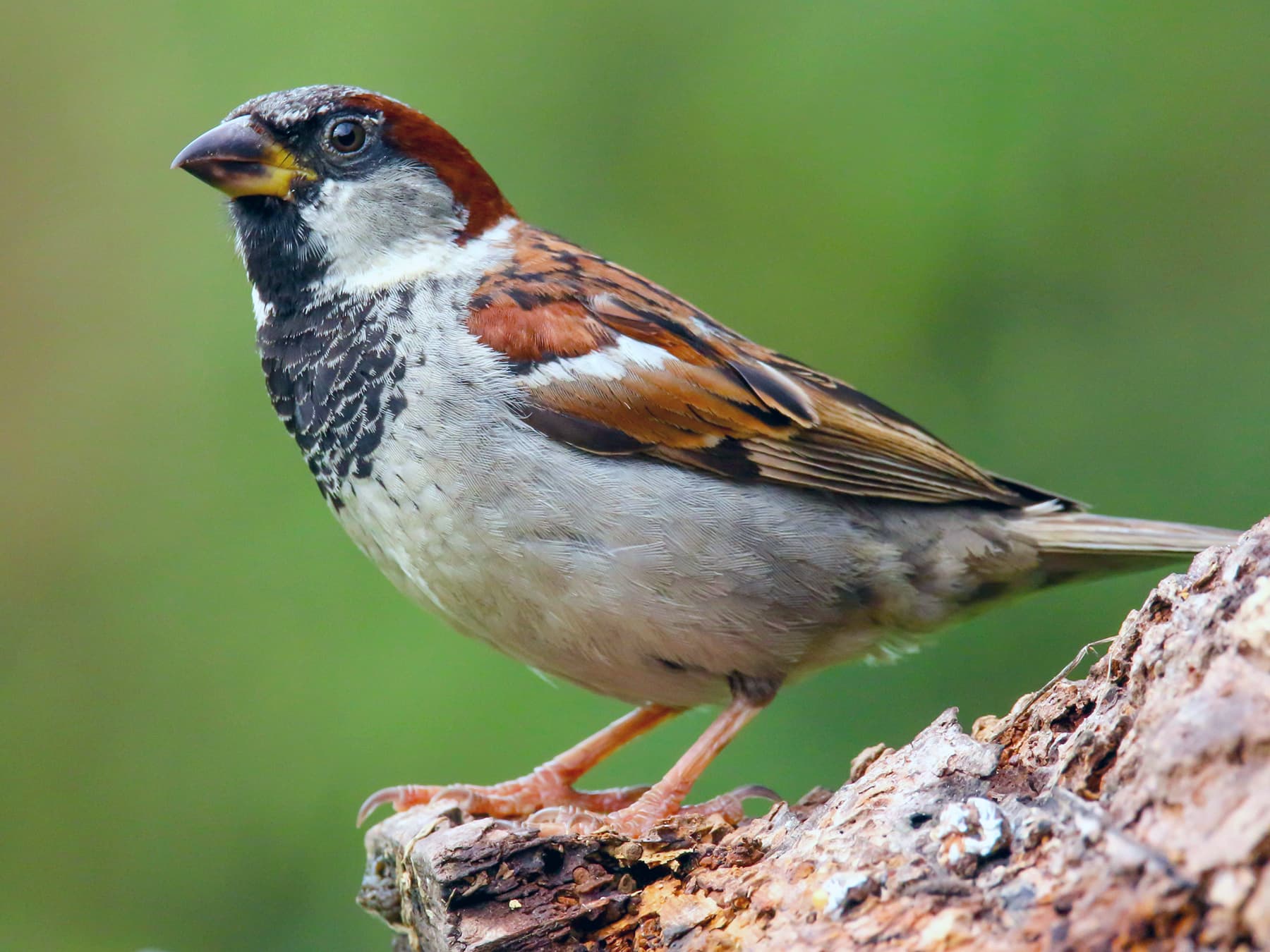
Mostly seeds and grain. They eat weed and grass seeds, cereal grain from fields, spilt grain and animal feed, and birdseed in gardens, and add insects in the breeding season. Fruit, berries and buds make up the rest, along with scraps. They are complete opportunists: House Sparrows have been seen taking small frogs, shellfish on the shore and insects drawn to lights at night.1
A huge study of 4,848 House Sparrow stomachs, collected in the United States between 1879 and 1925, found 60% livestock feed, 18% other cereal grain, 17% weed seeds and just 4% insects. A later study in Pennsylvania gave similar results: town sparrows ate more birdseed and weed seeds, and country sparrows more grain from fields and farmyards.
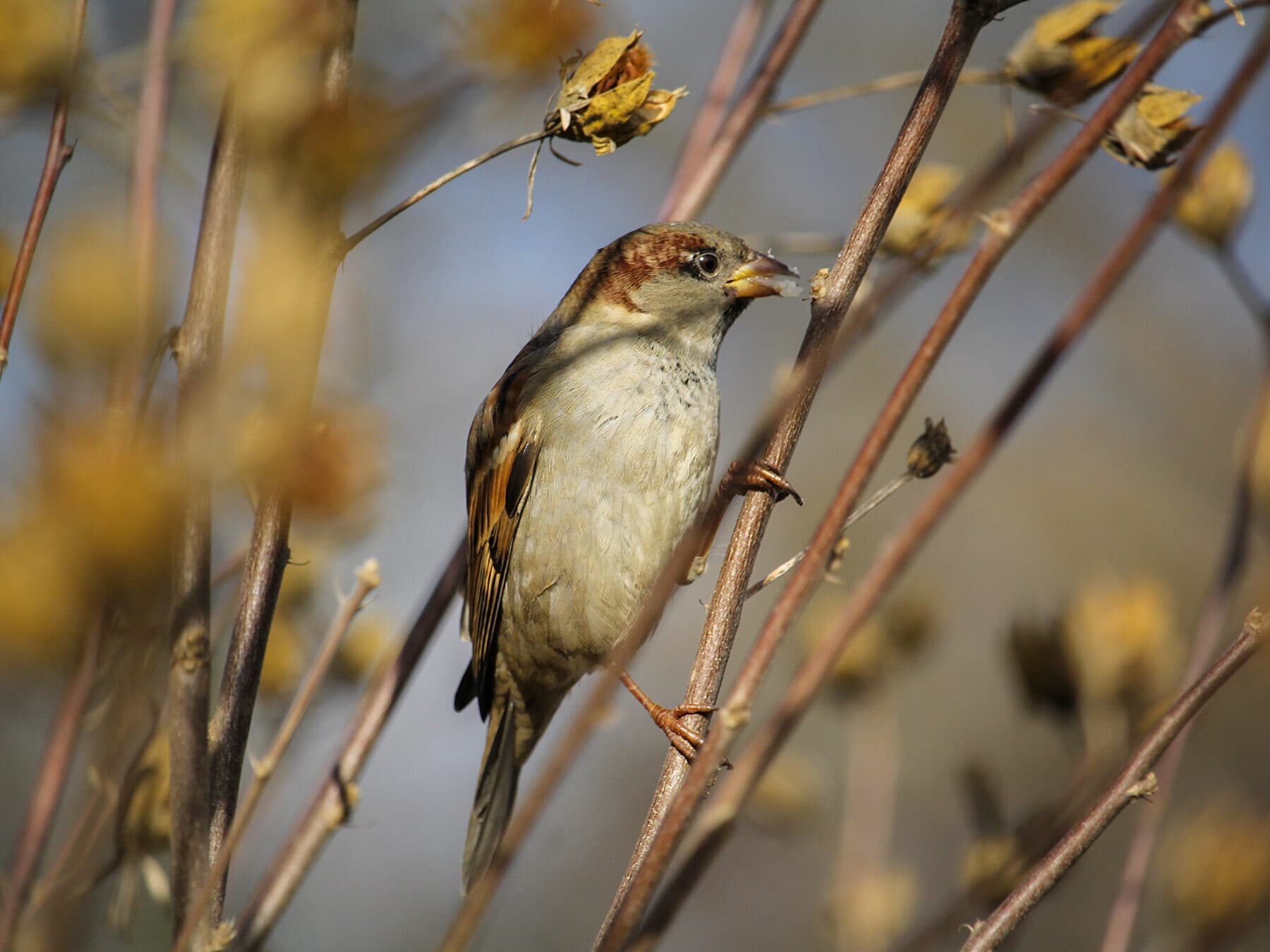
What do sparrows eat in winter and summer?
In winter, seeds and grain: in the American study, grain and feed made up 88% of the diet in February. In spring and summer insects become more important, though even then they were at most 10% of an adult's food, in June.1 In Britain, summer House Sparrows feed on insects in hedgerows and meadows, as long as they do not have to fly far from the nest.2
Food for the chicks
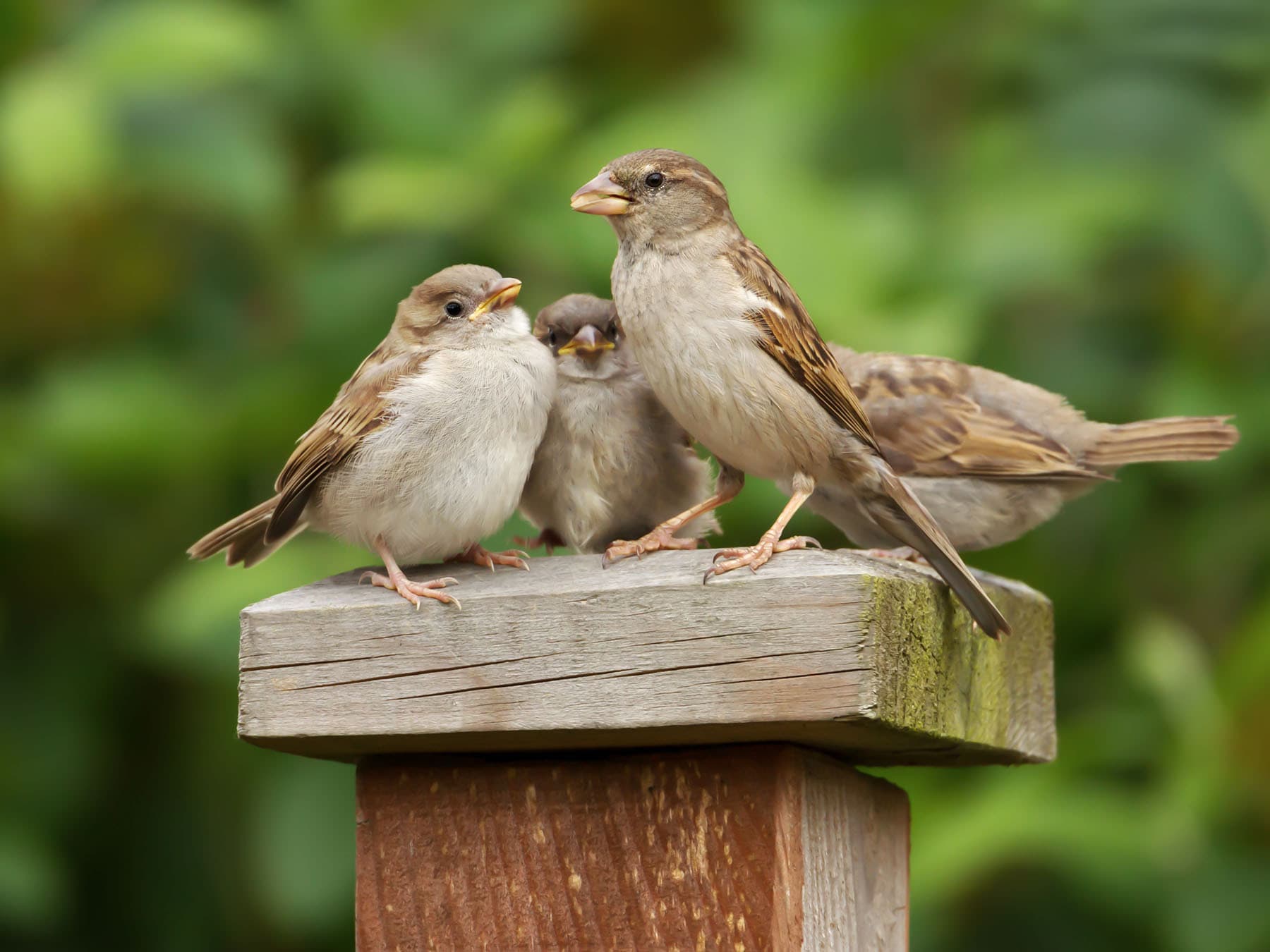
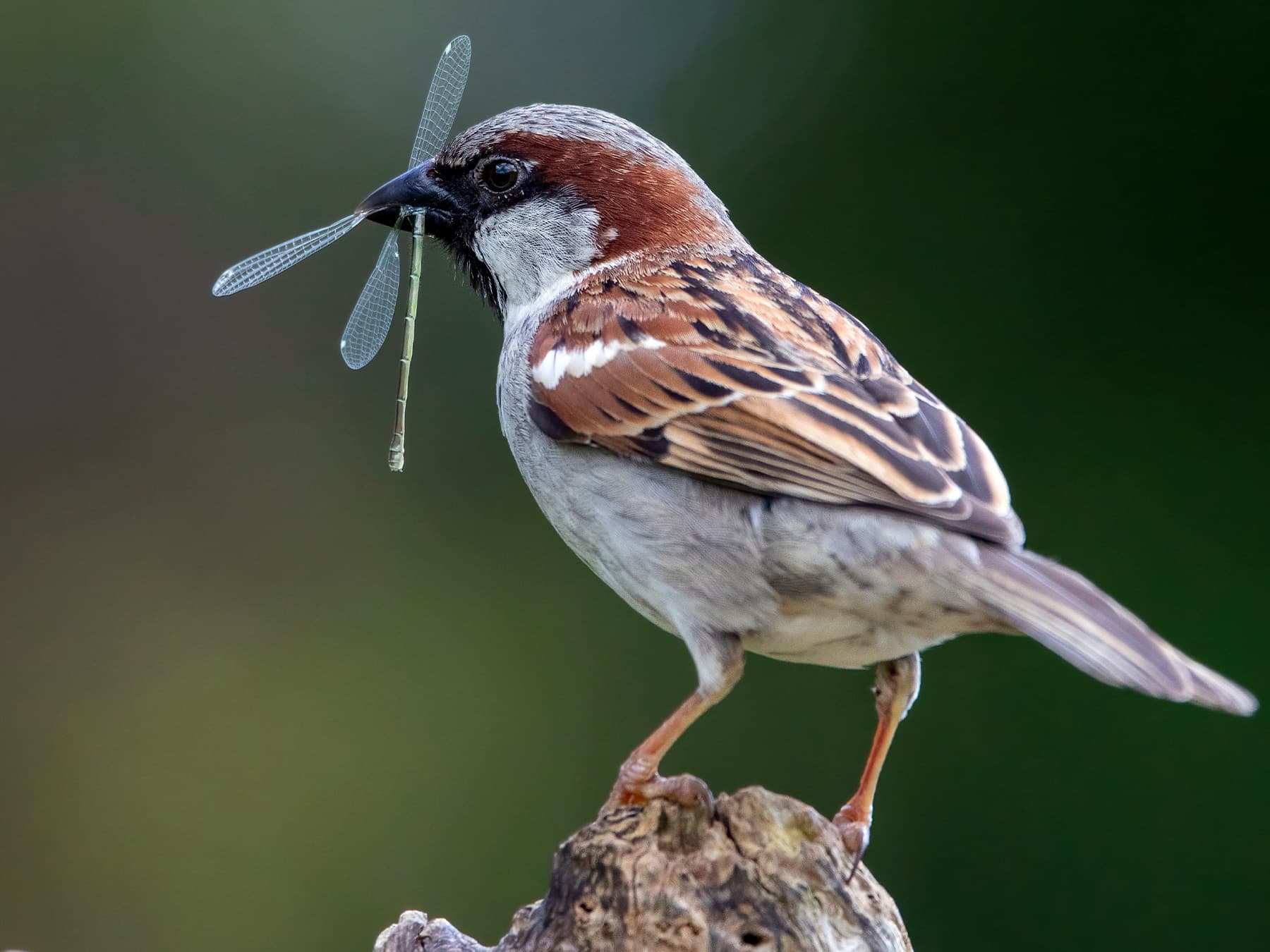
Insects and other small invertebrates, not seeds: fly larvae above all, and aphids, weevils, grasshoppers and caterpillars, regurgitated by both parents. Plant food creeps in as the chicks grow. More: baby sparrows.
How they find food
House Sparrows feed mainly on the ground, hopping in groups and pecking seeds, and perch on stems to reach seed heads. Now and then they catch insects in the air. They follow lawn mowers to catch the moths they flush, pierce flowers for nectar, and in North America pick insects off the front of parked cars.3
How much they eat
Enough to keep a 27 g bird warm. One study put a House Sparrow's energy needs at about 20 kcal a day in summer and 28 kcal in winter. Sparrows build up fat by day and burn it at night, so they are heaviest in late afternoon and lightest just before they start feeding in the morning.
Insects
They eat insects of many kinds, especially for their chicks. The diet studies summarised in Birds of the World name fly larvae, aphids, weevils, grasshoppers, caterpillars and beetles as the main ones; ants and earthworms are not among them. Seeds and grain are the staple.
Tree Sparrows
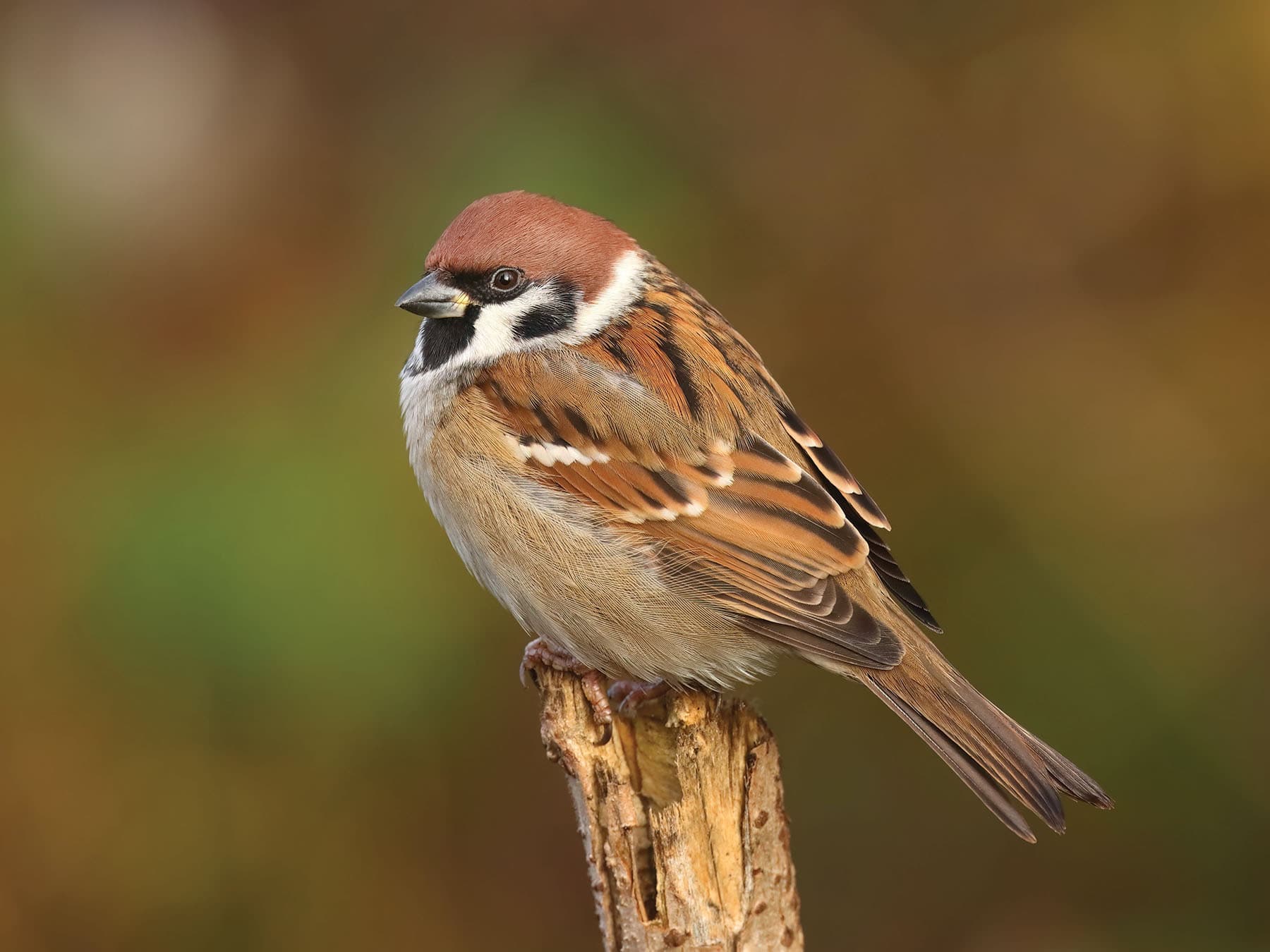
Tree Sparrows eat mainly cereal grain and wild seeds from late autumn to early spring, adding buds and new shoots in spring, and spiders and insects in the breeding season. Their chicks are raised on insects and spiders, mainly aphids while small, then caterpillars, grasshoppers and beetles, especially weevils. Their bills even grow slightly longer in summer, when they eat more soft insects and fewer hard seeds.4
How garden food helps
Garden food can help chicks. In a London experiment, daily mealworms increased the number of young House Sparrows out of the nest by 62%, but barely changed the number of breeding males.5 A second experiment, at 33 London colonies, added insect food in the breeding season and unlimited seed all year. It raised more fledglings but made no difference to winter survival or numbers: food was not what was holding those town sparrows back. Sparrows were commoner where there was more seed-rich habitat and less nitrogen dioxide pollution.6
Feeding sparrows in your garden
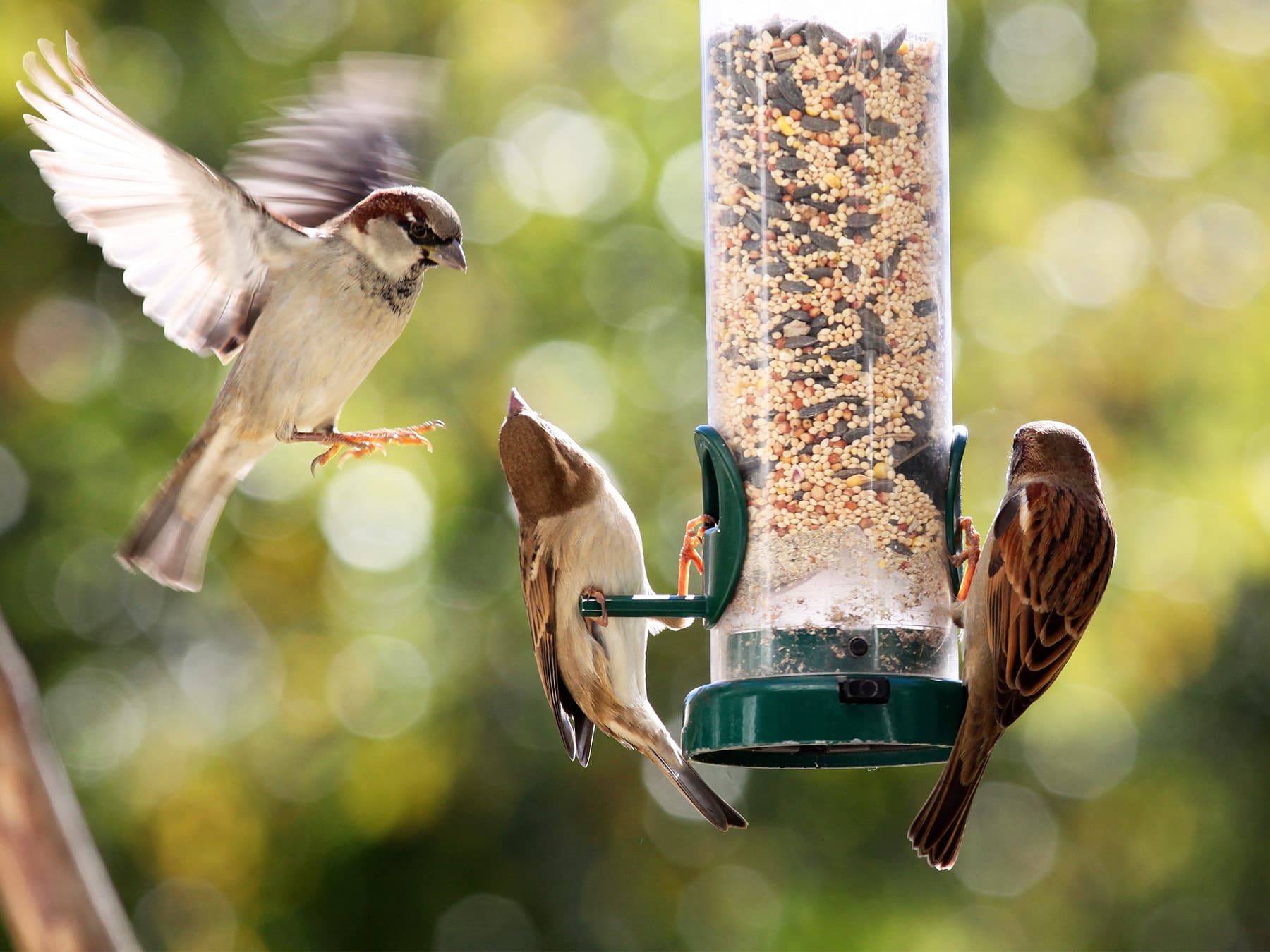
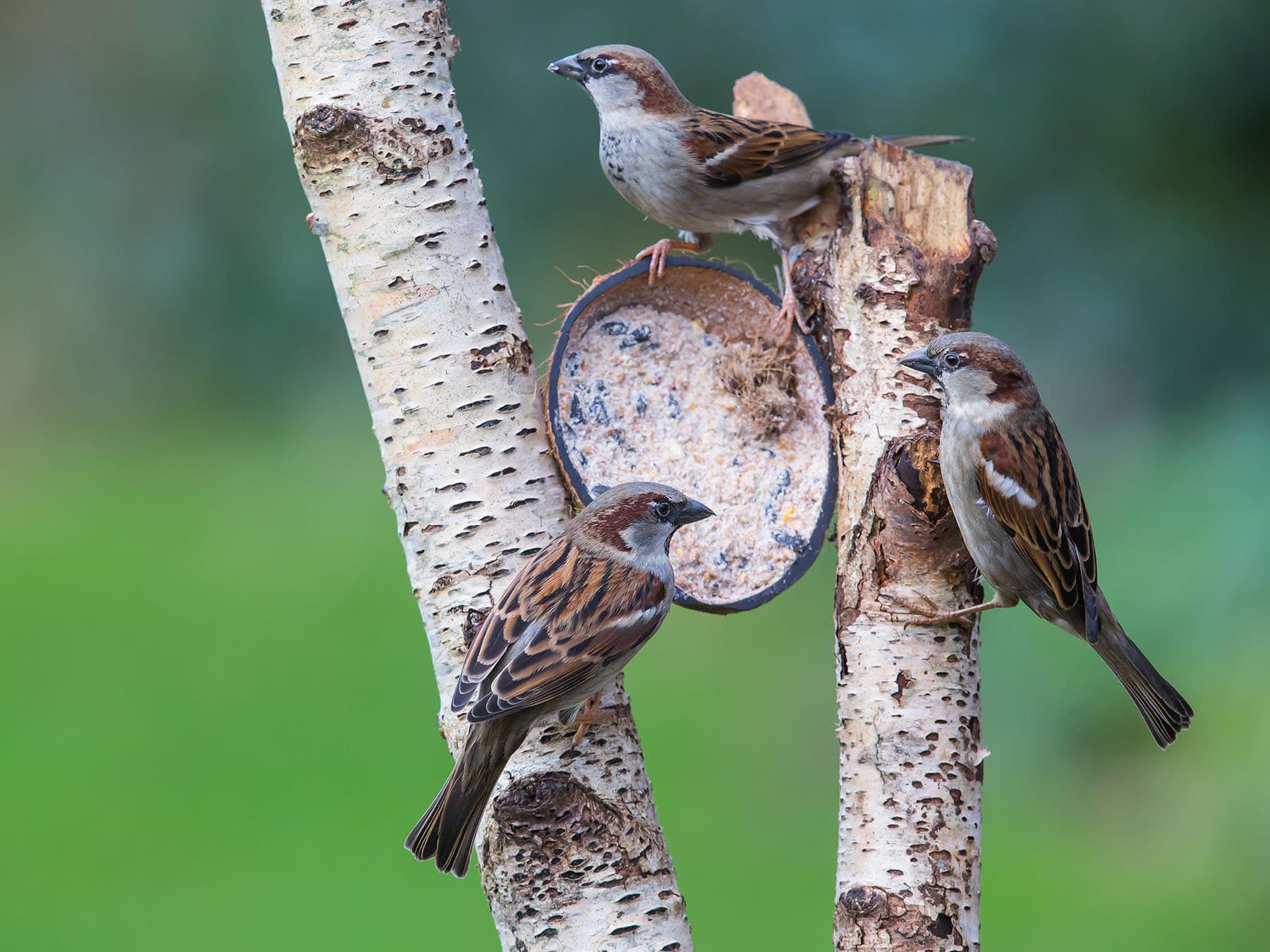
The RSPB says House Sparrows particularly love fat balls and sunflower hearts.7 Put sunflower hearts in a hanging seed feeder and fat balls in a hanging mesh feeder, never in mesh bags, which can trap birds' feet. Hang feeders out of reach of cats and a couple of metres from thick cover, so sparrows can dive for safety from a Sparrowhawk.8
Since July 2026 the RSPB advises feeding with the seasons. From 1 November to 30 April you can offer the full range. From 1 May to 31 October, pause seed and peanuts and offer only small amounts of fat balls, suet or mealworms (soak dried mealworms for nestlings). Use hanging feeders, not bird tables, trays or window feeders, where disease spreads most easily, clean feeders weekly, and change water every day.9
What should you not feed sparrows?
Avoid dry, hard foods and bread in spring and summer, which parents may take to the nest and the chicks can choke on. Buy peanuts guaranteed free of aflatoxin, a fungus that kills birds, and never use mesh bags.
Sources
- Lowther, P. E., Cink, C. L. (2020). House Sparrow (Passer domesticus), version 1.0. Birds of the World (S. M. Billerman, ed.). Cornell Lab of Ornithology. doi:10.2173/bow.houspa.01
- BTO. House Sparrow (Passer domesticus). BTO BirdFacts. Accessed 7 October 2026. Source
- Cornell Lab of Ornithology. House Sparrow identification. All About Birds. Accessed 7 October 2026. Source
- Barlow, J. C., Leckie, S. N., Pyle, P., Patten, M. A. (2020). Eurasian Tree Sparrow (Passer montanus), version 1.0. Birds of the World (S. M. Billerman, ed.). Cornell Lab of Ornithology. doi:10.2173/bow.eutspa.01
- Peach, W. J., Mallord, J. W., Ockendon, N., Orsman, C. J., Haines, W. G. (2015). Invertebrate prey availability limits reproductive success but not breeding population size in suburban House Sparrows Passer domesticus. Ibis 157: 601-613. doi:10.1111/ibi.12264
- Peach, W. J., Mallord, J. W., Ockendon, N., Orsman, C. J., Haines, W. G. (2018). Depleted suburban house sparrow Passer domesticus population not limited by food availability. Urban Ecosystems 21: 1053-1065. doi:10.1007/s11252-018-0784-4
- RSPB. House Sparrow. RSPB Birds and wildlife. Accessed 7 October 2026. Source
- RSPB. How and what to feed your garden birds. Accessed 7 October 2026. Source
- RSPB (2026). How to help garden birds. RSPB news. Accessed 7 October 2026. Source
- National Audubon Society (text: Kaufman, Lives of North American Birds). House Sparrow. Audubon Guide to North American Birds. Accessed 7 October 2026. Source