Published 7 Oct 2026
House Sparrow Song and Calls: What They Sound Like
By the Birdfact teamChecked by Nathan Cope
A House Sparrow's song is a simple, loud cheep, repeated over and over by males at their nest sites. Listen to the song, the squabbling chatter and young birds begging, and find out when and why they call.
On this page10 sections
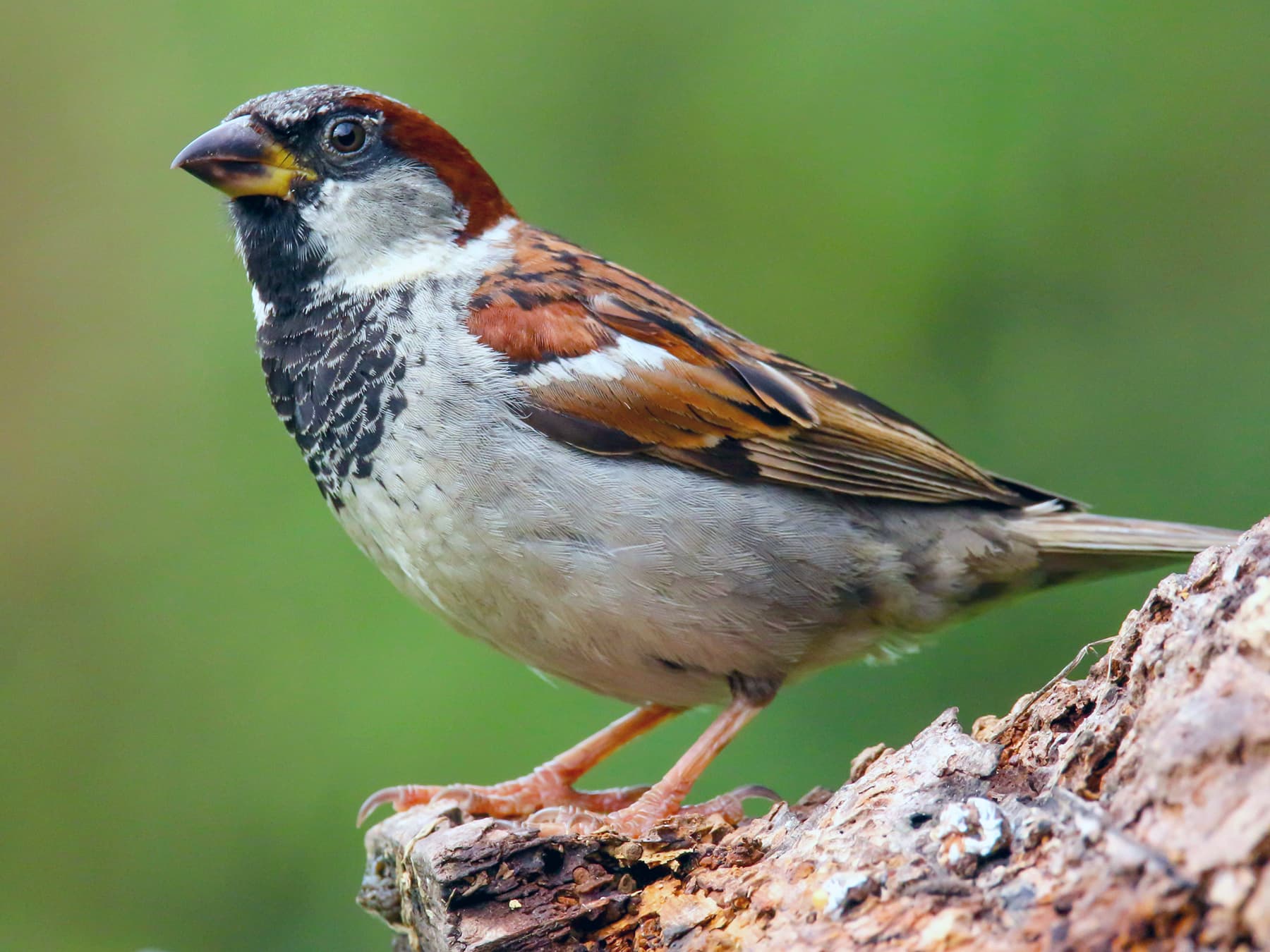
This page is about the sounds House Sparrows make: the cheeping song, the calls, the chatter of a squabble and the begging of young birds, with five recordings. For the bird itself, see House Sparrow identification and facts.
What does a House Sparrow sound like?
The song: one note, said many ways
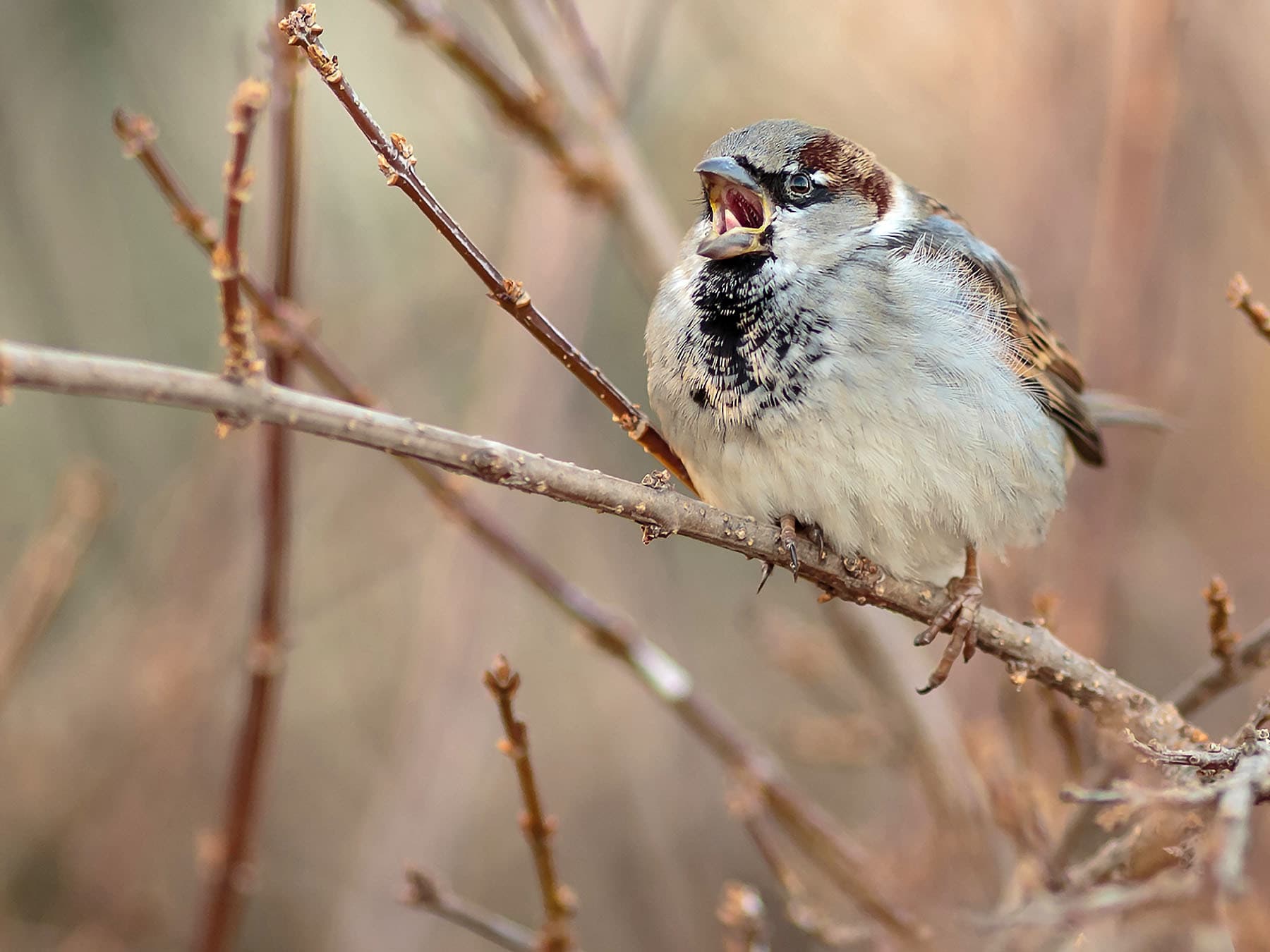
The House Sparrow's song is the cheep itself. It is the sound males make most, and they use it to attract a female and to announce that they own a nest site.
There is more variety in it than you might think. One study recognised four types of cheep. A male uses two, three or all four, and favours one of them, giving it 50 to 75% of the time, and close neighbours rarely favour the same type. The same study found each male's mix of cheeps was unique to him, although no experiment has yet tested whether sparrows recognise one another by it.
When and where do House Sparrows sing?
All year, and most in spring. They cheep less in cold, wet weather and on short winter days, and least of all in November, and they can fall almost silent in August. Unmated males cheep far more than paired ones.
The nest is the song post. A male sings from his hole or close by: in one study, breeding males spent nearly 60% of their perching time at their nest boxes. In a Michigan study, cheeping peaked four times a day, most of all in mid-afternoon.
House Sparrow calls
Besides the song, House Sparrows have about a dozen calls. The ones you will hear:
- Chur: a scolding call, sometimes run into a chur-tit-tit-tit, given in threat at the nest, at food and at dust baths. The RSPB notes it can be an alarm call.
- Chatter: a fast run of notes, given mostly by females, at rival females and at their own mates.
- Danger calls: a quer and a chree when a predator is near.
- Social chirping: after feeding, groups sit together in thick cover and chirp quietly; at roosts the chirping is broken by threat and alarm calls as birds dispute perches. In spring the RSPB describes a cheerful chorus from deep inside hedges.
Do female House Sparrows sing?
Rarely. Females cheep little, except when they have lost a mate; their usual sounds are calls, and the long chatter is mostly theirs. All About Birds notes that females sometimes sing as well.3
Baby House Sparrow sounds
Chicks start peeping within hours of hatching, and their begging is the noise you hear from a hole in a wall or roof in spring and summer. The cheep develops in stages over the first days and weeks. House Sparrows reared on their own from four days old still develop a normal cheep, so they do not seem to need to hear adults to learn it. More: baby sparrows.
Do House Sparrows sing at night?
At communal roosts they chirp together after sunset, and start again about half an hour before sunrise.
House Sparrow sounds in North America
American House Sparrows came from English and German stock and use the same cheeps and calls. In this recording from Minneapolis two birds call from a tree; the recordist noted that the lower-pitched one was a male. North America's native sparrows, such as the Song Sparrow, belong to a different family and have songs of their own. A House Finch, often seen with House Sparrows, sings a long, hoarse warble: see House Sparrow vs House Finch.
Questions
Why do sparrows chirp so much?
The cheep is the male's song, which he uses to attract a mate and hold his nest site, and unmated males cheep the most. Groups also chirp together socially.
What does it mean when sparrows are chirping loudly?
Usually a male advertising at his nest site in spring, or a group gathering before roosting. A harsh chur means a squabble or alarm.
Do House Sparrows make a noise when they are in the nest?
Yes: the young beg loudly, and a male courting a female may flap his wings inside the nest, a sound that makes her look in.
Sources
- Lowther, P. E., Cink, C. L. (2020). House Sparrow (Passer domesticus), version 1.0. Birds of the World (S. M. Billerman, ed.). Cornell Lab of Ornithology. doi:10.2173/bow.houspa.01
- RSPB. House Sparrow. RSPB Birds and wildlife. Accessed 7 October 2026. Source
- Cornell Lab of Ornithology. House Sparrow identification. All About Birds. Accessed 7 October 2026. Source
- National Audubon Society (text: Kaufman, Lives of North American Birds). House Sparrow. Audubon Guide to North American Birds. Accessed 7 October 2026. Source