Published 7 Oct 2026
House Sparrow vs House Finch: How to Tell Them Apart
By the Birdfact teamChecked by Nathan Cope
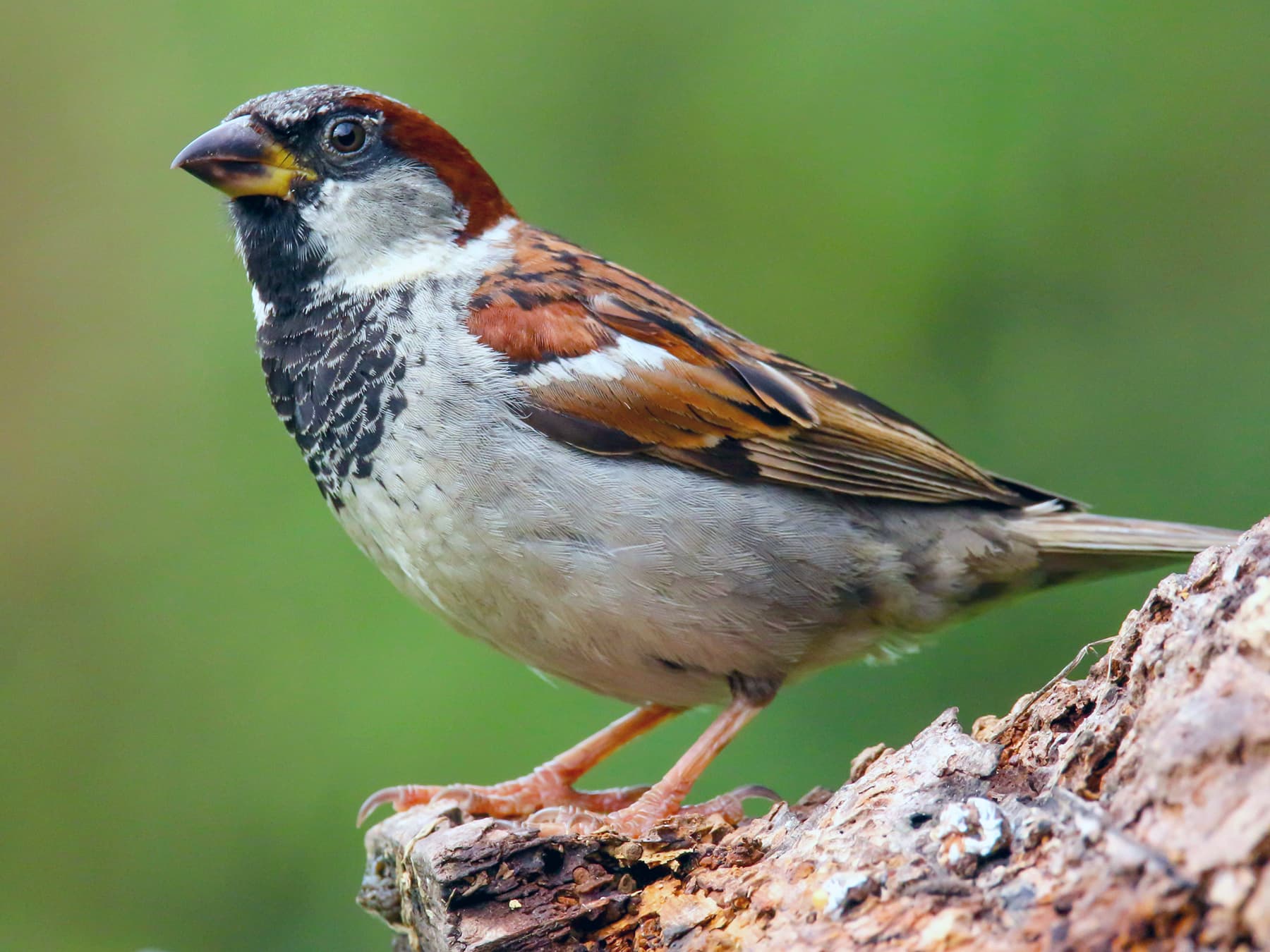
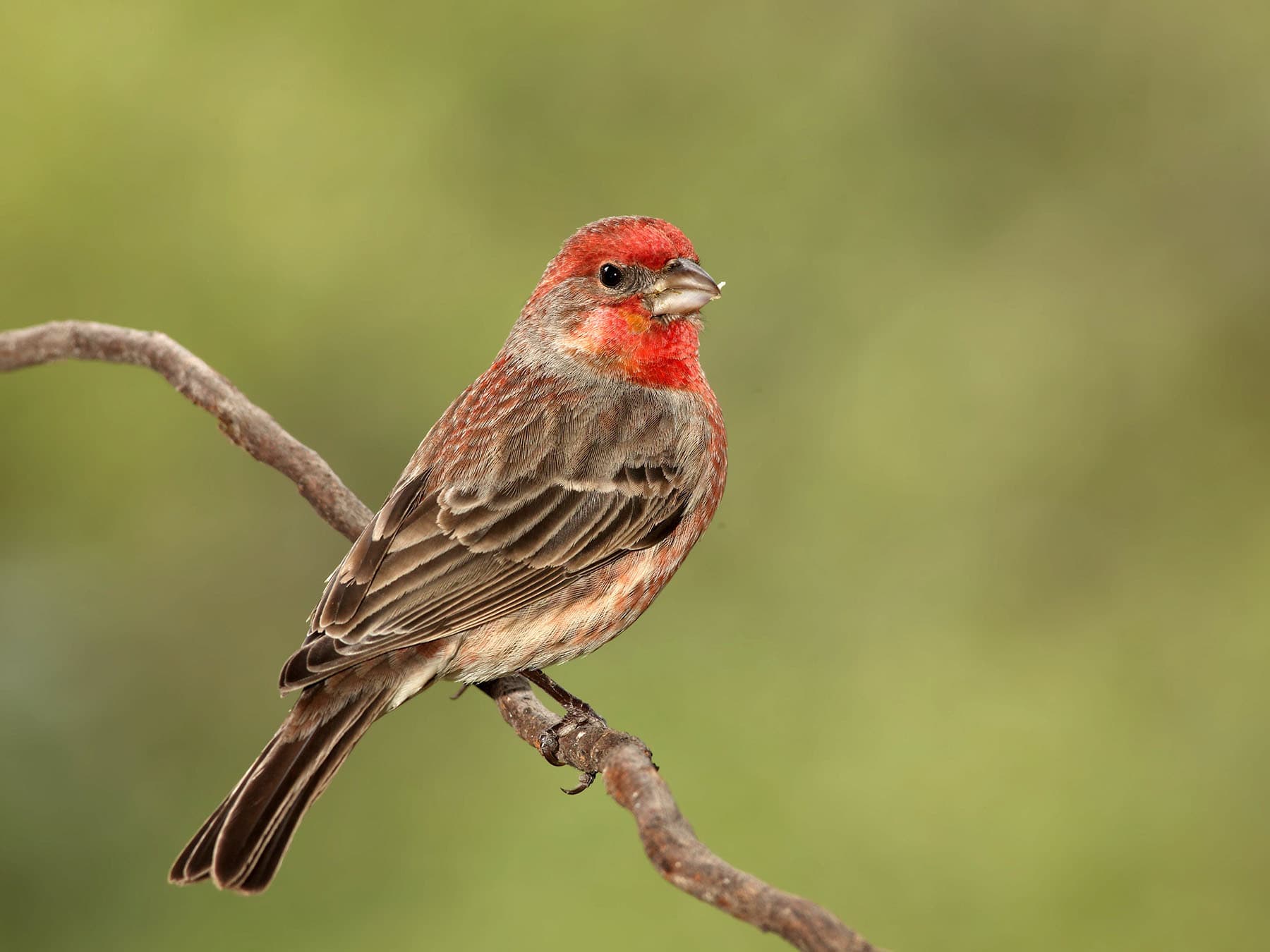
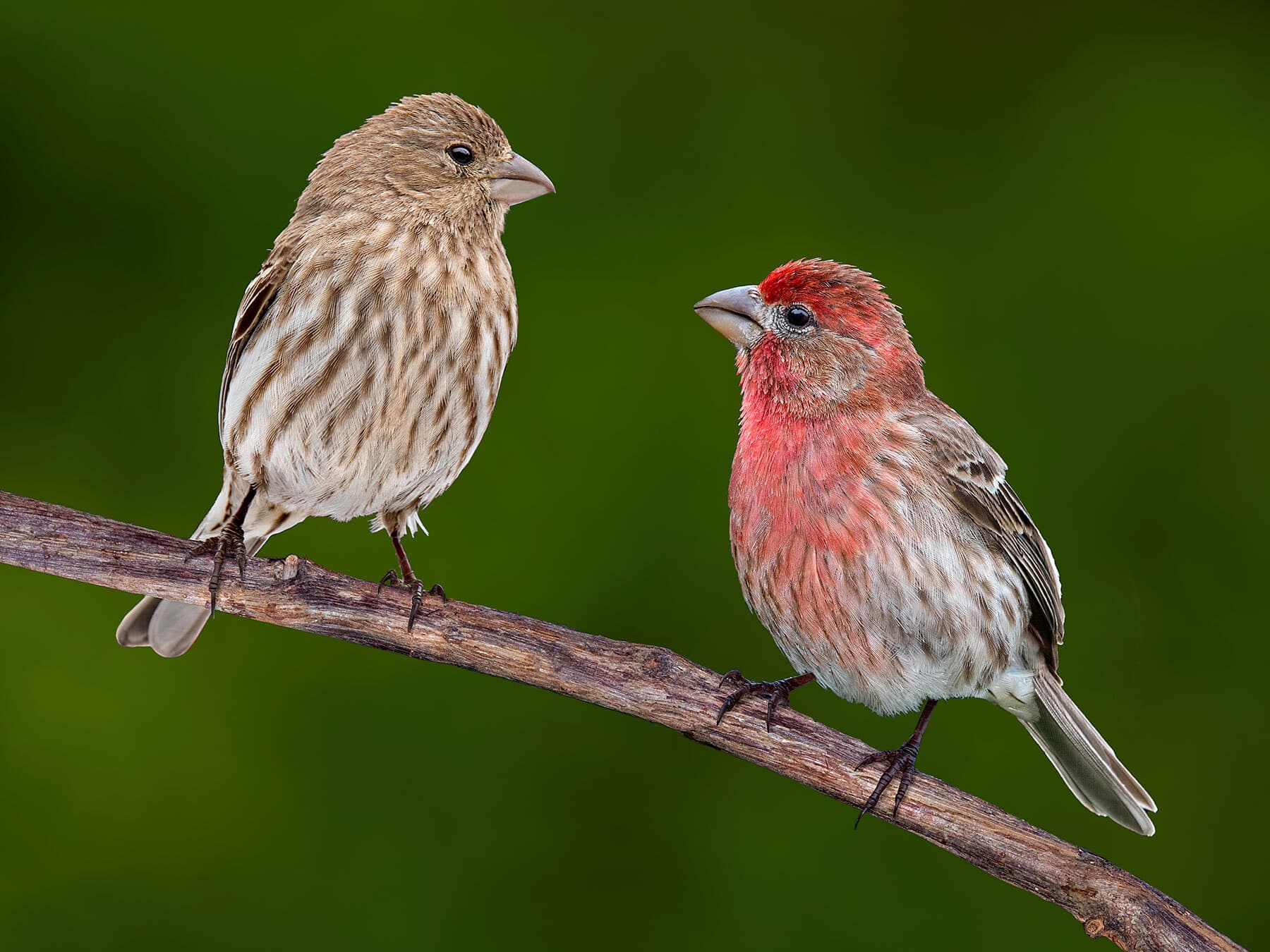
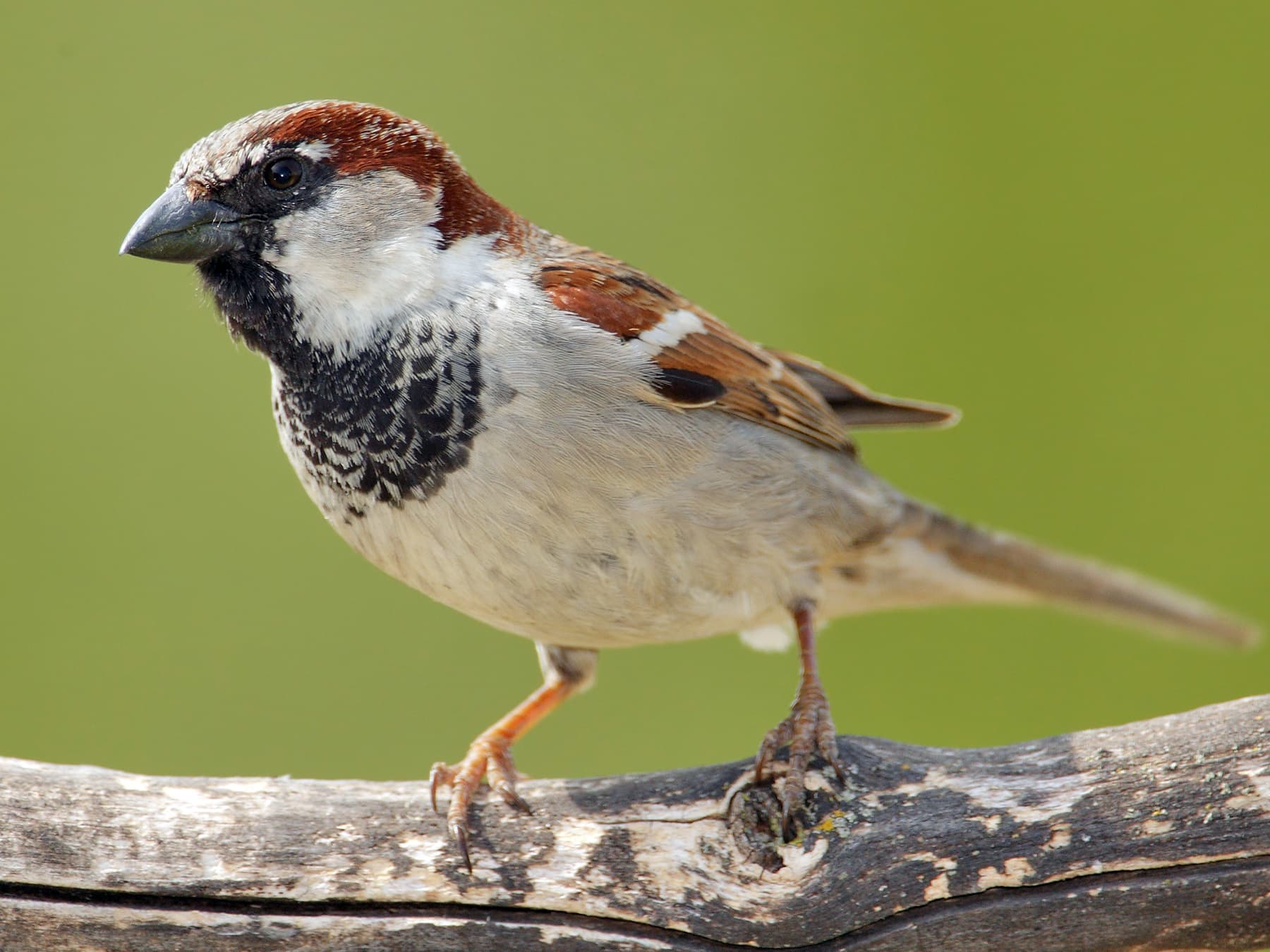
A male House Finch is red; a male House Sparrow has a grey crown and a black bib. Females are harder: a female House Finch is streaked below, a female House Sparrow is plain with a pale stripe behind the eye.
On this page11 sections
House Sparrows and House Finches share feeders, gardens and city streets across North America, and the females especially are easy to mix up. This page shows how to tell them apart, then how differently they live. For each bird, see House Sparrow and House Finch.
House Sparrow or House Finch at a glance
| House Sparrow | House Finch | |
|---|---|---|
| Size and shape | 14-17 cm (5.5-6.7 in); chunky, full chest, thick bill, short tail | 13-15 cm (5-6 in); slimmer, flatter head, longer-looking tail |
| Male | Grey crown, chestnut sides to the head, black bib; no red | Red forehead, eyebrow, throat and breast; brown cap; streaked flanks |
| Female | Plain below; pale buff stripe behind the eye | Blurry streaks all over the underparts; plain face |
| Song | A simple cheep, repeated | A long, hoarse warble, often ending in a down-slurred note |
| Nest | In holes: buildings, boxes; a domed ball in trees | An open cup in trees, ivy, ledges or hanging planters |
| Eggs | White to greenish or bluish white, spotted grey or brown | Pale blue, finely speckled black |
| Origin in North America | Introduced from England in 1851 and 1852 | Native in the West; introduced in the East |
Size and shape
They are much the same size, but the House Sparrow is the stockier bird, with a full chest, a big rounded head and a short tail.1 A House Finch has a fairly large bill too, but a flatter head and short wings that make its tail look long. All About Birds sums it up: same size as a House Sparrow, but more slender.2
Males: a black bib or red
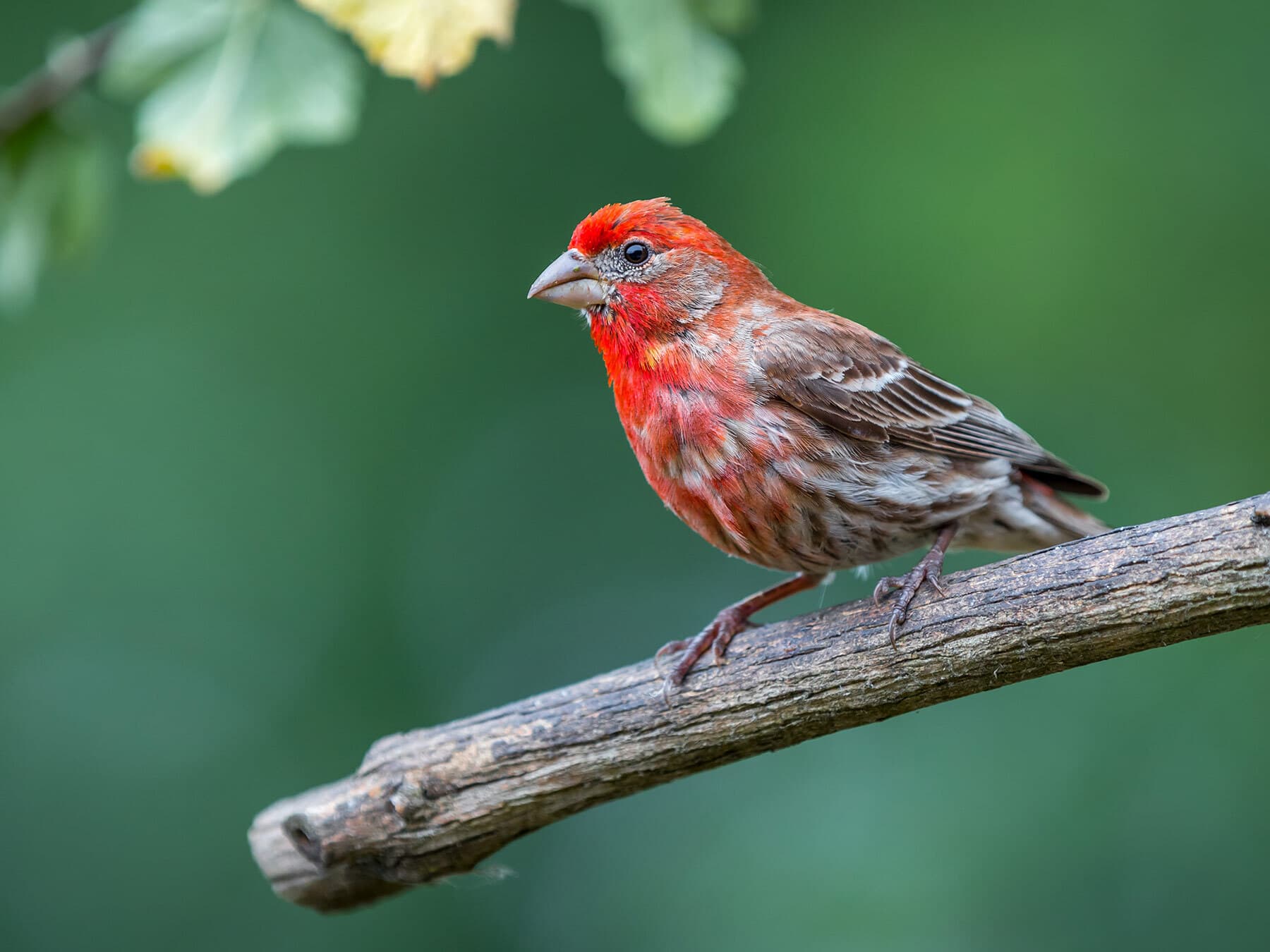
This is the easy one. A male House Sparrow has no red at all: a grey crown, chestnut sides to the head, pale cheeks and a black bib. A male House Finch is red on the forehead, the stripe over the eye, the throat and the breast, with a brown cap and brown streaks down the flanks.3 Some male House Finches are orange or yellow instead of red, but they still have the streaked flanks and no black bib.
Females: look at the breast
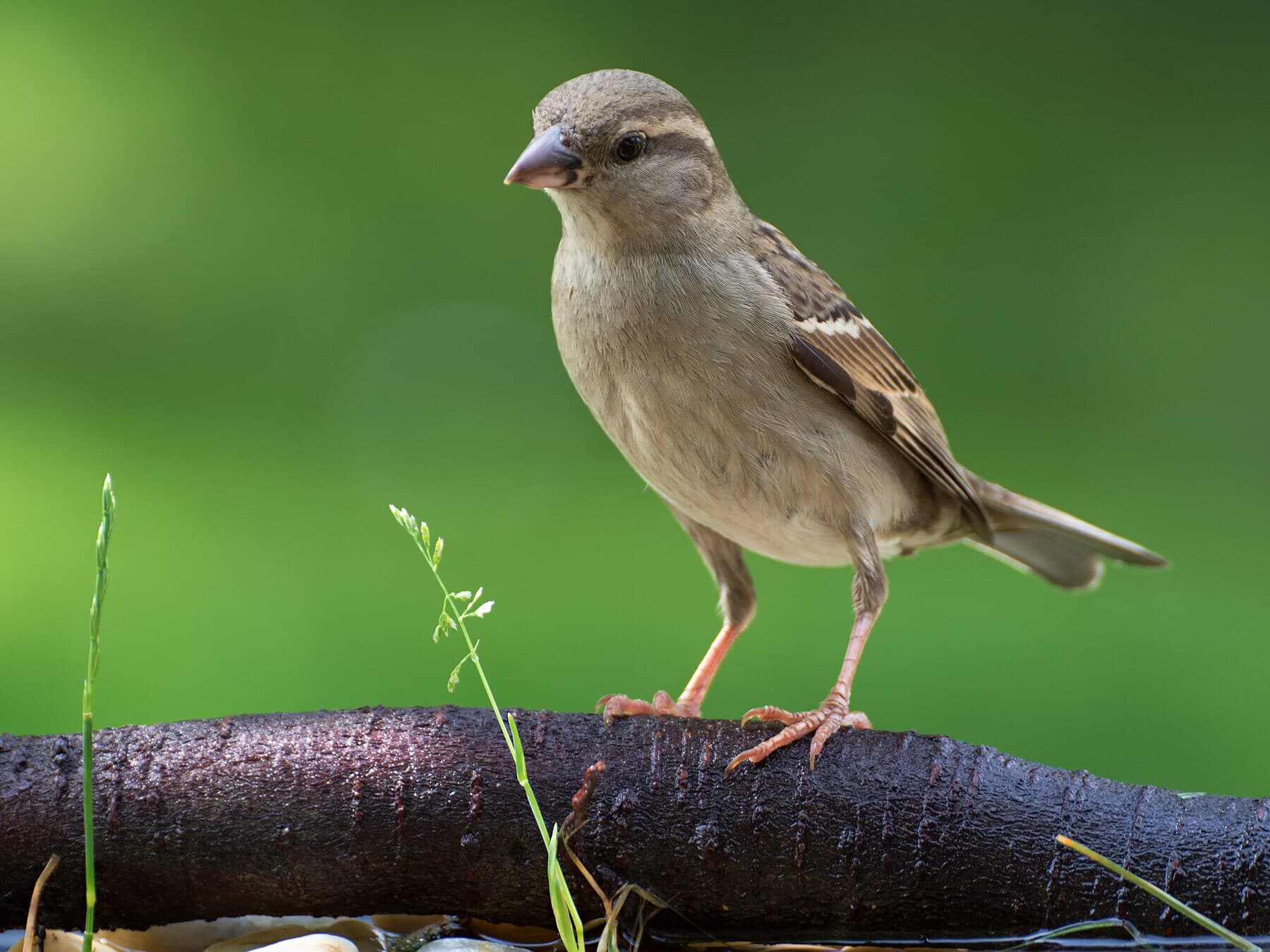
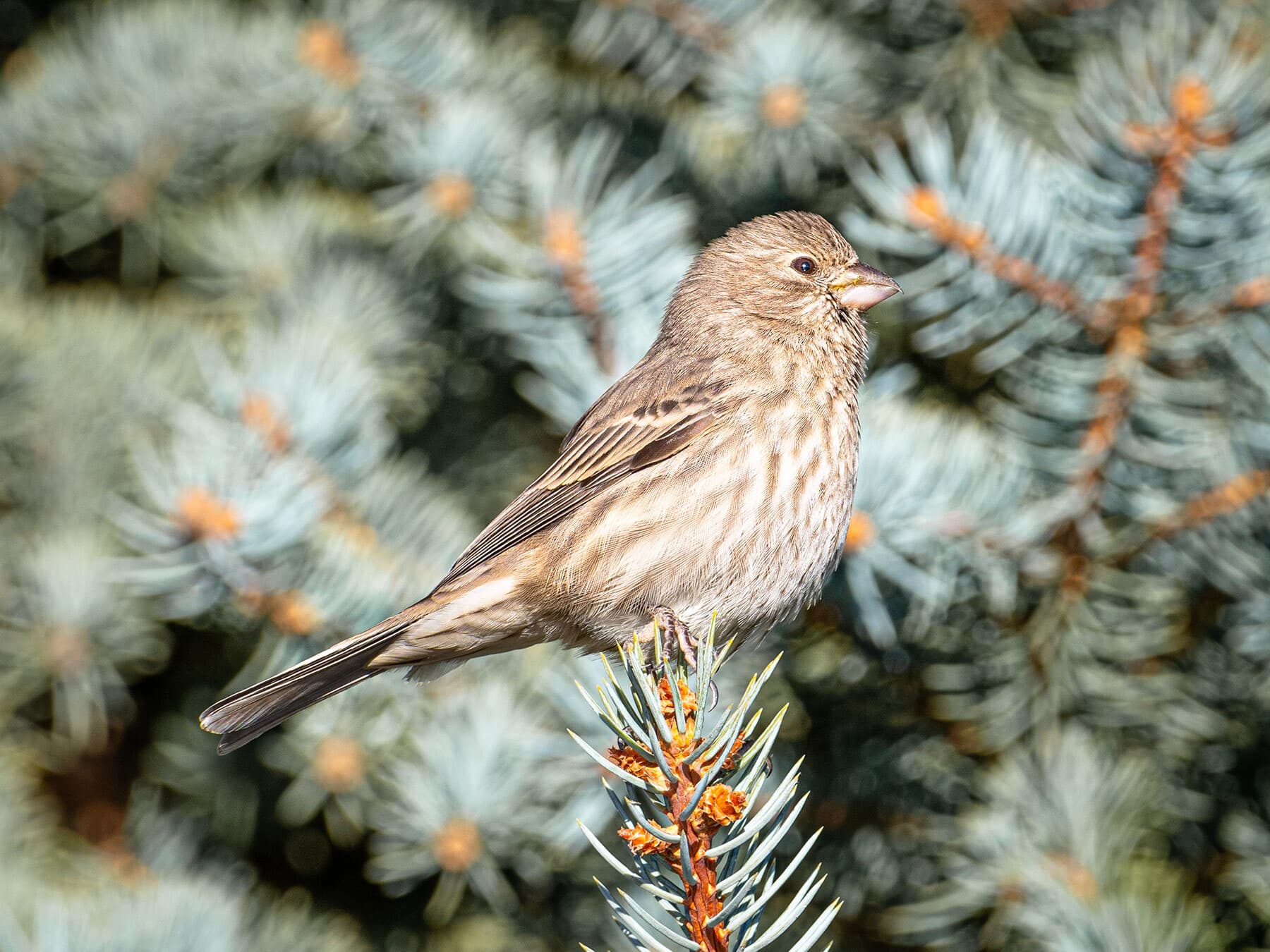
This is the hard one, and the breast settles it. A female House Finch is streaked all over her pale underparts with blurry brown stripes, and her face is plain. A female House Sparrow is plain and unstreaked below, with a clear pale buff stripe behind the eye and a back striped buff, black and brown.4, 5
Young birds
Young birds of both species look like their mothers. A young House Sparrow, just out of the nest, shows a yellow gape at the corners of its bill. A young House Finch is streaked like a female, more finely, and moults into adult plumage when 30 to 60 days old.
Song and calls
A House Sparrow's song is a simple cheep, repeated over and over. A male House Finch sings a long, hoarse warble, about 2 to 3 seconds of quick high and low notes that often ends in a down-slurred note, and he sings from perches and in flight. More: House Sparrow song and calls.
Nests and eggs
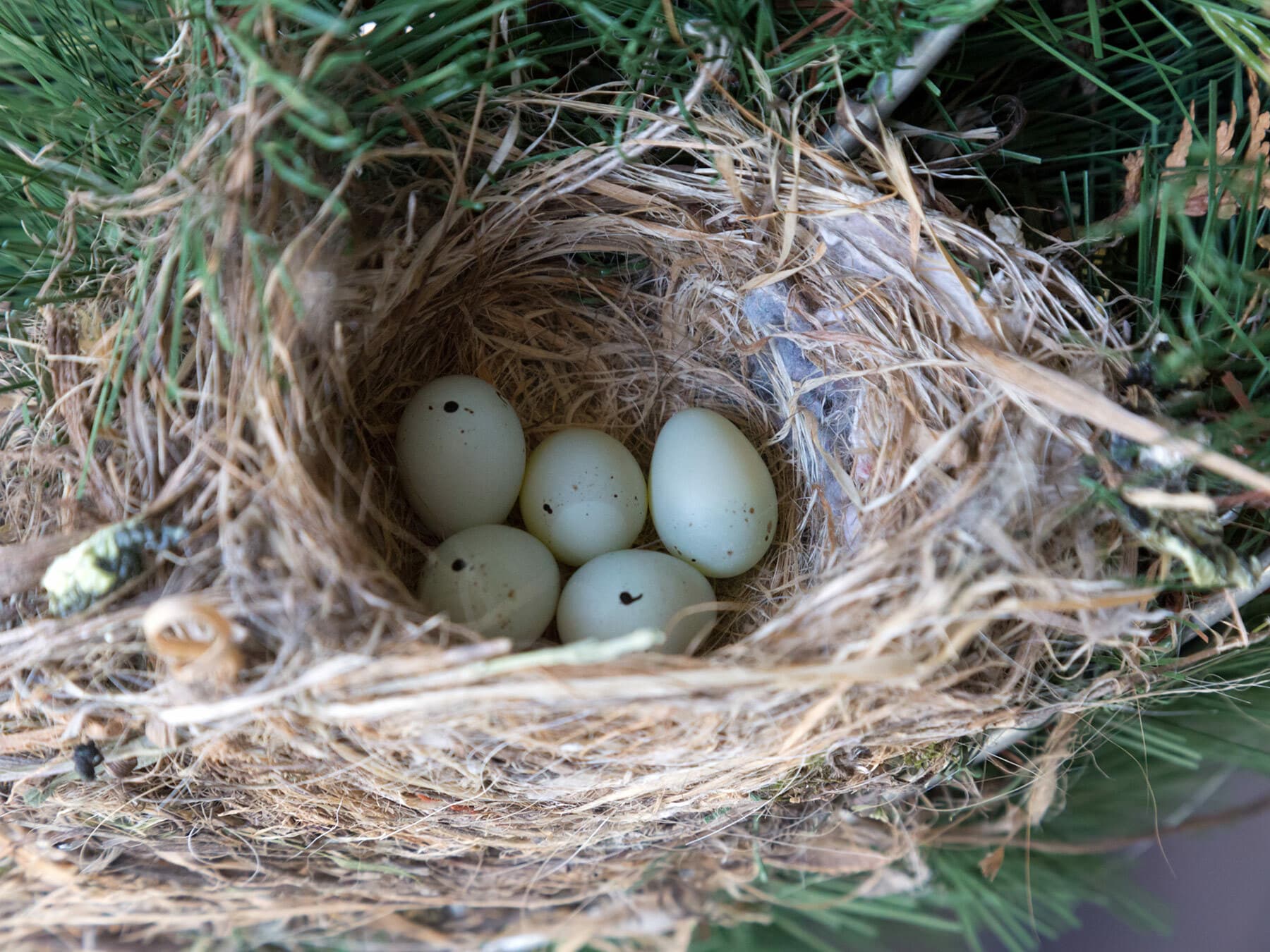
Their nests are quite different. House Sparrows mostly nest in holes, in buildings and nest boxes, filling the space with an untidy mass of grass and feathers. House Finches build an open cup, the female doing most or all of the work, in conifers, palms, ivy on buildings, ledges, street lamps and hanging planters, and only now and then in cavities.
House Finch eggs are pale blue, finely speckled with black; House Sparrow eggs are white to greenish or bluish white, spotted with grey or brown. A female House Finch incubates alone while the male feeds her; House Sparrow parents both sit on the eggs. More: House Sparrow nesting.
What they feed their young
House Sparrows raise their chicks mostly on insects. House Finches feed their young almost entirely on plant food: in one study, 98% of what the nestlings had eaten was plant material, mostly weed seeds. Both are seed-eaters as adults.
Where they came from
Both are newcomers to eastern North America. House Sparrows were brought from England and released in Brooklyn, New York, in 1851 and 1852. House Finches are native to the West; eastern birds descend from caged birds released on Long Island, New York, around 1940, and the eastern and western populations have since met. More: are House Sparrows invasive?
Questions
Is a House Finch a sparrow?
No. The House Finch is a finch (family Fringillidae) and the House Sparrow an Old World sparrow (Passeridae); America's native sparrows are a third family (Passerellidae).
Do House Sparrows and House Finches nest in the same places?
Often on the same buildings, but in different ways: House Finches build open cups on ledges, in ivy and in planters, while House Sparrows fill holes and boxes.
Which one comes to my feeder?
Probably both. Check the males for red or a black bib, and the females for streaks on the breast.
Sources
- Cornell Lab of Ornithology. House Sparrow identification. All About Birds. Accessed 7 October 2026. Source
- Cornell Lab of Ornithology. House Finch identification. All About Birds. Accessed 7 October 2026. Source
- National Audubon Society. House Finch. Audubon Guide to North American Birds. Accessed 7 October 2026. Source
- Badyaev, A. V., Belloni, V., Hill, G. E. (2020). House Finch (Haemorhous mexicanus), version 1.0. Birds of the World (A. F. Poole, ed.). Cornell Lab of Ornithology. doi:10.2173/bow.houfin.01
- Lowther, P. E., Cink, C. L. (2020). House Sparrow (Passer domesticus), version 1.0. Birds of the World (S. M. Billerman, ed.). Cornell Lab of Ornithology. doi:10.2173/bow.houspa.01
- National Audubon Society (text: Kaufman, Lives of North American Birds). House Sparrow. Audubon Guide to North American Birds. Accessed 7 October 2026. Source
- RSPB. House Sparrow. RSPB Birds and wildlife. Accessed 7 October 2026. Source