Facts · Updated 8 Oct 2026
Male and Female House Sparrows: How to Tell Them Apart (and Juveniles)
By the Birdfact teamChecked by Nathan Cope
Only the male has a grey cap, chestnut on the head and a black bib; the female is plain brown with a pale stripe behind the eye. Young birds look like females.
On this page9 sections
This page is about telling House Sparrows apart: males from females, males in spring from males in winter, and young birds from adults. For the bird in general, see House Sparrow identification and facts.
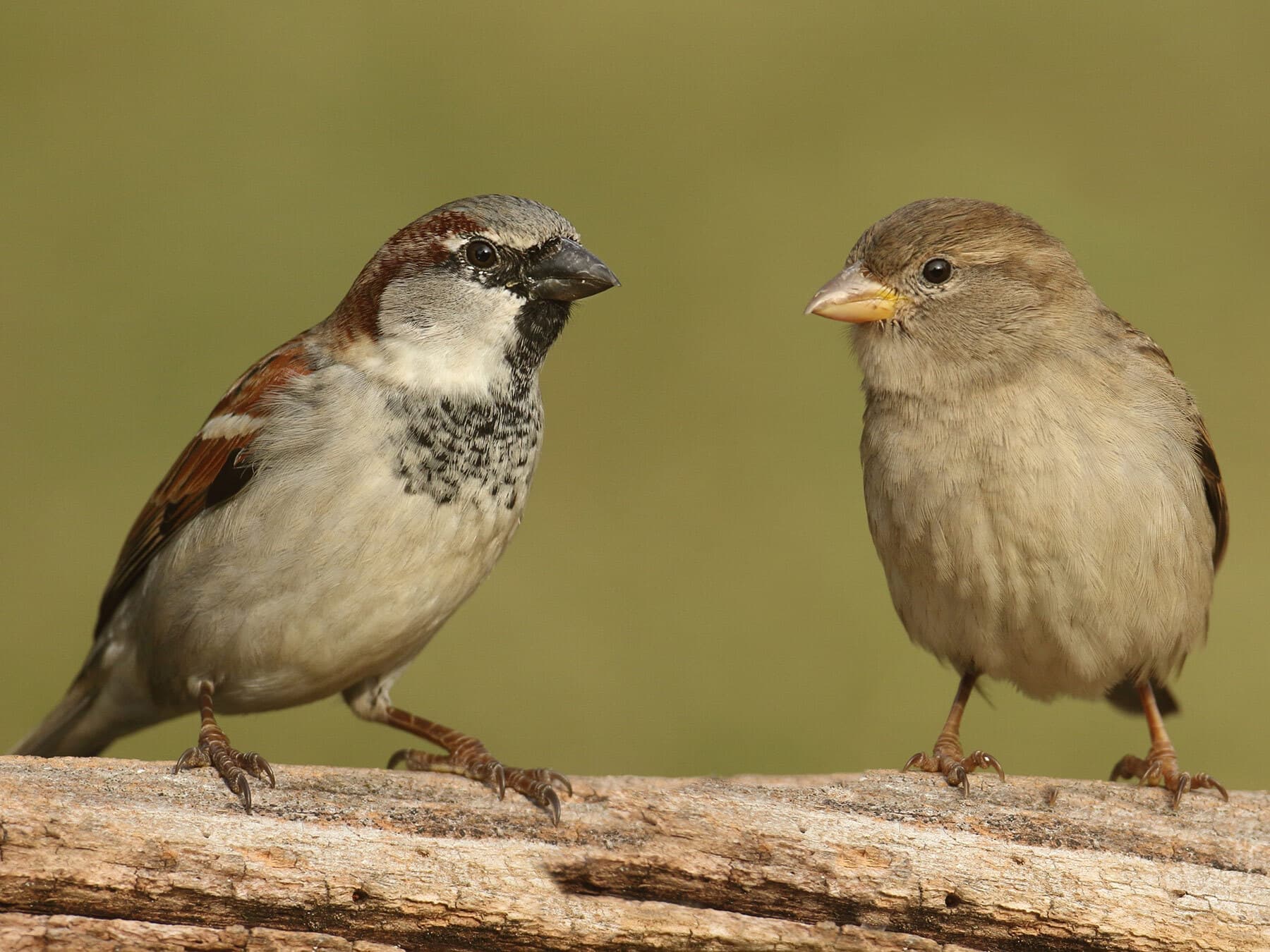
How to tell a male House Sparrow from a female
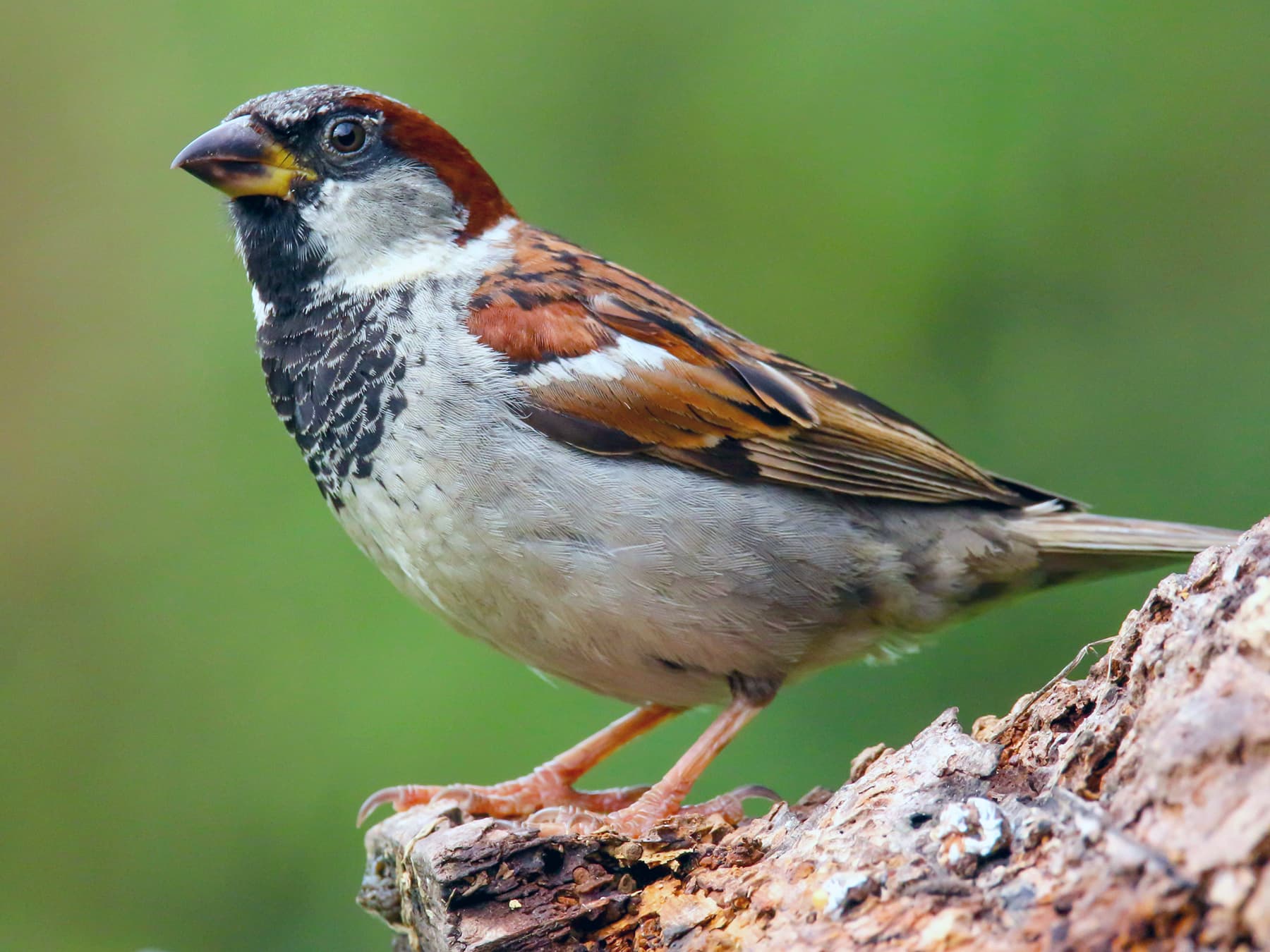
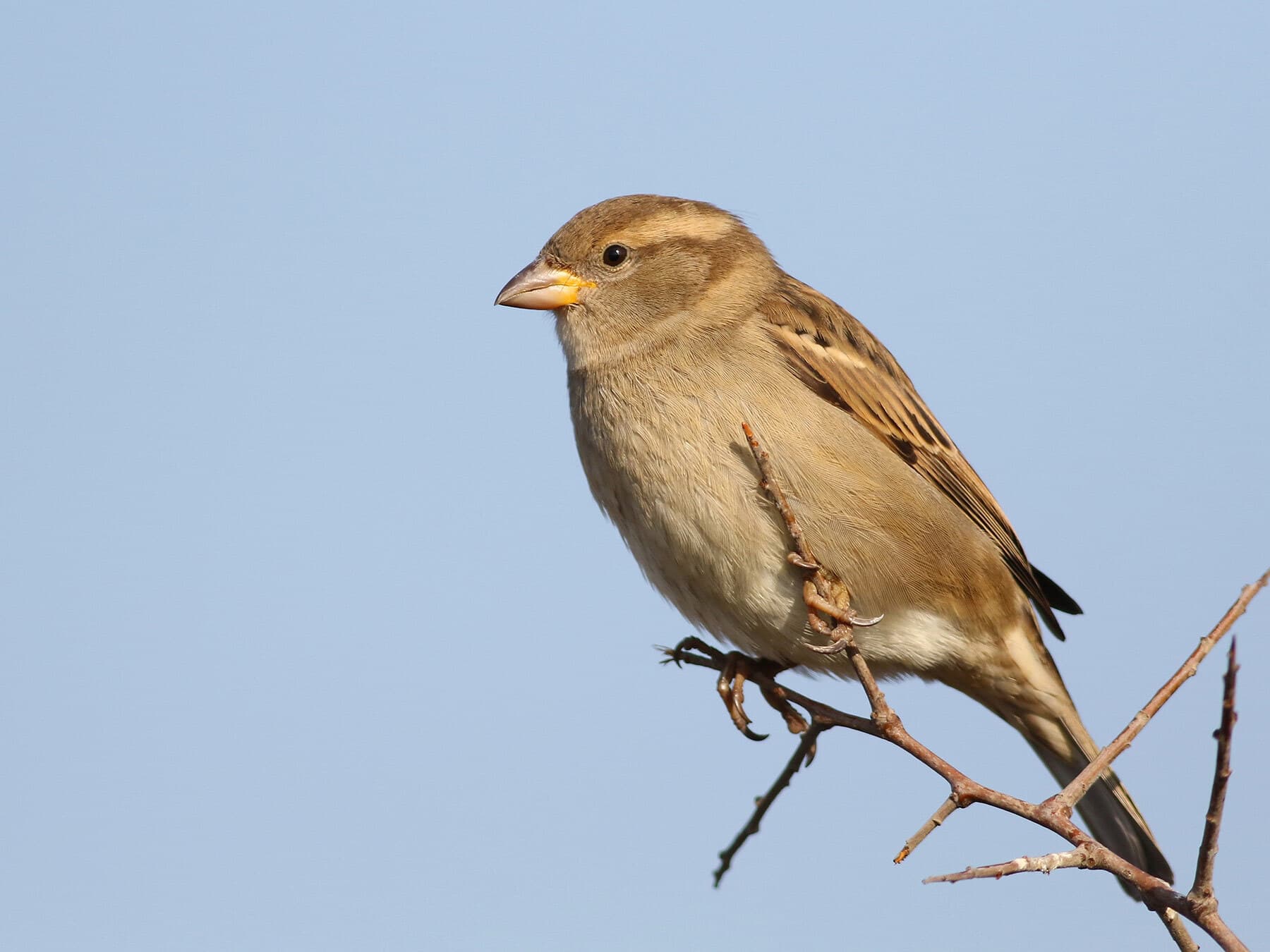
Look at the head. Only the male has a grey cap, chestnut sides to the head and a black bib. The female has no grey, no chestnut and no bib: her head is plain grey-brown with a pale buff stripe behind the eye.1
| Male | Female | |
|---|---|---|
| Crown and nape | Grey crown; chestnut from behind the eye round the nape | Plain grey-brown |
| Face | Pale grey cheeks, black line from bill to eye | Pale buff stripe behind the eye |
| Throat and breast | Black bib | Plain, no bib |
| Back and wings | Chestnut-brown streaked black, a bold white wing bar | Duller brown, striped buff and black, a paler wing bar |
| Bill | Black in spring and summer, yellowish in winter | Pale, darker on top |
The male
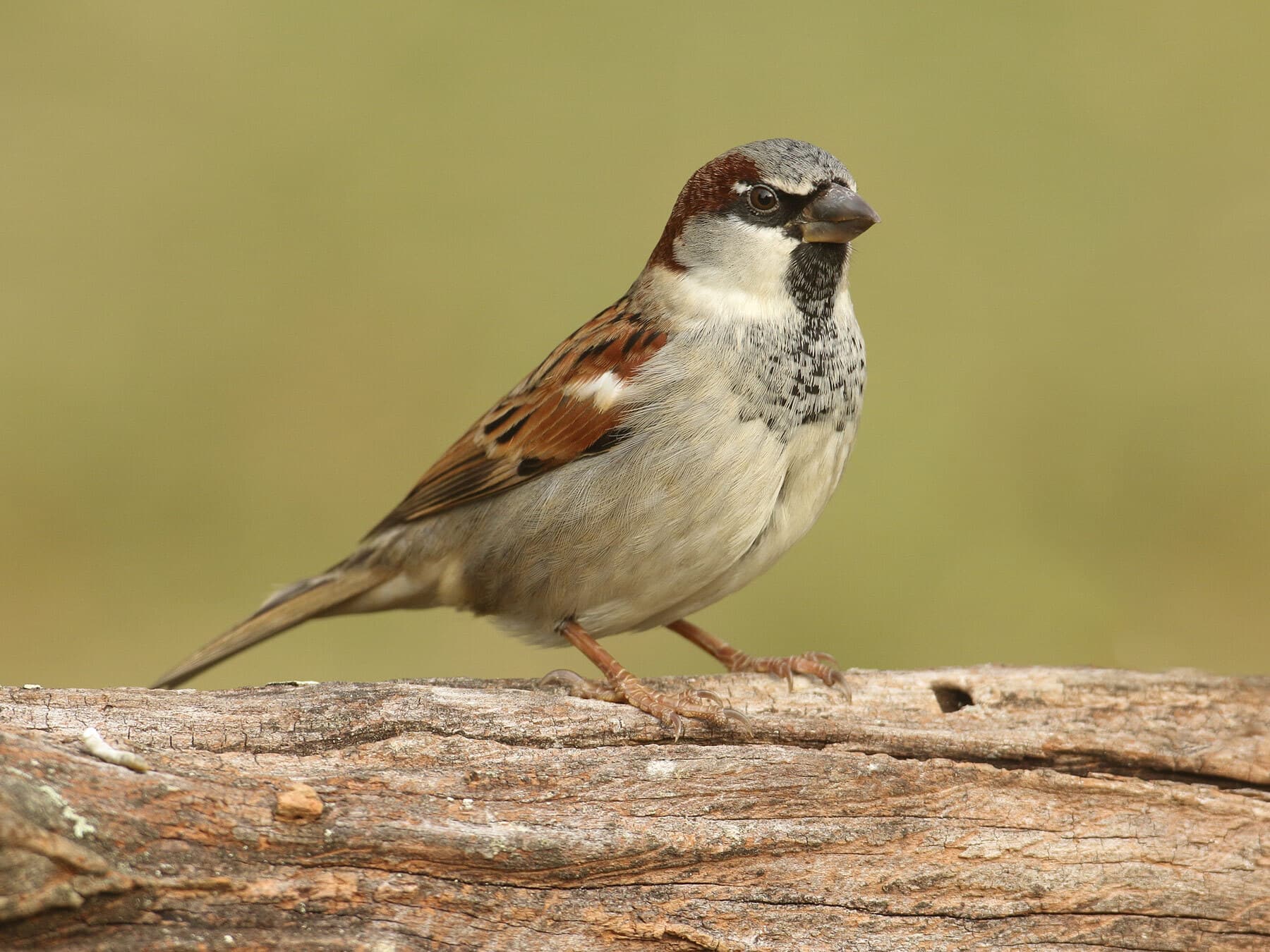
The male has a grey crown, framed by chestnut that runs from behind the eye round the sides and back of the neck; a black line from the bill to the eye and a tiny white spot just behind it; pale grey cheeks; and a black chin, throat and upper breast. The back is rusty brown streaked with black, the shoulder chestnut with one bold white bar, and the underparts pale grey.
The bib varies a lot in size from male to male.2 That matters to sparrows: males with bigger bibs rank higher in the flock, and females prefer them.
Males in winter
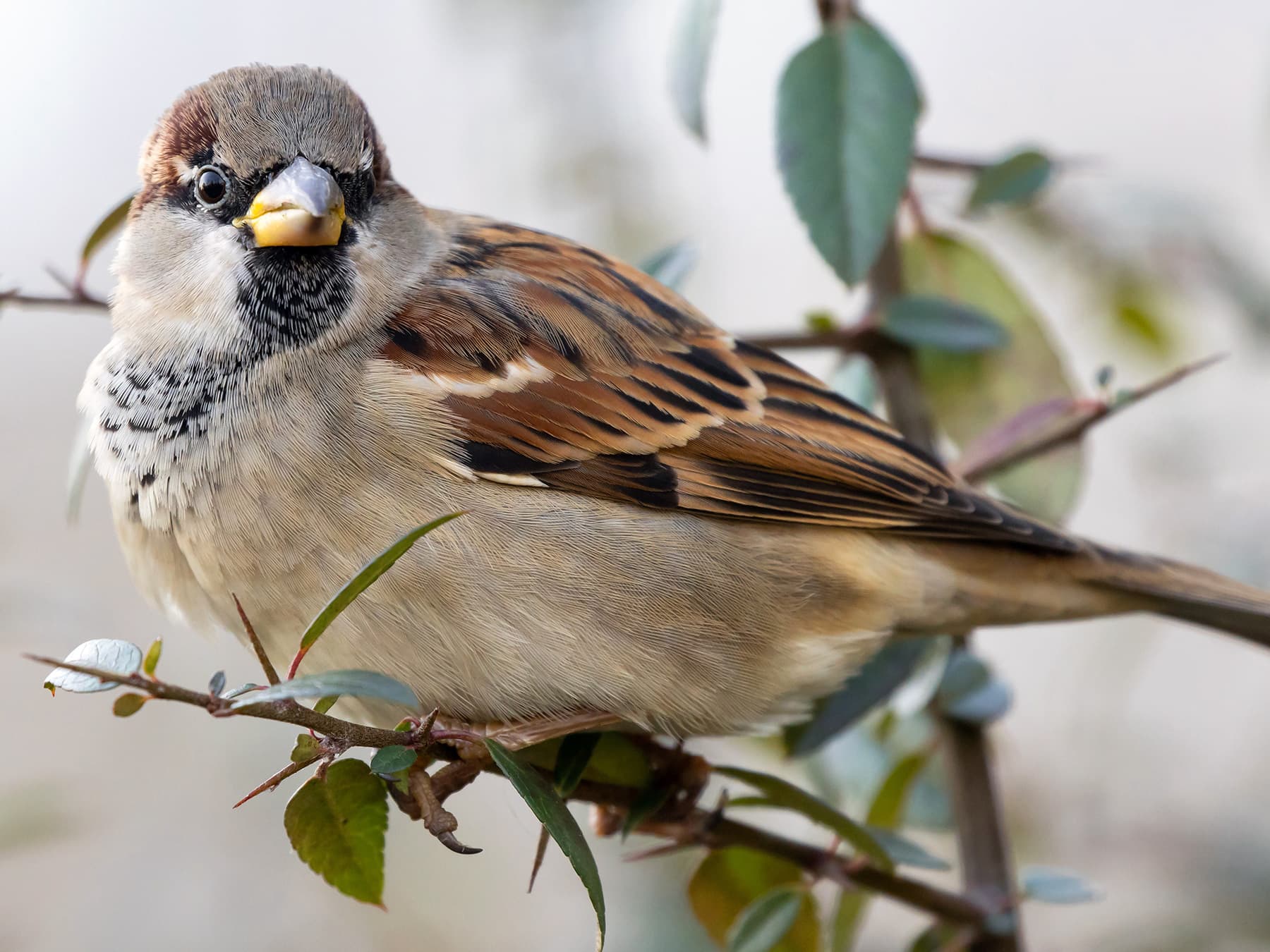
After the late-summer moult a male looks less striking. Pale tips on the new feathers hide much of the black bib and dull the chestnut, and the bill turns yellowish.3 He does not moult again before spring: instead the pale tips wear away, and by the breeding season the bib is solid black.
What does a female House Sparrow look like?
Plain buffy brown, with a back clearly striped buff, black and brown, dingy grey-brown underparts with no streaks, and a broad pale buff stripe behind the eye. There is a pale wing bar, and the thick bill is mostly pale, darker on top. She is a stocky, round-headed bird; that shape, the plain breast and the pale stripe are the clues.
Juveniles
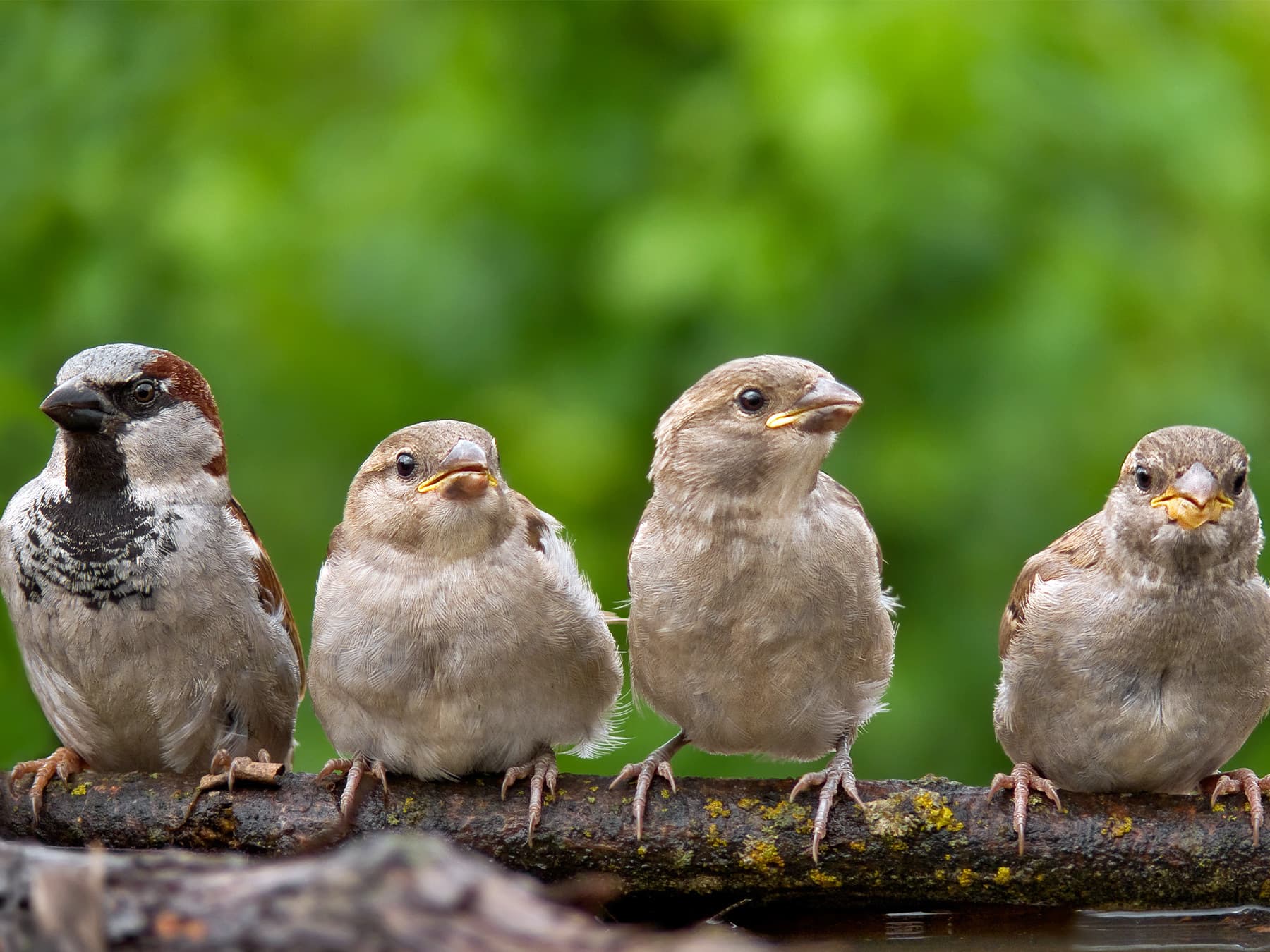
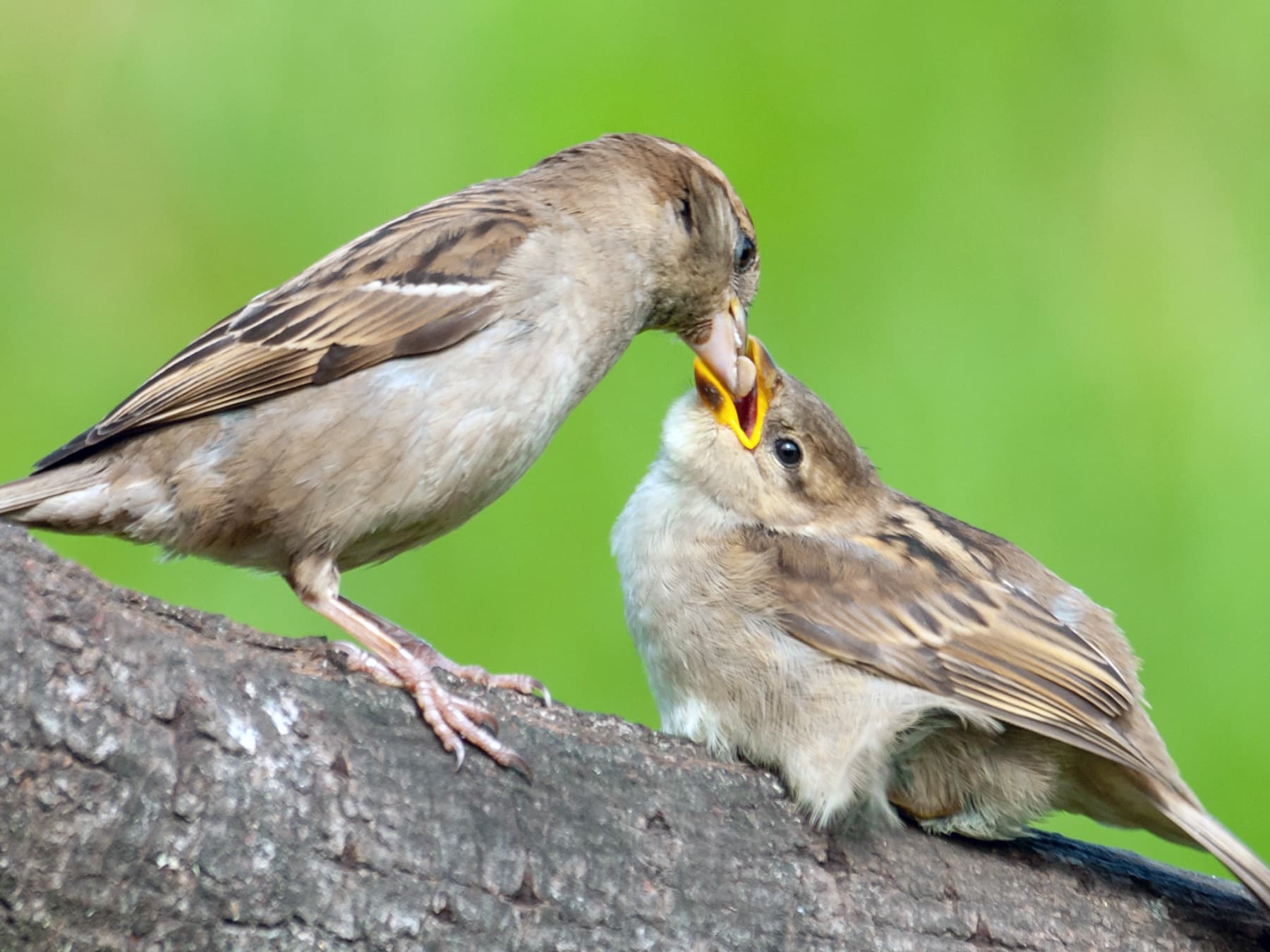
Young House Sparrows look like females, a little buffier above and browner below, with a dusky line behind the eye. Just after leaving the nest they show a yellow gape at the corners of the bill.3
Even young birds can often be sexed. Young males tend to show a hint of a greyish bib and often a small pale spot behind the eye; in one study the colour of the throat, greyish in young males and whitish in young females, sexed about 90% of birds correctly. By the end of the year the young have moulted into adult plumage.
Size
Males are slightly bigger, though you cannot see it in the field. BTO ringers find males have longer wings, 78.2 mm on average against 75.5 mm for females, but the two weigh almost the same, about 27 g.4
Roles at the nest
The male chooses a hole, often in autumn, starts to build there and calls from it to attract a female. Once they pair, she joins in, especially with the soft lining. Both sit on the eggs, though only the female has a brood patch, the bare skin that warms them, and she sits more at first; at night she broods the chicks; both feed them, and both carry away their droppings. After the young leave, the male usually looks after them for a few days.1
Females are quieter. They cheep little unless they have lost a mate, but they give a fast chatter at rival females, and at their own mate.
Birds that look like a female
A female Tree Sparrow looks just like the male, with a chestnut cap and a black cheek spot.5 A Dunnock has a thin, pointed bill and a grey head and breast. In North America, a female House Finch is streaked below and has a plain face.6 More: House Sparrow vs House Finch.
Sources
- Lowther, P. E., Cink, C. L. (2020). House Sparrow (Passer domesticus), version 1.0. Birds of the World (S. M. Billerman, ed.). Cornell Lab of Ornithology. doi:10.2173/bow.houspa.01
- RSPB. House Sparrow. RSPB Birds and wildlife. Accessed 7 October 2026. Source
- Cornell Lab of Ornithology. House Sparrow identification. All About Birds. Accessed 7 October 2026. Source
- BTO. House Sparrow (Passer domesticus). BTO BirdFacts. Accessed 7 October 2026. Source
- RSPB. Tree Sparrow. RSPB Birds and wildlife. Accessed 7 October 2026. Source
- Cornell Lab of Ornithology. House Finch identification. All About Birds. Accessed 7 October 2026. Source
- RSPB. Dunnock. RSPB Birds and wildlife. Accessed 7 October 2026. Source