
Budgerigar
Budgie, Shell Parakeet · Melopsittacus undulatus
By the Birdfact teamChecked by Nathan Cope
On this page13 sections
How to recognise it
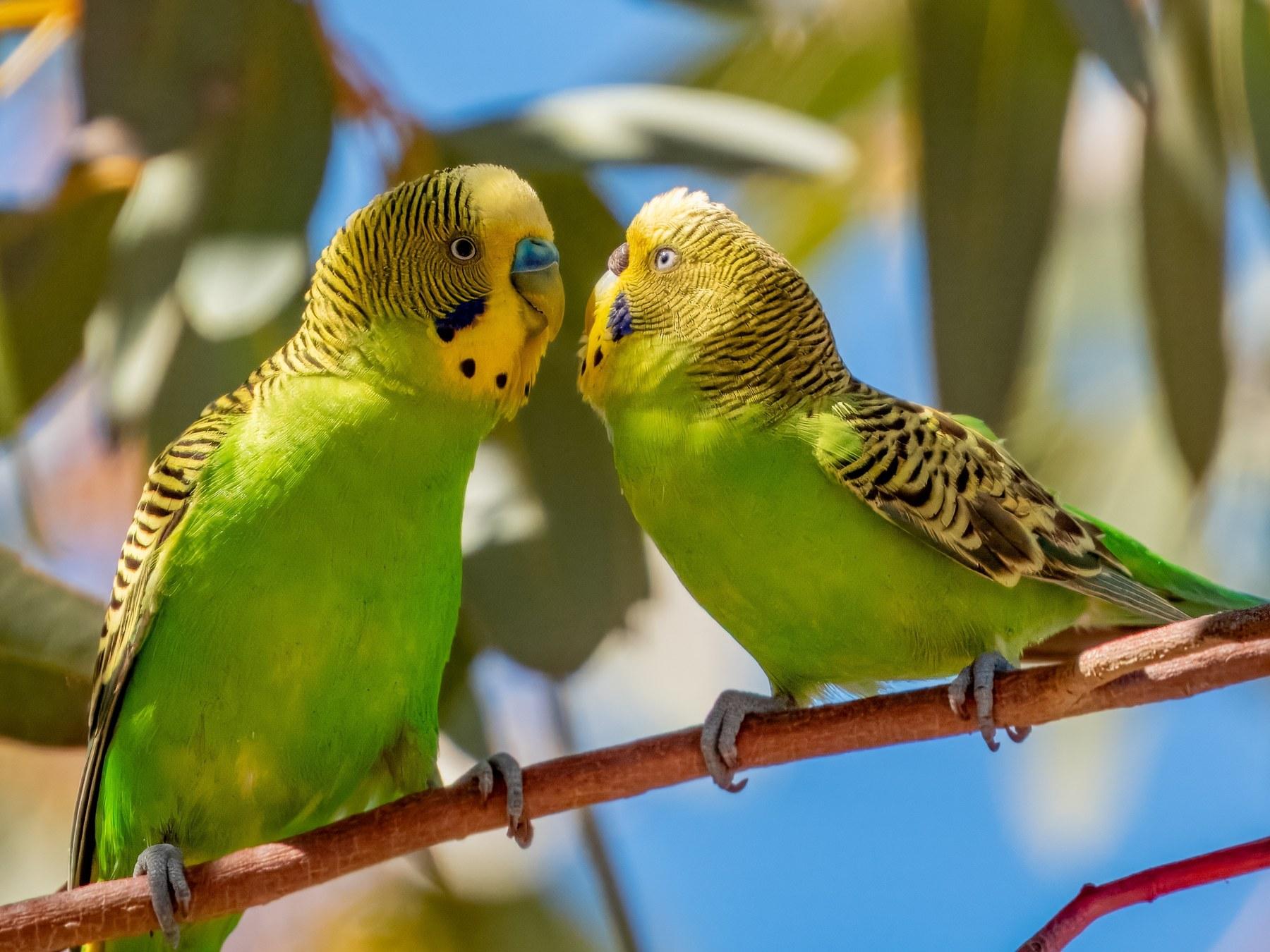
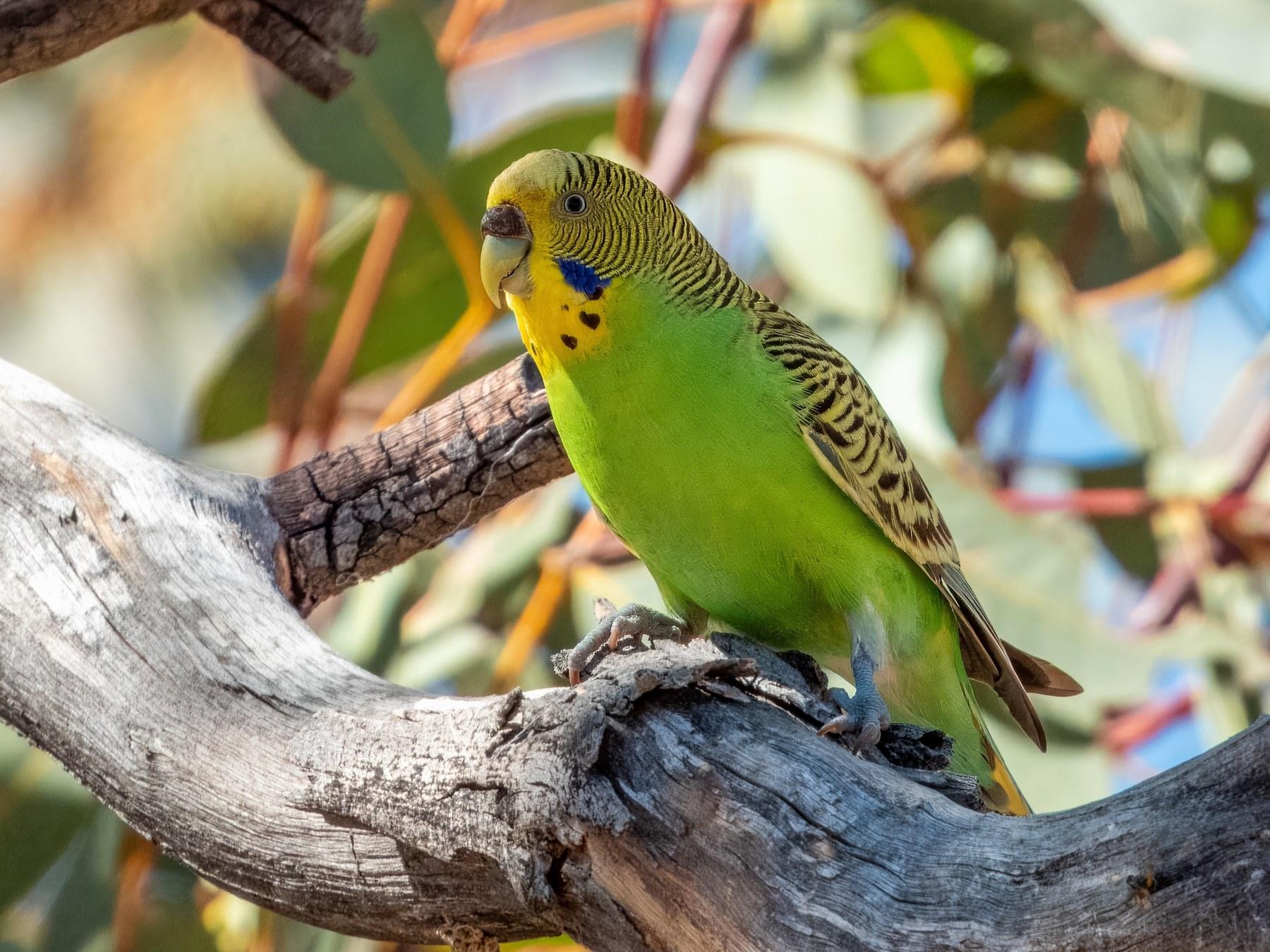
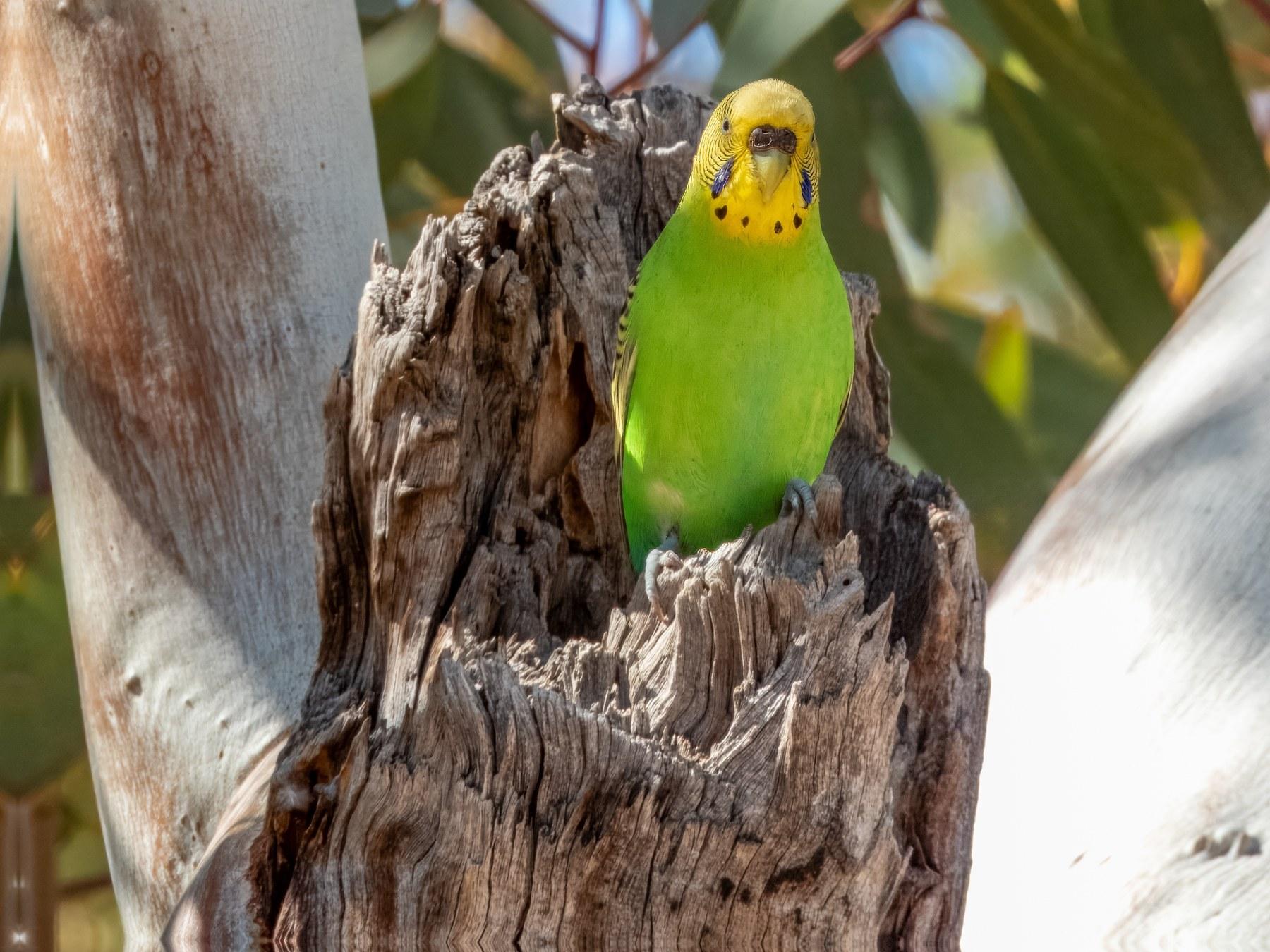
Wild Budgerigars are only ever green and yellow, with black barring above and a small violet-blue patch on the cheek. The blue, white, mauve and other colour forms are budgies bred in captivity, the same species as the wild bird.
Close up, the forehead, face and throat are pale yellow, and a line of black spots crosses the throat. Black-and-yellow barring runs from the crown to the nape and broadens into scalloping on the back and wings. The underparts, lower back and rump are light green. The tail is a dull blue, with a yellow band in the middle of each outer feather.
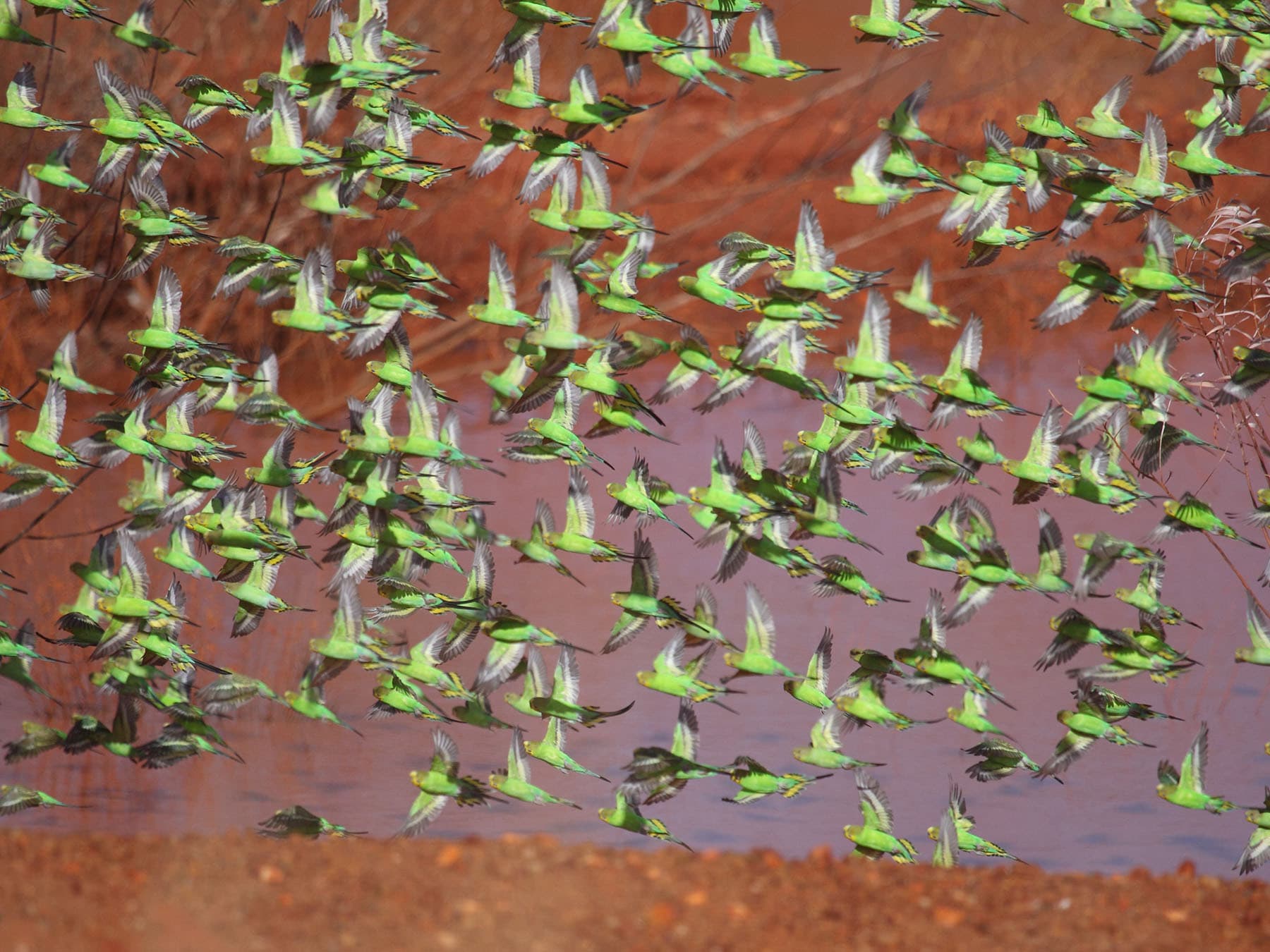
Flocks are the usual sight, flying in a characteristic undulating way.
Size and weight
A Budgerigar is 17–18 cm long and weighs 26–29 g. In AVONET, a global dataset of bird measurements, its wing averages 95.4 mm and its tail 93.2 mm.1 An Australian banders' guide drawn from the national handbook gives a wider weight range for birds in the hand, 19–30 g for adult males and 12–40 g for adult females, with no sample sizes.2
Male, female and young
Males and females look alike in plumage. The way to tell them apart is the cere, the bare skin above the bill around the nostrils. It is dark blue in adult males. In females it is brownish when breeding and light blue at other times, paler than the male's.
Young birds are duller than adults, with barring that runs down onto the forehead, no black spots on the throat and a dark eye. Adults have a white or yellowish eye. Young birds start to moult into an adult-like plumage about seven weeks after leaving the nest, and are in full adult plumage at 3–4 months old.
The plumage also reflects ultraviolet light. In lab trials with captive birds of the wild green type, females consistently preferred males whose plumage reflected ultraviolet, while the yellow glow the plumage gives off under an ultraviolet lamp made no detectable difference to how attractive a male was.3, 4
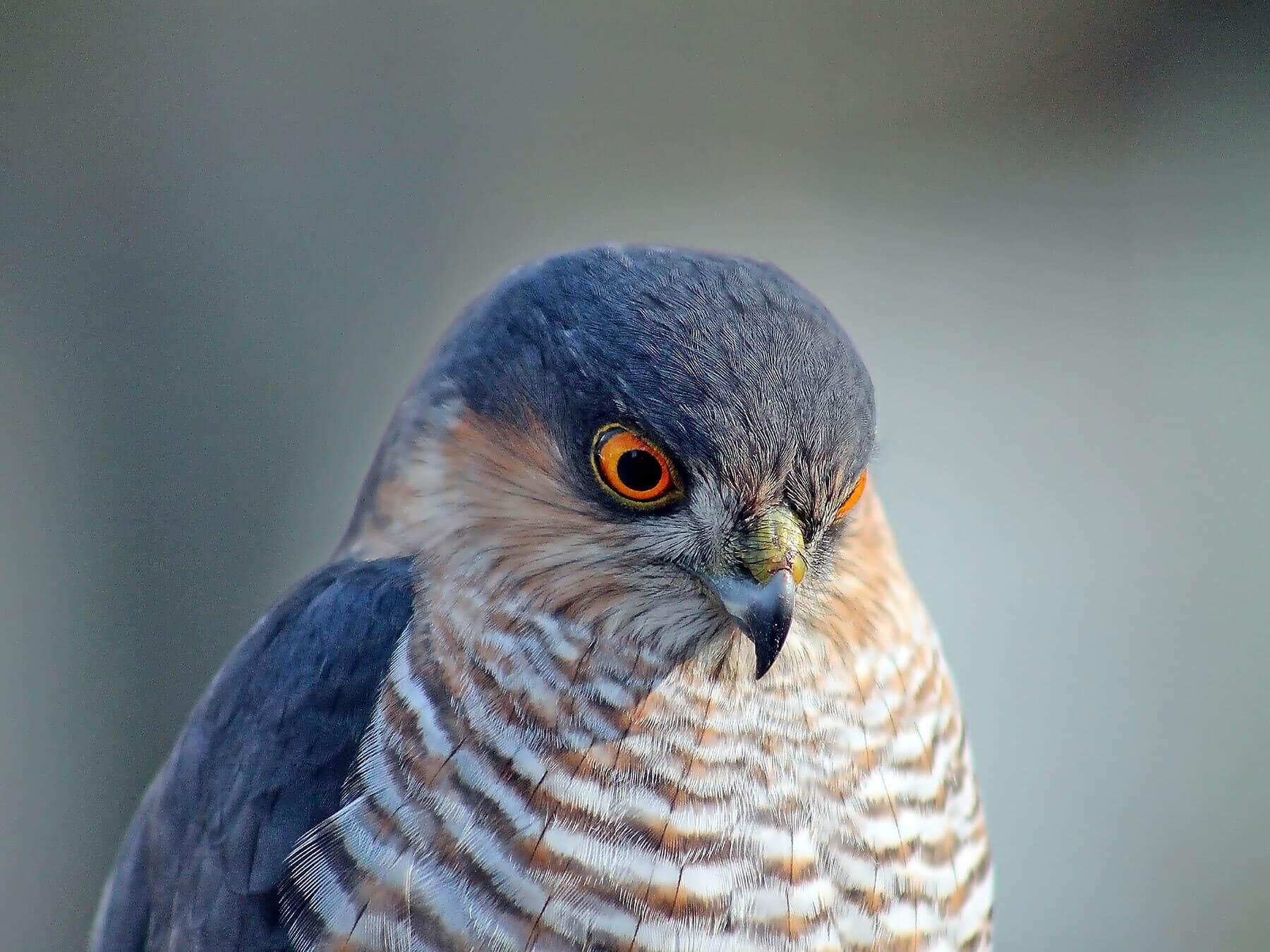
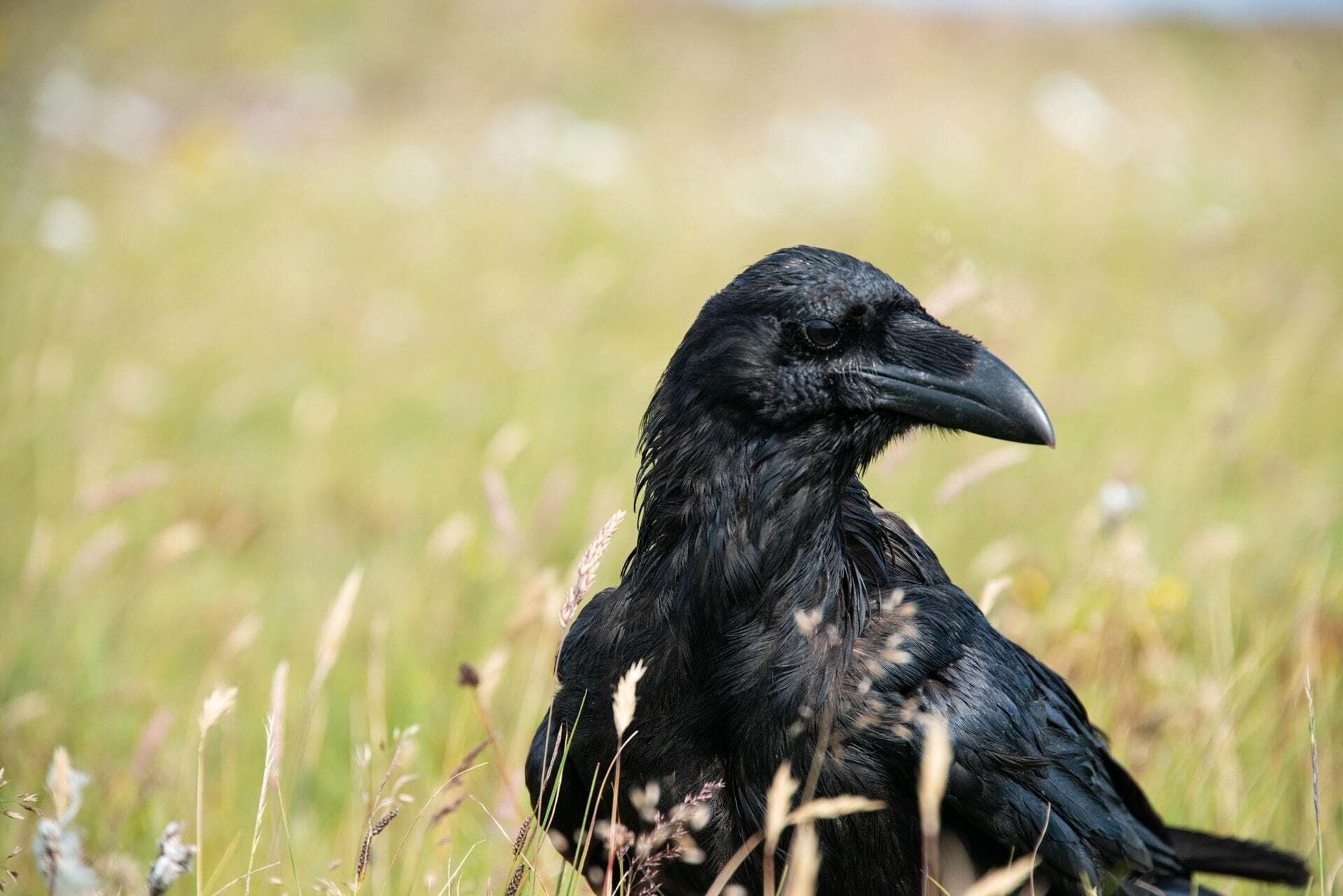
Identifying it from the Cockatiel
Cockatiels often join Budgerigars at waterholes. A Cockatiel is much larger, 29–33 cm, and mainly brownish grey, with a long wispy crest and a white patch on the wing. The male has a yellow face with an orange cheek patch. A Budgerigar is green and yellow, with a barred head and back.
Not sure it’s a Budgerigar? Check your photo: Birdfact names the bird and shows the look-alike side by side.
Its size
Adults- Length
- 17–18 cm
- Weight
- 26–29 g
Its song and calls
Budgerigars are fairly noisy, and a flock keeps up a steady, mellow chatter with raspy notes mixed in. The calls heard most often are a liquid, pleasant 'che-lee' and a short, dry, rasping 'krrr' or 'trrt'.
The contact call, which keeps flock mates in touch, is a warbling 'chirrup', and the alarm call is 'zit'.
Vocal learning and talking
Budgerigars learn their contact calls, even as adults. In a captive study, six adult males kept in two cages each came to share one main call type with their cage mates within eight weeks.5 In nine newly formed captive pairs, eight of the nine males copied their mate's call and none of the females copied the male's, and every pair shared a call within an average of 2.1 weeks.6
Males also give a warble, a long, quiet, varied song-like sound that can be aimed at females or at other males. A 2019 study of captive males notes that its purpose is still largely uncertain, though there is some evidence it can bring on breeding.7
Pet budgies can learn to mimic human speech. In October 2018, Australian Geographic reported that a male called Puck held the world record for a bird's vocabulary, at 1,728 words.8
Heard one and not sure? Let the bird song identifier listen.
When and where to see it
November
Leaving
The year across North America
Choose a place on the map to see its year, or find yours.
Most recorded in November
Up to under 0.1% of a place’s bird records that monthHere in other months
How this map is made
Each county, state or province is shaded by the Budgerigar’s share of all the bird records there that month: the darker, the larger the share. A place with only a trace of records in a month is left unshaded. Shades compare places on this map with each other, not one bird with another. Records: GBIF eBird Observation Dataset, 2019–2024. Map: Natural Earth; place centres © OpenStreetMap contributors.
How often the Budgerigar turns up in the United States through the year, from birdwatchers' records.
United States
Summer visitor · all year · most records in August
Show as a table
| Month | United States |
|---|---|
| January | <0.001% (regular) |
| February | <0.001% (regular) |
| March | <0.001% (regular) |
| April | <0.001% (regular) |
| May | <0.001% (regular) |
| June | <0.001% (regular) |
| July | <0.001% (regular) |
| August | 0.001% (regular) |
| September | <0.001% (regular) |
| October | <0.001% (regular) |
| November | <0.001% (regular) |
| December | <0.001% (regular) |
Worldwide: recorded regularly in 34 countries
Countries where it was recorded in at least 3 of the 6 years 2019–2024. Linked countries have their own bird list.
Data: EOD – eBird Observation Dataset (Cornell Lab of Ornithology), accessed via GBIF.org, CC BY 4.0. Records from 2019–2024, aggregated and filtered by Birdfact. How these lists are made
The Budgerigar is native to mainland Australia, where it lives mainly inland, away from the coasts. It is missing from Cape York Peninsula, Tasmania, most of the east coast, the north of the Northern Territory and the far south-west.
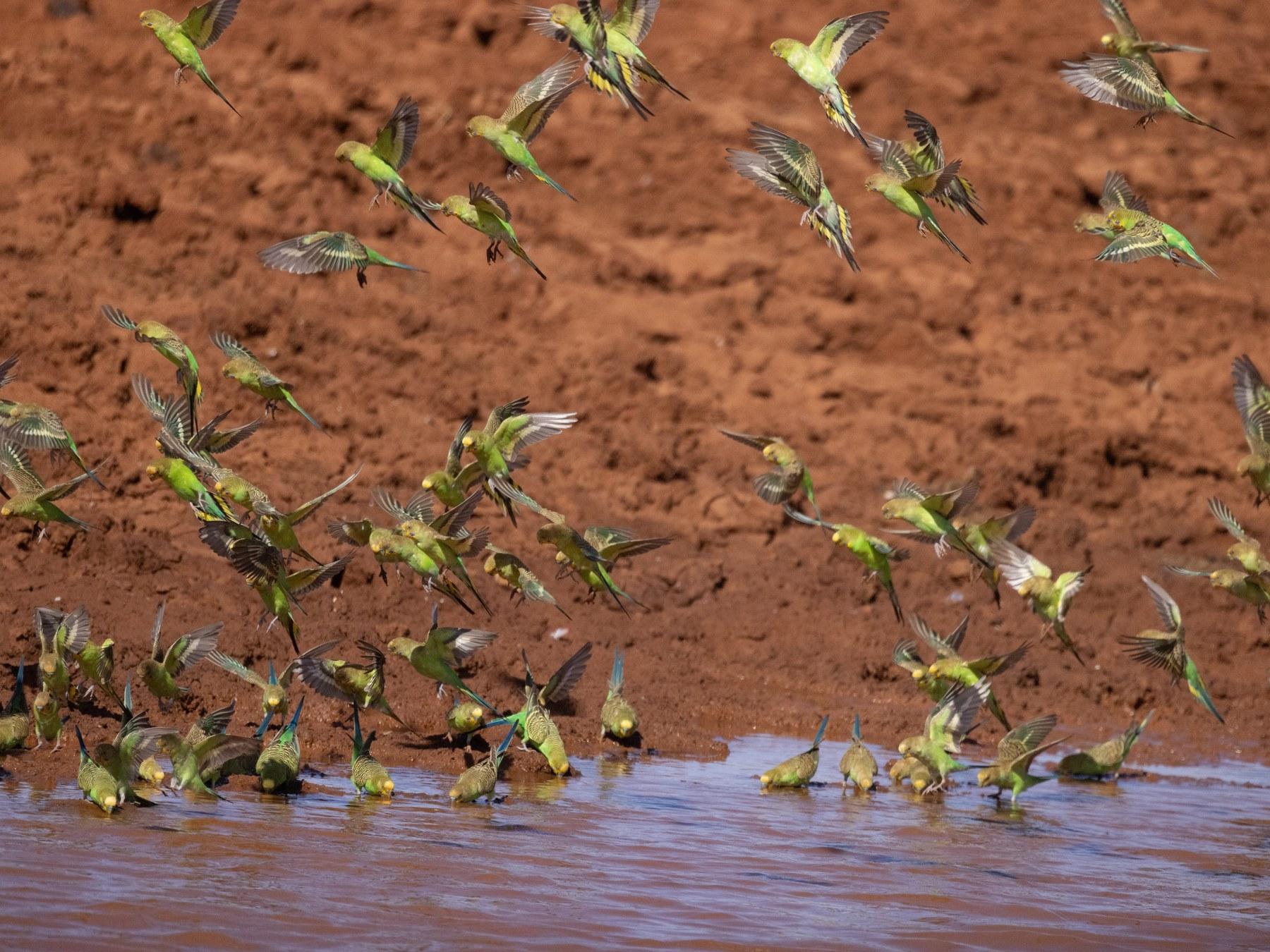
It uses a wide range of open country: open plains, lightly wooded grassland, savanna, open forest and woodland, mallee, dry scrub, farmland and the growth along watercourses, reaching even into mulga desert. It is seldom far from water. Birds gather to drink at waterholes and stock tanks, often with pigeons, finches and other parrots, and most feeding and drinking happens in the morning.
Around Canberra it is a rare visitor. The local bird club's report for the year to June 2017 says single birds there are most probably escaped cage birds, though wild flocks are sometimes recorded.9
Nomadic range
Budgerigars are nomads. Over most of their range they move with water and seeding grasses. Where food comes regularly, some populations are fairly predictable from season to season, and in the far south birds are present only from September to January.
In drought, birds move to wherever conditions are better. As the drought deepens they may be held in these refuges, and they return to their old areas only once rain allows. They generally fly north in winter, covering long distances.10
They carry little fat. In a study in inland mid-eastern Australia, birds past the juvenile stage carried fat equal to about 4% of their body weight, against an average of 25% in caged birds, and showed no detectable build-up of fat before moving. On that fat reserve, the study put their non-stop flight range at about 100 km.11
Range outside Australia
Outside Australia, birds from captivity have bred in the wild in a few places. A population introduced to the Tampa Bay area of central Florida in the 1950s peaked at perhaps more than 20,000 birds in the late 1970s, then declined, and the last birds disappeared in 2014. The main cause was probably competition from Common Starlings and House Sparrows for places to nest.12
In Japan, a 2026 paper reports established, breeding feral populations in Osaka, Aichi, Kanagawa and Tokyo since the 1980s.13
Tips for seeing it
What it eats
Wild Budgerigars eat almost nothing but seeds: the small seeds of native grasses and other low plants such as saltbush, mostly taken on or near the ground.
They forage on the ground and sometimes climb tussocks to strip the plants. Each seed is husked and swallowed whole or broken. After the morning's feeding and drinking, birds rest in the shade through the middle of the day.
A study at two sites in inland mid-eastern Australia in 1973–74 found the birds eating only the seeds of ground plants, 0.5–2.5 mm long. Mitchell grass seeds were the main food at one site. Further inland, they took mainly Boerhavia diffusa, saltbush and Astrebla pectinata in the hot months, and Iseilema in the cold months.14 Males and females, adults and young ate much the same, and the study found no sign that breeding birds need soft, unripe seed or insects to feed their young.14 There is more in What do budgies eat?
Feeding and drinking
Sources differ on how much water a Budgerigar needs. A diet of dry seed holds almost no moisture, and BirdLife Australia says the birds need to drink fresh water every day. Birds of the World says they can survive long periods without water, though they are rarely far from a source.15, 12
At the water, some birds drink while hovering above the surface, and a few may even settle on it. They may drink up to 5.5% of their body weight a day, and where there is no standing water they sip dew in the early morning and bathe in wet grass.10
Nesting and breeding
Budgerigars tend to breed in response to rain. The usual seasons are June to September in the north of the range and August to January in the south, but they can breed at any time of year after substantial rain. Where conditions allow, there may be two breeding seasons in one year, and a pair may raise several broods.
They often nest communally, sometimes within metres of each other. The nest is a hollow in a tree trunk, branch or stump, a fallen limb or even an old fence post.
In a study of wild birds from semi-arid and arid Australia, non-breeding birds had small testes or small, undeveloped ovarian follicles, and in breeding males the testes grew 30–40 times in size.16
Eggs and chicks
The eggs are round and white. A clutch is usually 4–6 eggs, sometimes up to 8, though Australian accounts give 6–8 or 4–8.12, 17, 10
Only the female incubates, for about 18 days. The chicks hatch naked and helpless, and the male forages and feeds them. Sources differ on how long the young stay in the hollow: about 30 days in Birds of the World, and 35 days in the Australian Museum's and Bush Heritage's accounts.12, 17, 10
In inland mid-eastern Australia, chicks built up fat in the nest and used it as a reserve for their first few weeks after leaving.11
Behaviour
Budgerigars live in flocks. Most flocks are small, from as few as three birds to 100 or more. After a season of plentiful rain and food they can number thousands, and occasionally tens of thousands.
In good years, flocks darken the sky in places, and perching flocks have been heavy enough to snap eucalypt branches 4 cm thick.12
Resting birds preen each other, and flock mates call to each other all the time with a chirruping sound.
Lifespan and predators
We found no published age for a wild Budgerigar: no banding record, survival rate or study of wild birds gives one.
There is more on budgie lifespans in How long do budgies live?
Predators and pressures
Feral cats prey on Budgerigars. The sources we read say almost nothing about their native predators.
Feral and native grazing animals may cause local declines in the plants the birds feed on. Buffel Grass, African Love Grass and other introduced pasture grasses are replacing the native grasses they prefer, and wildfires may destroy nesting hollows.10
Conservation
The Budgerigar is rated Least Concern on the IUCN Red List, in BirdLife International's assessment published in 2018.18 It is abundant, though we found no count of the world or Australian population, and no survey trend, in the sources we read.
Its numbers can swing widely over several years with the climate, probably as much through short-term breeding success as through birds moving in. Water points built for livestock across much of the interior appear to have increased some populations permanently.12
Similar birds
Often mistaken for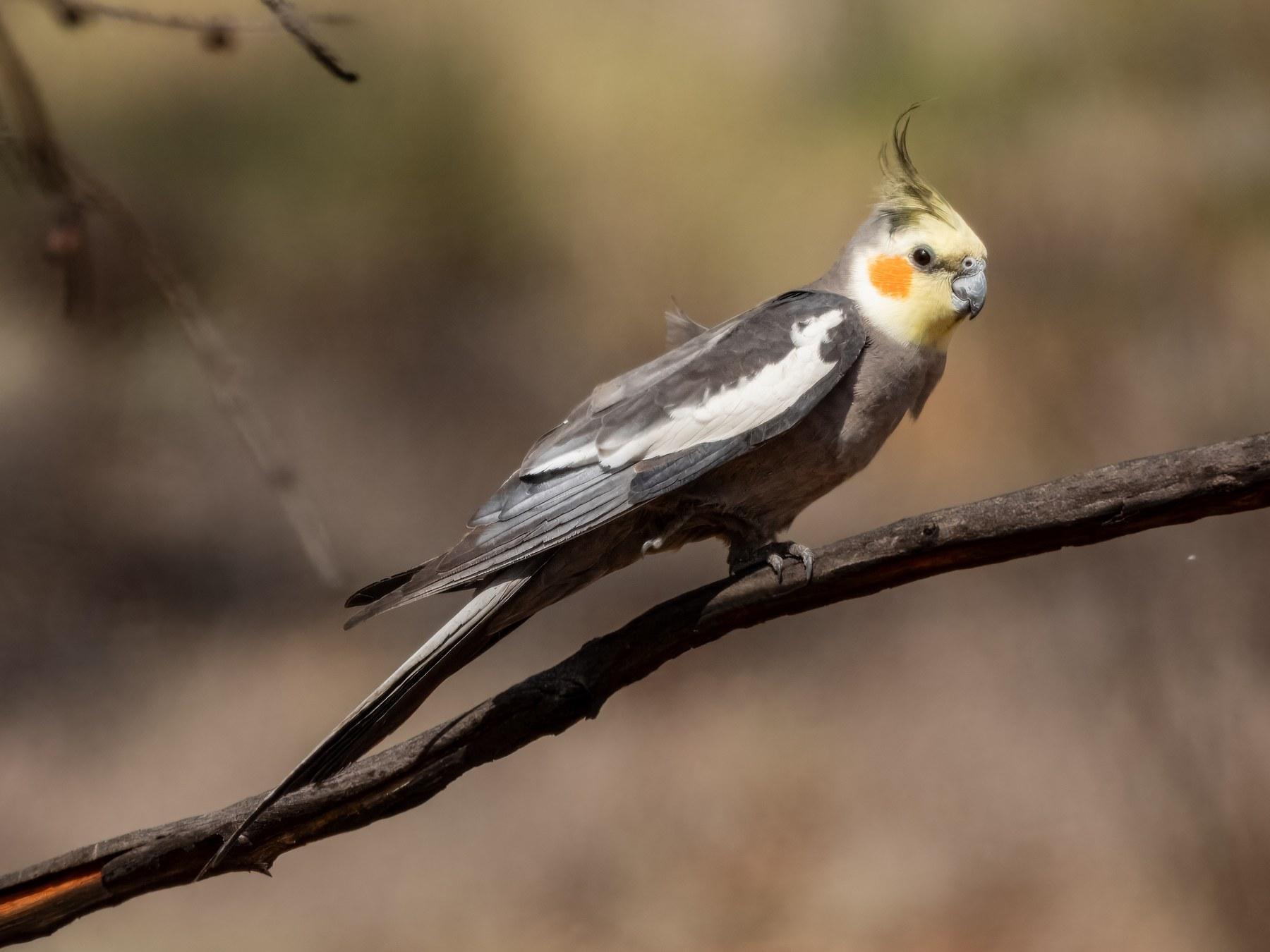
Quick facts
- Length
- 17–18 cm
- Weight
- 26–29 g
- Family
- Old World Parrots
- Migration
- Nomadic
- Global status (IUCN)
- Least Concern
- Population trend
- No survey trend was found. Abundant, with numbers that can swing widely with climatic conditions over several years; some populations appear to have increased permanently where livestock water points were built.
- Also called
- Budgie, Shell Parakeet
- Scientific name
- Melopsittacus undulatus
Questions
4Is a budgie the same as a budgerigar?
Yes. Budgie is an informal short form of budgerigar, and the bird is also called the shell parakeet. Pet budgies are the same species as the wild green and yellow bird, bred in captivity since the 1850s.10
Where does the name budgerigar come from?
It is said to come from a name in Gamilaraay, an Aboriginal language. What that name meant is uncertain.
What does its scientific name mean?
The genus name, Melopsittacus, means 'melodious parrot' in Greek, and undulatus is Latin for 'undulated', after the scalloped wings.10
Do budgies mate for life?
Budgerigars are monogamous and are said to mate for life.10 We found no study of how long wild pairs stay together.
Sources
25- 1Tobias, J. A. et al. (2022). AVONET: morphological, ecological and geographical data for all birds. Ecology Letters 25: 581-597. Accessed 20 November 2026. Source (opens in a new tab)
- 2Hardy, J. W. (compiler). Bird in the Hand, 2nd edition: Budgerigar (species no. 310). Australian Bird Study Association. Accessed 20 November 2026. Source (opens in a new tab)
- 3Pearn, S. M., Bennett, A. T. D. and Cuthill, I. C. (2001). Ultraviolet vision, fluorescence and mate choice in a parrot, the budgerigar Melopsittacus undulatus. Proceedings of the Royal Society B 268(1482): 2273-2279. doi:10.1098/rspb.2001.1813 (opens in a new tab)
- 4Pearn, S. M., Bennett, A. T. D. and Cuthill, I. C. (2003). The role of ultraviolet-A reflectance and ultraviolet-A-induced fluorescence in budgerigar mate choice. Ethology 109(12): 961-970. doi:10.1046/j.0179-1613.2003.00936.x (opens in a new tab)
- 5Farabaugh, S. M., Linzenbold, A. and Dooling, R. J. (1994). Vocal plasticity in budgerigars (Melopsittacus undulatus): evidence for social factors in the learning of contact calls. Journal of Comparative Psychology 108(1): 81-92. doi:10.1037/0735-7036.108.1.81 (opens in a new tab)
- 6Hile, A. G., Plummer, T. K. and Striedter, G. F. (2000). Male vocal imitation produces call convergence during pair bonding in budgerigars, Melopsittacus undulatus. Animal Behaviour 59(6): 1209-1218. doi:10.1006/anbe.1999.1438 (opens in a new tab)
- 7Tobin, C., Medina-García, A., Kohn, G. M. and Wright, T. F. (2019). Does audience affect the structure of warble song in budgerigars (Melopsittacus undulatus)?. Behavioural Processes 163: 81-90. doi:10.1016/j.beproc.2017.10.007 (opens in a new tab)
- 8Australian Geographic (2018). Desert nomads: 4 things you didn't know about budgies. Australian Geographic. Accessed 20 November 2026. Source (opens in a new tab)
- 9Canberra Ornithologists Group (2017). Budgerigar (species 310), Annual Bird Report for the twelve months to June 2017. Canberra Ornithologists Group. Accessed 20 November 2026. Source (opens in a new tab)
- 10Bush Heritage Australia. Wild Budgerigars. Bush Heritage Australia. Accessed 20 November 2026. Source (opens in a new tab)
- 11Wyndham, E. (1980). Total body lipids of the budgerigar, Melopsittacus undulatus (Psittaciformes: Platycercidae) in inland mid-eastern Australia. Australian Journal of Zoology 28(2): 239-247. doi:10.1071/zo9800239 (opens in a new tab)
- 12Collar, N. and Boesman, P. F. D. (2020). Budgerigar (Melopsittacus undulatus), version 1.0. Birds of the World (J. del Hoyo, A. Elliott, J. Sargatal, D. A. Christie and E. de Juana, editors). Cornell Lab of Ornithology. doi:10.2173/bow.budger.01 (opens in a new tab)
- 13Park, S. M. and Oh, H. S. (2026). First record of a Budgerigar Melopsittacus undulatus (Shaw, 1805) in the wild on Jeju Island, South Korea. BioInvasions Records 15(1): 213-222. doi:10.3391/bir.2026.15.1.20 (opens in a new tab)
- 14Wyndham, E. (1980). Environment and food of the budgerigar Melopsittacus undulatus. Australian Journal of Ecology 5(1): 47-61. doi:10.1111/j.1442-9993.1980.tb01231.x (opens in a new tab)
- 15BirdLife Australia. Budgerigar (bird profile). BirdLife Australia. Accessed 20 November 2026. Source (opens in a new tab)
- 16Pohl-Apel, G., Sossinka, R. and Wyndham, E. (1982). Gonadal cycles of wild budgerigars, Melopsittacus undulatus (Psittaciormes: Platycercidae). Australian Journal of Zoology 30(5): 791-797. doi:10.1071/zo9820791 (opens in a new tab)
- 17Australian Museum (2025). Budgerigar (animal factsheet), updated 10/12/25. Australian Museum. Accessed 20 November 2026. Source (opens in a new tab)
- 18BirdLife International (2018). Melopsittacus undulatus. The IUCN Red List of Threatened Species (assessment). IUCN Red List of Threatened Species. Accessed 20 November 2026. Source (opens in a new tab)
- 19Rowley, I. and Kirwan, G. M. (2020). Cockatiel (Nymphicus hollandicus), version 1.0. Birds of the World (J. del Hoyo, A. Elliott, J. Sargatal, D. A. Christie and E. de Juana, editors). Cornell Lab of Ornithology. doi:10.2173/bow.cockat.01 (opens in a new tab)
- 20IUCN (2026). The IUCN Red List of Threatened Species, as published in GBIF's IUCN checklist (dataset 19491596-35ae-4a91-9a98-85cf505f1bd3). GBIF. Accessed 20 November 2026. Source (opens in a new tab)
- 21AviList Core Team (2026). AviList: The Global Avian Checklist, v2025b. AviList. doi:10.2173/avilist.v2025b (opens in a new tab)
- 22Holmes, T. (2024). Wild Budgerigars | The Native Budgie. ANBC. Accessed 20 November 2026. Source (opens in a new tab)
- 23Farabaugh, S. M., Dent, M. L. and Dooling, R. J. (1998). Hearing and vocalizations of wild-caught Australian budgerigars (Melopsittacus undulatus). Journal of Comparative Psychology 112(1): 74-81. doi:10.1037/0735-7036.112.1.74 (opens in a new tab)
- 24Watanabe, A. et al. (2025). Acquired human speech sounds replace conspecific syllables in the song of budgerigars Melopsittacus undulatus. Behavioural Processes 226: 105171. doi:10.1016/j.beproc.2025.105171 (opens in a new tab)
- 25Atlas of Living Australia (2026). Melopsittacus undulatus species record and occurrence count. Atlas of Living Australia. Accessed 20 November 2026. Source (opens in a new tab)

Checked by
Nathan Cope, founder and editor
Nathan founded Birdfact and leads its writers and contributors in the UK, the US and Canada. He has watched and studied birds for more than ten years, and checks every article and species guide before it’s published.