


Rainbow Lorikeet
Rainbow Lory · Trichoglossus moluccanus
By the Birdfact teamChecked by Nathan Cope
On this page21 sections
- How to recognise it
- Its size
- Its song and calls
- When and where to see it
- What it eats
- Nesting and breeding
- Behaviour
- Lifespan and predators
- Conservation
- What does a Rainbow Lorikeet look like?
- How big is a Rainbow Lorikeet?
- How much does a Rainbow Lorikeet weigh?
- What is the scientific name of a Rainbow Lorikeet?
- Are Rainbow Lorikeets aggressive?
- Are Rainbow Lorikeets endangered?
- Do Rainbow Lorikeets mate for life?
- Can Rainbow Lorikeets talk?
- Similar birds
- Rainbow Lorikeet guides
- Quick facts
- Sources
How to recognise it
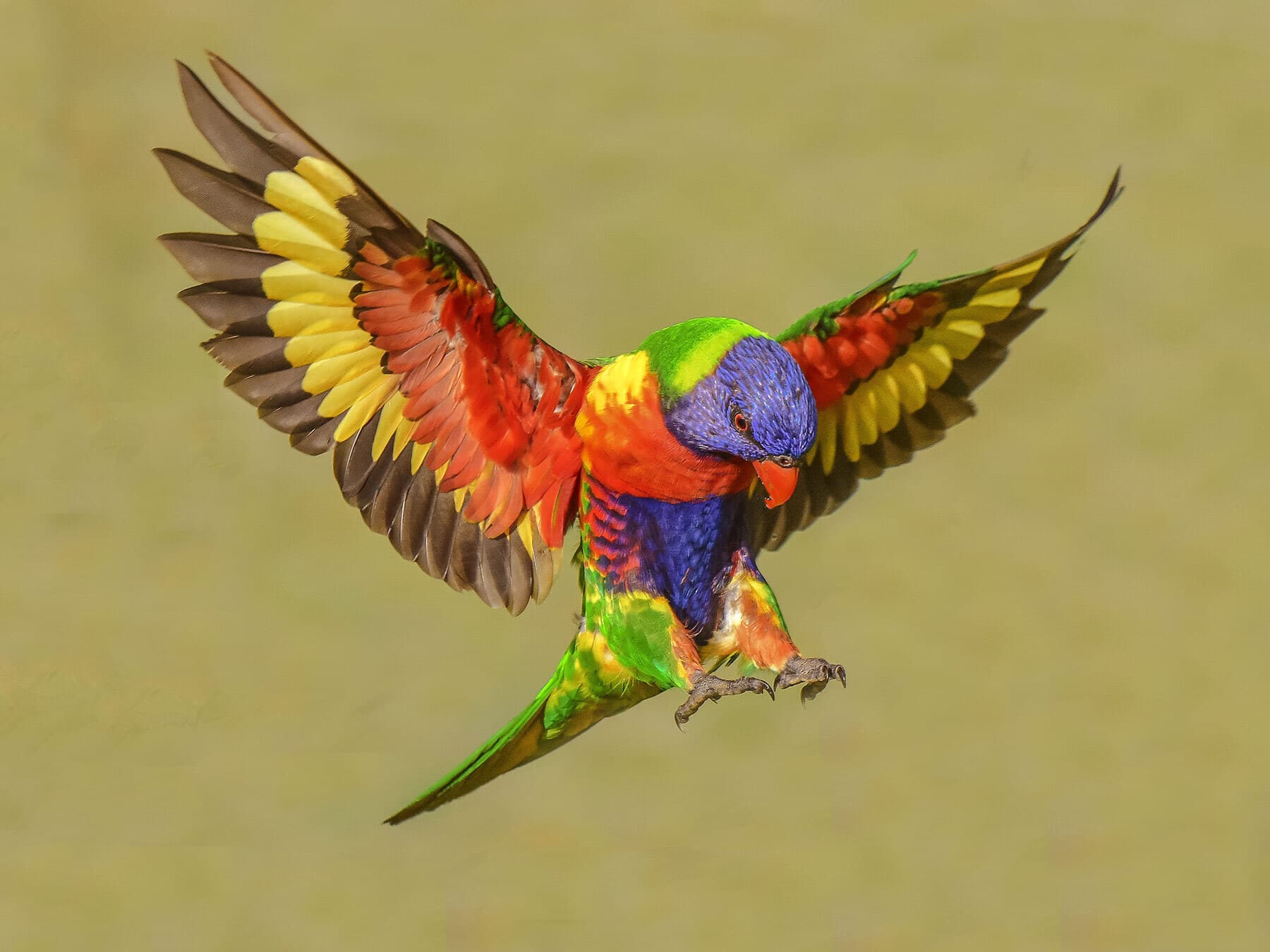
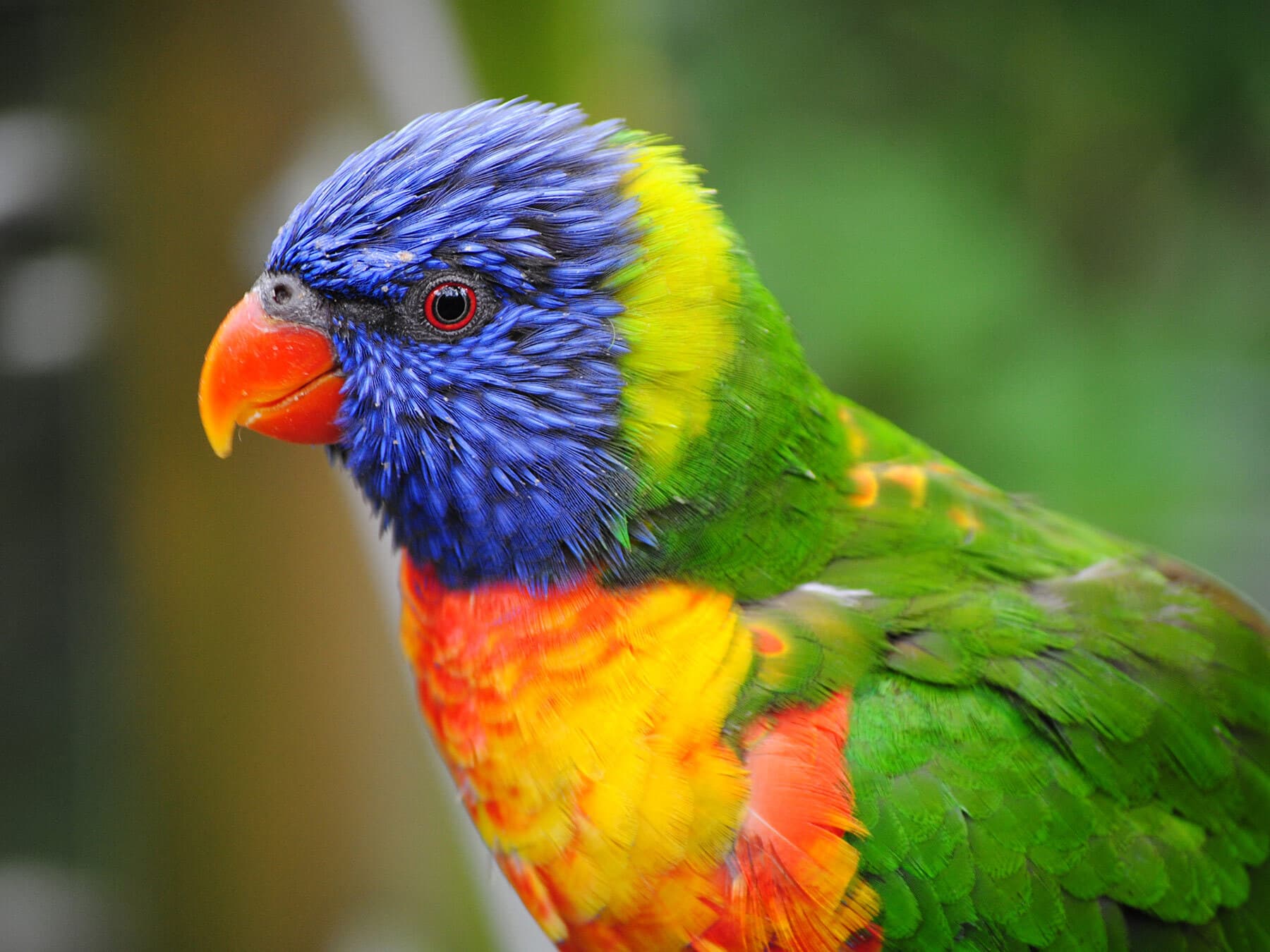
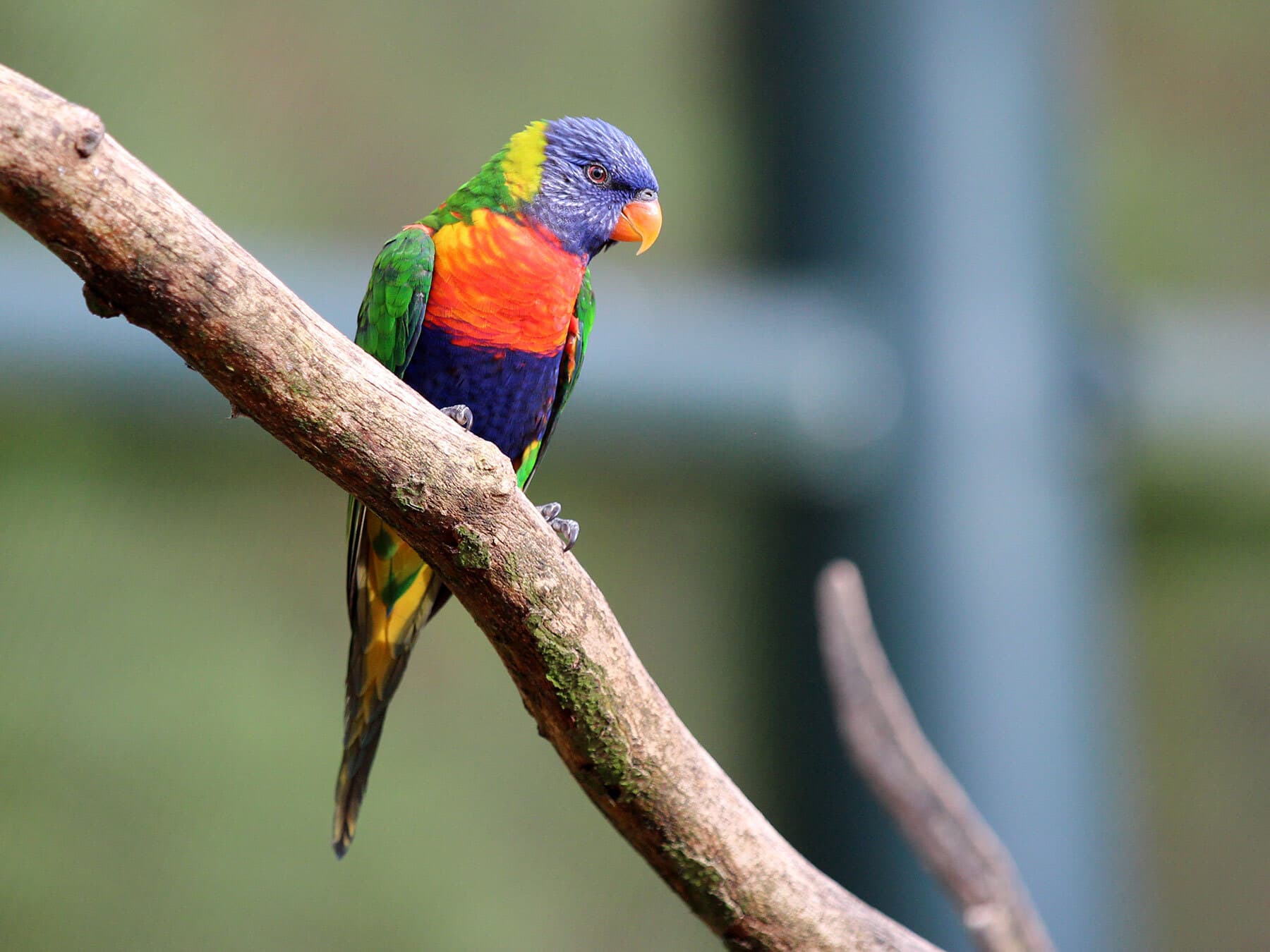
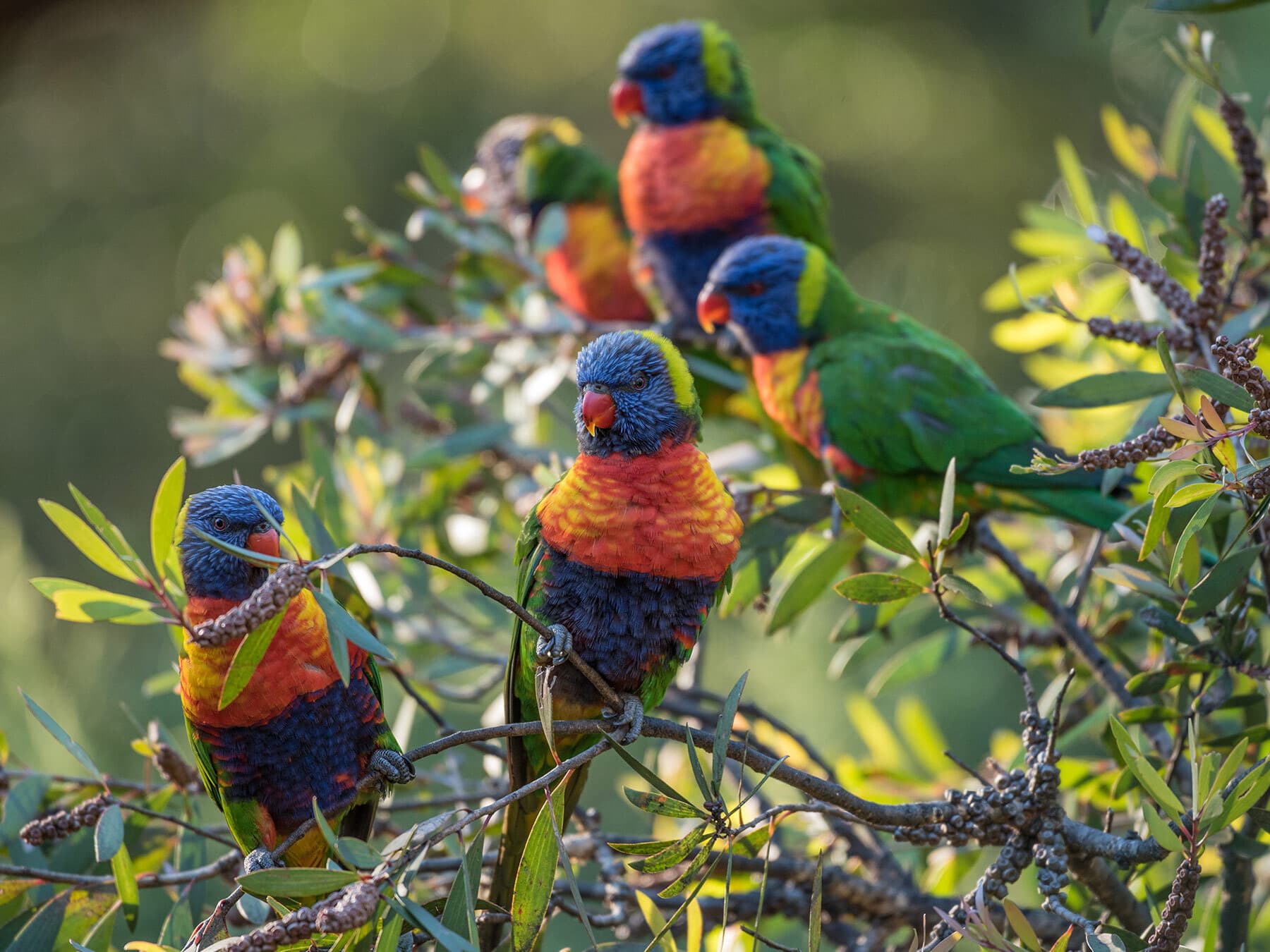
The Rainbow Lorikeet is a vibrant, small parrot with striking multicoloured plumage. Its head is deep blue, contrasting with a bright green back, wings, and tail. The chest is bold orange-red, while the belly shows bands of blue and green.
Both males and females share this dazzling colouration, making them indistinguishable in the field. Juveniles have a duller version of the adult plumage, with a dark beak that gradually turns red as they mature.
Its size
Adults- Length
- 25–30 cm
- Wingspan
- 40–45 cm
- Weight
- 75–157 g
Its song and calls
The typical calls of the Rainbow lorikeet involve high-pitched squawks, chatters and screeches.
Famed for being energetic and at times noisy birds, especially when visiting gardens in flocks, Rainbow lorikeets are intelligent communicators that are capable of advanced vocalisations.
What is a group of Rainbow Lorikeets called?
The most common collective nouns to describe a group of Rainbow Lorikeets is a chattering or a flock.
When and where to see it
The Rainbow Lorikeet is not recorded regularly in the UK, Ireland, the United States or Canada.
United States: recorded in 1 of the 6 years; United Kingdom: recorded in 1 of the 6 years. Too few years to count as a regular visitor.
Worldwide: recorded regularly in 2 countries
Countries where it was recorded in at least 3 of the 6 years 2019–2024. Linked countries have their own bird list.
Oceania (2)
Data: EOD – eBird Observation Dataset (Cornell Lab of Ornithology), accessed via GBIF.org, CC BY 4.0. Records from 2019–2024, aggregated and filtered by Birdfact. How these lists are made
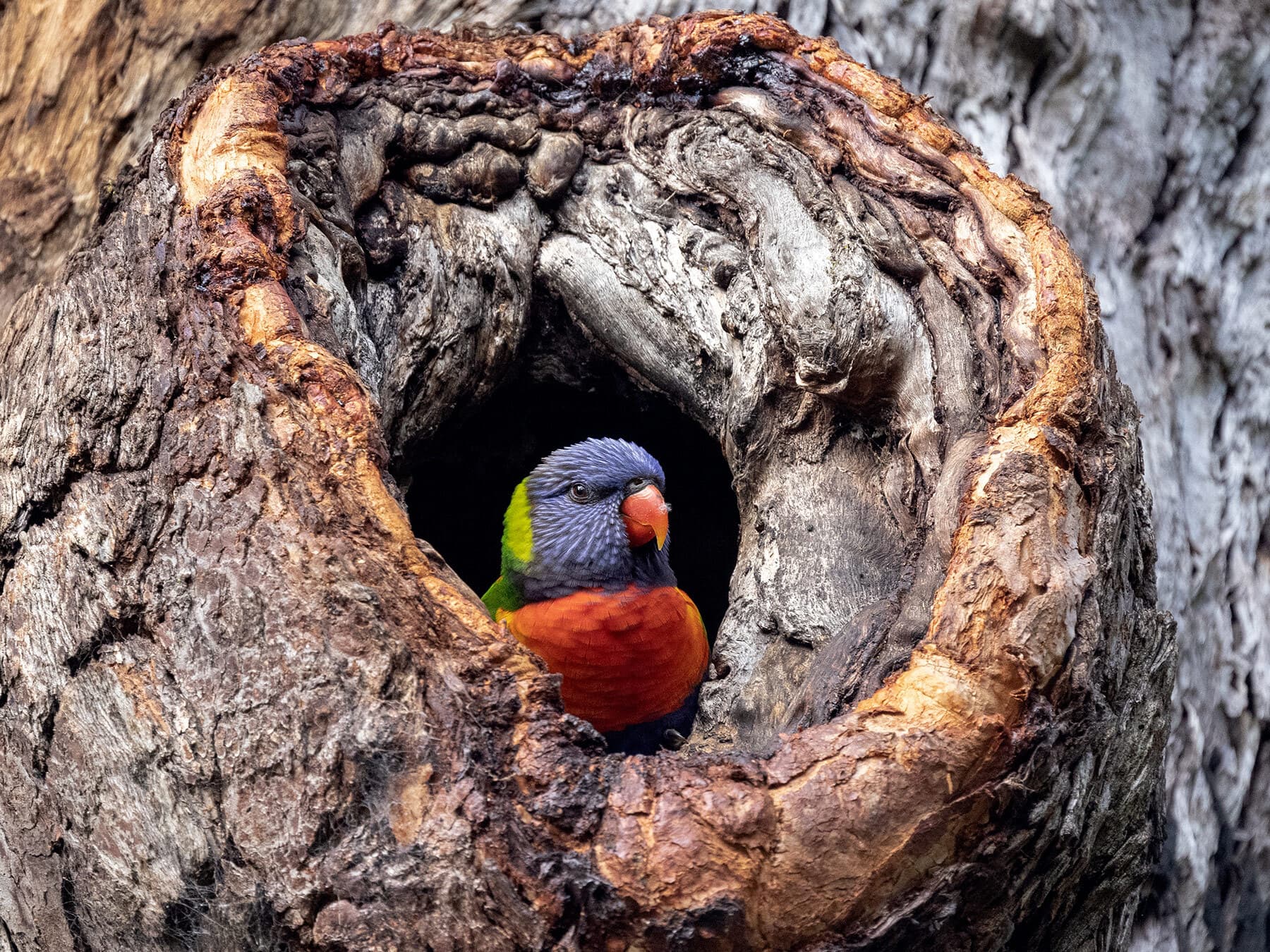
Rainbow lorikeets typically nest in tree hollows and will choose areas of food abundance, e.g. trees near creeks and rivers. They prefer to be somewhat elevated from the forest floor, preferably at a height of around 3m.
Their nests are simple and are typically lined with wood chips and dry grasses. Rainbow lorikeets will also nest in buildings and manmade structures.
For a full guide on the nesting habits of rainbow lorikeets, check out this article.
What is the habitat of a Rainbow Lorikeet?
Rainbow lorikeets tend to live in forested and woodland areas that are dense in foliage, food and potential tree-trunk nesting sites. Rainforests, mangroves, woodlands and coastal areas are all valid habitats for Rainbow lorikeets.
They’re also perfectly comfortable with living in urban areas and will happily nest in buildings and manmade structures.
Where can I see Rainbow Lorikeets?
Rainbow lorikeets are primarily distributed on the eastern Australian seaboard, from Queensland to South Australia. They can sometimes be found on the western coast of New Zealand. Urban colonies have been established as far west as Perth.
Do Rainbow Lorikeets migrate?
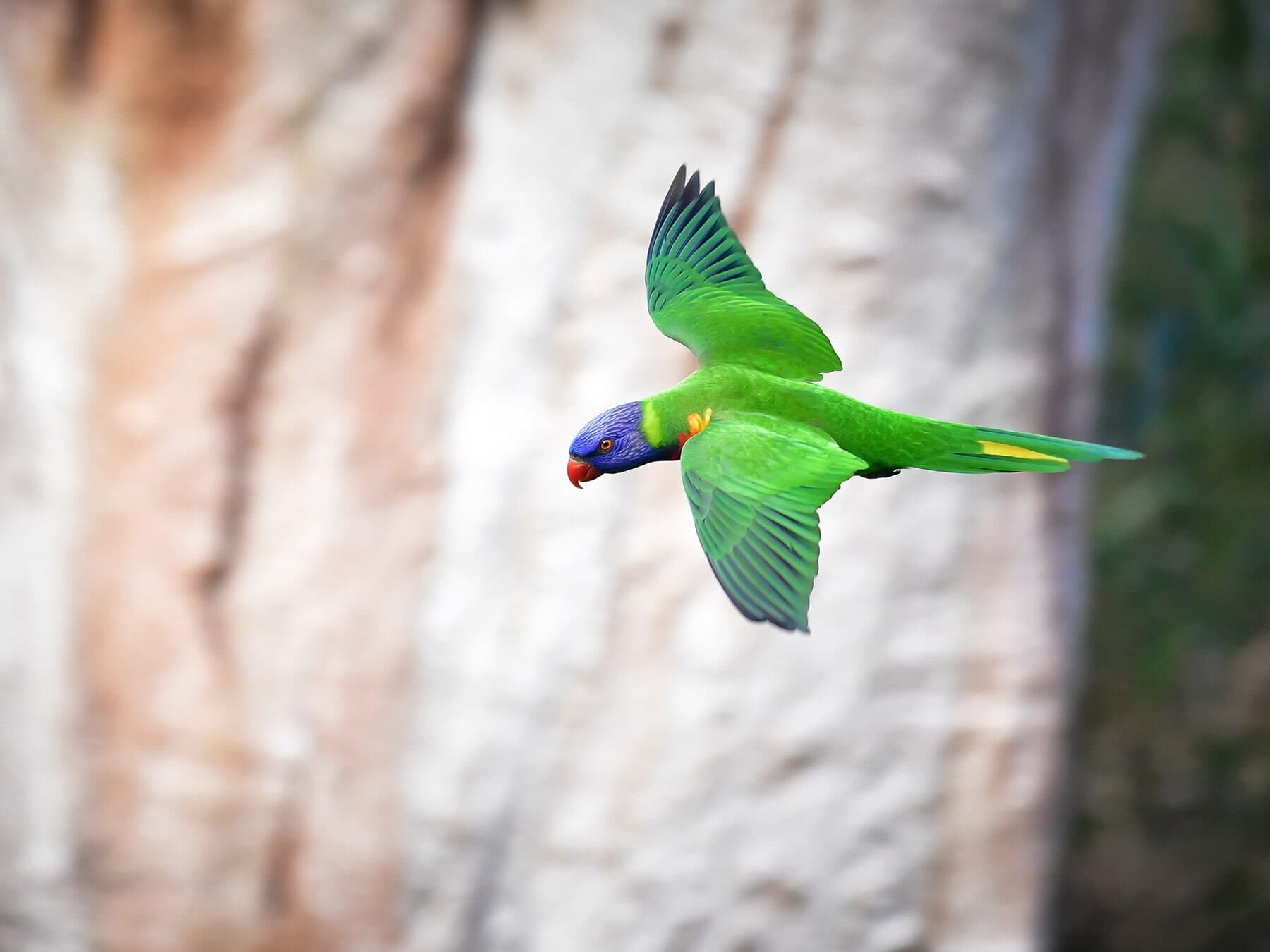
Like most lorikeets, Rainbow lorikeets are generally non-migratory but are fairly nomadic and will move depending on the weather and climate.
Tips for seeing it
- Look for Rainbow Lorikeets in flowering trees and shrubs, especially eucalyptus and bottlebrush.
- Listen for their distinctive screeching calls, which often announce their presence before they're seen.
- Observe them in urban parks and gardens, particularly in coastal areas of eastern Australia.
- Visit bird feeders in suburban areas, where they may gather in large numbers.
What it eats
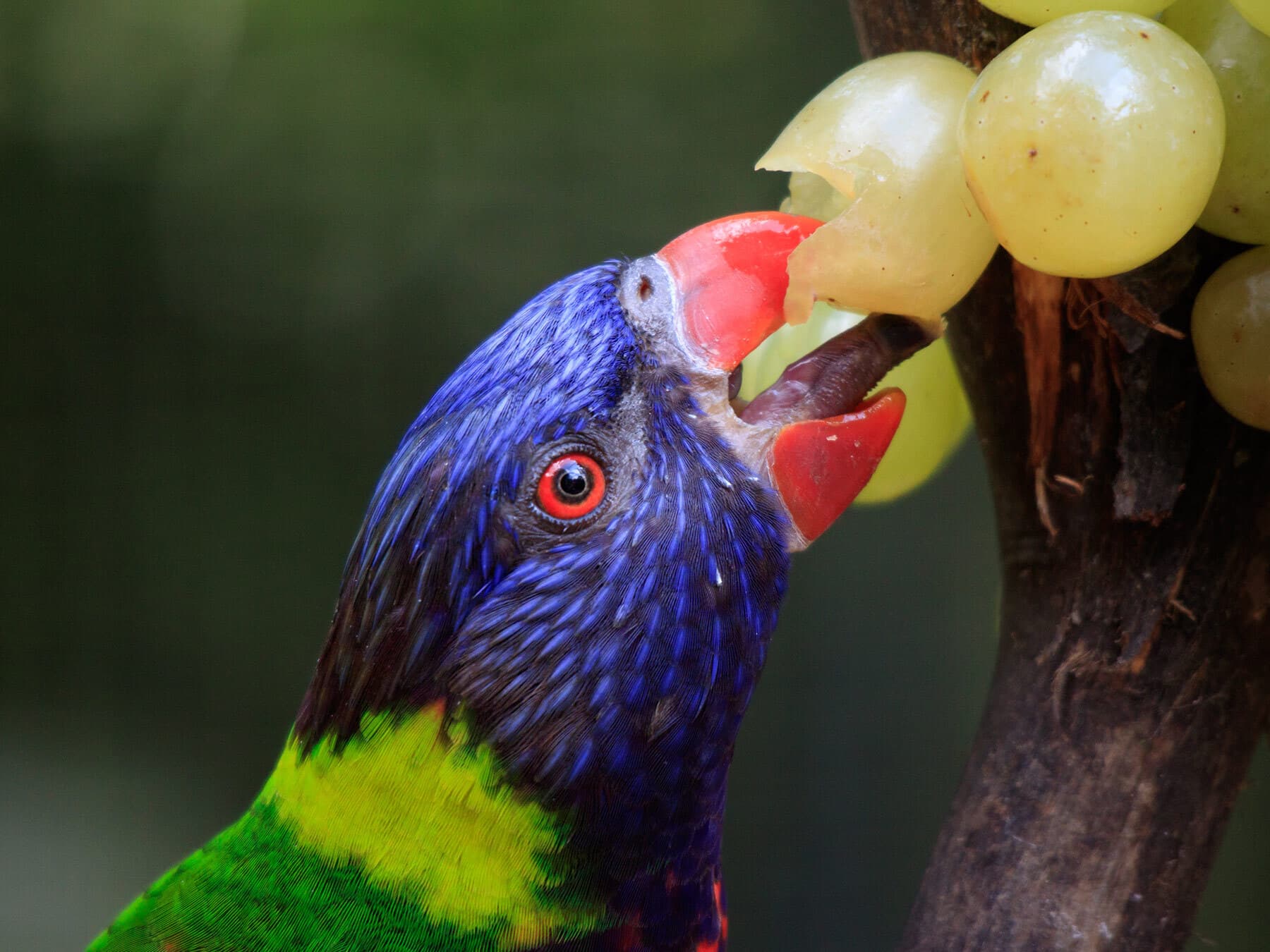
Rainbow lorikeets generally consume soft, sweet foods such as fruits, berries, buds, nectar and flower buds. They are well-equipped for consuming nectar and pollen, particularly from Eucalyptus, Banksia, Hibiscus and coconut plants.
In terms of fruit, Rainbow lorikeets consume pears, bananas, citrus, papaya and mango. One survey found that their diet consists primarily of flowers (87%) across 43 different species of plants.
For a full guide on what rainbow lorikeets eat, check out this article.
Nesting and breeding
Rainbow lorikeet females typically lay clutches of 1 to 3 eggs and can lay up to 3 clutches a year.
What do Rainbow Lorikeet eggs look like?
Rainbow lorikeet eggs are small and white with no particularly distinctive features.
Behaviour
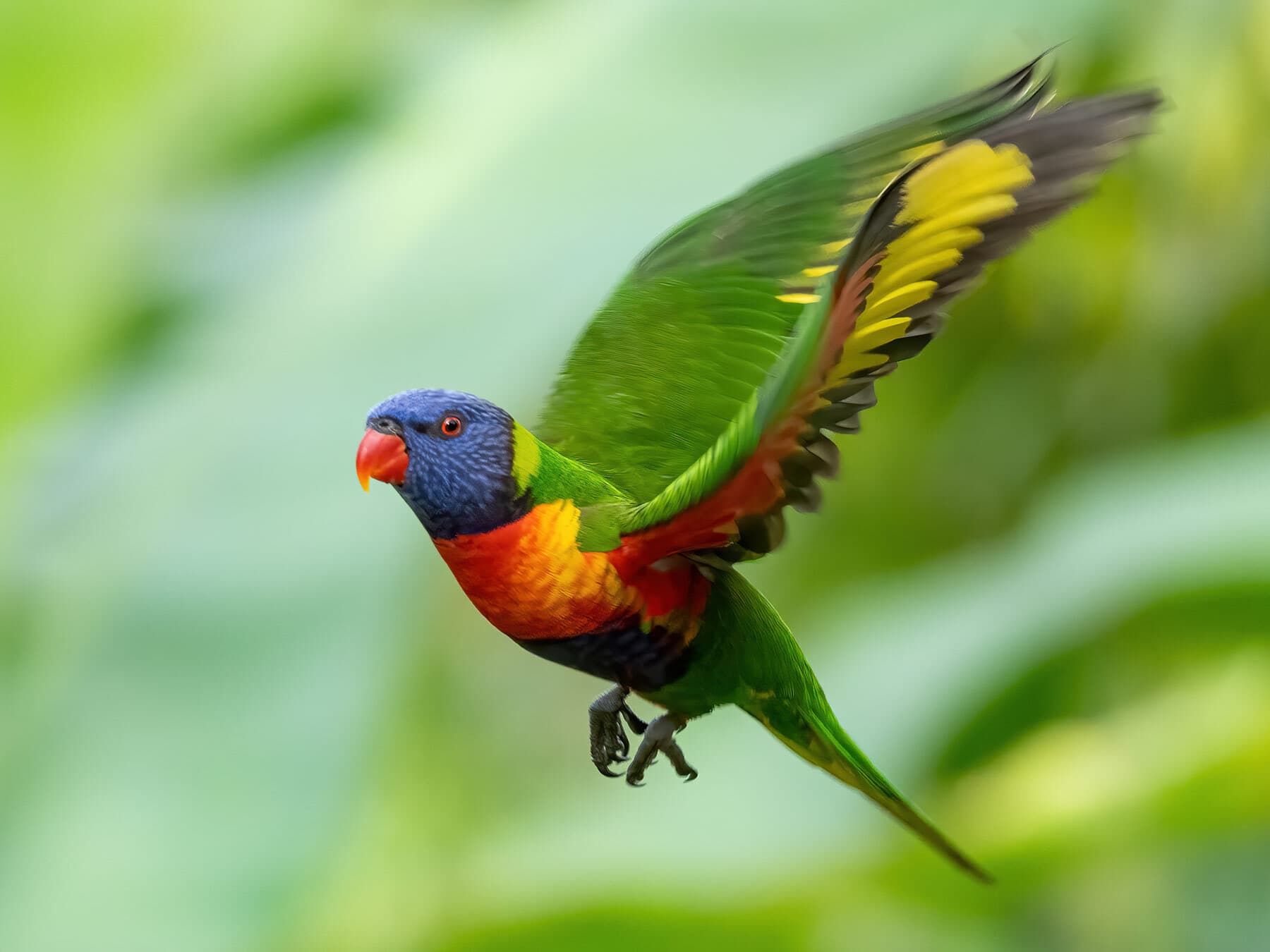
Rainbow Lorikeets are highly social birds, often seen in noisy flocks. They are agile flyers, darting swiftly between trees with acrobatic skill.
These lorikeets are known for their playful nature, often hanging upside down from branches while feeding or during social interactions.
Lifespan and predators
Rainbow lorikeets live for around 20 to 30 years, or perhaps even longer when kept in captivity. This is about average for smaller parrots, whilst larger parrots like Macaws can live for over 100 years.
Conservation
While Rainbow Lorikeets are listed as Least Concern due to their large range and population, they face localised threats from habitat loss and competition with introduced species.
In some urban areas, their numbers have increased, leading to concerns about their impact on other native birds.
What does a Rainbow Lorikeet look like?
An exceptionally colourful bird, the Rainbow lorikeet is aptly named courtesy of its rich multi-coloured plumage. The bird has a blue or mauve head, a blue belly with an orange red neck and breast and green wings, tail and back. The feathers are bright and vivid, typical of other similarly colourful true parrots. The tail feather is longer than average for lorikeets.
Both males and females look very much alike. They measure around 25 to 30 cm (9.8 to 11.8 in) long and have a compact and slender build similar to other lorikeets as well as the Indian ringneck parakeet and Alexandrine parakeet.
How big is a Rainbow Lorikeet?
Rainbow lorikeets rarely grow beyond 25 to 30 cm (9.8 to 11.8 in) in length, but their 46cm (18in) wingspan is considerable for a bird of that length.
How much does a Rainbow Lorikeet weigh?
Rainbow lorikeets are compact and slender and weigh just 75 to 150 grams (2.6 to 4.2 oz).
What is the scientific name of a Rainbow Lorikeet?
The scientific name of the Rainbow lorikeet is Trichoglossus moluccanus and there are two subspecies; Trichoglossus moluccanus septentrionalis and Trichoglossus moluccanus moluccanus.
Other lorikeets that were once considered subspecies of the Rainbow lorikeet are now considered their own species including the Red-collared lorikeet, scarlet-breasted lorikeet, marigold lorikeet and Flores lorikeet.
Are Rainbow Lorikeets aggressive?
Rainbow lorikeets, like many other lorikeets and parakeets, are prone to becoming territorial and aggressive, both towards the same species and others.
The territorial behaviour of Rainbow lorikeets is typically driven by food and nesting competition - they’ve even been observed to forcibly remove the nestlings of other parrots from their nests.
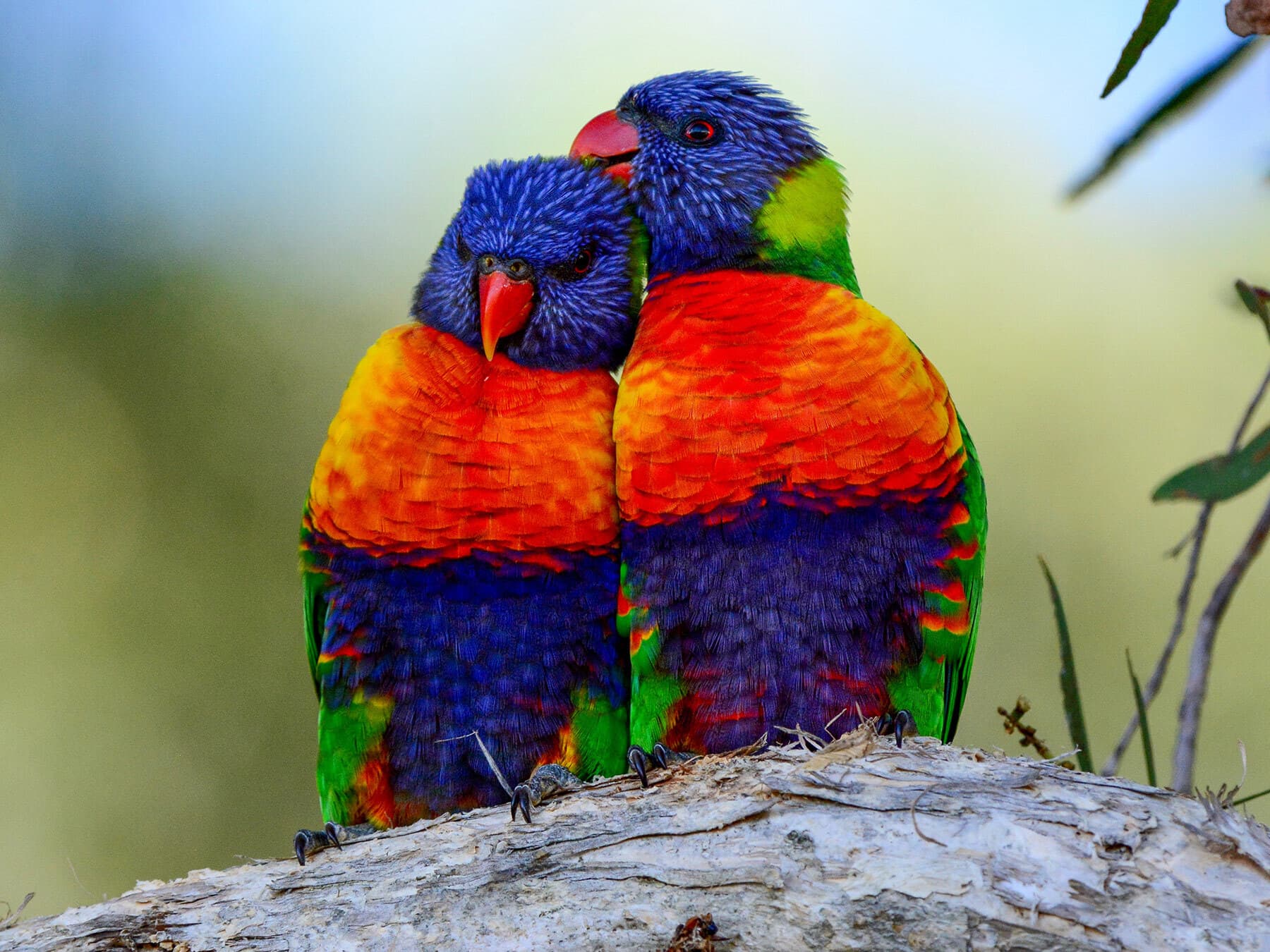
Rainbow lorikeets display many sociable and gregarious behaviours too, though, and will often flock together in pairs with Rainbow lorikeets and other arboreal species. They generally remain peaceful and sociable until they have to compete over food or nesting areas. Acts of aggression are usually minor.
Are Rainbow Lorikeets endangered?
Rainbow lorikeets are currently defined as a species of least concern, which means their populations are plentiful and not under immediate danger. Throughout the eastern Australian seaboard, the Rainbow lorikeet is a common site with a population estimated at around 5 million.
Rainbow lorikeet populations as well as other lorikeet species are decreasing, but they remain in the bracket of least concern.
Do Rainbow Lorikeets mate for life?
Like most parrots, Rainbow lorikeets are monogamous and will usually mate for life unless one member of the pair is killed or dies prematurely.
Can Rainbow Lorikeets talk?
Rainbow lorikeets are strong communicators and have an array of calls that they use regularly. Flocks are regularly seen chattering and squawking at each other.
Whilst they aren’t renowned for their mimicry, Rainbow lorikeets can learn to copy certain words and phrases spoken to them if trained to do so. Overall, they aren’t well-known for their mimicry compared to other parrots.
Similar birds
Often mistaken for
Rainbow Lorikeet guides
3 guidesQuick facts
- Length
- 25–30 cm
- Wingspan
- 40–45 cm
- Weight
- 75–157 g
- Lifespan
- 10–20 years · oldest recorded 20 years
- Family
- Old World Parrots
- Migration
- Resident
- Global status (IUCN)
- Least Concern
- World population
- Not quantified, but abundant within its range
- Population trend
- Decreasing
- Also called
- Rainbow Lory
- Scientific name
- Trichoglossus moluccanus
Sources
4- 1BirdLife International. 2016. Trichoglossus moluccanus. The IUCN Red List of Threatened Species 2016: e.T22725334A95228767. Source (opens in a new tab)
- 2BirdLife International. 2016. Trichoglossus moluccanus. The IUCN Red List of Threatened Species 2016: e.T22725334A95228767. Source (opens in a new tab)
- 3del Hoyo et al. (1997)
- 4ABBBS - Australian Bird and Bat Banding Scheme Source (opens in a new tab)

Checked by
Nathan Cope, founder and editor
Nathan founded Birdfact and leads its writers and contributors in the UK, the US and Canada. He has watched and studied birds for more than ten years, and checks every article and species guide before it’s published.