


Budgerigar
Budgie, Shell Parakeet, Common Parakeet · Melopsittacus undulatus
By the Birdfact teamChecked by Nathan Cope
On this page13 sections
How to recognise it
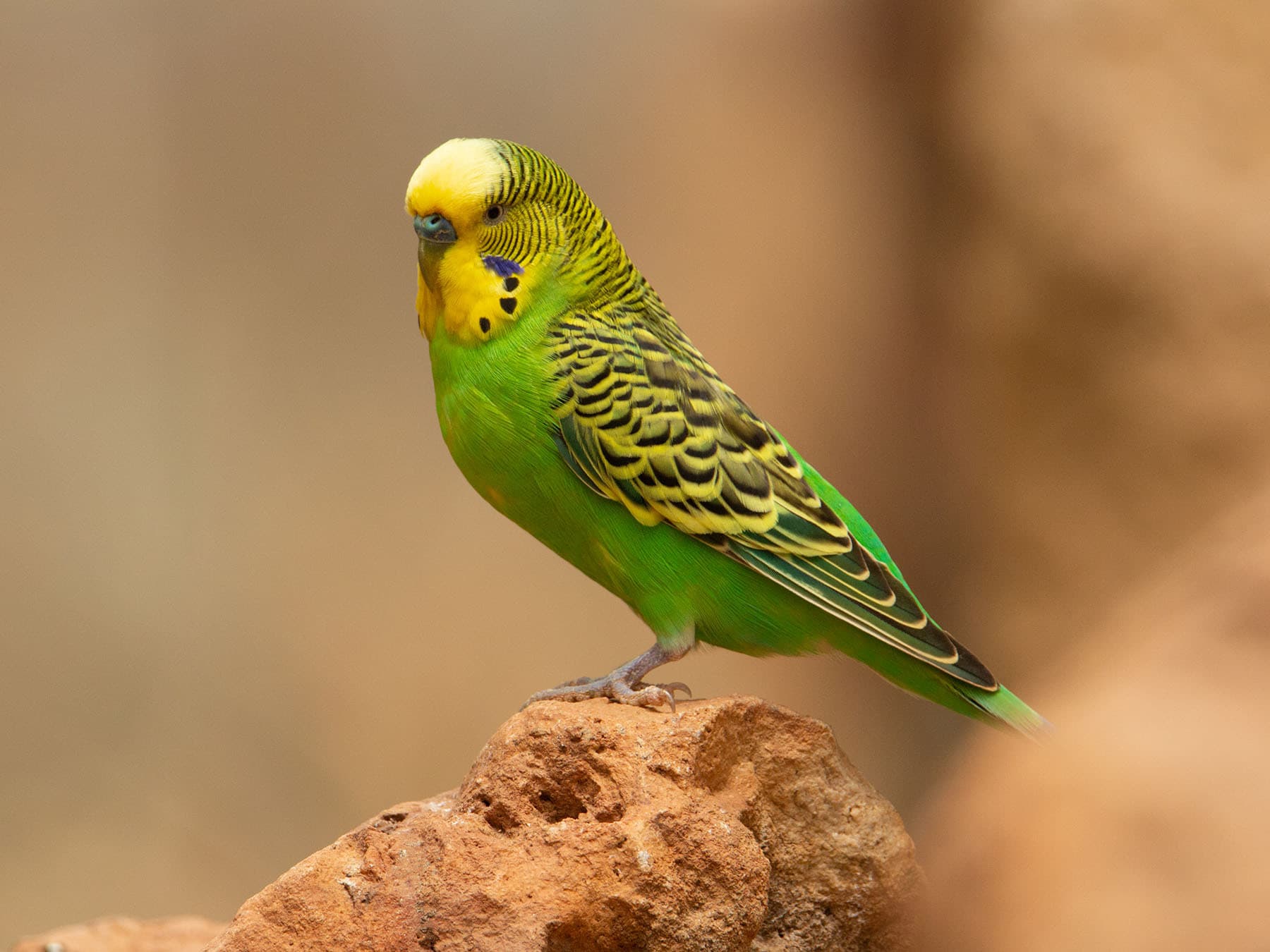
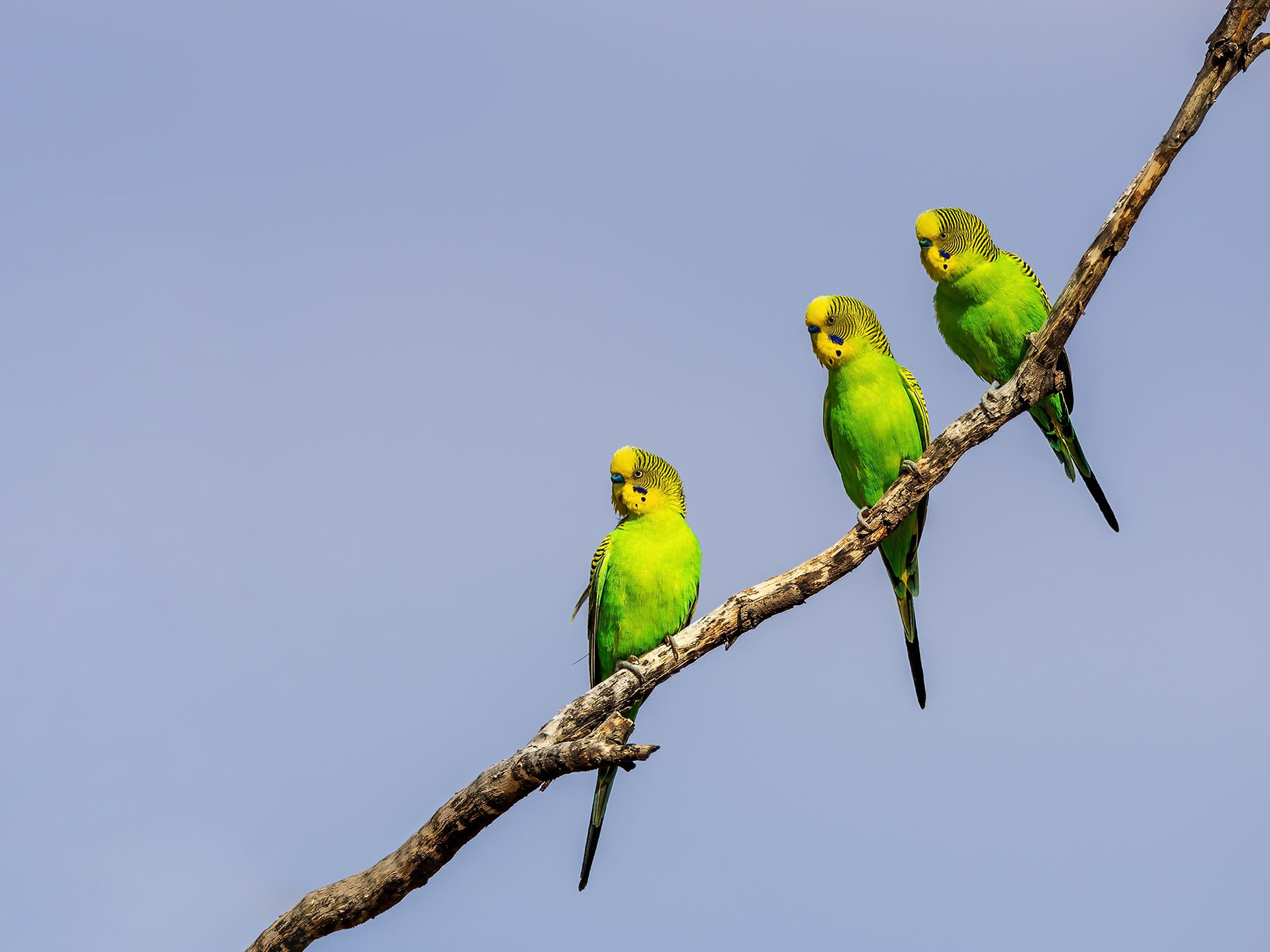
Budgerigars are small, slender parakeets with long, tapering tails. Their plumage is primarily light green with black barring on the wings and back. The face and throat are yellow, with distinctive dark spots on the cheeks.
Males have blue ceres (the fleshy area above the beak), while females have brown or tan ceres when mature. Juveniles resemble adults but have barring on their foreheads that disappear with age.
Its size
Adults- Length
- 18–20 cm
- Wingspan
- 30–32 cm
- Weight
- 30–40 g
Its song and calls
Budgerigars are known for their cheerful, warbling songs and chattering calls. Their vocalisations include a mix of chirps, whistles, and trills.
In flight, they often make a rapid 'chi-chi-chi' sound. When alarmed, they emit a sharp, high-pitched squawk.
- Call0:00 / 0:03
Recorded in Normandie, France · September 2021
When and where to see it
OctoberIn season
Most recorded in October
- 1. Mississippiunder 0.1%
- 2. Arizonaunder 0.1%
- 3. New Yorkunder 0.1%
- 4. North Dakotaunder 0.1%
- 5. Texasunder 0.1%
Each dot is a county, state or province: the bigger and darker, the larger the bird’s share of that place’s bird records that month. Grey dots: no regular records. The ringed point is the centre of the bird’s records this month; the arrow shows how it moved since last month, and the dashed loop its path through the year. “Arrivals” colours places where it becomes regular this month (orange) or is in its last regular month (grey). GBIF eBird Observation Dataset, 2019–2024. Map data: Natural Earth, US Census Bureau; place centres © OpenStreetMap contributors.
In your area
See when the Budgerigar is recorded in your county, state or province.
How often the Budgerigar turns up in the United States through the year, from birdwatchers' records.
United States
Summer visitor · all year · most records in August
Show as a table
| Month | United States |
|---|---|
| January | <0.001% (regular) |
| February | <0.001% (regular) |
| March | <0.001% (regular) |
| April | <0.001% (regular) |
| May | <0.001% (regular) |
| June | <0.001% (regular) |
| July | <0.001% (regular) |
| August | 0.001% (regular) |
| September | <0.001% (regular) |
| October | <0.001% (regular) |
| November | <0.001% (regular) |
| December | <0.001% (regular) |
Worldwide: recorded regularly in 34 countries
Countries where it was recorded in at least 3 of the 6 years 2019–2024. Linked countries have their own bird list.
Data: EOD – eBird Observation Dataset (Cornell Lab of Ornithology), accessed via GBIF.org, CC BY 4.0. Records from 2019–2024, aggregated and filtered by Birdfact. How these lists are made
Tips for seeing it
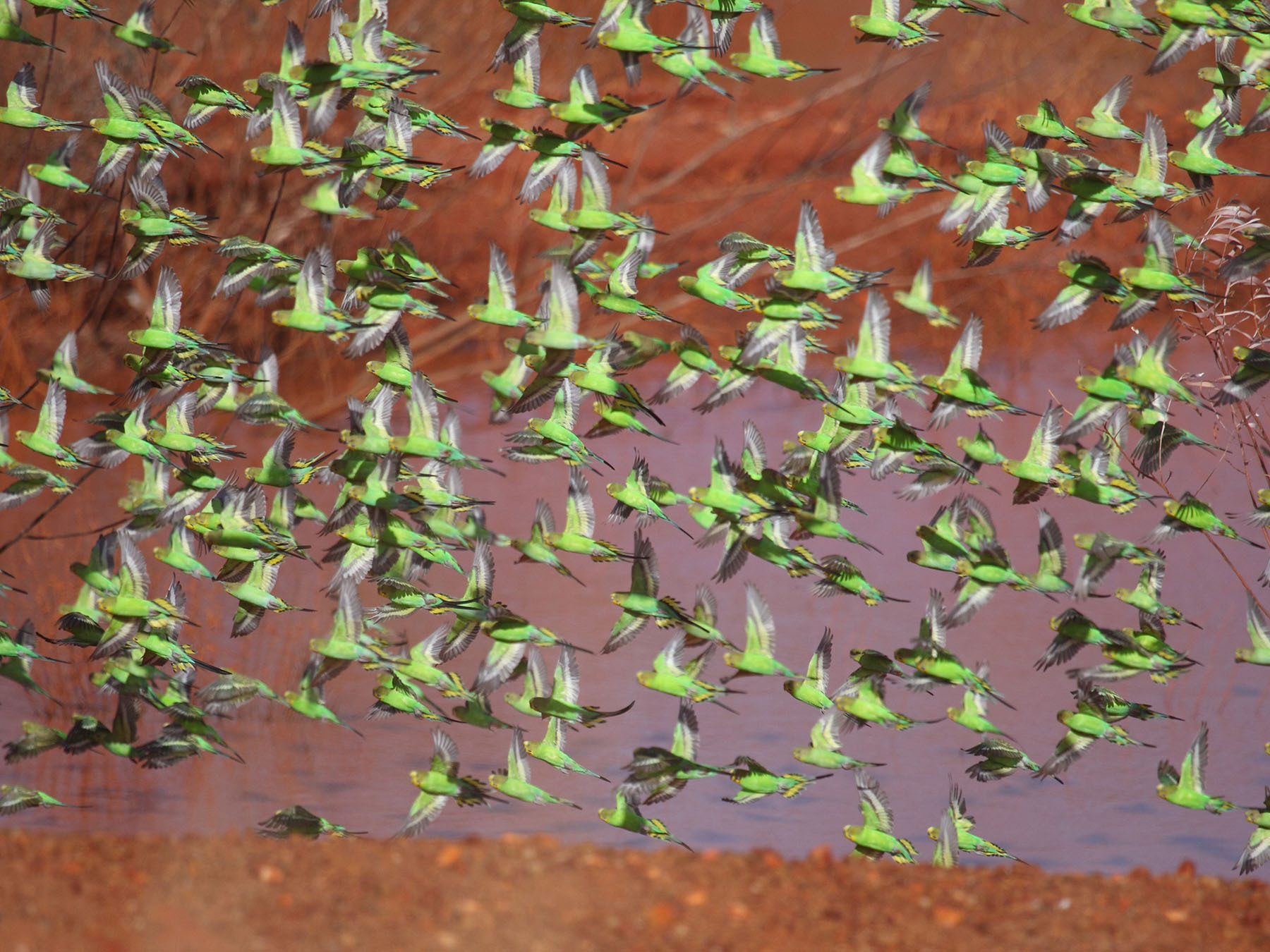
- Look for large flocks in open grasslands or near water sources
- Listen for their distinctive chirping and warbling calls
- Observe their quick, undulating flight pattern
- In Australia, visit arid or semi-arid regions for the best chance of spotting wild budgerigars
What it eats
Budgerigars are primarily seed-eaters, favouring grass seeds from various species. They forage on the ground or directly from seeding grasses.
During breeding seasons, they may supplement their diet with insects and their larvae for additional protein.
Nesting and breeding
Budgerigars typically breed after significant rainfall when food is abundant. Pairs form strong bonds and may remain together for multiple breeding seasons.
They nest in tree hollows, often in eucalyptus trees. Females lay 4-6 small, white eggs and incubate them for about 18 days. Males often stand guard near the nest and feed their mates during this period.
Chicks fledge at around 30 days old but may remain with their parents for several weeks after leaving the nest. In favourable conditions, budgerigars can breed multiple times in a year.
Behaviour
Budgerigars are highly social birds, often seen in large flocks in the wild. They are agile flyers, capable of swift, acrobatic movements.
These birds are known for their playful nature and their ability to mimic sounds, including human speech, when kept as pets.
Conservation
While budgerigars are listed as Least Concern due to their large range and population, they face threats from habitat loss and degradation in parts of their native range. Conservation efforts focus on preserving their natural habitats in Australia.
Similar birds
Often mistaken for
More photos
4 photos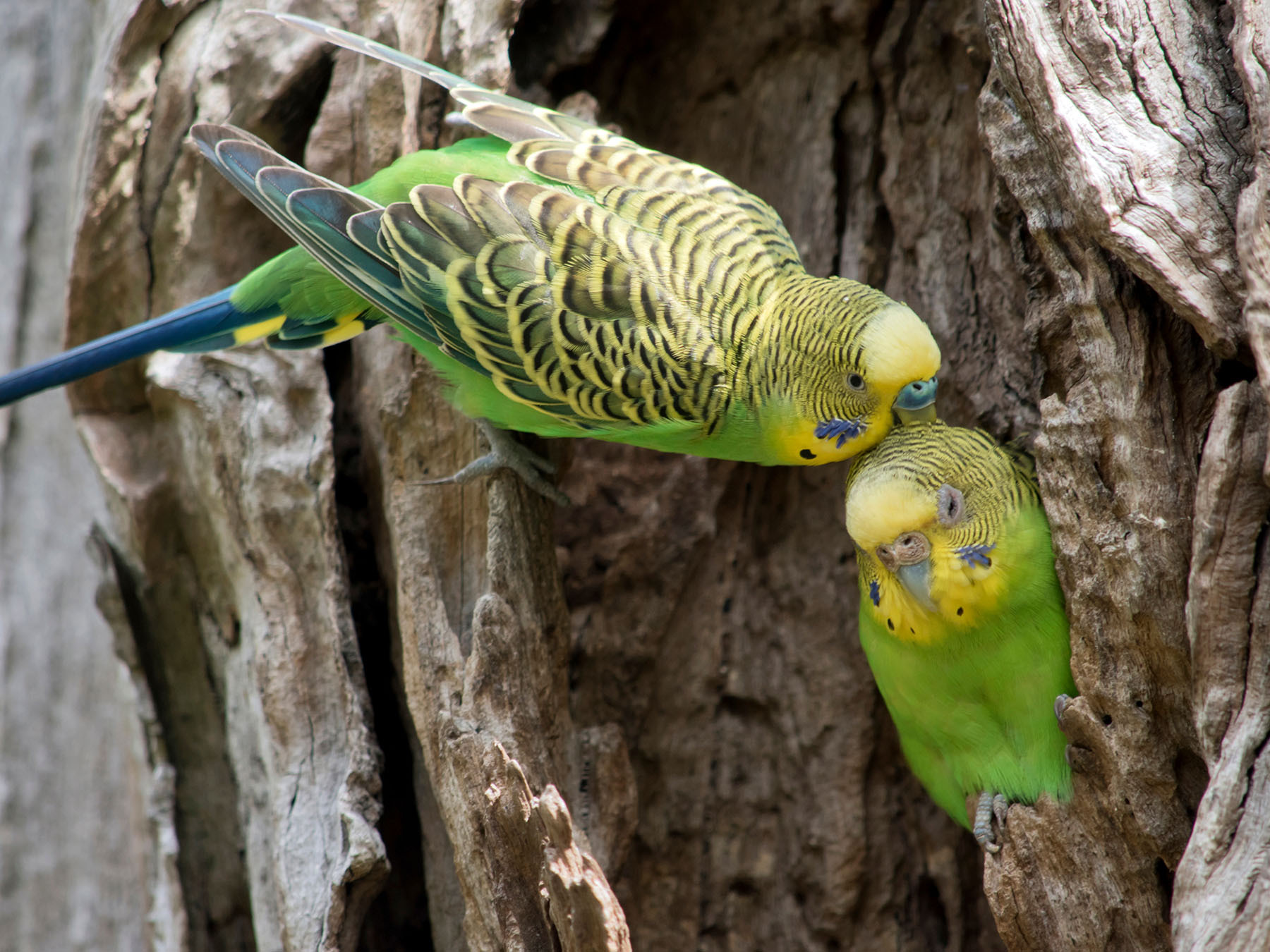
Budgerigar guides
2 guidesQuick facts
- Length
- 18–20 cm
- Wingspan
- 30–32 cm
- Weight
- 30–40 g
- Lifespan
- 5–8 years · oldest recorded 21 years
- Family
- Old World Parrots
- Migration
- Nomadic
- Global status (IUCN)
- Least Concern
- World population
- Not quantified, but abundant
- Population trend
- Increasing
- Also called
- Budgie, Shell Parakeet, Common Parakeet
- Scientific name
- Melopsittacus undulatus
Sources
3- 1BirdLife International. 2018. Melopsittacus undulatus. The IUCN Red List of Threatened Species 2018: e.T22685223A132056957. Source (opens in a new tab)
- 2BirdLife International. 2018. Melopsittacus undulatus. The IUCN Red List of Threatened Species 2018: e.T22685223A132056957. Source (opens in a new tab)
- 3Brouwer et al., Longevity records for Psittaciformes in captivity, Int Zoo Yb, 37:299-316 (2000)

Checked by
Nathan Cope, founder and editor
Nathan founded Birdfact and leads its writers and contributors in the UK, the US and Canada. He has watched and studied birds for more than ten years, and checks every article and species guide before it’s published.